 NihontoWatchNihontoWatch
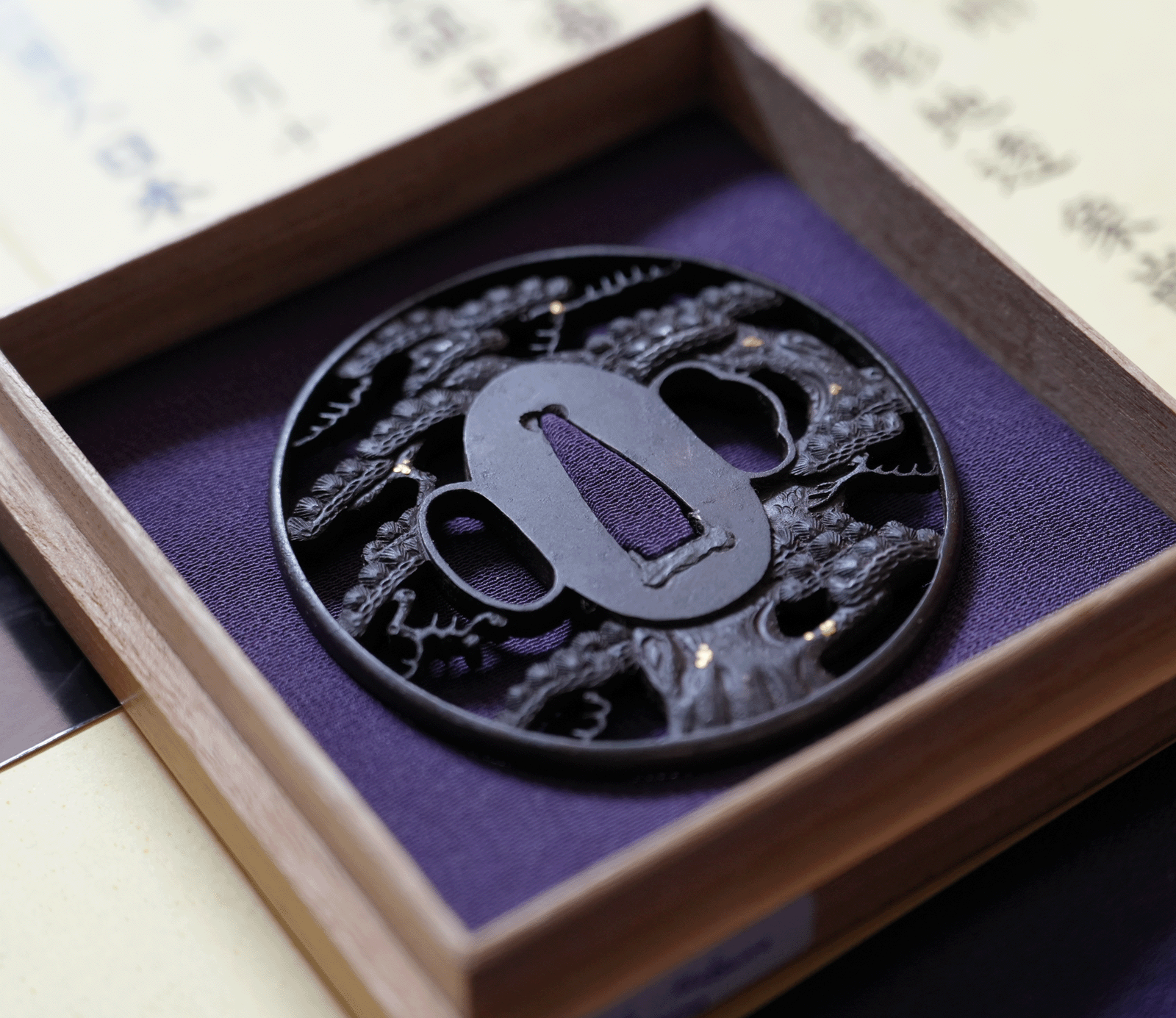
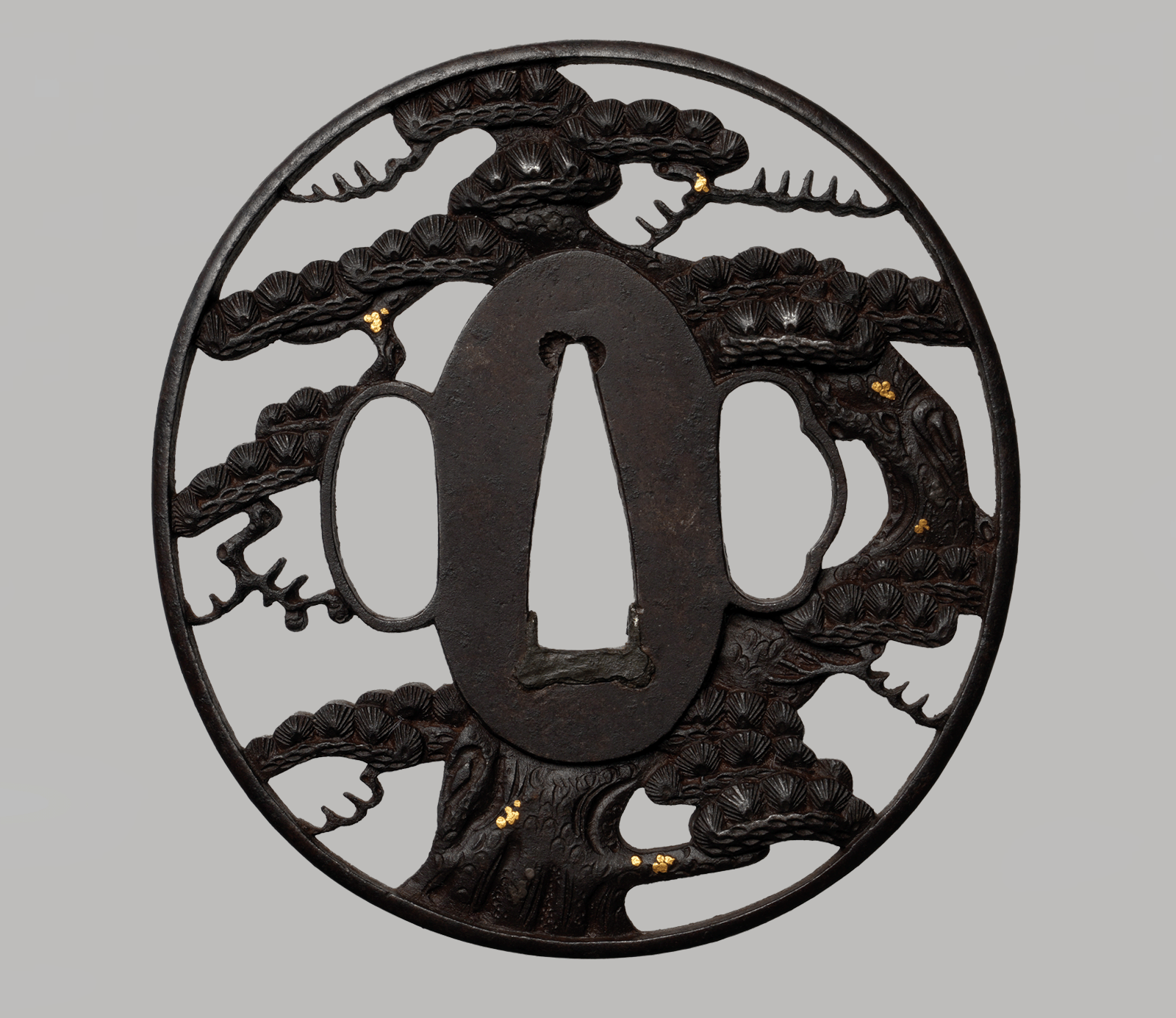
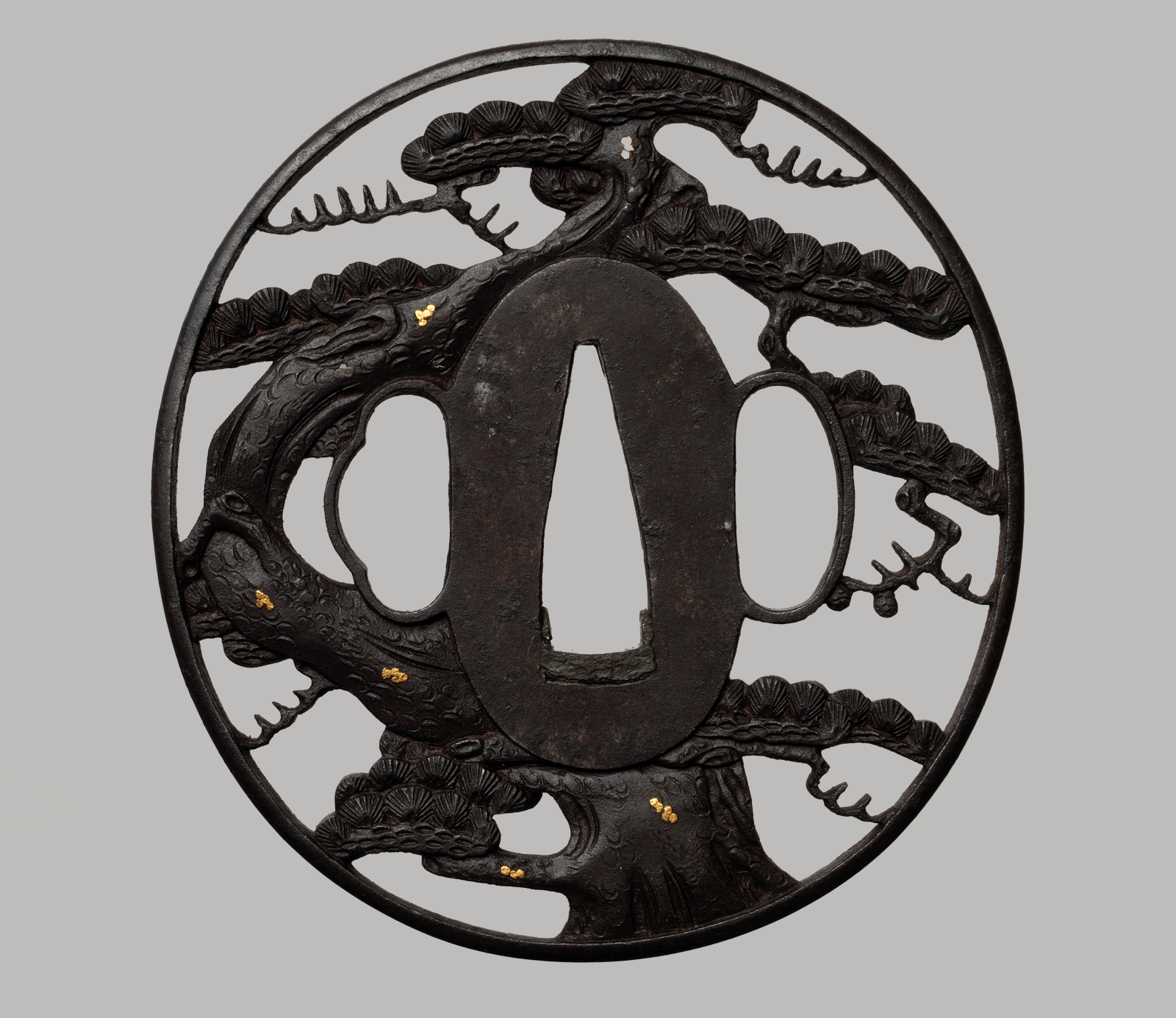
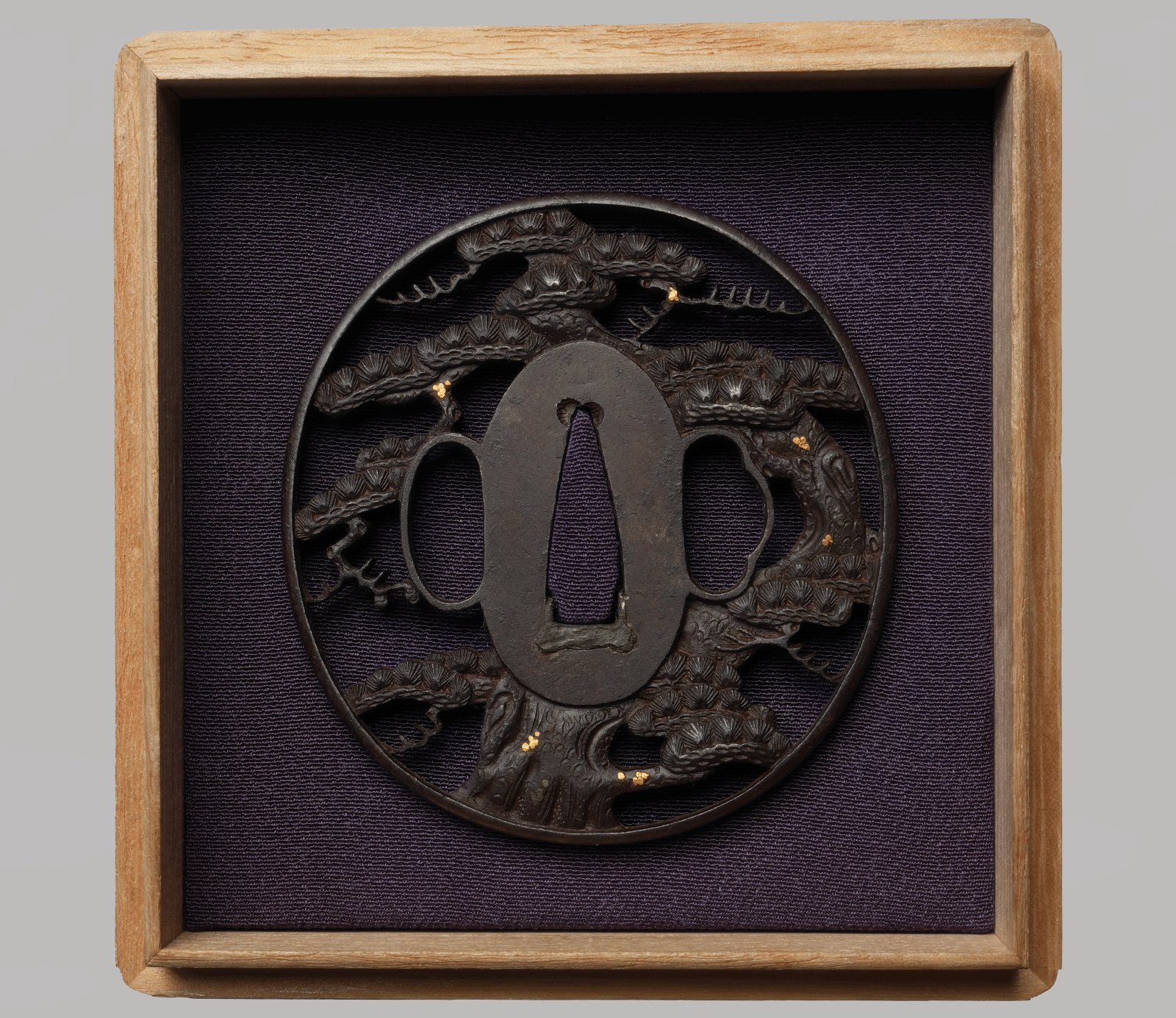
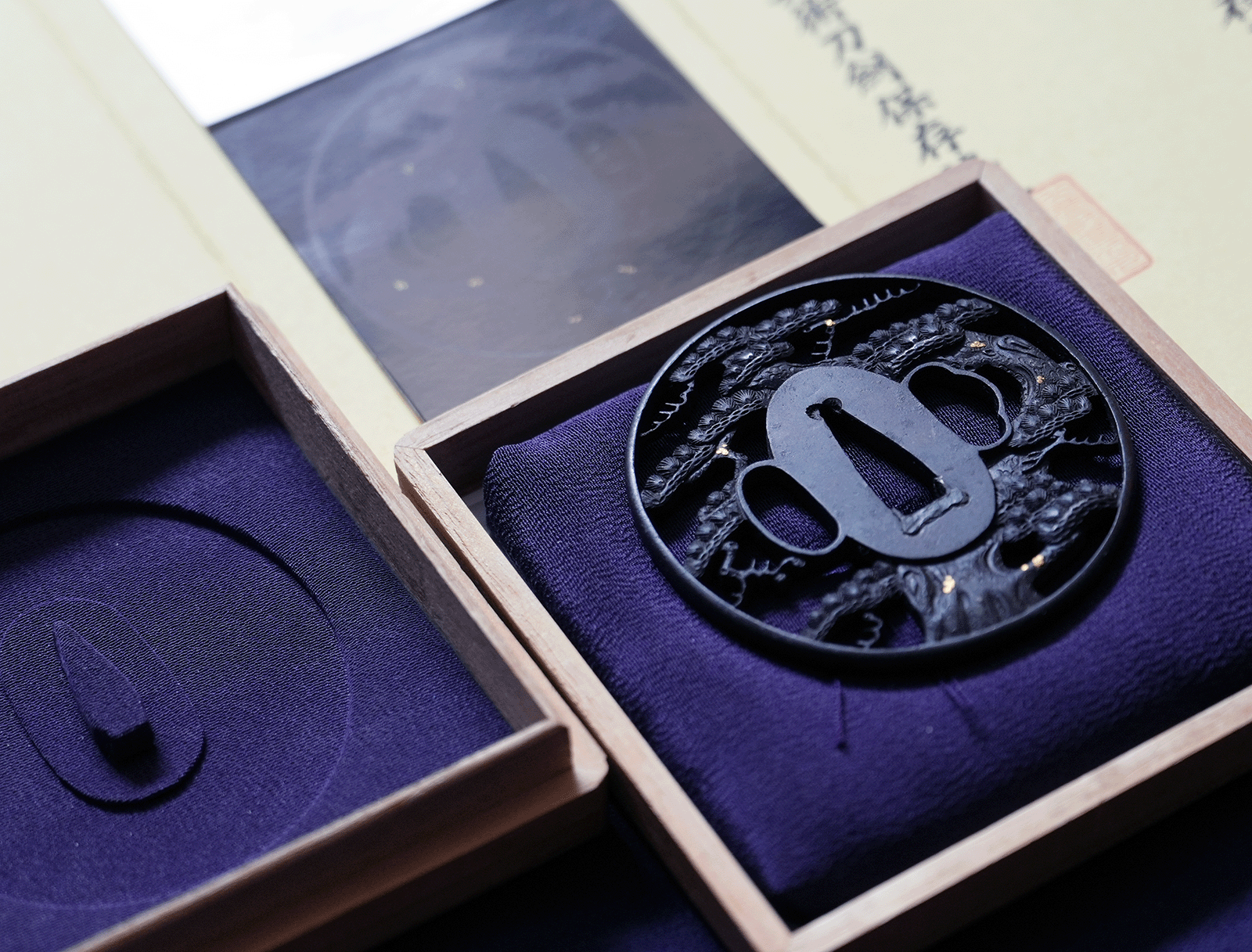
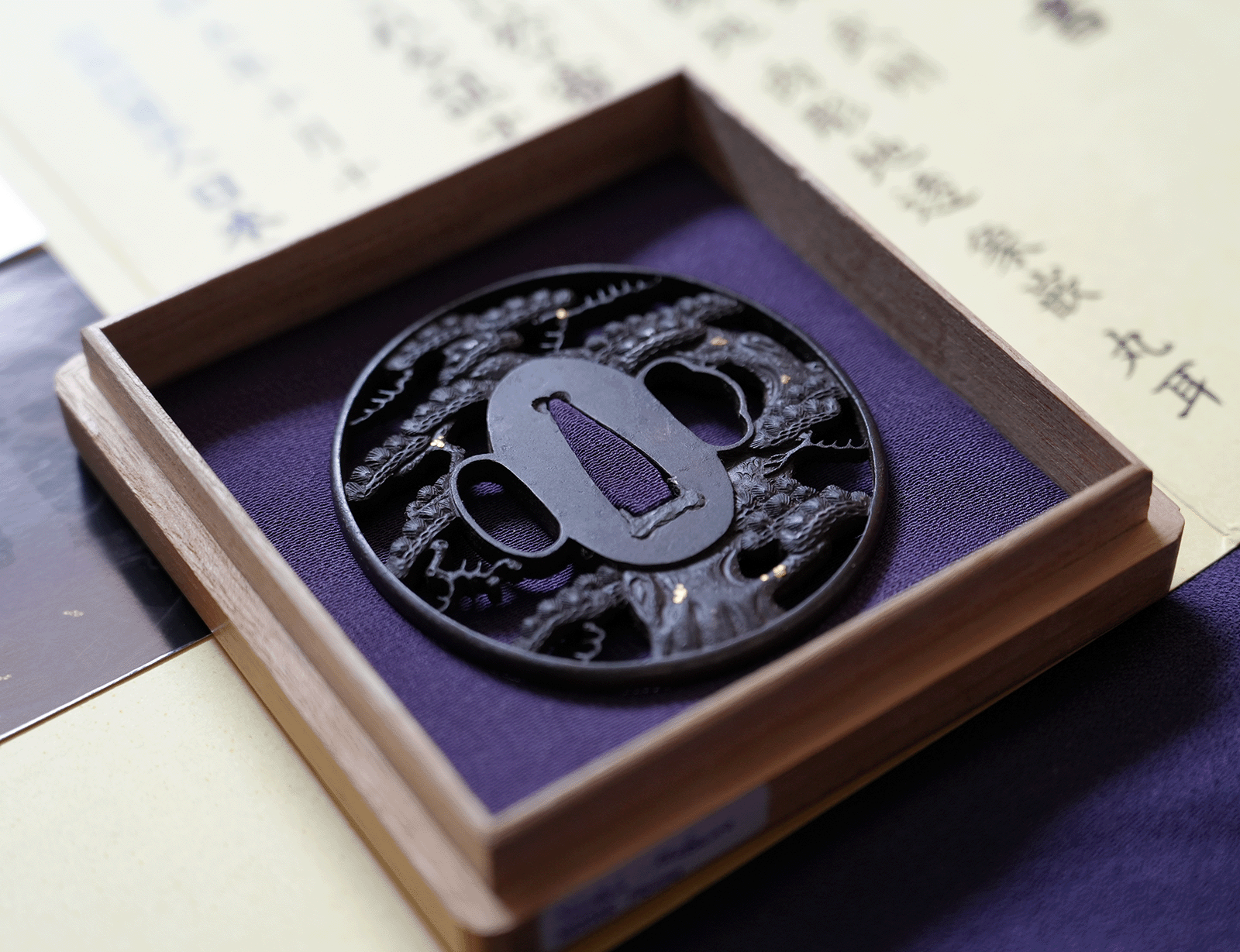
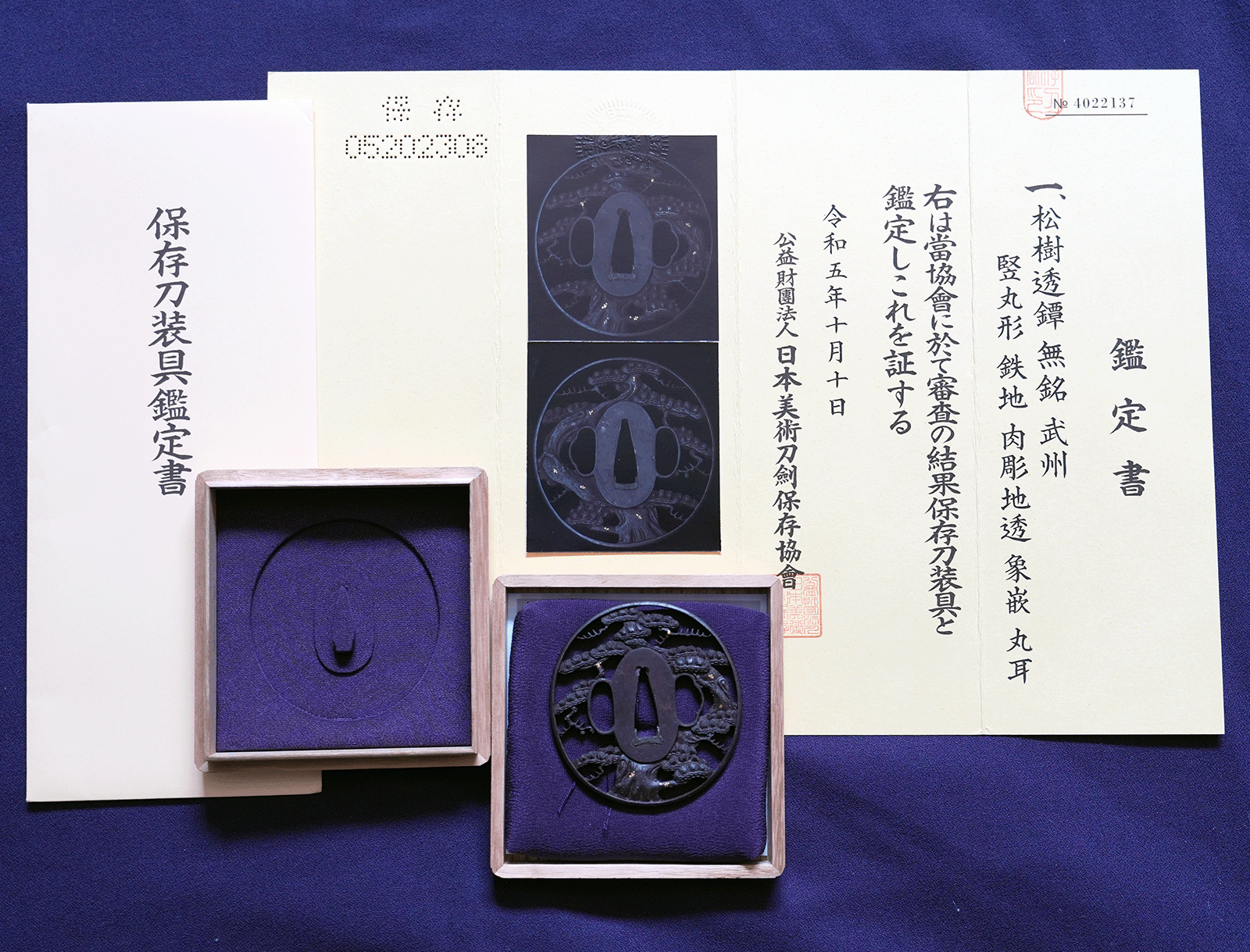
This elegant Bushū tsuba depicts the weathered trunk and sweeping branches of an ancient pine tree (matsu) rendered in deep relief carving and openwork. The sculptural treatment of the bark, densely layered pine needles and lively branching structure create remarkable depth while preserving the airy balance characteristic of the finest Bushū iron guards. Small scattered applications of gold suggest droplets of dew or highlights catching the light, lending quiet refinement without distracting from the rich iron surface. Although attributed simply to the Bushū school by the NBTHK, the style closely recalls the work of the Yanagawa lineage, whose artists were celebrated for combining pictorial carving with sophisticated iron craftsmanship. The carefully modelled bark, precise engraving of the foliage and restrained use of gold decoration are highly characteristic of this aesthetic. The pine occupies a central place in Japanese art and symbolism. As one of the Three Friends of Winter (Shōchikubai—pine, bamboo and plum), it represents longevity, steadfastness and unwavering virtue. Remaining evergreen throughout the seasons, the pine became an emblem of perseverance, fidelity and enduring good fortune. Ancient pines were also believed to serve as the dwelling places of kami, linking the tree to Shinto concepts of sacred nature and spiritual permanence. The artist captures these qualities not through narrative but through the expressive vitality of the tree itself. The massive trunk twists with age and resilience while the layered branches extend gracefully across the guard, creating a composition of remarkable movement and balance. The subtle gold accents evoke morning dew glistening upon the needles, reinforcing the quiet poetic atmosphere. The refined iron plate, exceptional relief carving and harmonious composition make this tsuba an outstanding example of late Edo Bushū workmanship, combining technical virtuosity with the timeless symbolism of Japan's most revered tree.
NihontoWatchOffered by Nihonto Art
Its photos show a certificate that isn’t in our records yet. Papers can come from different bodies (the NBTHK, the NTHK and smaller societies), and only current NBTHK or NTHK shinsa papers are the independent check we rely on. Please ask the dealer which body issued them. — Hoshi

Iron-tsuba · Musashi
We could not find an authenticity certificate on the seller’s listing. Japanese swords and fittings are normally papered by the NBTHK (or the NTHK). Without one, the attribution is the seller’s own assessment and has not been independently verified — treat it with caution and ask the dealer about certification before buying.
14-day return window in original/unused condition; antique items (swords, menuki, tsuba and similar) are expressly excluded from exchange; EU consumers retain a 14-day cancellation right; refunds within 10 business days of approval.
€2,900