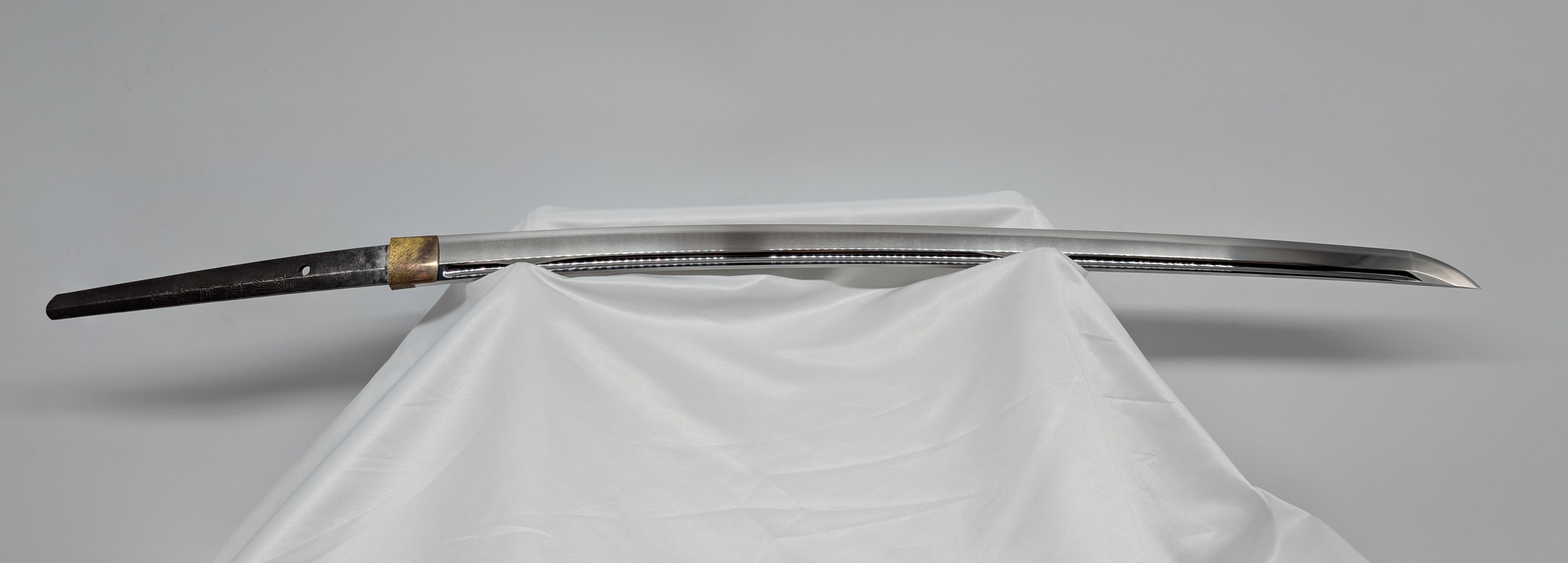
The Haitōrei edict of 1876 ended sword wearing and nearly ended the craft itself. Military demand and imperial patronage kept a remnant alive, and in 1906 Gassan Sadakazu and Miyamoto Kanenori were named Artists to the Imperial Household.
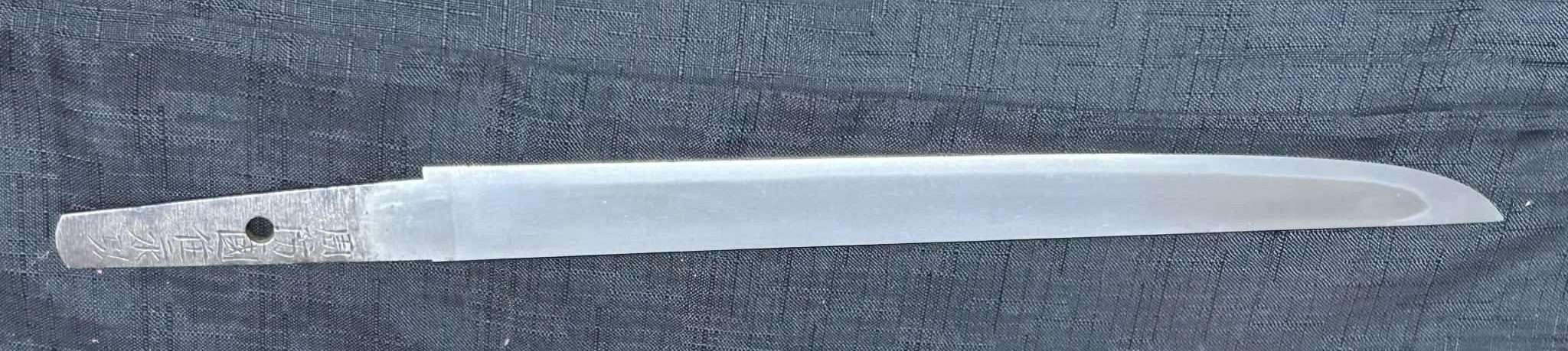
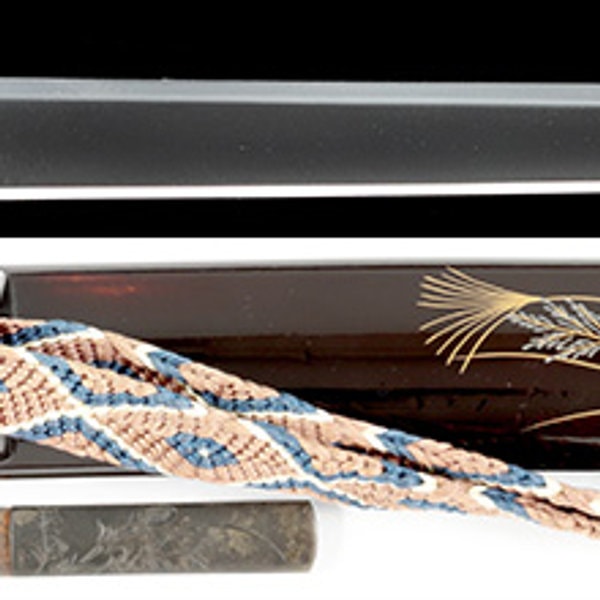
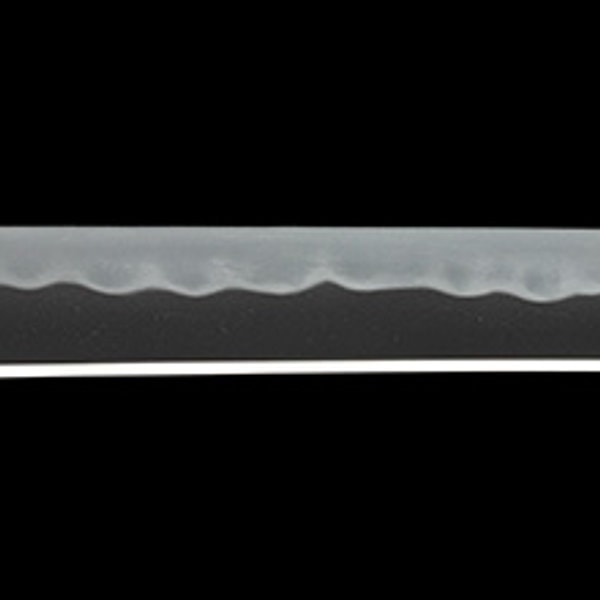
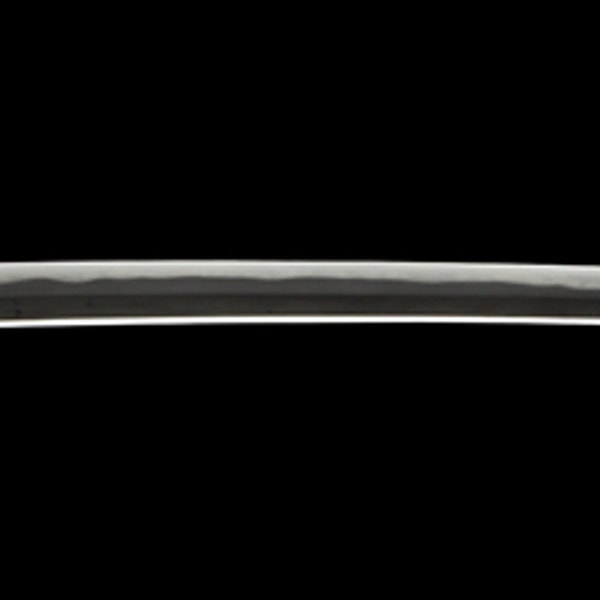
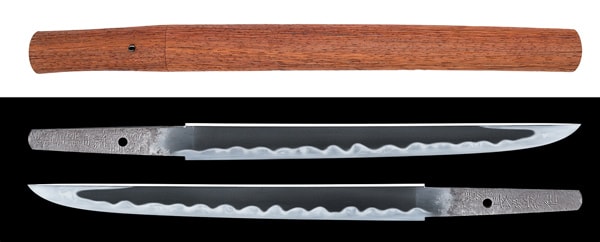
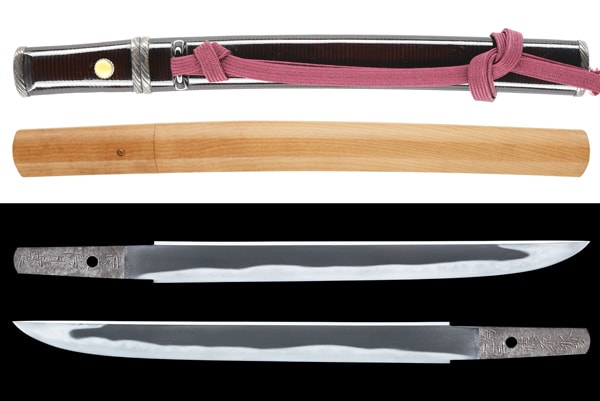
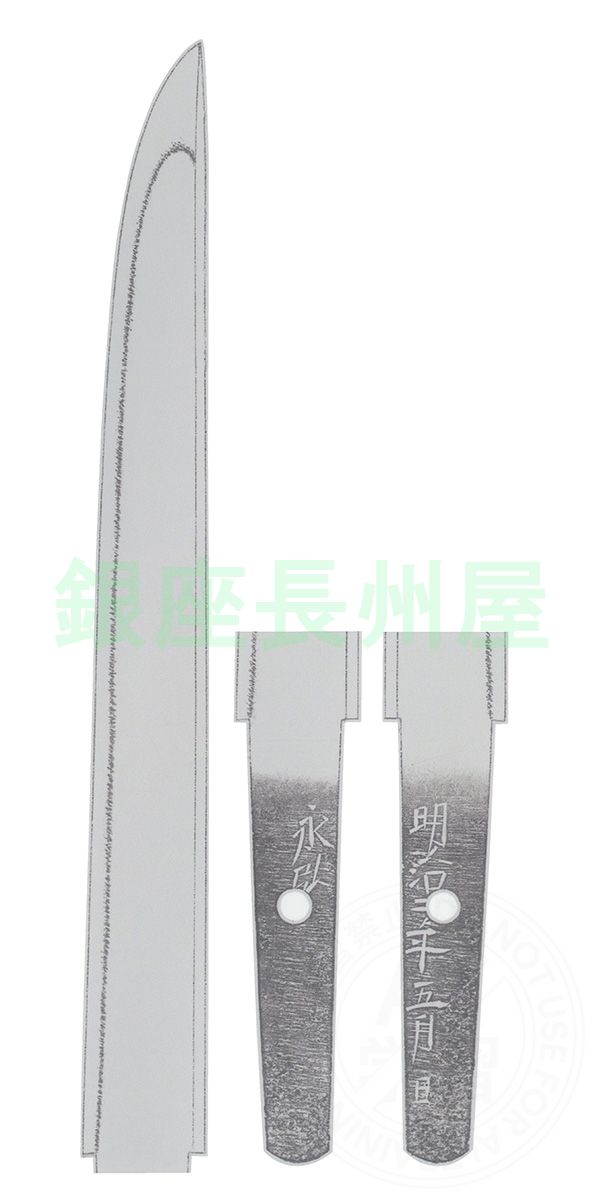
This tanto is signed Nagahiro, a swordsmith of the Choshu domain during the late Edo period, born in Bunsei 5. He trained under Bizen Kaga-no-suke Sukenaga and was known for his choji-midare hamon. The blade features a refined form with a slightly inward curve, deep niku, and an exceptionally well-preserved ubu-ha at the ha-machi. The jigane is tightly forged ko-mokume with fine ji-nie, presenting a clear and bright iron color. The suguha hamon is bright with ko-nie, and the boshi returns in a ko-maru shape. The tang is well-preserved with shallow rust and finely applied yokoyasuri, bearing a two-character signature and a date on the ura. It comes with an aikuchi koshirae adorned with beautiful akikusa (autumn flowers) makie and a matching kozuka, making it easy to carry.
 NihontoWatch





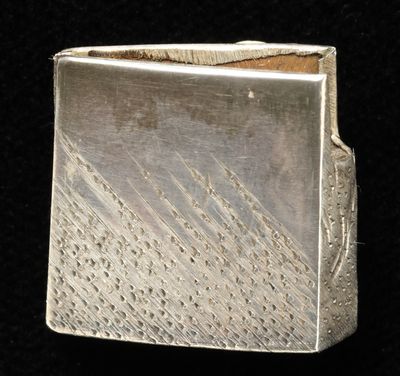
Suo · around 1865-1868
Tōken Taikan top 60%
4 pieces on the market now
Meiji: survival after the edict
The Haitōrei edict of 1876 ended sword wearing and nearly ended the craft itself. Military demand and imperial patronage kept a remnant alive, and in 1906 Gassan Sadakazu and Miyamoto Kanenori were named Artists to the Imperial Household.
Certifies a genuine blade worth preserving: a signature confirmed correct, or, if unsigned, an era, province, and school that the NBTHK can reliably identify.
The NBTHK (Nihon Bijutsu Tōken Hozon Kyōkai, the Society for the Preservation of Japanese Art Swords) is a public-interest incorporated foundation founded in 1948 and supervised by Japan’s Agency for Cultural Affairs (Bunkachō); it is based at the Japanese Sword Museum in Tokyo. Its expert panels physically examine each submitted work (shinsa) and issue a certificate (kanteishō) ranking it by artistic and historical merit. NBTHK papers are the most widely recognized standard of authentication for Japanese swords and fittings.
NBTHK official siteIf, due to our fault, the item differs significantly from its proper condition, the item may be returned. Cooling-off is within one week of the item's arrival.
This tanto is signed Nagahiro, a swordsmith of the Choshu domain during the late Edo period, born in Bunsei 5. He trained under Bizen Kaga-no-suke Sukenaga and was known for his choji-midare hamon. The blade features a refined form with a slightly inward curve, deep niku, and an exceptionally well-preserved ubu-ha at the ha-machi. The jigane is tightly forged ko-mokume with fine ji-nie, presenting a clear and bright iron color. The suguha hamon is bright with ko-nie, and the boshi returns in a ko-maru shape. The tang is well-preserved with shallow rust and finely applied yokoyasuri, bearing a two-character signature and a date on the ura. It comes with an aikuchi koshirae adorned with beautiful akikusa (autumn flowers) makie and a matching kozuka, making it easy to carry.
NihontoWatchSuo · around 1865-1868
Tōken Taikan top 60%
4 pieces on the market now
Meiji: survival after the edict
The Haitōrei edict of 1876 ended sword wearing and nearly ended the craft itself. Military demand and imperial patronage kept a remnant alive, and in 1906 Gassan Sadakazu and Miyamoto Kanenori were named Artists to the Imperial Household.
Certifies a genuine blade worth preserving: a signature confirmed correct, or, if unsigned, an era, province, and school that the NBTHK can reliably identify.
The NBTHK (Nihon Bijutsu Tōken Hozon Kyōkai, the Society for the Preservation of Japanese Art Swords) is a public-interest incorporated foundation founded in 1948 and supervised by Japan’s Agency for Cultural Affairs (Bunkachō); it is based at the Japanese Sword Museum in Tokyo. Its expert panels physically examine each submitted work (shinsa) and issue a certificate (kanteishō) ranking it by artistic and historical merit. NBTHK papers are the most widely recognized standard of authentication for Japanese swords and fittings.
NBTHK official siteIf, due to our fault, the item differs significantly from its proper condition, the item may be returned. Cooling-off is within one week of the item's arrival.