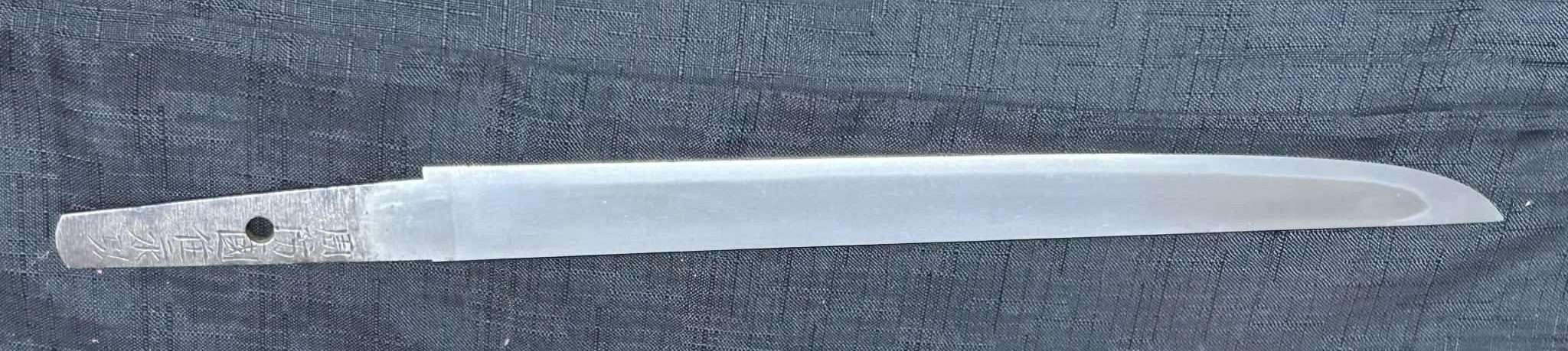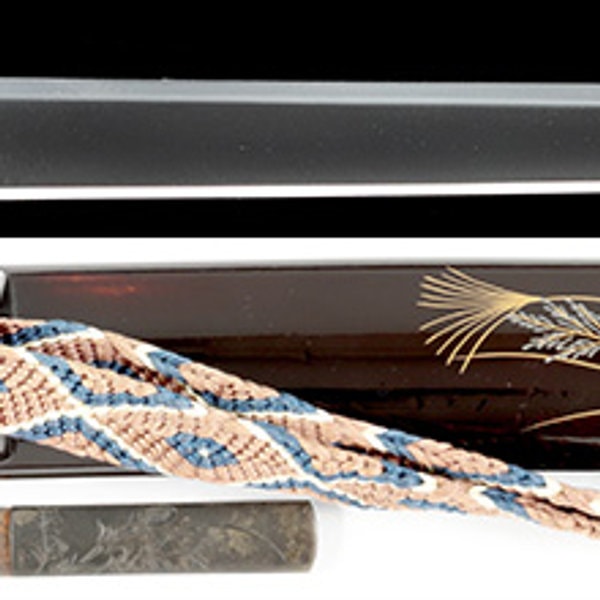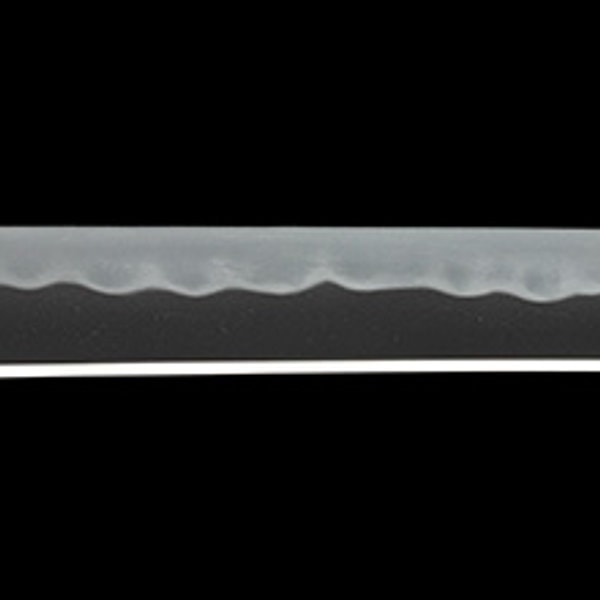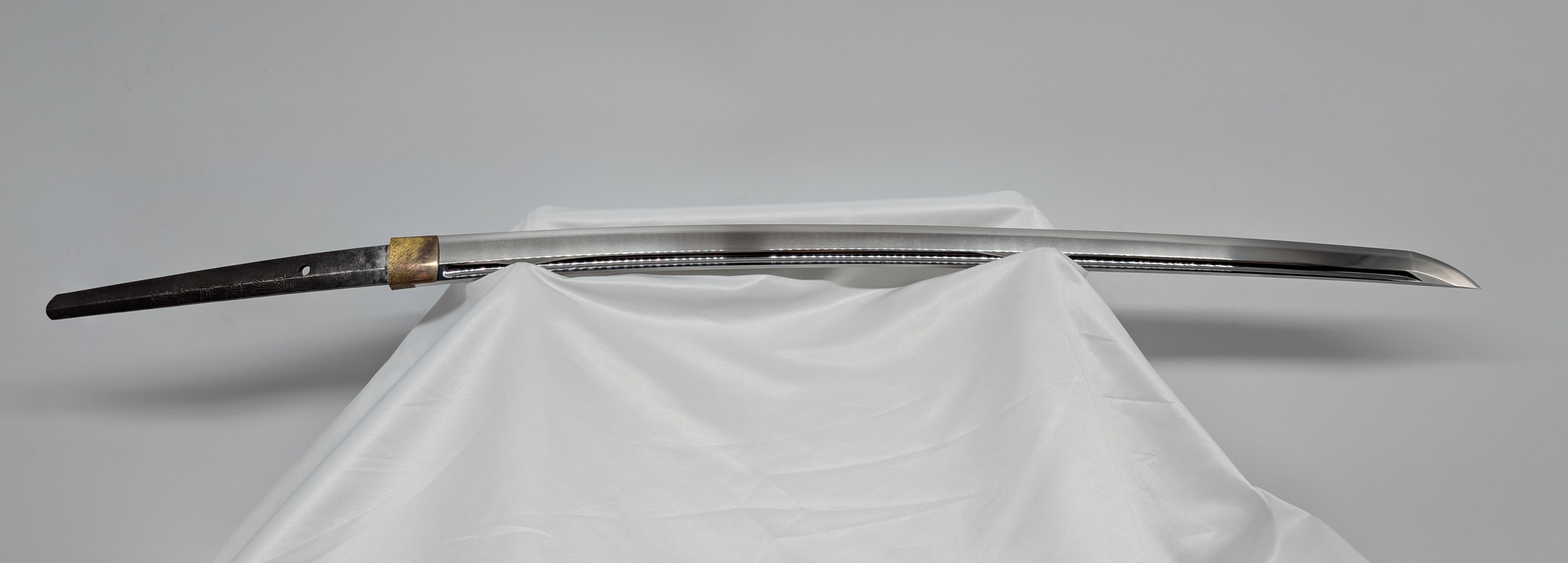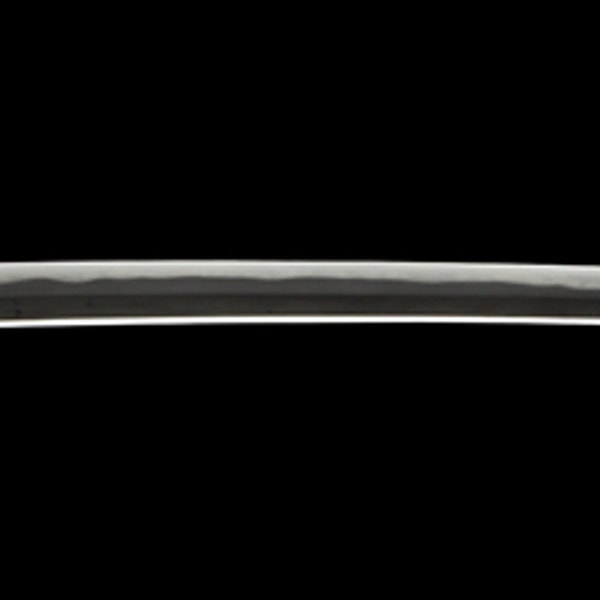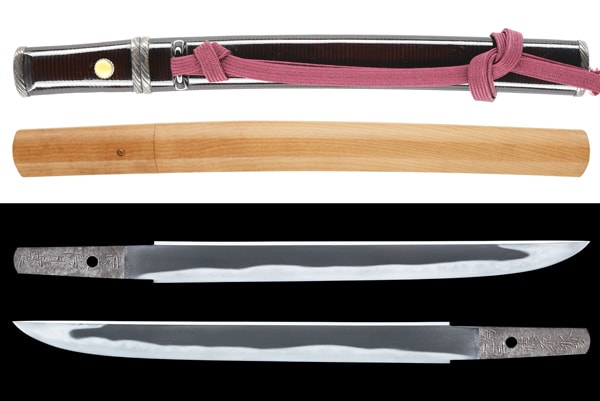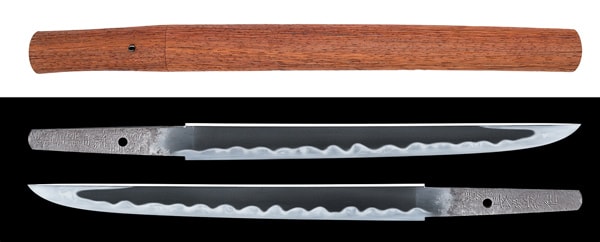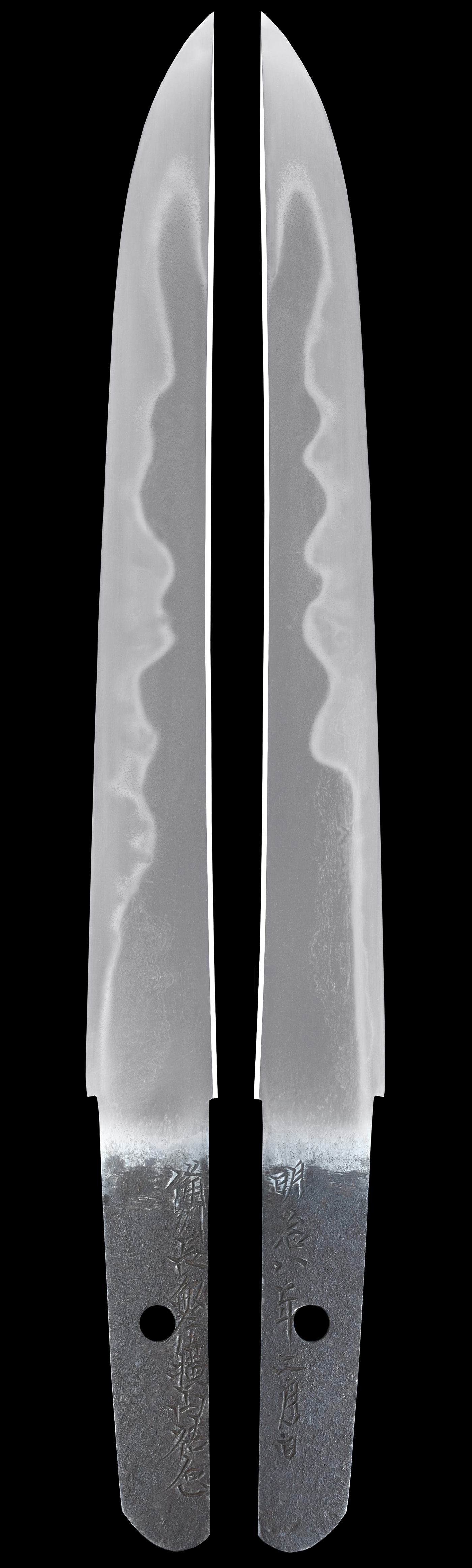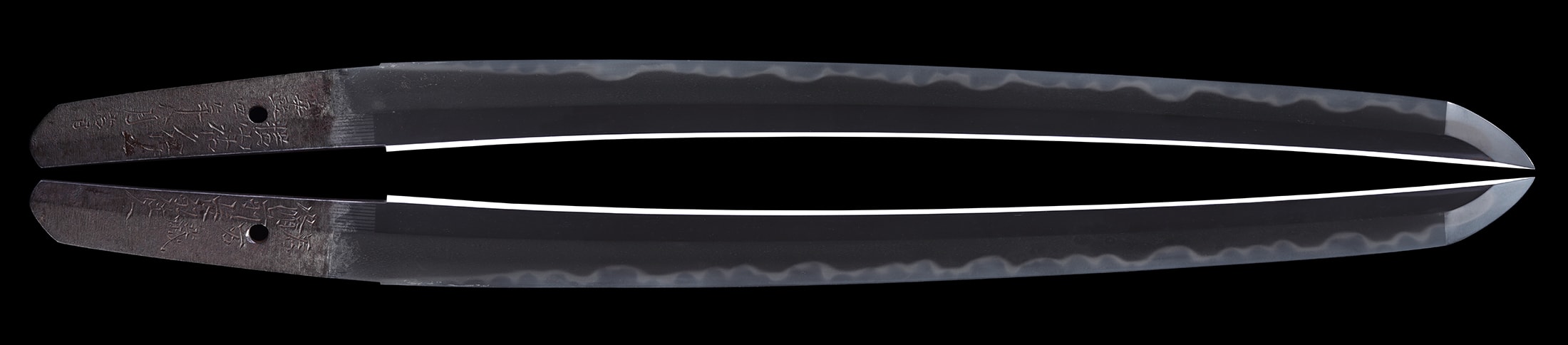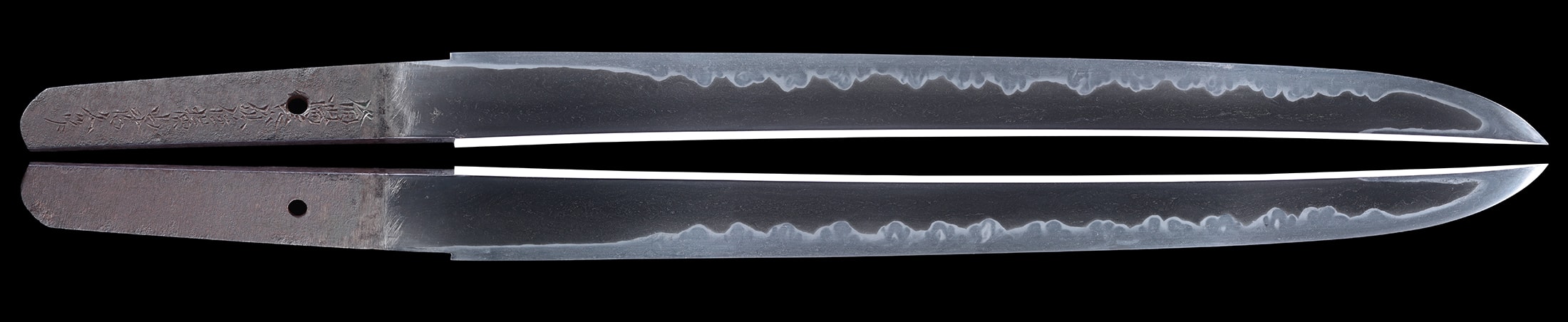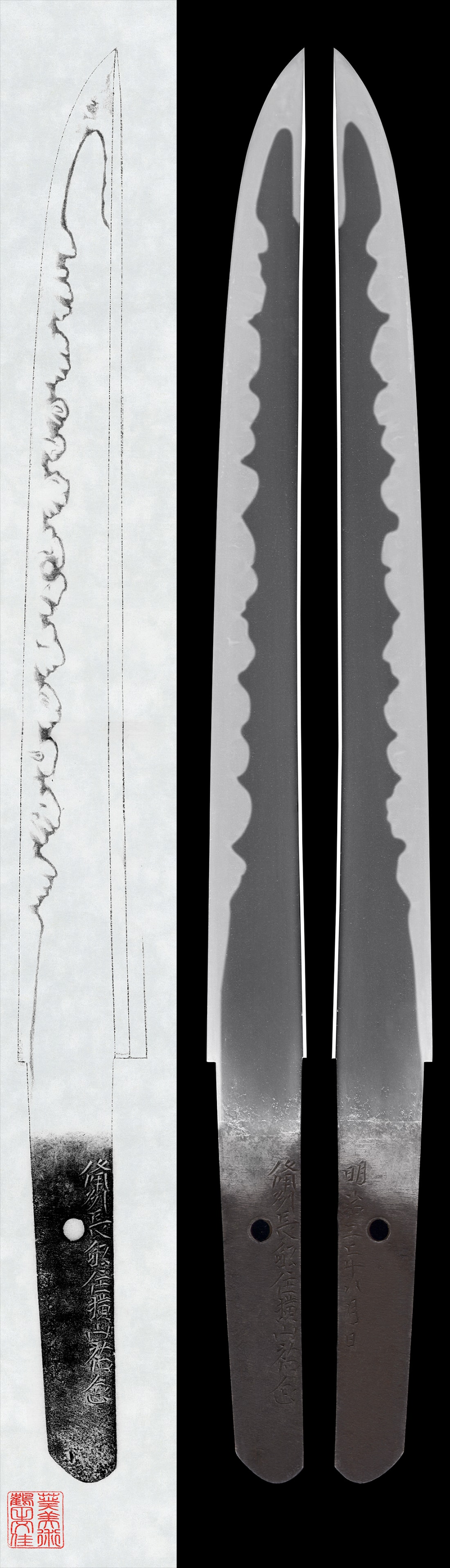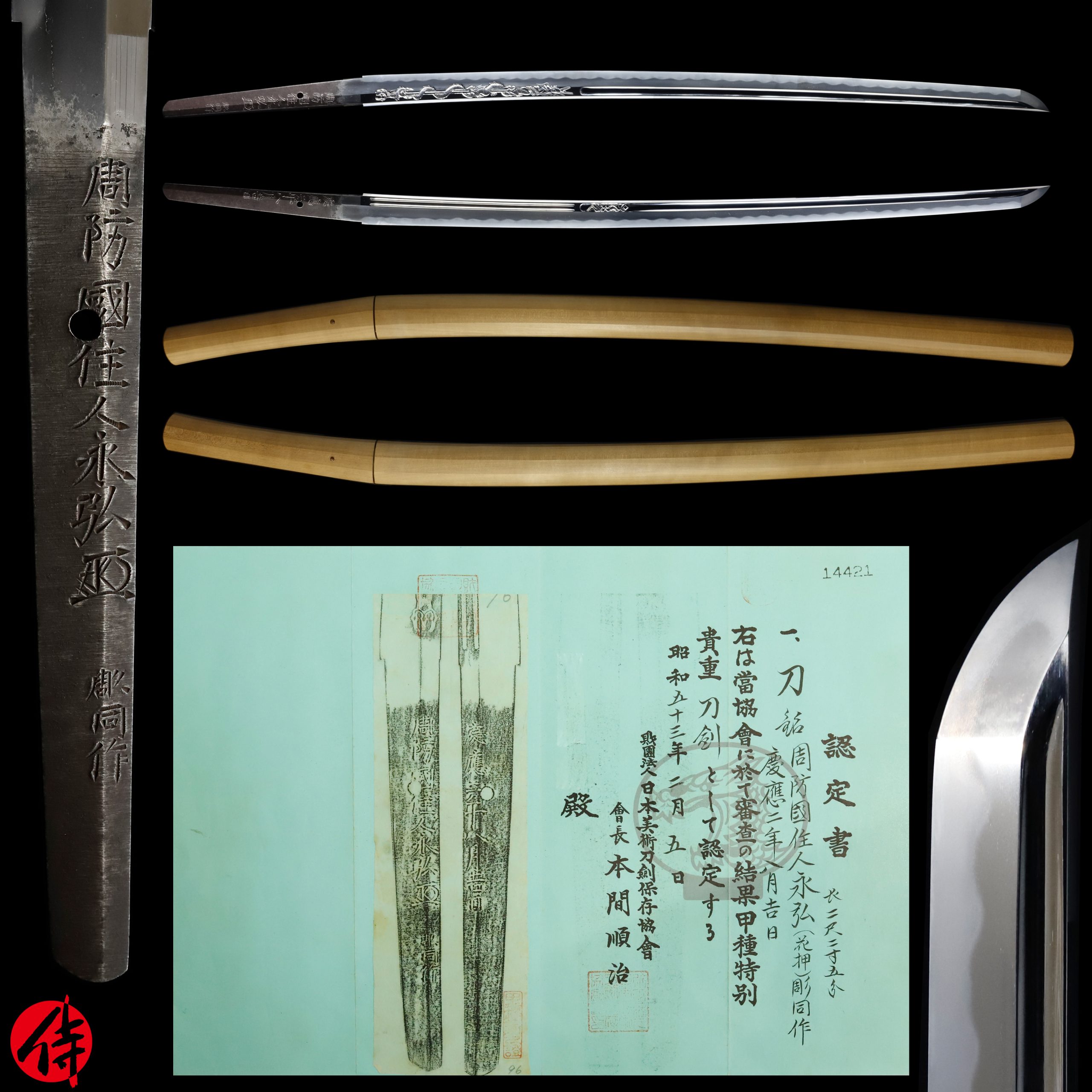
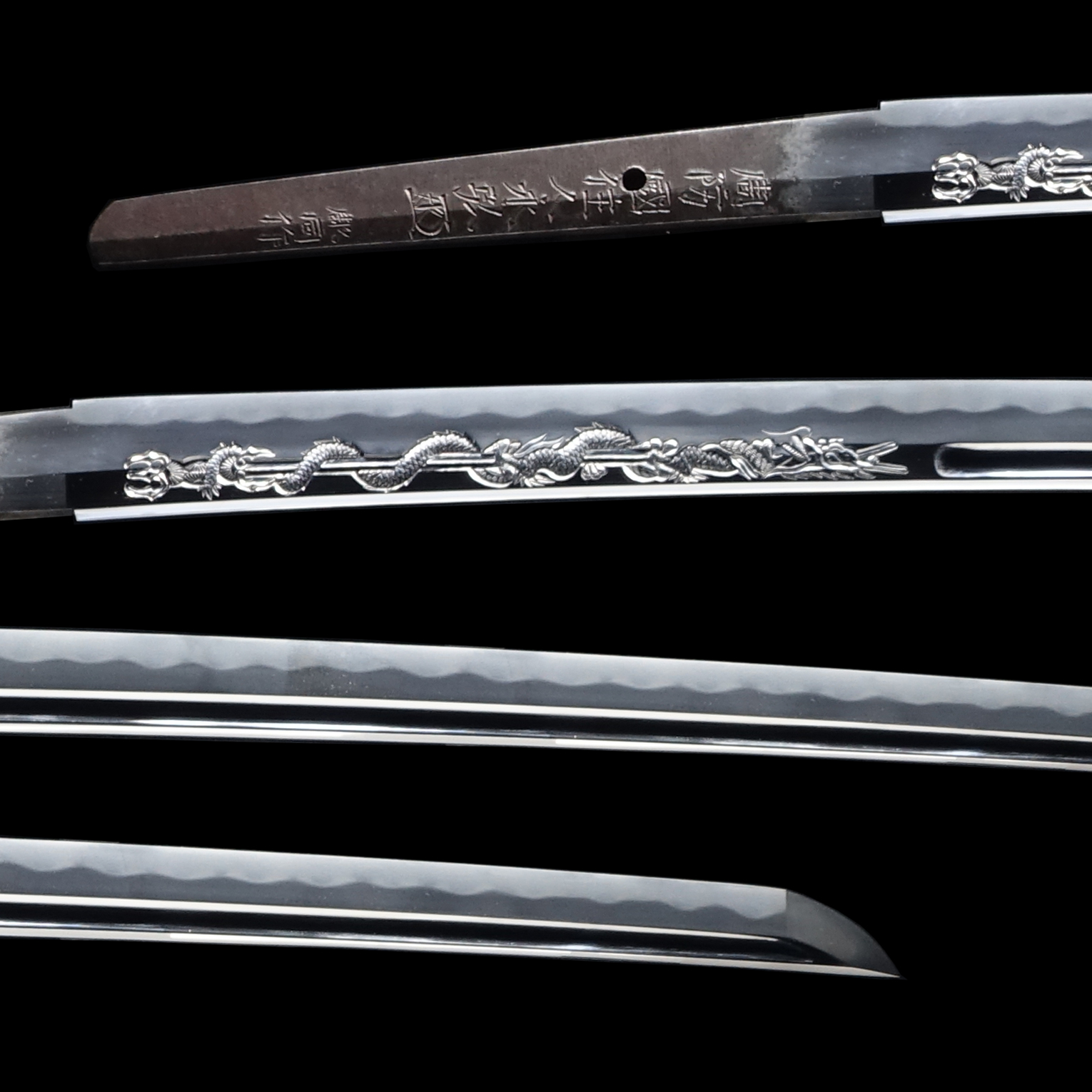
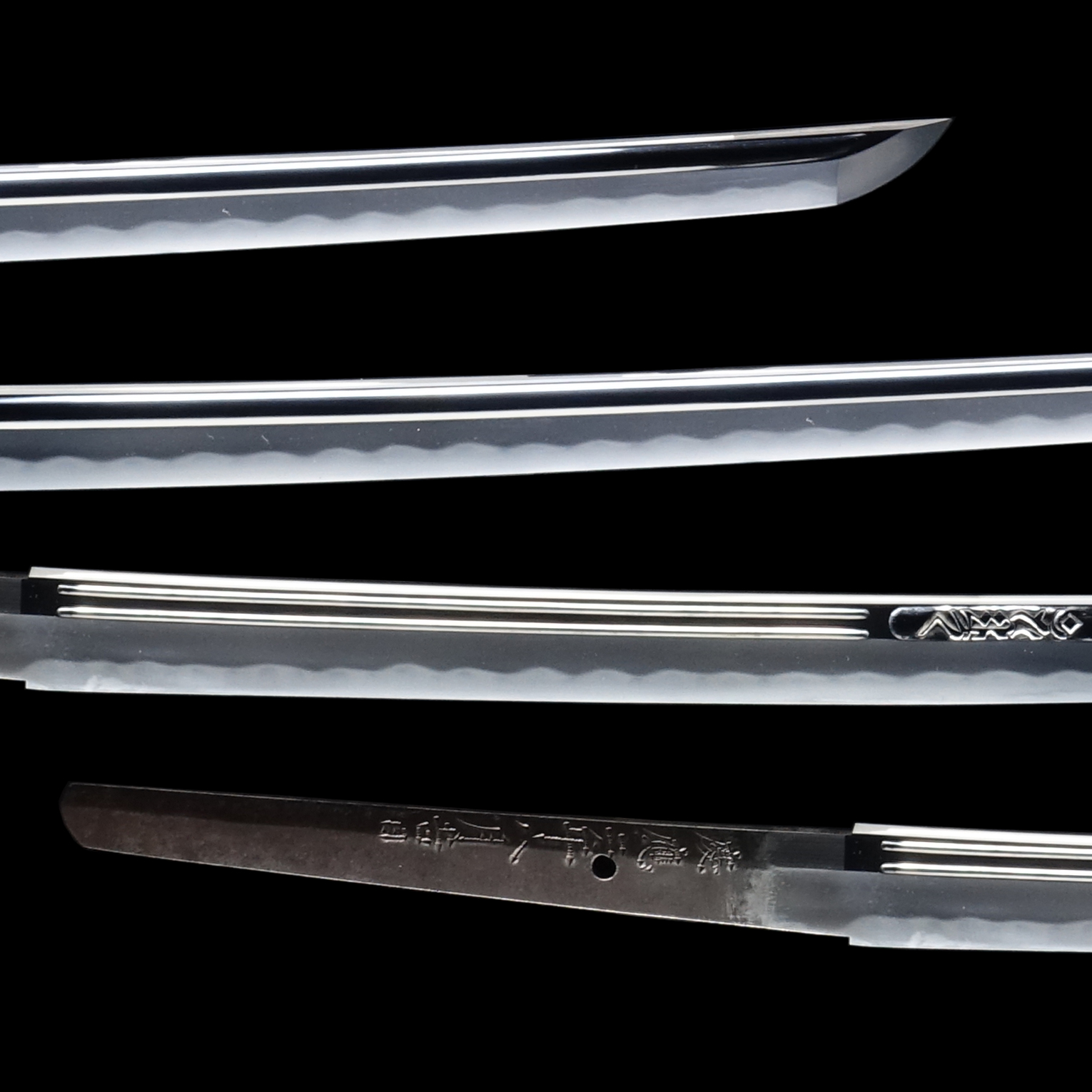
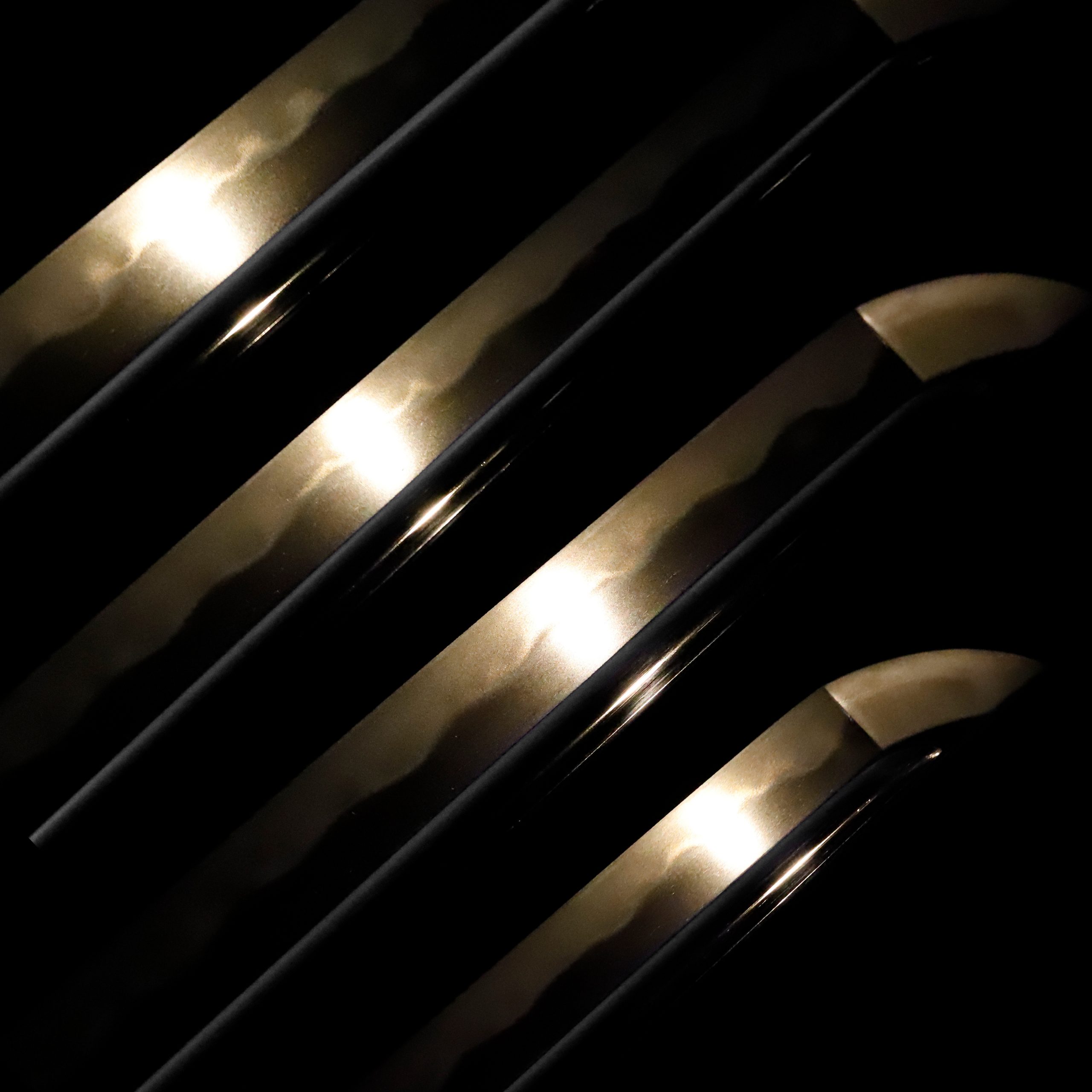
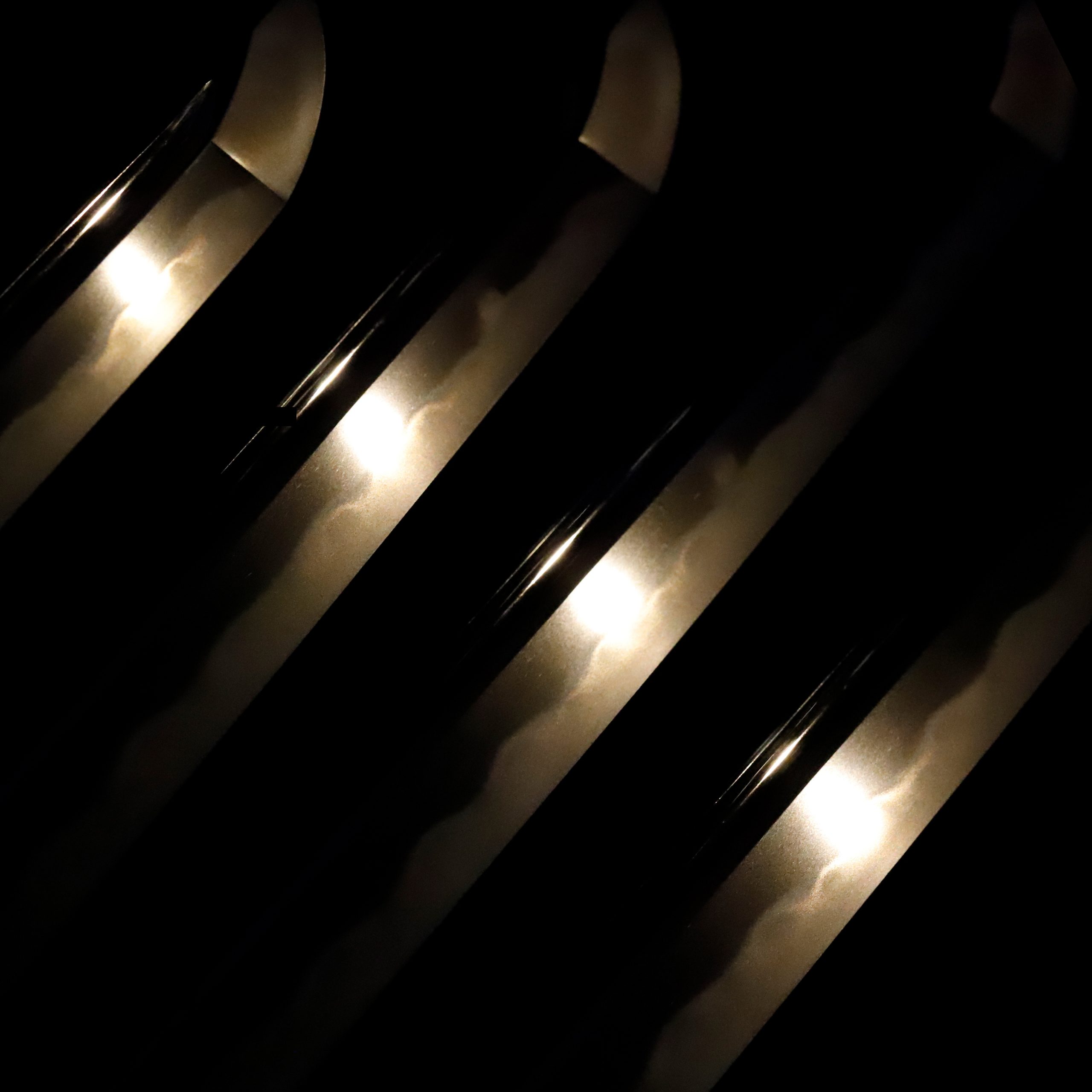
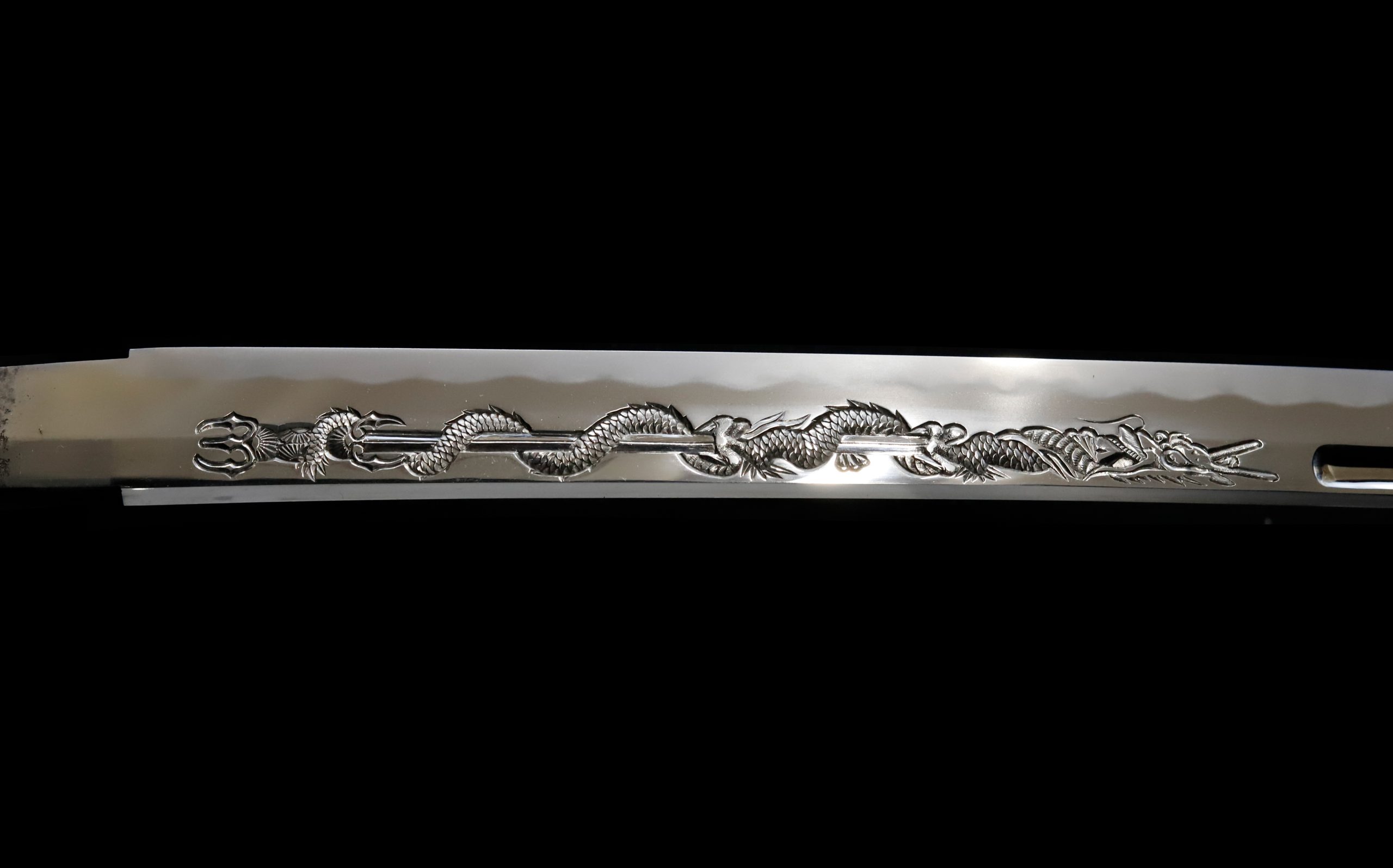
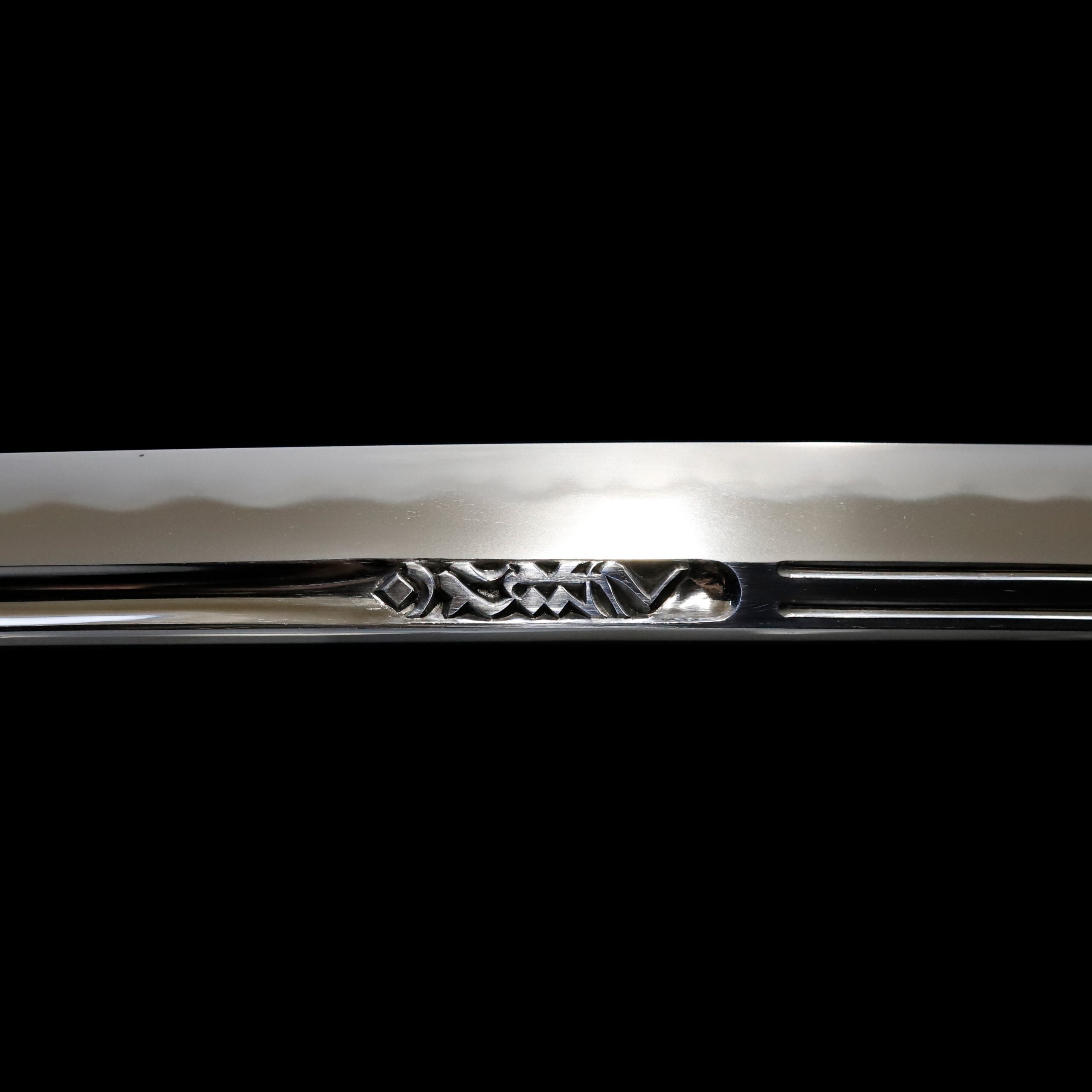
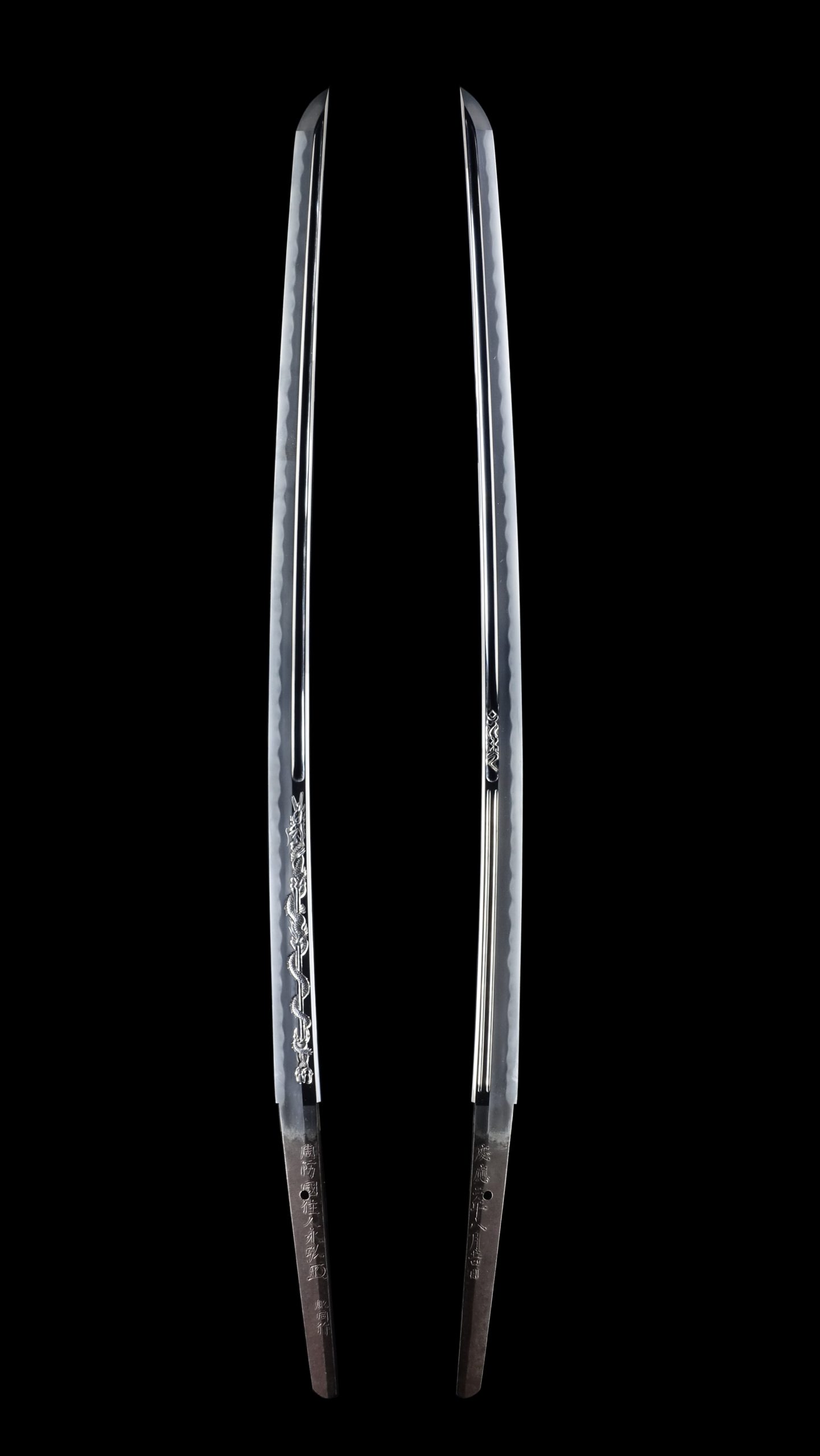
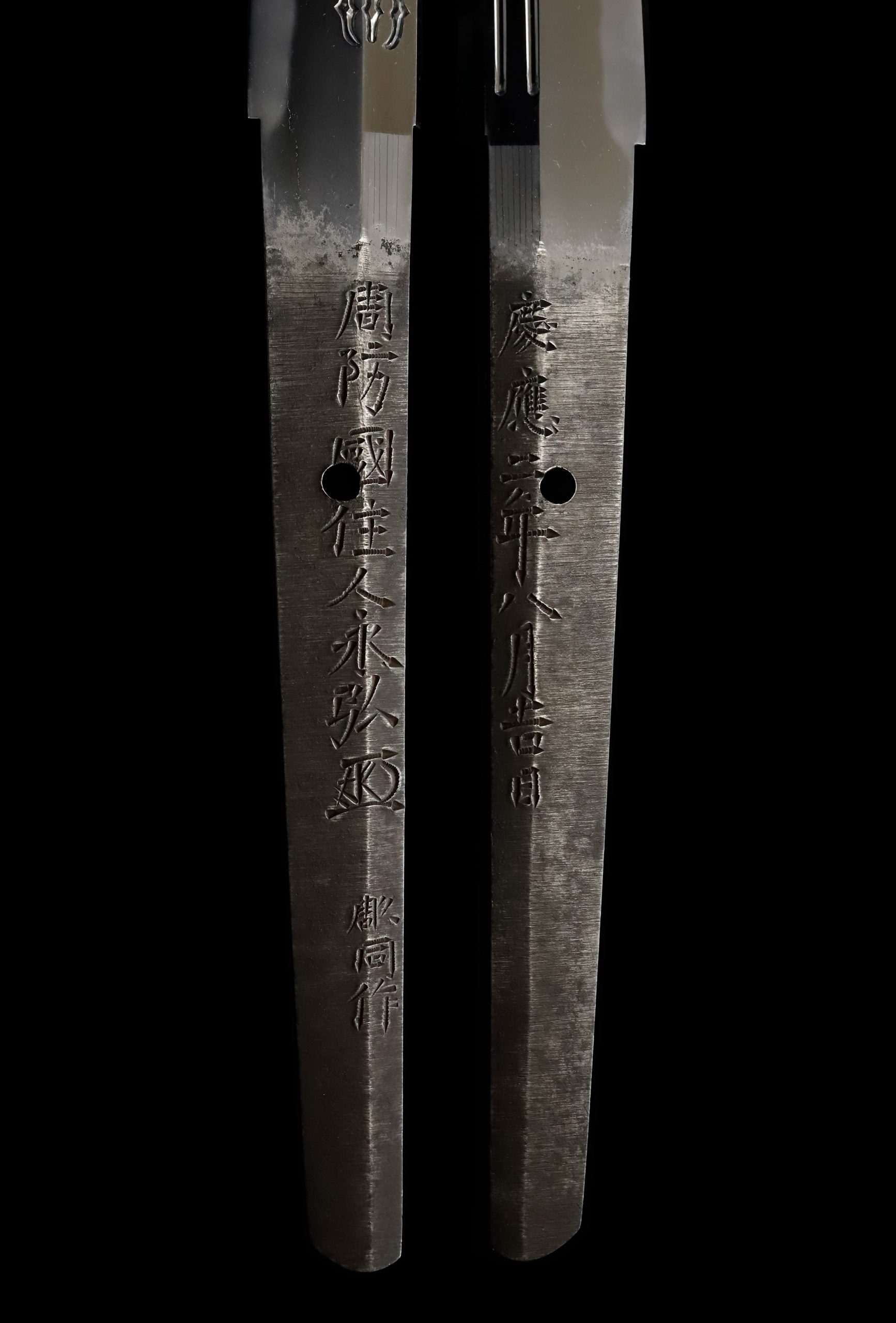
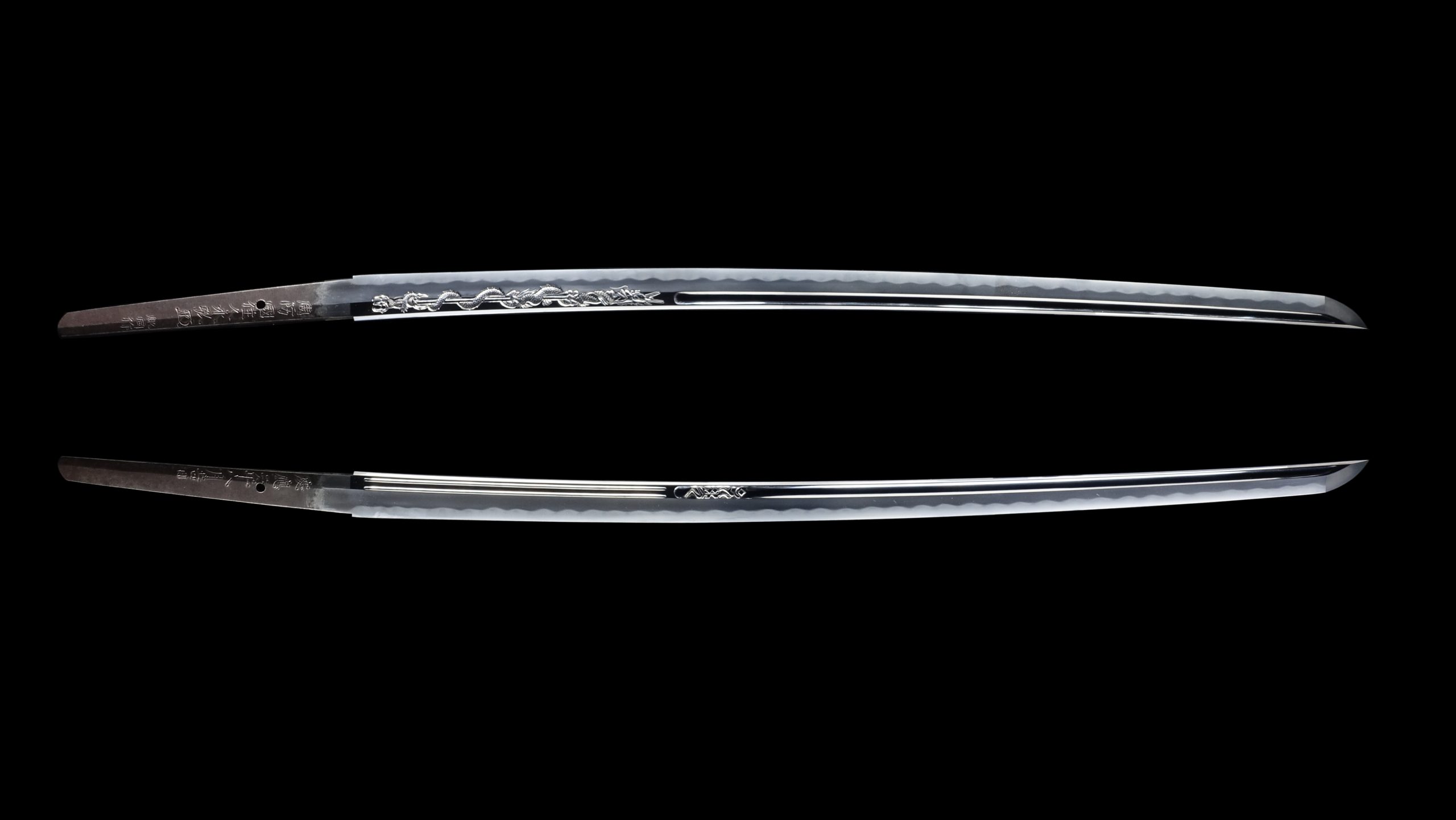
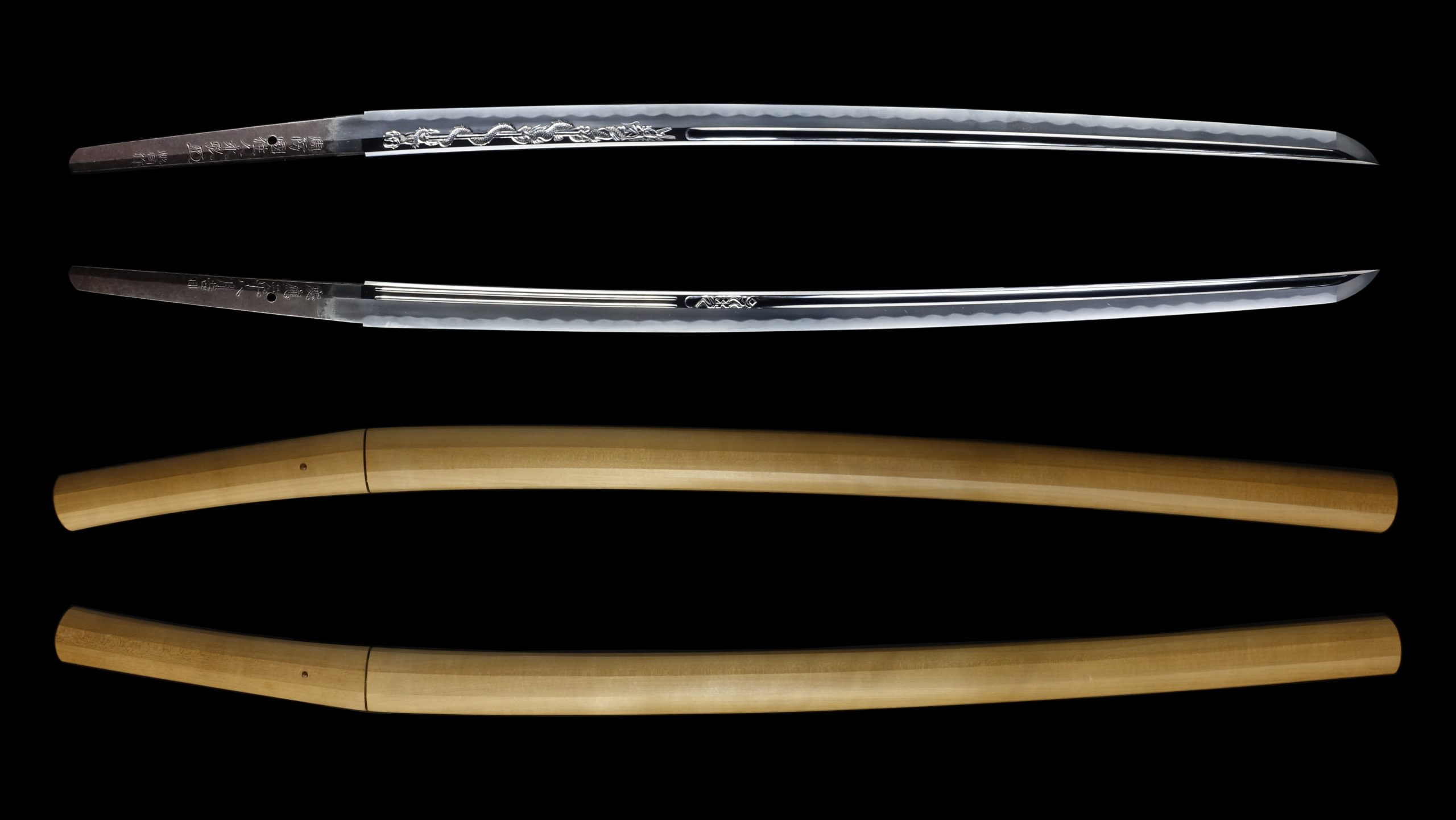
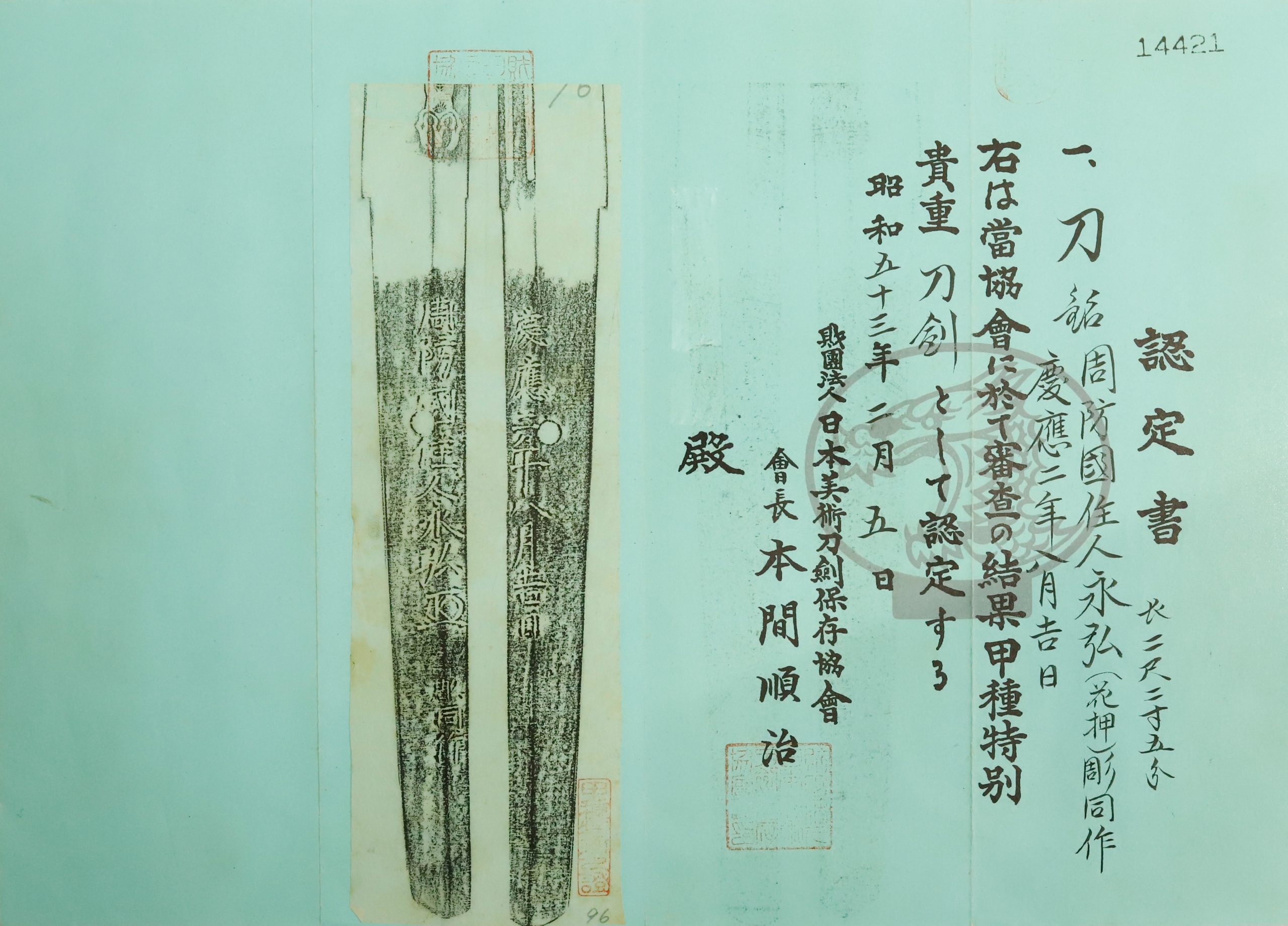
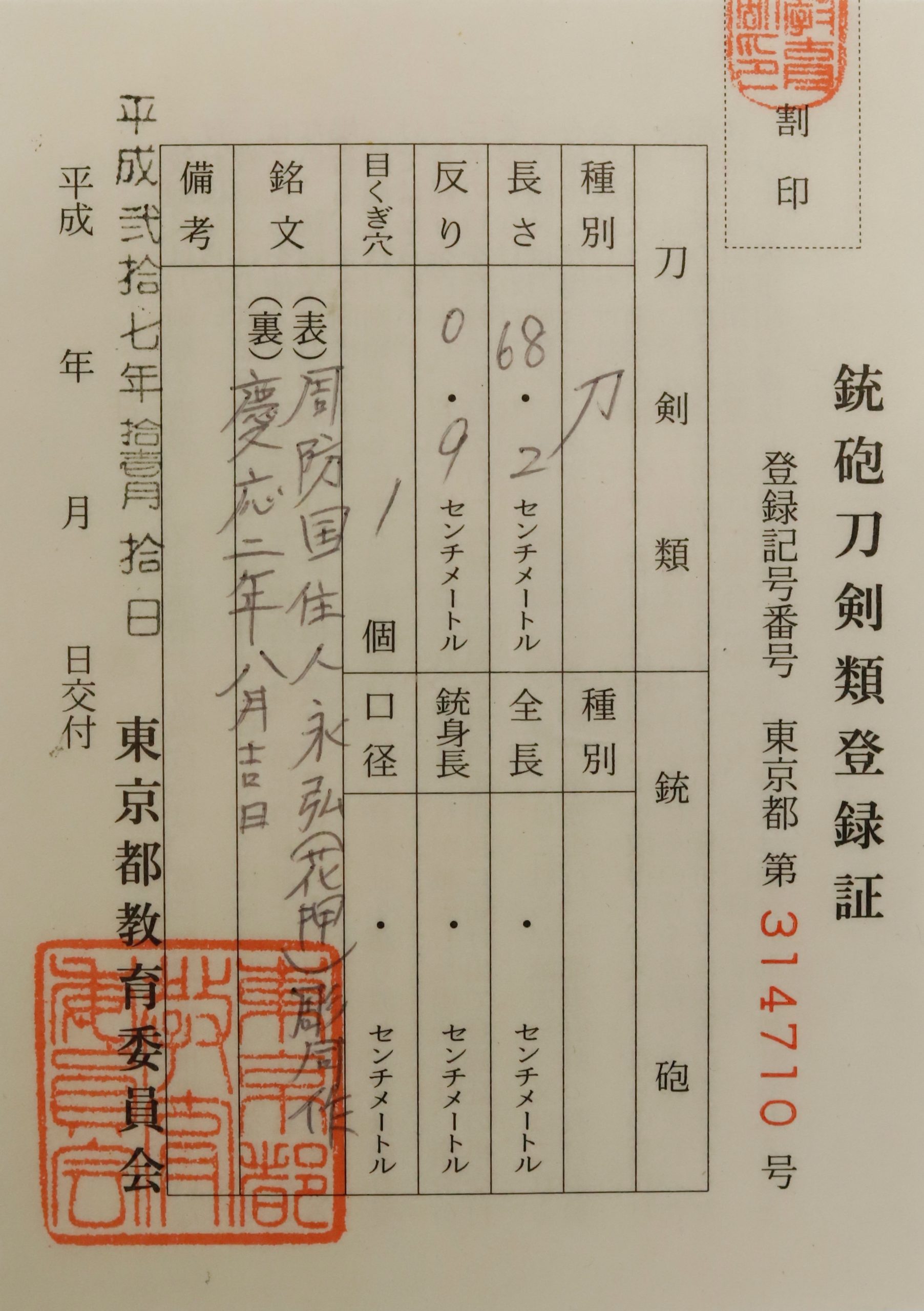
This antique Japanese Katana was signed by Suo Koku Jyunin Nagahiro in 1866, during the late Edo period. Nagahiro was a renowned swordsmith from the Choshu region and an apprentice of Yokoyama Kaganosuke Sukenaga. The blade features an engraving of a Kurikara Ken and a dragon, with a Sanskrit letter for Fudo Myo-o on the reverse side. It comes with an NBTHK Koshu Tokubetsu Kicho Certificate.
mei · Keio (1865-1868) · nagasa 68.2cm · sori 0.9cm


Suo · around 1865-1868
Tōken Taikan top 60%
6 pieces on the market now
This work carries older NBTHK “Kichō”-era papers, which the NBTHK no longer issues and now regards as unreliable. To confirm the attribution, submission to an official Japanese examination body (such as the NBTHK or NTHK) for modern certification could be considered.
Returns/exchanges limited to defects caused by shipping (except willful misconduct or gross negligence by the company); customers must contact within 72 hours of receiving the product.
This antique Japanese Katana was signed by Suo Koku Jyunin Nagahiro in 1866, during the late Edo period. Nagahiro was a renowned swordsmith from the Choshu region and an apprentice of Yokoyama Kaganosuke Sukenaga. The blade features an engraving of a Kurikara Ken and a dragon, with a Sanskrit letter for Fudo Myo-o on the reverse side. It comes with an NBTHK Koshu Tokubetsu Kicho Certificate.
mei · Keio (1865-1868) · nagasa 68.2cm · sori 0.9cm


Suo · around 1865-1868
Tōken Taikan top 60%
6 pieces on the market now
This work carries older NBTHK “Kichō”-era papers, which the NBTHK no longer issues and now regards as unreliable. To confirm the attribution, submission to an official Japanese examination body (such as the NBTHK or NTHK) for modern certification could be considered.
Returns/exchanges limited to defects caused by shipping (except willful misconduct or gross negligence by the company); customers must contact within 72 hours of receiving the product.