NihontoWatch MonNihontoWatch
Market
Encyclopedia
Kantei
NihontoWatch MonNihontoWatch
Market
Encyclopedia
Kantei

Description

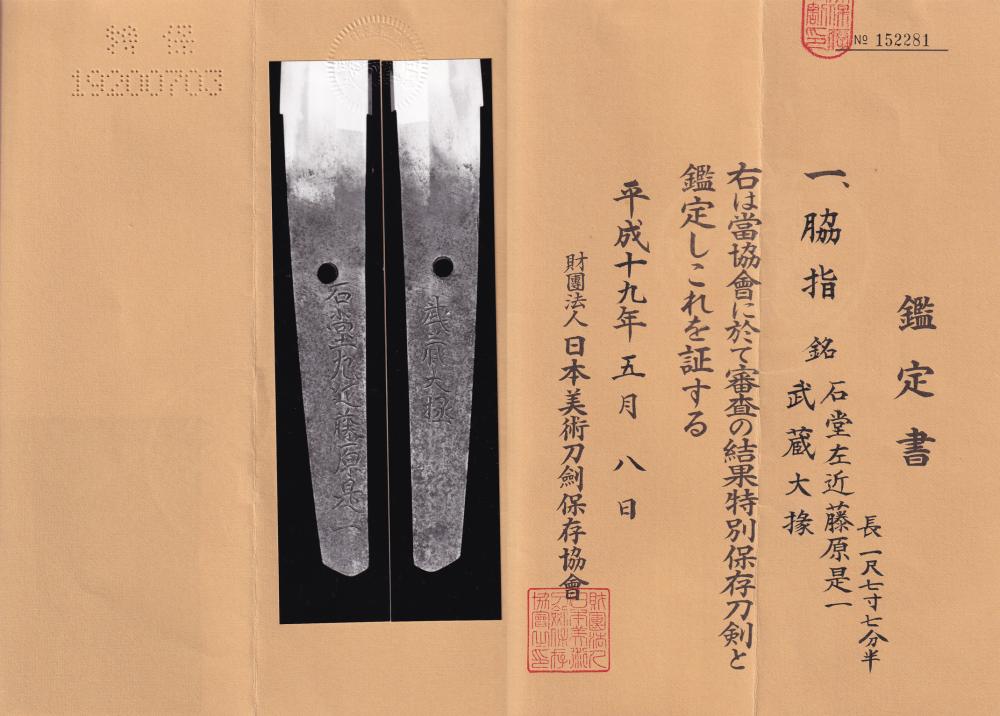
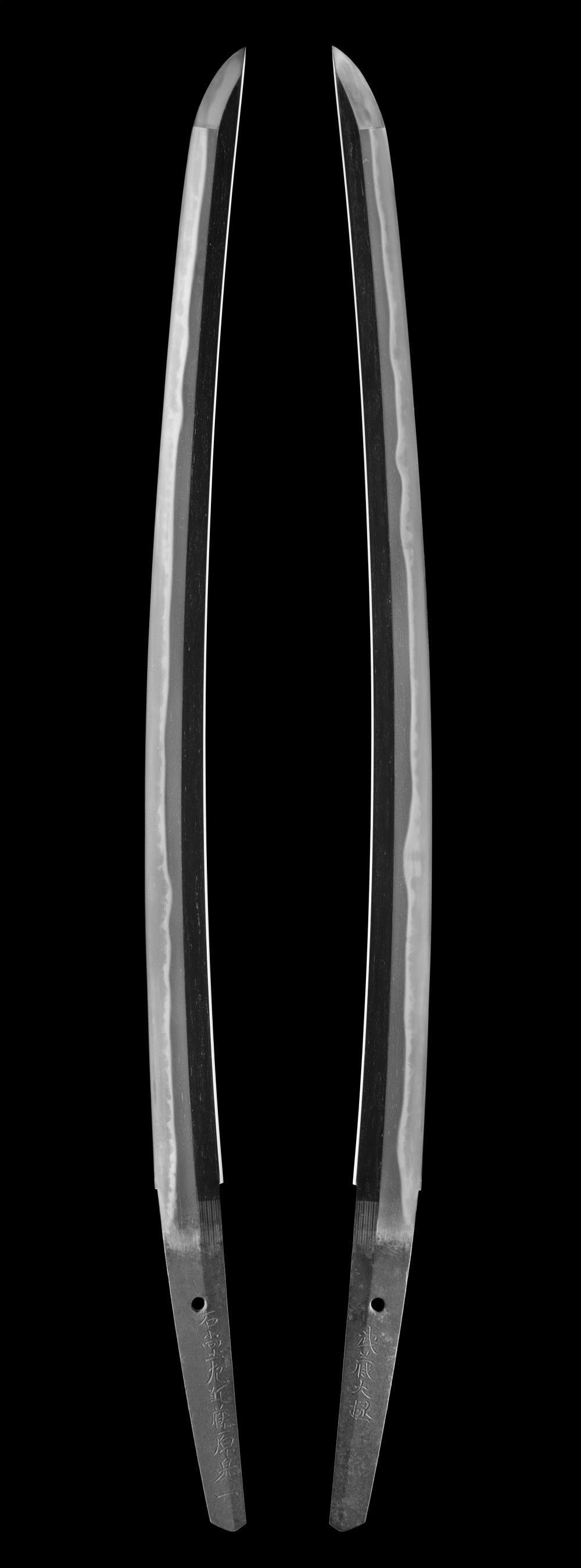
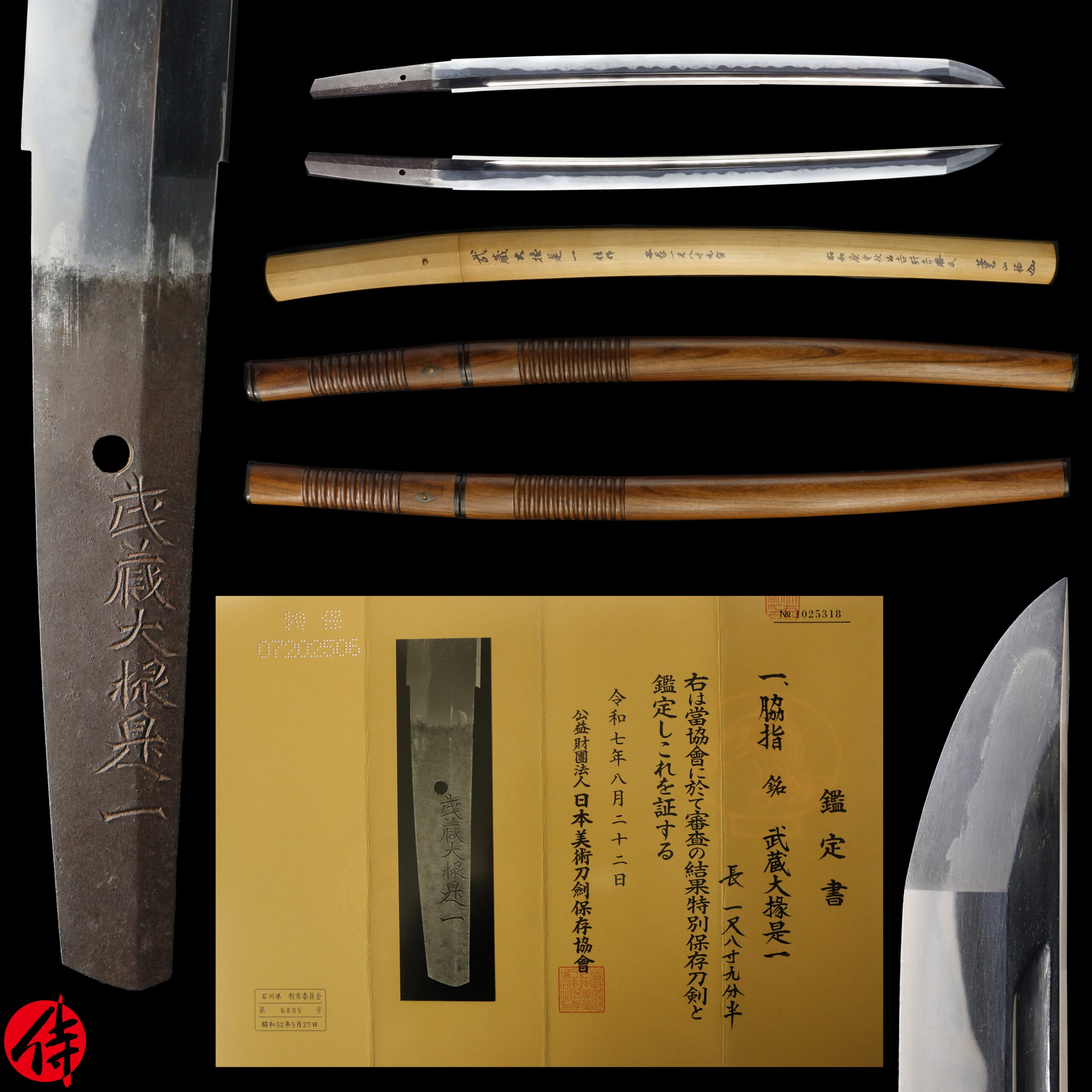
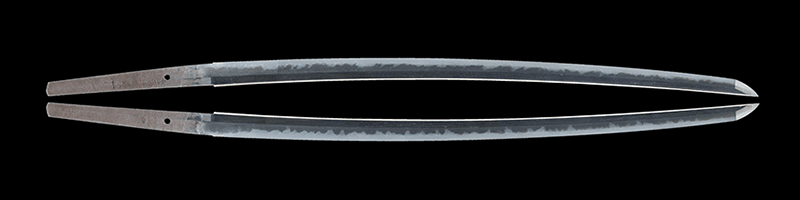
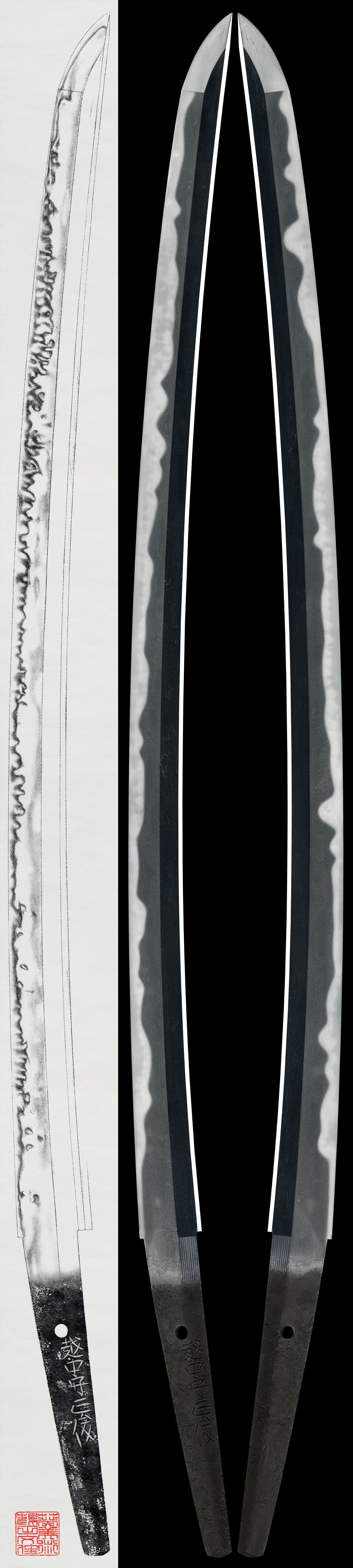
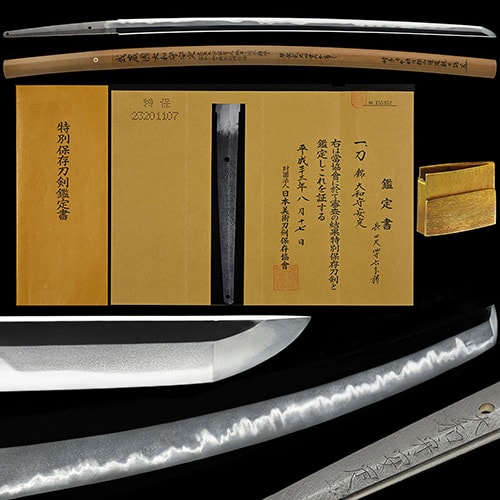
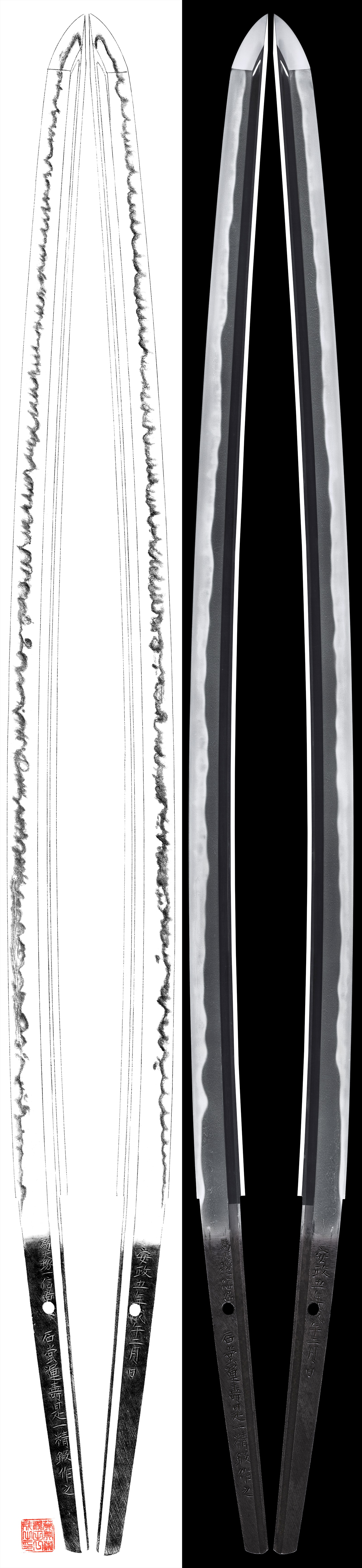
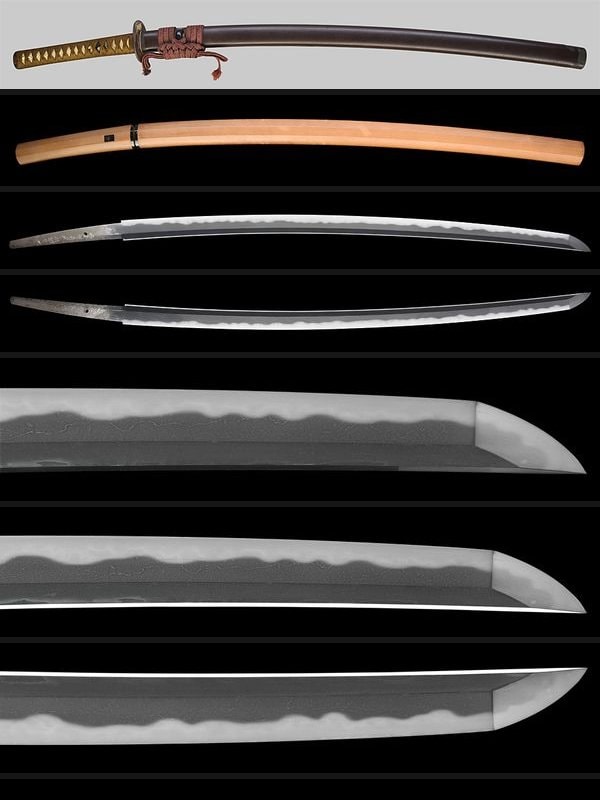
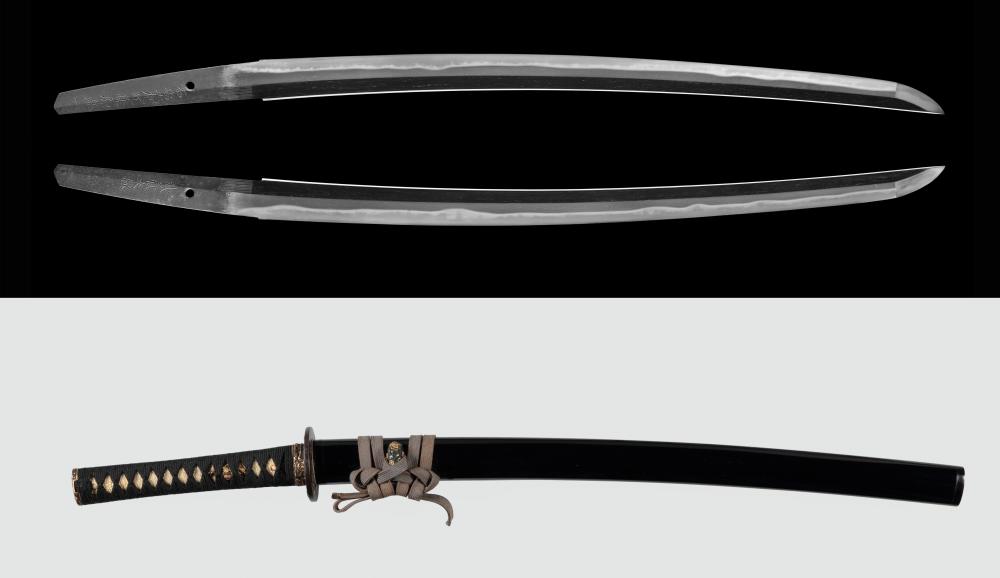
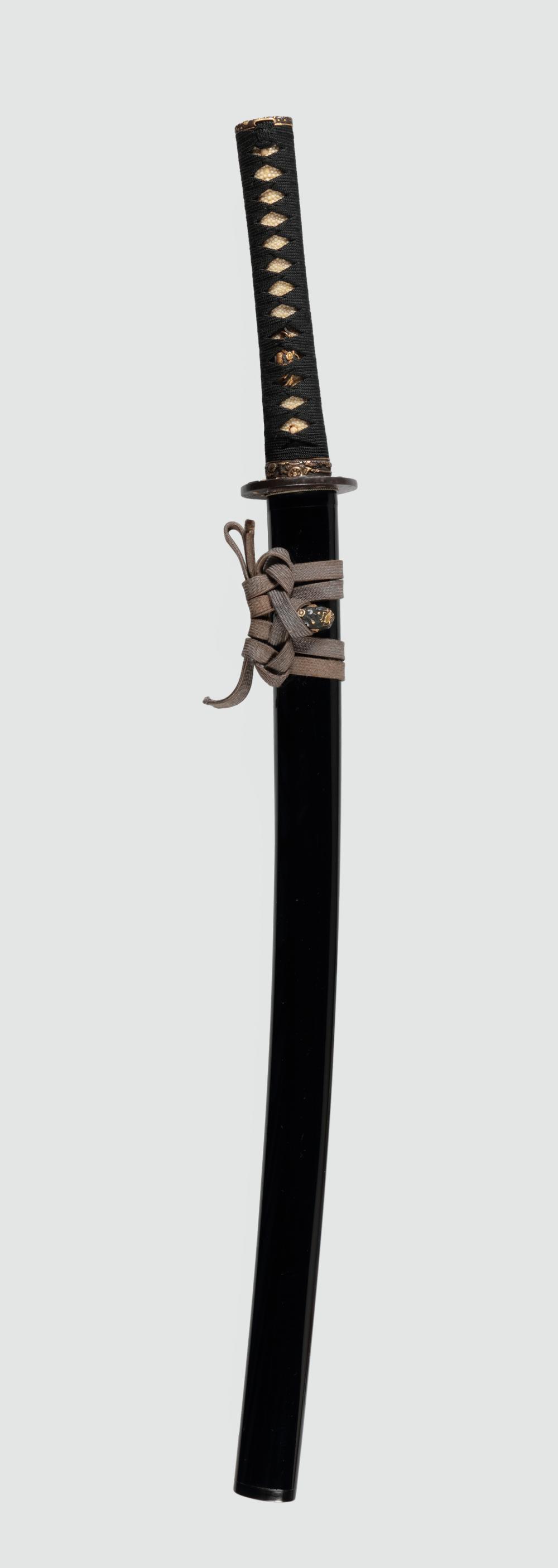
This is a wakizashi by the first generation Ishido Sakon Fujiwara Korekazu, who was the founder of the Edo Ishido school. It features a suguba hamon with ko-gunome and a jigane of ko-itame with ji-nie. The sword comes with koshirae, where the tsuba, fuchi-kashira, and menuki are all themed with a flower basket design.

NihontoWatch MonNihontoWatch
MarketEncyclopediaKantei
Swords›Ishido›Korekazu›Wakizashi: Ishido Sakon Fujiwara Korekazu Musashi Daijo
wakizashiTokubetsu Hozon
Ishido Korekazu

Wakizashi: Ishido Sakon Fujiwara Korekazu Musashi Daijo

mei · Ishido · Keian (1648-1652) · nagasa 53.8cm · sori 1.4cm

SOLD
Ishido Korekazu (是一) · Ishido · Keian (1648-1652)1 work for sale →
Wakizashi
Could you name the smith from the blade alone? Today’s kantei →
Ishido Korekazu — 1 of 4
Ishido Korekazu — 2 of 4
Ishido Korekazu — 3 of 4
Ishido Korekazu — 4 of 4
1 / 4
1 / 4
Ishido Korekazu — 1 of 4Ishido Korekazu — 2 of 4Ishido Korekazu — 3 of 4Ishido Korekazu — 4 of 4
Ishido Korekazu (是一) · Ishido · Keian (1648-1652)1 work for sale →
Wakizashi
Could you name the smith from the blade alone? Today’s kantei →
Measurements & details
Smith
Ishido Korekazu
Type
Wakizashi
School
Ishido
Period
Around 1648–1652(Keian)
Province
Musashi
Signature
Signed(100% of this smith's designated works are signed)
Measurements
Nagasa 53.8cmSori 1.4cmMotohaba 3.23cmSakihaba 2.15cmKasane 0.54cm
Description

This is a wakizashi by the first generation Ishido Sakon Fujiwara Korekazu, who was the founder of the Edo Ishido school. It features a suguba hamon with ko-gunome and a jigane of ko-itame with ji-nie. The sword comes with koshirae, where the tsuba, fuchi-kashira, and menuki are all themed with a flower basket design.

About the maker

Korekazu

是一

Shinto · Musashi · around 1648-1652

Fujishiro Jo saku · Tōken Taikan top 37%

1 piece on the market now

›

Historical importance

Where Korekazu stands among comparable artisans: across all of nihontō, and within tradition, era, and period. The tiers (Foremost · Leading · Major · Notable) weigh official designations from the NBTHK and Japan's Agency for Cultural Affairs, together with historical honors of lasting repute such as the Sansaku and Meibutsu-chō.

随一
Foremost
屈指
Leading
有数
Major
著名
Notable

Select a lens to see how it's measured.

Designation record
2 designated works
Jūyō
2
1 work by Korekazu on the market→
Korekazu — full profileShinto school

Study this maker →

About the school

Ishido

石堂

Shinto · Omi

47 pieces on the market now

›

The Ishido school (石堂) traces its root to Omi Province, where smiths surnamed Hioki and bearing names such as Ishido worked before the line dispersed across the country in the early Edo period. From that Omi stem grew four principal branches: the Fukuoka Ishido of Chikuzen, the Edo Ishido carried east by makers who had first gone up from Omi to Kyoto, the Osaka Ishido seeded by smiths who settled in the merchant city, and the Kishu Ishido working under the Kii daimyo. What bound these scattered workshops was a single, deliberate program: the recovery of the choji-midare of the old Ichimonji and Ko-Bizen, complete with the utsuri that the medieval Bizen masters had carried in their steel. The school's very name records this revival as a historical project rather than an imitation, for its smiths set out to recover the bright, reflection-bearing Bizen jigane that most shinto makers of the seventeenth century could no longer produce. Korekazu, Tsunemitsu, Moritsugu, and Tameyasu stand among the names by which the branches are known, alongside Bicchu no Kami Yasuhiro, who bridged the Kishu and Osaka lines, and Tatara Nagayuki of Osaka. The shared vocabulary of the school begins with the temper. Over a tightly forged itame, often a well-packed ko-itame mixing mokume and a little nagare-hada, the Ishido smiths cut a choji-midare crowded with double-flower juka-choji, fukuro-choji, large and small choji, gunome, and pointed elements, so the line shows pronounced height as it crests and falls. Ashi and yo enter in profusion, the work turning nioi-dominant with attached ko-nie, sunagashi running through and kinsuji appearing here and there. Beneath sits the surer half of the recognition: a well-forged itame carrying ji-nie in minute particles, across which stands a midare-utsuri.

Utsuri on a new-sword blade is rare and deliberate, and its recovery was the school's whole purpose, so a flamboyant choji standing over a clear irregular reflection is the first thing that separates an Ishido blade from any other shinto choji. The published sources name the school's two Bizen models directly: the Ichimonji-copy choji-midare and the Sue-Bizen-copy gunome with an opened lower contour, both worked in nioi-deki. Within these constants the branches diverge. Tsunemitsu of the Edo group holds his bright, height-varied juka-choji over a vividly standing reflection across every blade on record; Yasuhiro of the Kishu and Osaka lines tells himself by a saka-gokoro, a reverse slant in the choji and ashi most marked in his early work, and by the chrysanthemum crest of his titled years; Nagayuki of Osaka, reckoned the leading Bizen-den hand among the shinto makers, divides cleanly between his Ichimonji choji and a gunome modeled on Yosazaemon no Jo Sukesada, the boshi entering midare-komi, pointed at the tip, and turning back deeply. To kantei an Ishido blade is to read revived Bizen choji on a shinto ground: the flamboyant clove temper above, the midare-utsuri standing below, but a jigane whose nie and forging belong unmistakably to the new-sword period rather than to any true koto reflection. The recurring verdict the judges return to is that the best work recalls the old Ichimonji of classical times, brought vividly to mind by Tsunemitsu's Edo pieces in particular. Among the school's members the first-rank names carry the recognition: Korekazu and his fellows of the Fukuoka and Edo branches, Tsunemitsu by his standing utsuri and juka-choji, Yasuhiro at the junction of two branches, and Nagayuki at the head of the Bizen-den shinto hands. Provenance attaches to a portion of the school's record; Yasuhiro's broad pre-title wakizashi was transmitted in the Shimazu house of Satsuma, and one of his katana is recorded in the Imperial collection, while much of the wider Ishido output sits in the Juyo tier, more often kept than traded. A securely signed Ishido blade, showing the bright clove over a standing reflection, remains the document of how a shinto school brought the old Ichimonji choji back to life. Learn more →

15 recorded smiths101 designated works
Leading smiths
SmithEraDesignated
Tsunemitsu常光1648-16617
Yasuhiro安廣1661-16734
Korekazu是一1648-16522
Ippo一峯1688-17040
Ippo一峯1648-16521
Explore the Ishido school →

Historical context

The Edo period (1615 to 1868)

›

Under the Tokugawa peace the daishō became a regulated uniform, and demand gathered in the castle towns, above all Edo itself. The craft split two ways: brilliant display work for connoisseurs, and tested blades whose cutting results were sometimes inlaid in gold.

The Edo period (1615 to 1868) →

NBTHK Certificate
Tokubetsu Hozon Tōken特別保存刀剣
Sword Especially Worthy of Preservation
›

A Hozon-certified blade judged to show notably superior workmanship and a better state of preservation. The bar is higher: re-tempered blades and most unsigned Muromachi/Edo works are excluded.

About the NBTHK›

The NBTHK (Nihon Bijutsu Tōken Hozon Kyōkai, the Society for the Preservation of Japanese Art Swords) is a public-interest incorporated foundation founded in 1948 and supervised by Japan’s Agency for Cultural Affairs (Bunkachō); it is based at the Japanese Sword Museum in Tokyo. Its expert panels physically examine each submitted work (shinsa) and issue a certificate (kanteishō) ranking it by artistic and historical merit. NBTHK papers are the most widely recognized standard of authentication for Japanese swords and fittings.

NBTHK official site→
Seller
S
Shoubudou
🇯🇵Ships from Japan
›
✓Verified dealershoubudou.co.jp
✓Ships worldwide✓English supportWire transferPayPalCredit card
Return policy

Please contact us by phone within 3 days of the item's arrival and ship it back the next day. The postage and security service fees are the customer's responsibility.

View all of Shoubudou’s listings→View this item on the dealer’s site→

More works by Ishido Korekazu

View all →
Touken Komachi
Tokuho
Wakizashi - Tokuho - by Ishido Korekazu - Musashi Daijyo Fujiwara KorekazuWakizashi - Tokuho - by Ishido Korekazu - Musashi Daijyo Fujiwara Korekazu

Wakizashi

ByIshido Korekazu
¥480,000

Previously sold by Ishido Korekazu

View all →
Samurai Museum
Tokuho
Wakizashi - Tokuho - by Ishido Korekazu - Musashi Daijo KorekazuWakizashi - Tokuho - by Ishido Korekazu - Musashi Daijo Korekazu
Sold

Wakizashi

ByIshido Korekazu
SOLD
Samurai Museum
Hozon
Katana - Hozon - by Ishido Korekazu - Musashi Daijo Korekazu - NBTHK Hozon CertificateKatana - Hozon - by Ishido Korekazu - Musashi Daijo Korekazu - NBTHK Hozon Certificate
Sold

Katana

ByIshido Korekazu
SOLD
Supein Nihonto
Hozon
Katana - Hozon - by Ishido Korekazu - Fujiwara Korekazu - Exhibition ItemKatana - Hozon - by Ishido Korekazu - Fujiwara Korekazu - Exhibition Item
Sold

Katana

ByIshido Korekazu
SOLD
Iida Koendo
Jūyō
Katana - Jūyō - by Ishido Korekazu - Musashi Daijo KorekazuKatana - Jūyō - by Ishido Korekazu - Musashi Daijo Korekazu
Sold

Katana

ByIshido Korekazu
SOLD
Choshuya
Katana - by Ishido Korekazu - Musashi Daijo Korekazu (1st Generation)Katana - by Ishido Korekazu - Musashi Daijo Korekazu (1st Generation)
Sold

Katana

ByIshido Korekazu
SOLD

More from the Ishido school

View all →
Aoi Art
Hozon
Katana - Hozon - by Kishu Ishido Masatoshi - Ecchu-no-kami MasatoshiKatana - Hozon - by Kishu Ishido Masatoshi - Ecchu-no-kami Masatoshi

Katana

ByKishu Ishido Masatoshi
Starting Bid¥1,150,000
Eirakudo
Tokuho
Katana - Tokuho - by Ishido Yasusada - Yamatonokami Yasusada - Tokubetsu Hozon TokenKatana - Tokuho - by Ishido Yasusada - Yamatonokami Yasusada - Tokubetsu Hozon Token

Katana

ByIshido Yasusada
¥3,300,000
Nipponto
Tokuho
Katana - Tokuho - by Ishido Yasusada - Japanese Sword Katana by Yamatonokami Yasusada (Famous as the beloved sword of Shinsengumi Captain Okita Soji)Katana - Tokuho - by Ishido Yasusada - Japanese Sword Katana by Yamatonokami Yasusada (Famous as the beloved sword of Shinsengumi Captain Okita Soji)

Katana

ByIshido Yasusada
Ask
Aoi Art
Jūyō
Katana - Jūyō - by Ishido Korekazu - Sekido Unju KorekazuKatana - Jūyō - by Ishido Korekazu - Sekido Unju Korekazu

Katana

ByIshido Korekazu
¥4,500,000
Toushin
Tokuho
Katana - Tokuho - by Ishido Tsunahiro - Kishu ju Tsunahiro - 2-1689Katana - Tokuho - by Ishido Tsunahiro - Kishu ju Tsunahiro - 2-1689

Katana

ByIshido Tsunahiro
¥990,000
Token-Net
Jūyō
Katana - Jūyō - by Ishido Korekazu - Ishido Unju Korekazu - Bunkyu Gannen Hachigatsu HiKatana - Jūyō - by Ishido Korekazu - Ishido Unju Korekazu - Bunkyu Gannen Hachigatsu Hi

Katana

ByIshido Korekazu
¥5,500,000
E-sword
Tokuho
Katana - Tokuho - by Ishido Yasusada - Yamato no Kami YasusadaKatana - Tokuho - by Ishido Yasusada - Yamato no Kami Yasusada

Katana

ByIshido Yasusada
¥1,980,000
Nihonto Australia
Tokuho
Katana - Tokuho - by Ishido Yasusada - YasusadaKatana - Tokuho - by Ishido Yasusada - Yasusada

Katana

ByIshido Yasusada
Ask

Swords

  • Katana
  • Wakizashi
  • Tantō
  • Tachi
  • Naginata
  • Yari
  • Japanese Swords
  • Samurai Swords

Fittings

  • Tsuba
  • Fuchi-Kashira
  • Kozuka
  • Menuki
  • Sword Guards (Tsuba)

Armor

  • Kabuto
  • Samurai Armor
  • All Samurai Armor

By Certification

  • Tokujū
  • Jūyō
  • Tokuho
  • Hozon

Resources

  • Dealer Directory
  • Artist Directory
  • The Daily Kantei
  • Glossary
  • Browse All
Nihontowatch© 2026
TermsPrivacyCookiesAbout
Sold

Description

This is a wakizashi by the first generation Ishido Sakon Fujiwara Korekazu, who was the founder of the Edo Ishido school. It features a suguba hamon with ko-gunome and a jigane of ko-itame with ji-nie. The sword comes with koshirae, where the tsuba, fuchi-kashira, and menuki are all themed with a flower basket design.

NihontoWatch MonNihontoWatch
MarketEncyclopediaKantei
Swords›Ishido›Korekazu›Wakizashi: Ishido Sakon Fujiwara Korekazu Musashi Daijo
wakizashiTokubetsu Hozon
Ishido Korekazu

Wakizashi: Ishido Sakon Fujiwara Korekazu Musashi Daijo

mei · Ishido · Keian (1648-1652) · nagasa 53.8cm · sori 1.4cm

SOLD
Ishido Korekazu (是一) · Ishido · Keian (1648-1652)1 work for sale →
Wakizashi
Could you name the smith from the blade alone? Today’s kantei →
Ishido Korekazu — 1 of 4
Ishido Korekazu — 2 of 4
Ishido Korekazu — 3 of 4
Ishido Korekazu — 4 of 4
1 / 4
1 / 4
Ishido Korekazu — 1 of 4Ishido Korekazu — 2 of 4Ishido Korekazu — 3 of 4Ishido Korekazu — 4 of 4
Ishido Korekazu (是一) · Ishido · Keian (1648-1652)1 work for sale →
Wakizashi
Could you name the smith from the blade alone? Today’s kantei →
Measurements & details
Smith
Ishido Korekazu
Type
Wakizashi
School
Ishido
Period
Around 1648–1652(Keian)
Province
Musashi
Signature
Signed(100% of this smith's designated works are signed)
Measurements
Nagasa 53.8cmSori 1.4cmMotohaba 3.23cmSakihaba 2.15cmKasane 0.54cm
Description

This is a wakizashi by the first generation Ishido Sakon Fujiwara Korekazu, who was the founder of the Edo Ishido school. It features a suguba hamon with ko-gunome and a jigane of ko-itame with ji-nie. The sword comes with koshirae, where the tsuba, fuchi-kashira, and menuki are all themed with a flower basket design.

About the maker

Korekazu

是一

Shinto · Musashi · around 1648-1652

Fujishiro Jo saku · Tōken Taikan top 37%

1 piece on the market now

›

Historical importance

Where Korekazu stands among comparable artisans: across all of nihontō, and within tradition, era, and period. The tiers (Foremost · Leading · Major · Notable) weigh official designations from the NBTHK and Japan's Agency for Cultural Affairs, together with historical honors of lasting repute such as the Sansaku and Meibutsu-chō.

随一
Foremost
屈指
Leading
有数
Major
著名
Notable

Select a lens to see how it's measured.

Designation record
2 designated works
Jūyō
2
1 work by Korekazu on the market→
Korekazu — full profileShinto school

Study this maker →

About the school

Ishido

石堂

Shinto · Omi

47 pieces on the market now

›

The Ishido school (石堂) traces its root to Omi Province, where smiths surnamed Hioki and bearing names such as Ishido worked before the line dispersed across the country in the early Edo period. From that Omi stem grew four principal branches: the Fukuoka Ishido of Chikuzen, the Edo Ishido carried east by makers who had first gone up from Omi to Kyoto, the Osaka Ishido seeded by smiths who settled in the merchant city, and the Kishu Ishido working under the Kii daimyo. What bound these scattered workshops was a single, deliberate program: the recovery of the choji-midare of the old Ichimonji and Ko-Bizen, complete with the utsuri that the medieval Bizen masters had carried in their steel. The school's very name records this revival as a historical project rather than an imitation, for its smiths set out to recover the bright, reflection-bearing Bizen jigane that most shinto makers of the seventeenth century could no longer produce. Korekazu, Tsunemitsu, Moritsugu, and Tameyasu stand among the names by which the branches are known, alongside Bicchu no Kami Yasuhiro, who bridged the Kishu and Osaka lines, and Tatara Nagayuki of Osaka. The shared vocabulary of the school begins with the temper. Over a tightly forged itame, often a well-packed ko-itame mixing mokume and a little nagare-hada, the Ishido smiths cut a choji-midare crowded with double-flower juka-choji, fukuro-choji, large and small choji, gunome, and pointed elements, so the line shows pronounced height as it crests and falls. Ashi and yo enter in profusion, the work turning nioi-dominant with attached ko-nie, sunagashi running through and kinsuji appearing here and there. Beneath sits the surer half of the recognition: a well-forged itame carrying ji-nie in minute particles, across which stands a midare-utsuri.

Utsuri on a new-sword blade is rare and deliberate, and its recovery was the school's whole purpose, so a flamboyant choji standing over a clear irregular reflection is the first thing that separates an Ishido blade from any other shinto choji. The published sources name the school's two Bizen models directly: the Ichimonji-copy choji-midare and the Sue-Bizen-copy gunome with an opened lower contour, both worked in nioi-deki. Within these constants the branches diverge. Tsunemitsu of the Edo group holds his bright, height-varied juka-choji over a vividly standing reflection across every blade on record; Yasuhiro of the Kishu and Osaka lines tells himself by a saka-gokoro, a reverse slant in the choji and ashi most marked in his early work, and by the chrysanthemum crest of his titled years; Nagayuki of Osaka, reckoned the leading Bizen-den hand among the shinto makers, divides cleanly between his Ichimonji choji and a gunome modeled on Yosazaemon no Jo Sukesada, the boshi entering midare-komi, pointed at the tip, and turning back deeply. To kantei an Ishido blade is to read revived Bizen choji on a shinto ground: the flamboyant clove temper above, the midare-utsuri standing below, but a jigane whose nie and forging belong unmistakably to the new-sword period rather than to any true koto reflection. The recurring verdict the judges return to is that the best work recalls the old Ichimonji of classical times, brought vividly to mind by Tsunemitsu's Edo pieces in particular. Among the school's members the first-rank names carry the recognition: Korekazu and his fellows of the Fukuoka and Edo branches, Tsunemitsu by his standing utsuri and juka-choji, Yasuhiro at the junction of two branches, and Nagayuki at the head of the Bizen-den shinto hands. Provenance attaches to a portion of the school's record; Yasuhiro's broad pre-title wakizashi was transmitted in the Shimazu house of Satsuma, and one of his katana is recorded in the Imperial collection, while much of the wider Ishido output sits in the Juyo tier, more often kept than traded. A securely signed Ishido blade, showing the bright clove over a standing reflection, remains the document of how a shinto school brought the old Ichimonji choji back to life. Learn more →
15 recorded smiths101 designated works
Leading smiths
SmithEraDesignated
Tsunemitsu常光1648-16617
Yasuhiro安廣1661-16734
Korekazu是一1648-16522
Ippo一峯1688-17040
Ippo一峯1648-16521
Explore the Ishido school →

Historical context

The Edo period (1615 to 1868)

›

Under the Tokugawa peace the daishō became a regulated uniform, and demand gathered in the castle towns, above all Edo itself. The craft split two ways: brilliant display work for connoisseurs, and tested blades whose cutting results were sometimes inlaid in gold.

The Edo period (1615 to 1868) →

NBTHK Certificate
Tokubetsu Hozon Tōken特別保存刀剣
Sword Especially Worthy of Preservation
›

A Hozon-certified blade judged to show notably superior workmanship and a better state of preservation. The bar is higher: re-tempered blades and most unsigned Muromachi/Edo works are excluded.

About the NBTHK›

The NBTHK (Nihon Bijutsu Tōken Hozon Kyōkai, the Society for the Preservation of Japanese Art Swords) is a public-interest incorporated foundation founded in 1948 and supervised by Japan’s Agency for Cultural Affairs (Bunkachō); it is based at the Japanese Sword Museum in Tokyo. Its expert panels physically examine each submitted work (shinsa) and issue a certificate (kanteishō) ranking it by artistic and historical merit. NBTHK papers are the most widely recognized standard of authentication for Japanese swords and fittings.

NBTHK official site→
Seller
S
Shoubudou
🇯🇵Ships from Japan
›
✓Verified dealershoubudou.co.jp
✓Ships worldwide✓English supportWire transferPayPalCredit card
Return policy

Please contact us by phone within 3 days of the item's arrival and ship it back the next day. The postage and security service fees are the customer's responsibility.

View all of Shoubudou’s listings→View this item on the dealer’s site→

More works by Ishido Korekazu

View all →
Touken Komachi
Tokuho
Wakizashi - Tokuho - by Ishido Korekazu - Musashi Daijyo Fujiwara KorekazuWakizashi - Tokuho - by Ishido Korekazu - Musashi Daijyo Fujiwara Korekazu

Wakizashi

ByIshido Korekazu
¥480,000

Previously sold by Ishido Korekazu

View all →
Samurai Museum
Tokuho
Wakizashi - Tokuho - by Ishido Korekazu - Musashi Daijo KorekazuWakizashi - Tokuho - by Ishido Korekazu - Musashi Daijo Korekazu
Sold

Wakizashi

ByIshido Korekazu
SOLD
Samurai Museum
Hozon
Katana - Hozon - by Ishido Korekazu - Musashi Daijo Korekazu - NBTHK Hozon CertificateKatana - Hozon - by Ishido Korekazu - Musashi Daijo Korekazu - NBTHK Hozon Certificate
Sold

Katana

ByIshido Korekazu
SOLD
Supein Nihonto
Hozon
Katana - Hozon - by Ishido Korekazu - Fujiwara Korekazu - Exhibition ItemKatana - Hozon - by Ishido Korekazu - Fujiwara Korekazu - Exhibition Item
Sold

Katana

ByIshido Korekazu
SOLD
Iida Koendo
Jūyō
Katana - Jūyō - by Ishido Korekazu - Musashi Daijo KorekazuKatana - Jūyō - by Ishido Korekazu - Musashi Daijo Korekazu
Sold

Katana

ByIshido Korekazu
SOLD
Choshuya
Katana - by Ishido Korekazu - Musashi Daijo Korekazu (1st Generation)Katana - by Ishido Korekazu - Musashi Daijo Korekazu (1st Generation)
Sold

Katana

ByIshido Korekazu
SOLD

More from the Ishido school

View all →
Aoi Art
Hozon
Katana - Hozon - by Kishu Ishido Masatoshi - Ecchu-no-kami MasatoshiKatana - Hozon - by Kishu Ishido Masatoshi - Ecchu-no-kami Masatoshi

Katana

ByKishu Ishido Masatoshi
Starting Bid¥1,150,000
Eirakudo
Tokuho
Katana - Tokuho - by Ishido Yasusada - Yamatonokami Yasusada - Tokubetsu Hozon TokenKatana - Tokuho - by Ishido Yasusada - Yamatonokami Yasusada - Tokubetsu Hozon Token

Katana

ByIshido Yasusada
¥3,300,000
Nipponto
Tokuho
Katana - Tokuho - by Ishido Yasusada - Japanese Sword Katana by Yamatonokami Yasusada (Famous as the beloved sword of Shinsengumi Captain Okita Soji)Katana - Tokuho - by Ishido Yasusada - Japanese Sword Katana by Yamatonokami Yasusada (Famous as the beloved sword of Shinsengumi Captain Okita Soji)

Katana

ByIshido Yasusada
Ask
Aoi Art
Jūyō
Katana - Jūyō - by Ishido Korekazu - Sekido Unju KorekazuKatana - Jūyō - by Ishido Korekazu - Sekido Unju Korekazu

Katana

ByIshido Korekazu
¥4,500,000
Toushin
Tokuho
Katana - Tokuho - by Ishido Tsunahiro - Kishu ju Tsunahiro - 2-1689Katana - Tokuho - by Ishido Tsunahiro - Kishu ju Tsunahiro - 2-1689

Katana

ByIshido Tsunahiro
¥990,000
Token-Net
Jūyō
Katana - Jūyō - by Ishido Korekazu - Ishido Unju Korekazu - Bunkyu Gannen Hachigatsu HiKatana - Jūyō - by Ishido Korekazu - Ishido Unju Korekazu - Bunkyu Gannen Hachigatsu Hi

Katana

ByIshido Korekazu
¥5,500,000
E-sword
Tokuho
Katana - Tokuho - by Ishido Yasusada - Yamato no Kami YasusadaKatana - Tokuho - by Ishido Yasusada - Yamato no Kami Yasusada

Katana

ByIshido Yasusada
¥1,980,000
Nihonto Australia
Tokuho
Katana - Tokuho - by Ishido Yasusada - YasusadaKatana - Tokuho - by Ishido Yasusada - Yasusada

Katana

ByIshido Yasusada
Ask

Swords

  • Katana
  • Wakizashi
  • Tantō
  • Tachi
  • Naginata
  • Yari
  • Japanese Swords
  • Samurai Swords

Fittings

  • Tsuba
  • Fuchi-Kashira
  • Kozuka
  • Menuki
  • Sword Guards (Tsuba)

Armor

  • Kabuto
  • Samurai Armor
  • All Samurai Armor

By Certification

  • Tokujū
  • Jūyō
  • Tokuho
  • Hozon

Resources

  • Dealer Directory
  • Artist Directory
  • The Daily Kantei
  • Glossary
  • Browse All
Nihontowatch© 2026
TermsPrivacyCookiesAbout
Sold
NihontoWatch MonNihontoWatch
Market
Encyclopedia
Kantei
NihontoWatch MonNihontoWatch
Market
Encyclopedia
Kantei