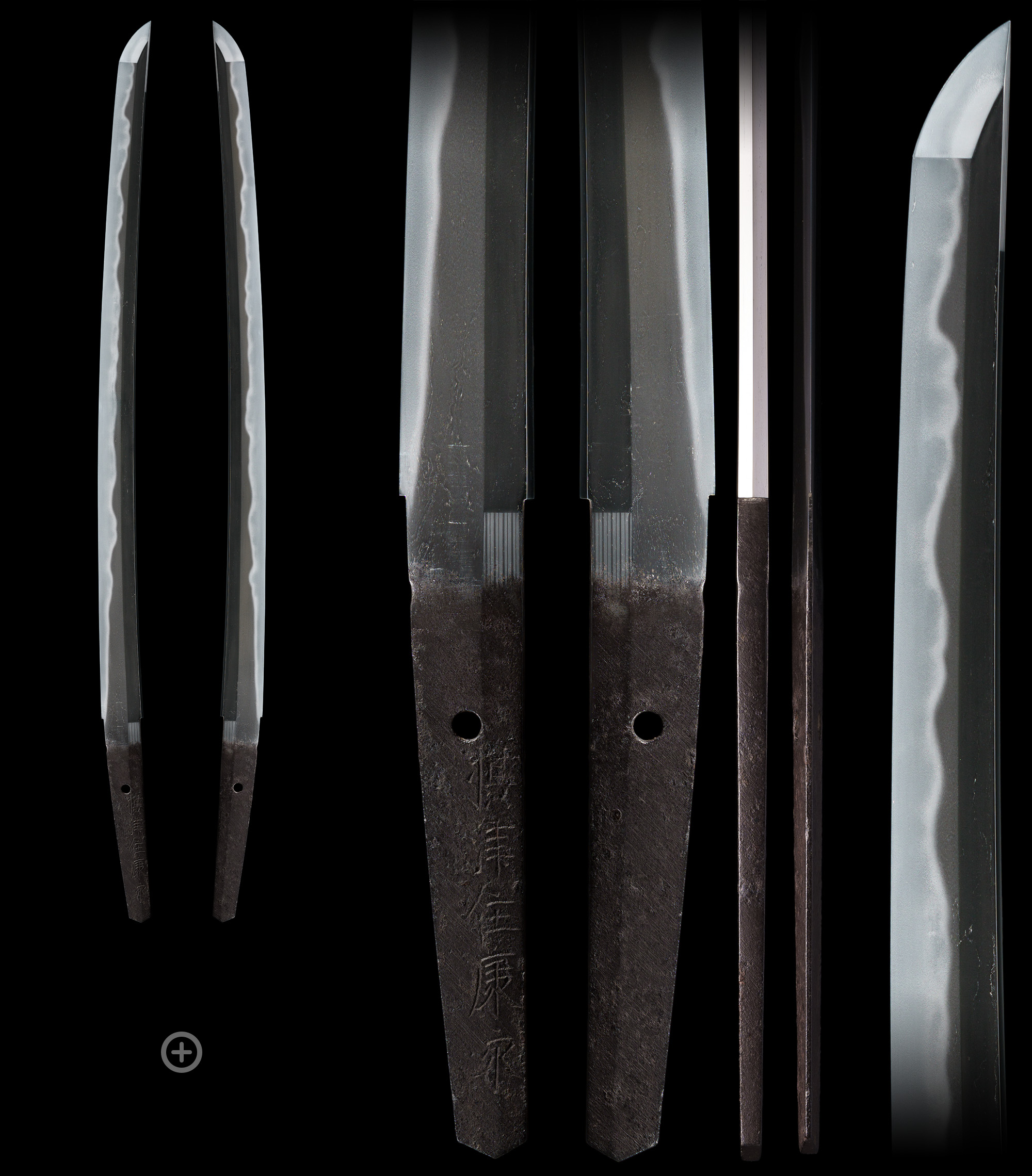
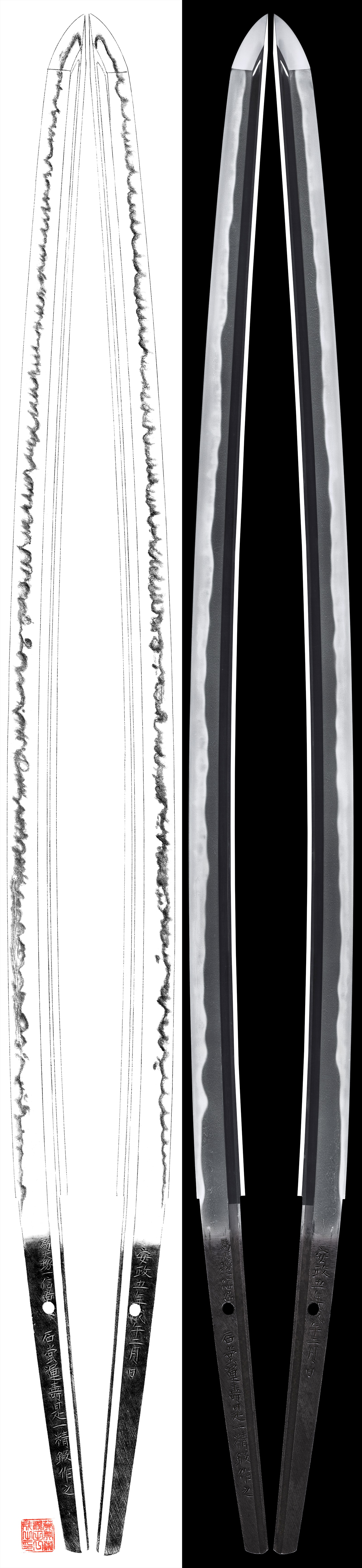
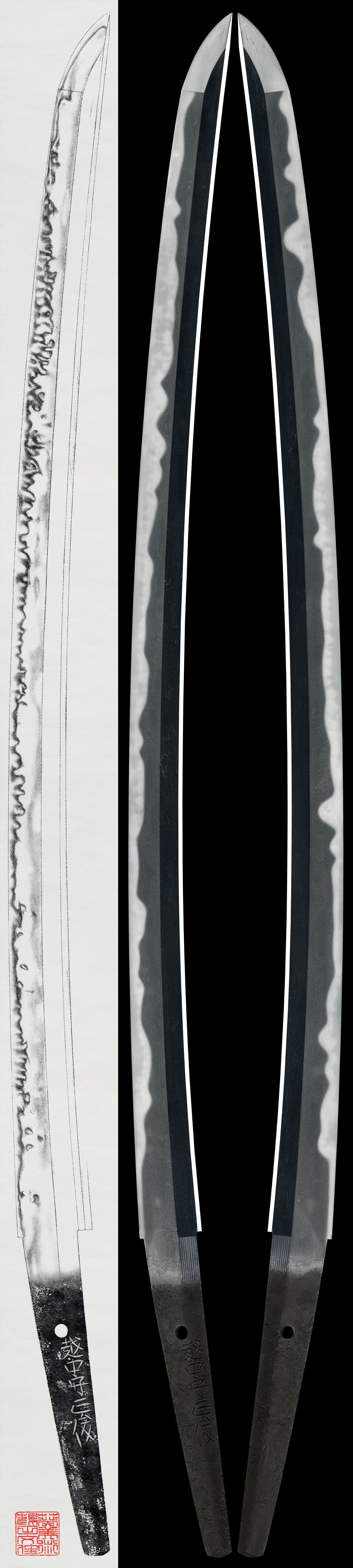
Settsu Province, and Osaka in particular, gathered the smiths the setsumei group under the name Osaka Ishido (大坂石堂). " Within that movement the setsumei trace a clear chain of teaching. Bicchu no Kami Yasuhiro stood at the head of the Kishu group, his followers sharing the "yasu"[[c:1]] element in their names; Kawachi no Kami Yasunaga, styled Hachizaemon, studied under Yasuhiro, moved from Kishu to Osaka, and took the title Kawachi no Kami. " Hanabusa Bizen no Kami Sukekuni and his nephew Sukeharu, also originally of the Kishu Ishido group, are named among the same body. The unifying aim the setsumei attach to all of them is the revival of Kamakura Bizen Ichimonji choji, "the Ishido lineage's traditional specialty," carried into the shinto era. The shared vocabulary is consistent across the register. " The temper divides into two modes the setsumei repeatedly distinguish: a flamboyant choji-midare aimed at Ichimonji, mixing o-choji, juka-choji-like blossoms, ko-choji, gunome, and togariba, with ashi and yo entering vigorously; and a gunome with an opened "waist" (koshi no hiraita) compounded in fukushiki-fu manner, taking Sue-Bizen, and Yosazaemon no Jo Sukesada in particular, as its model. Through both runs a ko-nie-deki, nioi-dominant edge whose nioiguchi tends to tighten yet stays bright and clear, with tobiyaki, fine sunagashi, and kinsuji.
Sukekuni and Sukeharu are set slightly apart, working nie-laden gunome, notare mixed with gunome, hako-ba, and toran-like o-gunome, with suguha also frequent. To recognize the hand, the setsumei point to the boshi that enters midare-komi, sharpens to a point, and returns deeply, together with the tightening nioiguchi and intermixed togariba. " Nagayuki's Sue-Bizen copies are said to reproduce even the sugata and nakago, with compact proportions and sakizori capturing the late-Bizen silhouette; one example was thought aimed at Katsumitsu, in whom choji stands out. Named works anchor the standing of the group. A matched daisho dated Jokyo 3 (1686) bears the inscription "forged using Chigusa iron" (chigusa-tetsu), a piece read as a special commission; a dated katana of Jokyo 4 carries an added "nanban-tetsu" inscription; one blade holds a kinpun-mei reading "White Cloud / Tatara"[[c:2]]. Two Ujinagayuki katana descend from General Tani Tateki, the Meiji military figure and sword enthusiast. On the strength of his command of the choji edge and the Bizen tradition, the register names Tatara Nagayuki the leading master of Bizen-den among shinto smiths. Learn more →