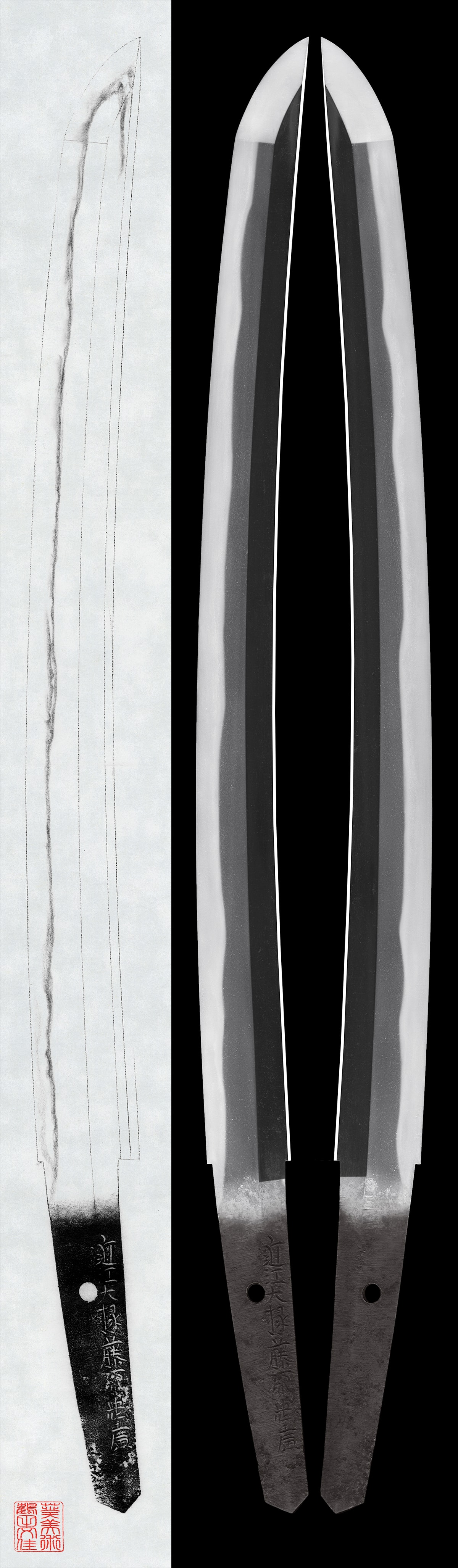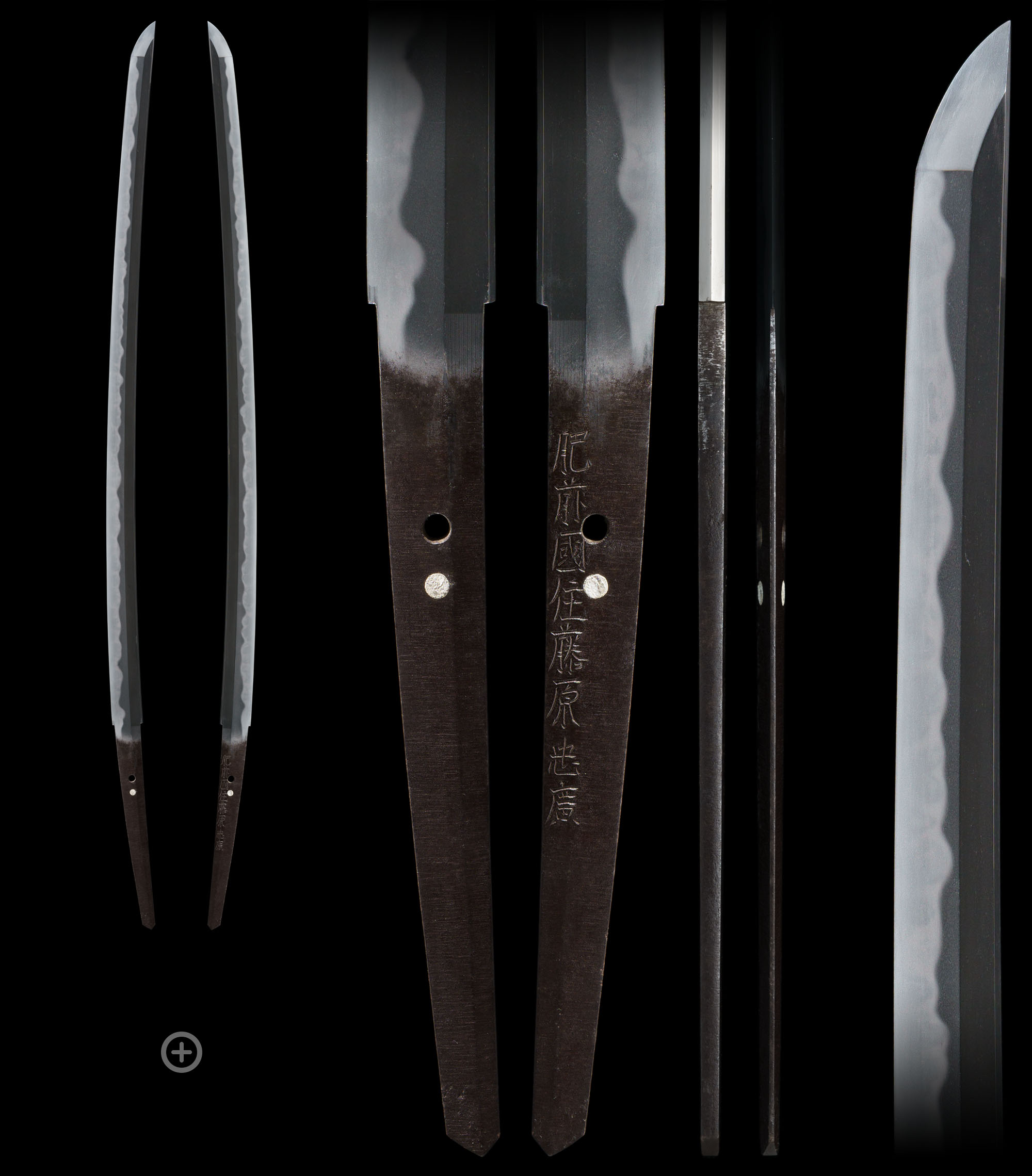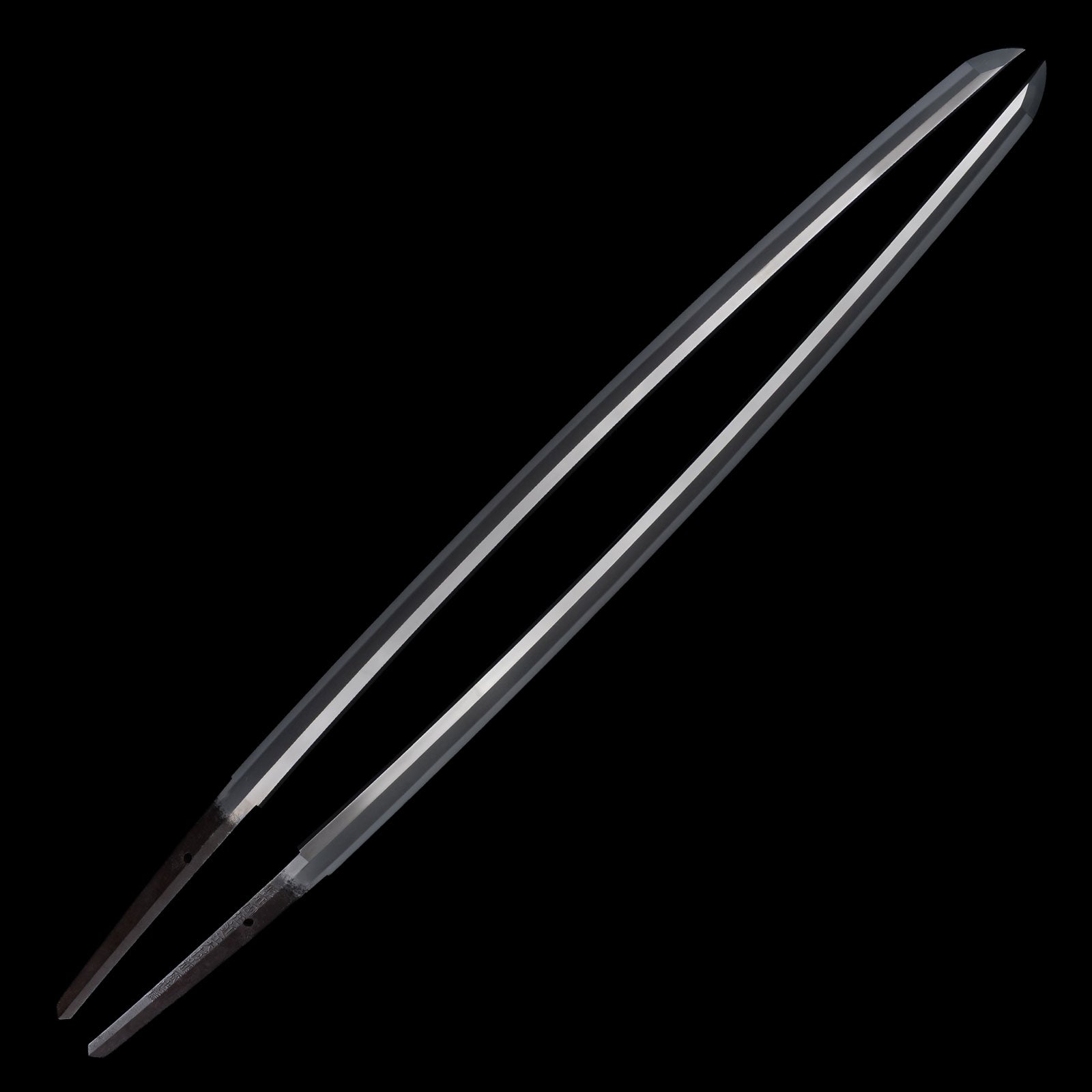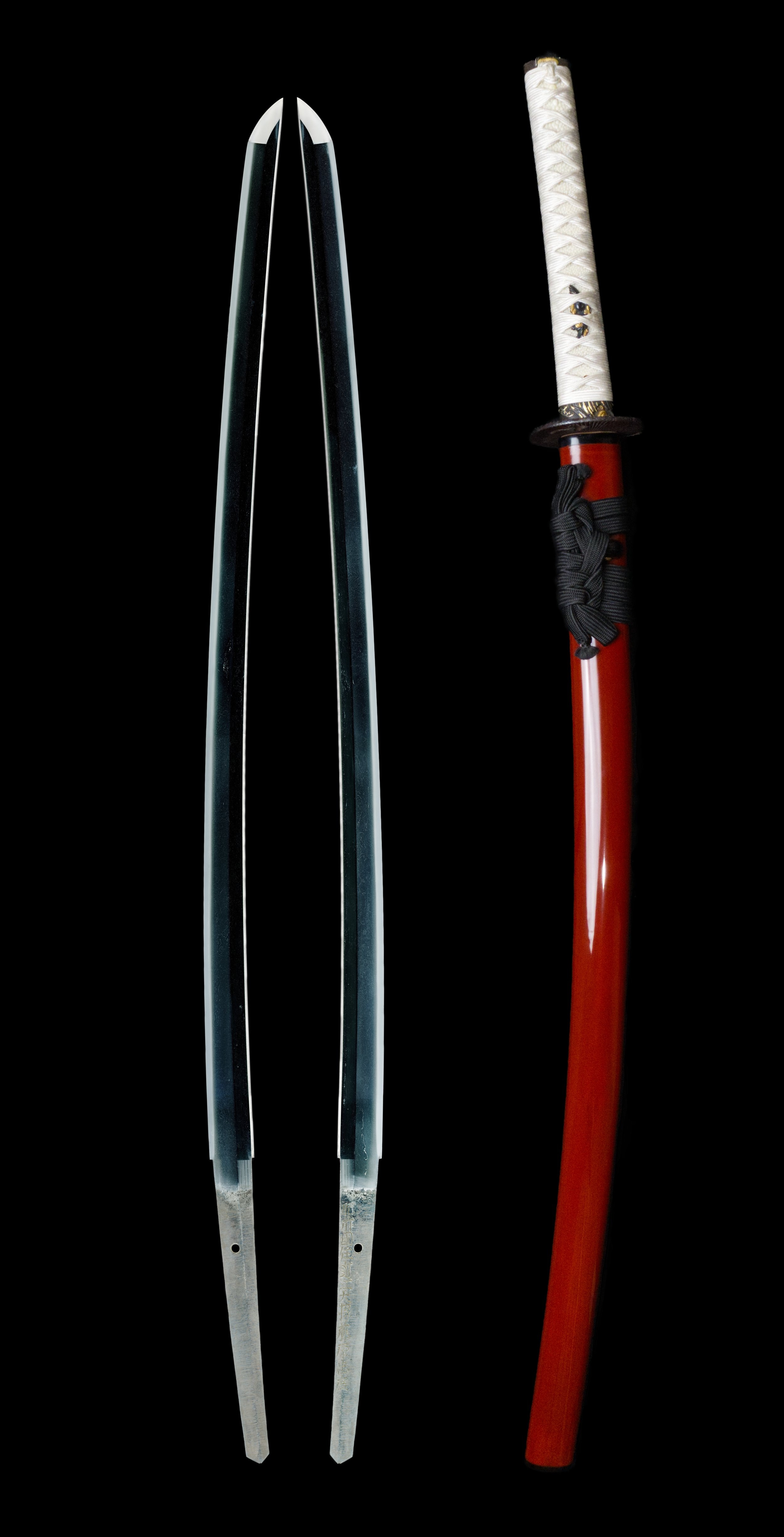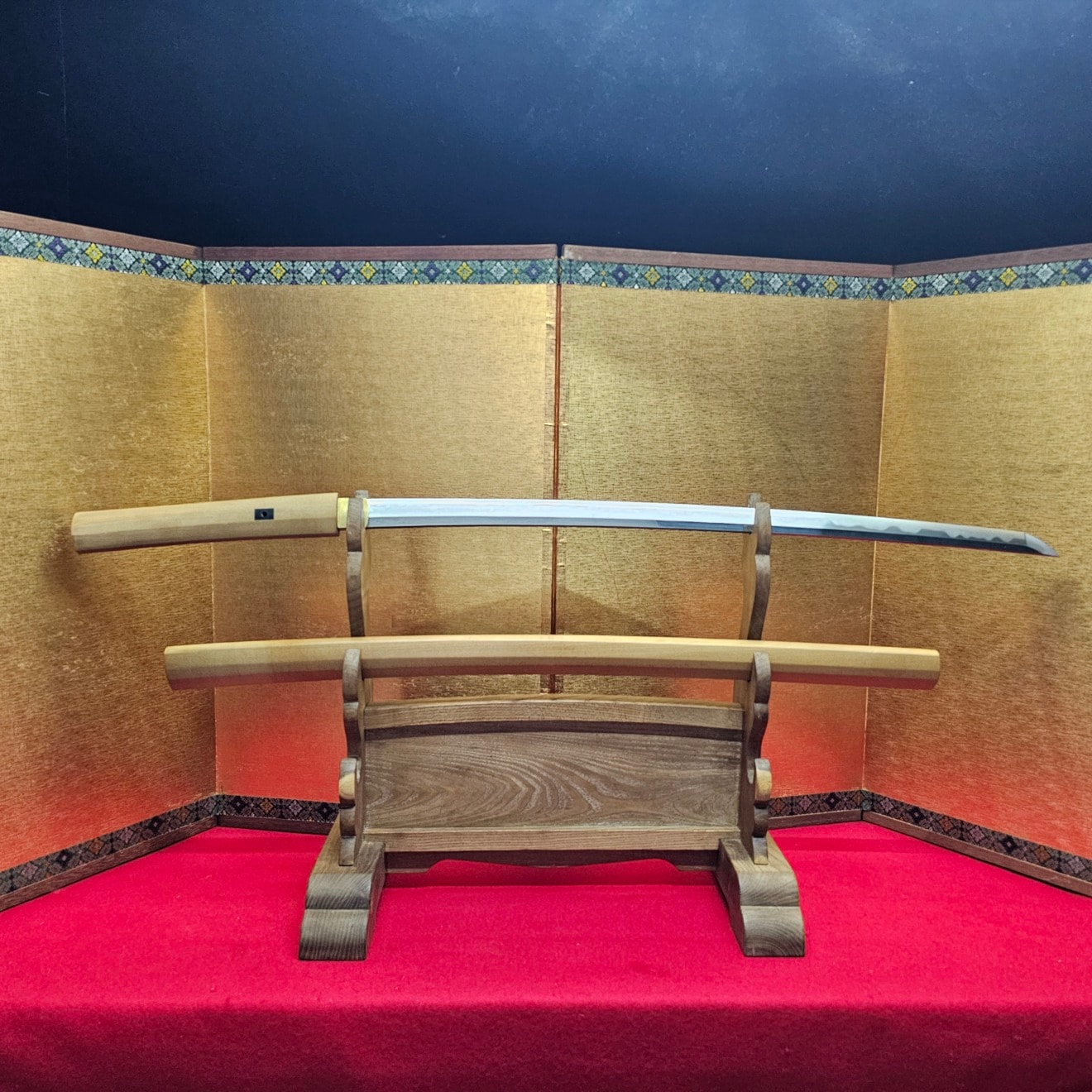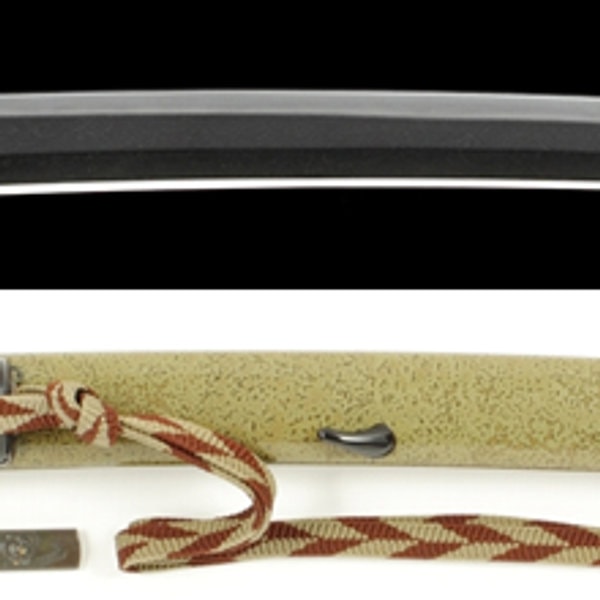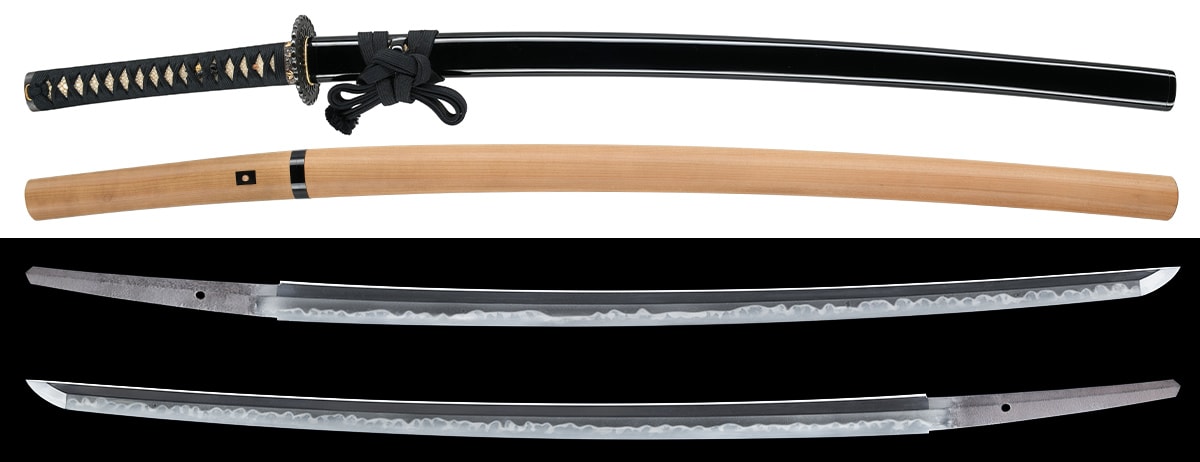
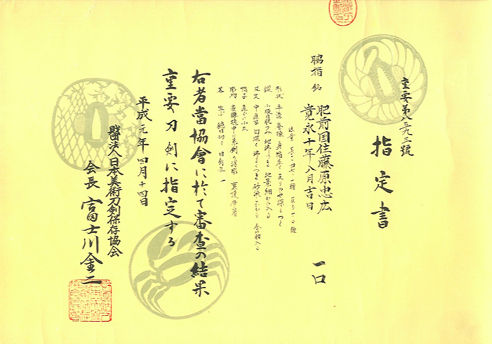
-, 35th Session — Designated April 14, 1989
, : Tadahiro (忠広)
Measurements 47.1 cm, 1.0 cm, 3.3 cm, 14.65 cm, slight
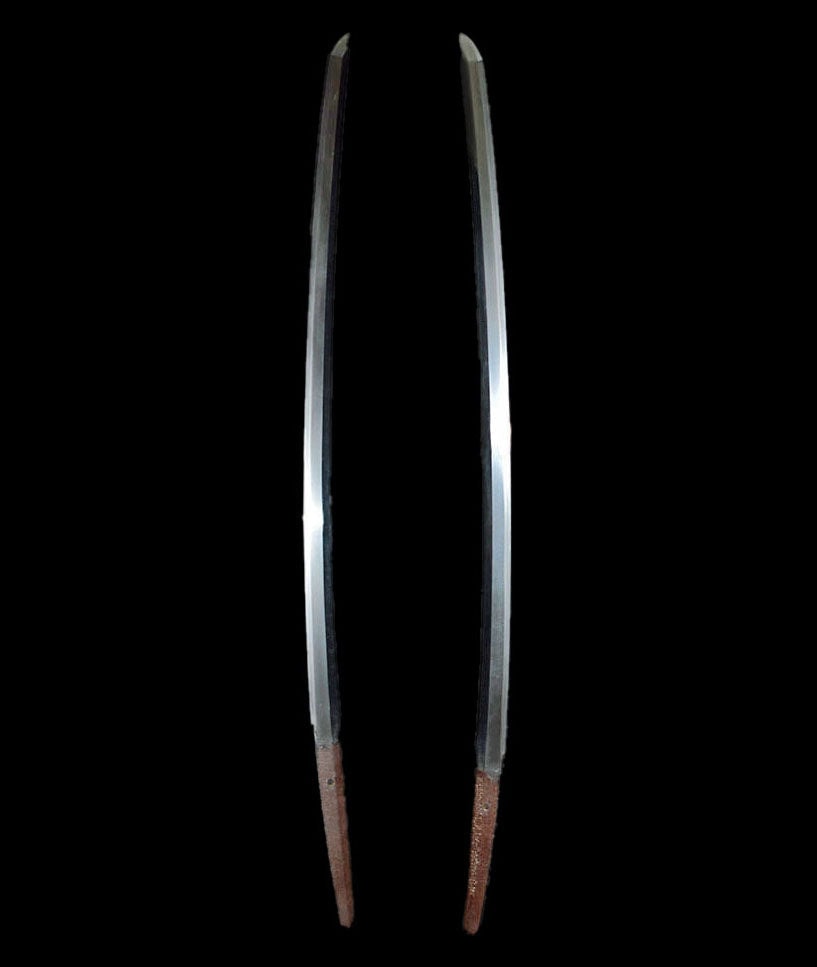
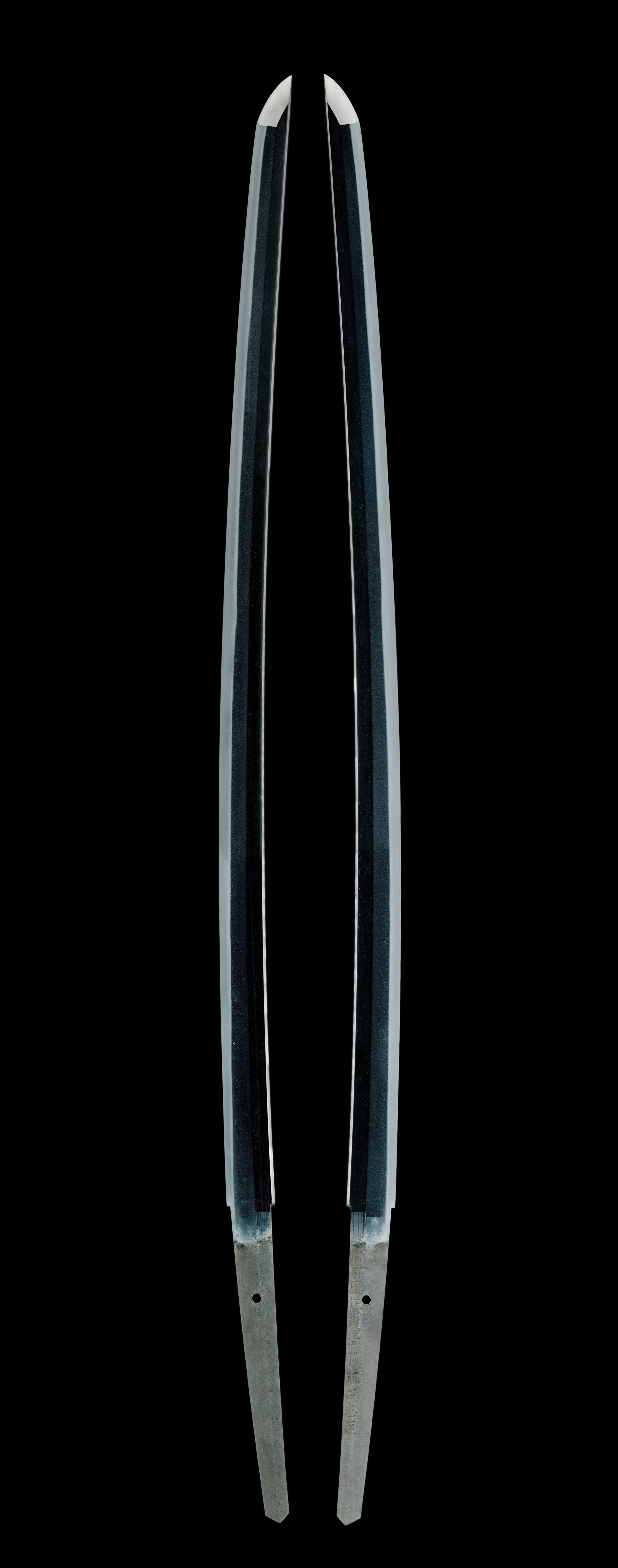
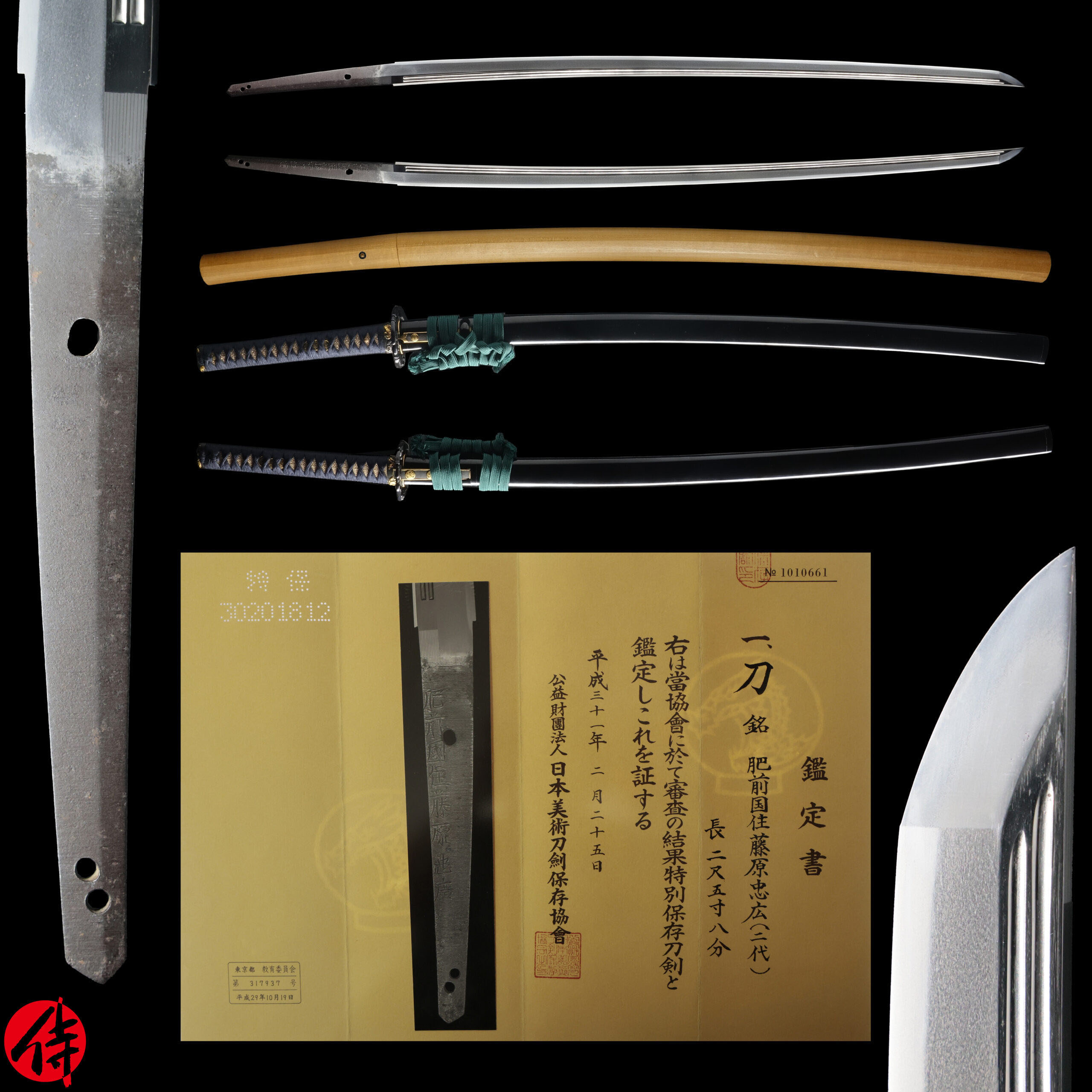
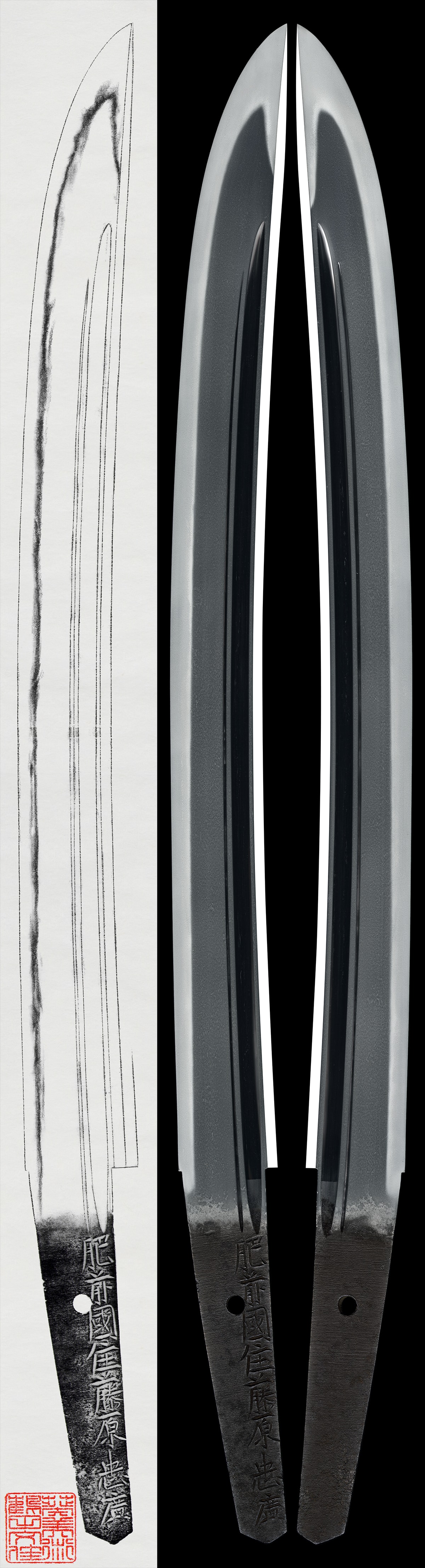
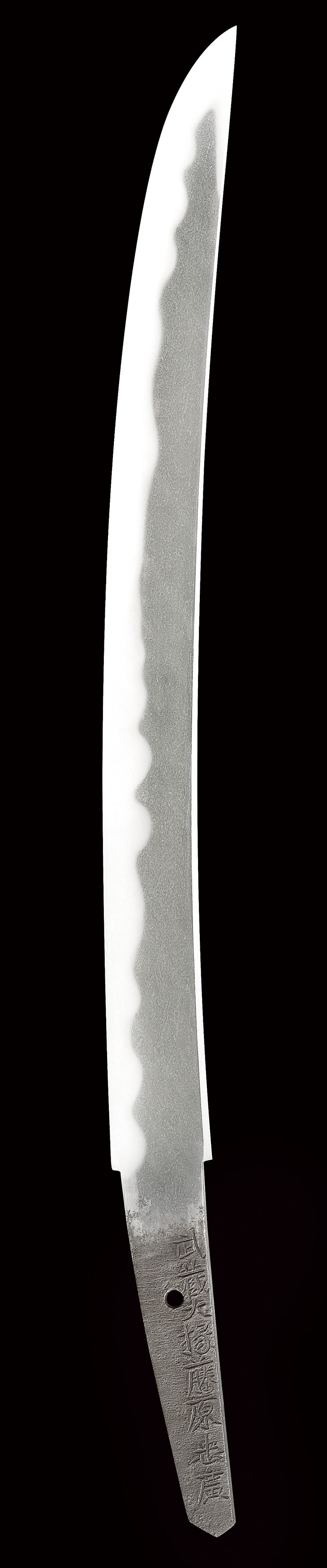
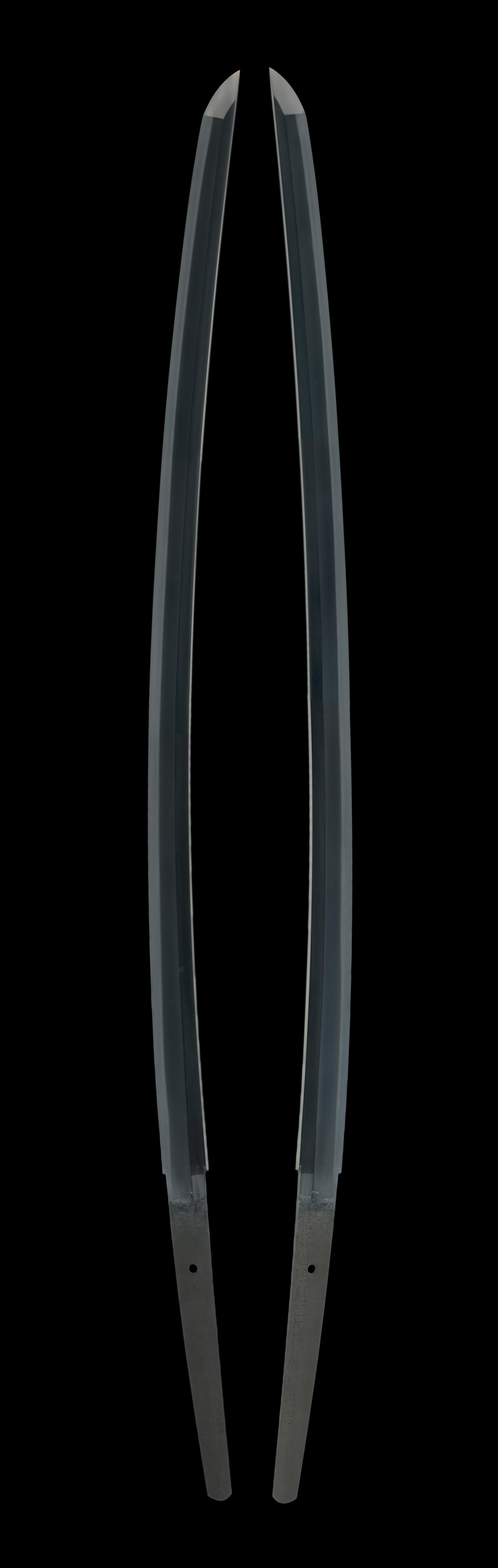
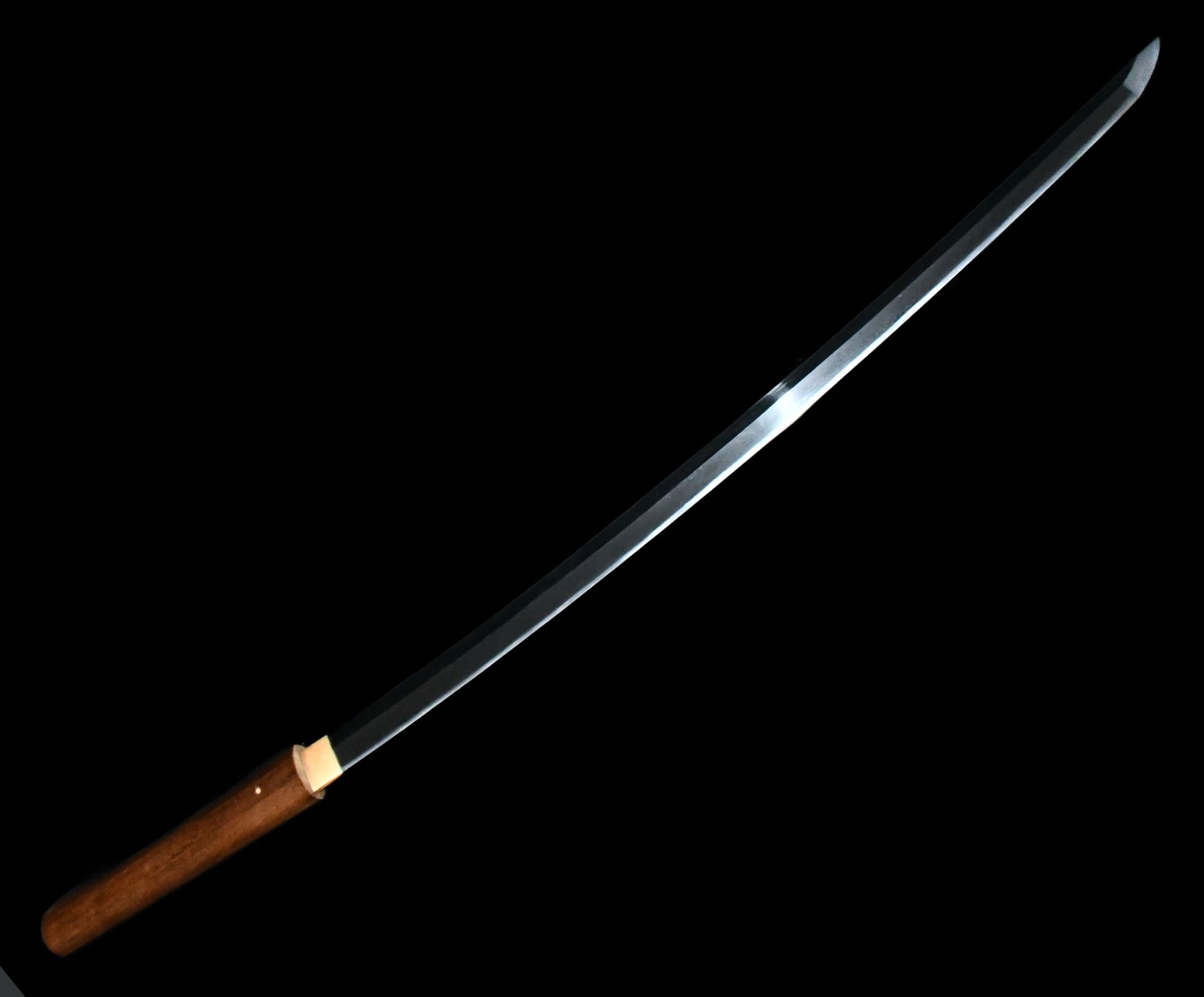
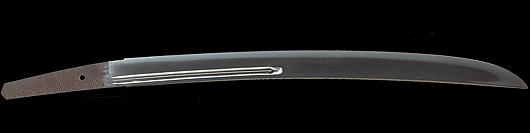
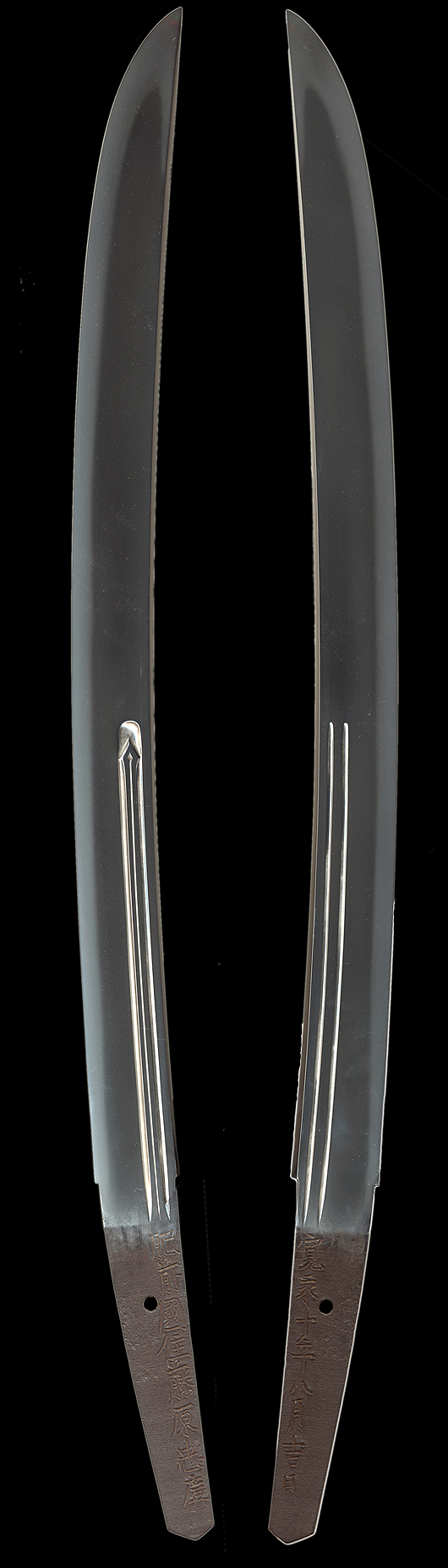
Description Keijō: with ; wide ; overall large and slightly elongated proportions; thick ; is somewhat deep. : Extremely tightly forged ; adheres densely in fine granules, forming a -like appearance; fine enter; the steel is clear. : with and ; deep with well-adhering ; runs broadly overall and appear; the is bright and clear. : Straight, turning back in with a somewhat deep return; the tip shows slight . : On the , within a is a raised-relief ; on the , is carved kaki-nagashi. : ; tip ; ; one ; a large, long signature on the cut toward the side, and on the a matching date inscription.
Artisan no -jū Fujiwara Tadahiro (肥前国住藤原忠広), Ōmi Daijō Tadahiro—second-generation head of the main line.
Era Dated “an auspicious day in the eighth month of ’ei 10” (’ei 10, 1633), early period.
Explanation This Tadahiro was the legitimate heir of the first-generation and, after succeeding as the second generation of the main house, became Ōmi Daijō Tadahiro. When his father died in ’ei 9, he was still only nineteen years old; however, with the cooperation of the disciples active during the time of the first Tadahiro, this young leader preserved the family name, and extant works begin from that year (’ei 9). In the seventh month of ’ei 18 he was granted the court title Ōmi Daijō, and he died at the age of eighty-one in the eighth month of Genroku 6. Over this span his swordmaking career extended for more than sixty years, and among smiths he left the greatest number of surviving works.
Until receiving the title Ōmi Daijō in ’ei 18, he consistently signed “ no -jū Fujiwara Tadahiro,” in the manner as the presentation-style signature used by the first Tadahiro; yet there are distinguishing points in the characters “” (藤) and “Hiro” (廣). In the first generation, the right element of “藤” is written with three horizontal strokes as in the character 美, whereas in the second generation it is made with two. In “廣,” the first generation invariably makes the first stroke a rhomboid form, while the second generation sometimes renders it as a simple “1”-like stroke; furthermore, the left dot beneath the “田” portion is a distinguishing feature, being rendered differently in the first generation and in the second. These are key points for appraisal.
This presents a large, bold figure with wide and slightly elongated proportions. Among the of the second Tadahiro from the ’ei era there are especially large examples, and this blade is an excellent instance of that type. In this work, the tightly packed is forged with dense, fine-granular , giving a -like surface; fine enter. The is a mixing small and , with deep and well-adhering , and showing and —altogether, the internal activities within the tempered area are abundant. Both and are bright and clear. Perhaps because it is a work from his youth, it displays, more than usual, strength and compelling force, and it is an especially outstanding blade () among the works of the second-generation Tadahiro. Moreover, the date on the reverse—“’ei 10, eighth month, an auspicious day”—is also valuable as documentary material.