
NihontoWatch MonNihontoWatch
Market
Encyclopedia
Kantei
NihontoWatch MonNihontoWatch
Market
Encyclopedia
Kantei

Description

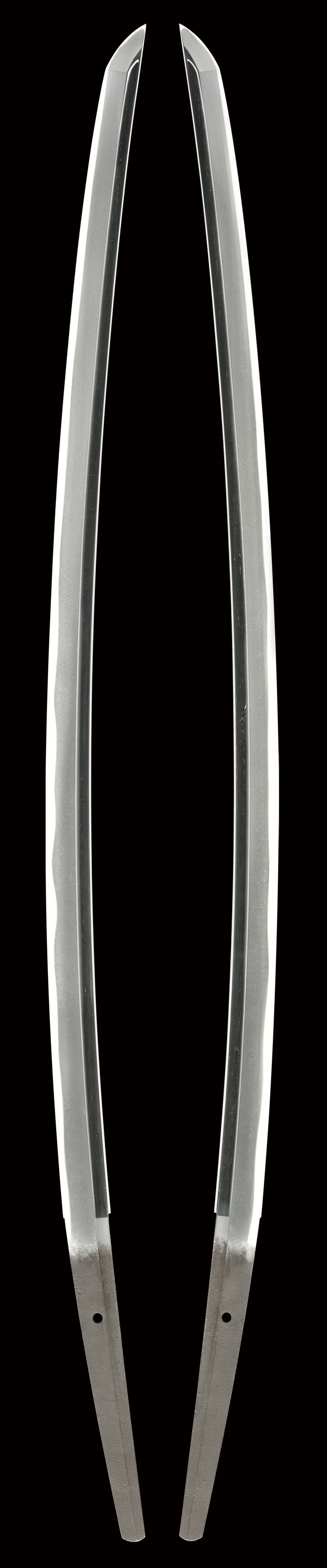
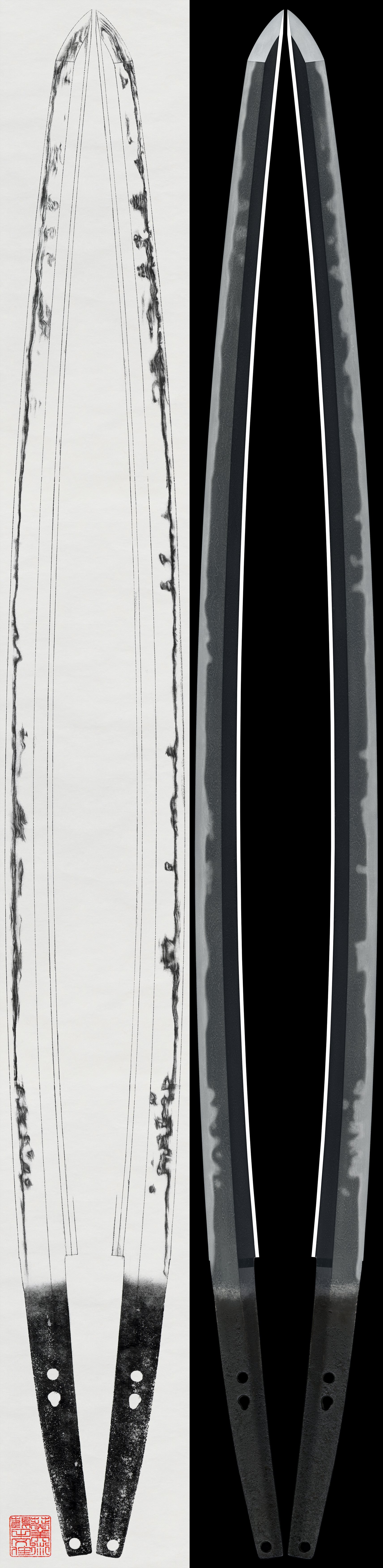
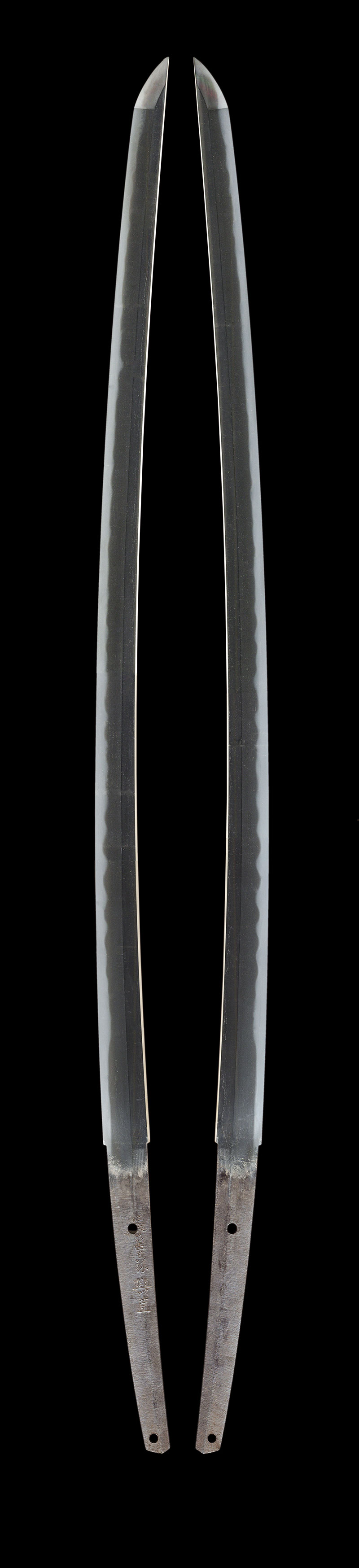
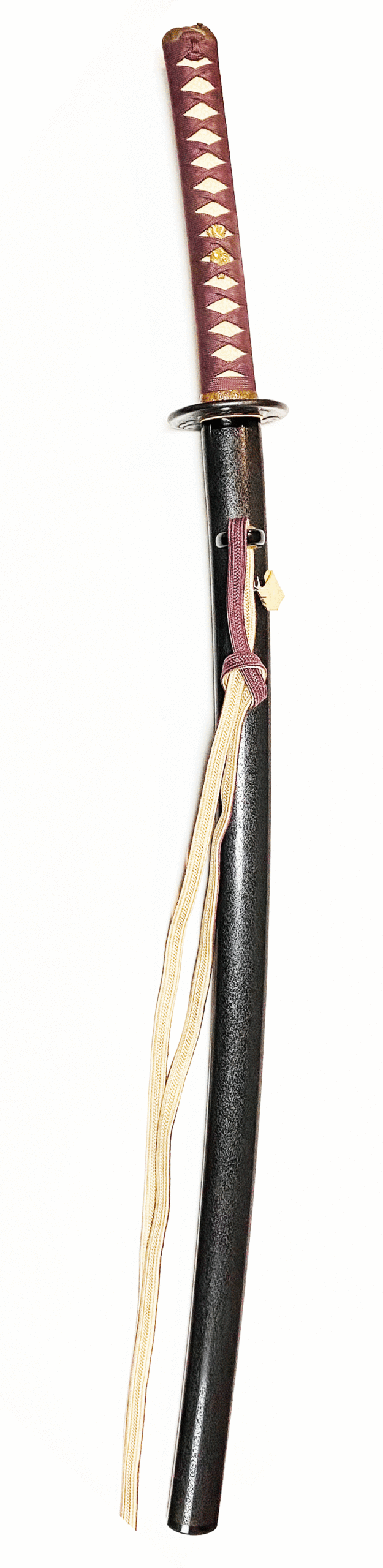
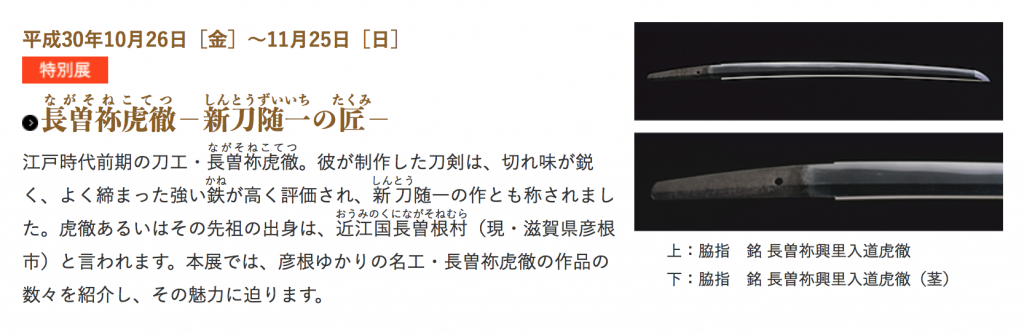
This is a rare Juyo Token designated work by Nagasone Okinao, a disciple of Nagasone Kotetsu, who is considered the 'Yokozuna of Shinto East'. Only two existing works by Okinao are confirmed, this katana and a wakizashi. The blade exhibits high skill, reminiscent of his master Kotetsu, and is believed to have been passed down through the Akimoto family.

NBTHK Setsumei

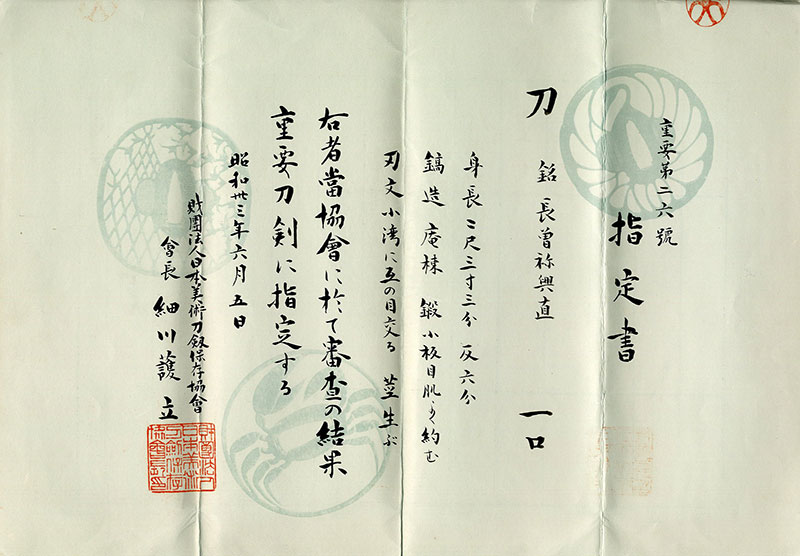
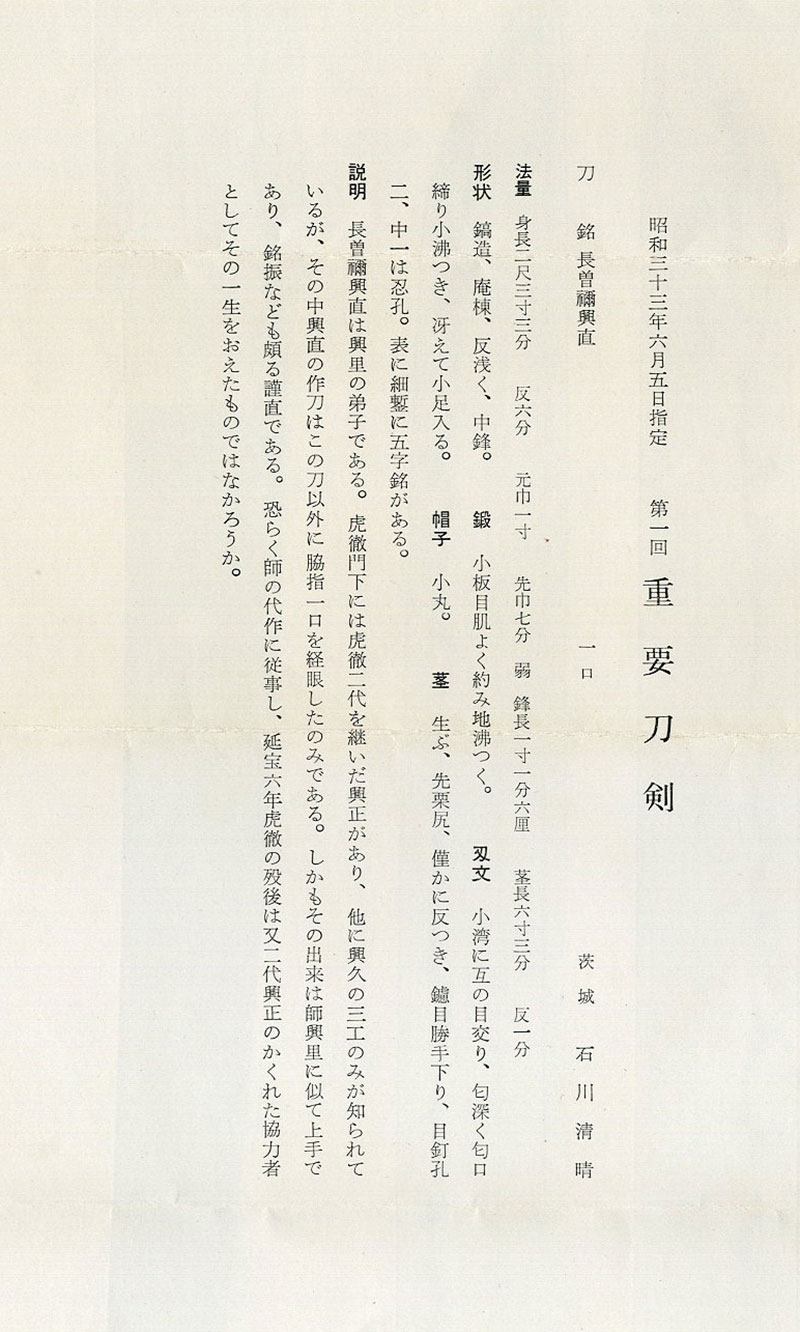
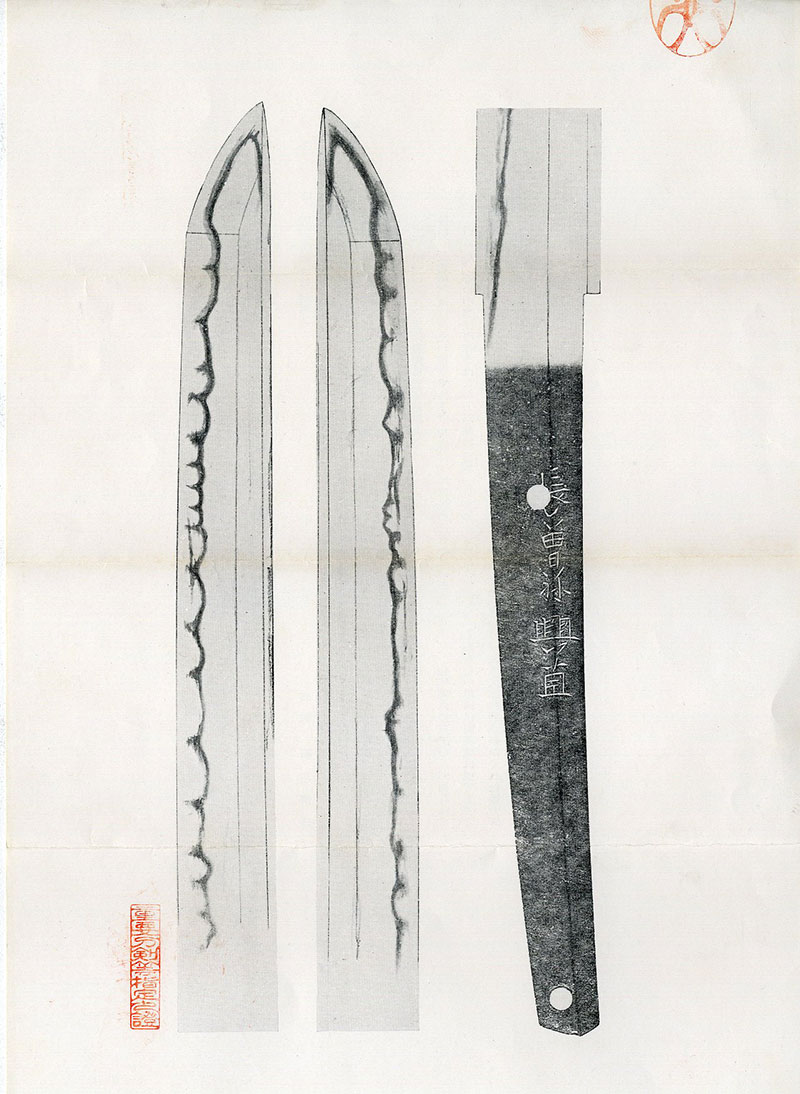
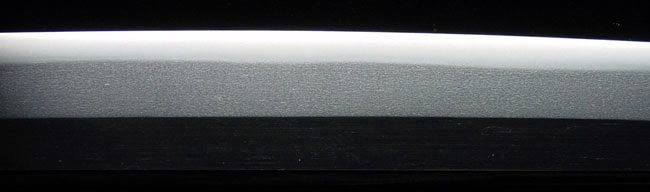
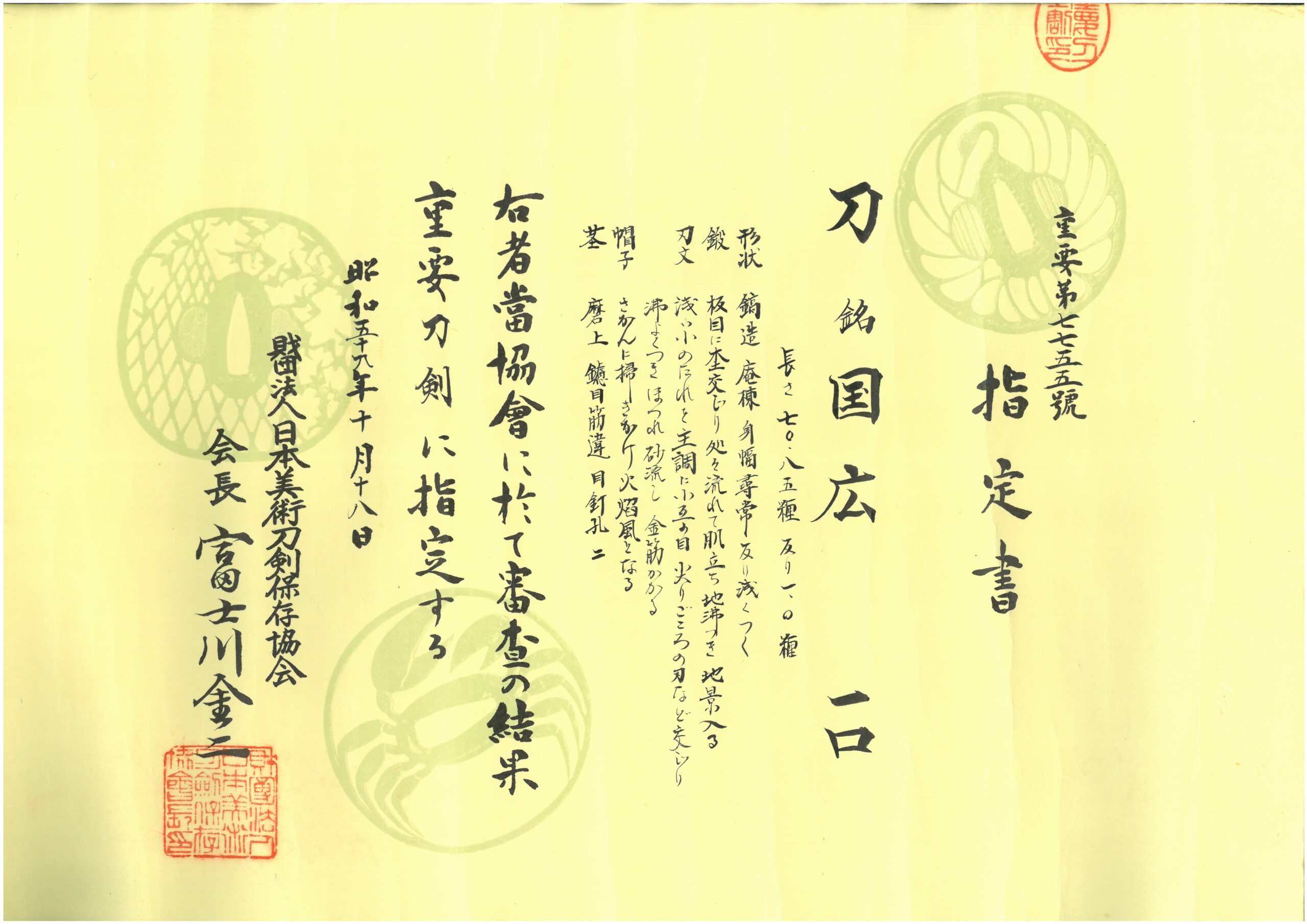
Jūyō-Tōken, 1st Session — Designated June 5, 1958 Katana, mei: Nagasone Okinao (長曾禰興直) Measurements Nagasa 70.6 cm, sori 1.8 cm, motohaba 3.0 cm, sakihaba 2.1 cm, kissaki-nagasa 3.5 cm, nakago-nagasa 19.1 cm Description Keijō: Shinogi-zukuri, iori-mune; shallow sori; chū-kissaki. Kitae: Well-forged ko-itame-hada, densely worked, with ji-nie developing. Hamon: Ko-notare mixed with gunome; the temper is tight with ko-nie, clear, and contains ko-ashi; the nioi is deep and the nioiguchi is clear. Bōshi: Ko-maru. Horimono: None. Nakago: Ubu; kurijiri; slightly curved; katte-sagari yasurime; two mekugi-ana, one of which is a shinobi-ana; on the omote there is a five-character signature cut with a fine chisel. Artisan Nagasone Okinao (長曾禰興直) Era Early Edo period (Shintō) Explanation Nagasone Okinao was a student of Okisato. Within the Kotetsu lineage there is Okimasa, who succeeded as the second generation Kotetsu; aside from him, only three smiths are known, including Okinao. Among these, Okinao’s works are extraordinarily scarce: apart from this katana, only a single wakizashi has been confirmed. Moreover, the workmanship is skillful, resembling that of his master Okisato, and the manner of the signature, too, is markedly earnest and proper. It may be conjectured that Okinao engaged in producing blades as a substitute hand for his master, and that after Kotetsu’s death in Enpō 6 (1678), he concluded his life as a concealed collaborator supporting the second generation Okimasa.

NihontoWatch MonNihontoWatch
MarketEncyclopediaKantei
Swords›Okinao›Katana: Nagasone Okinao
katanaJūyō
Okinao

Katana: Nagasone Okinao

mei · Enpo (1673-1681) · nagasa 70.5cm · sori 1.8cm

SOLD
Okinao (興直) · Enpo (1673-1681)View artist page →
KatanaJūyō
Could you name the smith from the blade alone? Today’s kantei →
Okinao — 1 of 8
Okinao — 2 of 8
Okinao — 3 of 8
Okinao — 4 of 8
Okinao — 5 of 8
Okinao — 6 of 8
Okinao — 7 of 8
Okinao — 8 of 8
1 / 8
1 / 8
Okinao — 1 of 8Okinao — 2 of 8Okinao — 3 of 8Okinao — 4 of 8Okinao — 5 of 8Okinao — 6 of 8Okinao — 7 of 8Okinao — 8 of 8
Okinao (興直) · Enpo (1673-1681)View artist page →
KatanaJūyō
Could you name the smith from the blade alone? Today’s kantei →
Measurements & details
Smith
Okinao
Type
Katana
Period
Around 1673–1681(Enpo)
Province
Musashi
Signature
Signed(100% of this smith's designated works are signed)
Measurements
Nagasa 70.5cmSori 1.8cmMotohaba 3cmSakihaba 2.1cmKasane 0.6cm
Description

This is a rare Juyo Token designated work by Nagasone Okinao, a disciple of Nagasone Kotetsu, who is considered the 'Yokozuna of Shinto East'. Only two existing works by Okinao are confirmed, this katana and a wakizashi. The blade exhibits high skill, reminiscent of his master Kotetsu, and is believed to have been passed down through the Akimoto family.

NBTHK Zufu Commentary

Juyo #1

AI translation — may contain errors

-, 1st Session — Designated June 5, 1958

, : Nagasone Okinao (長曾禰興直)

Measurements 70.6 cm, 1.8 cm, 3.0 cm, 2.1 cm, 3.5 cm, 19.1 cm

Description Keijō: , ; shallow ; . : Well-forged , densely worked, with developing. : mixed with ; the temper is tight with , clear, and contains ; the is deep and the is clear. : . : None. : ; ; slightly curved; ; two , one of which is a ; on the there is a five-character signature cut with a fine chisel.

Artisan Nagasone Okinao (長曾禰興直)

Era Early period ()

Explanation Nagasone Okinao was a student of Okisato. Within the Kotetsu lineage there is Okimasa, who succeeded as the second generation Kotetsu; aside from him, only three smiths are known, including Okinao. Among these, Okinao’s works are extraordinarily scarce: apart from this , only a single has been confirmed.

Moreover, the workmanship is skillful, resembling that of his master Okisato, and the manner of the signature, too, is markedly earnest and proper. It may be conjectured that Okinao engaged in producing blades as a substitute hand for his master, and that after Kotetsu’s death in Enpō 6 (1678), he concluded his life as a concealed collaborator supporting the second generation Okimasa.

About the maker

Okinao

興直

Musashi · around 1673-1681

Tōken Taikan top 26%

›

Historical importance

Where Okinao stands among comparable artisans: across all of nihontō, and within tradition, era, and period. The tiers (Foremost · Leading · Major · Notable) weigh official designations from the NBTHK and Japan's Agency for Cultural Affairs, together with historical honors of lasting repute such as the Sansaku and Meibutsu-chō.

随一
Foremost
屈指
Leading
有数
Major
著名
Notable

Select a lens to see how it's measured.

Designation record
1 designated works
Jūyō
1
Okinao — full profile

Study this maker →

Historical context

The Edo period (1615 to 1868)

›

Edo was the sword’s age of connoisseurship: the Hon’ami appraisers, the shogunal register of famous blades of 1719, and a thriving literature turned the sword into an object of study even as it ceased to be drawn in war.

The Edo period (1615 to 1868) →

NBTHK Certificate
Jūyō Tōken重要刀剣
Important Sword
›

A blade of top-grade workmanship and condition, formally judged to rank with a nationally recognized Important Art Object (Jūyō Bijutsuhin). Awarded only at the NBTHK’s competitive annual examination.

Of Japan’s roughly 2.5 million registered swords, only 12,307 (about 1 in 203) have ever attained Jūyō.

About the NBTHK›

The NBTHK (Nihon Bijutsu Tōken Hozon Kyōkai, the Society for the Preservation of Japanese Art Swords) is a public-interest incorporated foundation founded in 1948 and supervised by Japan’s Agency for Cultural Affairs (Bunkachō); it is based at the Japanese Sword Museum in Tokyo. Its expert panels physically examine each submitted work (shinsa) and issue a certificate (kanteishō) ranking it by artistic and historical merit. NBTHK papers are the most widely recognized standard of authentication for Japanese swords and fittings.

NBTHK official site→
Seller
I
Iida Koendo
Established 1880 · 146 yrs on the market
🇯🇵Ships from Japan
›
✓Verified dealeriidakoendo.com
✓Ships worldwide✓English supportWire transfer
Return policy

Customer-initiated returns accepted within two days of arrival; return shipping paid by customer and fees non-refundable. Returns/refunds unavailable for overseas deliveries.

View all of Iida Koendo’s listings→View this item on the dealer’s site→

Similar Katana

Seikeido
Jūyō
Katana - Jūyō - by Osaka Shinkai - Inoue ShinkaiKatana - Jūyō - by Osaka Shinkai - Inoue Shinkai

Katana

ByOsaka Shinkai
Ask
Aoi Art
Jūyō
Katana - Jūyō - by Kotetsu - Nagasone Okisato Nyudo Kotetsu with Saidan-meiKatana - Jūyō - by Kotetsu - Nagasone Okisato Nyudo Kotetsu with Saidan-mei

Katana

ByKotetsu
¥60,000,000
World Seiyudo
Tokuho
Katana - Tokuho - by Mishina Kanemichi - Tango-no-kami Kanemichi (Wazamono) - NBTHK Tokubetsu Hozon TokenKatana - Tokuho - by Mishina Kanemichi - Tango-no-kami Kanemichi (Wazamono) - NBTHK Tokubetsu Hozon Token

Katana

ByMishina Kanemichi
Ask
Goushuya
Jūyō
Katana - Jūyō - by Horikawa Kunihiro - Juyo Token: KunihiroKatana - Jūyō - by Horikawa Kunihiro - Juyo Token: Kunihiro

Katana

ByHorikawa Kunihiro
Ask
Goushuya
Tokujū
Katana - Tokuju - by Satsuma Yasuyo - Tokubetsu Juyo Token (One-Leaf Aoi Mon) Shume no Kami Ichihei Fujiwara Ason Yasuyo, Made in Satsushu Kirei-gun on an Auspicious Day in March, Kyoho 12Katana - Tokuju - by Satsuma Yasuyo - Tokubetsu Juyo Token (One-Leaf Aoi Mon) Shume no Kami Ichihei Fujiwara Ason Yasuyo, Made in Satsushu Kirei-gun on an Auspicious Day in March, Kyoho 12

Katana

BySatsuma Yasuyo
Ask
Samurai Nippon
Tokujū
Katana - Tokuju - by Awataguchi Kuniyoshi - Mumei (Attributed to Awataguchi Kuniyoshi)Katana - Tokuju - by Awataguchi Kuniyoshi - Mumei (Attributed to Awataguchi Kuniyoshi)

Katana

ByAwataguchi Kuniyoshi
Ask
Eirakudo
Jūyō
Katana - Jūyō - by Chikuzen Sairen - Sairen - Juyo TokenKatana - Jūyō - by Chikuzen Sairen - Sairen - Juyo Token

Katana

ByChikuzen Sairen
¥7,000,000
Aoi Art
Tokuho
Katana - Tokuho - by Gō Yoshihiro - Mumei (Unsigned) Den Go YoshihiroKatana - Tokuho - by Gō Yoshihiro - Mumei (Unsigned) Den Go Yoshihiro

Katana

ByGō Yoshihiro
¥35,000,000

Swords

  • Katana
  • Wakizashi
  • Tantō
  • Tachi
  • Naginata
  • Yari
  • Japanese Swords
  • Samurai Swords

Fittings

  • Tsuba
  • Fuchi-Kashira
  • Kozuka
  • Menuki
  • Sword Guards (Tsuba)

Armor

  • Kabuto
  • Samurai Armor
  • All Samurai Armor

By Certification

  • Tokujū
  • Jūyō
  • Tokuho
  • Hozon

Resources

  • Dealer Directory
  • Artist Directory
  • The Daily Kantei
  • Glossary
  • Browse All
Nihontowatch© 2026
TermsPrivacyCookiesAbout
Sold

Description

This is a rare Juyo Token designated work by Nagasone Okinao, a disciple of Nagasone Kotetsu, who is considered the 'Yokozuna of Shinto East'. Only two existing works by Okinao are confirmed, this katana and a wakizashi. The blade exhibits high skill, reminiscent of his master Kotetsu, and is believed to have been passed down through the Akimoto family.

NBTHK Setsumei

Jūyō-Tōken, 1st Session — Designated June 5, 1958 Katana, mei: Nagasone Okinao (長曾禰興直) Measurements Nagasa 70.6 cm, sori 1.8 cm, motohaba 3.0 cm, sakihaba 2.1 cm, kissaki-nagasa 3.5 cm, nakago-nagasa 19.1 cm Description Keijō: Shinogi-zukuri, iori-mune; shallow sori; chū-kissaki. Kitae: Well-forged ko-itame-hada, densely worked, with ji-nie developing. Hamon: Ko-notare mixed with gunome; the temper is tight with ko-nie, clear, and contains ko-ashi; the nioi is deep and the nioiguchi is clear. Bōshi: Ko-maru. Horimono: None. Nakago: Ubu; kurijiri; slightly curved; katte-sagari yasurime; two mekugi-ana, one of which is a shinobi-ana; on the omote there is a five-character signature cut with a fine chisel. Artisan Nagasone Okinao (長曾禰興直) Era Early Edo period (Shintō) Explanation Nagasone Okinao was a student of Okisato. Within the Kotetsu lineage there is Okimasa, who succeeded as the second generation Kotetsu; aside from him, only three smiths are known, including Okinao. Among these, Okinao’s works are extraordinarily scarce: apart from this katana, only a single wakizashi has been confirmed. Moreover, the workmanship is skillful, resembling that of his master Okisato, and the manner of the signature, too, is markedly earnest and proper. It may be conjectured that Okinao engaged in producing blades as a substitute hand for his master, and that after Kotetsu’s death in Enpō 6 (1678), he concluded his life as a concealed collaborator supporting the second generation Okimasa.
NihontoWatch MonNihontoWatch
MarketEncyclopediaKantei
Swords›Okinao›Katana: Nagasone Okinao
katanaJūyō
Okinao

Katana: Nagasone Okinao

mei · Enpo (1673-1681) · nagasa 70.5cm · sori 1.8cm

SOLD
Okinao (興直) · Enpo (1673-1681)View artist page →
KatanaJūyō
Could you name the smith from the blade alone? Today’s kantei →
Okinao — 1 of 8
Okinao — 2 of 8
Okinao — 3 of 8
Okinao — 4 of 8
Okinao — 5 of 8
Okinao — 6 of 8
Okinao — 7 of 8
Okinao — 8 of 8
1 / 8
1 / 8
Okinao — 1 of 8Okinao — 2 of 8Okinao — 3 of 8Okinao — 4 of 8Okinao — 5 of 8Okinao — 6 of 8Okinao — 7 of 8Okinao — 8 of 8
Okinao (興直) · Enpo (1673-1681)View artist page →
KatanaJūyō
Could you name the smith from the blade alone? Today’s kantei →
Measurements & details
Smith
Okinao
Type
Katana
Period
Around 1673–1681(Enpo)
Province
Musashi
Signature
Signed(100% of this smith's designated works are signed)
Measurements
Nagasa 70.5cmSori 1.8cmMotohaba 3cmSakihaba 2.1cmKasane 0.6cm
Description

This is a rare Juyo Token designated work by Nagasone Okinao, a disciple of Nagasone Kotetsu, who is considered the 'Yokozuna of Shinto East'. Only two existing works by Okinao are confirmed, this katana and a wakizashi. The blade exhibits high skill, reminiscent of his master Kotetsu, and is believed to have been passed down through the Akimoto family.

NBTHK Zufu Commentary

Juyo #1

AI translation — may contain errors

-, 1st Session — Designated June 5, 1958

, : Nagasone Okinao (長曾禰興直)

Measurements 70.6 cm, 1.8 cm, 3.0 cm, 2.1 cm, 3.5 cm, 19.1 cm

Description Keijō: , ; shallow ; . : Well-forged , densely worked, with developing. : mixed with ; the temper is tight with , clear, and contains ; the is deep and the is clear. : . : None. : ; ; slightly curved; ; two , one of which is a ; on the there is a five-character signature cut with a fine chisel.

Artisan Nagasone Okinao (長曾禰興直)

Era Early period ()

Explanation Nagasone Okinao was a student of Okisato. Within the Kotetsu lineage there is Okimasa, who succeeded as the second generation Kotetsu; aside from him, only three smiths are known, including Okinao. Among these, Okinao’s works are extraordinarily scarce: apart from this , only a single has been confirmed.

Moreover, the workmanship is skillful, resembling that of his master Okisato, and the manner of the signature, too, is markedly earnest and proper. It may be conjectured that Okinao engaged in producing blades as a substitute hand for his master, and that after Kotetsu’s death in Enpō 6 (1678), he concluded his life as a concealed collaborator supporting the second generation Okimasa.

About the maker

Okinao

興直

Musashi · around 1673-1681

Tōken Taikan top 26%

›

Historical importance

Where Okinao stands among comparable artisans: across all of nihontō, and within tradition, era, and period. The tiers (Foremost · Leading · Major · Notable) weigh official designations from the NBTHK and Japan's Agency for Cultural Affairs, together with historical honors of lasting repute such as the Sansaku and Meibutsu-chō.

随一
Foremost
屈指
Leading
有数
Major
著名
Notable

Select a lens to see how it's measured.

Designation record
1 designated works
Jūyō
1
Okinao — full profile

Study this maker →

Historical context

The Edo period (1615 to 1868)

›

Edo was the sword’s age of connoisseurship: the Hon’ami appraisers, the shogunal register of famous blades of 1719, and a thriving literature turned the sword into an object of study even as it ceased to be drawn in war.

The Edo period (1615 to 1868) →

NBTHK Certificate
Jūyō Tōken重要刀剣
Important Sword
›

A blade of top-grade workmanship and condition, formally judged to rank with a nationally recognized Important Art Object (Jūyō Bijutsuhin). Awarded only at the NBTHK’s competitive annual examination.

Of Japan’s roughly 2.5 million registered swords, only 12,307 (about 1 in 203) have ever attained Jūyō.

About the NBTHK›

The NBTHK (Nihon Bijutsu Tōken Hozon Kyōkai, the Society for the Preservation of Japanese Art Swords) is a public-interest incorporated foundation founded in 1948 and supervised by Japan’s Agency for Cultural Affairs (Bunkachō); it is based at the Japanese Sword Museum in Tokyo. Its expert panels physically examine each submitted work (shinsa) and issue a certificate (kanteishō) ranking it by artistic and historical merit. NBTHK papers are the most widely recognized standard of authentication for Japanese swords and fittings.

NBTHK official site→
Seller
I
Iida Koendo
Established 1880 · 146 yrs on the market
🇯🇵Ships from Japan
›
✓Verified dealeriidakoendo.com
✓Ships worldwide✓English supportWire transfer
Return policy

Customer-initiated returns accepted within two days of arrival; return shipping paid by customer and fees non-refundable. Returns/refunds unavailable for overseas deliveries.

View all of Iida Koendo’s listings→View this item on the dealer’s site→

Similar Katana

Seikeido
Jūyō
Katana - Jūyō - by Osaka Shinkai - Inoue ShinkaiKatana - Jūyō - by Osaka Shinkai - Inoue Shinkai

Katana

ByOsaka Shinkai
Ask
Aoi Art
Jūyō
Katana - Jūyō - by Kotetsu - Nagasone Okisato Nyudo Kotetsu with Saidan-meiKatana - Jūyō - by Kotetsu - Nagasone Okisato Nyudo Kotetsu with Saidan-mei

Katana

ByKotetsu
¥60,000,000
World Seiyudo
Tokuho
Katana - Tokuho - by Mishina Kanemichi - Tango-no-kami Kanemichi (Wazamono) - NBTHK Tokubetsu Hozon TokenKatana - Tokuho - by Mishina Kanemichi - Tango-no-kami Kanemichi (Wazamono) - NBTHK Tokubetsu Hozon Token

Katana

ByMishina Kanemichi
Ask
Goushuya
Jūyō
Katana - Jūyō - by Horikawa Kunihiro - Juyo Token: KunihiroKatana - Jūyō - by Horikawa Kunihiro - Juyo Token: Kunihiro

Katana

ByHorikawa Kunihiro
Ask
Goushuya
Tokujū
Katana - Tokuju - by Satsuma Yasuyo - Tokubetsu Juyo Token (One-Leaf Aoi Mon) Shume no Kami Ichihei Fujiwara Ason Yasuyo, Made in Satsushu Kirei-gun on an Auspicious Day in March, Kyoho 12Katana - Tokuju - by Satsuma Yasuyo - Tokubetsu Juyo Token (One-Leaf Aoi Mon) Shume no Kami Ichihei Fujiwara Ason Yasuyo, Made in Satsushu Kirei-gun on an Auspicious Day in March, Kyoho 12

Katana

BySatsuma Yasuyo
Ask
Samurai Nippon
Tokujū
Katana - Tokuju - by Awataguchi Kuniyoshi - Mumei (Attributed to Awataguchi Kuniyoshi)Katana - Tokuju - by Awataguchi Kuniyoshi - Mumei (Attributed to Awataguchi Kuniyoshi)

Katana

ByAwataguchi Kuniyoshi
Ask
Eirakudo
Jūyō
Katana - Jūyō - by Chikuzen Sairen - Sairen - Juyo TokenKatana - Jūyō - by Chikuzen Sairen - Sairen - Juyo Token

Katana

ByChikuzen Sairen
¥7,000,000
Aoi Art
Tokuho
Katana - Tokuho - by Gō Yoshihiro - Mumei (Unsigned) Den Go YoshihiroKatana - Tokuho - by Gō Yoshihiro - Mumei (Unsigned) Den Go Yoshihiro

Katana

ByGō Yoshihiro
¥35,000,000

Swords

  • Katana
  • Wakizashi
  • Tantō
  • Tachi
  • Naginata
  • Yari
  • Japanese Swords
  • Samurai Swords

Fittings

  • Tsuba
  • Fuchi-Kashira
  • Kozuka
  • Menuki
  • Sword Guards (Tsuba)

Armor

  • Kabuto
  • Samurai Armor
  • All Samurai Armor

By Certification

  • Tokujū
  • Jūyō
  • Tokuho
  • Hozon

Resources

  • Dealer Directory
  • Artist Directory
  • The Daily Kantei
  • Glossary
  • Browse All
Nihontowatch© 2026
TermsPrivacyCookiesAbout
Sold
NihontoWatch MonNihontoWatch
Market
Encyclopedia
Kantei
NihontoWatch MonNihontoWatch
Market
Encyclopedia
Kantei