The twentieth century nearly killed the craft twice: wartime distortion, then the occupation ban. The NBTHK’s founding in 1948 and licensed forging from 1953 rebuilt the sword as an art, crowned by Living National Treasures and the mukansa rank.
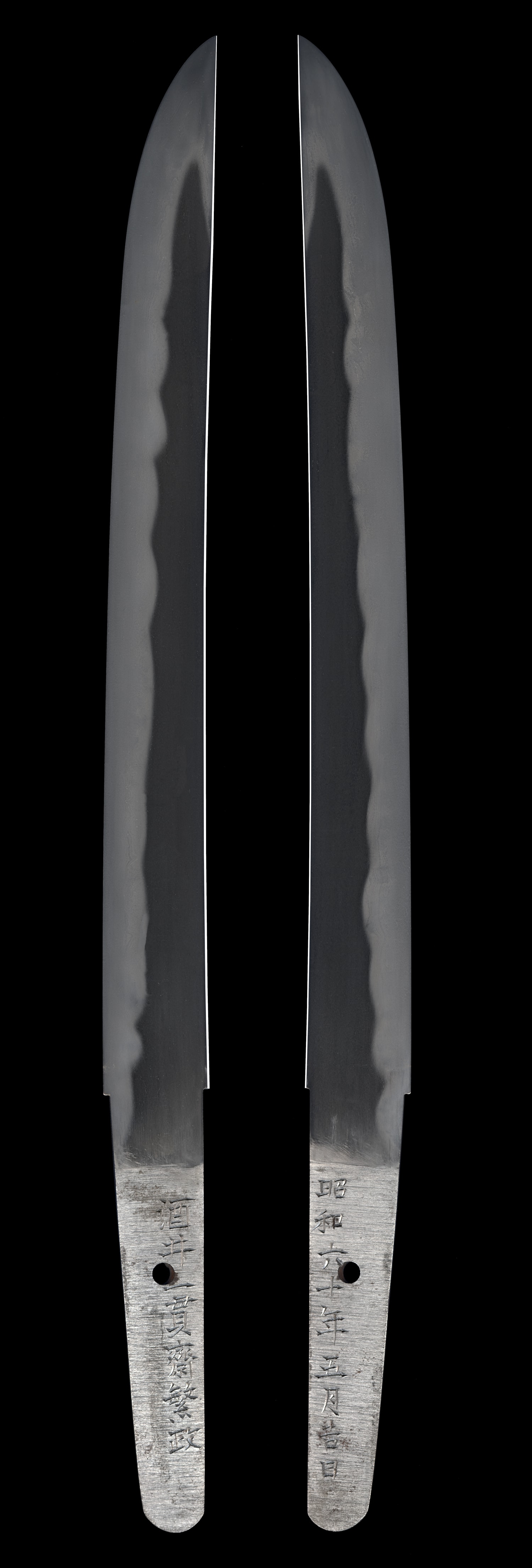
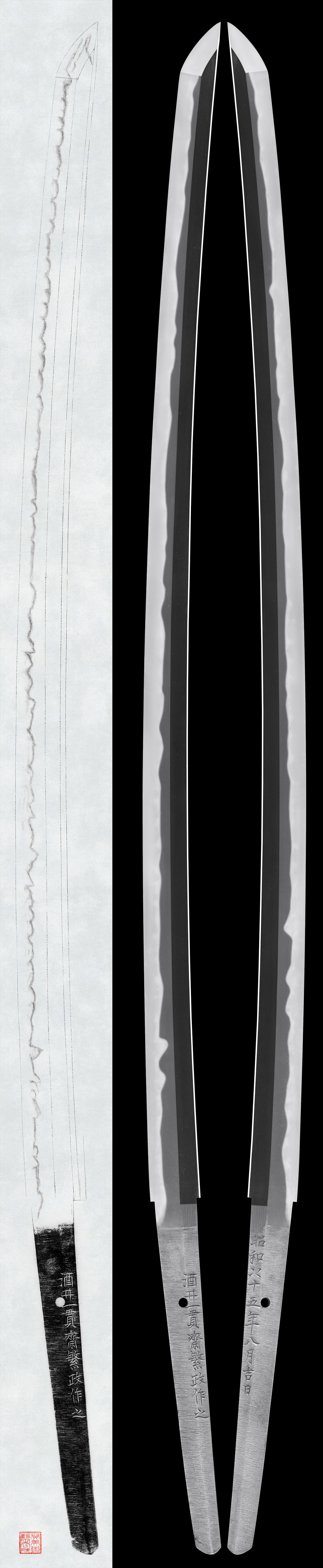
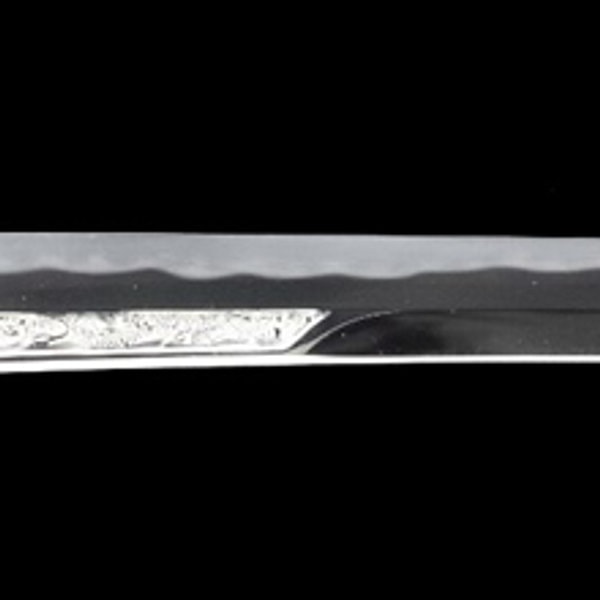
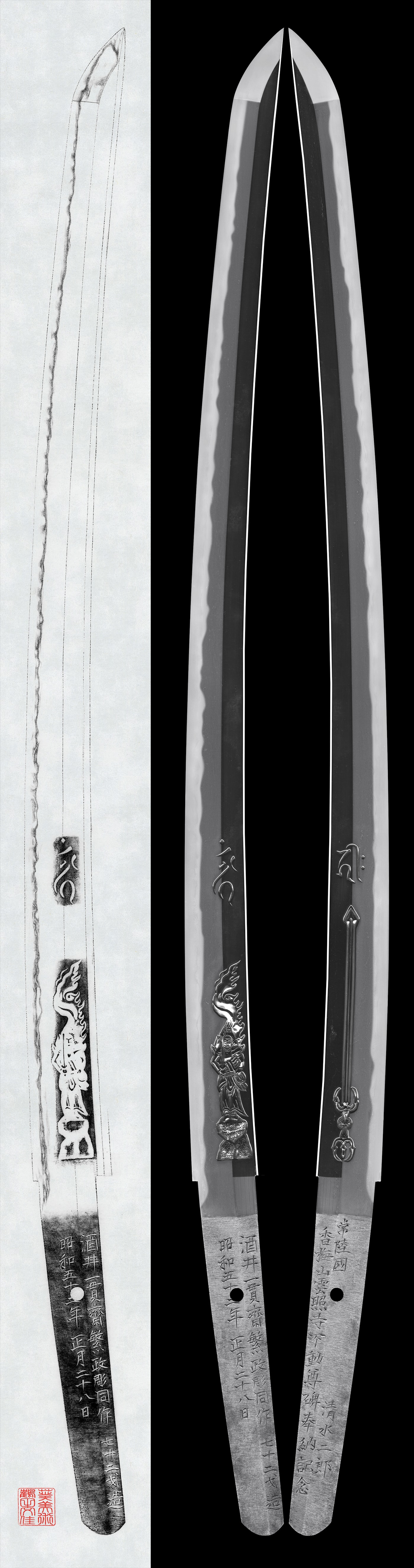
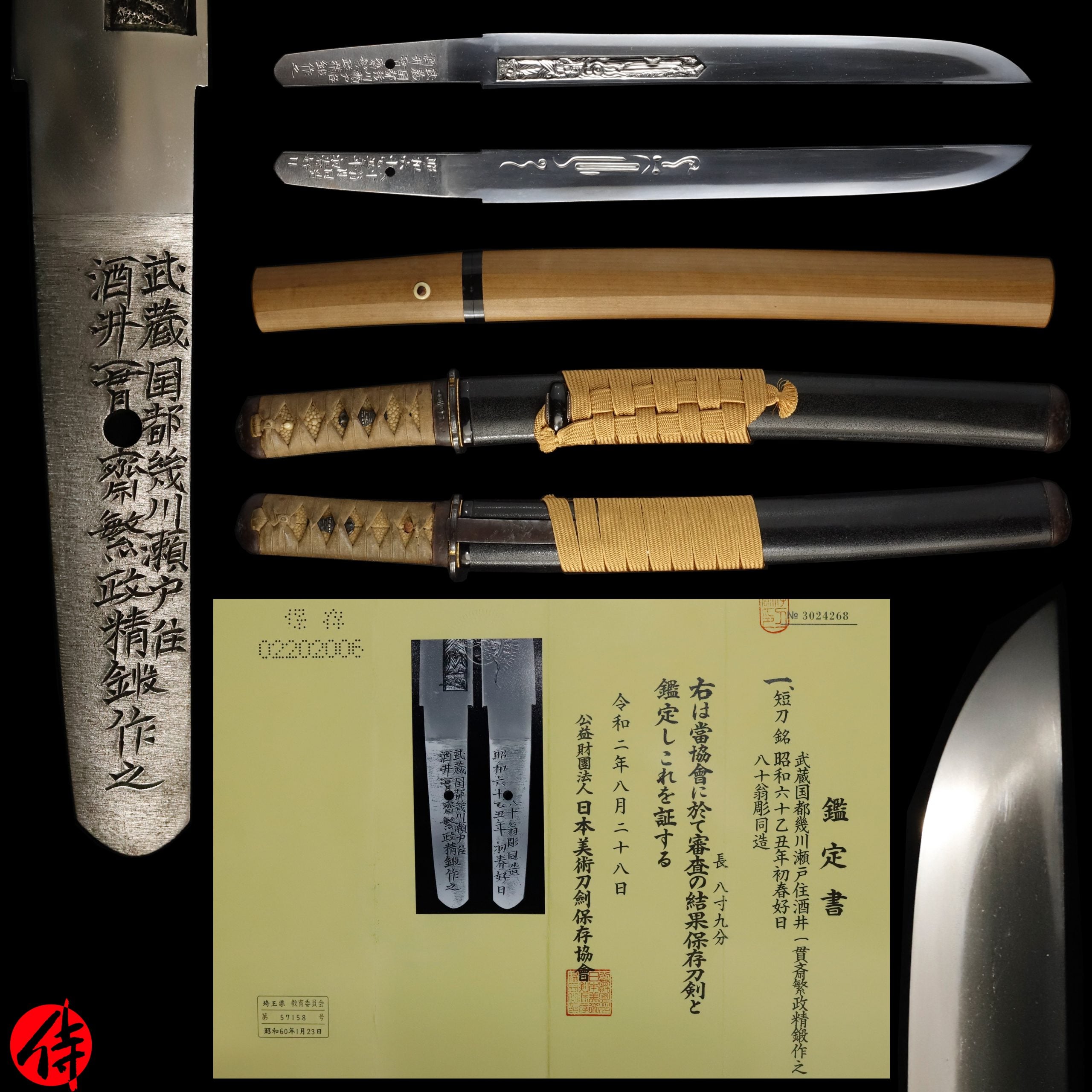
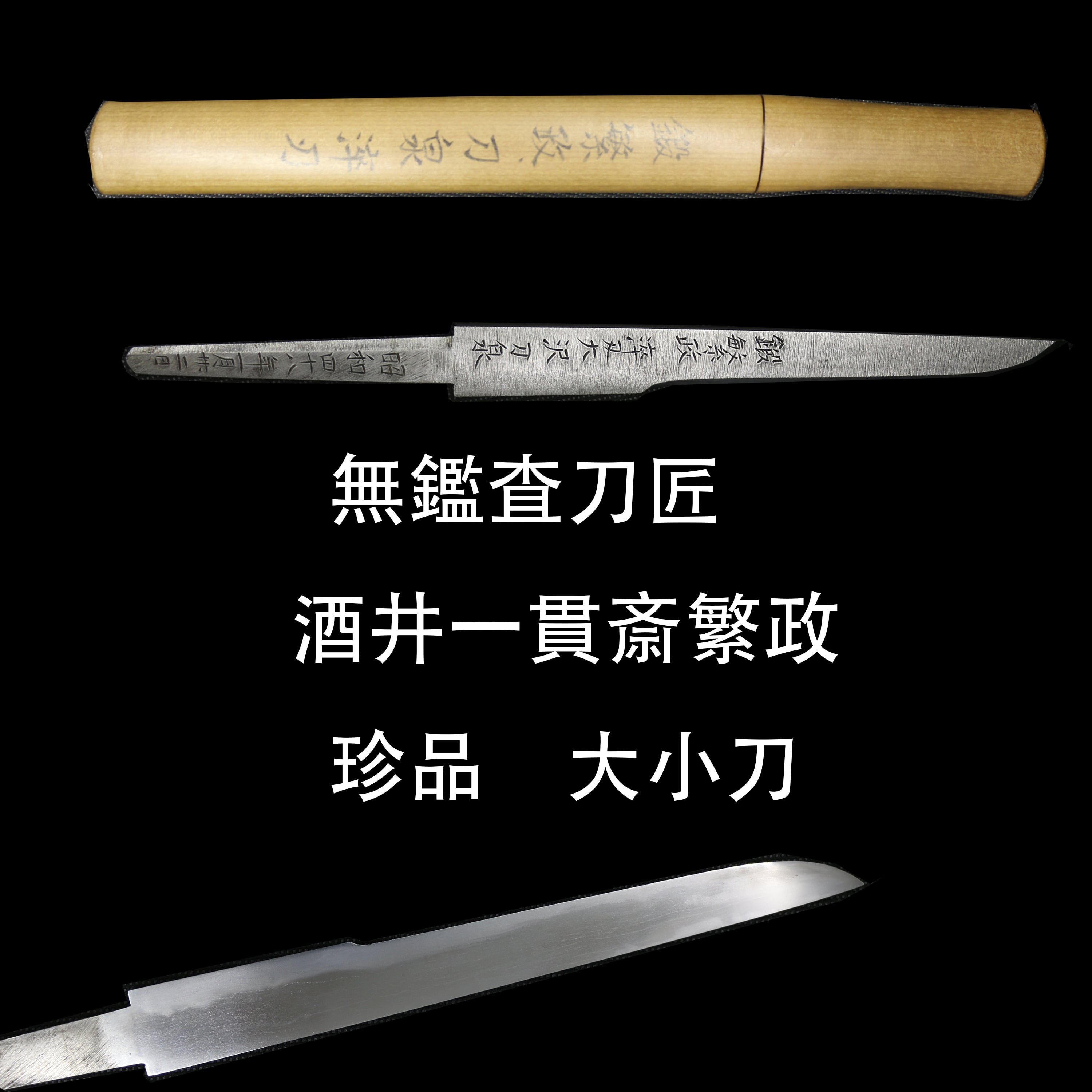
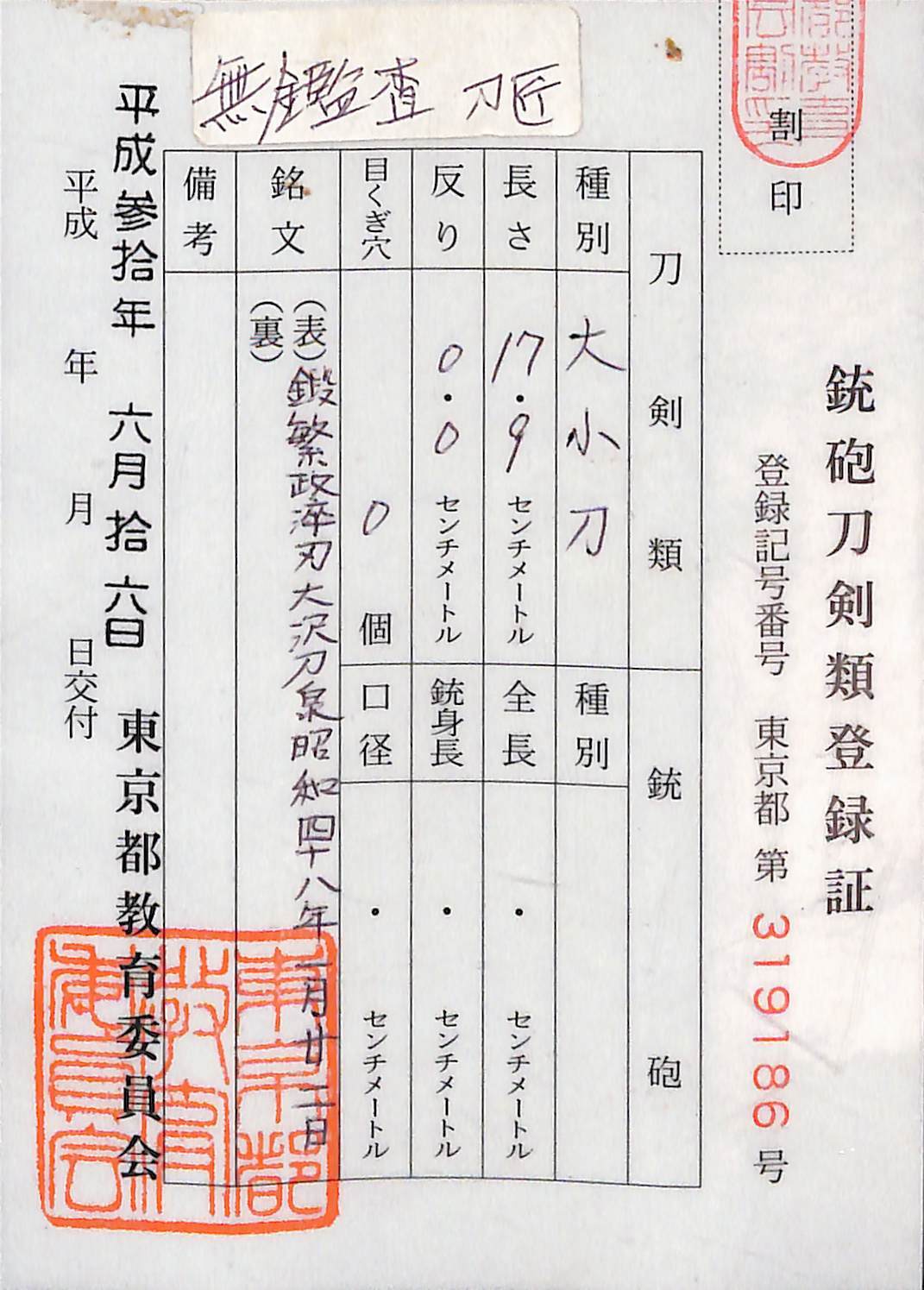
This listing features a Daisho (matching pair of swords) by Sakai Ikkanzai Shigemasa, a modern swordsmith recognized as a Mukansa (unexamined) swordsmith by the NBTHK. Born in 1905, Shigemasa trained under Kasama Ikkanzai Shigetsugu and later became a commissioned smith for both the Army and Navy. His works are known for their beautiful jigane (blade steel) and prominent hamon (temper line), often featuring intricate blade carvings.
 NihontoWatch
Showa (1926-1989) · nagasa 17.9cm
around 1926-1989
4 pieces on the market now
The twentieth century nearly killed the craft twice: wartime distortion, then the occupation ban. The NBTHK’s founding in 1948 and licensed forging from 1953 rebuilt the sword as an art, crowned by Living National Treasures and the mukansa rank.
We could not find an authenticity certificate on the seller’s listing. Japanese swords and fittings are normally papered by the NBTHK (or the NTHK). Without one, the attribution is the seller’s own assessment and has not been independently verified — treat it with caution and ask the dealer about certification before buying.
Except where the item is defective, we do not accept returns as a rule. In the case of an error on our part, please contact us by email within 3 days of the item's arrival.
This listing features a Daisho (matching pair of swords) by Sakai Ikkanzai Shigemasa, a modern swordsmith recognized as a Mukansa (unexamined) swordsmith by the NBTHK. Born in 1905, Shigemasa trained under Kasama Ikkanzai Shigetsugu and later became a commissioned smith for both the Army and Navy. His works are known for their beautiful jigane (blade steel) and prominent hamon (temper line), often featuring intricate blade carvings.
NihontoWatchShowa (1926-1989) · nagasa 17.9cm
around 1926-1989
4 pieces on the market now
The twentieth century nearly killed the craft twice: wartime distortion, then the occupation ban. The NBTHK’s founding in 1948 and licensed forging from 1953 rebuilt the sword as an art, crowned by Living National Treasures and the mukansa rank.
We could not find an authenticity certificate on the seller’s listing. Japanese swords and fittings are normally papered by the NBTHK (or the NTHK). Without one, the attribution is the seller’s own assessment and has not been independently verified — treat it with caution and ask the dealer about certification before buying.
Except where the item is defective, we do not accept returns as a rule. In the case of an error on our part, please contact us by email within 3 days of the item's arrival.