The twentieth century nearly killed the craft twice: wartime distortion, then the occupation ban. The NBTHK’s founding in 1948 and licensed forging from 1953 rebuilt the sword as an art, crowned by Living National Treasures and the mukansa rank.
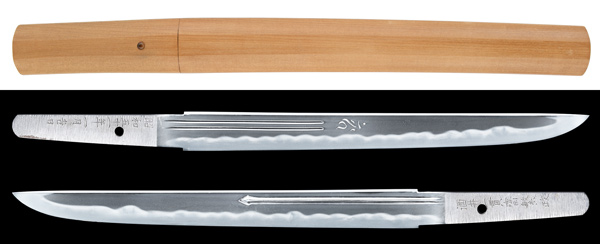
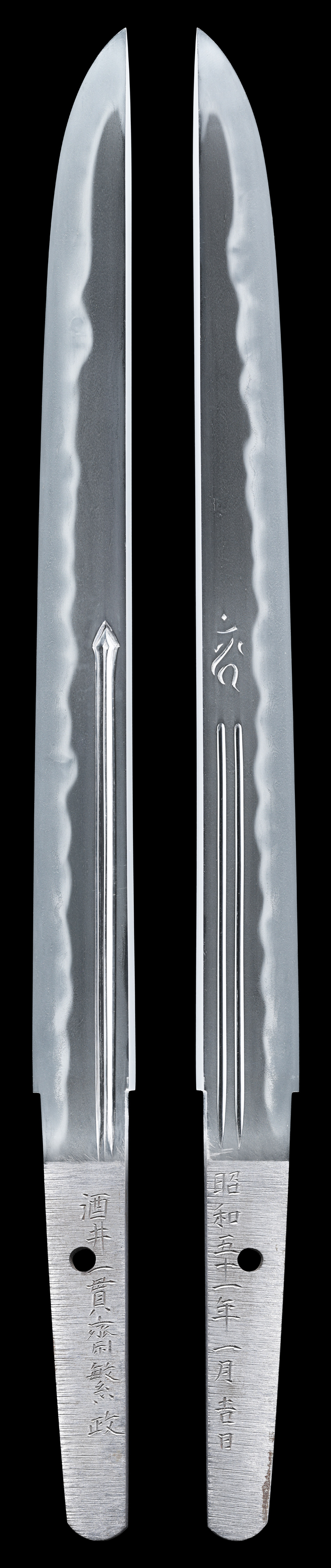
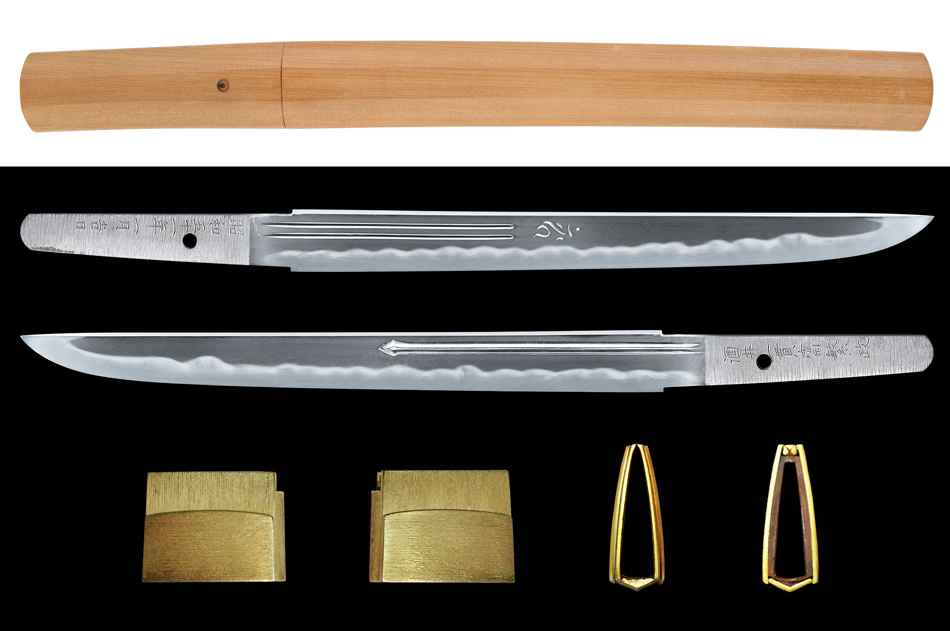
The swordsmith Ikkansai Shigemasa, whose real name was Sakai Hiroshi, was born in Meiji 38 in Otowa-cho, Shizuoka City, as the third son of Sakai Yasujiro (the younger brother of the swordsmith Miyaguchi Masatoshi). In Taisho 10, he became a disciple of the master Kasama Shigetsugu. After nearly 15 years of training, Shigemasa received the character "Shige" from Kasama Shigetsugu. His first mei was Shigemasa (繁正). Later, he changed his mei to Shigemasa (繁政). From Showa 8, he forged swords at the Yasukuni Jinja Nihonto Tanrenkai and the Okura Nihonto Tanrenjo. In Showa 16, he became independent in Itabashi Ward, Tokyo. He received certification as a Rikugun Jumei Tosho, and furthermore, in Showa 19, he also received certification as a Kaigun Jumei Tosho. After the war, he took the name Ikkansai Shigemasa and continued to forge swords energetically, and was certified as Mukansa by the Nihon Bijutsu Token Hozon Kyokai. He passed away in Heisei 8 at the age of 91. Ikkansai Shigemasa is a highly renowned master smith who deeply carved his name into the history of pre-war and post-war nihonto.
Offered by World Seiyudo
This piece has sold
Get an email when a new Kasama Ikkansai Shigemasa piece hits the market.


Machine translation from the shop's Japanese · may contain errors ·
around 1926-1989
4 pieces on the market now
Shōwa to the present: destruction and revival
The twentieth century nearly killed the craft twice: wartime distortion, then the occupation ban. The NBTHK’s founding in 1948 and licensed forging from 1953 rebuilt the sword as an art, crowned by Living National Treasures and the mukansa rank.
No cooling-off period or returns; refund only if the purchased sword is proven fake, capped at purchase price (excludes commission sales, accessories, auction items).