The Shintō era was largely invented in Kyōto: Umetada Myōju’s workshop trained the movement, Horikawa Kunihiro raised a generation, and the Hon’ami appraisers, who held no forge, governed the meaning of famous blades.
 NihontoWatchNihontoWatch
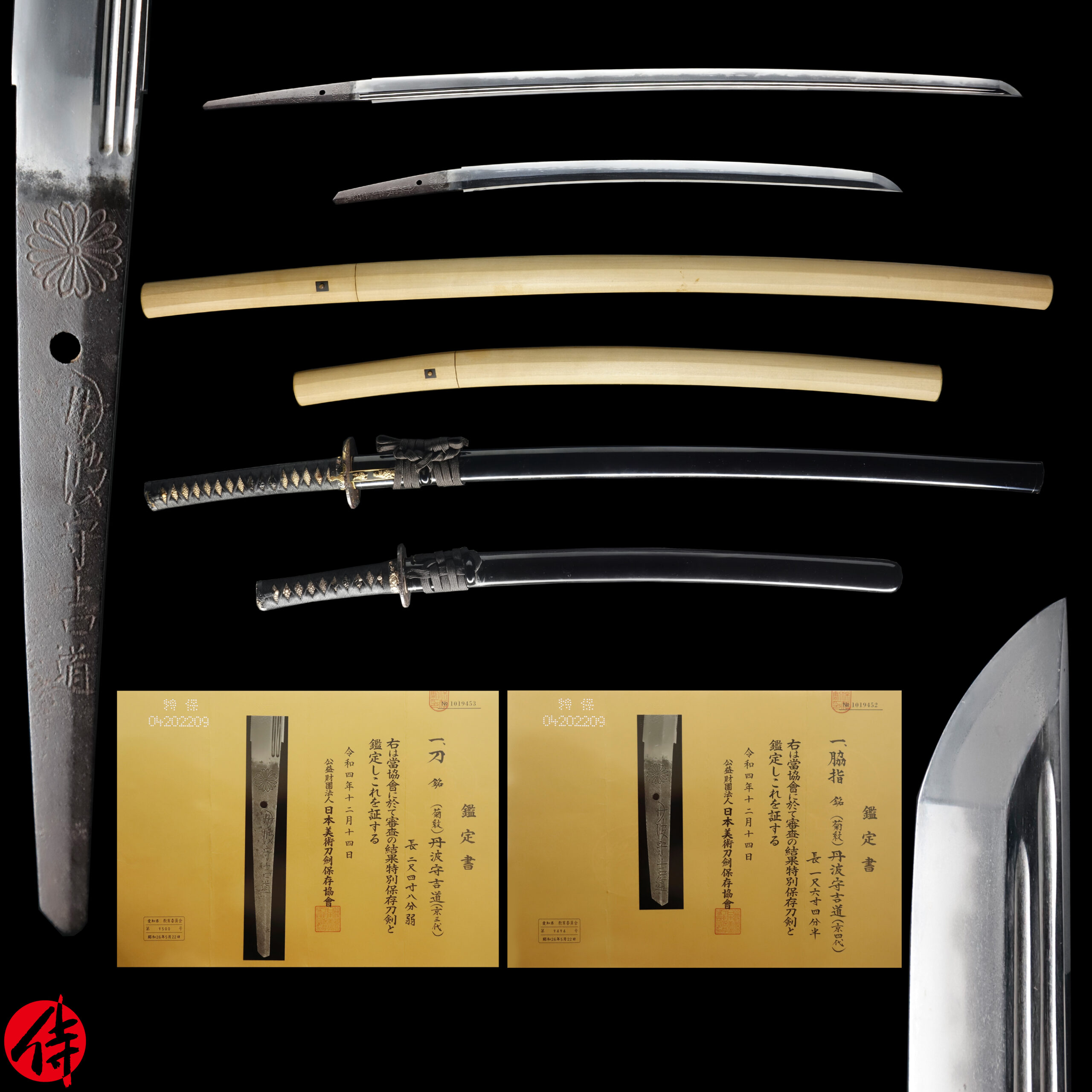
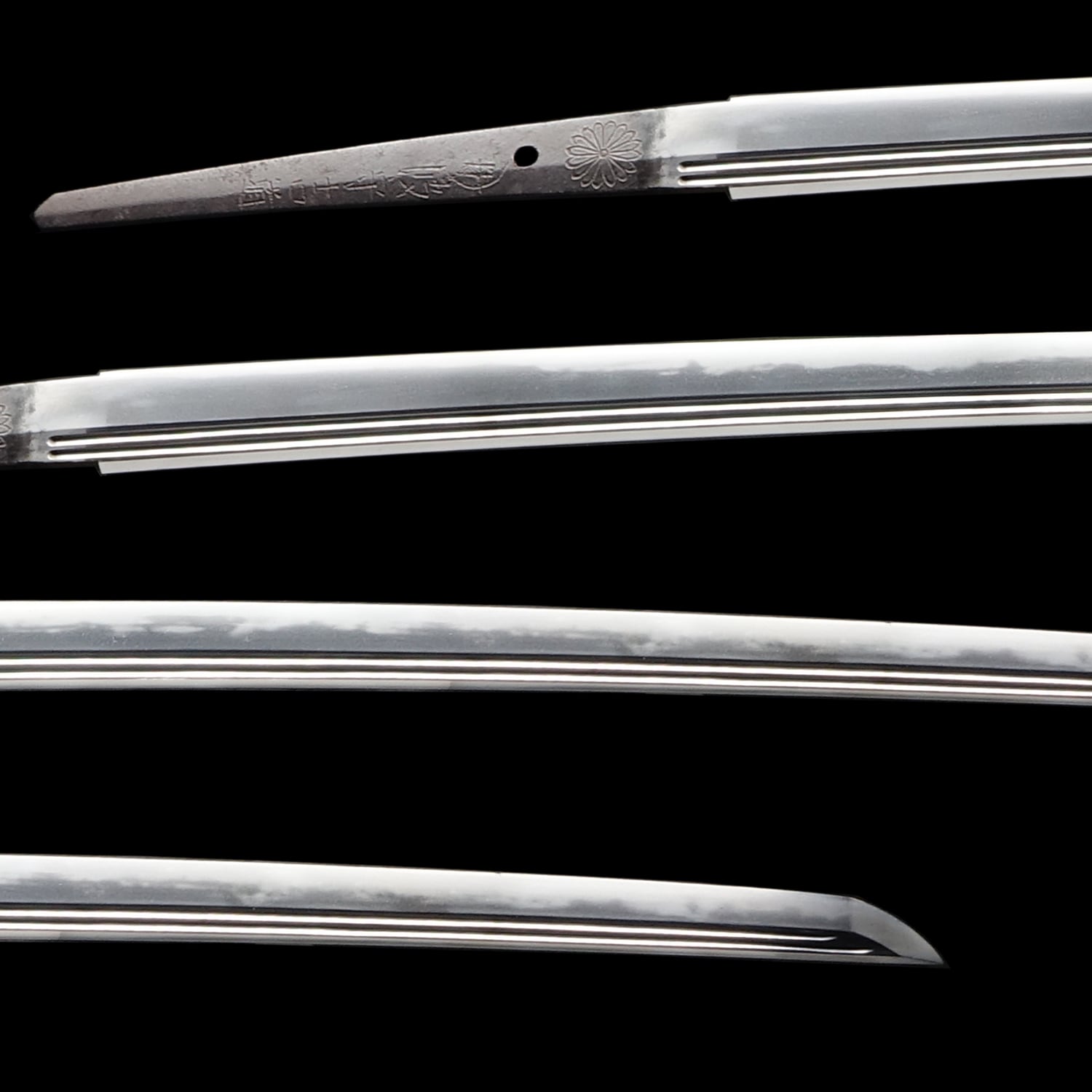
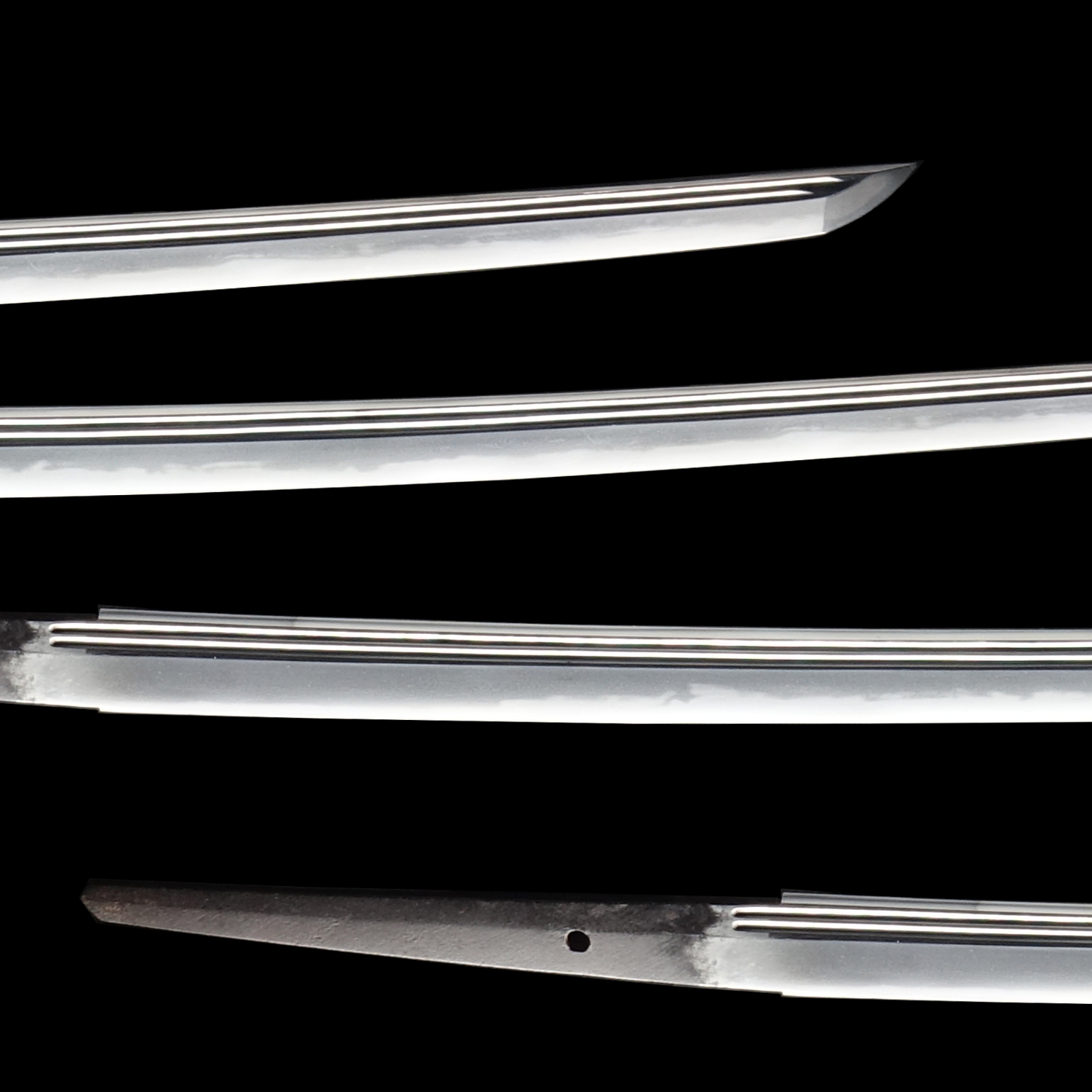
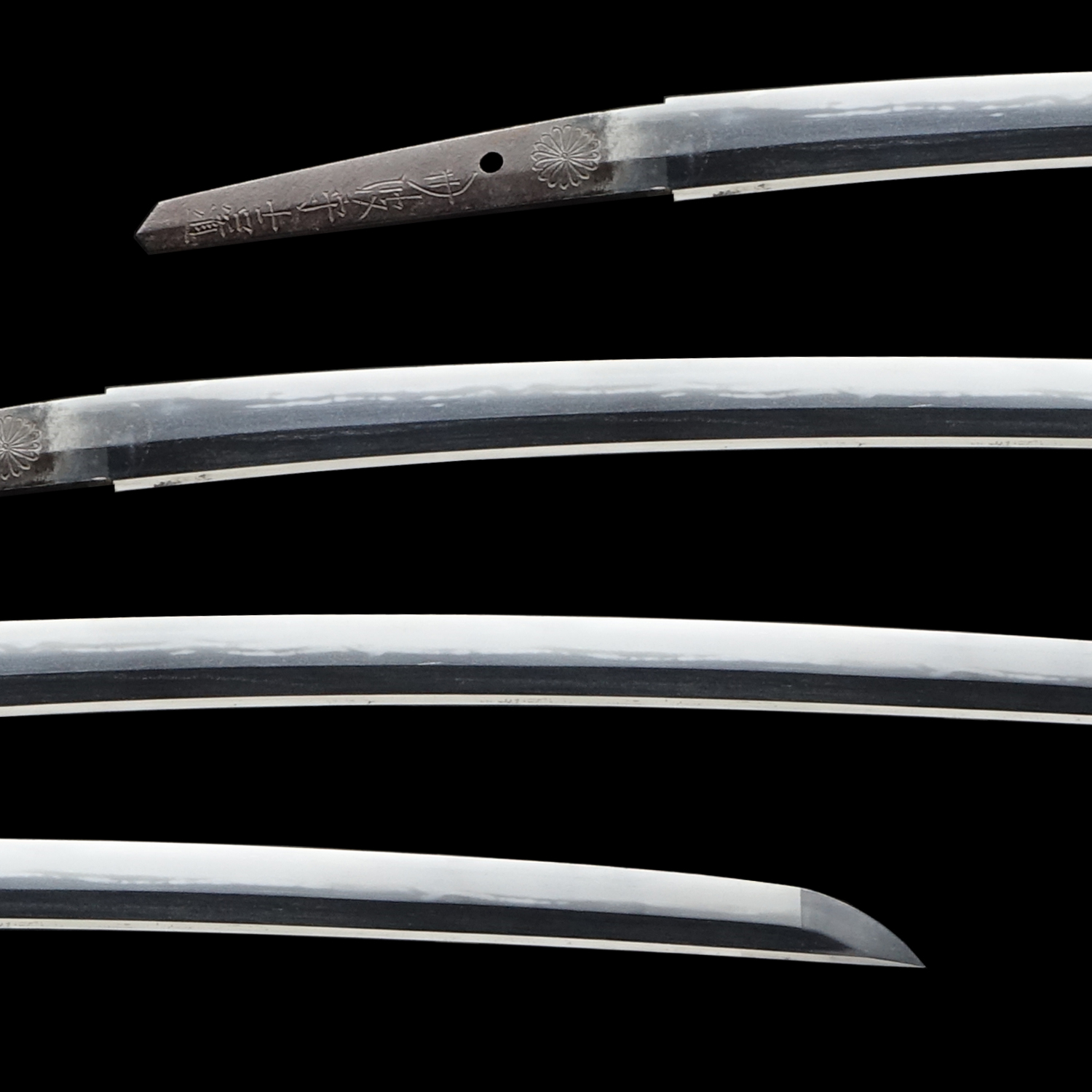
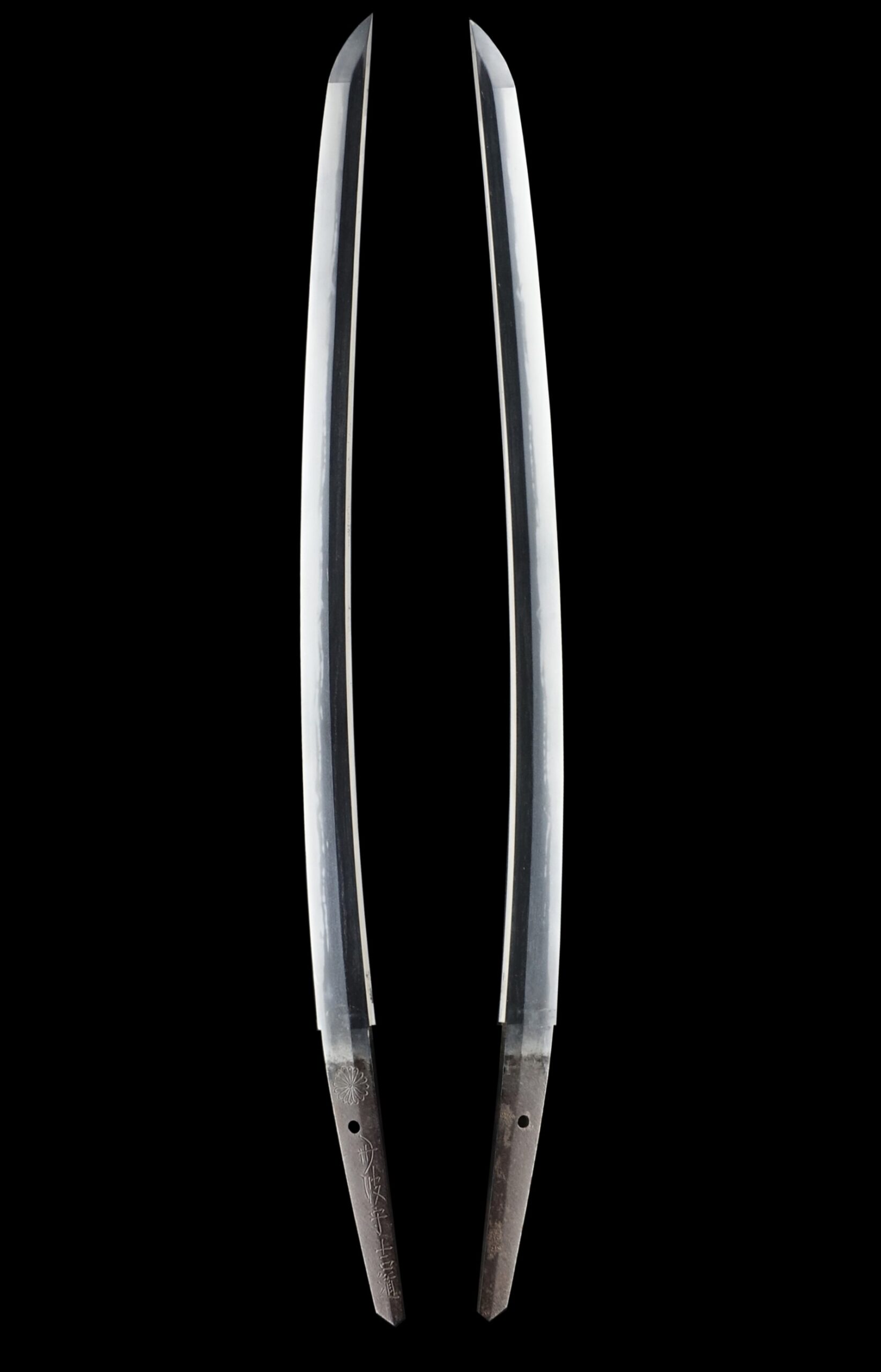
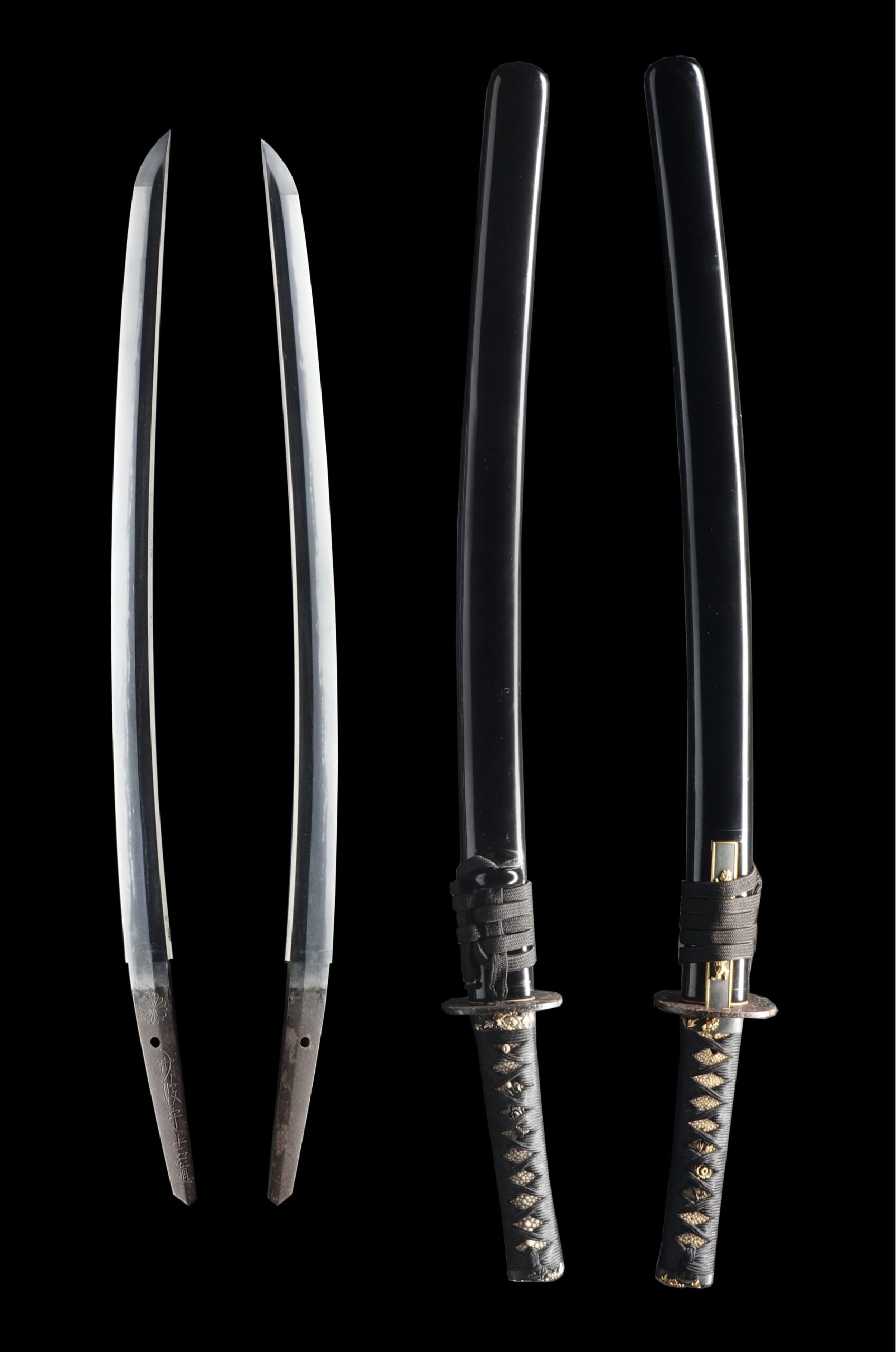
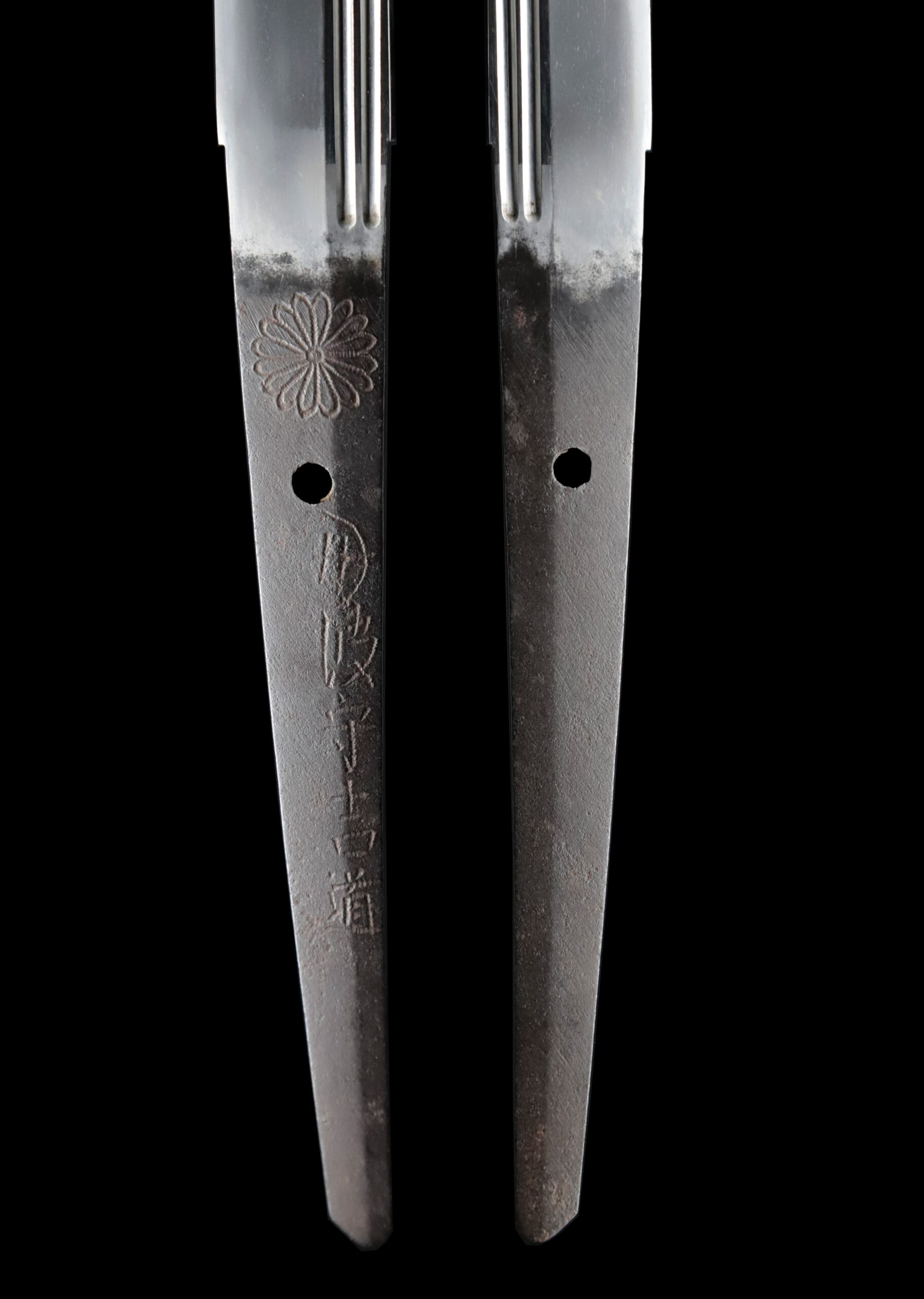
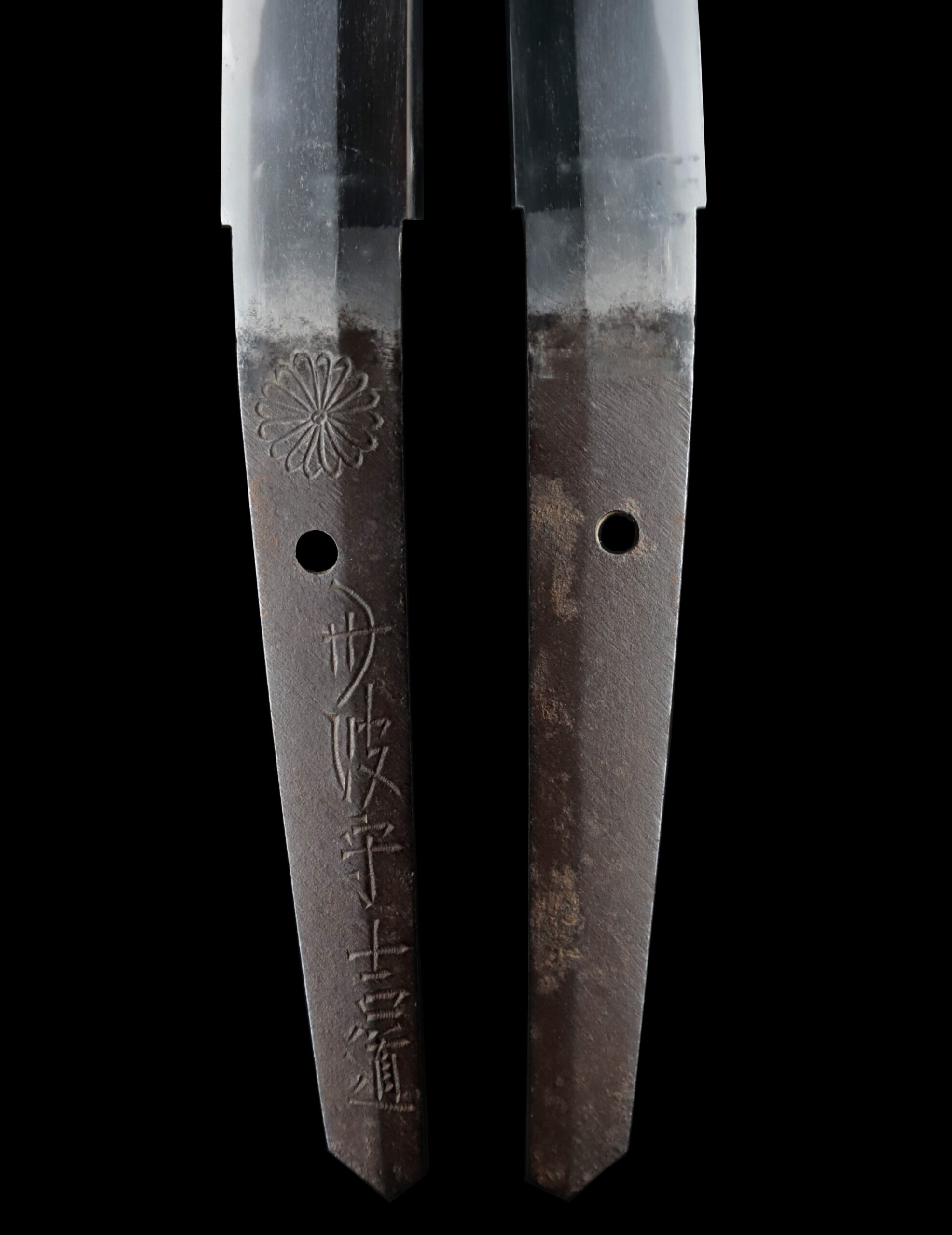
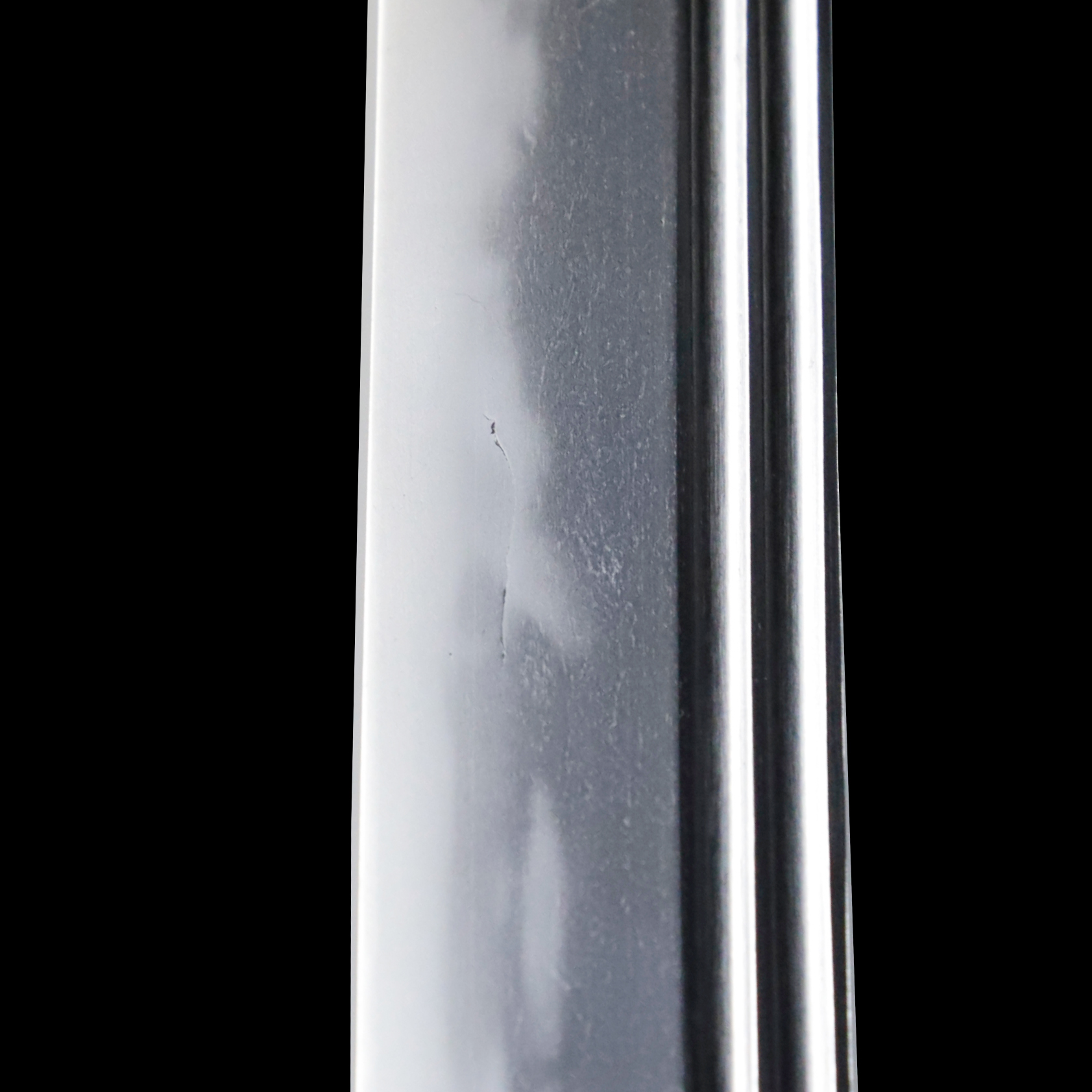
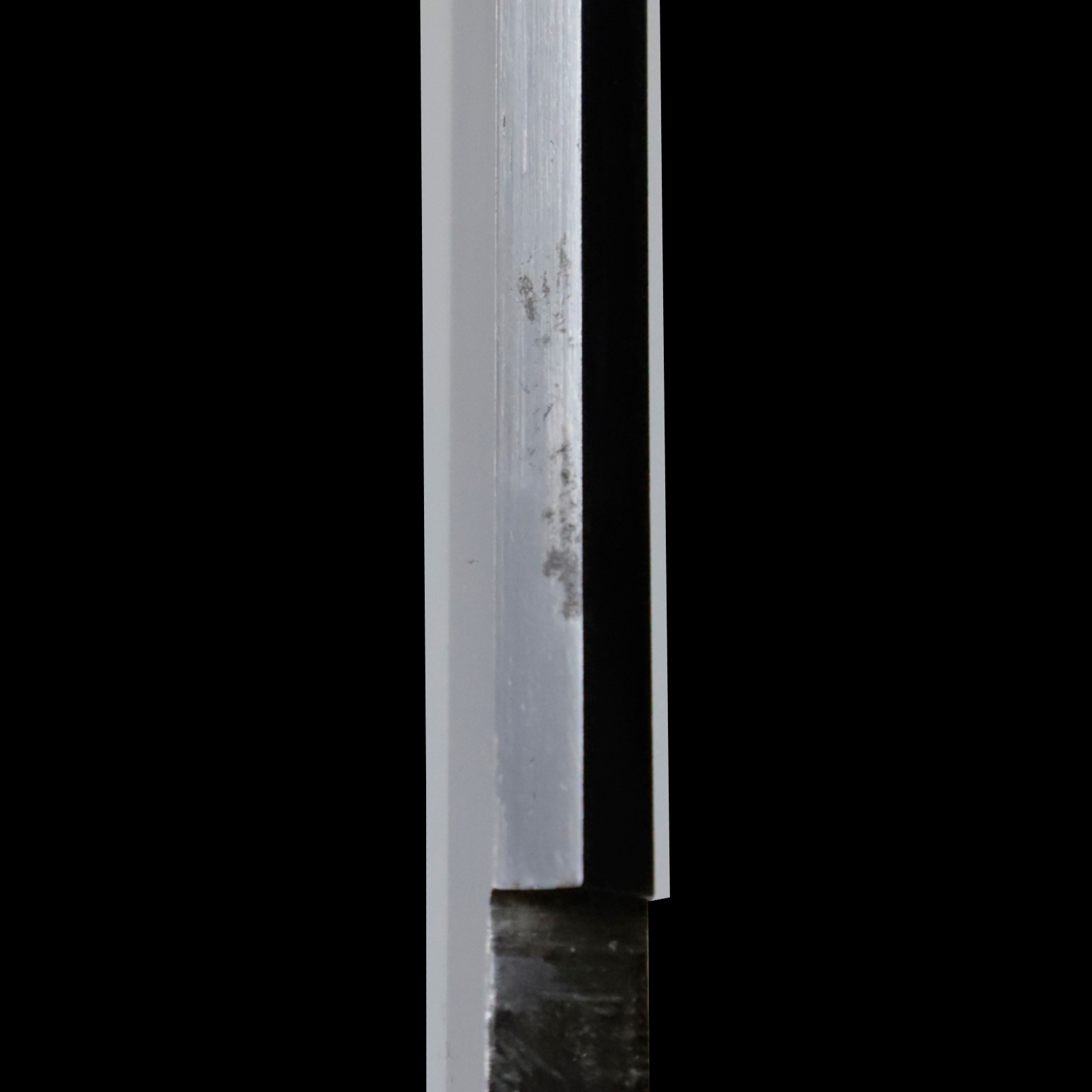
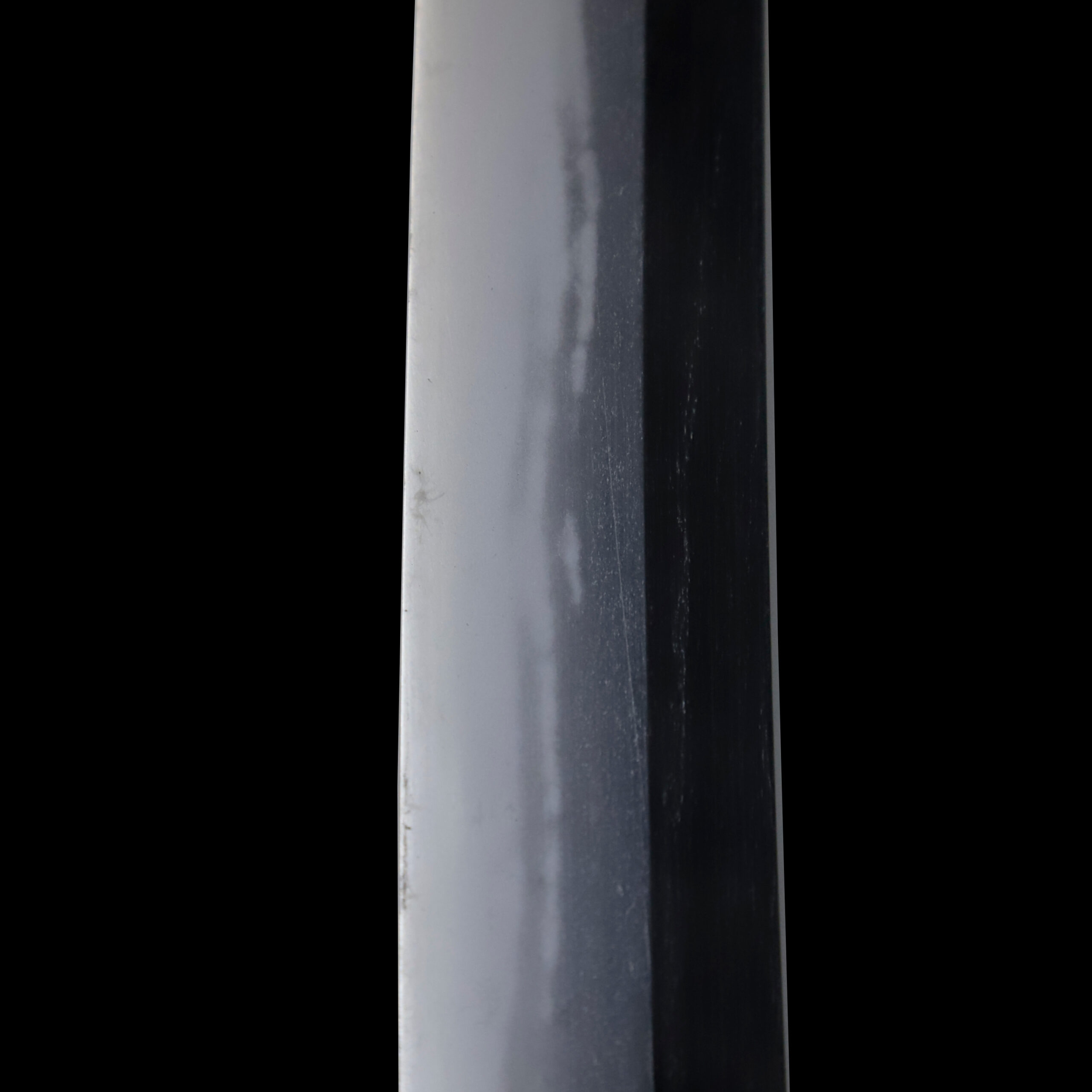
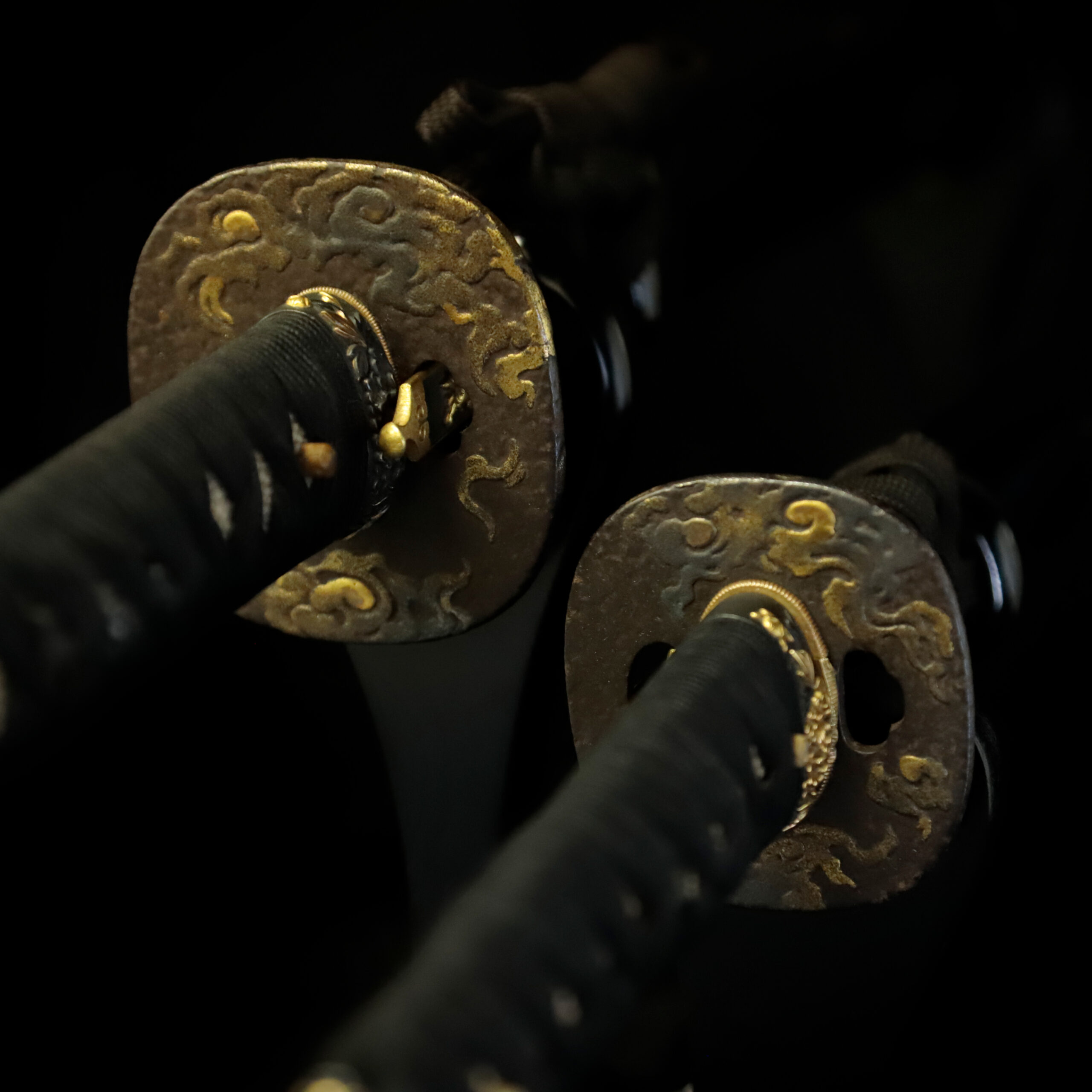
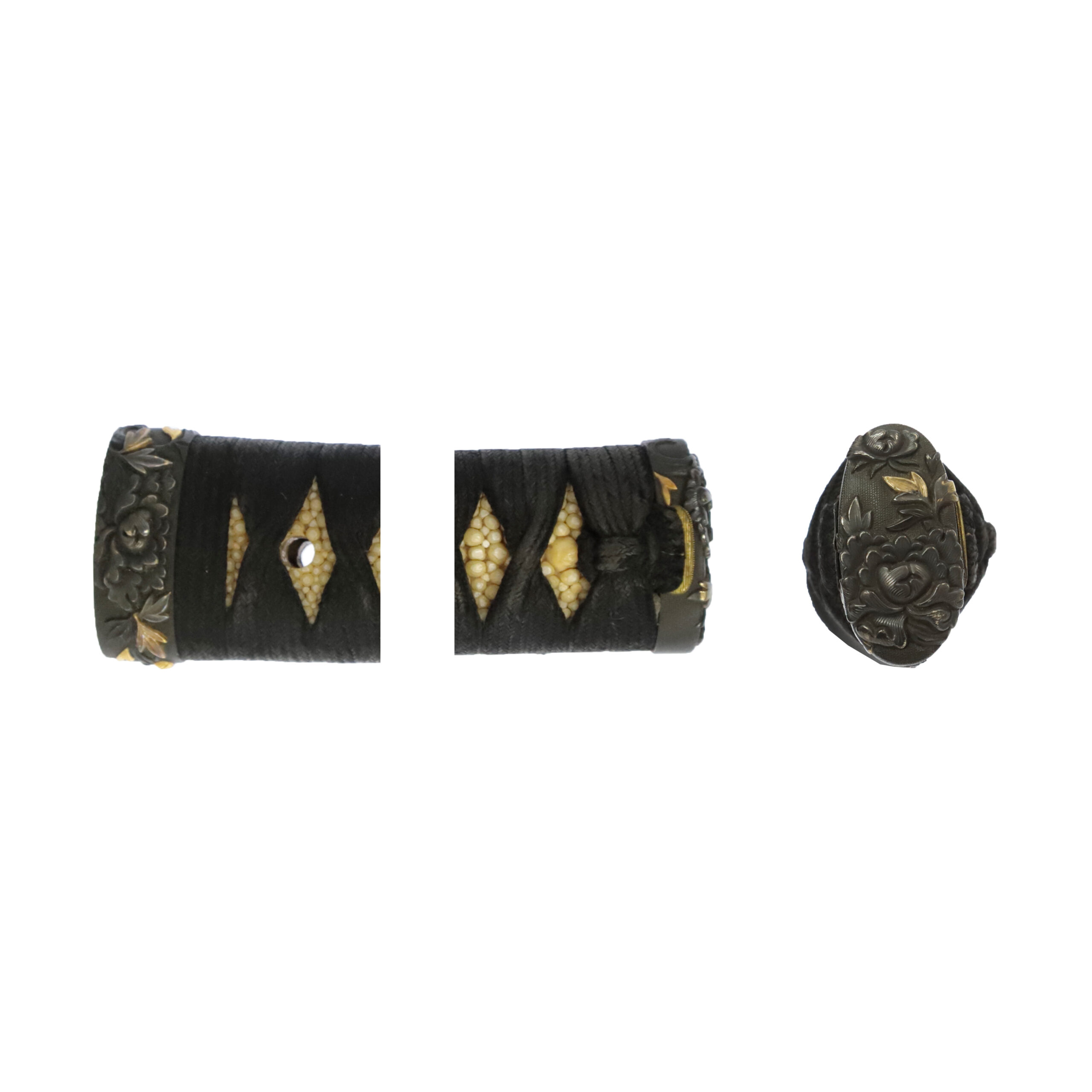
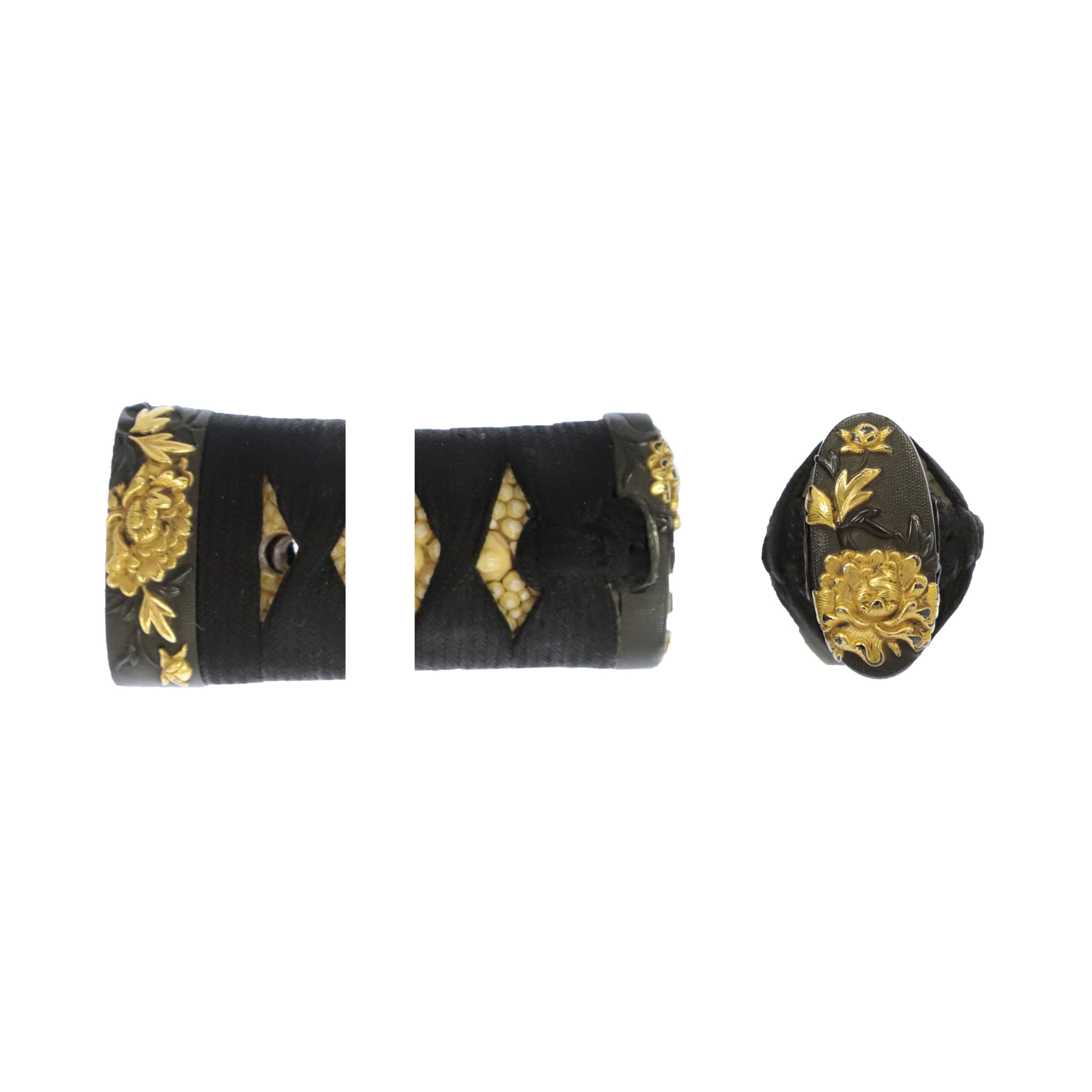
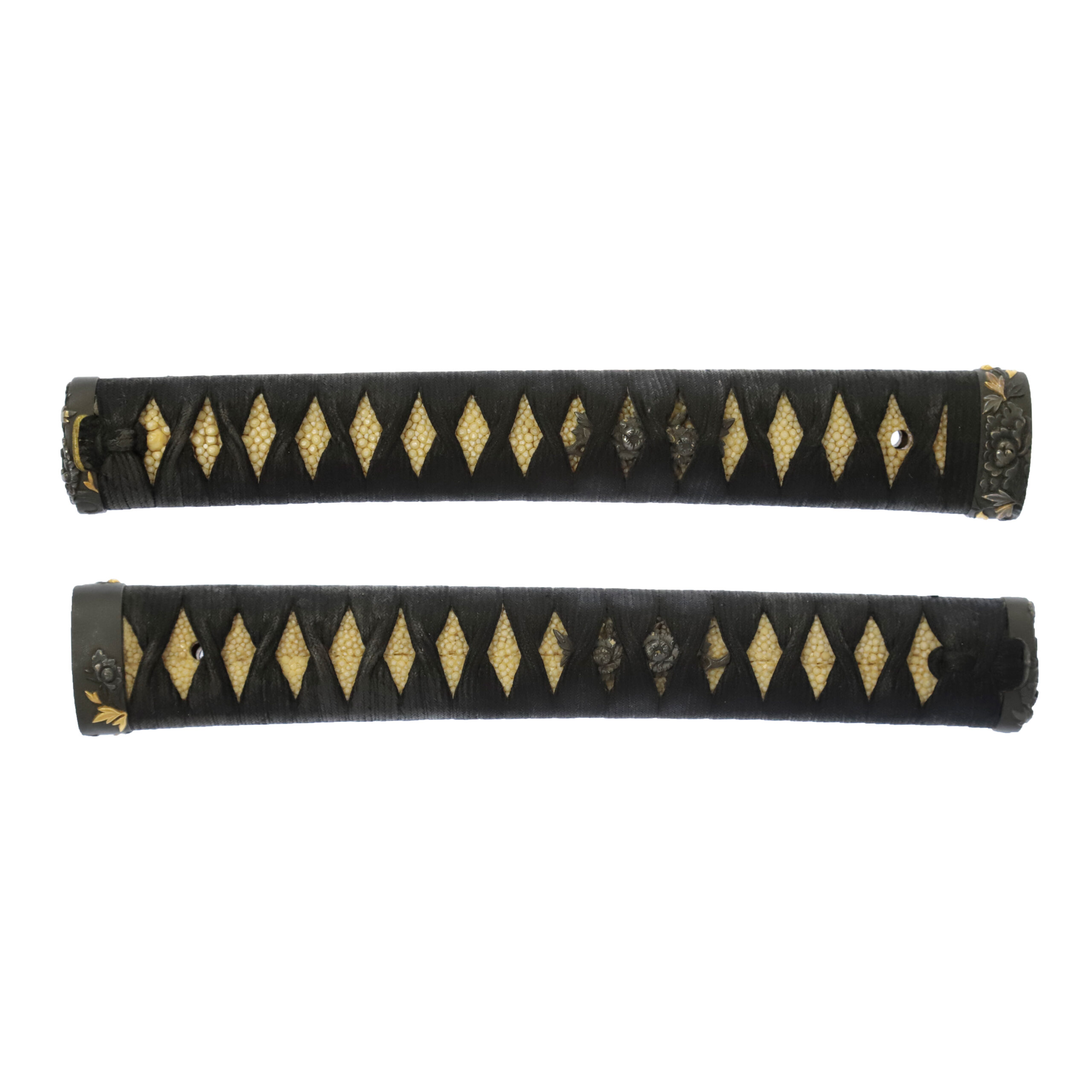
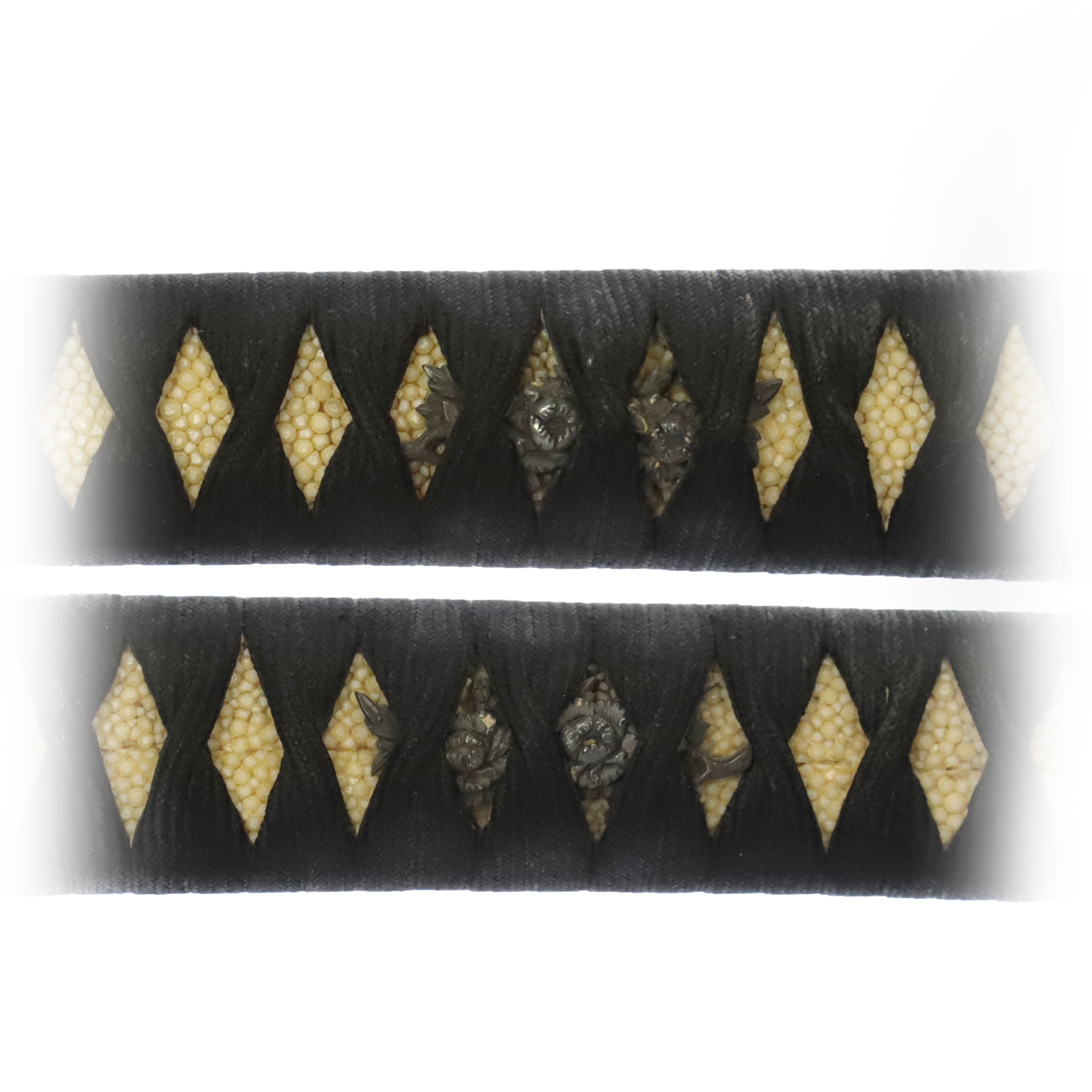
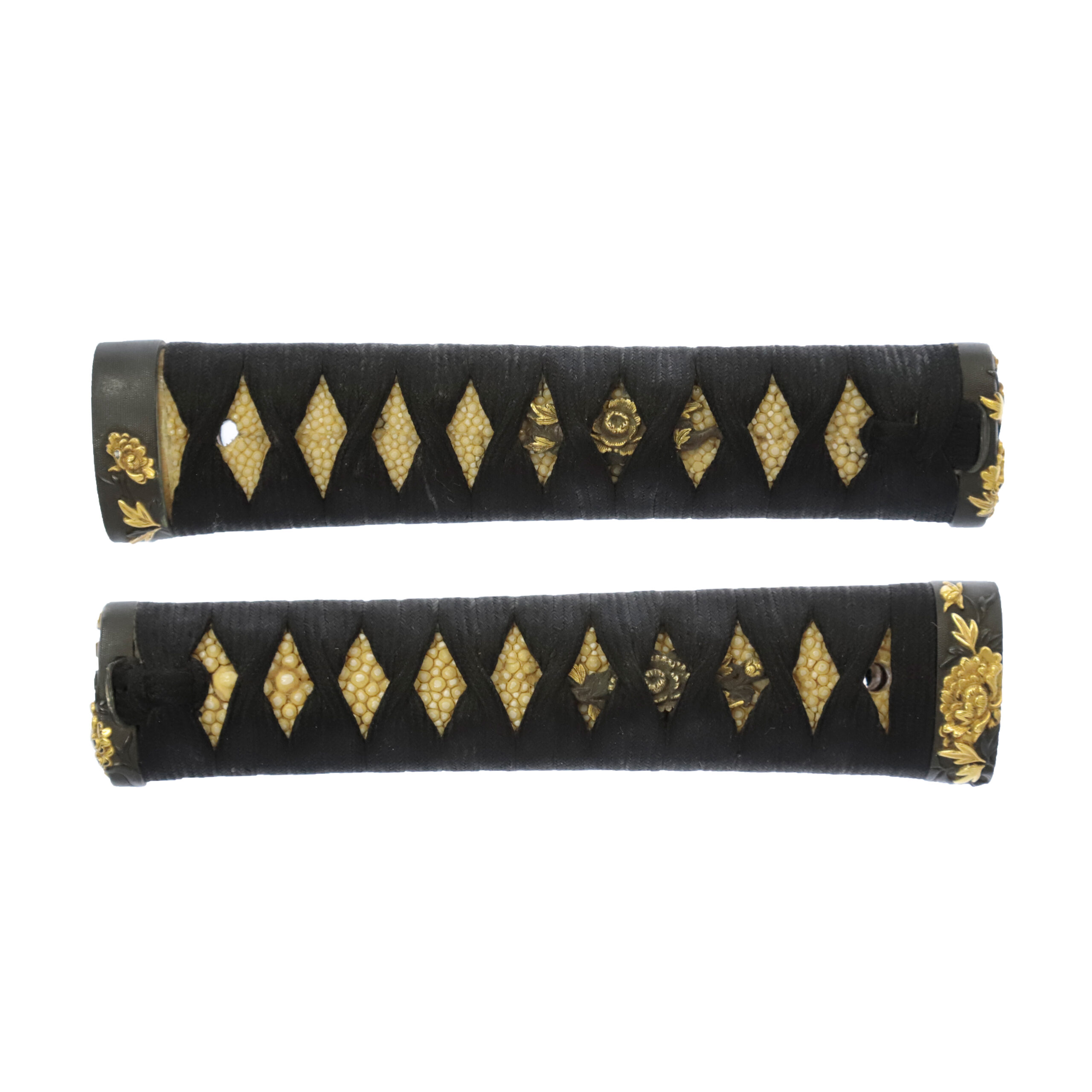
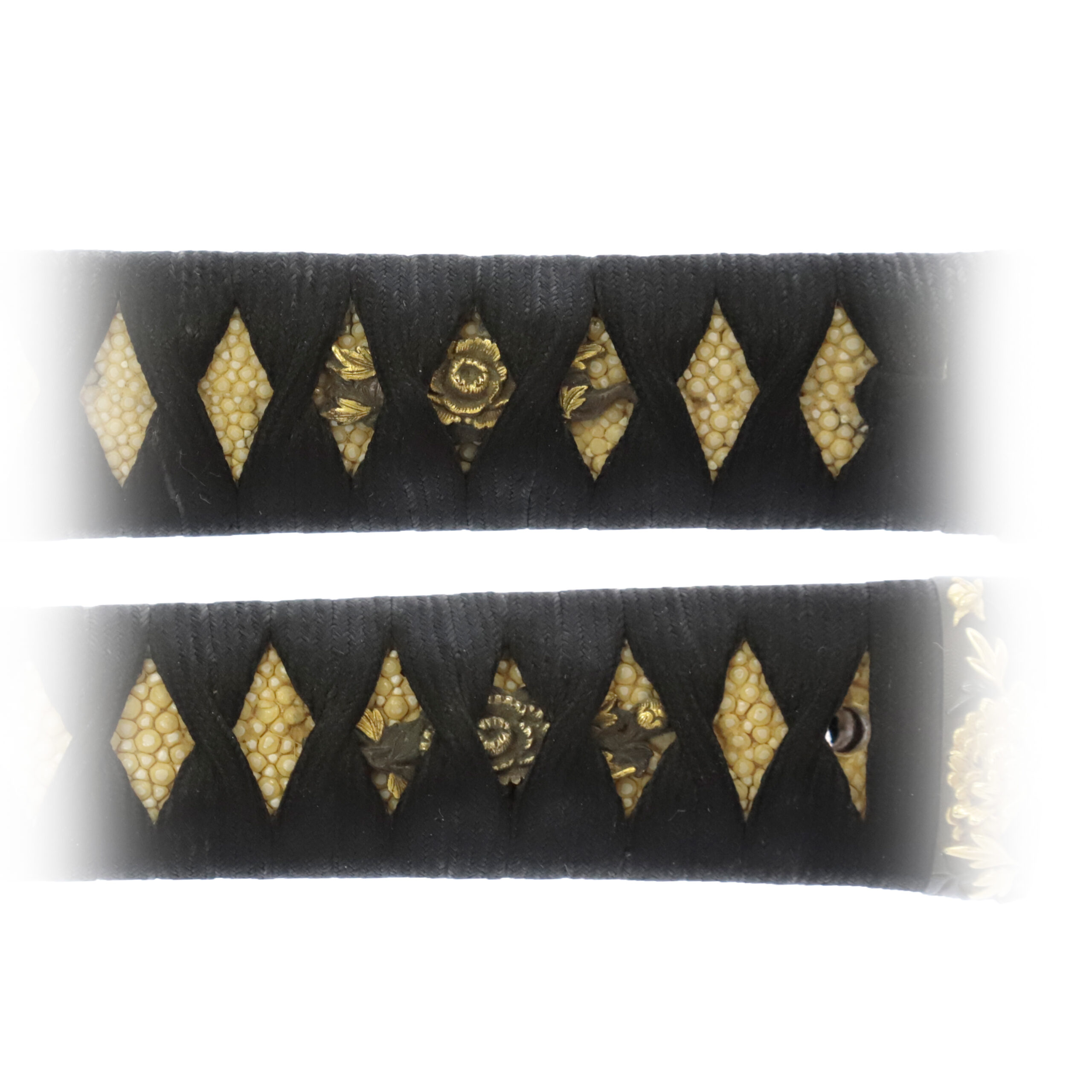
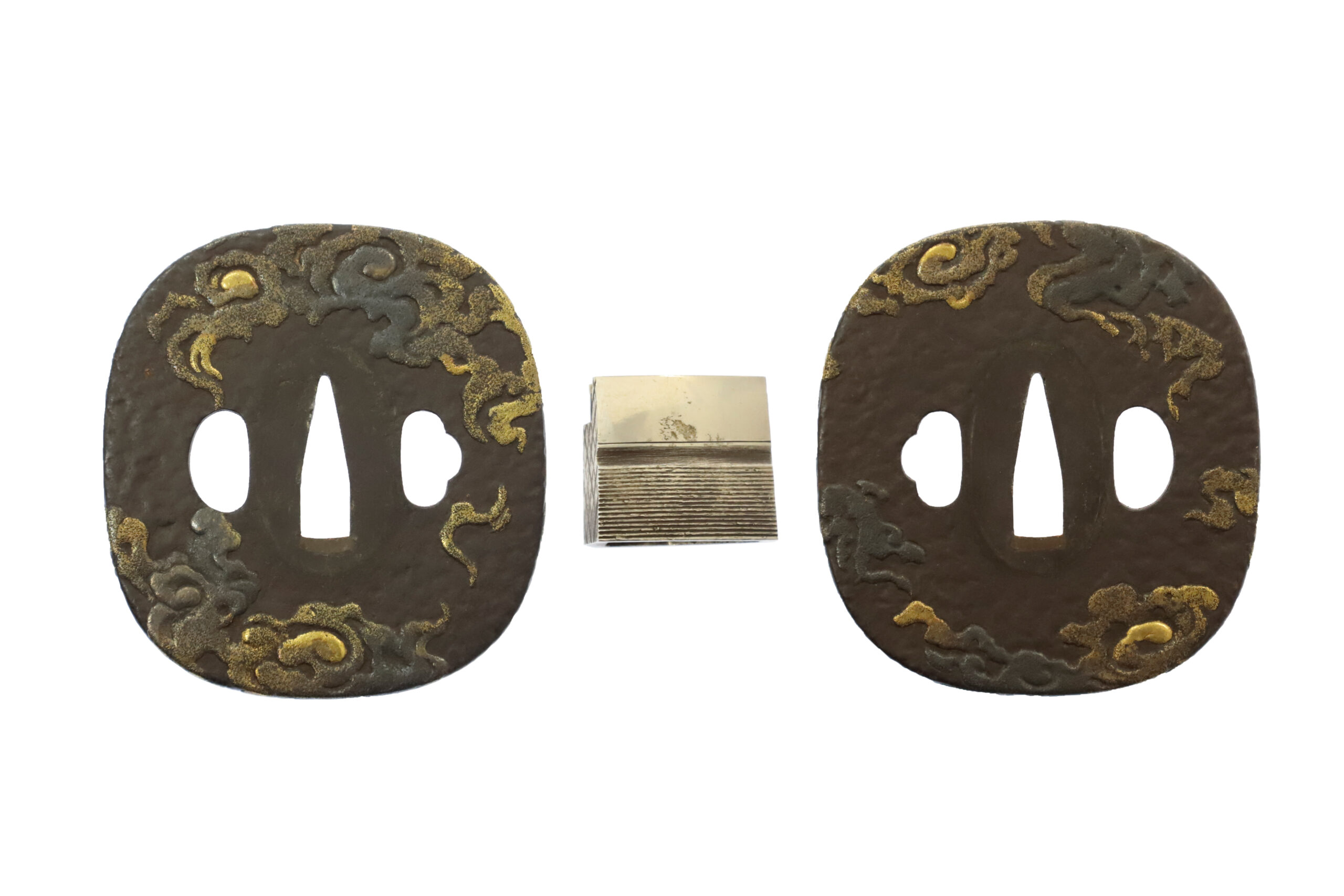
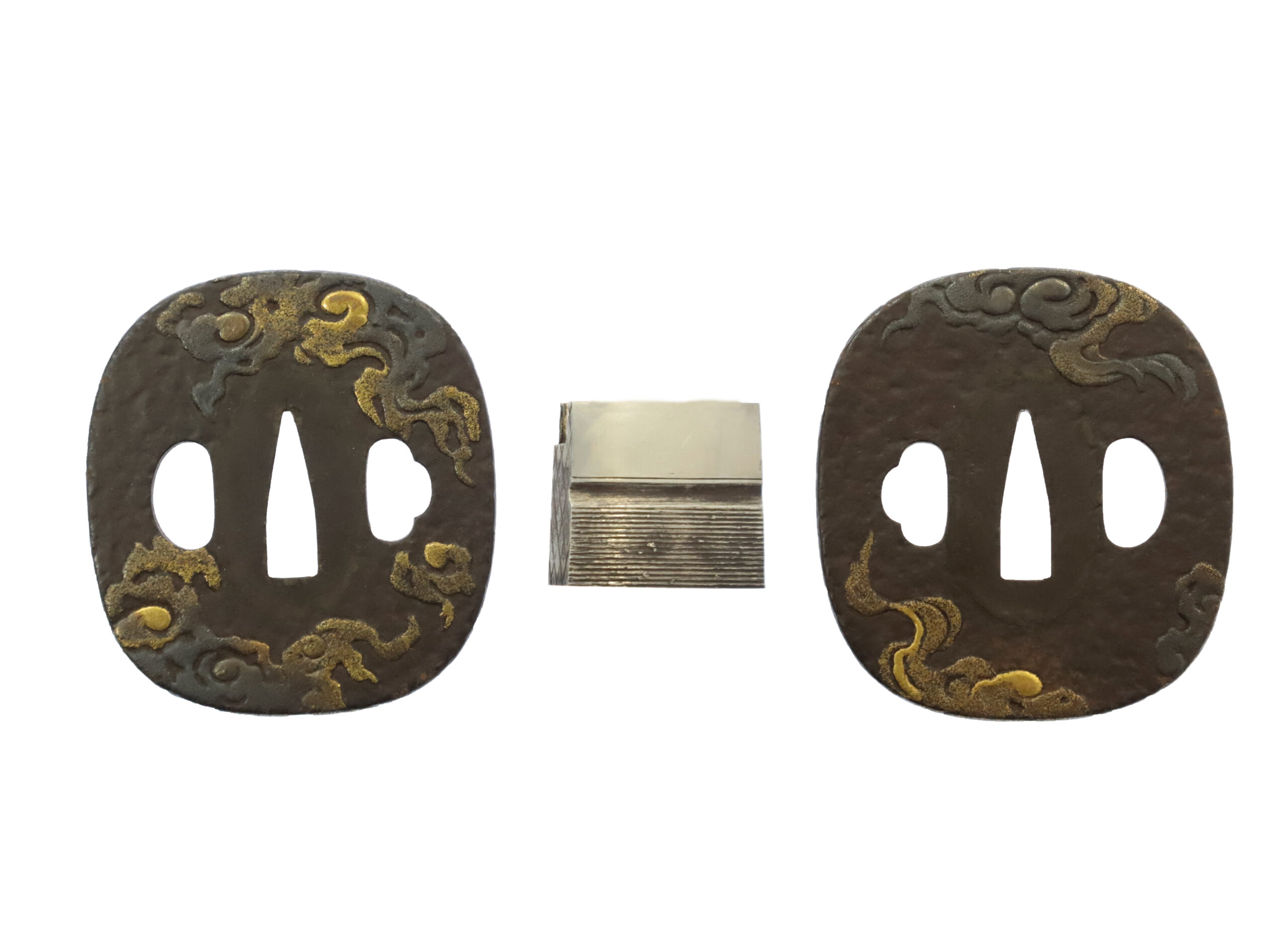
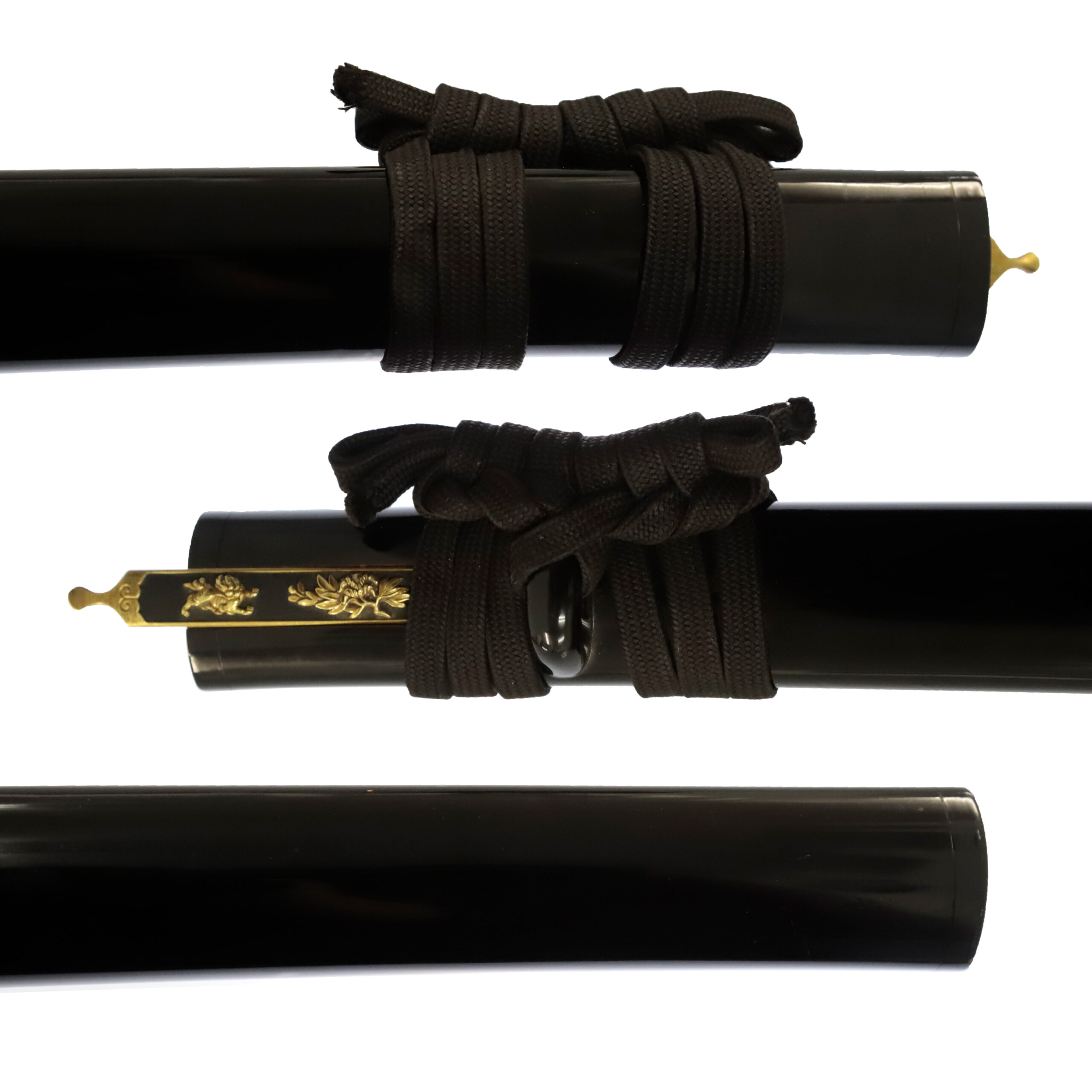
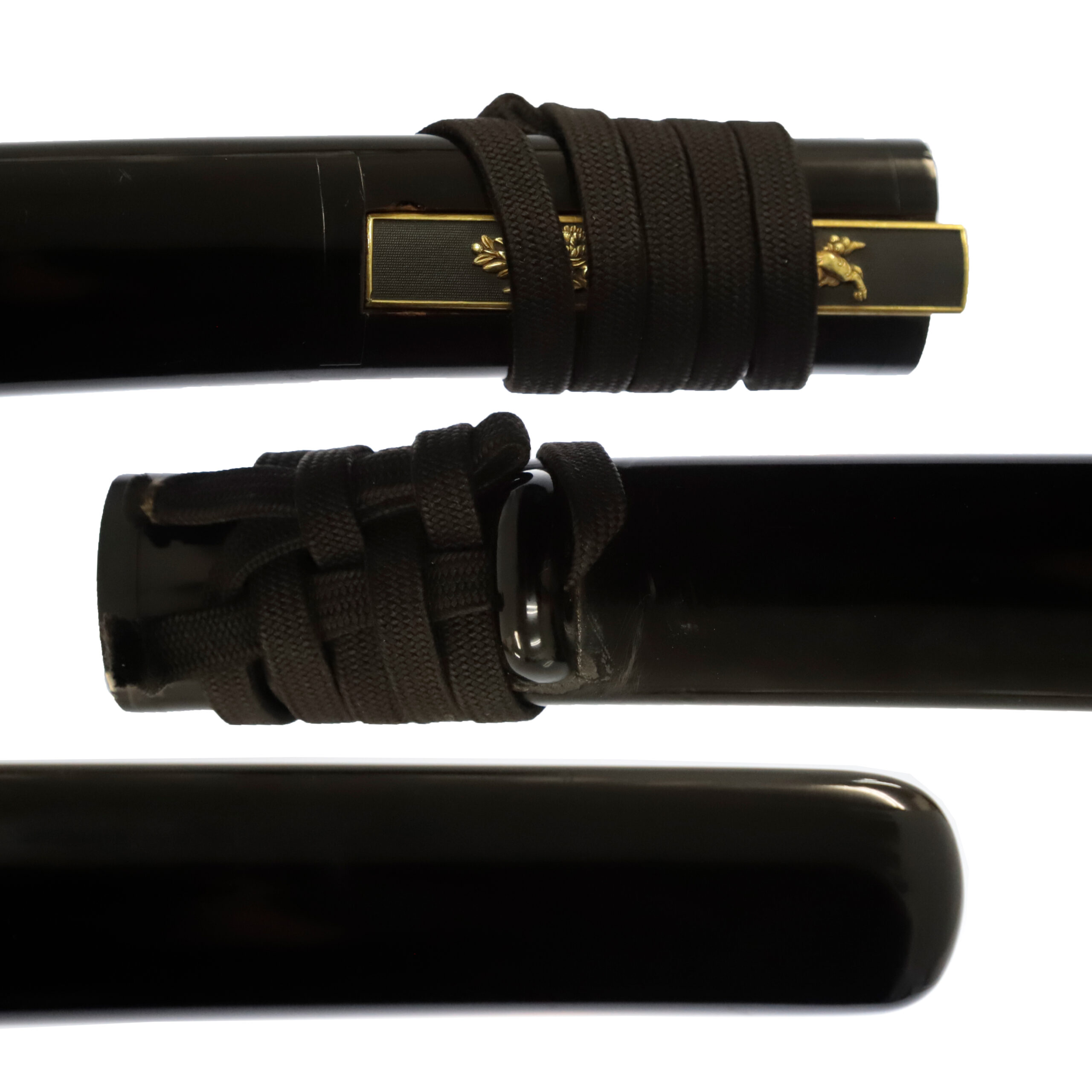
Summary The Katana blade was signed by the third-gen Kyo Tanba no Kami Yoshimichi (三代京丹波守吉道), who was active during 1661-1681. And the Wakizashi blade was signed by the fourth gen Kyo Tanba no Kami Yoshimichi (四代京丹波守吉道), who was active during 1673-1688. The swordsmith name Yoshimichi prospered in both Osaka and Kyoto for generations during the Edo period. And to distinguish two Yoshimichi, The one in Kyoto is called Kyo Yoshimichi, and the other one is called Osaka Yoshimichi. NBTHK judged which generation of Kyo Yoshimichi forged each blade and mentioned in the certificates. Both the third-gen and fourth gen Kyo Yoshimichi belonged to the prestigious school called Mishina (三品) school. The birth name of the third-gen was Mishina Tokuzaemon (三品特左衛門). And, he received Tanba no Kami title in the second year of the Kanbun era (1662) but he deceased in the 9th year of the Kanbun era (1669). Therefore, there are not many remaining works signed by the third-gen Tanba no Kami Yoshimichi. The birth name of the fourth-gen was Mishina Kichinojyo (三品吉之丞). He received the same title in the 12th year of the Kanbun Era (1672). Tanba no Kami was hereditary title the generations of Yoshimichi received in their career. Kami is the honorable official title given by the imperial court for one’s excellent craftsmanship. Both the third-gen and fourth-gen were allowed to inscribe a chrysanthemum emblem, which is the symbol of the Japanese emperor. Their sword forging technique was so great that the emperor permitted him to use this emblem, which was honorable for any swordsmith. Both blades have this chrysanthemum emblem. The first-gen Tanba no Kami Yoshimichi The first-gen Tanba no Kami Yoshimichi belonged to Kyoto Mishina school and was one of the sons of the Mishina school’s founder. Mishina school was created by the first-gen Mutsu no Kami Omichi (陸奥守大道), also known as Kanemichi. It is said that initially, he was from Mino province, exclusively forging blades for Shingen Takeda, a famous feudal lord. Later on, he moved to Kyoto by bringing his four sons and founded his school in Kyoto. Five sons were Iga no Kami Kinmichi(伊賀守金道)、Izumi no Kami Rai Kinmichi(和泉守来金道), Tanba no Kami Yoshimichi(丹波守吉道) and Echu no kami Masatoshi(越中守正俊). His sons were known as Kyoto Gokaji(京都五鍛冶), prestigious swordsmiths forging in Kyoto in the early Edo period. The first-gen Tanba no Kami Yoshimichi developed a unique Hamon pattern(tempering line) called Sudareba(簾刃). Sudare means traditional screens or blinds in Japanese. The Hamon pattern he invented resembles its appearance to Sudare. The Wakizashi blade has a beautiful Sudareba Hamon. This special characteristic was passed down to generations of Yoshimichi. Mishina school was prosperous throughout the Edo period and spread to other parts of Japan, such as Osaka. The superb craftsmanship of the Mishina school was passed down for generations. The 3rd and 4th-gen Yoshimichi are a good examples, and you can see excellent artistry from these blades. Kyo Yoshimichi school lasted seven generations by the end of the Edo period. What is Daisho? Daisho is a pair of two Japanese swords Samurai carried. During the Edo period, having Daisho in public places was considered social status for Samurai. Furthermore, Samurai were required to wear them under the law back then. Daisho is written as 大=Big and 小=Small. Dai part means Katana, and Sho part means Wakizashi. We are confident you would like this pair of Daisho Koshirae. Appraisal This Katana/Wakizashi blade are appraised as a Tokubetsu Hozon Token(特別保存刀剣) . They were issued by NBTHK(Nihon Bijutsu Touken Hozon Kyokai:日本美術刀剣保存協会). These authentication papers were only given to authentic Japanese swords, especially well preserved and high quality with artistic value. *Please keep in mind that there is small visible Kitae Kizu on the Katana blade. We would also like you to know that there are light black rust on the Wakizashi blade. -Katana Jimon(Jihada) -Katana -Wakizashi Koshirae The theme of the Fuchi Kashira, Menuki, Kozuka and Kogai are Botan (牡丹, peony) flower. And, Karajishi (唐獅子) is also depicted on the Kozuka and Kougai. The combination of Botan and Karajishi is called Karajishi Botan (唐獅子牡丹). Peony represents happiness, wealth, nobleness, and gorgeousness. This flower pattern has been treated as a good-omen motif; people regarded it as a rich harvest sign. As mentioned above, a peony is called the Botan in Japanese. When we write this flower’s name in Kanji characters, its second letter means mountain hermit medicine that would give us eternal youth. Based on the meaning of this letter, the peony pattern symbolizes eternal youth and longevity. About the Karajishi, the Shishi (獅子) means a lion in Japanese, and the Karajishi is a lion brought from the Continent to Japan in the Toh period (唐, Tang dynasty, 618-907). The Karajishi typically has curly hair for its head, neck, body, and tail. In Buddhism, the Karajishi is regarded as a symbol of wisdom, and the Monju Bosatu (文殊菩薩, Manjushri Bodhisattva) rides lions. According to a theory, the Kara-Jishi originates from the Komainu (狛犬, stone guardian dogs that exorcize evil spirits). There is a Houwa (法話, Buddhist monks tell the story of Buddhism in an easy-to-understand manner) that treats the Karajishi and this flower. The lion is called the king of the beasts. However, even this invincible animal has only one fear: a bug in the lion’s body. This pest grows in the lion’s hair and eventually breaks the skin and bites the flesh. Nevertheless, it dies if it is exposed to the night dew of a peony. Therefore, the lion rests under peony flowers at night, looking for a haven. The design of these sword mountings might have been quoted from this story. Tsuba and Habaki Cloud are the theme of this Tsuba. It brings rain and snow, and their movements significantly affect the weather of the day. Due to its supernatural power, a theory says that gods, spirits, and dragons dwell in the clouds. A religion worships the dragon as a water god in Japan. It might be one of the reasons why the combination of dragon and clouds motifs is often seen even in sword mountings. The cloud pattern has been associated with magical power, and people thought it an omen of lucky things. In addition, some people wished to obtain a leisurely life in comfort by seeing clouds’ movements (that floats in the sky). Or, as clouds appear repeatedly, its design represents reincarnation. Samurais were always on the verge of life and death on the battlefield. They might have believed in the power of this pattern. And they had incorporated it into the design of their sword mountings, such as Tsuba. Authentication Paper They authenticated these two blades on December 14th in the 4th year of Reiwa (2022). They appraised both blades as a Tokubetsu Hozon Touken, the blade especially worth preserving for Japanese society. Registration Number The Board of Education in Aichi prefecture issued a registration paper for this Katana and Wakizashi blades .
Offered by Samurai Museum

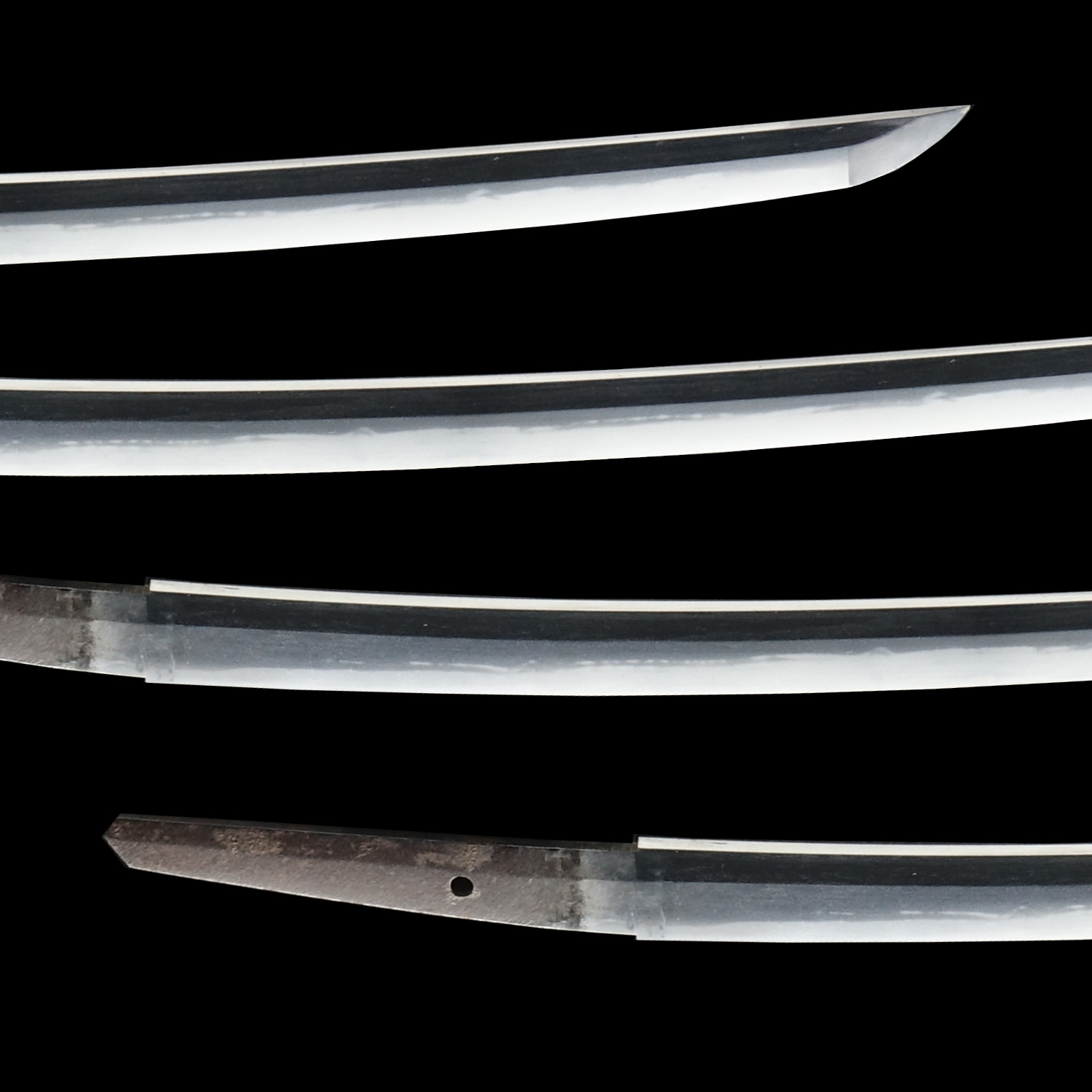
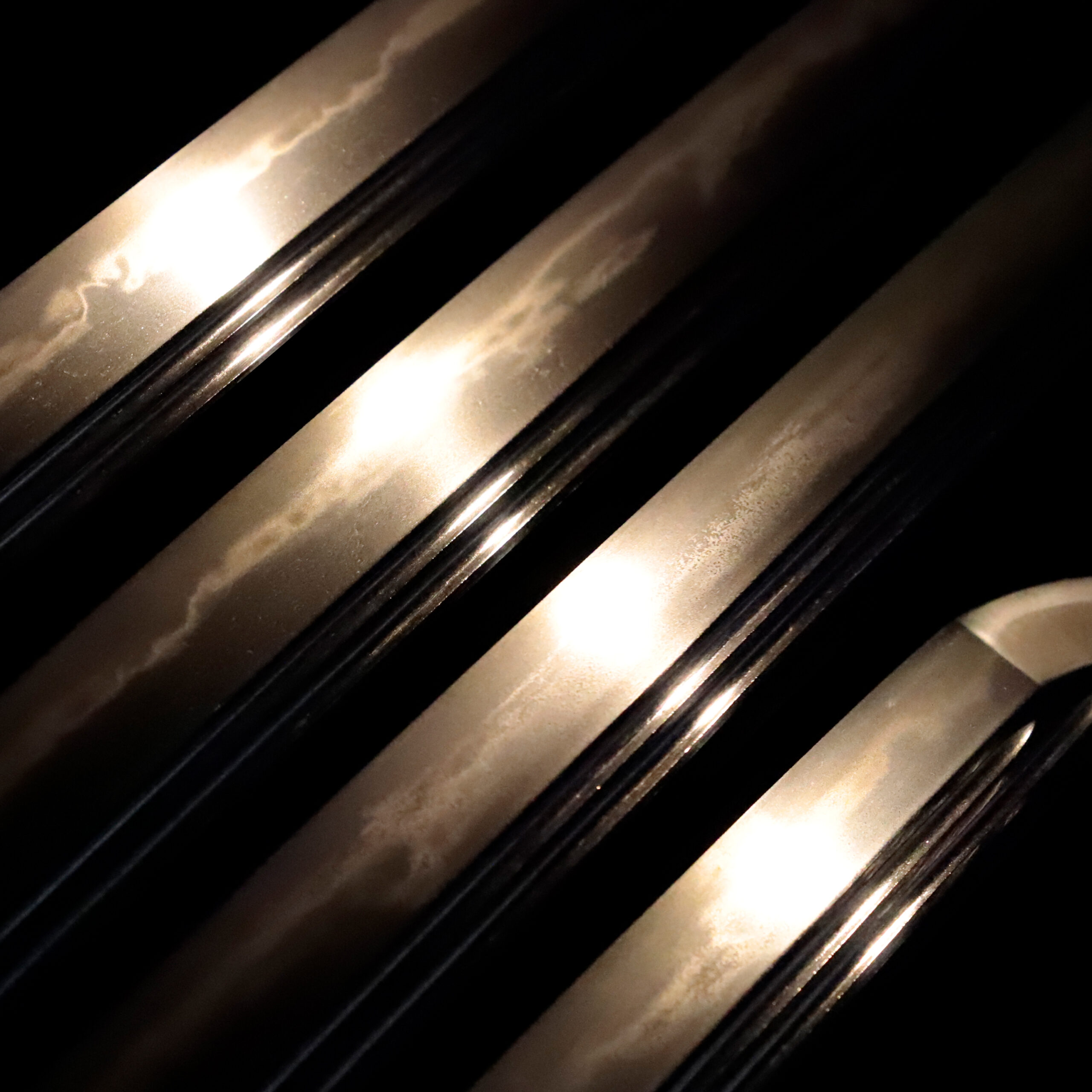

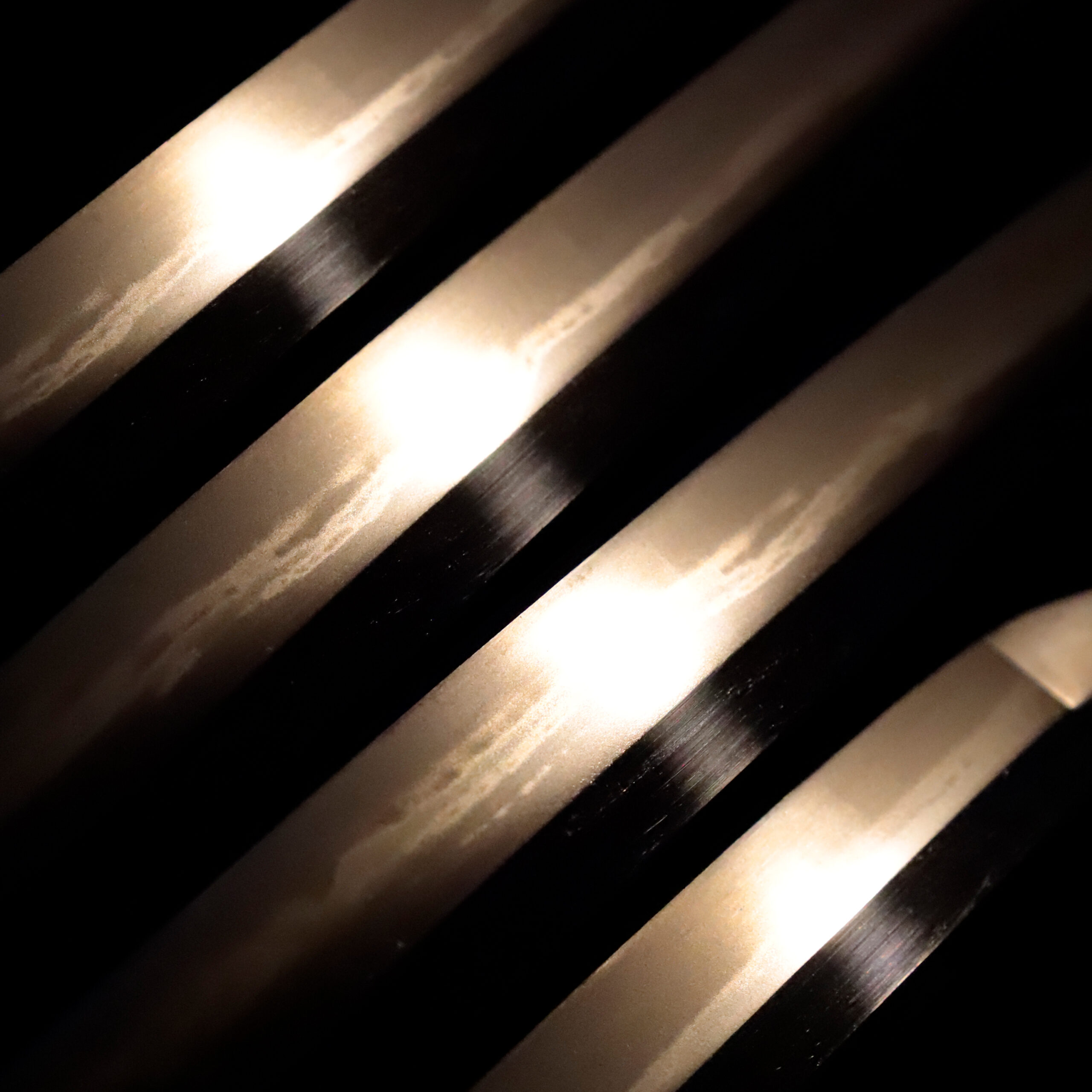
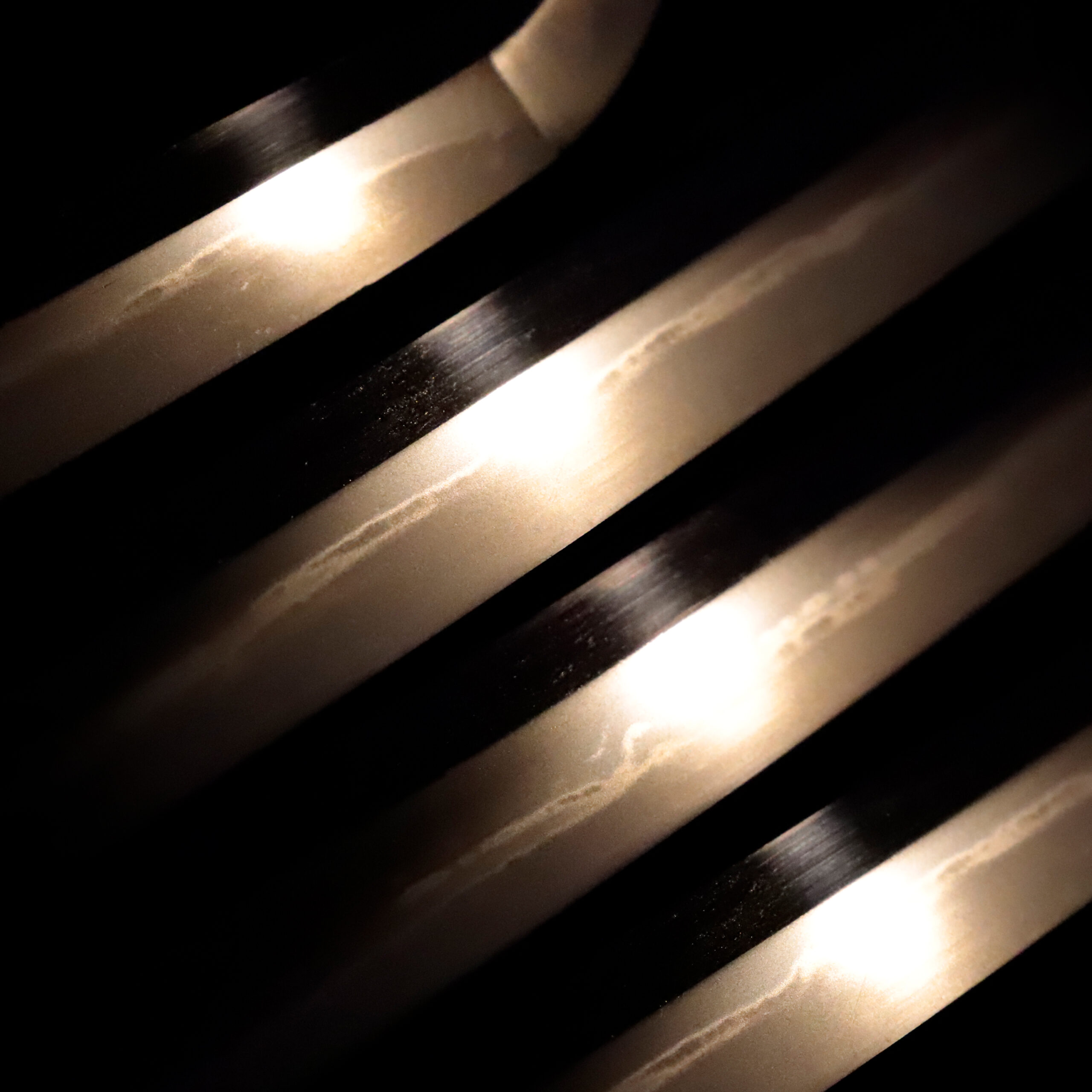
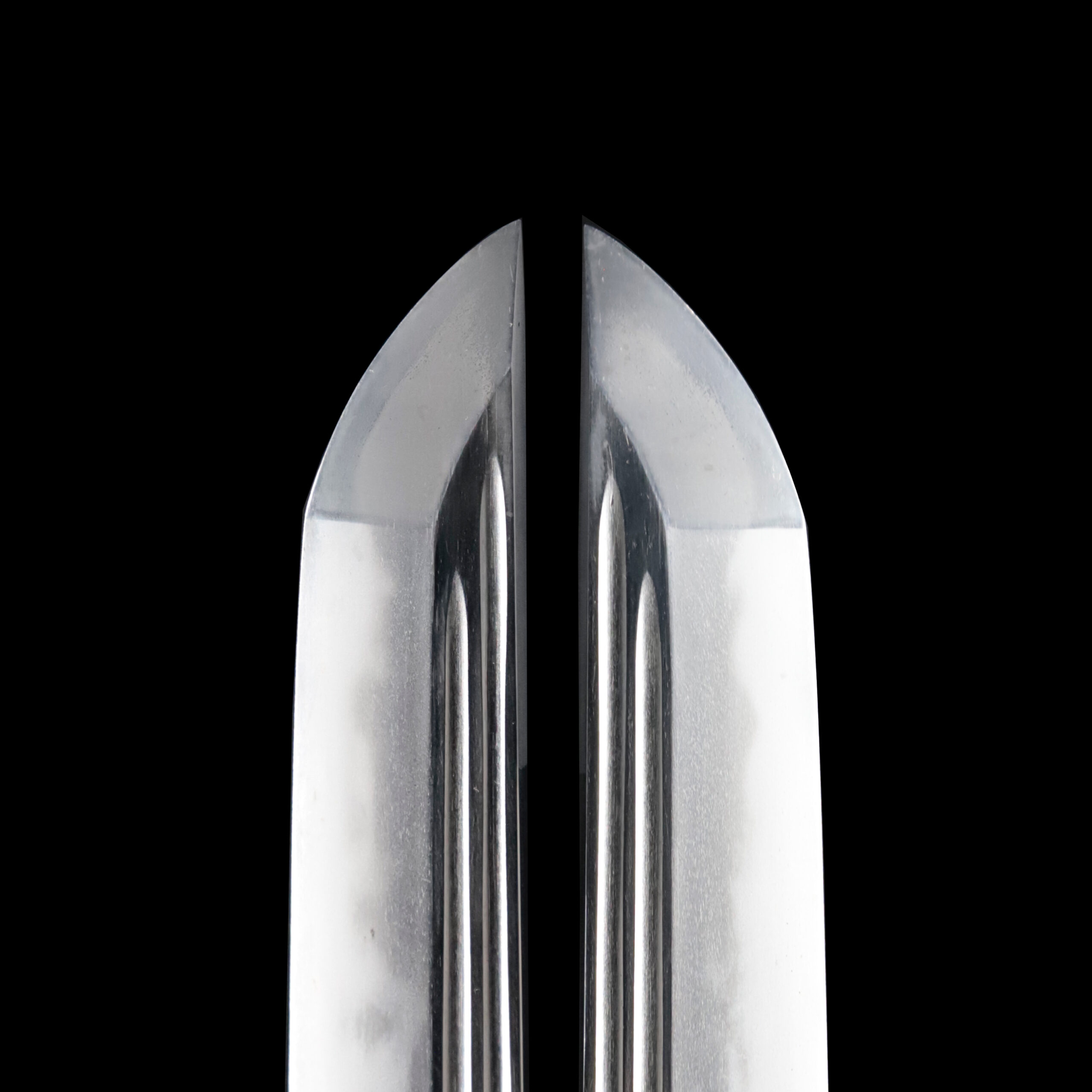
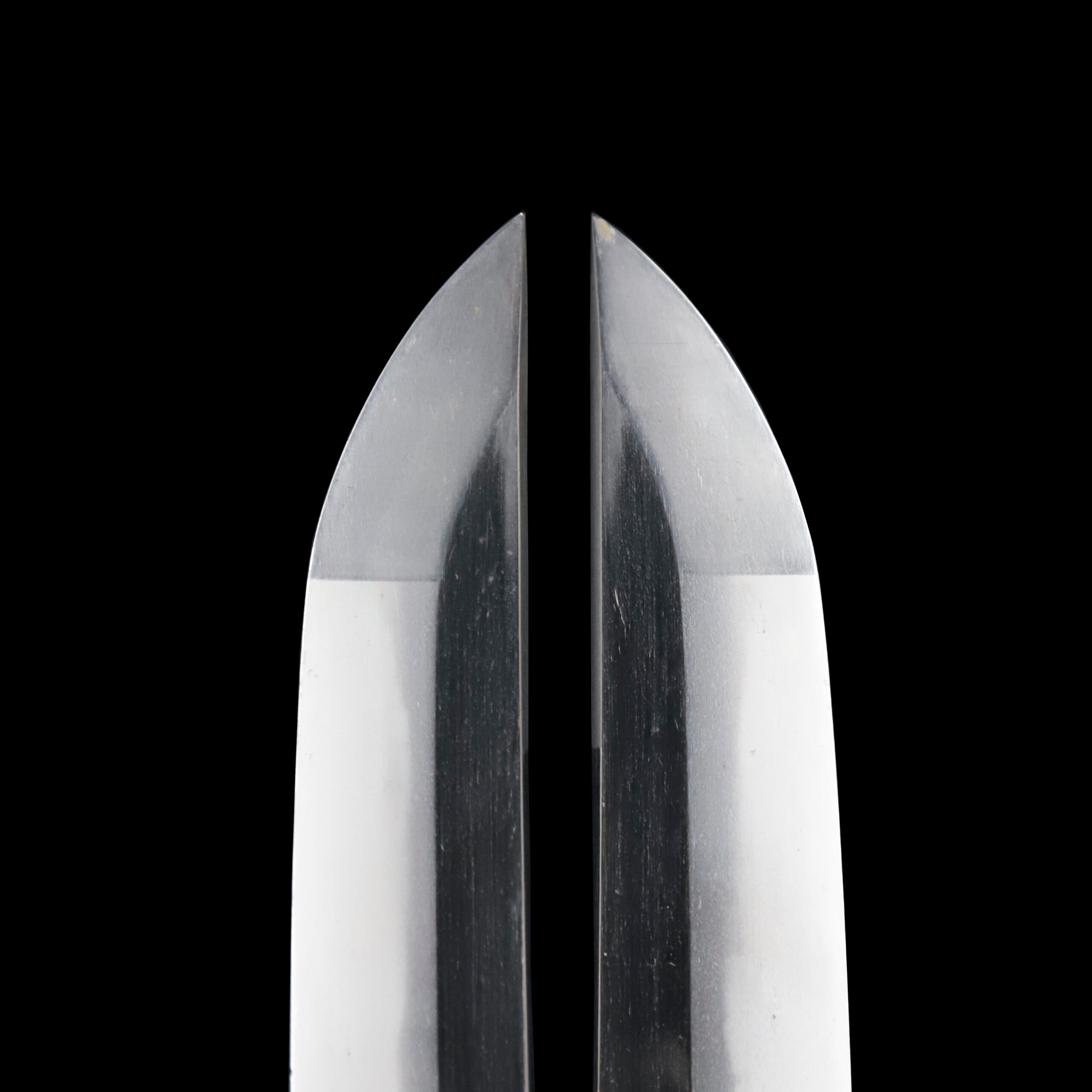
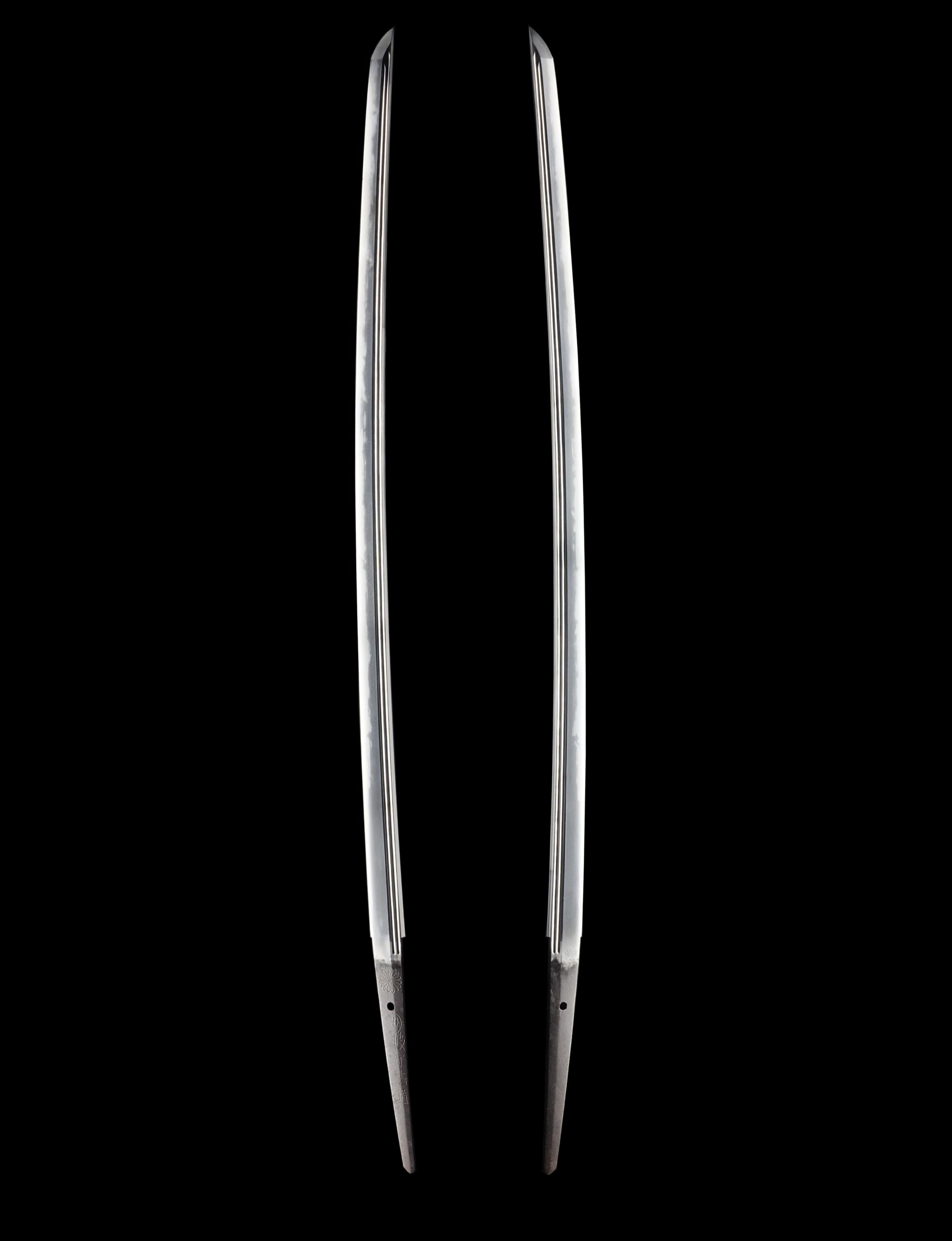
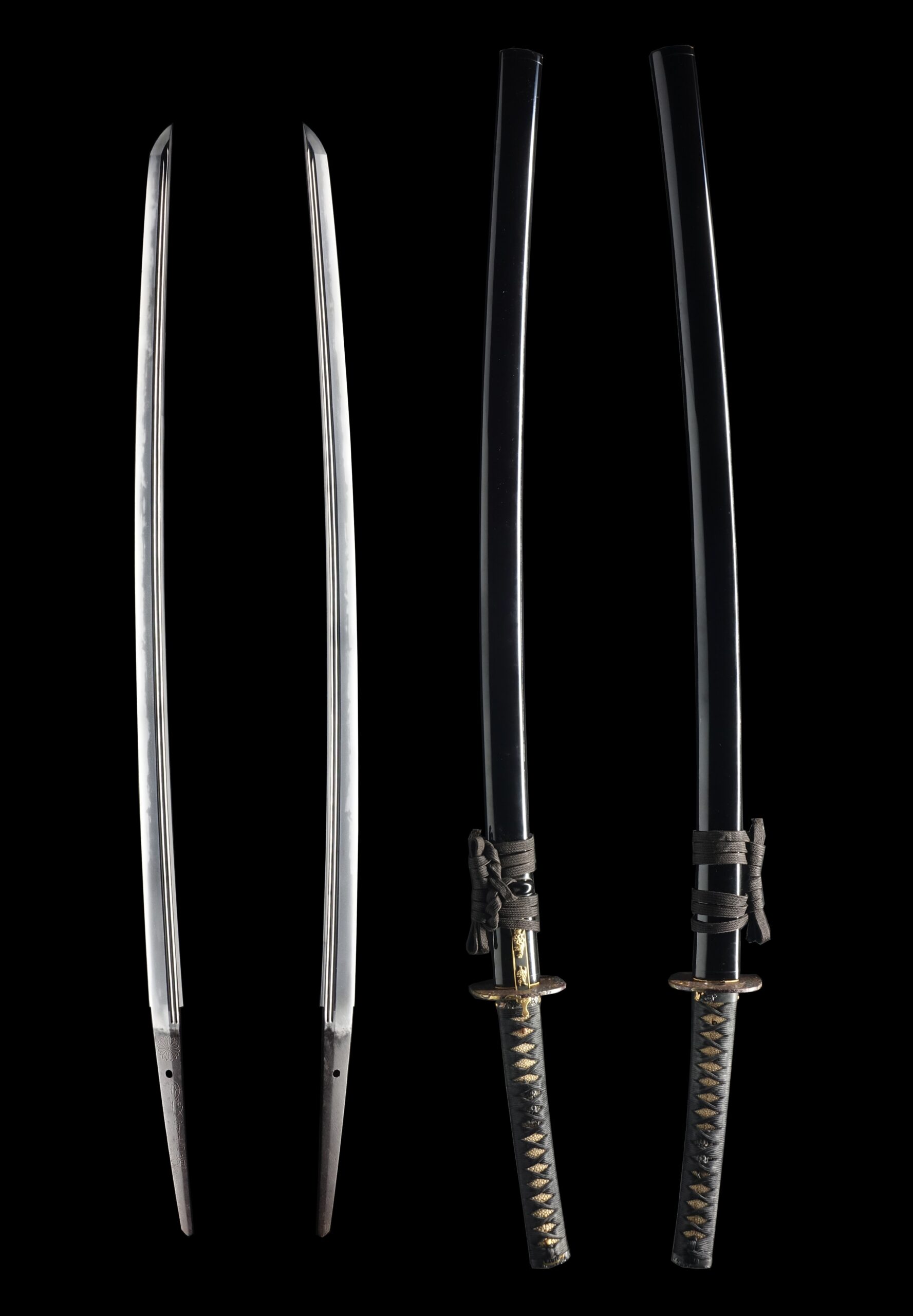
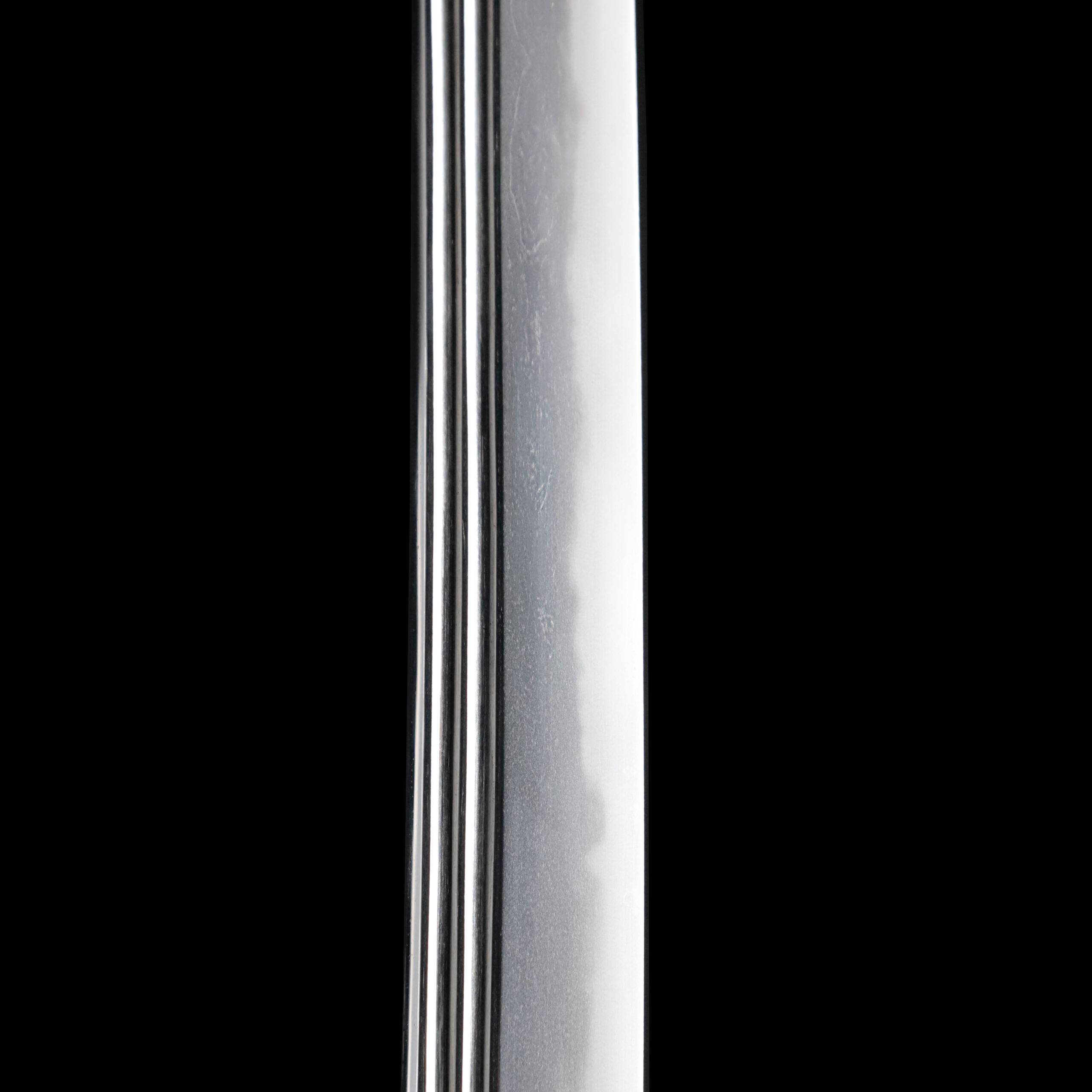
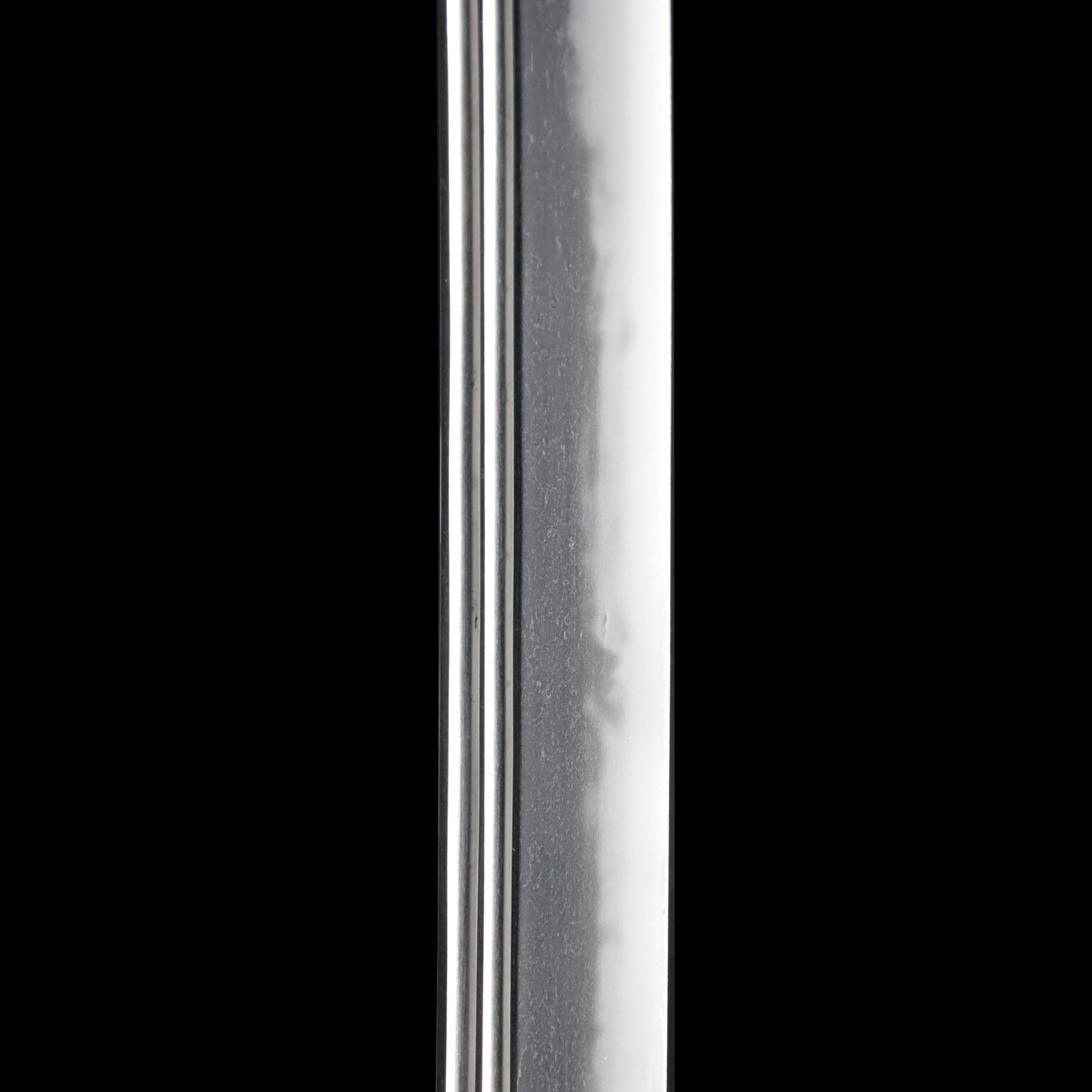
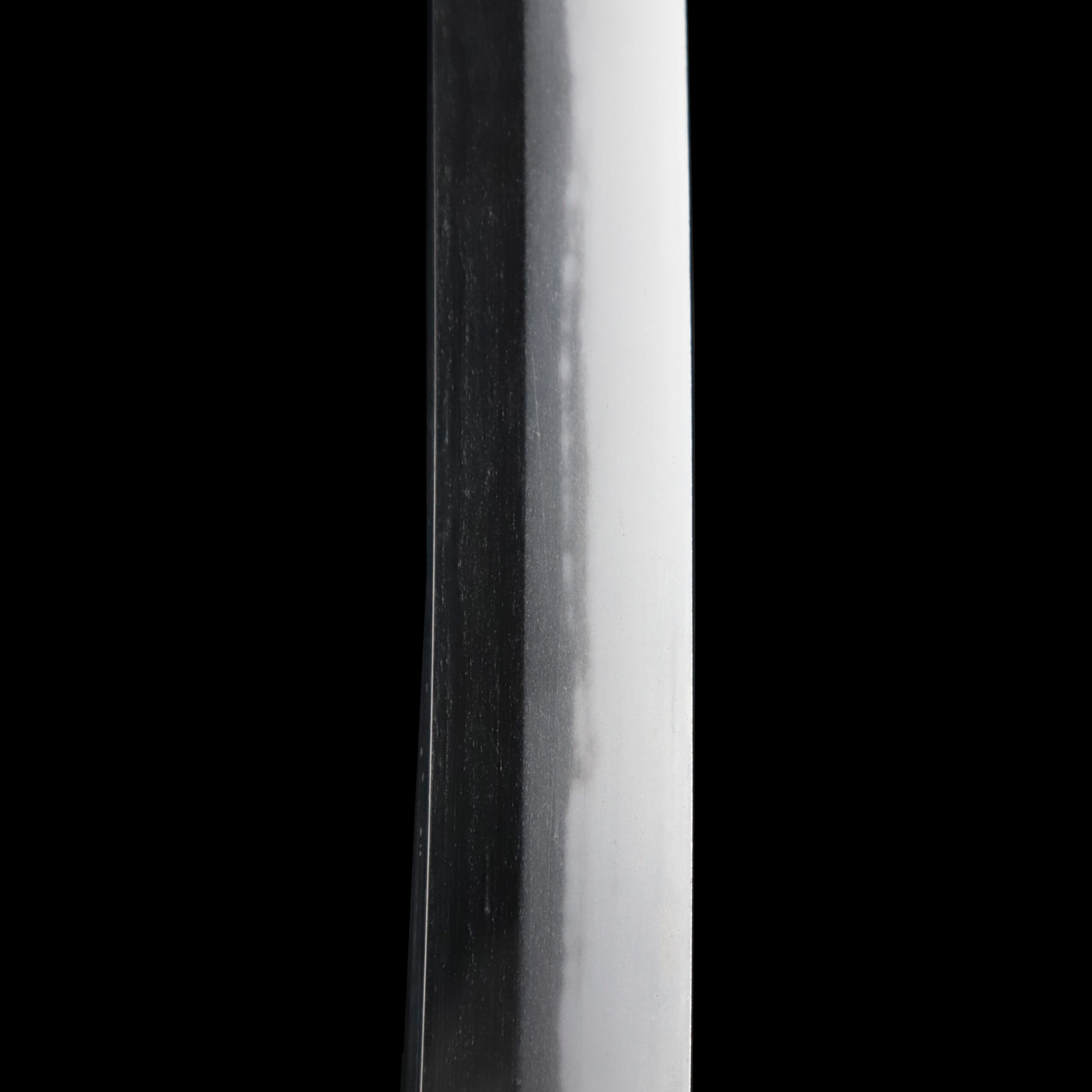
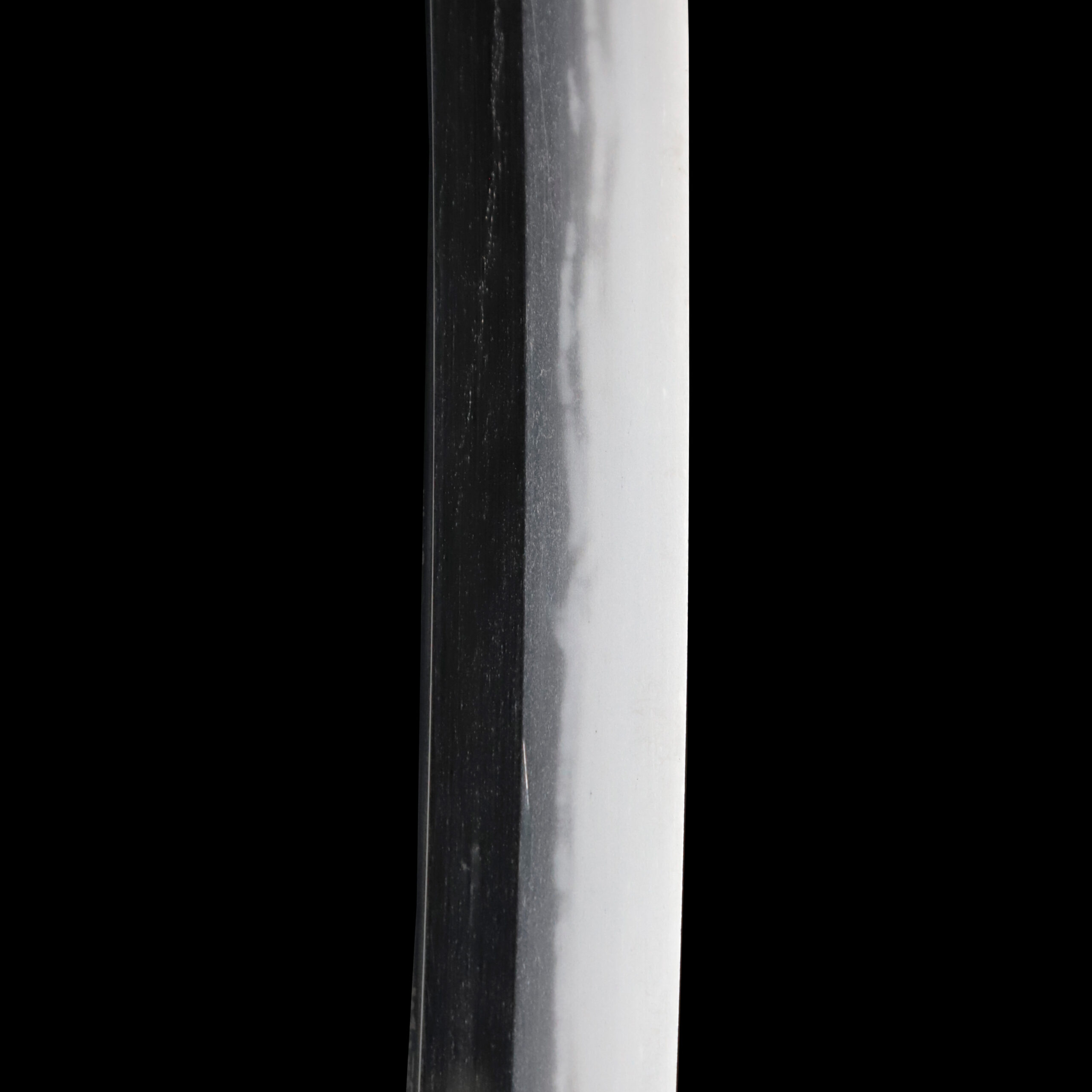
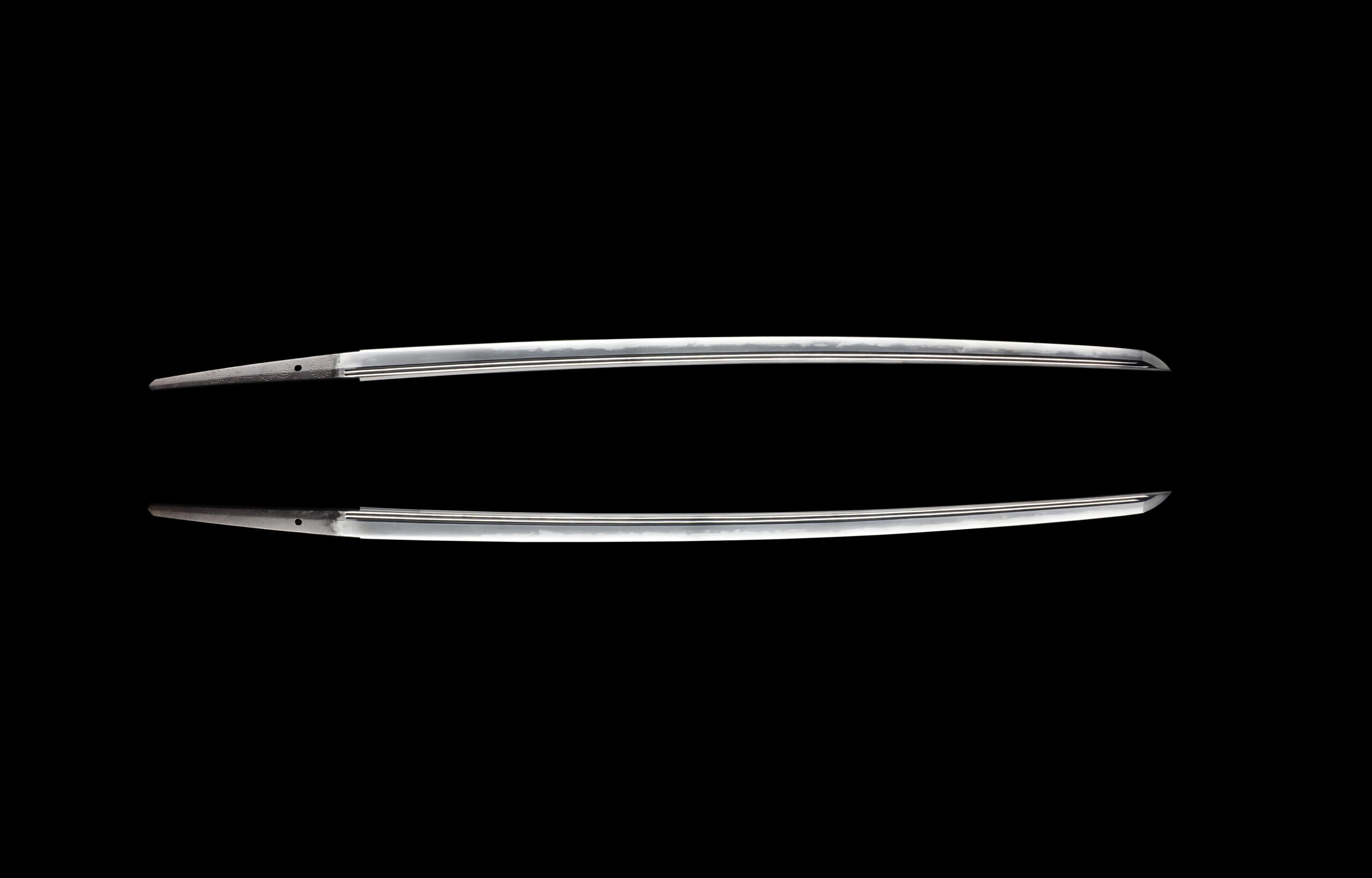
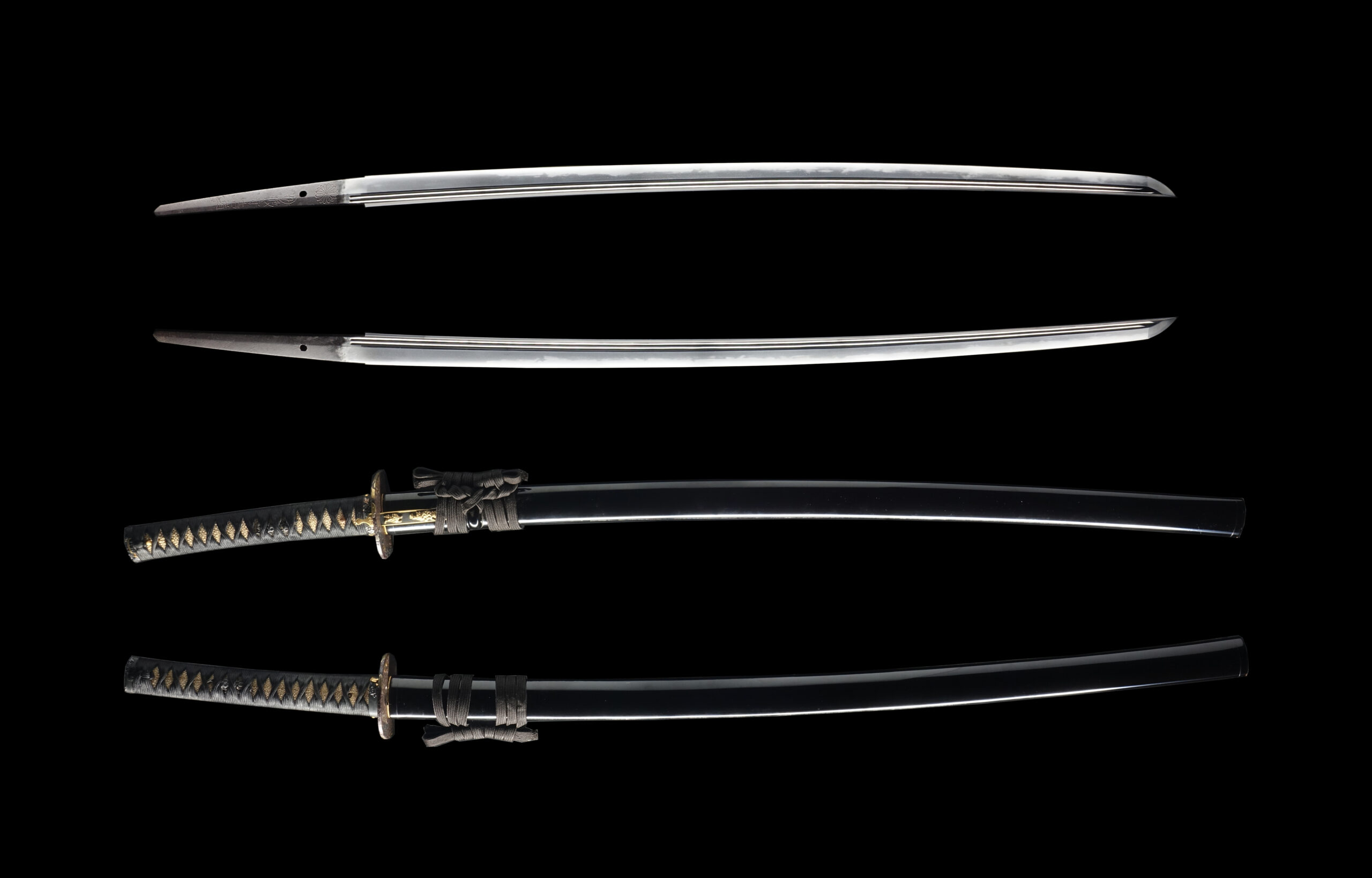
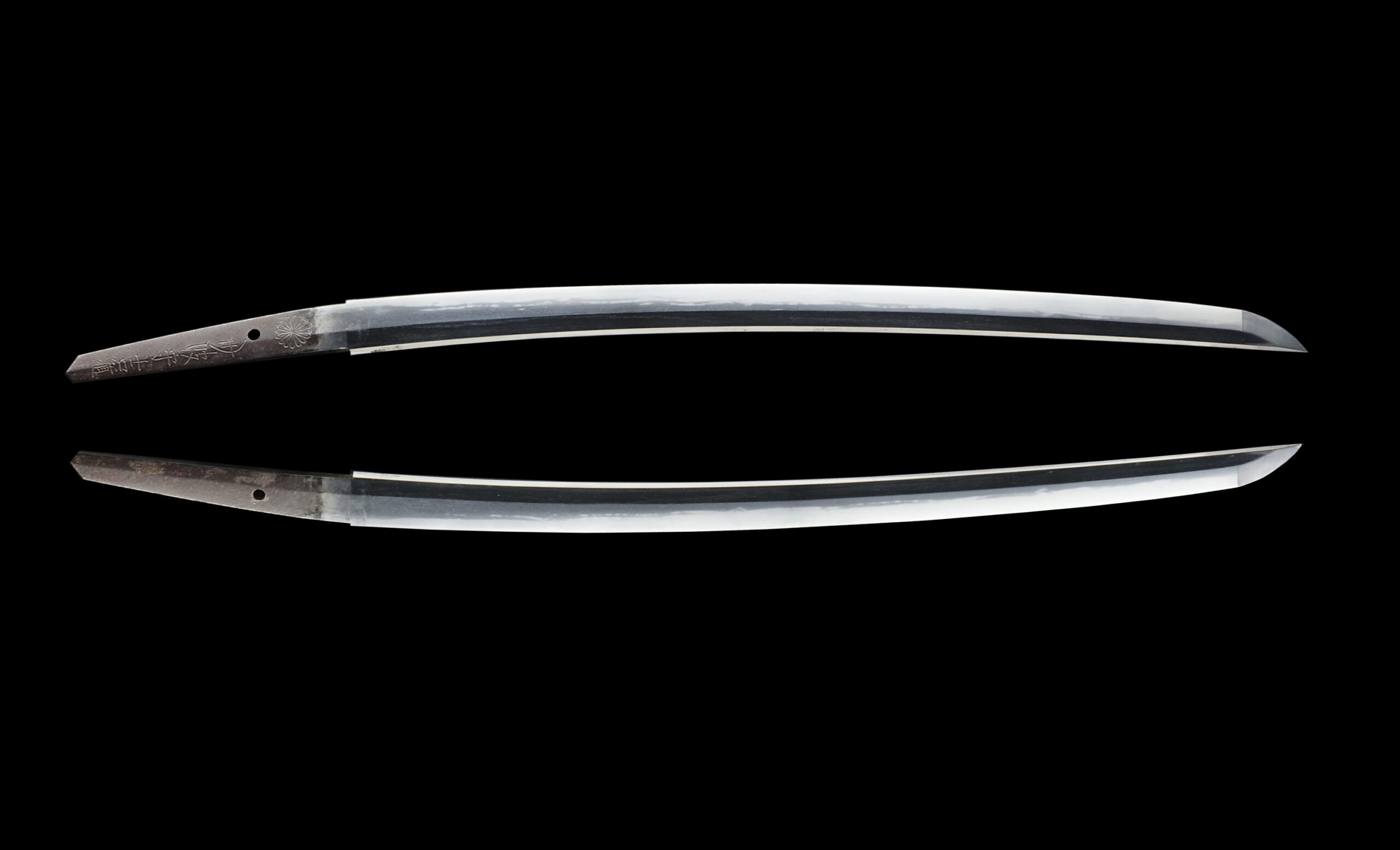
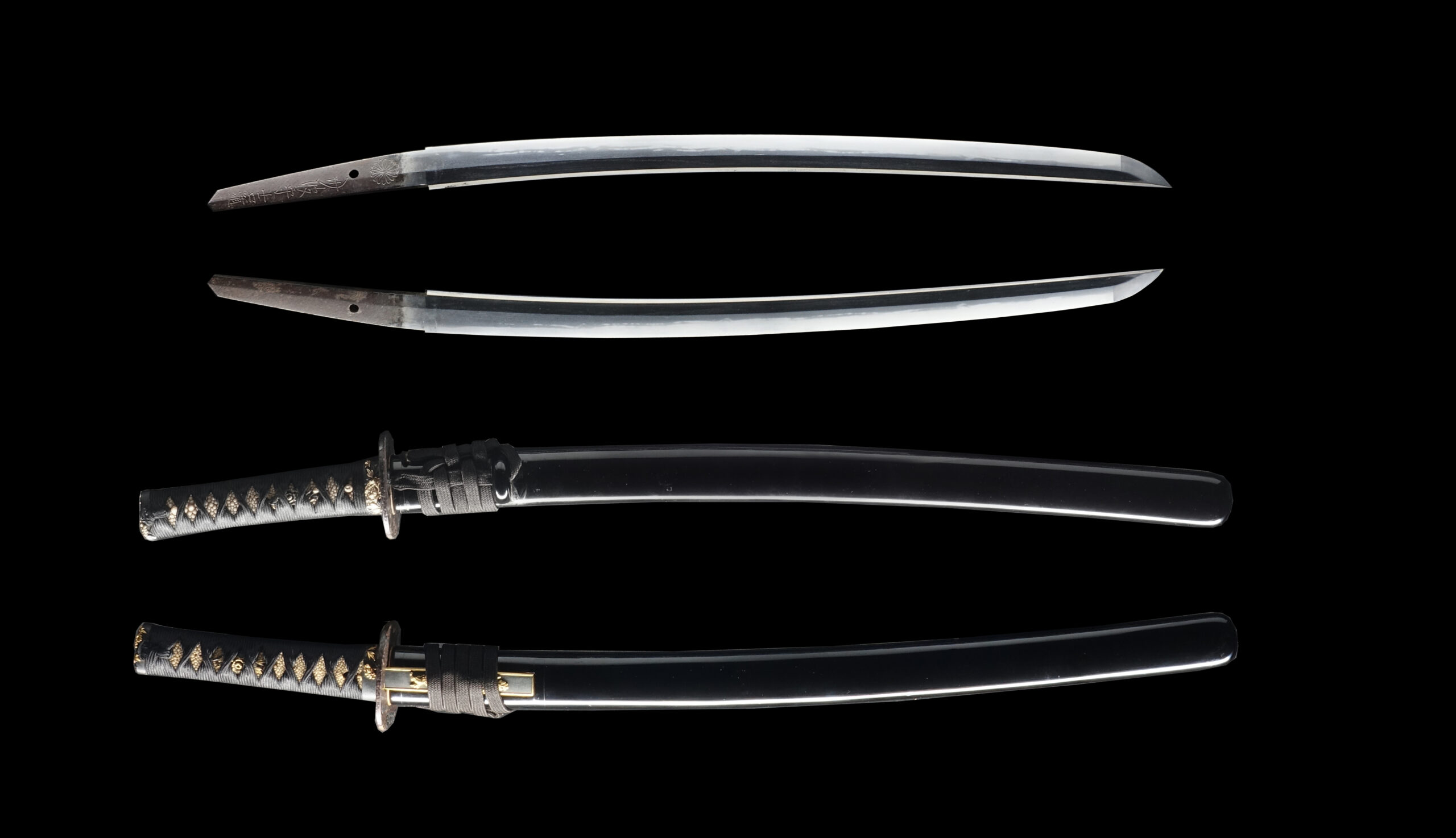
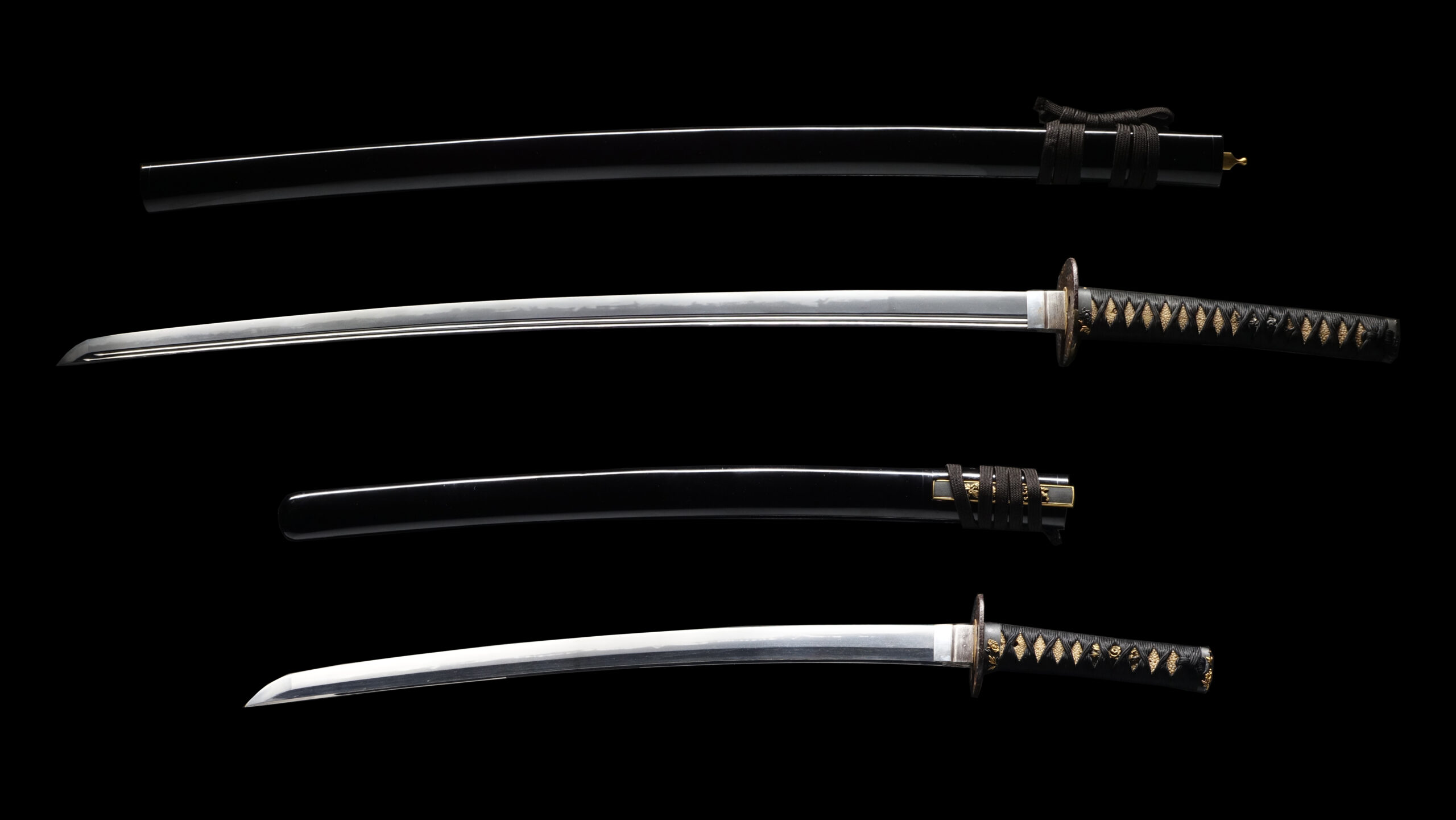
Shinto · Yamashiro · around 1661-1673
Tōken Taikan top 76%
1 piece on the market now
Where Yoshimichi stands among comparable artisans: across all of nihontō, and within tradition, era, and period. The tiers (Foremost · Leading · Major · Notable) weigh official designations from the NBTHK and Japan's Agency for Cultural Affairs, together with historical honors of lasting repute such as the Sansaku and Meibutsu-chō.
Select a lens to see how it's measured.
Shinto · Yamashiro
52 pieces on the market now
The Mishina school (三品), one of the two dominant smithing groups of early Edo Kyoto beside the Horikawa, grew from the late-Mino workshop of Kanemichi of Seki, whose dated blades run through the Tenbun, Eiroku, and Tenshō eras. During the closing decades of the sixteenth century Kanemichi came up to the capital with his four sons and settled at Nishinotōin Ebisugawa, where the eldest, Iga no Kami Kinmichi, is recorded as having greatly raised the name of the line. The brothers, Kinmichi together with Izumi no Kami Rai Kinmichi, Tanba no Kami Yoshimichi, and Etchū no Kami Masatoshi, became known collectively as the Sanpin (三品) makers, and the published sources count Kinmichi head of the Kyō go-kaji, the five Kyoto smiths. From the second generation the house held a hereditary right to recommend smiths to the court for their titles and added that by-line to its signatures. The name continued under the same appellation to the end of the Tokugawa period, throwing off branches that included the Tango no Kami line working at Ōsaka into the Genroku years, though the published record consistently holds the founding generation the most outstanding of the line. Beneath every branch lies a shared vocabulary carried up from Mino-Seki. The jigane is the constant: an itame mixed with mokume that flows into nagare-hada and tends toward masame near the mune, the grain standing, with thick fine ji-nie and frequent chikei. Over it the Mino-derived gunome and togariba are refined toward a Kyoto manner, the nie strong and at times coarse, gathering unevenly, kinsuji and vigorous striped sunagashi running throughout. Two tells bind the house. The first is the Mishina bōshi, a notare or midare run-in pointed at the tip and swept with vigorous hakikake, the form Masatoshi shows at its clearest, described as if drawn from a picture. The second is sudareba, the bamboo-blind temper in which layered sunagashi and yubashiri stripe into parallel bands; Tanba no Kami Yoshimichi devised it, and the first-generation hand keeps it a free, semi-cursive disorder where his heirs would regularize it into a fixed lattice.
The lines diverge from that common ground. Kinmichi and his younger brother Masatoshi both excelled in a Shizu manner, the large midare of Mino grafted onto Sōshū nie, with Masatoshi the most versatile, ranging across Shizu, Mino sanbon-sugi, Yamato suguha, and Sōshū hitatsura. The later Ōsaka Tanba branch held to the sudareba alone, opening from a straight yakidashi, while the second Tango no Kami Kanemichi cast off the family chōji for a flamboyant tōran-style large gunome in alternating two-joined and three-joined groups, and a deep-nioi suguha read in the manner of Inoue Shinkai. To kantei Mishina is to read these two house marks first. The pointed, hakikake-swept bōshi and the striped sudareba, set over a standing itame that flows to masame, place a blade within the line before any signature is weighed; the sunagashi, far heavier than on a Bizen ji, is the very material from which the temper is built. Within the house the founding generation sets the standard. Fujishiro grades Kinmichi and Masatoshi Jō-jō saku, the Ōsaka Tanba shodai Jō-saku, and the second Tango no Kami Chū-jō saku, the sources judging the later Kyoto and Ōsaka generations markedly inferior to the founders as the manner thinned toward a single uniform pattern. Provenance on record runs through samurai and collector hands rather than great museums: a Kinmichi katana among the cherished swords of Tani Tateki, a Yoshimichi katana made for Naitō Kuroemon and another now in the Kyoto National Museum, Masatoshi blades passing through Oda Urakusai and the Imperial household, and a second Tango no Kami katana descending from the Aoyama wardens of Ōsaka castle. The brothers' blades are signed and knowable, dated examples rare, so the manner of the mei joins the workmanship in placing them; for the Ōsaka and Kyoto branches the cut of the character 守 separates one hand from the next. Most designated work is held rather than traded, so a signed founding-generation Mishina blade comes to light only from time to time, and with it the temper in which one of the most recognizable hamon of the Shintō era was first being worked out. Learn more →
| Smith | Era | Designated |
|---|---|---|
| Kinmichi金道 | 1596-1615 | 25 |
| Yoshimichi吉道 | 1596-1615 | 36 |
| Masatoshi正俊 | 1596-1615 | 29 |
| Kanemichi兼道 | 1681-1704 | 5 |
| Eisen来栄泉 | 1673-1688 | 3 |
Kyōto: the revival workshop
The Shintō era was largely invented in Kyōto: Umetada Myōju’s workshop trained the movement, Horikawa Kunihiro raised a generation, and the Hon’ami appraisers, who held no forge, governed the meaning of famous blades.
A Hozon-certified blade judged to show notably superior workmanship and a better state of preservation. The bar is higher: re-tempered blades and most unsigned Muromachi/Edo works are excluded.
The NBTHK (Nihon Bijutsu Tōken Hozon Kyōkai, the Society for the Preservation of Japanese Art Swords) is a public-interest incorporated foundation founded in 1948 and supervised by Japan’s Agency for Cultural Affairs (Bunkachō); it is based at the Japanese Sword Museum in Tokyo. Its expert panels physically examine each submitted work (shinsa) and issue a certificate (kanteishō) ranking it by artistic and historical merit. NBTHK papers are the most widely recognized standard of authentication for Japanese swords and fittings.
NBTHK official siteReturns/exchanges limited to defects caused by shipping (except willful misconduct or gross negligence by the company); customers must contact within 72 hours of receiving the product.