NihontoWatch Mon

NihontoWatch

Market
Encyclopedia
Kantei
NihontoWatch Mon

NihontoWatch

Market
Encyclopedia
Kantei

Description

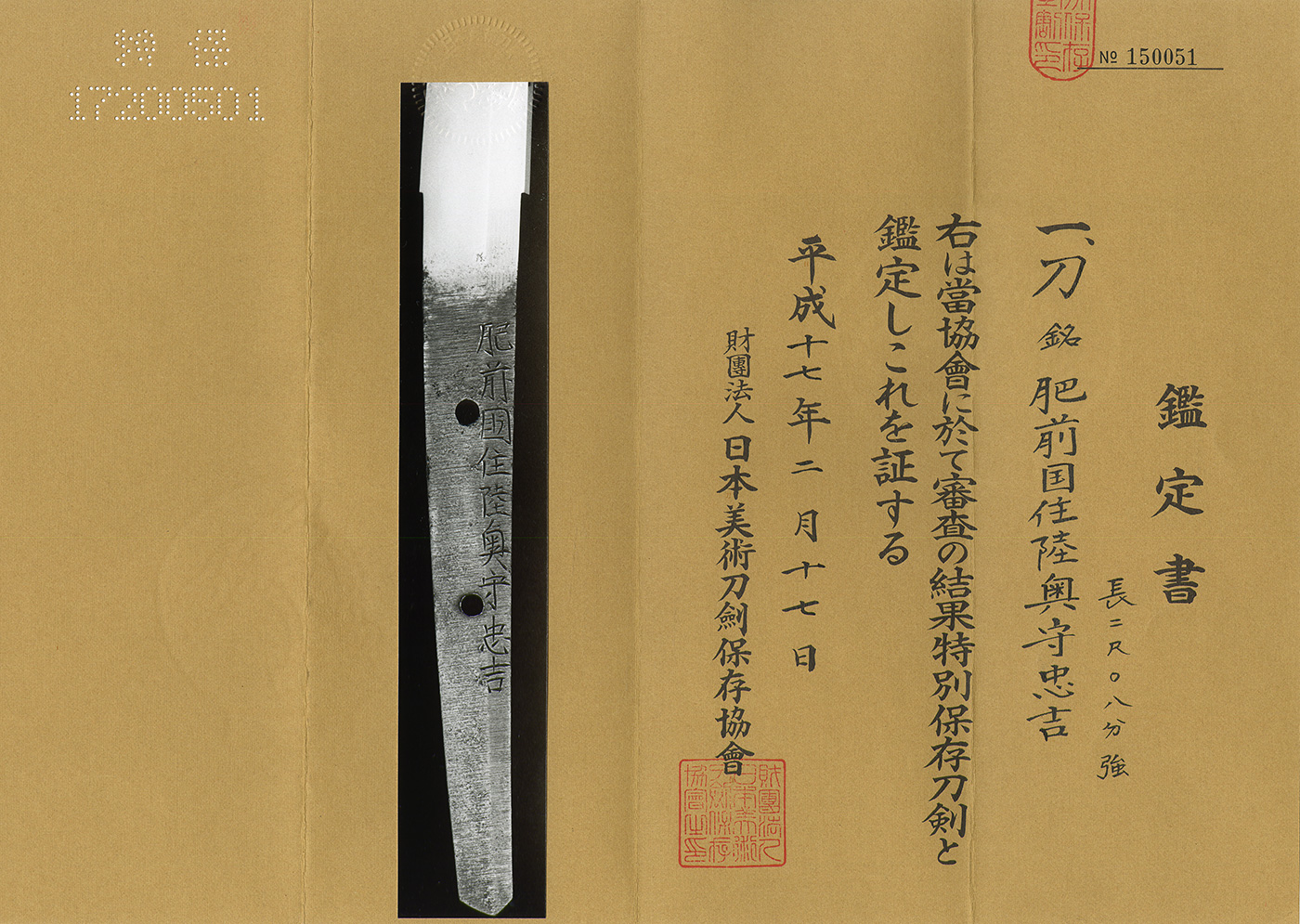
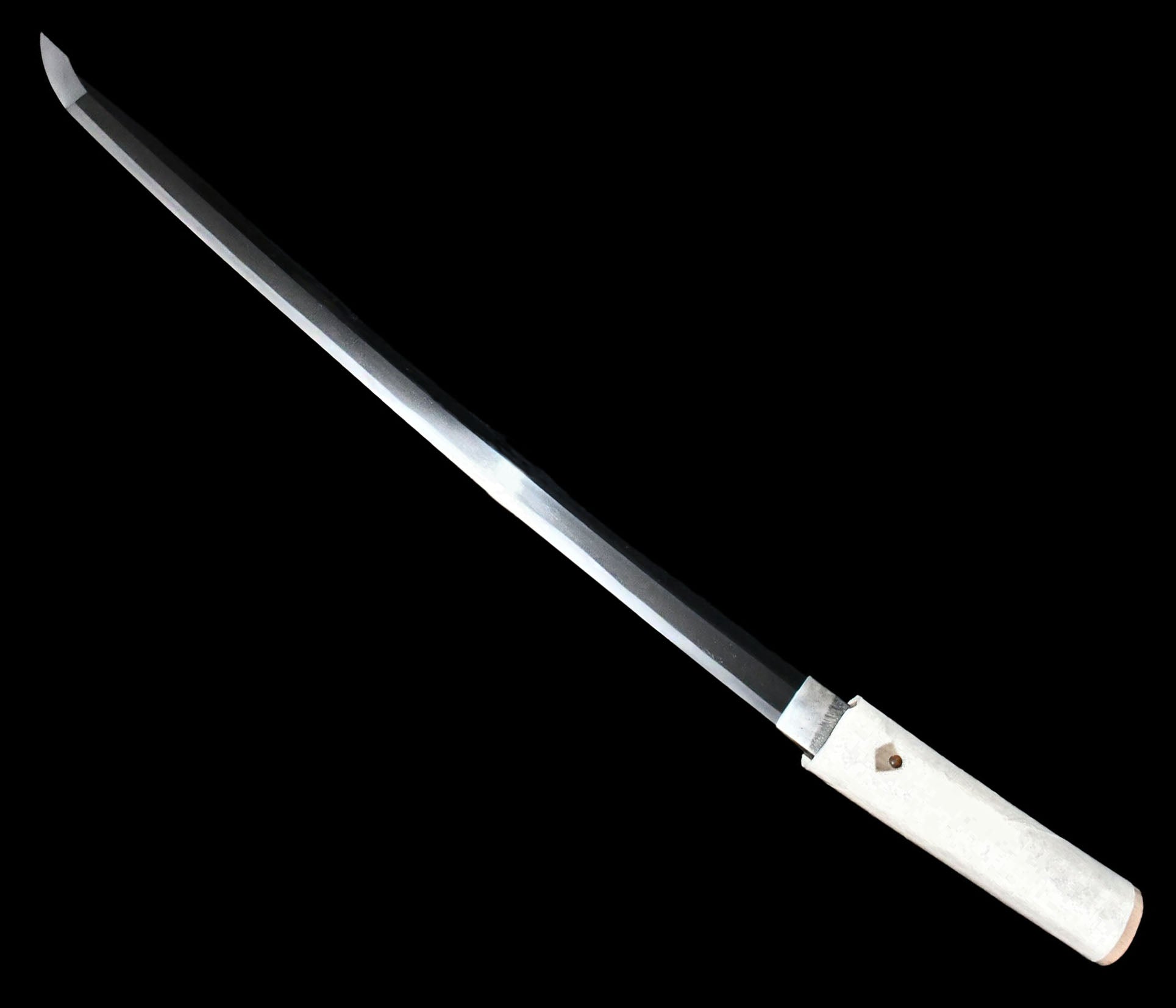
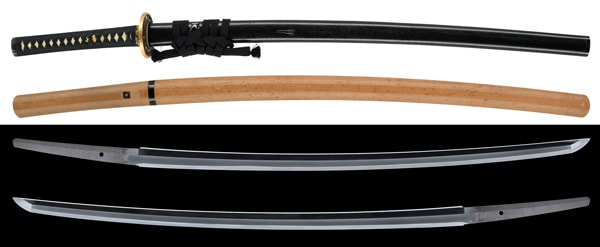
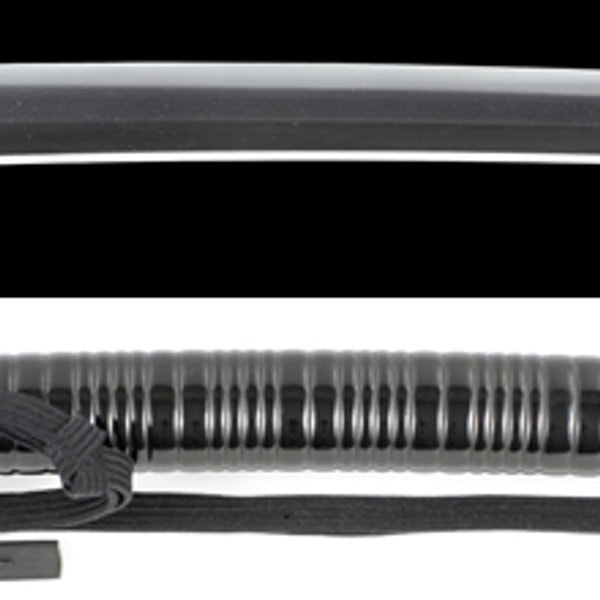
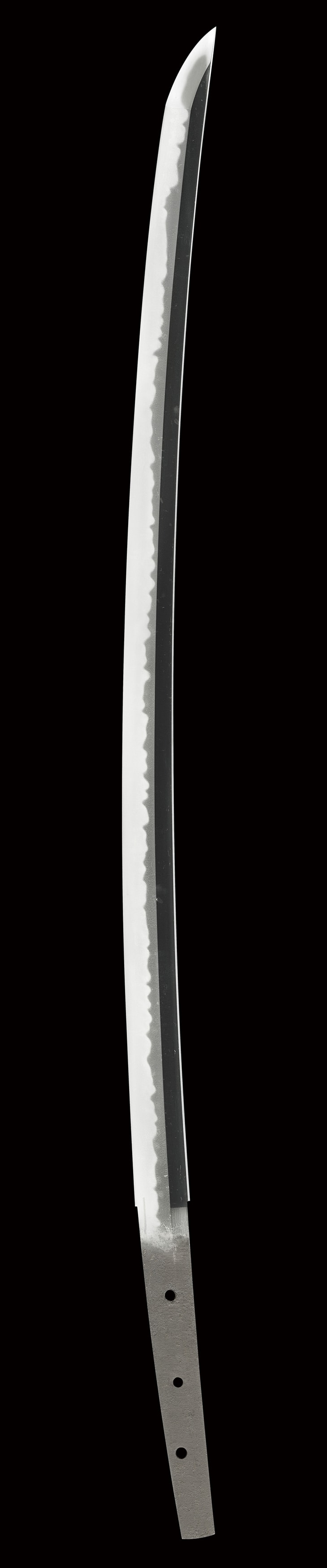
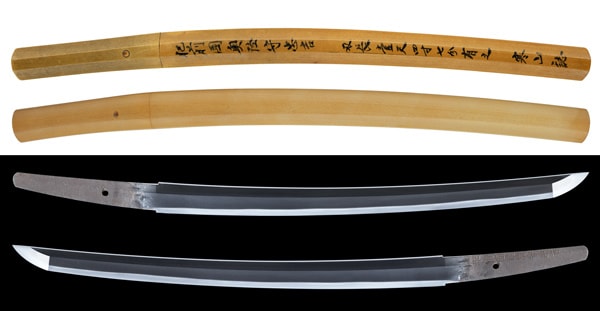
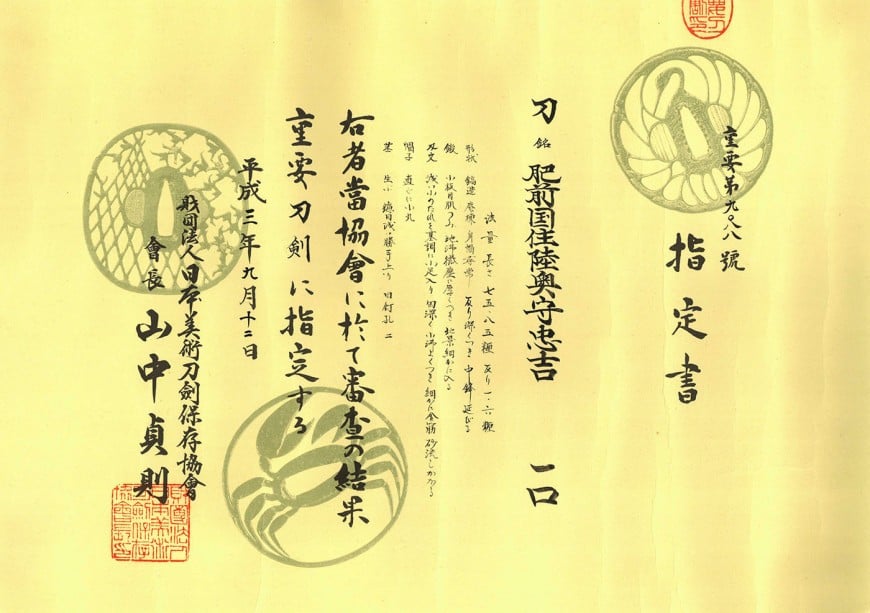
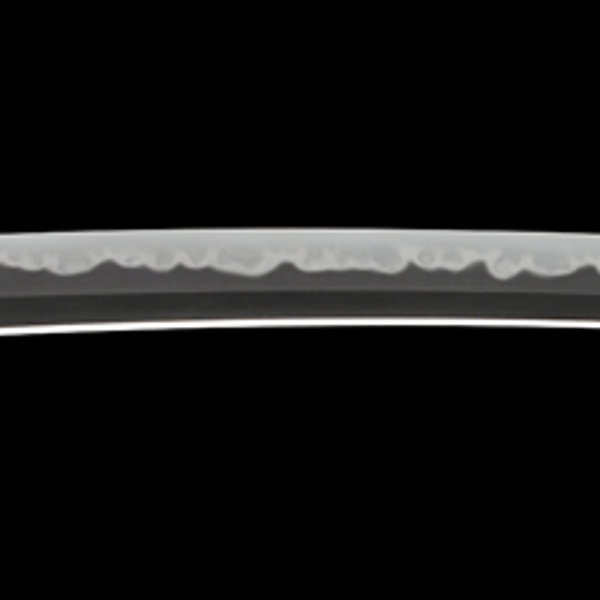
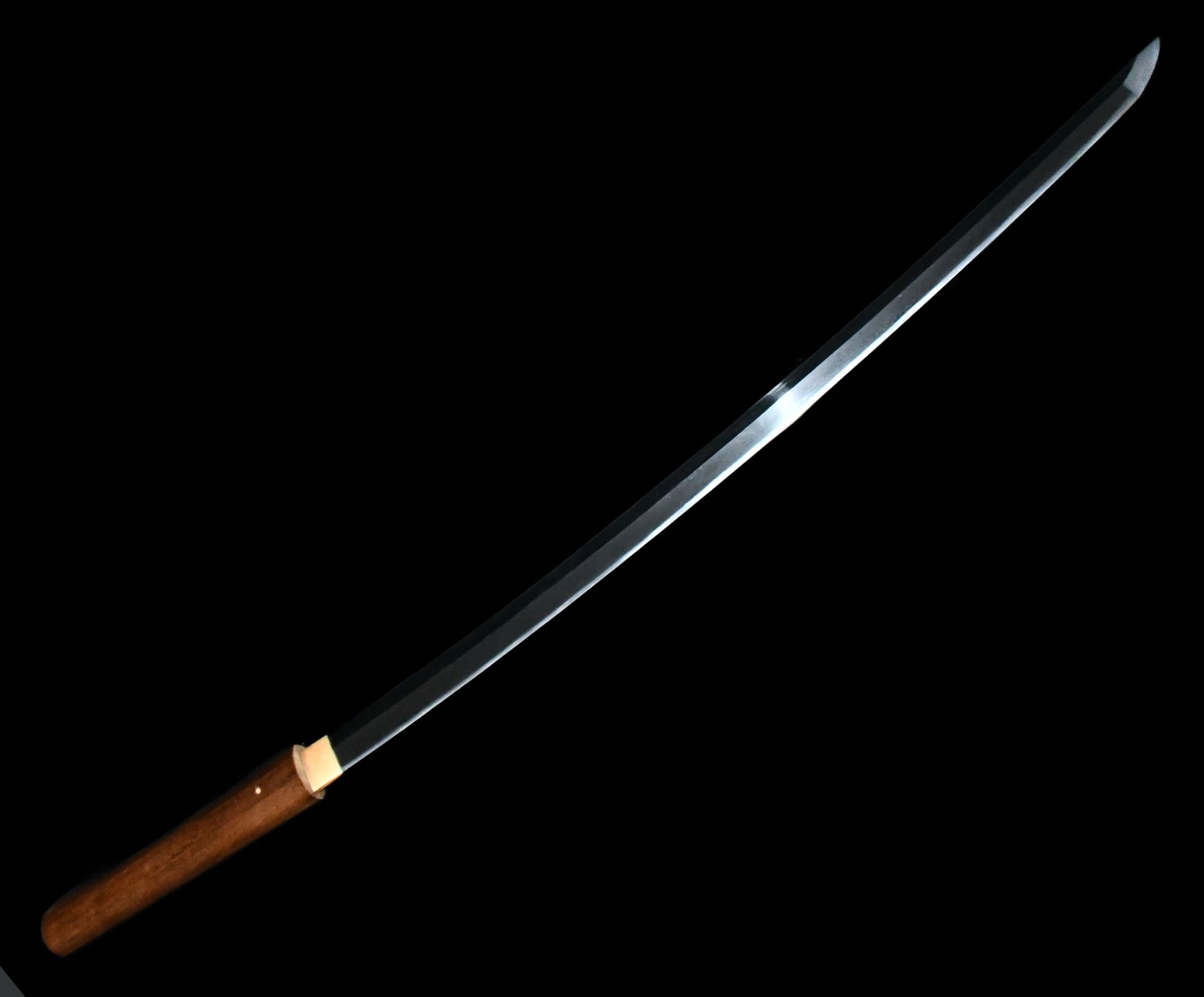
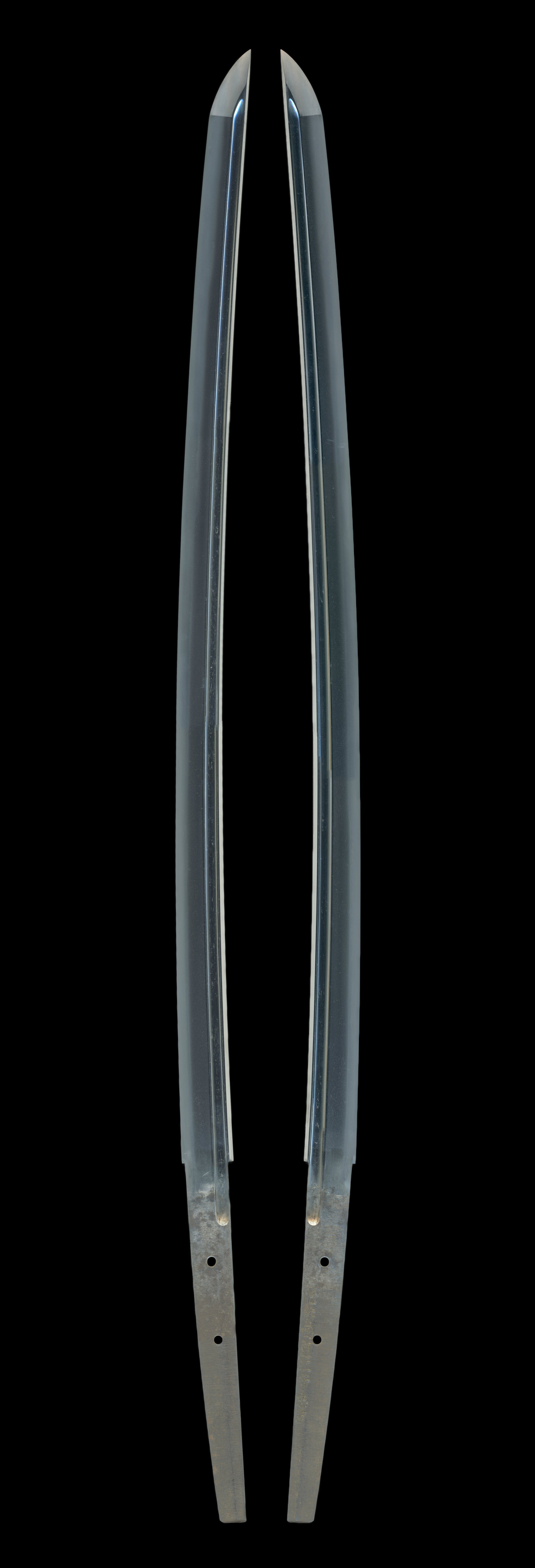
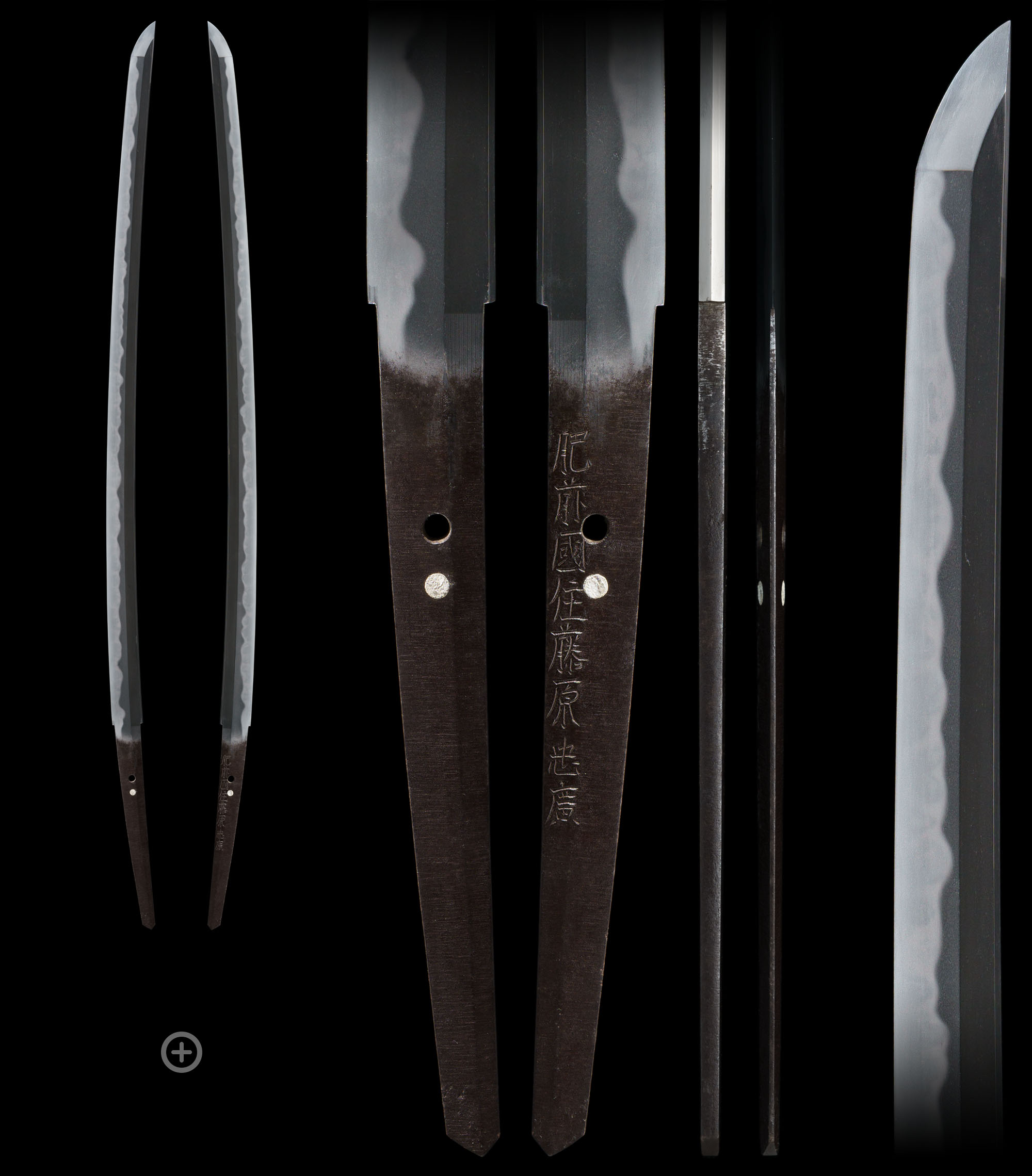
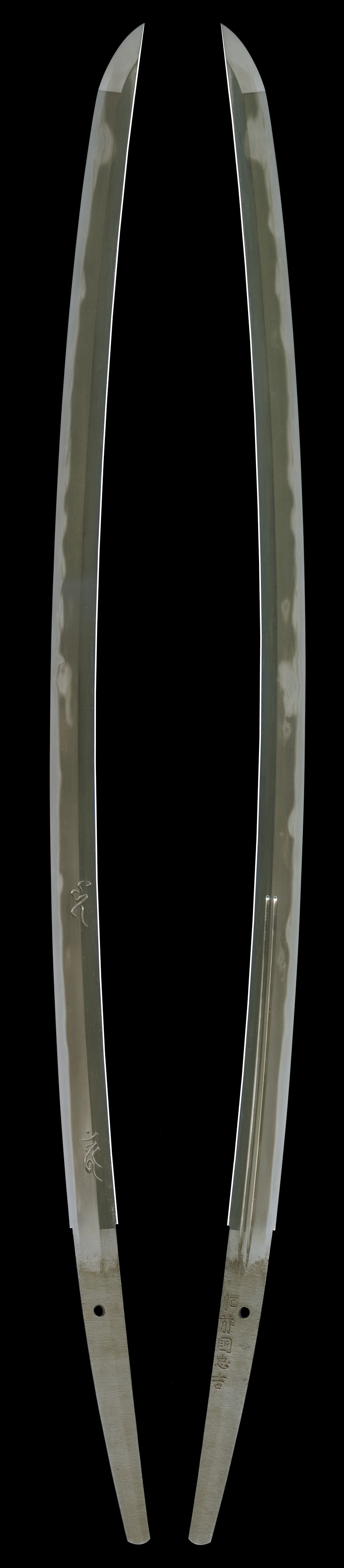
This is a katana signed by Hizen Koku Ju Mutsu Kami Tadayoshi (3rd Generation) from the Shinto period. It features an elegant gunome-midare hamon with deep nioikuchi and a boshi that turns back deeply and roundly. The sword comes with koshirae and is certified as NBTHK Tokubetsu Hozon Token.

NihontoWatch MonNihontoWatch
MarketEncyclopediaKantei
Swords›Hizen Tadayoshi›Tadayoshi›Katana: Hizen Koku Ju Mutsu Kami Tadayoshi (3rd Generation) - NBTHK Tokubetsu Hozon Token
katanaTokubetsu Hozon
Hizen Tadayoshi

mei · Hizen · Shinto · nagasa 62.4cm · sori 1.36cm

SOLD
Hizen Tadayoshi — 1 of 6
Hizen Tadayoshi — 2 of 6
Hizen Tadayoshi — 3 of 6
Hizen Tadayoshi — 4 of 6
Hizen Tadayoshi — 5 of 6
Hizen Tadayoshi — 6 of 6
1 / 6
1 / 6
Hizen Tadayoshi — 1 of 6Hizen Tadayoshi — 2 of 6Hizen Tadayoshi — 3 of 6Hizen Tadayoshi — 4 of 6Hizen Tadayoshi — 5 of 6Hizen Tadayoshi — 6 of 6
Measurements & details
Smith
Hizen Tadayoshi
Type
Katana
School
Hizen Tadayoshi
Period
Around 1662–1681(Enpo)
Province
Hizen
Signature
Signed(100% of this smith's designated works are signed)
Measurements
Nagasa 62.4cmSori 1.36cmMotohaba 2.97cmSakihaba 1.97cmKasane 0.59cmWeight 590g
Description
About the maker

Tadayoshi

忠吉

Hizen Tadayoshi (Saga) · Hizen · around 1662-1681

Fujishiro Jo-jo saku · Tōken Taikan top 8%

4 pieces on the market now

›

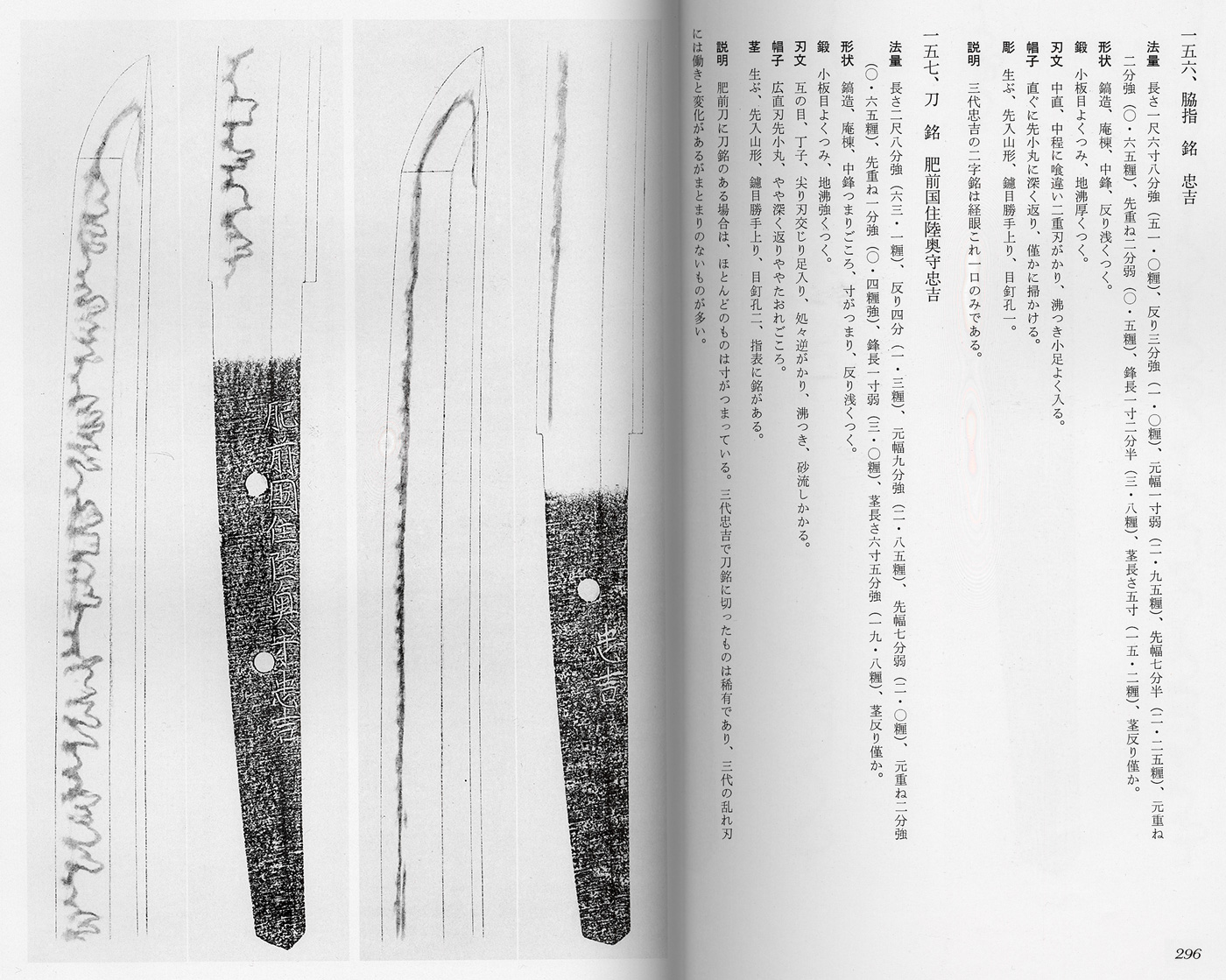
Tadayoshi is the name carried by the main line of the Hizen school, the house smiths of the Nabeshima domain working at Saga from the Keichō era onward. The founder, Hashimoto Shinzaemon, was sent by domain order in Keichō 1 to study in Kyoto under Umetada Myōju (he "studied at the gate of Umetada Myōju in Kyoto," 京の埋忠明寿の門に学び), returned to Saga, and prospered under the domain's patronage before taking a second court title as Musashi no Daijō and changing his name to Tadahiro. The single five-character signed katana of his hand in the record shows the Keichō-shintō manner: a body wide with little taper, shallow sori and an extended point, a suguha-toned shallow notare over a ko-itame jigane with ji-nie and fine chikei. The corpus assembled under this code, however, is overwhelmingly the work of a later generation, and the smith it most fully portrays is the third, Mutsu no Kami Tadayoshi, eldest son of the second-generation Ōmi no Daijō Tadahiro, who took the Tadayoshi name back to the main house after the death of the Tosa no Kami line and who the published sources hold to be the finest forger of the school's first three generations.

His characteristic hand is a tempered restraint. Over a tightly packed ko-itame he sets the chū-suguha the published sources name as the manner "he most excelled in"[[c:1]], at times tinged with a shallow notare and the faintest suggestion of ko-gunome, with small ashi and yō entering, the nioi deep, ko-nie well adhered, fine kinsuji and sunagashi running through, and the nioiguchi bright and clear. The bōshi is consistently a straight ko-maru, sometimes turning back deeply with hakikake at the tip. His sugata is broad, long and thick, weighty in the hand, and the judges read it as recalling not his father but his grandfather, the manner the commentary returns to again and again as "calling to mind not the father but rather the grandfather, the first-generation Tadayoshi"[[c:2]].

The jigane is where his reputation rests. Tightly forged ko-itame takes on the Hizen komenuka-hada, the rice-bran surface in which finely granular ji-nie lies thickly and evenly, chikei entering to give it depth, the steel itself clear. Among the first three generations of the main line the published sources call his forging the strongest and most refined, "the strongest and most refined of the upper three generations"[[c:3]], and they name the quality of his forging his true forte, "the excellence of his forging is his true hallmark"[[c:4]]. Over that jigane the temper stays comparatively calm, the activity carried in deep nioi and ko-nie, in fine kinsuji and sunagashi, and above all in the clarity of the nioiguchi rather than in towering clusters.

Alongside the suguha runs a showier register, the Hizen-chōji. Skilled in the clove pattern as well, he forged a chōji-midare mixing gunome, with broad ashi entering, kinsuji and sunagashi, deep nioi and ko-nie. On one tachi the clove pattern is so close to his father's that the published sources call it a temper "to be mistaken for the chōji-midare of his father Ōmi"[[c:5]], set apart from his usual Mutsu manner; this is the bright face held against the calm suguha. A second matter occupies the commentary: the rarity of his five-character signatures. One "Hizen no Kuni Tadayoshi" five-character katana is judged by the chisel-work of the signature, the position of the mekugi-ana and the workmanship to be the third generation and not the founder, and the sources call such pieces by his hand "extremely rare"[[c:6]], a valuable document for knowing him. The same texts caution that the main line signs katana on the ura in the tachi-mei manner, so that "in the case of a katana"[[c:7]] a blade signed on the omote warrants particular care over authenticity.

What sets the third generation apart within his own house is precisely what the judges name. His own works are comparatively few, both because his forging career was short and because he served as a substitute maker for his long-lived and prolific father; the second-generation Ōmi no Daijō Tadahiro is the broad open record of the school, the third its strongest and most refined hand. His bright komenuka-suguha and his powerful sugata become the standard against which later Hizen work is read, and the published sources distinguish him from his father by the strength of his forging and the clarity of both ji and ha, and from the founder by the tightness and refinement of the steel rather than by any departure of manner. The line he holds is the conservative one, the grandfather's suguha carried forward at its highest finish.

For the collector he is a knowable and, by the standards of the great Kamakura names, an attainable hand. Fujishiro grades him Jō-jō saku. He has no National Treasures and no Important Cultural Properties on record; his standing rests instead on nine works in the Tokubetsu Jūyō rank and a further forty-nine in the Jūyō, fifty-eight blades across the two tiers, several of the Tokubetsu Jūyō katana called by the published sources his finest workmanship, one "transmitted in the Nabeshima family in the domain-administration era"[[c:8]]. Provenance, where recorded, runs through the Imperial Family and the Nabeshima house, the domain his line served. Signed Hizen Tadayoshi of the main line survives in real numbers and reaches the market more readily than a Kamakura master ever could, so a papered example in the Jūyō tier is not beyond a patient collector, while the third generation's finest komenuka-suguha katana, sound and dignified, comes to light only from time to time and is a landmark when it does.

Historical importance

Where Tadayoshi stands among comparable artisans: across all of nihontō, and within tradition, era, and period. The tiers (Foremost · Leading · Major · Notable) weigh official designations from the NBTHK and Japan's Agency for Cultural Affairs, together with historical honors of lasting repute such as the Sansaku and Meibutsu-chō.

随一
Foremost
屈指
Leading
有数
Major
著名
Notable

Select a lens to see how it's measured.

Designation record
58 designated works
Gyobutsu (Imperial)
2
Tokubetsu Jūyō
9
Jūyō
47
4 works by Tadayoshi on the market→
Tadayoshi — full profileHizen Tadayoshi (Saga) school

Dated Works

Years he was demonstrably active, proven by signed-and-dated blades

Active period
1662–1676Editorial estimate: 1662–1681
2 of 58 designated works carry a date
1660
1670
1680
About the school

Hizen Tadayoshi

肥前忠吉

Shinto · Hizen

130 pieces on the market now

›

The Hizen Tadayoshi school began with a single domain commission. In Keicho 1 (1596) the Nabeshima of Hizen ordered Hashimoto Shinzaemon, the smith who would sign Tadayoshi, up to Kyoto with the carver Munenaga; there he entered the gate of Umetada Myoju and studied forging while Munenaga learned the chisel. The two returned to the province in Keicho 3 (1598), and Tadayoshi settled in the castle town below Saga, where under the domain's patronage the line grew into the dominant sword-making house of Kyushu. His own work runs from Keicho 5 (1600) to his death in Kan'ei 9 (1632); in Genna 10 (1624) he received the court title Musashi Daijo, changed his name to Tadahiro, and shifted his clan name from Minamoto to Fujiwara, so that the late Musashi Daijo blades are the founder under a second name. From him the house became a true generational institution: his son the second-generation Omi Daijo Tadahiro carried it forward as its most prolific hand, the third-generation Mutsu no Kami Tadayoshi returned its highest finish, and a Tosa no Kami branch took the founder's signature when he set it aside. Around this main line grew a circle of disciples and collateral hands, the waki-Hizen or Soba-Hizen smiths, several of them, like Yoshiie and Hironori, working as daisaku substitute makers whose own signed pieces are therefore scarce. The school's signature is its steel. Over a ko-itame forged so tightly it shows no slackness, fine ji-nie gathers in minute particles until the surface takes on the rice-bran konuka-hada (also written komenuka-hada) that no other school produces, fine chikei entering throughout and the ji notably clear and bright.

The orthodox temper laid upon it is a chu-suguha or hiro-suguha, sometimes tinged with a shallow notare and ko-gunome, the nioiguchi deep with finely clustered ko-nie and tightened to a bright clarity, the boshi running straight to a quiet ko-maru. The founder aimed this suguha toward the Rai school yet departed from it, his nioiguchi tighter and his forging carrying more vigor; the third generation refined it to what the published sources call the strongest and most precise hand of the first three generations. Against that calm register the house also worked a showier one, the Hizen choji-midare mixing gunome, long ashi, kinsuji and sunagashi, ordered clove the founder himself had not attempted but the second generation made his own. The branches pushed further from the suguha standard: Tadakuni of the Ogi domain ran sunagashi more conspicuously than any other Hizen hand and reached toward old Ichimonji in his o-choji; Masahiro and Yukihiro favored a flamboyant long-ashi choji over the calm main line; and the Iyo no Jo Munetsugu line worked apart in the Soshu-den, building a midareba on notare with a pointed togariba and a jihada that tends to stand and tone slightly blackish. A collector seeks Hizen-to first for that steel, and reads it the same way the appraiser does: a bright suguha lying over a clear, tight konuka-hada identifies the school before the signature is consulted, and the quiet ko-maru boshi on the ura-signed tang confirms the main-line practice. Generation and branch are then told within that frame, the third generation's powerful sugata recalling not his father but his grandfather, the waki-Hizen hands set apart by their irregular temper, their sujikai file marks and a sashi-ura signature, the Munetsugu line by its Soshu togari. The main line, made in real numbers across so long a span, reaches the market more readily than any Kamakura master, so a papered example is within reach of a patient collector, while the founder's own work and the finest konuka-suguha of the third generation come to open hands only from time to time. Provenance runs back through the house the school served, blades recorded to Nabeshima Katsushige and Nabeshima Naomoto and passing onward to the Owari Tokugawa, the Satake and the Imperial families; documentary inscriptions sharpen the picture further, a Myoju soemei attesting the founder's discipleship, Umetada carving adding flowers to brocade on his late blades, and the gold-inlaid cutting tests of Yamano Kanjuro and Yamano Ka'emon, rare on Hizen work, naming the edge as well as the hand. Learn more →

27 recorded smiths510 designated works
Leading smiths
SmithEraDesignated
Tadayoshi忠吉1596-1632123
Tadayoshi忠吉1662-168158
Tadahiro忠廣1624-1693169
Masahiro正廣1624-165532
Tadakuni忠國1648-165232
Explore the Hizen Tadayoshi school →

Historical context

Under the Tokugawa peace the daishō became a regulated uniform, and demand gathered in the castle towns, above all Edo itself. The craft split two ways: brilliant display work for connoisseurs, and tested blades whose cutting results were sometimes inlaid in gold.

The Edo period (1615 to 1868) →

NBTHK Certificate
Tokubetsu Hozon Tōken特別保存刀剣
Sword Especially Worthy of Preservation
›

A Hozon-certified blade judged to show notably superior workmanship and a better state of preservation. The bar is higher: re-tempered blades and most unsigned Muromachi/Edo works are excluded.

About the NBTHK›

The NBTHK (Nihon Bijutsu Tōken Hozon Kyōkai, the Society for the Preservation of Japanese Art Swords) is a public-interest incorporated foundation founded in 1948 and supervised by Japan’s Agency for Cultural Affairs (Bunkachō); it is based at the Japanese Sword Museum in Tokyo. Its expert panels physically examine each submitted work (shinsa) and issue a certificate (kanteishō) ranking it by artistic and historical merit. NBTHK papers are the most widely recognized standard of authentication for Japanese swords and fittings.

NBTHK official site→
Seller
A
Aoi Art
🇯🇵Ships from Japan
›
✓Verified dealeraoijapan.com
✓Ships worldwide✓English supportWire transferPayPalCredit card
Return policy

If you wish to return an item, please notify us within 3 days of receipt. After this period we cannot accept cancellations. Please ship the return to us within 5 business days. Cancellation is conditional on the item being kept in the same condition as at the time of sale, so please handle it with care.

View all of Aoi Art’s listings→View this item on the dealer’s site→

More works by Hizen Tadayoshi

View all →
Choshuya
Tokuho
Wakizashi - Tokuho - by Hizen Tadayoshi - Hira-zukuri Wakizashi: Omi Daijo Fujiwara no TadahiroWakizashi - Tokuho - by Hizen Tadayoshi - Hira-zukuri Wakizashi: Omi Daijo Fujiwara no Tadahiro

Wakizashi

ByHizen Tadayoshi
¥1,200,000
Toyuukai
Tokuho
Wakizashi - Tokuho - by Hizen Tadayoshi - Mutsuno Kami Fujiwara TadayoshiWakizashi - Tokuho - by Hizen Tadayoshi - Mutsuno Kami Fujiwara Tadayoshi

Wakizashi

ByHizen Tadayoshi
¥2,200,000
Samurai Nippon
Jūyō
Katana - Jūyō - by Hizen Tadayoshi - Hizennokuniju Mutsunokami TadayoshiKatana - Jūyō - by Hizen Tadayoshi - Hizennokuniju Mutsunokami Tadayoshi

Katana

ByHizen Tadayoshi
¥7,500,000
World Seiyudo
Tokuho
Wakizashi - Tokuho - by Hizen Tadayoshi - Mutsu no Kami TadayoshiWakizashi - Tokuho - by Hizen Tadayoshi - Mutsu no Kami Tadayoshi

Wakizashi

ByHizen Tadayoshi
¥3,700,000

Previously sold by Hizen Tadayoshi

World Seiyudo
Tokuho
Wakizashi - Tokuho - by Hizen Tadayoshi - Hizen Mutsuno-kami Tadayoshi - Tokubetsu Hozon TokenWakizashi - Tokuho - by Hizen Tadayoshi - Hizen Mutsuno-kami Tadayoshi - Tokubetsu Hozon Token
Sold

Wakizashi

ByHizen Tadayoshi
SOLD
Wakeidou
Jūyō
Katana - Jūyō - by Hizen Tadayoshi - Hizen no Kuni jyu Mutsunokami TadayoshiKatana - Jūyō - by Hizen Tadayoshi - Hizen no Kuni jyu Mutsunokami Tadayoshi
Sold

Katana

ByHizen Tadayoshi
SOLD
World Seiyudo
Hozon
Katana - Hozon - by Hizen Tadayoshi - Hizen Mutsu-no-kami Tadayoshi - Tokubetsu Hozon TokenKatana - Hozon - by Hizen Tadayoshi - Hizen Mutsu-no-kami Tadayoshi - Tokubetsu Hozon Token
Sold

Katana

ByHizen Tadayoshi
SOLD
Choshuya
Wakizashi - by Hizen Tadayoshi - Japanese Sword for Sale | Ginza Choshuya | Signed Mutsu Daijo Tadayoshi (Saijo O Wazamono), 511Wakizashi - by Hizen Tadayoshi - Japanese Sword for Sale | Ginza Choshuya | Signed Mutsu Daijo Tadayoshi (Saijo O Wazamono), 511
Sold

Wakizashi

ByHizen Tadayoshi
SOLD
Samurai Nippon
Hozon
Katana - Hozon - by Hizen Tadayoshi - Mutsunokami Tadayoshi (Mumei)Katana - Hozon - by Hizen Tadayoshi - Mutsunokami Tadayoshi (Mumei)
Sold

Katana

ByHizen Tadayoshi
SOLD
Nipponto
Katana - by Hizen Tadayoshi - Katana by Mutsunokami Tadayoshi of HizenKatana - by Hizen Tadayoshi - Katana by Mutsunokami Tadayoshi of Hizen
Sold

Katana

ByHizen Tadayoshi
SOLD
Choshuya
Wakizashi - by Hizen Tadayoshi - Japanese Sword for Sale | Ginza Choshuya | Signed Mutsu no Kami TadayoshiWakizashi - by Hizen Tadayoshi - Japanese Sword for Sale | Ginza Choshuya | Signed Mutsu no Kami Tadayoshi
Sold

Wakizashi

ByHizen Tadayoshi
SOLD
Aoi Art
Tokuho
Katana - Tokuho - by Hizen Tadayoshi - Hizen Kuni Ju Mutsu no Kami TadayoshiKatana - Tokuho - by Hizen Tadayoshi - Hizen Kuni Ju Mutsu no Kami Tadayoshi
Sold

Katana

ByHizen Tadayoshi
SOLD

More from the Hizen Tadayoshi school

View all →
Aoi Art
Tokuho
Katana - Tokuho - by Hizen Tadahiro - Hizen Koku Ju Omi Daijo Fujiwara TadahiroKatana - Tokuho - by Hizen Tadahiro - Hizen Koku Ju Omi Daijo Fujiwara Tadahiro

Katana

ByHizen Tadahiro
Starting Bid¥2,000,000
Choshuya
Tokuho
Katana - Tokuho - by Hizen Tadahiro - Signed Hizen no kuni ju Omi daijo Fujiwara no TADAHIROKatana - Tokuho - by Hizen Tadahiro - Signed Hizen no kuni ju Omi daijo Fujiwara no TADAHIRO

Katana

ByHizen Tadahiro
¥2,500,000
Tozando
Jūyō
Katana - Jūyō - by Hizen Tadahiro - Japanese Katana: Omi Daijo Fujiwara Tadahiro, 2nd Gen. - NBTHK Juyo TokenKatana - Jūyō - by Hizen Tadahiro - Japanese Katana: Omi Daijo Fujiwara Tadahiro, 2nd Gen. - NBTHK Juyo Token

Katana

ByHizen Tadahiro
¥8,500,000
Eirakudo
Jūyō
Katana - Jūyō - by Hizen Tadahiro - Tadahiro - Juyo TokenKatana - Jūyō - by Hizen Tadahiro - Tadahiro - Juyo Token

Katana

ByHizen Tadahiro
Ask
Toukentakarado
Tokuho
Katana - Tokuho - by Hizen Tadahiro - Katana by Hizen no Kuni-jū Ōmi Daijō Fujiwara TadahiroKatana - Tokuho - by Hizen Tadahiro - Katana by Hizen no Kuni-jū Ōmi Daijō Fujiwara Tadahiro

Katana

ByHizen Tadahiro
¥1,800,000
Supein Nihonto
Tokuho
Katana - Tokuho - by Hizen Masahiro - Hizen Masahiro Katana – 2nd Generation | NBTHK Tokubetsu HozonKatana - Tokuho - by Hizen Masahiro - Hizen Masahiro Katana – 2nd Generation | NBTHK Tokubetsu Hozon

Katana

ByHizen Masahiro
¥19,000
Toyuukai
Tokuho
Katana - Tokuho - by Hizen Tadayoshi - Hizenkoku Junin Tadayoshi Saku - NBTHK Tokubetsu Hozon CertificateKatana - Tokuho - by Hizen Tadayoshi - Hizenkoku Junin Tadayoshi Saku - NBTHK Tokubetsu Hozon Certificate

Katana

ByHizen Tadayoshi
¥4,800,000
Choshuya
Jūyō
Katana - Jūyō - by Hizen Masahiro - Signed. Hizen no kuni Kawachi daijo Fujiwara no MASAHIRO (Wazamono)Katana - Jūyō - by Hizen Masahiro - Signed. Hizen no kuni Kawachi daijo Fujiwara no MASAHIRO (Wazamono)

Katana

ByHizen Masahiro
¥7,500,000

Swords

  • Katana
  • Wakizashi
  • Tantō
  • Tachi
  • Naginata
  • Yari

Fittings

  • Tsuba
  • Fuchi-Kashira
  • Kozuka
  • Menuki

Armor

  • Kabuto
  • Samurai Armor

By Certification

  • Tokujū
  • Jūyō
  • Tokuho
  • Hozon

Resources

  • Dealer Directory
  • Artist Directory
  • The Daily Kantei
  • Glossary
  • Browse All
Nihontowatch© 2026
TermsPrivacyCookiesAbout

Description

This is a katana signed by Hizen Koku Ju Mutsu Kami Tadayoshi (3rd Generation) from the Shinto period. It features an elegant gunome-midare hamon with deep nioikuchi and a boshi that turns back deeply and roundly. The sword comes with koshirae and is certified as NBTHK Tokubetsu Hozon Token.

NihontoWatch MonNihontoWatch
MarketEncyclopediaKantei
Swords›Hizen Tadayoshi›Tadayoshi›Katana: Hizen Koku Ju Mutsu Kami Tadayoshi (3rd Generation) - NBTHK Tokubetsu Hozon Token
katanaTokubetsu Hozon
Hizen Tadayoshi

mei · Hizen · Shinto · nagasa 62.4cm · sori 1.36cm

SOLD
Hizen Tadayoshi — 1 of 6
Hizen Tadayoshi — 2 of 6
Hizen Tadayoshi — 3 of 6
Hizen Tadayoshi — 4 of 6
Hizen Tadayoshi — 5 of 6
Hizen Tadayoshi — 6 of 6
1 / 6
1 / 6
Hizen Tadayoshi — 1 of 6Hizen Tadayoshi — 2 of 6Hizen Tadayoshi — 3 of 6Hizen Tadayoshi — 4 of 6Hizen Tadayoshi — 5 of 6Hizen Tadayoshi — 6 of 6
Measurements & details
Smith
Hizen Tadayoshi
Type
Katana
School
Hizen Tadayoshi
Period
Around 1662–1681(Enpo)
Province
Hizen
Signature
Signed(100% of this smith's designated works are signed)
Measurements
Nagasa 62.4cmSori 1.36cmMotohaba 2.97cmSakihaba 1.97cmKasane 0.59cmWeight 590g
Description
About the maker

Tadayoshi

忠吉

Hizen Tadayoshi (Saga) · Hizen · around 1662-1681

Fujishiro Jo-jo saku · Tōken Taikan top 8%

4 pieces on the market now

›

Tadayoshi is the name carried by the main line of the Hizen school, the house smiths of the Nabeshima domain working at Saga from the Keichō era onward. The founder, Hashimoto Shinzaemon, was sent by domain order in Keichō 1 to study in Kyoto under Umetada Myōju (he "studied at the gate of Umetada Myōju in Kyoto," 京の埋忠明寿の門に学び), returned to Saga, and prospered under the domain's patronage before taking a second court title as Musashi no Daijō and changing his name to Tadahiro. The single five-character signed katana of his hand in the record shows the Keichō-shintō manner: a body wide with little taper, shallow sori and an extended point, a suguha-toned shallow notare over a ko-itame jigane with ji-nie and fine chikei. The corpus assembled under this code, however, is overwhelmingly the work of a later generation, and the smith it most fully portrays is the third, Mutsu no Kami Tadayoshi, eldest son of the second-generation Ōmi no Daijō Tadahiro, who took the Tadayoshi name back to the main house after the death of the Tosa no Kami line and who the published sources hold to be the finest forger of the school's first three generations.

His characteristic hand is a tempered restraint. Over a tightly packed ko-itame he sets the chū-suguha the published sources name as the manner "he most excelled in"[[c:1]], at times tinged with a shallow notare and the faintest suggestion of ko-gunome, with small ashi and yō entering, the nioi deep, ko-nie well adhered, fine kinsuji and sunagashi running through, and the nioiguchi bright and clear. The bōshi is consistently a straight ko-maru, sometimes turning back deeply with hakikake at the tip. His sugata is broad, long and thick, weighty in the hand, and the judges read it as recalling not his father but his grandfather, the manner the commentary returns to again and again as "calling to mind not the father but rather the grandfather, the first-generation Tadayoshi"[[c:2]].

The jigane is where his reputation rests. Tightly forged ko-itame takes on the Hizen komenuka-hada, the rice-bran surface in which finely granular ji-nie lies thickly and evenly, chikei entering to give it depth, the steel itself clear. Among the first three generations of the main line the published sources call his forging the strongest and most refined, "the strongest and most refined of the upper three generations"[[c:3]], and they name the quality of his forging his true forte, "the excellence of his forging is his true hallmark"[[c:4]]. Over that jigane the temper stays comparatively calm, the activity carried in deep nioi and ko-nie, in fine kinsuji and sunagashi, and above all in the clarity of the nioiguchi rather than in towering clusters.

Alongside the suguha runs a showier register, the Hizen-chōji. Skilled in the clove pattern as well, he forged a chōji-midare mixing gunome, with broad ashi entering, kinsuji and sunagashi, deep nioi and ko-nie. On one tachi the clove pattern is so close to his father's that the published sources call it a temper "to be mistaken for the chōji-midare of his father Ōmi"[[c:5]], set apart from his usual Mutsu manner; this is the bright face held against the calm suguha. A second matter occupies the commentary: the rarity of his five-character signatures. One "Hizen no Kuni Tadayoshi" five-character katana is judged by the chisel-work of the signature, the position of the mekugi-ana and the workmanship to be the third generation and not the founder, and the sources call such pieces by his hand "extremely rare"[[c:6]], a valuable document for knowing him. The same texts caution that the main line signs katana on the ura in the tachi-mei manner, so that "in the case of a katana"[[c:7]] a blade signed on the omote warrants particular care over authenticity.

What sets the third generation apart within his own house is precisely what the judges name. His own works are comparatively few, both because his forging career was short and because he served as a substitute maker for his long-lived and prolific father; the second-generation Ōmi no Daijō Tadahiro is the broad open record of the school, the third its strongest and most refined hand. His bright komenuka-suguha and his powerful sugata become the standard against which later Hizen work is read, and the published sources distinguish him from his father by the strength of his forging and the clarity of both ji and ha, and from the founder by the tightness and refinement of the steel rather than by any departure of manner. The line he holds is the conservative one, the grandfather's suguha carried forward at its highest finish.

For the collector he is a knowable and, by the standards of the great Kamakura names, an attainable hand. Fujishiro grades him Jō-jō saku. He has no National Treasures and no Important Cultural Properties on record; his standing rests instead on nine works in the Tokubetsu Jūyō rank and a further forty-nine in the Jūyō, fifty-eight blades across the two tiers, several of the Tokubetsu Jūyō katana called by the published sources his finest workmanship, one "transmitted in the Nabeshima family in the domain-administration era"[[c:8]]. Provenance, where recorded, runs through the Imperial Family and the Nabeshima house, the domain his line served. Signed Hizen Tadayoshi of the main line survives in real numbers and reaches the market more readily than a Kamakura master ever could, so a papered example in the Jūyō tier is not beyond a patient collector, while the third generation's finest komenuka-suguha katana, sound and dignified, comes to light only from time to time and is a landmark when it does.

Historical importance

Where Tadayoshi stands among comparable artisans: across all of nihontō, and within tradition, era, and period. The tiers (Foremost · Leading · Major · Notable) weigh official designations from the NBTHK and Japan's Agency for Cultural Affairs, together with historical honors of lasting repute such as the Sansaku and Meibutsu-chō.

随一
Foremost
屈指
Leading
有数
Major
著名
Notable

Select a lens to see how it's measured.

Designation record
58 designated works
Gyobutsu (Imperial)
2
Tokubetsu Jūyō
9
Jūyō
47
4 works by Tadayoshi on the market→
Tadayoshi — full profileHizen Tadayoshi (Saga) school

Dated Works

Years he was demonstrably active, proven by signed-and-dated blades

Active period
1662–1676Editorial estimate: 1662–1681
2 of 58 designated works carry a date
1660
1670
1680
About the school

Hizen Tadayoshi

肥前忠吉

Shinto · Hizen

130 pieces on the market now

›

The Hizen Tadayoshi school began with a single domain commission. In Keicho 1 (1596) the Nabeshima of Hizen ordered Hashimoto Shinzaemon, the smith who would sign Tadayoshi, up to Kyoto with the carver Munenaga; there he entered the gate of Umetada Myoju and studied forging while Munenaga learned the chisel. The two returned to the province in Keicho 3 (1598), and Tadayoshi settled in the castle town below Saga, where under the domain's patronage the line grew into the dominant sword-making house of Kyushu. His own work runs from Keicho 5 (1600) to his death in Kan'ei 9 (1632); in Genna 10 (1624) he received the court title Musashi Daijo, changed his name to Tadahiro, and shifted his clan name from Minamoto to Fujiwara, so that the late Musashi Daijo blades are the founder under a second name. From him the house became a true generational institution: his son the second-generation Omi Daijo Tadahiro carried it forward as its most prolific hand, the third-generation Mutsu no Kami Tadayoshi returned its highest finish, and a Tosa no Kami branch took the founder's signature when he set it aside. Around this main line grew a circle of disciples and collateral hands, the waki-Hizen or Soba-Hizen smiths, several of them, like Yoshiie and Hironori, working as daisaku substitute makers whose own signed pieces are therefore scarce. The school's signature is its steel. Over a ko-itame forged so tightly it shows no slackness, fine ji-nie gathers in minute particles until the surface takes on the rice-bran konuka-hada (also written komenuka-hada) that no other school produces, fine chikei entering throughout and the ji notably clear and bright.

The orthodox temper laid upon it is a chu-suguha or hiro-suguha, sometimes tinged with a shallow notare and ko-gunome, the nioiguchi deep with finely clustered ko-nie and tightened to a bright clarity, the boshi running straight to a quiet ko-maru. The founder aimed this suguha toward the Rai school yet departed from it, his nioiguchi tighter and his forging carrying more vigor; the third generation refined it to what the published sources call the strongest and most precise hand of the first three generations. Against that calm register the house also worked a showier one, the Hizen choji-midare mixing gunome, long ashi, kinsuji and sunagashi, ordered clove the founder himself had not attempted but the second generation made his own. The branches pushed further from the suguha standard: Tadakuni of the Ogi domain ran sunagashi more conspicuously than any other Hizen hand and reached toward old Ichimonji in his o-choji; Masahiro and Yukihiro favored a flamboyant long-ashi choji over the calm main line; and the Iyo no Jo Munetsugu line worked apart in the Soshu-den, building a midareba on notare with a pointed togariba and a jihada that tends to stand and tone slightly blackish. A collector seeks Hizen-to first for that steel, and reads it the same way the appraiser does: a bright suguha lying over a clear, tight konuka-hada identifies the school before the signature is consulted, and the quiet ko-maru boshi on the ura-signed tang confirms the main-line practice. Generation and branch are then told within that frame, the third generation's powerful sugata recalling not his father but his grandfather, the waki-Hizen hands set apart by their irregular temper, their sujikai file marks and a sashi-ura signature, the Munetsugu line by its Soshu togari. The main line, made in real numbers across so long a span, reaches the market more readily than any Kamakura master, so a papered example is within reach of a patient collector, while the founder's own work and the finest konuka-suguha of the third generation come to open hands only from time to time. Provenance runs back through the house the school served, blades recorded to Nabeshima Katsushige and Nabeshima Naomoto and passing onward to the Owari Tokugawa, the Satake and the Imperial families; documentary inscriptions sharpen the picture further, a Myoju soemei attesting the founder's discipleship, Umetada carving adding flowers to brocade on his late blades, and the gold-inlaid cutting tests of Yamano Kanjuro and Yamano Ka'emon, rare on Hizen work, naming the edge as well as the hand. Learn more →

27 recorded smiths510 designated works
Leading smiths
SmithEraDesignated
Tadayoshi忠吉1596-1632123
Tadayoshi忠吉1662-168158
Tadahiro忠廣1624-1693169
Masahiro正廣1624-165532
Tadakuni忠國1648-165232
Explore the Hizen Tadayoshi school →

Historical context

Under the Tokugawa peace the daishō became a regulated uniform, and demand gathered in the castle towns, above all Edo itself. The craft split two ways: brilliant display work for connoisseurs, and tested blades whose cutting results were sometimes inlaid in gold.

The Edo period (1615 to 1868) →

NBTHK Certificate
Tokubetsu Hozon Tōken特別保存刀剣
Sword Especially Worthy of Preservation
›

A Hozon-certified blade judged to show notably superior workmanship and a better state of preservation. The bar is higher: re-tempered blades and most unsigned Muromachi/Edo works are excluded.

About the NBTHK›

The NBTHK (Nihon Bijutsu Tōken Hozon Kyōkai, the Society for the Preservation of Japanese Art Swords) is a public-interest incorporated foundation founded in 1948 and supervised by Japan’s Agency for Cultural Affairs (Bunkachō); it is based at the Japanese Sword Museum in Tokyo. Its expert panels physically examine each submitted work (shinsa) and issue a certificate (kanteishō) ranking it by artistic and historical merit. NBTHK papers are the most widely recognized standard of authentication for Japanese swords and fittings.

NBTHK official site→
Seller
A
Aoi Art
🇯🇵Ships from Japan
›
✓Verified dealeraoijapan.com
✓Ships worldwide✓English supportWire transferPayPalCredit card
Return policy

If you wish to return an item, please notify us within 3 days of receipt. After this period we cannot accept cancellations. Please ship the return to us within 5 business days. Cancellation is conditional on the item being kept in the same condition as at the time of sale, so please handle it with care.

View all of Aoi Art’s listings→View this item on the dealer’s site→

More works by Hizen Tadayoshi

View all →
Choshuya
Tokuho
Wakizashi - Tokuho - by Hizen Tadayoshi - Hira-zukuri Wakizashi: Omi Daijo Fujiwara no TadahiroWakizashi - Tokuho - by Hizen Tadayoshi - Hira-zukuri Wakizashi: Omi Daijo Fujiwara no Tadahiro

Wakizashi

ByHizen Tadayoshi
¥1,200,000
Toyuukai
Tokuho
Wakizashi - Tokuho - by Hizen Tadayoshi - Mutsuno Kami Fujiwara TadayoshiWakizashi - Tokuho - by Hizen Tadayoshi - Mutsuno Kami Fujiwara Tadayoshi

Wakizashi

ByHizen Tadayoshi
¥2,200,000
Samurai Nippon
Jūyō
Katana - Jūyō - by Hizen Tadayoshi - Hizennokuniju Mutsunokami TadayoshiKatana - Jūyō - by Hizen Tadayoshi - Hizennokuniju Mutsunokami Tadayoshi

Katana

ByHizen Tadayoshi
¥7,500,000
World Seiyudo
Tokuho
Wakizashi - Tokuho - by Hizen Tadayoshi - Mutsu no Kami TadayoshiWakizashi - Tokuho - by Hizen Tadayoshi - Mutsu no Kami Tadayoshi

Wakizashi

ByHizen Tadayoshi
¥3,700,000

Previously sold by Hizen Tadayoshi

World Seiyudo
Tokuho
Wakizashi - Tokuho - by Hizen Tadayoshi - Hizen Mutsuno-kami Tadayoshi - Tokubetsu Hozon TokenWakizashi - Tokuho - by Hizen Tadayoshi - Hizen Mutsuno-kami Tadayoshi - Tokubetsu Hozon Token
Sold

Wakizashi

ByHizen Tadayoshi
SOLD
Wakeidou
Jūyō
Katana - Jūyō - by Hizen Tadayoshi - Hizen no Kuni jyu Mutsunokami TadayoshiKatana - Jūyō - by Hizen Tadayoshi - Hizen no Kuni jyu Mutsunokami Tadayoshi
Sold

Katana

ByHizen Tadayoshi
SOLD
World Seiyudo
Hozon
Katana - Hozon - by Hizen Tadayoshi - Hizen Mutsu-no-kami Tadayoshi - Tokubetsu Hozon TokenKatana - Hozon - by Hizen Tadayoshi - Hizen Mutsu-no-kami Tadayoshi - Tokubetsu Hozon Token
Sold

Katana

ByHizen Tadayoshi
SOLD
Choshuya
Wakizashi - by Hizen Tadayoshi - Japanese Sword for Sale | Ginza Choshuya | Signed Mutsu Daijo Tadayoshi (Saijo O Wazamono), 511Wakizashi - by Hizen Tadayoshi - Japanese Sword for Sale | Ginza Choshuya | Signed Mutsu Daijo Tadayoshi (Saijo O Wazamono), 511
Sold

Wakizashi

ByHizen Tadayoshi
SOLD
Samurai Nippon
Hozon
Katana - Hozon - by Hizen Tadayoshi - Mutsunokami Tadayoshi (Mumei)Katana - Hozon - by Hizen Tadayoshi - Mutsunokami Tadayoshi (Mumei)
Sold

Katana

ByHizen Tadayoshi
SOLD
Nipponto
Katana - by Hizen Tadayoshi - Katana by Mutsunokami Tadayoshi of HizenKatana - by Hizen Tadayoshi - Katana by Mutsunokami Tadayoshi of Hizen
Sold

Katana

ByHizen Tadayoshi
SOLD
Choshuya
Wakizashi - by Hizen Tadayoshi - Japanese Sword for Sale | Ginza Choshuya | Signed Mutsu no Kami TadayoshiWakizashi - by Hizen Tadayoshi - Japanese Sword for Sale | Ginza Choshuya | Signed Mutsu no Kami Tadayoshi
Sold

Wakizashi

ByHizen Tadayoshi
SOLD
Aoi Art
Tokuho
Katana - Tokuho - by Hizen Tadayoshi - Hizen Kuni Ju Mutsu no Kami TadayoshiKatana - Tokuho - by Hizen Tadayoshi - Hizen Kuni Ju Mutsu no Kami Tadayoshi
Sold

Katana

ByHizen Tadayoshi
SOLD

More from the Hizen Tadayoshi school

View all →
Aoi Art
Tokuho
Katana - Tokuho - by Hizen Tadahiro - Hizen Koku Ju Omi Daijo Fujiwara TadahiroKatana - Tokuho - by Hizen Tadahiro - Hizen Koku Ju Omi Daijo Fujiwara Tadahiro

Katana

ByHizen Tadahiro
Starting Bid¥2,000,000
Choshuya
Tokuho
Katana - Tokuho - by Hizen Tadahiro - Signed Hizen no kuni ju Omi daijo Fujiwara no TADAHIROKatana - Tokuho - by Hizen Tadahiro - Signed Hizen no kuni ju Omi daijo Fujiwara no TADAHIRO

Katana

ByHizen Tadahiro
¥2,500,000
Tozando
Jūyō
Katana - Jūyō - by Hizen Tadahiro - Japanese Katana: Omi Daijo Fujiwara Tadahiro, 2nd Gen. - NBTHK Juyo TokenKatana - Jūyō - by Hizen Tadahiro - Japanese Katana: Omi Daijo Fujiwara Tadahiro, 2nd Gen. - NBTHK Juyo Token

Katana

ByHizen Tadahiro
¥8,500,000
Eirakudo
Jūyō
Katana - Jūyō - by Hizen Tadahiro - Tadahiro - Juyo TokenKatana - Jūyō - by Hizen Tadahiro - Tadahiro - Juyo Token

Katana

ByHizen Tadahiro
Ask
Toukentakarado
Tokuho
Katana - Tokuho - by Hizen Tadahiro - Katana by Hizen no Kuni-jū Ōmi Daijō Fujiwara TadahiroKatana - Tokuho - by Hizen Tadahiro - Katana by Hizen no Kuni-jū Ōmi Daijō Fujiwara Tadahiro

Katana

ByHizen Tadahiro
¥1,800,000
Supein Nihonto
Tokuho
Katana - Tokuho - by Hizen Masahiro - Hizen Masahiro Katana – 2nd Generation | NBTHK Tokubetsu HozonKatana - Tokuho - by Hizen Masahiro - Hizen Masahiro Katana – 2nd Generation | NBTHK Tokubetsu Hozon

Katana

ByHizen Masahiro
¥19,000
Toyuukai
Tokuho
Katana - Tokuho - by Hizen Tadayoshi - Hizenkoku Junin Tadayoshi Saku - NBTHK Tokubetsu Hozon CertificateKatana - Tokuho - by Hizen Tadayoshi - Hizenkoku Junin Tadayoshi Saku - NBTHK Tokubetsu Hozon Certificate

Katana

ByHizen Tadayoshi
¥4,800,000
Choshuya
Jūyō
Katana - Jūyō - by Hizen Masahiro - Signed. Hizen no kuni Kawachi daijo Fujiwara no MASAHIRO (Wazamono)Katana - Jūyō - by Hizen Masahiro - Signed. Hizen no kuni Kawachi daijo Fujiwara no MASAHIRO (Wazamono)

Katana

ByHizen Masahiro
¥7,500,000

Swords

  • Katana
  • Wakizashi
  • Tantō
  • Tachi
  • Naginata
  • Yari

Fittings

  • Tsuba
  • Fuchi-Kashira
  • Kozuka
  • Menuki

Armor

  • Kabuto
  • Samurai Armor

By Certification

  • Tokujū
  • Jūyō
  • Tokuho
  • Hozon

Resources

  • Dealer Directory
  • Artist Directory
  • The Daily Kantei
  • Glossary
  • Browse All
Nihontowatch© 2026
TermsPrivacyCookiesAbout
NihontoWatch Mon

NihontoWatch

Market
Encyclopedia
Kantei
NihontoWatch Mon

NihontoWatch

Market
Encyclopedia
Kantei