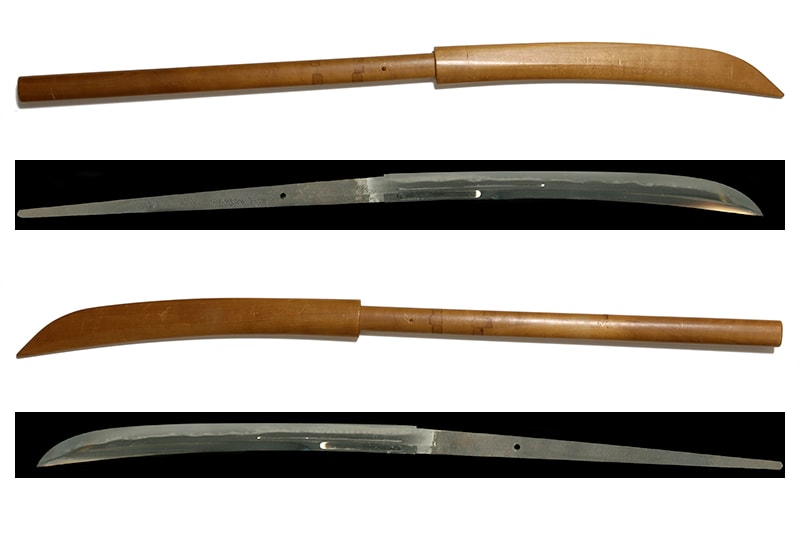
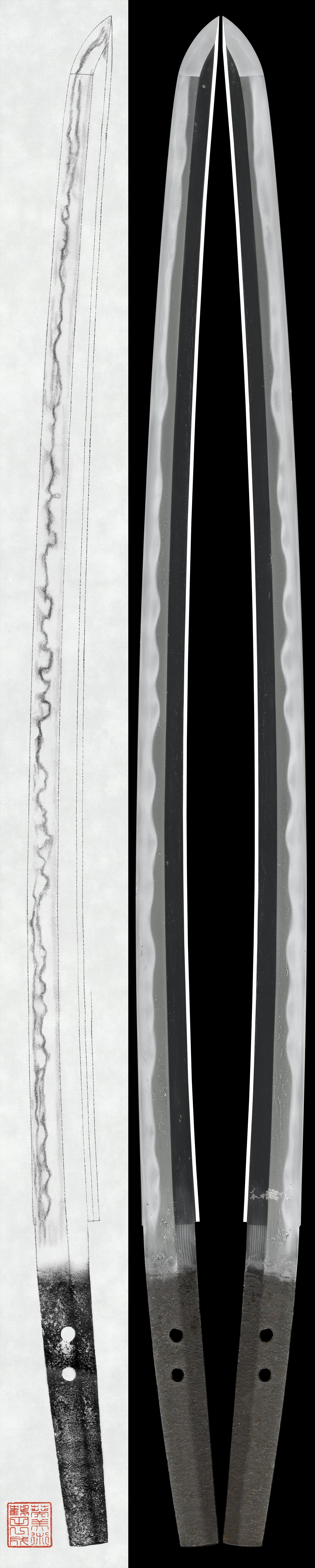
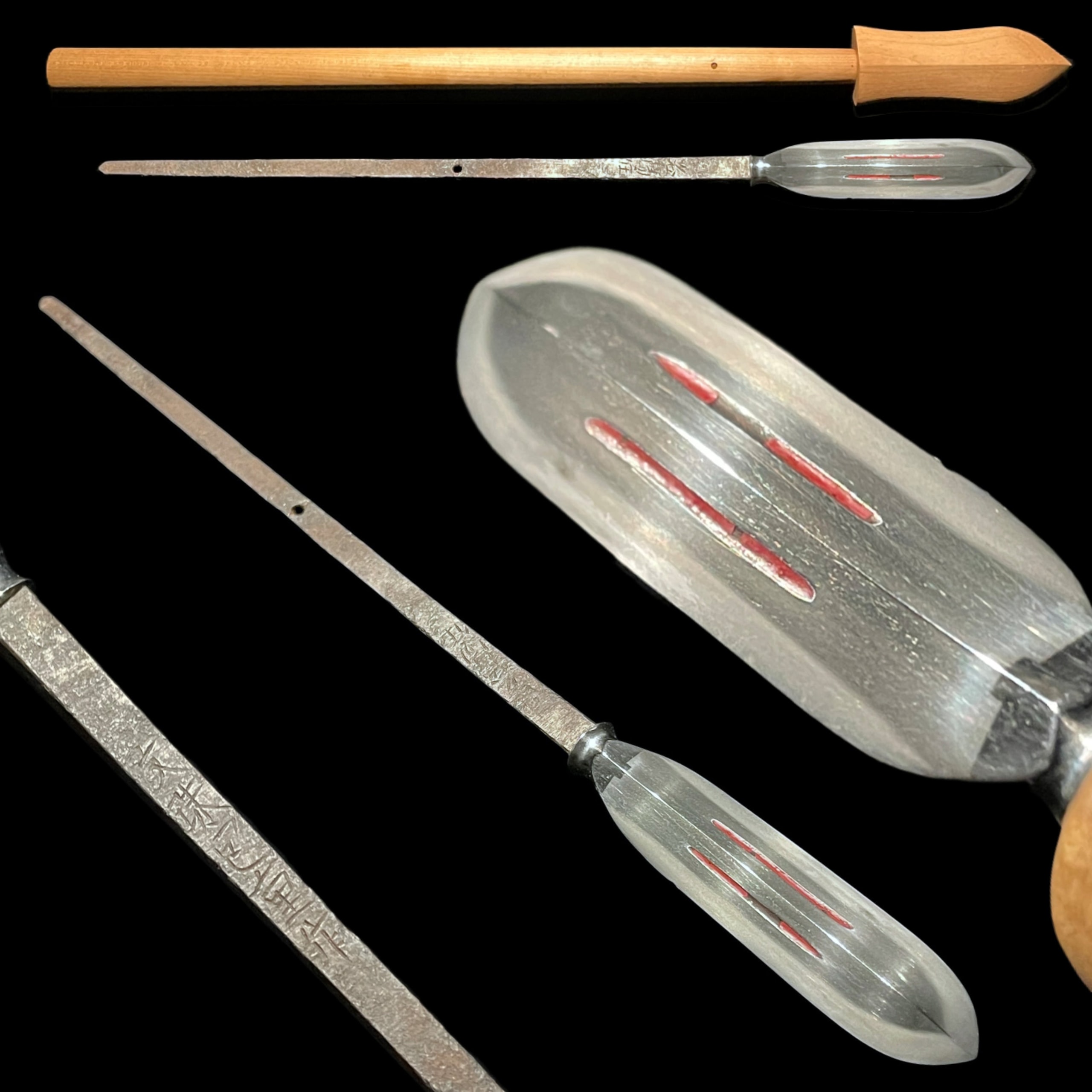
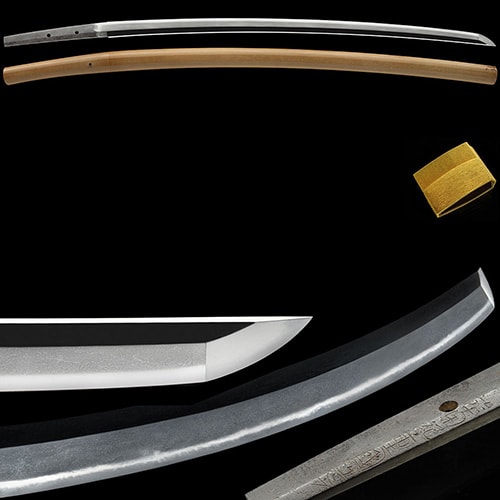
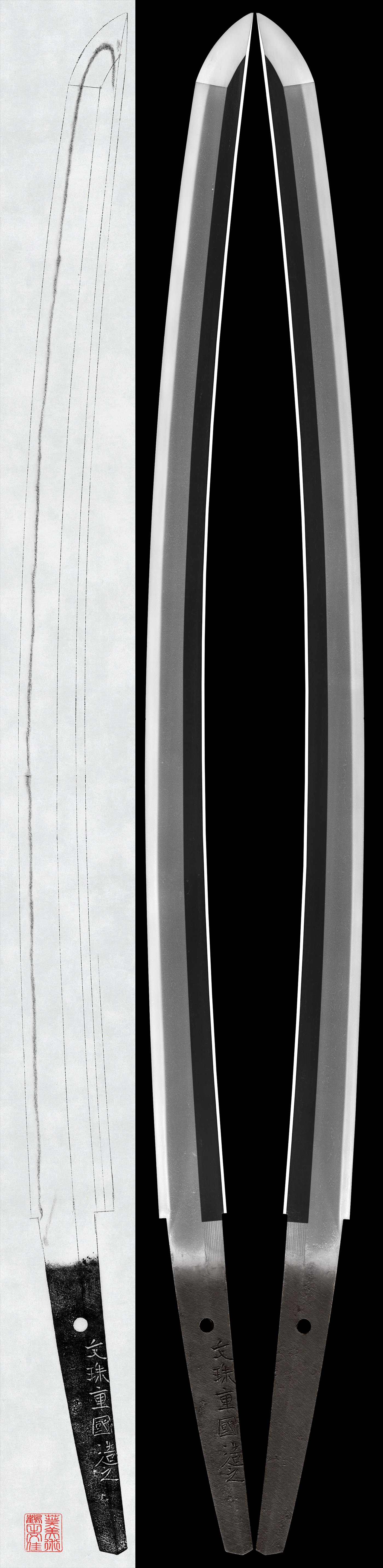
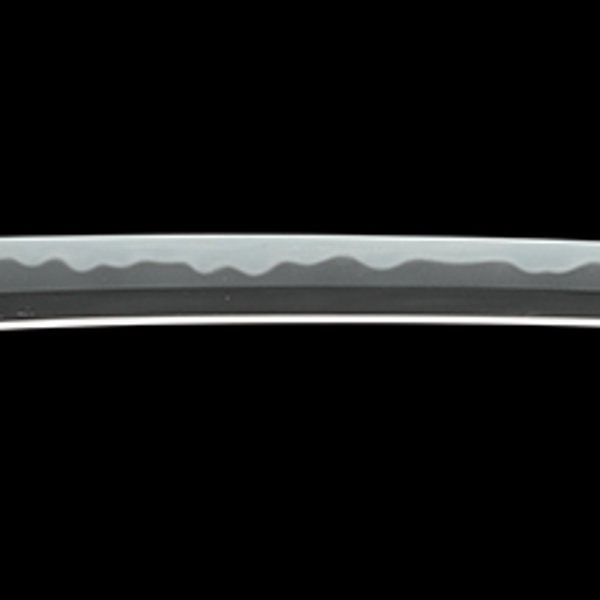
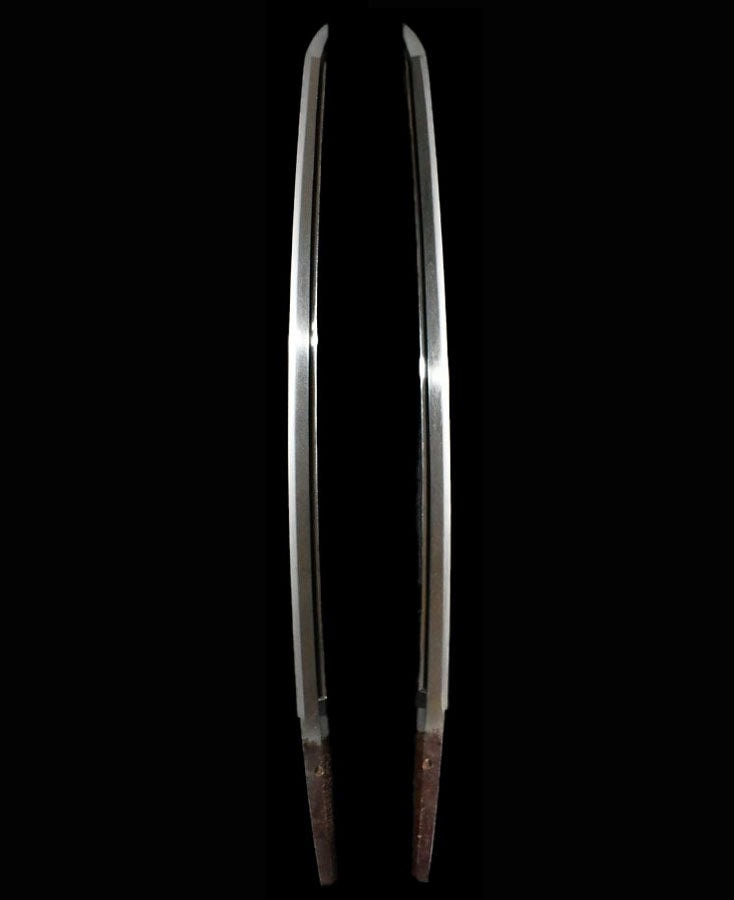
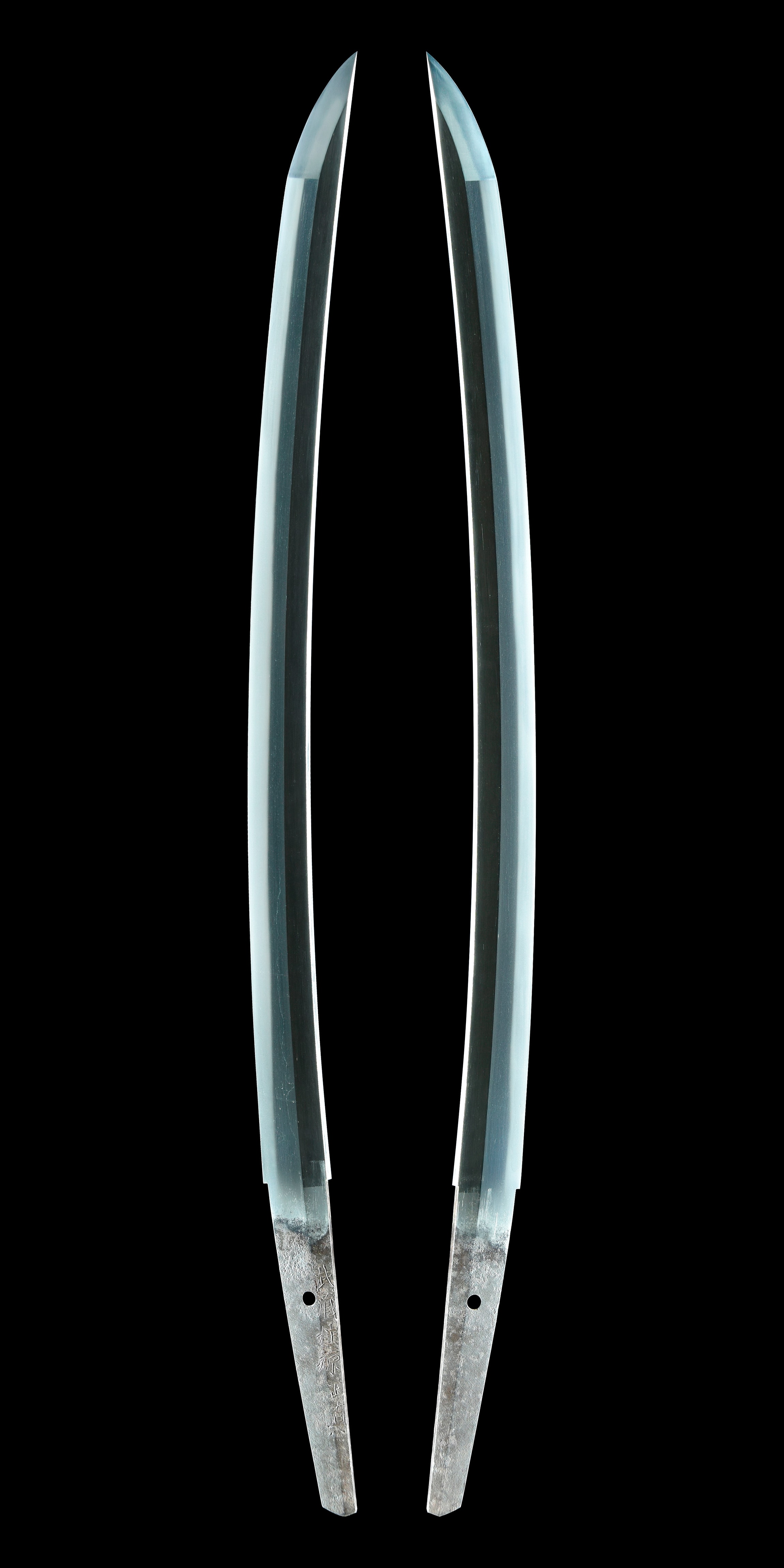
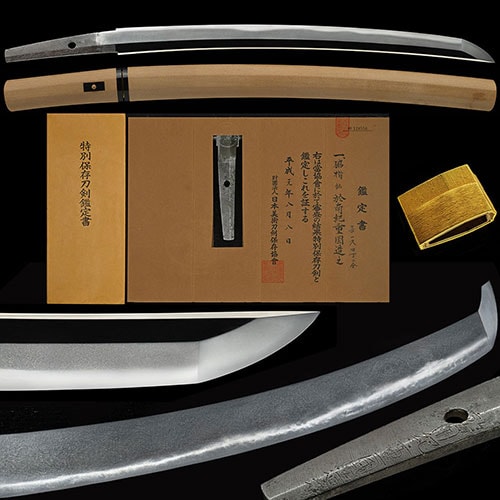
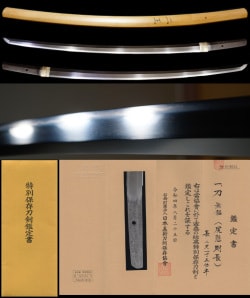
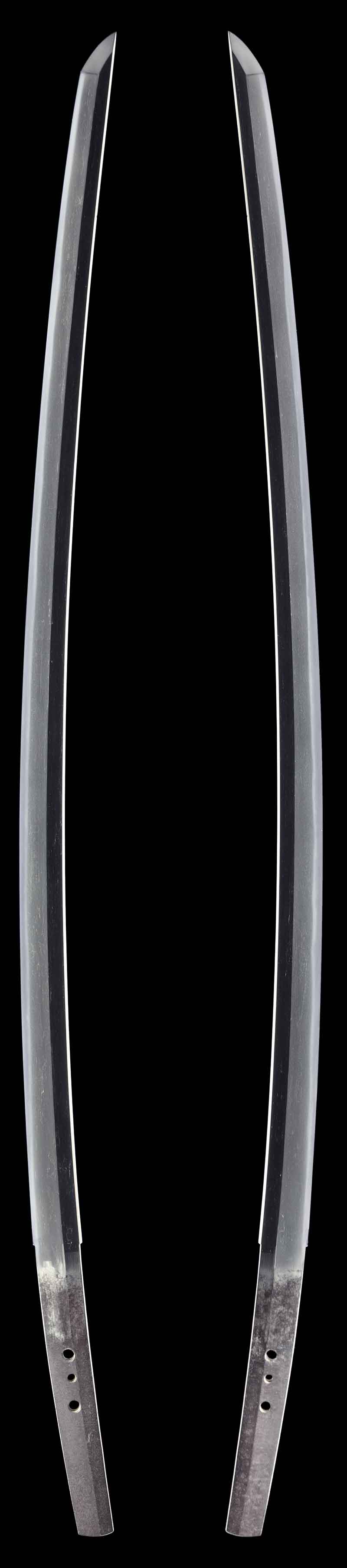
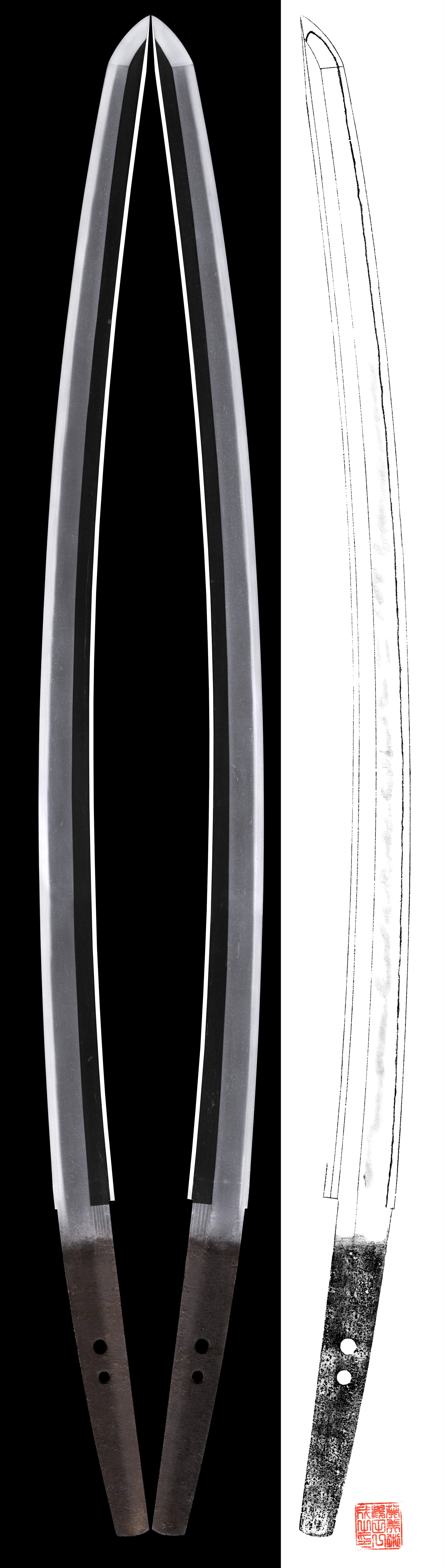
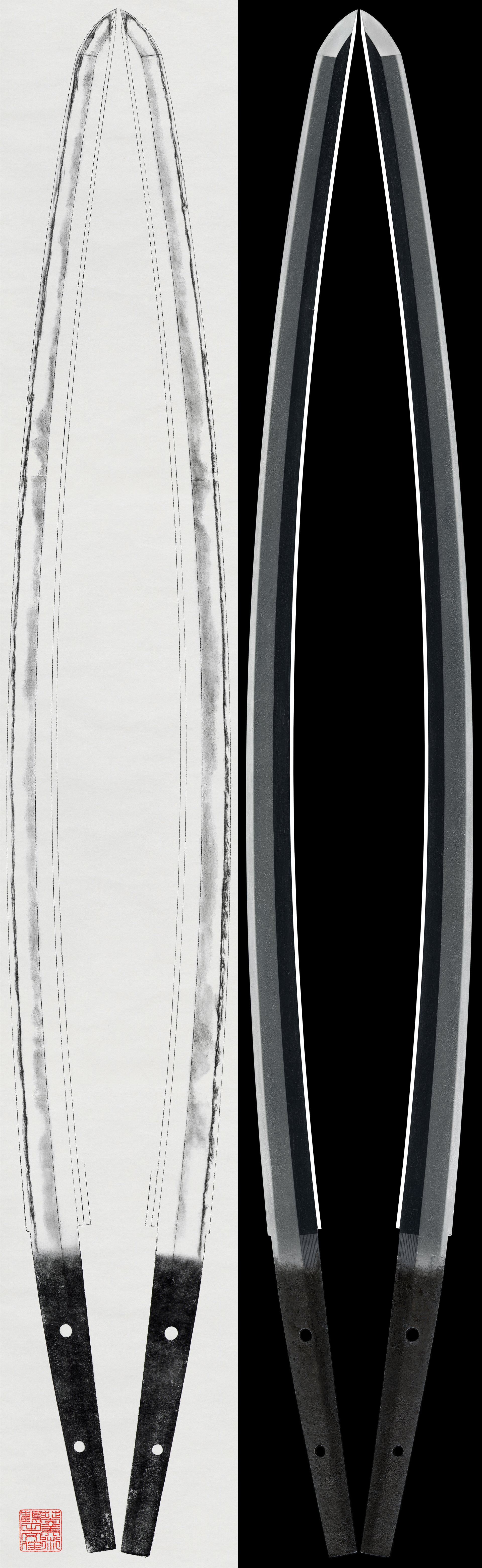
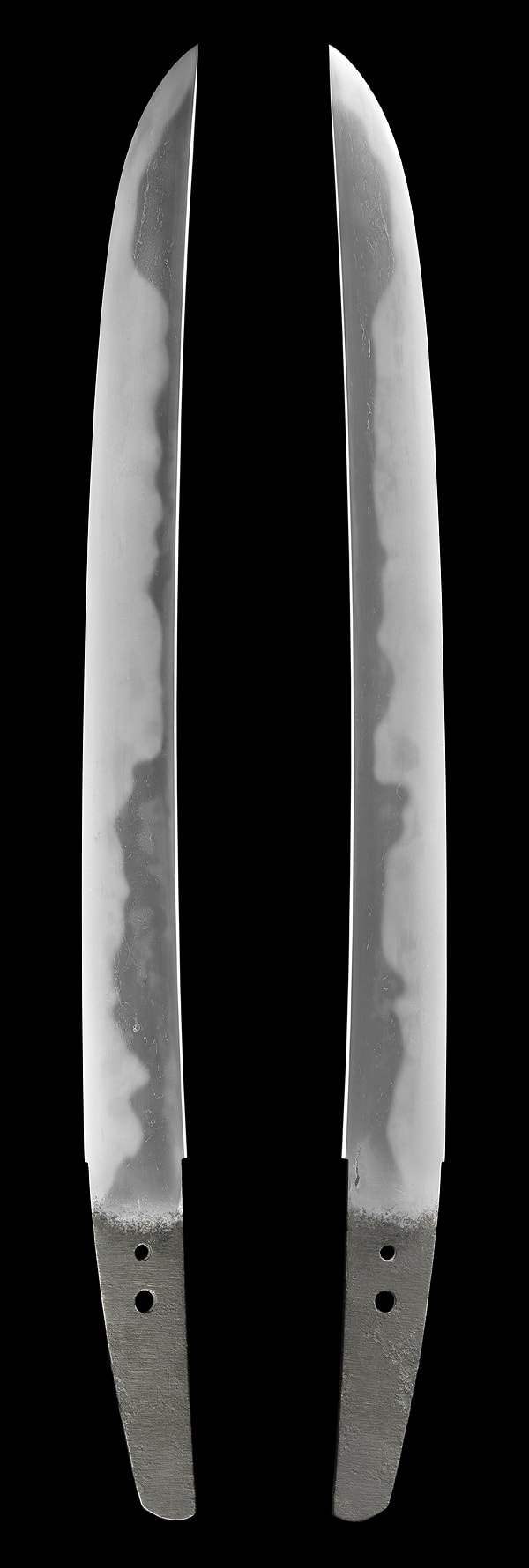
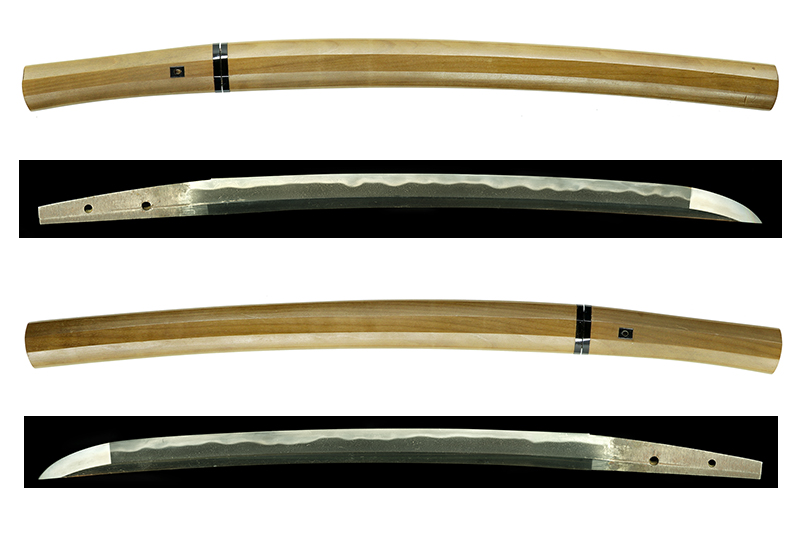
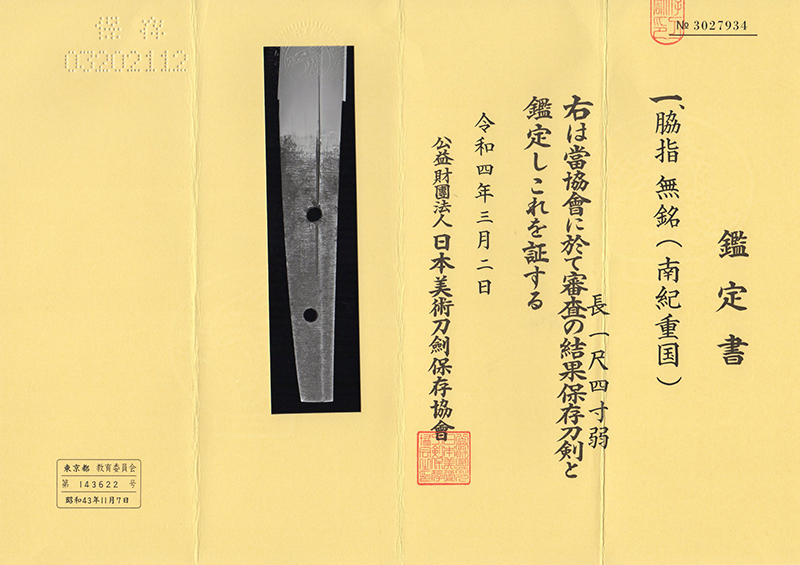
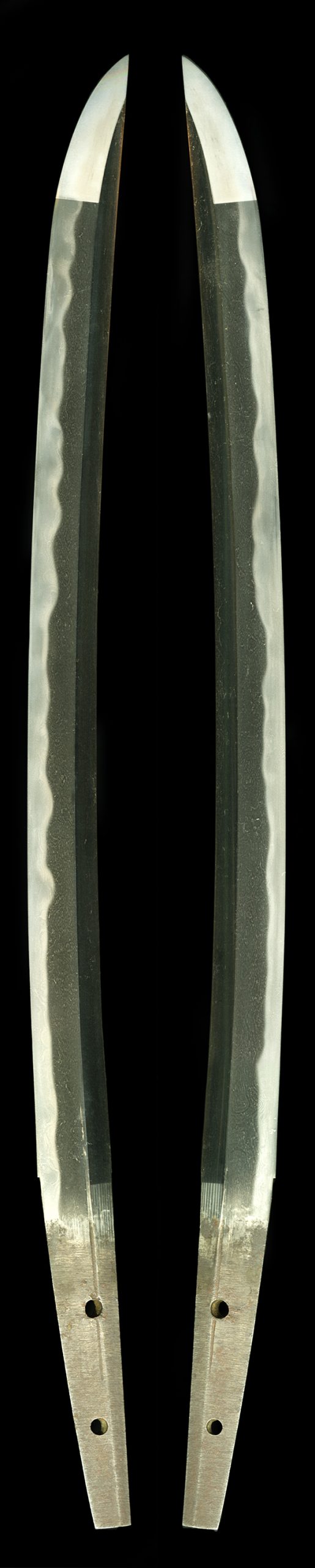
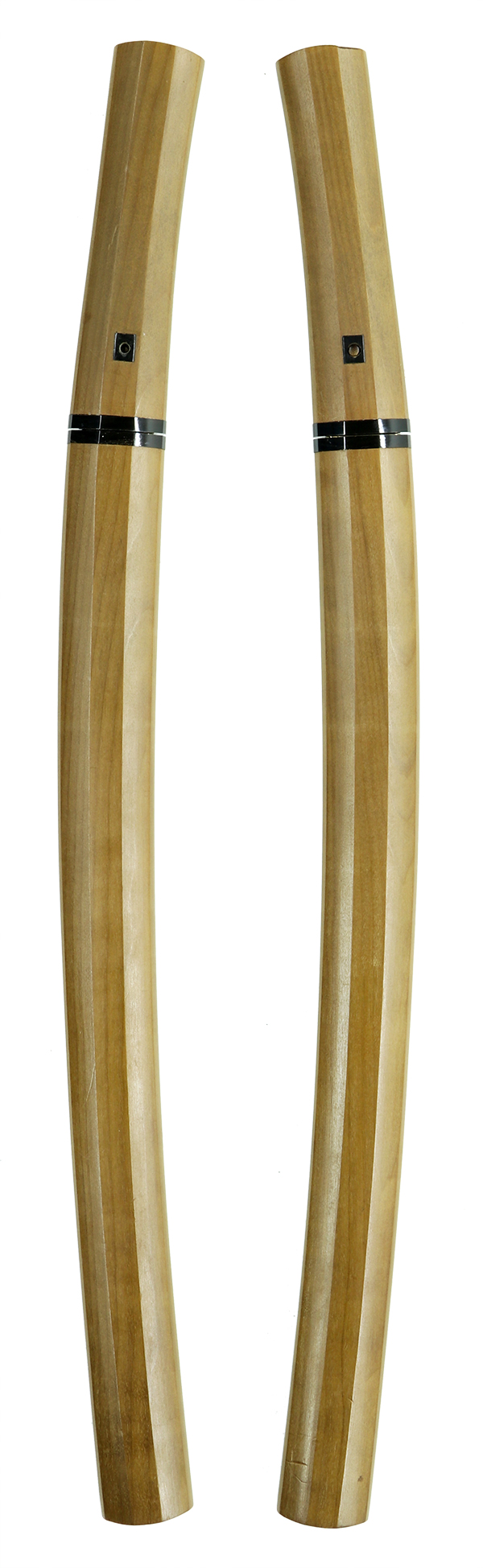
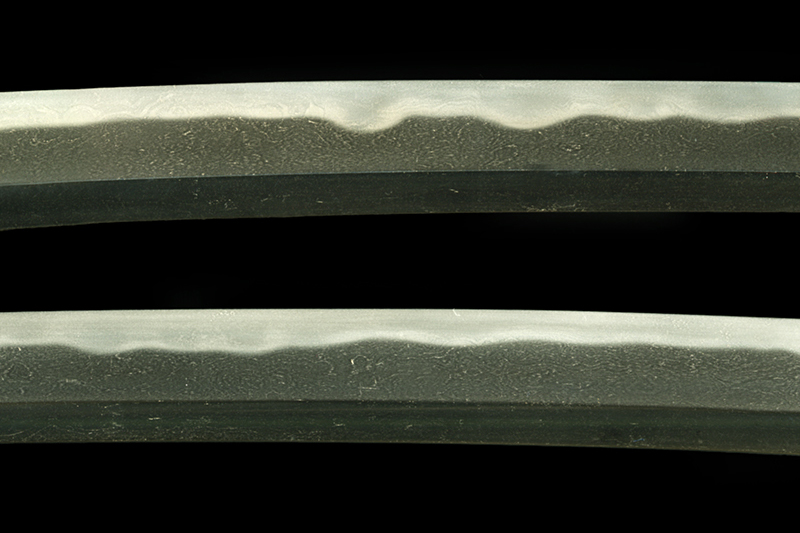
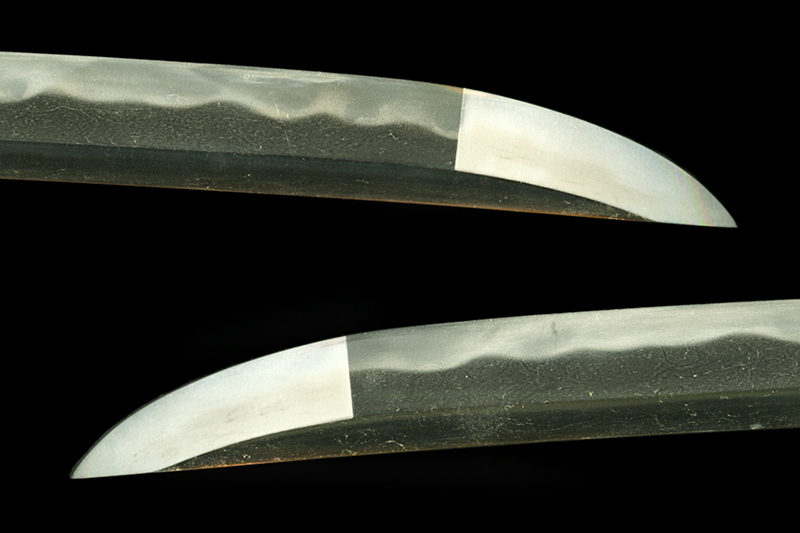
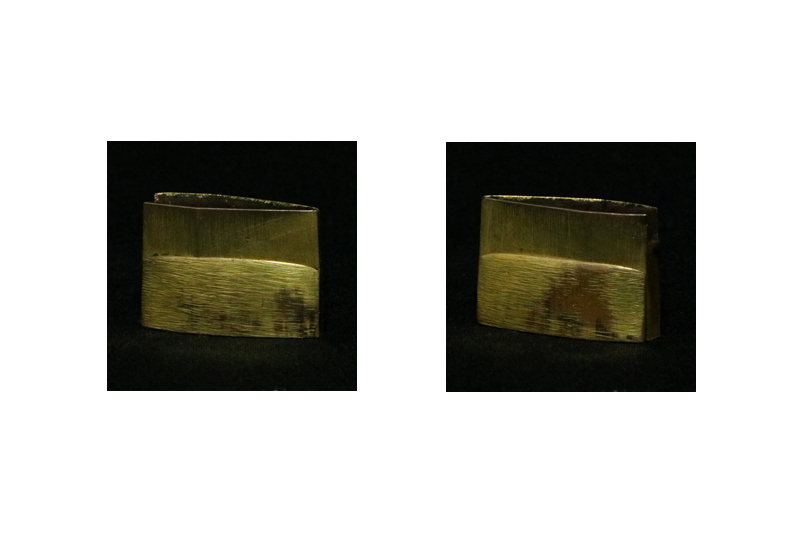
This is a wakizashi by Nanki Shigekuni, a Shinto saijosaku (top-ranking) smith. The blade is mumei (unsigned) and has a nagasa of 42.3cm. It is accompanied by a shirasaya and has Hozon Token certification.
 NihontoWatch
mumei · Shinto · nagasa 42.3cm · sori 0.8cm
Yamato-den · Yamato
24 pieces on the market now
The setsumei of the Monju (文珠) line all gather around a single figure: Shigekuni (重国), the smith better known by the appellation Nanki Shigekuni (南紀重国). The records describe him as originally of Yamato Province and a late offshoot of the Tegai group (Tegai-ha)[[c:1]], whose common name was Kurōsaburō. Learn more →
| Smith | Era | Designated |
|---|---|---|
| Shigekuni重國 | 1596-1630 | 59 |
| Shigekuni重國 | 1655-1673 | 3 |
| Masazane正真 | — | 1 |
| Kanetsugu包次 | 1596-1615 | 0 |
| Kaneyasu包保 | 1661-1673 | 0 |
Certifies a genuine blade worth preserving: a signature confirmed correct, or, if unsigned, an era, province, and school that the NBTHK can reliably identify.
The NBTHK (Nihon Bijutsu Tōken Hozon Kyōkai, the Society for the Preservation of Japanese Art Swords) is a public-interest incorporated foundation founded in 1948 and supervised by Japan’s Agency for Cultural Affairs (Bunkachō); it is based at the Japanese Sword Museum in Tokyo. Its expert panels physically examine each submitted work (shinsa) and issue a certificate (kanteishō) ranking it by artistic and historical merit. NBTHK papers are the most widely recognized standard of authentication for Japanese swords and fittings.
NBTHK official siteThree-day cooling-off period from receipt for refund or exchange. Return shipping and transfer fees are customer responsibility. Items showing use or condition changes are non-returnable.
This is a wakizashi by Nanki Shigekuni, a Shinto saijosaku (top-ranking) smith. The blade is mumei (unsigned) and has a nagasa of 42.3cm. It is accompanied by a shirasaya and has Hozon Token certification.
NihontoWatchmumei · Shinto · nagasa 42.3cm · sori 0.8cm
Yamato-den · Yamato
24 pieces on the market now
The setsumei of the Monju (文珠) line all gather around a single figure: Shigekuni (重国), the smith better known by the appellation Nanki Shigekuni (南紀重国). The records describe him as originally of Yamato Province and a late offshoot of the Tegai group (Tegai-ha)[[c:1]], whose common name was Kurōsaburō. Learn more →
| Smith | Era | Designated |
|---|---|---|
| Shigekuni重國 | 1596-1630 | 59 |
| Shigekuni重國 | 1655-1673 | 3 |
| Masazane正真 | — | 1 |
| Kanetsugu包次 | 1596-1615 | 0 |
| Kaneyasu包保 | 1661-1673 | 0 |
Certifies a genuine blade worth preserving: a signature confirmed correct, or, if unsigned, an era, province, and school that the NBTHK can reliably identify.
The NBTHK (Nihon Bijutsu Tōken Hozon Kyōkai, the Society for the Preservation of Japanese Art Swords) is a public-interest incorporated foundation founded in 1948 and supervised by Japan’s Agency for Cultural Affairs (Bunkachō); it is based at the Japanese Sword Museum in Tokyo. Its expert panels physically examine each submitted work (shinsa) and issue a certificate (kanteishō) ranking it by artistic and historical merit. NBTHK papers are the most widely recognized standard of authentication for Japanese swords and fittings.
NBTHK official siteThree-day cooling-off period from receipt for refund or exchange. Return shipping and transfer fees are customer responsibility. Items showing use or condition changes are non-returnable.