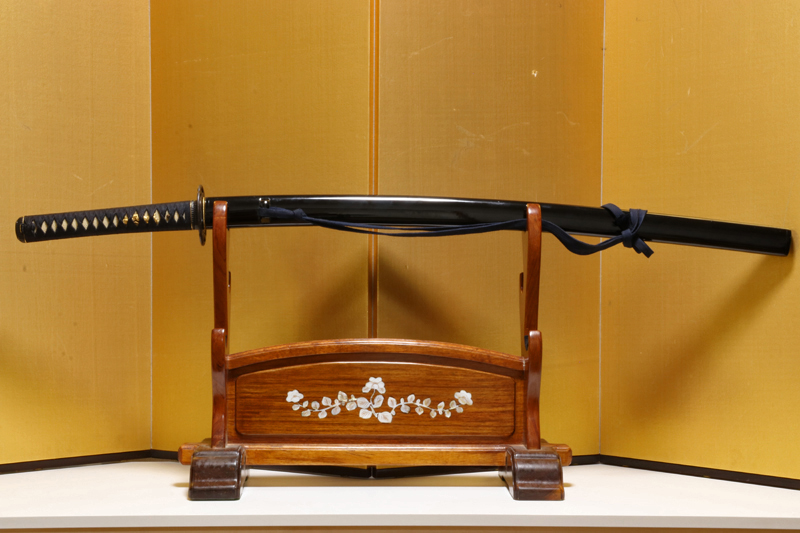
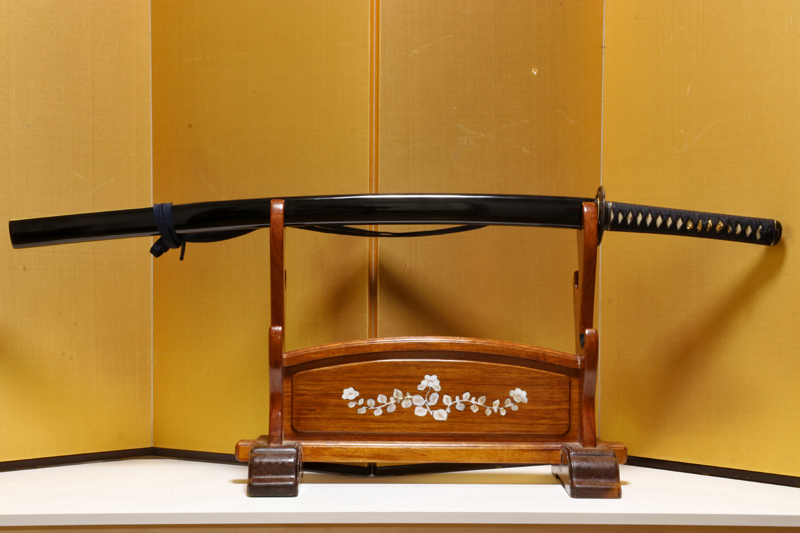
A shinken for iai by the swordsmith Kazuyoshi, a representative modern swordsmith of Saga Prefecture.
The mihaba is wide and the kasane is standard; both the koshirae and the blade are in good condition, making it perfect for tameshi-kiri.
Modern sword Hizen kuni Kazuyoshi saku.
This sword is wide blade and Koshirae and blade is good condition so parfect for Tameshi-kiri.
[Taihai style]
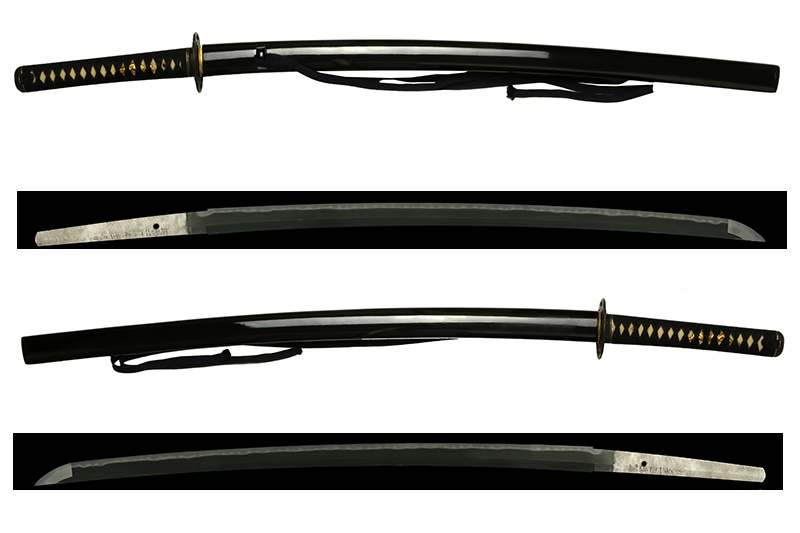
Shinogi-zukuri, iori-mune, wide mihaba and standard kasane, torii-zori, with an extended chu-kissaki. The nakago is ubu with kiri yasurime, and the nakago-jiri is kurijiri.
[Jigane]
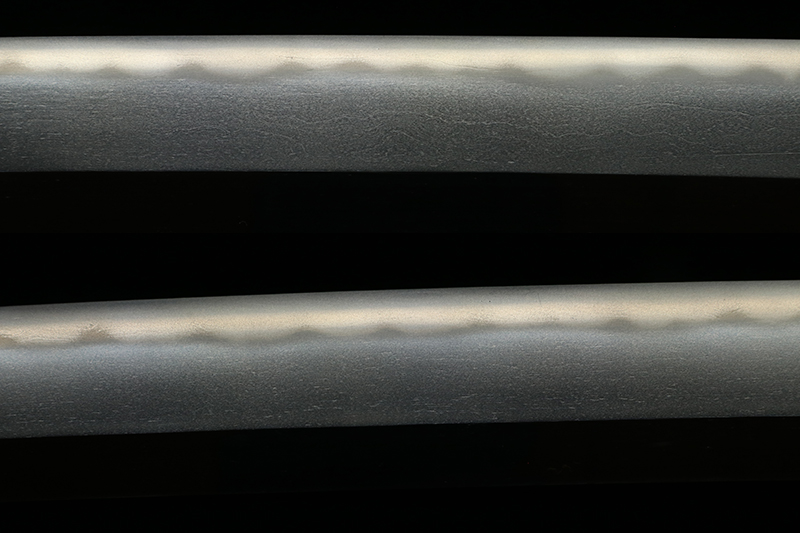
Itame-hada that flows, with a refined forging that leans toward masame, and ji-nie that is fine and thickly applied.
[Hamon]
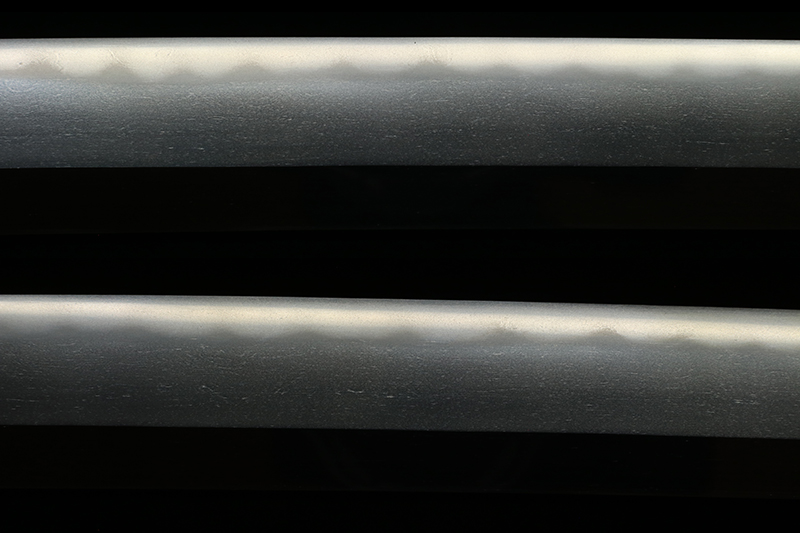
The hamon is gunome-choji, with a bright and clear nioiguchi and well-defined ashi. The boshi is midare-komi and turns back in a ko-maru.
[Detailed]
Hizen Kuni Ju Kazuyoshi, real name Nakao Kazuyoshi, is a swordsmith residing in Takeo City, Saga Prefecture. His teacher was his father, the swordsmith Tadatsugu, who was a student of Horii Toshihide. The swordsmith Kazuyoshi is known for his utsushi of Ichimonji, Hizen Kuni Tadayoshi, and Minamoto Kiyomaro, and he does not produce kazuuchi at all, so his works are few.
Furthermore, he is a talented swordsmith who has received awards including the Excellence Award, Encouragement Award, and Effort Award at the Shinsakuto Exhibition.
This work has a taihai with a wide mihaba and standard kasane, making it optimal for tameshi-kiri. Regarding the motohaba, because it is a taihai without funbari, it is 34mm, but I think it would be about 36mm if it were a taihai with funbari; also, the width near the monouchi is about 28mm.
The condition of the koshirae is good, and I believe it has not been used for iai or tameshi-kiri along with the blade.
You can use it for tameshi-kiri immediately after purchase.
[Koshirae]
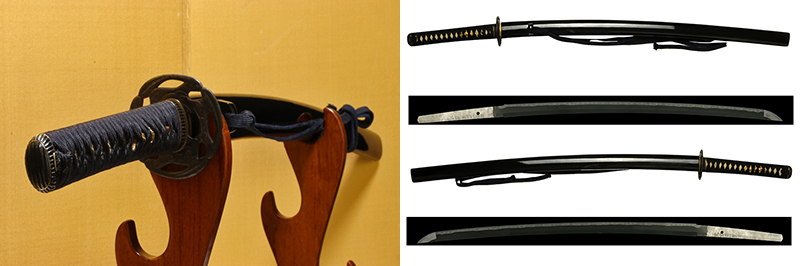
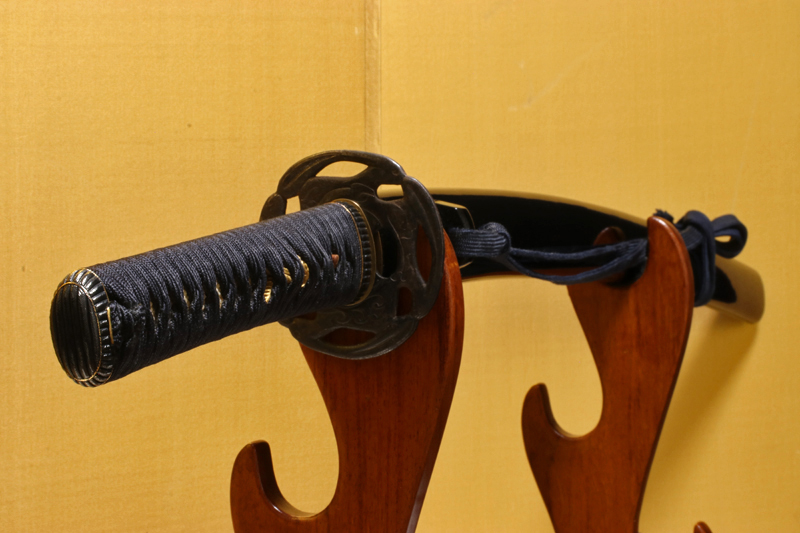
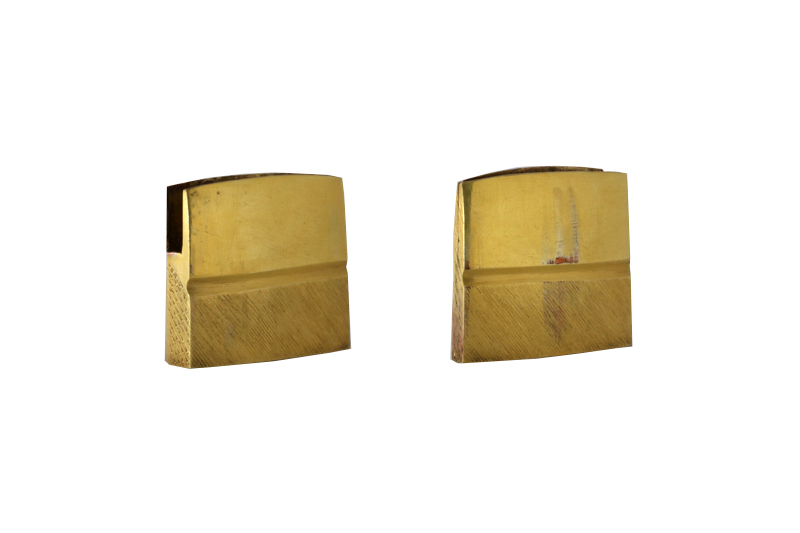
Habaki: Suaka-ji gold-plated ichimonji.
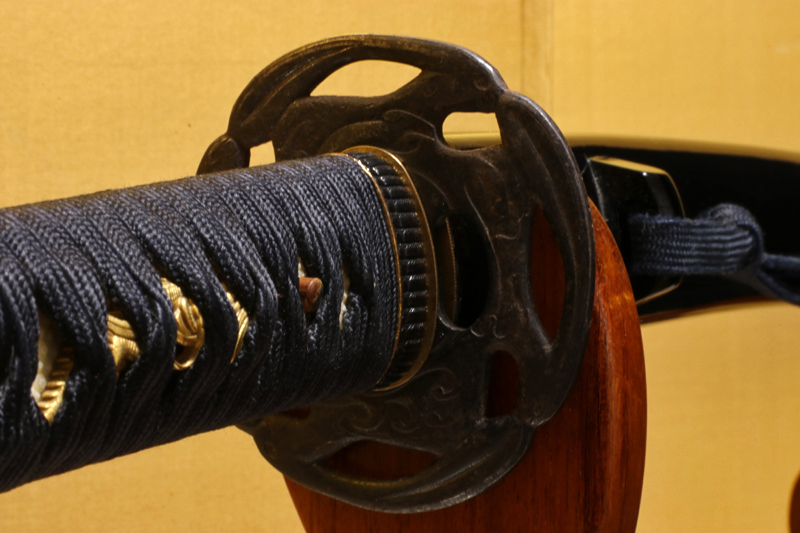
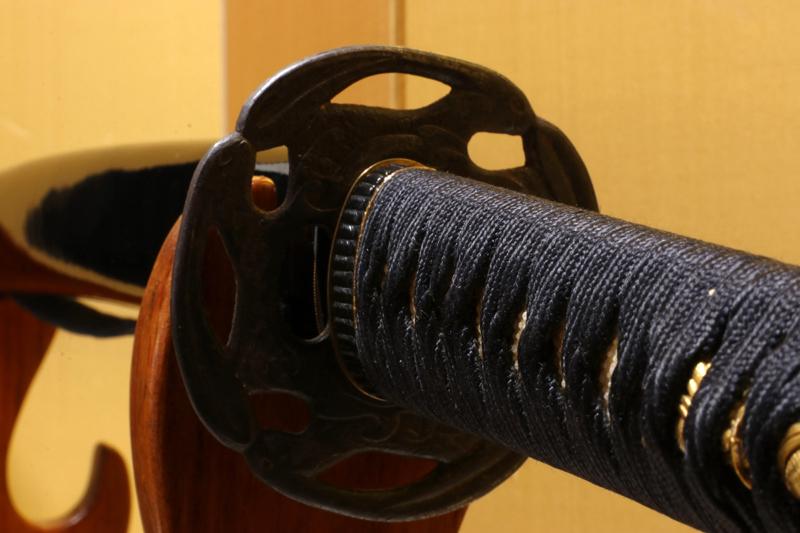
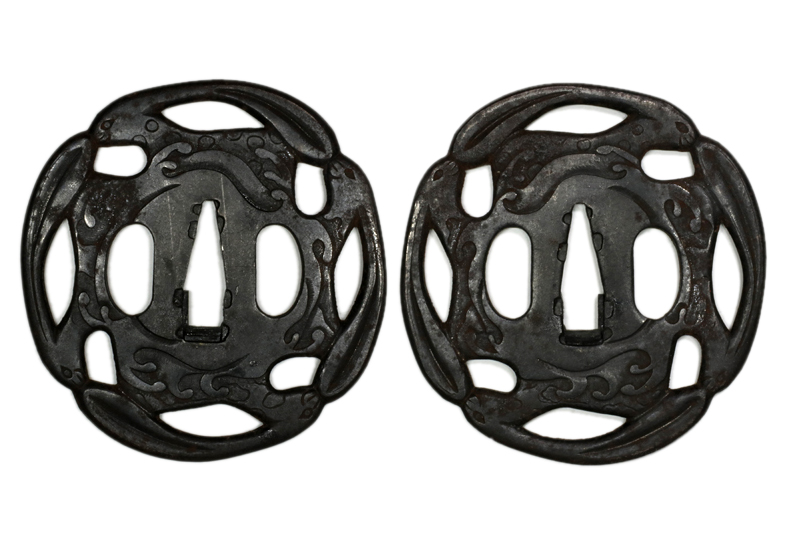
Tsuba: Iron-ji mokko-gata with a design of waves and rabbits.
Fuchikashira: Suaka-ji with a design of Higo-kago.
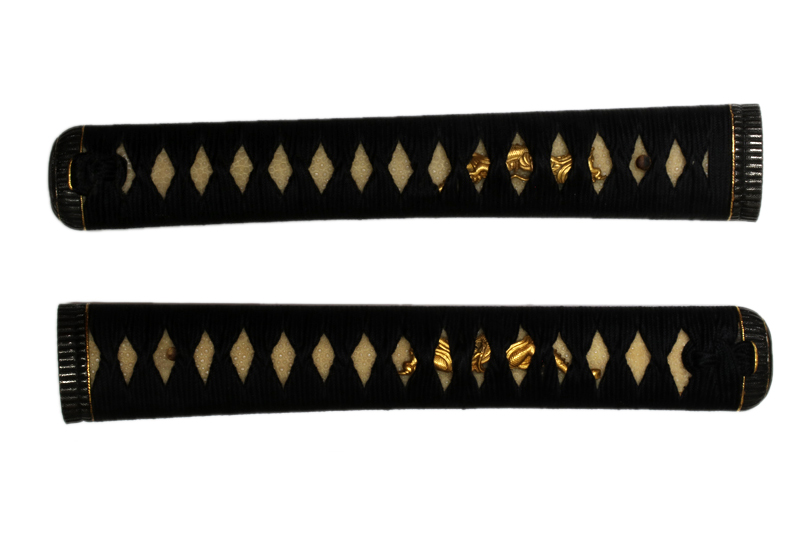
Menuki: Gold-ji with a design of a dragon.
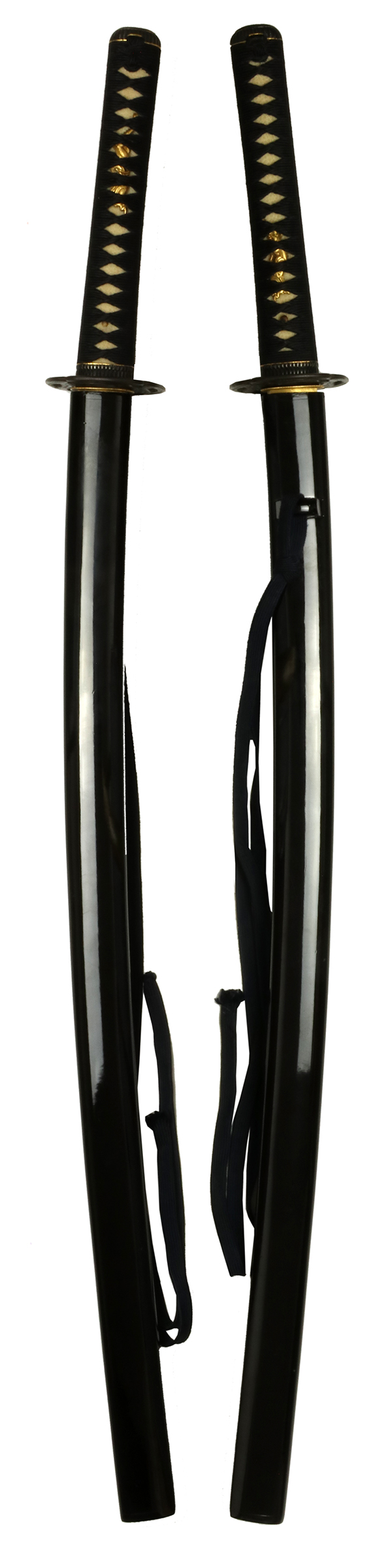
Tsuka: The tsukamaki is black silk moro-hineri-maki.
Saya: Kuro-ro.
[Condition of blade]
Polish: Good.
Flaws: There are no flaws that would be considered defects.
Machine translation from the shop's Japanese · may contain errors ·
A shinken for iai by the swordsmith Kazuyoshi, a representative modern swordsmith of Saga Prefecture.
The mihaba is wide and the kasane is standard; both the koshirae and the blade are in good condition, making it perfect for tameshi-kiri.
Modern sword Hizen kuni Kazuyoshi saku.
This sword is wide blade and Koshirae and blade is good condition so parfect for Tameshi-kiri.
[Taihai style]
Shinogi-zukuri, iori-mune, wide mihaba and standard kasane, torii-zori, with an extended chu-kissaki. The nakago is ubu with kiri yasurime, and the nakago-jiri is kurijiri.
[Jigane]
Itame-hada that flows, with a refined forging that leans toward masame, and ji-nie that is fine and thickly applied.
[Hamon]
The hamon is gunome-choji, with a bright and clear nioiguchi and well-defined ashi. The boshi is midare-komi and turns back in a ko-maru.
[Detailed]
Hizen Kuni Ju Kazuyoshi, real name Nakao Kazuyoshi, is a swordsmith residing in Takeo City, Saga Prefecture. His teacher was his father, the swordsmith Tadatsugu, who was a student of Horii Toshihide. The swordsmith Kazuyoshi is known for his utsushi of Ichimonji, Hizen Kuni Tadayoshi, and Minamoto Kiyomaro, and he does not produce kazuuchi at all, so his works are few.
Furthermore, he is a talented swordsmith who has received awards including the Excellence Award, Encouragement Award, and Effort Award at the Shinsakuto Exhibition.
This work has a taihai with a wide mihaba and standard kasane, making it optimal for tameshi-kiri. Regarding the motohaba, because it is a taihai without funbari, it is 34mm, but I think it would be about 36mm if it were a taihai with funbari; also, the width near the monouchi is about 28mm.
The condition of the koshirae is good, and I believe it has not been used for iai or tameshi-kiri along with the blade.
You can use it for tameshi-kiri immediately after purchase.
[Koshirae]
Habaki: Suaka-ji gold-plated ichimonji.
Tsuba: Iron-ji mokko-gata with a design of waves and rabbits.
Fuchikashira: Suaka-ji with a design of Higo-kago.
Menuki: Gold-ji with a design of a dragon.
Tsuka: The tsukamaki is black silk moro-hineri-maki.
Saya: Kuro-ro.
[Condition of blade]
Polish: Good.
Flaws: There are no flaws that would be considered defects.
The twentieth century nearly killed the craft twice: wartime distortion, then the occupation ban. The NBTHK’s founding in 1948 and licensed forging from 1953 rebuilt the sword as an art, crowned by Living National Treasures and the mukansa rank.
Within 3 days of the item's arrival, we offer a refund or an exchange. Return shipping and the bank transfer fee for the refund are at the customer's expense.


 NihontoWatch