Hizen no Kuni Ju Kazuyoshi is a swordsmith residing in Takeo City, Saga Prefecture, who takes Kamakura Ichimonji, Hizen no Kuni Tadayoshi, and Minamoto Kiyomaro as his models. His real name is Nakao Kazuyoshi, born on November 7, Showa 14. From around Showa 30, he trained in sword making under his father Tadatsugu, who was a student of Horii Toshihide. It is recorded that Kazuyoshi subsequently did not produce any mass-produced swords at all, crafting 60 swords over 12 years; although his output is small, he demonstrated his talent by exhibiting at the Shinsakuto Exhibition and winning consecutive awards, starting with the Excellence Award, followed by the Encouragement Award, and then the Effort Award. Kazuyoshi is a highly skilled swordsmith with an impressive background.
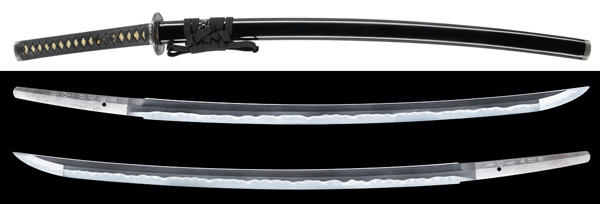
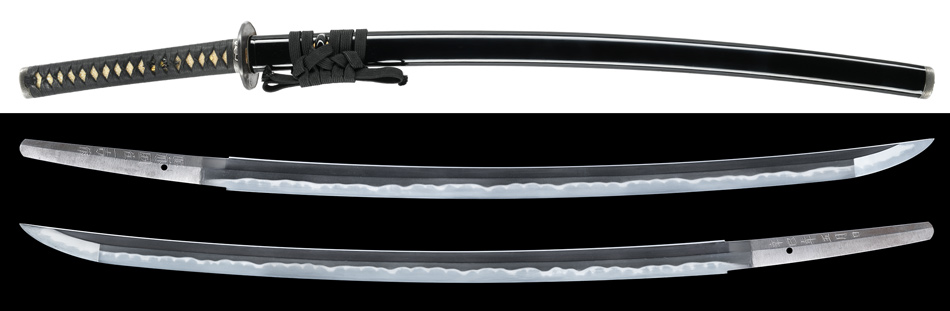
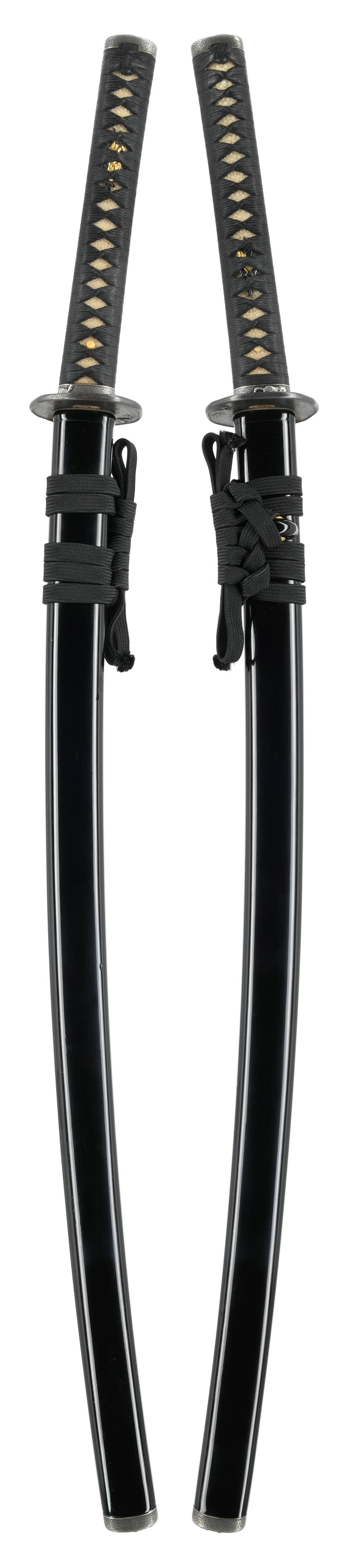
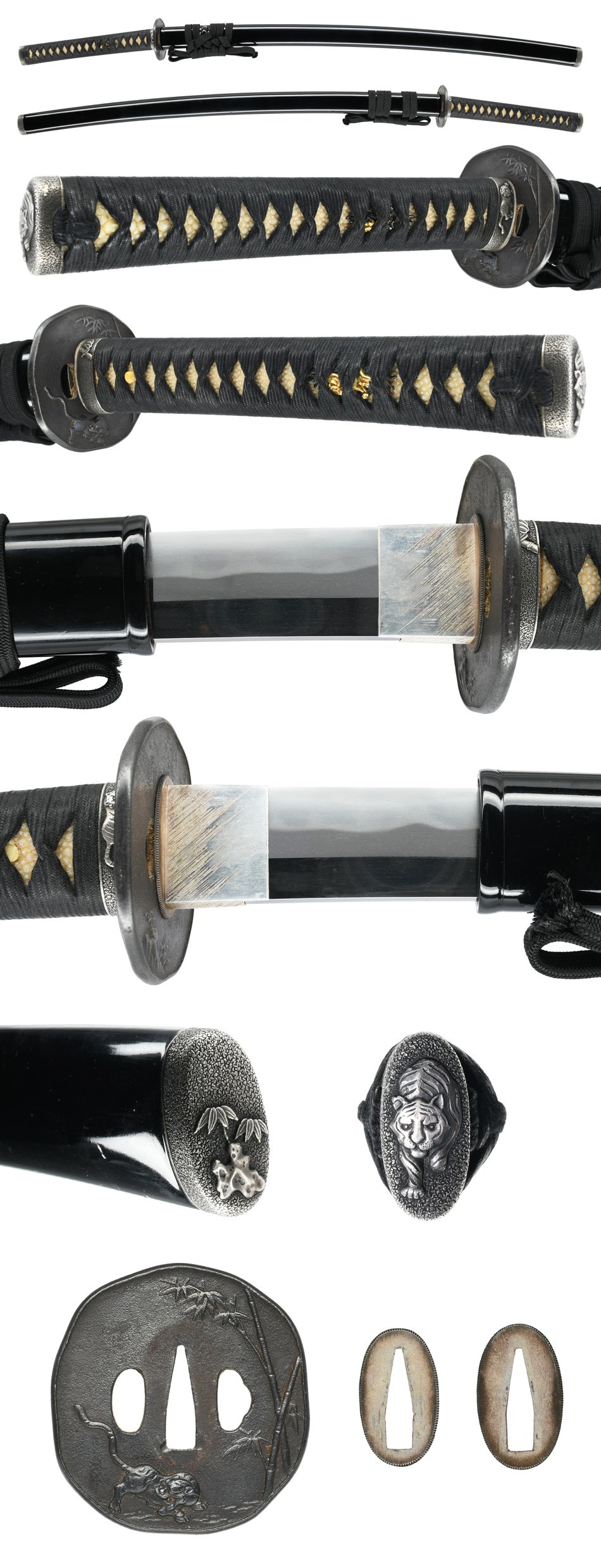
The sugata of this sword has a standard sori, mihaba, and kasane, with a dynamic o-kissaki. The jitetsu is a beautiful and refined ko-itame that is well-packed with ji-nie. The hamon is gunome-midare, with a bright and clear nioiguchi and well-defined ashi, making it a piece of superior workmanship. The boshi is midare and turns back in a ko-maru. The nakago is ubu, carefully finished with kiri yasurime, and the mei is deeply carved. As swordsmith Kazuyoshi does not mass-produce, his works are not numerous, and I believe these swords will become increasingly precious in the future. It comes in a kuro-ro urushi-nuri saya with sword fittings featuring a tiger design. Not only is it a sword for appreciation, but because it is a very well-balanced sword, I also recommend it as an iaito for high-ranking practitioners.
Machine translation from the shop's Japanese · may contain errors ·
Hizen no Kuni Ju Kazuyoshi is a swordsmith residing in Takeo City, Saga Prefecture, who takes Kamakura Ichimonji, Hizen no Kuni Tadayoshi, and Minamoto Kiyomaro as his models. His real name is Nakao Kazuyoshi, born on November 7, Showa 14. From around Showa 30, he trained in sword making under his father Tadatsugu, who was a student of Horii Toshihide. It is recorded that Kazuyoshi subsequently did not produce any mass-produced swords at all, crafting 60 swords over 12 years; although his output is small, he demonstrated his talent by exhibiting at the Shinsakuto Exhibition and winning consecutive awards, starting with the Excellence Award, followed by the Encouragement Award, and then the Effort Award. Kazuyoshi is a highly skilled swordsmith with an impressive background.
The sugata of this sword has a standard sori, mihaba, and kasane, with a dynamic o-kissaki. The jitetsu is a beautiful and refined ko-itame that is well-packed with ji-nie. The hamon is gunome-midare, with a bright and clear nioiguchi and well-defined ashi, making it a piece of superior workmanship. The boshi is midare and turns back in a ko-maru. The nakago is ubu, carefully finished with kiri yasurime, and the mei is deeply carved. As swordsmith Kazuyoshi does not mass-produce, his works are not numerous, and I believe these swords will become increasingly precious in the future. It comes in a kuro-ro urushi-nuri saya with sword fittings featuring a tiger design. Not only is it a sword for appreciation, but because it is a very well-balanced sword, I also recommend it as an iaito for high-ranking practitioners.
The twentieth century nearly killed the craft twice: wartime distortion, then the occupation ban. The NBTHK’s founding in 1948 and licensed forging from 1953 rebuilt the sword as an art, crowned by Living National Treasures and the mukansa rank.
No cooling-off period or returns; refund only if the purchased sword is proven fake, capped at purchase price (excludes commission sales, accessories, auction items).


 NihontoWatch