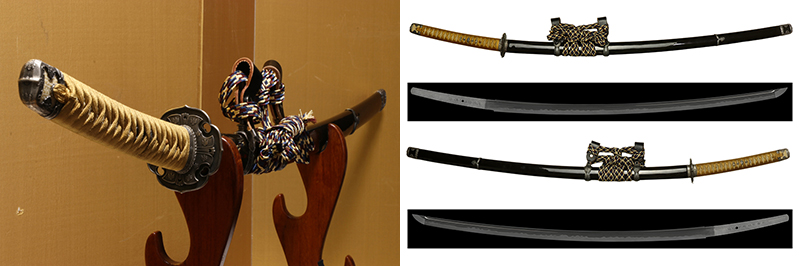
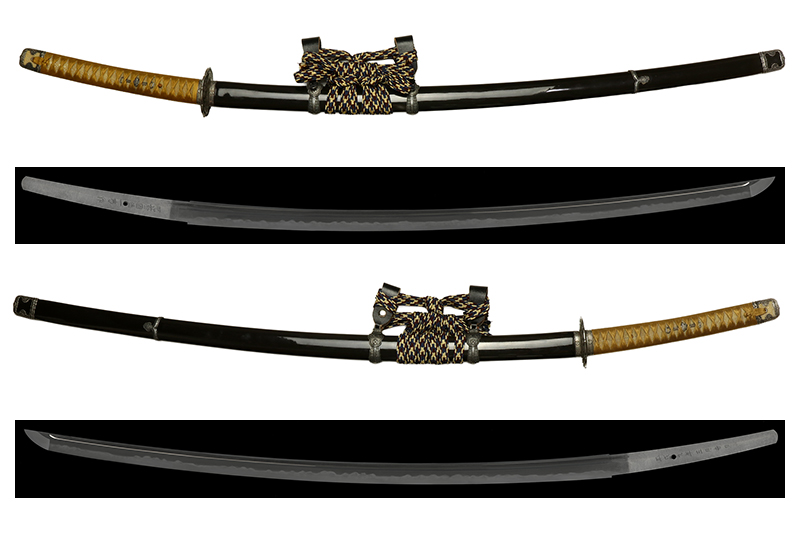
Modern sword Hizen kuni ju Kazuyoshi saku with Tachi-Koshirae.
This is a work by Nakao Kazuyoshi, a leading contemporary swordsmith representing Saga Prefecture.
This piece is a specially commissioned long tachi, an outstanding example featuring finely forged jihada and a splendid gunome hamon.
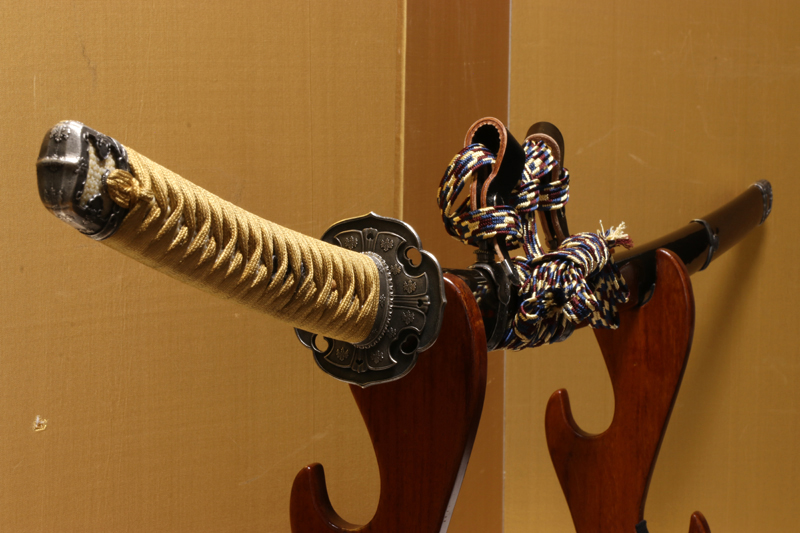
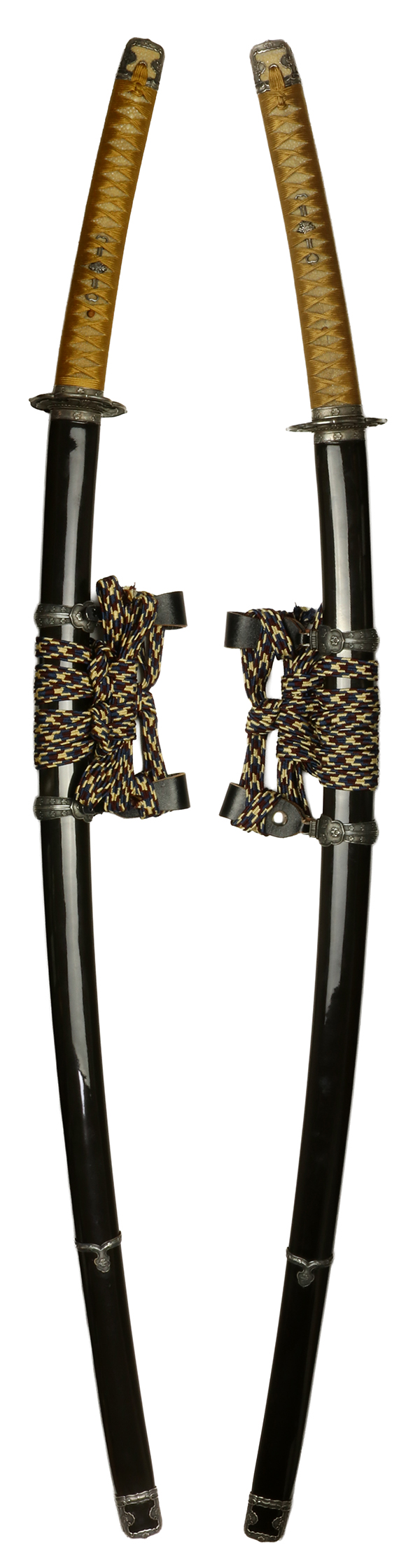
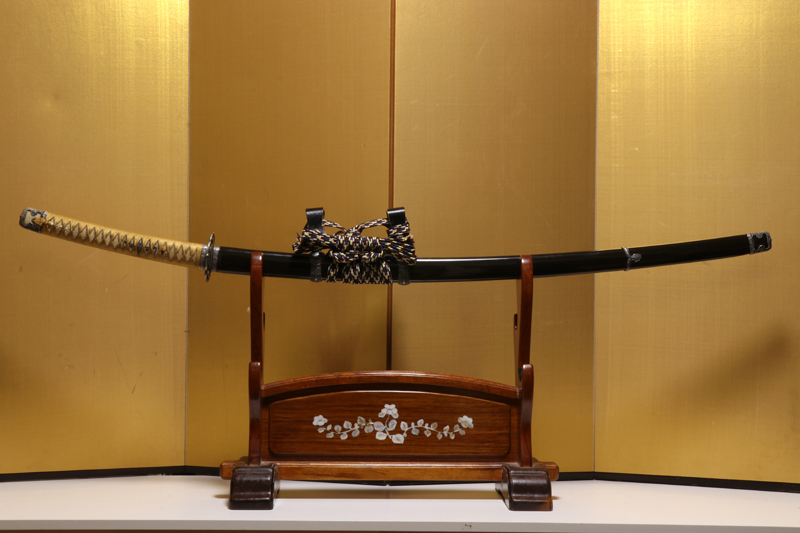
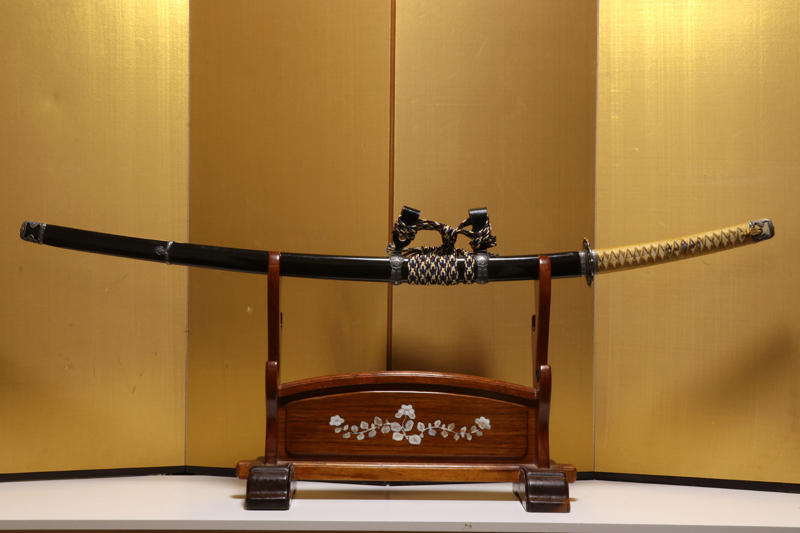
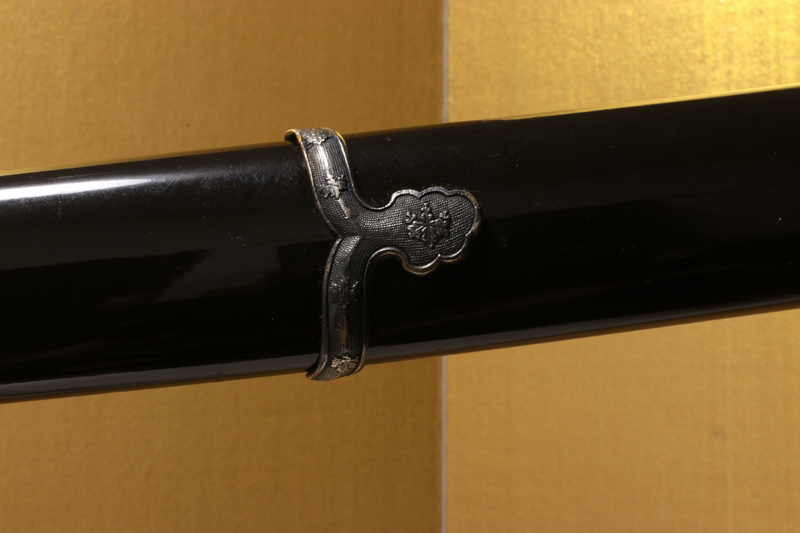
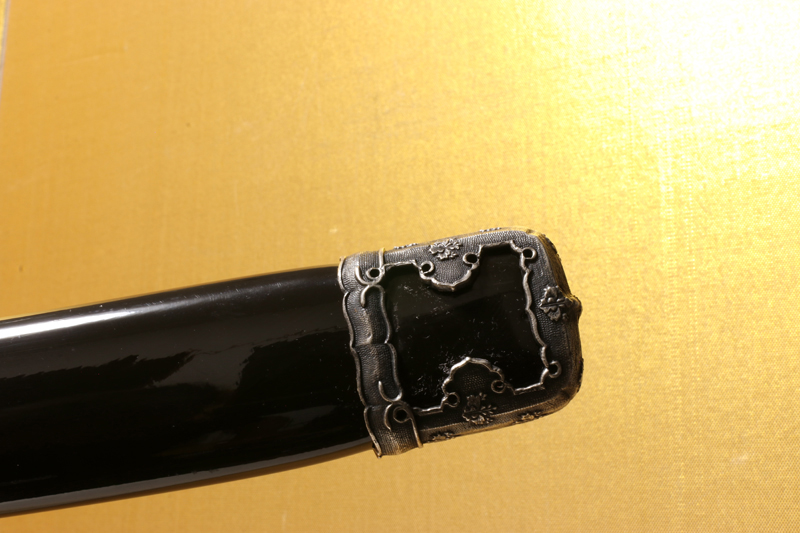
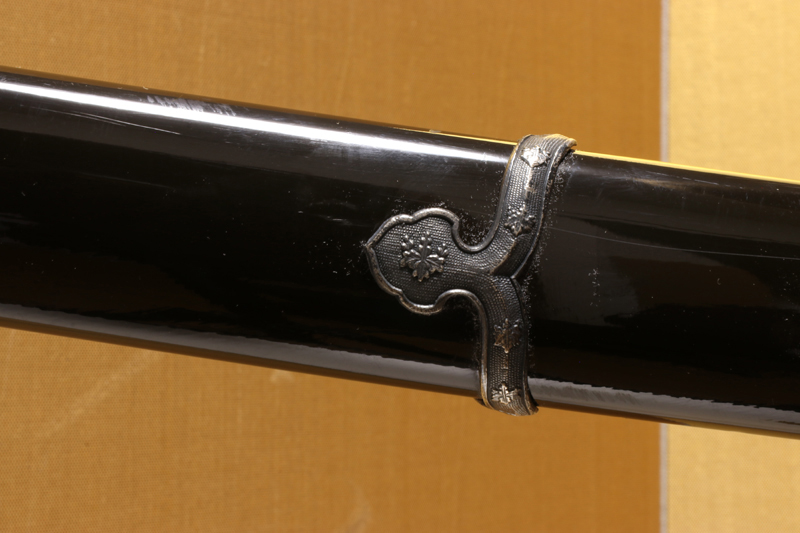
The accompanying tachi koshirae was mounted using a complete set of solid silver tachi fittings and is the original mounting made for this sword.
Examples of this kind—combining a long blade with its original tachi koshirae—are rarely encountered, making this an exceptionally precious and valuable piece.
"sword figure"
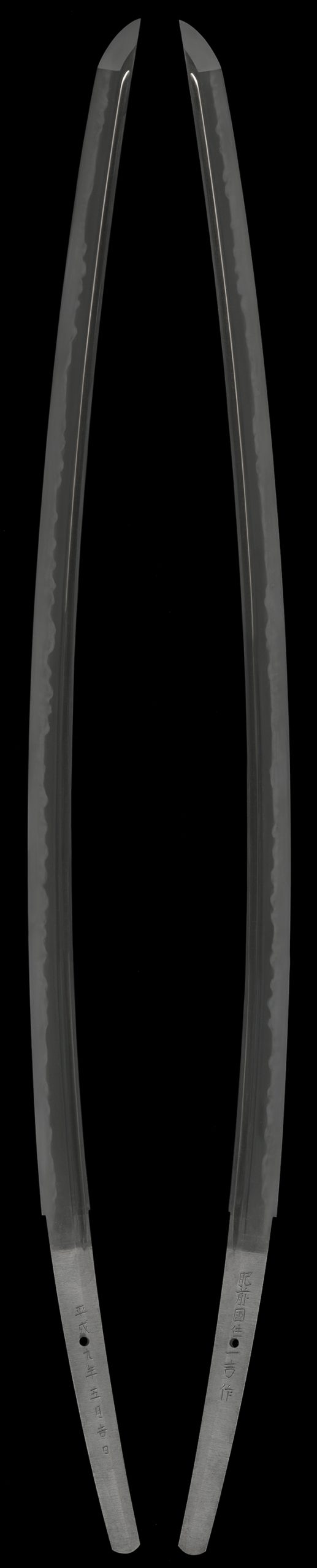
Shinogi-zukuri, iori-mune, wide mihaba and heavy, slight koshi-zori, chu-kissaki. Nakago is ubu, yasurime are kiri, nakago-jiri is kurijiri.
"carving"
As for horimono, on the sashi-omote there is a bo-hi with ryochiri that becomes kaki-nagashi below the habaki.
"jigane"
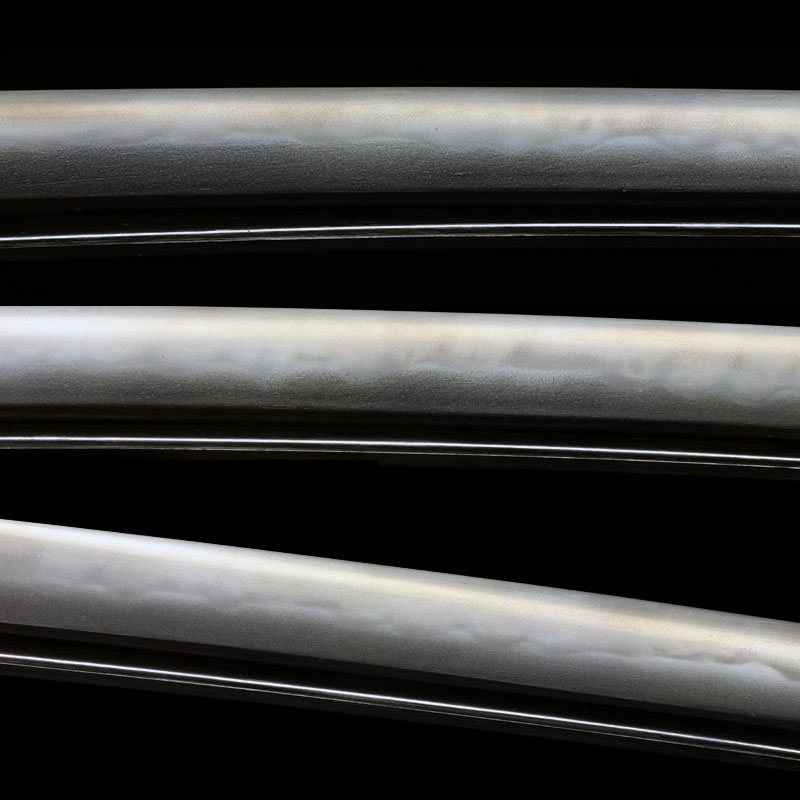
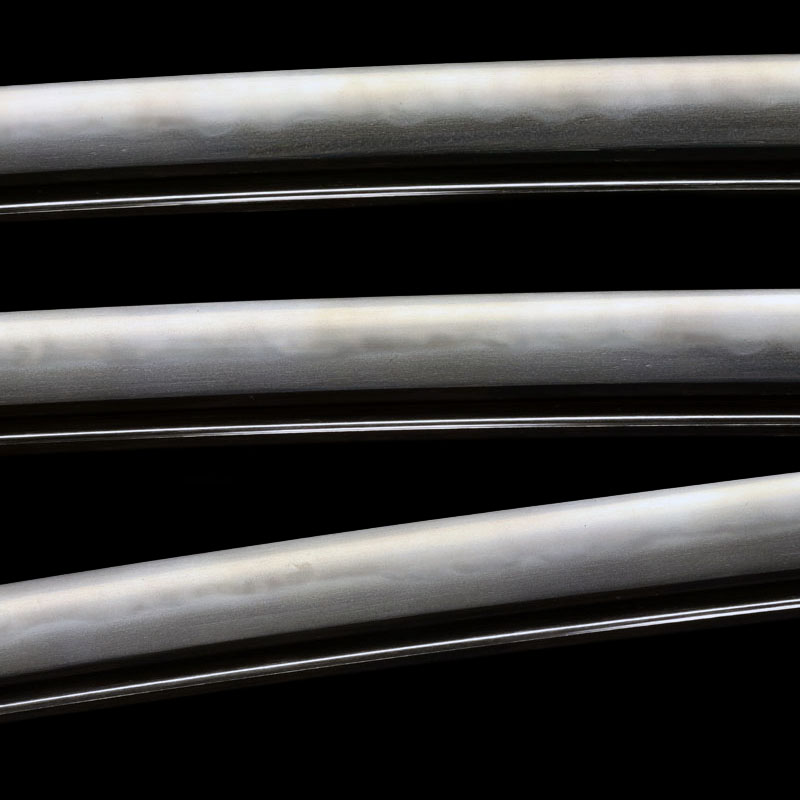
Jigane is flowing itame-hada, a refined forging with a masame feel, with ji-nie appearing thickly in mijin.
"hamon"
Hamon is gunome with a bright and clear nioiguchi, ashi enters well, sunagashi is present, and kinsuji enters within the blade. Boshi is midare-komi returning in ko-maru.
"detailed"
Hizen kuni ju Kazuyoshi (real name Nakao Kazuyoshi) is a swordsmith residing in Takeo City, Saga Prefecture. He studied under his father, the swordsmith Nakao Tadatsugu who was also a student of Horii Toshihide, and accumulated much study.
Kazuyoshi is skilled at utsushi of Ichimonji, Hizen kuni Tadayoshi, Minamoto Kiyomaro and others, and is known for never performing mass-production. For that reason, the number of swords made is extremely small, and his works are all rare and receive high evaluations.
In the Shinsakuto-ten, he has two Excellence Awards, two Encouragement Awards, four Effort Awards, and many other prize records, and is counted as one of the master smiths representing contemporary swordsmiths.
This work is a tachi produced by special order, a grand blade boasting a long nagasa of 85.8 cm with a splendid gunome hamon. Although the blade is in old polish, it is maintained in generally good condition, and is a work well worth seeing that combines power and dignity.
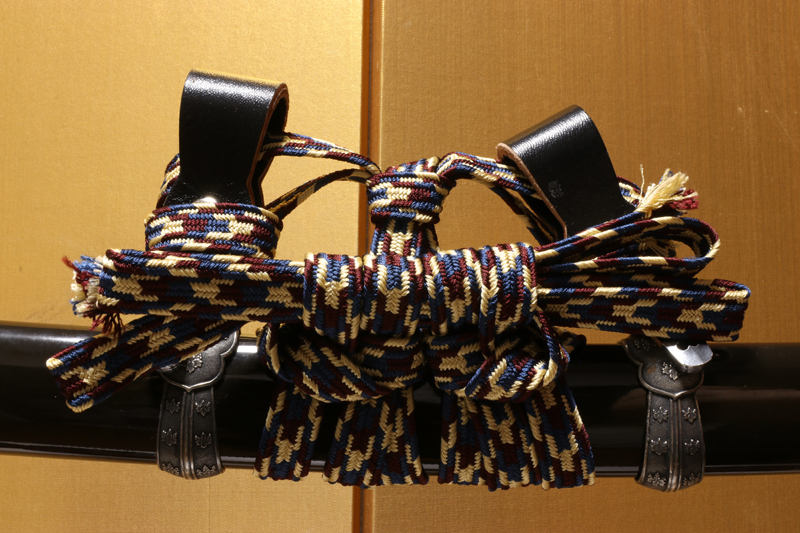
The accompanying tachi koshirae is also excellent, custom-made using a set of solid silver tachi fittings, showing a high-class appearance. Also, the condition of the koshirae is generally good, and it is a superior item that further brings out the blade.
In this way, examples where a long blade is equipped with the original tachi koshirae for this work are few, and it is a truly precious masterpiece in terms of both documentary value and artistic value.
"Koshirae"
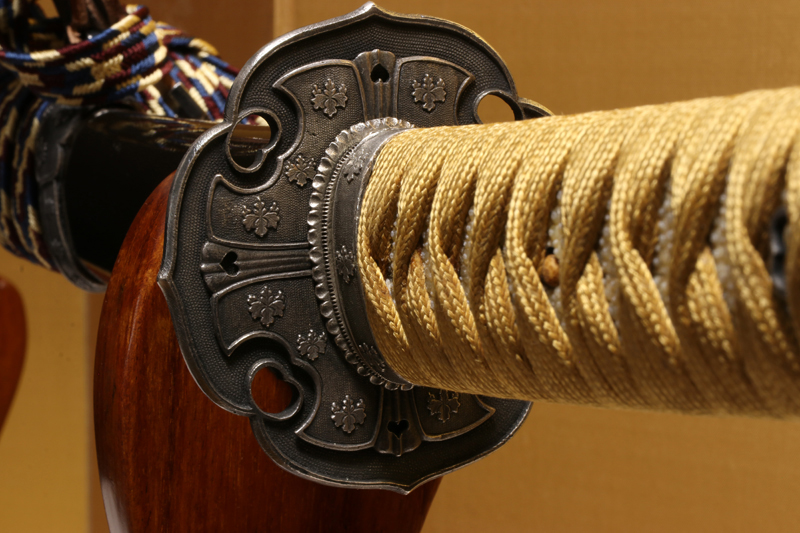
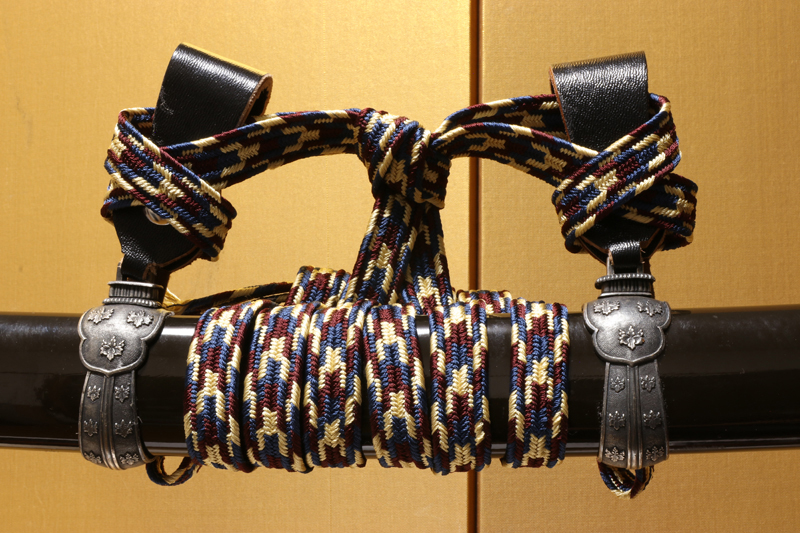
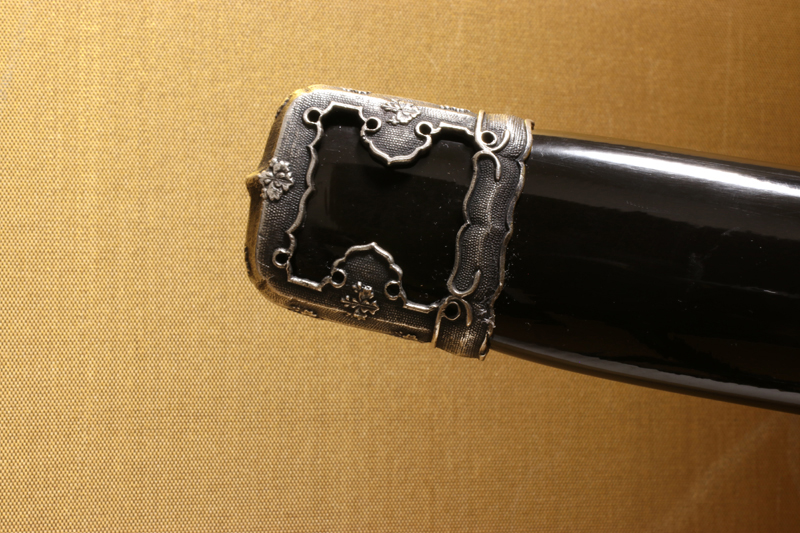
Tachi koshirae, fittings are a set of solid silver tachi fittings.
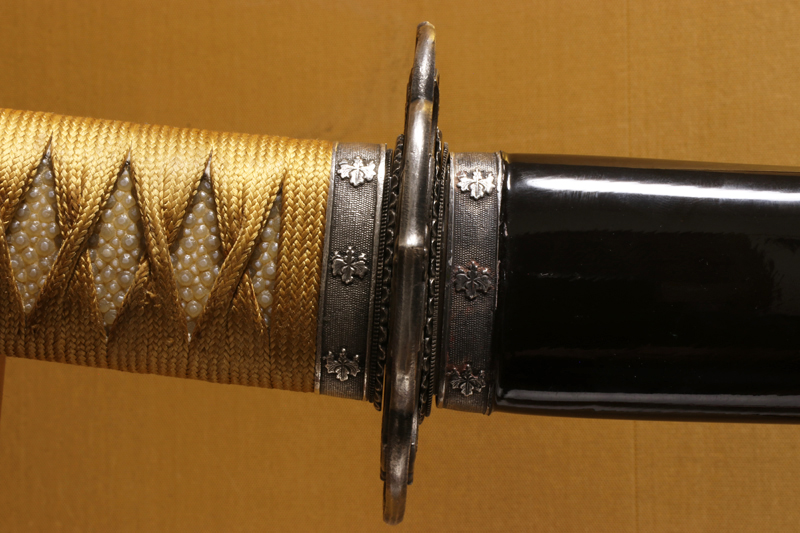
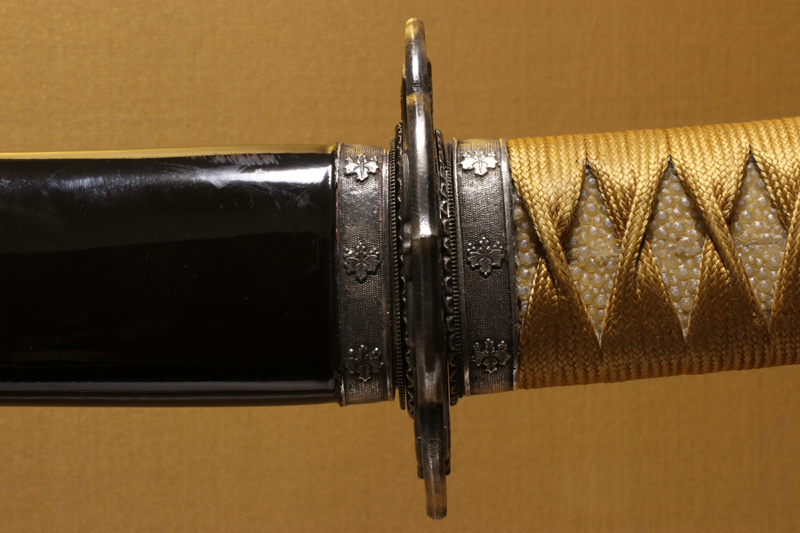
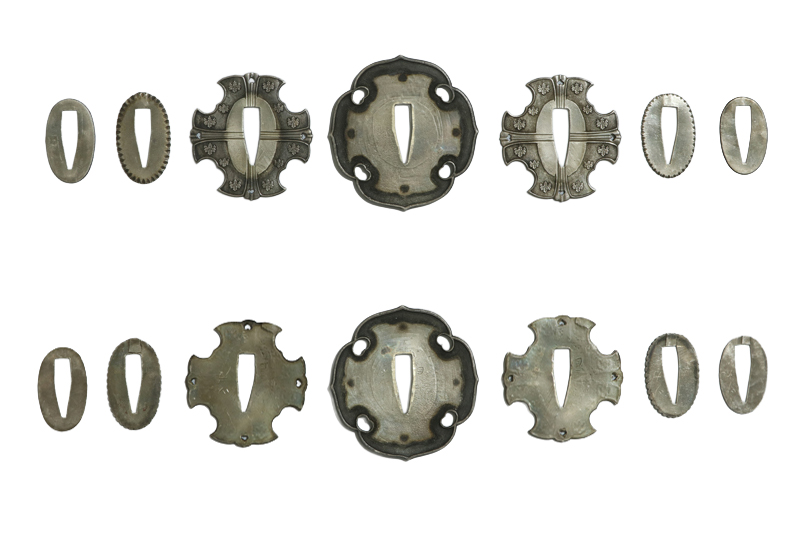
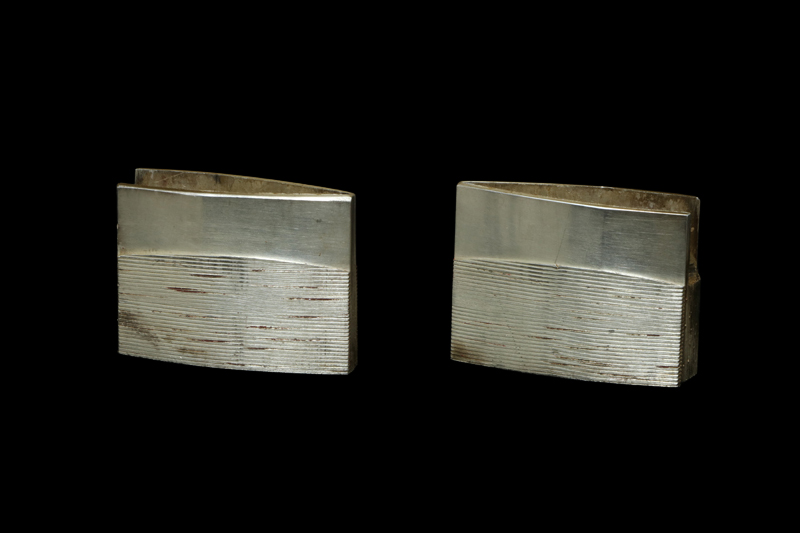
Habaki: Solid silver single (double style).
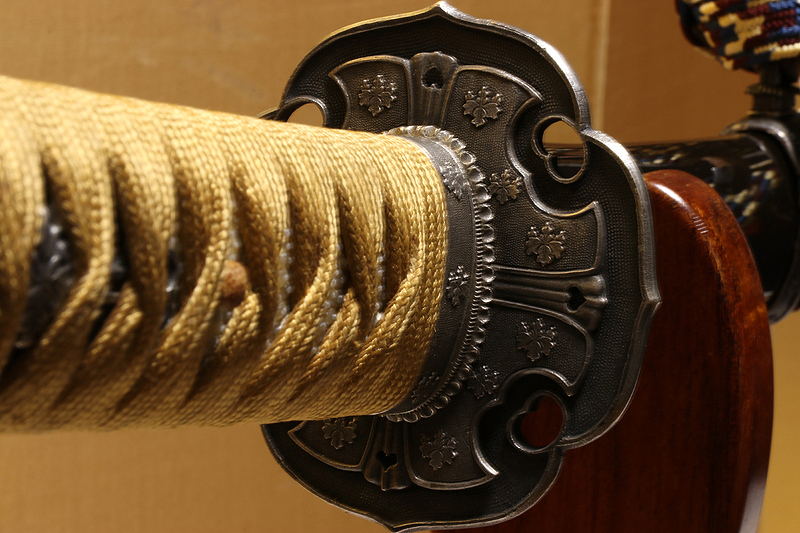
Tsuba: Solid silver tachi tsuba.
Tachi-seppa: Solid silver with kiri-mon.
Seppa: Solid silver seppa.
Tachi-kanagu: Solid silver with kiri-mon.
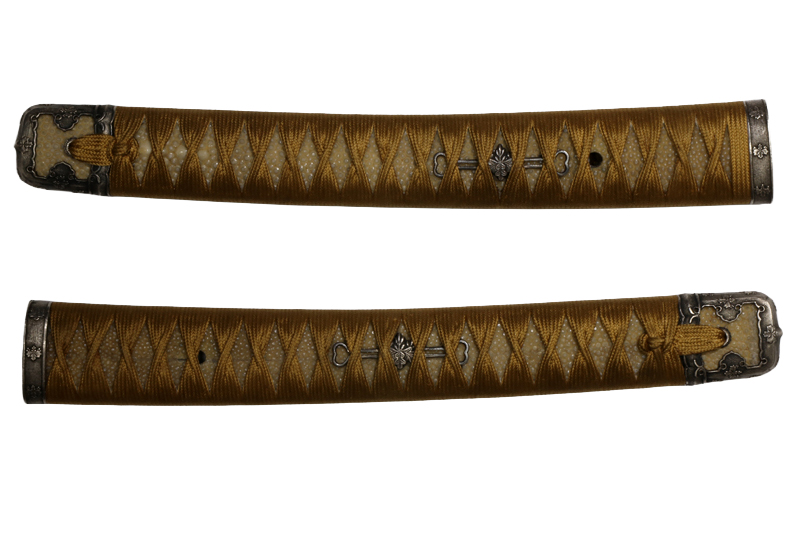
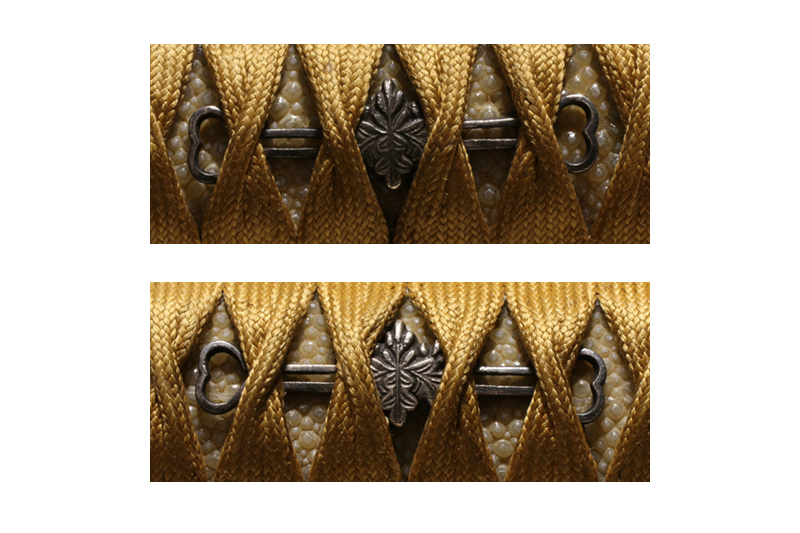
Menuki: Solid silver kiri-mon menuki.
Tsuka: Same has an oya-tsubu and is makisame. Tsuka-maki is pure silk golden-brown morotsumi-maki.
Saya: Dark brown gloss.
"condition of blade"
Polish: Old polish, but generally good.
Flaws: There are no flaws that would become a defect.
Machine translation from the shop's Japanese · may contain errors ·
Modern sword Hizen kuni ju Kazuyoshi saku with Tachi-Koshirae.
This is a work by Nakao Kazuyoshi, a leading contemporary swordsmith representing Saga Prefecture.
This piece is a specially commissioned long tachi, an outstanding example featuring finely forged jihada and a splendid gunome hamon.
The accompanying tachi koshirae was mounted using a complete set of solid silver tachi fittings and is the original mounting made for this sword.
Examples of this kind—combining a long blade with its original tachi koshirae—are rarely encountered, making this an exceptionally precious and valuable piece.
This is a work by Nakao Kazuyoshi, a leading contemporary swordsmith representing Saga Prefecture.
This piece is a specially commissioned long tachi, an outstanding example featuring finely forged jihada and a splendid gunome hamon.
The accompanying tachi koshirae was mounted using a complete set of solid silver tachi fittings and is the original mounting made for this sword.
Examples of this kind—combining a long blade with its original tachi koshirae—are rarely encountered, making this an exceptionally precious and valuable piece.
"sword figure"
Shinogi-zukuri, iori-mune, wide mihaba and heavy, slight koshi-zori, chu-kissaki. Nakago is ubu, yasurime are kiri, nakago-jiri is kurijiri.
"carving"
As for horimono, on the sashi-omote there is a bo-hi with ryochiri that becomes kaki-nagashi below the habaki.
"jigane"
Jigane is flowing itame-hada, a refined forging with a masame feel, with ji-nie appearing thickly in mijin.
"hamon"
Hamon is gunome with a bright and clear nioiguchi, ashi enters well, sunagashi is present, and kinsuji enters within the blade. Boshi is midare-komi returning in ko-maru.
"detailed"
Hizen kuni ju Kazuyoshi (real name Nakao Kazuyoshi) is a swordsmith residing in Takeo City, Saga Prefecture. He studied under his father, the swordsmith Nakao Tadatsugu who was also a student of Horii Toshihide, and accumulated much study.
Kazuyoshi is skilled at utsushi of Ichimonji, Hizen kuni Tadayoshi, Minamoto Kiyomaro and others, and is known for never performing mass-production. For that reason, the number of swords made is extremely small, and his works are all rare and receive high evaluations.
In the Shinsakuto-ten, he has two Excellence Awards, two Encouragement Awards, four Effort Awards, and many other prize records, and is counted as one of the master smiths representing contemporary swordsmiths.
This work is a tachi produced by special order, a grand blade boasting a long nagasa of 85.8 cm with a splendid gunome hamon. Although the blade is in old polish, it is maintained in generally good condition, and is a work well worth seeing that combines power and dignity.
The accompanying tachi koshirae is also excellent, custom-made using a set of solid silver tachi fittings, showing a high-class appearance. Also, the condition of the koshirae is generally good, and it is a superior item that further brings out the blade.
In this way, examples where a long blade is equipped with the original tachi koshirae for this work are few, and it is a truly precious masterpiece in terms of both documentary value and artistic value.
"Koshirae"
Tachi koshirae, fittings are a set of solid silver tachi fittings.
Habaki: Solid silver single (double style).
Tsuba: Solid silver tachi tsuba.
Tachi-seppa: Solid silver with kiri-mon.
Seppa: Solid silver seppa.
Tachi-kanagu: Solid silver with kiri-mon.
Menuki: Solid silver kiri-mon menuki.
Tsuka: Same has an oya-tsubu and is makisame. Tsuka-maki is pure silk golden-brown morotsumi-maki.
Saya: Dark brown gloss.
"condition of blade"
Polish: Old polish, but generally good.
Flaws: There are no flaws that would become a defect.
The twentieth century nearly killed the craft twice: wartime distortion, then the occupation ban. The NBTHK’s founding in 1948 and licensed forging from 1953 rebuilt the sword as an art, crowned by Living National Treasures and the mukansa rank.
Within 3 days of the item's arrival, we offer a refund or an exchange. Return shipping and the bank transfer fee for the refund are at the customer's expense.

 NihontoWatch