Modern sword Hizen kuni ju Kazuyoshi kore tsukuru.
This is a work by Nakao Kazuyoshi, a prominent modern swordsmith from Saga Prefecture.
It is a masterpiece modeled after Doi Shinyo, a renowned swordsmith of the Hizen tradition from the Edo period.
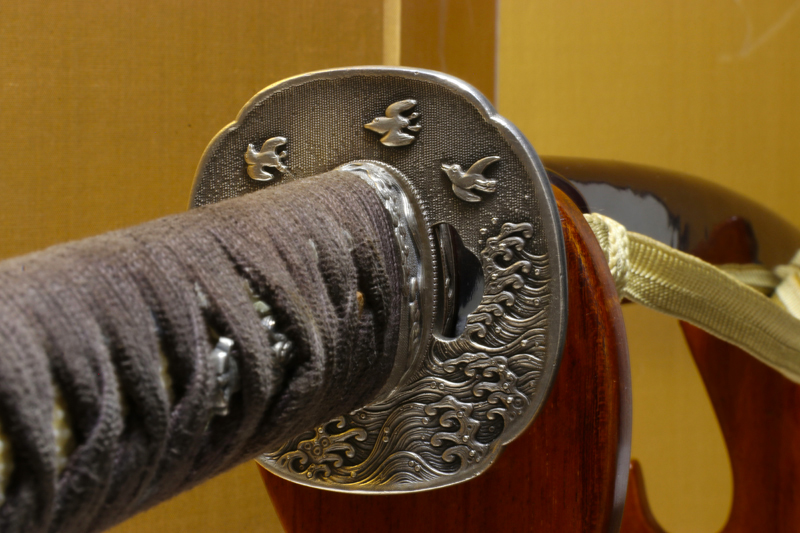
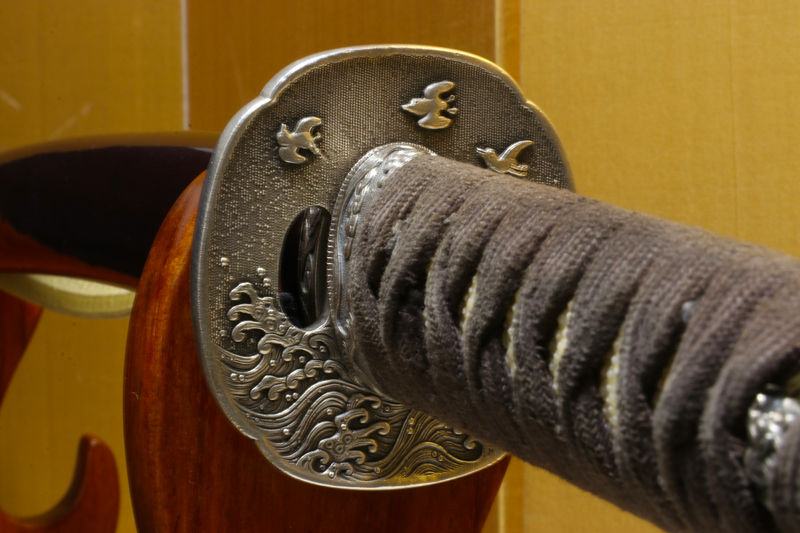
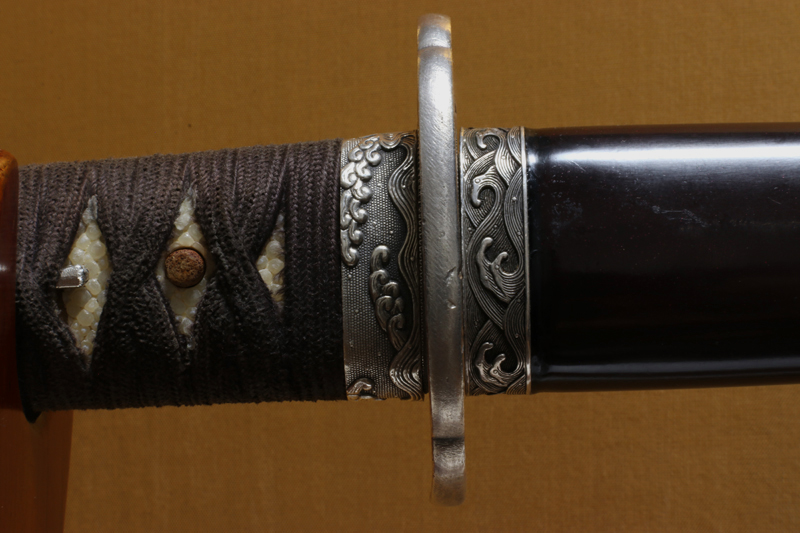
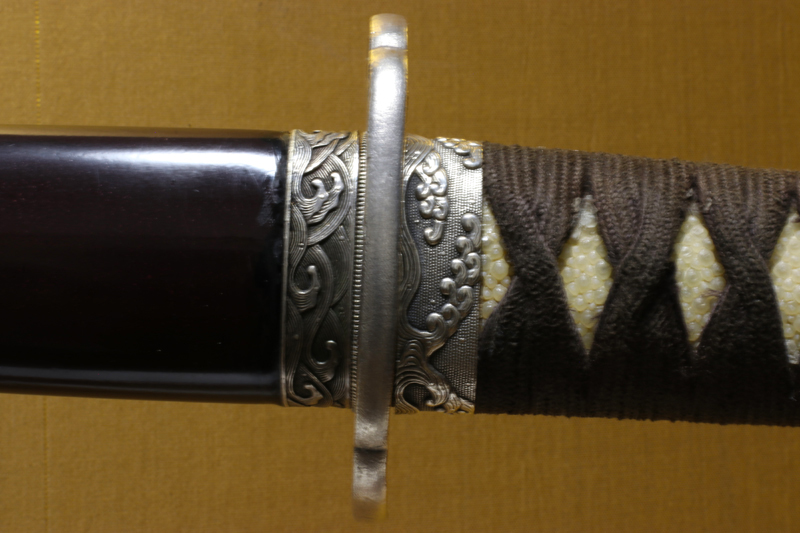
All the fittings, including the tsuba, are made of solid silver.
Sword figure
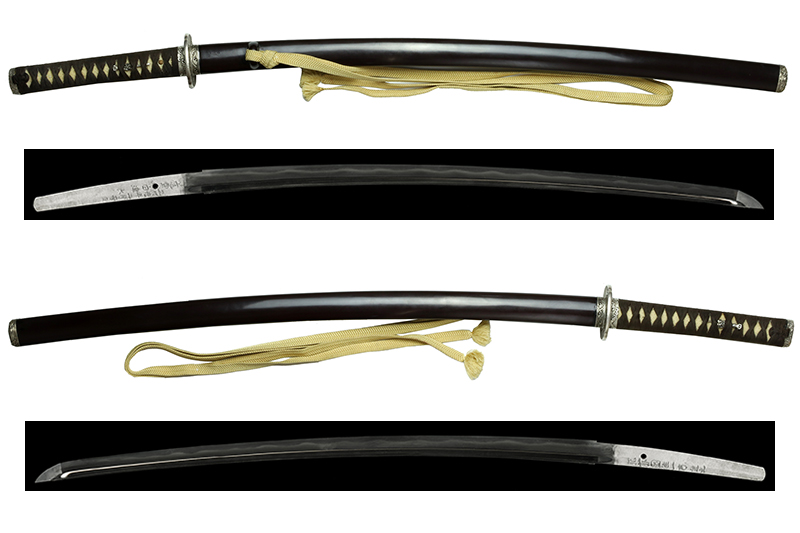
Shinogi-zukuri, iori-mune, mihaba and kasane are standard, torii-zori, with an extended chu-kissaki. The nakago is ubu with kiri yasurime, and the nakago-jiri is kurijiri.
Carving
A bo-hi with kata-chiri is kakinagashi below the habaki.
Jigane
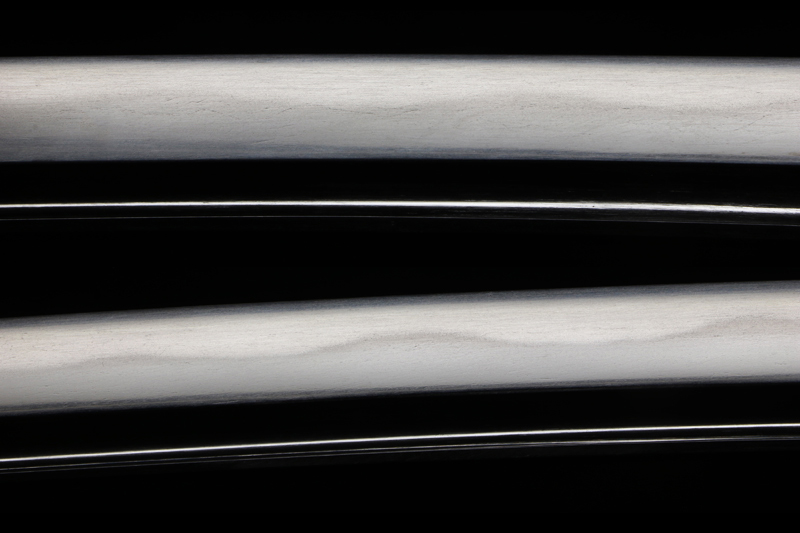
The jigane is itame-hada that flows, with a refined forging that leans towards masame, and ji-nie is thick and fine.
Hamon
The hamon is notare, with deep nioi, and the ha-buchi is covered in fine nie. The boshi turns back in midare-komi to a small maru.
Detailed
Hizen kuni ju Kazuyoshi, whose real name is Nakao Kazuyoshi, is a swordsmith residing in Takeo City, Saga Prefecture. His master was his father, the swordsmith Tadatsugu, who was a disciple of Horii Toshihide. Swordsmith Kazuyoshi is known for his utsushi of Ichimonji, Hizen kuni Tadayoshi, Minamoto Kiyomaro, and others; he does not perform any kazuuchi, so his works are few.
Furthermore, he is a talented swordsmith who has received awards at the Shinsakuto-ten, including the Excellence Award, the Encouragement Award, and the Effort Award.
This work is a sword modeled after the famous Edo period Hizen swordsmith, Doi Shinyo. The deep nioi and the bright, clear hamon are superb.
Koshirae
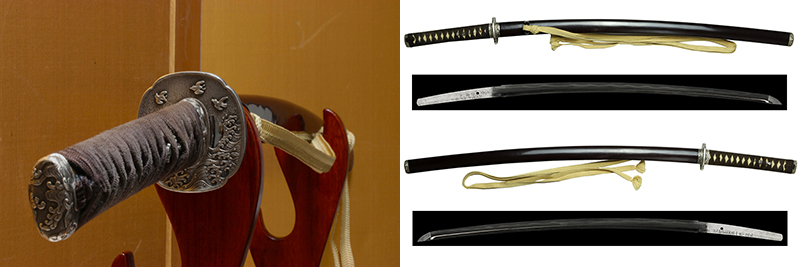
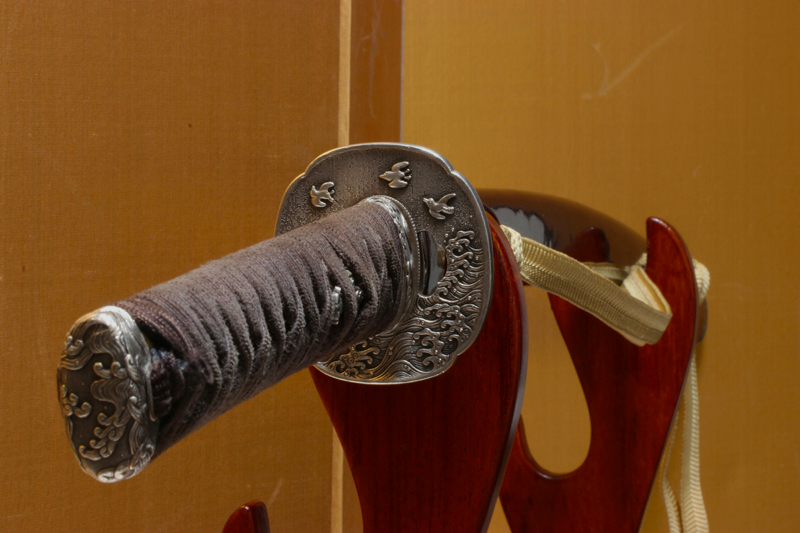
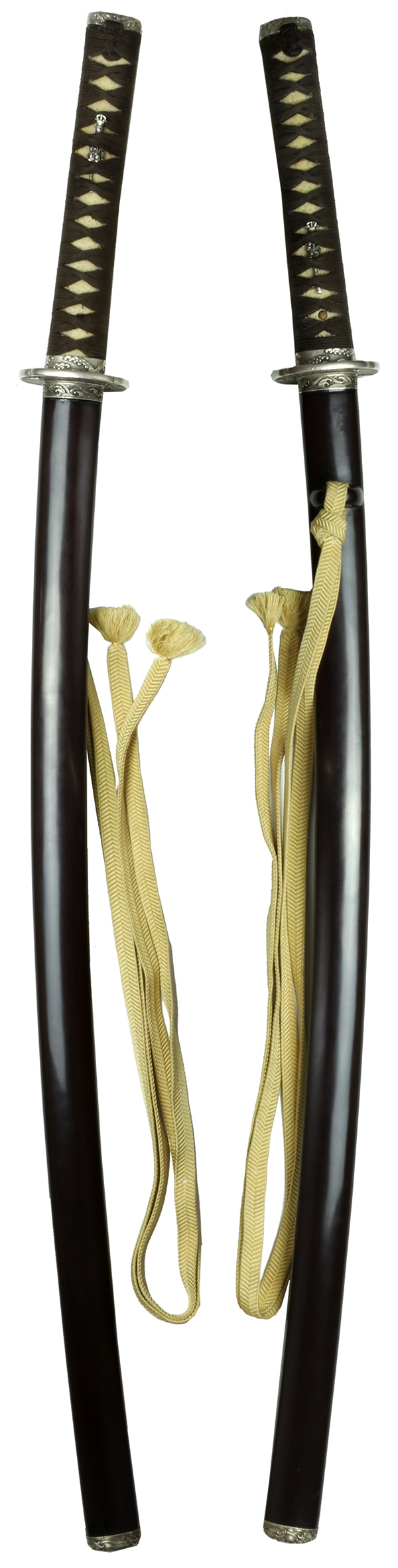
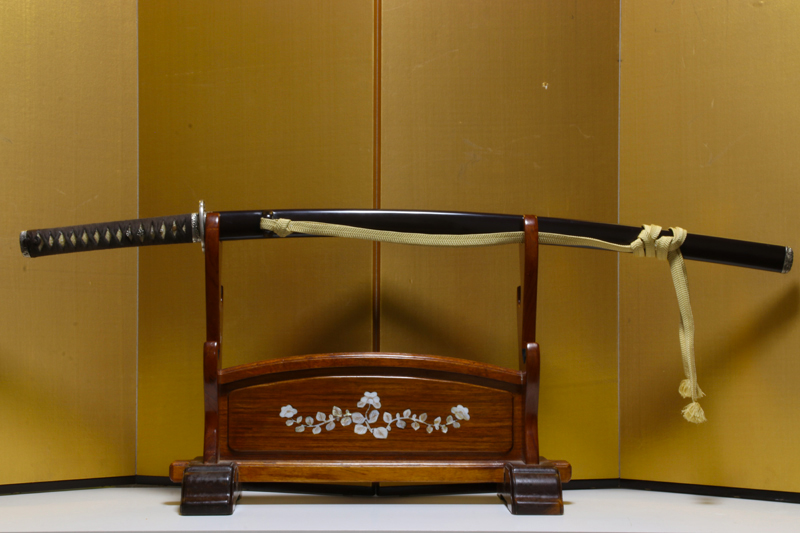
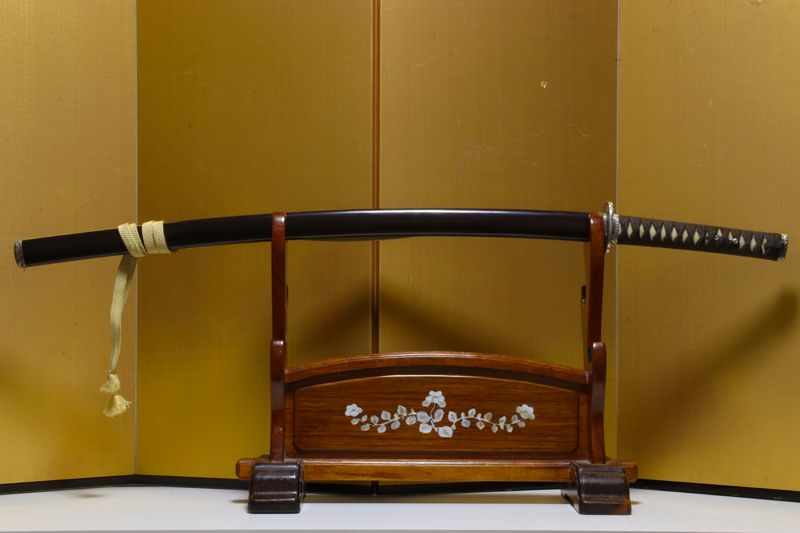
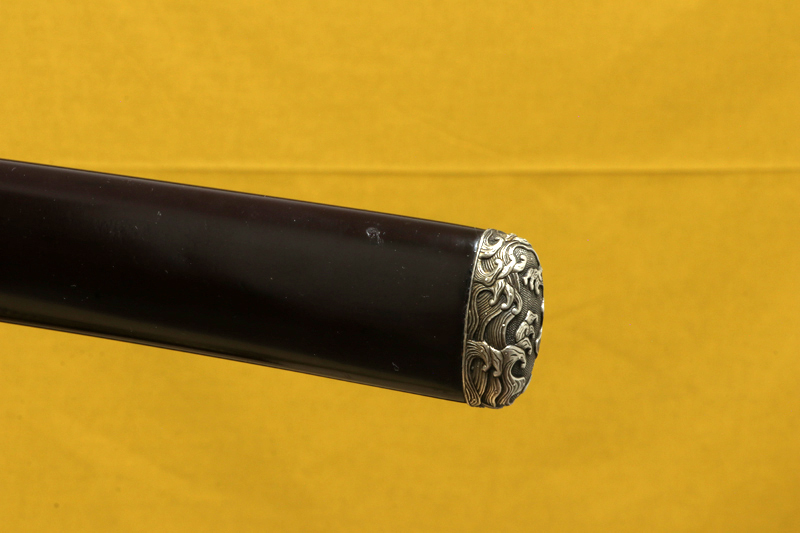
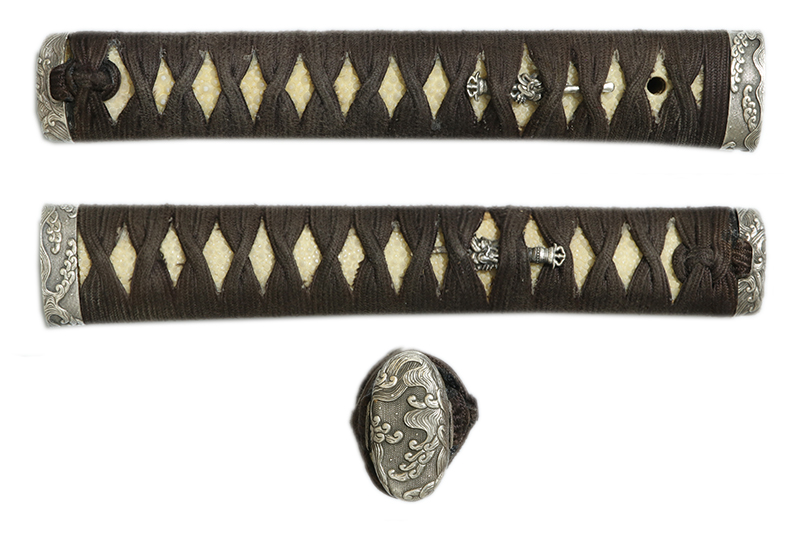
All the fittings of the koshirae are solid silver; naturally, the tsuba is also solid silver, and the design is a matching set with the exception of the menuki.
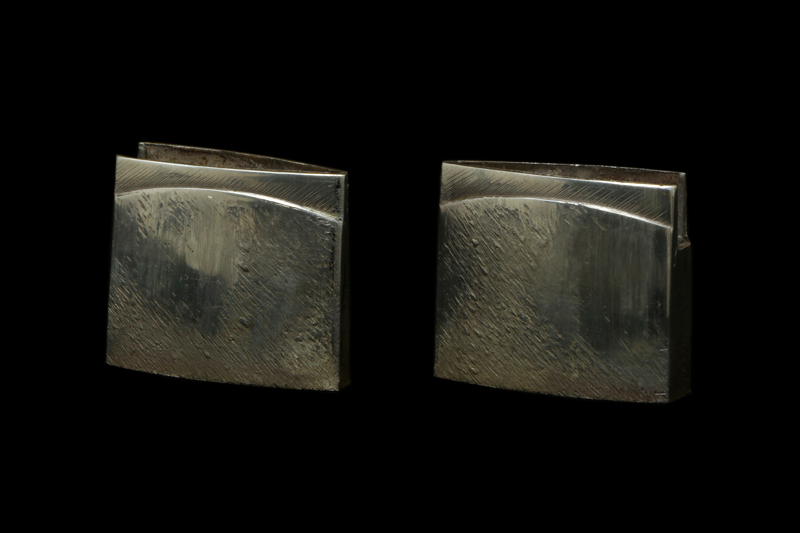
Habaki: Solid silver single-piece Osaka habaki.
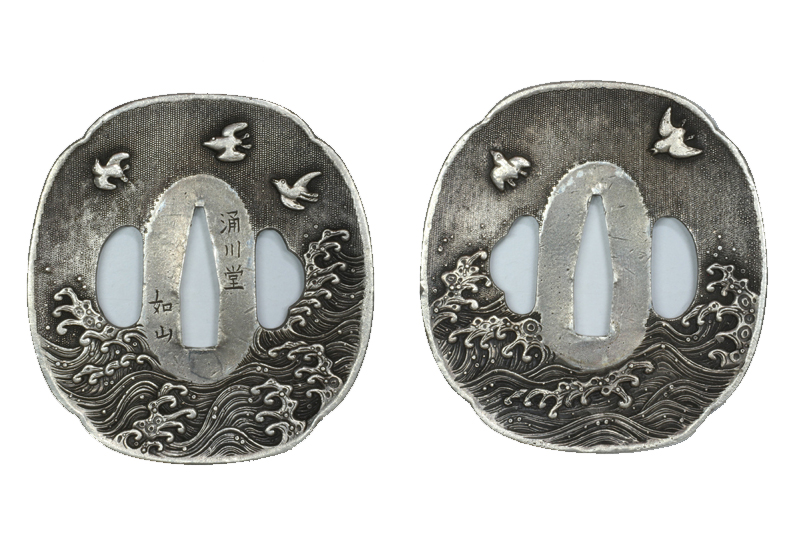
Tsuba: Solid silver with a design of plovers over waves.
Fuchikashira: Solid silver with a design of high waves.
Koikuchi-kanagu: Solid silver with a design of high waves.
Kojiri: Solid silver with a design of high waves.
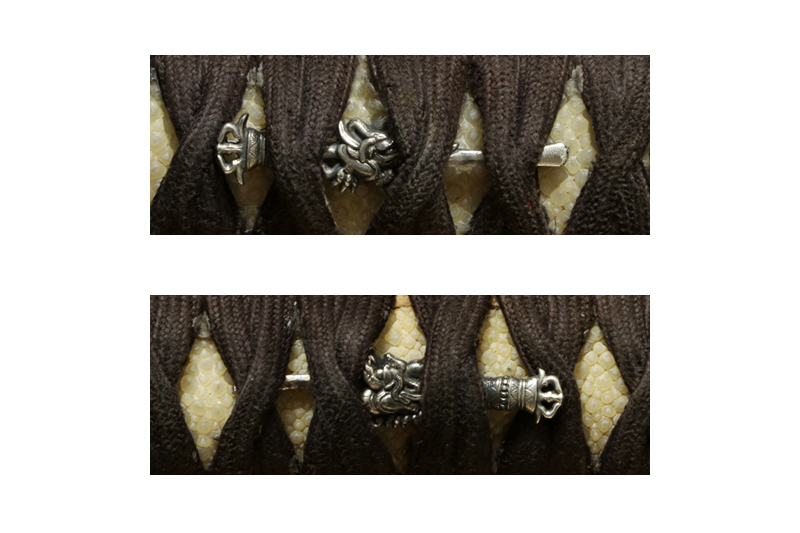
Menuki: Solid silver with a design of Kurikara (ken-maki-ryu).
Tsuka: The same has large oyatsubu, and the tsuka-ito is light brown pure silk wrapped in morotsumami-maki.
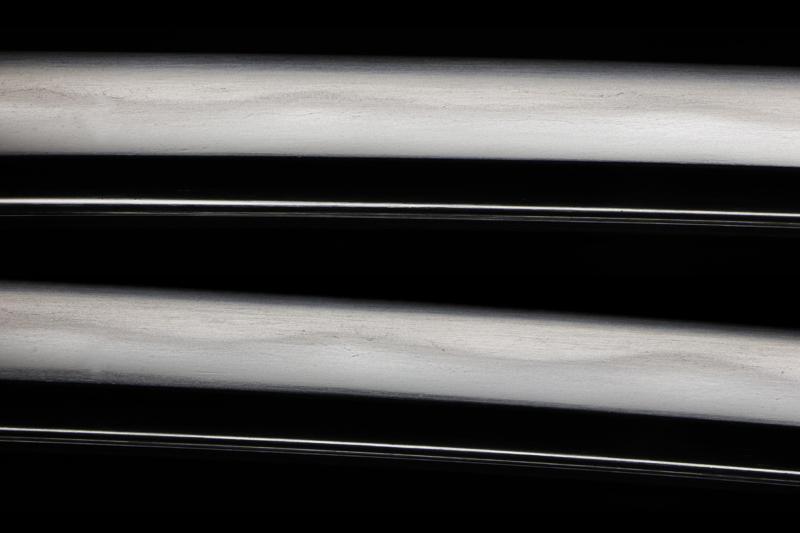
Saya: Tame-iro.
Condition of blade
Polish: It is an old polish, but generally in good condition.
Flaws: There are no flaws that would constitute a defect.
Details from the shop
Registration
平成1年3月15日 佐賀県第27290号
Category
Katana
Nagasa
71.25cm
Sori
1.9cm
Mekugi-ana
1 piece
Mei
(表)平成元年二月吉日 慶需白津氏
(裏)肥前國住一吉造之
Motohaba
31.2mm
Sakihaba
21.2mm
Moto-kasane
7.0mm
Saki-kasane
5.0mm
Weight
刀身700g 抜き身1,050g
Blade Just 700g With out saya 1,050g.
Machine translation from the shop's Japanese · may contain errors ·
Modern sword Hizen kuni ju Kazuyoshi kore tsukuru.
This is a work by Nakao Kazuyoshi, a prominent modern swordsmith from Saga Prefecture.
It is a masterpiece modeled after Doi Shinyo, a renowned swordsmith of the Hizen tradition from the Edo period.
All the fittings, including the tsuba, are made of solid silver.
Sword figure
Shinogi-zukuri, iori-mune, mihaba and kasane are standard, torii-zori, with an extended chu-kissaki. The nakago is ubu with kiri yasurime, and the nakago-jiri is kurijiri.
Carving
A bo-hi with kata-chiri is kakinagashi below the habaki.
Jigane
The jigane is itame-hada that flows, with a refined forging that leans towards masame, and ji-nie is thick and fine.
Hamon
The hamon is notare, with deep nioi, and the ha-buchi is covered in fine nie. The boshi turns back in midare-komi to a small maru.
Detailed
Hizen kuni ju Kazuyoshi, whose real name is Nakao Kazuyoshi, is a swordsmith residing in Takeo City, Saga Prefecture. His master was his father, the swordsmith Tadatsugu, who was a disciple of Horii Toshihide. Swordsmith Kazuyoshi is known for his utsushi of Ichimonji, Hizen kuni Tadayoshi, Minamoto Kiyomaro, and others; he does not perform any kazuuchi, so his works are few.
Furthermore, he is a talented swordsmith who has received awards at the Shinsakuto-ten, including the Excellence Award, the Encouragement Award, and the Effort Award.
This work is a sword modeled after the famous Edo period Hizen swordsmith, Doi Shinyo. The deep nioi and the bright, clear hamon are superb.
Koshirae
All the fittings of the koshirae are solid silver; naturally, the tsuba is also solid silver, and the design is a matching set with the exception of the menuki.
Habaki: Solid silver single-piece Osaka habaki.
Tsuba: Solid silver with a design of plovers over waves.
Fuchikashira: Solid silver with a design of high waves.
Koikuchi-kanagu: Solid silver with a design of high waves.
Kojiri: Solid silver with a design of high waves.
Menuki: Solid silver with a design of Kurikara (ken-maki-ryu).
Tsuka: The same has large oyatsubu, and the tsuka-ito is light brown pure silk wrapped in morotsumami-maki.
Saya: Tame-iro.
Condition of blade
Polish: It is an old polish, but generally in good condition.
Flaws: There are no flaws that would constitute a defect.
The twentieth century nearly killed the craft twice: wartime distortion, then the occupation ban. The NBTHK’s founding in 1948 and licensed forging from 1953 rebuilt the sword as an art, crowned by Living National Treasures and the mukansa rank.
Within 3 days of the item's arrival, we offer a refund or an exchange. Return shipping and the bank transfer fee for the refund are at the customer's expense.


 NihontoWatch