A masterpiece by Kazuyoshi, a representative modern swordsmith from Saga Prefecture, who copied the work of the Shin-shinto master Minamoto Kiyomaro.
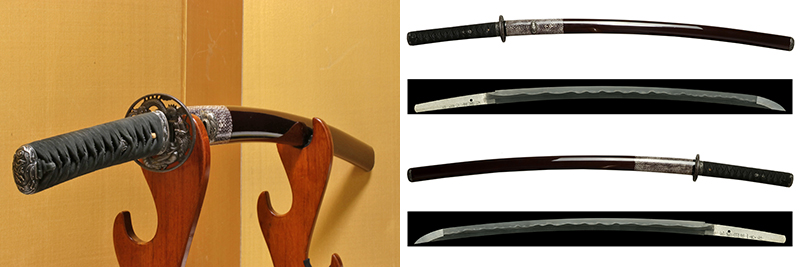
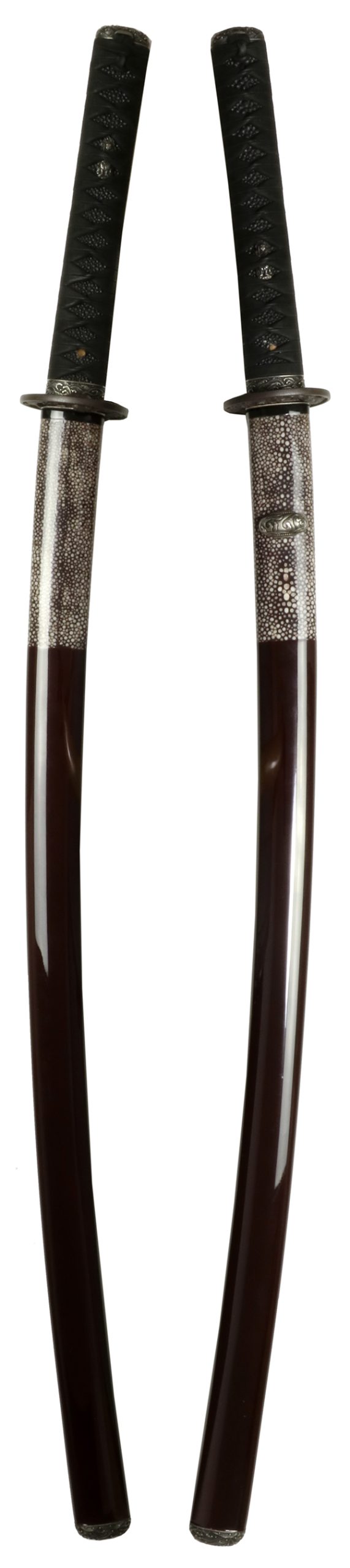
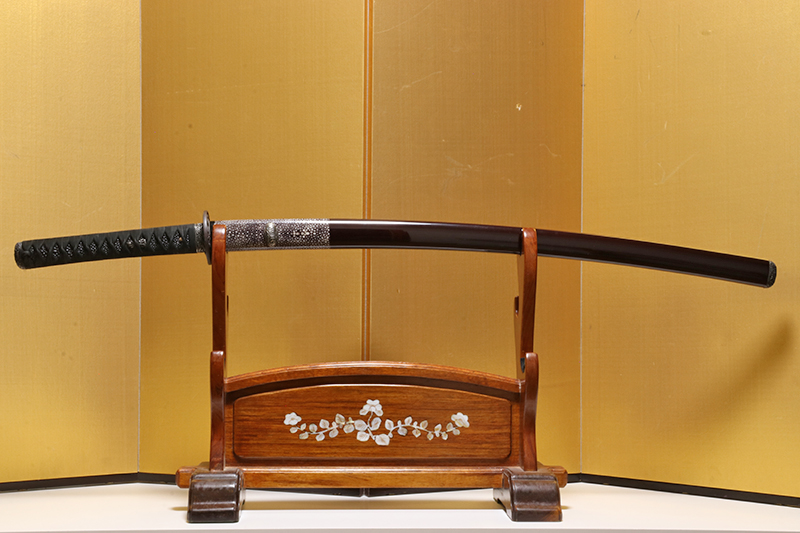
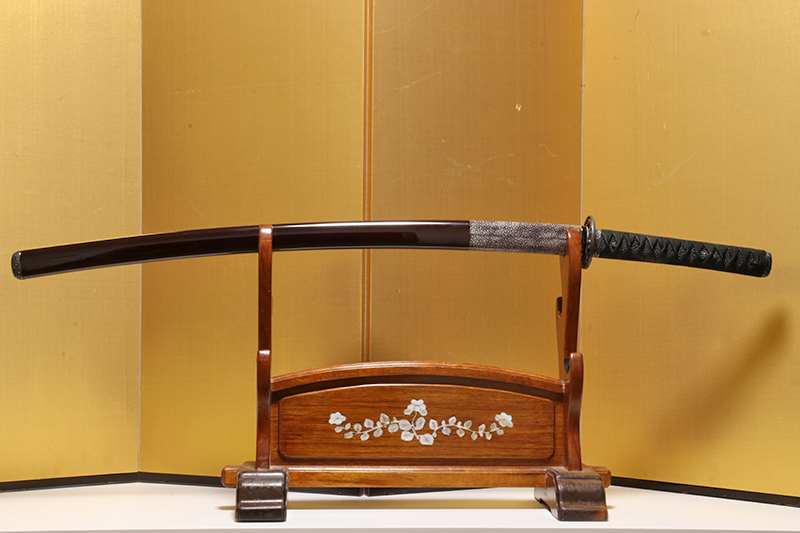
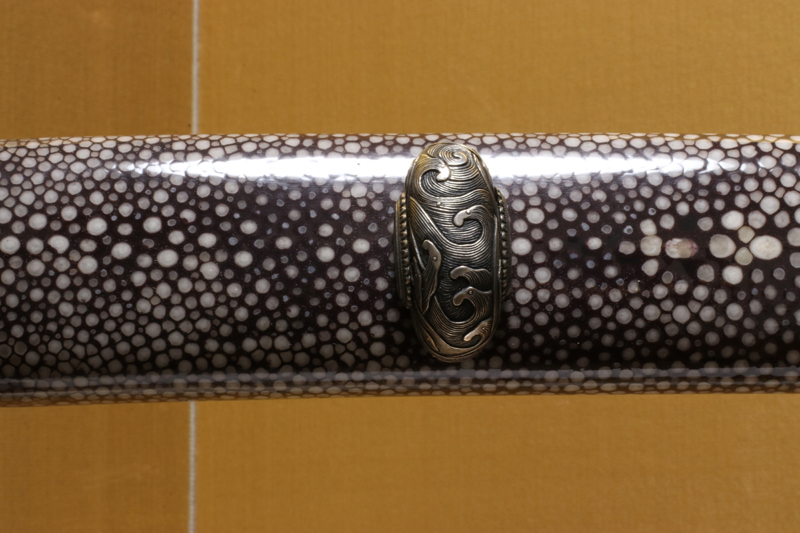
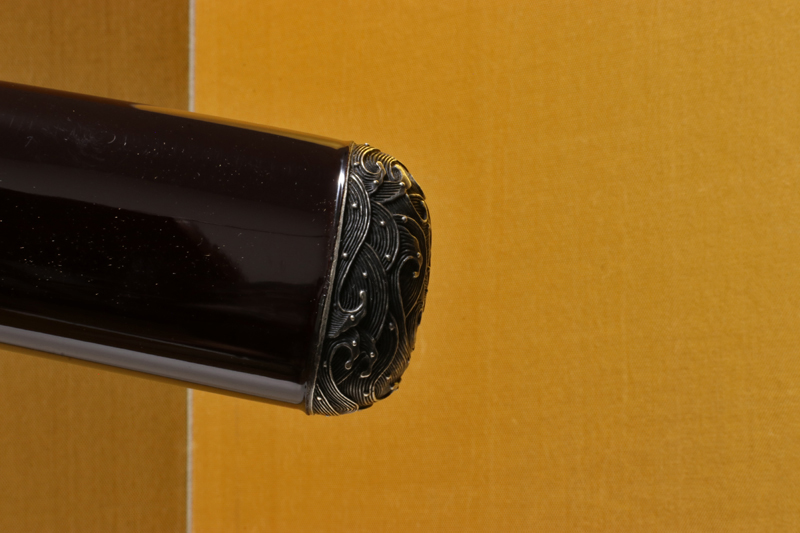
Not only does it come with a shirasaya, but the hansame-saya koshirae, which features a matching set of fittings with a wave design on silver, is also superb.
Modern sword Hizen kuni ju Kazuyoshi saku.
This sword is copy of Kiyomaro.
This Katana has the dynemic figure
「体配 style」
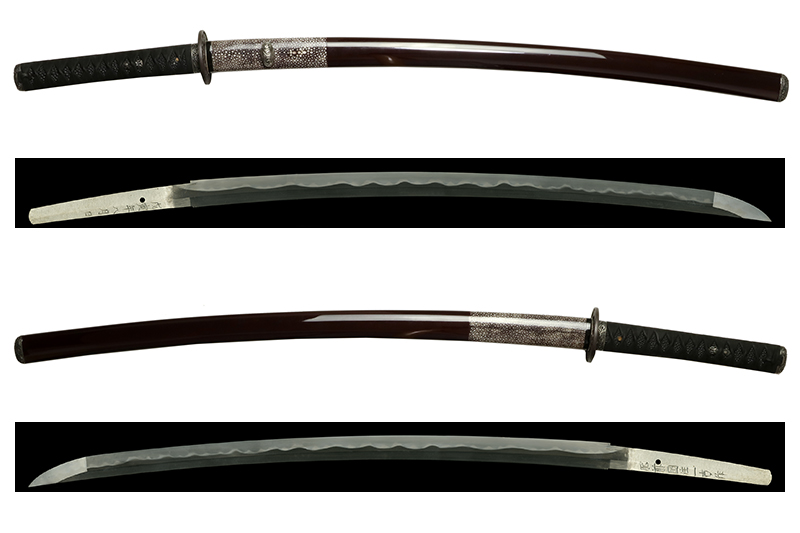
Shinogi-zukuri, iori-mune, wide mihaba, normal kasane, torii-zori, and o-kissaki. The nakago is ubu with kiri yasurime, and the nakago-jiri is kurijiri.
「地鉄 jigane」
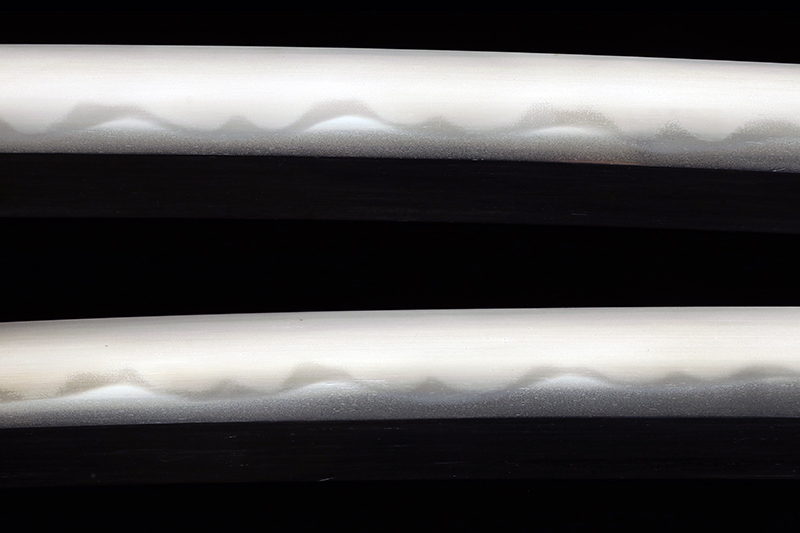
Itame-hada that flows, with a refined kitae that leans towards masame, and thick, fine ji-nie.
「刃紋 hamon」
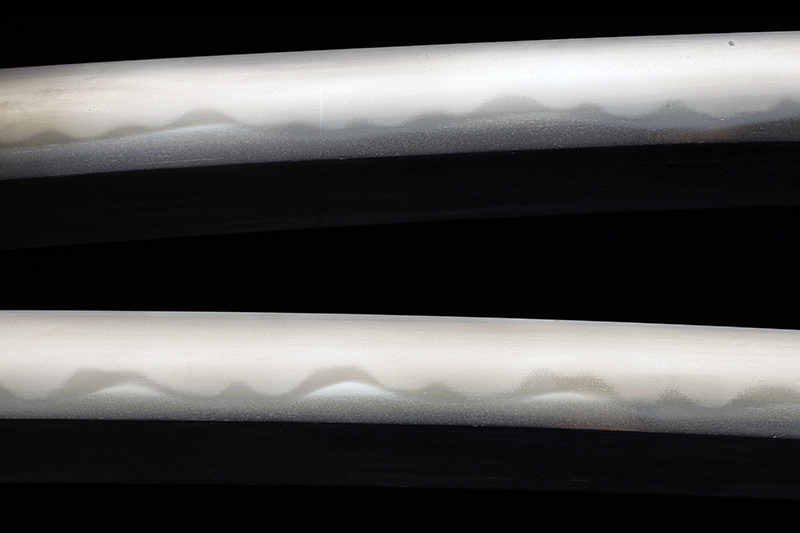
The hamon is gunome-choji with a bright and clear nioiguchi, good ashi, and kinsuji within the ha. The boshi is midare-komi and turns back in a komaru.
「特徴 detailed」
Hizen kuni ju Kazuyoshi, whose real name is Nakao Kazuyoshi, is a swordsmith residing in Takeo City, Saga Prefecture. His teacher was his father, the swordsmith Tadatsugu, who was a student of Horii Toshihide. Kazuyoshi is known for his copies of Ichimonji, Hizen kuni Tadayoshi, and Minamoto Kiyomaro, and he does not produce mass-produced swords, so his works are few.
He is also a master craftsman of the modern era who has won the Excellence Award twice, the Encouragement Award twice, the Effort Award four times, and numerous other prizes at the Shinsakuto Exhibition.
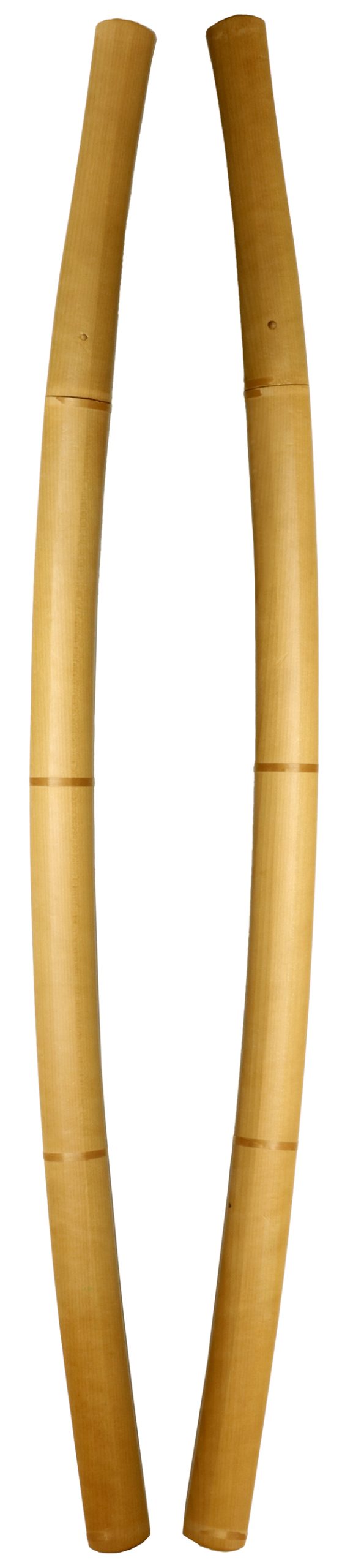
This work is a masterpiece by Kazuyoshi, copying the Shin-shinto master Minamoto Kiyomaro, and is a magnificent sword with a wide mihaba and o-kissaki. It is a pleasure that it comes with a koshirae in addition to the shirasaya.
「拵 Koshirae」
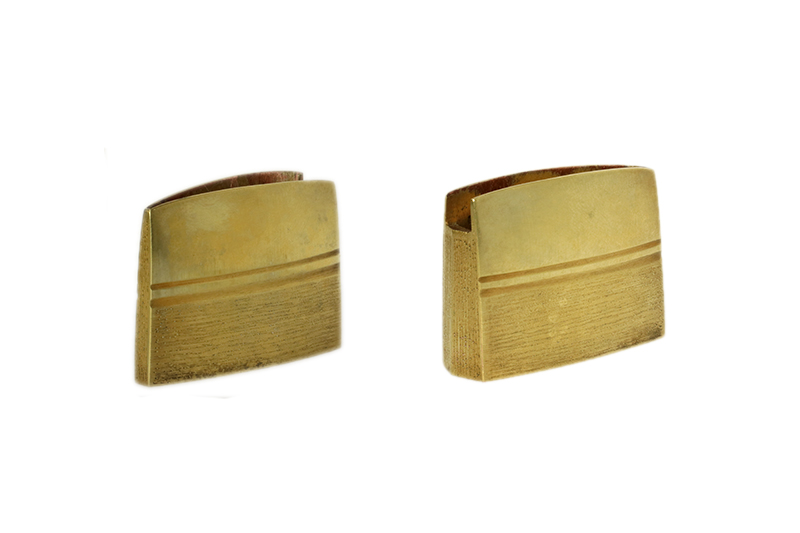
Habaki: Solid silver Shonai style with gold plating.
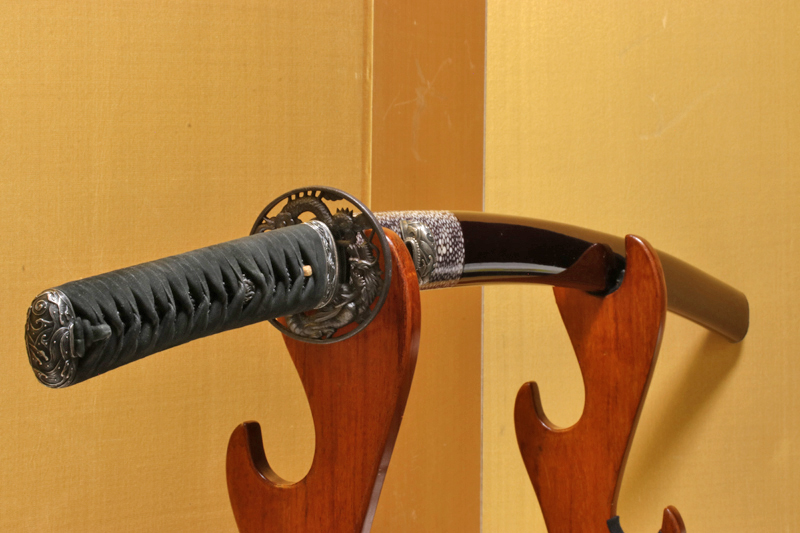
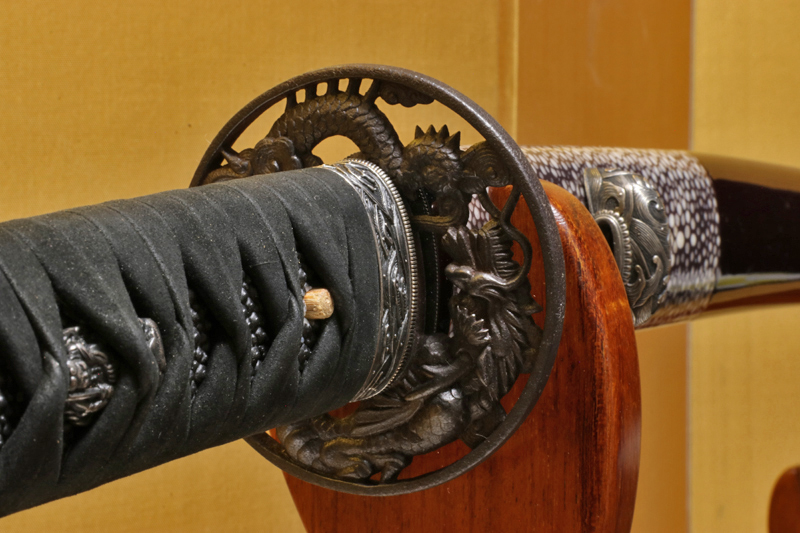
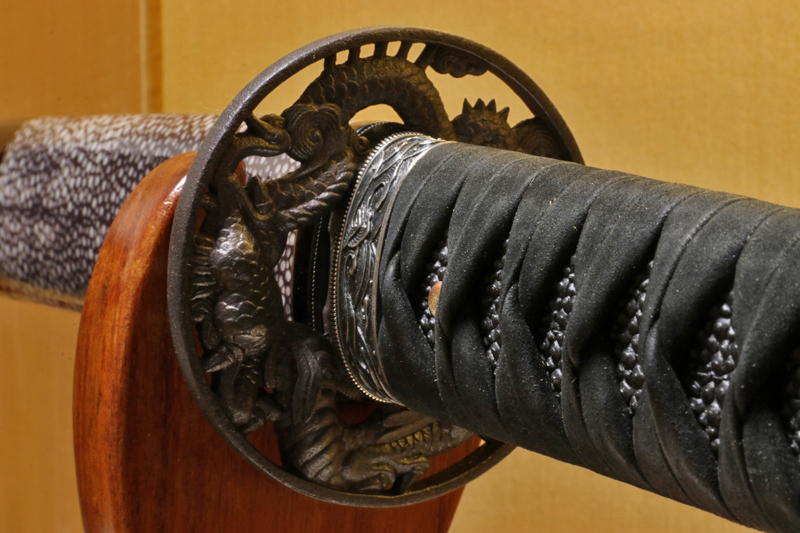
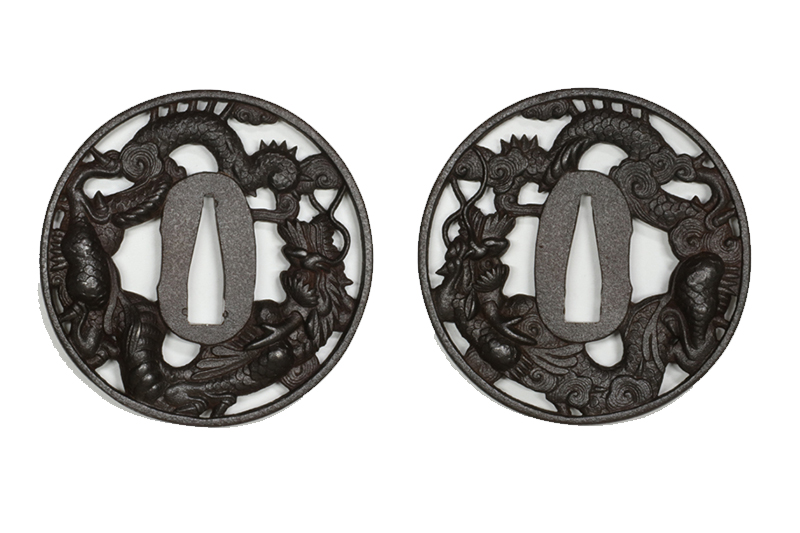
Tsuba: Iron base with a cloud and dragon design.
Fuchigashira: Silver base with a wave design.
Kojiri: Silver base with a wave design.
Kurikata: Silver base with a wave design.
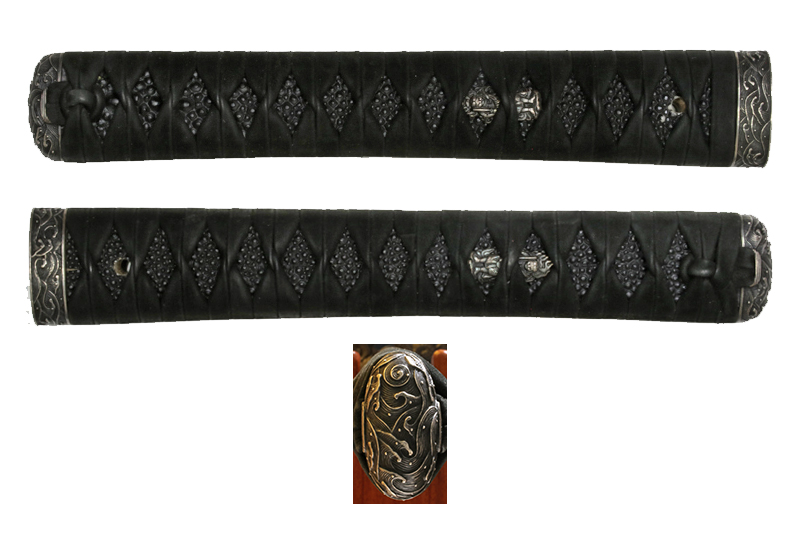
Menuki: Solid silver with a Fudo Myoo design.
Tsuka: The samegawa has large oyatsubu, and the tsukamaki is cow suede in moro-hineri-maki.
Saya: The koiguchi is wrapped in samegawa, and the rest is a glossy wine color. Shirasaya and tsunagi included.
「刀剣の状態 condition of blade」
Polish: Excellent.
Flaws: There are no flaws that would be considered defects.
Machine translation from the shop's Japanese · may contain errors ·
A masterpiece by Kazuyoshi, a representative modern swordsmith from Saga Prefecture, who copied the work of the Shin-shinto master Minamoto Kiyomaro.
Not only does it come with a shirasaya, but the hansame-saya koshirae, which features a matching set of fittings with a wave design on silver, is also superb.
Modern sword Hizen kuni ju Kazuyoshi saku.
This sword is copy of Kiyomaro.
This Katana has the dynemic figure
「体配 style」
Shinogi-zukuri, iori-mune, wide mihaba, normal kasane, torii-zori, and o-kissaki. The nakago is ubu with kiri yasurime, and the nakago-jiri is kurijiri.
「地鉄 jigane」
Itame-hada that flows, with a refined kitae that leans towards masame, and thick, fine ji-nie.
「刃紋 hamon」
The hamon is gunome-choji with a bright and clear nioiguchi, good ashi, and kinsuji within the ha. The boshi is midare-komi and turns back in a komaru.
「特徴 detailed」
Hizen kuni ju Kazuyoshi, whose real name is Nakao Kazuyoshi, is a swordsmith residing in Takeo City, Saga Prefecture. His teacher was his father, the swordsmith Tadatsugu, who was a student of Horii Toshihide. Kazuyoshi is known for his copies of Ichimonji, Hizen kuni Tadayoshi, and Minamoto Kiyomaro, and he does not produce mass-produced swords, so his works are few.
He is also a master craftsman of the modern era who has won the Excellence Award twice, the Encouragement Award twice, the Effort Award four times, and numerous other prizes at the Shinsakuto Exhibition.
This work is a masterpiece by Kazuyoshi, copying the Shin-shinto master Minamoto Kiyomaro, and is a magnificent sword with a wide mihaba and o-kissaki. It is a pleasure that it comes with a koshirae in addition to the shirasaya.
「拵 Koshirae」
Habaki: Solid silver Shonai style with gold plating.
Tsuba: Iron base with a cloud and dragon design.
Fuchigashira: Silver base with a wave design.
Kojiri: Silver base with a wave design.
Kurikata: Silver base with a wave design.
Menuki: Solid silver with a Fudo Myoo design.
Tsuka: The samegawa has large oyatsubu, and the tsukamaki is cow suede in moro-hineri-maki.
Saya: The koiguchi is wrapped in samegawa, and the rest is a glossy wine color. Shirasaya and tsunagi included.
「刀剣の状態 condition of blade」
Polish: Excellent.
Flaws: There are no flaws that would be considered defects.
The twentieth century nearly killed the craft twice: wartime distortion, then the occupation ban. The NBTHK’s founding in 1948 and licensed forging from 1953 rebuilt the sword as an art, crowned by Living National Treasures and the mukansa rank.
Within 3 days of the item's arrival, we offer a refund or an exchange. Return shipping and the bank transfer fee for the refund are at the customer's expense.


 NihontoWatch