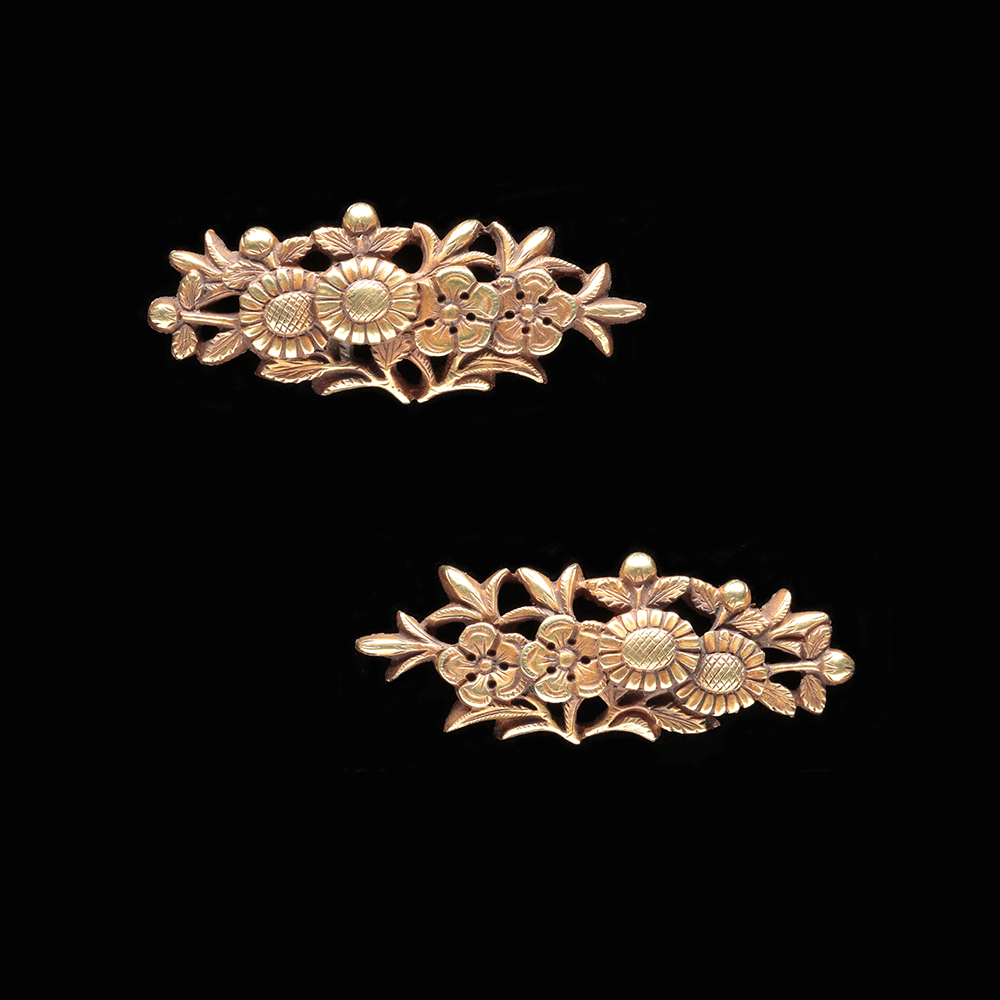
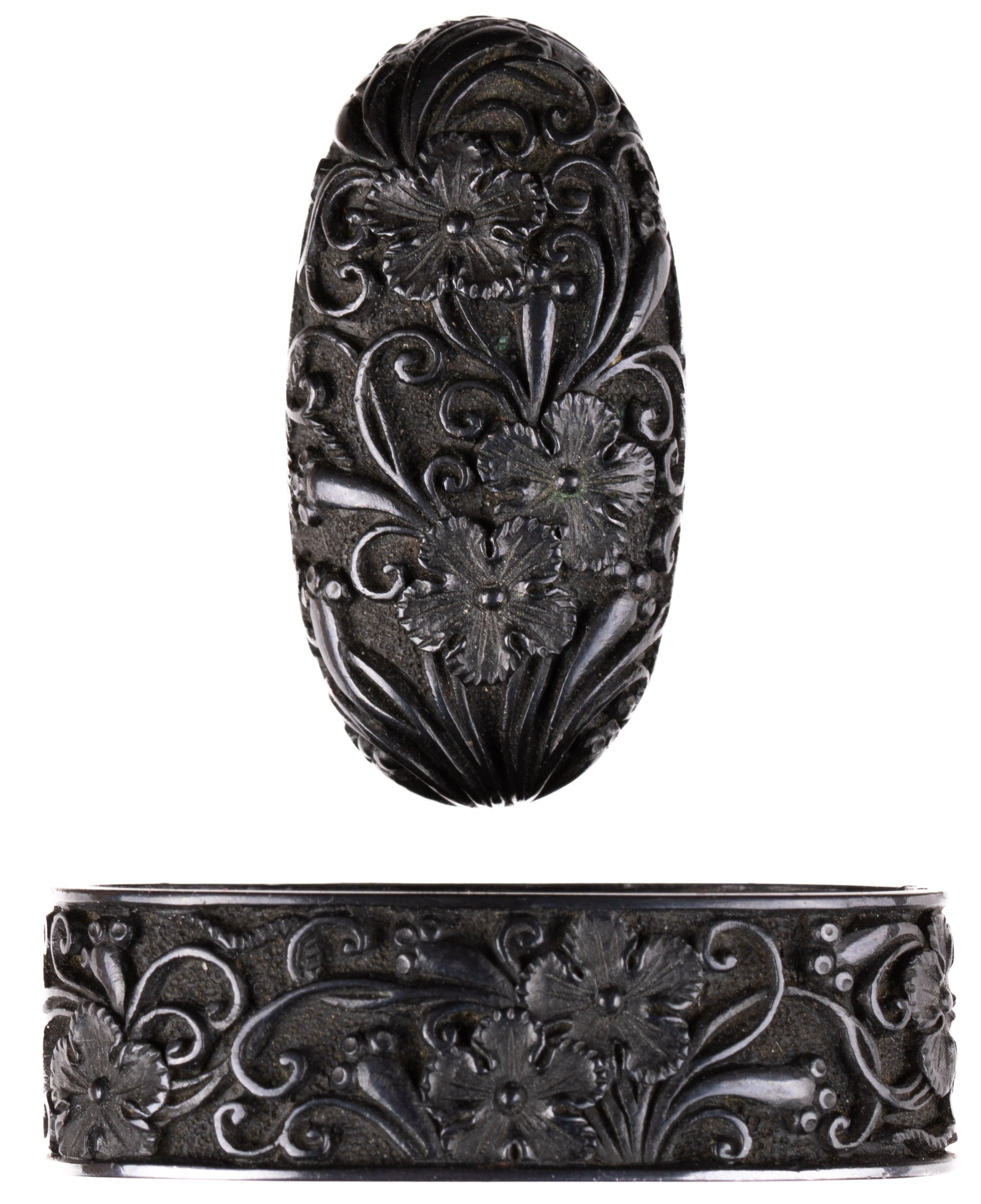
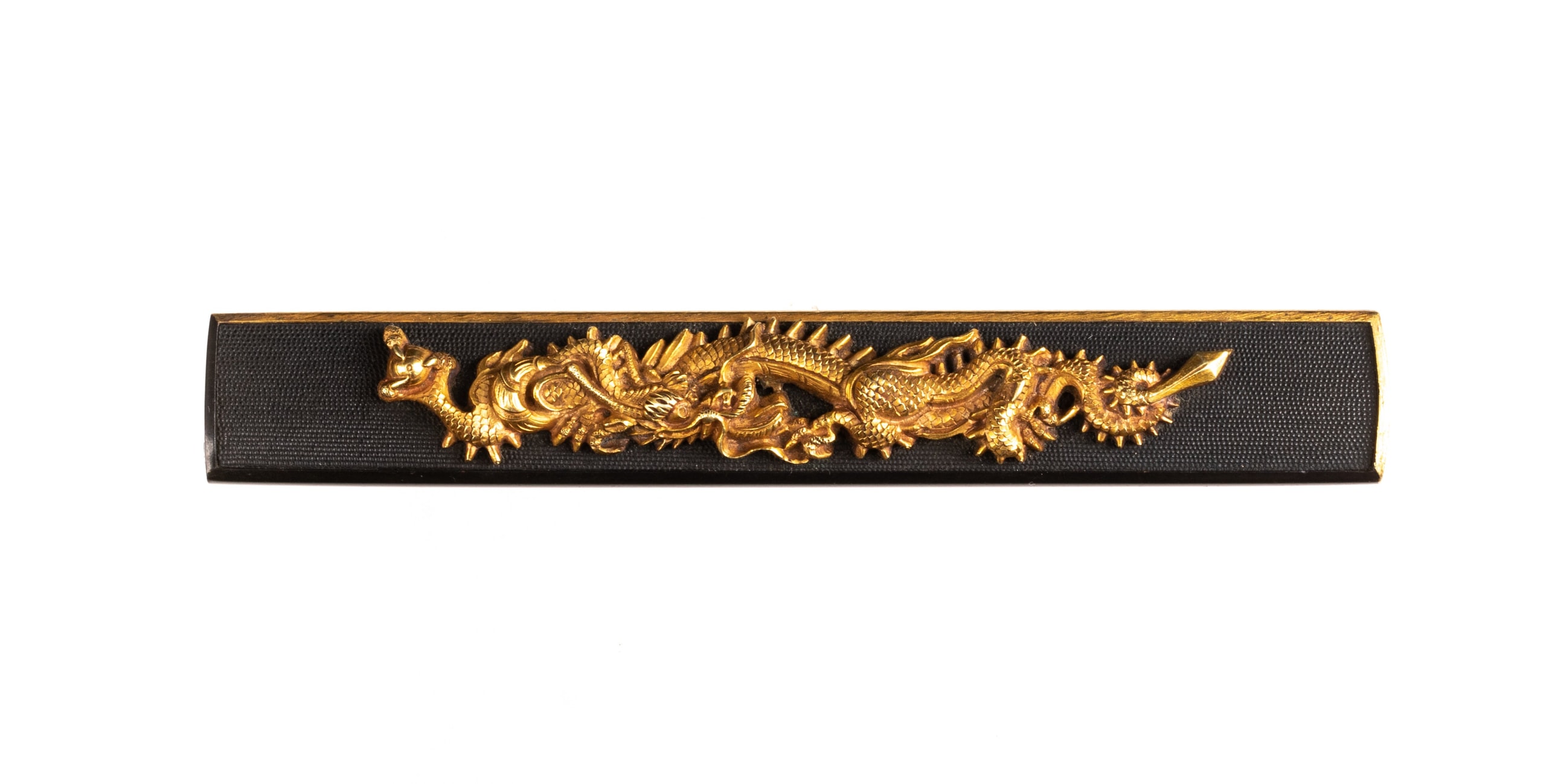
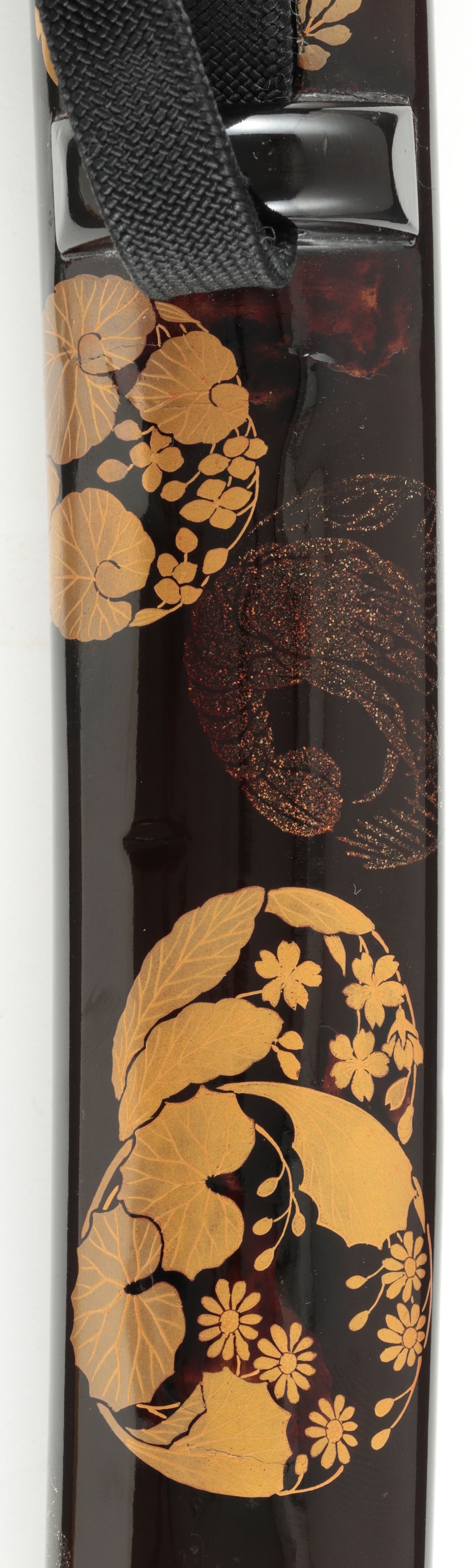
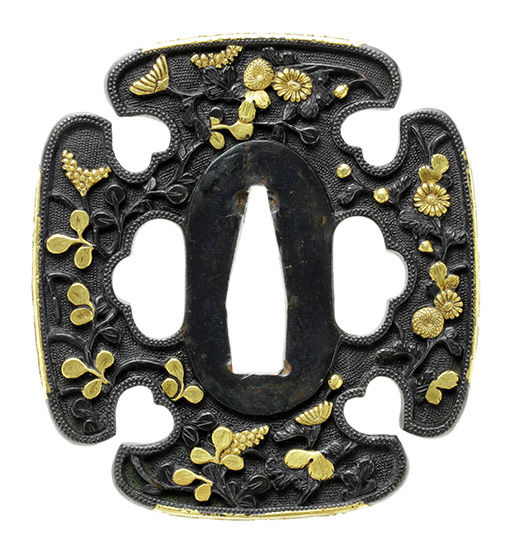
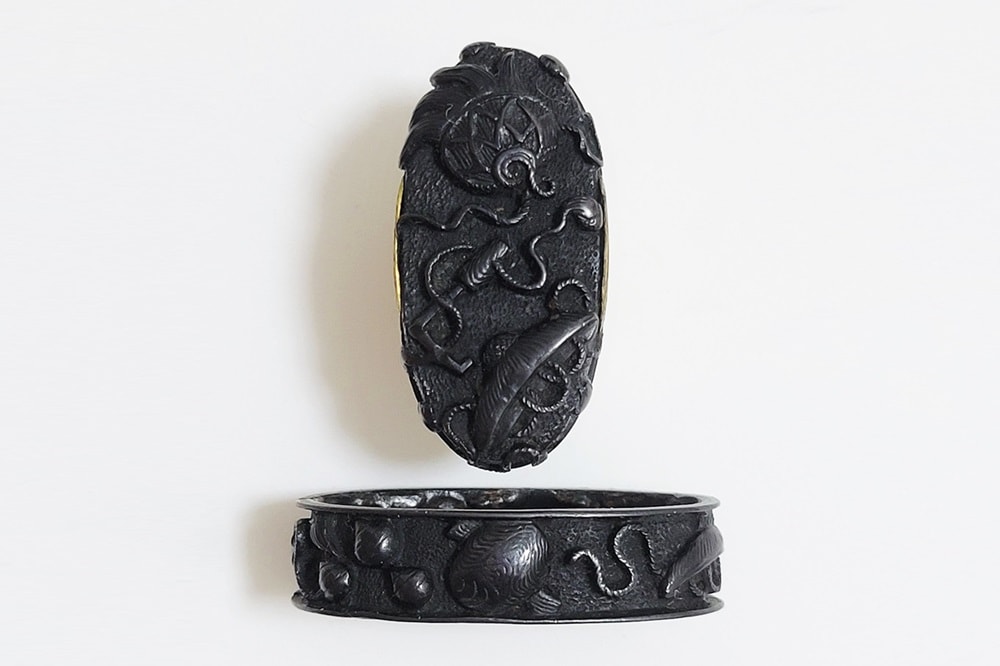
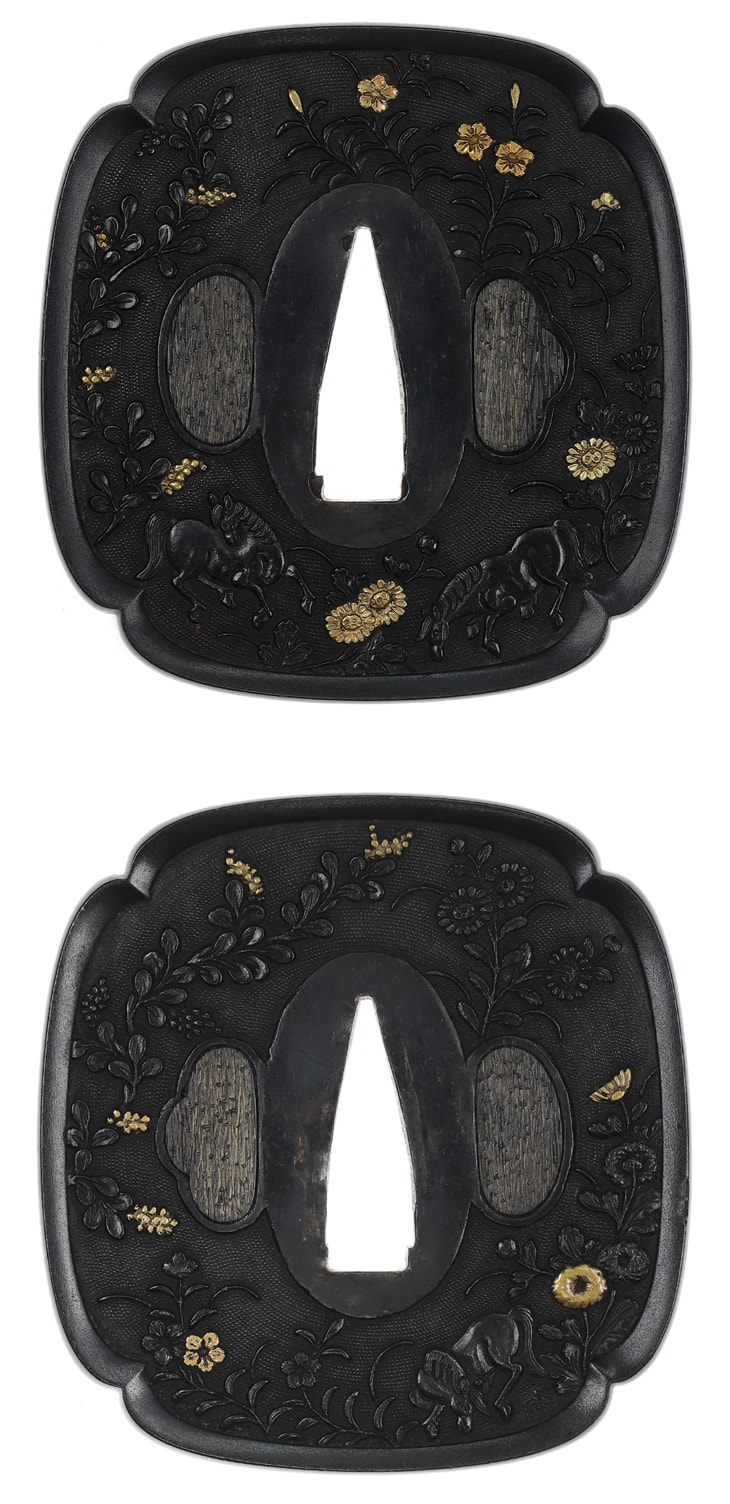
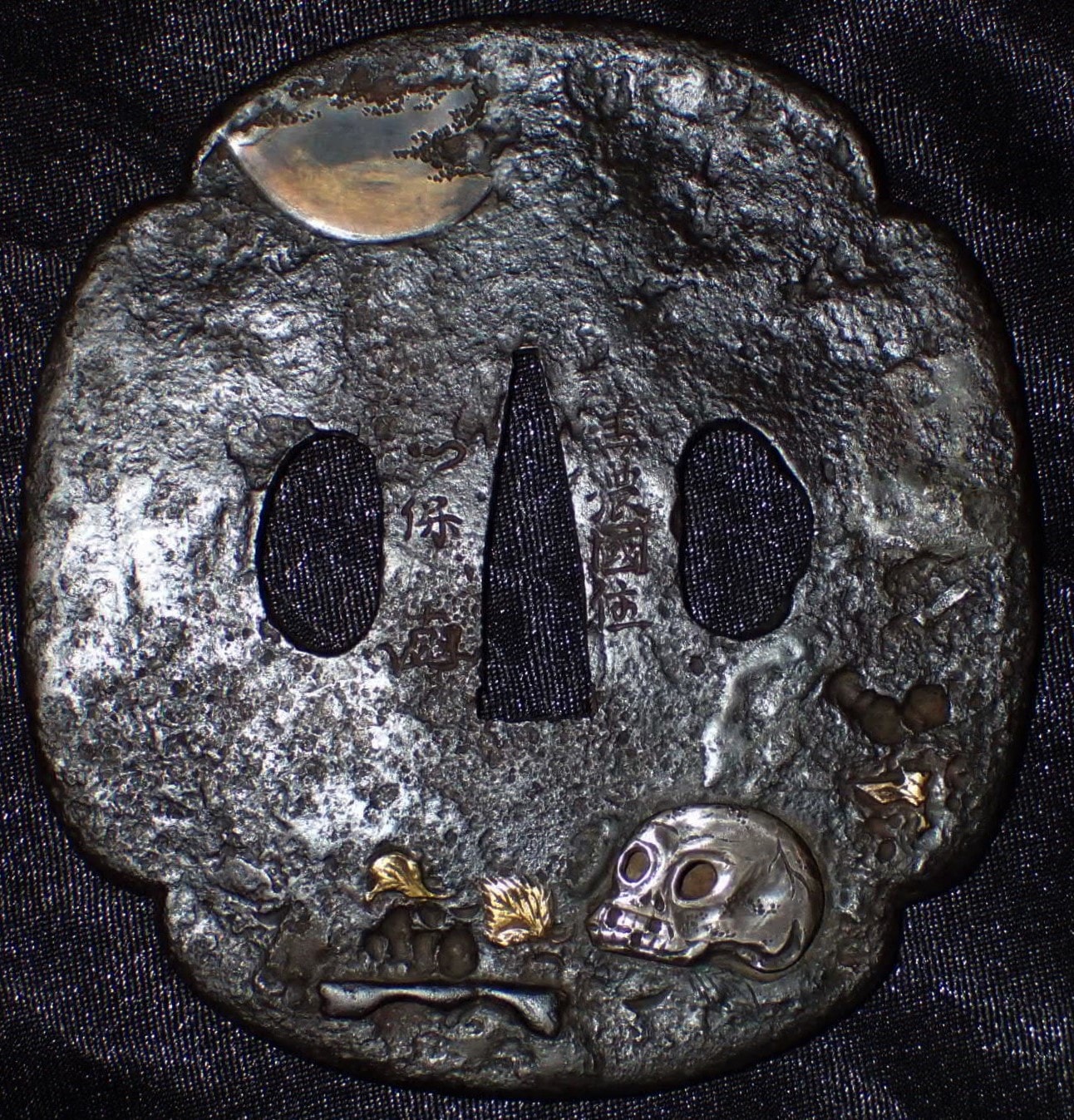
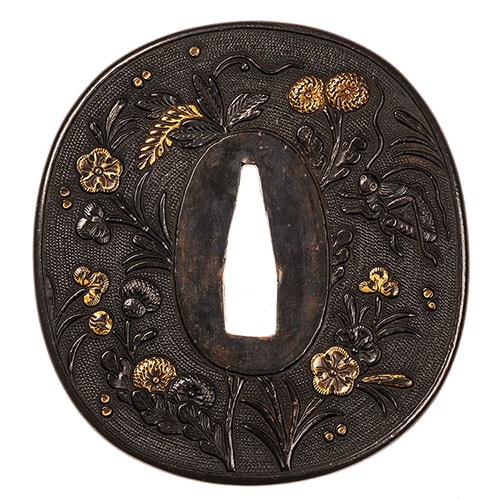
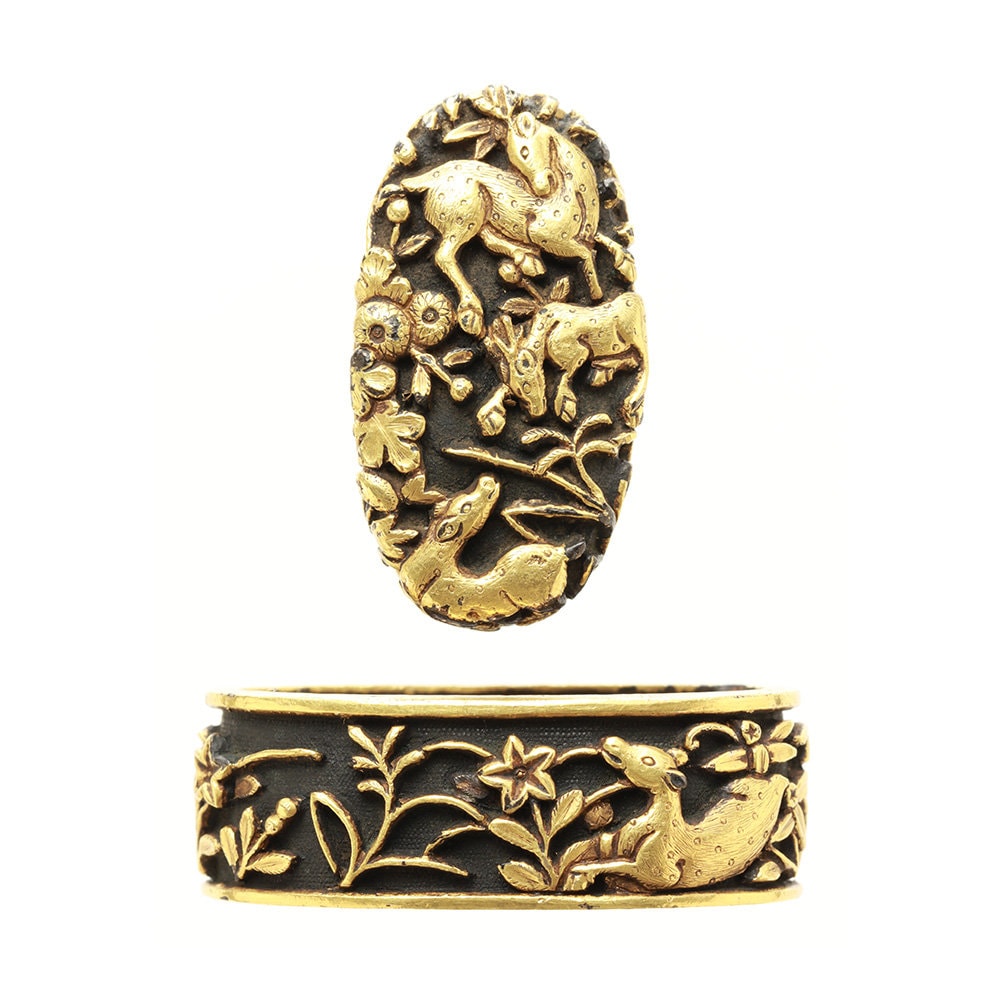
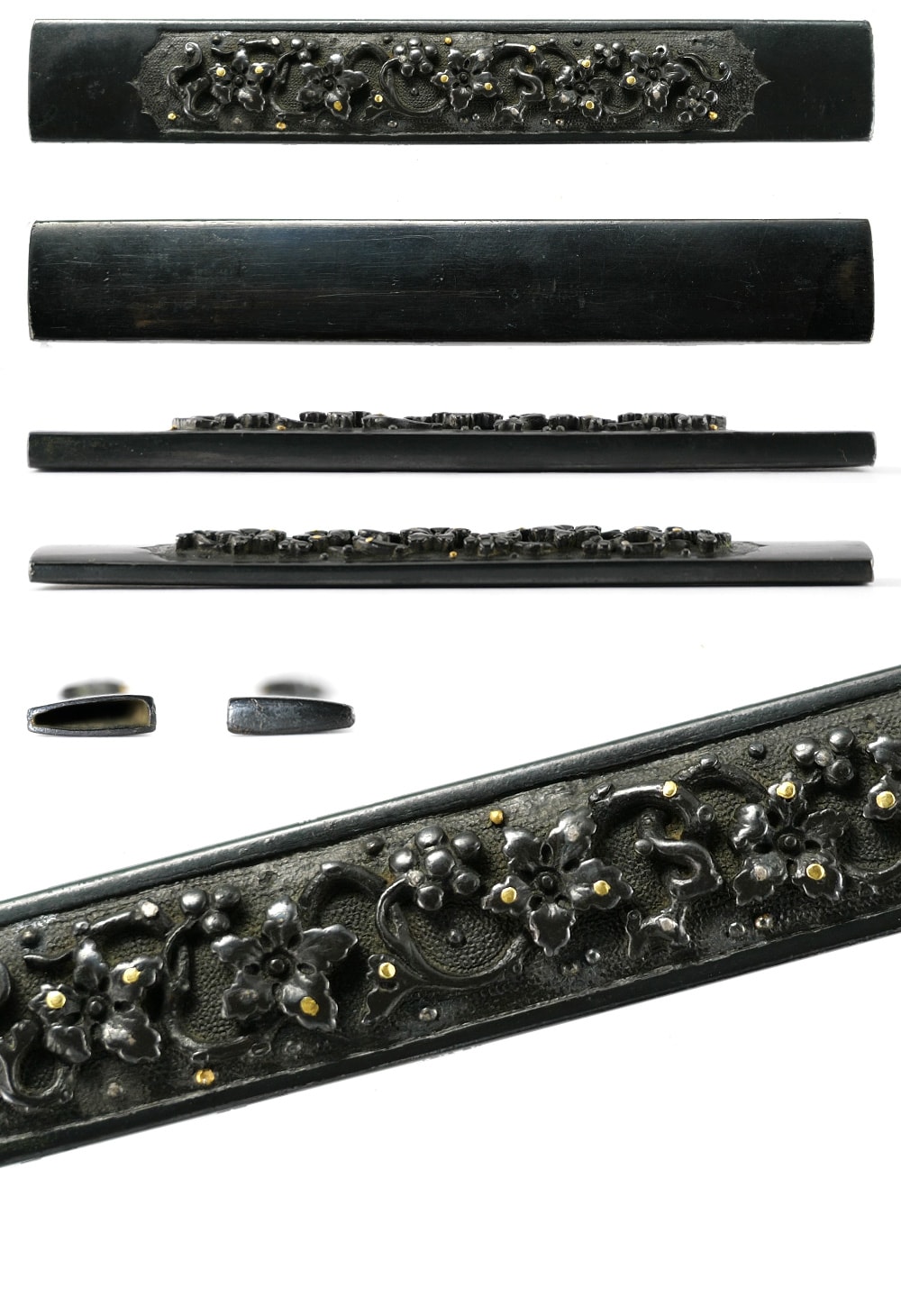
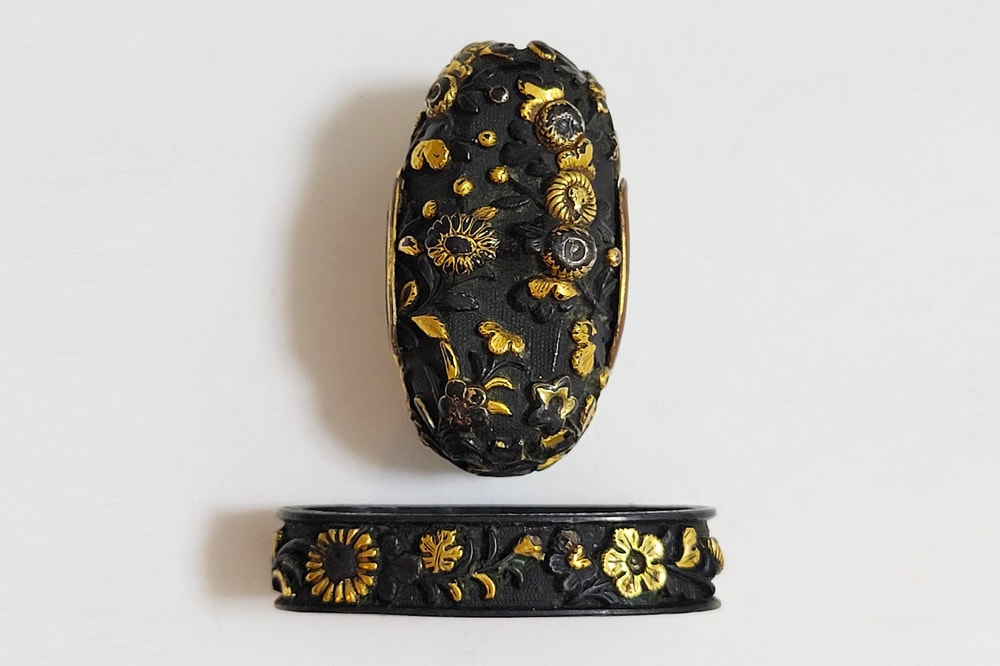
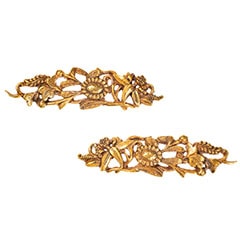
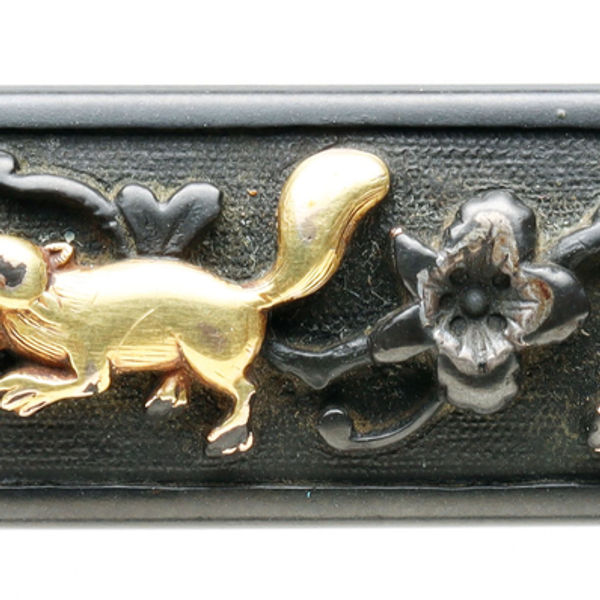
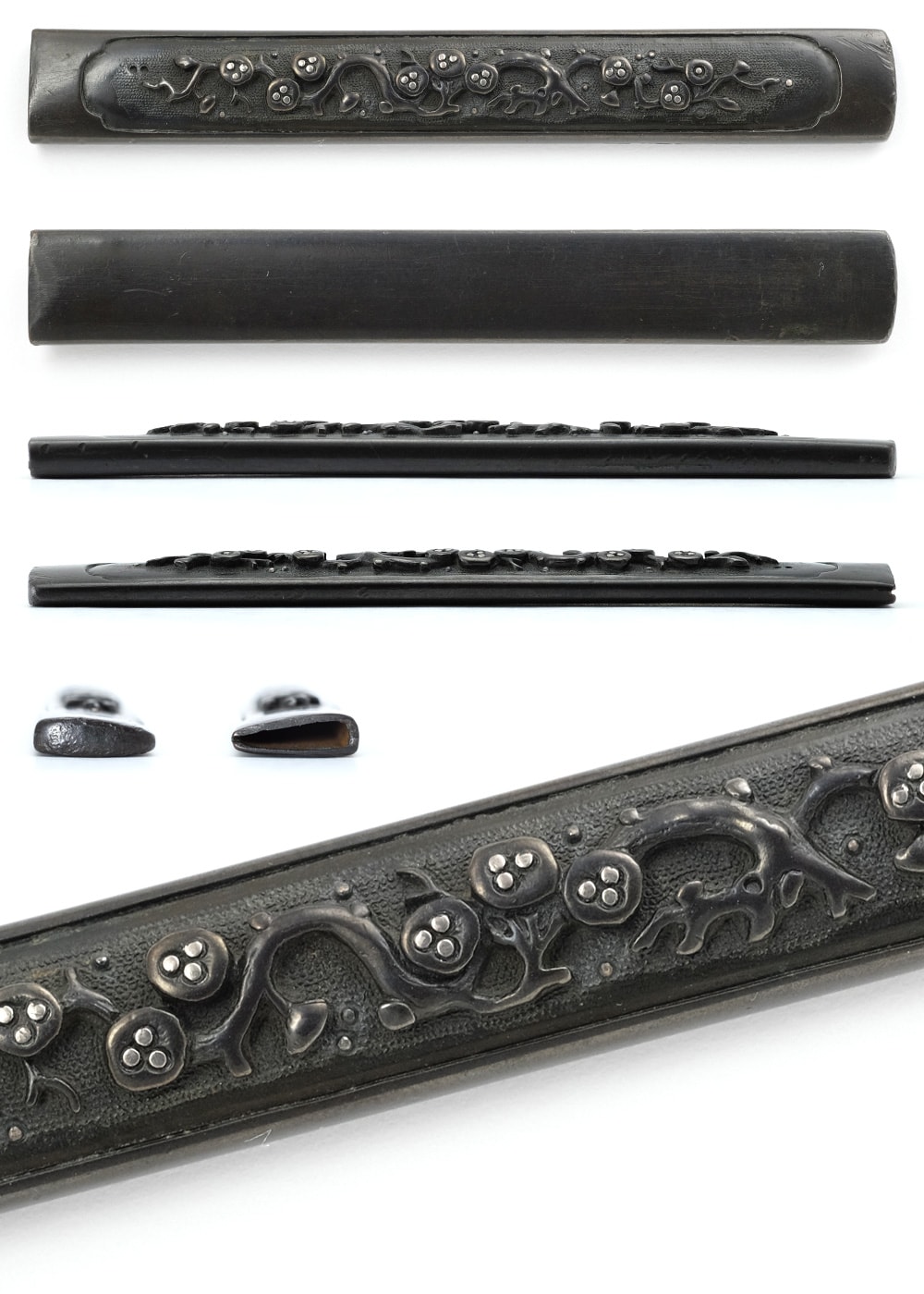
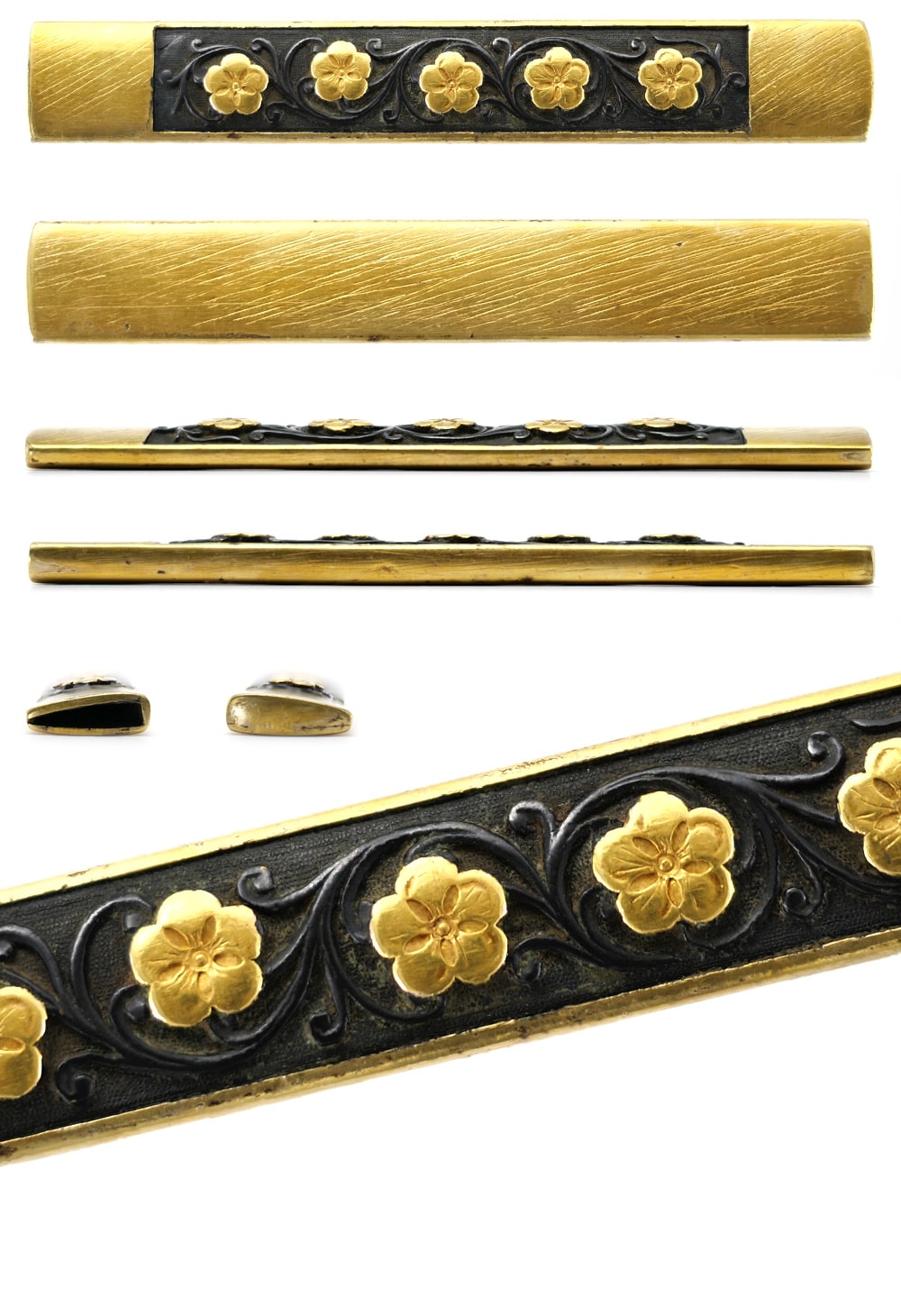
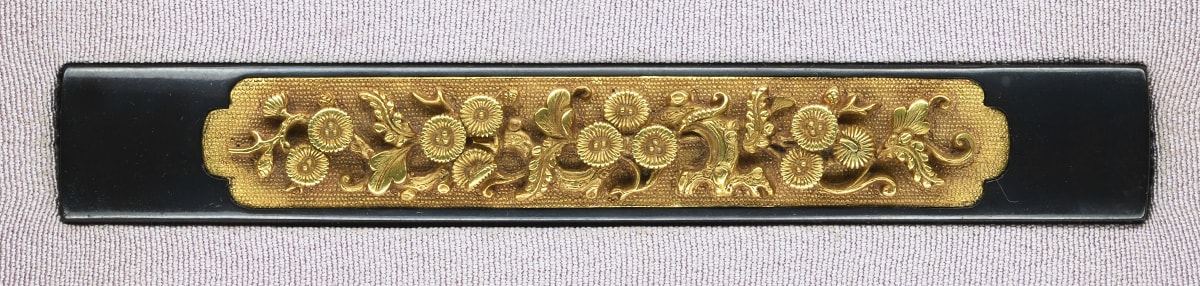
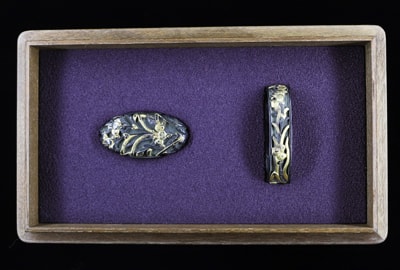
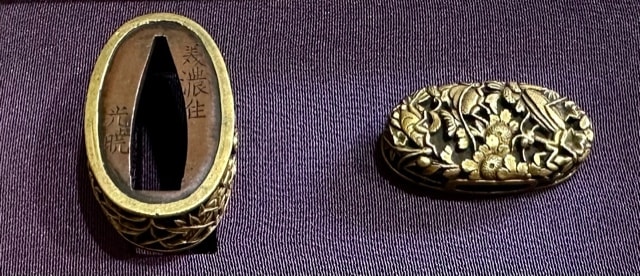
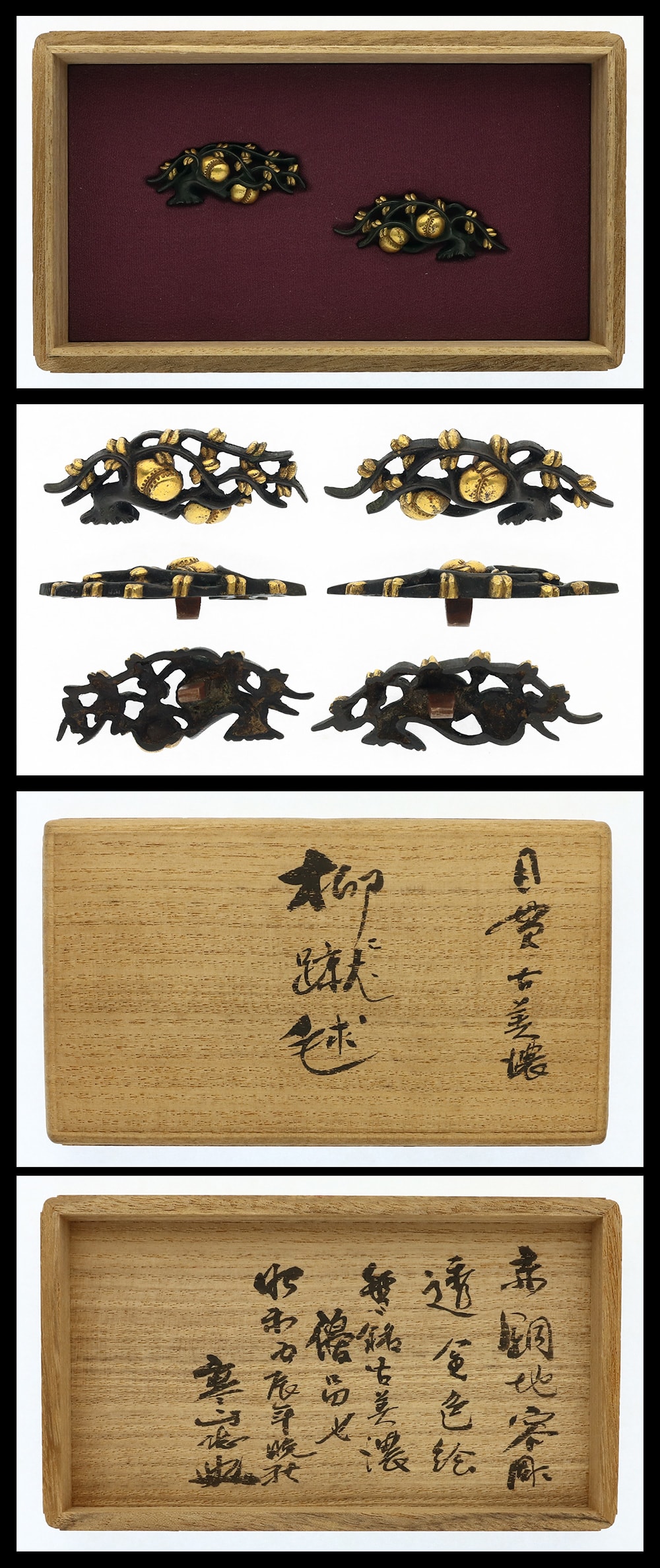
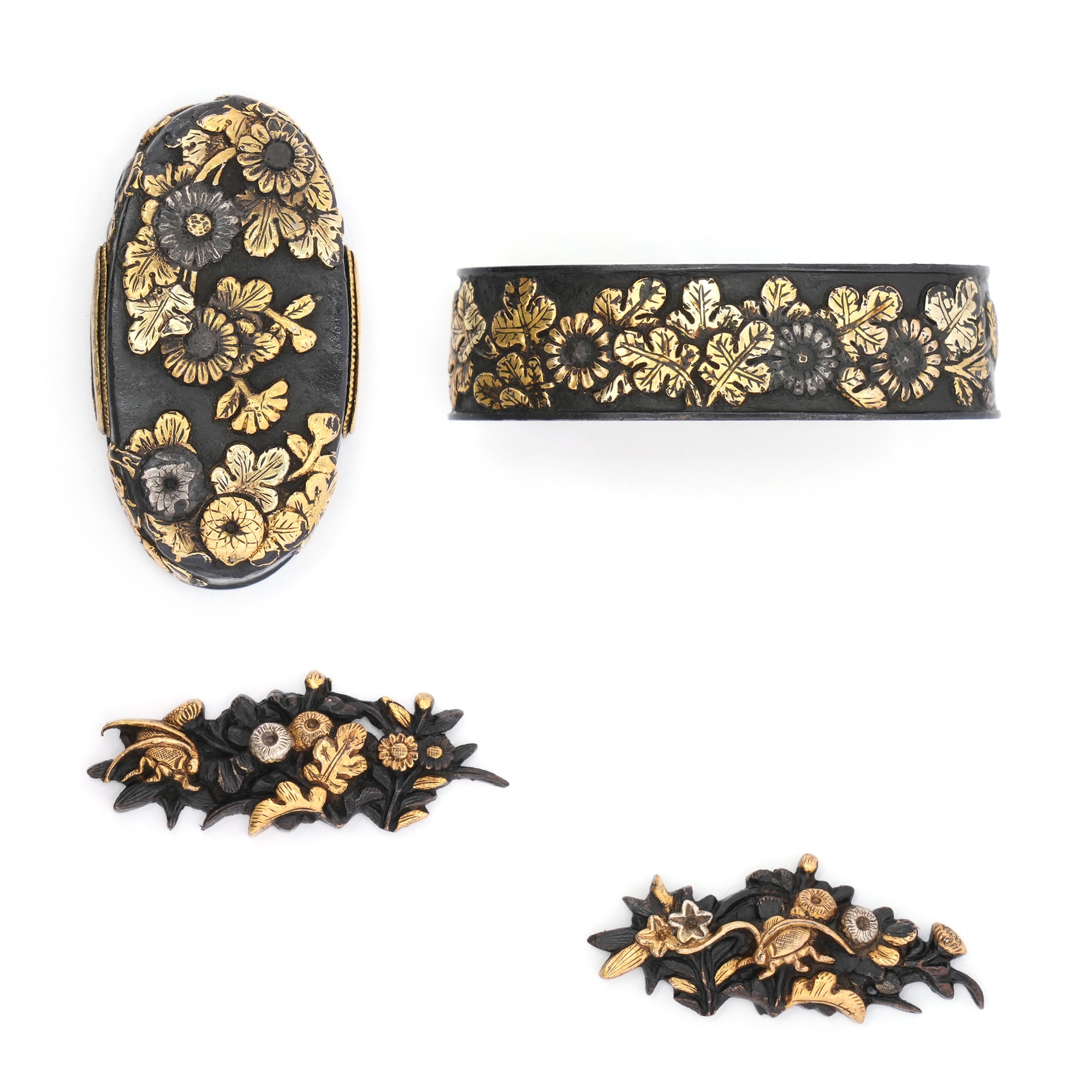
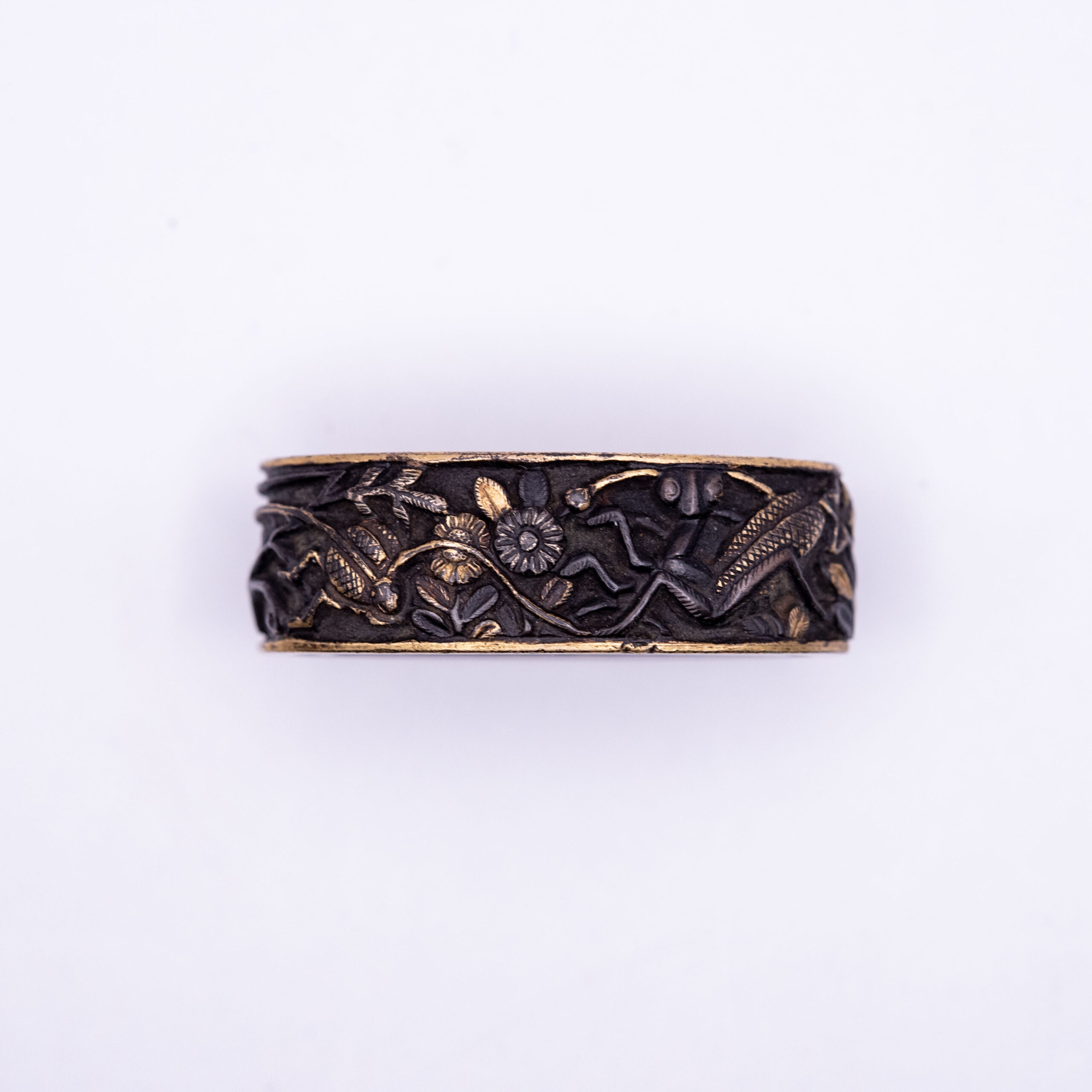
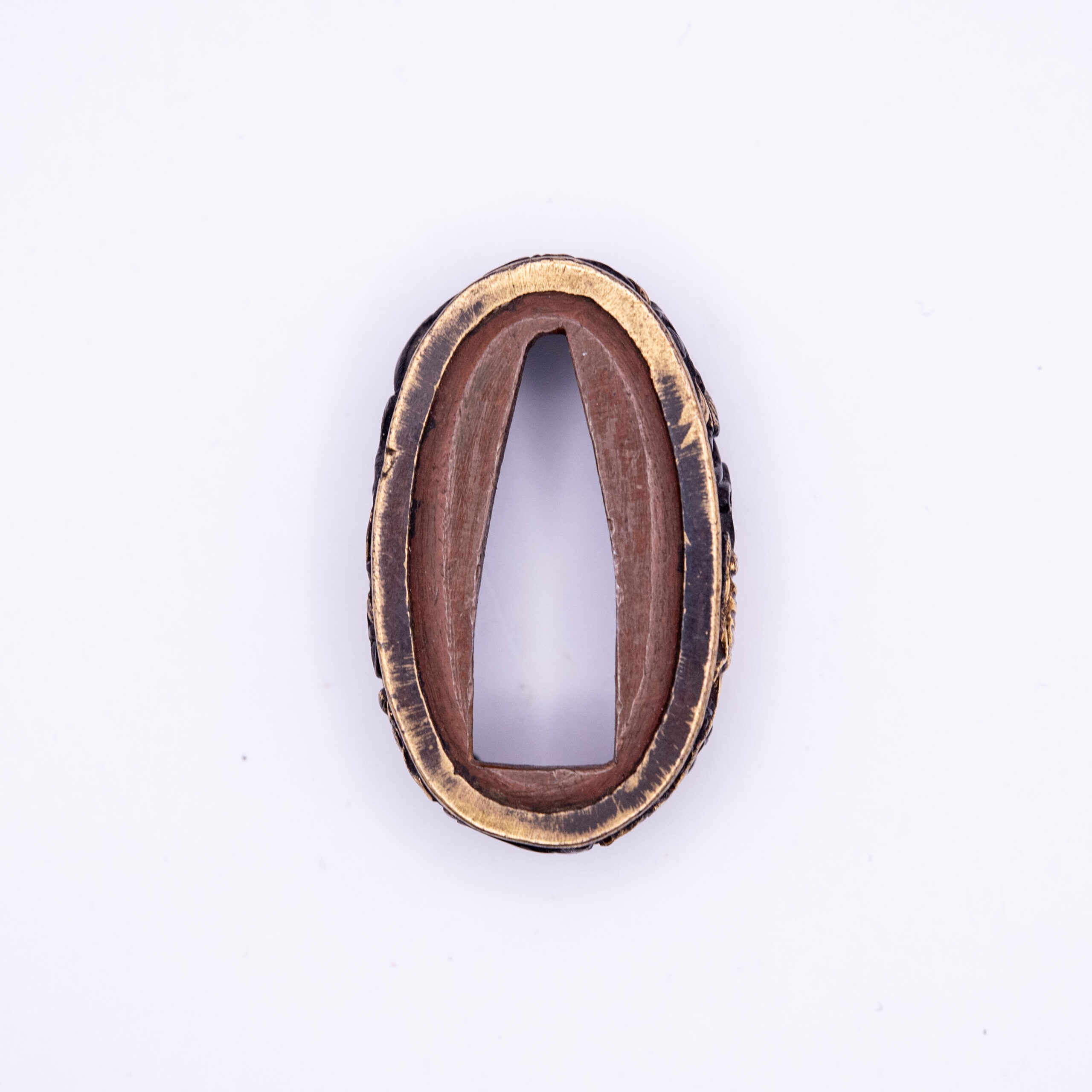
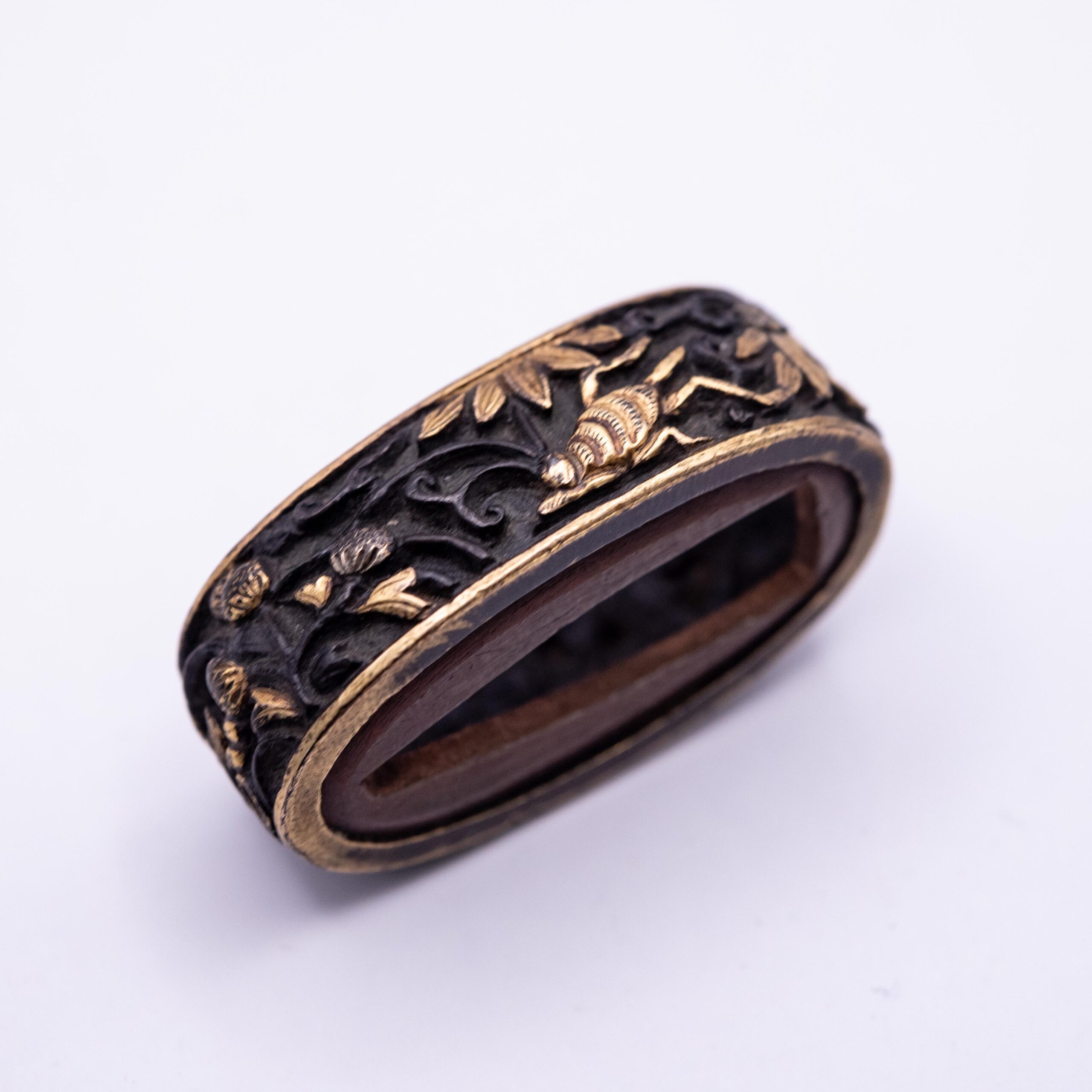
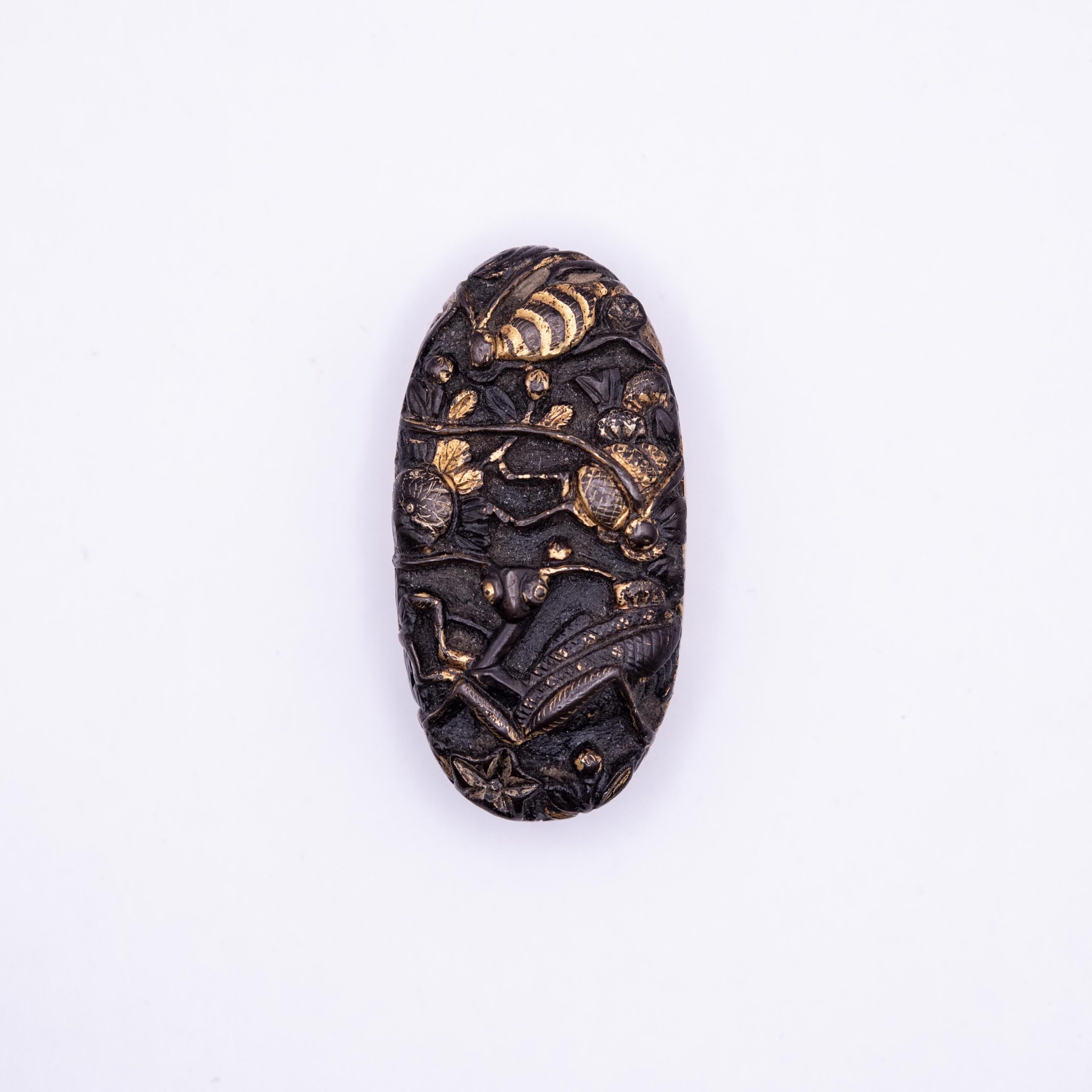
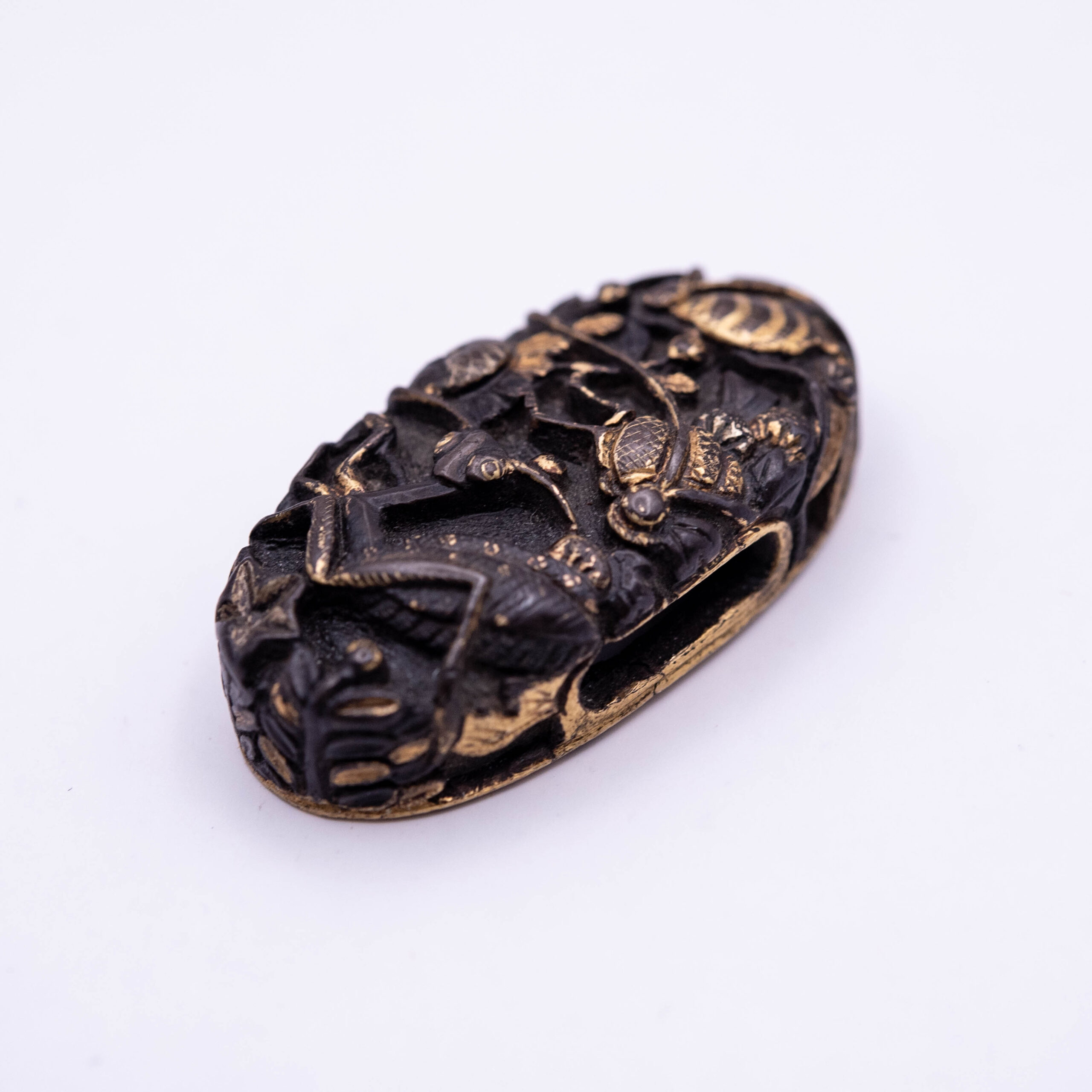
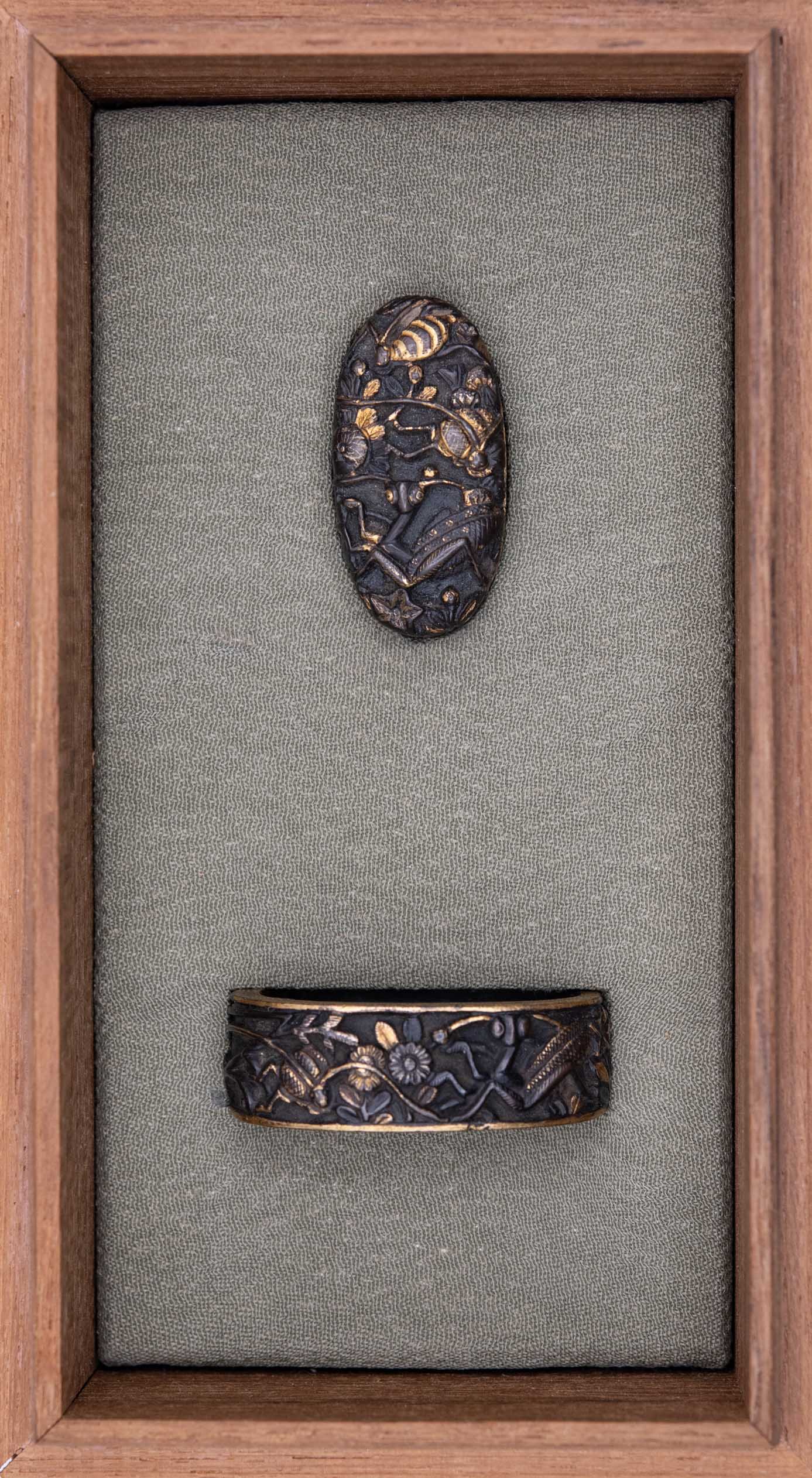
This is an early Mino Fuchi Kashira featuring a design of mantises, other bugs, and flowers. It represents the old Mino style with high relief decoration against a slightly brownish shakudo background. The design elements were created using the Keshikomi Zogan technique, where a thin layer of gold was applied, which has worn off over time.
 NihontoWatch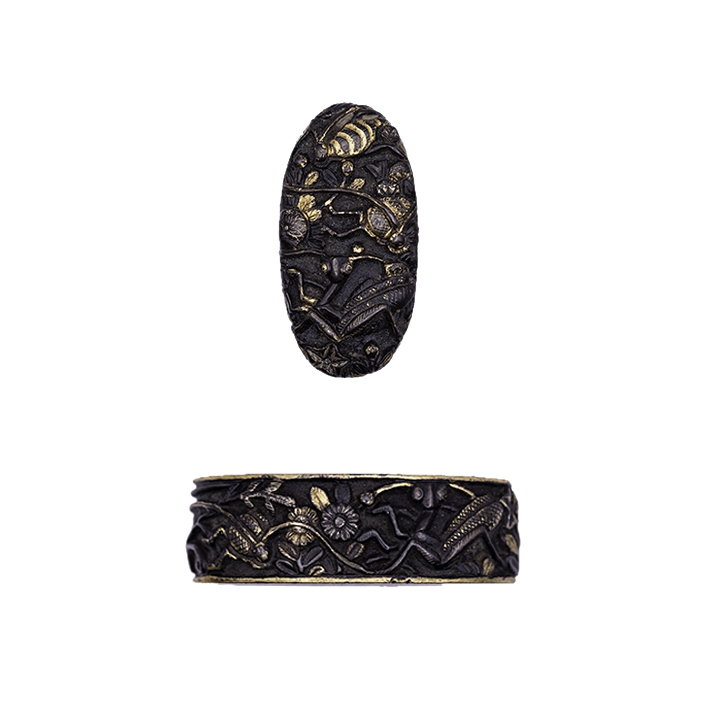
Mino
Muromachi
Mino
Kinko · Mino
24 pieces on the market now
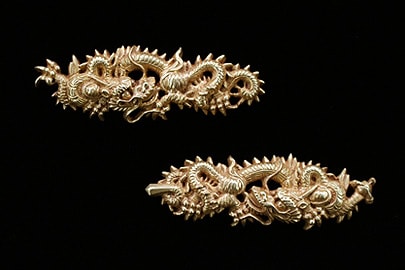
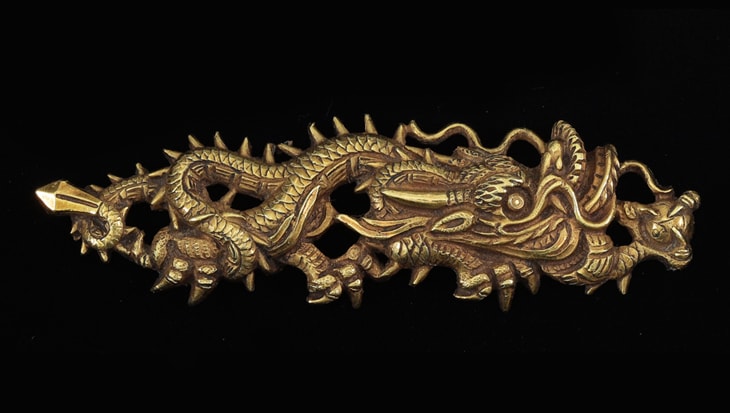
The Mino metalworking tradition emerged as a distinct school of early kinkō (sword-fittings artisans) active from the late Muromachi period through the Momoyama era. Rooted in the broader stream of ko-kanagu-shi (early metal-fittings makers), Mino craftsmen developed alongside but separate from the courtly Gotō lineage, serving a different aesthetic sensibility. Their chronological range extended through the transition into the early Edo period, though the tradition's characteristic vocabulary crystallized during the turbulent decades of the late sixteenth century. The hallmark of Mino workmanship lies in its distinctive approach to relief carving and decorative treatment. Rather than the refined, minutely detailed dragons favored by the Gotō house, Mino artisans developed the specialized "Mino dragon" (Mino-ryū) idiom: large-scale compositions executed in usukin-dashi (thin raised metal), characterized by sinuous, writhing forms with extensive sukashi (openwork).
Beyond dragon motifs, Mino craftsmen rendered auspicious subjects—cranes, turtles, pine, and bamboo—as well as floral designs such as wisteria in karakusa (arabesque) arrangements. The technical vocabulary consistently emphasizes vigorous yōbori (high-relief carving) with robust, thick-boned modeling and forceful execution, often on grounds of shakudō nanako-ji or solid gold, with enrichment through gold iroe and inlay. Works attributed to the Mino school are valued for their sumptuous materiality and animated sculptural presence. The tradition's preference for deeply cut relief with pronounced peaks and valleys creates a dynamic visual effect distinct from the more restrained aesthetic of contemporary Kyoto workshops. Surviving examples of Mino metalwork—ranging from menuki and kogai to complete koshirae suites—document a regional aesthetic that prioritized bold composition and vigorous carving over courtly refinement, reflecting the martial culture of the Sengoku and early unification periods. Learn more →
| Smith | Era | Designated |
|---|---|---|
| Mitsuharu光春 | — | 0 |
| Mitsunaka光仲 | — | 0 |
| Mitsunobu光伸 | — | 0 |
| Nakayuki仲之 | — | 0 |
| Nagamasa長正 | — | 0 |
We could not find an authenticity certificate on the seller’s listing. Japanese swords and fittings are normally papered by the NBTHK (or the NTHK). Without one, the attribution is the seller’s own assessment and has not been independently verified — treat it with caution and ask the dealer about certification before buying.
All sales are final and no refund will be issued. Individual refund conditions may be offered on request. For items with third-party certificates (e.g. NBTHK), a return is offered if the certificate is proven falsified and claimed within one year after shipment.
¥55,000