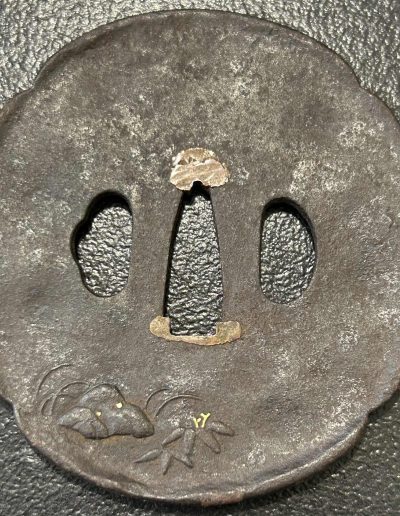
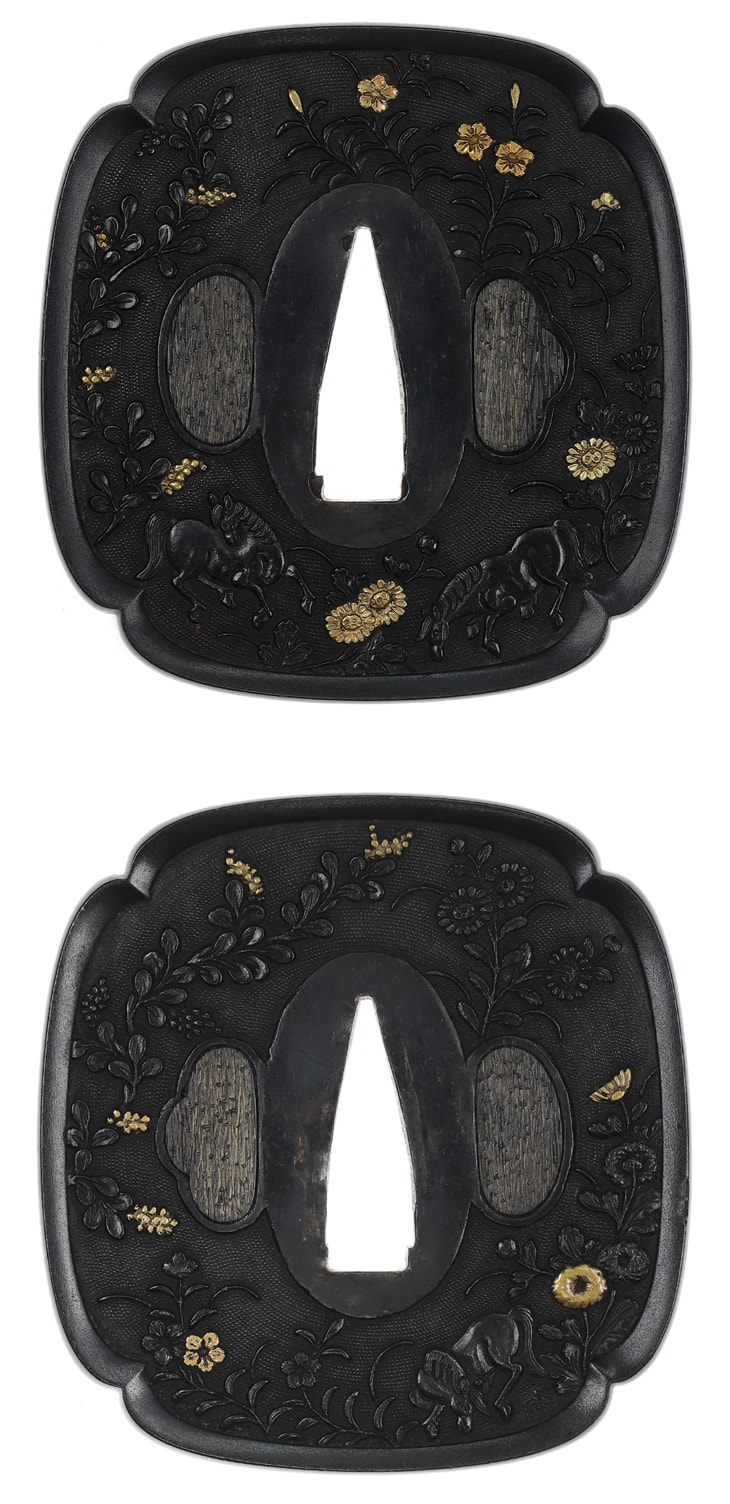
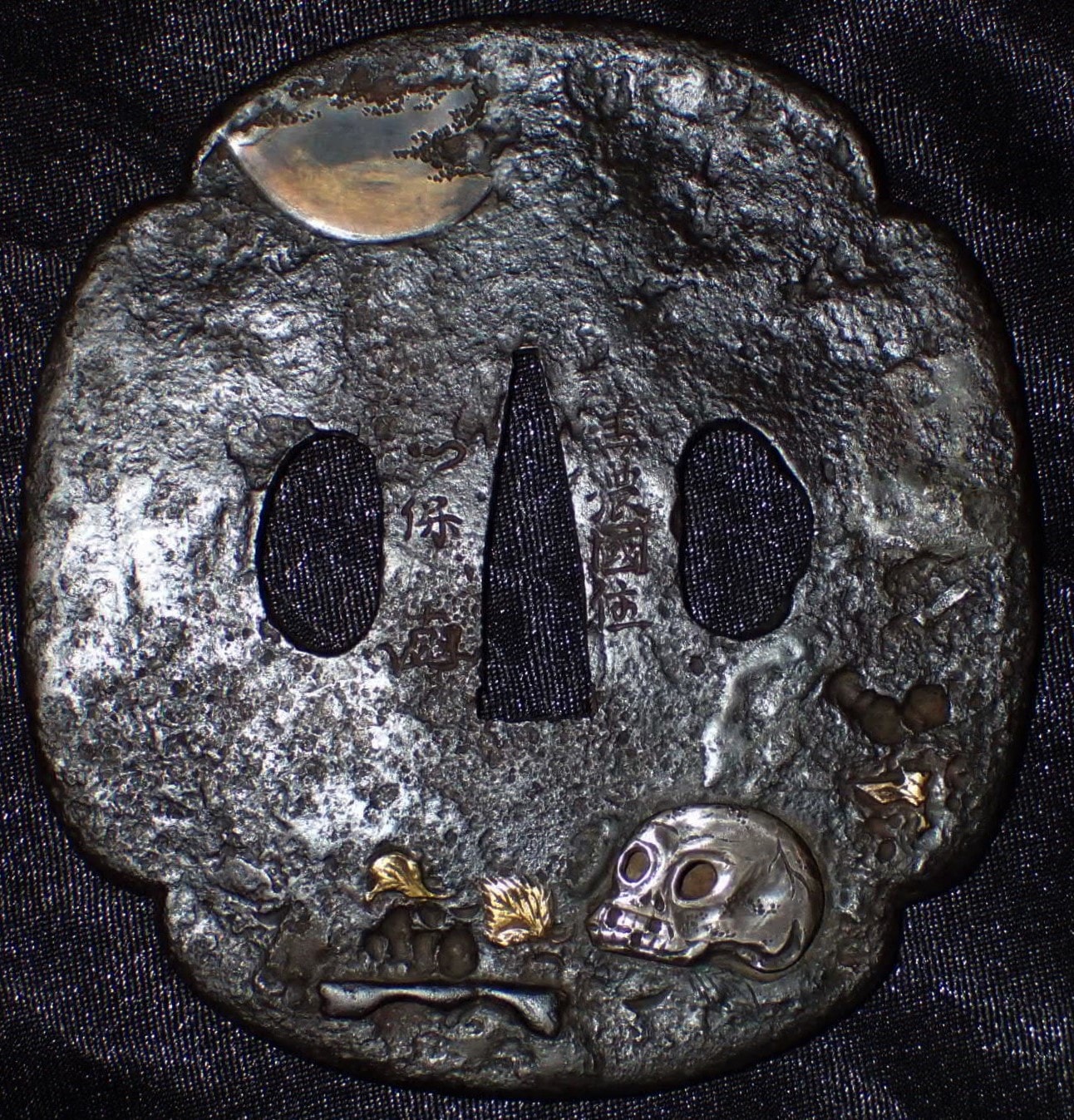
This is an Edo period tsuba featuring a nozarashi (weather-beaten skull) design. The design includes a skull motif and bones, symbolizing the transient nature of life and the inevitability of death. These tsuba designs often incorporate elements like a crescent moon, grasses, and sometimes poems.
 NihontoWatchBETA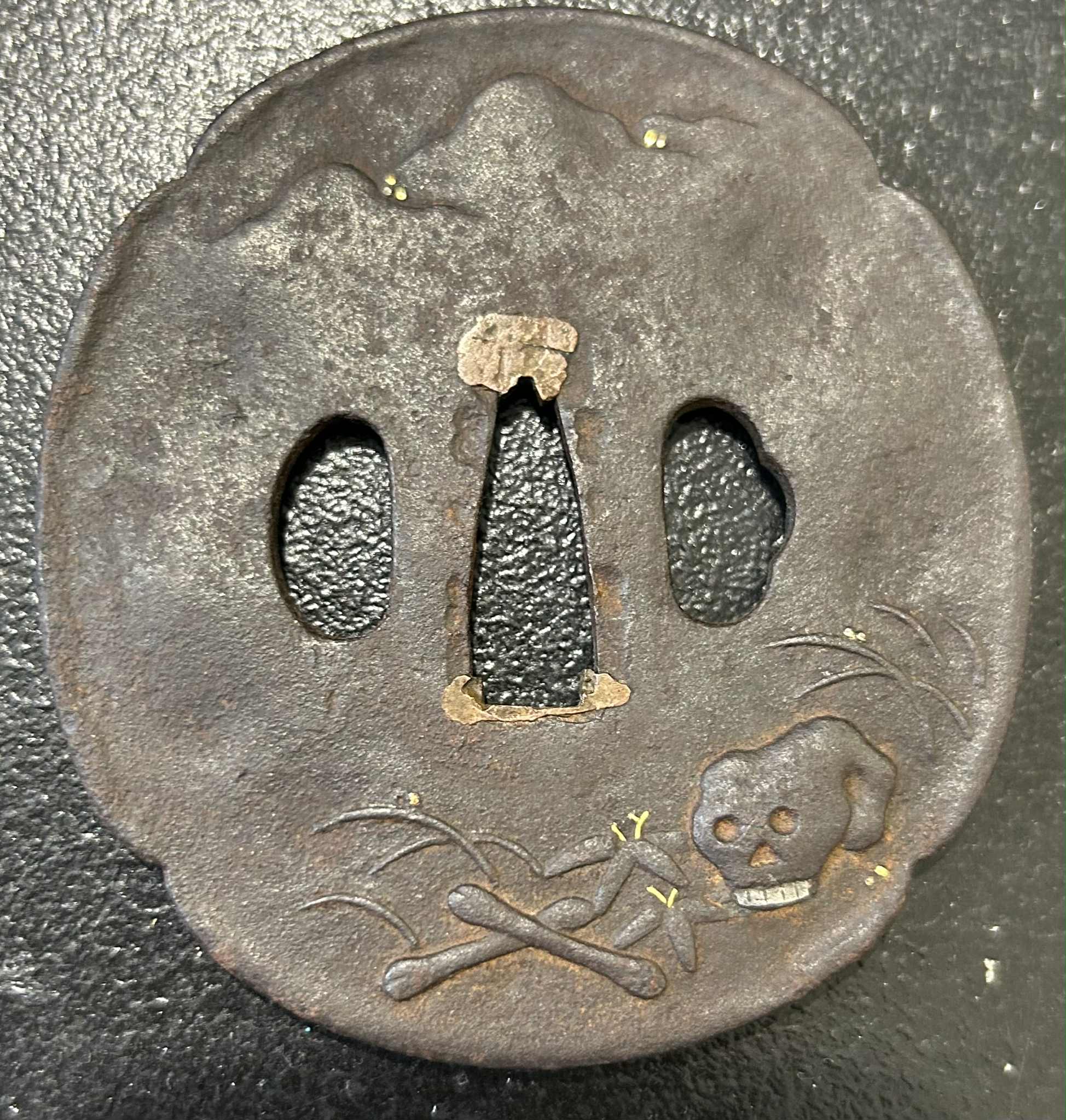
Mino School
Edo
Kinko · Mino
18 pieces on the market now
The Mino metalworking tradition emerged as a distinct school of early kinkō (sword-fittings artisans) active from the late Muromachi period through the Momoyama era. Rooted in the broader stream of ko-kanagu-shi (early metal-fittings makers), Mino craftsmen developed alongside but separate from the courtly Gotō lineage, serving a different aesthetic sensibility. Learn more →
| Smith | Era | Designated |
|---|---|---|
| Mitsuharu光春 | — | 0 |
| Mitsunaka光仲 | — | 0 |
| Mitsunobu光伸 | — | 0 |
| Nakayuki仲之 | — | 0 |
| Nagamasa長正 | — | 0 |
We could not find an authenticity certificate on the seller’s listing. Japanese swords and fittings are normally papered by the NBTHK (or the NTHK). Without one, the attribution is the seller’s own assessment and has not been independently verified — treat it with caution and ask the dealer about certification before buying.
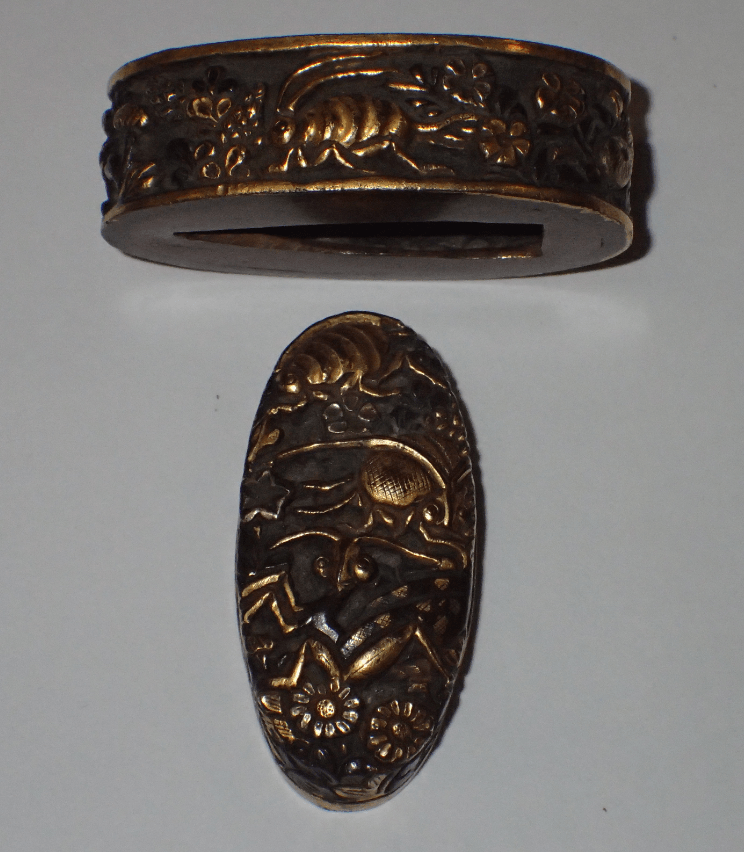
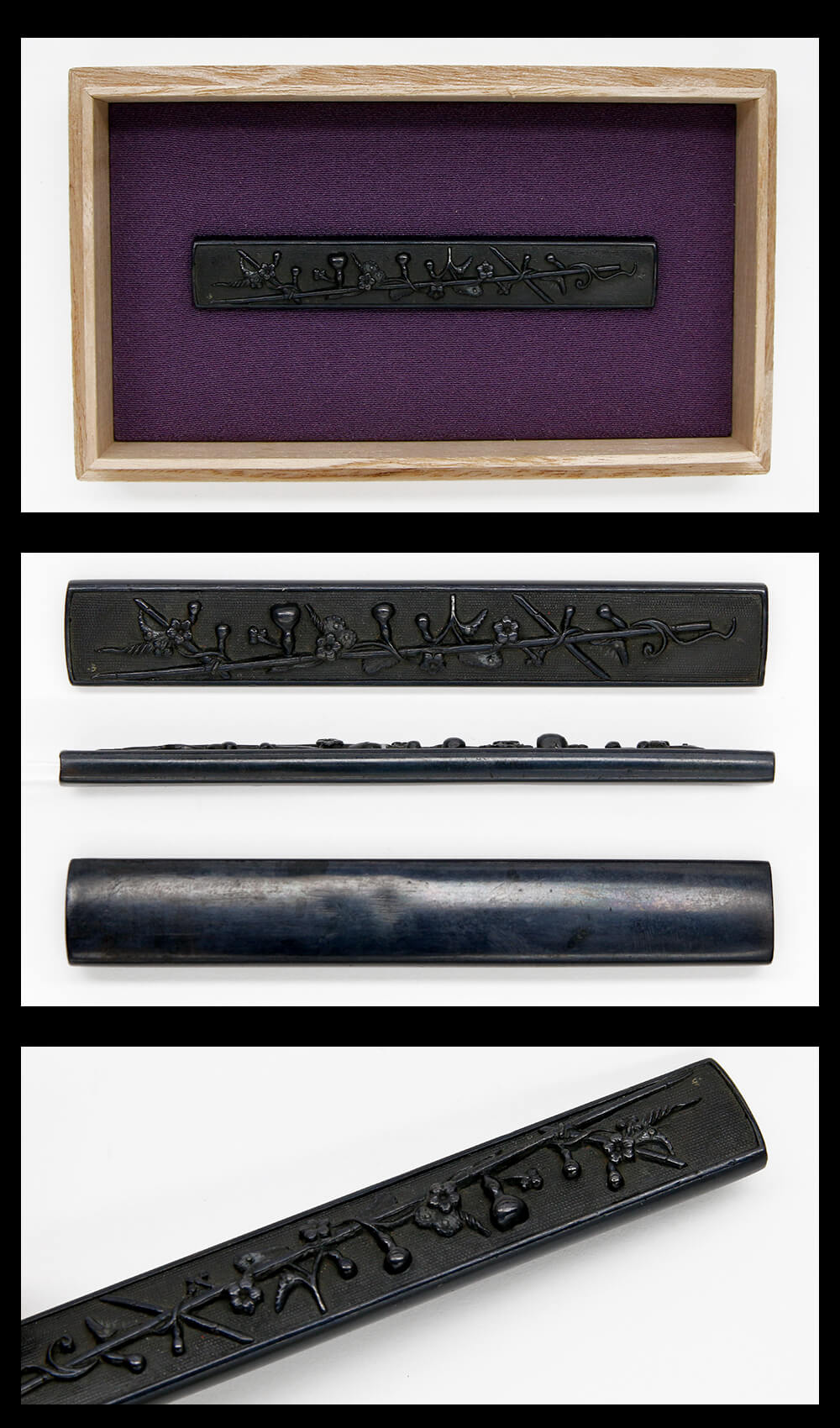
This is an Edo period tsuba featuring a nozarashi (weather-beaten skull) design. The design includes a skull motif and bones, symbolizing the transient nature of life and the inevitability of death. These tsuba designs often incorporate elements like a crescent moon, grasses, and sometimes poems.
NihontoWatchBETAMino School
Edo
Kinko · Mino
18 pieces on the market now
The Mino metalworking tradition emerged as a distinct school of early kinkō (sword-fittings artisans) active from the late Muromachi period through the Momoyama era. Rooted in the broader stream of ko-kanagu-shi (early metal-fittings makers), Mino craftsmen developed alongside but separate from the courtly Gotō lineage, serving a different aesthetic sensibility. Learn more →
| Smith | Era | Designated |
|---|---|---|
| Mitsuharu光春 | — | 0 |
| Mitsunaka光仲 | — | 0 |
| Mitsunobu光伸 | — | 0 |
| Nakayuki仲之 | — | 0 |
| Nagamasa長正 | — | 0 |
We could not find an authenticity certificate on the seller’s listing. Japanese swords and fittings are normally papered by the NBTHK (or the NTHK). Without one, the attribution is the seller’s own assessment and has not been independently verified — treat it with caution and ask the dealer about certification before buying.

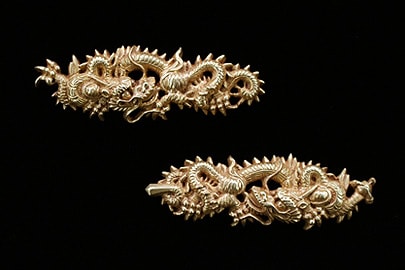
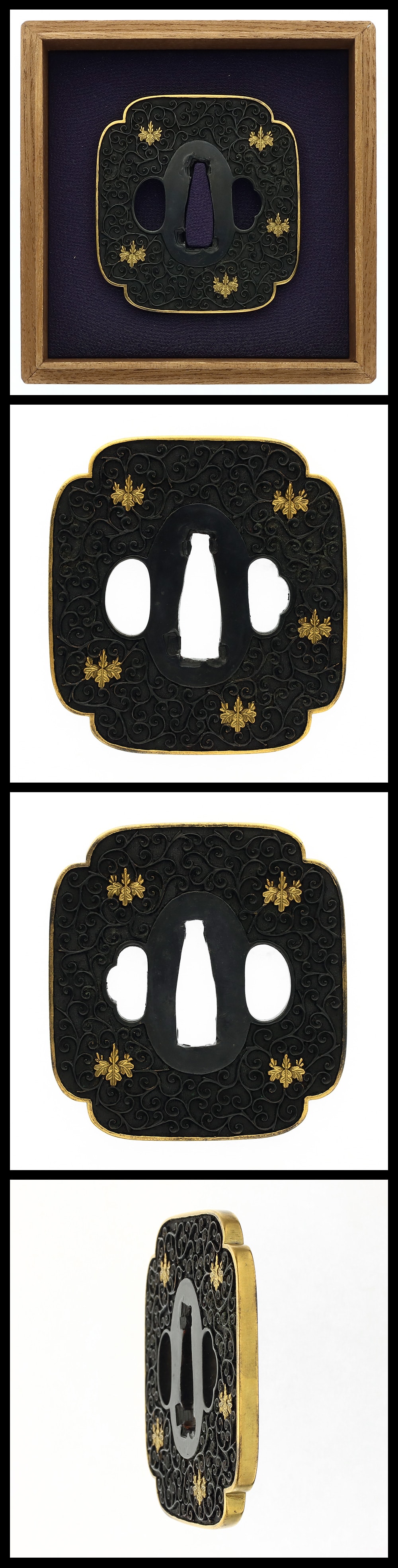
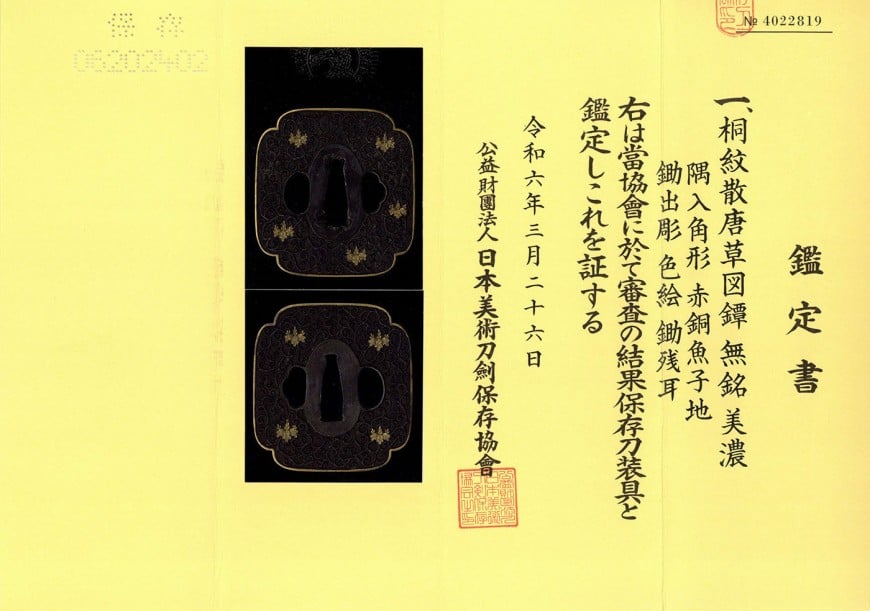
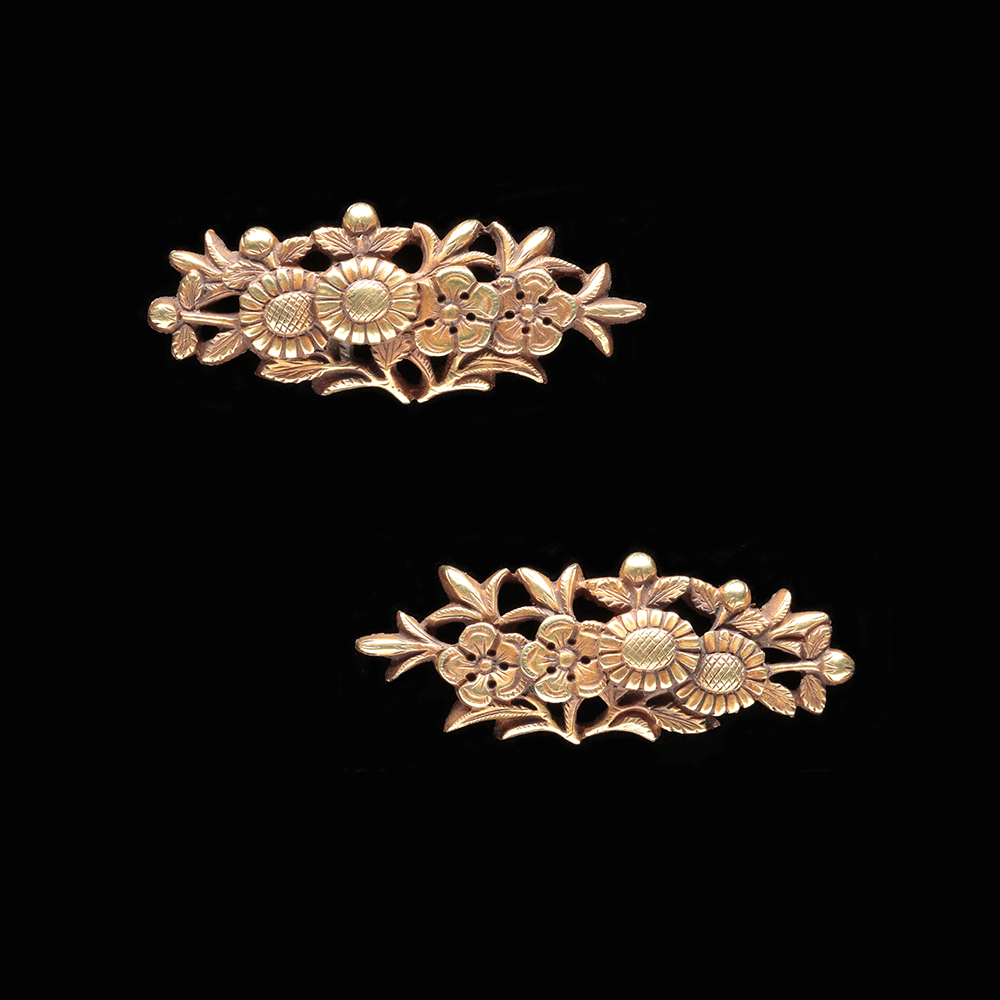


![Tsuba - Tokuho - by Mino School - Mumei Mino Kikka-karakusa-zu-Tsuba [NBTHK] Tokubetsu Hozon Tosogu](/_next/image?url=https%3A%2F%2Fitbhfhyptogxcjbjfzwx.supabase.co%2Fstorage%2Fv1%2Fobject%2Fpublic%2Flisting-images%2Fworld-seiyudo%2FL32387%2F00.jpg&w=2560&q=90)