 NihontoWatchNihontoWatch
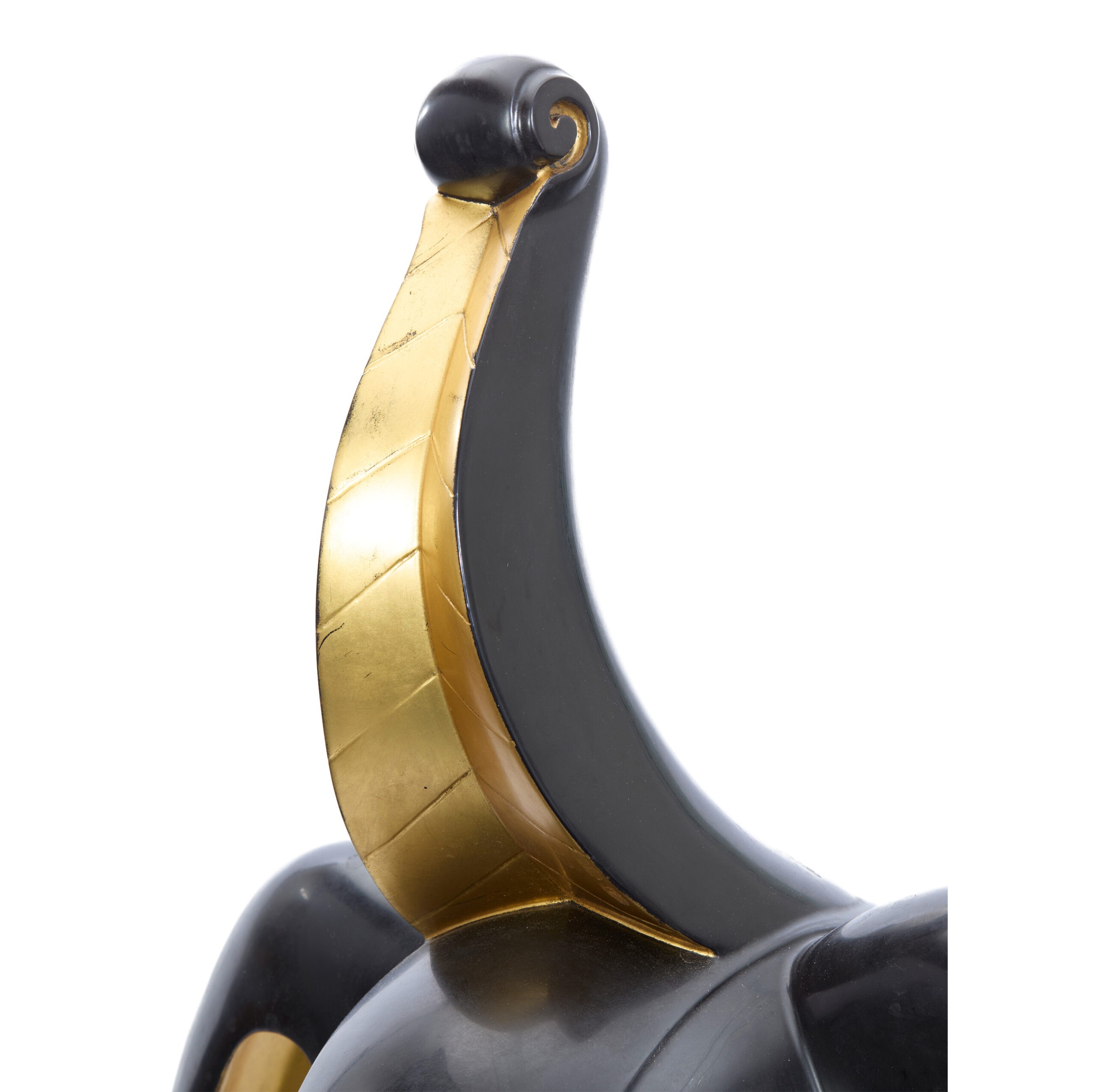
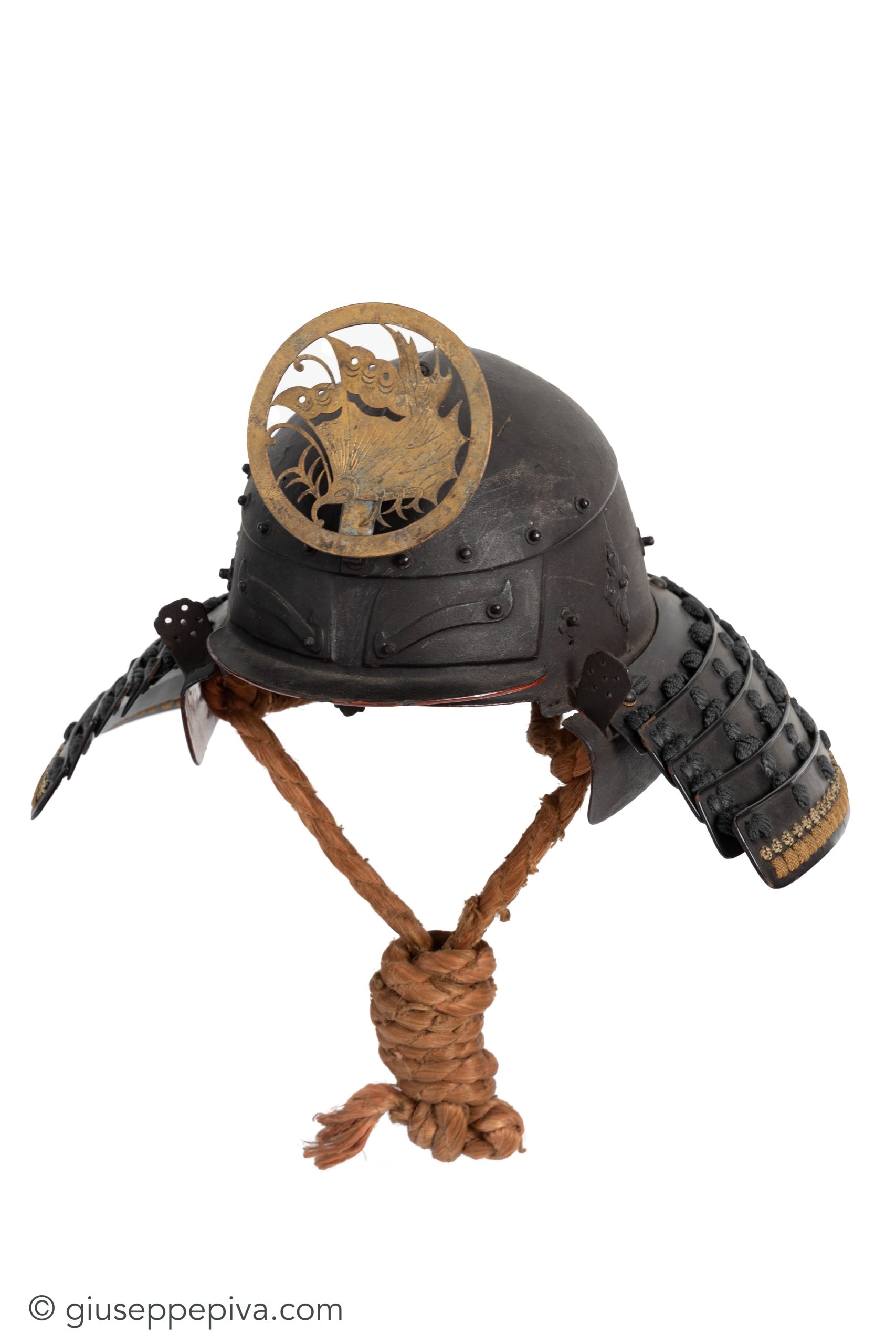
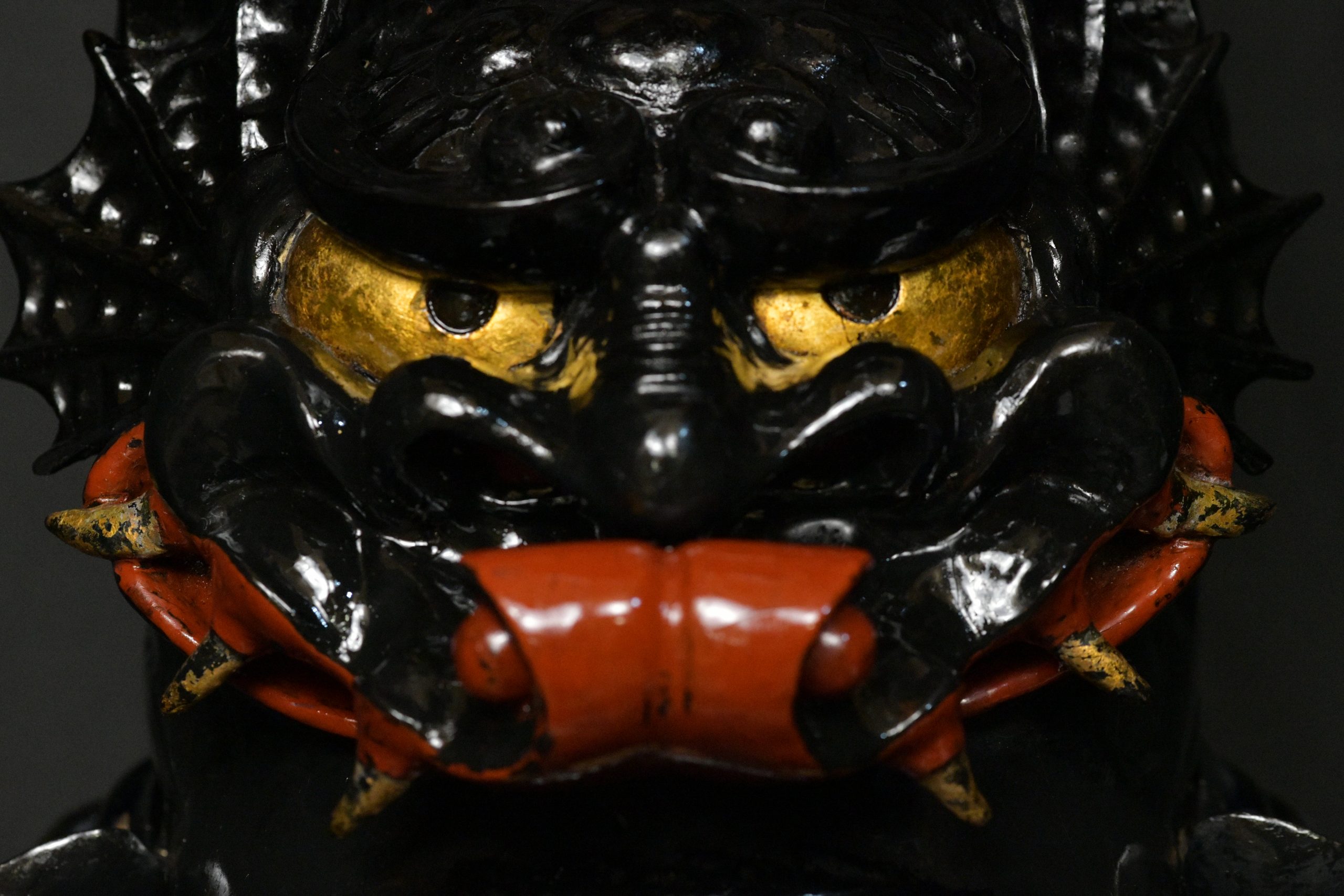
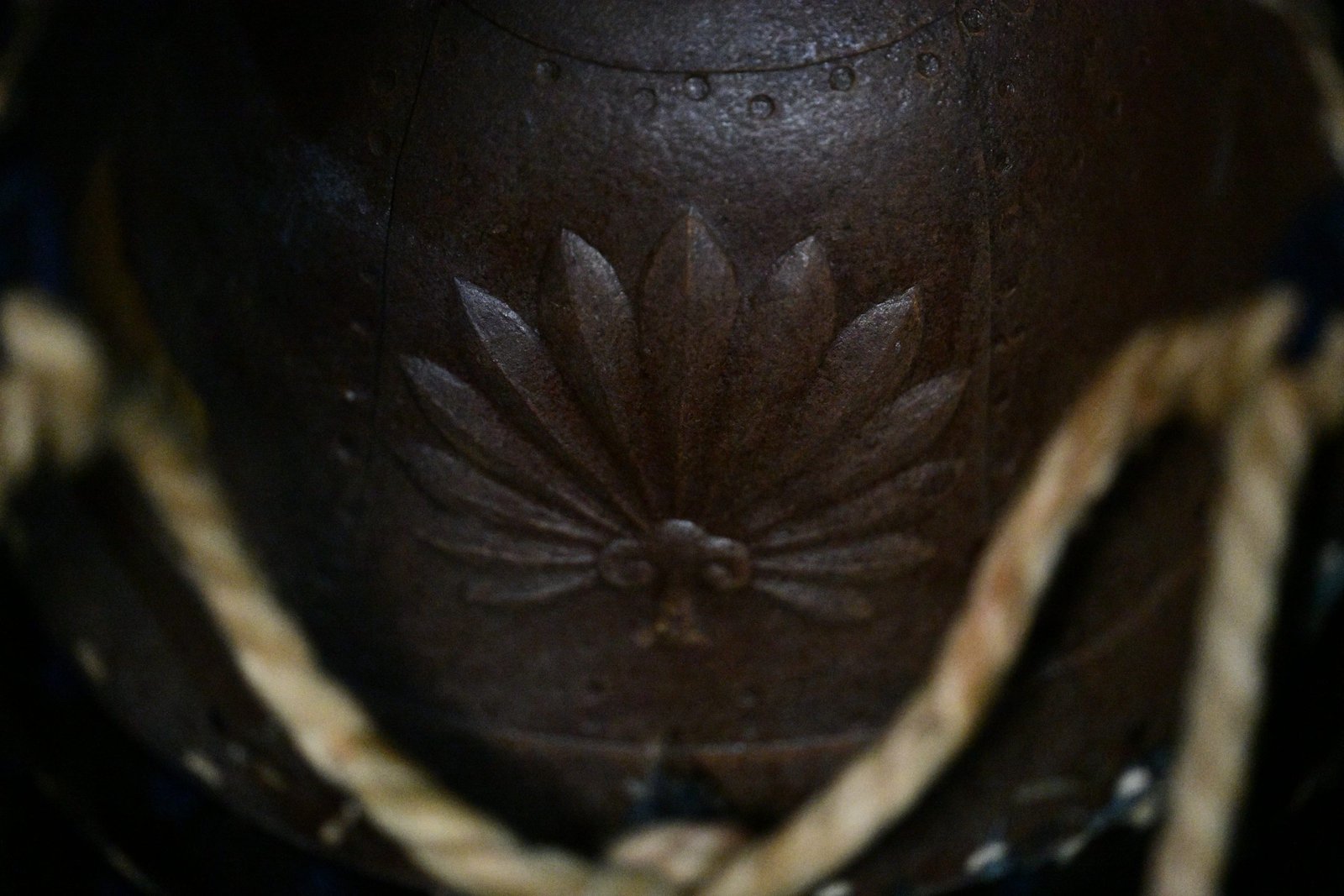
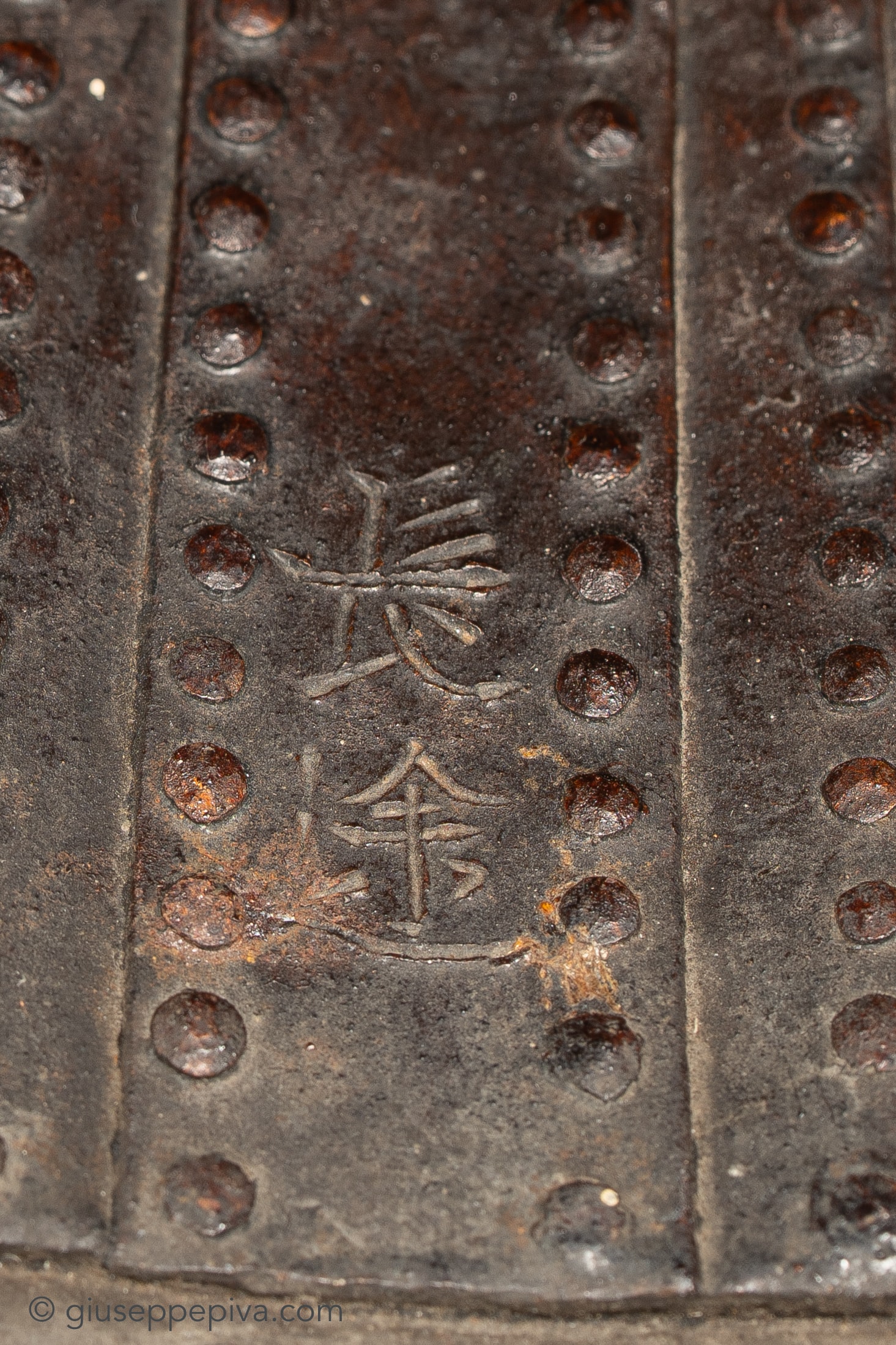
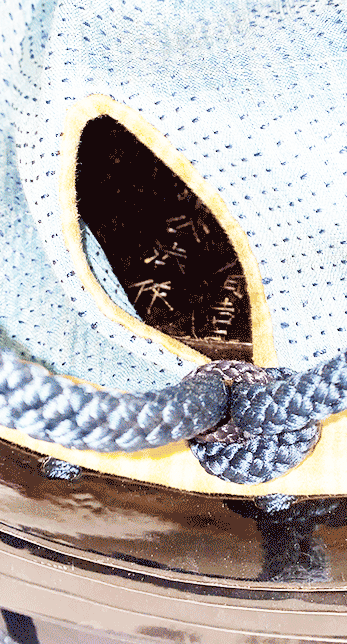
The helmet is made entirely of iron and is made with six plates on which four other iron sheets are fixed. The shape is quite rare and is reminiscent of the mōsu, a type of headgear worn by Buddhist monks. A helmet of the same shape but left in natural iron is preserved at the Iwakuni Art Museum and is considered one of Japan’s most famous kawari kabuto. The gilt-wood maedate depicts a gold coin.
NihontoWatchOffered by Giuseppe Piva
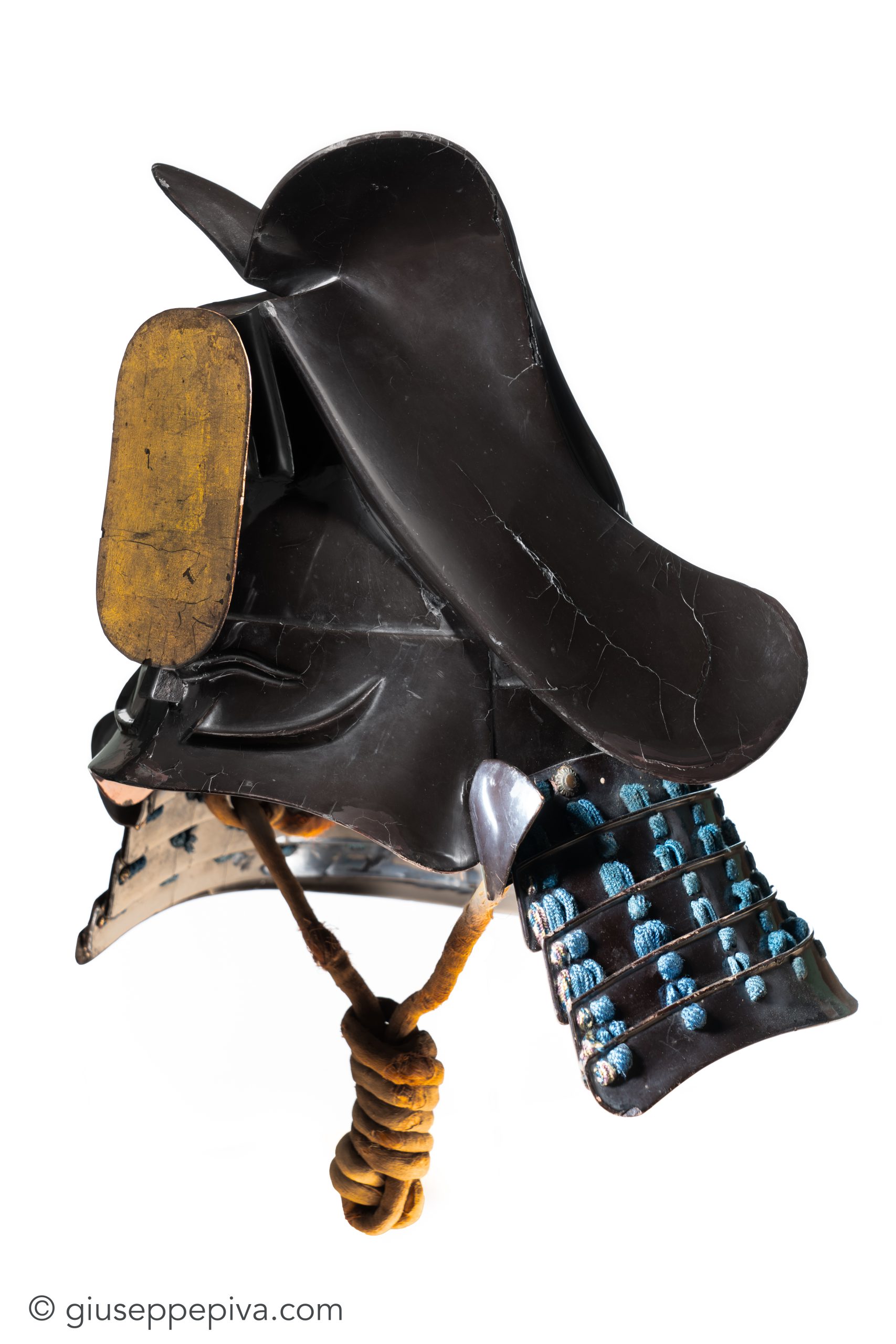
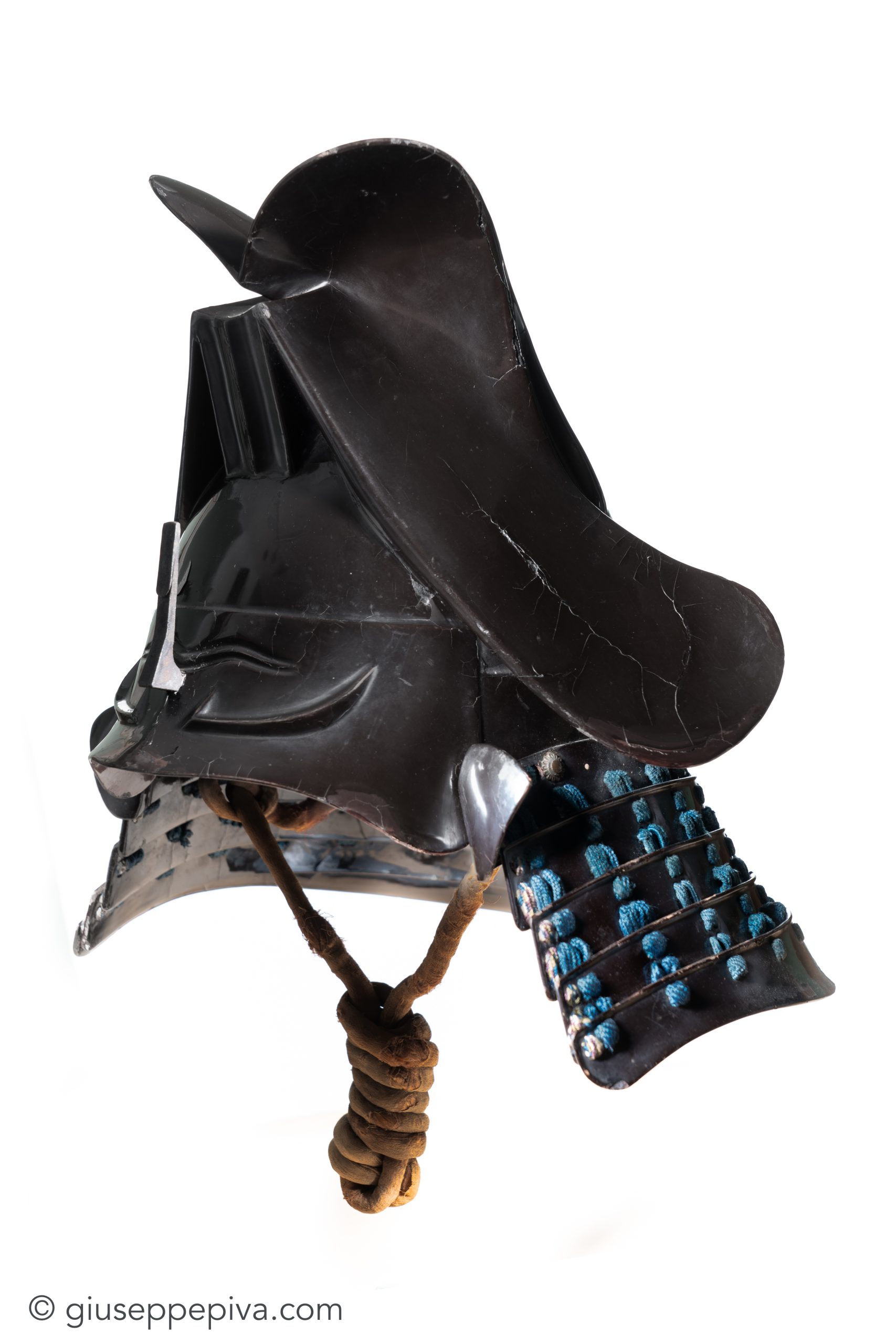
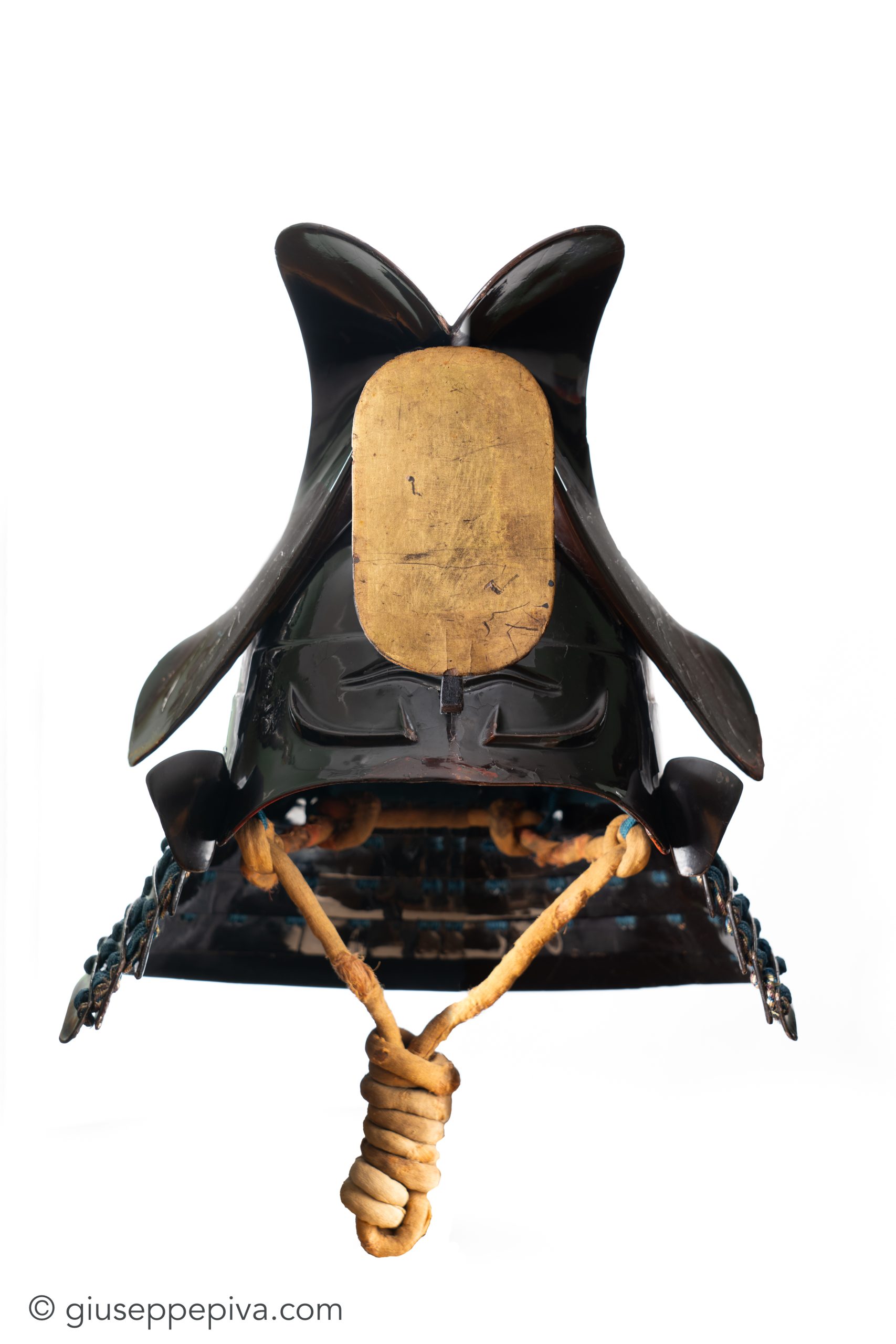
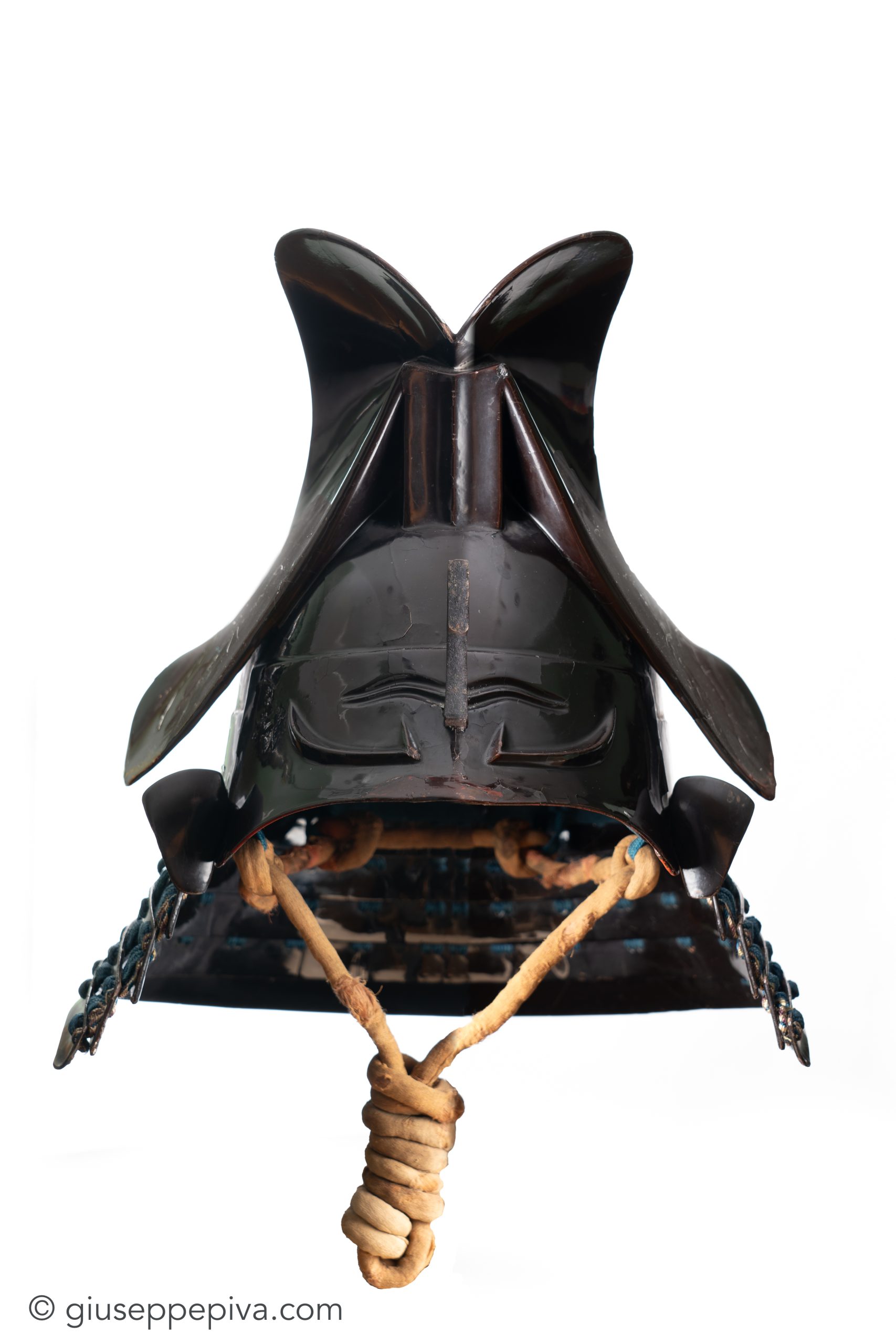
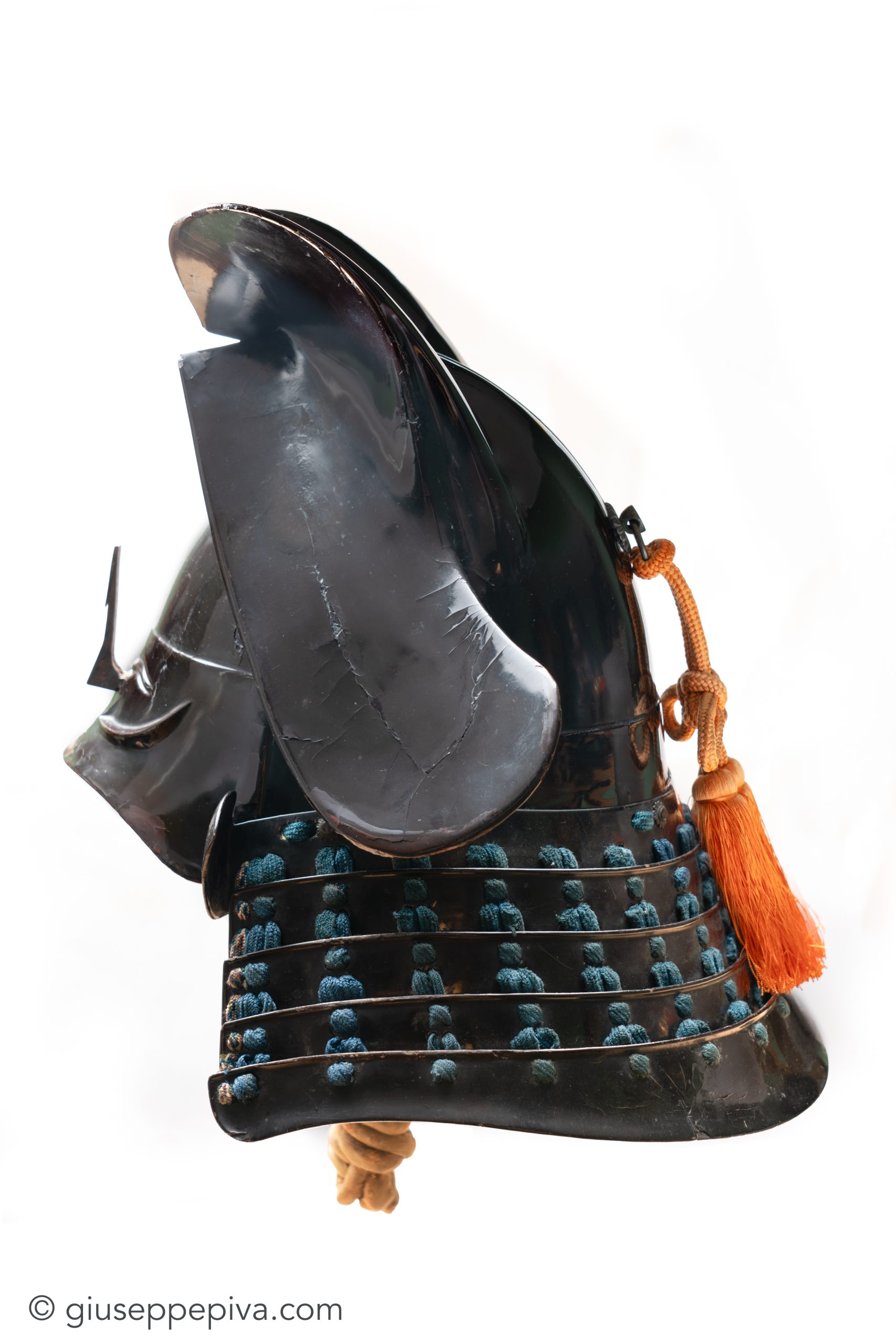
Kabuto only
6-plate · Kawari-kabuto
Unsigned
Edo
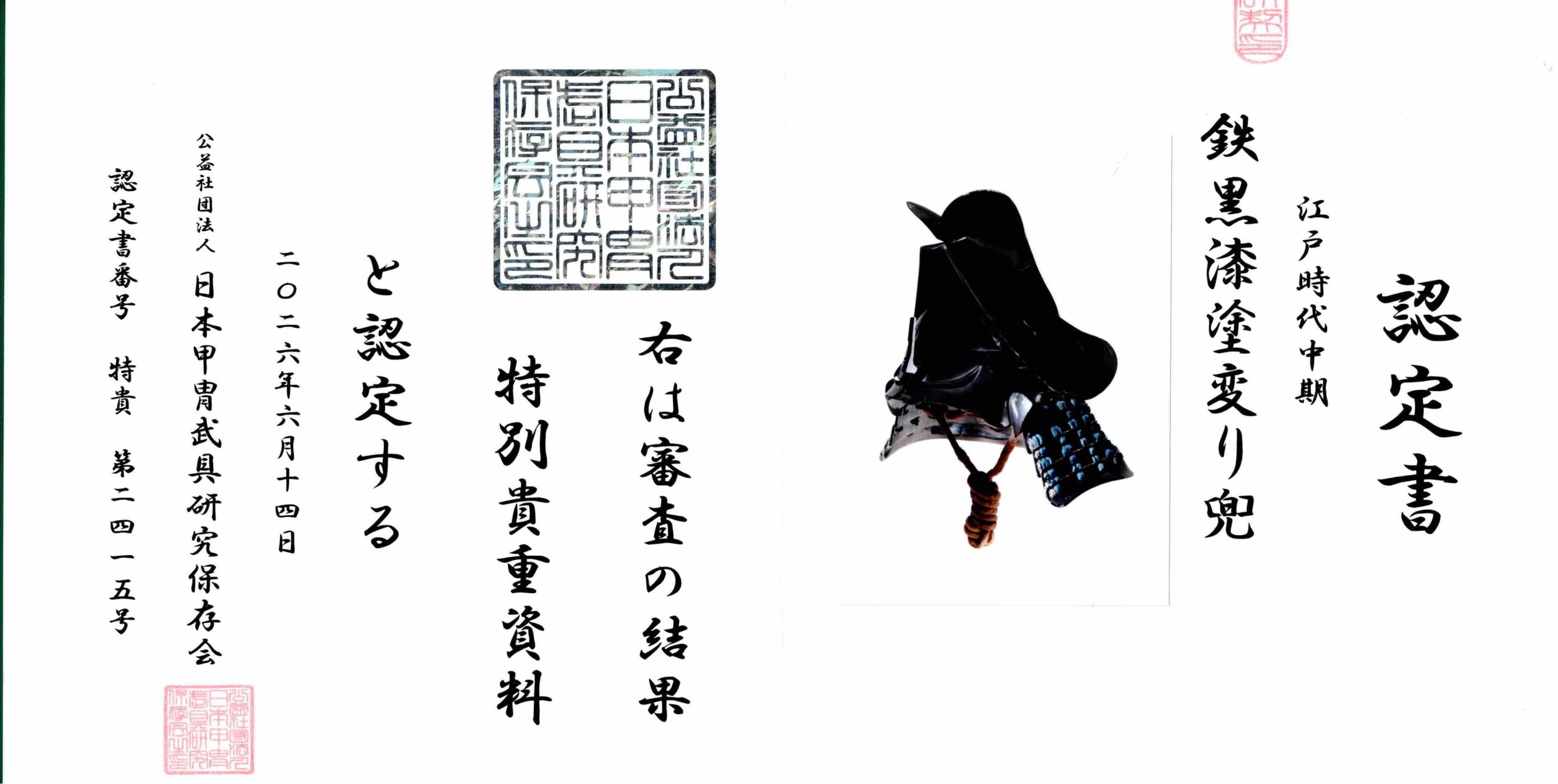
Tokubetsu Kichō Shiryō · Nihon Katchū Bugu Kenkyū Hozon Kai
Especially valuable armour of notably superior workmanship and condition, the third of the five ranks.
Japanese armour is not certified by the NBTHK. The Nihon Katchū Bugu Kenkyū Hozon Kai (the Association for the Research and Preservation of Japanese Helmets and Armour), founded in 1961, is the principal body for armour. Its shinsa grades a piece as 資料 (shiryō, "reference material") across five ascending ranks: Hozon, Kichō, Tokubetsu Kichō, Kōshū Tokubetsu Kichō, and the highest, Jūyō Bunka Shiryō. The 資料 framing reflects the society’s purpose of preserving armour as cultural and historical reference, distinct from the NBTHK’s sword paper tiers.
€24,000