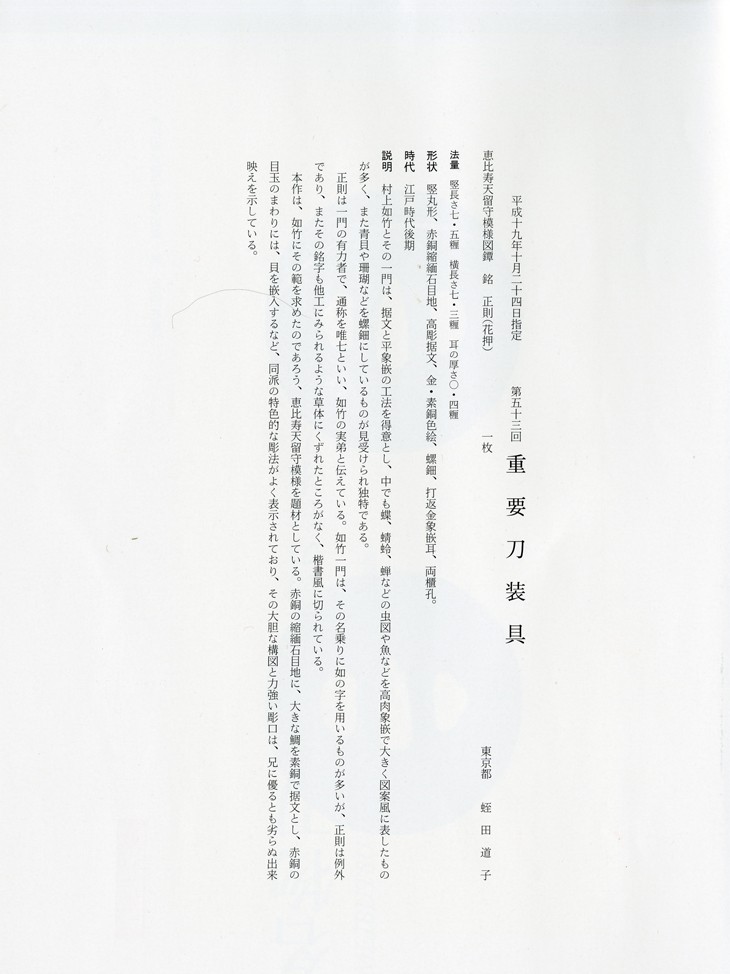
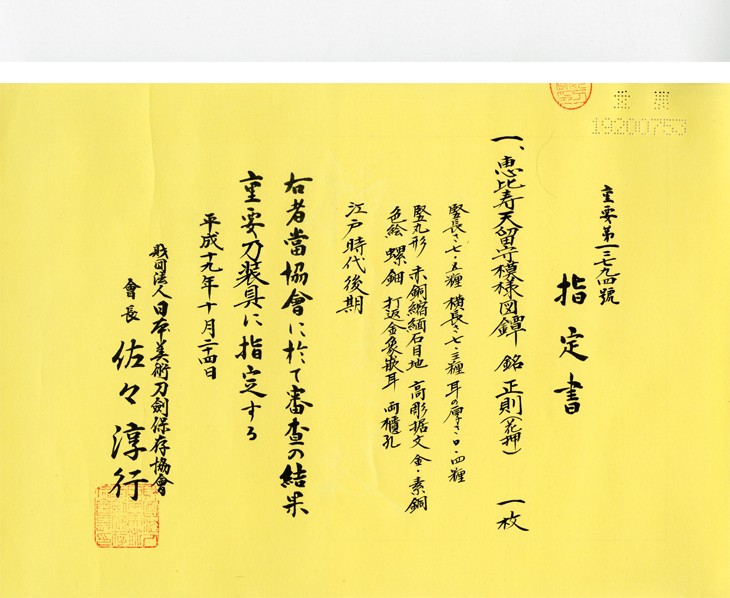
-Tōsōgu, 53rd Session — Designated October 24, 2007
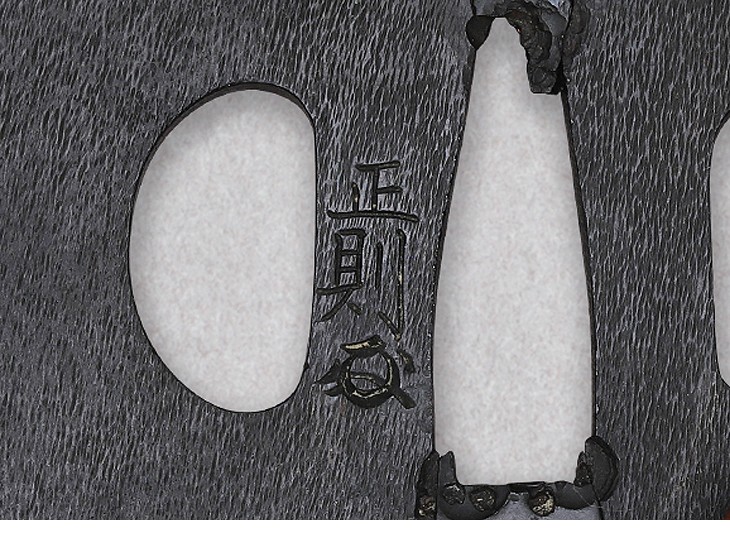
, : Masanori (正則) ()
Measurements (height): 7.5 cm; (width): 7.3 cm; mimi thickness: 0.4 cm
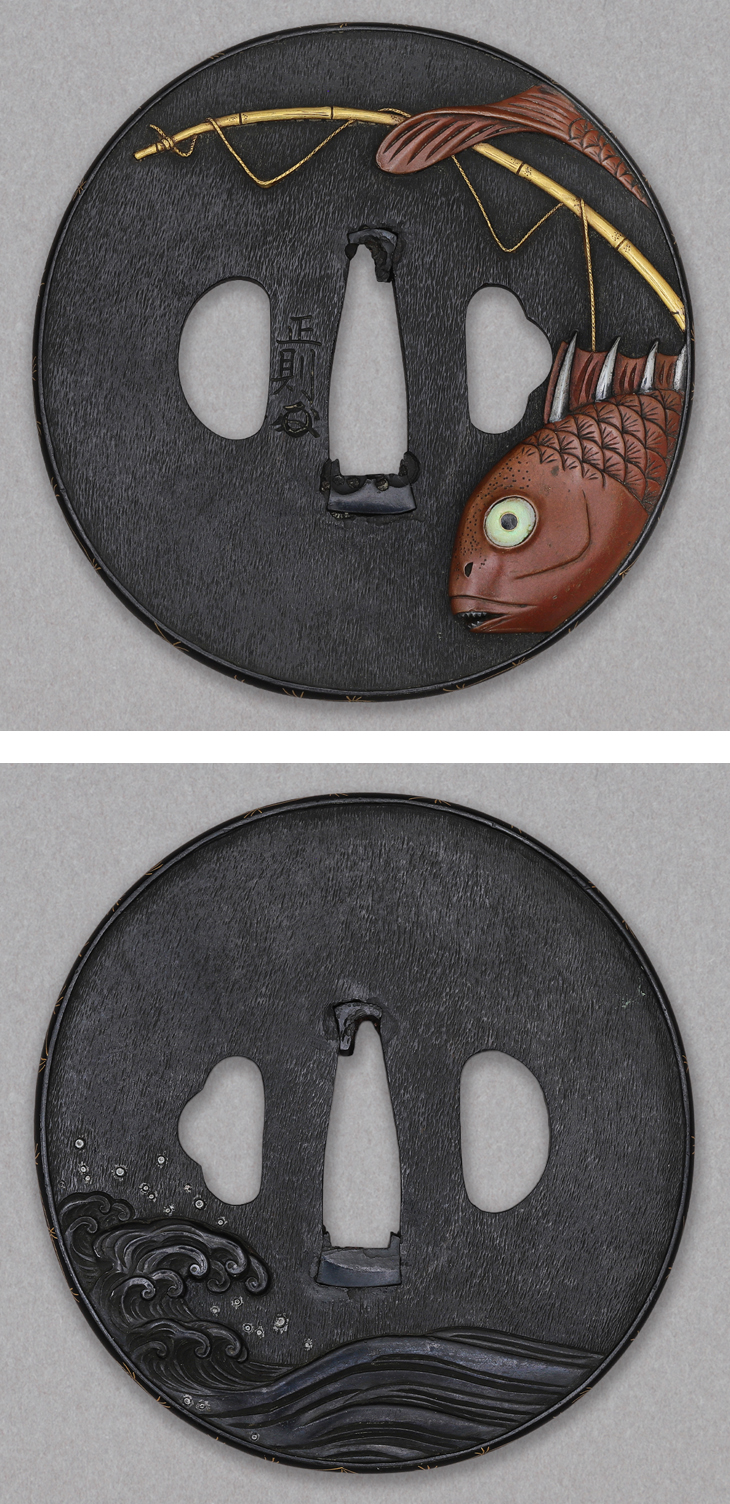
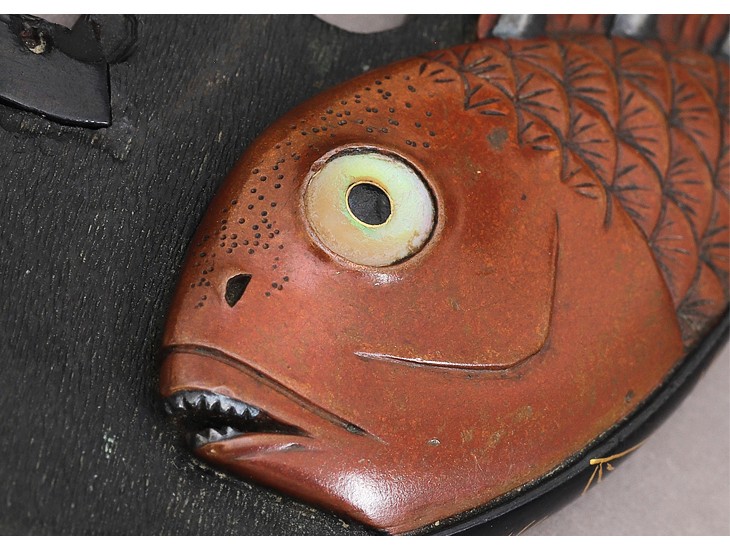
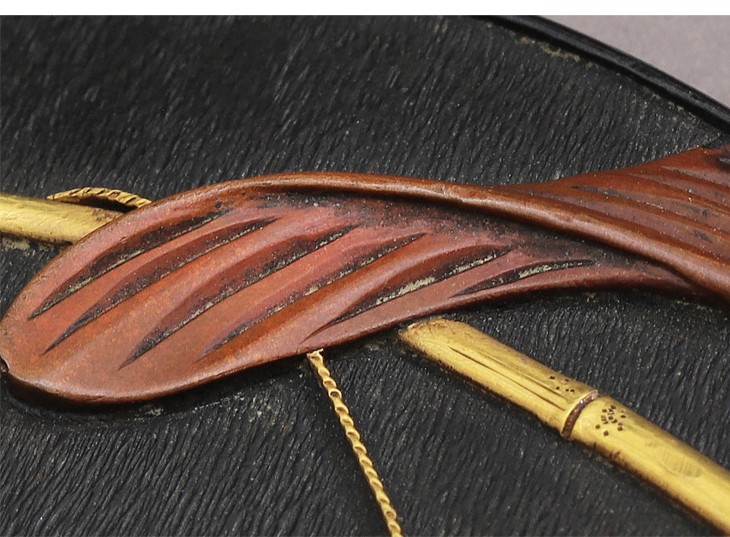
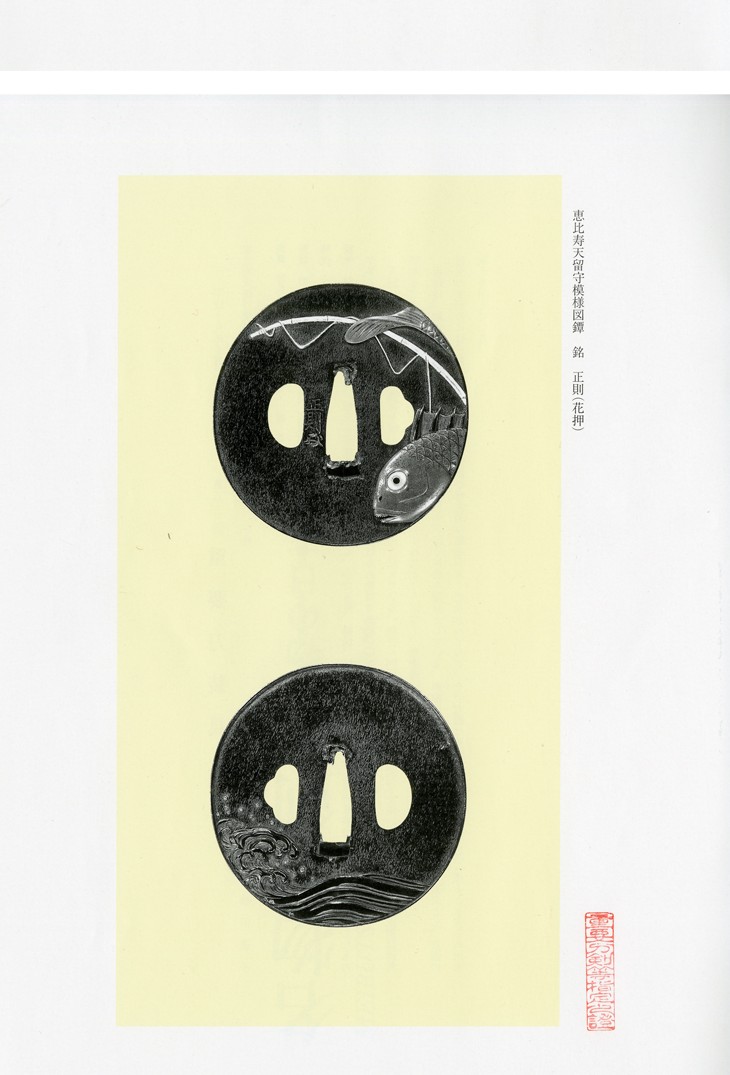
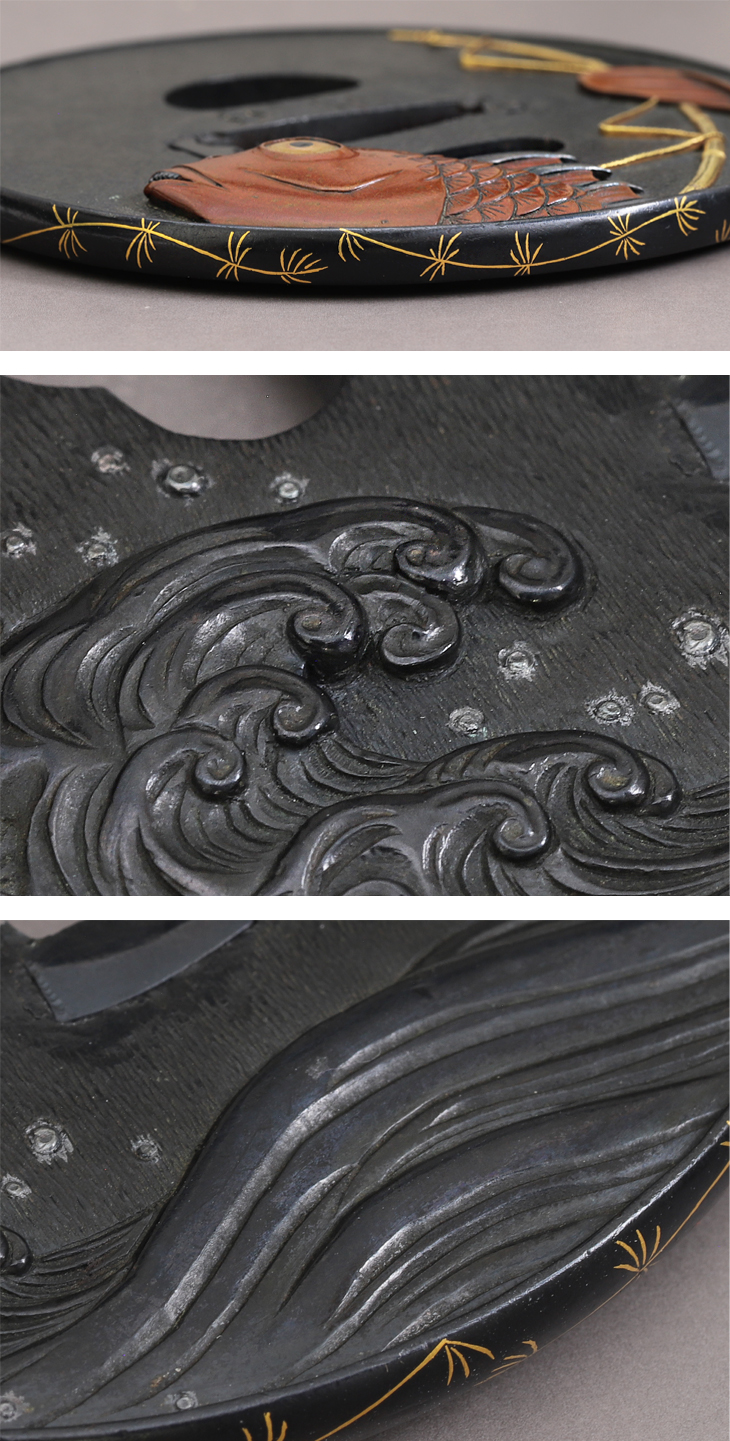
Description Form: (vertically oriented round form) Material: ; - (crepe-textured ishime ground) Construction: (single plate) Design: “Ebisu-ten rusu” pattern motif; a large sea bream (tai) Decoration: with (applied high relief); and (so-dō) ; (mother-of-pearl inlay) Rim: rim with gold-inlaid treatment () : two openings (ryō-hitsu) Signature: “Masanori” with
Artisan Murakami Jochiku lineage; Masanori, a leading figure within the Jochiku group.
Era Late period.
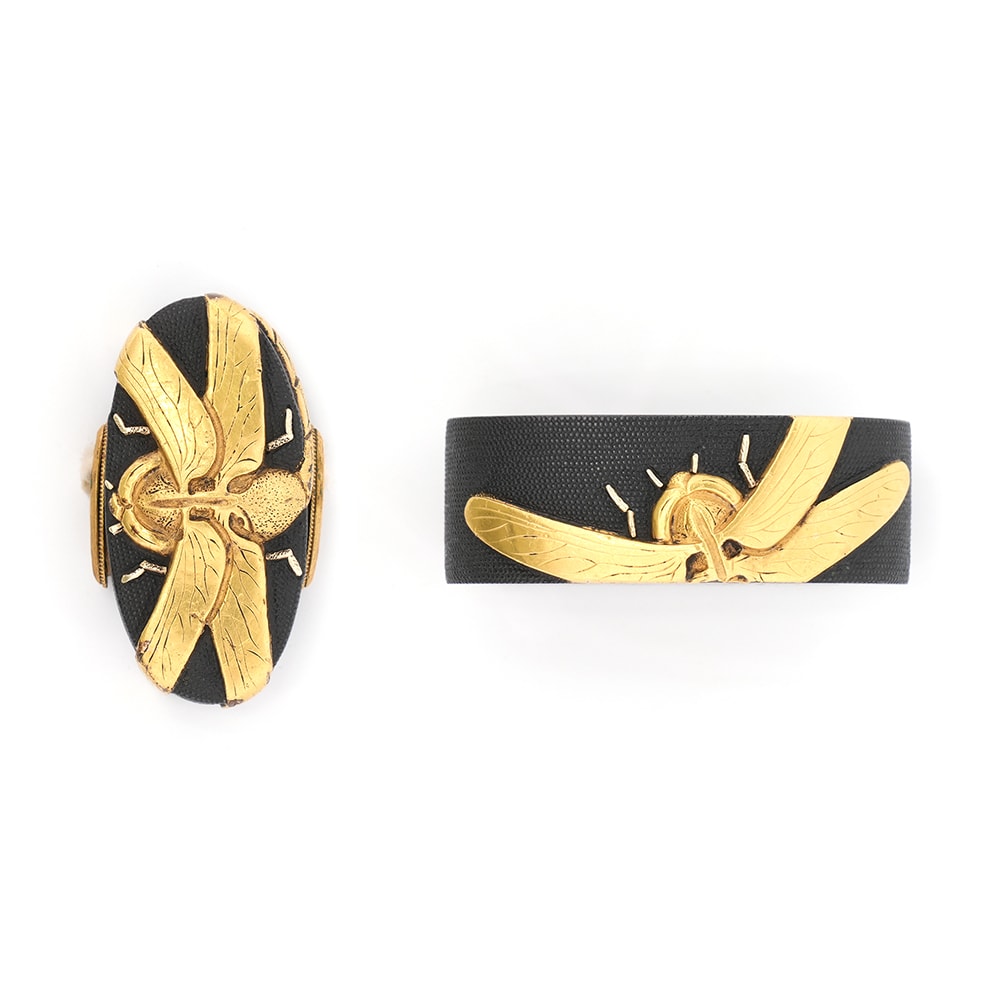
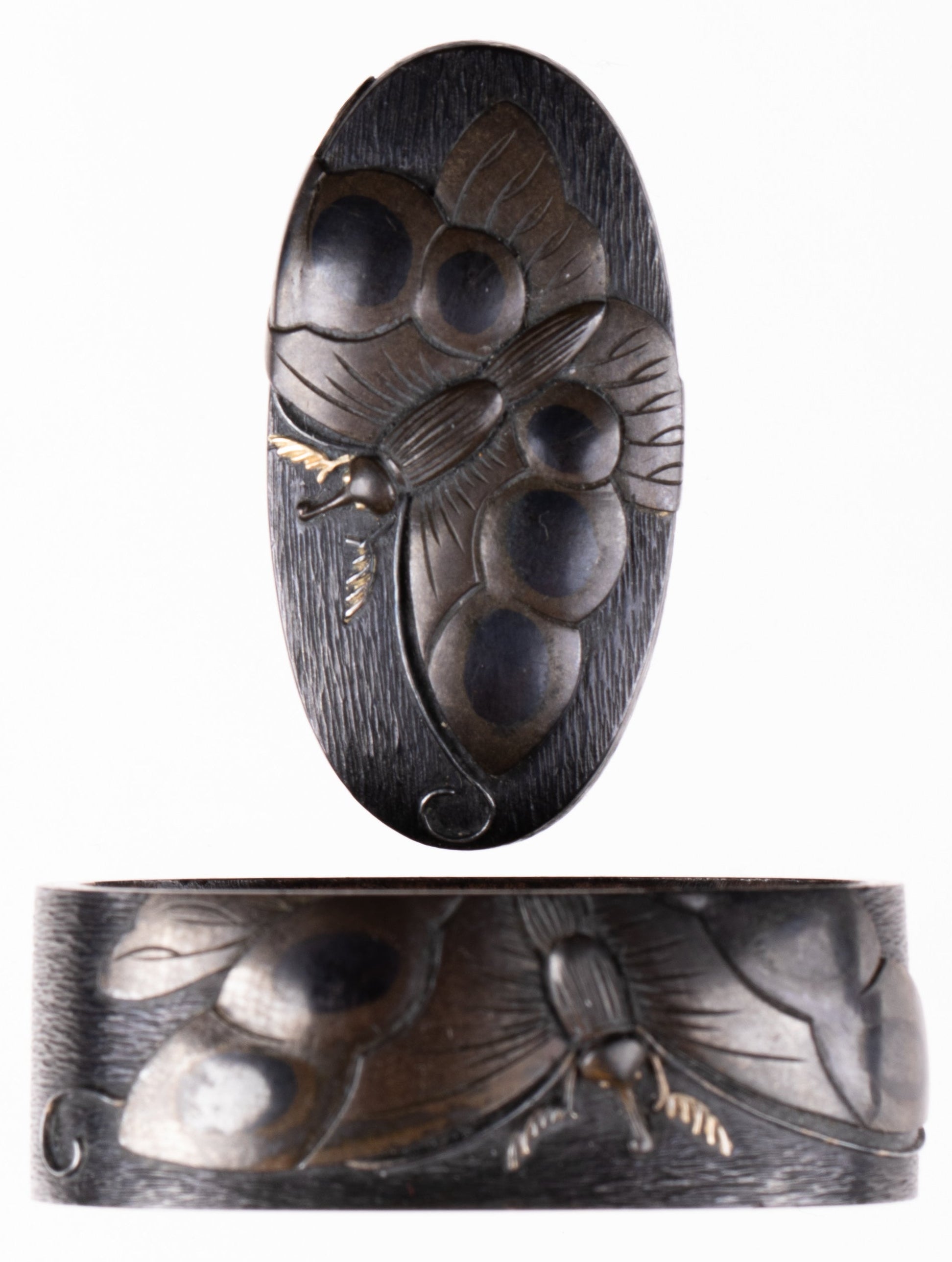
Explanation Murakami Jochiku and the artists of his circle specialized in the techniques of and hira-zōgan. Among their works are many in which insects—such as butterflies, dragonflies, and cicadas—as well as fish are rendered on a grand, design-like scale in high-relief inlay (takaniku-). It is also characteristic of this group that one occasionally encounters pieces employing materials such as (turbo shell) and coral as , a distinctive feature of their production.
Masanori was an influential member of this circle. He is said to have been known by the common name Tadashichi, and is traditionally regarded as Jochiku’s younger brother. While many in the Jochiku group incorporate the character jo (如) in their art names, Masanori is an exception. Furthermore, unlike the highly cursive signatures seen among other artisans, his is not broken into grass-script forms; instead, it is cut in a manner resembling (standard script).
This work, likely taking Jochiku as its model, employs the “Ebisu-ten rusu” pattern as its theme. Upon a ground finished in -, a large sea bream is set forth in as an applied motif; around the fish’s eye, shell has been inlaid. In this way, the school’s characteristic carving methods are clearly expressed. The daring composition and forceful chisel handling demonstrate an accomplishment no less impressive than that of his elder brother.