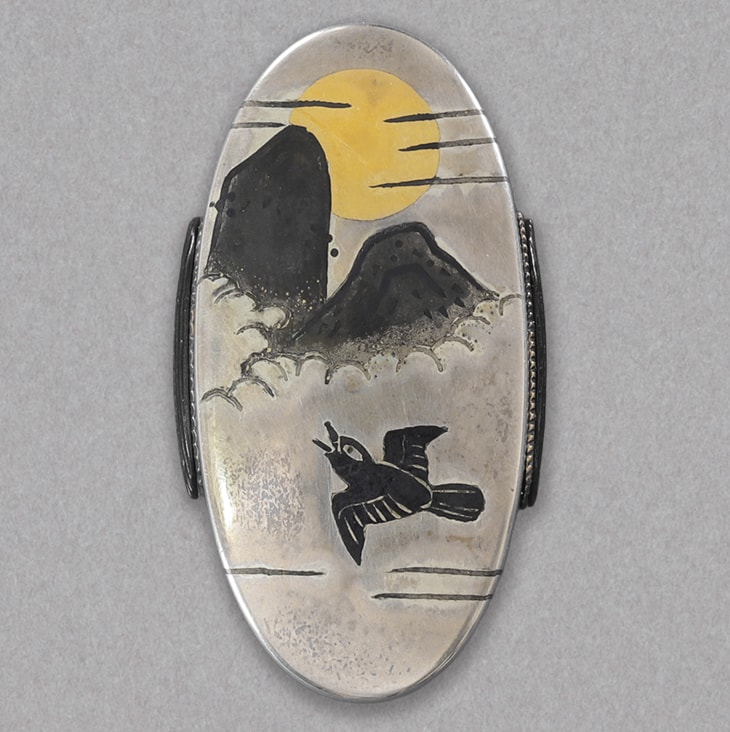
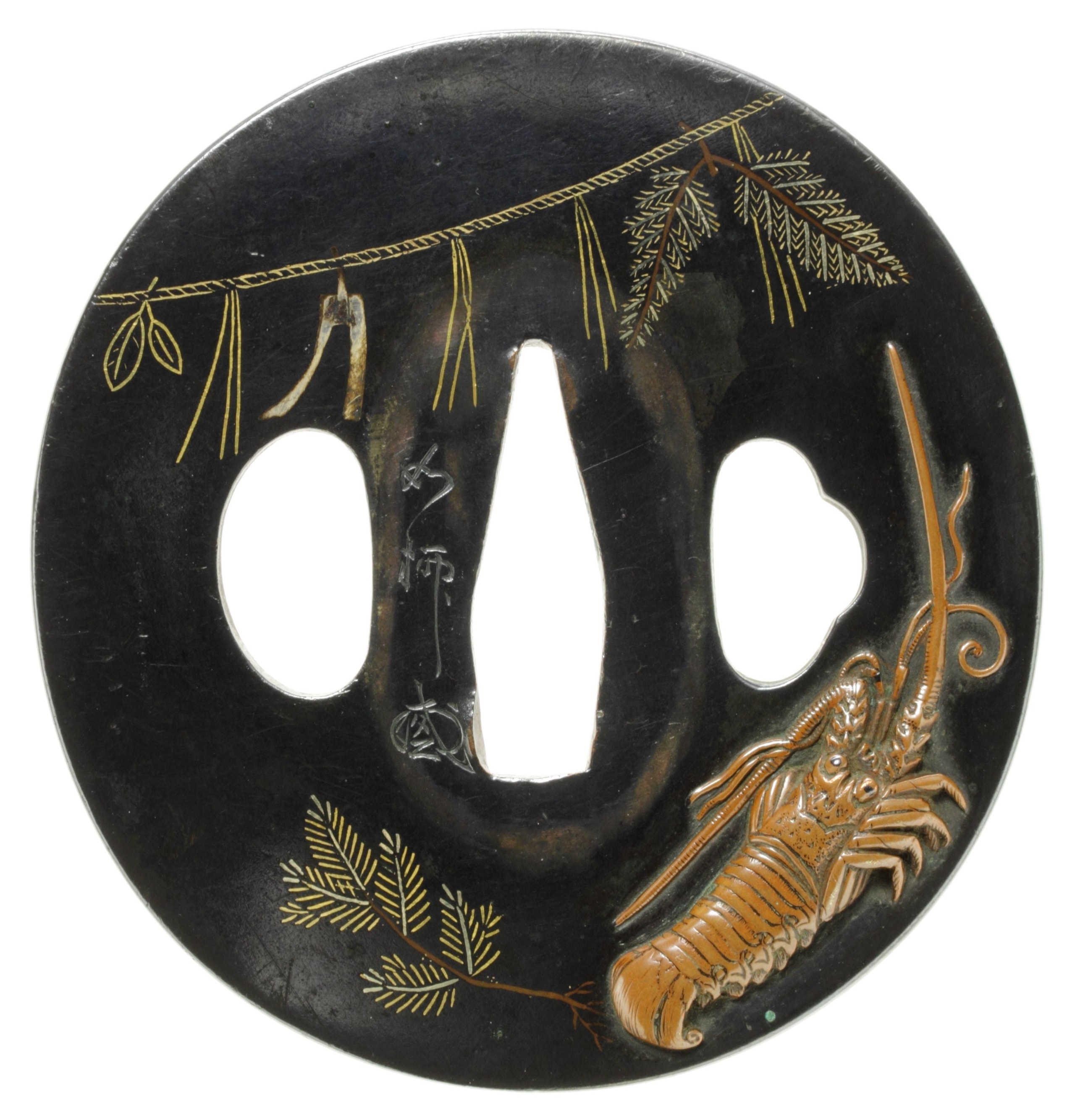
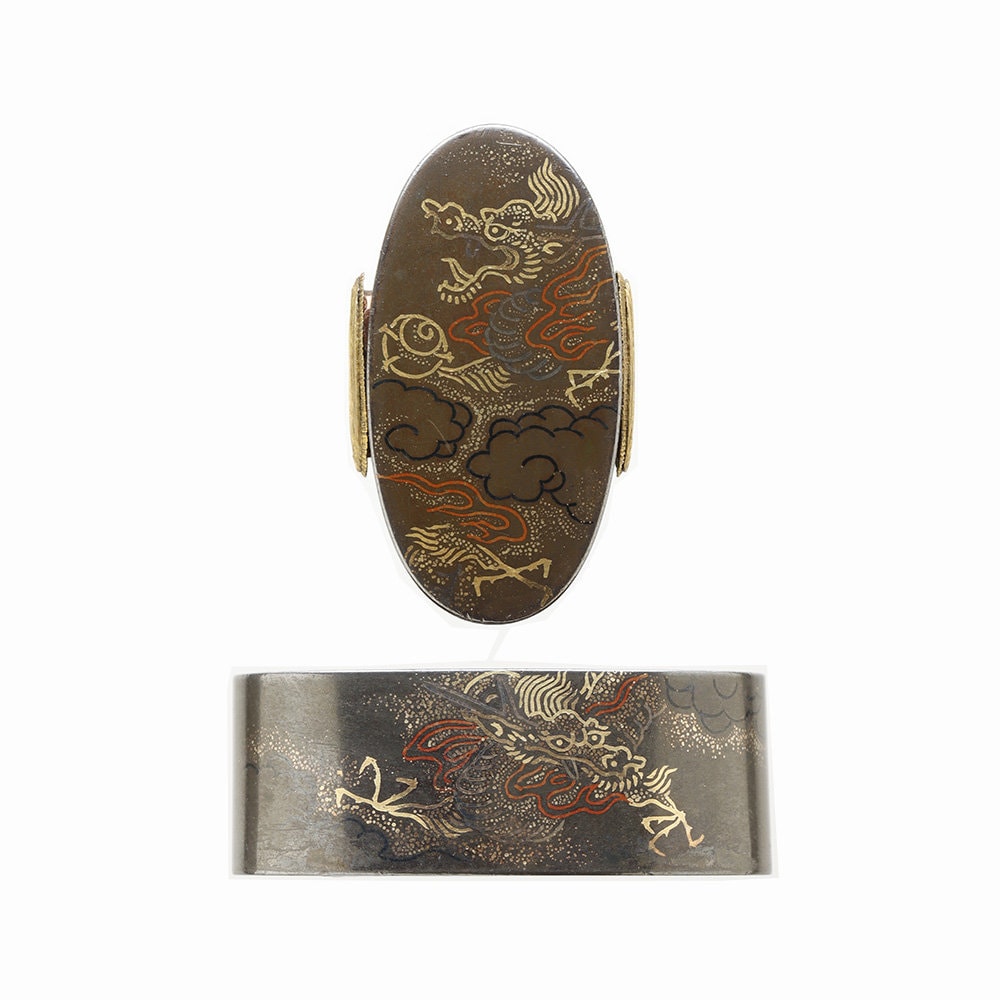
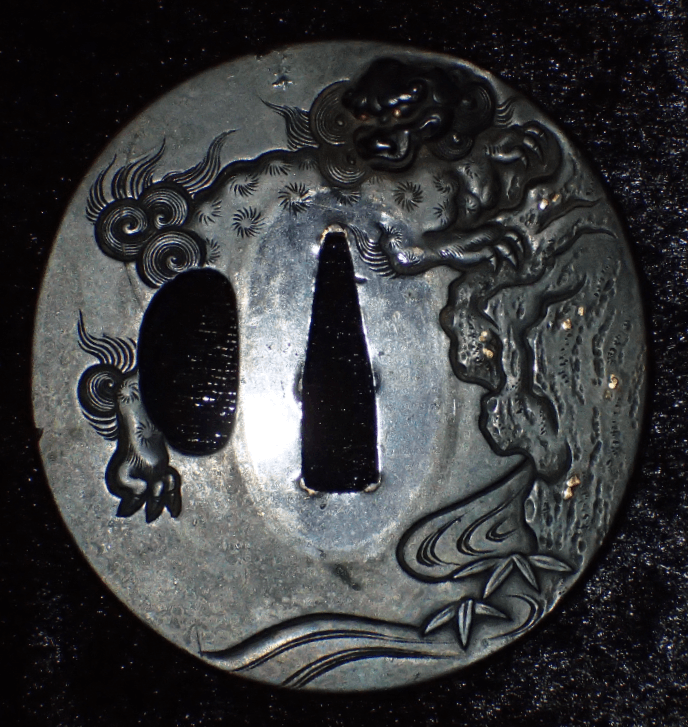
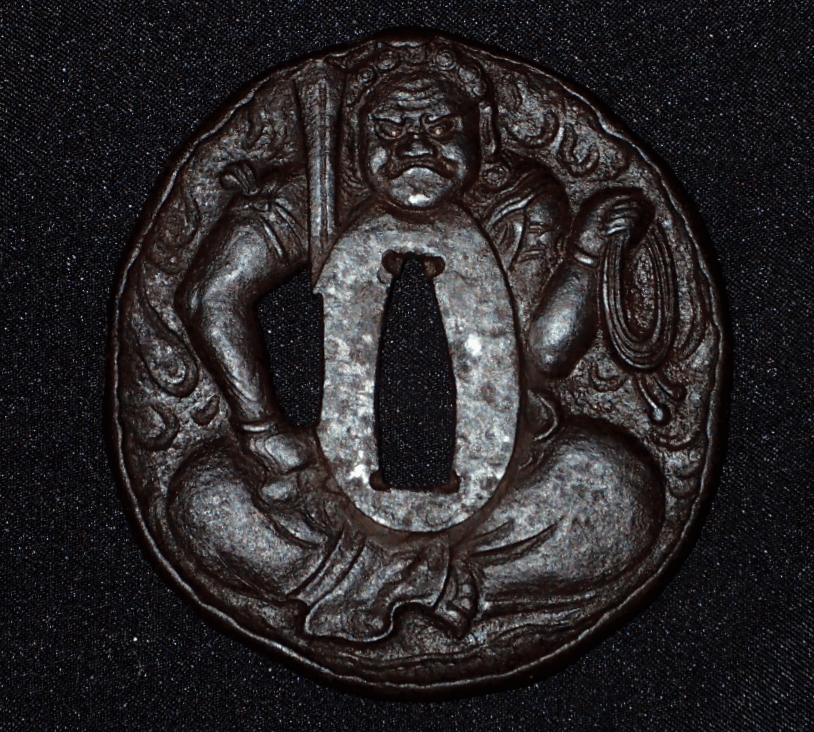
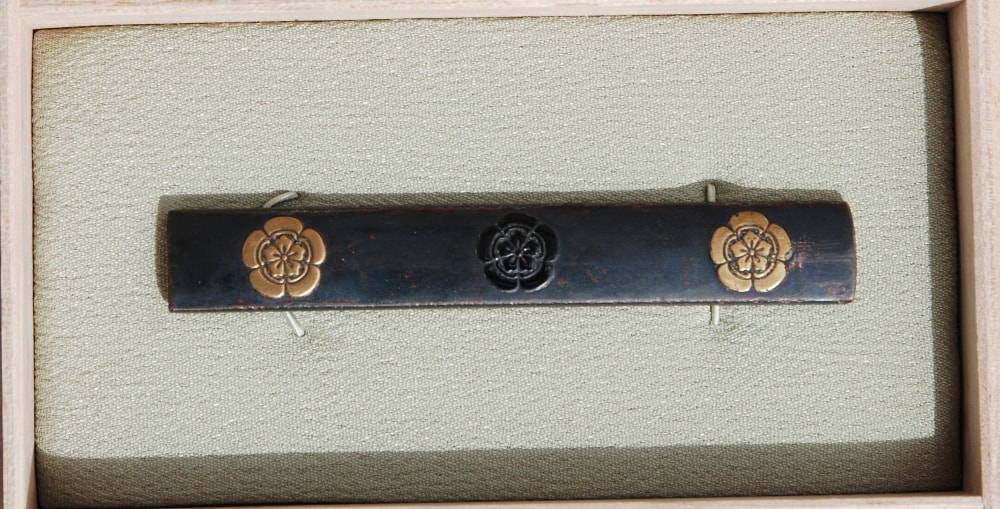
Murakami Jochiku lived in Shiba, , active around the Tenmei era (1781--1789). His personal name was initially Nakanori, and he later also signed Mitsunori; he used the art name Kanshodo. He is said to have originally come from a background as an inlay craftsman specializing in stirrups (abumi), and later turned to the work of a metal-fitting artisan, apparently establishing himself without seeking a particular master. The details of his formal training are not clearly known. From the manner of his signatures, his oeuvre can be broadly divided into an early period -- when he signed with the Nakanori seal -- and a mature period under the name Jochiku. Some works bearing the Nakanori seal are recognized as youthful productions on the basis of their powerful manner and signature form.
Jochiku's works show particular strength in the techniques of - (applied-motif inlay) and - (flat inlay). Many of his designs render, in large, boldly stylized compositions, subjects drawn from the natural world -- insects such as dragonflies, butterflies, and cicadas; fish such as sea bream, squid, whitebait, and shark; and animals such as cats and tigers -- expressed through high-relief inlay (takaniku-) with ample modeling. In parts of these compositions he heightened the coloristic effect by inserting materials such as mother-of-pearl (), coral, blue lacquer, and even glass, in a manner reminiscent of embedded ornaments in lacquerwork (umemono), thereby establishing a distinctive new approach. His favored ground is the - (crepe-textured stone-grain surface) in , though carefully executed works on are also known, and all such examples carry a correspondingly high dignity. His tiger depictions, among his recognized specialties, are powerfully expressed down to the rendering of fur through dense, delicate , with crystal or glass insets for the eyes imparting a keen, piercing gaze. The chiseling -- pursued with unwavering commitment to realism -- is consistently praised as superb, with applied with precision across gold, silver, , plain copper, and reddish copper (hi-irodo).
Across the designated corpus, the repeatedly characterizes Jochiku's manner as "extremely individualistic" and "intensely personal in character," noting that his commanding compositions "overwhelm other works" and that his true strengths allow "no rival craftsmen to surpass him" in the use of inlay. His rusu-moyo ("absence pattern") compositions -- in which the deity Ebisu is evoked solely through attributes such as the sea bream, fishing rod, and eyeless basket -- recur as a signature theme, often embellished with the auspicious character kotobuki inlaid around the rim, and judged to have been produced on commission for wealthy merchant households. In his forceful chiselwork, his pursuit of an overtly craft-oriented decorative beauty, and his innovative synthesis of metalworking with materials drawn from the lacquer and glass arts, Jochiku opened up and mastered a distinctive artistic realm entirely his own.