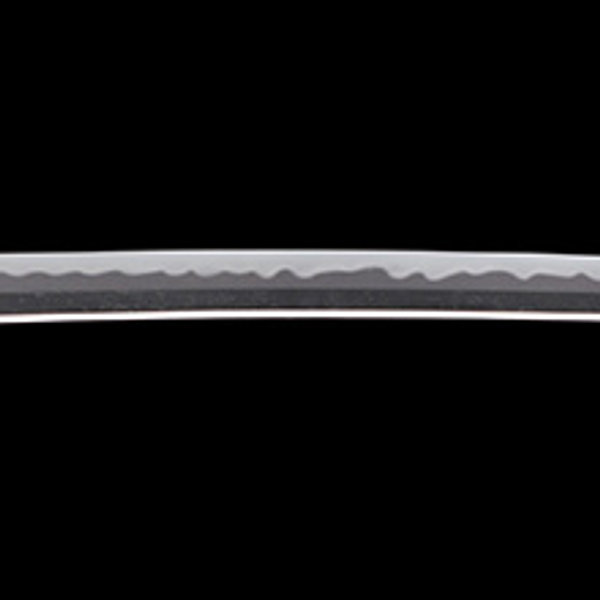
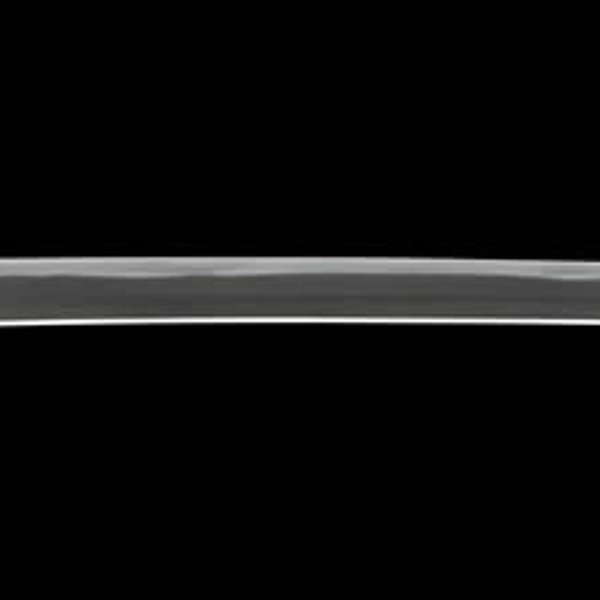
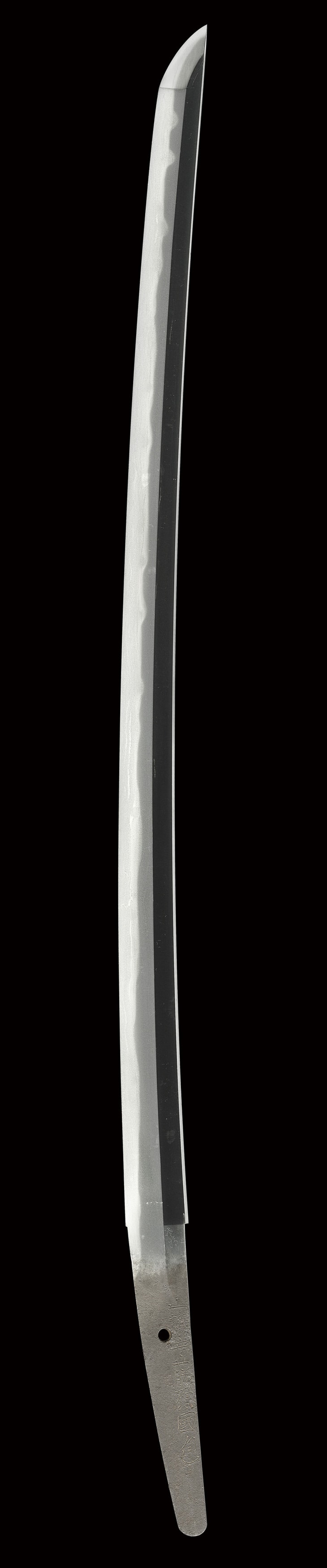
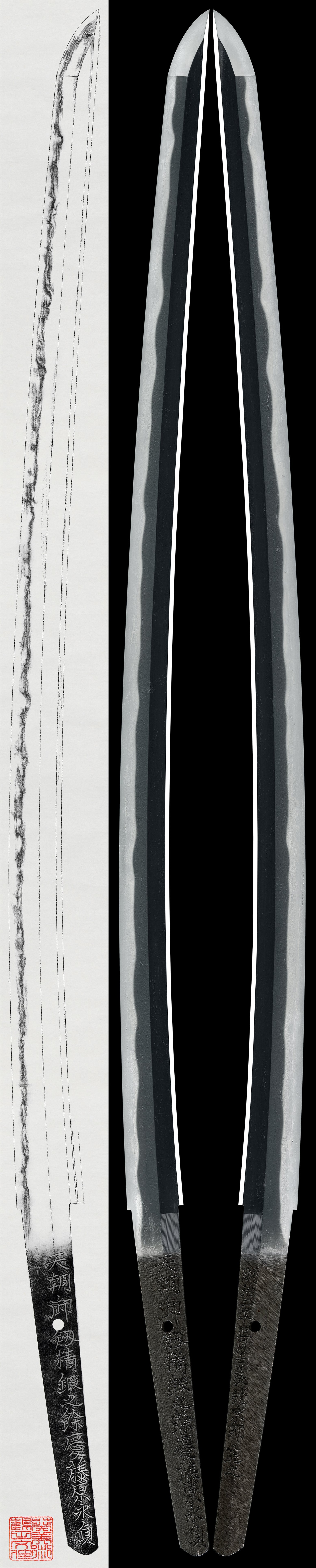
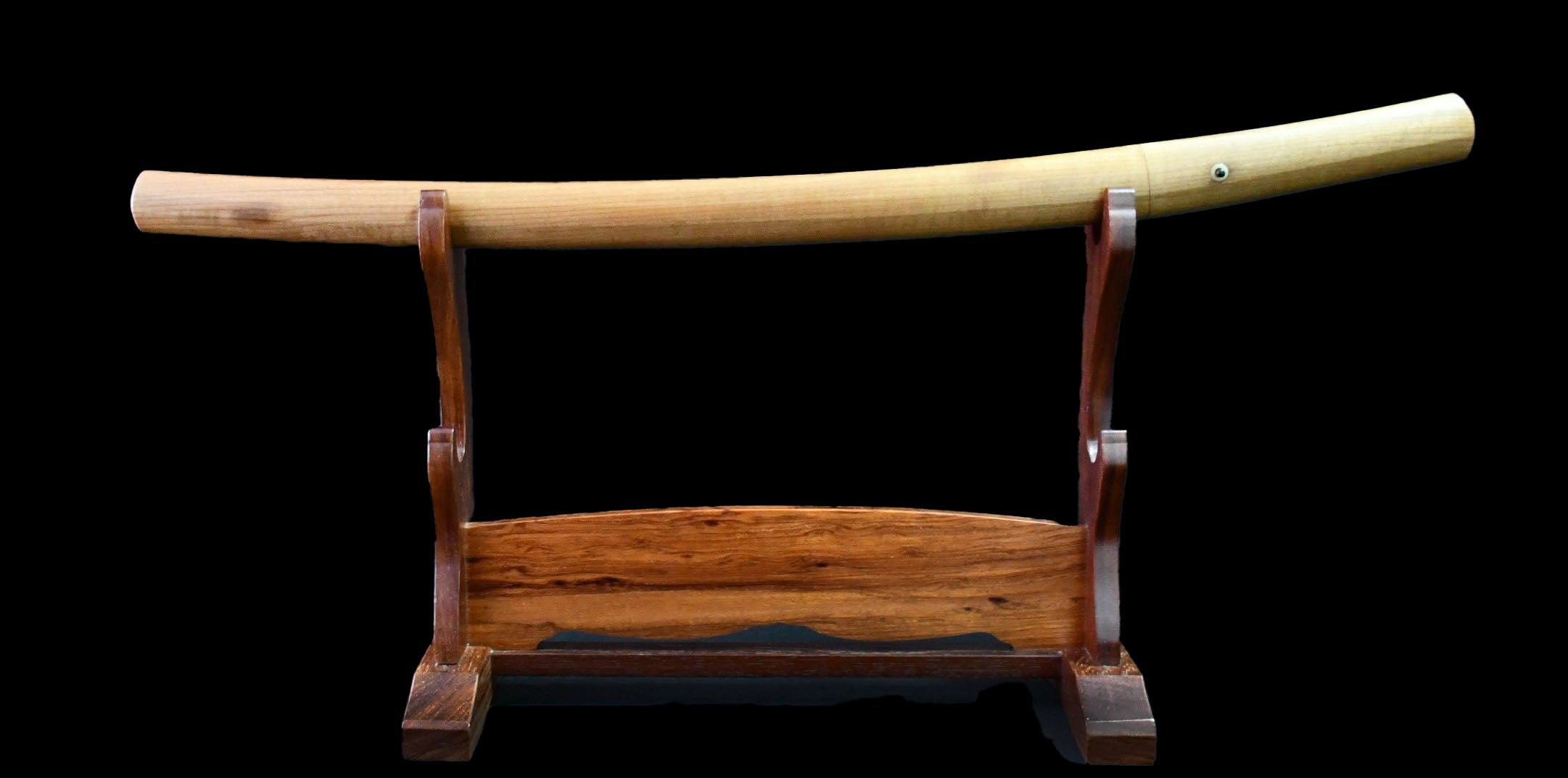
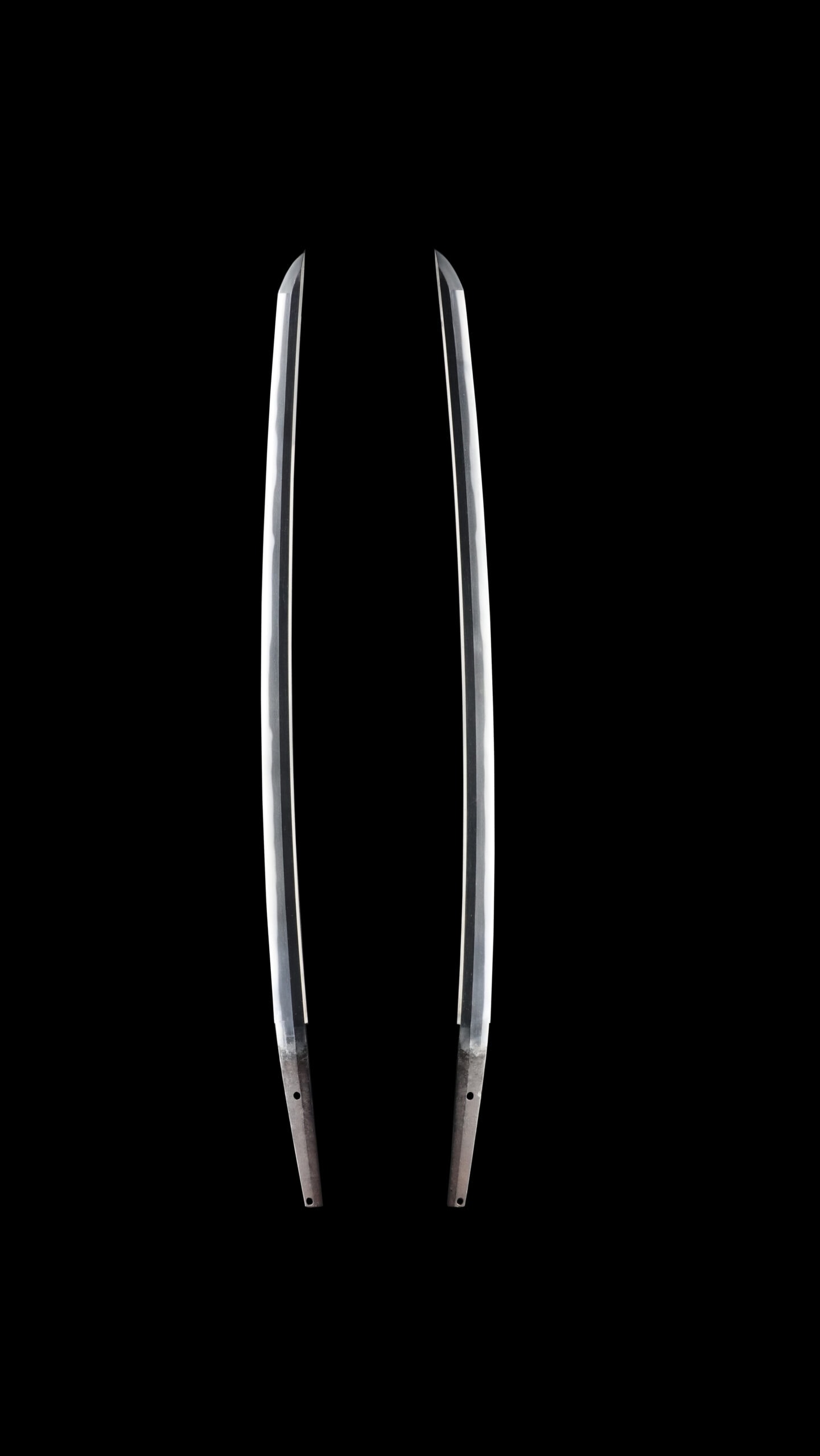
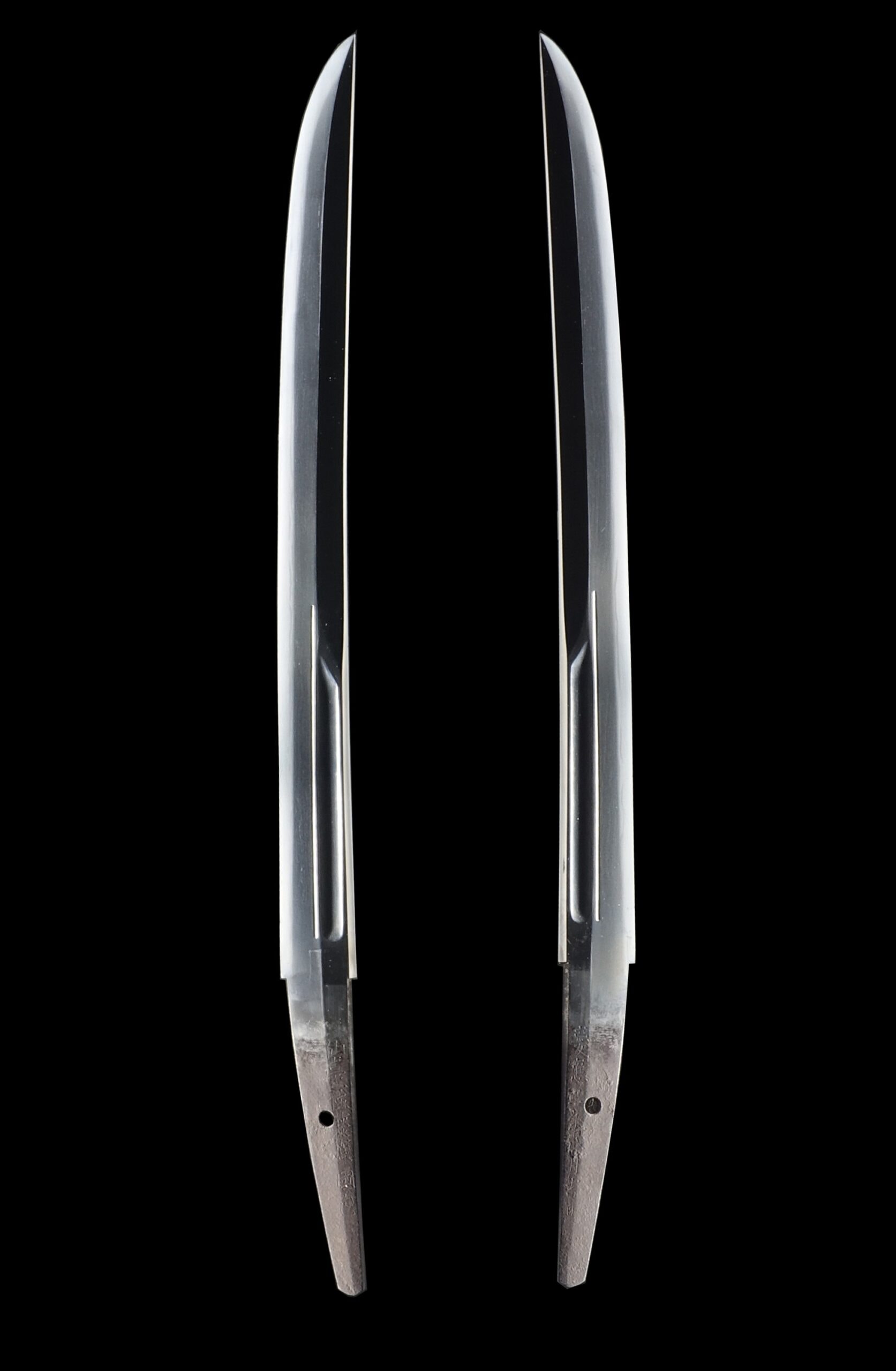
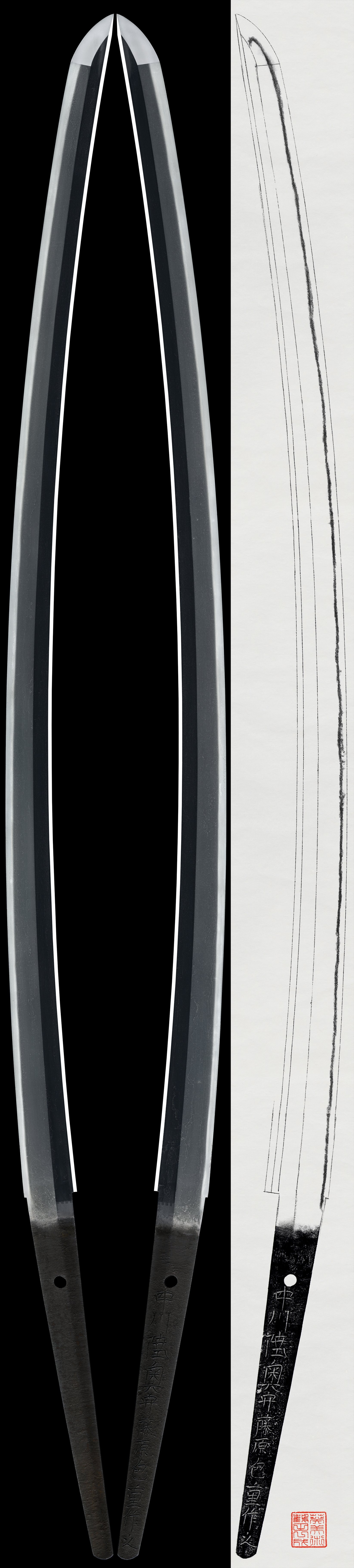
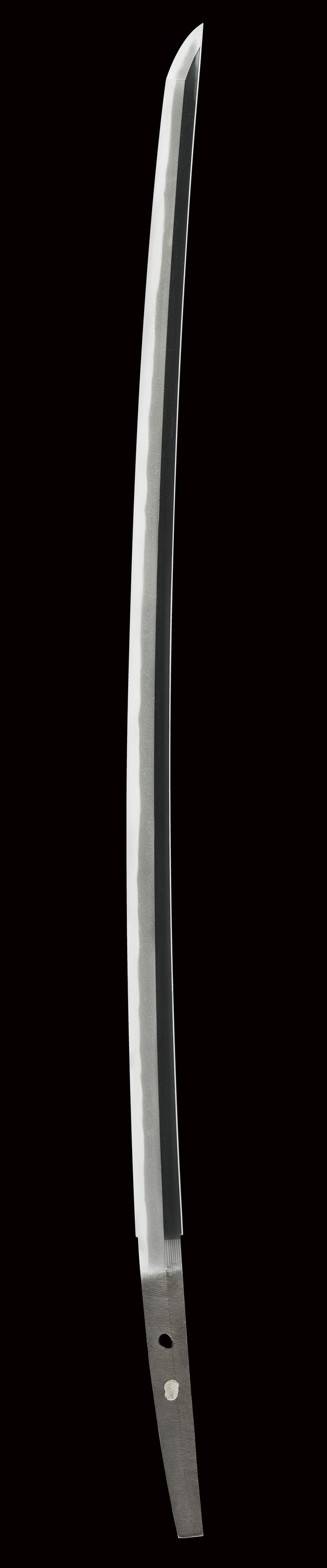
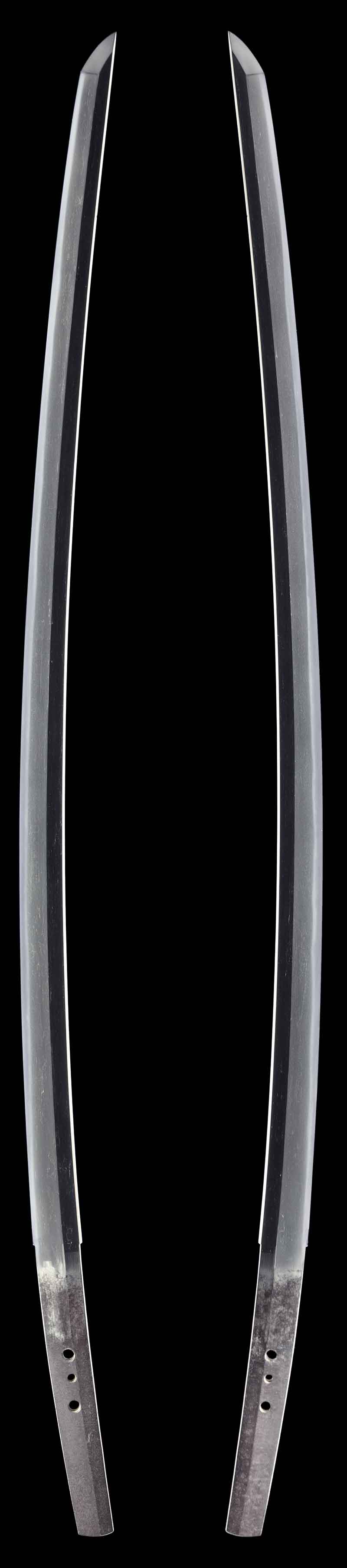
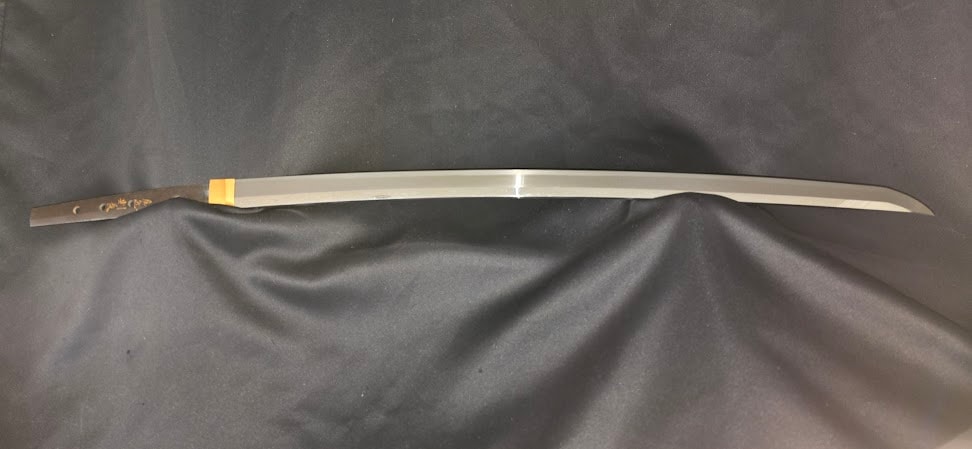
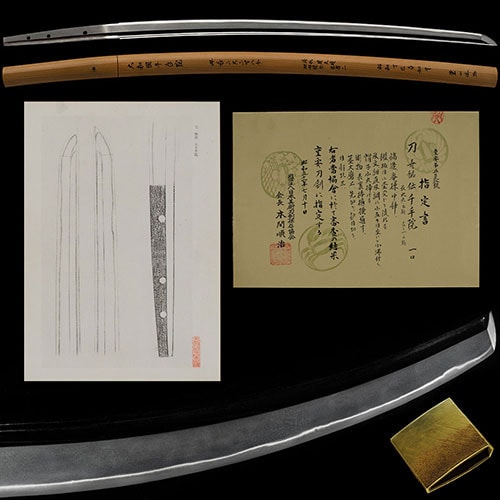
A long katana carrying the gold-inlaid ownership inscription of Kan Shinbei and a two-body cutting test made by Yomogita Yasudayu on the sixteenth day of the twelfth month of Kanbun 11 (1671) is, in the words of the published sources, one of the representative works of the second-generation Yamashiro no Kami Kunikane of Oshu Sendai. He was the eldest son of the founder, Yamashiro Daijo Kunikane, and was called Hongo Kichiemon. Born in Keicho 17 (1612), he succeeded to the house in Shoho 2 (1645) at thirty-four and served the Date house as his father had. He received the title Yamashiro no Kami on the twelfth day of the eleventh month of Kanbun 7 (1667), three years after his father's death, and died on the second day of the seventh month of Kanbun 12 (1672) at sixty-one.
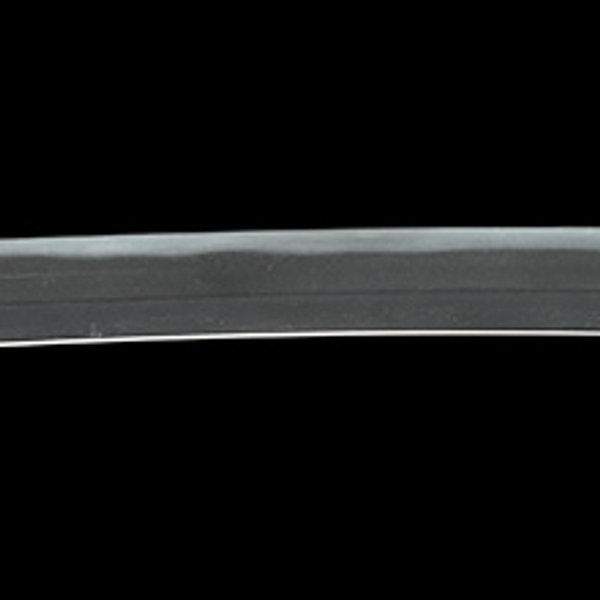
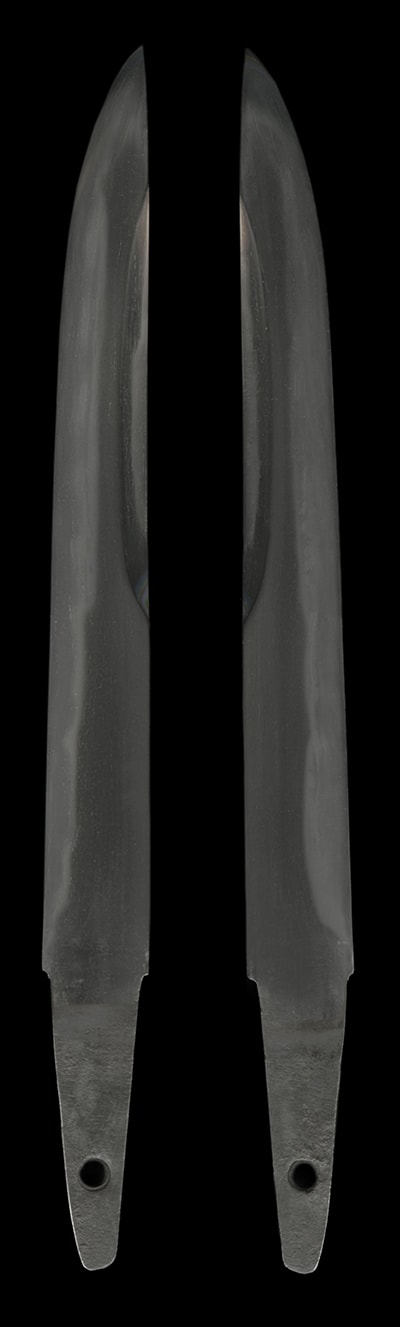
The published sources say his style followed the founder's entirely and kept from first to last to the Hosho manner, the masame forging of the Yamato Hosho school from which the family claimed descent. He was skilled at suguha and only occasionally tempered a gunome-midare. Every blade on record under his name is forged in masame and tempered in suguha. The masame runs well with ji-nie laid on it, and on the finest pieces the ji-nie is dust-fine and thick with fine chikei entering. Over it he tempers a chu-suguha, small ashi entering toward the monouchi, the habuchi frayed in hotsure and crossed by kuichigai-ba, kinsuji tangling along the edge and fine sunagashi following the grain. The boshi runs straight and either ends in yakizume or turns into a small maru, sweeping into hakikake.
The published sources name his own points to watch. On a blade they call typical, a mizukage rises from below the machi, a habit they say is seen on the second generation as on the founder, and a faint utsuri appears in the lower half. The nakago file is at times finished in a simple decorative pattern, which the texts also count among his features. The signature has a tell of its own: in his mei the horizontal strokes are all driven hard and pressed at the end, and the form of the inner part of the character 包 is a point to watch.
Beside the plain suguha, a few blades widen the temper into a hiro-suguha touched with notare and gunome, a nijuba and patches of coarse nie in the activity. Of one katana the published sources say that for the second generation it is truly full of power and hardly inferior to the founder, and place it around Kanbun 10. Another, dated Kanbun 10 (1670), is called extremely carefully made and without a flaw. A katana signed Oshu Sendai ju Kunikane is placed before he took the Yamashiro no Kami title and is still called typical and representative.
The texts weigh him against his father in two voices. An early paper says his style is exactly his father's but his skill does not reach it; later papers call him the next most skilled after his father, his finest work approaching the founder's. They also correct the received chronology: the account that the founder retired in Shoho 2 and died at seventy-three in Kanbun 4 is said probably to contain an error, and the second generation is fixed instead by his Yamashiro no Kami title in Kanbun 7 and his death in Kanbun 12.
Fujishiro rates him Jo saku. His designated record holds ten Juyo blades, all signed, most long and sturdy katana of the Kanbun shape with a wide body and full hiraniku. The founder's own work, including the pieces signed with his go Yokei, stands under the founder's name; the second generation is the Kunikane a collector is more likely to meet, a signed Kanbun katana of masame and suguha that the published sources hold up as the family's Hosho manner carried faithfully into a second generation, appearing on the market from time to time.