NihontoWatch MonNihontoWatchBETA
MarketEncyclopedia
NihontoWatch Mon

NihontoWatchBETA

Market
Encyclopedia
Overview·Kantei·Designations·Provenance·Blade Forms·Signatures·Lineage·School
OverviewKanteiDesignationsProvenanceBlade FormsSignaturesLineageSchool
  1. Schools
  2. Sendai Kunikane
  3. Kunikane

Sendai Kunikane

國包

Jūyō
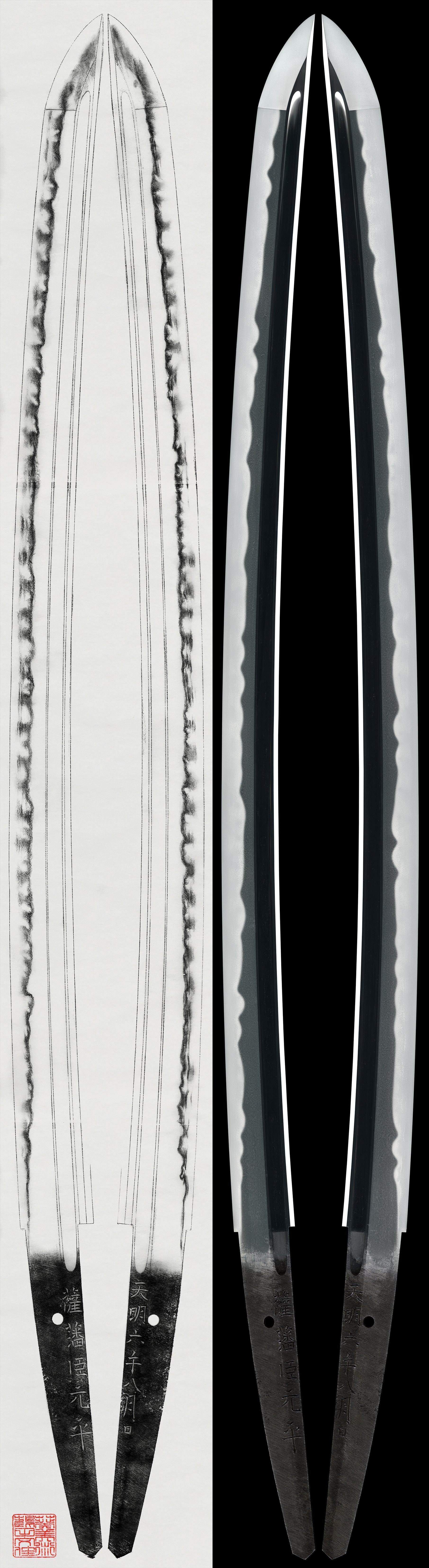
Vol. 19, No. 361 · Katana

Sendai Kunikane

國包

12 ranked works

ProvinceRikuzenEraShoho (1644–1648)PeriodEdoSchoolSendai KunikaneTraditionYamato-denGeneration2ndTeacherKunikaneFujishiroJo sakuToko Taikan450(top 31%)TypeSwordsmithCodeKUN306
2Jūyō Bijutsuhin
10Jūyō Tōken

Overview

Yamashiro-no-kami Fujiwara Kunikane, the second of the Sendai line, was born in Keicho 17 (1612), succeeded to the house in Shoho 2 (1645) at the age of thirty-four, received the Yamashiro-no-kami title in 7 (1667), and died in 12 (1672) aged sixty-one. He was the eldest son of the founder, the Yamashiro-daijo Kunikane, who claimed descent from the late line of Yamato Hosho, served Date Masamune of Sendai, and by his lord's order went up to Kyoto to study under -no-kami Masatoshi before receiving the Yamashiro-daijo title in 3 (1626). The Kunikane name was the standing forge of the Date house, and across both generations its identity rests on a single inherited manner: the forging of the Yamato Hosho tradition, tempered in . The published sources call this his hereditary specialty, the family's transmitted Hosho-style at which he was particularly accomplished in the straight temper, and they rate the second generation a master of second only to his father.

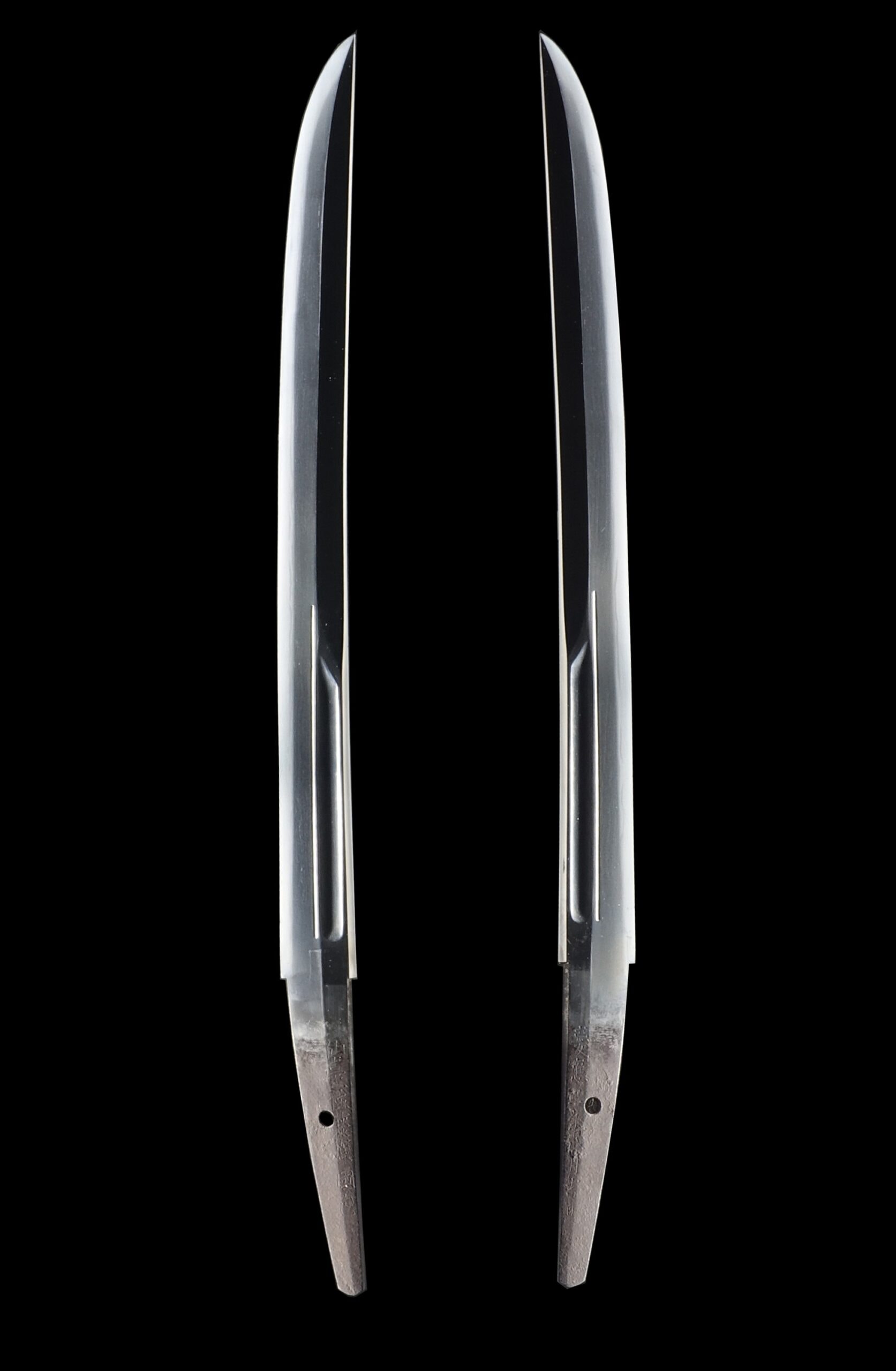
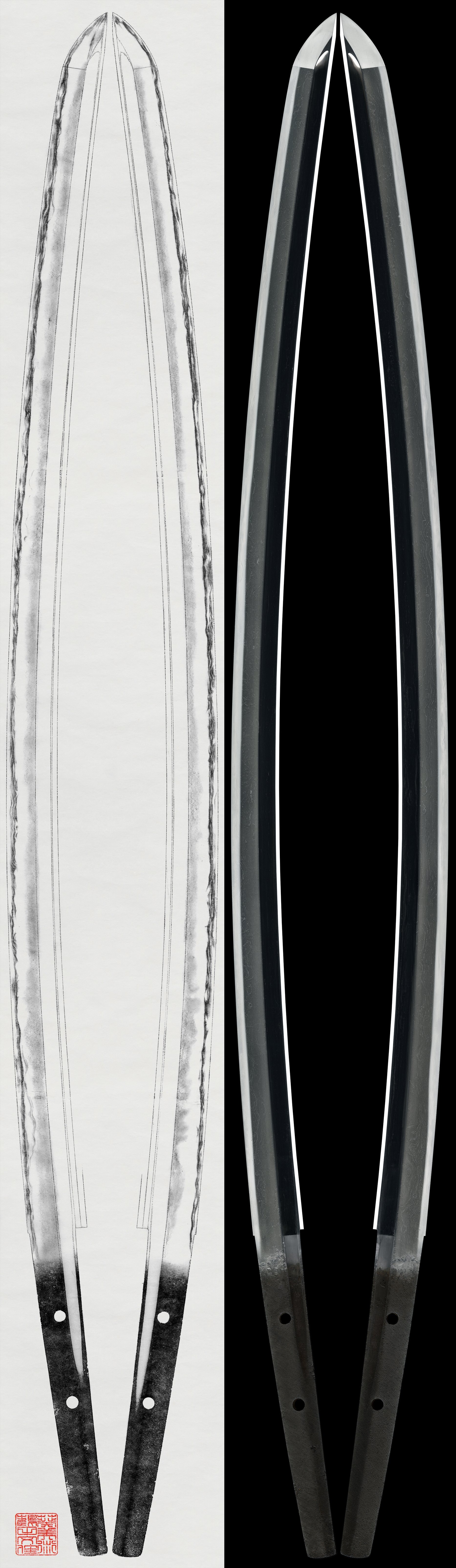
His hand is recognized first in the . The blade is a with , the curvature shallow in the manner and the medium, and over its whole length runs a forged tight and well ordered, with laid and entering along the . This straight-grain is the first of the two Hosho marks, a forging almost no other school takes as its default, and the second mark is set into it: a frayed at the into , mixing and a tendency to , with and running freely along the , the deep and the bright and clear with . Where the and the both appear on every blade on record, the two together are the surest reading of the smith.

The runs straight, sweeping into , and closes as often in a without turnback as in a small round, a Yamato-Hosho habit that follows from the and the rather than against them. To this inherited core the published sources add a tell peculiar to the Kunikane hand, and name it as such: a rising from below the , a faint pale reflection that on the broad, slightly long late blades connects and runs as an -like aspect across the lower half. Of one they write that 「区下より水影が立っているが、初代同様二代にも見る手くせであり」, a habit seen in the second generation as in the founder, and they note alongside it that the file is sometimes finished as a plain, simplified , another of the points to watch in his work. On that wide blade the stands a little on the , the laid dust-fine and thick, the finely formed.

Against the calm the published sources record that the second generation also leaves a . On these the base mixes in small and a shallow , entering and the frayed, and one wide, long blade carries a that swells into a large, shallow undulation with and and a tendency. The sources frame this as the exception within a hand whose default is the straight temper, writing that 「家伝の保昌流の柾目鍍を得意とし」 he was particularly skilled at , with slight seen at times besides. A small register within the corpus carries the founder's own signatures rather than the second generation's, the go Yokei and the title Yamashiro-daijo: blades signed Yamashiro-daijo Fujiwara Yokei Kunikane, one dated Keian 1 (1648), in the Hosho idiom but read with a founder's accent, the -zori standing high with , the tending to stand, the a damp and frayed with following.

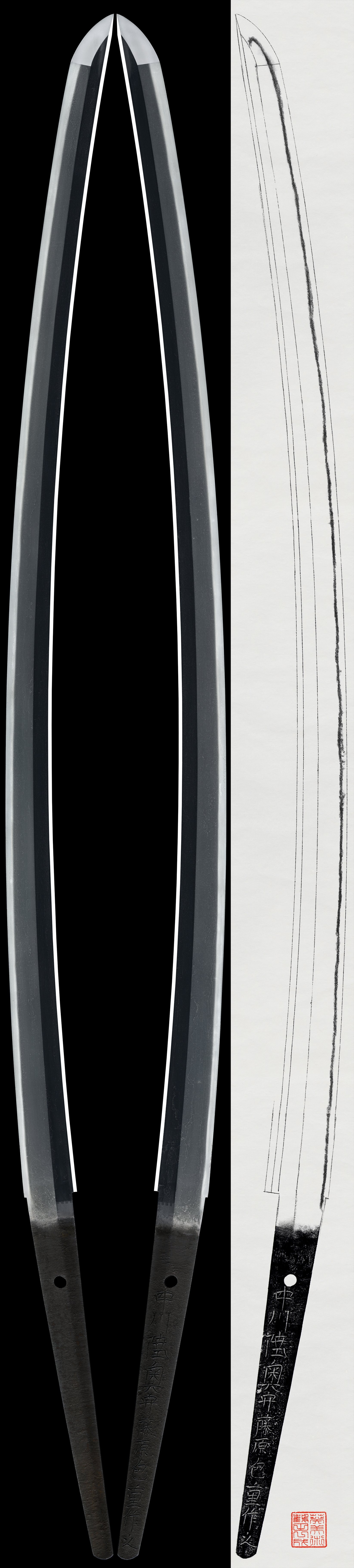
What sets his work apart within the broad world of is not a flourish but the consistency of the Hosho reading: the carried the length of the blade, the quiet laid over it, the swept , and the below the . The published sources keep his standing honestly relative to the founder. They write of one second-generation that it is in fact forceful and that its quality is 「殆んど初代に劣らない」, scarcely inferior to the first generation, and of his finest pieces that some approach the while his ordinary technique does not equal him. The signature itself is a connoisseur's field: in the second generation's the horizontal strokes are driven hard and pressed at their close so that they read like the character , and within the character 包 the inner element is cut in a distinctive form, both, the sources say, important features when reading a Kunikane signature.

Kunikane is rated Jo- by Fujishiro. His record is held entirely in the tier, ten of the second generation on record there, with two further blades under the founder's Yokei signature reaching the prewar Bijutsuhin. He holds no National Treasure and no Important Cultural Property, so the work that can be encountered is the designated , and these come to market only from time to time and with patience, a steady Sendai- name rather than a rarity locked wholly away. The published sources single out the well-forged, in-the-style pieces as typical and representative of the second generation, one of which, worn at the side of Shinbei, carries a gold-inlaid cutting-test inscription dated 11 (1671) and is valued as a documentary representative work. Of his quietest the sources write that it is 「上品に静温に仕上げている」, finished with refined elegance and a quiet warmth. Among recorded owners of his blades are Kurokawa Fukusaburo and the Kurokawa Institute for Ancient Cultures, which hold the two Yokei-signed Bijutsuhin, and Itaya Taneo.
Kantei

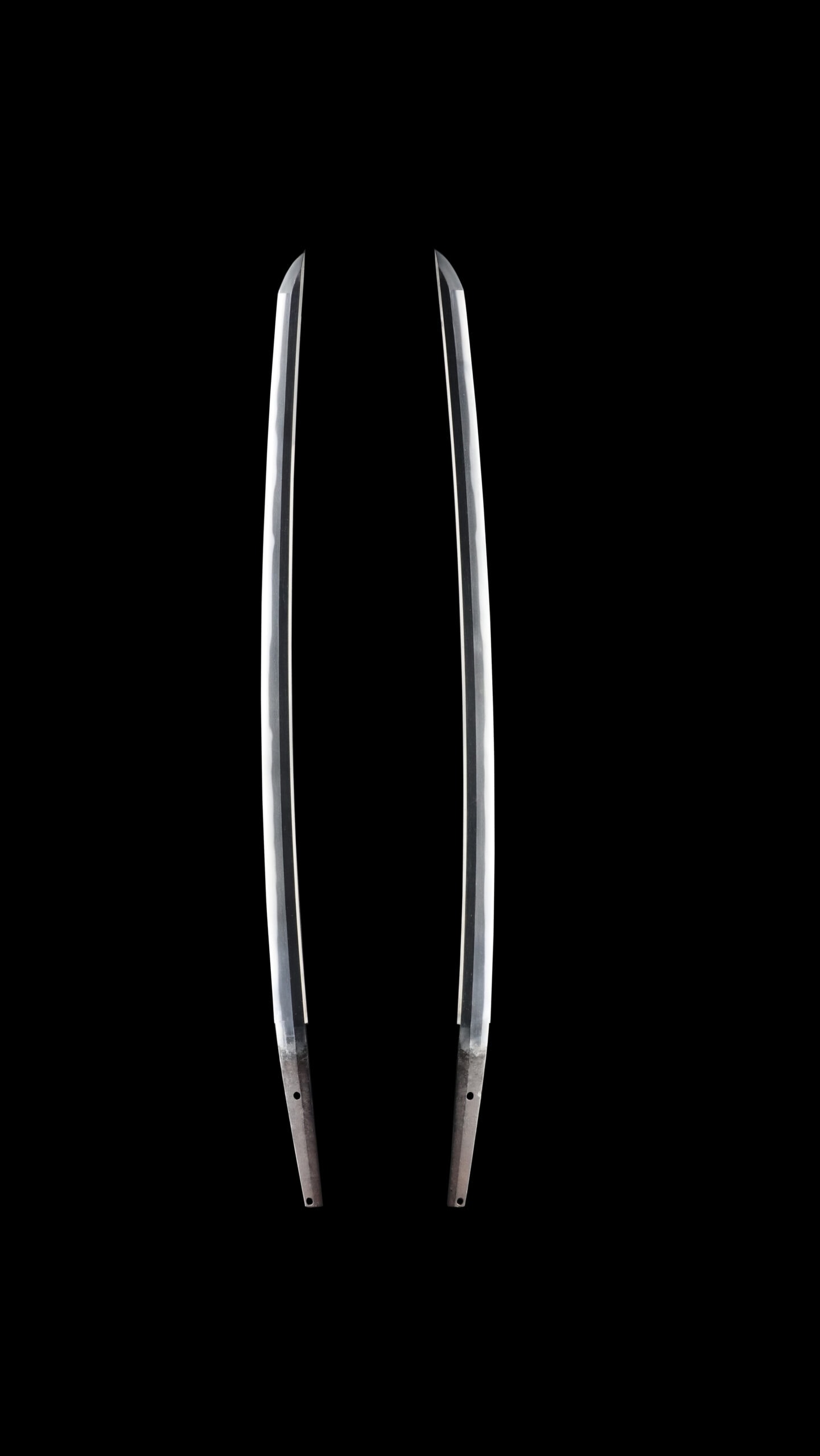
one inherited Yamato-Hosho hand on a sturdy Kanbun-Shinto katana, read across three registers: the second generation's prime masame-and-suguha (the dual Hosho fingerprint), his hereditary tell of a mizukage rising below the machi, and the founder's register signed Yokei Kunikane (Yamashiro-daijo)

Kunikane is the smith name of the Sendai house that the Date daimyo of Mutsu kept as its own forge, and the corpus on record is overwhelmingly that of the second generation, Yamashiro-no-kami Fujiwara Kunikane (1612-1672), son and successor of the founder Yamashiro-daijo Kunikane. The line claimed descent from the Yamato Hosho school, and its whole identity is built on one inherited manner: a柾目 (masame, straight-grain) forging carried the length of the blade, with ji-nie laid and a quiet chu-suguha tempered over it. Every blade here is masame and every blade is suguha, the dual Hosho fingerprint, the suguha frayed at the habuchi into hotsure with kinsuji and sunagashi following the straight grain, the boshi running straight to a sweep of hakikake and often a yakizume without turnback. The published sources record that the shodai went up to Kyoto to study under Etchu-no-kami Masatoshi and received the Yamashiro-daijo title, and that the second generation, who took the Yamashiro-no-kami title in 1667, kept the founder's style entire, his finest blades scarcely inferior to the father's. His own tell, named in the published record, is a mizukage rising from below the machi, sometimes connecting into a faint utsuri across the lower half, joined occasionally by a plain decorative file finish on the nakago.

Diagnostic discriminators

unique vs generic Shinto ground (itame / ko-itame)

unique vs the inherited Hosho forging shared with the father

Observation by phase

Masame and suguha (the second generation's prime manner)

the long signature on an ubu nakago: every blade on record is signed (山城守藤原国包), most with the long byname-and-title signature the published sources tie to the Yamashiro-no-kami second generation

The recognized hand is masame tempered with suguha, the manner the published sources call the family's hereditary Hosho style. On a shinogi-zukuri katana with iori-mune, the curvature shallow and the kissaki medium in the Kanbun manner, the ground is柾目 forged tight and well ordered, ji-nie gathered and chikei entering along the grain. Over it he tempers a chu-suguha, frayed at the habuchi into hotsure, mixing kuichigai-ba and a nijuba tendency, with sunagashi and kinsuji running freely along the masame, the nioiguchi deep and bright with ko-nie. The boshi runs straight, sweeping into hakikake, and frequently closes in a yakizume without turnback rather than a ko-maru. The long signature is cut on an ubu nakago with a sujikai file. The published sources call this the family's hereditary Hosho-style masame forging, at which the second generation excelled in the straight temper, second only to his father.

Jigane 地鉄
Hamon 刃文
Bōshi 帽子

The mizukage and the hereditary tell

the mizukage below the machi, which the published sources call a habit (te-kuse) seen on this smith as on his father, sometimes joined by a simplified kesho file on the nakago

Beyond the masame-and-suguha core the published sources name a tell peculiar to the Kunikane hand: a mizukage rising from below the machi, a faint pale reflection that the sources say sometimes connects and runs as an utsuri across the lower half. They record it as a habit seen on the second generation as on the founder, and note alongside it that the nakago file is sometimes finished as a plain, simplified kesho, another of the smith's points to watch. On a wide, slightly long Kanbun katana the masame can stand a little (hada-tachi) on one face, the ji-nie laid dust-fine and thick, chikei entering finely, with the suguha mixing small ashi and partial stronger nie in the upper half. These are the marks the published sources gather as the second generation's own見どころ, distinct from the inherited Hosho forging he shares with his father.

Jigane 地鉄
Hamon 刃文

The occasional gunome-midare register

less firmly establishedform and breadth: the gunome-midare appears chiefly on the wider, longer katana, the published sources treating it as the second generation's secondary manner

Against the calm suguha the published sources note that the second generation also leaves a gunome-midare. On these the chu-suguha base mixes in small gunome and a shallow notare, with ashi entering and the habuchi frayed, and one wide, long blade carries a hiro-suguha that swells into a large shallow notare with ko-nie and ara-nie and a nijuba tendency. The sources frame this as an exception within a hand whose default is the straight temper, the maker who excelled at suguha and showed, in addition, a little gunome-midare. The mei buckets bear this out: the gunome register is the minority manner, the suguha the constant.

Hamon 刃文

The founder's register (signed Yokei Kunikane)

the signature 用恵国包 / 山城大掾: the go and title of the founder, marking these blades as the shodai register within the code, dated to the early Edo (Keian 1, 1648)

A small register within the code carries the founder's own signatures rather than the second generation's: 山城大掾藤原用恵国包 and 用恵国包作, Yokei being the shodai's go and Yamashiro-daijo his title. These are early-Edo blades, one dated Keian 1 (1648), in the same Hosho idiom but read by the published sources with a founder's accent: a腰反り standing high with fubari, the masame standing a little (hada-tachi) with chikei and ji-nie, the suguha a ko-nie chu-suguha with a damp, frayed habuchi and sunagashi following. They anchor the upper end of the line, the hand the second generation kept entire and at his best nearly equalled.

Sugata 姿
Jigane 地鉄
Hamon 刃文
Scholarship

The published sources reconstruct the line's chronology with care: the founder, claiming descent from the end of the Yamato Hosho school, studied under Etchu-no-kami Masatoshi and received the Yamashiro-daijo title, but the recorded dates of his death are held to be in error; the second generation received Yamashiro-no-kami in 1667 and died in 1672 aged sixty-one, three years after the founder. They note the second generation's hereditary forte was the Yamato-Hosho masame forging, in which he tempered suguha, sometimes a little gunome-midare besides.

On the signature itself the published sources record a connoisseur's tell: in the second generation's mei the horizontal strokes are driven hard and pressed at their close, the chisel held so that they read like the character 一, and within the character 包 the inner element is cut as 己 rather than 巳, both points to watch when reading a Kunikane signature.

Designations

Kokuhō—
Jūyō Bunkazai—
Jūyō Bijutsuhin2
Gyobutsu—
Tokubetsu Jūyō—
Jūyō Tōken10

Elite Standing

0.09 across 12 designated works

Top 19% among smiths

Provenance

2 documented provenances across certified works by Kunikane

Provenance Standing

0 works held in elite collections across 2 documented provenances

Top 52% among smiths

Raw score: 1.97 / 10

Blade Forms

Distribution across 12 ranked works

Signatures

Signature types across 12 ranked works

Currently Available

Lineage

TeacherKunikane
Kunikane
Students (2)
  1. 1.Kunikane國包2 for sale12designated
  2. 2.Kaneshige包重2 for sale1designated

Sendai Kunikane School

Other artisans of the Sendai Kunikane school

  1. 1.Kunikane國包3 for sale33designated
  2. 2.Kaneshige包重2 for sale1designated
  3. 3.Tomosuke倫助1designated