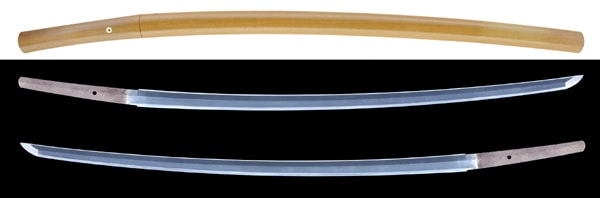
Around 1800 Suishinshi Masahide argued in his writings that the craft must return to the old masters’ methods: the fukkotō revival. His greatest successor Naotane worked convincingly in Bizen and Sōshū manners that had been dead for centuries.
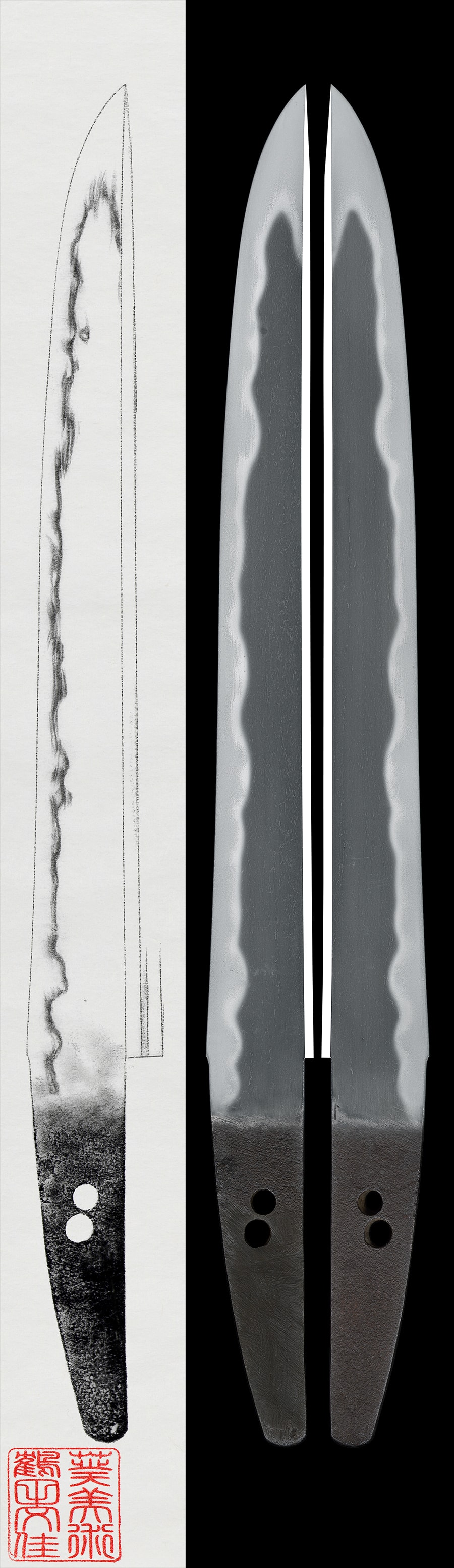
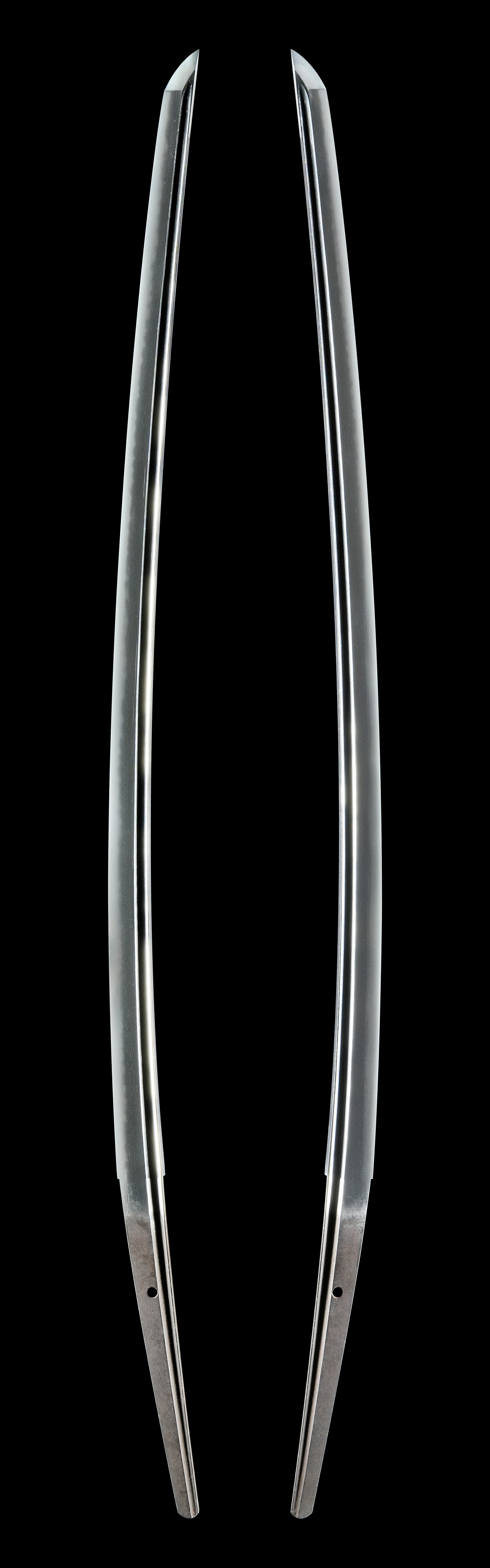
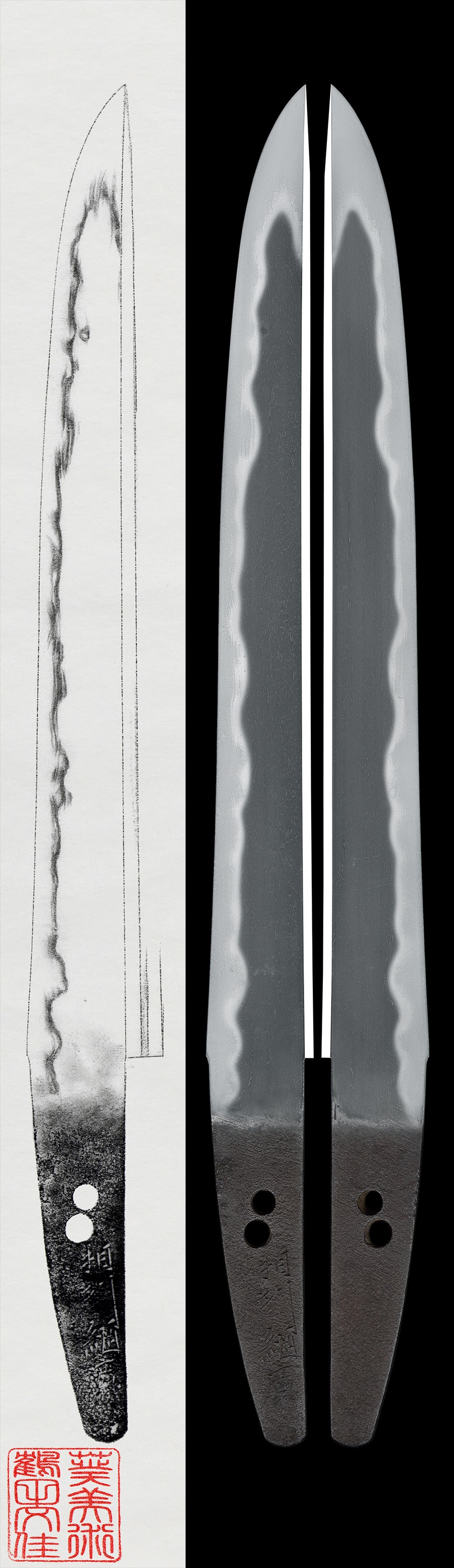
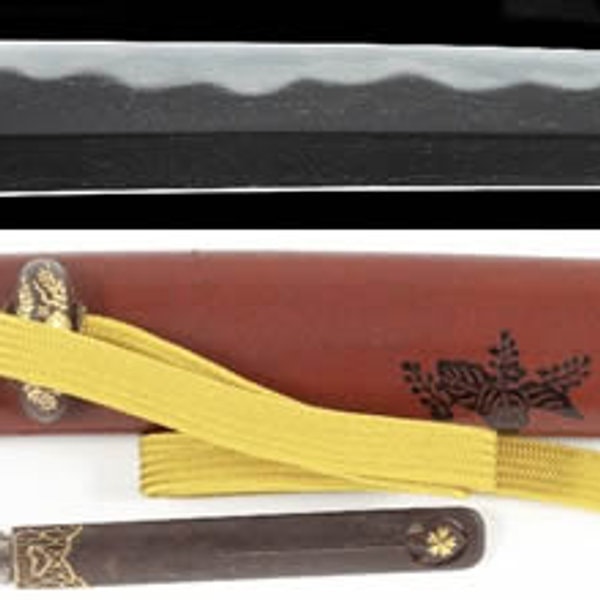
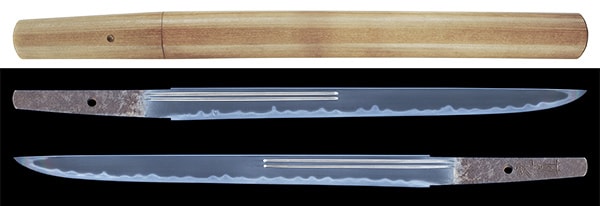
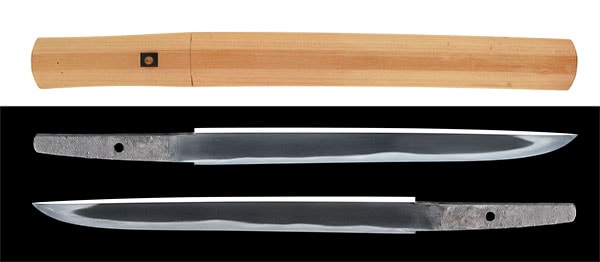
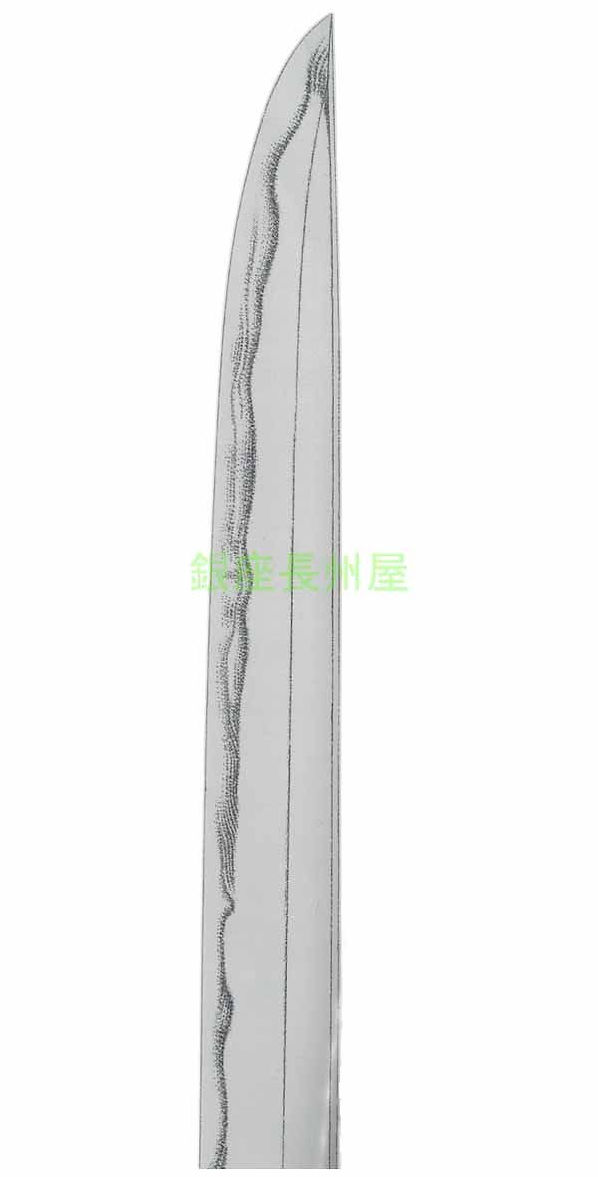
This tanto is attributed to Aizu Motooki, featuring an ubu-nakago (original tang) and mumei (unsigned) status. It exhibits a wide mihaba and deep saki-zori, with a kanmuri-otoshi zukuri where the shinogi-ji is shaved, and the shinogi-suji extends sharply to the mune. The ko-itame hada jigane shows a flowing grain near the ha, with fine ji-nie, resulting in a hard and tight surface. The hamon is a shallow notare mixed with gunome, thickly covered in nie, with yubashiri, kinsuji, and sunagashi, along with niju-ba, kuichigai-ba, and uchinoke, displaying the characteristic intense midare of Aizu swords.
 NihontoWatch
ubu · Shin-shinto
Iwashiro · around 1818-1830
Fujishiro Jo saku · Tōken Taikan top 39%
2 pieces on the market now
The Shinshintō revival
Around 1800 Suishinshi Masahide argued in his writings that the craft must return to the old masters’ methods: the fukkotō revival. His greatest successor Naotane worked convincingly in Bizen and Sōshū manners that had been dead for centuries.
We could not find an authenticity certificate on the seller’s listing. Japanese swords and fittings are normally papered by the NBTHK (or the NTHK). Without one, the attribution is the seller’s own assessment and has not been independently verified — treat it with caution and ask the dealer about certification before buying.
If, due to our fault, the item differs significantly from its proper condition, the item may be returned. Cooling-off is within one week of the item's arrival.