Edo was the sword’s age of connoisseurship: the Hon’ami appraisers, the shogunal register of famous blades of 1719, and a thriving literature turned the sword into an object of study even as it ceased to be drawn in war.
 NihontoWatchNihontoWatch
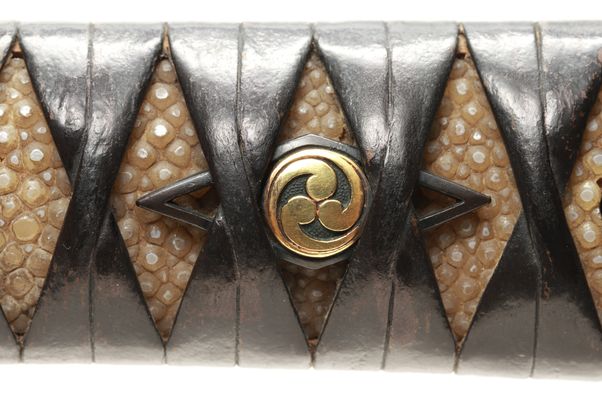
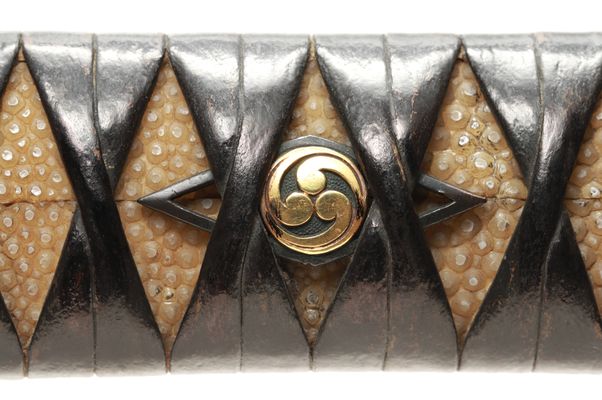
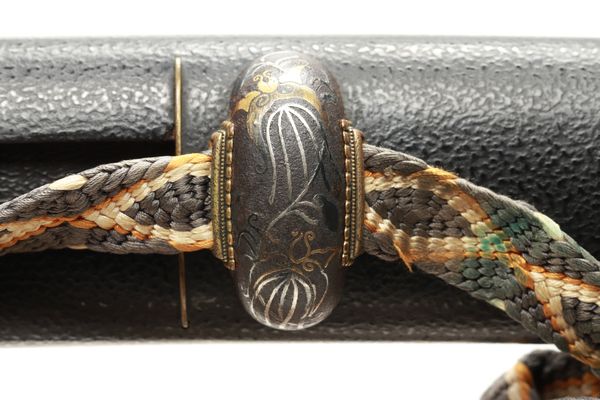
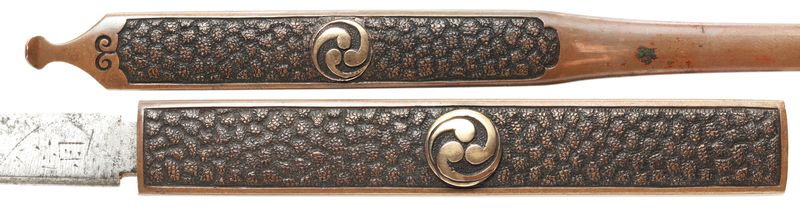
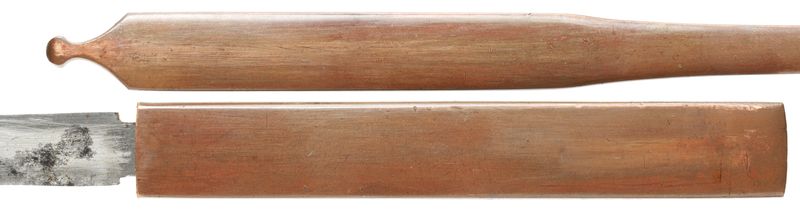
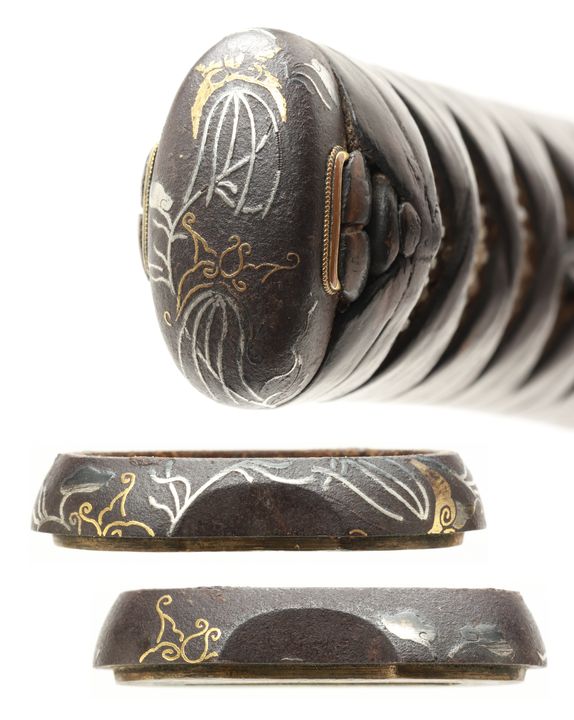
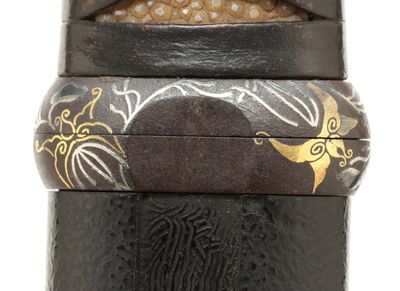
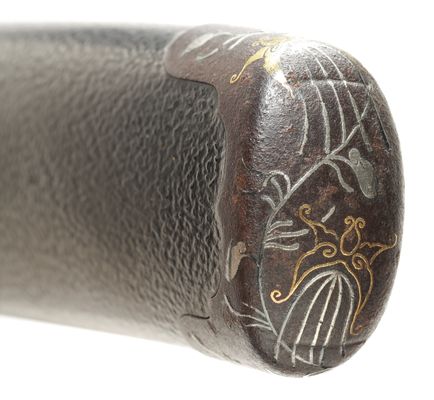
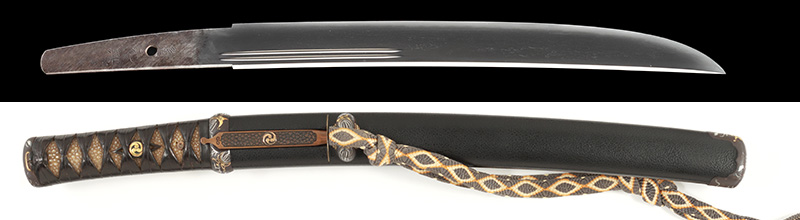
Sumimoto Oki was born in Bunsei 1. He was a smith for the Aizu clan. The Aizu clan lord Matsudaira Katamori was appointed as the Kyoto Shugoshoku and ordered the Shinsengumi to maintain public order in Kyoto. In Ansei 6, Oki went to Edo during a period of upheaval and honed his skills under the Ishido Unju Korekazu school, who were goyo-kaji for the Bakufu. Oki's swords, known for their superior cutting ability, earned the deep trust of the Shinsengumi members alongside Izumi no Kami Kanesada (Aizu 11th generation). This tanto is a single work forged with special care upon a specific request, modeled after Bizen Kanemitsu, a swordsmith from the late Kamakura to Nanbokucho period renowned for outstanding cutting ability. It has an extended sun, is wide with a thick kasane, a shallow sori, and a sharp, powerful sugata with a slightly withered fukura. The gomahashi and koshibi on the omote and ura at the koshimoto are not merely decorative, but are intended for pulling the blade out quickly after a thrust. The itame appearing within the nagare-gokoro masahada also brings to mind the semihada (note) of Kanemitsu. The hamon mixes kataochi-style ha, which Kanemitsu specialized in, with togari-gokoro ha; the habuchi is bright with nie, slightly featuring kinsan and sunagashi, and the interior of the ha is also bright with fine nie. The boshi, which has a shallow tarumi and tsukiage with a kaeri in the shape of a candle wick, also recalls Kanemitsu. The mei characters are clearly carved into the nakago, which has beautiful sujikai yasurime. Although it is in an old polish with hike and rust, it is an excellent piece that evokes the daily life of a Bakumatsu samurai. The koshirae is also a special production, with the fuchi-kashira, kuchigane, kurigata, kojiri, and uragawara being a matching issaku-soroi featuring butterflies and arabesques in gold and silver nunome-zogan on a tetsu-ji. The mitsutomoe-mon of the person who ordered it is proudly set in vivid kin-iroe on the kozuka, kogai, and menuki. The leather-wrapped tsuka remains as it was at the time of manufacture, possessing an appearance as if it were worn at a samurai's waist until only yesterday. Note... An itame-hada with a standing quality occasionally seen in Kanemitsu. Named for its resemblance to the wings of a cicada.
NihontoWatchOffered by Choshuya











Machine translation from the shop's Japanese · may contain errors ·
Iwashiro · around 1818-1830
Fujishiro Jo saku · Tōken Taikan top 39%
3 pieces on the market now
The Edo period (1615 to 1868)
Edo was the sword’s age of connoisseurship: the Hon’ami appraisers, the shogunal register of famous blades of 1719, and a thriving literature turned the sword into an object of study even as it ceased to be drawn in war.
A Hozon-certified blade judged to show notably superior workmanship and a better state of preservation. The bar is higher: re-tempered blades and most unsigned Muromachi/Edo works are excluded.
The NBTHK (Nihon Bijutsu Tōken Hozon Kyōkai, the Society for the Preservation of Japanese Art Swords) is a public-interest incorporated foundation founded in 1948 and supervised by Japan’s Agency for Cultural Affairs (Bunkachō); it is based at the Japanese Sword Museum in Tokyo. Its expert panels physically examine each submitted work (shinsa) and issue a certificate (kanteishō) ranking it by artistic and historical merit. NBTHK papers are the most widely recognized standard of authentication for Japanese swords and fittings.
NBTHK official siteIf, due to our fault, the item differs significantly from its proper condition, the item may be returned. Cooling-off is within one week of the item's arrival.
¥550,000