The twentieth century nearly killed the craft twice: wartime distortion, then the occupation ban. The NBTHK’s founding in 1948 and licensed forging from 1953 rebuilt the sword as an art, crowned by Living National Treasures and the mukansa rank.
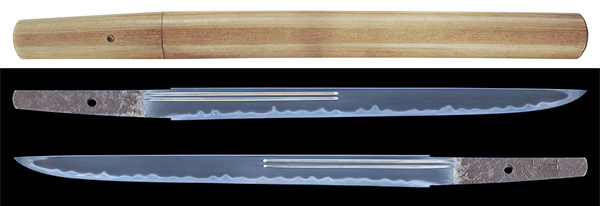
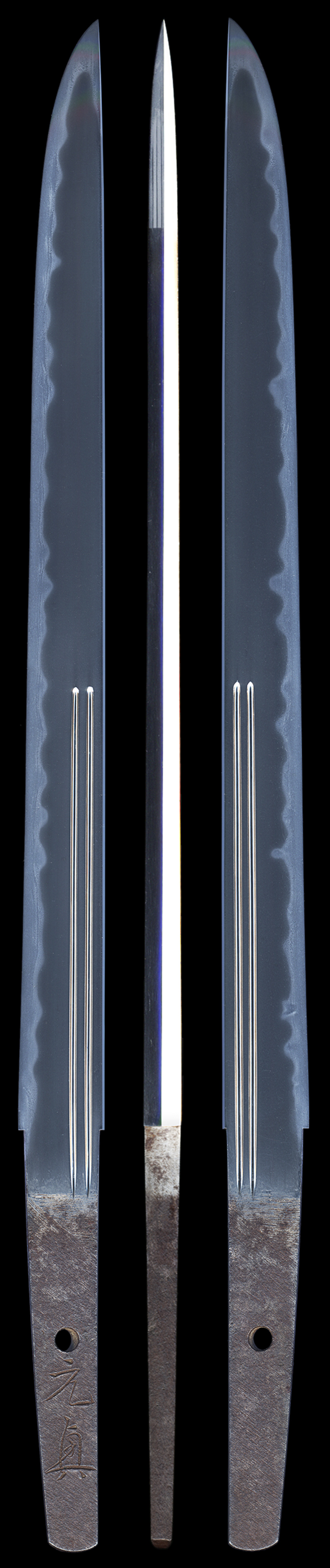
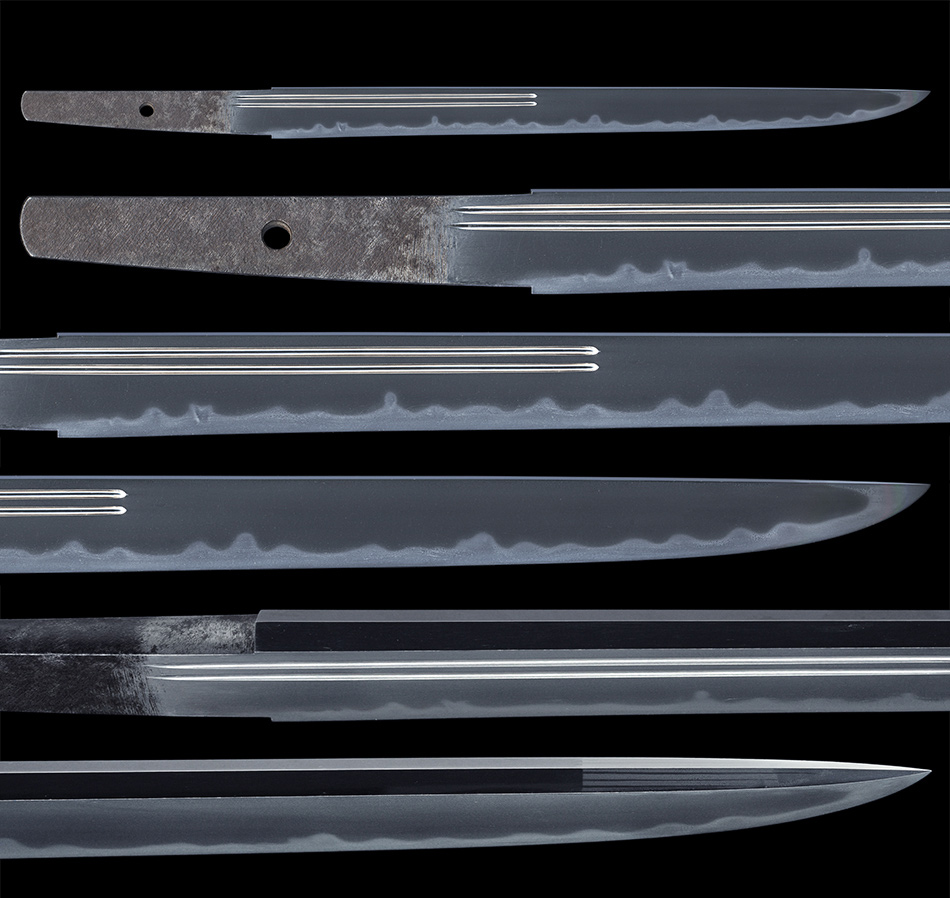
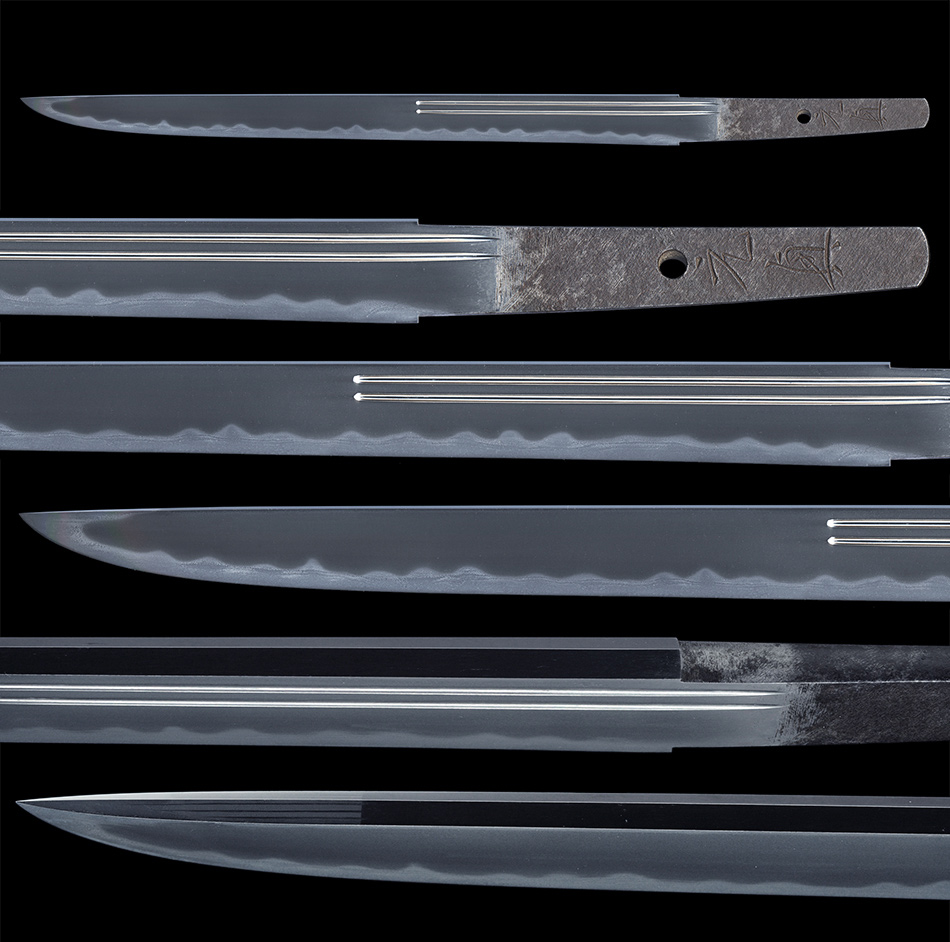
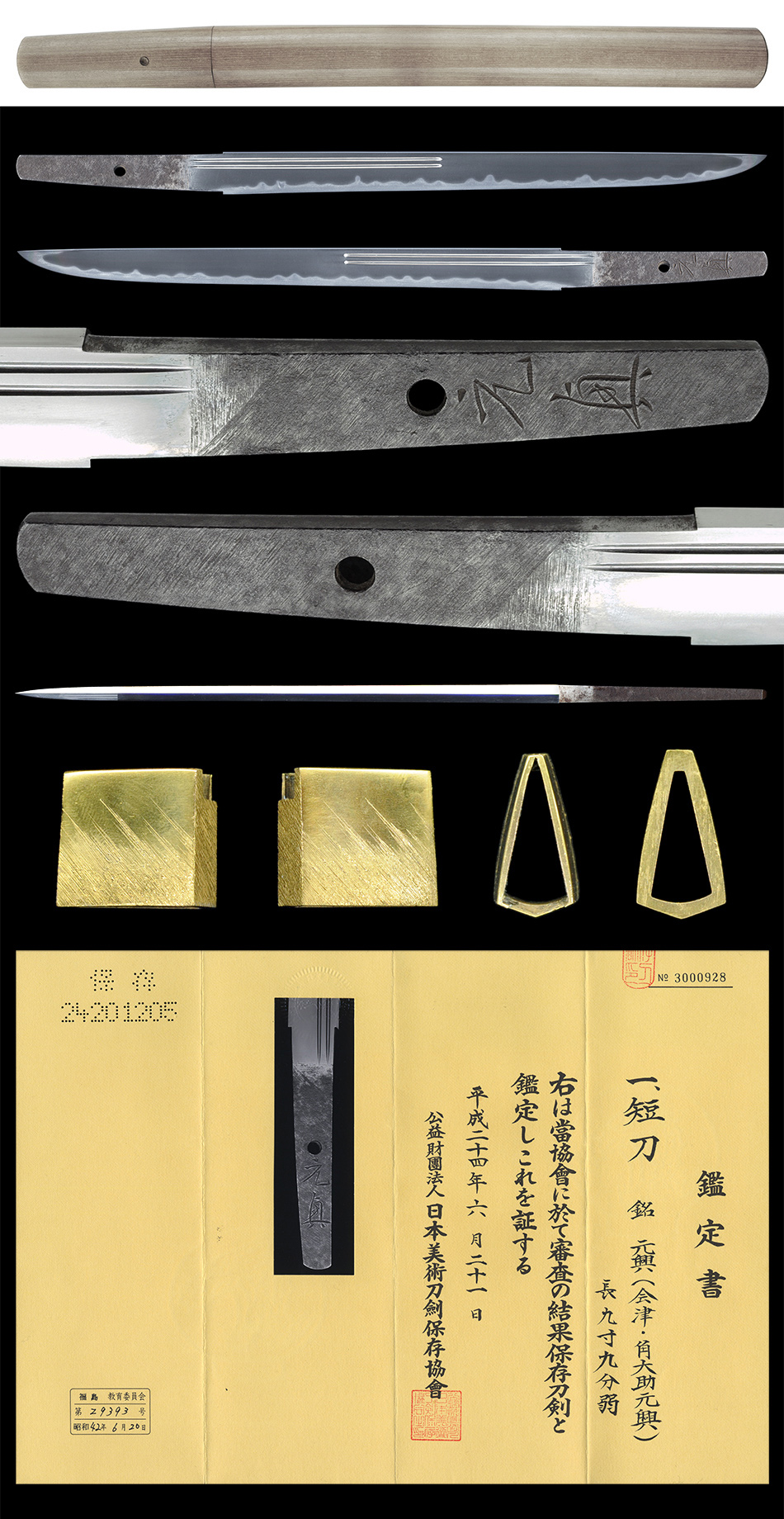
Aizu Motooki was the grandson of Sumi Daihachi Motooki and was called Sumi Daisuke. Because his father, Sumi Daiji Hidekuni, died young, it is thought that he learned from the Aizu swordsmiths of the time, such as Aizu Michitoki. The first generation Sumi Daihachi became a disciple of Suishinshi Masahide in Edo to learn sword forging, and by order of the Aizu clan went to Satsuma, became a pupil of Motohira, and changed his name to Motooki. This work is a production by the second generation Motooki. In Ansei 4, the second generation Aizu Motooki entered the school of Ishido Unju Korekazu as an entrusted disciple from the Matsudaira family of the Aizu clan, and in Ansei 6 he entered the priesthood and took the go Shoken. Shoken Motooki received the title of Yamato no Kami in Keio 2 and changed his name to Yamato no Kami Hidekuni. During the turbulent period at the end of the Edo bakufu, in order to protect Kyoto, Shoken Motooki and the Aizu eleventh generation Izumi no Kami Kanesada, among others, went to the capital along with the Aizu clan lord Matsudaira Katamori and produced swords worn by Aizu clansmen and Shinsengumi members. It is handed down that among the swords of Shinsengumi commander Kondo Isami and vice-commander Hijikata Toshizo, there were swords with the mei of Yamato no Kami Hidekuni. He died in Meiji 24 at the age of 80. Shoken Motooki was more skillful than the first generation and left behind swords of superior workmanship, and he is known as a high-ranking smith who displayed exceptional talent even among the Aizu swordsmiths who were gathered as master craftsmen. This tanto has a nagasa of just under one shaku. While it is thick in kasane and made with an emphasis on practical use in the yoroitoshi style, it is a blade forged with a solid finish, and whether it was used as a worn sword by a famous warrior during the tumultuous end of the Edo bakufu, it has a truly beautiful sugata to behold. The jitetsu is a fine itame hada that is tight and somewhat flowing with jinie, and there are signs of becoming nie-laden toward the mune. The hamon is a gunome midare hamon mixed with togari-gunome, where the nioiguchi is somewhat tight and bright konie attaches and becomes clear. On the habuchi, sunagashi and kinsen work splendidly. The boshi becomes kaen-like and returns firmly. The nakago is ubu. Shirasaya, Aizu Motooki, Hozon Token Kanteisho.
Offered by World Seiyudo


Machine translation from the shop's Japanese · may contain errors ·
Iwashiro · around 1818-1830
Fujishiro Jo saku · Tōken Taikan top 39%
3 pieces on the market now
Shōwa to the present: destruction and revival
The twentieth century nearly killed the craft twice: wartime distortion, then the occupation ban. The NBTHK’s founding in 1948 and licensed forging from 1953 rebuilt the sword as an art, crowned by Living National Treasures and the mukansa rank.
Certifies a genuine blade worth preserving: a signature confirmed correct, or, if unsigned, an era, province, and school that the NBTHK can reliably identify.
The NBTHK (Nihon Bijutsu Tōken Hozon Kyōkai, the Society for the Preservation of Japanese Art Swords) is a public-interest incorporated foundation founded in 1948 and supervised by Japan’s Agency for Cultural Affairs (Bunkachō); it is based at the Japanese Sword Museum in Tokyo. Its expert panels physically examine each submitted work (shinsa) and issue a certificate (kanteishō) ranking it by artistic and historical merit. NBTHK papers are the most widely recognized standard of authentication for Japanese swords and fittings.
NBTHK official siteNo cooling-off period or returns; refund only if the purchased sword is proven fake, capped at purchase price (excludes commission sales, accessories, auction items).