NihontoWatch MonNihontoWatch
Market
Encyclopedia
Kantei
NihontoWatch MonNihontoWatch
Market
Encyclopedia
Kantei

Description

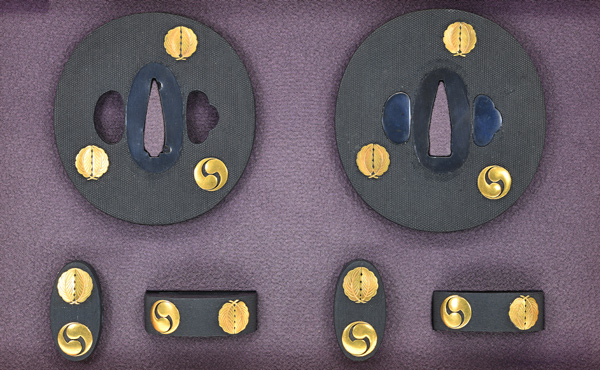
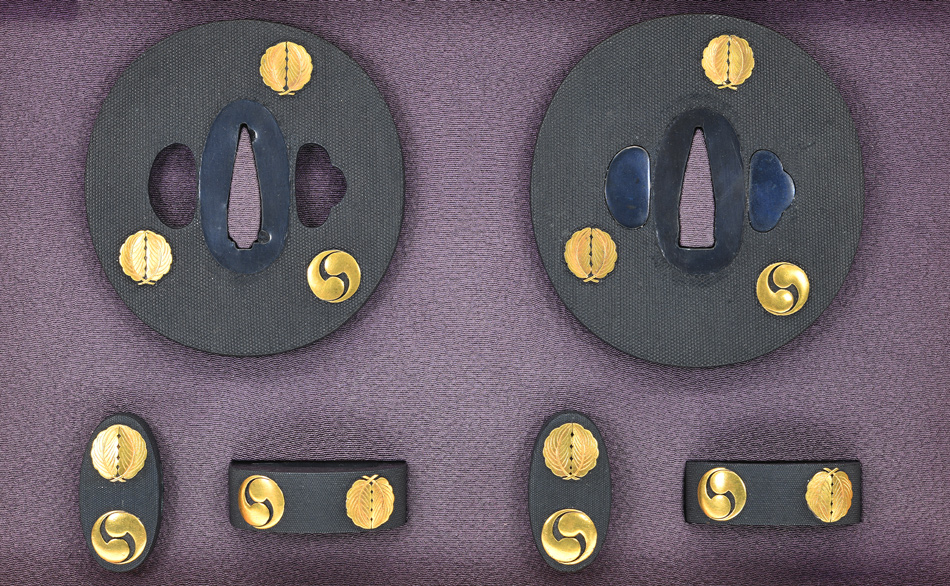
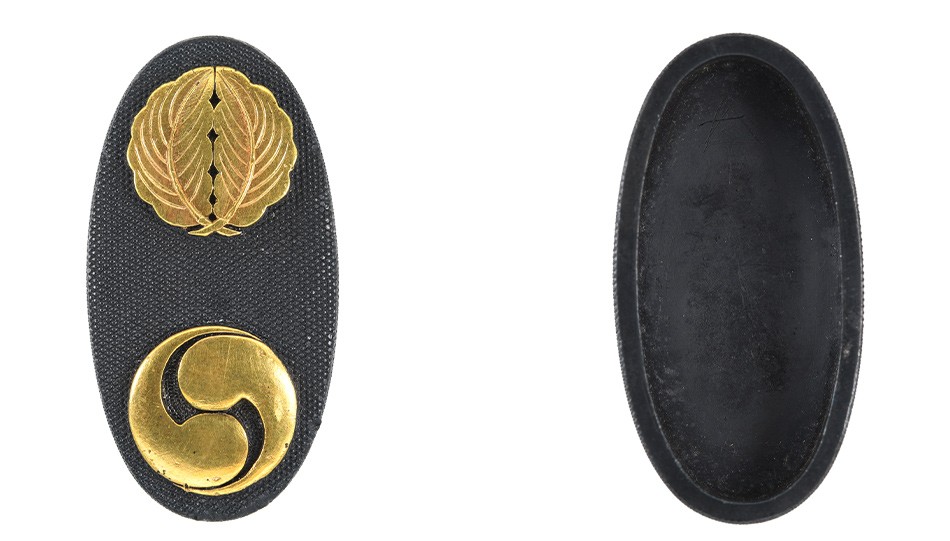
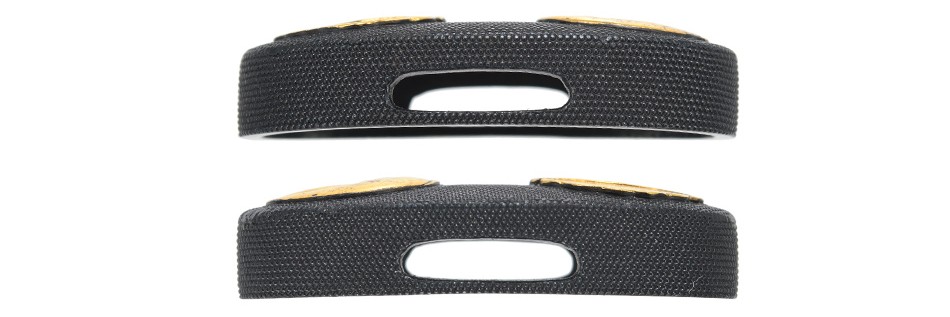
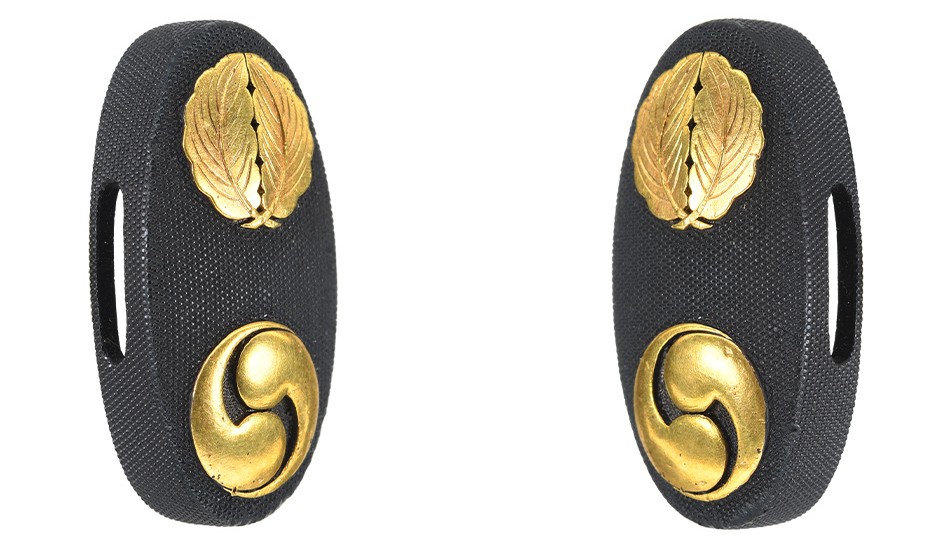
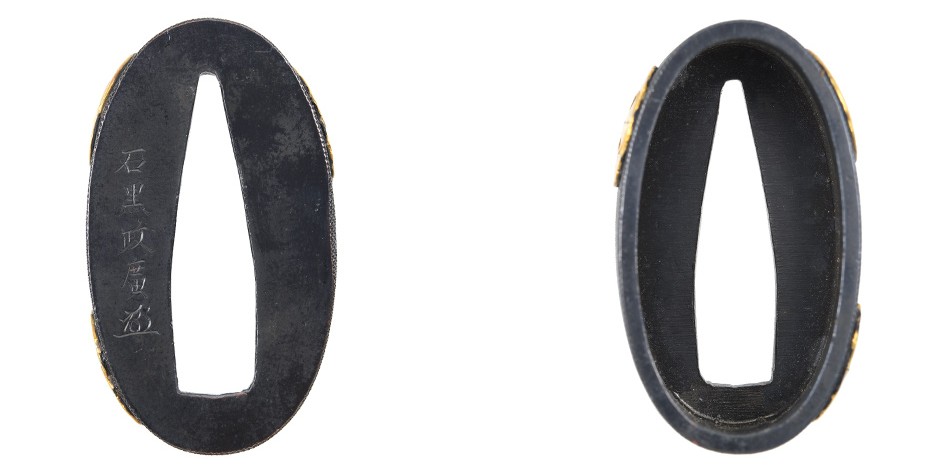
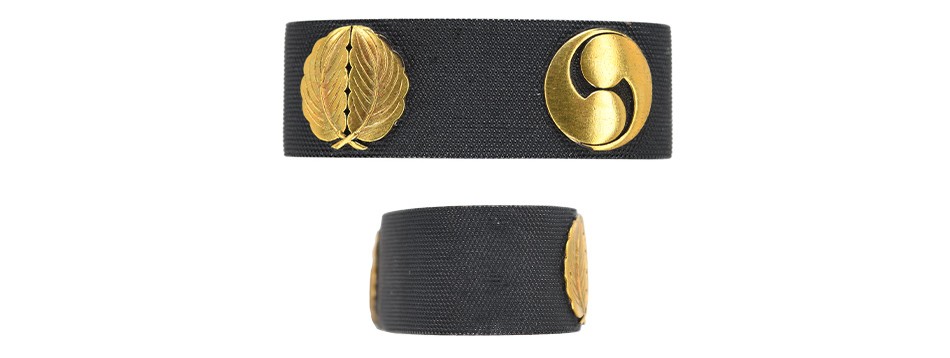
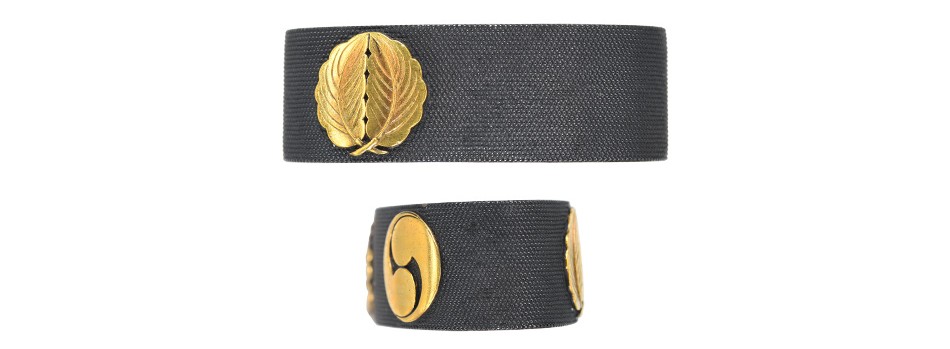
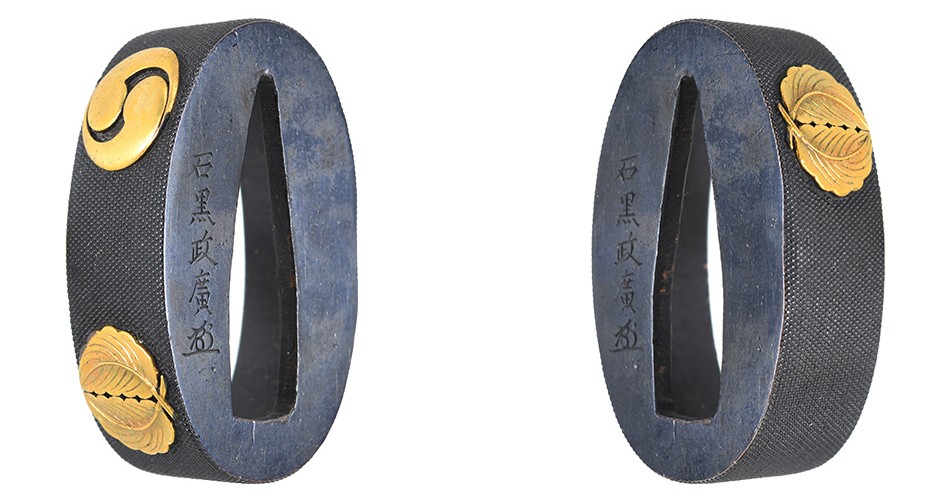
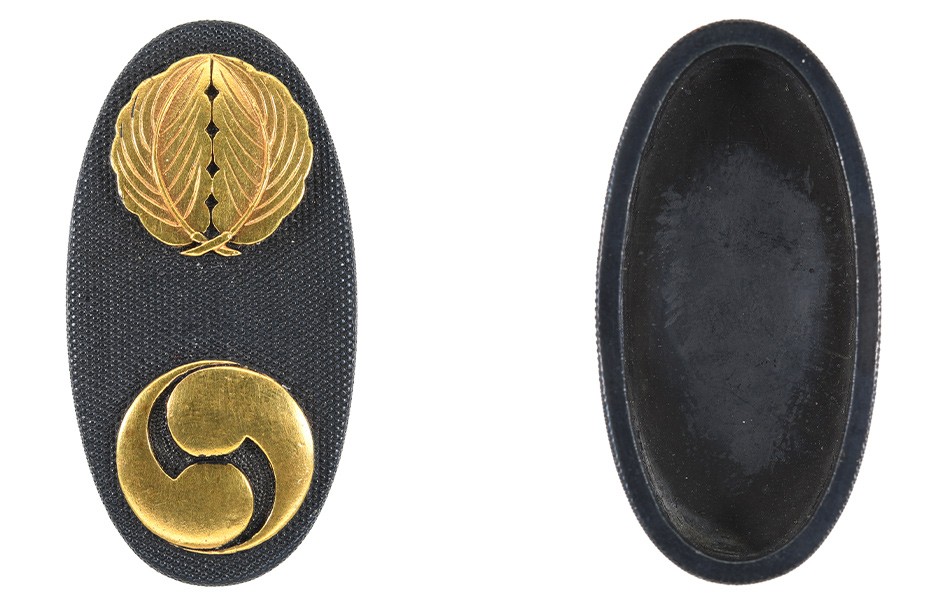
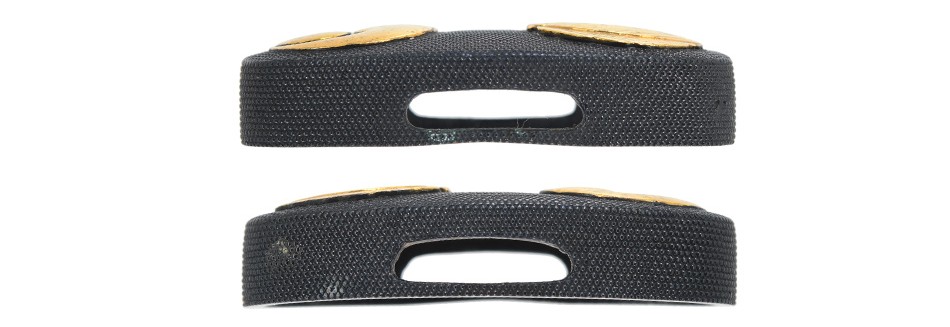
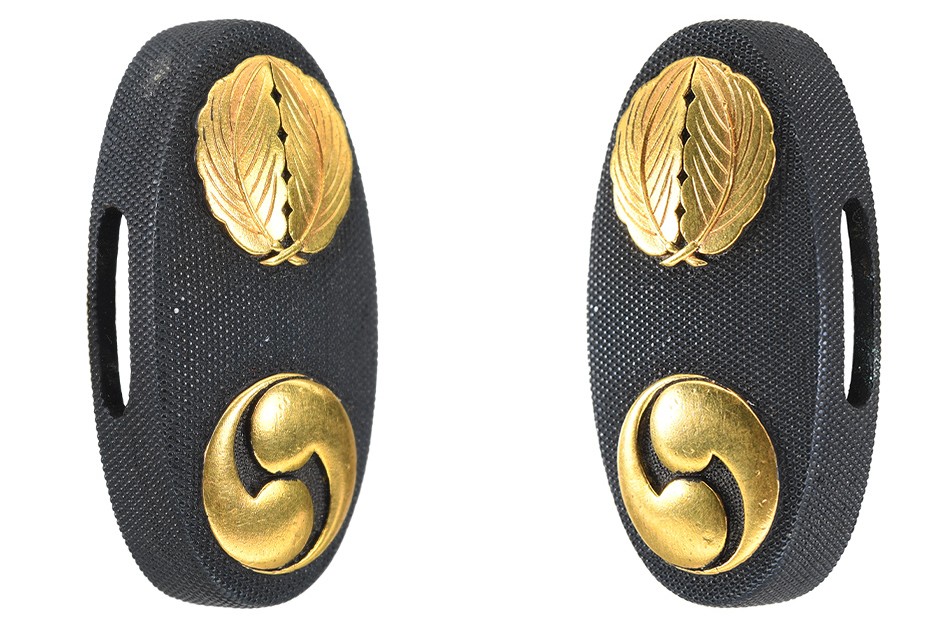
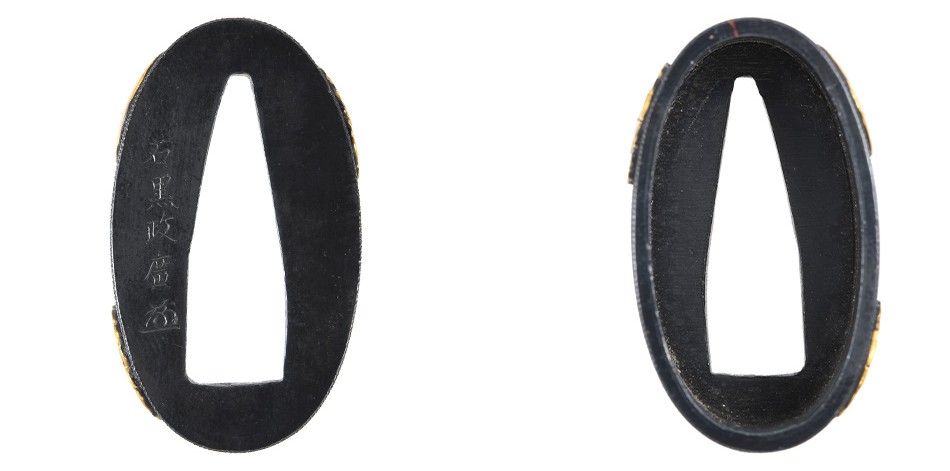
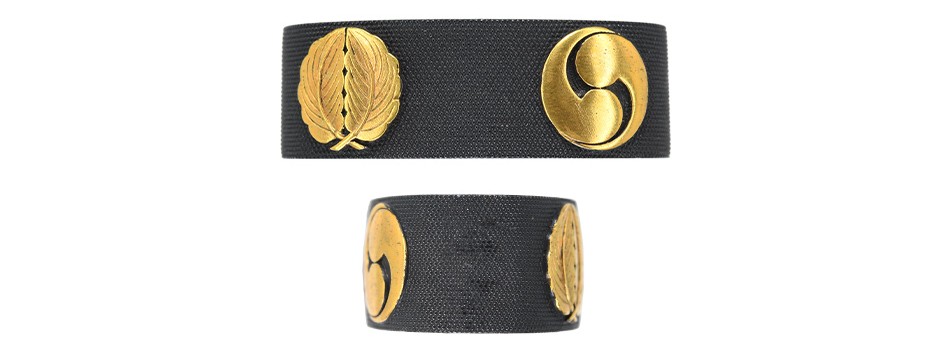
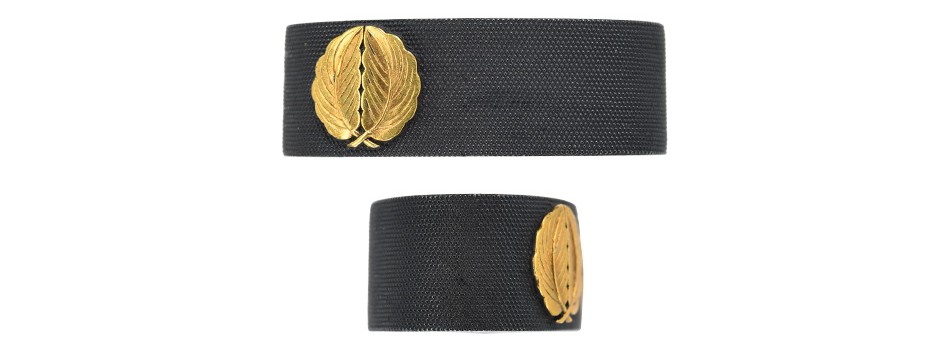
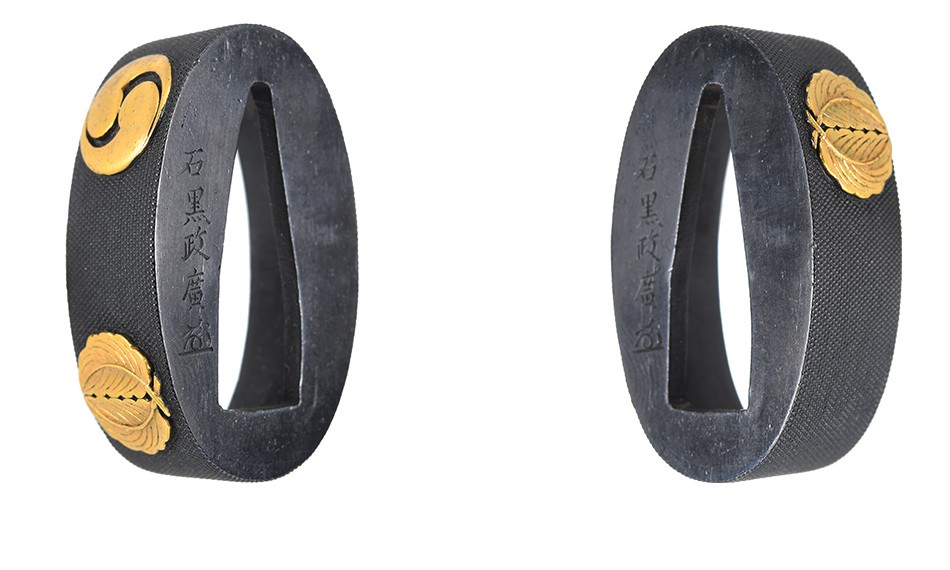
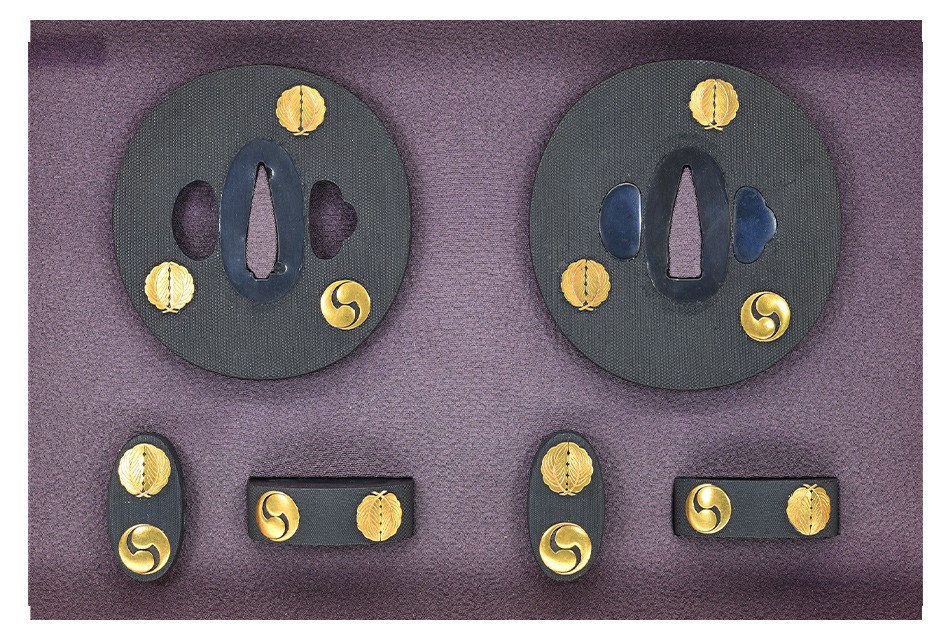
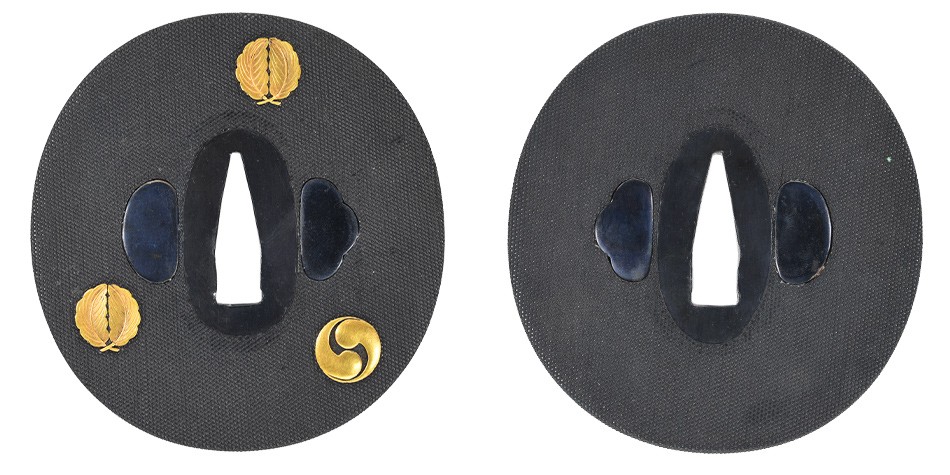
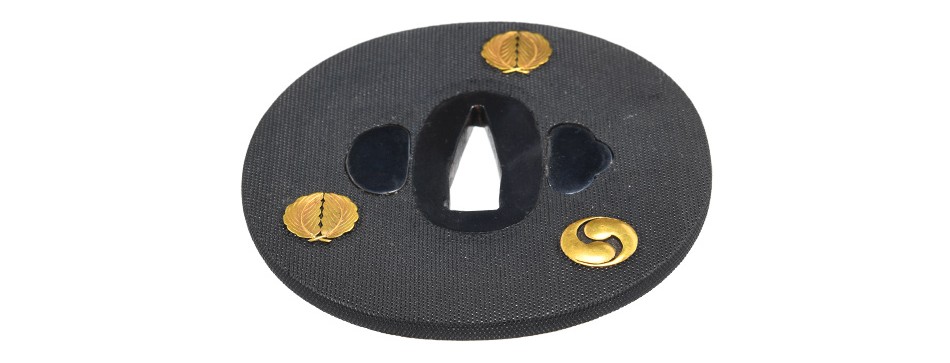
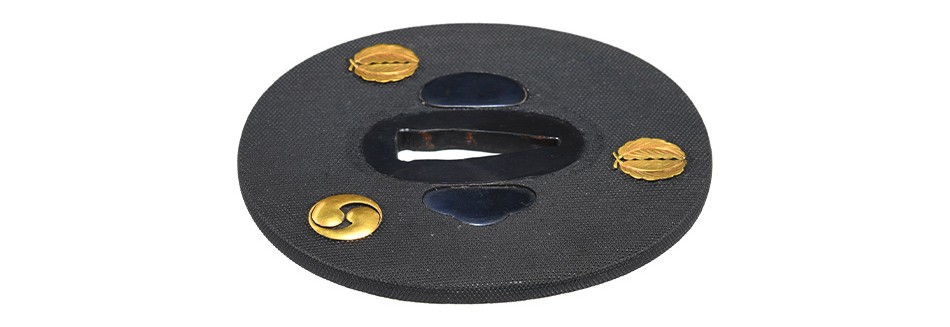
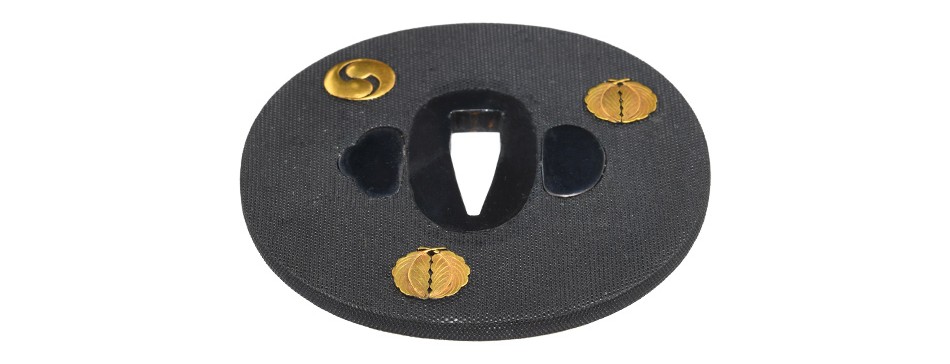
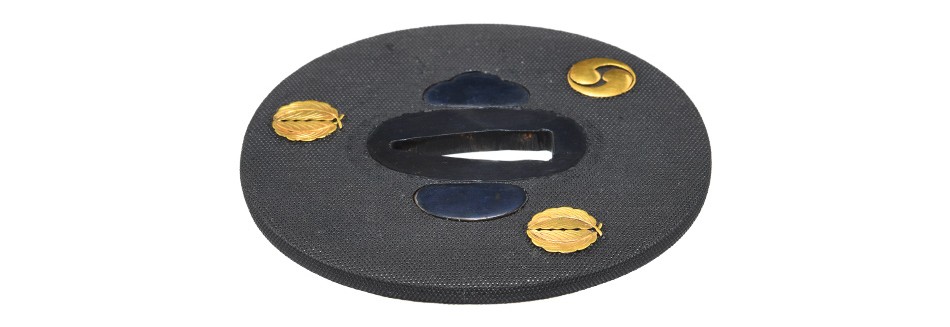
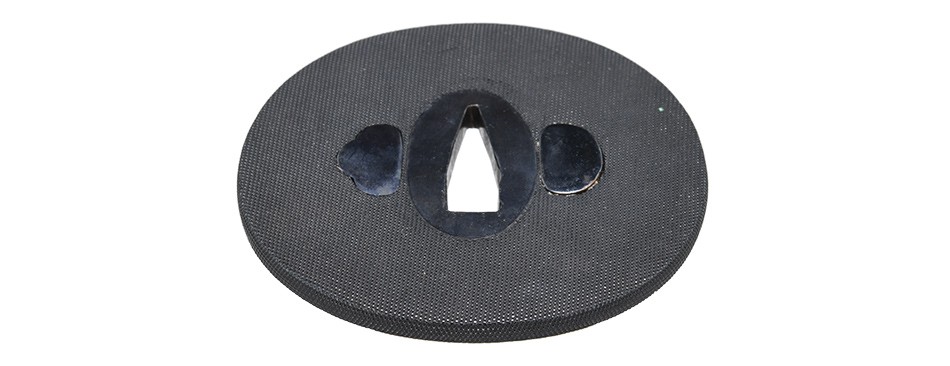
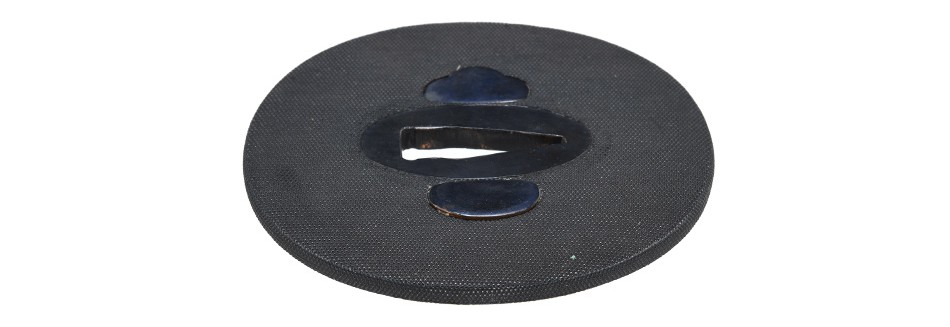
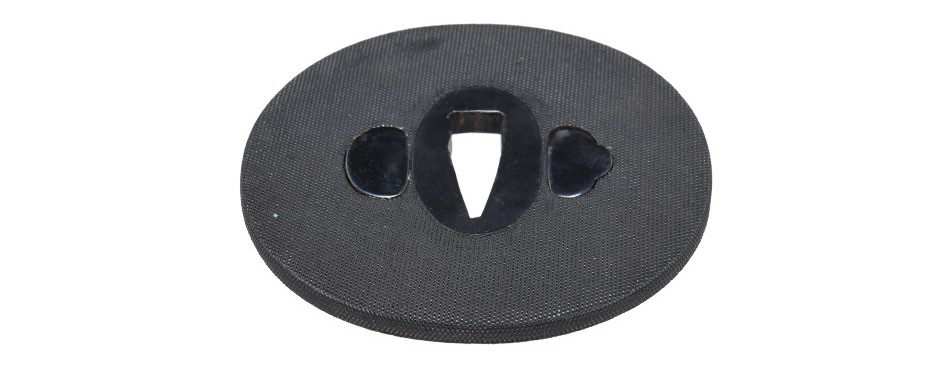
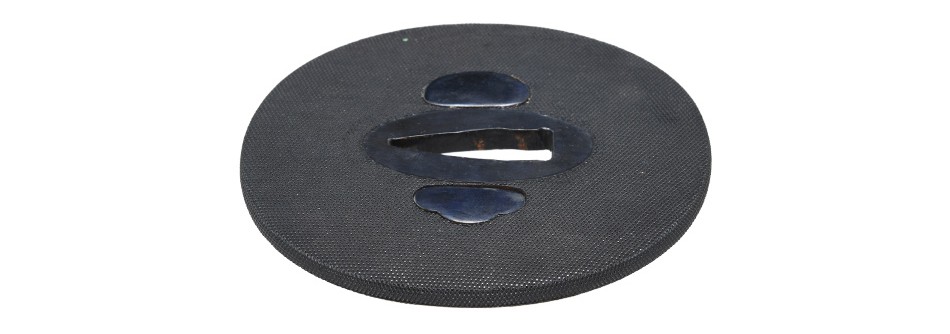
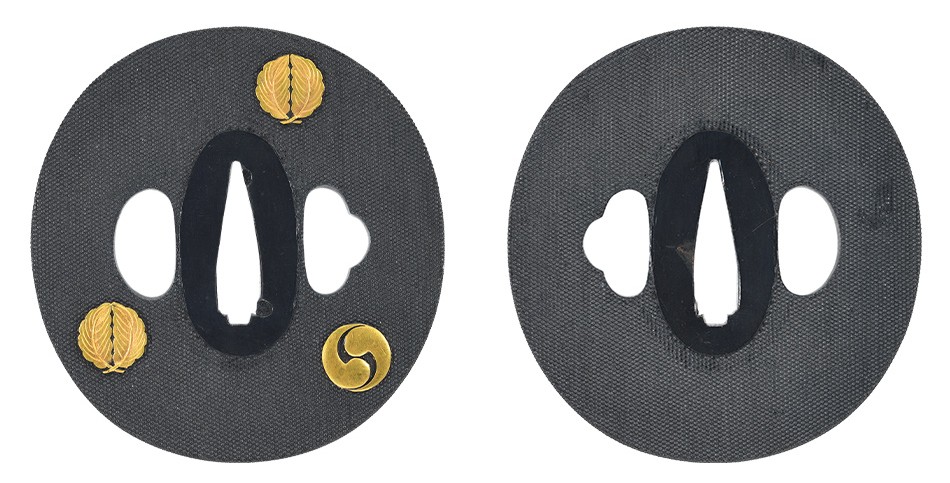
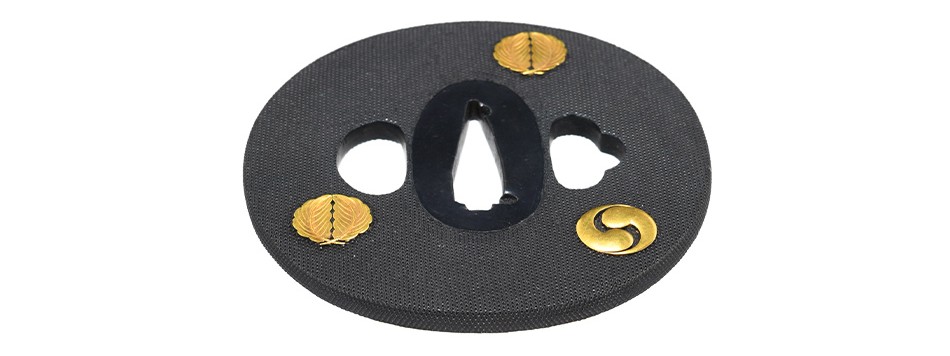
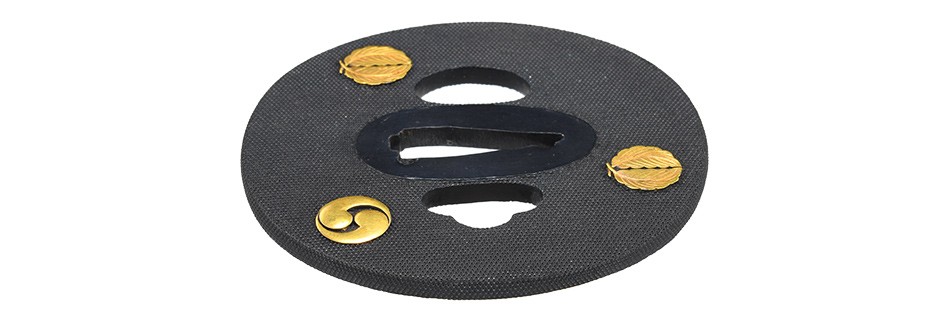
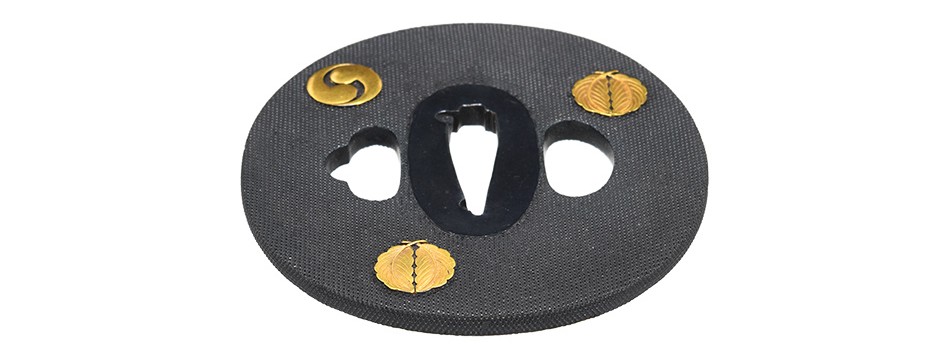
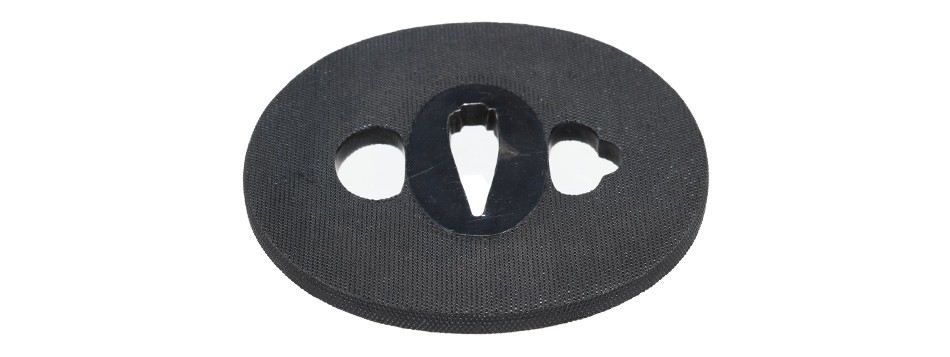
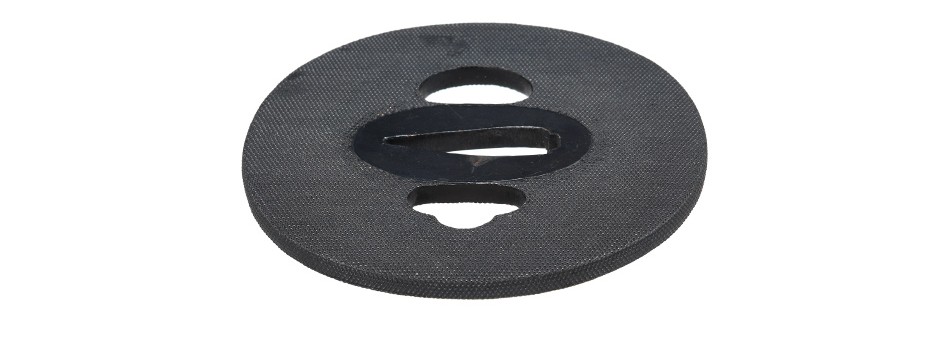
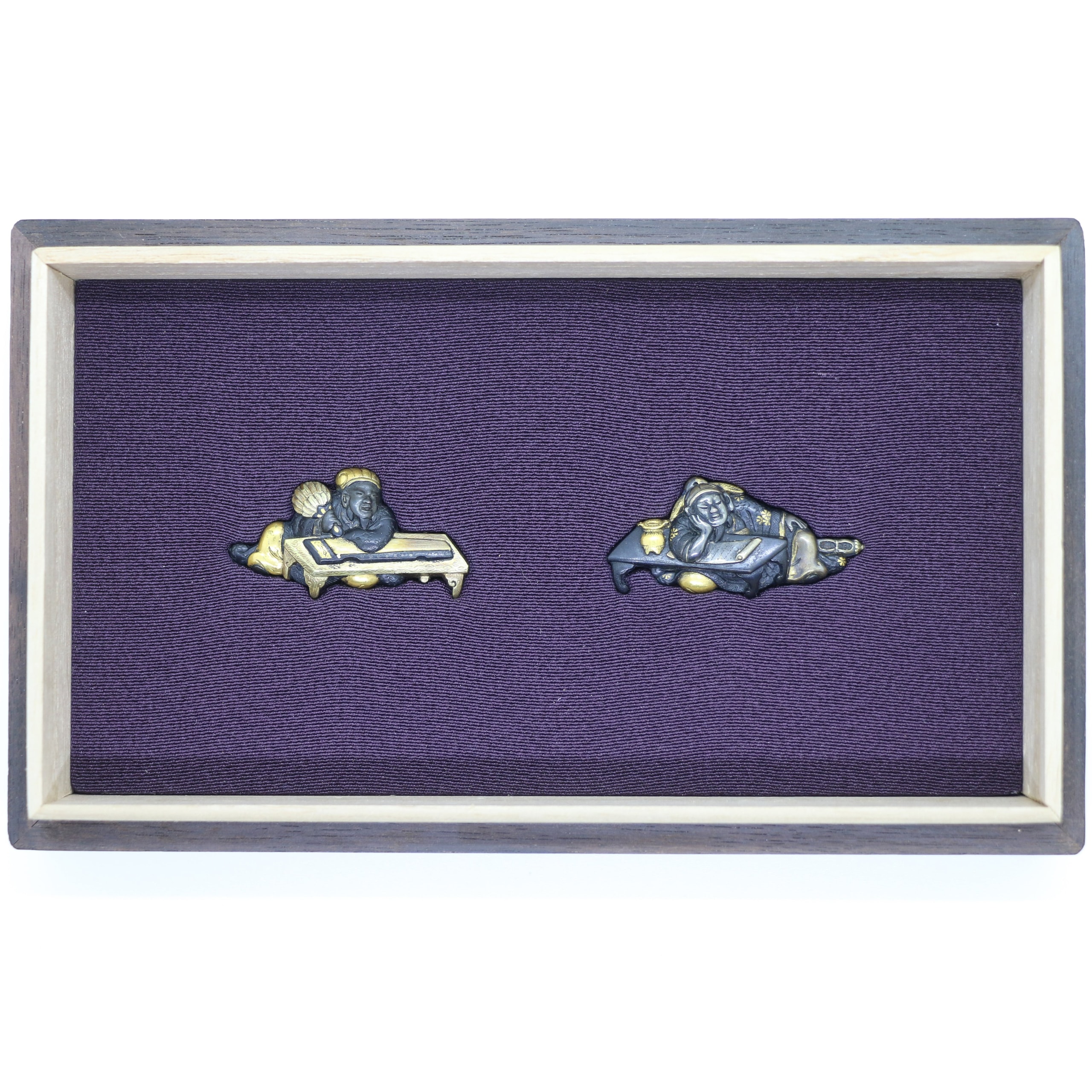
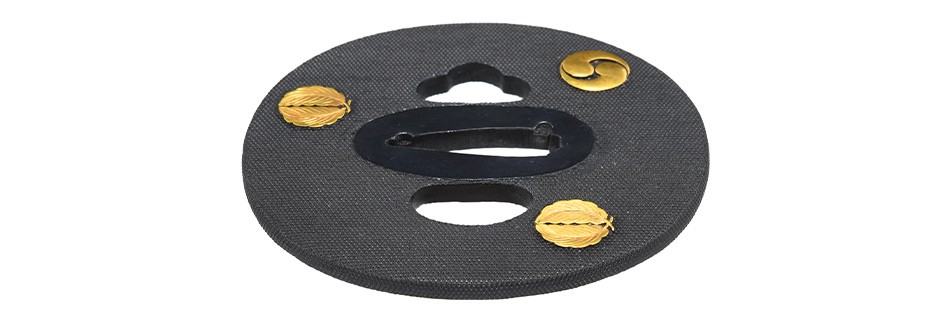
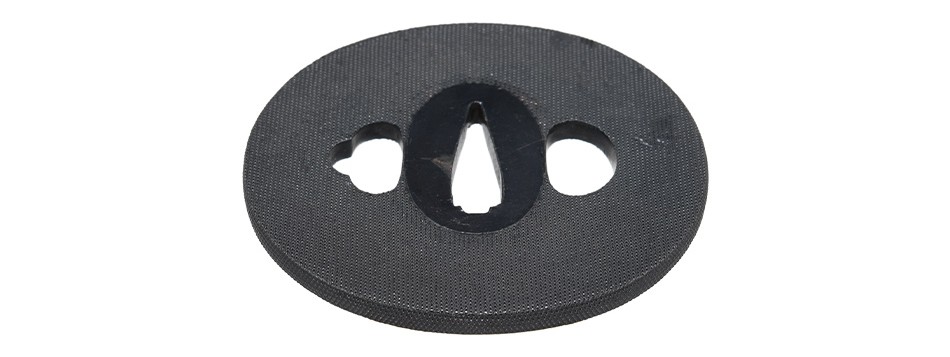
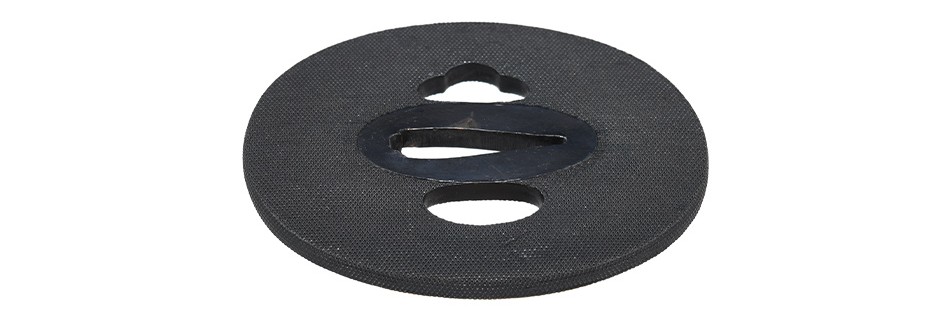
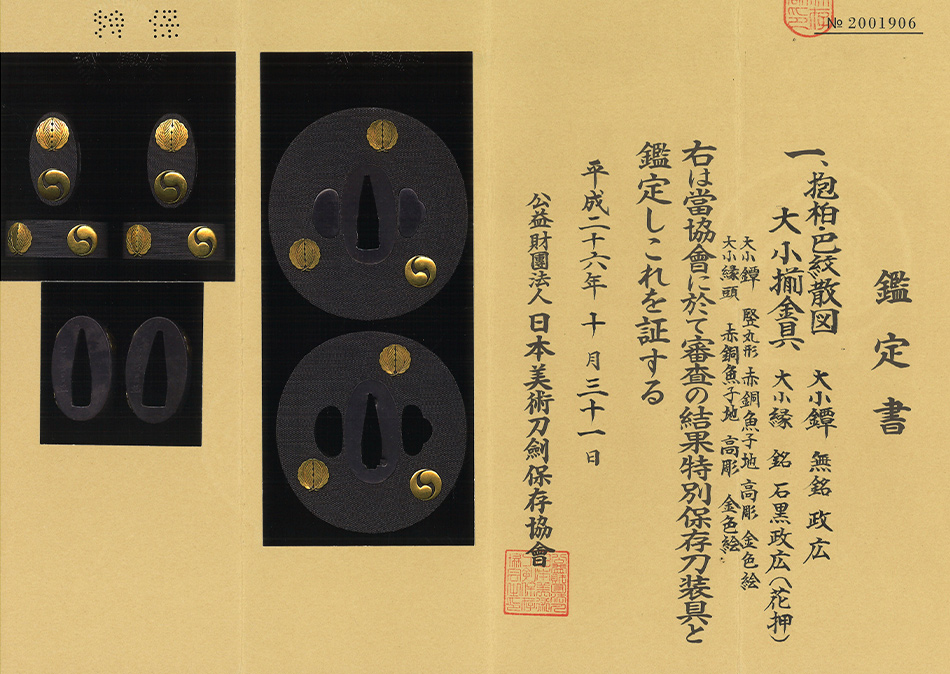
This is a daisho set of tsuba and fuchigashira, certified as Tokubetsu Hozon by the NBTHK. The fuchigashira are signed by Ishiguro Masahiro, a prominent tosogu artist of the Edo period. The set features a design of Dakikashiwa-Tomoemon-Chirashi-zu, executed in high relief with gold inlay on a shakudo nanako ground.

Certificate Reading

Certificate reading — 銘 石黒政広(花押)

NihontoWatch MonNihontoWatch
MarketEncyclopediaKantei
Swords›Machibori›Yokoya›Yanagawa›Ishiguro›Daishō›Daisho Tsuba and Fuchigashira Set by Ishiguro Masahiro with Dakikashiwa-Tomoemon-Chirashi-zu Design
daishoTokubetsu Hozon
Ishiguro School

Daisho Tsuba and Fuchigashira Set by Ishiguro Masahiro with Dakikashiwa-Tomoemon-Chirashi-zu Design

mei · Edo
¥1,700,000
Visit seller website →
Daisho
Could you name the smith from the blade alone? Today’s kantei →
Ishiguro School — 1 of 36
Ishiguro School — 2 of 36
Ishiguro School — 3 of 36
Ishiguro School — 4 of 36
Ishiguro School — 5 of 36
Ishiguro School — 6 of 36
Ishiguro School — 7 of 36
Ishiguro School — 8 of 36
Ishiguro School — 9 of 36
Ishiguro School — 10 of 36
Ishiguro School — 11 of 36
Ishiguro School — 12 of 36
Ishiguro School — 13 of 36
Ishiguro School — 14 of 36
Ishiguro School — 15 of 36
Ishiguro School — 16 of 36
Ishiguro School — 17 of 36
Ishiguro School — 18 of 36
Ishiguro School — 19 of 36
Ishiguro School — 20 of 36
Ishiguro School — 21 of 36
Ishiguro School — 22 of 36
Ishiguro School — 23 of 36
Ishiguro School — 24 of 36
Ishiguro School — 25 of 36
Ishiguro School — 26 of 36
Ishiguro School — 27 of 36
Ishiguro School — 28 of 36
Ishiguro School — 29 of 36
Ishiguro School — 30 of 36
Ishiguro School — 31 of 36
Ishiguro School — 32 of 36
Ishiguro School — 33 of 36
Ishiguro School — 34 of 36
Ishiguro School — 35 of 36
Ishiguro School — 36 of 36
1 / 36
1 / 36
Ishiguro School — 1 of 36Ishiguro School — 2 of 36Ishiguro School — 3 of 36Ishiguro School — 4 of 36Ishiguro School — 5 of 36Ishiguro School — 6 of 36Ishiguro School — 7 of 36Ishiguro School — 8 of 36Ishiguro School — 9 of 36Ishiguro School — 10 of 36Ishiguro School — 11 of 36Ishiguro School — 12 of 36Ishiguro School — 13 of 36Ishiguro School — 14 of 36Ishiguro School — 15 of 36Ishiguro School — 16 of 36Ishiguro School — 17 of 36Ishiguro School — 18 of 36Ishiguro School — 19 of 36Ishiguro School — 20 of 36Ishiguro School — 21 of 36Ishiguro School — 22 of 36Ishiguro School — 23 of 36Ishiguro School — 24 of 36Ishiguro School — 25 of 36Ishiguro School — 26 of 36Ishiguro School — 27 of 36Ishiguro School — 28 of 36Ishiguro School — 29 of 36Ishiguro School — 30 of 36Ishiguro School — 31 of 36Ishiguro School — 32 of 36Ishiguro School — 33 of 36Ishiguro School — 34 of 36Ishiguro School — 35 of 36Ishiguro School — 36 of 36
Daisho
Could you name the smith from the blade alone? Today’s kantei →
Measurements & details
Smith
Ishiguro School
Type
Daisho
School
Ishiguro
Period
Edo(mid Edo)
Signature
Signed
Description

This is a daisho set of tsuba and fuchigashira, certified as Tokubetsu Hozon by the NBTHK. The fuchigashira are signed by Ishiguro Masahiro, a prominent tosogu artist of the Edo period. The set features a design of Dakikashiwa-Tomoemon-Chirashi-zu, executed in high relief with gold inlay on a shakudo nanako ground.

About the school

Ishiguro

石黒

Machibori · Edo

21 pieces on the market now

›

The Ishiguro school was founded by Ishiguro Masatsune, born in Horeki 10 (1760), who trained under Kato Naotsune and Yanagawa Naomasa within the broader Yokoya lineage before establishing an independent atelier that would become one of the most celebrated machibori ("town carving") workshops of the late Edo period. Masatsune combined one character from each teacher's name to form his professional identity, and under the art name Togakushi he attracted a succession of gifted pupils -- Masayoshi, Masaaki, Koretsune (his eldest son), Koreyoshi, Masahide, and Masahiro -- who carried the school's distinctive manner through the final decades of the Tokugawa period and into the Meiji era. Centered in Edo, the Ishiguro lineage operated within the machibori sphere, producing fittings for discerning warrior-class and merchant patrons rather than under the hereditary commissions of the Goto iebori tradition, a commercial independence that fostered pictorial ambition and technical innovation. The collective technical identity of the Ishiguro school is defined by a painterly naturalism executed through takabori upon shakudo nanako-ji grounds, enriched by lavish polychrome iroe employing an unusually wide palette of colored metals -- gold, silver, shibuichi, suaka (scarlet copper), oborogin, and hi-irodo. The school's signature subjects are kacho-zu (flowers and birds), rendered with a naturalistic, sketch-like fidelity grounded in close observation from life. Masatsune established this direction, transforming the Yanagawa manner into a personal idiom centered on birds of prey and bird-and-flower compositions that became the hallmarks of the house. His works are characterized by an "honest, finely detailed manner" and a "clear and limpid spirit" achieved through masterful use of open space. Masayoshi, who succeeded as third head, brought the school's painterly idiom to its fullest expression: front and reverse surfaces are linked through continuous branches and contrasting water motifs, male and female birds are paired with deliberate compositional care, and the interplay of a-un expression lends narrative depth to each scene.

His compositions on iron migaki-ji grounds demonstrate equal command, with kin-sunago zogan evoking atmospheric haze. " Koretsune served as vital link between the founder and the school's later flourishing, with takabori described as "dignified and sumptuous, yet steadfast and reliable," and a command of perspective achieved by subtly modulating surface depth. Koreyoshi, credited with ability "surpassing that of his father" Masayoshi, brought the school's character to its fullest late-period expression, producing work likened to the nishiki-e color woodblock prints of the age. The Ishiguro school's significance within the tosogu canon rests upon its transformation of the Yokoya-Yanagawa classical discipline into a pictorial art of extraordinary chromatic richness and compositional sophistication. Where earlier metalworking traditions relied predominantly on monochrome shakudo or gold tonalities, the Ishiguro masters deployed polychrome iroe with a sumptuousness "that never lapses into vulgarity" -- a balance of brilliance and restraint that defines the school's aesthetic. Masatsune's founding generation retained a martial vigor suited to warrior taste that distinguished his work from the "more purely ornamental output of later Ishiguro artists," while the successive generations of Masayoshi, Masaaki, and Koreyoshi progressively refined the school's decorative vocabulary toward an opulence that mirrored the cultural efflorescence of the Bunka-Bunsei era. Complete soroe-kanagu sets and unified issaku suites represent the school's highest achievement, demonstrating rigorous thematic coherence across every component of a mounting. The NBTHK has consistently praised the school's finest works as pieces in which "the Ishiguro school's distinctive character" is left "nothing unexpressed," and the tradition's enduring legacy is that of a workshop which, across four generations, brought the art of polychrome metalwork to its most accomplished and visually resplendent expression in Edo-period Japan. Learn more →

9 recorded smiths78 designated works
Leading smiths
SmithEraDesignated
Masayoshi政美—29
Masatsune政常—17
Masaaki政明—19
Koretsune是常—4
Koreyoshi是美—4
Explore the Ishiguro school →

Historical context

The Edo period (1615 to 1868)

›

Edo was the sword’s age of connoisseurship: the Hon’ami appraisers, the shogunal register of famous blades of 1719, and a thriving literature turned the sword into an object of study even as it ceased to be drawn in war.

The Edo period (1615 to 1868) →

NBTHK Certificate
Tokubetsu Hozon Tōken特別保存刀剣
Sword Especially Worthy of Preservation
›

A Hozon-certified blade judged to show notably superior workmanship and a better state of preservation. The bar is higher: re-tempered blades and most unsigned Muromachi/Edo works are excluded.

Signed: 石黒政広(花押) (Ishiguro School)
As written on the certificate
About the NBTHK›

The NBTHK (Nihon Bijutsu Tōken Hozon Kyōkai, the Society for the Preservation of Japanese Art Swords) is a public-interest incorporated foundation founded in 1948 and supervised by Japan’s Agency for Cultural Affairs (Bunkachō); it is based at the Japanese Sword Museum in Tokyo. Its expert panels physically examine each submitted work (shinsa) and issue a certificate (kanteishō) ranking it by artistic and historical merit. NBTHK papers are the most widely recognized standard of authentication for Japanese swords and fittings.

NBTHK official site→
Seller
W
World Seiyudo
Established 2008 · 18 yrs on the market
🇯🇵Ships from Japan
›
✓Verified dealerworld-seiyudo.com
Settles in JPY
✓Ships worldwide✓English supportWire transferPayPalCredit card
Return policy

No cooling-off period or returns; refund only if the purchased sword is proven fake, capped at purchase price (excludes commission sales, accessories, auction items).

View all of World Seiyudo’s listings→View this item on the dealer’s site→

More Ishiguro School works

View all →
Samurai Nippon
Hozon
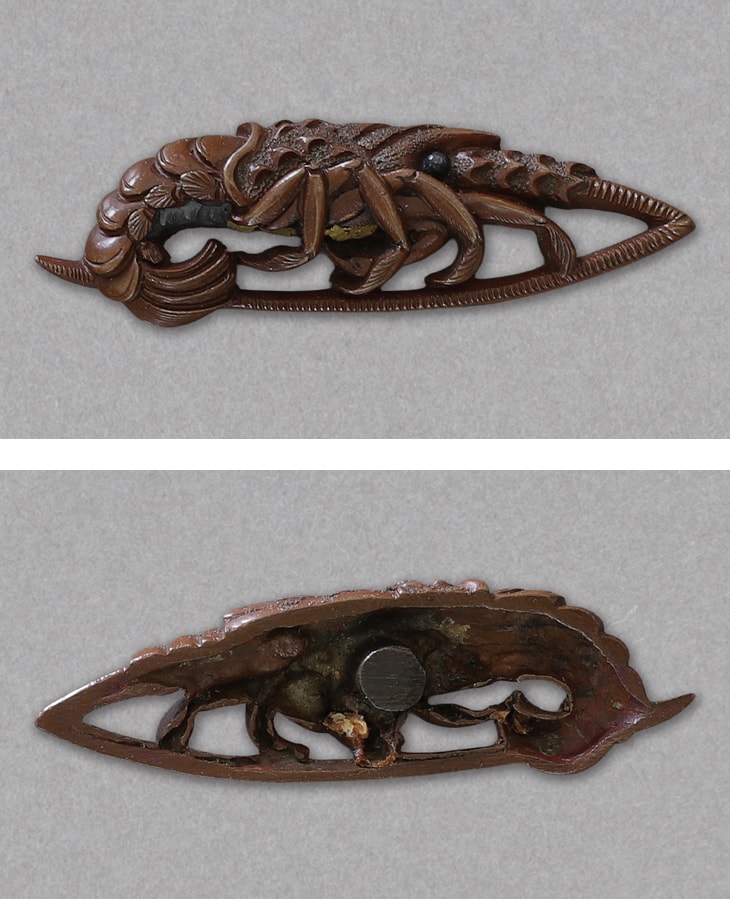
Menuki - Hozon - by Ishiguro School - Shrimp and Abalone DesignMenuki - Hozon - by Ishiguro School - Shrimp and Abalone Design

Menuki

ByIshiguro School
¥350,000
Choshuya
Tokuho
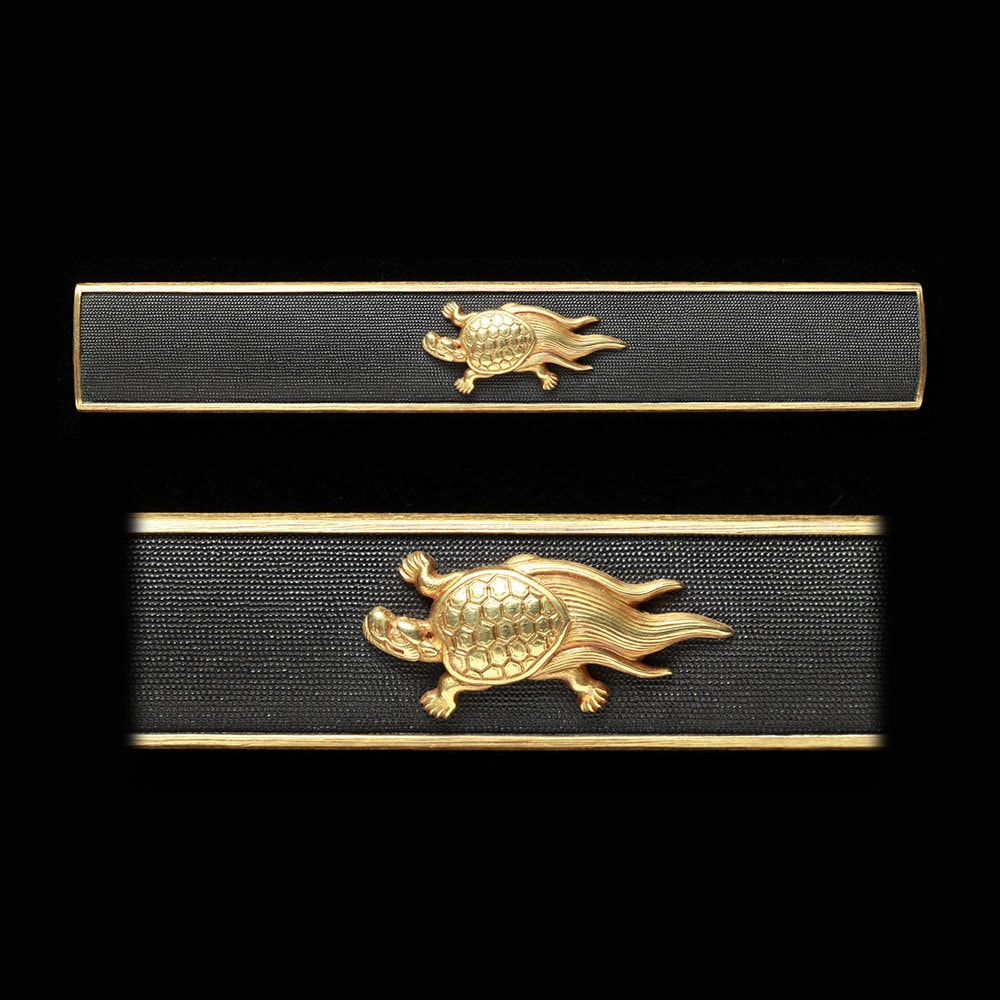
Kozuka - Tokuho - by Ishiguro School - Kozuka with Mino-game (Straw Raincoat Turtle) Design, Signed Sano Masayoshi (Kao)Kozuka - Tokuho - by Ishiguro School - Kozuka with Mino-game (Straw Raincoat Turtle) Design, Signed Sano Masayoshi (Kao)

Kozuka

ByIshiguro School
¥400,000
Choshuya
Tokuho
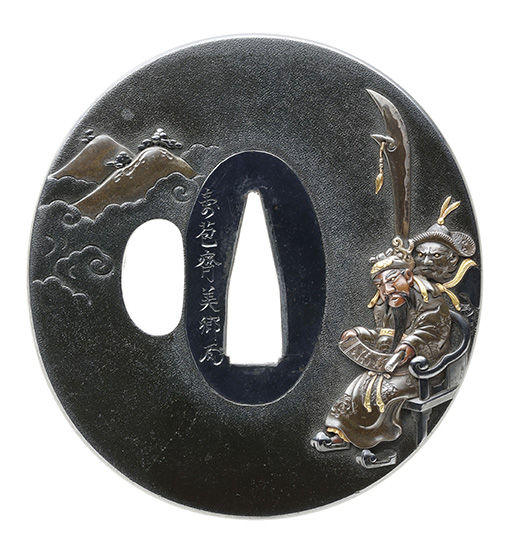
Tsuba - Tokuho - by Ishiguro School - Kanu and Shoso Design, Signed Juhosai Yoshiaki (Kao)Tsuba - Tokuho - by Ishiguro School - Kanu and Shoso Design, Signed Juhosai Yoshiaki (Kao)

Tsuba

ByIshiguro School
¥700,000
Samurai Museum
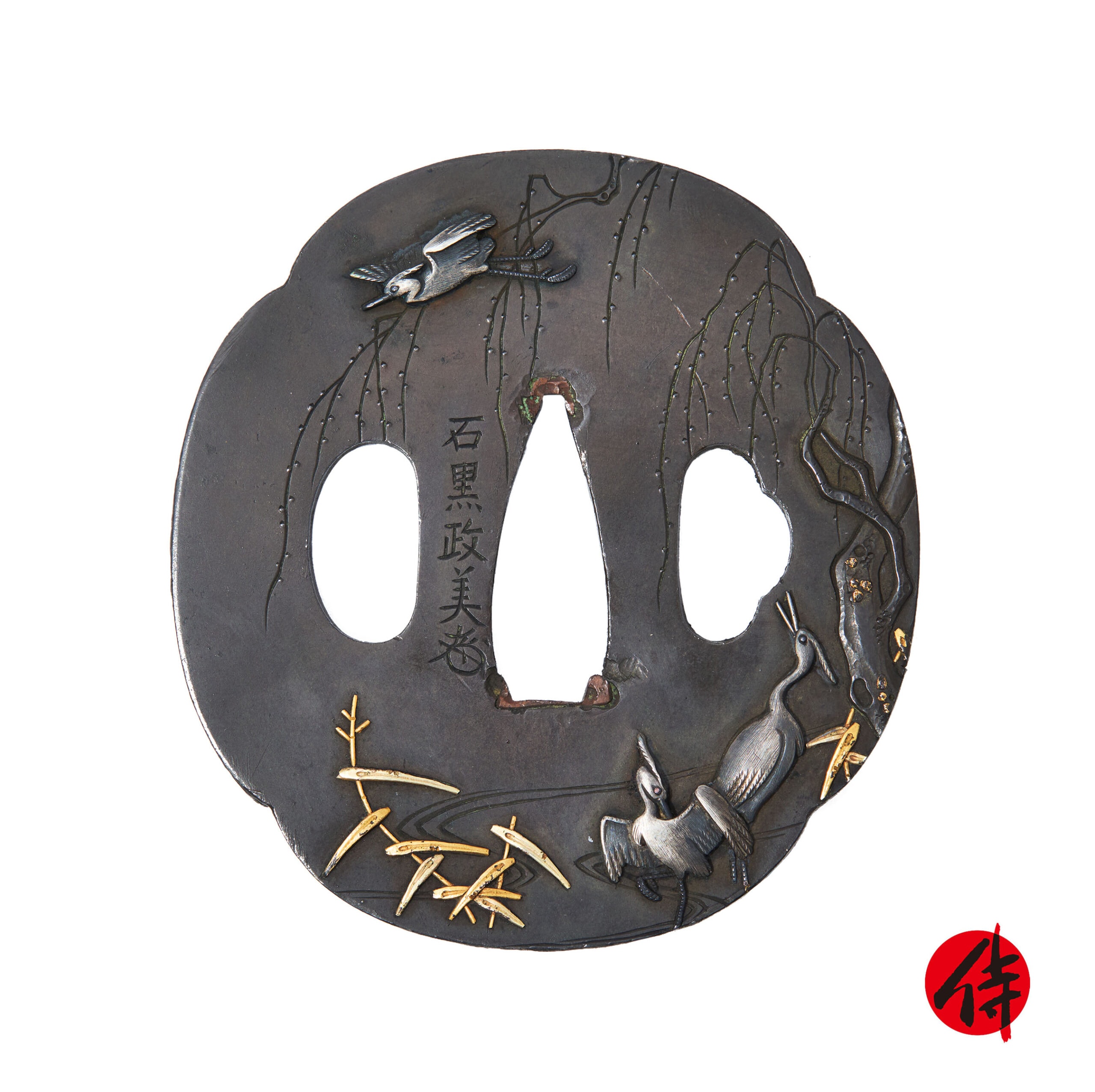
Tsuba - by Ishiguro School - Antique Tsuba for Samurai Sword (T-915)Tsuba - by Ishiguro School - Antique Tsuba for Samurai Sword (T-915)

Tsuba

ByIshiguro School
¥180,000
World Seiyudo
Tokuho
Mitokoromono - Tokuho - by Ishiguro School - Kozuka, Kogai, and Menuki Set by Sano Masayoshi with Baiju-zu Design, NBTHK Tokubetsu Hozon TosoguMitokoromono - Tokuho - by Ishiguro School - Kozuka, Kogai, and Menuki Set by Sano Masayoshi with Baiju-zu Design, NBTHK Tokubetsu Hozon Tosogu

Mitokoromono

ByIshiguro School
¥1,000,000
Nihonto Australia
Kozuka - by Ishiguro School - Ishiguro Kozuka with Ashinaga and Tenaga Motif, NTHK CertificateKozuka - by Ishiguro School - Ishiguro Kozuka with Ashinaga and Tenaga Motif, NTHK Certificate

Kozuka

ByIshiguro School
¥2,500
Choshuya
Hozon
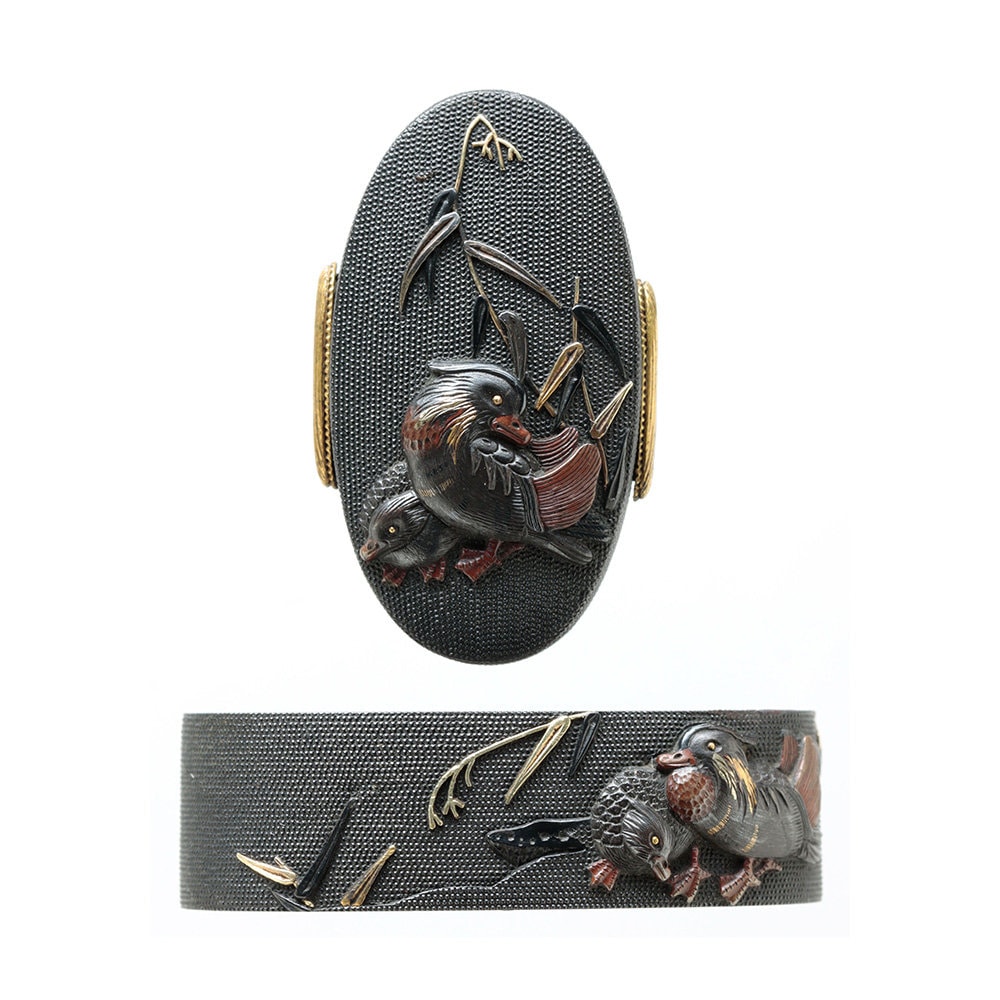
Fuchi-Kashira - Hozon - by Ishiguro School - Fuchi-Kashira with Mandarin Ducks Design, Signed Masayasu (Kaō) *Ishiguro MasayasuFuchi-Kashira - Hozon - by Ishiguro School - Fuchi-Kashira with Mandarin Ducks Design, Signed Masayasu (Kaō) *Ishiguro Masayasu

Fuchi-Kashira

ByIshiguro School
Ask

Previously sold — Ishiguro School

View all →
Japanese Sword Books and Tsuba
by Ishiguro School - Crows and Wavesby Ishiguro School - Crows and Waves
Sold

Crows and Waves

ByIshiguro School
SOLD
Choshuya
Tokuho
Tsuba - Tokuho - by Ishiguro School - Waves and Swallows Design, Jujuhou YoshishigeTsuba - Tokuho - by Ishiguro School - Waves and Swallows Design, Jujuhou Yoshishige
Sold

Tsuba

ByIshiguro School
SOLD
Japanese Sword Books and Tsuba
by Ishiguro School - T275. Signed Kozuka & Kogatana. Peacockby Ishiguro School - T275. Signed Kozuka & Kogatana. Peacock
Sold

T275. Signed Kozuka & Kogatana. Peacock

ByIshiguro School
SOLD
Choshuya
Fuchi-Kashira - by Ishiguro School - Oshidori-zu Fuchigashira, mei Keisatei Masayasu (kaō) *Ishiguro MasayasuFuchi-Kashira - by Ishiguro School - Oshidori-zu Fuchigashira, mei Keisatei Masayasu (kaō) *Ishiguro Masayasu
Sold

Fuchi-Kashira

ByIshiguro School
SOLD
Yakiba
Fuchi-Kashira - by Ishiguro School - Fuchi-Kashira: Ishiguro Masamori - Chidori over WavesFuchi-Kashira - by Ishiguro School - Fuchi-Kashira: Ishiguro Masamori - Chidori over Waves
Sold

Fuchi-Kashira

ByIshiguro School
SOLD
Soryu
Tokuho
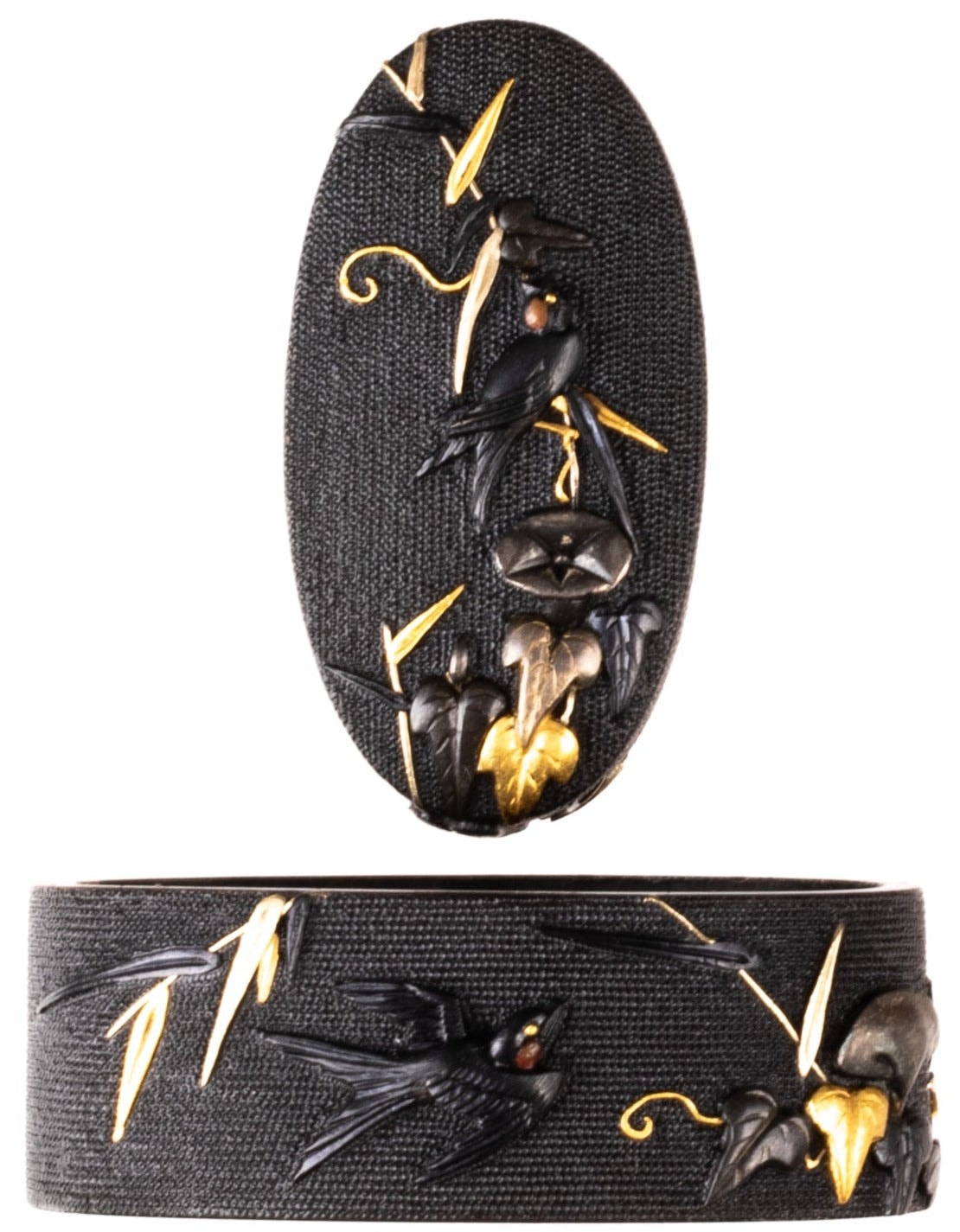
Fuchi-Kashira - Tokuho - by Ishiguro School - Shakudo Fuchi-Kashira: Ishiguro Masayasu - Morning Glory and Swallow Design, NBTHK Tokubetsu HozonFuchi-Kashira - Tokuho - by Ishiguro School - Shakudo Fuchi-Kashira: Ishiguro Masayasu - Morning Glory and Swallow Design, NBTHK Tokubetsu Hozon
Sold

Fuchi-Kashira

ByIshiguro School
SOLD
Ayakashi
Hozon
Menuki - Hozon - by Ishiguro School - Three Kingdoms Heroes Design by Yamamoto MasatsuneMenuki - Hozon - by Ishiguro School - Three Kingdoms Heroes Design by Yamamoto Masatsune
Sold

Menuki

ByIshiguro School
SOLD
Japanese Sword Books and Tsuba
by Ishiguro School - Elaborate Kinko Tsuba by Ishiguro Mitsuharuby Ishiguro School - Elaborate Kinko Tsuba by Ishiguro Mitsuharu
Sold

Elaborate Kinko Tsuba by Ishiguro Mitsuharu

ByIshiguro School
SOLD

Swords

  • Katana
  • Wakizashi
  • Tantō
  • Tachi
  • Naginata
  • Yari
  • Japanese Swords
  • Samurai Swords

Fittings

  • Tsuba
  • Fuchi-Kashira
  • Kozuka
  • Menuki
  • Sword Guards (Tsuba)

Armor

  • Kabuto
  • Samurai Armor
  • All Samurai Armor

By Certification

  • Tokujū
  • Jūyō
  • Tokuho
  • Hozon

Resources

  • Dealer Directory
  • Artist Directory
  • The Daily Kantei
  • Glossary
  • Browse All
Nihontowatch© 2026
TermsPrivacyCookiesAbout

¥1,700,000

View on World Seiyudo

Description

This is a daisho set of tsuba and fuchigashira, certified as Tokubetsu Hozon by the NBTHK. The fuchigashira are signed by Ishiguro Masahiro, a prominent tosogu artist of the Edo period. The set features a design of Dakikashiwa-Tomoemon-Chirashi-zu, executed in high relief with gold inlay on a shakudo nanako ground.

Certificate Reading

Certificate reading — 銘 石黒政広(花押)

NihontoWatch MonNihontoWatch
MarketEncyclopediaKantei
Swords›Machibori›Yokoya›Yanagawa›Ishiguro›Daishō›Daisho Tsuba and Fuchigashira Set by Ishiguro Masahiro with Dakikashiwa-Tomoemon-Chirashi-zu Design
daishoTokubetsu Hozon
Ishiguro School

Daisho Tsuba and Fuchigashira Set by Ishiguro Masahiro with Dakikashiwa-Tomoemon-Chirashi-zu Design

mei · Edo
¥1,700,000
Visit seller website →
Daisho
Could you name the smith from the blade alone? Today’s kantei →
Ishiguro School — 1 of 36
Ishiguro School — 2 of 36
Ishiguro School — 3 of 36
Ishiguro School — 4 of 36
Ishiguro School — 5 of 36
Ishiguro School — 6 of 36
Ishiguro School — 7 of 36
Ishiguro School — 8 of 36
Ishiguro School — 9 of 36
Ishiguro School — 10 of 36
Ishiguro School — 11 of 36
Ishiguro School — 12 of 36
Ishiguro School — 13 of 36
Ishiguro School — 14 of 36
Ishiguro School — 15 of 36
Ishiguro School — 16 of 36
Ishiguro School — 17 of 36
Ishiguro School — 18 of 36
Ishiguro School — 19 of 36
Ishiguro School — 20 of 36
Ishiguro School — 21 of 36
Ishiguro School — 22 of 36
Ishiguro School — 23 of 36
Ishiguro School — 24 of 36
Ishiguro School — 25 of 36
Ishiguro School — 26 of 36
Ishiguro School — 27 of 36
Ishiguro School — 28 of 36
Ishiguro School — 29 of 36
Ishiguro School — 30 of 36
Ishiguro School — 31 of 36
Ishiguro School — 32 of 36
Ishiguro School — 33 of 36
Ishiguro School — 34 of 36
Ishiguro School — 35 of 36
Ishiguro School — 36 of 36
1 / 36
1 / 36
Ishiguro School — 1 of 36Ishiguro School — 2 of 36Ishiguro School — 3 of 36Ishiguro School — 4 of 36Ishiguro School — 5 of 36Ishiguro School — 6 of 36Ishiguro School — 7 of 36Ishiguro School — 8 of 36Ishiguro School — 9 of 36Ishiguro School — 10 of 36Ishiguro School — 11 of 36Ishiguro School — 12 of 36Ishiguro School — 13 of 36Ishiguro School — 14 of 36Ishiguro School — 15 of 36Ishiguro School — 16 of 36Ishiguro School — 17 of 36Ishiguro School — 18 of 36Ishiguro School — 19 of 36Ishiguro School — 20 of 36Ishiguro School — 21 of 36Ishiguro School — 22 of 36Ishiguro School — 23 of 36Ishiguro School — 24 of 36Ishiguro School — 25 of 36Ishiguro School — 26 of 36Ishiguro School — 27 of 36Ishiguro School — 28 of 36Ishiguro School — 29 of 36Ishiguro School — 30 of 36Ishiguro School — 31 of 36Ishiguro School — 32 of 36Ishiguro School — 33 of 36Ishiguro School — 34 of 36Ishiguro School — 35 of 36Ishiguro School — 36 of 36
Daisho
Could you name the smith from the blade alone? Today’s kantei →
Measurements & details
Smith
Ishiguro School
Type
Daisho
School
Ishiguro
Period
Edo(mid Edo)
Signature
Signed
Description

This is a daisho set of tsuba and fuchigashira, certified as Tokubetsu Hozon by the NBTHK. The fuchigashira are signed by Ishiguro Masahiro, a prominent tosogu artist of the Edo period. The set features a design of Dakikashiwa-Tomoemon-Chirashi-zu, executed in high relief with gold inlay on a shakudo nanako ground.

About the school

Ishiguro

石黒

Machibori · Edo
21 pieces on the market now

›

The Ishiguro school was founded by Ishiguro Masatsune, born in Horeki 10 (1760), who trained under Kato Naotsune and Yanagawa Naomasa within the broader Yokoya lineage before establishing an independent atelier that would become one of the most celebrated machibori ("town carving") workshops of the late Edo period. Masatsune combined one character from each teacher's name to form his professional identity, and under the art name Togakushi he attracted a succession of gifted pupils -- Masayoshi, Masaaki, Koretsune (his eldest son), Koreyoshi, Masahide, and Masahiro -- who carried the school's distinctive manner through the final decades of the Tokugawa period and into the Meiji era. Centered in Edo, the Ishiguro lineage operated within the machibori sphere, producing fittings for discerning warrior-class and merchant patrons rather than under the hereditary commissions of the Goto iebori tradition, a commercial independence that fostered pictorial ambition and technical innovation. The collective technical identity of the Ishiguro school is defined by a painterly naturalism executed through takabori upon shakudo nanako-ji grounds, enriched by lavish polychrome iroe employing an unusually wide palette of colored metals -- gold, silver, shibuichi, suaka (scarlet copper), oborogin, and hi-irodo. The school's signature subjects are kacho-zu (flowers and birds), rendered with a naturalistic, sketch-like fidelity grounded in close observation from life. Masatsune established this direction, transforming the Yanagawa manner into a personal idiom centered on birds of prey and bird-and-flower compositions that became the hallmarks of the house. His works are characterized by an "honest, finely detailed manner" and a "clear and limpid spirit" achieved through masterful use of open space. Masayoshi, who succeeded as third head, brought the school's painterly idiom to its fullest expression: front and reverse surfaces are linked through continuous branches and contrasting water motifs, male and female birds are paired with deliberate compositional care, and the interplay of a-un expression lends narrative depth to each scene.
His compositions on iron migaki-ji grounds demonstrate equal command, with kin-sunago zogan evoking atmospheric haze. " Koretsune served as vital link between the founder and the school's later flourishing, with takabori described as "dignified and sumptuous, yet steadfast and reliable," and a command of perspective achieved by subtly modulating surface depth. Koreyoshi, credited with ability "surpassing that of his father" Masayoshi, brought the school's character to its fullest late-period expression, producing work likened to the nishiki-e color woodblock prints of the age. The Ishiguro school's significance within the tosogu canon rests upon its transformation of the Yokoya-Yanagawa classical discipline into a pictorial art of extraordinary chromatic richness and compositional sophistication. Where earlier metalworking traditions relied predominantly on monochrome shakudo or gold tonalities, the Ishiguro masters deployed polychrome iroe with a sumptuousness "that never lapses into vulgarity" -- a balance of brilliance and restraint that defines the school's aesthetic. Masatsune's founding generation retained a martial vigor suited to warrior taste that distinguished his work from the "more purely ornamental output of later Ishiguro artists," while the successive generations of Masayoshi, Masaaki, and Koreyoshi progressively refined the school's decorative vocabulary toward an opulence that mirrored the cultural efflorescence of the Bunka-Bunsei era. Complete soroe-kanagu sets and unified issaku suites represent the school's highest achievement, demonstrating rigorous thematic coherence across every component of a mounting. The NBTHK has consistently praised the school's finest works as pieces in which "the Ishiguro school's distinctive character" is left "nothing unexpressed," and the tradition's enduring legacy is that of a workshop which, across four generations, brought the art of polychrome metalwork to its most accomplished and visually resplendent expression in Edo-period Japan. Learn more →

9 recorded smiths78 designated works
Leading smiths
SmithEraDesignated
Masayoshi政美—29
Masatsune政常—17
Masaaki政明—19
Koretsune是常—4
Koreyoshi是美—4
Explore the Ishiguro school →

Historical context

The Edo period (1615 to 1868)

›

Edo was the sword’s age of connoisseurship: the Hon’ami appraisers, the shogunal register of famous blades of 1719, and a thriving literature turned the sword into an object of study even as it ceased to be drawn in war.

The Edo period (1615 to 1868) →

NBTHK Certificate
Tokubetsu Hozon Tōken特別保存刀剣
Sword Especially Worthy of Preservation
›

A Hozon-certified blade judged to show notably superior workmanship and a better state of preservation. The bar is higher: re-tempered blades and most unsigned Muromachi/Edo works are excluded.

Signed: 石黒政広(花押) (Ishiguro School)
As written on the certificate
About the NBTHK›

The NBTHK (Nihon Bijutsu Tōken Hozon Kyōkai, the Society for the Preservation of Japanese Art Swords) is a public-interest incorporated foundation founded in 1948 and supervised by Japan’s Agency for Cultural Affairs (Bunkachō); it is based at the Japanese Sword Museum in Tokyo. Its expert panels physically examine each submitted work (shinsa) and issue a certificate (kanteishō) ranking it by artistic and historical merit. NBTHK papers are the most widely recognized standard of authentication for Japanese swords and fittings.

NBTHK official site→
Seller
W
World Seiyudo
Established 2008 · 18 yrs on the market
🇯🇵Ships from Japan
›
✓Verified dealerworld-seiyudo.com
Settles in JPY
✓Ships worldwide✓English supportWire transferPayPalCredit card
Return policy

No cooling-off period or returns; refund only if the purchased sword is proven fake, capped at purchase price (excludes commission sales, accessories, auction items).

View all of World Seiyudo’s listings→View this item on the dealer’s site→

More Ishiguro School works

View all →
Samurai Nippon
Hozon
Menuki - Hozon - by Ishiguro School - Shrimp and Abalone DesignMenuki - Hozon - by Ishiguro School - Shrimp and Abalone Design

Menuki

ByIshiguro School
¥350,000
Choshuya
Tokuho
Kozuka - Tokuho - by Ishiguro School - Kozuka with Mino-game (Straw Raincoat Turtle) Design, Signed Sano Masayoshi (Kao)Kozuka - Tokuho - by Ishiguro School - Kozuka with Mino-game (Straw Raincoat Turtle) Design, Signed Sano Masayoshi (Kao)

Kozuka

ByIshiguro School
¥400,000
Choshuya
Tokuho
Tsuba - Tokuho - by Ishiguro School - Kanu and Shoso Design, Signed Juhosai Yoshiaki (Kao)Tsuba - Tokuho - by Ishiguro School - Kanu and Shoso Design, Signed Juhosai Yoshiaki (Kao)

Tsuba

ByIshiguro School
¥700,000
Samurai Museum
Tsuba - by Ishiguro School - Antique Tsuba for Samurai Sword (T-915)Tsuba - by Ishiguro School - Antique Tsuba for Samurai Sword (T-915)

Tsuba

ByIshiguro School
¥180,000
World Seiyudo
Tokuho
Mitokoromono - Tokuho - by Ishiguro School - Kozuka, Kogai, and Menuki Set by Sano Masayoshi with Baiju-zu Design, NBTHK Tokubetsu Hozon TosoguMitokoromono - Tokuho - by Ishiguro School - Kozuka, Kogai, and Menuki Set by Sano Masayoshi with Baiju-zu Design, NBTHK Tokubetsu Hozon Tosogu

Mitokoromono

ByIshiguro School
¥1,000,000
Nihonto Australia
Kozuka - by Ishiguro School - Ishiguro Kozuka with Ashinaga and Tenaga Motif, NTHK CertificateKozuka - by Ishiguro School - Ishiguro Kozuka with Ashinaga and Tenaga Motif, NTHK Certificate

Kozuka

ByIshiguro School
¥2,500
Choshuya
Hozon
Fuchi-Kashira - Hozon - by Ishiguro School - Fuchi-Kashira with Mandarin Ducks Design, Signed Masayasu (Kaō) *Ishiguro MasayasuFuchi-Kashira - Hozon - by Ishiguro School - Fuchi-Kashira with Mandarin Ducks Design, Signed Masayasu (Kaō) *Ishiguro Masayasu

Fuchi-Kashira

ByIshiguro School
Ask

Previously sold — Ishiguro School

View all →
Japanese Sword Books and Tsuba
by Ishiguro School - Crows and Wavesby Ishiguro School - Crows and Waves
Sold

Crows and Waves

ByIshiguro School
SOLD
Choshuya
Tokuho
Tsuba - Tokuho - by Ishiguro School - Waves and Swallows Design, Jujuhou YoshishigeTsuba - Tokuho - by Ishiguro School - Waves and Swallows Design, Jujuhou Yoshishige
Sold

Tsuba

ByIshiguro School
SOLD
Japanese Sword Books and Tsuba
by Ishiguro School - T275. Signed Kozuka & Kogatana. Peacockby Ishiguro School - T275. Signed Kozuka & Kogatana. Peacock
Sold

T275. Signed Kozuka & Kogatana. Peacock

ByIshiguro School
SOLD
Choshuya
Fuchi-Kashira - by Ishiguro School - Oshidori-zu Fuchigashira, mei Keisatei Masayasu (kaō) *Ishiguro MasayasuFuchi-Kashira - by Ishiguro School - Oshidori-zu Fuchigashira, mei Keisatei Masayasu (kaō) *Ishiguro Masayasu
Sold

Fuchi-Kashira

ByIshiguro School
SOLD
Yakiba
Fuchi-Kashira - by Ishiguro School - Fuchi-Kashira: Ishiguro Masamori - Chidori over WavesFuchi-Kashira - by Ishiguro School - Fuchi-Kashira: Ishiguro Masamori - Chidori over Waves
Sold

Fuchi-Kashira

ByIshiguro School
SOLD
Soryu
Tokuho
Fuchi-Kashira - Tokuho - by Ishiguro School - Shakudo Fuchi-Kashira: Ishiguro Masayasu - Morning Glory and Swallow Design, NBTHK Tokubetsu HozonFuchi-Kashira - Tokuho - by Ishiguro School - Shakudo Fuchi-Kashira: Ishiguro Masayasu - Morning Glory and Swallow Design, NBTHK Tokubetsu Hozon
Sold

Fuchi-Kashira

ByIshiguro School
SOLD
Ayakashi
Hozon
Menuki - Hozon - by Ishiguro School - Three Kingdoms Heroes Design by Yamamoto MasatsuneMenuki - Hozon - by Ishiguro School - Three Kingdoms Heroes Design by Yamamoto Masatsune
Sold

Menuki

ByIshiguro School
SOLD
Japanese Sword Books and Tsuba
by Ishiguro School - Elaborate Kinko Tsuba by Ishiguro Mitsuharuby Ishiguro School - Elaborate Kinko Tsuba by Ishiguro Mitsuharu
Sold

Elaborate Kinko Tsuba by Ishiguro Mitsuharu

ByIshiguro School
SOLD

Swords

  • Katana
  • Wakizashi
  • Tantō
  • Tachi
  • Naginata
  • Yari
  • Japanese Swords
  • Samurai Swords

Fittings

  • Tsuba
  • Fuchi-Kashira
  • Kozuka
  • Menuki
  • Sword Guards (Tsuba)

Armor

  • Kabuto
  • Samurai Armor
  • All Samurai Armor

By Certification

  • Tokujū
  • Jūyō
  • Tokuho
  • Hozon

Resources

  • Dealer Directory
  • Artist Directory
  • The Daily Kantei
  • Glossary
  • Browse All
Nihontowatch© 2026
TermsPrivacyCookiesAbout

¥1,700,000

View on World Seiyudo
NihontoWatch MonNihontoWatch
Market
Encyclopedia
Kantei
NihontoWatch MonNihontoWatch
Market
Encyclopedia
Kantei