In the Sengoku era the school served a second warrior court: the Later Hōjō at Odawara, whose patronage kept the Tsunahiro line forging hitatsura for the uchigatana age until the castle fell to Hideyoshi in 1590.
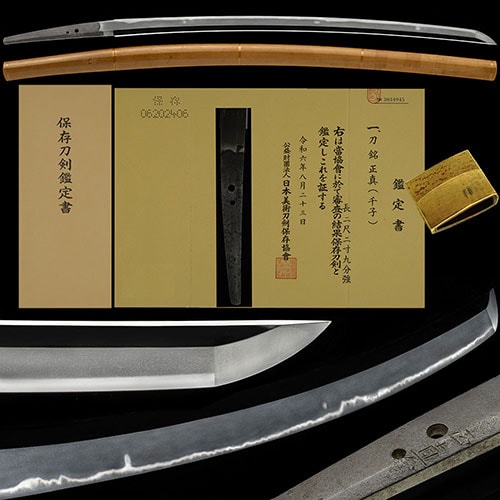
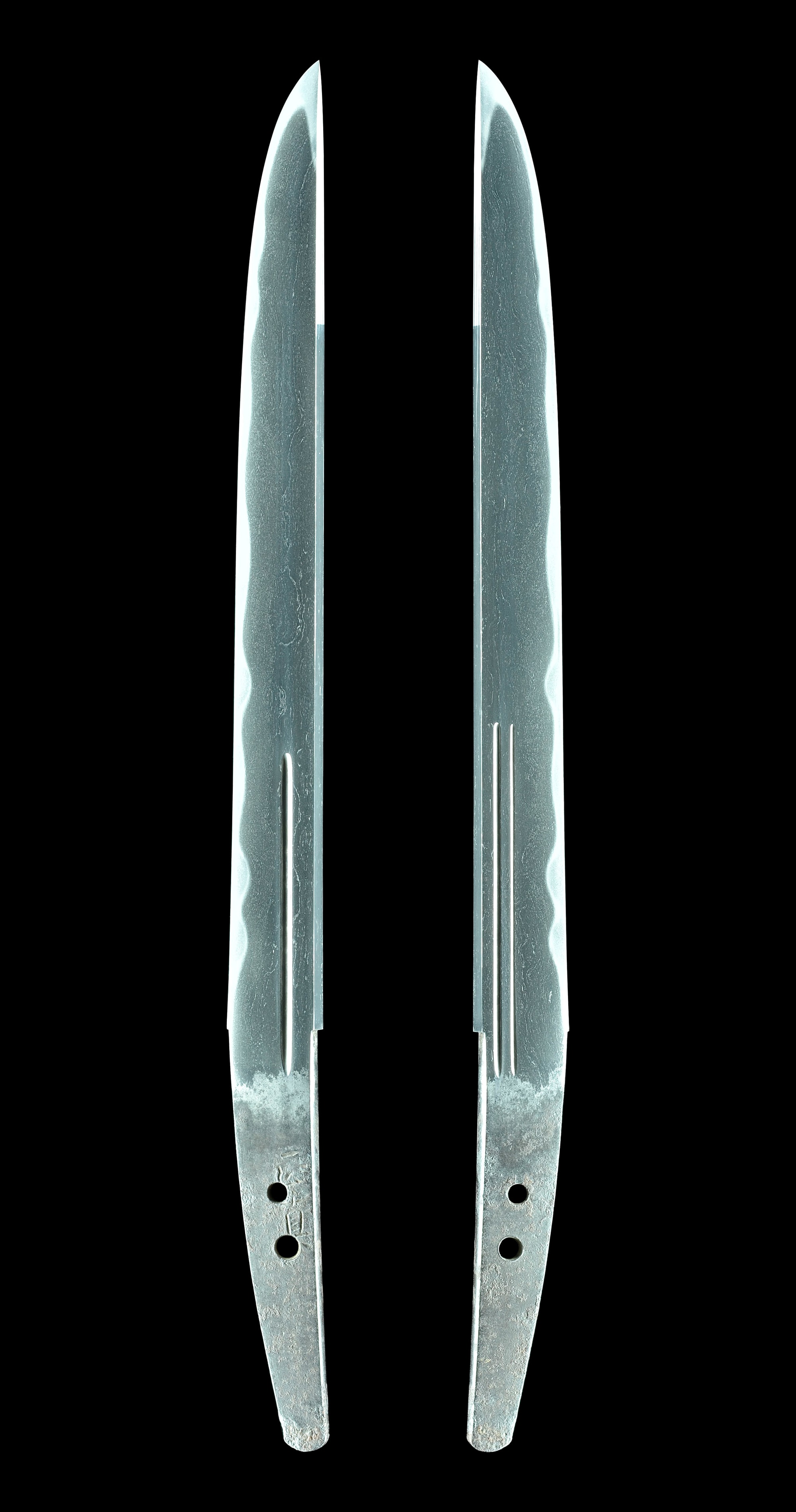
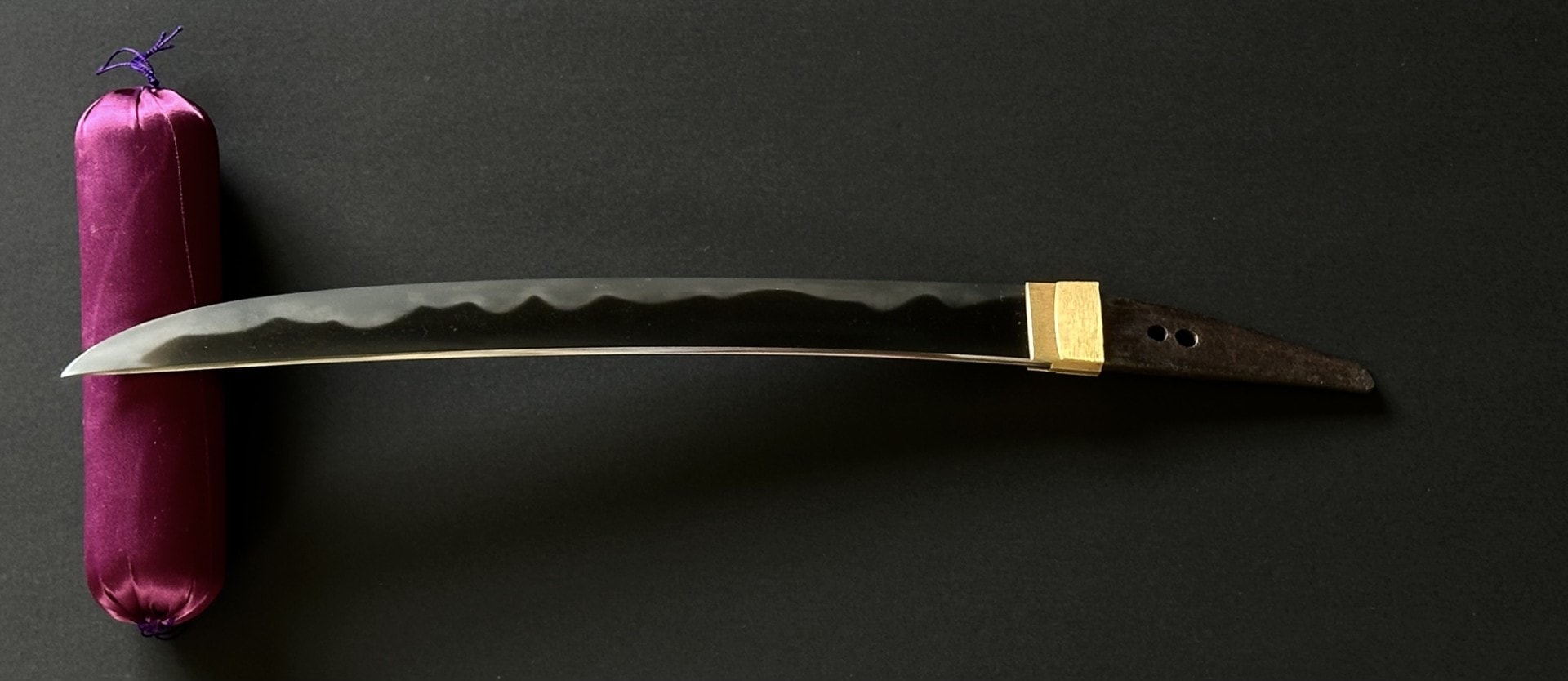
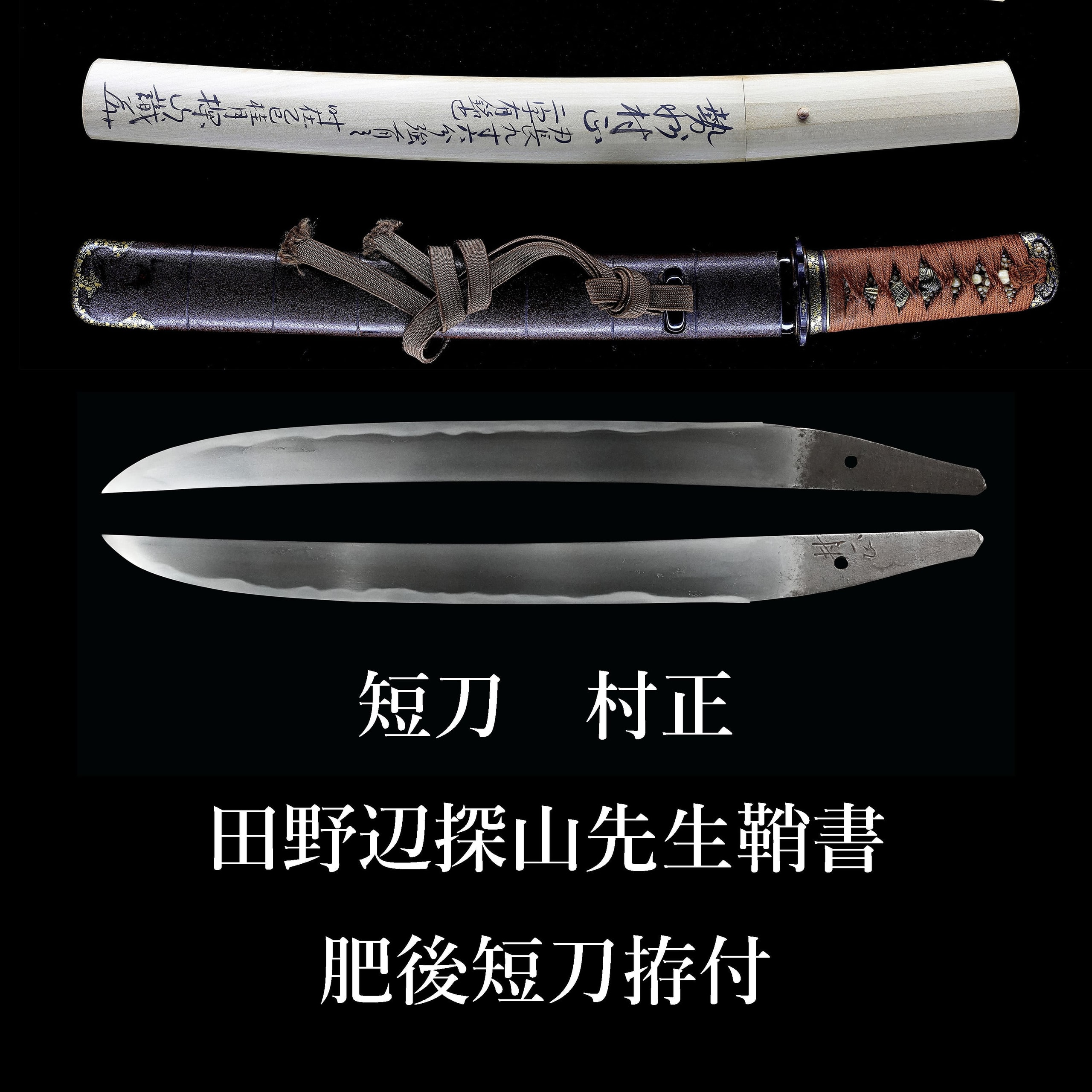
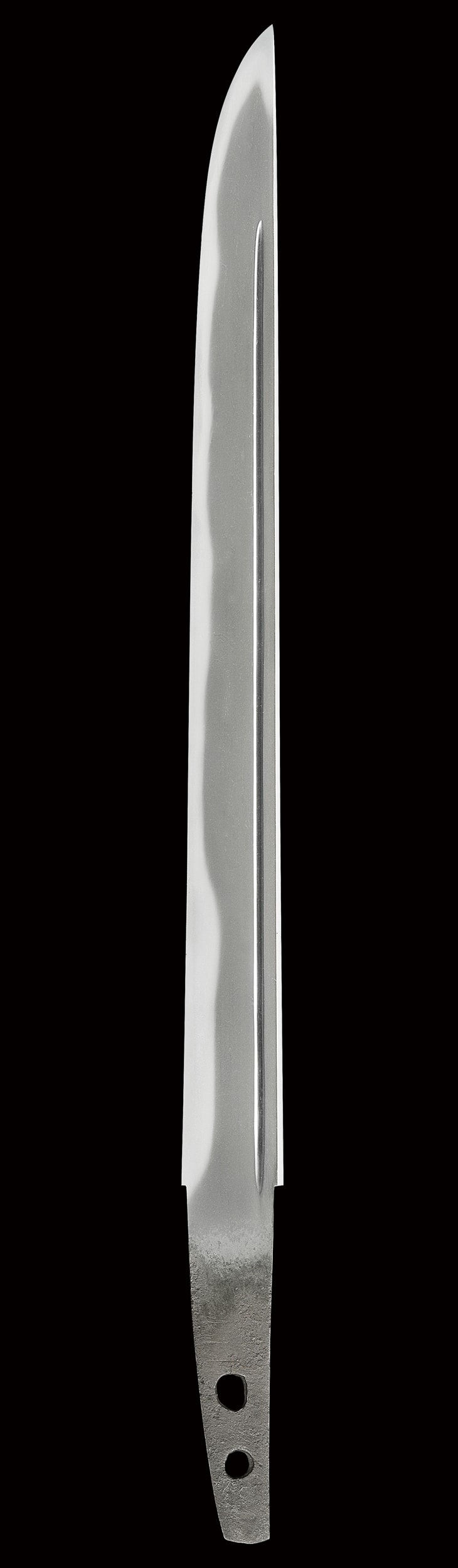
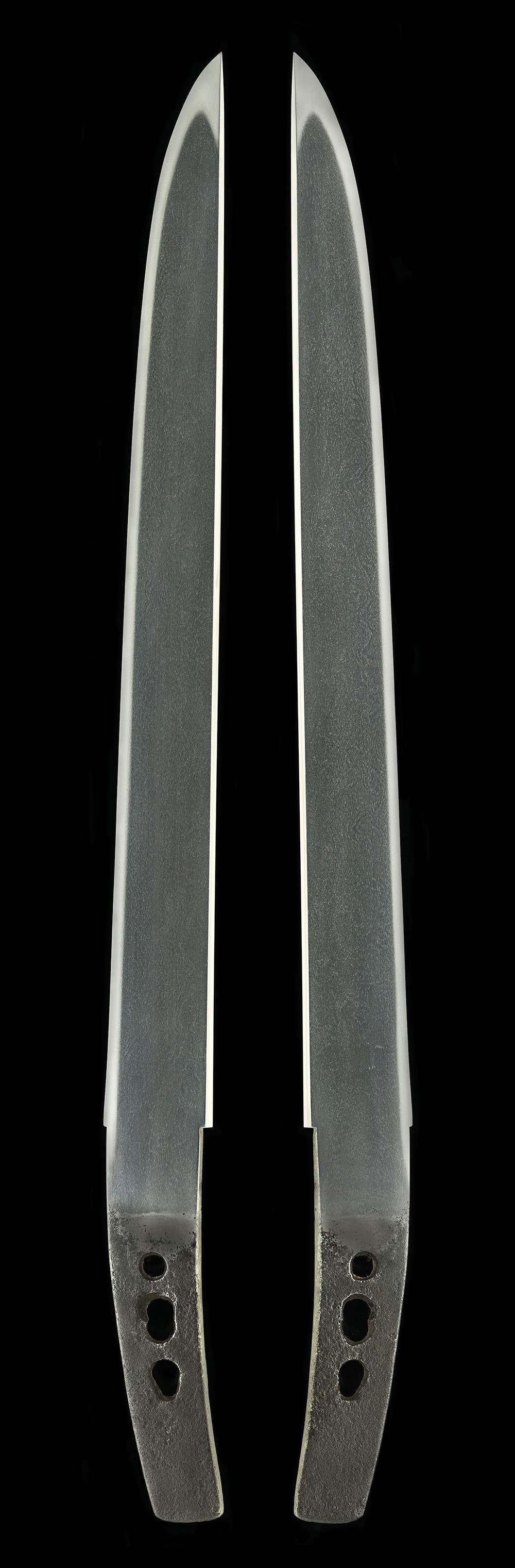
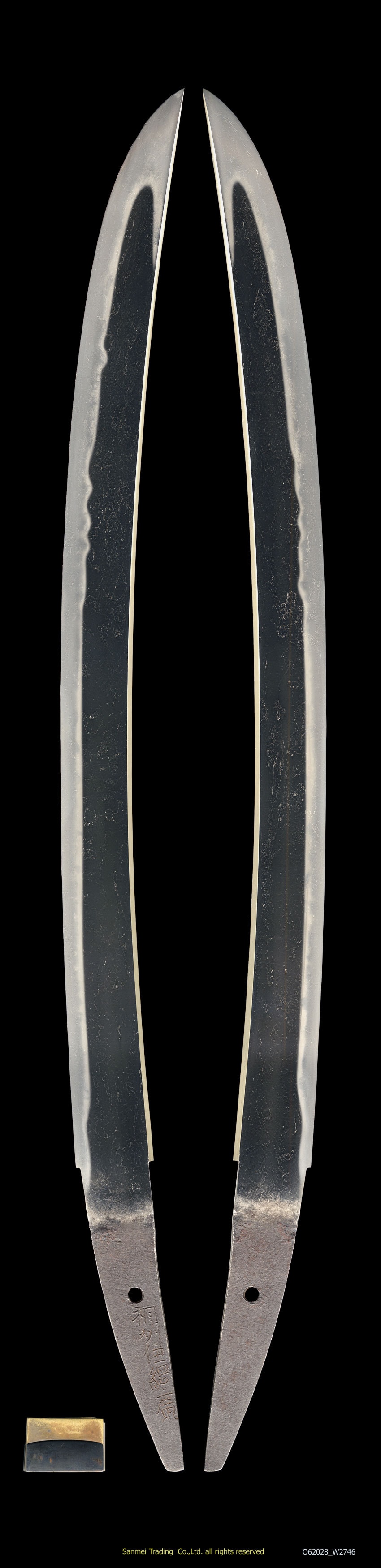
This katana is signed by Masazane (Sengo), a student of Muramasa from Ise province during the Eisho era (late Muromachi period). Known for excellent maneuverability and sharpness, this blade features a refined form with a high curvature and bo-hi carvings. The steel displays a tight ko-itame hada with strong masame near the edge, thick chikei, and a vibrant shirake utsuri, indicating superior cutting ability.
 NihontoWatch
mei · Sengo · Muromachi · nagasa 69cm · sori 1.7cm








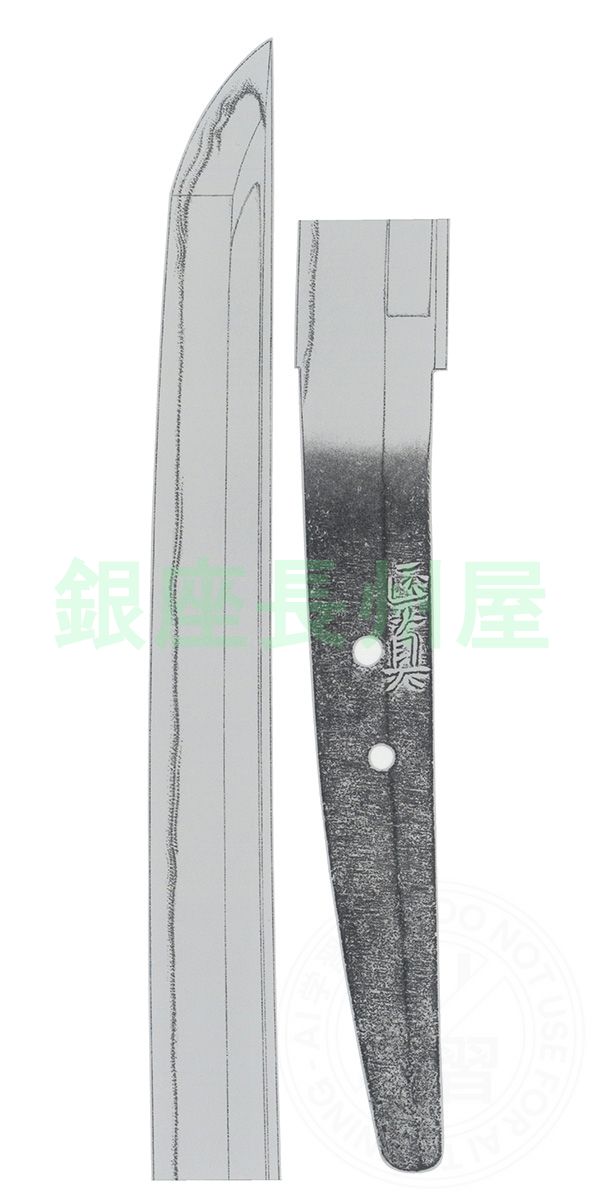
Sengo (Ise) · Ise · around 1501-1504
Fujishiro Jo saku
2 pieces on the market now
Masazane worked in Ise Province in the closing decades of the Muromachi period, and the published sources name him, together with Masashige, a disciple of the first-generation Sengo Muramasa, the founder of the school of Kuwana. The two are filed as the famous students of the shodai, working in the same manner as their master, so that the line of the Sengo descends through them as much as through the Muramasa name itself. Across his designated blades the published commentary returns to the same sentence, "Masazane, together with Masashige, was a disciple of the first-generation Muramasa,[[c:1]]" and it places his hand close to both: like Muramasa and like his fellow pupil, but separated from Masashige by a single, repeatedly named feature, that his jihada tends to close more tightly than the other's. He leaves no dated blade, and his standing is read from style and from the manner of signing; he is graded Jo saku in Fujishiro's reckoning, and every one of his recorded blades is signed and ubu, an unbroken set of original tangs that is unusual for a smith of his standing.
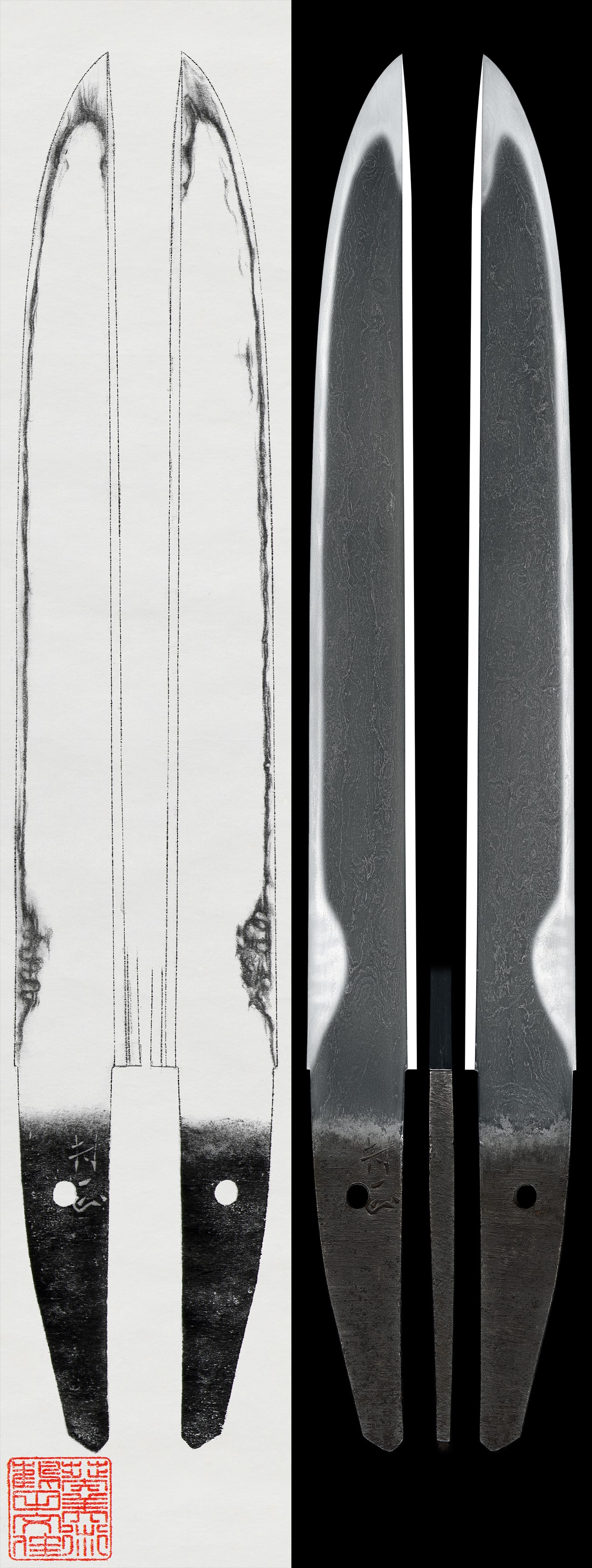
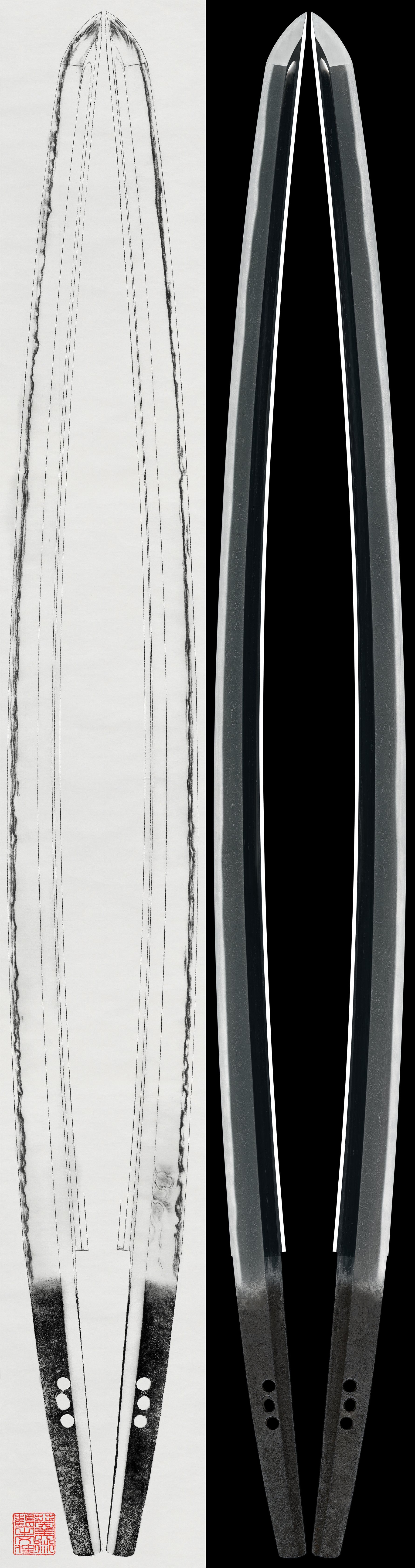
His hand is the Sengo manner held quieter than his fellow pupil's. The temper is built low on a box-shaped yakiba, a hako-gakatta element concentrated at the koshimoto and combined with gunome, which rises above into a broad suguha-cho carrying ko-ashi and yo. The single most recognizable feature, the one the school is known by, is that the hamon on the omote and the ura matches to one mirror-image pattern: of a katana that forges exactly this, the published sources write that it "tempers a box-shaped hamon with omote and ura aligned, clearly demonstrating the characteristic traits of this group.[[c:2]]" The nioiguchi tends tight and bright, with ko-nie gathered in it and sunagashi running through the temper. The boshi runs sugu into a small round turnback with hakikake swept at the point. Where Masashige takes the same Sengo base and opens it out, larger in the midare and stronger in the nie, Masazane draws it in: the box teeth, the matched faces, the calm suguha above are his proportion of the school's shared vocabulary.
The jigane is where the published commentary parts him from his fellow pupil. The forging is itame mixed with nagare-hada and a mildly standing tendency, ji-nie adhering finely, and on his late-Muromachi uchigatana a whitish shirake-utsuri rises over the surface. To this the judges return in every designation: his manner accords with Masashige's, but "compared with Masashige, Masazane tends toward a somewhat tighter jihada.[[c:3]]" The phrase is the spine of the Sengo kantei between the two names, and it is consistent across the four blades on record. The temper above this jigane is read as a period characteristic of the late Muromachi, a midareba of gunome and ko-notare at the base giving a koshiba impression, the upper half settling to suguha-cho; but the published sources note that the pattern, with the matched faces and the valleys of the undulations drawing close to the cutting edge, is "frequently encountered among the Sengo group,[[c:4]]" and that here the features of smith and lineage are well shown. The brightness of the nioiguchi is singled out for notice on the finest of the katana.[[c:5]]
Within one Sengo manner his work reads in two registers, and the published descriptions draw the line by form. The standard hand is the shinogi-zukuri katana of late-Muromachi uchigatana stance, somewhat wide in mihaba with a pronounced saki-zori and chu-kissaki, in which the box teeth at the base rise to a broad calm suguha with the omote and ura held in accord, the nakago ubu under a thick-chisel two- or five-character signature. Beside it stands a bolder register in the tanto: hira-zukuri and mitsu-mune, wide in body and shallow in sori, the itame standing more openly and the ji-nie laid on somewhat thickly, the temper a gunome-midare mixed with box elements in which the valleys draw close to the edge, ashi enter, sunagashi runs vigorously, and muneyaki is applied as if relying on the ridge. Of one such tanto the judges write that it is "bold and brimming with combative spirit,[[c:6]]" a powerful piece brought to completion as "an exceptionally fine work by Masazane.[[c:7]]" The two registers are the same smith at different scales, the calm and the combative drawn from one Sengo vocabulary.
His distinction is best read against Masashige, with whom he is always named, rather than against any other school, and the published commentary keeps the comparison narrow and exact. The two share the master's manner and the school's Soshu-and-Mino-tinged hand; what separates them is the close of the steel, Masashige's grain standing more openly while Masazane's draws tighter, and the brightness and order of his calm suguha katana set him within the more restrained side of the Sengo workshop. His box-toothed midare matched on both faces is the group's tell carried plainly, and where the tanto turns bold the same matched logic governs the gunome. The line runs upstream to the first Muramasa of Kuwana and outward through Masashige into the later generations of the school, the name and the manner reaching across the Muromachi into the Shinto era under the Sengo banner.
Masazane is among the rarer of the Sengo names, and his record is small and honest about itself. Four of his blades hold the Juyo rank, every one of them signed and ubu, and none has risen to the higher designated tiers; in Fujishiro's grading he is Jo saku. None has passed into a public collection on record, so what survives of provenance is daimyo descent rather than a chain of museum holders: one of his katana came down in the Mizuno house, bestowed by the shogun on Mizuno Echizen no Kami when he took up the post of Kyoto Shoshidai, and another in the Tosa Yamauchi family. That Mizuno blade carries the school's strangest signature, cut not as Ise Masazane but as "Yamashiro Province Masazane," and the published sources read the altered province as a deliberate screen, since "the Tokugawa house regarded blades by the Sengo Muramasa of Ise Province as unlucky and thus taboo.[[c:8]]" The cursed-sword reputation of the Muramasa line followed even Masazane's work into the Edo collections, so that a daimyo received his katana under a borrowed origin. A signed, ubu Sengo Masazane is not wholly beyond a serious collector's reach, but with only four on record it comes to notice rarely, a faithful witness to the Muramasa school in its matched faces, its box teeth, and its tightly drawn steel.
Where Masazane stands among comparable artisans: across all of nihontō, and within tradition, era, and period. The tiers (Foremost · Leading · Major · Notable) weigh official designations from the NBTHK and Japan's Agency for Cultural Affairs, together with historical honors of lasting repute such as the Sansaku and Meibutsu-chō.
Select a lens to see how it's measured.
Soshu-den · Ise
5 pieces on the market now
Kuwana, in Ise Province, gave the Sengo line its base, and from there the Muramasa (村正) name carried the work of late-Muromachi Ise into the Sengoku decades. The oldest extant date in the whole line is Bunki 1 (1501), carried by a katana signed "Seshu Kuwana-ju Uemon-no-jo Fujiwara Muramasa saku"[[c:1]]; from that anchor the prevailing scheme reads the Bunki pieces as the first generation, the Tenbun as the second, and the Tensho as the third, with the second master held the most skillful and most prolific of the three. The published sources set aside the popular tale that the founder studied under Masamune, calling it an unfounded tradition; the line begins instead near the close of the Muromachi period. Its hand shares common features with Mino, Shimada, and Sue-Soshu, and resembles Heianjo Nagayoshi of Kyoto so closely that the judges presume some relationship between the two, while a likeness to the Shimada smiths and to the Sue-Seki Kanesada is noted as a thing that can confuse a first reading. From the workshop issued the disciples Masashige (正重) and Masazane (正眞), filed by tradition as students of the shodai, who carried the manner forward alongside the Muramasa name itself. The feature the commentary names again and again as the school's own is the matched temper: the hamon on omote and ura align to one mirror-image pattern (omote-ura soroi), and the valleys of the midare press in toward the cutting edge. To this the masters add box-shaped elements (hako-midare), a gunome and notare base mixed with compound gunome, togariba, and yamagata figures, the nioiguchi drawn tight with patchy ko-nie in mura, and sunagashi running frequently; the boshi runs midare-komi or sugu to a ko-maru, often swept with hakikake. The forms that carry it are the wide hira-zukuri tanto and sunnobi ko-wakizashi with mitsu-mune, and the short, strongly saki-zori uchigatana; the jigane is itame tending to stand, mixed with flowing and masame-inclined grain, the steel dark at times and showing the whitish shirake cast the descriptions repeatedly note. Beneath sits the tanago-bara nakago, the fish-belly swelling that grows pronounced from the second generation, cut with a thick-chisel two-character mei.
The successors diverge by proportion rather than trick: Masashige opens the same vocabulary out, his grain standing more openly and his o-gunome and nie carried further; Masazane draws it in, holding box teeth low at the koshimoto under a calm suguha, his jihada closing tighter than his fellow pupil's. Beside the flamboyant rule each smith keeps a quiet register, tanto in suguha aimed at the Rai manner, and an occasional reach toward hitatsura with tobiyaki and muneyaki, never the rule of the work. To kantei the school, the matched faces are the first tell: the aligned omote and ura, the box figures, the valleys pressing to the edge, the tight nioiguchi with its patchy nie, and the tanago-bara nakago under the thick mei part Muramasa from the Mino, Shimada, and Heianjo hands it otherwise resembles. Within the line the nakago-mune decides: cut angular on Muramasa, it rounds out fleshily on Masashige, while Masazane is told from Masashige by his tighter steel. The Sengo reputation for cutting sharpness, with the midare valleys driven toward the ha, drew the Tokugawa legend that the blades brought calamity on the house; the sources handle it as recorded fact, noting that from the Edo period many signatures were effaced for fear of the name, so that signed katana in particular grew comparatively rare, and that one of Masazane's katana was cut "Yamashiro Province Masazane" as a deliberate screen for a daimyo recipient. Provenance runs through private and daimyo hands rather than institutional holdings: a first-generation wakizashi transmitted as a possession of Oda Nobunaga, a Masazane descended in the Mizuno and Tosa Yamauchi houses, a Lotus Sutra katana held in the Nabeshima line. The Nichiren devotion read off some blades, the title Myoho-renge-kyo cut into the steel, ties the work to its Ise region. A signed, ubu Sengo blade of secure date and matched temper comes to notice only from time to time, the legend that thinned the signatures adding to the call for those that remain. Learn more →
| Smith | Era | Designated |
|---|---|---|
| Muramasa村正 | 1521-1528 | 41 |
| Muramasa村正 | 1501-1521 | 17 |
| Masashige正重 | 1521-1528 | 12 |
| Masazane正眞 | 1501-1504 | 4 |
| Toshimasa俊正 | 1532-1555 | 0 |
Sōshū in the Muromachi period
In the Sengoku era the school served a second warrior court: the Later Hōjō at Odawara, whose patronage kept the Tsunahiro line forging hitatsura for the uchigatana age until the castle fell to Hideyoshi in 1590.
A Hozon-certified blade judged to show notably superior workmanship and a better state of preservation. The bar is higher: re-tempered blades and most unsigned Muromachi/Edo works are excluded.
The NBTHK (Nihon Bijutsu Tōken Hozon Kyōkai, the Society for the Preservation of Japanese Art Swords) is a public-interest incorporated foundation founded in 1948 and supervised by Japan’s Agency for Cultural Affairs (Bunkachō); it is based at the Japanese Sword Museum in Tokyo. Its expert panels physically examine each submitted work (shinsa) and issue a certificate (kanteishō) ranking it by artistic and historical merit. NBTHK papers are the most widely recognized standard of authentication for Japanese swords and fittings.
NBTHK official siteIf, due to our fault, the item differs significantly from its proper condition, the item may be returned. Cooling-off is within one week of the item's arrival.