NihontoWatch Mon

NihontoWatch

Market
Encyclopedia
Kantei
NihontoWatch Mon

NihontoWatch

Market
Encyclopedia
Kantei

Description

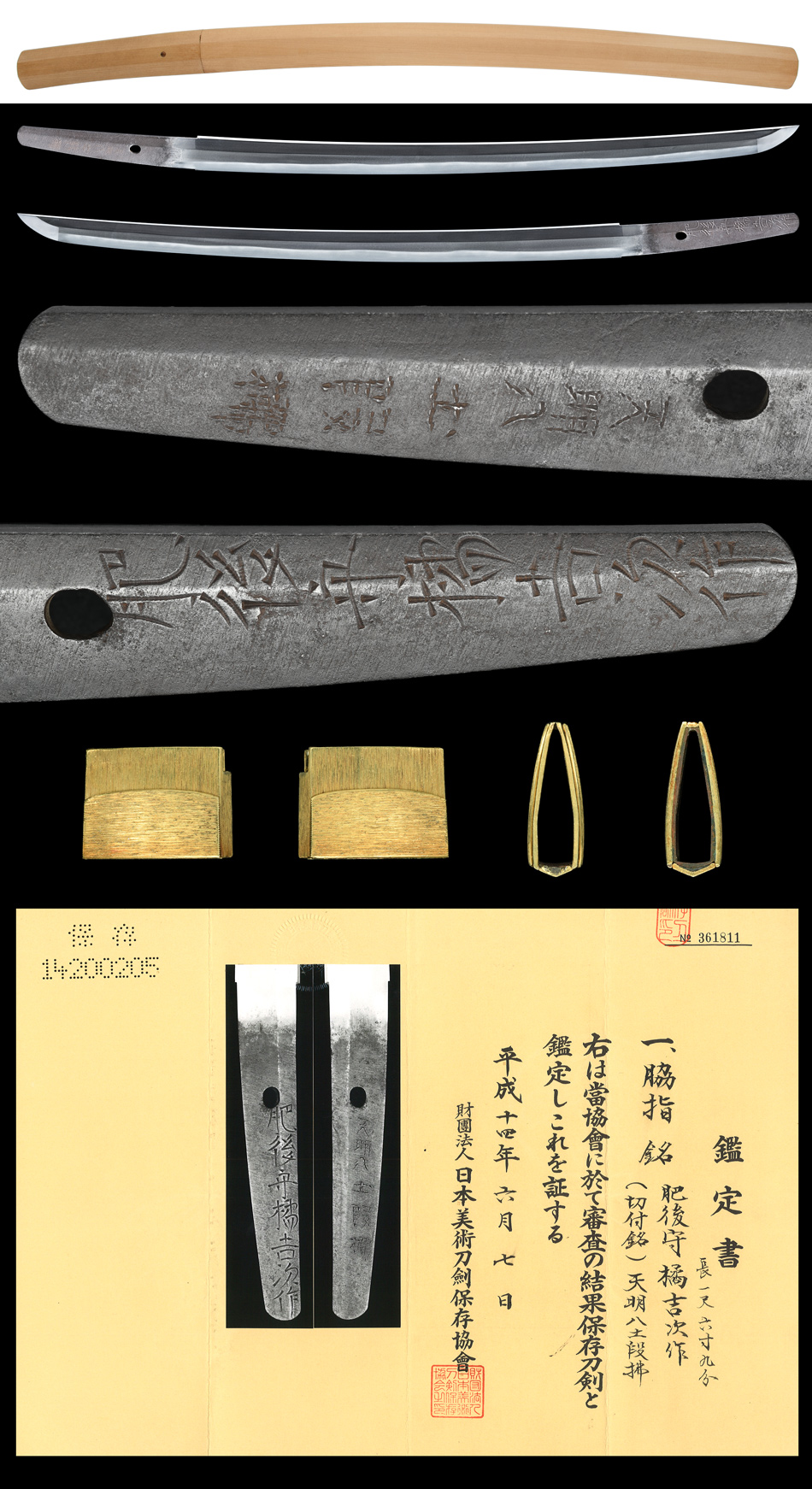
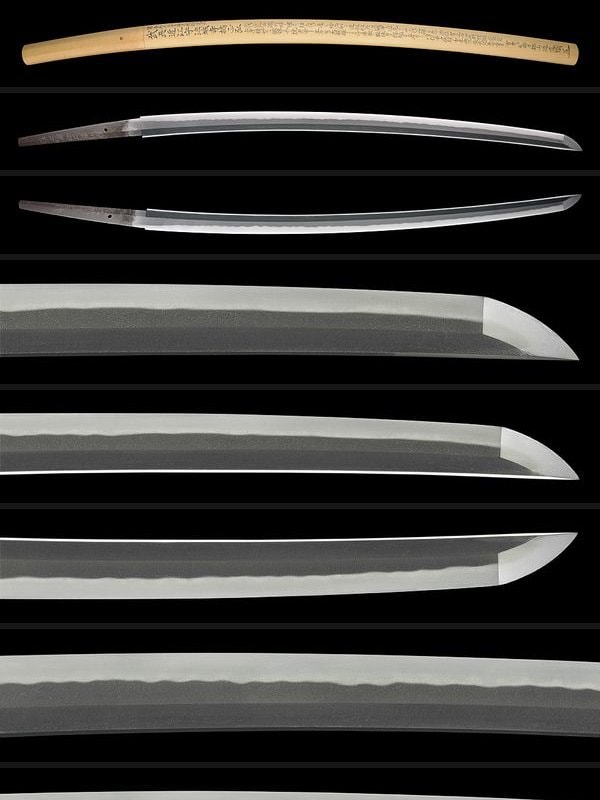
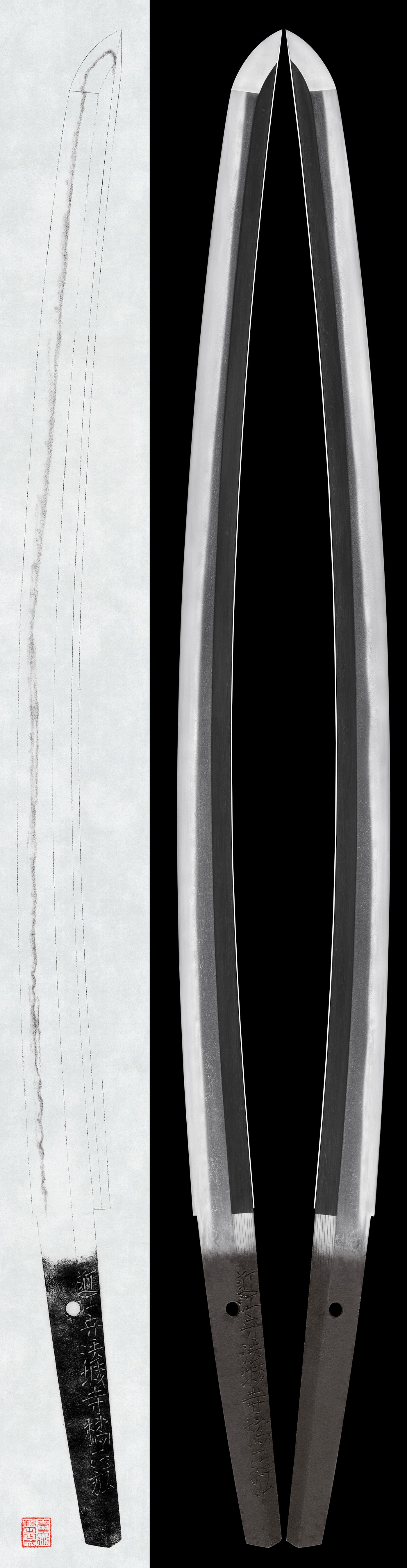
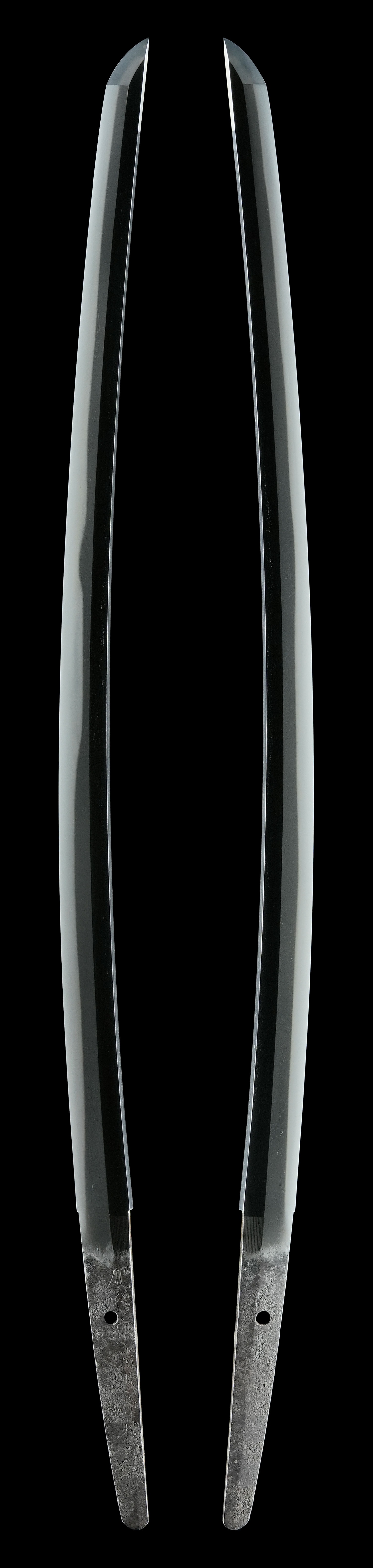
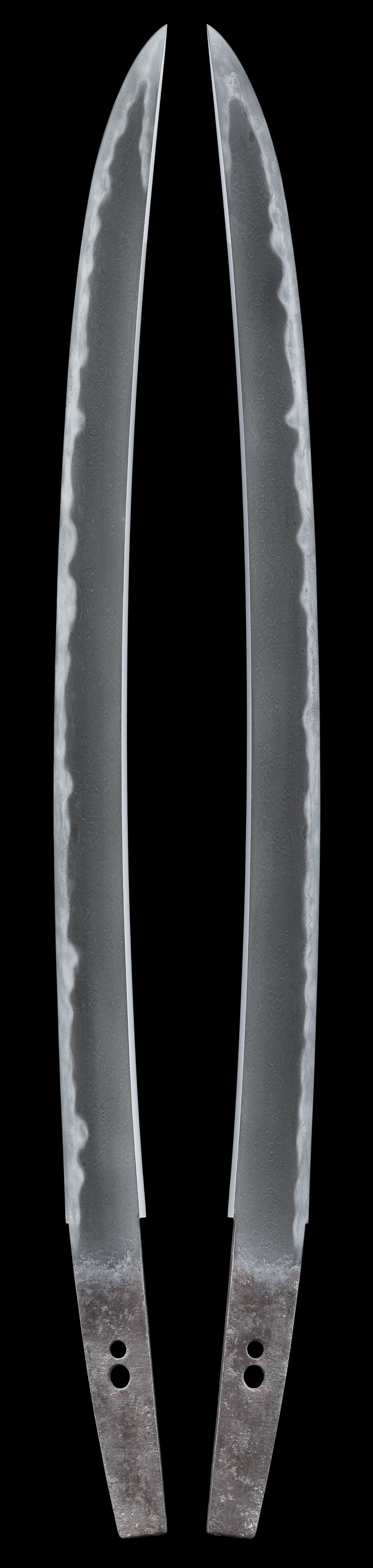
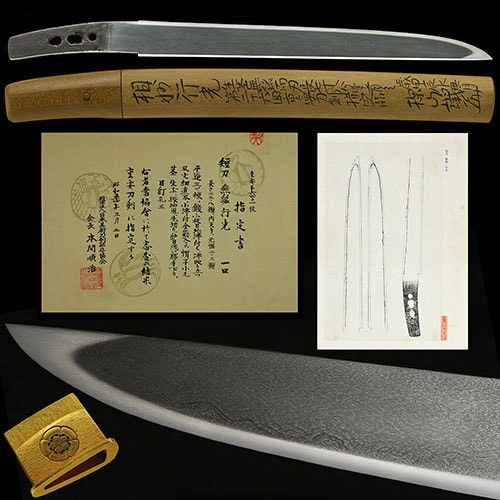
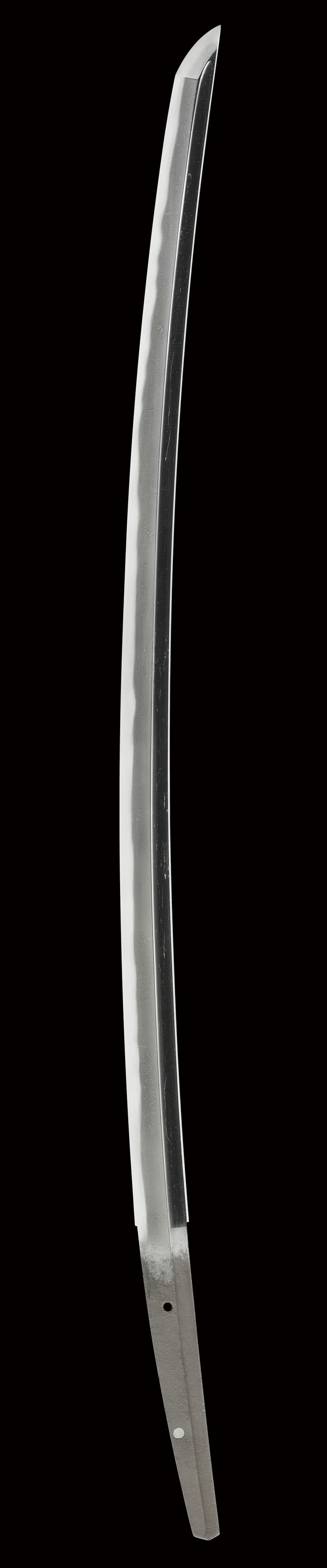
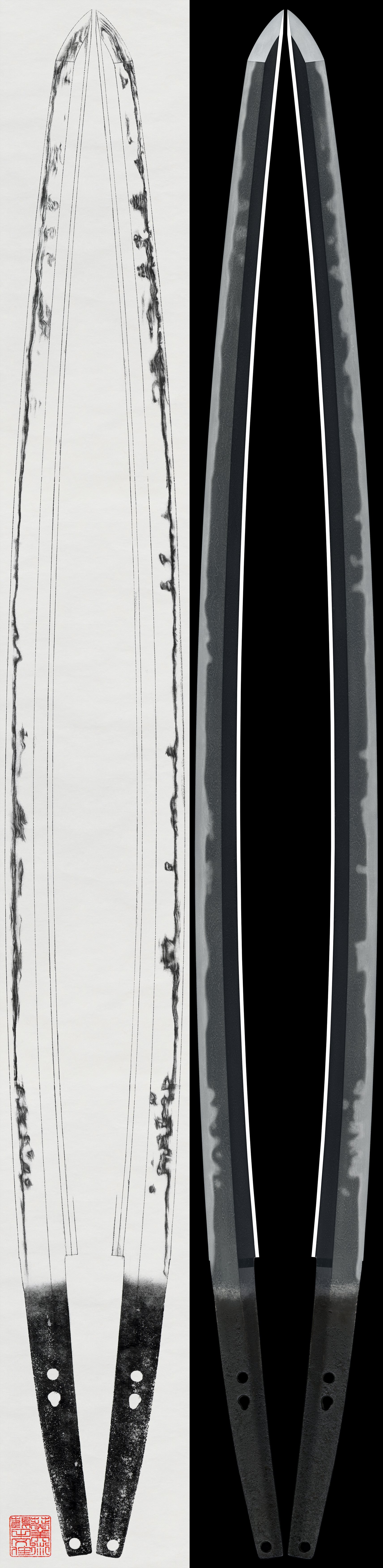
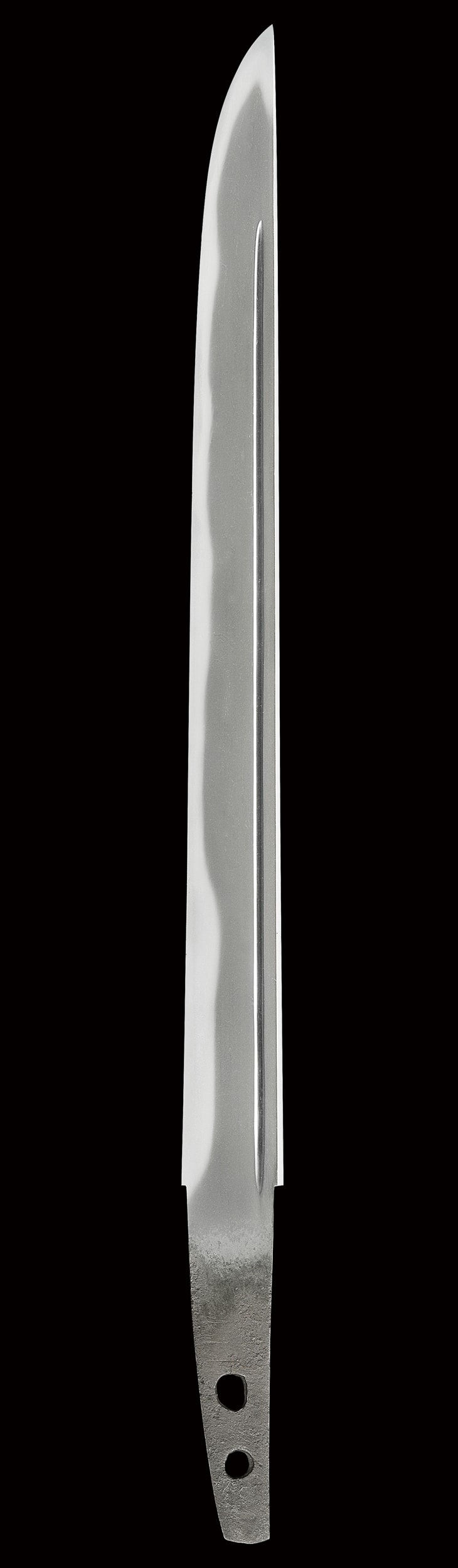
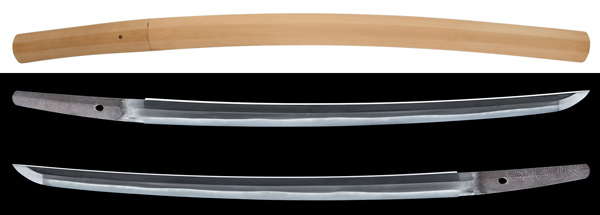
This is a wakizashi made by Higo no Kami Tachibana Yoshitsugu of the Hojoji school during the middle Edo period. The blade has a length of 51.3cm and features a well-forged ko-itame hada and a slightly wavy gunome hamon. It comes with a shirasaya and a Hozon Token certificate from the NBTHK.

NihontoWatch MonNihontoWatch
MarketEncyclopediaKantei
Swords›Sōshū-den›Hojoji›Yoshitsugu›Wakizashi: Higo no Kami Tachibana Yoshitsugu - NBTHK Hozon Token
wakizashiHozon
Hojoji Yoshitsugu

Wakizashi: Higo no Kami Tachibana Yoshitsugu - NBTHK Hozon Token

mei · Hojoji · Kanbun (1661-1673) · nagasa 51.3cm · sori 0.9cm

SOLD
Hojoji Yoshitsugu — 1 of 3
Hojoji Yoshitsugu — 2 of 3
Hojoji Yoshitsugu — 3 of 3
1 / 3
1 / 3
Hojoji Yoshitsugu — 1 of 3Hojoji Yoshitsugu — 2 of 3Hojoji Yoshitsugu — 3 of 3
Measurements & details
Smith
Hojoji Yoshitsugu
Type
Wakizashi
School
Hojoji
Period
Around 1661–1673(Kanbun)
Province
Hitachi
Signature
Signed(100% of this smith's designated works are signed)
Measurements
Nagasa 51.3cmSori 0.9cmMotohaba 2.97cmSakihaba 2.5cmKasane 0.66cm
Description

This is a wakizashi made by Higo no Kami Tachibana Yoshitsugu of the Hojoji school during the middle Edo period. The blade has a length of 51.3cm and features a well-forged ko-itame hada and a slightly wavy gunome hamon. It comes with a shirasaya and a Hozon Token certificate from the NBTHK.

About the maker

Yoshitsugu

吉次

Hojoji (Edo, Shinto) · Satsuma · around 1661-1673

Fujishiro Jo saku · Tōken Taikan top 39%

1 piece on the market now

›

On the tenth day of the sixth month of Enpō 6 (1678) Yamano Kanjūrō Hisahide cut a two-body test through a katana signed "Higo no Kami Tachibana Yoshitsugu"[[c:1]] and recorded the result in gold inlay across three lines of the nakago, an inscription the published sources prize as documentary material because Yamano test signatures on this smith are exceedingly rare. Yoshitsugu was a native of Hitachi who went up to Edo, a smith of the Hōjōji line, the Sōshū-derived school whose root was in Tajima and whose Edo branch he carried into the Shintō period; the published sources transmit him variously as a disciple of Hōjōji Masahiro or of Hōjōji Kunimasa. Around the Kanbun era (1661-1673) he received the court title Higo no Kami, and during the Genroku years he served for a time as a retained smith of the Shimazu house, forging in Kagoshima and exerting, by the sources' account, no small influence upon the Satsuma smiths before returning to Edo. His Hitachi origin and Edo residence are documented: an extant hira-zukuri wakizashi dedicated by Yamano Hisahide to Shiogama Shrine records that the dedicant, a man of Hitachi who reached fifty in Edo, had the blade forged by Higo no Kami Yoshitsugu.

His characteristic hand is the gunome the published sources call the most conspicuous of his school. Of his manner they write that "among the Hōjōji line his gunome is the most conspicuous in make, with many works in the juzu-ba style"[[c:2]], and of one Jūyō katana that the way connected gunome mingle over a ko-notare base while ashi enter profusely is "precisely Yoshitsugu's distinctive flavor"[[c:3]]. The line is built on a small notare with gunome running together into the rosary-bead juzu-ba pattern, small gunome mixing among them; the ashi enter thickly and frequently, the nioi is deep, and ko-nie adheres well over a bright, clear nioiguchi. At his most expansive the nie thickens and strengthens, coarse nie mingling, yubashiri drifting up to present a nijūba-like aspect in places, with fine sunagashi running throughout and kinsuji entering. The bōshi runs straight or suguha-toned to a ko-maru turnback with hakikake, deeply tempered with a long kaeri; on one omote it narrows and rounds into a jizō-style head. The signature itself is part of the recognition: the long mei is cut on the sashi-omote toward the mune in bold, thick chisel strokes.

The jigane is a tightly forged ko-itame mixed with mokume, the shinogi-ji at times showing strong masame; the ji-nie adheres thickly in dust-fine particles and fine chikei enter well, a clear, antique-feeling steel the sources single out. Over this jigane the temper carries its full repertory of activity, and the published commentary reads the result against the great Edo masters of the gunome: the style most closely approaches "Kotetsu and Kaneshige"[[c:4]], and at full strength his nie-laden gunome is judged to "approach the level of Kazusa no Suke Kaneshige"[[c:5]], so that within the lineage "his technique stands out as exceptional"[[c:6]]. One Jūyō katana of Enpō 6 is called, after a midare larger and bolder than his usual work, with the depth of nie and nioi particularly great, "a powerful blade displaying outstanding workmanship"[[c:7]], and a Reiwa-era designation of another describes "a working range filled with spirit beyond his usual level"[[c:8]].

Within this one prime manner two registers stand out, both keyed to the nakago rather than to a change of style. The first is the signature register: the long mei in its bold thick-chisel cutting, headed Higo no Kami with the Tachibana clan name or with Hōjōji, the subject most often reading 肥後守橘吉次, and a small number of blades from the Kagoshima interval signed instead "Sasshū jū Higo no Kami Tachibana Yoshitsugu"[[c:9]], the documentary trace of his Satsuma service. The second is the cutting-test register, conspicuous on his work: the gold-inlaid Yamano Kanjūrō Hisahide inscription of Enpō 6, recording two bodies severed; a Takaya Jintayū inscription of Enpō 5 recording "two bodies severed"[[c:10]]; and an Aida Danjūrō inscription on another Enpō 5 blade. The published sources note that the Yamano signatures are the rare ones, the names of Takaya Jintayū and Aida Kunishirō appearing more often, and so weigh the gold-inlaid Yamano piece especially high as source material. The tradition that he was a pupil of either Masahiro or Kunimasa is presented by the sources as an open question, neither line settled.

The sources place him by his school and his resemblances rather than by contrast. His own grounded tells, the juzu-ba gunome over ko-notare, the deep nioi and thick nie, the bright nioiguchi, the bold thick-chisel long mei, the dust-fine ji-nie over a tight ko-itame, set him within the Hōjōji line as its most conspicuous gunome hand, and the resemblance the judges draw is upward, to Nagasone Kotetsu and Kazusa no Suke Kaneshige, the Edo masters of the nie-laden gunome whose level his best work is said to approach. The Satsuma episode gives him a second standing: the published sources read his Kagoshima years as a documented bridge between his Edo manner and the later Satsuma smithing, and his influence there is the reason a Hōjōji smith of Hitachi origin is remembered in the Satsuma record at all. One of his Enpō 5 katana, the sources note, was made by "special order for a Satsuma warrior"[[c:11]] and is, "unusually for Shintō work, high in curvature"[[c:12]].

Fujishiro rates him Jō saku, and his designated record stands at six Jūyō katana, none carried to a higher tier; all six are katana, five signed and one carrying the gold-inlaid Yamano cutting-test inscription. No early provenance to a daimyō house is recorded for these blades, but the mountings connected to them are documented: the Enpō 5 Takaya Jintayū katana descends with a Bakumatsu handachi koshirae whose unified fittings are by Watanabe Issei Toshinobu, and the special-order Satsuma katana retains its vermilion kawari-nuri Satsuma uchigatana koshirae. None of his work is held as inalienable cultural property, so the whole of his designated output sits in the tradeable tiers; even so, a signed Higo no Kami Yoshitsugu, and above all one bearing a documented cutting-test inscription, comes to the market only from time to time. The gold-inlaid Yamano Hisahide piece is the kind of blade a collector encounters rarely, a record as much as a sword, valued by the published sources for the testing inscription it carries as well as for the powerful gunome it shows.

Historical importance

Where Yoshitsugu stands among comparable artisans: across all of nihontō, and within tradition, era, and period. The tiers (Foremost · Leading · Major · Notable) weigh official designations from the NBTHK and Japan's Agency for Cultural Affairs, together with historical honors of lasting repute such as the Sansaku and Meibutsu-chō.

随一
Foremost
屈指
Leading
有数
Major
著名
Notable

Select a lens to see how it's measured.

Designation record
6 designated works
Jūyō
6
1 work by Yoshitsugu on the market→
Yoshitsugu — full profileHojoji (Edo, Shinto) school
About the school

Hojoji

法城寺

Soshu-den · Tajima

20 pieces on the market now

›

The Hojoji name (法城寺) begins as a place in Tajima province, where, the published sources relate, the Nanbokucho naginata master Kunimitsu lived at that spot and so took the place for his name, the man and the locality becoming one. The Meikan records a first generation of this Kunimitsu working in the Joji era (1362-68) and a second at Oei, the koto root from which the line descends. The old genealogies count this Tajima Kunimitsu among the three great pupils of Soshu Sadamune[[c:1]], a claim the NBTHK reports only to set aside as wanting plausibility and unwarranted[[c:2]], the texts finding the influence of Bizen work rather the stronger. From this Tajima stock an Edo branch carried the name into the shinto period, where it grew, in the words of the published sources, into the largest body of swordsmiths active in Edo through the Kanbun and Enpo years. Its founder was Omi no Kami Hojoji Tachibana Masahiro, named the head of the group and its most accomplished hand, and after him followed Tajima no Kami Sadakuni, Higo no Kami Yoshitsugu, Echizen no Kami Masateru, and Kunimasa, with Kawachi no Kami Nagakuni filed by common opinion within the same lineage, the whole bearing the Soshu-derived idiom out of Tajima and into a productive Edo workshop of many capable smiths. Two manners separate the koto root from the Edo branch, and the members describe each in its own vocabulary. The Tajima Kunimitsu survives almost wholly as mumei attribution: flamboyant choji-midare that can at first sight be mistaken for Bizen Ichimonji, settled against Bizen by the markedly stronger nie of ji and ha, chikei entering a large-patterned standing forging, and kinsuji and sunagashi worked incessantly through the ha, the build that of the long converted naginata with thin kasane and a large kissaki, the boshi often ending yakizume from the filing of the mune. The Edo smiths share a different and unified hand.

Over a tightly forged ko-itame, at times mixed with mokume, the ji-nie lies dust-fine and chikei enter, and the temper resolves into two registers across the branch: a suguha base, deep in nioi with ko-nie gathering, in which Masahiro, Sadakuni, Masateru, and Nagakuni excel, the nioiguchi bright and nijuba mixing in places; and a gunome hand, most conspicuous in Yoshitsugu, whose connected gunome run into a rosary-bead juzu-ba over ko-notare. Through nearly every Edo blade the sunagashi and kinsuji run, and the boshi turns back straight into ko-maru. The divergences are of degree: Sadakuni falls a small margin short of Masahiro in the clarity of the jihada and the strength of the nioiguchi; Nagakuni links his gunome into broader midare; Masateru keys his chu-suguha to a chrysanthemum crest cut above the signature. To kantei Hojoji Edo work, the published sources direct the eye to the deep nioi and bright nioiguchi over a tight, chikei-laden ko-itame, the sunagashi and kinsuji that keep the quiet suguha from reading flat, and the long thick-chisel signatures cut on the sashi-omote; the resemblance the judges draw runs upward to Nagasone Kotetsu and Kazusa no Suke Kaneshige, the Edo masters of the nie-laden temper, whose level the best work of Masahiro, Yoshitsugu, and Nagakuni is said to approach, the Kotetsu group and the Hojoji line held to stand in a fairly close relationship through the shared Yamano testing house. For the koto Kunimitsu the tells are the well-covered ji-nie with weak utsuri and the ko-nie of the ha, the points that part his work from the Bizen it resembles. The standing of the members ranges with their tier: Kunimitsu is the school's apex, graded Jo-jo saku, his blades vouched for across centuries by Honami attribution inscriptions and his finest tracing to the Akimoto and Maeda houses, with the tea master Kobori Enshu among his owners; Masahiro and the Edo hands are graded Jo saku, attainable signed shinto names whose blades carry their pedigree in the gold-inlaid Yamano cutting-test inscriptions rather than in named daimyo provenance. Yoshitsugu's Satsuma service for the Shimazu house left its trace on the later Kagoshima smiths, and a signed Hojoji blade, above all one bearing a documented test-cut, comes to the market only from time to time, rewarding patience. Learn more →

11 recorded smiths123 designated works
Leading smiths
SmithEraDesignated
Kunimitsu國光1345-135022
Masahiro正弘1658-167126
Sadakuni貞國1658-16738
Yoshitsugu吉次1661-16736
Masateru正照1684-16885
Explore the Hojoji school →

Historical context

Under the Tokugawa peace the daishō became a regulated uniform, and demand gathered in the castle towns, above all Edo itself. The craft split two ways: brilliant display work for connoisseurs, and tested blades whose cutting results were sometimes inlaid in gold.

The Edo period (1615 to 1868) →

NBTHK Certificate
Hozon Tōken保存刀剣
Sword Worthy of Preservation
›

Certifies a genuine blade worth preserving: a signature confirmed correct, or, if unsigned, an era, province, and school that the NBTHK can reliably identify.

About the NBTHK›

The NBTHK (Nihon Bijutsu Tōken Hozon Kyōkai, the Society for the Preservation of Japanese Art Swords) is a public-interest incorporated foundation founded in 1948 and supervised by Japan’s Agency for Cultural Affairs (Bunkachō); it is based at the Japanese Sword Museum in Tokyo. Its expert panels physically examine each submitted work (shinsa) and issue a certificate (kanteishō) ranking it by artistic and historical merit. NBTHK papers are the most widely recognized standard of authentication for Japanese swords and fittings.

NBTHK official site→
Seller
W
World Seiyudo
Established 2008 · 18 yrs on the market
🇯🇵Ships from Japan
›
✓Verified dealerworld-seiyudo.com
✓Ships worldwide✓English supportWire transferPayPalCredit card
Return policy

No cooling-off period or returns; refund only if the purchased sword is proven fake, capped at purchase price (excludes commission sales, accessories, auction items).

View all of World Seiyudo’s listings→View this item on the dealer’s site→

More works by Hojoji Yoshitsugu

View all →
Sugie Art
Tokuho
Wakizashi - Tokuho - by Hojoji Yoshitsugu - Tokubetsu Hozon Wakizashi by Higo no Kami Hojoji Tachibana Yoshitsugu with unique KoshiraeWakizashi - Tokuho - by Hojoji Yoshitsugu - Tokubetsu Hozon Wakizashi by Higo no Kami Hojoji Tachibana Yoshitsugu with unique Koshirae

Wakizashi

ByHojoji Yoshitsugu
¥850,000

More from the Hojoji school

View all →
Seikeido
Tokuho
Katana - Tokuho - by Hojoji School - Hojoji Tajima no Kami Tachibana KunimasaKatana - Tokuho - by Hojoji School - Hojoji Tajima no Kami Tachibana Kunimasa

Katana

ByHojoji School
¥650,000
Token-Net
Jūyō
Katana - Jūyō - by Hojoji Masahiro - Omi no Kami Tachibana Masahiro Hojo-ji 23rd GenerationKatana - Jūyō - by Hojoji Masahiro - Omi no Kami Tachibana Masahiro Hojo-ji 23rd Generation

Katana

ByHojoji Masahiro
¥5,800,000
Aoi Art
Tokuho
Katana - Tokuho - by Hojoji Masahiro - Omi no Kami Hojoji Tachibana Masahiro (1st Generation)Katana - Tokuho - by Hojoji Masahiro - Omi no Kami Hojoji Tachibana Masahiro (1st Generation)

Katana

ByHojoji Masahiro
¥1,600,000
Samurai Museum
Tokuho
Katana - Tokuho - by Hojoji School - Antique Japanese Sword Katana Signed by Masahiro with NBTHK Tokubetsu Hozon Certificate for the blade and Hozon for the KoshiraeKatana - Tokuho - by Hojoji School - Antique Japanese Sword Katana Signed by Masahiro with NBTHK Tokubetsu Hozon Certificate for the blade and Hozon for the Koshirae

Katana

ByHojoji School
¥11,003
Nosyudo
Hozon
Katana - Hozon - by Hojoji School - Omi no Kami Hojoji Tachibana MasahiroKatana - Hozon - by Hojoji School - Omi no Kami Hojoji Tachibana Masahiro

Katana

ByHojoji School
¥1,300,000
Choshuya
Tokuho
Katana - Tokuho - by Hojoji Masahiro - Omi no kami Hojoji Tachibana MasahiroKatana - Tokuho - by Hojoji Masahiro - Omi no kami Hojoji Tachibana Masahiro

Katana

ByHojoji Masahiro
¥1,500,000
Aoi Art
Tokuho
Wakizashi - Tokuho - by Hojoji School - Ōmi Kami Hōjōji Tachibana Masahiro (2nd)Wakizashi - Tokuho - by Hojoji School - Ōmi Kami Hōjōji Tachibana Masahiro (2nd)

Wakizashi

ByHojoji School
¥600,000
Toushin
Tokuho
Wakizashi - Tokuho - by Hojoji School - Higo no Kami Hojoji Tachibana YoshitsuguWakizashi - Tokuho - by Hojoji School - Higo no Kami Hojoji Tachibana Yoshitsugu

Wakizashi

ByHojoji School
¥660,000

More from the Sōshū tradition

View all →
World Seiyudo
Tokuho
Wakizashi - Tokuho - by Sue-Soshu Masahiro - Mumei Soshu Masahiro - NBTHK Tokubetsu Hozon Token & TosoguWakizashi - Tokuho - by Sue-Soshu Masahiro - Mumei Soshu Masahiro - NBTHK Tokubetsu Hozon Token & Tosogu

Wakizashi

BySue-Soshu Masahiro
¥2,500,000
Tsuruginoya
Tokujū
Katana - Tokuju - by Soshu Yukimitsu - Soshu YukimitsuKatana - Tokuju - by Soshu Yukimitsu - Soshu Yukimitsu

Katana

BySoshu Yukimitsu
Ask
Eirakudo
Jūyō
Tanto - Jūyō - by Soshu Yukimitsu - Soshu Yukimitsu - Juyo TokenTanto - Jūyō - by Soshu Yukimitsu - Soshu Yukimitsu - Juyo Token

Tantō

BySoshu Yukimitsu
Ask
Samurai Nippon
Jūyō
Katana - Jūyō - by Soshu Norishige - Mumei (Attributed to Norishige)Katana - Jūyō - by Soshu Norishige - Mumei (Attributed to Norishige)

Katana

BySoshu Norishige
Ask
Choshuya
Jūyō
Tanto - Jūyō - by Soshu Norishige - Ubu-nakago Mumei NorishigeTanto - Jūyō - by Soshu Norishige - Ubu-nakago Mumei Norishige

Tantō

BySoshu Norishige
¥6,500,000
Aoi Art
Tokuho
Katana - Tokuho - by Gō Yoshihiro - Mumei (Unsigned) Den Go YoshihiroKatana - Tokuho - by Gō Yoshihiro - Mumei (Unsigned) Den Go Yoshihiro

Katana

ByGō Yoshihiro
¥35,000,000
Samurai Nippon
Jūyō
Tanto - Jūyō - by Soshu Yukimitsu - Soshu Yukimitsu (Mumei)Tanto - Jūyō - by Soshu Yukimitsu - Soshu Yukimitsu (Mumei)

Tantō

BySoshu Yukimitsu
¥6,700,000
Mandarin Mansion
Jūyō
Tachi - Jūyō - by Soshu Yukimitsu - Juyo Soshu Yukimitsu TachiTachi - Jūyō - by Soshu Yukimitsu - Juyo Soshu Yukimitsu Tachi

Tachi

BySoshu Yukimitsu
Ask

Swords

  • Katana
  • Wakizashi
  • Tantō
  • Tachi
  • Naginata
  • Yari

Fittings

  • Tsuba
  • Fuchi-Kashira
  • Kozuka
  • Menuki

Armor

  • Kabuto
  • Samurai Armor

By Certification

  • Tokujū
  • Jūyō
  • Tokuho
  • Hozon

Resources

  • Dealer Directory
  • Artist Directory
  • The Daily Kantei
  • Glossary
  • Browse All
Nihontowatch© 2026
TermsPrivacyCookiesAbout

Description

This is a wakizashi made by Higo no Kami Tachibana Yoshitsugu of the Hojoji school during the middle Edo period. The blade has a length of 51.3cm and features a well-forged ko-itame hada and a slightly wavy gunome hamon. It comes with a shirasaya and a Hozon Token certificate from the NBTHK.

NihontoWatch MonNihontoWatch
MarketEncyclopediaKantei
Swords›Sōshū-den›Hojoji›Yoshitsugu›Wakizashi: Higo no Kami Tachibana Yoshitsugu - NBTHK Hozon Token
wakizashiHozon
Hojoji Yoshitsugu

Wakizashi: Higo no Kami Tachibana Yoshitsugu - NBTHK Hozon Token

mei · Hojoji · Kanbun (1661-1673) · nagasa 51.3cm · sori 0.9cm

SOLD
Hojoji Yoshitsugu — 1 of 3
Hojoji Yoshitsugu — 2 of 3
Hojoji Yoshitsugu — 3 of 3
1 / 3
1 / 3
Hojoji Yoshitsugu — 1 of 3Hojoji Yoshitsugu — 2 of 3Hojoji Yoshitsugu — 3 of 3
Measurements & details
Smith
Hojoji Yoshitsugu
Type
Wakizashi
School
Hojoji
Period
Around 1661–1673(Kanbun)
Province
Hitachi
Signature
Signed(100% of this smith's designated works are signed)
Measurements
Nagasa 51.3cmSori 0.9cmMotohaba 2.97cmSakihaba 2.5cmKasane 0.66cm
Description

This is a wakizashi made by Higo no Kami Tachibana Yoshitsugu of the Hojoji school during the middle Edo period. The blade has a length of 51.3cm and features a well-forged ko-itame hada and a slightly wavy gunome hamon. It comes with a shirasaya and a Hozon Token certificate from the NBTHK.

About the maker

Yoshitsugu

吉次

Hojoji (Edo, Shinto) · Satsuma · around 1661-1673

Fujishiro Jo saku · Tōken Taikan top 39%

1 piece on the market now

›

On the tenth day of the sixth month of Enpō 6 (1678) Yamano Kanjūrō Hisahide cut a two-body test through a katana signed "Higo no Kami Tachibana Yoshitsugu"[[c:1]] and recorded the result in gold inlay across three lines of the nakago, an inscription the published sources prize as documentary material because Yamano test signatures on this smith are exceedingly rare. Yoshitsugu was a native of Hitachi who went up to Edo, a smith of the Hōjōji line, the Sōshū-derived school whose root was in Tajima and whose Edo branch he carried into the Shintō period; the published sources transmit him variously as a disciple of Hōjōji Masahiro or of Hōjōji Kunimasa. Around the Kanbun era (1661-1673) he received the court title Higo no Kami, and during the Genroku years he served for a time as a retained smith of the Shimazu house, forging in Kagoshima and exerting, by the sources' account, no small influence upon the Satsuma smiths before returning to Edo. His Hitachi origin and Edo residence are documented: an extant hira-zukuri wakizashi dedicated by Yamano Hisahide to Shiogama Shrine records that the dedicant, a man of Hitachi who reached fifty in Edo, had the blade forged by Higo no Kami Yoshitsugu.

His characteristic hand is the gunome the published sources call the most conspicuous of his school. Of his manner they write that "among the Hōjōji line his gunome is the most conspicuous in make, with many works in the juzu-ba style"[[c:2]], and of one Jūyō katana that the way connected gunome mingle over a ko-notare base while ashi enter profusely is "precisely Yoshitsugu's distinctive flavor"[[c:3]]. The line is built on a small notare with gunome running together into the rosary-bead juzu-ba pattern, small gunome mixing among them; the ashi enter thickly and frequently, the nioi is deep, and ko-nie adheres well over a bright, clear nioiguchi. At his most expansive the nie thickens and strengthens, coarse nie mingling, yubashiri drifting up to present a nijūba-like aspect in places, with fine sunagashi running throughout and kinsuji entering. The bōshi runs straight or suguha-toned to a ko-maru turnback with hakikake, deeply tempered with a long kaeri; on one omote it narrows and rounds into a jizō-style head. The signature itself is part of the recognition: the long mei is cut on the sashi-omote toward the mune in bold, thick chisel strokes.

The jigane is a tightly forged ko-itame mixed with mokume, the shinogi-ji at times showing strong masame; the ji-nie adheres thickly in dust-fine particles and fine chikei enter well, a clear, antique-feeling steel the sources single out. Over this jigane the temper carries its full repertory of activity, and the published commentary reads the result against the great Edo masters of the gunome: the style most closely approaches "Kotetsu and Kaneshige"[[c:4]], and at full strength his nie-laden gunome is judged to "approach the level of Kazusa no Suke Kaneshige"[[c:5]], so that within the lineage "his technique stands out as exceptional"[[c:6]]. One Jūyō katana of Enpō 6 is called, after a midare larger and bolder than his usual work, with the depth of nie and nioi particularly great, "a powerful blade displaying outstanding workmanship"[[c:7]], and a Reiwa-era designation of another describes "a working range filled with spirit beyond his usual level"[[c:8]].

Within this one prime manner two registers stand out, both keyed to the nakago rather than to a change of style. The first is the signature register: the long mei in its bold thick-chisel cutting, headed Higo no Kami with the Tachibana clan name or with Hōjōji, the subject most often reading 肥後守橘吉次, and a small number of blades from the Kagoshima interval signed instead "Sasshū jū Higo no Kami Tachibana Yoshitsugu"[[c:9]], the documentary trace of his Satsuma service. The second is the cutting-test register, conspicuous on his work: the gold-inlaid Yamano Kanjūrō Hisahide inscription of Enpō 6, recording two bodies severed; a Takaya Jintayū inscription of Enpō 5 recording "two bodies severed"[[c:10]]; and an Aida Danjūrō inscription on another Enpō 5 blade. The published sources note that the Yamano signatures are the rare ones, the names of Takaya Jintayū and Aida Kunishirō appearing more often, and so weigh the gold-inlaid Yamano piece especially high as source material. The tradition that he was a pupil of either Masahiro or Kunimasa is presented by the sources as an open question, neither line settled.

The sources place him by his school and his resemblances rather than by contrast. His own grounded tells, the juzu-ba gunome over ko-notare, the deep nioi and thick nie, the bright nioiguchi, the bold thick-chisel long mei, the dust-fine ji-nie over a tight ko-itame, set him within the Hōjōji line as its most conspicuous gunome hand, and the resemblance the judges draw is upward, to Nagasone Kotetsu and Kazusa no Suke Kaneshige, the Edo masters of the nie-laden gunome whose level his best work is said to approach. The Satsuma episode gives him a second standing: the published sources read his Kagoshima years as a documented bridge between his Edo manner and the later Satsuma smithing, and his influence there is the reason a Hōjōji smith of Hitachi origin is remembered in the Satsuma record at all. One of his Enpō 5 katana, the sources note, was made by "special order for a Satsuma warrior"[[c:11]] and is, "unusually for Shintō work, high in curvature"[[c:12]].

Fujishiro rates him Jō saku, and his designated record stands at six Jūyō katana, none carried to a higher tier; all six are katana, five signed and one carrying the gold-inlaid Yamano cutting-test inscription. No early provenance to a daimyō house is recorded for these blades, but the mountings connected to them are documented: the Enpō 5 Takaya Jintayū katana descends with a Bakumatsu handachi koshirae whose unified fittings are by Watanabe Issei Toshinobu, and the special-order Satsuma katana retains its vermilion kawari-nuri Satsuma uchigatana koshirae. None of his work is held as inalienable cultural property, so the whole of his designated output sits in the tradeable tiers; even so, a signed Higo no Kami Yoshitsugu, and above all one bearing a documented cutting-test inscription, comes to the market only from time to time. The gold-inlaid Yamano Hisahide piece is the kind of blade a collector encounters rarely, a record as much as a sword, valued by the published sources for the testing inscription it carries as well as for the powerful gunome it shows.

Historical importance

Where Yoshitsugu stands among comparable artisans: across all of nihontō, and within tradition, era, and period. The tiers (Foremost · Leading · Major · Notable) weigh official designations from the NBTHK and Japan's Agency for Cultural Affairs, together with historical honors of lasting repute such as the Sansaku and Meibutsu-chō.

随一
Foremost
屈指
Leading
有数
Major
著名
Notable

Select a lens to see how it's measured.

Designation record
6 designated works
Jūyō
6
1 work by Yoshitsugu on the market→
Yoshitsugu — full profileHojoji (Edo, Shinto) school
About the school

Hojoji

法城寺

Soshu-den · Tajima

20 pieces on the market now

›

The Hojoji name (法城寺) begins as a place in Tajima province, where, the published sources relate, the Nanbokucho naginata master Kunimitsu lived at that spot and so took the place for his name, the man and the locality becoming one. The Meikan records a first generation of this Kunimitsu working in the Joji era (1362-68) and a second at Oei, the koto root from which the line descends. The old genealogies count this Tajima Kunimitsu among the three great pupils of Soshu Sadamune[[c:1]], a claim the NBTHK reports only to set aside as wanting plausibility and unwarranted[[c:2]], the texts finding the influence of Bizen work rather the stronger. From this Tajima stock an Edo branch carried the name into the shinto period, where it grew, in the words of the published sources, into the largest body of swordsmiths active in Edo through the Kanbun and Enpo years. Its founder was Omi no Kami Hojoji Tachibana Masahiro, named the head of the group and its most accomplished hand, and after him followed Tajima no Kami Sadakuni, Higo no Kami Yoshitsugu, Echizen no Kami Masateru, and Kunimasa, with Kawachi no Kami Nagakuni filed by common opinion within the same lineage, the whole bearing the Soshu-derived idiom out of Tajima and into a productive Edo workshop of many capable smiths. Two manners separate the koto root from the Edo branch, and the members describe each in its own vocabulary. The Tajima Kunimitsu survives almost wholly as mumei attribution: flamboyant choji-midare that can at first sight be mistaken for Bizen Ichimonji, settled against Bizen by the markedly stronger nie of ji and ha, chikei entering a large-patterned standing forging, and kinsuji and sunagashi worked incessantly through the ha, the build that of the long converted naginata with thin kasane and a large kissaki, the boshi often ending yakizume from the filing of the mune. The Edo smiths share a different and unified hand.

Over a tightly forged ko-itame, at times mixed with mokume, the ji-nie lies dust-fine and chikei enter, and the temper resolves into two registers across the branch: a suguha base, deep in nioi with ko-nie gathering, in which Masahiro, Sadakuni, Masateru, and Nagakuni excel, the nioiguchi bright and nijuba mixing in places; and a gunome hand, most conspicuous in Yoshitsugu, whose connected gunome run into a rosary-bead juzu-ba over ko-notare. Through nearly every Edo blade the sunagashi and kinsuji run, and the boshi turns back straight into ko-maru. The divergences are of degree: Sadakuni falls a small margin short of Masahiro in the clarity of the jihada and the strength of the nioiguchi; Nagakuni links his gunome into broader midare; Masateru keys his chu-suguha to a chrysanthemum crest cut above the signature. To kantei Hojoji Edo work, the published sources direct the eye to the deep nioi and bright nioiguchi over a tight, chikei-laden ko-itame, the sunagashi and kinsuji that keep the quiet suguha from reading flat, and the long thick-chisel signatures cut on the sashi-omote; the resemblance the judges draw runs upward to Nagasone Kotetsu and Kazusa no Suke Kaneshige, the Edo masters of the nie-laden temper, whose level the best work of Masahiro, Yoshitsugu, and Nagakuni is said to approach, the Kotetsu group and the Hojoji line held to stand in a fairly close relationship through the shared Yamano testing house. For the koto Kunimitsu the tells are the well-covered ji-nie with weak utsuri and the ko-nie of the ha, the points that part his work from the Bizen it resembles. The standing of the members ranges with their tier: Kunimitsu is the school's apex, graded Jo-jo saku, his blades vouched for across centuries by Honami attribution inscriptions and his finest tracing to the Akimoto and Maeda houses, with the tea master Kobori Enshu among his owners; Masahiro and the Edo hands are graded Jo saku, attainable signed shinto names whose blades carry their pedigree in the gold-inlaid Yamano cutting-test inscriptions rather than in named daimyo provenance. Yoshitsugu's Satsuma service for the Shimazu house left its trace on the later Kagoshima smiths, and a signed Hojoji blade, above all one bearing a documented test-cut, comes to the market only from time to time, rewarding patience. Learn more →

11 recorded smiths123 designated works
Leading smiths
SmithEraDesignated
Kunimitsu國光1345-135022
Masahiro正弘1658-167126
Sadakuni貞國1658-16738
Yoshitsugu吉次1661-16736
Masateru正照1684-16885
Explore the Hojoji school →

Historical context

Under the Tokugawa peace the daishō became a regulated uniform, and demand gathered in the castle towns, above all Edo itself. The craft split two ways: brilliant display work for connoisseurs, and tested blades whose cutting results were sometimes inlaid in gold.

The Edo period (1615 to 1868) →

NBTHK Certificate
Hozon Tōken保存刀剣
Sword Worthy of Preservation
›

Certifies a genuine blade worth preserving: a signature confirmed correct, or, if unsigned, an era, province, and school that the NBTHK can reliably identify.

About the NBTHK›

The NBTHK (Nihon Bijutsu Tōken Hozon Kyōkai, the Society for the Preservation of Japanese Art Swords) is a public-interest incorporated foundation founded in 1948 and supervised by Japan’s Agency for Cultural Affairs (Bunkachō); it is based at the Japanese Sword Museum in Tokyo. Its expert panels physically examine each submitted work (shinsa) and issue a certificate (kanteishō) ranking it by artistic and historical merit. NBTHK papers are the most widely recognized standard of authentication for Japanese swords and fittings.

NBTHK official site→
Seller
W
World Seiyudo
Established 2008 · 18 yrs on the market
🇯🇵Ships from Japan
›
✓Verified dealerworld-seiyudo.com
✓Ships worldwide✓English supportWire transferPayPalCredit card
Return policy

No cooling-off period or returns; refund only if the purchased sword is proven fake, capped at purchase price (excludes commission sales, accessories, auction items).

View all of World Seiyudo’s listings→View this item on the dealer’s site→

More works by Hojoji Yoshitsugu

View all →
Sugie Art
Tokuho
Wakizashi - Tokuho - by Hojoji Yoshitsugu - Tokubetsu Hozon Wakizashi by Higo no Kami Hojoji Tachibana Yoshitsugu with unique KoshiraeWakizashi - Tokuho - by Hojoji Yoshitsugu - Tokubetsu Hozon Wakizashi by Higo no Kami Hojoji Tachibana Yoshitsugu with unique Koshirae

Wakizashi

ByHojoji Yoshitsugu
¥850,000

More from the Hojoji school

View all →
Seikeido
Tokuho
Katana - Tokuho - by Hojoji School - Hojoji Tajima no Kami Tachibana KunimasaKatana - Tokuho - by Hojoji School - Hojoji Tajima no Kami Tachibana Kunimasa

Katana

ByHojoji School
¥650,000
Token-Net
Jūyō
Katana - Jūyō - by Hojoji Masahiro - Omi no Kami Tachibana Masahiro Hojo-ji 23rd GenerationKatana - Jūyō - by Hojoji Masahiro - Omi no Kami Tachibana Masahiro Hojo-ji 23rd Generation

Katana

ByHojoji Masahiro
¥5,800,000
Aoi Art
Tokuho
Katana - Tokuho - by Hojoji Masahiro - Omi no Kami Hojoji Tachibana Masahiro (1st Generation)Katana - Tokuho - by Hojoji Masahiro - Omi no Kami Hojoji Tachibana Masahiro (1st Generation)

Katana

ByHojoji Masahiro
¥1,600,000
Samurai Museum
Tokuho
Katana - Tokuho - by Hojoji School - Antique Japanese Sword Katana Signed by Masahiro with NBTHK Tokubetsu Hozon Certificate for the blade and Hozon for the KoshiraeKatana - Tokuho - by Hojoji School - Antique Japanese Sword Katana Signed by Masahiro with NBTHK Tokubetsu Hozon Certificate for the blade and Hozon for the Koshirae

Katana

ByHojoji School
¥11,003
Nosyudo
Hozon
Katana - Hozon - by Hojoji School - Omi no Kami Hojoji Tachibana MasahiroKatana - Hozon - by Hojoji School - Omi no Kami Hojoji Tachibana Masahiro

Katana

ByHojoji School
¥1,300,000
Choshuya
Tokuho
Katana - Tokuho - by Hojoji Masahiro - Omi no kami Hojoji Tachibana MasahiroKatana - Tokuho - by Hojoji Masahiro - Omi no kami Hojoji Tachibana Masahiro

Katana

ByHojoji Masahiro
¥1,500,000
Aoi Art
Tokuho
Wakizashi - Tokuho - by Hojoji School - Ōmi Kami Hōjōji Tachibana Masahiro (2nd)Wakizashi - Tokuho - by Hojoji School - Ōmi Kami Hōjōji Tachibana Masahiro (2nd)

Wakizashi

ByHojoji School
¥600,000
Toushin
Tokuho
Wakizashi - Tokuho - by Hojoji School - Higo no Kami Hojoji Tachibana YoshitsuguWakizashi - Tokuho - by Hojoji School - Higo no Kami Hojoji Tachibana Yoshitsugu

Wakizashi

ByHojoji School
¥660,000

More from the Sōshū tradition

View all →
World Seiyudo
Tokuho
Wakizashi - Tokuho - by Sue-Soshu Masahiro - Mumei Soshu Masahiro - NBTHK Tokubetsu Hozon Token & TosoguWakizashi - Tokuho - by Sue-Soshu Masahiro - Mumei Soshu Masahiro - NBTHK Tokubetsu Hozon Token & Tosogu

Wakizashi

BySue-Soshu Masahiro
¥2,500,000
Tsuruginoya
Tokujū
Katana - Tokuju - by Soshu Yukimitsu - Soshu YukimitsuKatana - Tokuju - by Soshu Yukimitsu - Soshu Yukimitsu

Katana

BySoshu Yukimitsu
Ask
Eirakudo
Jūyō
Tanto - Jūyō - by Soshu Yukimitsu - Soshu Yukimitsu - Juyo TokenTanto - Jūyō - by Soshu Yukimitsu - Soshu Yukimitsu - Juyo Token

Tantō

BySoshu Yukimitsu
Ask
Samurai Nippon
Jūyō
Katana - Jūyō - by Soshu Norishige - Mumei (Attributed to Norishige)Katana - Jūyō - by Soshu Norishige - Mumei (Attributed to Norishige)

Katana

BySoshu Norishige
Ask
Choshuya
Jūyō
Tanto - Jūyō - by Soshu Norishige - Ubu-nakago Mumei NorishigeTanto - Jūyō - by Soshu Norishige - Ubu-nakago Mumei Norishige

Tantō

BySoshu Norishige
¥6,500,000
Aoi Art
Tokuho
Katana - Tokuho - by Gō Yoshihiro - Mumei (Unsigned) Den Go YoshihiroKatana - Tokuho - by Gō Yoshihiro - Mumei (Unsigned) Den Go Yoshihiro

Katana

ByGō Yoshihiro
¥35,000,000
Samurai Nippon
Jūyō
Tanto - Jūyō - by Soshu Yukimitsu - Soshu Yukimitsu (Mumei)Tanto - Jūyō - by Soshu Yukimitsu - Soshu Yukimitsu (Mumei)

Tantō

BySoshu Yukimitsu
¥6,700,000
Mandarin Mansion
Jūyō
Tachi - Jūyō - by Soshu Yukimitsu - Juyo Soshu Yukimitsu TachiTachi - Jūyō - by Soshu Yukimitsu - Juyo Soshu Yukimitsu Tachi

Tachi

BySoshu Yukimitsu
Ask

Swords

  • Katana
  • Wakizashi
  • Tantō
  • Tachi
  • Naginata
  • Yari

Fittings

  • Tsuba
  • Fuchi-Kashira
  • Kozuka
  • Menuki

Armor

  • Kabuto
  • Samurai Armor

By Certification

  • Tokujū
  • Jūyō
  • Tokuho
  • Hozon

Resources

  • Dealer Directory
  • Artist Directory
  • The Daily Kantei
  • Glossary
  • Browse All
Nihontowatch© 2026
TermsPrivacyCookiesAbout
NihontoWatch Mon

NihontoWatch

Market
Encyclopedia
Kantei
NihontoWatch Mon

NihontoWatch

Market
Encyclopedia
Kantei