The twentieth century nearly killed the craft twice: wartime distortion, then the occupation ban. The NBTHK’s founding in 1948 and licensed forging from 1953 rebuilt the sword as an art, crowned by Living National Treasures and the mukansa rank.
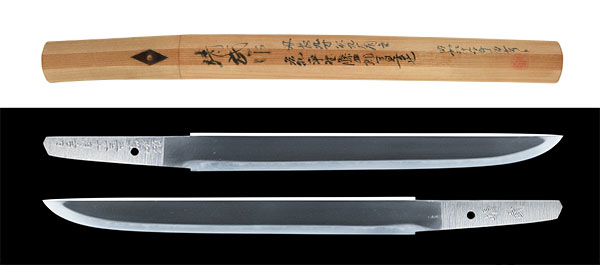
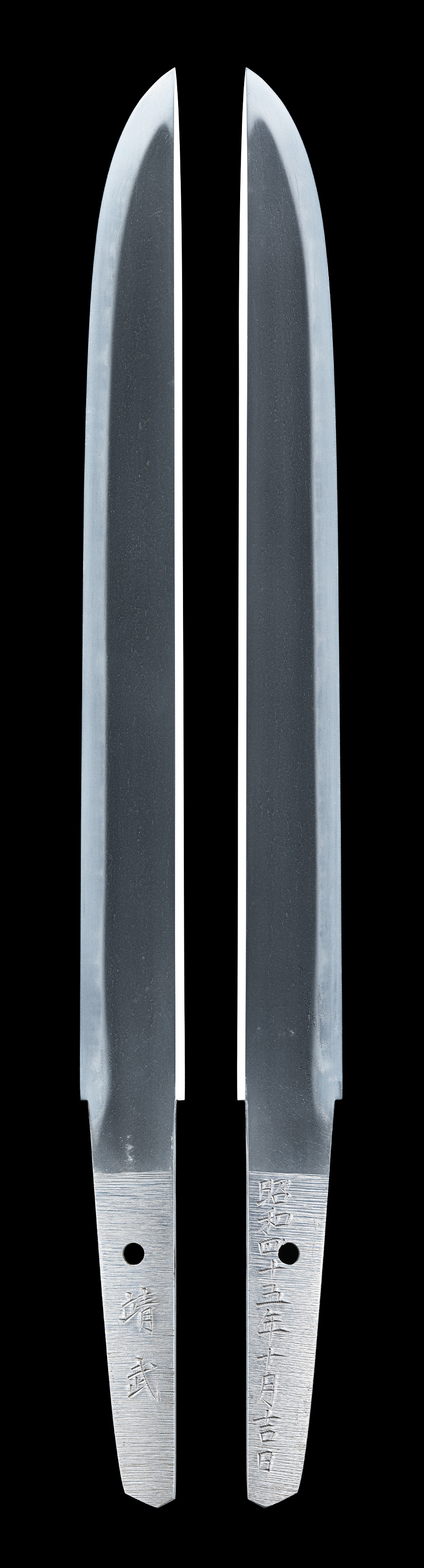
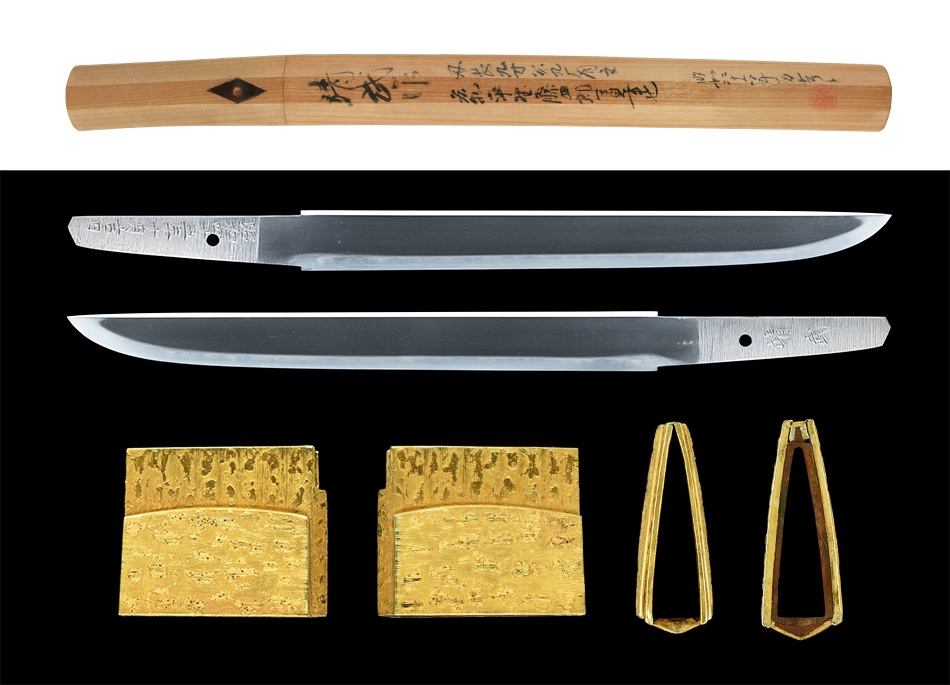
Swordsmith Yakuwa Yasutake is famous as a Yasukuni swordsmith. Born in Yamagata Prefecture in Meiji 42 (1909). He is known as one of the so-called Yasukuni swordsmiths who joined the Nihonto Tanren Kai in Showa 10 (1935). After the war, he produced the Goryo-tachi for the Ise Jingu Shikinen Sengu in Showa 48 (1973). He received the Masamune Prize, the highest award at the Shinsaku Meito Ten. He was certified as a Mukansa swordsmith in Showa 56. This tanto has a nagasa of 9 sun 9 bu and a slightly large sugata, showing a wide mihaba and a heavy, imposing presence. The jigane is itame-hada with a masame flow and a faint bo-utsuri appears. The hamon has a tightened nioiguchi with konie, based on notare with ko-gunome mixed in, and is a clear, bright blade. Inside the ha, ko-ashi enter and sunagashi and kinsuji appear frequently; it is a masterpiece with great spirit and many highlights. It is an excellent, grand tanto of high quality that clearly demonstrates the superior skill of Yakuwa Yasutake.
Offered by World Seiyudo
This piece has sold
Get an email when a new Yasutake piece hits the market.


Machine translation from the shop's Japanese · may contain errors ·
Tokyo · around 1926-1989
1 piece on the market now
Shōwa to the present: destruction and revival
The twentieth century nearly killed the craft twice: wartime distortion, then the occupation ban. The NBTHK’s founding in 1948 and licensed forging from 1953 rebuilt the sword as an art, crowned by Living National Treasures and the mukansa rank.
Certifies a genuine blade worth preserving: a signature confirmed correct, or, if unsigned, an era, province, and school that the NBTHK can reliably identify.
The NBTHK (Nihon Bijutsu Tōken Hozon Kyōkai, the Society for the Preservation of Japanese Art Swords) is a public-interest incorporated foundation founded in 1948 and supervised by Japan’s Agency for Cultural Affairs (Bunkachō); it is based at the Japanese Sword Museum in Tokyo. Its expert panels physically examine each submitted work (shinsa) and issue a certificate (kanteishō) ranking it by artistic and historical merit. NBTHK papers are the most widely recognized standard of authentication for Japanese swords and fittings.
NBTHK official siteNo cooling-off period or returns; refund only if the purchased sword is proven fake, capped at purchase price (excludes commission sales, accessories, auction items).