The twentieth century nearly killed the craft twice: wartime distortion, then the occupation ban. The NBTHK’s founding in 1948 and licensed forging from 1953 rebuilt the sword as an art, crowned by Living National Treasures and the mukansa rank.
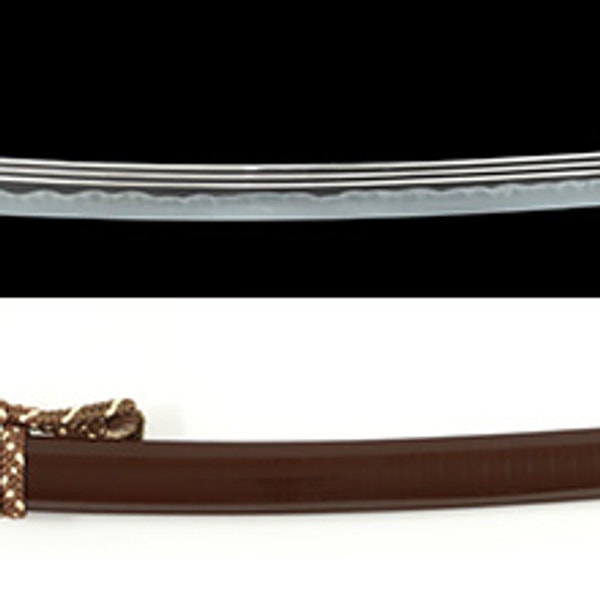
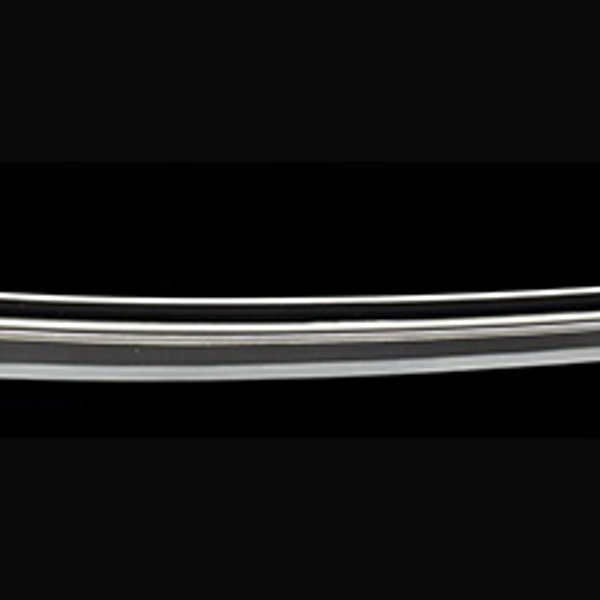
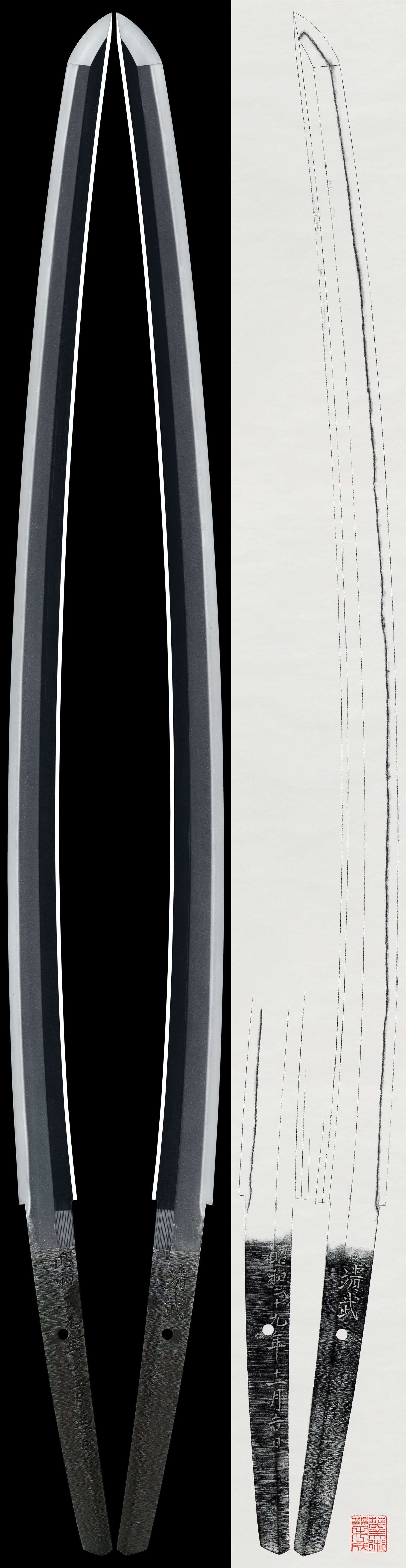
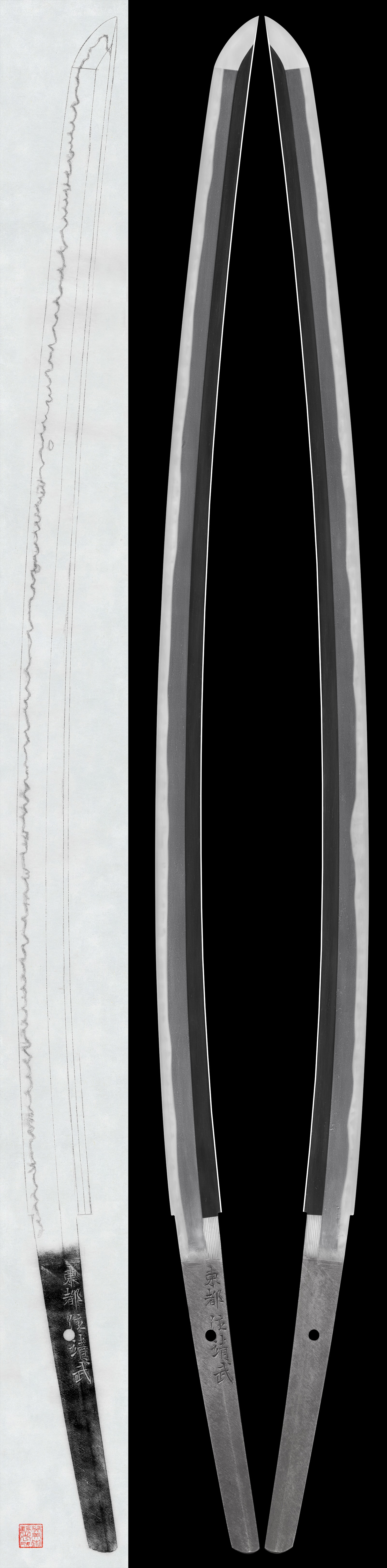
This katana is unsigned but attributed to Yakuwa Yasutake, a Mukanasa Tosho (sword smith without peer review) and Yasukuni Tosho. It comes with a Kanteisho (appraisal certificate) from the Nihon Token Hozon Kai. The blade features a robust construction typical of Yasukuni smiths, with a straight sugata, high shinogi, and thick kasane, exhibiting a gunome hamon with some notare and nie. The koshirae includes period fuchi-kashira and kojiri, with a newly made saya and tsukamaki, making it suitable for martial arts practice.
 NihontoWatch
mumei · Showa (1926-1989) · nagasa 76.4cm · sori 1.3cm
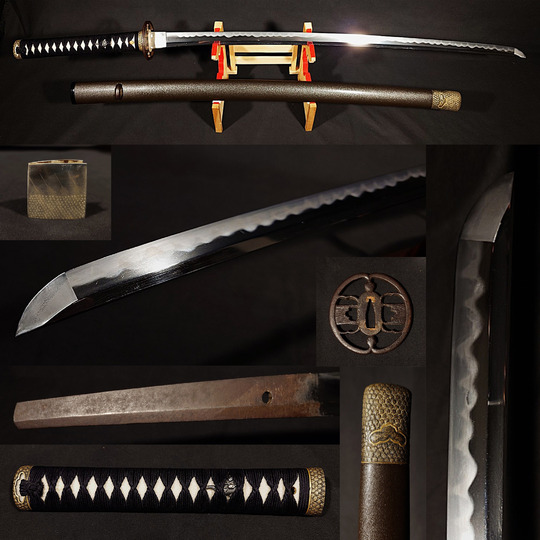
Tokyo · around 1926-1989
3 pieces on the market now
Shōwa to the present: destruction and revival
The twentieth century nearly killed the craft twice: wartime distortion, then the occupation ban. The NBTHK’s founding in 1948 and licensed forging from 1953 rebuilt the sword as an art, crowned by Living National Treasures and the mukansa rank.
We could not find an authenticity certificate on the seller’s listing. Japanese swords and fittings are normally papered by the NBTHK (or the NTHK). Without one, the attribution is the seller’s own assessment and has not been independently verified — treat it with caution and ask the dealer about certification before buying.
¥550,000