The twentieth century nearly killed the craft twice: wartime distortion, then the occupation ban. The NBTHK’s founding in 1948 and licensed forging from 1953 rebuilt the sword as an art, crowned by Living National Treasures and the mukansa rank.
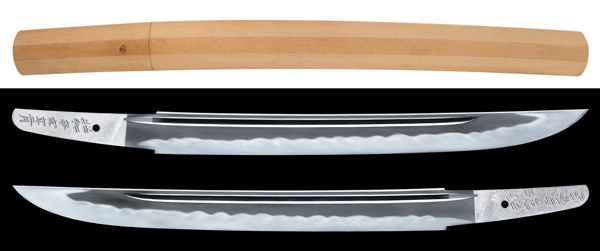
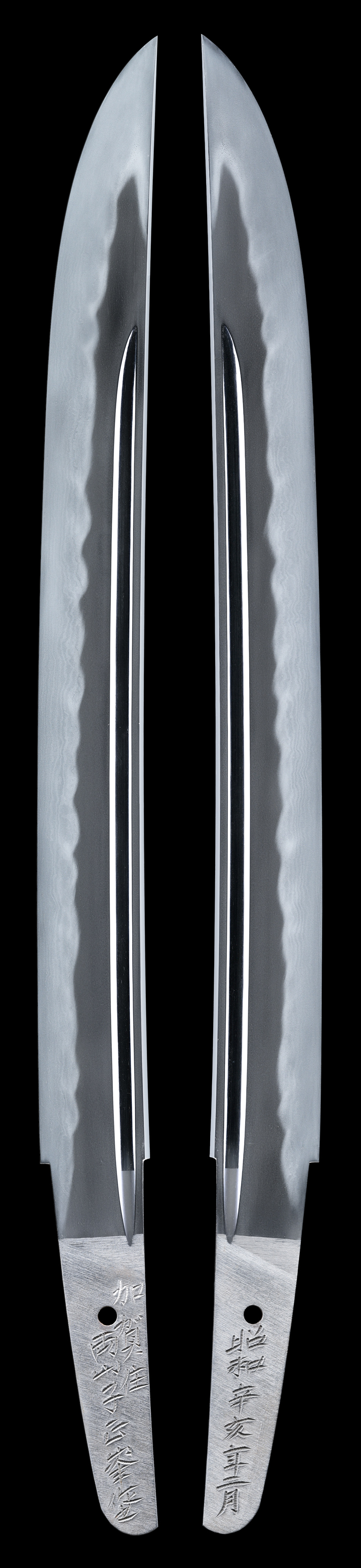
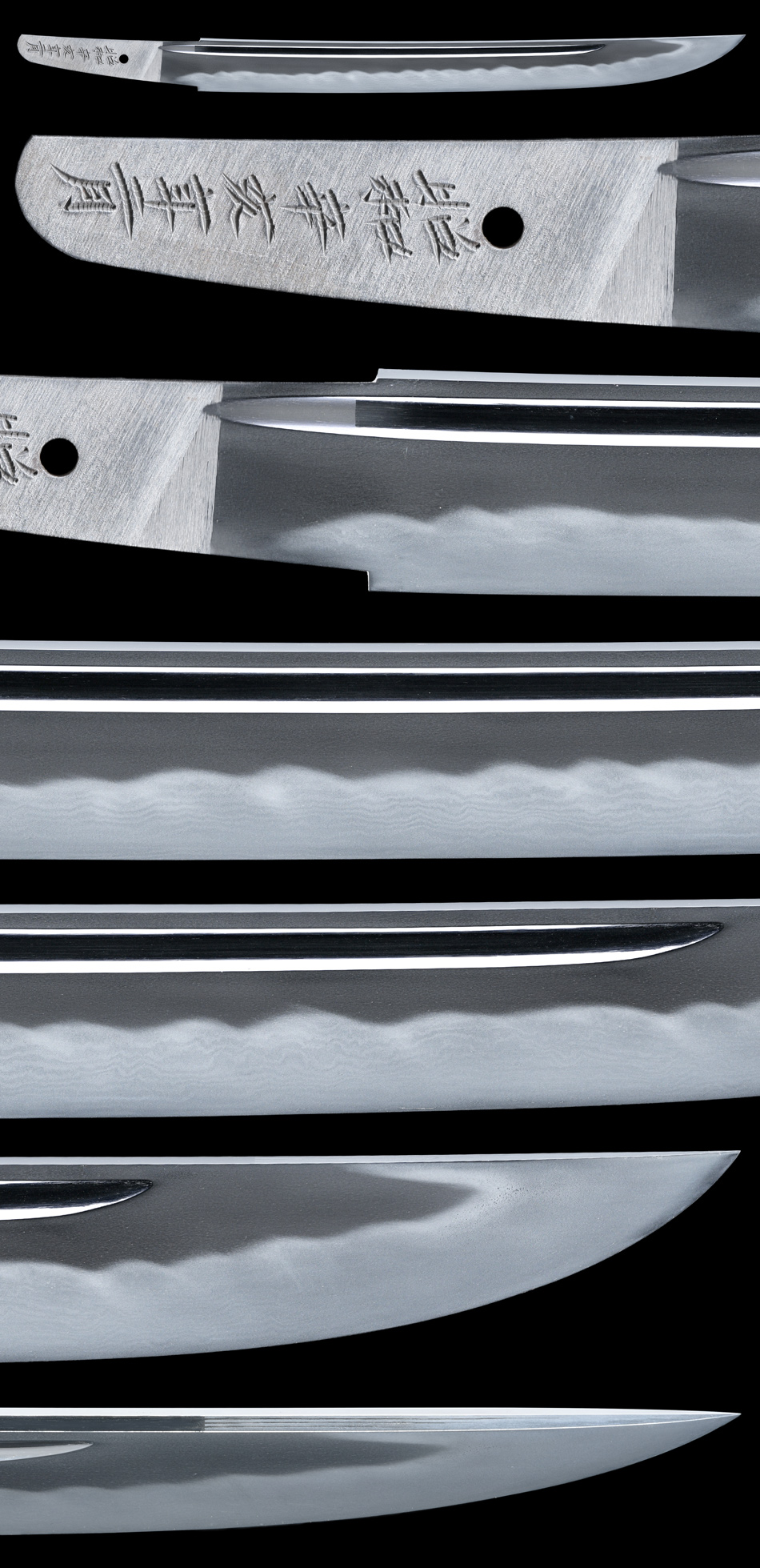
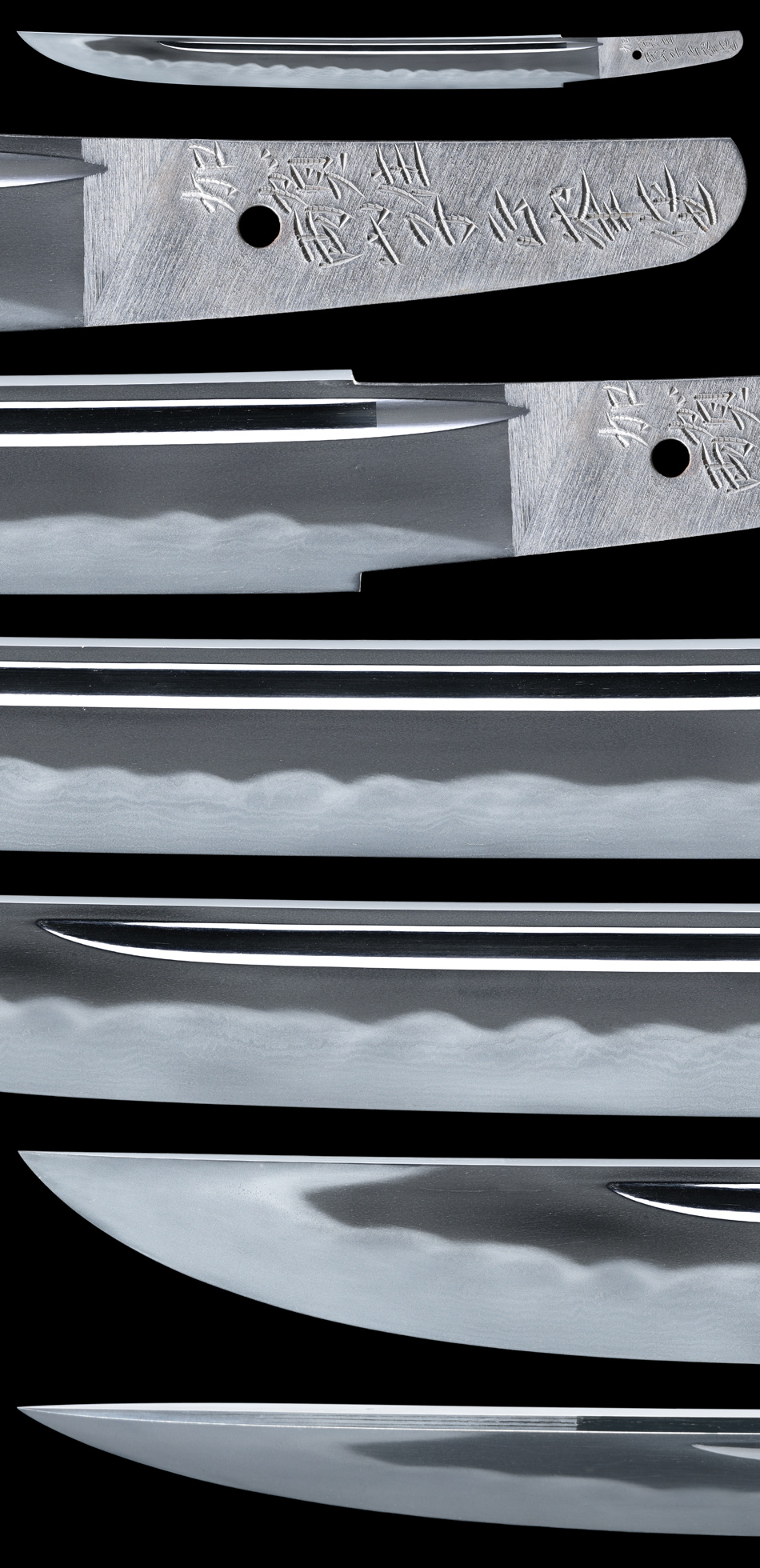
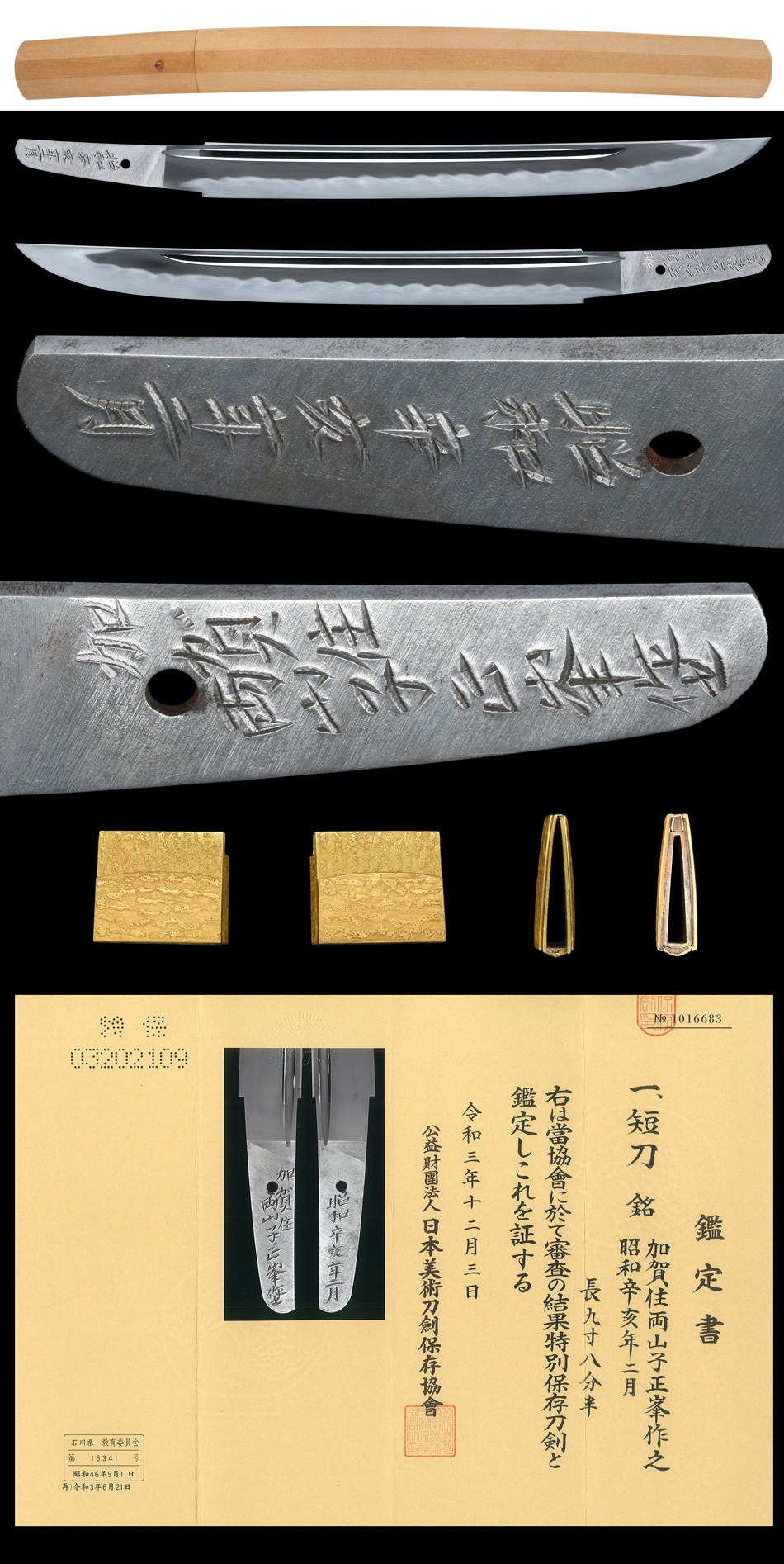
銘 加賀住両山子正峯作之(隅谷正峯)、(本名:隅谷與一郎、1921年1月24日 – 1998年12月12日)は石川県松任市辰巳町20(現在の白山市)出身の刀匠です。全日本刀匠会元理事長。日本美術刀剣保存協会元理事。1941年立命館大学理工学部機械工学科卒業と同時に刀匠・桜井正幸に入門します。独立後は興国日本刀鍛錬所(広島県尾道市)へ。その後、日本刀鍛錬所傘笠亭(さんりゅうてい)を松任市に開いて一文字や長光等の備前古名刀の写など多くの作品を手掛けました。昭和40年、41年、49年には新作名刀展の最高賞である正宗賞を受賞しています。同39年、41年、44年、平成元年には伊勢神宮式年遷宮御神宝太刀(ごしんぽうたち)を制作しました。昭和50年(1975)ごろから正倉院蔵刀子や四天王寺蔵刀剣類を参考に、小刀や刀子を研究、制作を続けました。鎌倉時代の備前刀風を得意とし、隅谷丁子(すみたに・ちょうじ)と呼ばれる伝統の踏襲を超えた華麗な丁子刃文を完成し無鑑査刀匠となりました。 更に、自家製鋼の研究を経て、地鉄(じがね)の研究、銑卸(ずくおろし)の刀剣を制作して、独学で鎌倉時代の地鉄を再現し新たな鍛錬法を探求しました。日本刀の美しさへの挑戦意欲はとどまることなく、第一回作刀技術発表会以来の連続出品数も最多となり、生涯において他の刀匠の追随を許しませんでした。こうして1981年4月20日には「人間国宝」に認定されます。正峯は、皇室関連の作刀を行っていることでも知られ、平成3年(1991年)には眞子内親王、同5年(1993年)には皇太子妃雅子、同6年(1994年)には佳子内親王の賜剣の儀で、彼の製作した守り刀が天皇から授けられることになります。第1回薫山賞(1972年)、紫綬褒章(1984年)、重要無形文化財「日本刀」保持者認定(1981年)、中日文化賞(1992年)、勲4等小綬章(1994年)、日本刀の人間国宝としては、高橋貞次、宮入昭平、月山貞一に次ぐ4人目の認定者となりました。 本刀は、九寸八分半の刃長の平造短刀です。地鉄は板目肌詰み、表裏に棒樋を彫ります。刃文は、小沸出来で匂口が明るく冴える変化に富んだ互の目に逆丁子交じり。刃中には砂流しが盛んに働き覇気があります。帽子は乱れ込んで小丸へ返ります。本作は、今や出物も少なくなった現代刀界の至宝、隅谷正峯の出来上々の貴重な短刀であり、見逃すことが出来ない逸品です。白鞘、金着せ二重はばき。特別保存刀剣鑑定書。
Offered by World Seiyudo
This piece has sold
Get an email when a new Sumitani Masamine piece hits the market.


Ishikawa · around 1921-1998
7 pieces on the market now
Shōwa to the present: destruction and revival
The twentieth century nearly killed the craft twice: wartime distortion, then the occupation ban. The NBTHK’s founding in 1948 and licensed forging from 1953 rebuilt the sword as an art, crowned by Living National Treasures and the mukansa rank.
A Hozon-certified blade judged to show notably superior workmanship and a better state of preservation. The bar is higher: re-tempered blades and most unsigned Muromachi/Edo works are excluded.
The NBTHK (Nihon Bijutsu Tōken Hozon Kyōkai, the Society for the Preservation of Japanese Art Swords) is a public-interest incorporated foundation founded in 1948 and supervised by Japan’s Agency for Cultural Affairs (Bunkachō); it is based at the Japanese Sword Museum in Tokyo. Its expert panels physically examine each submitted work (shinsa) and issue a certificate (kanteishō) ranking it by artistic and historical merit. NBTHK papers are the most widely recognized standard of authentication for Japanese swords and fittings.
NBTHK official siteNo cooling-off period or returns; refund only if the purchased sword is proven fake, capped at purchase price (excludes commission sales, accessories, auction items).