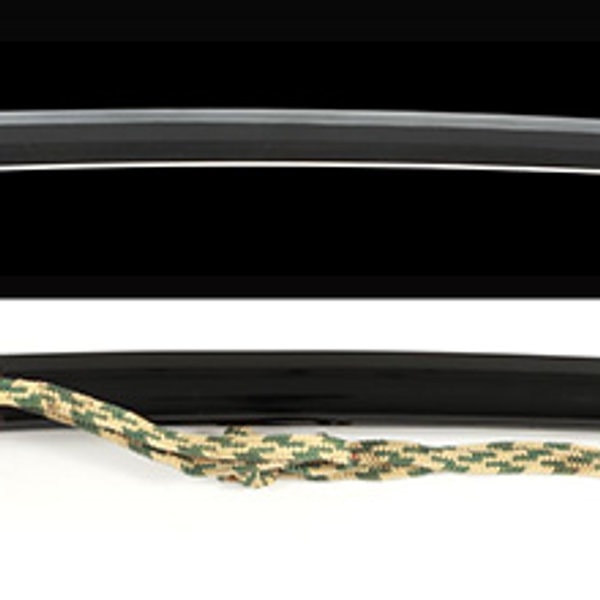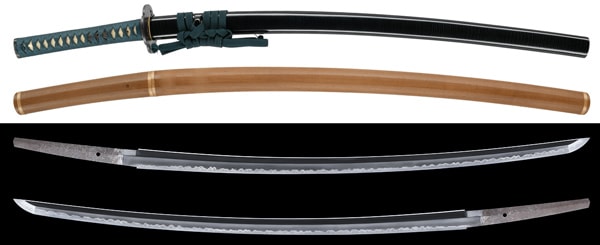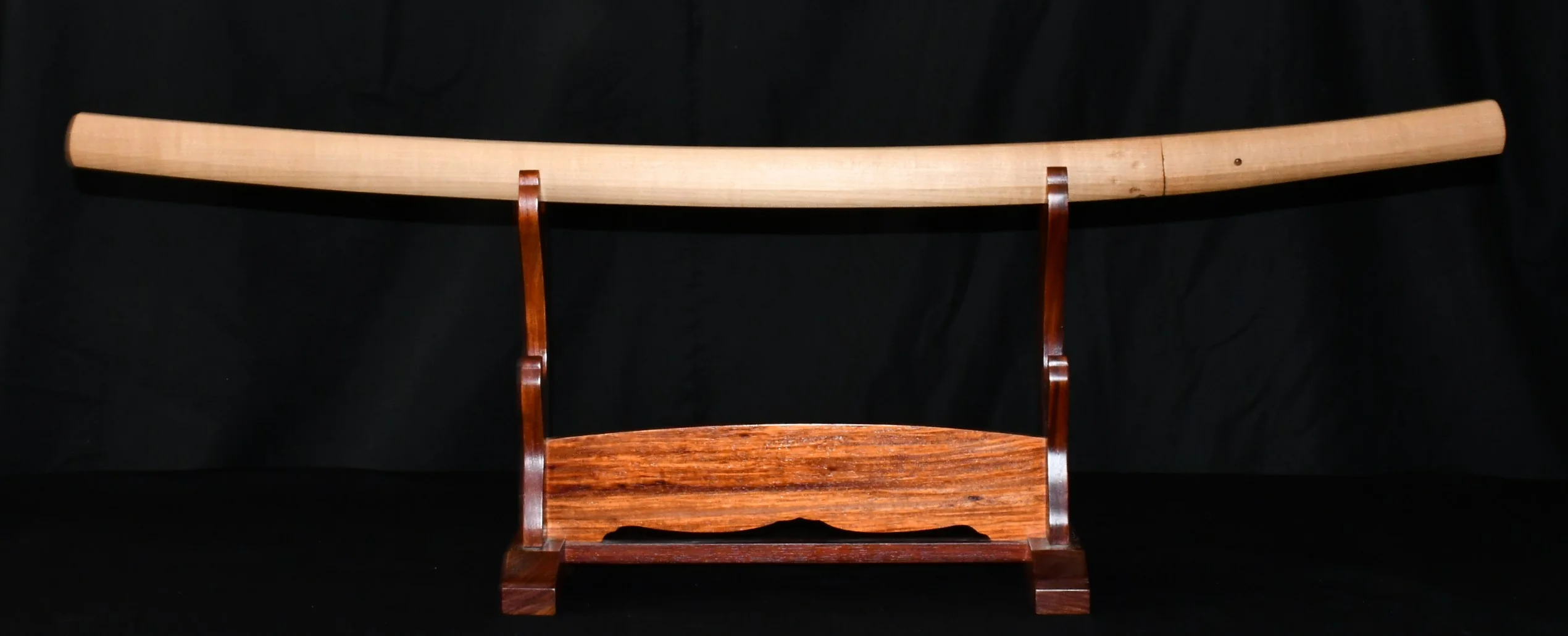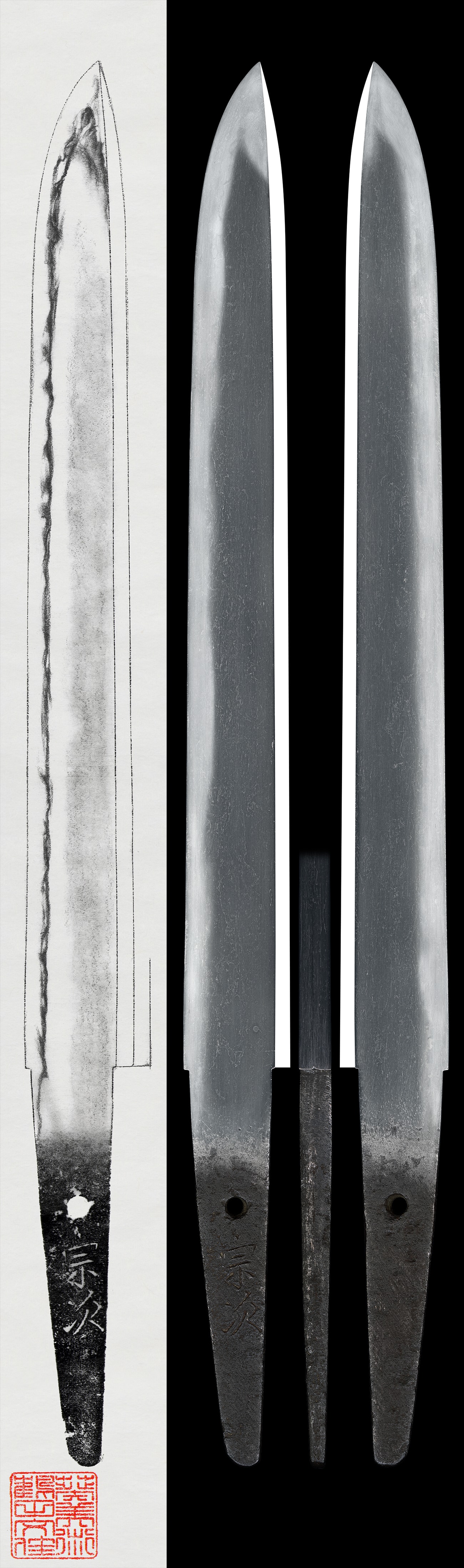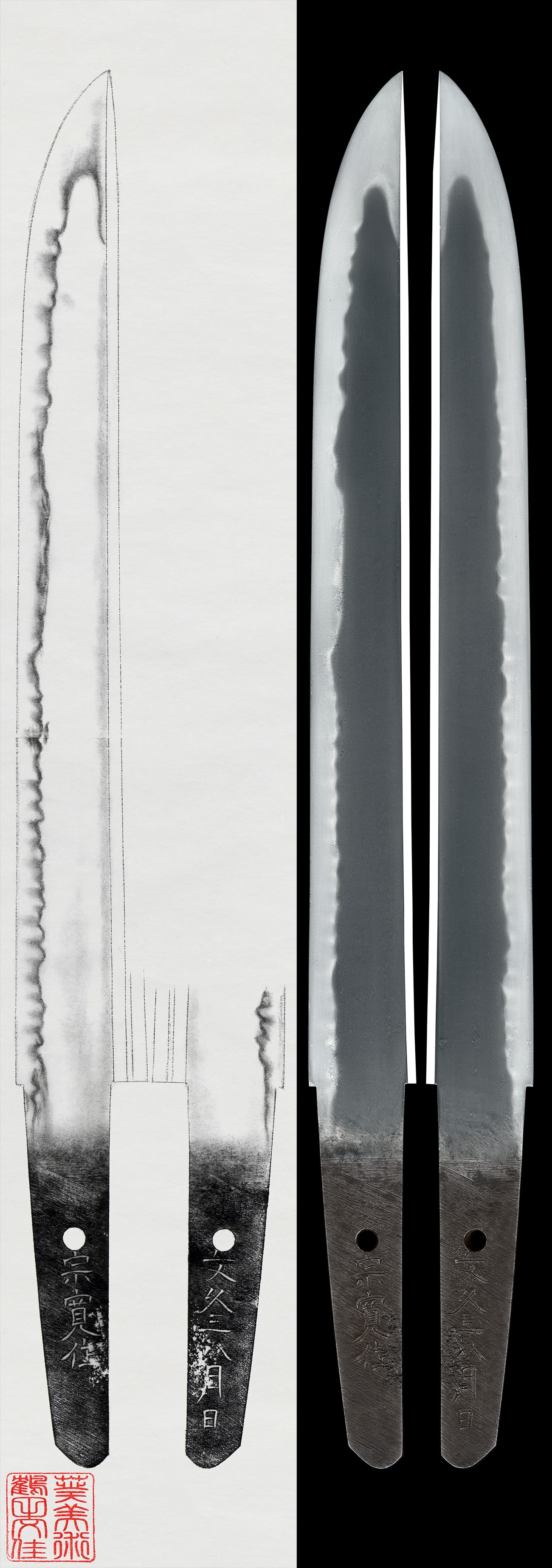

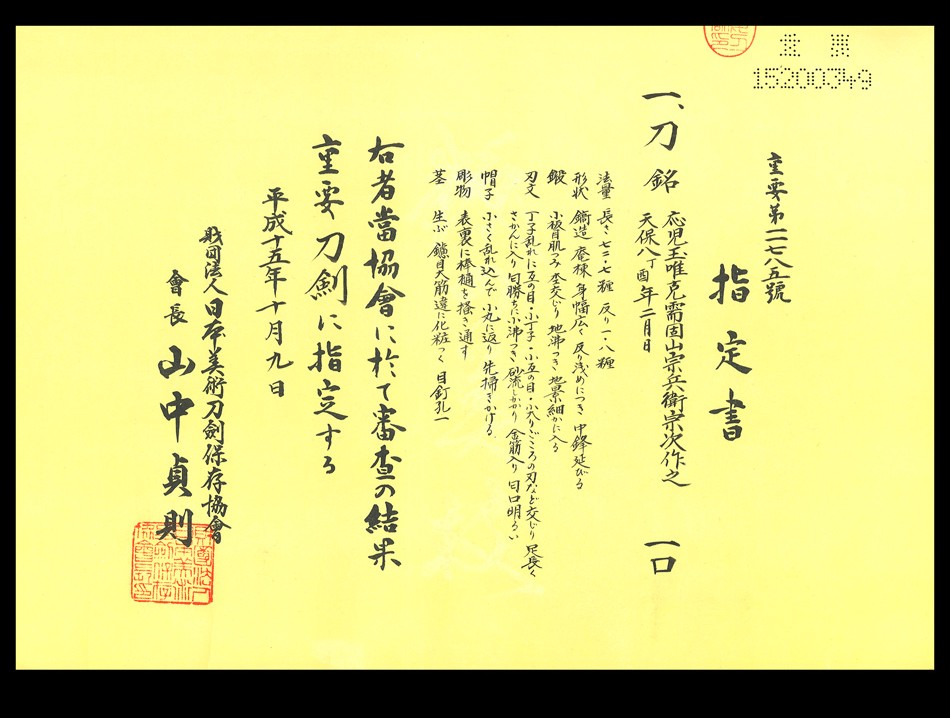
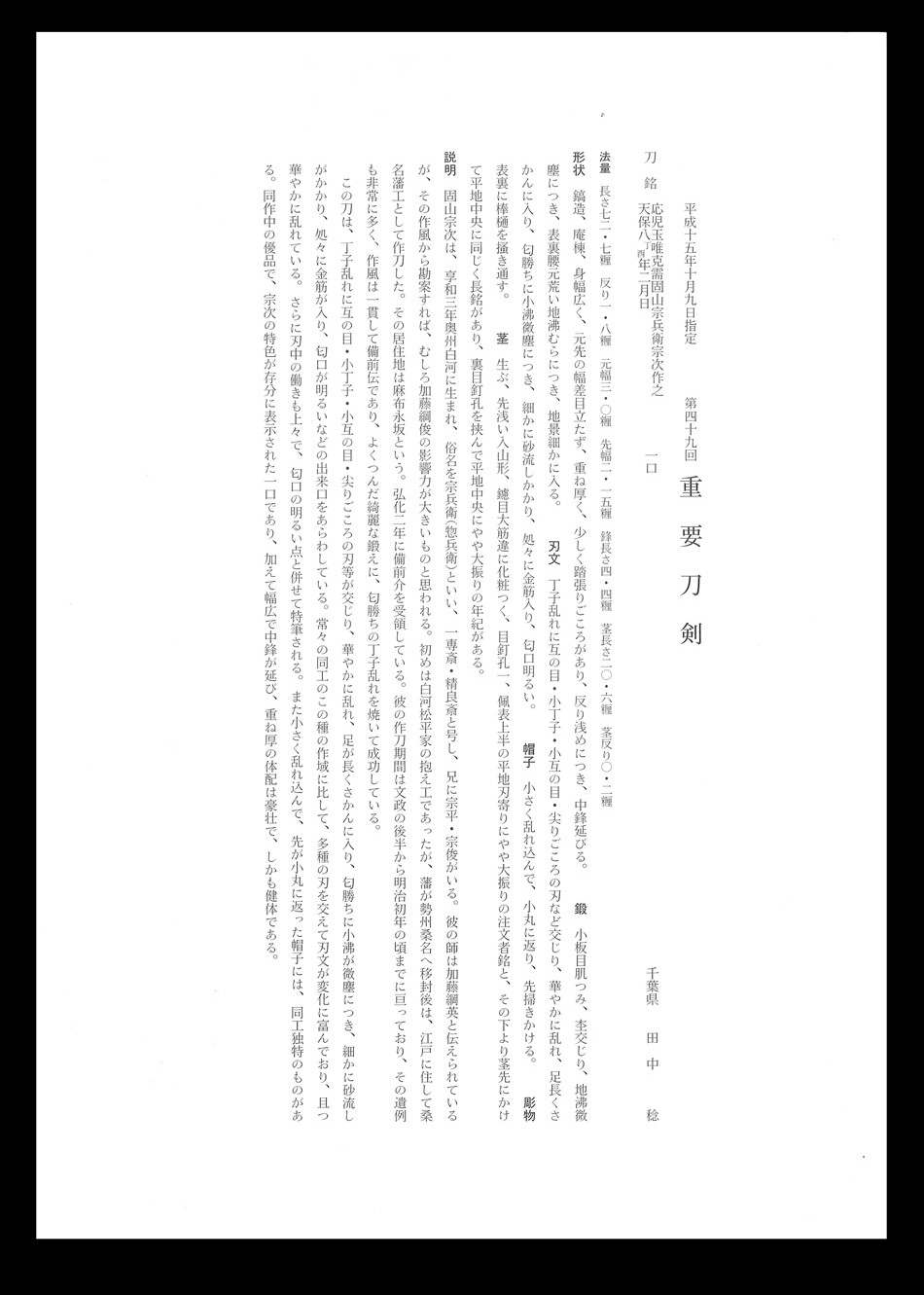
-, 49th Session — Designated October 9, 2003
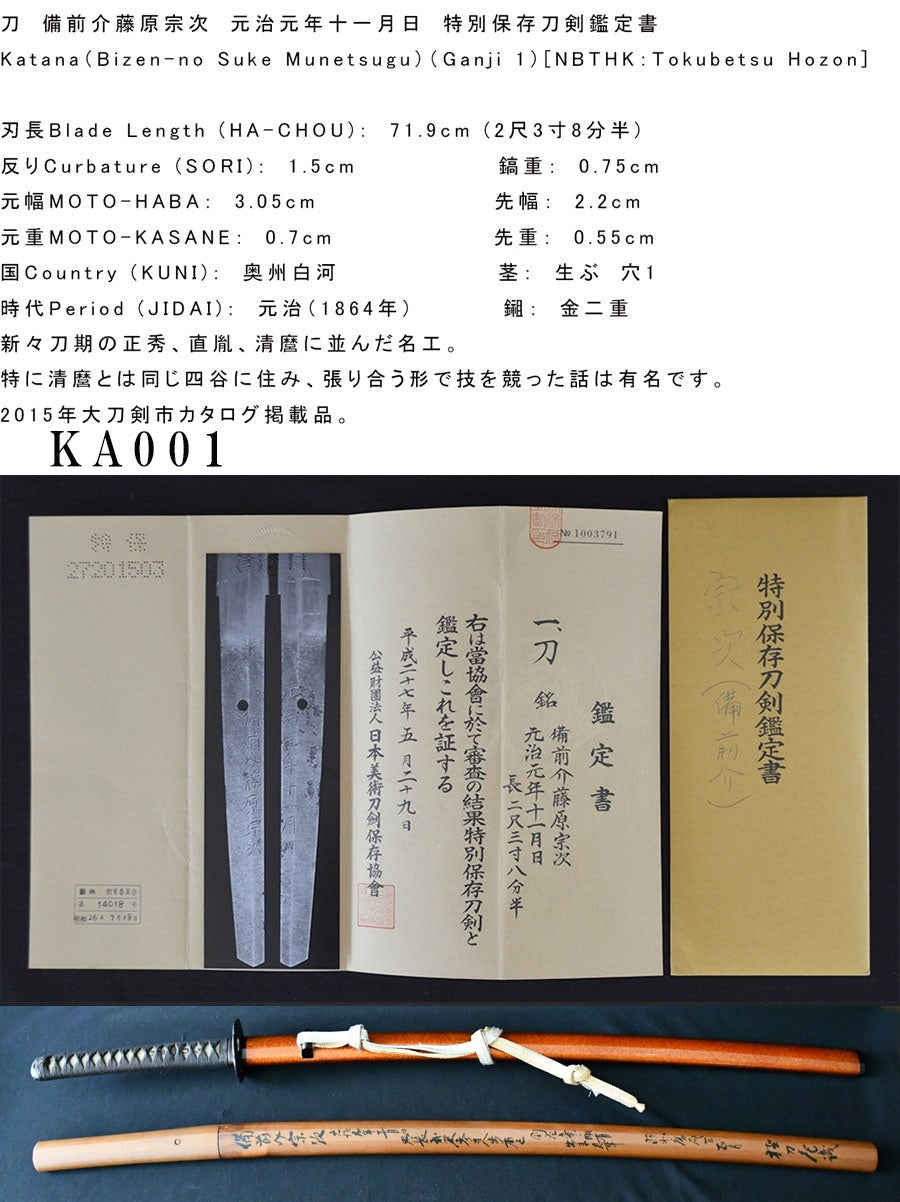
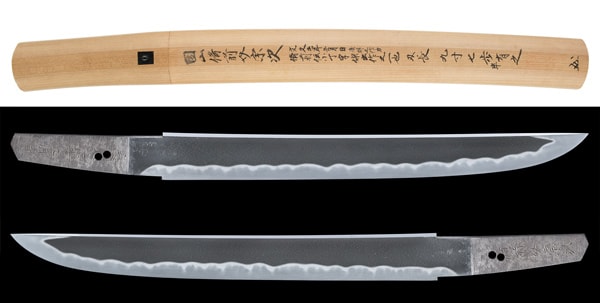
, : Kozan Munetsugu (固山宗次)
Measurements 72.7 cm, 1.8 cm, 3.0 cm, 2.15 cm, 4.4 cm, 20.6 cm, 0.0 cm
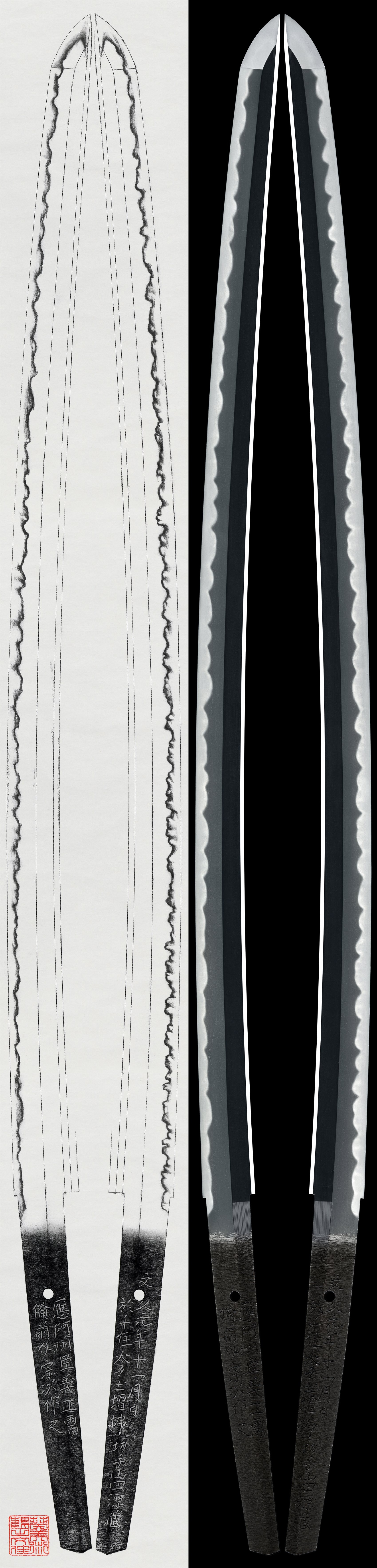
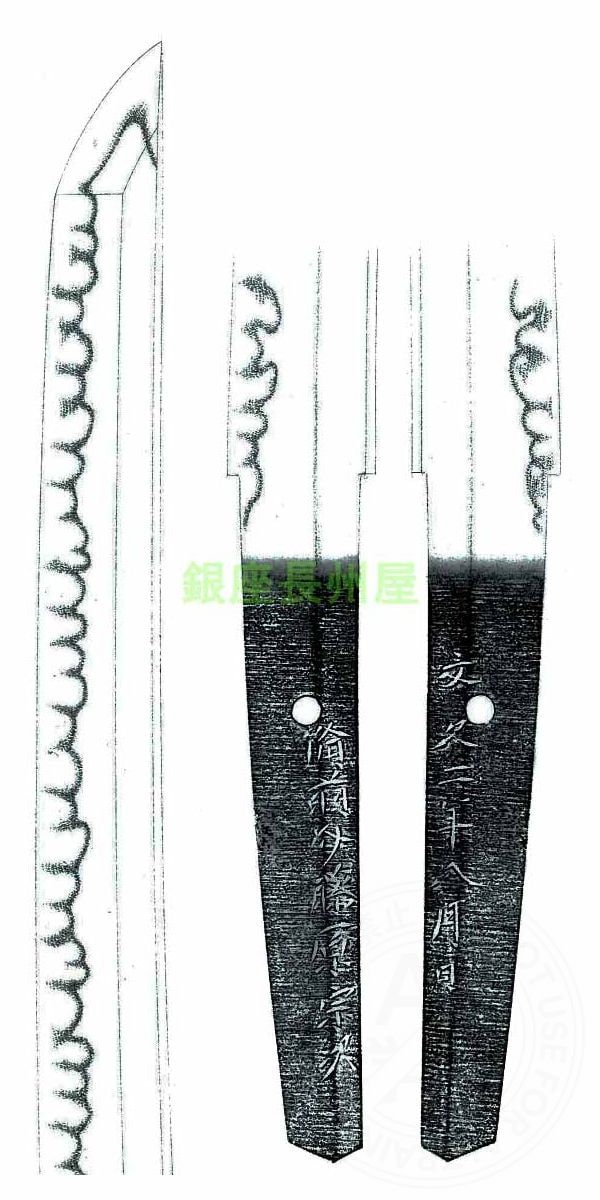
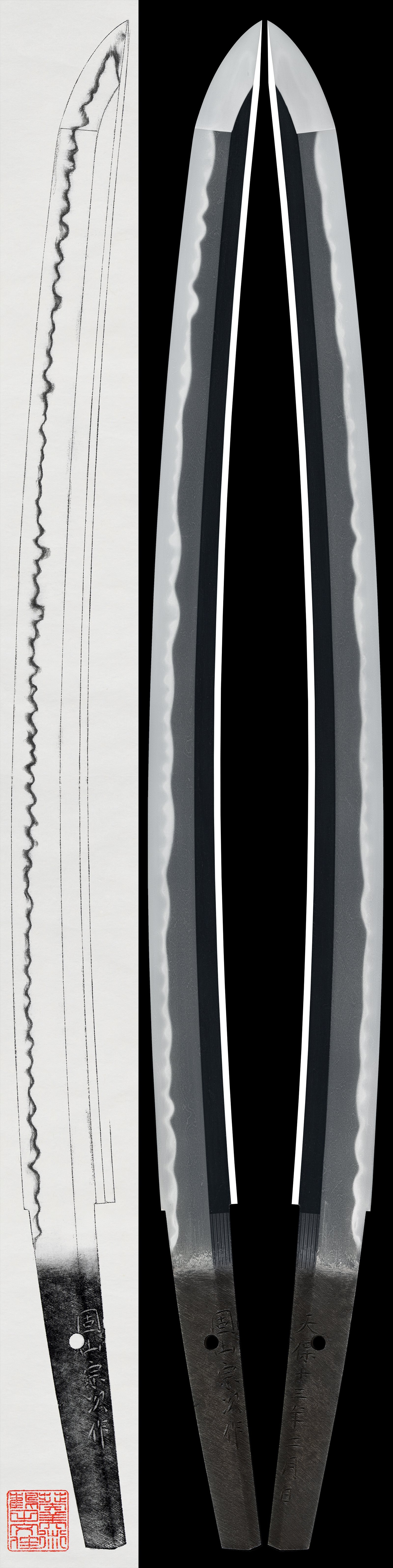
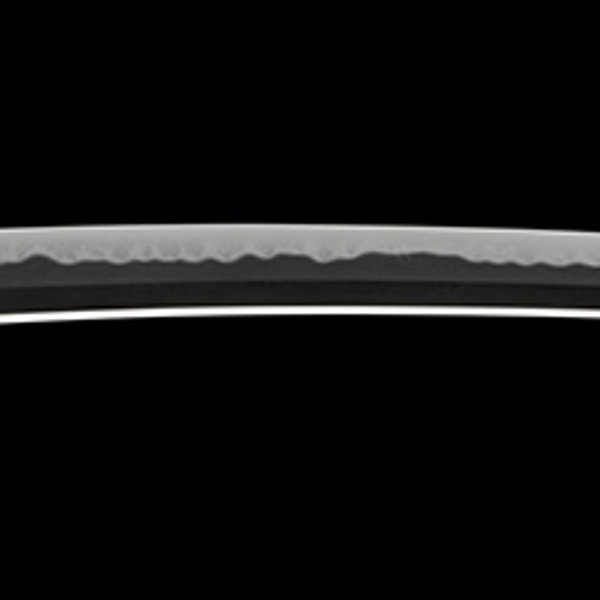
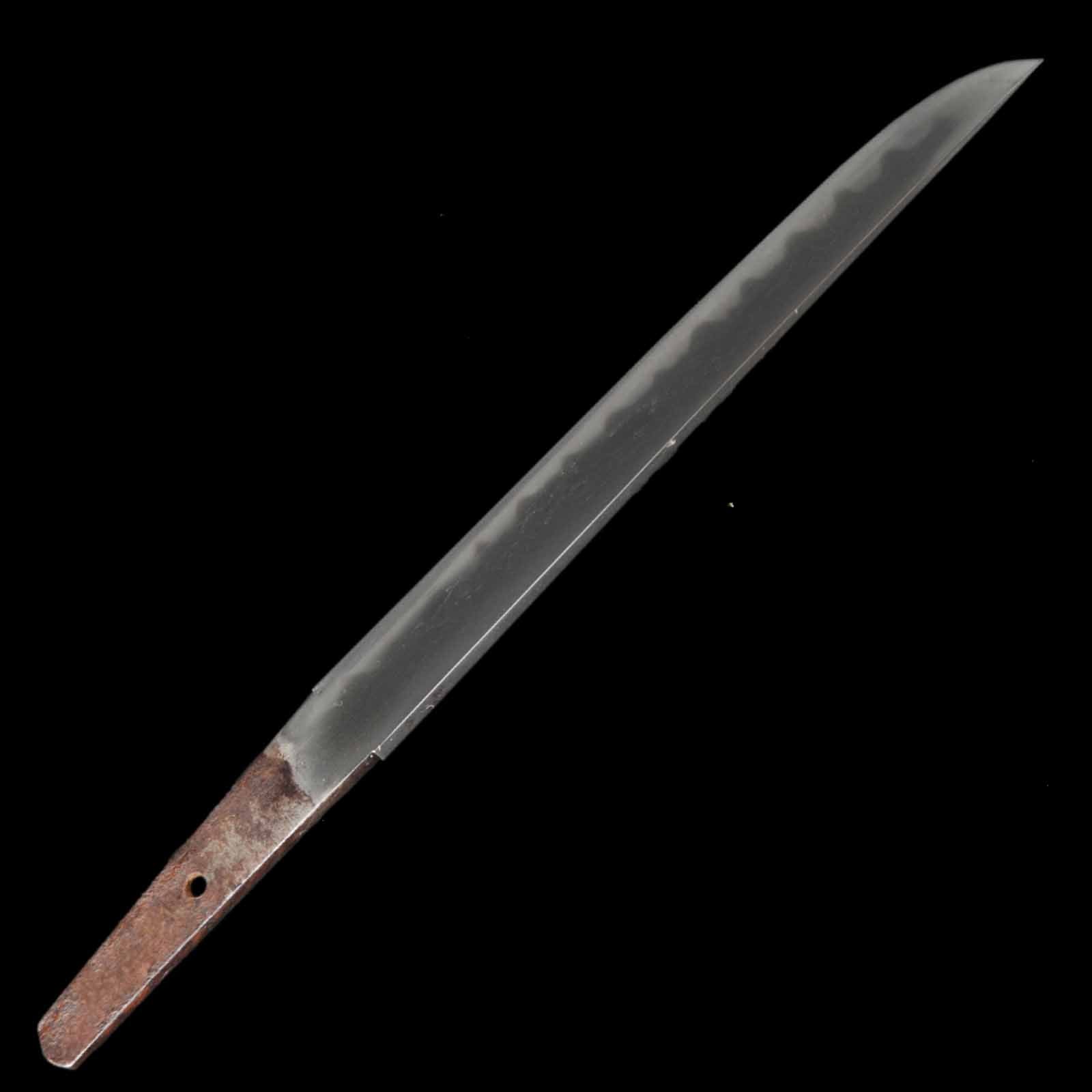
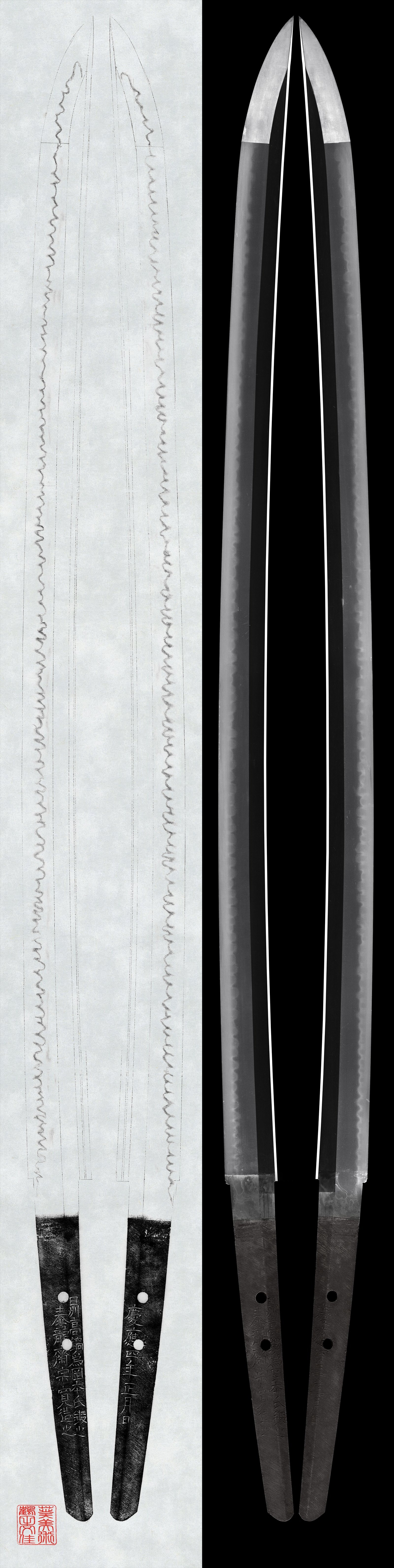
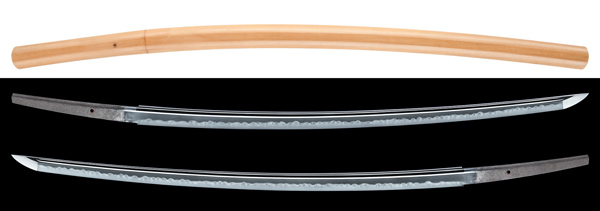
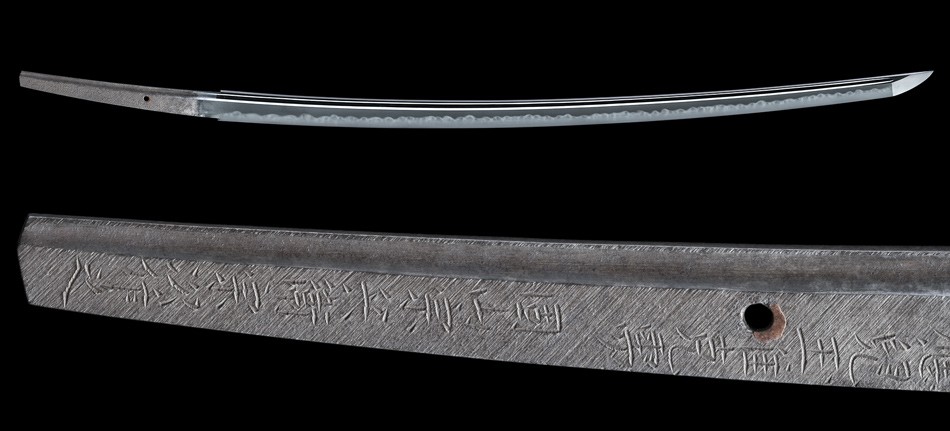
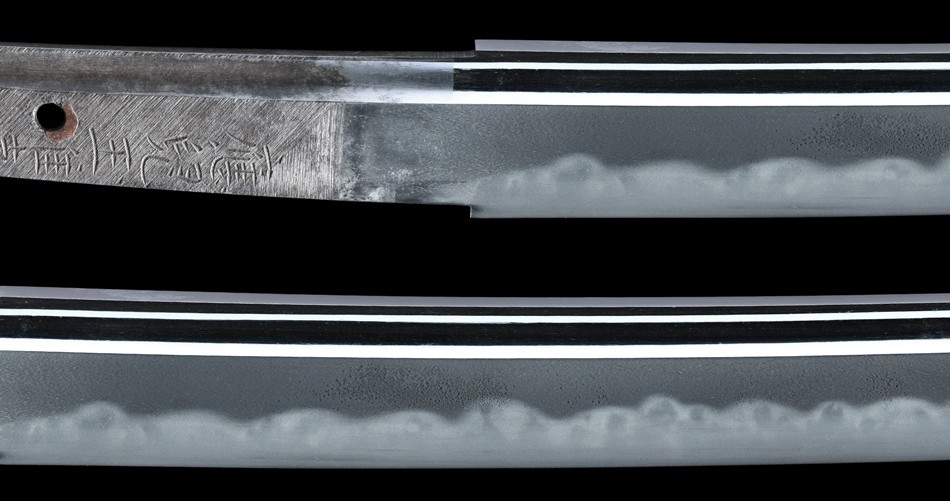
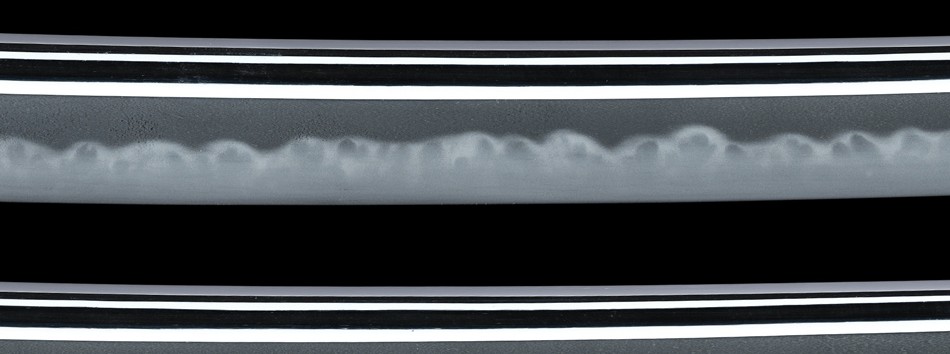
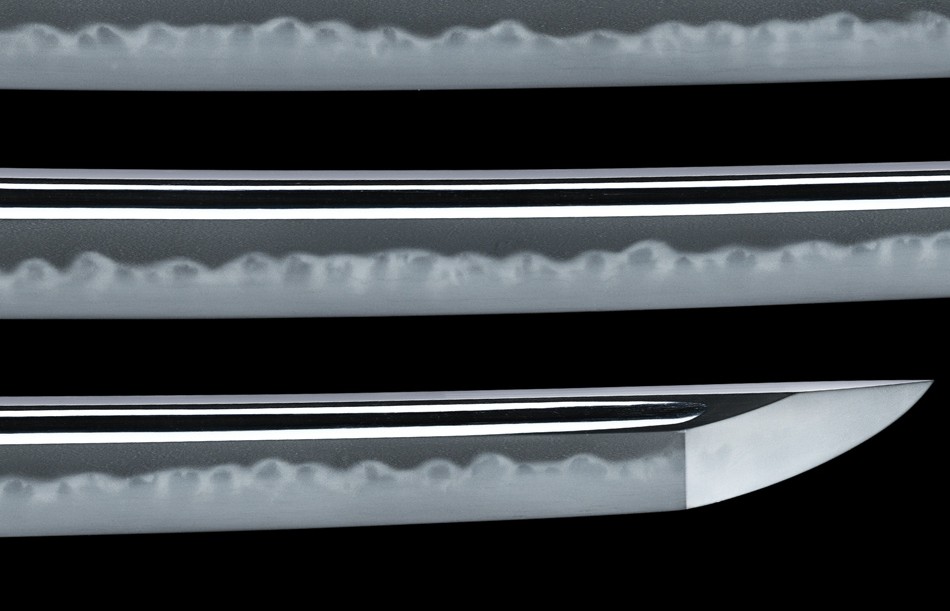
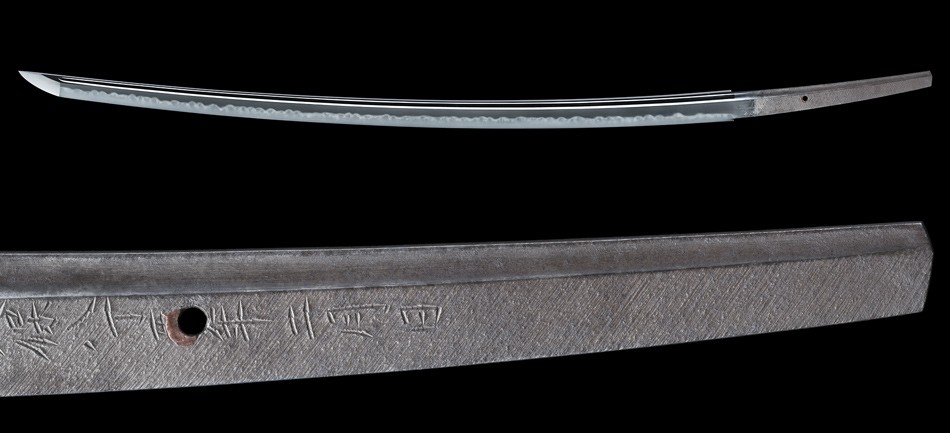
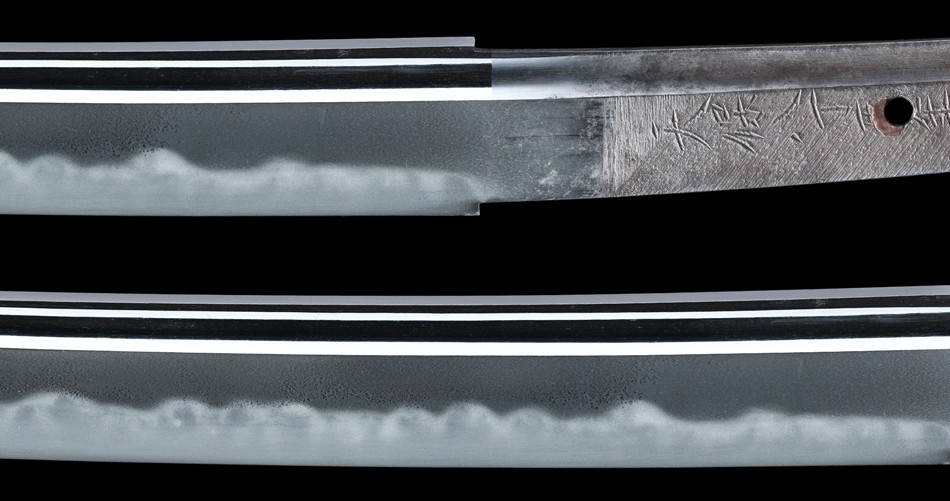
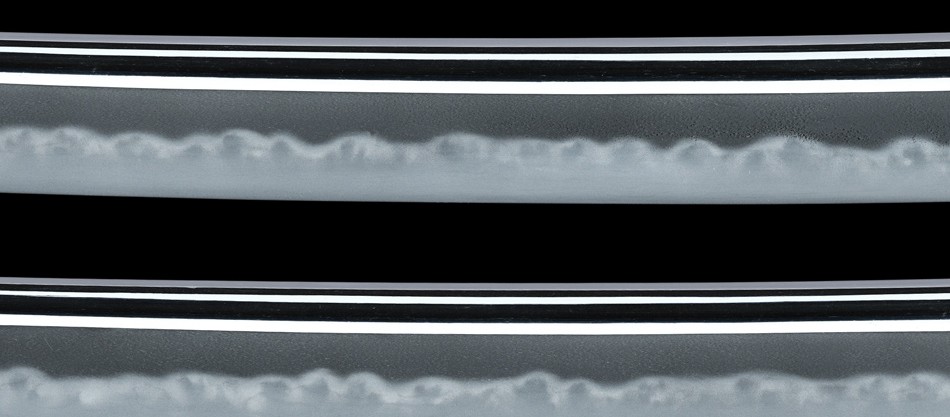
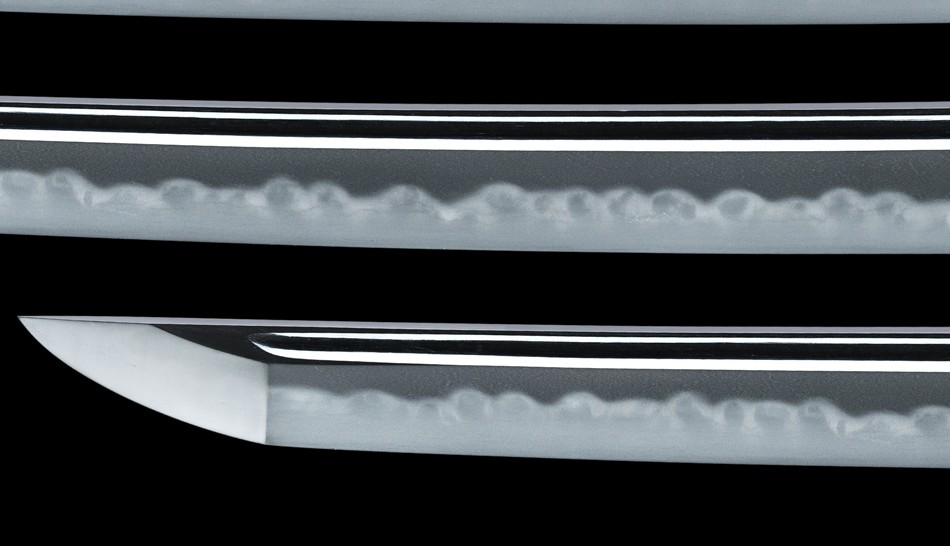
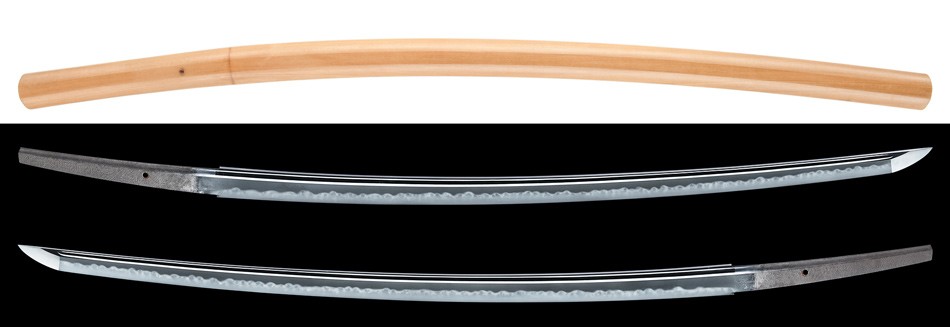
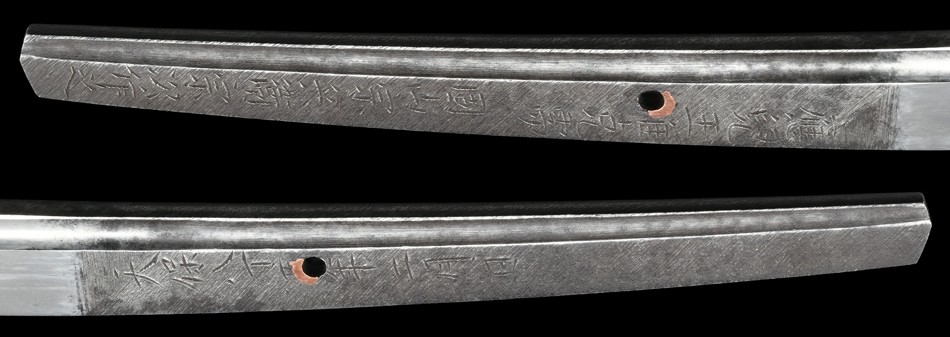
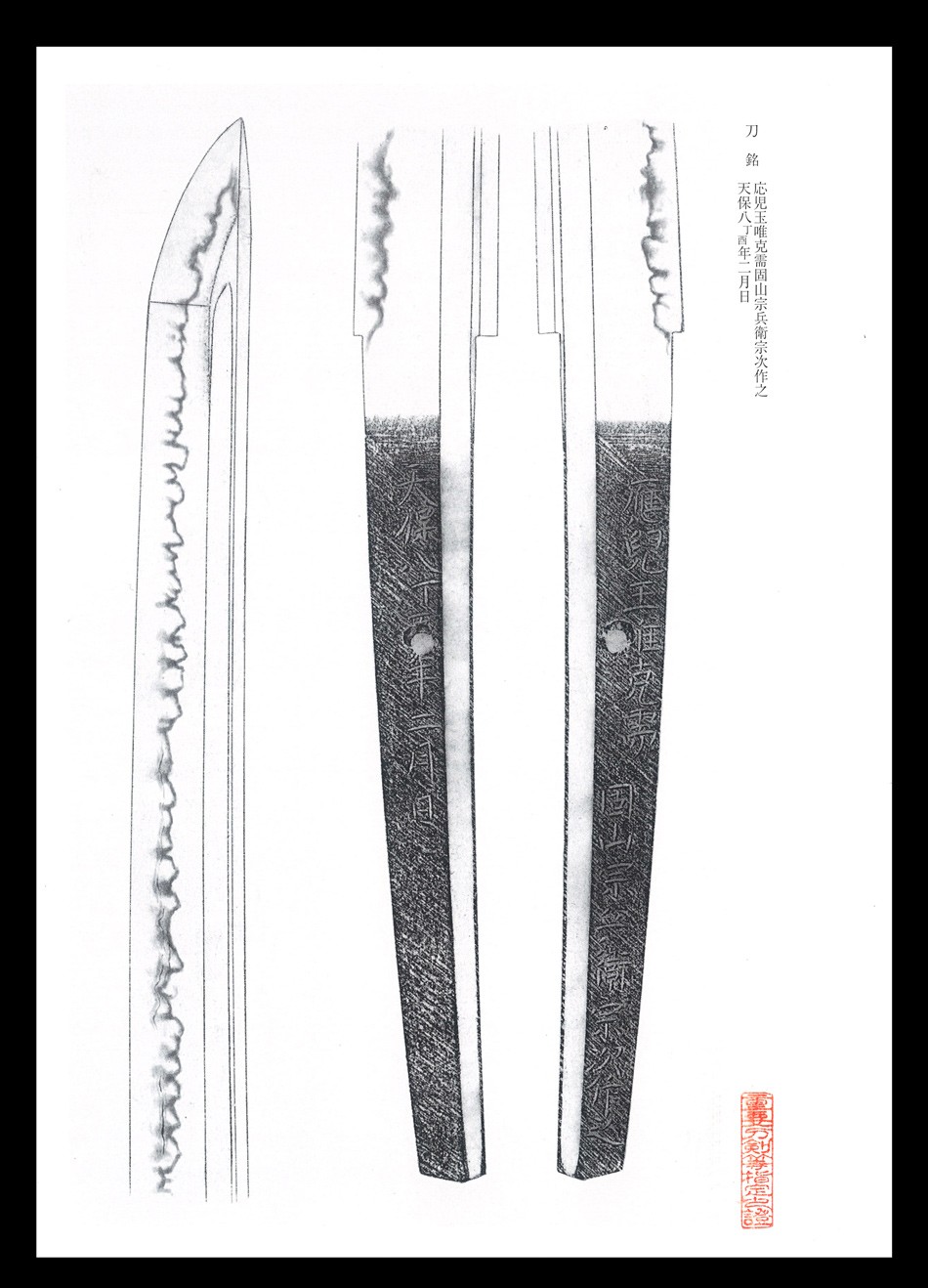
Description Keijō: , ; wide with little difference between base and tip width; thick ; with a slight sense of ; rather shallow ; that appears extended. : Dense with mixed in; fine in a dust-like distribution; around the lower waist on both sides there are areas where rougher appears unevenly, with fine entering. : mixed with , , , and blades of a somewhat pointed tendency; a flamboyant ; long entering vigorously; predominantly with fine in a dust-like distribution; delicate runs throughout, with appearing here and there; the is bright. : Enters in small , turns back in , with the tip showing . : On both sides a is carved through (). : ; tip in a shallow ; file marks are large with applied; one ; on the , in the upper half of the close to the there is a somewhat large commissioner’s inscription, and below this extending toward the tang tip there is likewise a long inscription centered in the ; on the , straddling the , there is a somewhat large date inscription centered in the .
Artisan Kozan Munetsugu (固山宗次)
Era Tenpō 8 (1837), late period
Explanation Kozan Munetsugu was born in Kyōwa 3 (1803) in Shirakawa of Ōshū. His common name was Munobē (also read Sōbē), and he used the art names Ichisensai and Seiryōsai. He had elder brothers named Munehira and Munetoshi. His teacher is traditionally said to have been Katō Tsunahide; however, judging from Munetsugu’s working style, the influence of Katō Tsunatoshi appears to have been the stronger.
At first he served as an artisan retained by the Matsudaira of Shirakawa, but when the domain was transferred to Kuwana in Province, he thereafter lived in and made swords as a smith for the Kuwana domain. His residence there was at Azabu Nagasaka. In Kōka 2 (1845) he received the honorary title no . His career extended from the latter part of the Bunsei era through to around the beginning of Meiji, and surviving works are very numerous. His workmanship is consistently in the tradition, and he achieved notable success with tightly forged, beautiful and a -dominant .
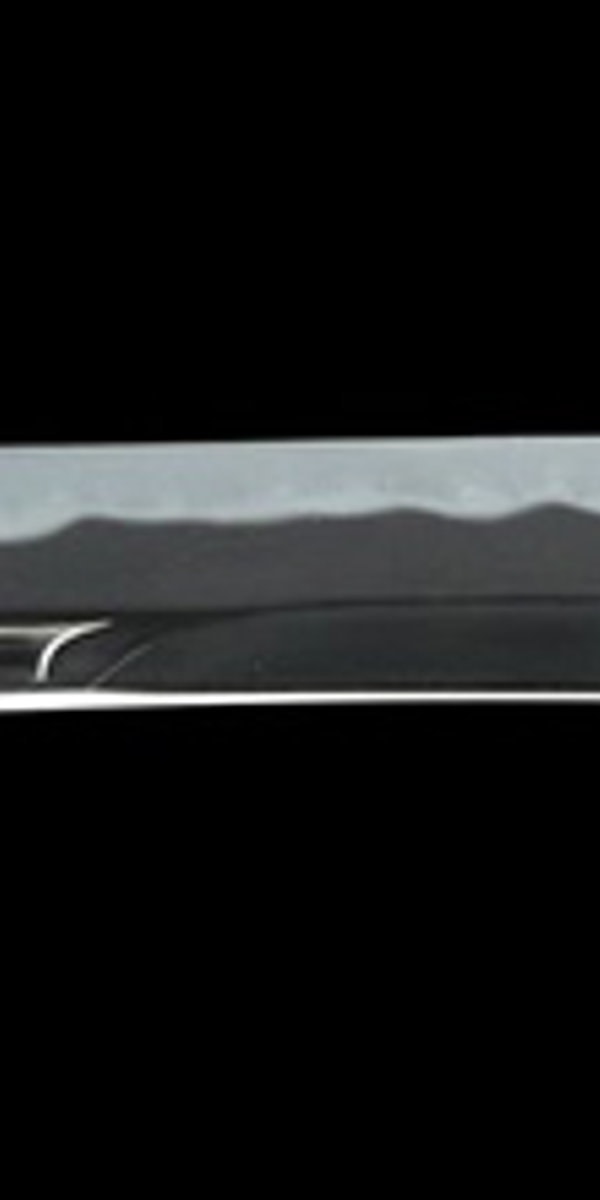
This displays a flamboyantly irregular temper in which , , , and blades with a pointed tendency are mixed into ; long enter vigorously; fine adheres in a dust-like distribution within a -dominant composition; delicate is applied, appears in places, and the is bright—altogether clearly presenting the manner of workmanship described above. In comparison with the usual range of this smith’s work of this type, the here is especially rich in variation through the intermixing of many kinds of elements, and it is also flamboyantly animated. Furthermore, the internal activities within the temper are excellent, and together with the brightness of the this point deserves special mention.
The , which enters with small and turns back in with at the tip, also shows something distinctive to this smith. This is a superior work among his oeuvre, fully displaying Munetsugu’s characteristic features. In addition, the wide blade with an extended and thick gives a bold and powerful overall form, and the sword is (sound and well-preserved).