Perry’s arrival in 1853 unraveled the Tokugawa peace and created the first mass demand for working swords in two centuries. Kiyomaro, called the Masamune of Yotsuya, died on its eve; Munetsugu and Yukihide carried the boom to the end.
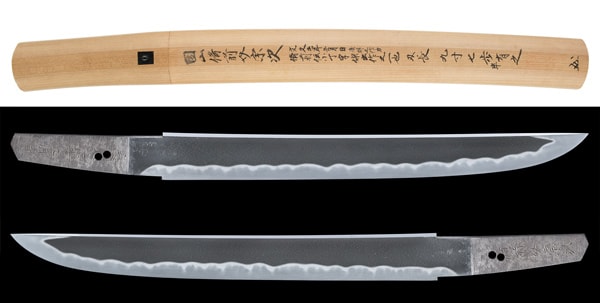
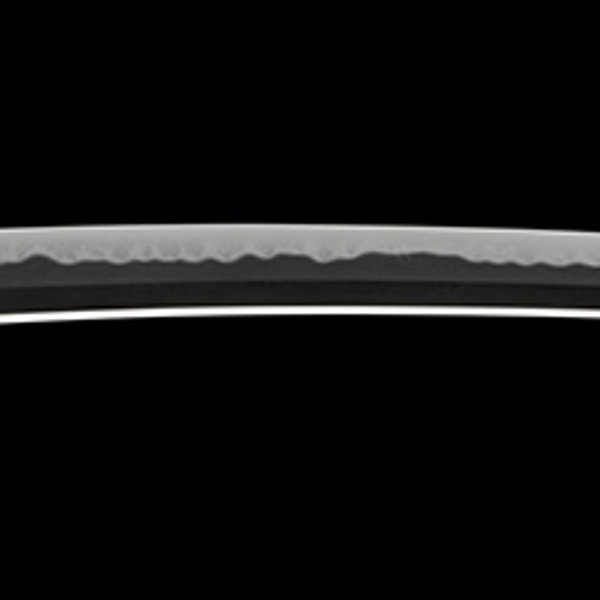
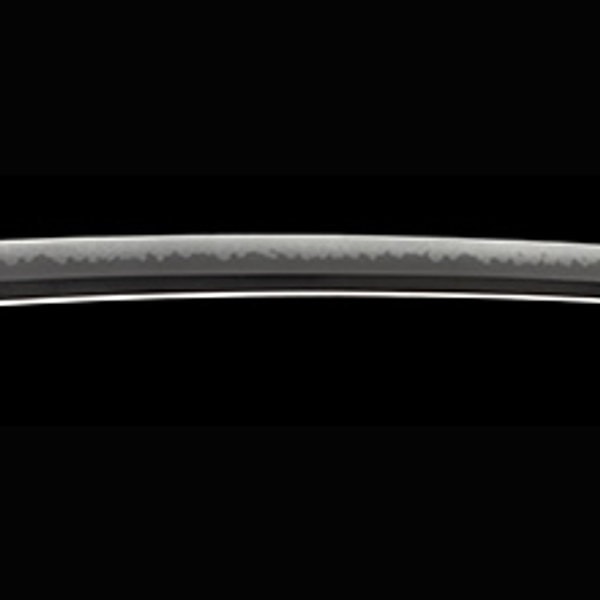
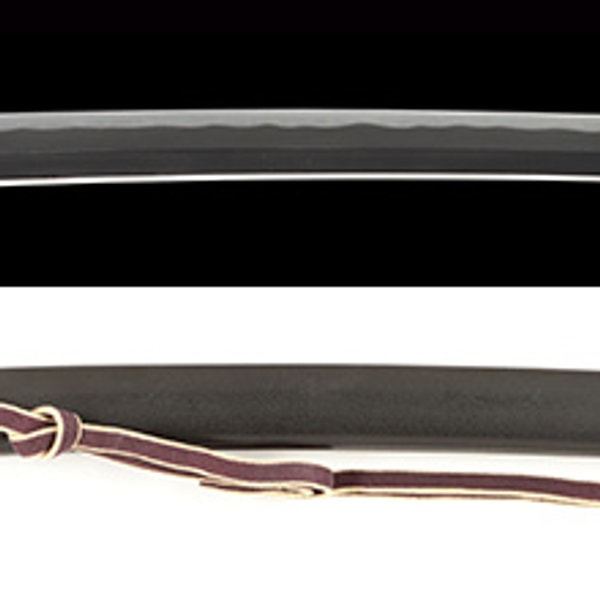
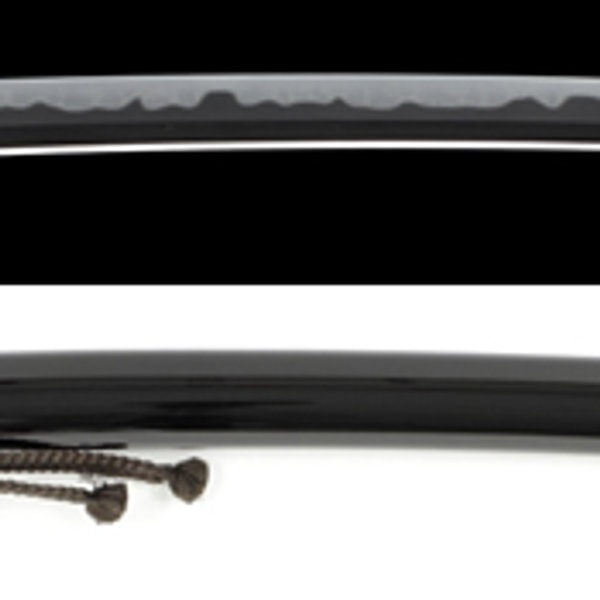
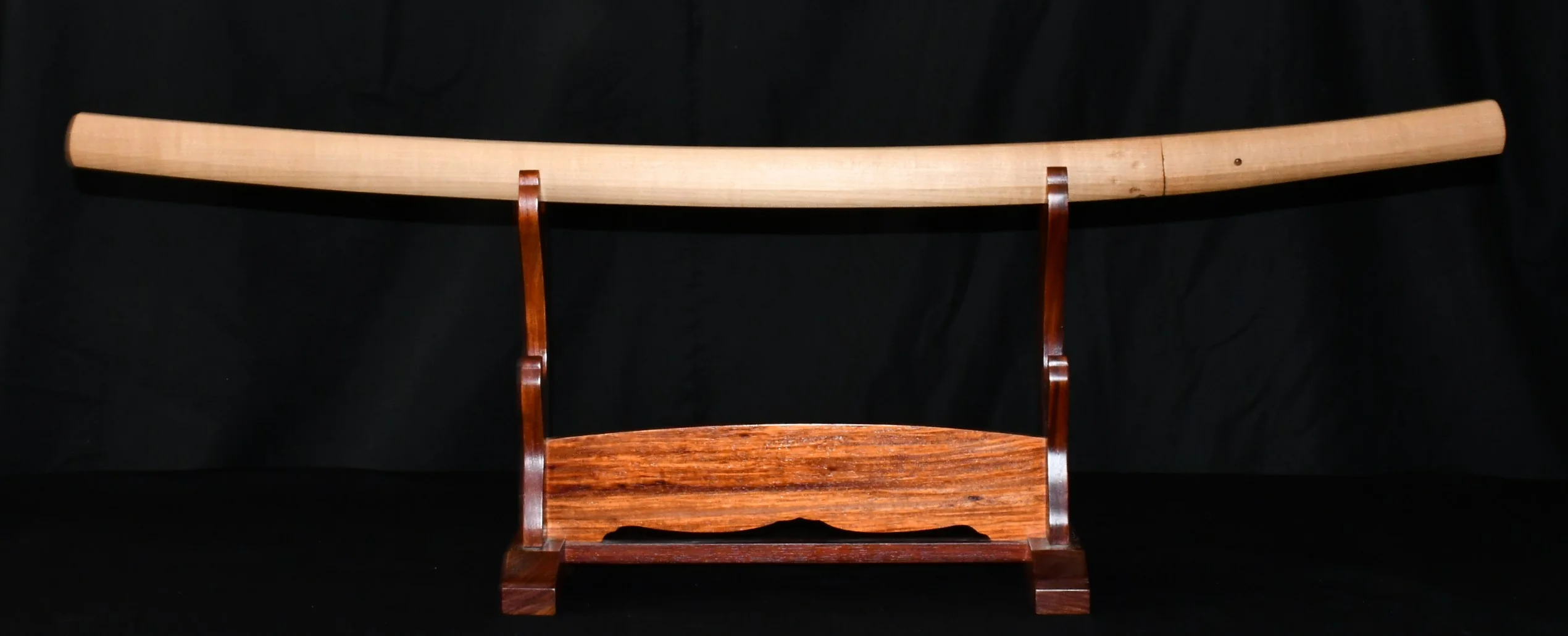
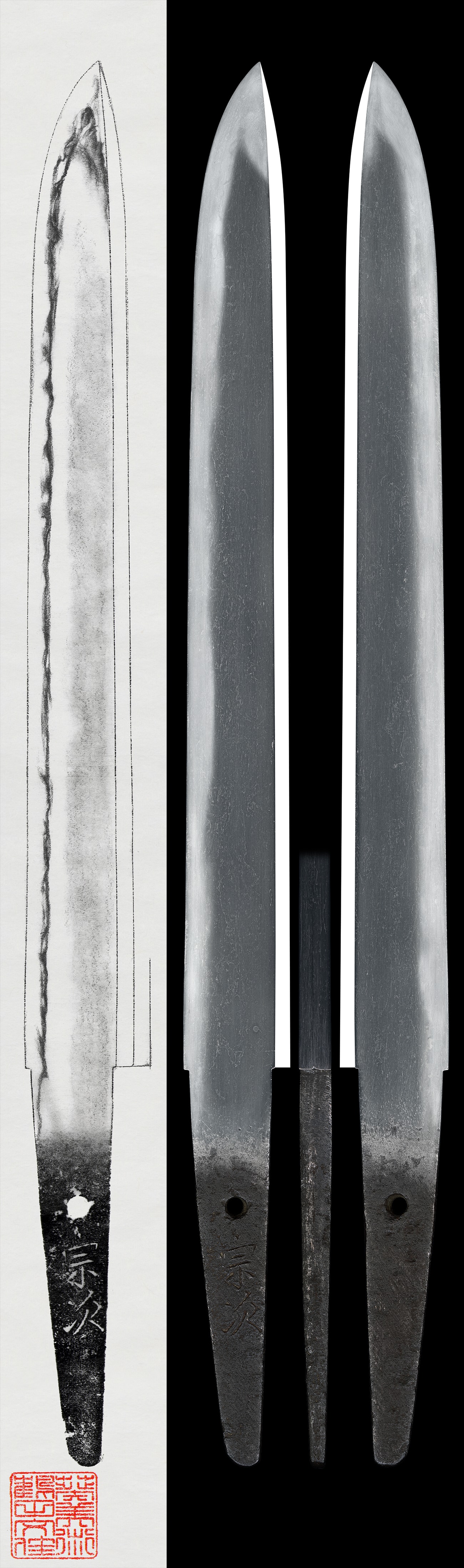
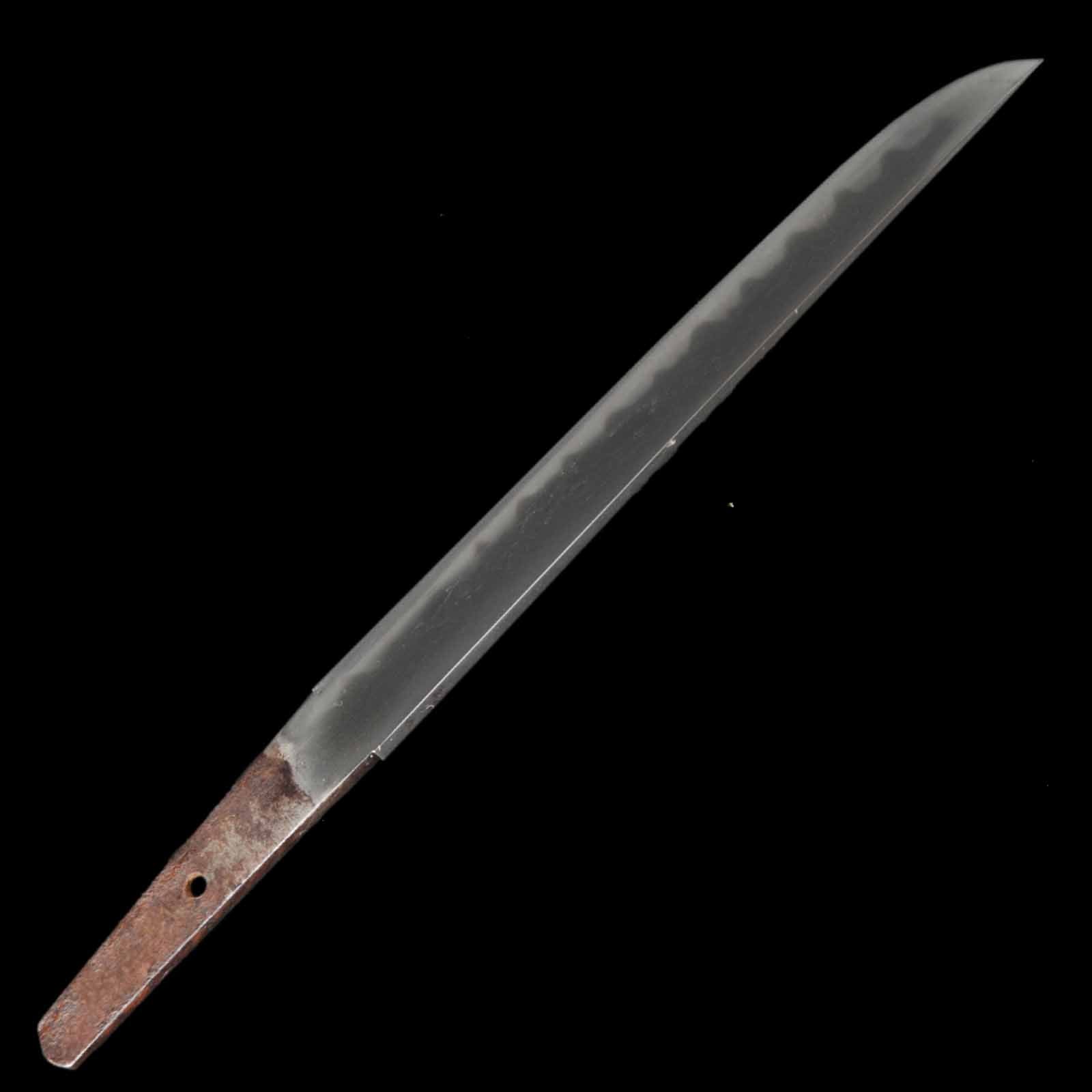
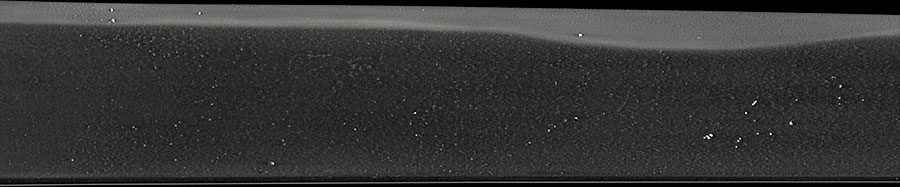
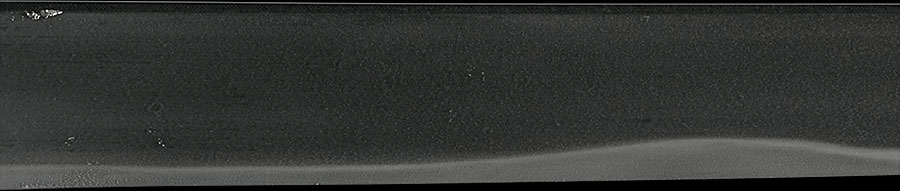
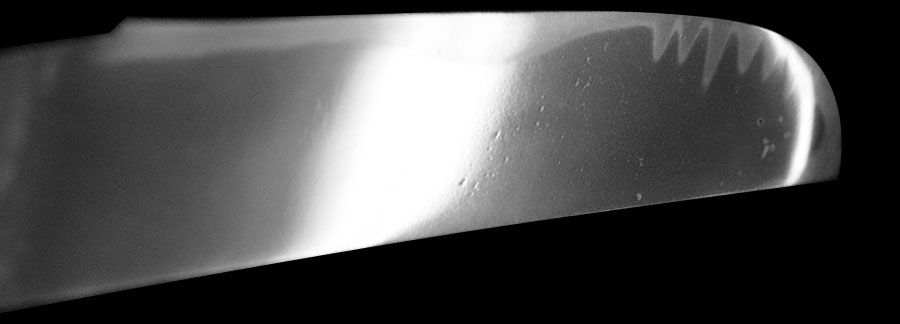
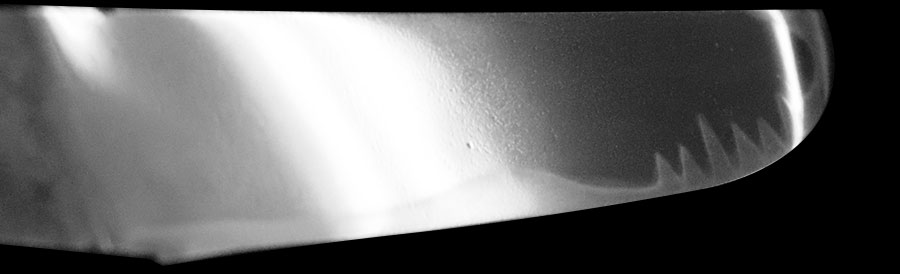
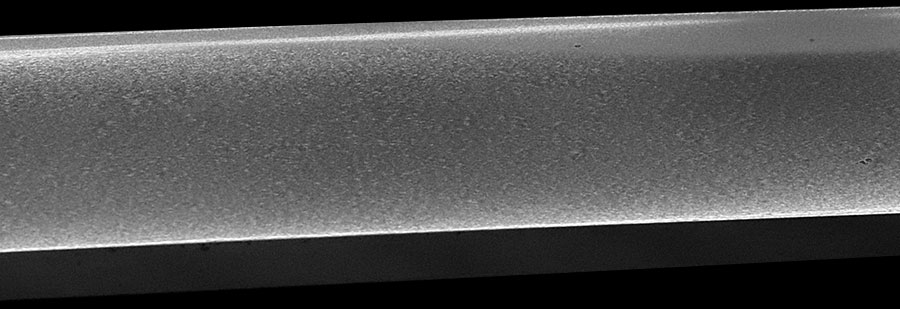
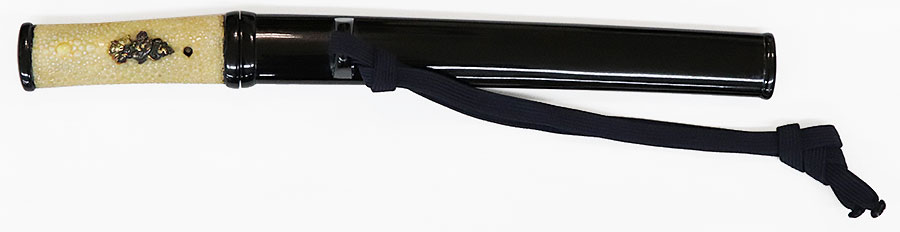
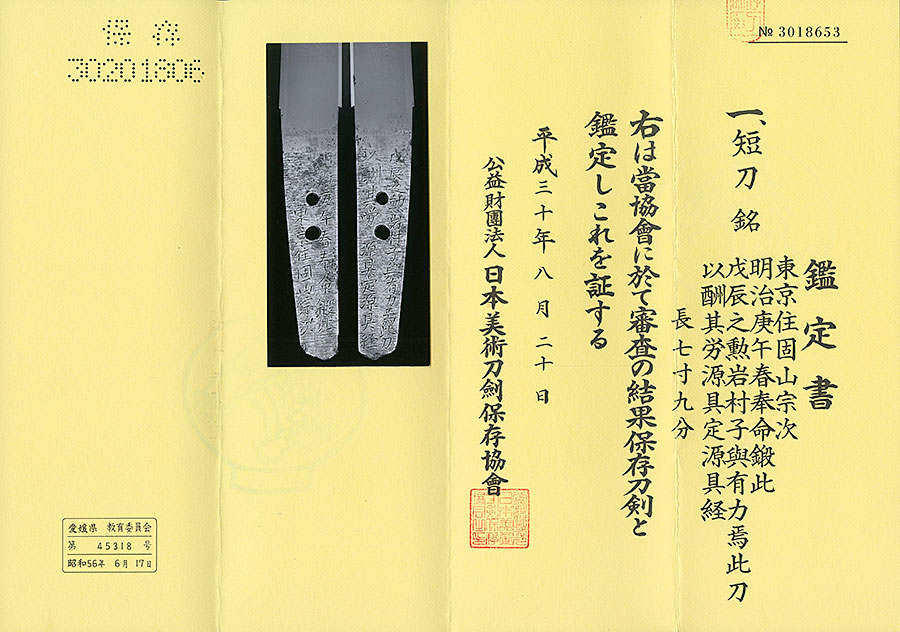
It has been discovered that this tanto is a historically significant commemorative piece. It was commissioned from Koyama Munetsugu by Iwakura Tomotsune—the third son of Iwakura Tomosada (Governor-General of the Tosando Pacification Command), who was the second son of Iwakura Tomomi (famous from the Taiga drama "Segodon")—and presented in Meiji Kogo (Meiji 3 / 1870, 148 years ago) to Iwamura Takatoshi, a samurai of the Tosa Clan and military inspector of the Pacification Command, as a reward for his great achievements during the Boshin War. On May 2nd, Keio 4, the 24-year-old Iwamura Takatoshi met with the 42-year-old Kawai Tsugunosuke (the Karo of the Nagaoka Clan known as the "Dragon of Echigo") at Jigen-ji Temple in Ojiya. During this mere 30-minute meeting, Iwamura rejected Kawai’s plea for the Nagaoka Clan’s armed neutrality, which triggered the outbreak of the Hokuetsu War. Because this led to many casualties for the Western Army, Iwamura Takatoshi earned a poor reputation in later years through the novels of Shiba Ryotaro. However, from the perspective of the Meiji Government, this tanto serves as historical evidence proving he was a leading figure who helped establish the Meiji Government all at once through the Boshin War. Iwamura Takatoshi later became the Governor of Saga Prefecture and suppressed the Saga Rebellion; while Governor of Ehime Prefecture, he founded Matsuyama Middle School, and eventually rose to become a member of the House of Peers and a Baron. This tanto is a precious piece that overturns history by proving Iwamura Takatoshi was not a mediocre youth deserving of posthumous ill repute, but a man of great merit in the eyes of the Meiji Government. This tanto was crafted by Koyama Munetsugu, the foremost smith of the Bizen-den tradition during the Shinshinto period. The sugata presents an elegant tanto form with no sori. The jigane is a finely packed ko-itame hada mixed with ko-mokume; while there are some scattered spots of sumigomori (carbon pockets) near the kissaki due to age, they do not diminish the historical value. The hamon is a magnificent work, very rare for Munetsugu, starting with o-notare at the moto and transitioning into six gunome toward the point. It is said that it previously held Tokubetsu Hozon Token certificates, but they have been lost and are currently unavailable; however, there is no doubt as to its shoshin status. Please enjoy this precious tanto by Koyama Munetsugu that speaks of a changing history.
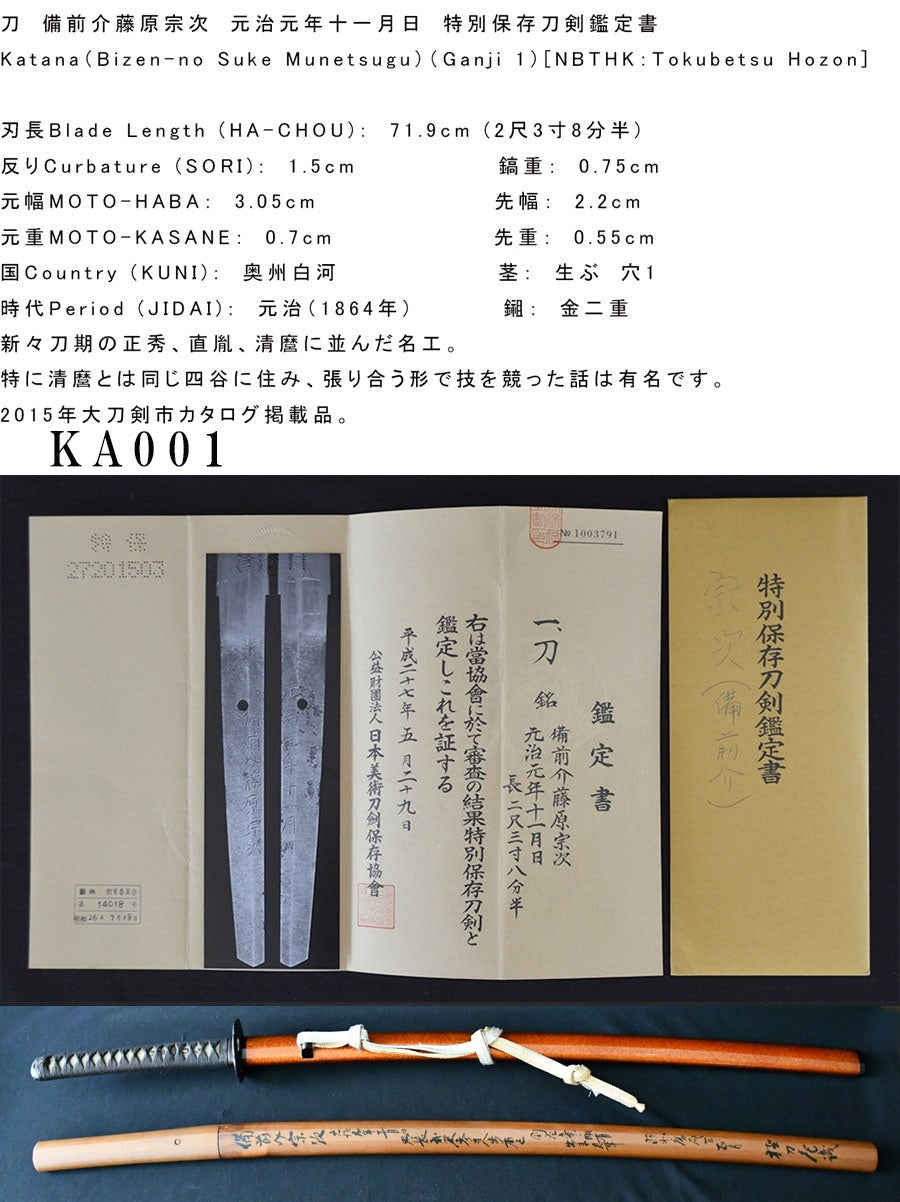
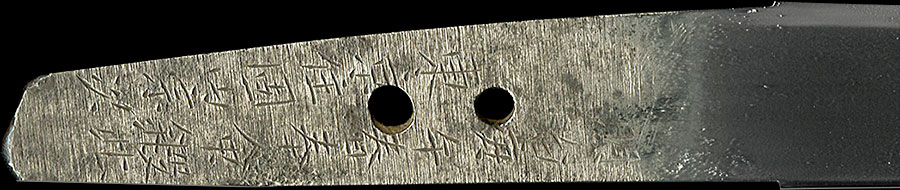
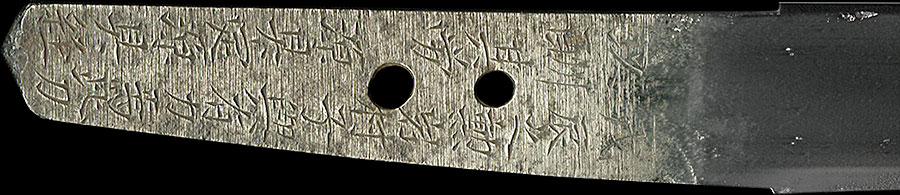
Certificate reading — 銘 東京住固山宗次 明治庚午春奉命鍛此 戊辰之勲岩村子與有功焉為此刀 以酬其労源具定源具経
 NihontoWatch
Tenpo (1830-1844) · nagasa 24cm




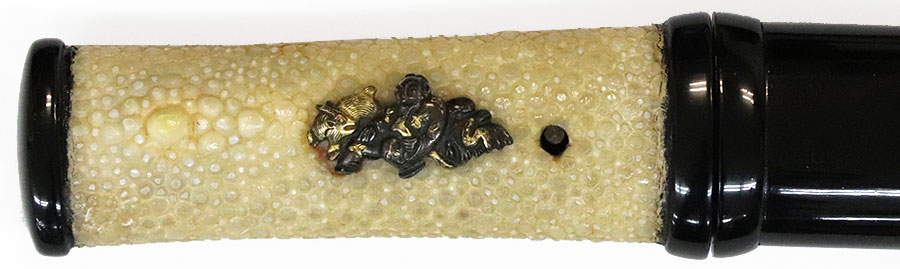
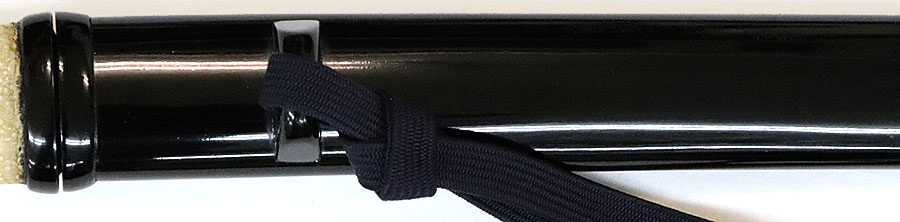
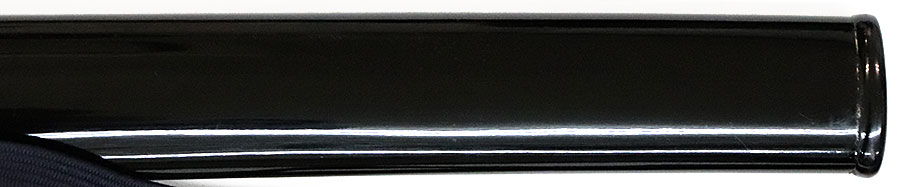
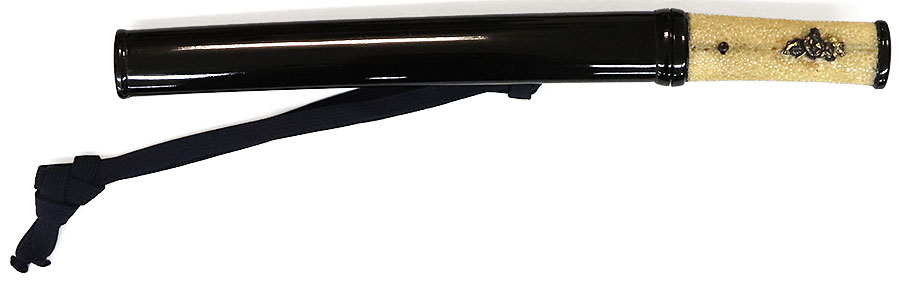
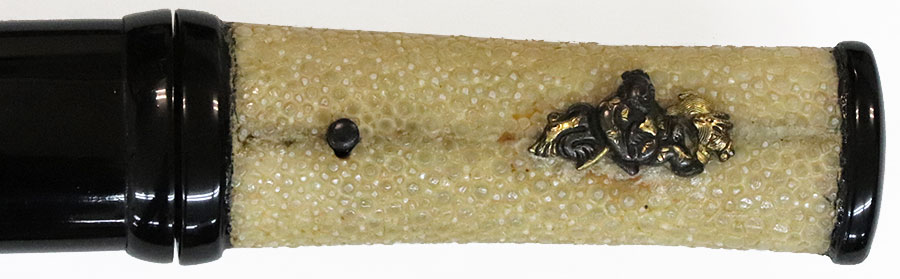
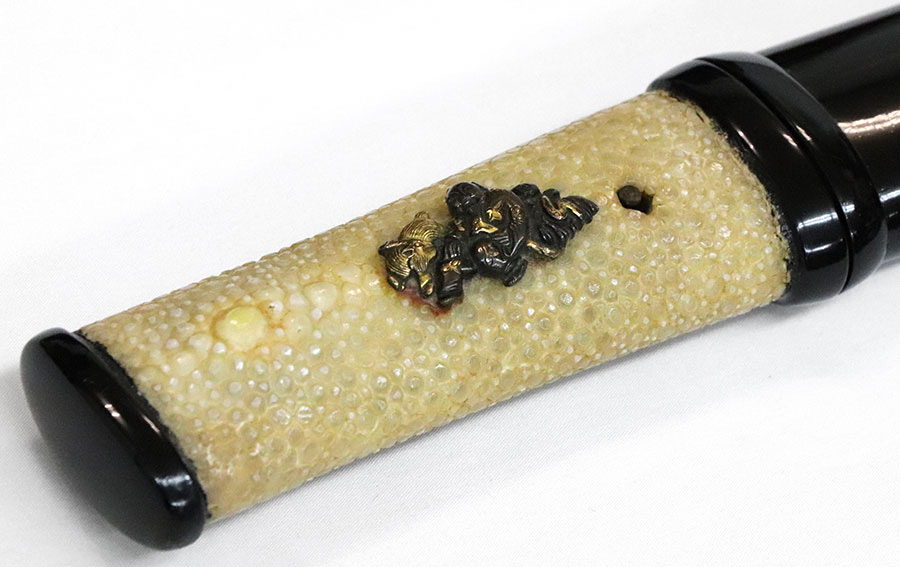
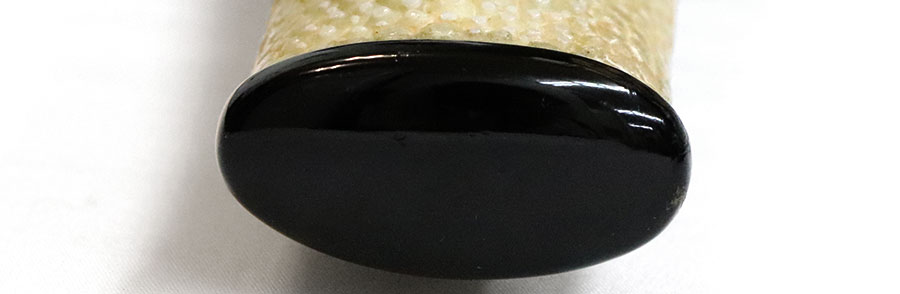
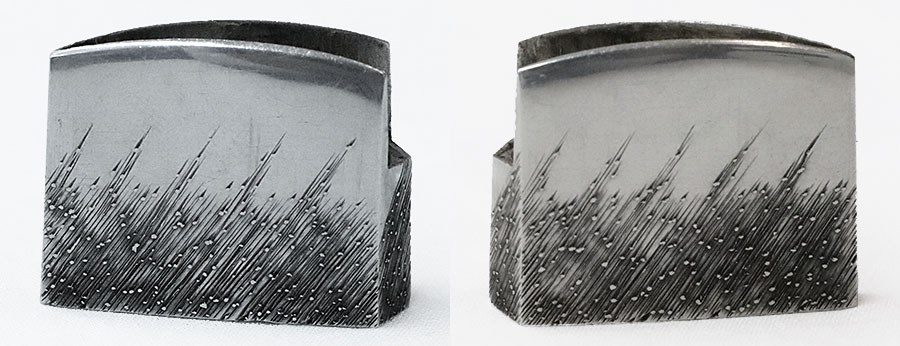
Koyama Munetsugu (shinshinto Bizen-den, Shirakawa / Edo) · Musashi · around 1830-1870
Fujishiro Jo-jo saku · Tōken Taikan top 17%
7 pieces on the market now
Koyama Munetsugu was born in Kyōwa 3 (1803) at Shirakawa in Ōshū, common name Sōbē, with the art-names Issensai and Seiryōsai, and he became the foremost reviver of the Bizen tradition in the closing decades of the Edo period. The published sources record that his teacher is said to have been Katō Tsunahide of Yonezawa, yet they add the careful qualification that, judging from his manner of work, the influence of Tsunahide's younger brother Katō Tsunatoshi seems rather to have been the stronger. He served first the Matsudaira house of Shirakawa, and when that domain was transferred he became a smith for the Kuwana fief in Ise, living in Edo at Azabu Nagasaka; in Kōka 2 (1845) he received the court title Bizen no Suke, and he worked from the latter half of the Bunsei era down into the early Meiji years, signing in several forms, as Nishiyama, as Koyama, and as Bizen no Suke Fujiwara Munetsugu. His record on the published rolls is one of the largest of any shinshintō smith, dated tightly across the Tenpō, Kaei, Ansei and Keiō years, and the sources judge that his style remained consistently within the Bizen tradition throughout.[[c:2]]
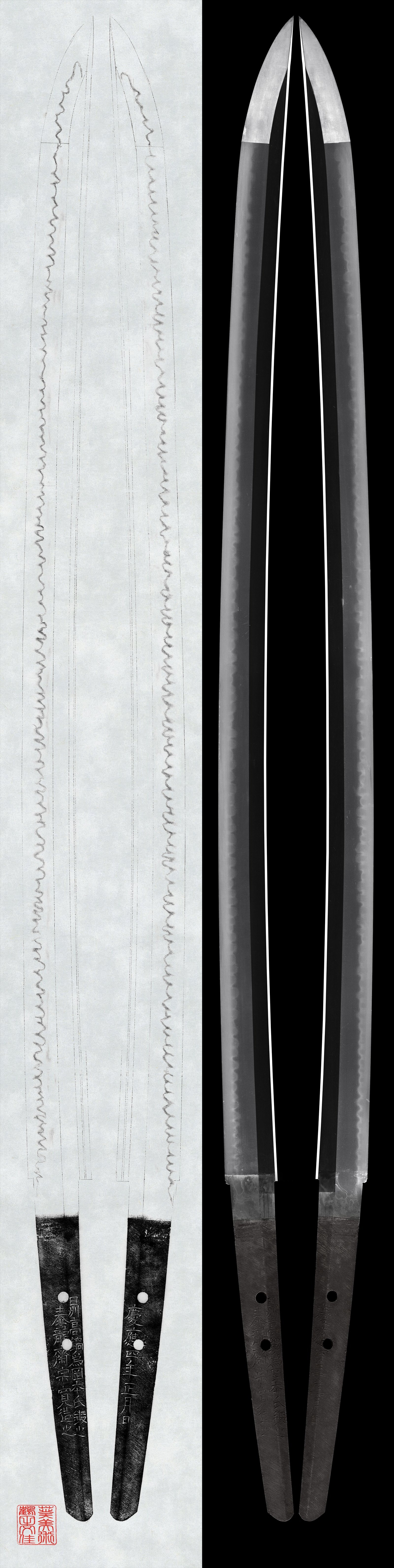
His characteristic hand is a chōji and gunome-chōji in the Bizen manner, the feature that distinguishes his work above all others. Over the temper he sets chōji mixed with gunome, pointed elements, ko-chōji and ko-gunome, ashi entering long and well, and the published sources liken the manner to the Kamakura Bizen of Kanemitsu. What is constant, and what separates his revival from the older models he looks back to, is the nioiguchi: it is nioi-dominant and tight, bright and clear, with ko-nie well adhered, and the brightness within the tempered area is the point the judges return to again and again. On one Tenpō katana, finished in his showiest vein, the published sources call it 「常にも増して華やかな丁子主調の乱れ刃に仕上げており」[[c:3]], a midareba more flamboyantly chōji-dominant than usual, the nioiguchi full and soft and the interior of the hamon bright.
The jigane is his other constant. His usual jigane is a well-packed ko-itame, so finely and beautifully forged that it often appears almost plain, with fine ji-nie adhering and, at times, fine chikei. The published sources summarise the success of his work on exactly these two elements together, calling it 「地鉄のよくつんだ綺麗な鍛えに, 匂勝ちの丁子乱れを焼いて成功している」[[c:4]], a tight and beautiful forging of the jigane over which the nioi-dominant chōji-midare is raised. The bōshi runs midare-komi to a ko-maru turnback, at times becoming pointed with hakikake, and where carving is present it is a bō-hi with accompanying groove, sometimes deepened with bonji, gomabashi, kurikara and a sacred invocation.
Besides his mainline he was a deliberate copyist, and the published sources describe his utsushi-mono directly. They call one daishō a typical example of his copy-work: the katana an imitation of Sue-Bizen, and especially of Yosazaemon-no-jō Sukesada, the wakizashi an imitation of the Ōei-Bizen masters Morimitsu and Yasumitsu, in which he succeeds in producing an utsuri on the shorter blade. A separate vein is the broad, long, ō-kissaki blades of the Tenpō years, wide in body with thick kasane, in which the jigane departs from his usual tight grain into an itame mixed with mokume and nagare-hada, the grain standing, with fine ji-nie and chikei giving a stronger and more powerful impression that the sources say is not uncommon among his Tenpō works. A quieter suguha and suguha-chō register survives as well, the rarest of his manners. Being an entirely signed and dated smith, the connoisseurship question around Munetsugu is never one of attribution but of quality, and the sources name his teacher with the same honesty they bring to the rest, recording that his manner owes more to 「むしろ弟の加藤綱俊の影響力が大きい」[[c:1]].
What marks his place in the bakumatsu is the completeness of his Bizen revival and the documentary richness of his blades. Many carry cutting-test inscriptions by the Yamada house, tried at Senju and elsewhere, and his son Yoshitsugu supplied carvings on some of them. One katana was forged at the command of Lord Date Munenari of the Uwajima domain from the ring-iron taken from the broken mast of a foreign ship, an inscription the published sources call precious as material for the history of the late Edo bakumatsu age.[[c:5]] His bright, tight chōji-midare and the near-plain ko-itame beneath it set his work apart from the deeper, softer nioiguchi of the Kamakura models he copied, and place him at the head of the Bizen-den smiths of the new-new sword period.
For the collector Munetsugu is a signed and abundant master rather than a rarity. Fujishiro grades him Jō-jō saku. He has no National Treasures and no Important Cultural Properties; his standing on the published record runs instead through the Jūyō rank, where his work is well represented, with the broad chōji-midare katana named the typical and representative example of his hand, and those of unusually deep nioi and bright nioiguchi singled out as superior pieces in which both ji and ha are sound. His blades pass through documented hands rather than museums, the recorded provenance reaching the Marquis of Koga, Matsudaira Chikanai, a senior retainer of the Shōnai domain, and Lord Date Munenari of Uwajima, with one blade long held at the Egara Shrine in Kamakura. Because so many were made and so many survive, all of them in the tradeable tiers, a signed and dated Munetsugu of good workmanship comes to market more often than almost any other named master of his rank, and remains among the most attainable ways for a collector to hold a fully documented, cutting-tested bakumatsu Bizen-den blade.
Where Munetsugu stands among comparable artisans: across all of nihontō, and within tradition, era, and period. The tiers (Foremost · Leading · Major · Notable) weigh official designations from the NBTHK and Japan's Agency for Cultural Affairs, together with historical honors of lasting repute such as the Sansaku and Meibutsu-chō.
Select a lens to see how it's measured.
Years he was demonstrably active, proven by signed-and-dated blades
Shinshinto · Musashi
16 pieces on the market now
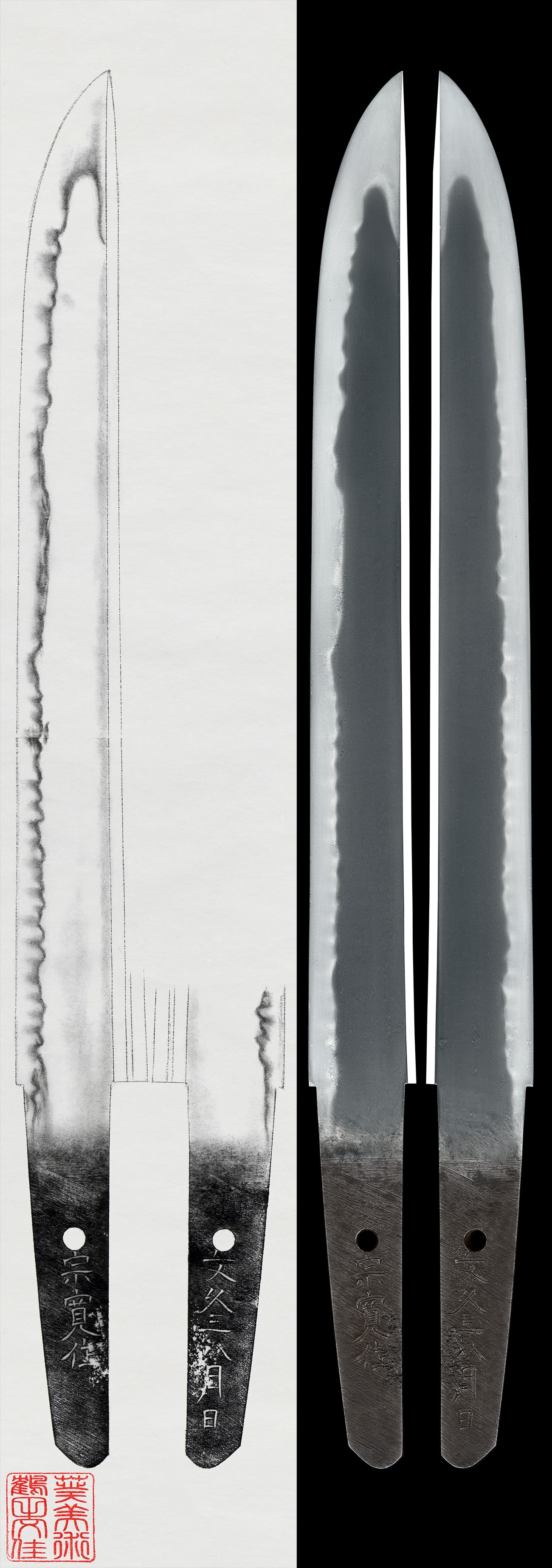
Born in Kyōwa 3 (1803) at Shirakawa in Ōshū, Koyama Munetsugu (固山宗次) carried a smith's name read variously in the setsumei as Munobei or Sōbei, working under the art-names Issensai and Seiryōsai. He came up alongside elder brothers Munehira and Munetoshi, and although his teacher is traditionally given as Katō Tsunahide, the NBTHK readers repeatedly note that the hand of Katō Tsunatoshi shows through his work more plainly. He first served the Matsudaira house of Shirakawa as a retained smith; when that domain was transferred to Kuwana in Ise, he settled in Edo at Azabu Nagasaka and forged as a Kuwana domain smith. In Kōka 2 (1845) he received the court title Bizen no Suke, the signature Bizen no Suke Fujiwara Munetsugu recurring on the dated katana from that point. His production runs from the latter half of Bunsei into the early Meiji years, and the program it serves is the Bakumatsu fukko revival of Bizen-den: a deliberate return, from an Edo workshop, to the chōji tempering of the old Bizen masters. The shared idiom is consistent across the line. Construction tends to a wide mihaba, thick kasane, shallow sori and an extended chū-kissaki or ō-kissaki, giving the heavy-in-hand shinshintō bearing the readers call taihai. The ground is a tightly packed ko-itame, sometimes flowing toward nagare or masame, carrying extremely fine mijin-grade ji-nie and frequent chikei; faint utsuri rises on a number of blades.
The temper is the heart of the recognition: a nioi-dominant chōji-midare or gunome-chōji, with ko-chōji, togariba and angular heads mixed in, long ashi and yō entering, fine sunagashi and kinsuji, and a bright, clear nioiguchi. To read his hand, the setsumei flag particular chōji shapes (the kawazuko tadpole-head and the kobushi fist-shaped chōji clustered near Keiō-dated work), a midare-komi bōshi turning in ko-maru with hakikake, and the bold, thick-chiseled signatures with prominent chisel-pillows. Cutting-test inscriptions are common, several tied to the connoisseur Iga Norishige, who is recorded learning swordmaking from Munetsugu. His pupils carry the same vocabulary: Tairyūsai Sōkan (宗寛, also Munekane), son of Ōno Heizō and later a Koga/Furukawa domain smith, whose blades add a faint midare-utsuri and a smaller-pattern late temper; and the likely student Kongōsai Munehiro, who copied the same shrine original his master did. For kantei, the discriminating points are the orderly yet varied chōji arrayed shoulder-to-shoulder, the nie-laden Tenpō-era pieces whose habuchi has not yet settled, and a deliberate allusion to the second-generation Kunisuke when kobushi-like chōji appear. The named works root the line in documented copying: an utsushi of the National Treasure Koryū Kagemitsu, reconstructed to its original ubu state with kurikara and bonji carved by Sōkan; and a Tenpō 11 (1840) wakizashi copying the hōchō-shaped Masamune of Egara Tenmangū in Kamakura, carved by Tōryūsai Seiju and dedicated by Nomura Toshikatsu, a rare pairing of two Edo masters. Provenance inscriptions name patrons such as Miyake Takuma and the Furukawa domain on the Sōkan side. Across the NBTHK register, the work stands as a disciplined Edo restatement of the Bizen chōji tradition, prized for the brightness of its nioiguchi and for the documentary value of its dated, commissioned and trial-cut tangs. Learn more →
| Smith | Era | Designated |
|---|---|---|
| Munetsugu宗次 | 1830-1870 | 51 |
| Sokan宗寛 | 1850-1868 | 4 |
| Tairyusai泰龍齋 | 1854-1860 | 1 |
Bakumatsu: the last war market
Perry’s arrival in 1853 unraveled the Tokugawa peace and created the first mass demand for working swords in two centuries. Kiyomaro, called the Masamune of Yotsuya, died on its eve; Munetsugu and Yukihide carried the boom to the end.
Certifies a genuine blade worth preserving: a signature confirmed correct, or, if unsigned, an era, province, and school that the NBTHK can reliably identify.
The NBTHK (Nihon Bijutsu Tōken Hozon Kyōkai, the Society for the Preservation of Japanese Art Swords) is a public-interest incorporated foundation founded in 1948 and supervised by Japan’s Agency for Cultural Affairs (Bunkachō); it is based at the Japanese Sword Museum in Tokyo. Its expert panels physically examine each submitted work (shinsa) and issue a certificate (kanteishō) ranking it by artistic and historical merit. NBTHK papers are the most widely recognized standard of authentication for Japanese swords and fittings.
NBTHK official siteFor returns due to customer circumstances, the cost is the customer's responsibility. For returns due to our mis-shipment or a defective item, we bear the cost.
Price on request
It has been discovered that this tanto is a historically significant commemorative piece. It was commissioned from Koyama Munetsugu by Iwakura Tomotsune—the third son of Iwakura Tomosada (Governor-General of the Tosando Pacification Command), who was the second son of Iwakura Tomomi (famous from the Taiga drama "Segodon")—and presented in Meiji Kogo (Meiji 3 / 1870, 148 years ago) to Iwamura Takatoshi, a samurai of the Tosa Clan and military inspector of the Pacification Command, as a reward for his great achievements during the Boshin War. On May 2nd, Keio 4, the 24-year-old Iwamura Takatoshi met with the 42-year-old Kawai Tsugunosuke (the Karo of the Nagaoka Clan known as the "Dragon of Echigo") at Jigen-ji Temple in Ojiya. During this mere 30-minute meeting, Iwamura rejected Kawai’s plea for the Nagaoka Clan’s armed neutrality, which triggered the outbreak of the Hokuetsu War. Because this led to many casualties for the Western Army, Iwamura Takatoshi earned a poor reputation in later years through the novels of Shiba Ryotaro. However, from the perspective of the Meiji Government, this tanto serves as historical evidence proving he was a leading figure who helped establish the Meiji Government all at once through the Boshin War. Iwamura Takatoshi later became the Governor of Saga Prefecture and suppressed the Saga Rebellion; while Governor of Ehime Prefecture, he founded Matsuyama Middle School, and eventually rose to become a member of the House of Peers and a Baron. This tanto is a precious piece that overturns history by proving Iwamura Takatoshi was not a mediocre youth deserving of posthumous ill repute, but a man of great merit in the eyes of the Meiji Government. This tanto was crafted by Koyama Munetsugu, the foremost smith of the Bizen-den tradition during the Shinshinto period. The sugata presents an elegant tanto form with no sori. The jigane is a finely packed ko-itame hada mixed with ko-mokume; while there are some scattered spots of sumigomori (carbon pockets) near the kissaki due to age, they do not diminish the historical value. The hamon is a magnificent work, very rare for Munetsugu, starting with o-notare at the moto and transitioning into six gunome toward the point. It is said that it previously held Tokubetsu Hozon Token certificates, but they have been lost and are currently unavailable; however, there is no doubt as to its shoshin status. Please enjoy this precious tanto by Koyama Munetsugu that speaks of a changing history.
Certificate reading — 銘 東京住固山宗次 明治庚午春奉命鍛此 戊辰之勲岩村子與有功焉為此刀 以酬其労源具定源具経
NihontoWatchTenpo (1830-1844) · nagasa 24cm
Koyama Munetsugu (shinshinto Bizen-den, Shirakawa / Edo) · Musashi · around 1830-1870
Fujishiro Jo-jo saku · Tōken Taikan top 17%
7 pieces on the market now
Koyama Munetsugu was born in Kyōwa 3 (1803) at Shirakawa in Ōshū, common name Sōbē, with the art-names Issensai and Seiryōsai, and he became the foremost reviver of the Bizen tradition in the closing decades of the Edo period. The published sources record that his teacher is said to have been Katō Tsunahide of Yonezawa, yet they add the careful qualification that, judging from his manner of work, the influence of Tsunahide's younger brother Katō Tsunatoshi seems rather to have been the stronger. He served first the Matsudaira house of Shirakawa, and when that domain was transferred he became a smith for the Kuwana fief in Ise, living in Edo at Azabu Nagasaka; in Kōka 2 (1845) he received the court title Bizen no Suke, and he worked from the latter half of the Bunsei era down into the early Meiji years, signing in several forms, as Nishiyama, as Koyama, and as Bizen no Suke Fujiwara Munetsugu. His record on the published rolls is one of the largest of any shinshintō smith, dated tightly across the Tenpō, Kaei, Ansei and Keiō years, and the sources judge that his style remained consistently within the Bizen tradition throughout.[[c:2]]
His characteristic hand is a chōji and gunome-chōji in the Bizen manner, the feature that distinguishes his work above all others. Over the temper he sets chōji mixed with gunome, pointed elements, ko-chōji and ko-gunome, ashi entering long and well, and the published sources liken the manner to the Kamakura Bizen of Kanemitsu. What is constant, and what separates his revival from the older models he looks back to, is the nioiguchi: it is nioi-dominant and tight, bright and clear, with ko-nie well adhered, and the brightness within the tempered area is the point the judges return to again and again. On one Tenpō katana, finished in his showiest vein, the published sources call it 「常にも増して華やかな丁子主調の乱れ刃に仕上げており」[[c:3]], a midareba more flamboyantly chōji-dominant than usual, the nioiguchi full and soft and the interior of the hamon bright.
The jigane is his other constant. His usual jigane is a well-packed ko-itame, so finely and beautifully forged that it often appears almost plain, with fine ji-nie adhering and, at times, fine chikei. The published sources summarise the success of his work on exactly these two elements together, calling it 「地鉄のよくつんだ綺麗な鍛えに, 匂勝ちの丁子乱れを焼いて成功している」[[c:4]], a tight and beautiful forging of the jigane over which the nioi-dominant chōji-midare is raised. The bōshi runs midare-komi to a ko-maru turnback, at times becoming pointed with hakikake, and where carving is present it is a bō-hi with accompanying groove, sometimes deepened with bonji, gomabashi, kurikara and a sacred invocation.
Besides his mainline he was a deliberate copyist, and the published sources describe his utsushi-mono directly. They call one daishō a typical example of his copy-work: the katana an imitation of Sue-Bizen, and especially of Yosazaemon-no-jō Sukesada, the wakizashi an imitation of the Ōei-Bizen masters Morimitsu and Yasumitsu, in which he succeeds in producing an utsuri on the shorter blade. A separate vein is the broad, long, ō-kissaki blades of the Tenpō years, wide in body with thick kasane, in which the jigane departs from his usual tight grain into an itame mixed with mokume and nagare-hada, the grain standing, with fine ji-nie and chikei giving a stronger and more powerful impression that the sources say is not uncommon among his Tenpō works. A quieter suguha and suguha-chō register survives as well, the rarest of his manners. Being an entirely signed and dated smith, the connoisseurship question around Munetsugu is never one of attribution but of quality, and the sources name his teacher with the same honesty they bring to the rest, recording that his manner owes more to 「むしろ弟の加藤綱俊の影響力が大きい」[[c:1]].
What marks his place in the bakumatsu is the completeness of his Bizen revival and the documentary richness of his blades. Many carry cutting-test inscriptions by the Yamada house, tried at Senju and elsewhere, and his son Yoshitsugu supplied carvings on some of them. One katana was forged at the command of Lord Date Munenari of the Uwajima domain from the ring-iron taken from the broken mast of a foreign ship, an inscription the published sources call precious as material for the history of the late Edo bakumatsu age.[[c:5]] His bright, tight chōji-midare and the near-plain ko-itame beneath it set his work apart from the deeper, softer nioiguchi of the Kamakura models he copied, and place him at the head of the Bizen-den smiths of the new-new sword period.
For the collector Munetsugu is a signed and abundant master rather than a rarity. Fujishiro grades him Jō-jō saku. He has no National Treasures and no Important Cultural Properties; his standing on the published record runs instead through the Jūyō rank, where his work is well represented, with the broad chōji-midare katana named the typical and representative example of his hand, and those of unusually deep nioi and bright nioiguchi singled out as superior pieces in which both ji and ha are sound. His blades pass through documented hands rather than museums, the recorded provenance reaching the Marquis of Koga, Matsudaira Chikanai, a senior retainer of the Shōnai domain, and Lord Date Munenari of Uwajima, with one blade long held at the Egara Shrine in Kamakura. Because so many were made and so many survive, all of them in the tradeable tiers, a signed and dated Munetsugu of good workmanship comes to market more often than almost any other named master of his rank, and remains among the most attainable ways for a collector to hold a fully documented, cutting-tested bakumatsu Bizen-den blade.
Where Munetsugu stands among comparable artisans: across all of nihontō, and within tradition, era, and period. The tiers (Foremost · Leading · Major · Notable) weigh official designations from the NBTHK and Japan's Agency for Cultural Affairs, together with historical honors of lasting repute such as the Sansaku and Meibutsu-chō.
Select a lens to see how it's measured.
Years he was demonstrably active, proven by signed-and-dated blades
Shinshinto · Musashi
16 pieces on the market now
Born in Kyōwa 3 (1803) at Shirakawa in Ōshū, Koyama Munetsugu (固山宗次) carried a smith's name read variously in the setsumei as Munobei or Sōbei, working under the art-names Issensai and Seiryōsai. He came up alongside elder brothers Munehira and Munetoshi, and although his teacher is traditionally given as Katō Tsunahide, the NBTHK readers repeatedly note that the hand of Katō Tsunatoshi shows through his work more plainly. He first served the Matsudaira house of Shirakawa as a retained smith; when that domain was transferred to Kuwana in Ise, he settled in Edo at Azabu Nagasaka and forged as a Kuwana domain smith. In Kōka 2 (1845) he received the court title Bizen no Suke, the signature Bizen no Suke Fujiwara Munetsugu recurring on the dated katana from that point. His production runs from the latter half of Bunsei into the early Meiji years, and the program it serves is the Bakumatsu fukko revival of Bizen-den: a deliberate return, from an Edo workshop, to the chōji tempering of the old Bizen masters. The shared idiom is consistent across the line. Construction tends to a wide mihaba, thick kasane, shallow sori and an extended chū-kissaki or ō-kissaki, giving the heavy-in-hand shinshintō bearing the readers call taihai. The ground is a tightly packed ko-itame, sometimes flowing toward nagare or masame, carrying extremely fine mijin-grade ji-nie and frequent chikei; faint utsuri rises on a number of blades.
The temper is the heart of the recognition: a nioi-dominant chōji-midare or gunome-chōji, with ko-chōji, togariba and angular heads mixed in, long ashi and yō entering, fine sunagashi and kinsuji, and a bright, clear nioiguchi. To read his hand, the setsumei flag particular chōji shapes (the kawazuko tadpole-head and the kobushi fist-shaped chōji clustered near Keiō-dated work), a midare-komi bōshi turning in ko-maru with hakikake, and the bold, thick-chiseled signatures with prominent chisel-pillows. Cutting-test inscriptions are common, several tied to the connoisseur Iga Norishige, who is recorded learning swordmaking from Munetsugu. His pupils carry the same vocabulary: Tairyūsai Sōkan (宗寛, also Munekane), son of Ōno Heizō and later a Koga/Furukawa domain smith, whose blades add a faint midare-utsuri and a smaller-pattern late temper; and the likely student Kongōsai Munehiro, who copied the same shrine original his master did. For kantei, the discriminating points are the orderly yet varied chōji arrayed shoulder-to-shoulder, the nie-laden Tenpō-era pieces whose habuchi has not yet settled, and a deliberate allusion to the second-generation Kunisuke when kobushi-like chōji appear. The named works root the line in documented copying: an utsushi of the National Treasure Koryū Kagemitsu, reconstructed to its original ubu state with kurikara and bonji carved by Sōkan; and a Tenpō 11 (1840) wakizashi copying the hōchō-shaped Masamune of Egara Tenmangū in Kamakura, carved by Tōryūsai Seiju and dedicated by Nomura Toshikatsu, a rare pairing of two Edo masters. Provenance inscriptions name patrons such as Miyake Takuma and the Furukawa domain on the Sōkan side. Across the NBTHK register, the work stands as a disciplined Edo restatement of the Bizen chōji tradition, prized for the brightness of its nioiguchi and for the documentary value of its dated, commissioned and trial-cut tangs. Learn more →
| Smith | Era | Designated |
|---|---|---|
| Munetsugu宗次 | 1830-1870 | 51 |
| Sokan宗寛 | 1850-1868 | 4 |
| Tairyusai泰龍齋 | 1854-1860 | 1 |
Bakumatsu: the last war market
Perry’s arrival in 1853 unraveled the Tokugawa peace and created the first mass demand for working swords in two centuries. Kiyomaro, called the Masamune of Yotsuya, died on its eve; Munetsugu and Yukihide carried the boom to the end.
Certifies a genuine blade worth preserving: a signature confirmed correct, or, if unsigned, an era, province, and school that the NBTHK can reliably identify.
The NBTHK (Nihon Bijutsu Tōken Hozon Kyōkai, the Society for the Preservation of Japanese Art Swords) is a public-interest incorporated foundation founded in 1948 and supervised by Japan’s Agency for Cultural Affairs (Bunkachō); it is based at the Japanese Sword Museum in Tokyo. Its expert panels physically examine each submitted work (shinsa) and issue a certificate (kanteishō) ranking it by artistic and historical merit. NBTHK papers are the most widely recognized standard of authentication for Japanese swords and fittings.
NBTHK official siteFor returns due to customer circumstances, the cost is the customer's responsibility. For returns due to our mis-shipment or a defective item, we bear the cost.
Price on request