Hizen swords were a domain enterprise: the Nabeshima sent Tadayoshi to study under Umetada Myōju around 1596, then built a licensed school around him. Nine generations carried its famously consistent konuka-hada work into the Meiji era.
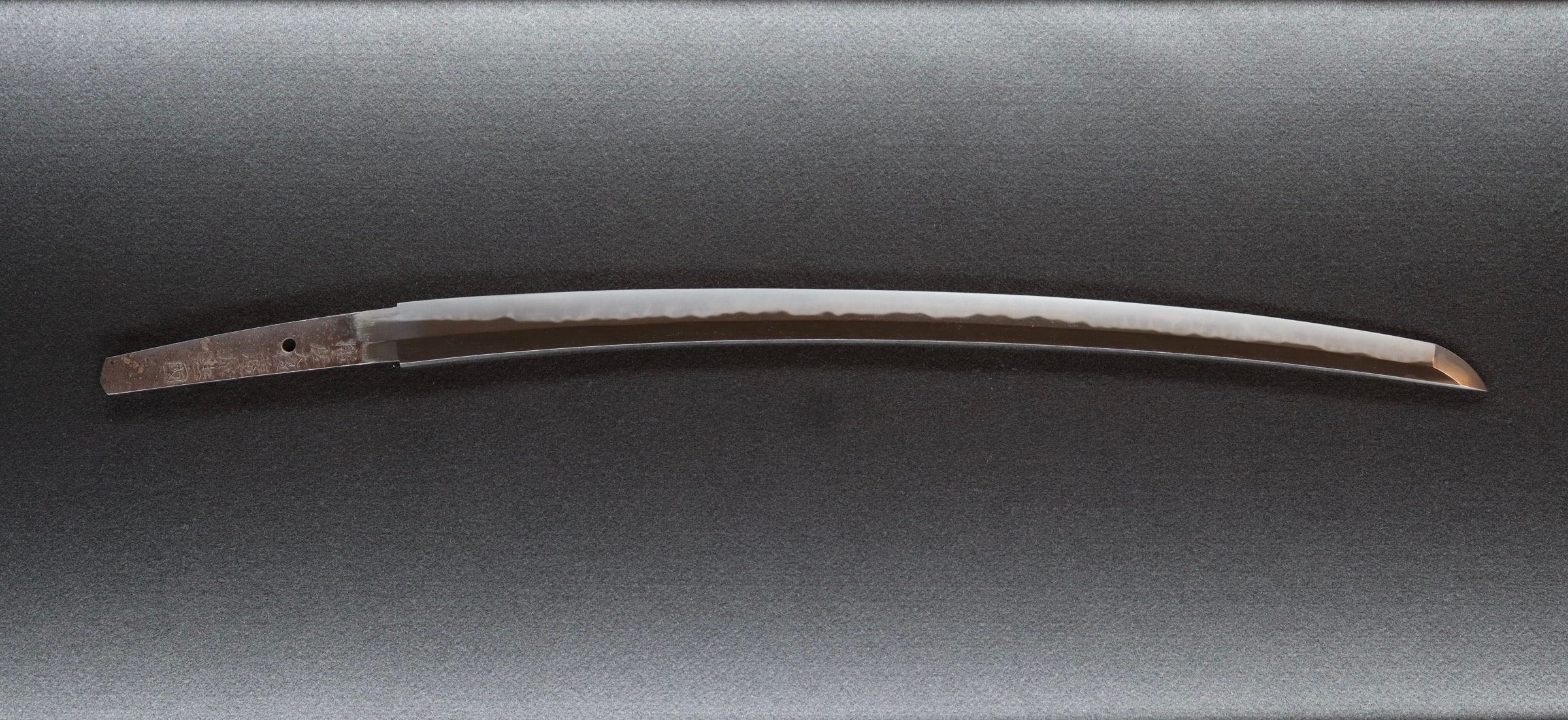
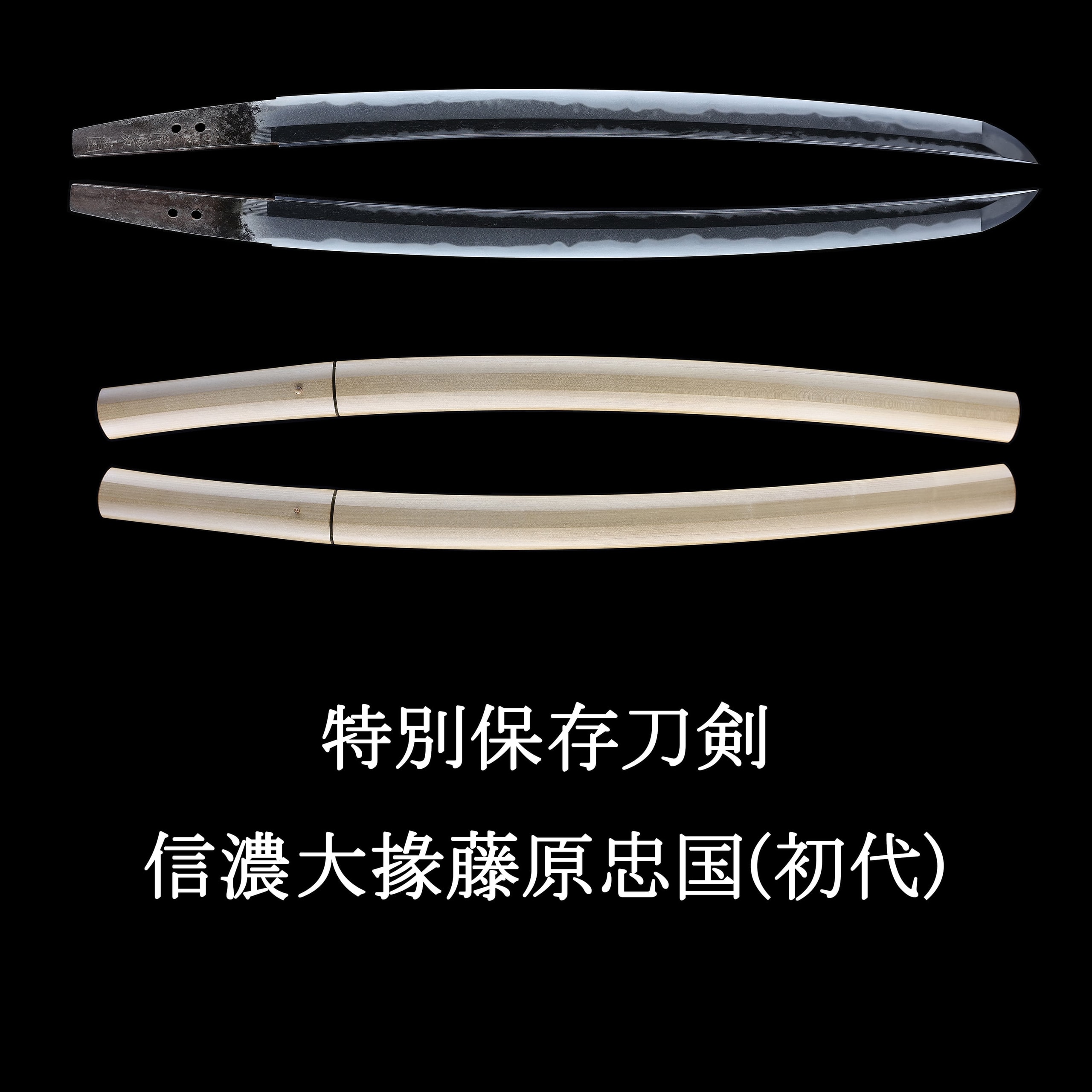
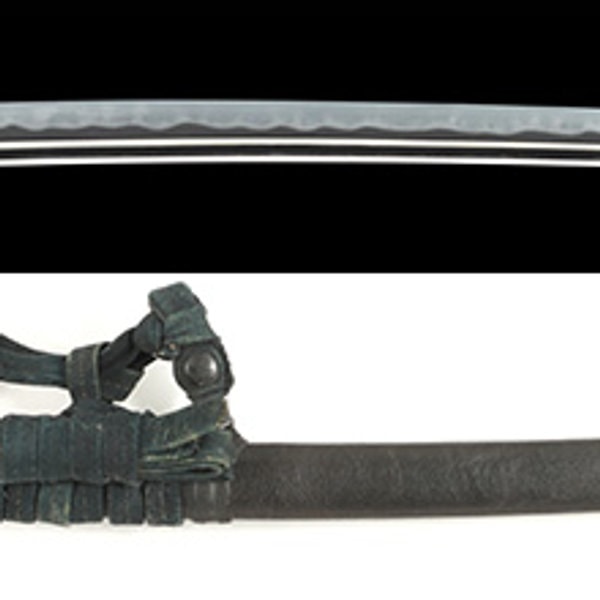
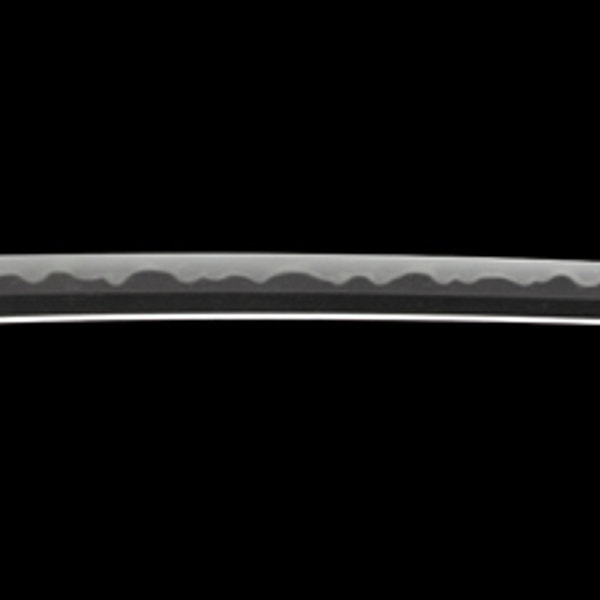
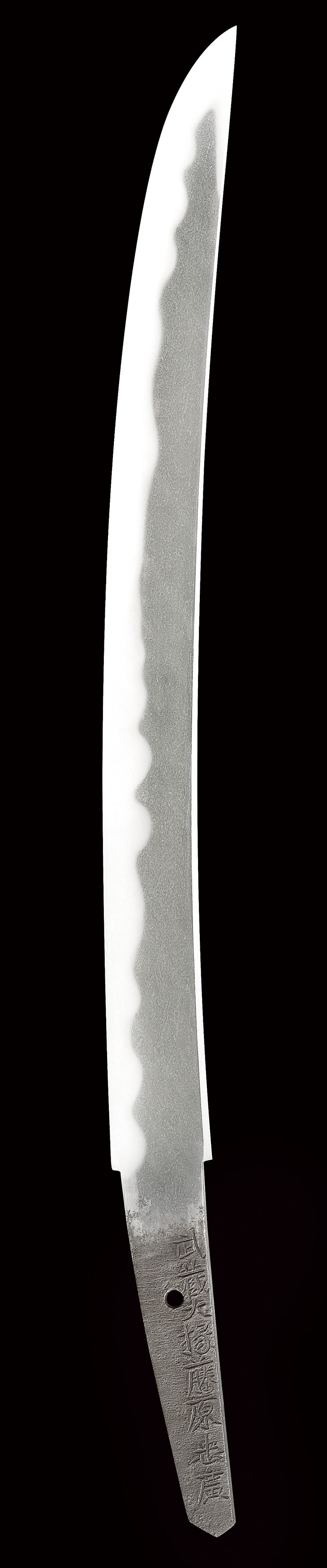
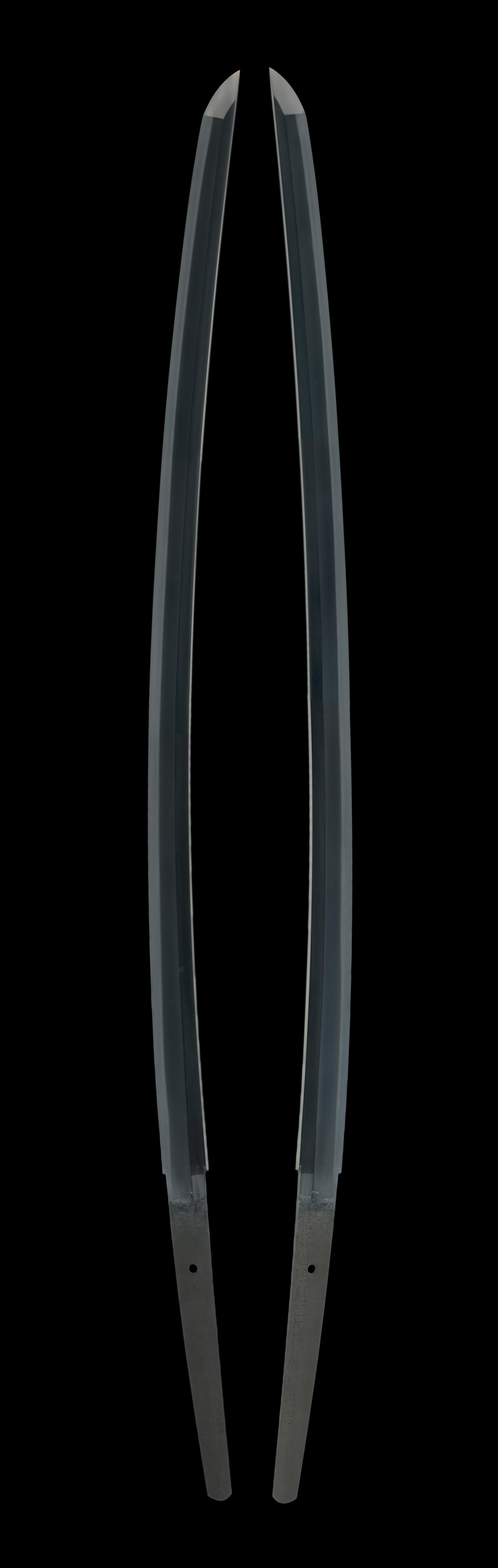
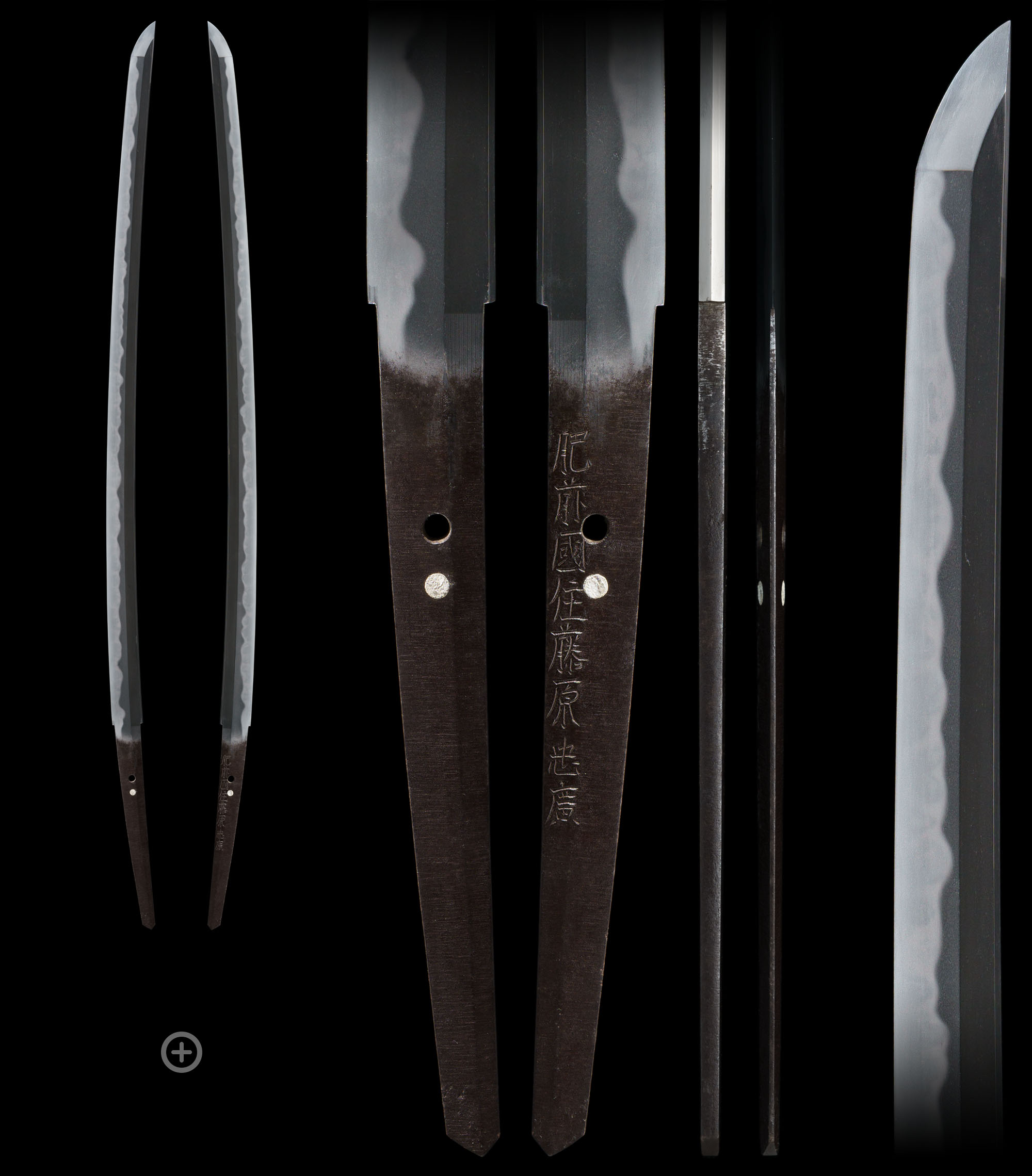
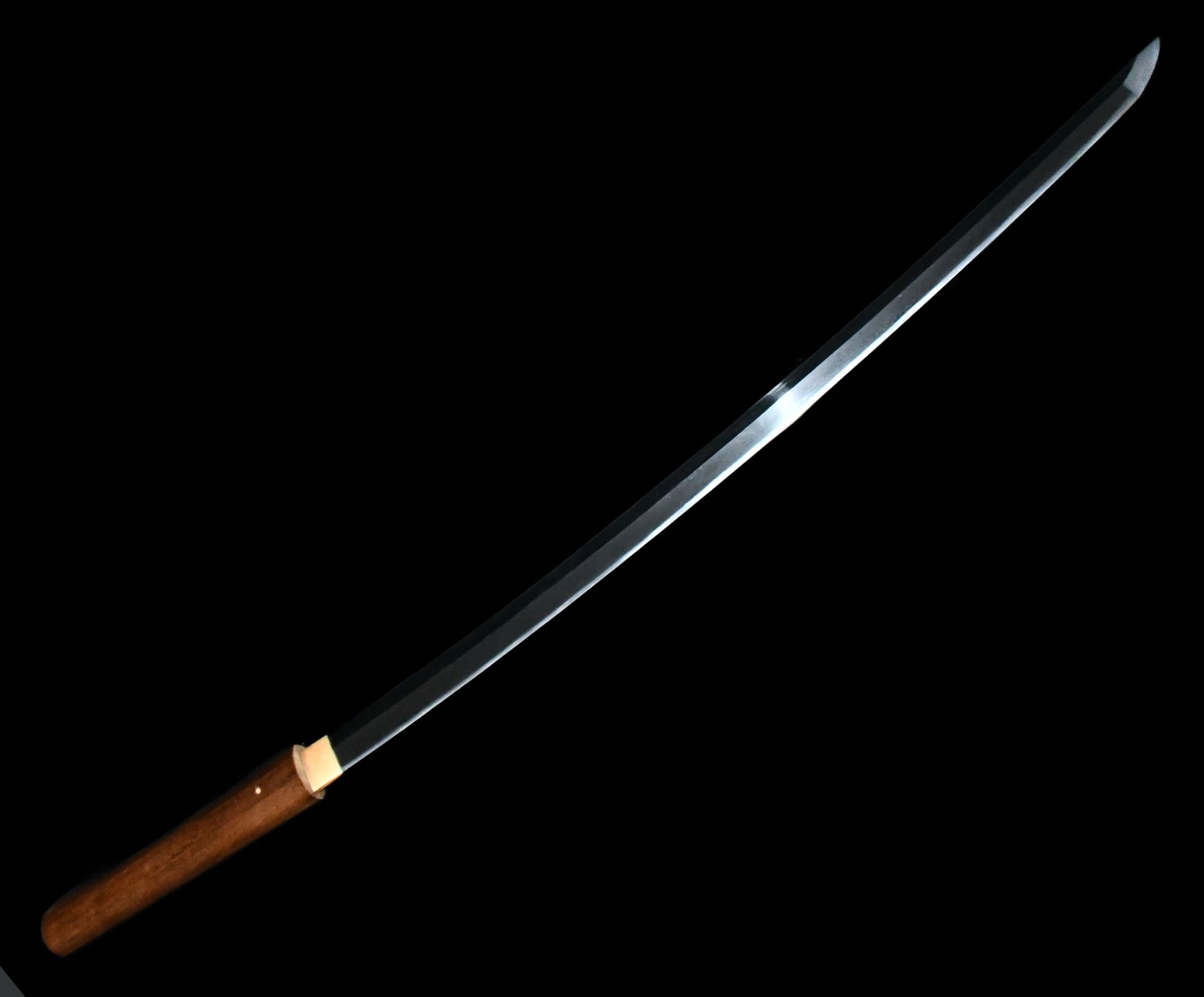
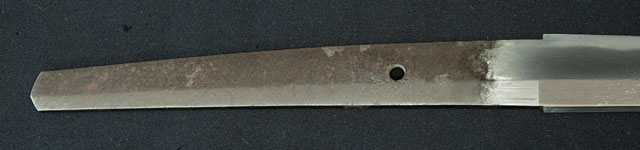
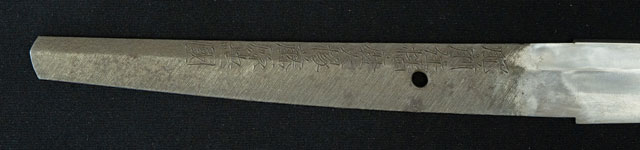
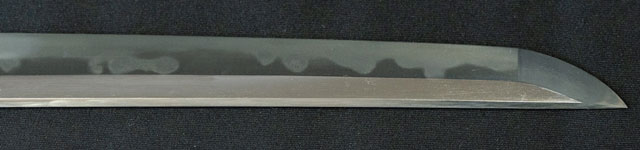
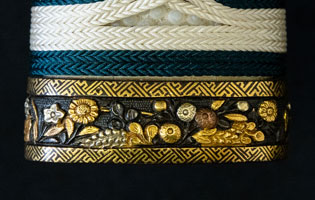
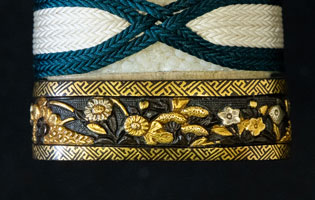
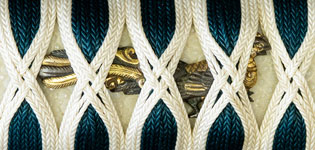
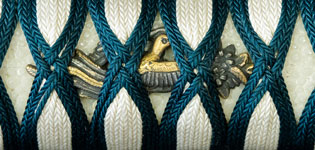
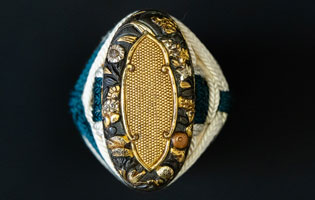
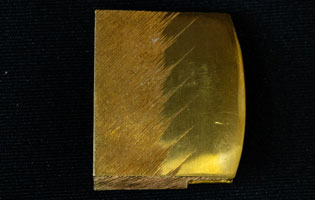
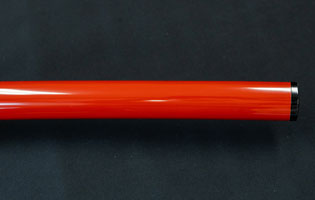
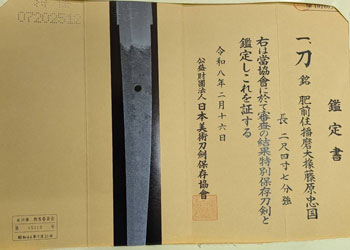
Katana Mei: Hizen Harima Daijyo Fujiwara Tadakuni Item Number 31-2516 Katana Hizen Harima Daijyo Fujiwara Tadakuni Country/Era Hizen Kanei With Koshirae, in Shirasaya Nagasa 75.1cm (2 shaku 4 sun 9 bu) Sori 0.9cm (3 bu - rin) Motohaba 3.09cm Sakihaba 2.33cm Motokasane 6.4mm Sakikasane 5.0mm Toshin Weight Bare blade 790g Excluding saya 1,140g Nakago Ubu Mekugi-ana 1 Hamon Midare-ba Price 1,300,000 Yen (Tax included) Known as Hashimoto Rokurozaemon. In Kanei 11, he received the title of Harima Daijyo and became a smith for the Ogi Domain. The hamon is a konie-deki midare-ba with frequent ko-ashi, sunagashi, and visible kinsen; the ha is clear. The jigane is a well-refined ko-itame hada with ji-nie and tobiyaki. This is a healthy blade recommended for collectors. The koshirae is also of high quality, featuring a unified set of Sendai kinko fittings.
 NihontoWatch
signed · Hizen · Keian (1648-1652) · nagasa 75.1cm · sori 0.9cm






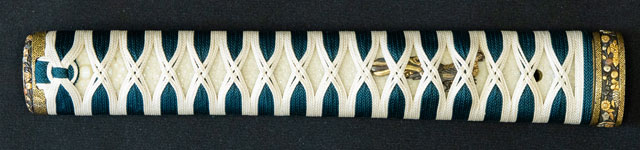
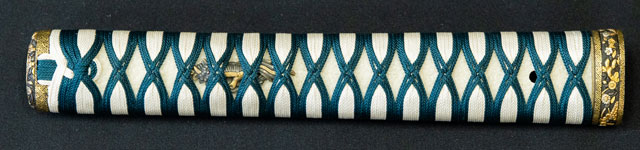
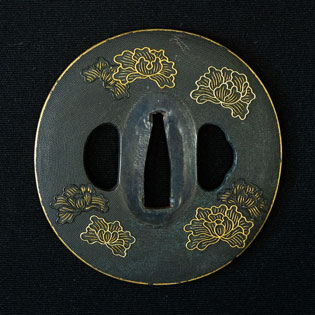
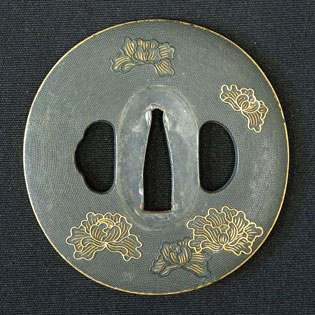
Hizen Tadayoshi (Saga / Ogi) · Hizen · around 1648-1652
Fujishiro Jo saku · Tōken Taikan top 21%
12 pieces on the market now
Tadakuni is the first-generation Hizen smith who signed Harima Daijō, and later Harima no Kami, Fujiwara Tadakuni. His earliest name was Hironori; in Kan'ei 11 (1634), at the age of thirty-seven, he received the title Harima Daijō and changed his name to Tadakuni, the earliest title-bearing work on record being dated Kan'ei 13. He was a pupil of the first-generation Tadayoshi, the founder of the Hizen school, and the son of Sōemon Yoshiie of the Hashimoto family; since he shared the founder's Hashimoto surname, the published sources judge him likely of the same lineage, and note that he received his title considerably earlier than the second-generation Ōmi Daijō Tadahiro of the main house. He was retained by the Ogi domain, one of the three Nabeshima branch houses of Saga, and was active as an Ogi-domain smith. In old age he took the tonsure under the name Kyūtetsu, and his work extends into the Tenna era.
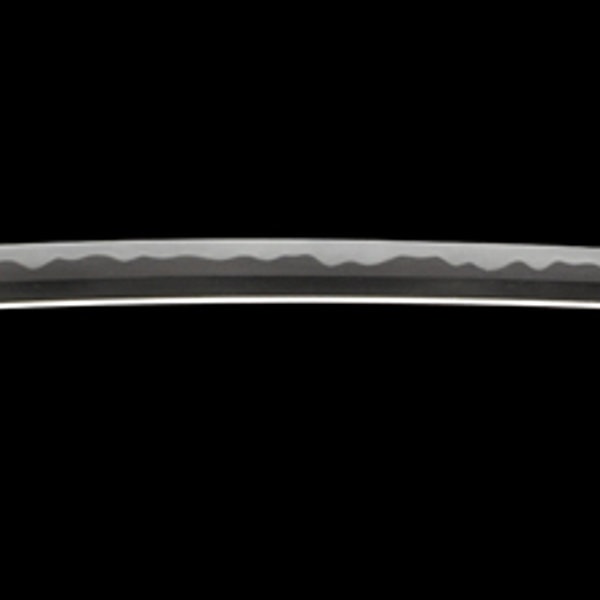
The published sources read his hand in two manners and call him highly skilled in both, but they place his true strength in the flamboyant midare. His is a gunome-chōji and chōji-midare, the temper often broad, the clove heads at times round, mixing in gunome, angular elements and yahazu-like forms with scattered tobiyaki. Long ashi enter frequently, with yō, the nioi deep and ko-nie well adhering. Above all it is the sunagashi that names him. The sources say of one blade that sunagashi runs vigorously through the ha, and that among his school he is the one in whom it is most conspicuous: 「刃中に砂流しがさかんにかかり」[[c:1]], 「一派の中でも最もそれが目立つ」[[c:2]]. With it run kinsuji, and the nioiguchi is bright and clear. The other recurring note of his clove work is the reach of its ashi: in midareba, the published record holds, his distinctive feature is a chōji with long ashi, 「足長丁子に特色がある」[[c:3]].
The jigane beneath both his manners is the tightly forged Hizen ko-itame with ji-nie, the steel the school is known for. On his finest pieces it becomes the dust-fine ji-nie laid thickly with chikei entering, the ji bright and clear, and several blades carry the slight nagare toward the edge that the sources note in his late suguha work. Over that jigane his second face is the calm one. He tempers a naka-suguha, at times a broad suguha, deep in nioi, ashi and yō entering well, with fine kinsuji and sunagashi and at the habuchi a nijūba-like effect. The published sources record him plainly as skilled in both registers, 「直刃, 乱刃ともに上手」[[c:4]], and on one late suguha katana they observe that, against his usual habit, here the sunagashi is not especially prominent, 「さまで砂流しが目立たず」[[c:5]], the whole finished in a quiet, restrained dekiguchi that shows this comparatively small body of straight-temper work. The bōshi in both manners runs straight to a ko-maru, frequently with hakikake.
His record divides less by period than by manner, though the dated pieces let the late years be read. The Harima Daijō signature carries the body of his work; the Harima no Kami signature, used after his promotion and running through the Kanbun, Enpō and into the Tenna years, marks the later blades. One Enpō 2 (1674) katana takes as its principal tone a varied large ō-notare-midare mixed with chōji-like elements and tobiyaki, deep in nie and nioi, which the sources call a manner brimming with vigorous spirit. On his most ambitious clove work the temper widens a further degree into an ō-chōji-midare with ara-nie and even slight muneyaki, so high-tempered, the published commentary remarks, as to be rare among his blades, and they ask whether the first-generation Tadakuni was here aiming at the old Ichimonji: 「古作の一文字あたりを狙ったものであろうか」[[c:6]]. The same record places the difficulty of his oeuvre squarely on the table. Because the second generation was likewise appointed Harima no Kami, the first and second are hard to tell apart, and the sources note a view that much now called second-generation work may in fact be the first's.
What sets Tadakuni apart within his own school is exactly what the judges name. His jigane and his bright nioiguchi are the shared Hizen inheritance, the komenuka-fine ko-itame and the clear temper that every Tadayoshi-line smith owes to the founder. His own signature is laid over that inheritance: the long-ashi chōji-midare and, within it, the sunagashi that runs more conspicuously in his ha than in any other hand of the school. On one katana the published sources read the workmanship as at first glance recalling Naoe Shizu, 「一見直江志津などの風を見せて上手である」[[c:7]], the Yamato-tinged streaming temper a measure of how far his midareba reaches from the calm Hizen suguha standard. He stands as the school's most accomplished maker of the flamboyant clove temper, the branch hand who carried the Hizen jigane into a brighter, more active hamon than the main line pursued.
For the collector he is a signed and well-documented Shintō name whose work survives entirely at the Jūyō level. Fujishiro grades him Jō saku. He has no National Treasures and no Important Cultural Properties; his record runs instead through the Jūyō Tōken ranks, where his katana appear across many sessions and the published sources repeatedly call them representative or typical examples by this smith, both ji and ha clear and bright. One they single out as 「傑出の一口であり, 典型作でもある」[[c:8]], an outstanding and typical piece of his midare work. Several carry Yamano Ka'emon cutting-test inscriptions in gold inlay, documents of the edge as well as the hand, and a number bear chrysanthemum and crab-peony crests on the tang. The thirty-some designated blades on record are held in private and long-kept collections, their owners largely unrecorded, so a signed Harima Daijō or Harima no Kami Tadakuni is not beyond reach in the way a National Treasure is; it comes to the serious collector from time to time, with patience, and a fully realized flamboyant chōji example, in which his sunagashi runs at its most vigorous, is a thing to be sought out when it appears.
Where Tadakuni stands among comparable artisans: across all of nihontō, and within tradition, era, and period. The tiers (Foremost · Leading · Major · Notable) weigh official designations from the NBTHK and Japan's Agency for Cultural Affairs, together with historical honors of lasting repute such as the Sansaku and Meibutsu-chō.
Select a lens to see how it's measured.
Shinto · Hizen
132 pieces on the market now
The Hizen Tadayoshi school began with a single domain commission. In Keicho 1 (1596) the Nabeshima of Hizen ordered Hashimoto Shinzaemon, the smith who would sign Tadayoshi, up to Kyoto with the carver Munenaga; there he entered the gate of Umetada Myoju and studied forging while Munenaga learned the chisel. The two returned to the province in Keicho 3 (1598), and Tadayoshi settled in the castle town below Saga, where under the domain's patronage the line grew into the dominant sword-making house of Kyushu. His own work runs from Keicho 5 (1600) to his death in Kan'ei 9 (1632); in Genna 10 (1624) he received the court title Musashi Daijo, changed his name to Tadahiro, and shifted his clan name from Minamoto to Fujiwara, so that the late Musashi Daijo blades are the founder under a second name. From him the house became a true generational institution: his son the second-generation Omi Daijo Tadahiro carried it forward as its most prolific hand, the third-generation Mutsu no Kami Tadayoshi returned its highest finish, and a Tosa no Kami branch took the founder's signature when he set it aside. Around this main line grew a circle of disciples and collateral hands, the waki-Hizen or Soba-Hizen smiths, several of them, like Yoshiie and Hironori, working as daisaku substitute makers whose own signed pieces are therefore scarce. The school's signature is its steel. Over a ko-itame forged so tightly it shows no slackness, fine ji-nie gathers in minute particles until the surface takes on the rice-bran konuka-hada (also written komenuka-hada) that no other school produces, fine chikei entering throughout and the ji notably clear and bright.
The orthodox temper laid upon it is a chu-suguha or hiro-suguha, sometimes tinged with a shallow notare and ko-gunome, the nioiguchi deep with finely clustered ko-nie and tightened to a bright clarity, the boshi running straight to a quiet ko-maru. The founder aimed this suguha toward the Rai school yet departed from it, his nioiguchi tighter and his forging carrying more vigor; the third generation refined it to what the published sources call the strongest and most precise hand of the first three generations. Against that calm register the house also worked a showier one, the Hizen choji-midare mixing gunome, long ashi, kinsuji and sunagashi, ordered clove the founder himself had not attempted but the second generation made his own. The branches pushed further from the suguha standard: Tadakuni of the Ogi domain ran sunagashi more conspicuously than any other Hizen hand and reached toward old Ichimonji in his o-choji; Masahiro and Yukihiro favored a flamboyant long-ashi choji over the calm main line; and the Iyo no Jo Munetsugu line worked apart in the Soshu-den, building a midareba on notare with a pointed togariba and a jihada that tends to stand and tone slightly blackish. A collector seeks Hizen-to first for that steel, and reads it the same way the appraiser does: a bright suguha lying over a clear, tight konuka-hada identifies the school before the signature is consulted, and the quiet ko-maru boshi on the ura-signed tang confirms the main-line practice. Generation and branch are then told within that frame, the third generation's powerful sugata recalling not his father but his grandfather, the waki-Hizen hands set apart by their irregular temper, their sujikai file marks and a sashi-ura signature, the Munetsugu line by its Soshu togari. The main line, made in real numbers across so long a span, reaches the market more readily than any Kamakura master, so a papered example is within reach of a patient collector, while the founder's own work and the finest konuka-suguha of the third generation come to open hands only from time to time. Provenance runs back through the house the school served, blades recorded to Nabeshima Katsushige and Nabeshima Naomoto and passing onward to the Owari Tokugawa, the Satake and the Imperial families; documentary inscriptions sharpen the picture further, a Myoju soemei attesting the founder's discipleship, Umetada carving adding flowers to brocade on his late blades, and the gold-inlaid cutting tests of Yamano Kanjuro and Yamano Ka'emon, rare on Hizen work, naming the edge as well as the hand. Learn more →
| Smith | Era | Designated |
|---|---|---|
| Tadayoshi忠吉 | 1596-1632 | 123 |
| Tadayoshi忠吉 | 1662-1681 | 58 |
| Tadahiro忠廣 | 1624-1693 | 169 |
| Masahiro正廣 | 1624-1655 | 32 |
| Tadakuni忠國 | 1648-1652 | 32 |
Hizen: a domain enterprise
Hizen swords were a domain enterprise: the Nabeshima sent Tadayoshi to study under Umetada Myōju around 1596, then built a licensed school around him. Nine generations carried its famously consistent konuka-hada work into the Meiji era.
A Hozon-certified blade judged to show notably superior workmanship and a better state of preservation. The bar is higher: re-tempered blades and most unsigned Muromachi/Edo works are excluded.
The NBTHK (Nihon Bijutsu Tōken Hozon Kyōkai, the Society for the Preservation of Japanese Art Swords) is a public-interest incorporated foundation founded in 1948 and supervised by Japan’s Agency for Cultural Affairs (Bunkachō); it is based at the Japanese Sword Museum in Tokyo. Its expert panels physically examine each submitted work (shinsa) and issue a certificate (kanteishō) ranking it by artistic and historical merit. NBTHK papers are the most widely recognized standard of authentication for Japanese swords and fittings.
NBTHK official sitePlease request cooling-off within 8 days of the item's arrival. Items that have been altered cannot be handled. Return shipping is the customer's responsibility. If the destination is overseas, returns and refunds are not available.
¥2,000,000
Katana Mei: Hizen Harima Daijyo Fujiwara Tadakuni Item Number 31-2516 Katana Hizen Harima Daijyo Fujiwara Tadakuni Country/Era Hizen Kanei With Koshirae, in Shirasaya Nagasa 75.1cm (2 shaku 4 sun 9 bu) Sori 0.9cm (3 bu - rin) Motohaba 3.09cm Sakihaba 2.33cm Motokasane 6.4mm Sakikasane 5.0mm Toshin Weight Bare blade 790g Excluding saya 1,140g Nakago Ubu Mekugi-ana 1 Hamon Midare-ba Price 1,300,000 Yen (Tax included) Known as Hashimoto Rokurozaemon. In Kanei 11, he received the title of Harima Daijyo and became a smith for the Ogi Domain. The hamon is a konie-deki midare-ba with frequent ko-ashi, sunagashi, and visible kinsen; the ha is clear. The jigane is a well-refined ko-itame hada with ji-nie and tobiyaki. This is a healthy blade recommended for collectors. The koshirae is also of high quality, featuring a unified set of Sendai kinko fittings.
NihontoWatchsigned · Hizen · Keian (1648-1652) · nagasa 75.1cm · sori 0.9cm
Hizen Tadayoshi (Saga / Ogi) · Hizen · around 1648-1652
Fujishiro Jo saku · Tōken Taikan top 21%
12 pieces on the market now
Tadakuni is the first-generation Hizen smith who signed Harima Daijō, and later Harima no Kami, Fujiwara Tadakuni. His earliest name was Hironori; in Kan'ei 11 (1634), at the age of thirty-seven, he received the title Harima Daijō and changed his name to Tadakuni, the earliest title-bearing work on record being dated Kan'ei 13. He was a pupil of the first-generation Tadayoshi, the founder of the Hizen school, and the son of Sōemon Yoshiie of the Hashimoto family; since he shared the founder's Hashimoto surname, the published sources judge him likely of the same lineage, and note that he received his title considerably earlier than the second-generation Ōmi Daijō Tadahiro of the main house. He was retained by the Ogi domain, one of the three Nabeshima branch houses of Saga, and was active as an Ogi-domain smith. In old age he took the tonsure under the name Kyūtetsu, and his work extends into the Tenna era.
The published sources read his hand in two manners and call him highly skilled in both, but they place his true strength in the flamboyant midare. His is a gunome-chōji and chōji-midare, the temper often broad, the clove heads at times round, mixing in gunome, angular elements and yahazu-like forms with scattered tobiyaki. Long ashi enter frequently, with yō, the nioi deep and ko-nie well adhering. Above all it is the sunagashi that names him. The sources say of one blade that sunagashi runs vigorously through the ha, and that among his school he is the one in whom it is most conspicuous: 「刃中に砂流しがさかんにかかり」[[c:1]], 「一派の中でも最もそれが目立つ」[[c:2]]. With it run kinsuji, and the nioiguchi is bright and clear. The other recurring note of his clove work is the reach of its ashi: in midareba, the published record holds, his distinctive feature is a chōji with long ashi, 「足長丁子に特色がある」[[c:3]].
The jigane beneath both his manners is the tightly forged Hizen ko-itame with ji-nie, the steel the school is known for. On his finest pieces it becomes the dust-fine ji-nie laid thickly with chikei entering, the ji bright and clear, and several blades carry the slight nagare toward the edge that the sources note in his late suguha work. Over that jigane his second face is the calm one. He tempers a naka-suguha, at times a broad suguha, deep in nioi, ashi and yō entering well, with fine kinsuji and sunagashi and at the habuchi a nijūba-like effect. The published sources record him plainly as skilled in both registers, 「直刃, 乱刃ともに上手」[[c:4]], and on one late suguha katana they observe that, against his usual habit, here the sunagashi is not especially prominent, 「さまで砂流しが目立たず」[[c:5]], the whole finished in a quiet, restrained dekiguchi that shows this comparatively small body of straight-temper work. The bōshi in both manners runs straight to a ko-maru, frequently with hakikake.
His record divides less by period than by manner, though the dated pieces let the late years be read. The Harima Daijō signature carries the body of his work; the Harima no Kami signature, used after his promotion and running through the Kanbun, Enpō and into the Tenna years, marks the later blades. One Enpō 2 (1674) katana takes as its principal tone a varied large ō-notare-midare mixed with chōji-like elements and tobiyaki, deep in nie and nioi, which the sources call a manner brimming with vigorous spirit. On his most ambitious clove work the temper widens a further degree into an ō-chōji-midare with ara-nie and even slight muneyaki, so high-tempered, the published commentary remarks, as to be rare among his blades, and they ask whether the first-generation Tadakuni was here aiming at the old Ichimonji: 「古作の一文字あたりを狙ったものであろうか」[[c:6]]. The same record places the difficulty of his oeuvre squarely on the table. Because the second generation was likewise appointed Harima no Kami, the first and second are hard to tell apart, and the sources note a view that much now called second-generation work may in fact be the first's.
What sets Tadakuni apart within his own school is exactly what the judges name. His jigane and his bright nioiguchi are the shared Hizen inheritance, the komenuka-fine ko-itame and the clear temper that every Tadayoshi-line smith owes to the founder. His own signature is laid over that inheritance: the long-ashi chōji-midare and, within it, the sunagashi that runs more conspicuously in his ha than in any other hand of the school. On one katana the published sources read the workmanship as at first glance recalling Naoe Shizu, 「一見直江志津などの風を見せて上手である」[[c:7]], the Yamato-tinged streaming temper a measure of how far his midareba reaches from the calm Hizen suguha standard. He stands as the school's most accomplished maker of the flamboyant clove temper, the branch hand who carried the Hizen jigane into a brighter, more active hamon than the main line pursued.
For the collector he is a signed and well-documented Shintō name whose work survives entirely at the Jūyō level. Fujishiro grades him Jō saku. He has no National Treasures and no Important Cultural Properties; his record runs instead through the Jūyō Tōken ranks, where his katana appear across many sessions and the published sources repeatedly call them representative or typical examples by this smith, both ji and ha clear and bright. One they single out as 「傑出の一口であり, 典型作でもある」[[c:8]], an outstanding and typical piece of his midare work. Several carry Yamano Ka'emon cutting-test inscriptions in gold inlay, documents of the edge as well as the hand, and a number bear chrysanthemum and crab-peony crests on the tang. The thirty-some designated blades on record are held in private and long-kept collections, their owners largely unrecorded, so a signed Harima Daijō or Harima no Kami Tadakuni is not beyond reach in the way a National Treasure is; it comes to the serious collector from time to time, with patience, and a fully realized flamboyant chōji example, in which his sunagashi runs at its most vigorous, is a thing to be sought out when it appears.
Where Tadakuni stands among comparable artisans: across all of nihontō, and within tradition, era, and period. The tiers (Foremost · Leading · Major · Notable) weigh official designations from the NBTHK and Japan's Agency for Cultural Affairs, together with historical honors of lasting repute such as the Sansaku and Meibutsu-chō.
Select a lens to see how it's measured.
Shinto · Hizen
132 pieces on the market now
The Hizen Tadayoshi school began with a single domain commission. In Keicho 1 (1596) the Nabeshima of Hizen ordered Hashimoto Shinzaemon, the smith who would sign Tadayoshi, up to Kyoto with the carver Munenaga; there he entered the gate of Umetada Myoju and studied forging while Munenaga learned the chisel. The two returned to the province in Keicho 3 (1598), and Tadayoshi settled in the castle town below Saga, where under the domain's patronage the line grew into the dominant sword-making house of Kyushu. His own work runs from Keicho 5 (1600) to his death in Kan'ei 9 (1632); in Genna 10 (1624) he received the court title Musashi Daijo, changed his name to Tadahiro, and shifted his clan name from Minamoto to Fujiwara, so that the late Musashi Daijo blades are the founder under a second name. From him the house became a true generational institution: his son the second-generation Omi Daijo Tadahiro carried it forward as its most prolific hand, the third-generation Mutsu no Kami Tadayoshi returned its highest finish, and a Tosa no Kami branch took the founder's signature when he set it aside. Around this main line grew a circle of disciples and collateral hands, the waki-Hizen or Soba-Hizen smiths, several of them, like Yoshiie and Hironori, working as daisaku substitute makers whose own signed pieces are therefore scarce. The school's signature is its steel. Over a ko-itame forged so tightly it shows no slackness, fine ji-nie gathers in minute particles until the surface takes on the rice-bran konuka-hada (also written komenuka-hada) that no other school produces, fine chikei entering throughout and the ji notably clear and bright.
The orthodox temper laid upon it is a chu-suguha or hiro-suguha, sometimes tinged with a shallow notare and ko-gunome, the nioiguchi deep with finely clustered ko-nie and tightened to a bright clarity, the boshi running straight to a quiet ko-maru. The founder aimed this suguha toward the Rai school yet departed from it, his nioiguchi tighter and his forging carrying more vigor; the third generation refined it to what the published sources call the strongest and most precise hand of the first three generations. Against that calm register the house also worked a showier one, the Hizen choji-midare mixing gunome, long ashi, kinsuji and sunagashi, ordered clove the founder himself had not attempted but the second generation made his own. The branches pushed further from the suguha standard: Tadakuni of the Ogi domain ran sunagashi more conspicuously than any other Hizen hand and reached toward old Ichimonji in his o-choji; Masahiro and Yukihiro favored a flamboyant long-ashi choji over the calm main line; and the Iyo no Jo Munetsugu line worked apart in the Soshu-den, building a midareba on notare with a pointed togariba and a jihada that tends to stand and tone slightly blackish. A collector seeks Hizen-to first for that steel, and reads it the same way the appraiser does: a bright suguha lying over a clear, tight konuka-hada identifies the school before the signature is consulted, and the quiet ko-maru boshi on the ura-signed tang confirms the main-line practice. Generation and branch are then told within that frame, the third generation's powerful sugata recalling not his father but his grandfather, the waki-Hizen hands set apart by their irregular temper, their sujikai file marks and a sashi-ura signature, the Munetsugu line by its Soshu togari. The main line, made in real numbers across so long a span, reaches the market more readily than any Kamakura master, so a papered example is within reach of a patient collector, while the founder's own work and the finest konuka-suguha of the third generation come to open hands only from time to time. Provenance runs back through the house the school served, blades recorded to Nabeshima Katsushige and Nabeshima Naomoto and passing onward to the Owari Tokugawa, the Satake and the Imperial families; documentary inscriptions sharpen the picture further, a Myoju soemei attesting the founder's discipleship, Umetada carving adding flowers to brocade on his late blades, and the gold-inlaid cutting tests of Yamano Kanjuro and Yamano Ka'emon, rare on Hizen work, naming the edge as well as the hand. Learn more →
| Smith | Era | Designated |
|---|---|---|
| Tadayoshi忠吉 | 1596-1632 | 123 |
| Tadayoshi忠吉 | 1662-1681 | 58 |
| Tadahiro忠廣 | 1624-1693 | 169 |
| Masahiro正廣 | 1624-1655 | 32 |
| Tadakuni忠國 | 1648-1652 | 32 |
Hizen: a domain enterprise
Hizen swords were a domain enterprise: the Nabeshima sent Tadayoshi to study under Umetada Myōju around 1596, then built a licensed school around him. Nine generations carried its famously consistent konuka-hada work into the Meiji era.
A Hozon-certified blade judged to show notably superior workmanship and a better state of preservation. The bar is higher: re-tempered blades and most unsigned Muromachi/Edo works are excluded.
The NBTHK (Nihon Bijutsu Tōken Hozon Kyōkai, the Society for the Preservation of Japanese Art Swords) is a public-interest incorporated foundation founded in 1948 and supervised by Japan’s Agency for Cultural Affairs (Bunkachō); it is based at the Japanese Sword Museum in Tokyo. Its expert panels physically examine each submitted work (shinsa) and issue a certificate (kanteishō) ranking it by artistic and historical merit. NBTHK papers are the most widely recognized standard of authentication for Japanese swords and fittings.
NBTHK official sitePlease request cooling-off within 8 days of the item's arrival. Items that have been altered cannot be handled. Return shipping is the customer's responsibility. If the destination is overseas, returns and refunds are not available.
¥2,000,000