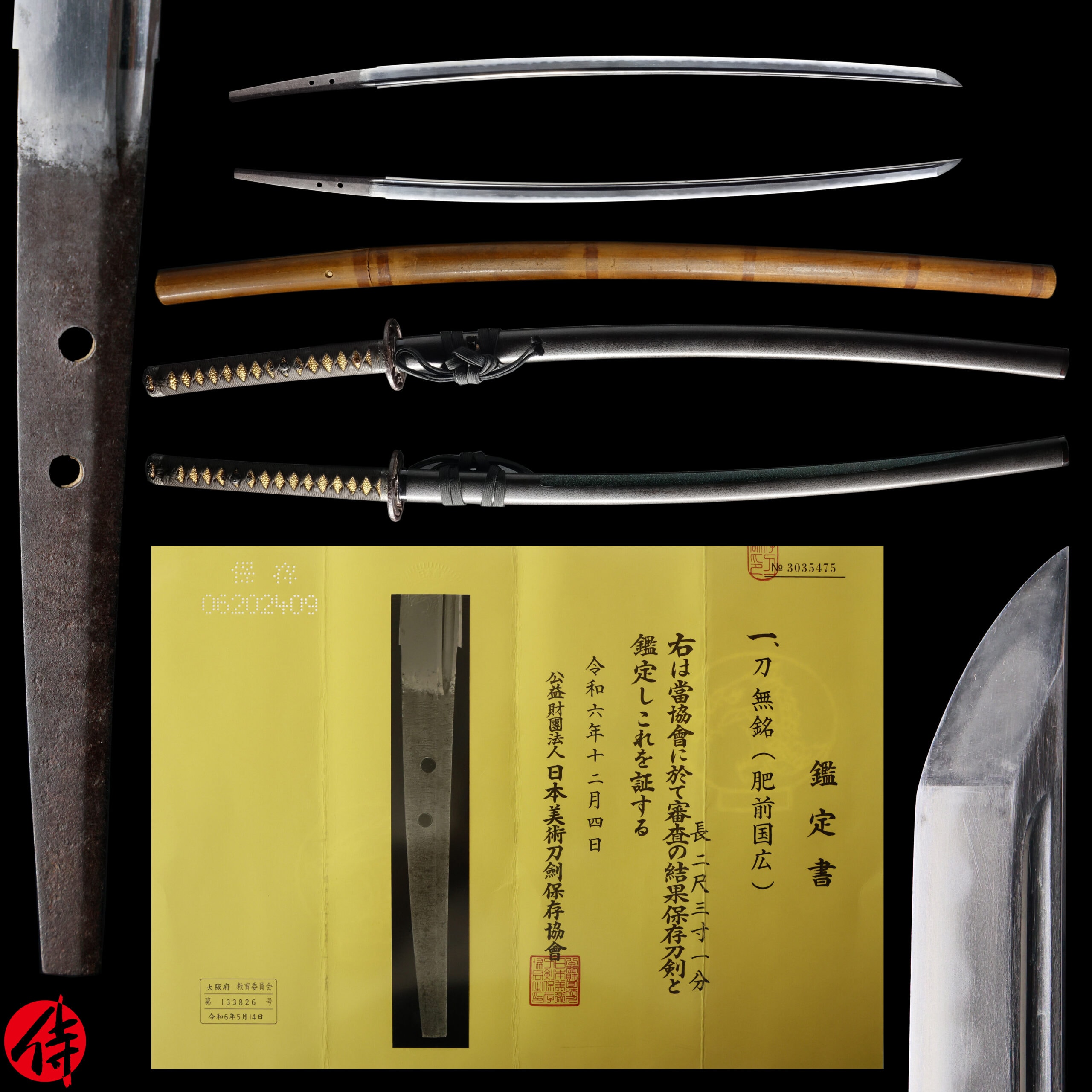
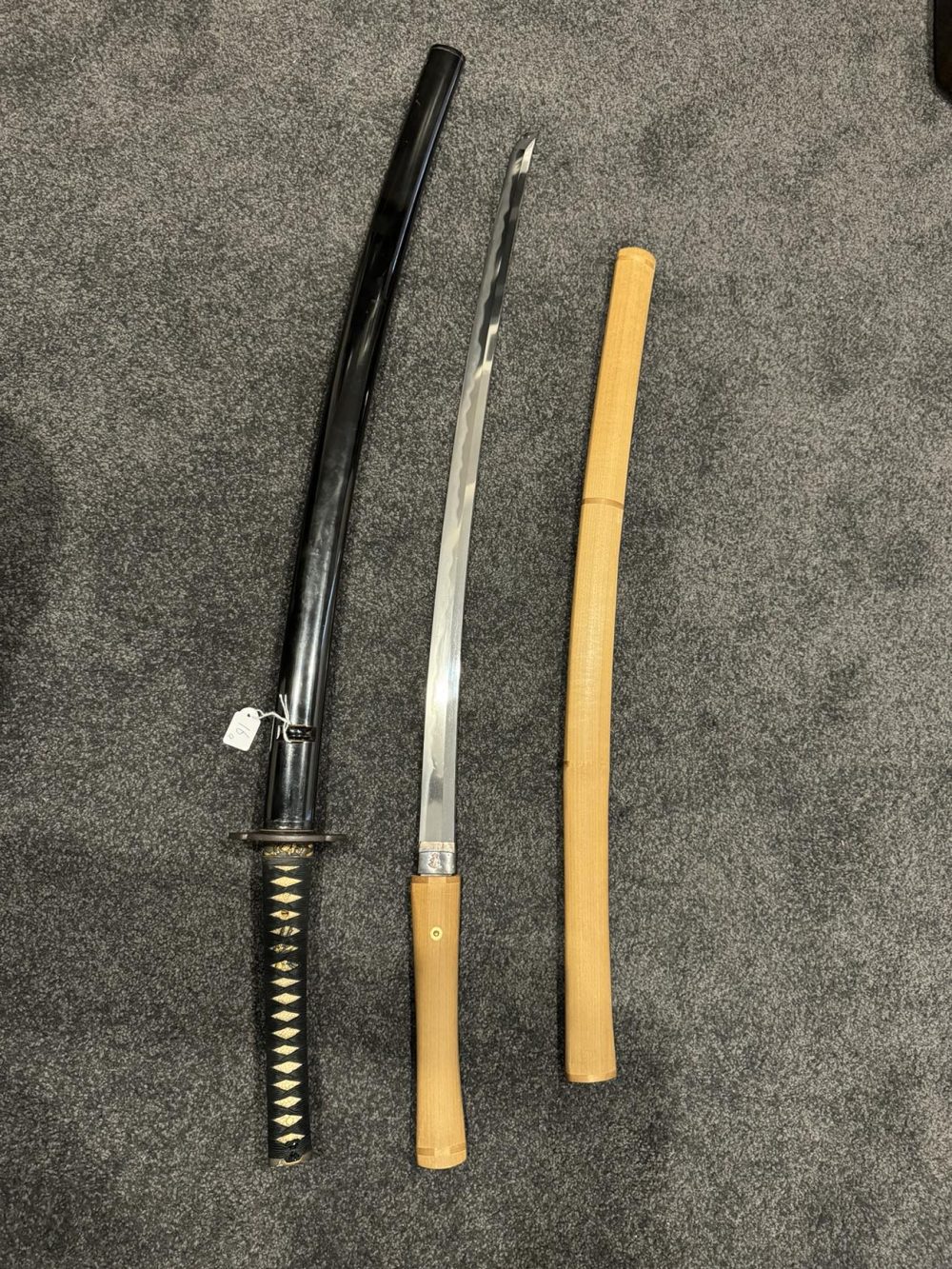
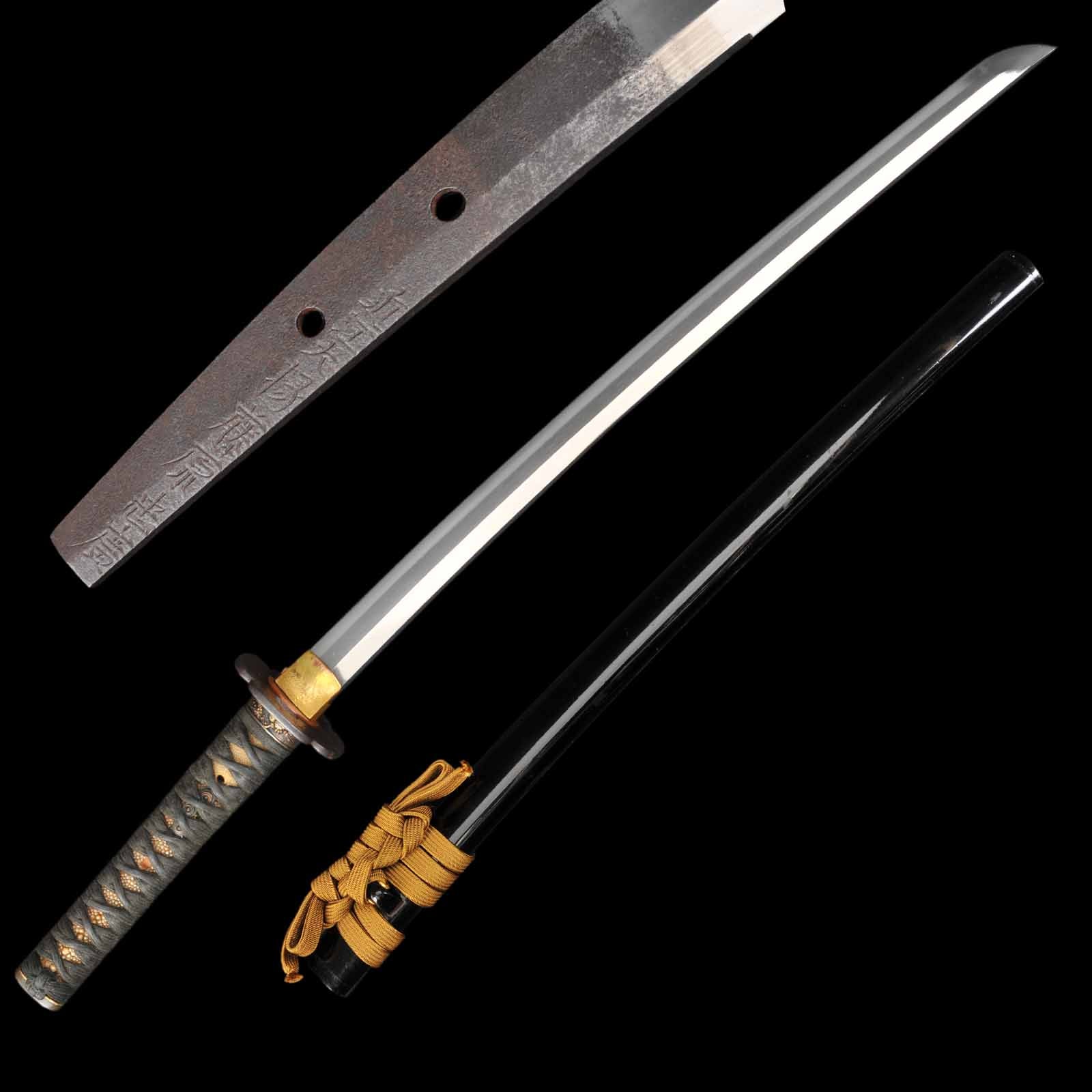
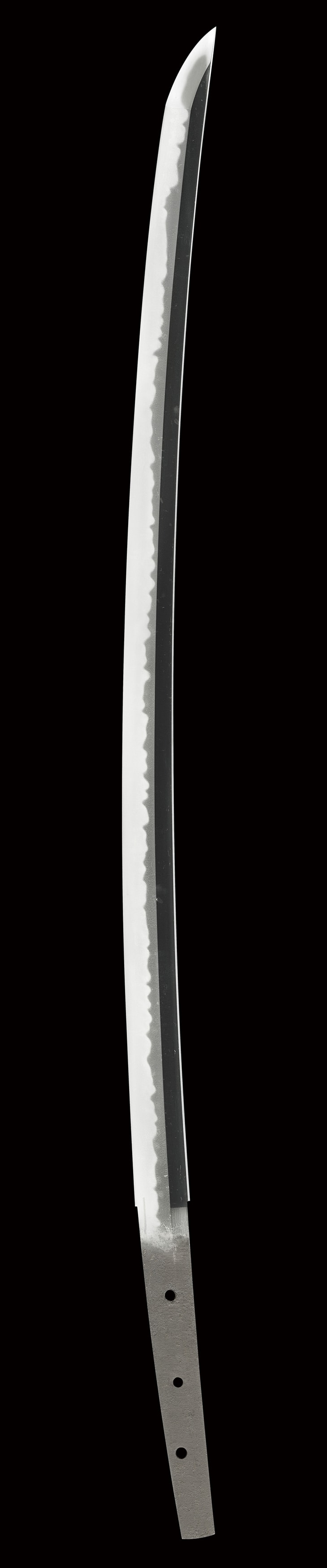
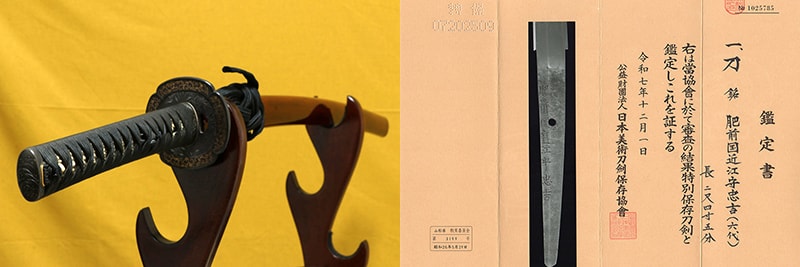
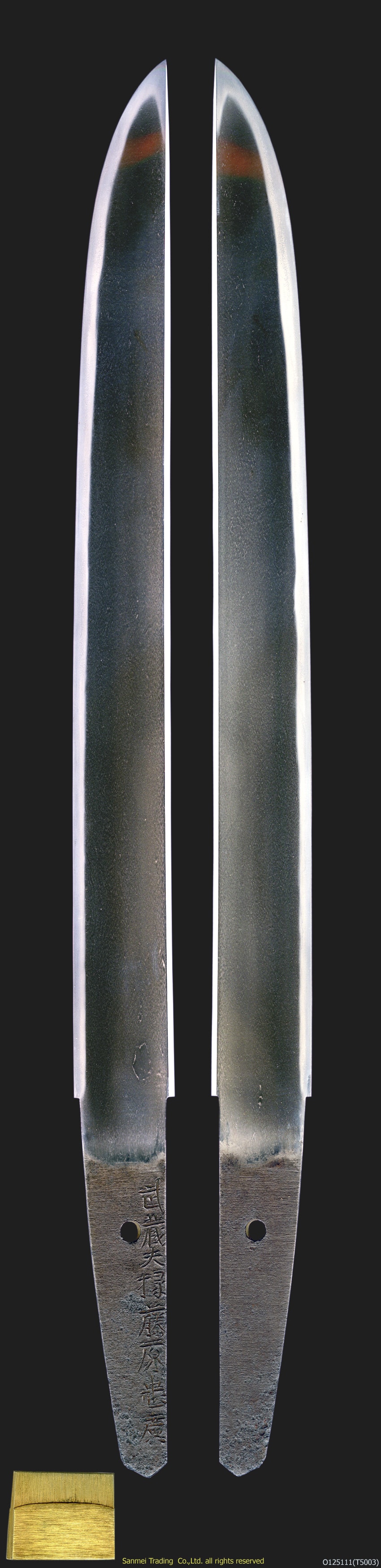
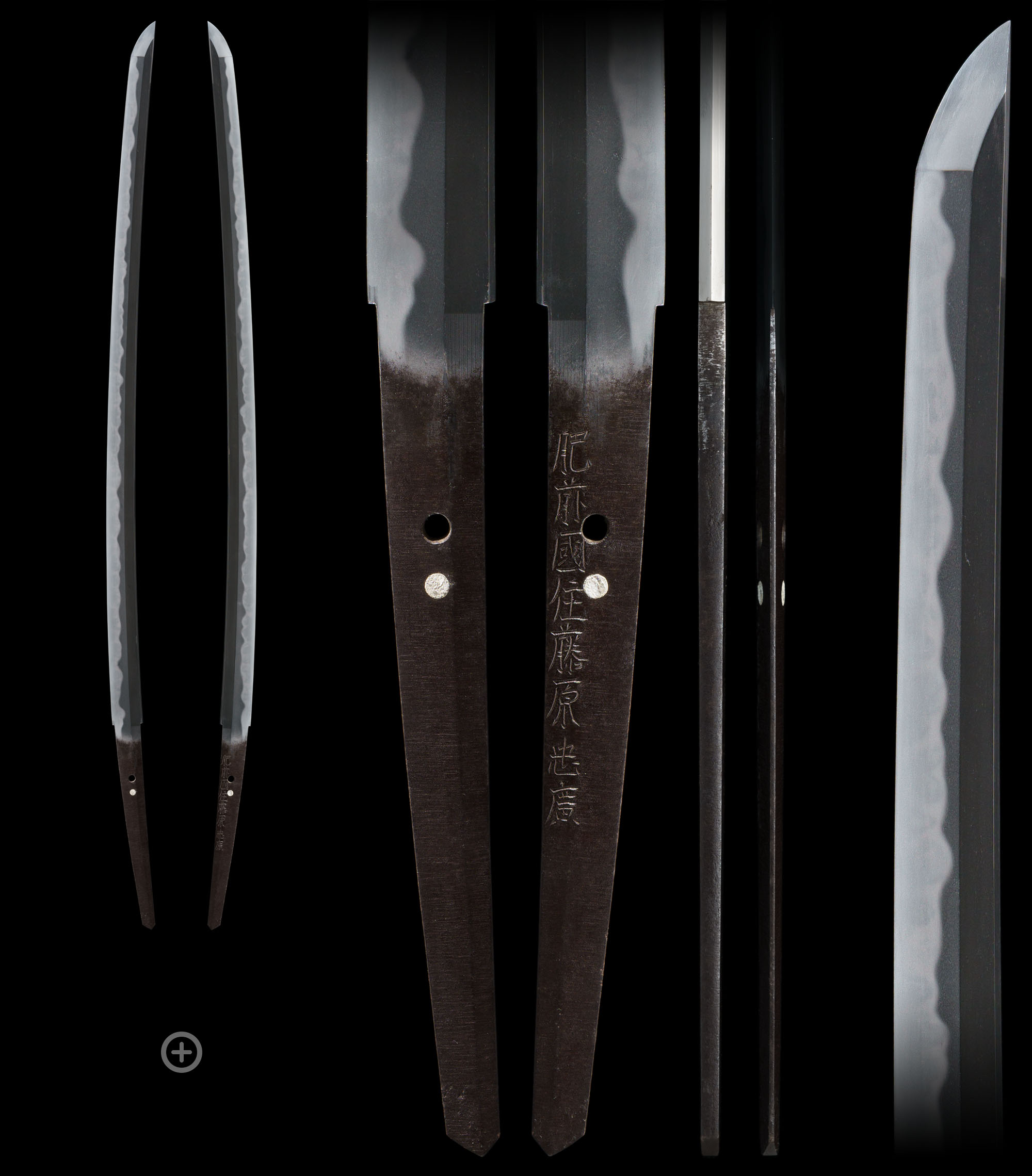
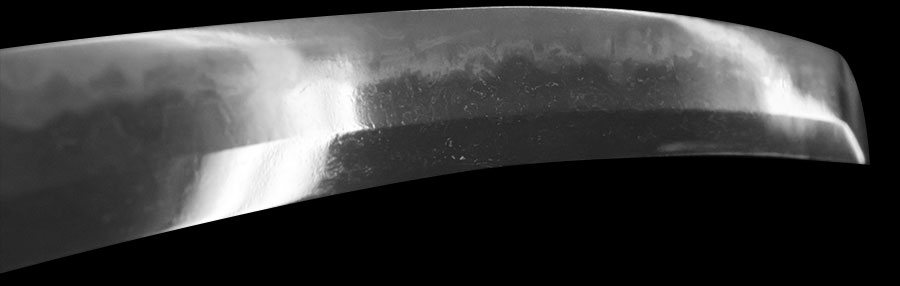
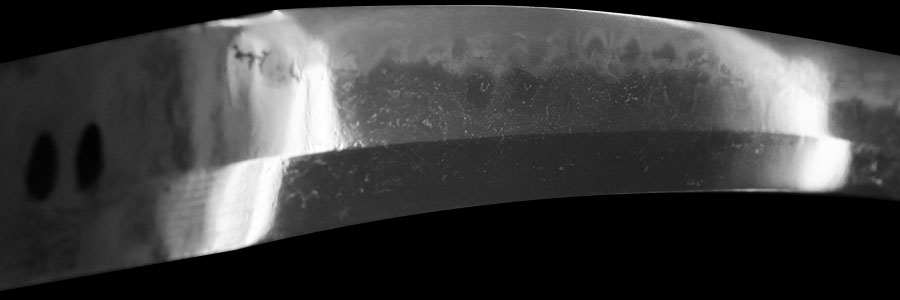
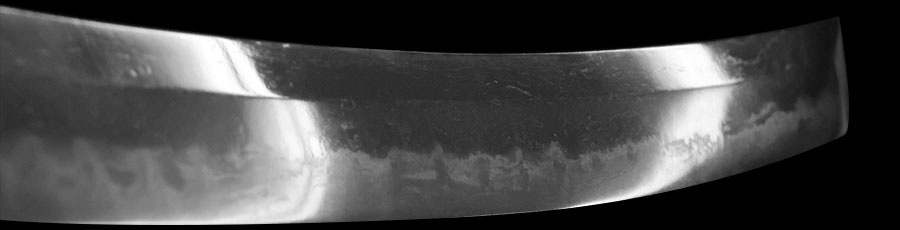
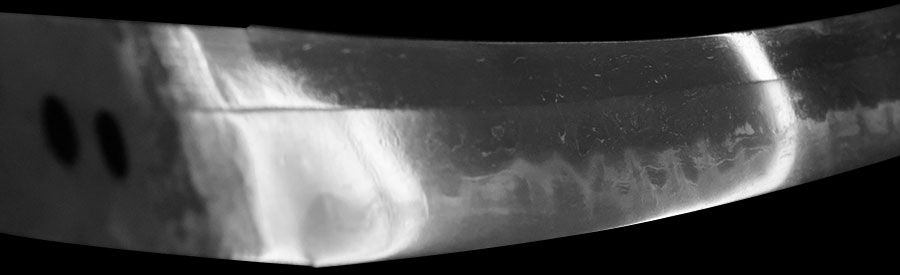
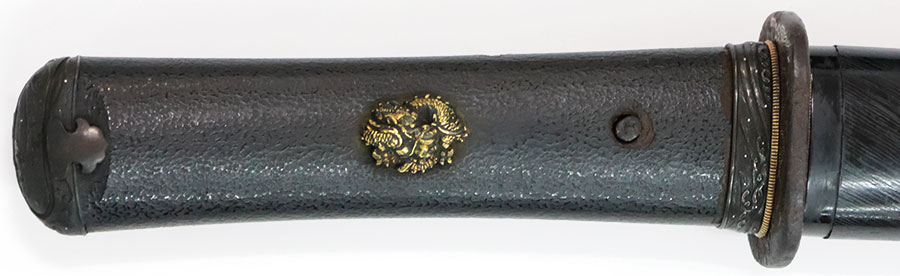
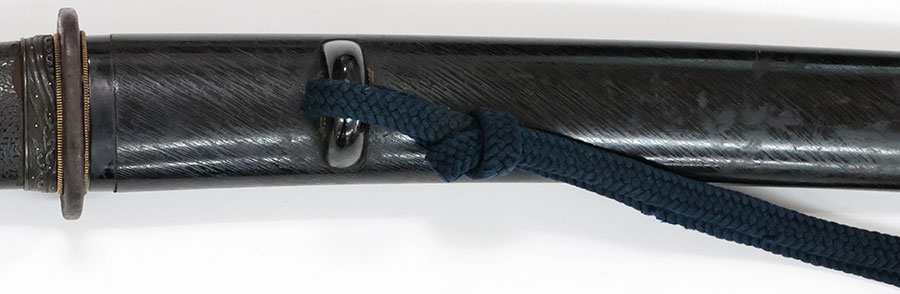
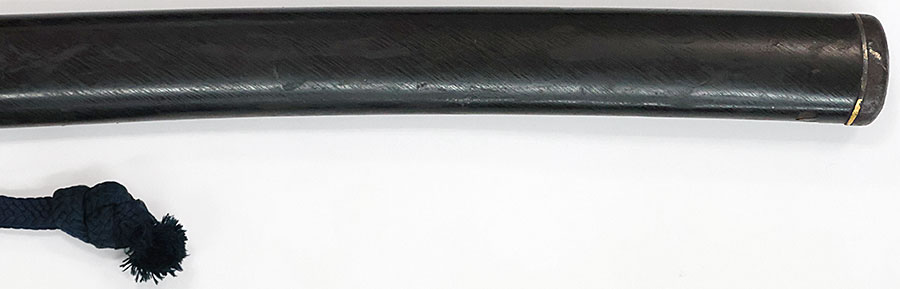
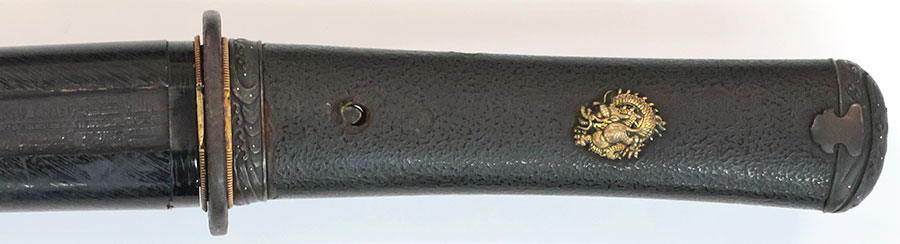
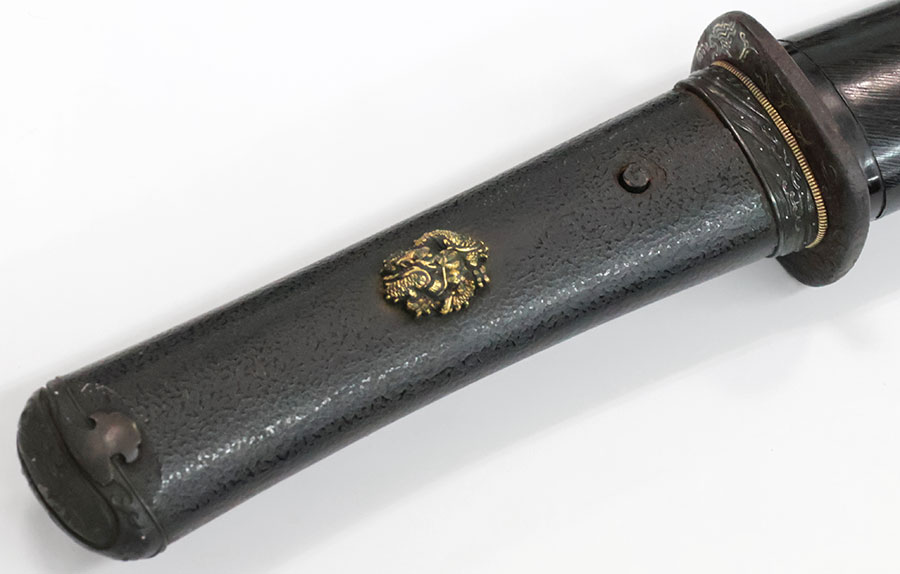
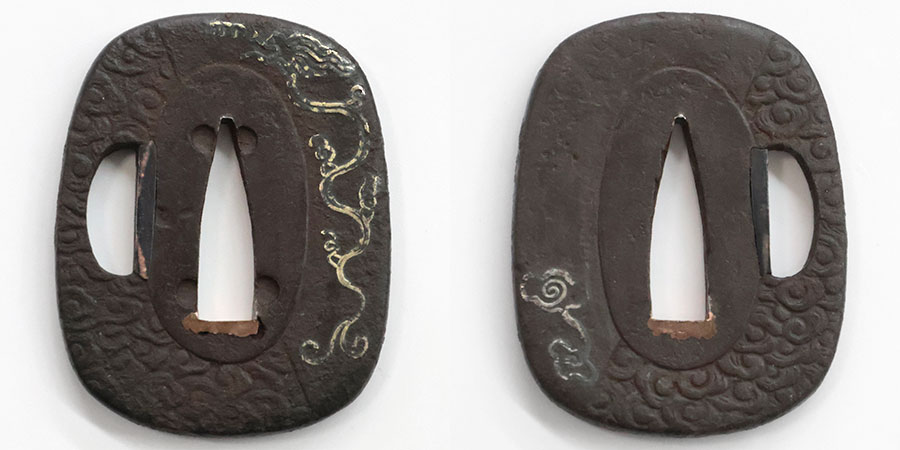
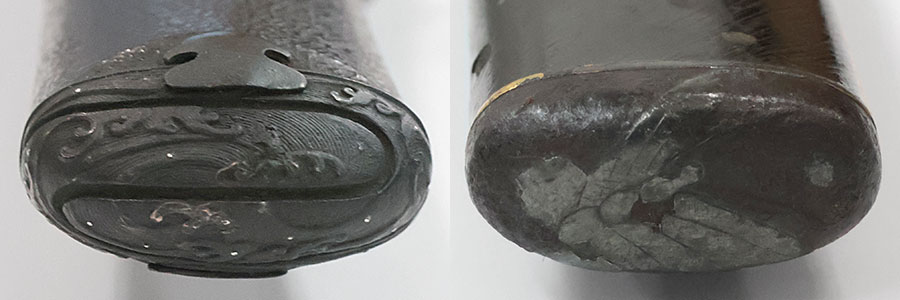
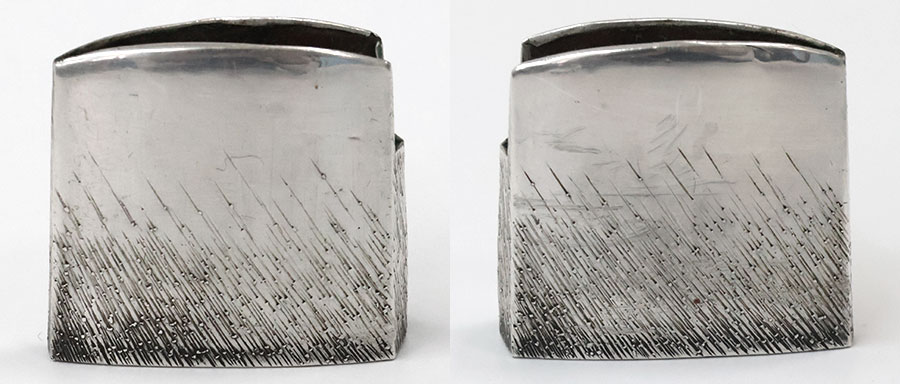
It’s here, it’s here! A wakizashi from the prestigious 6th generation Hizen no Kuni Tadayoshi has appeared. He was the second son of the 5th generation Hizen no Kuni Tadayoshi and went by the name Hashimoto Shinzaemon. He was born in the 6th year of Genbun (1741) during the Edo period (285 years ago). However, as this wakizashi has not been submitted for shinsa, please treat the mei as a "kibo-mei" (hopeful signature). Originally, in the Hizen no Kuni Tadayoshi lineage, before receiving a title and succeeding the name, they would sign as Tadahiro; after receiving a title and succeeding the name, they would sign, for example, as Hizen no Kuni Omi no Kami Tadayoshi. However, this wakizashi bears the Tadahiro mei even after the Omi no Kami title was granted, making it truly a "rarity among rarities." For now, please consider it a kibo-mei. The sugata of this wakizashi shows a difference between the moto-mihaba and saki-mihaba with a shallow sori. The jigane is forged in itame-hada, and the hamon is a nie-laden gunome-midare with many nie-suji and sunagashi appearing within the ha, showing great hataraki. The Edo-period Higo koshirae accompanying this wakizashi is a luxurious special-order piece, featuring Higo kanagu for the fuchi-kashira and tsuba, with dashi-menuki of circular dragons in kin-iro-e on the tsuka, further adding splendor to this blade. On this occasion, an elderly collector who has cherished this piece for many years believing it to be the 6th generation Hizen no Kuni Tadayoshi has entrusted it to us, saying, "I have grown old, so please pass this on at a low price to someone who will treasure it." Therefore, we are offering it at a special bargain price. Please enjoy it.
 NihontoWatchBETA
Edo · nagasa 51.3cm · sori 1cm












Shinto · Hizen
116 pieces on the market now
The Hizen Tadayoshi school began with a single domain commission. In Keicho 1 (1596) the Nabeshima of Hizen ordered Hashimoto Shinzaemon, the smith who would sign Tadayoshi, up to Kyoto with the carver Munenaga; there he entered the gate of Umetada Myoju and studied forging while Munenaga learned the chisel. The two returned to the province in Keicho 3 (1598), and Tadayoshi settled in the castle town below Saga, where under the domain's patronage the line grew into the dominant sword-making house of Kyushu. Learn more →
| Smith | Era | Designated |
|---|---|---|
| Tadayoshi忠吉 | 1596-1632 | 125 |
| Tadayoshi忠吉 | 1662-1681 | 60 |
| Tadahiro忠廣 | 1624-1693 | 170 |
| Masahiro正廣 | 1624-1655 | 32 |
| Tadakuni忠國 | 1648-1652 | 32 |
We could not find an authenticity certificate on the seller’s listing. Japanese swords and fittings are normally papered by the NBTHK (or the NTHK). Without one, the attribution is the seller’s own assessment and has not been independently verified — treat it with caution and ask the dealer about certification before buying.
For returns due to customer circumstances, the cost is the customer's responsibility. For returns due to our mis-shipment or a defective item, we bear the cost.
It’s here, it’s here! A wakizashi from the prestigious 6th generation Hizen no Kuni Tadayoshi has appeared. He was the second son of the 5th generation Hizen no Kuni Tadayoshi and went by the name Hashimoto Shinzaemon. He was born in the 6th year of Genbun (1741) during the Edo period (285 years ago). However, as this wakizashi has not been submitted for shinsa, please treat the mei as a "kibo-mei" (hopeful signature). Originally, in the Hizen no Kuni Tadayoshi lineage, before receiving a title and succeeding the name, they would sign as Tadahiro; after receiving a title and succeeding the name, they would sign, for example, as Hizen no Kuni Omi no Kami Tadayoshi. However, this wakizashi bears the Tadahiro mei even after the Omi no Kami title was granted, making it truly a "rarity among rarities." For now, please consider it a kibo-mei. The sugata of this wakizashi shows a difference between the moto-mihaba and saki-mihaba with a shallow sori. The jigane is forged in itame-hada, and the hamon is a nie-laden gunome-midare with many nie-suji and sunagashi appearing within the ha, showing great hataraki. The Edo-period Higo koshirae accompanying this wakizashi is a luxurious special-order piece, featuring Higo kanagu for the fuchi-kashira and tsuba, with dashi-menuki of circular dragons in kin-iro-e on the tsuka, further adding splendor to this blade. On this occasion, an elderly collector who has cherished this piece for many years believing it to be the 6th generation Hizen no Kuni Tadayoshi has entrusted it to us, saying, "I have grown old, so please pass this on at a low price to someone who will treasure it." Therefore, we are offering it at a special bargain price. Please enjoy it.
NihontoWatchBETAEdo · nagasa 51.3cm · sori 1cm
Shinto · Hizen
116 pieces on the market now
The Hizen Tadayoshi school began with a single domain commission. In Keicho 1 (1596) the Nabeshima of Hizen ordered Hashimoto Shinzaemon, the smith who would sign Tadayoshi, up to Kyoto with the carver Munenaga; there he entered the gate of Umetada Myoju and studied forging while Munenaga learned the chisel. The two returned to the province in Keicho 3 (1598), and Tadayoshi settled in the castle town below Saga, where under the domain's patronage the line grew into the dominant sword-making house of Kyushu. Learn more →
| Smith | Era | Designated |
|---|---|---|
| Tadayoshi忠吉 | 1596-1632 | 125 |
| Tadayoshi忠吉 | 1662-1681 | 60 |
| Tadahiro忠廣 | 1624-1693 | 170 |
| Masahiro正廣 | 1624-1655 | 32 |
| Tadakuni忠國 | 1648-1652 | 32 |
We could not find an authenticity certificate on the seller’s listing. Japanese swords and fittings are normally papered by the NBTHK (or the NTHK). Without one, the attribution is the seller’s own assessment and has not been independently verified — treat it with caution and ask the dealer about certification before buying.
For returns due to customer circumstances, the cost is the customer's responsibility. For returns due to our mis-shipment or a defective item, we bear the cost.