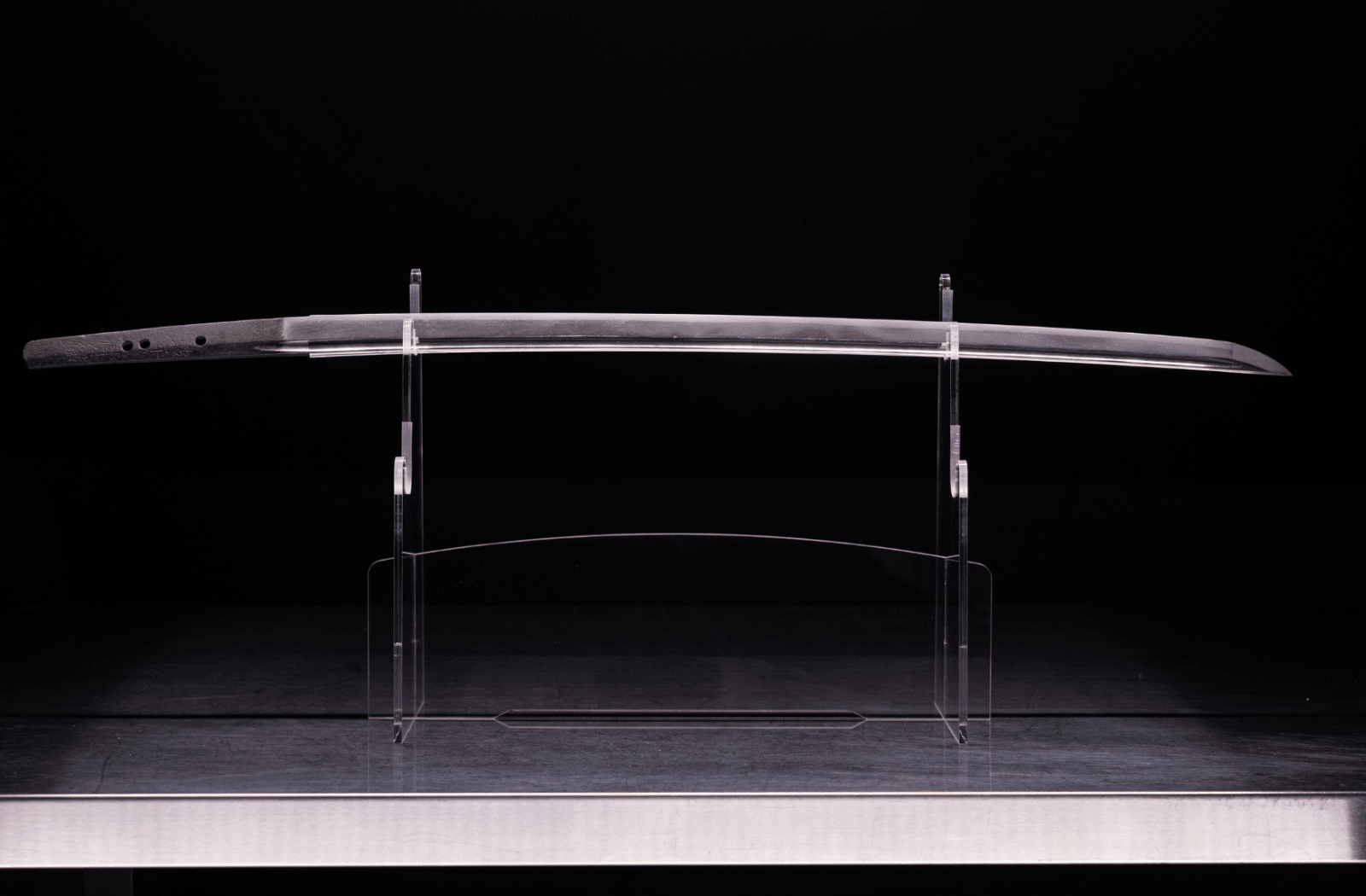
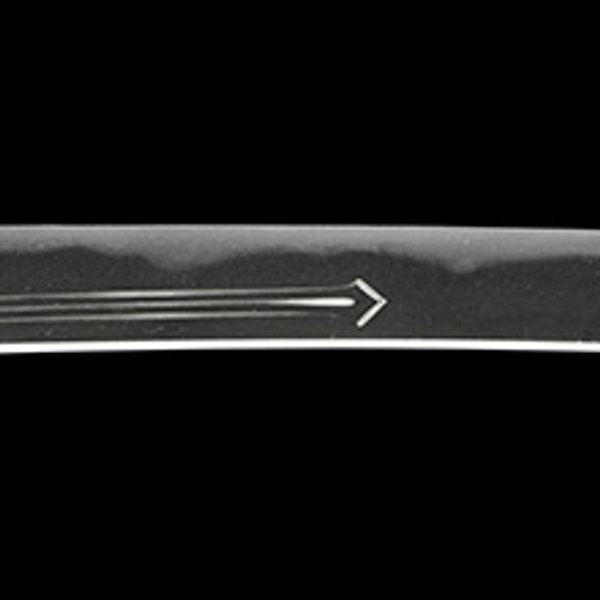
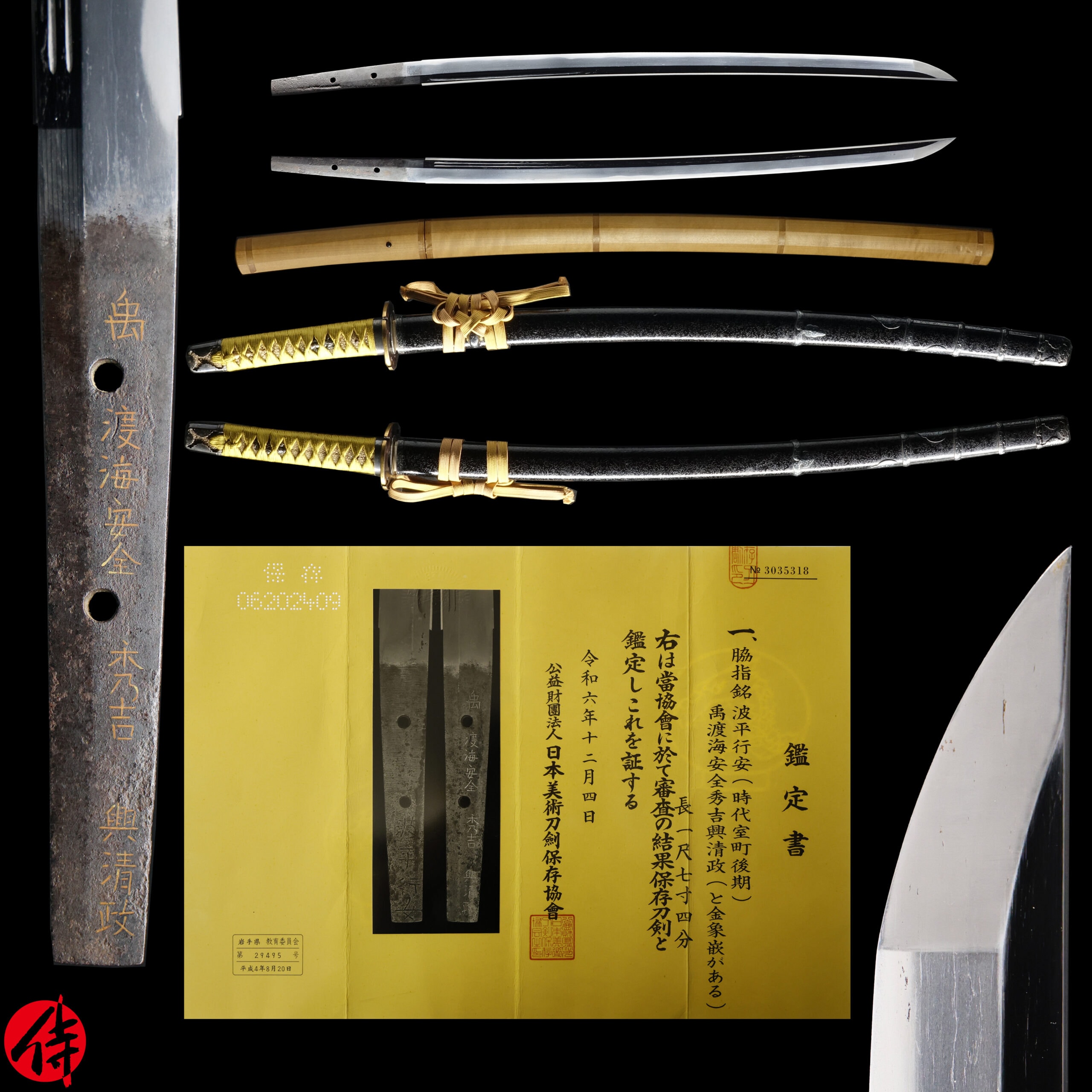
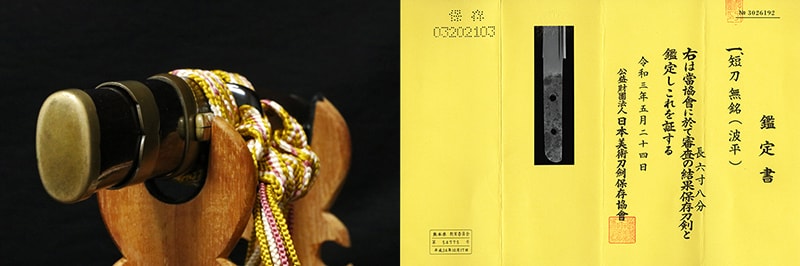
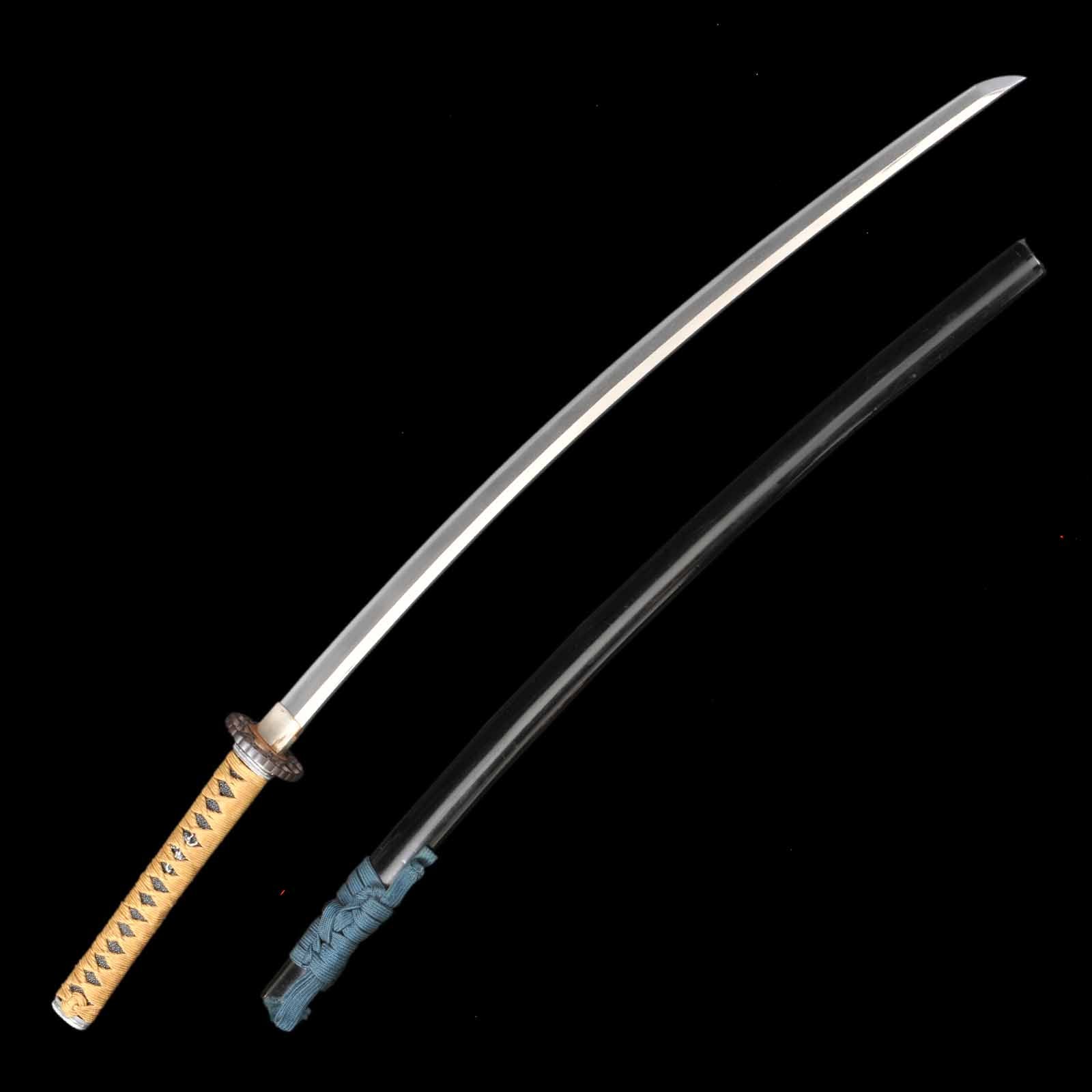
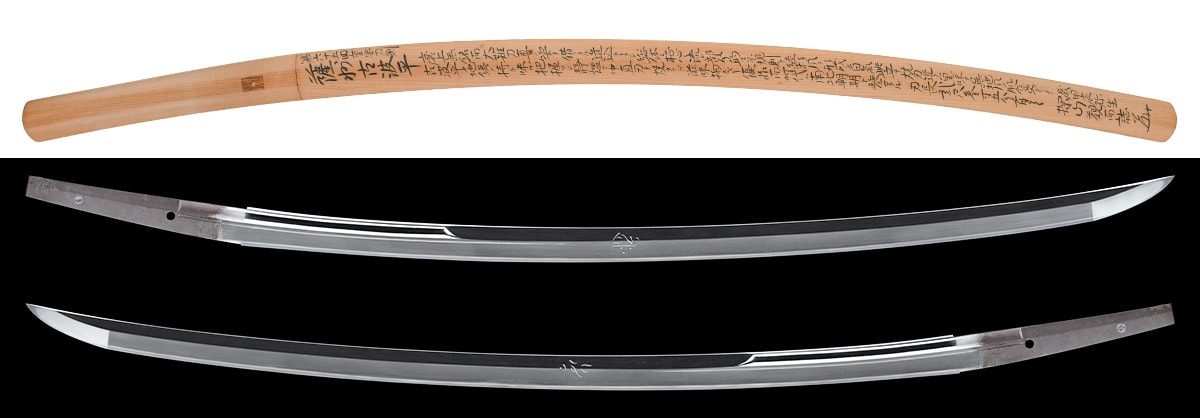
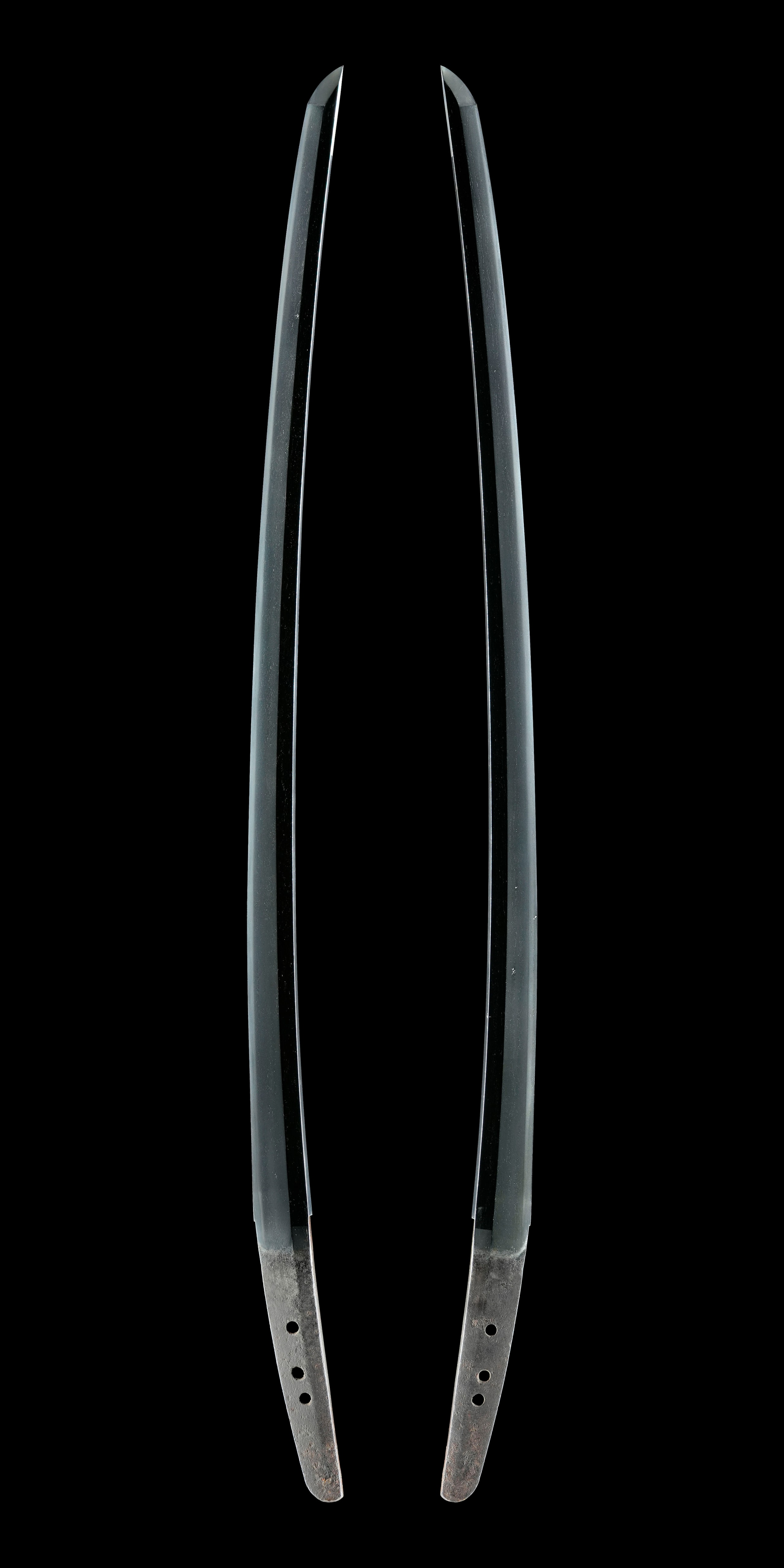
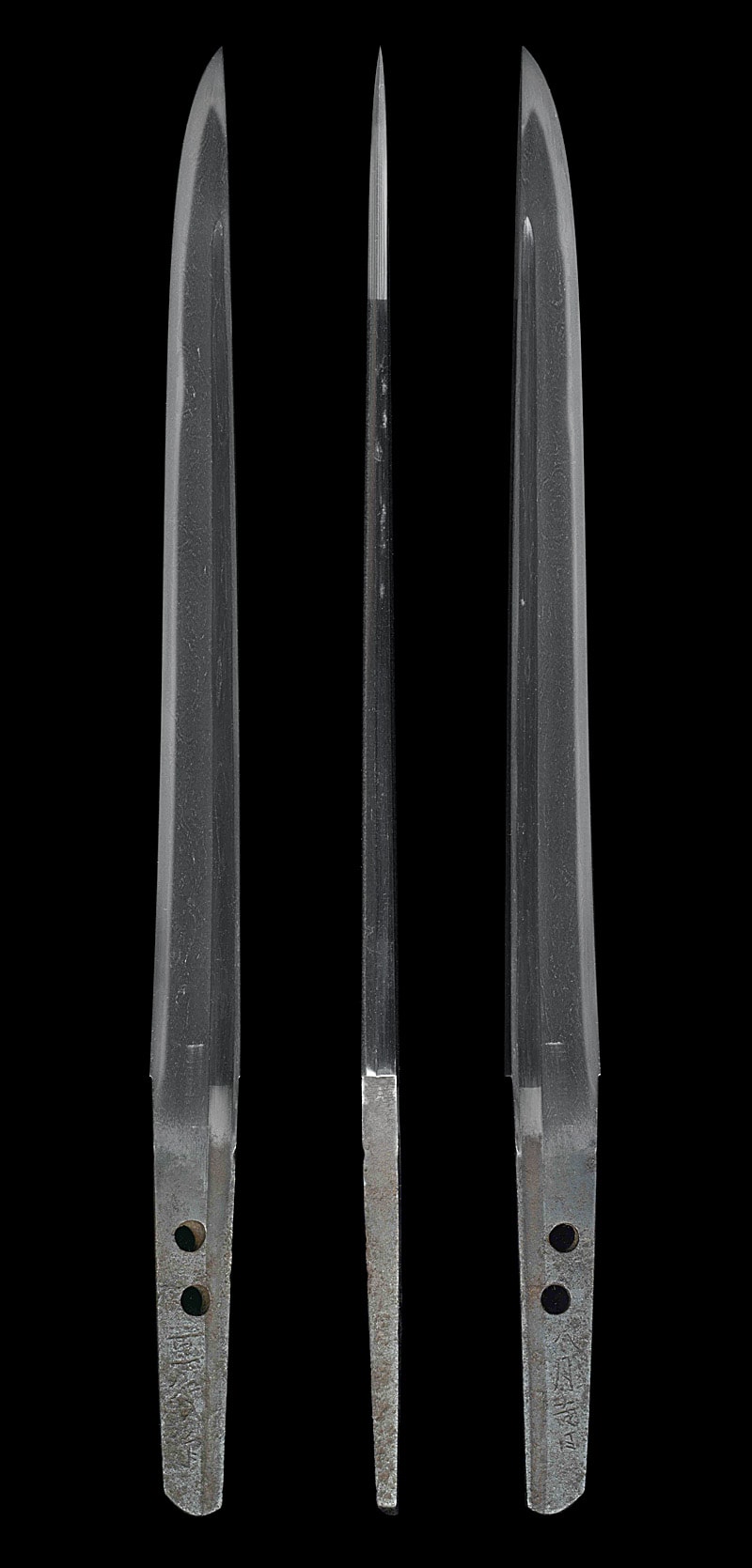
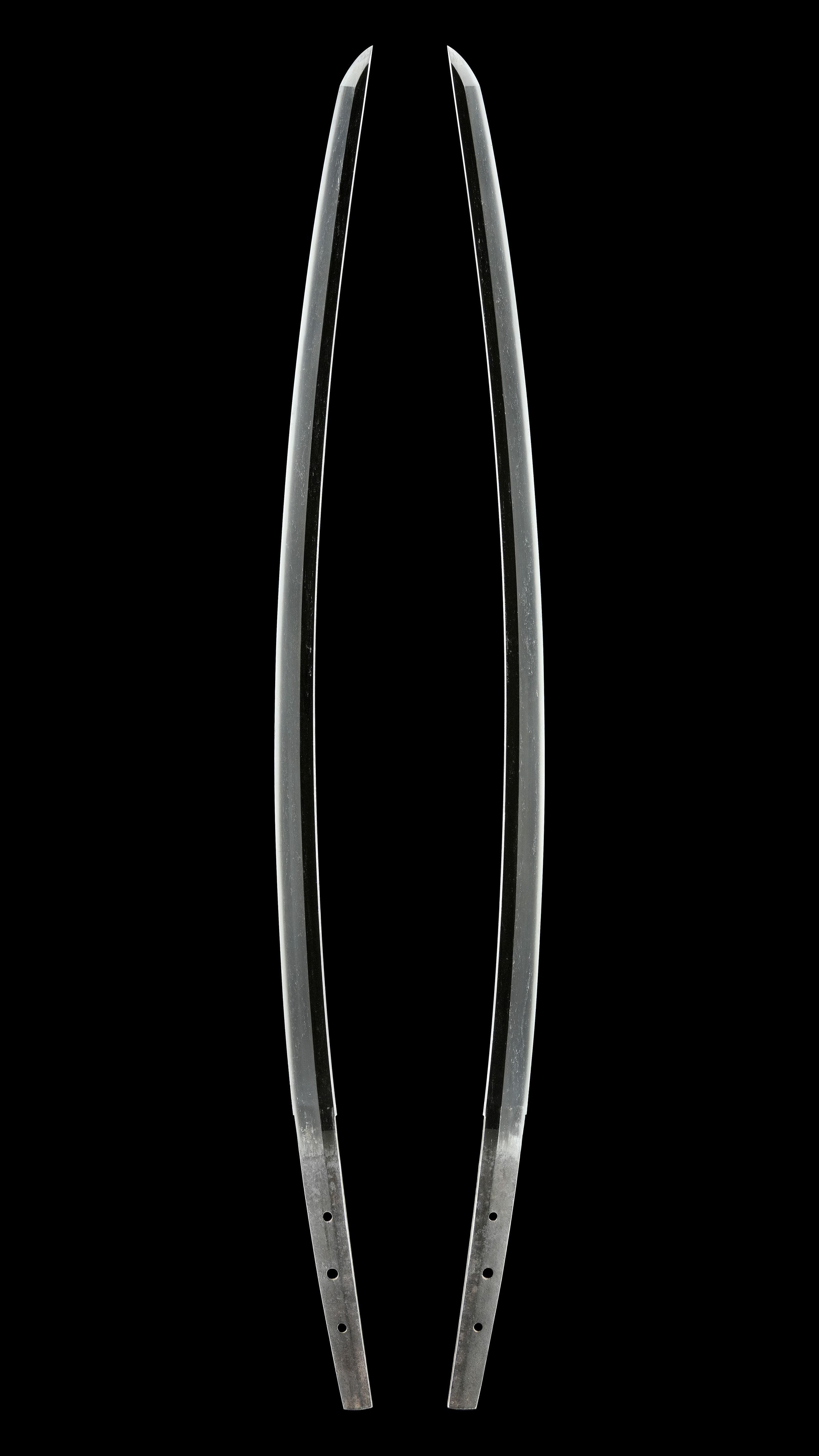
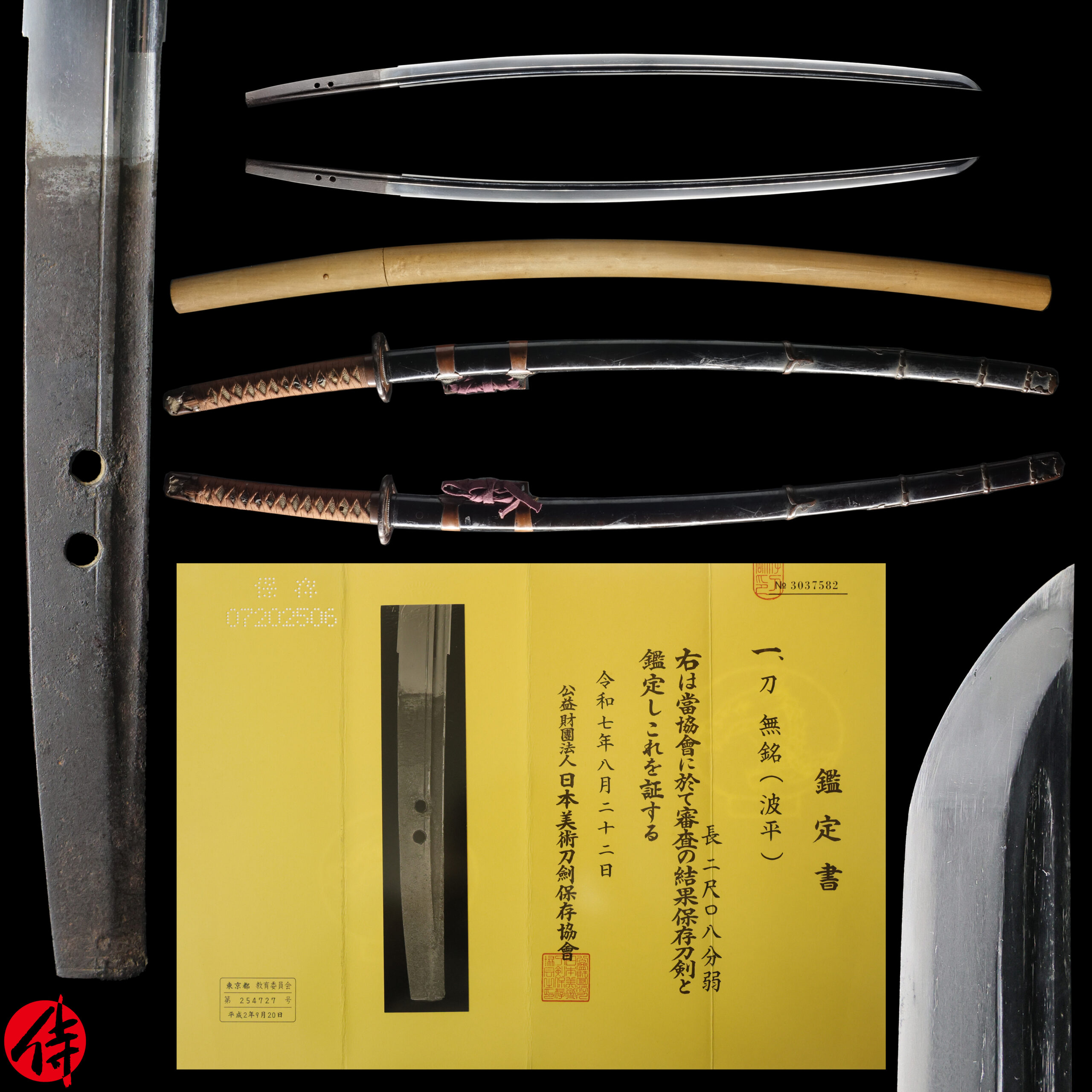
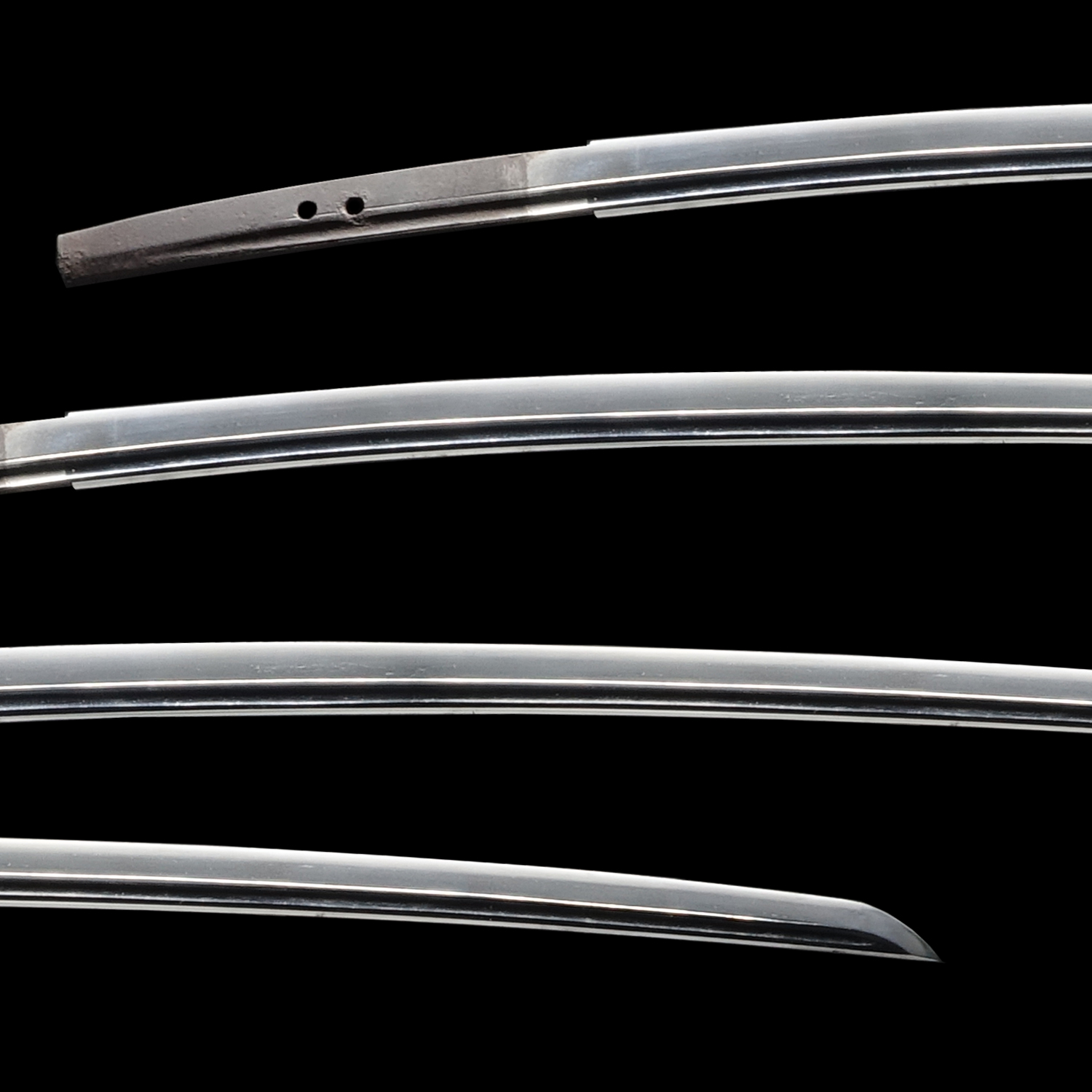
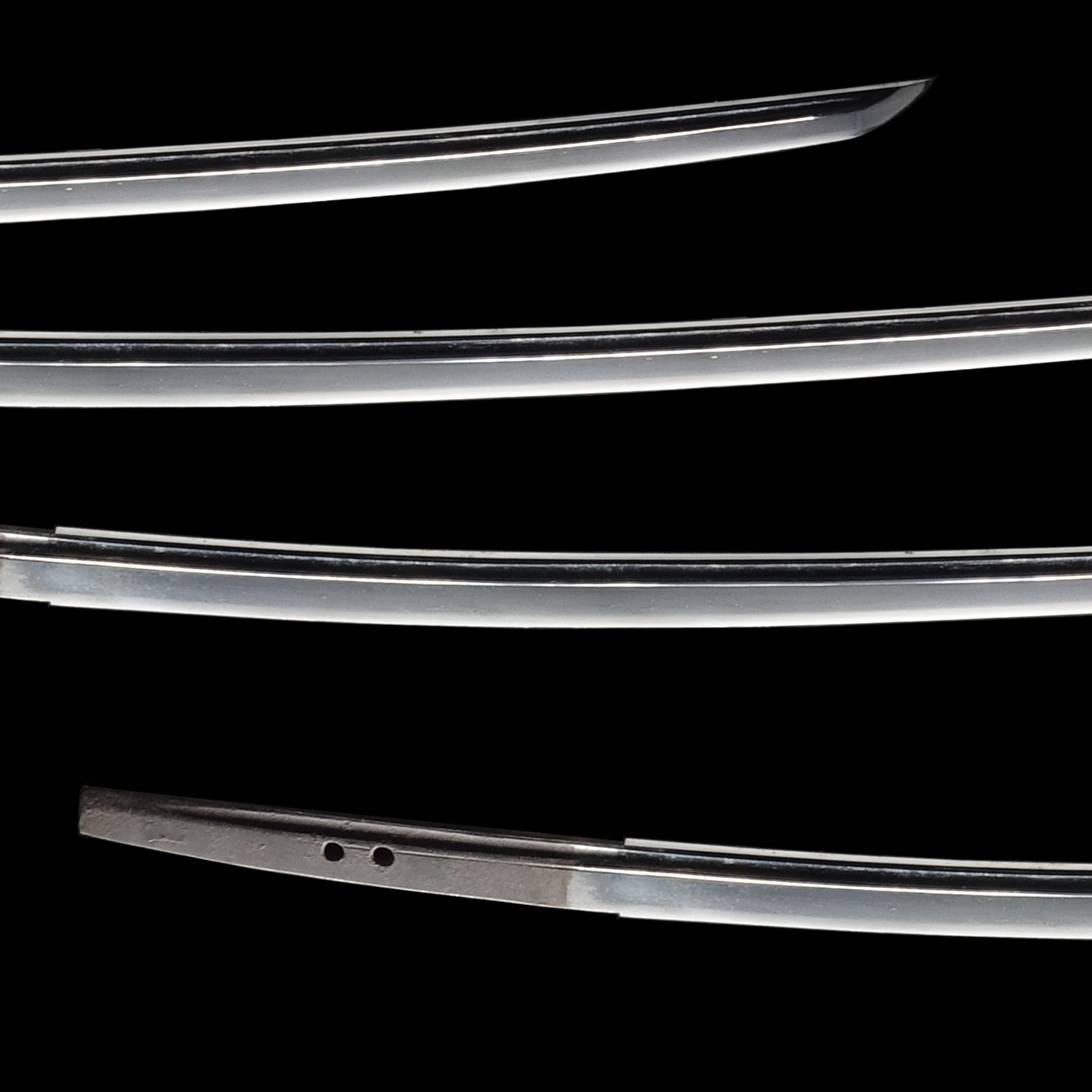
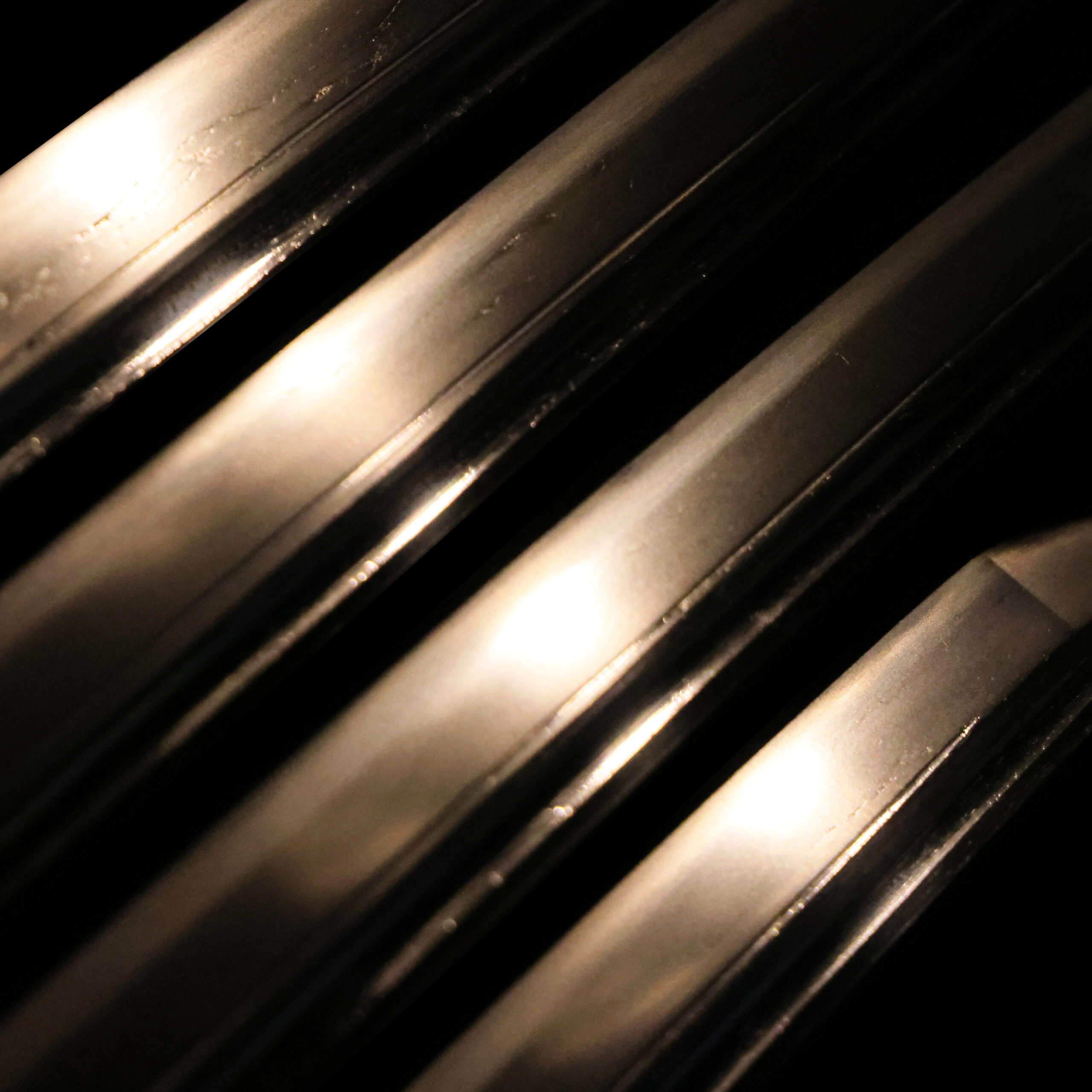
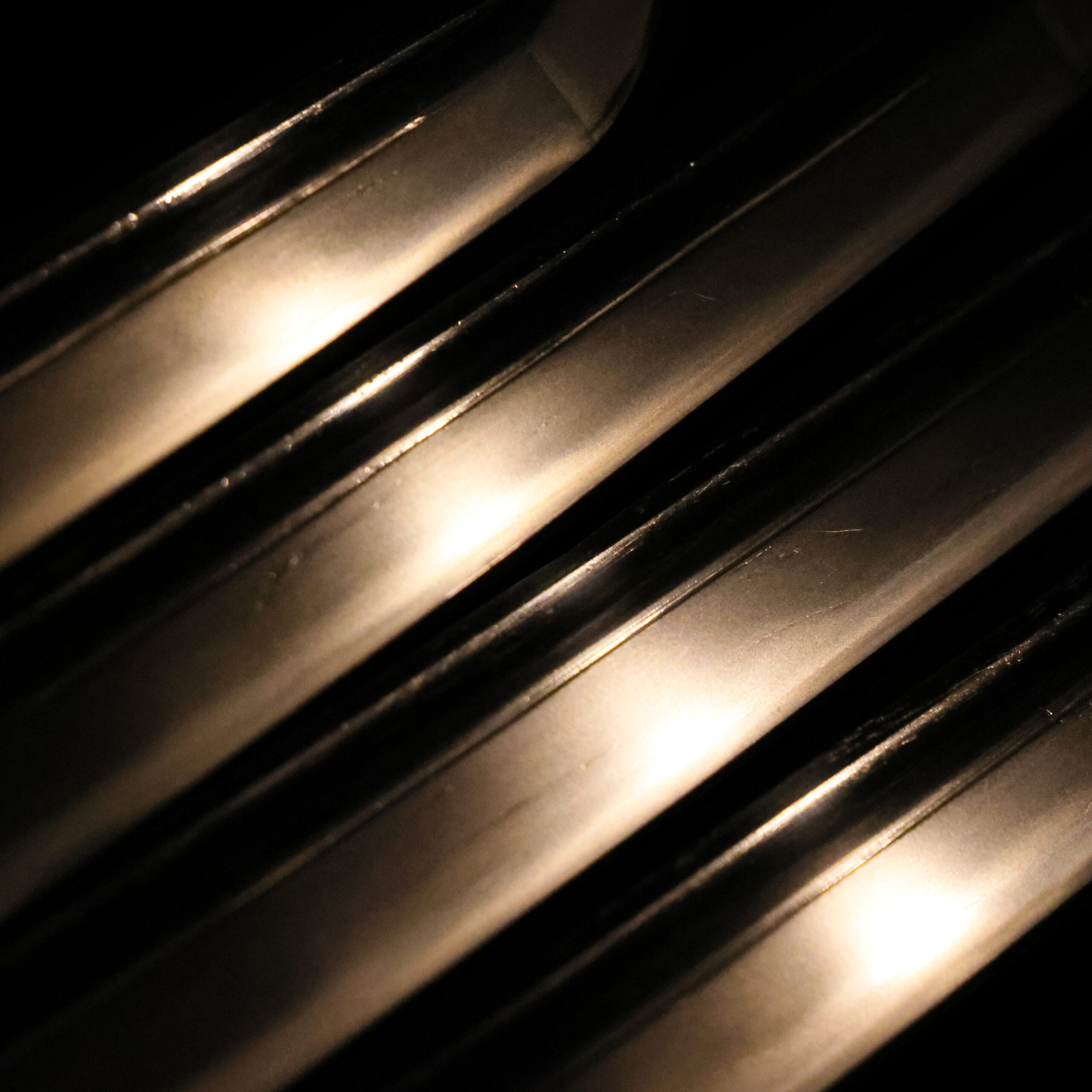
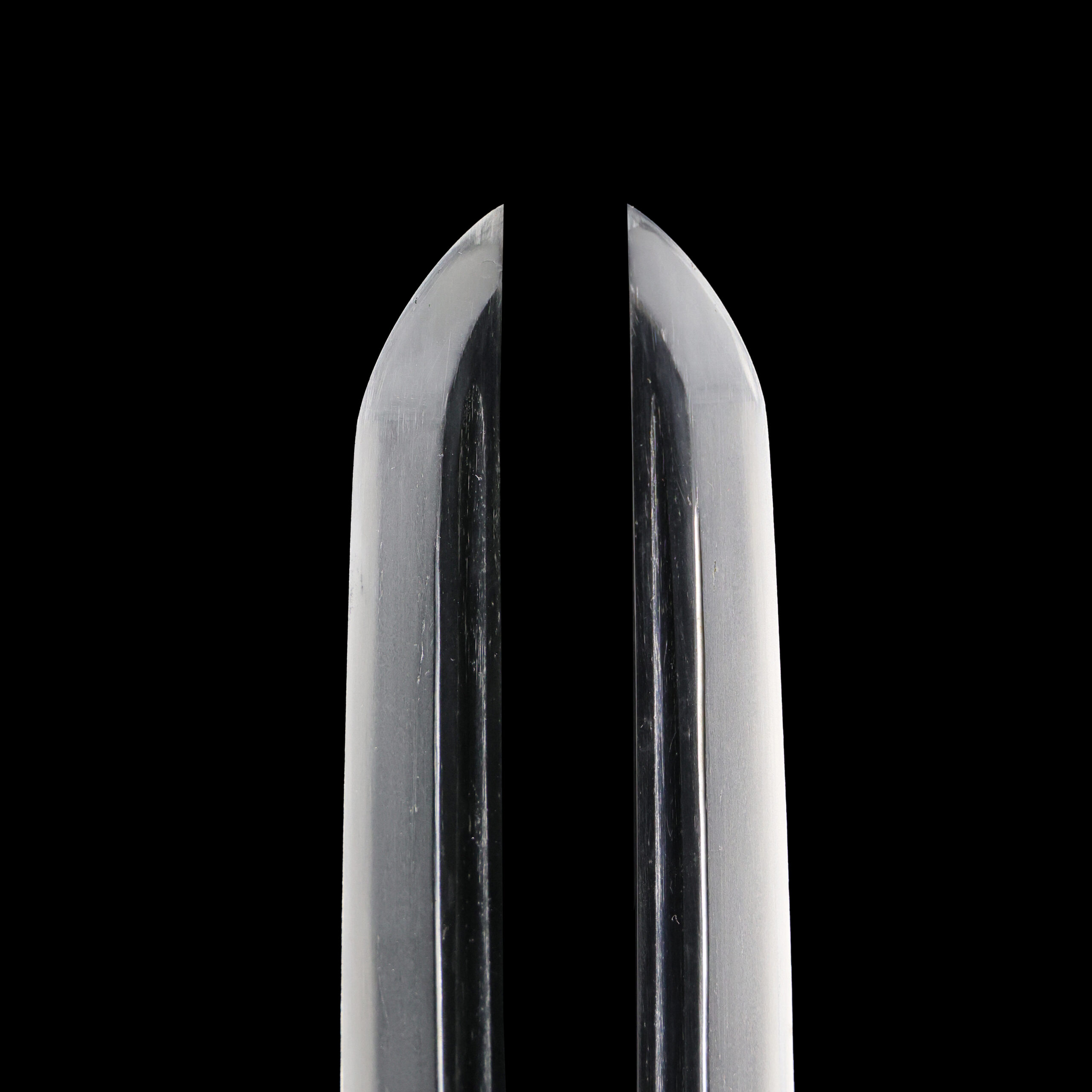
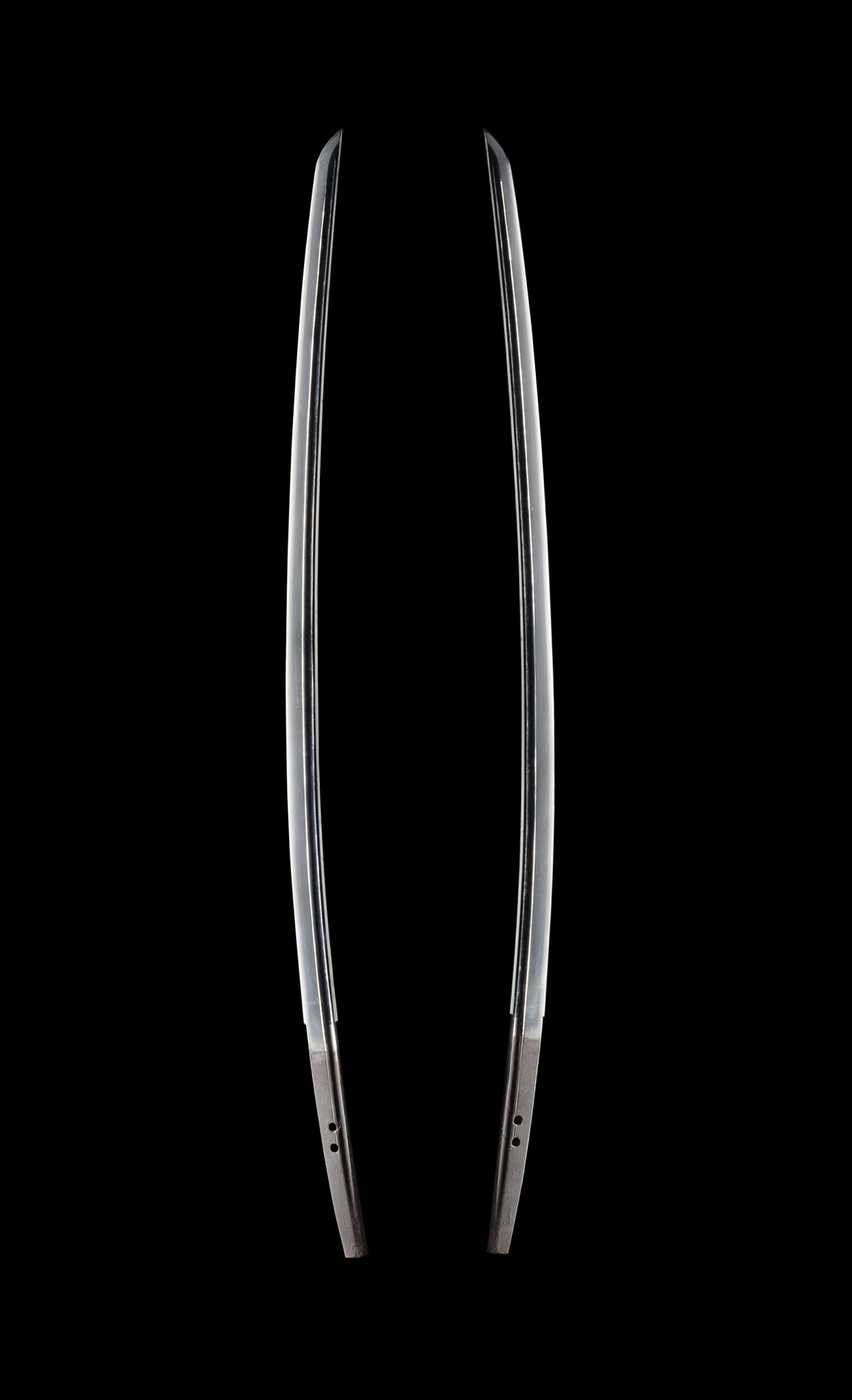
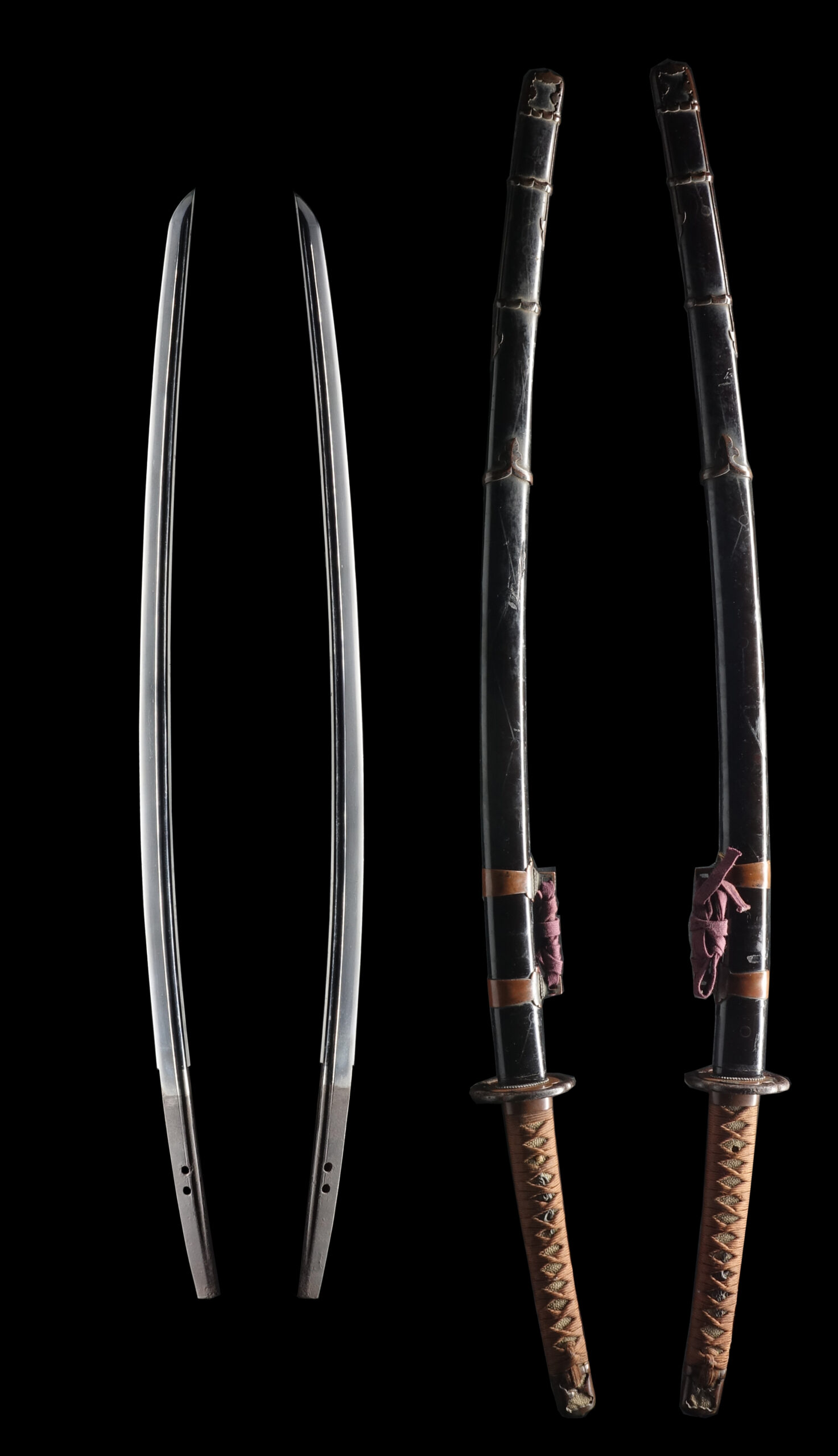
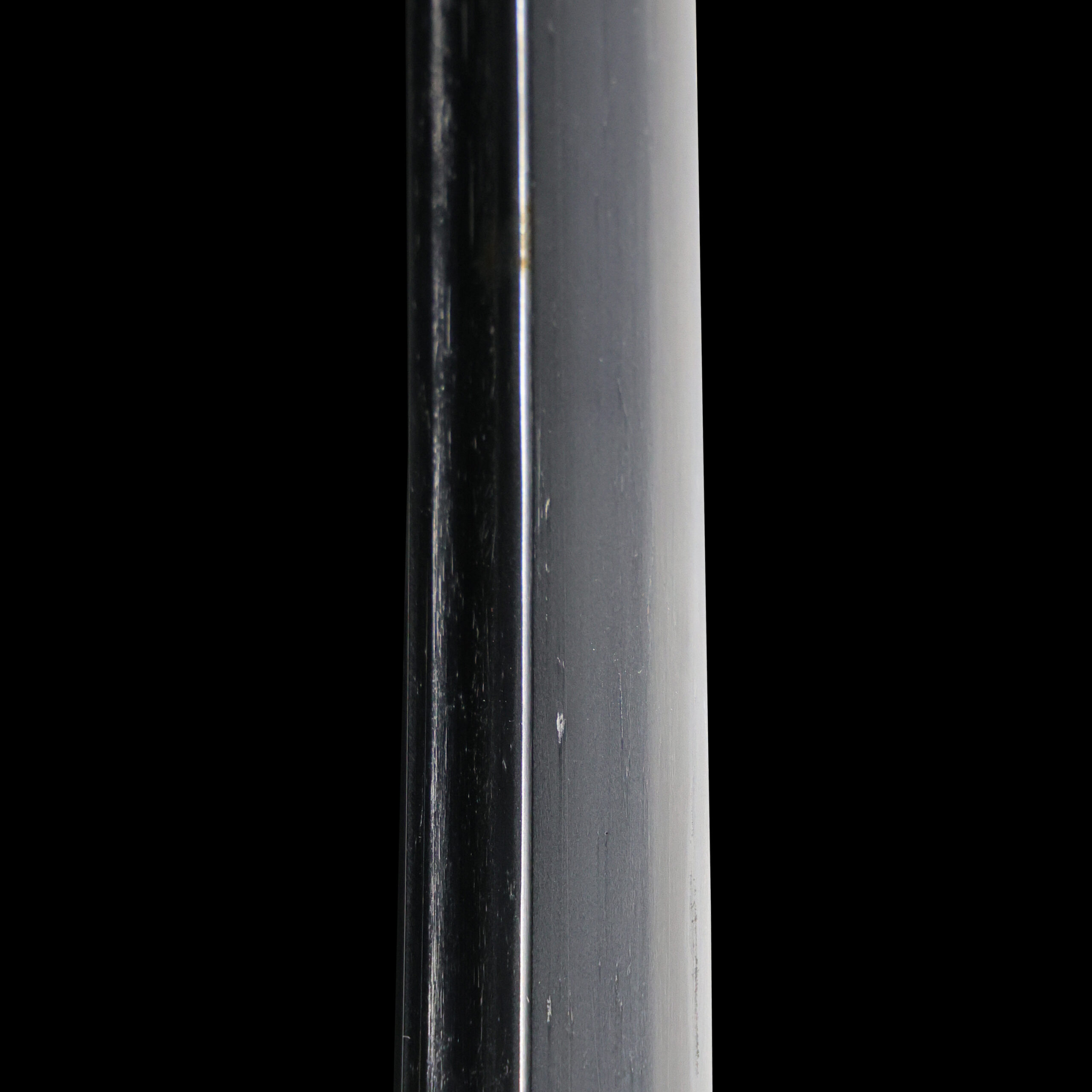
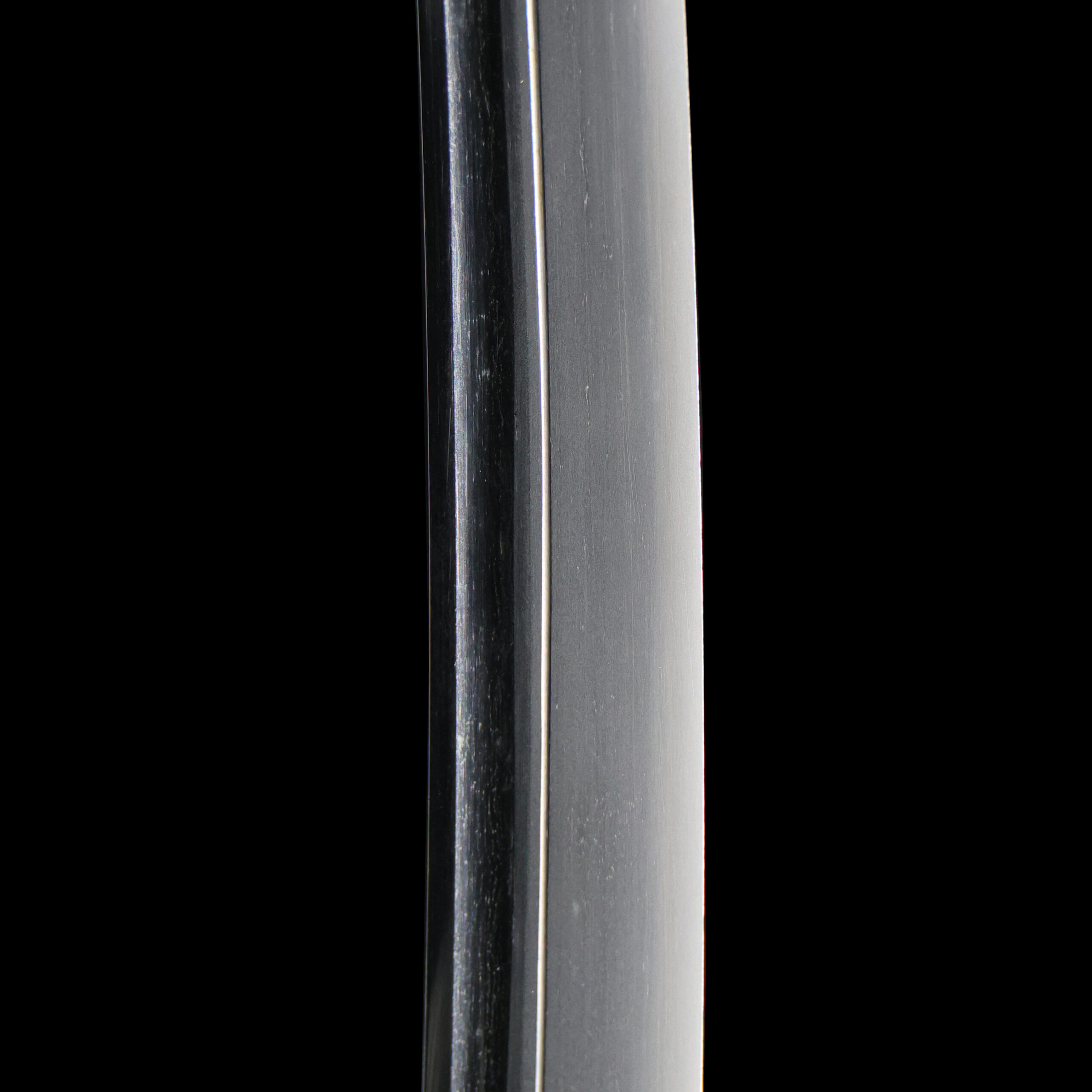
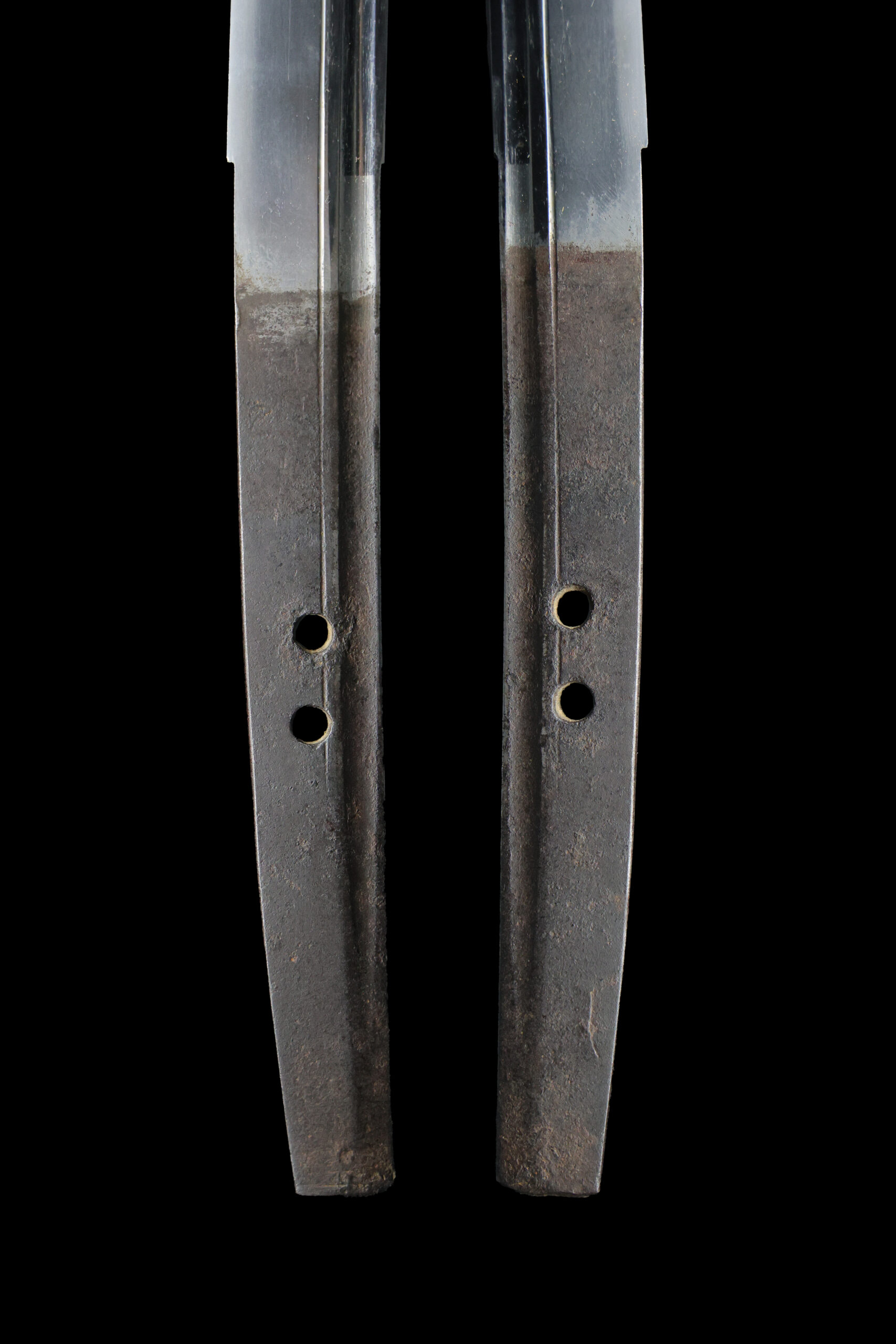
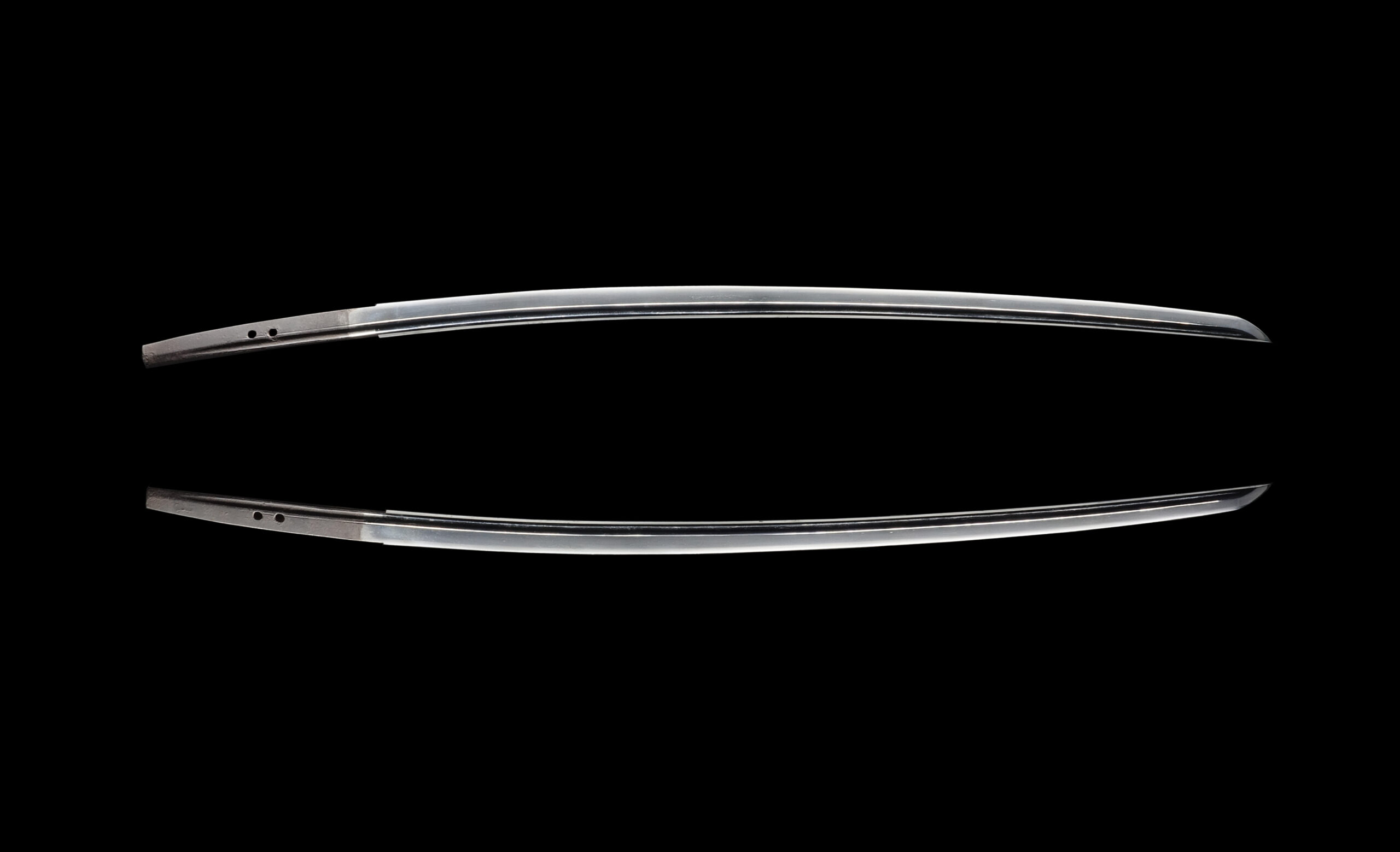
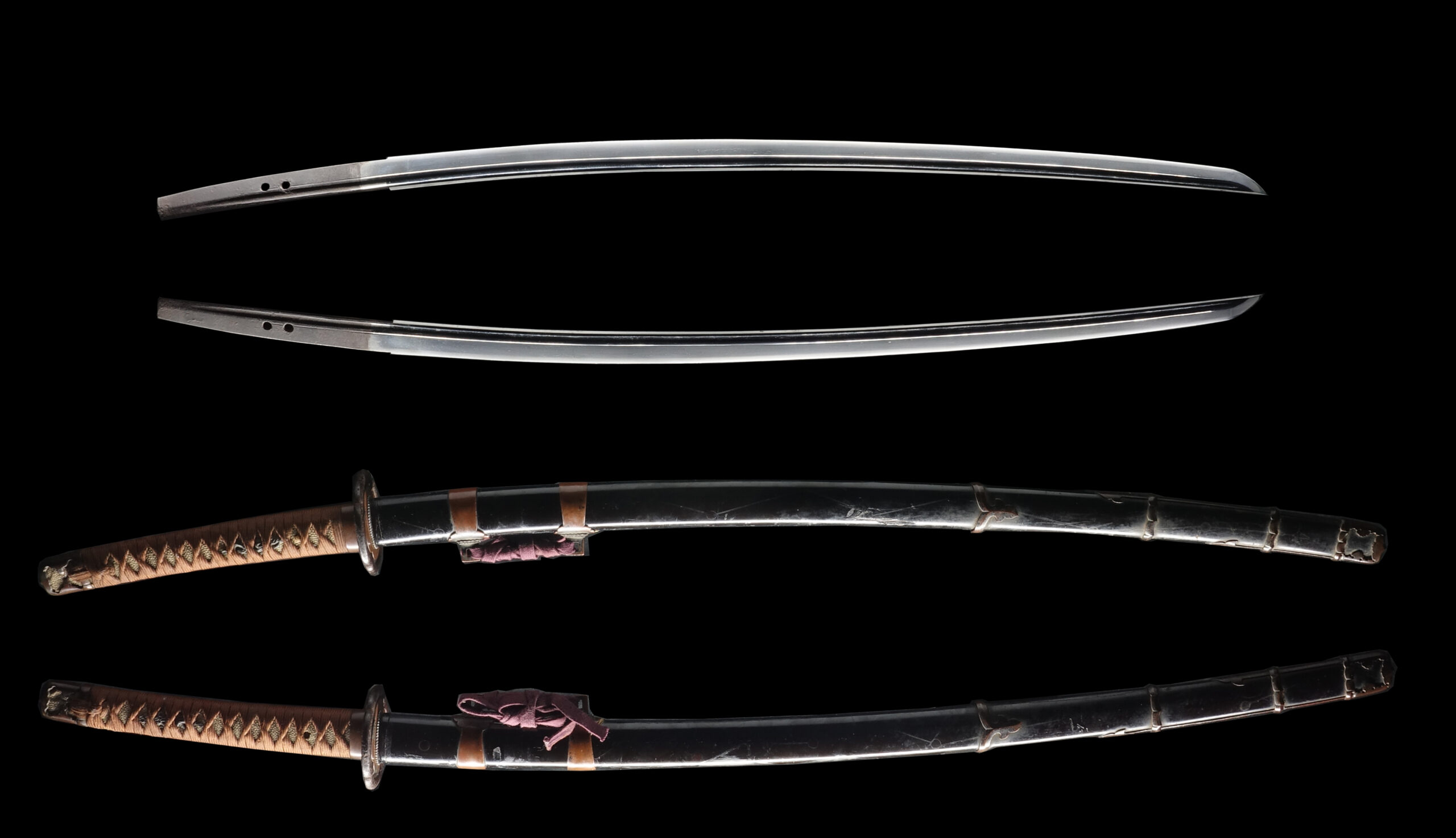
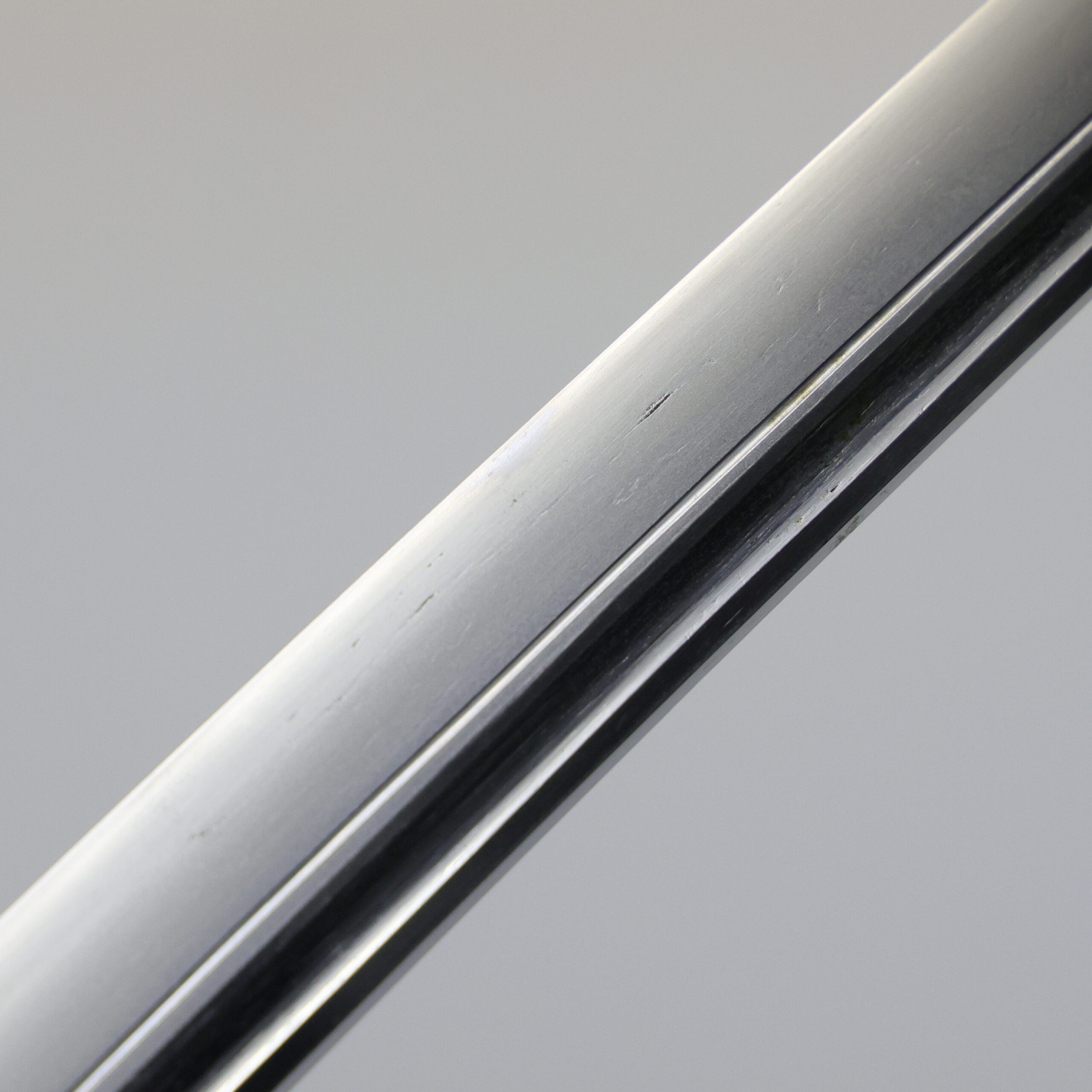
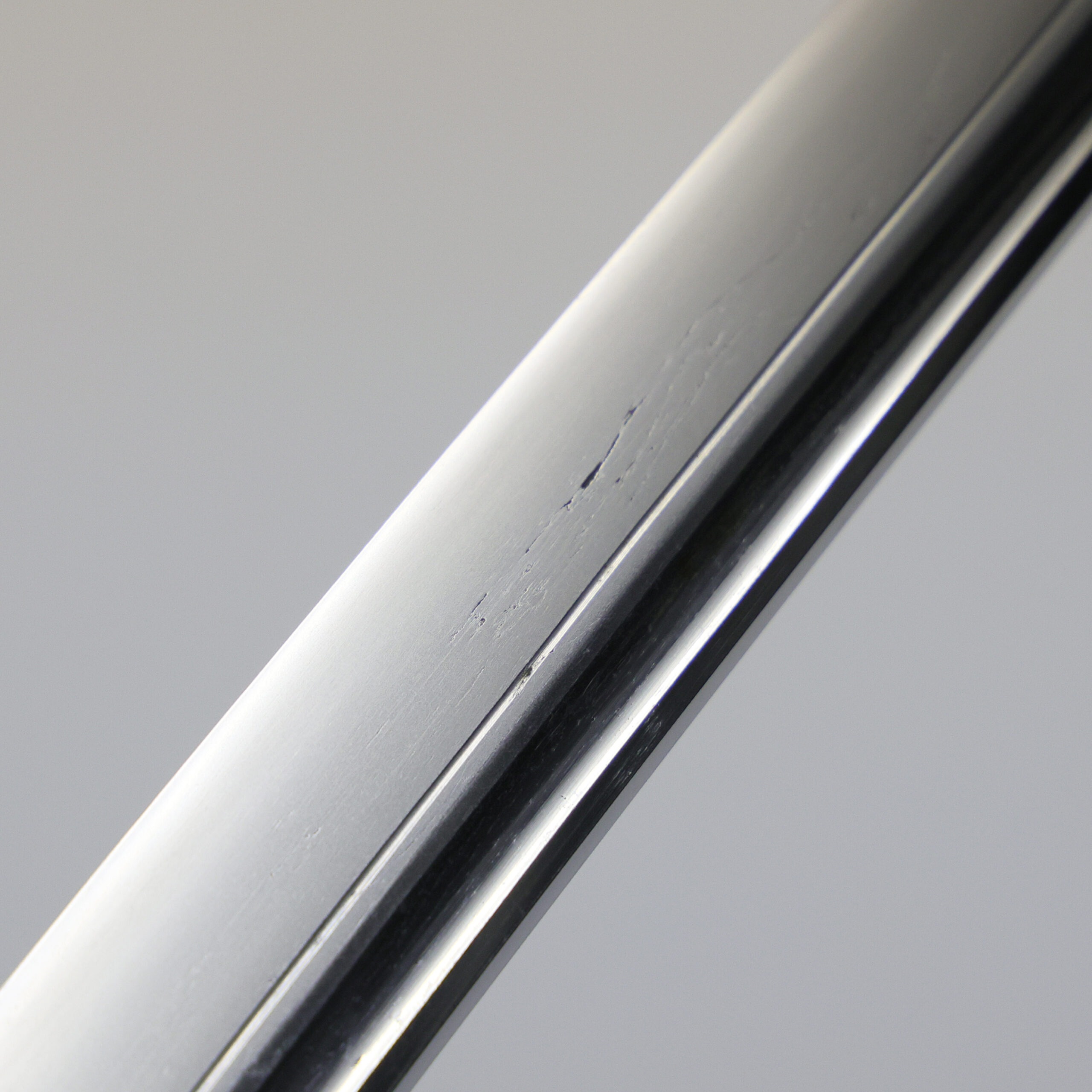
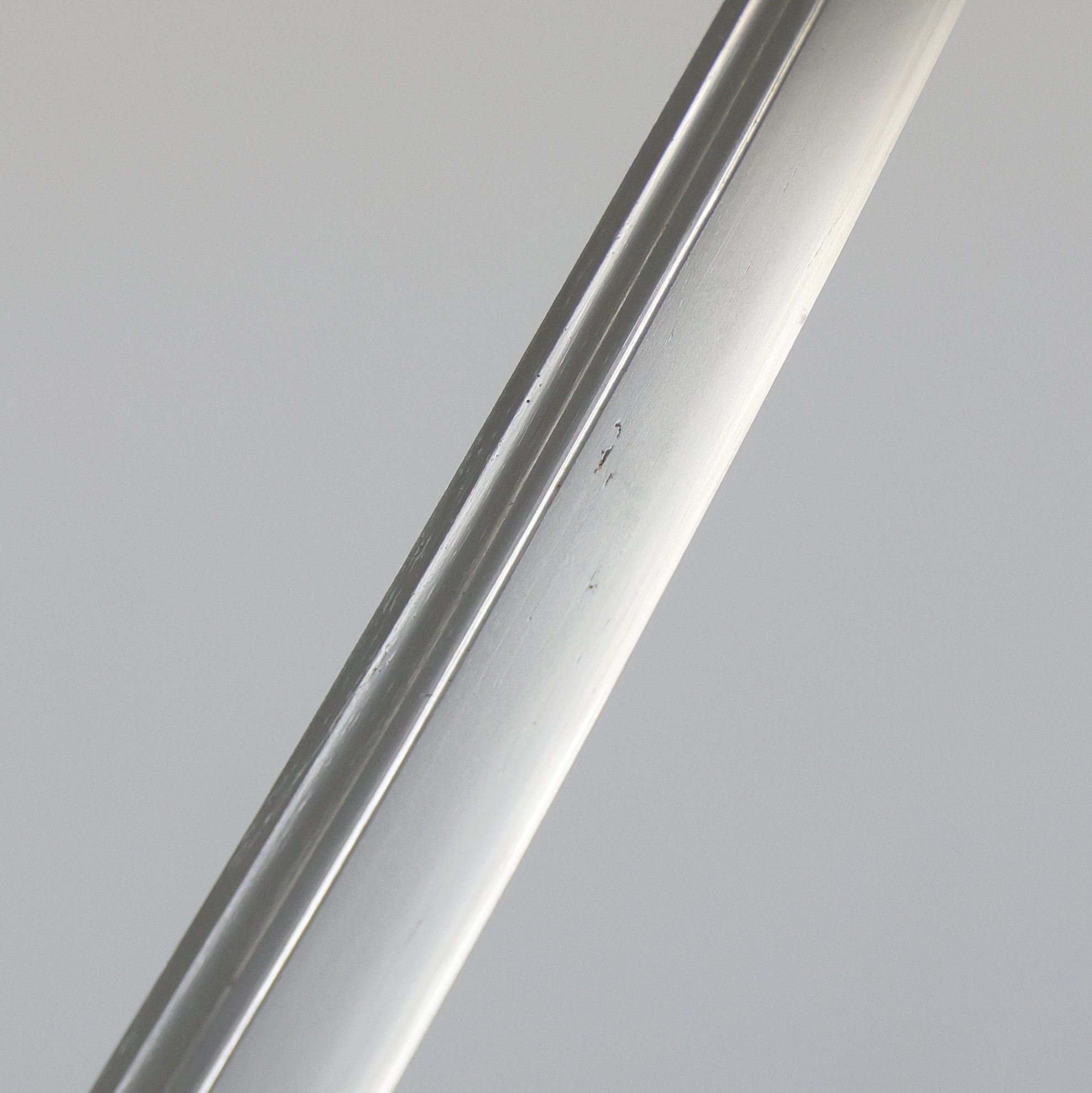
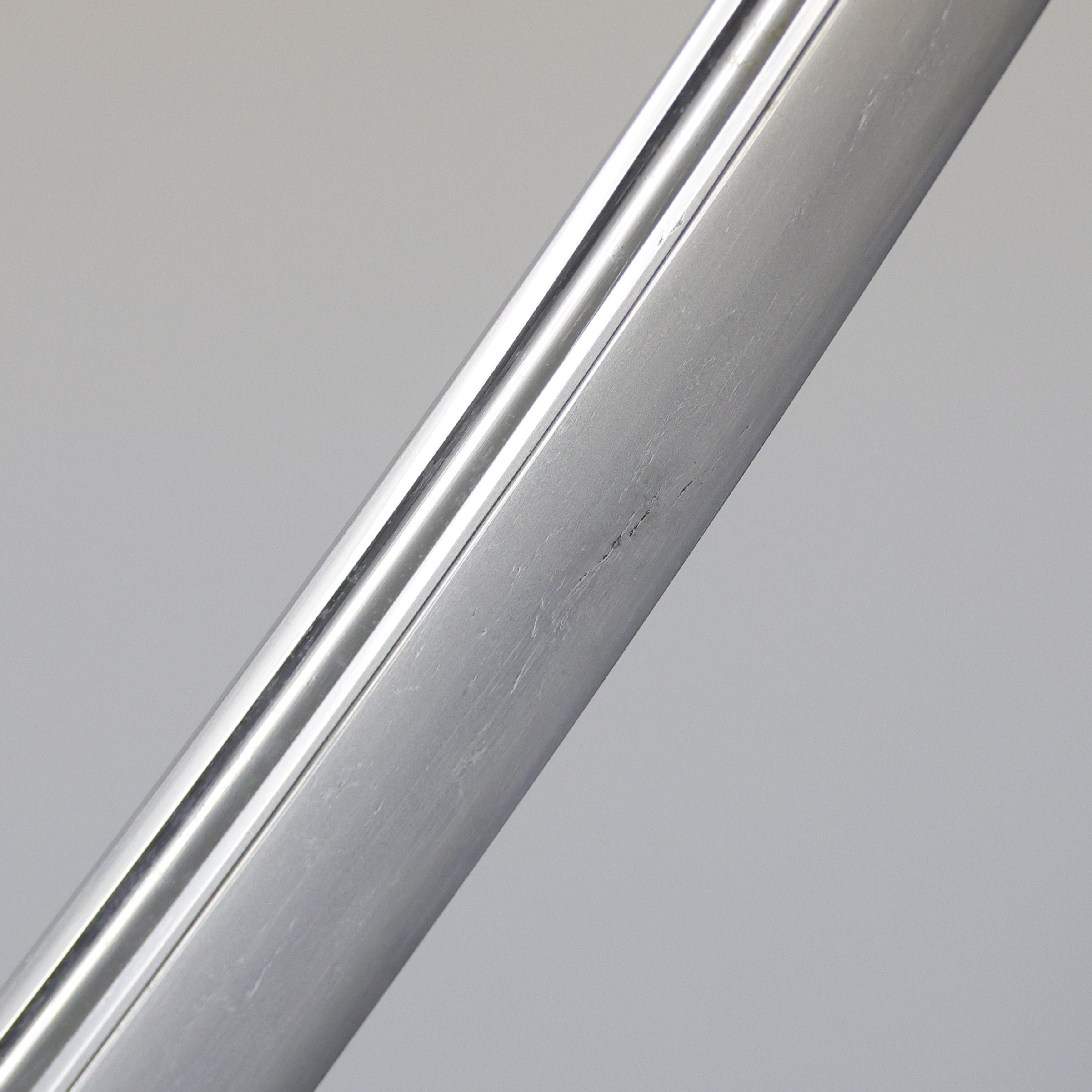
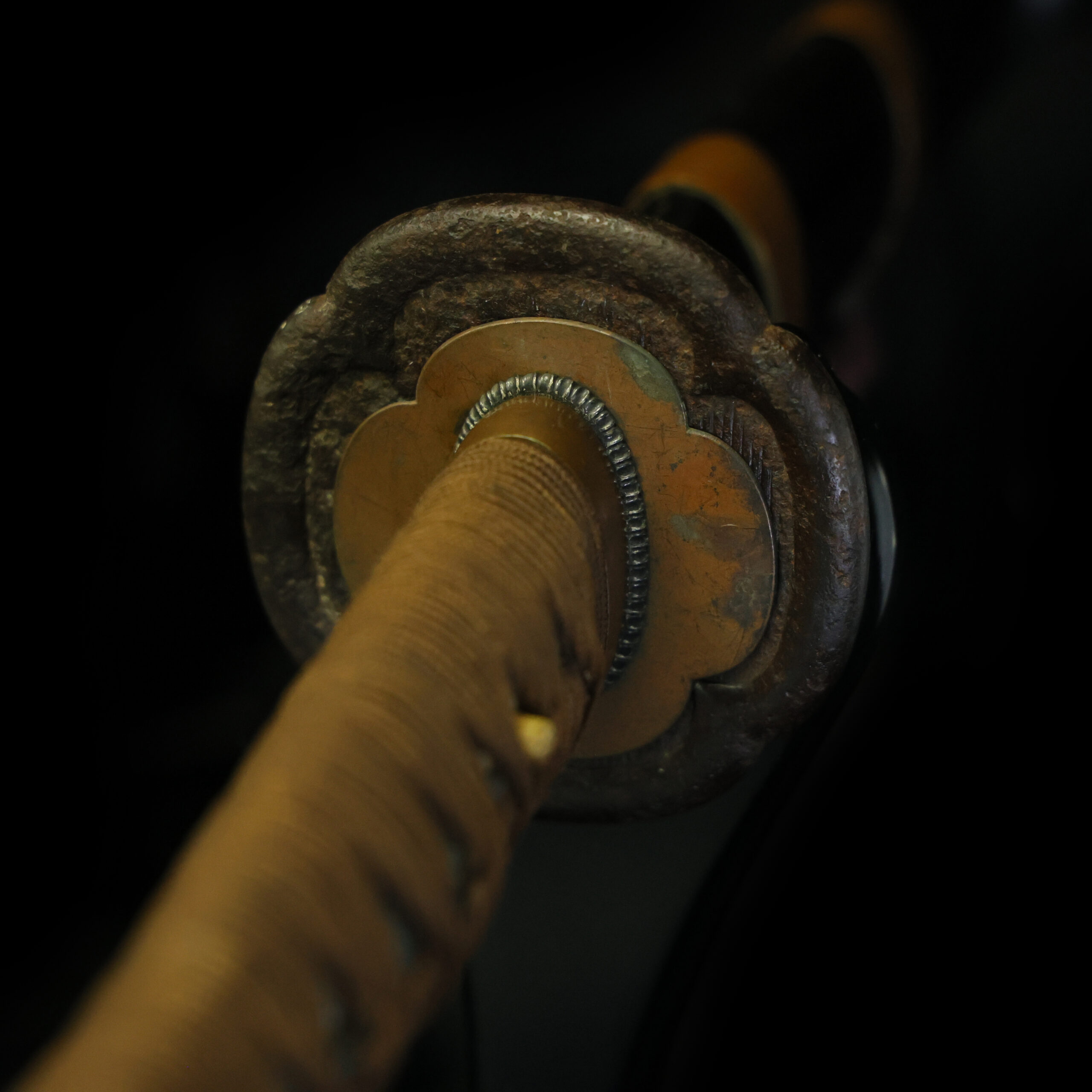
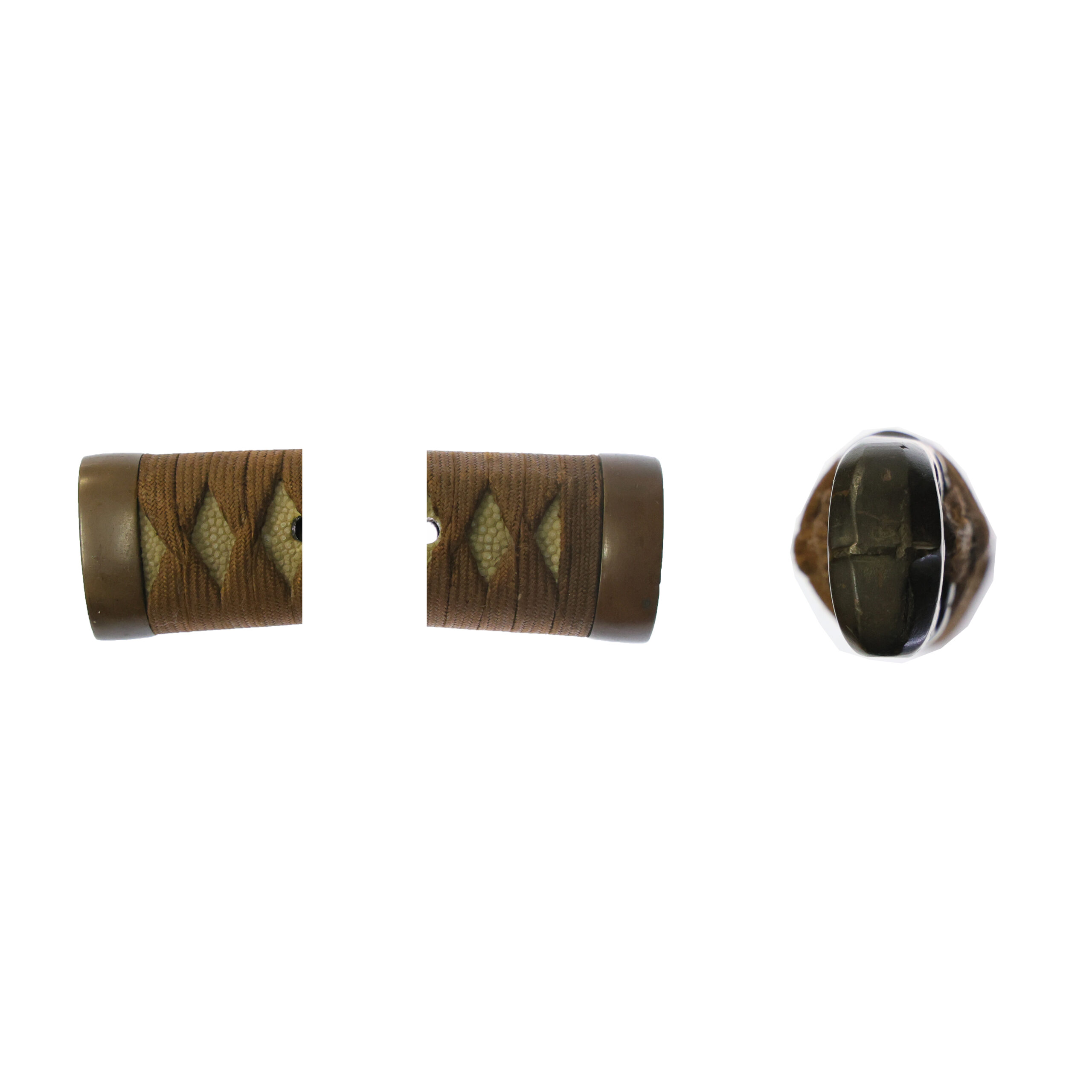
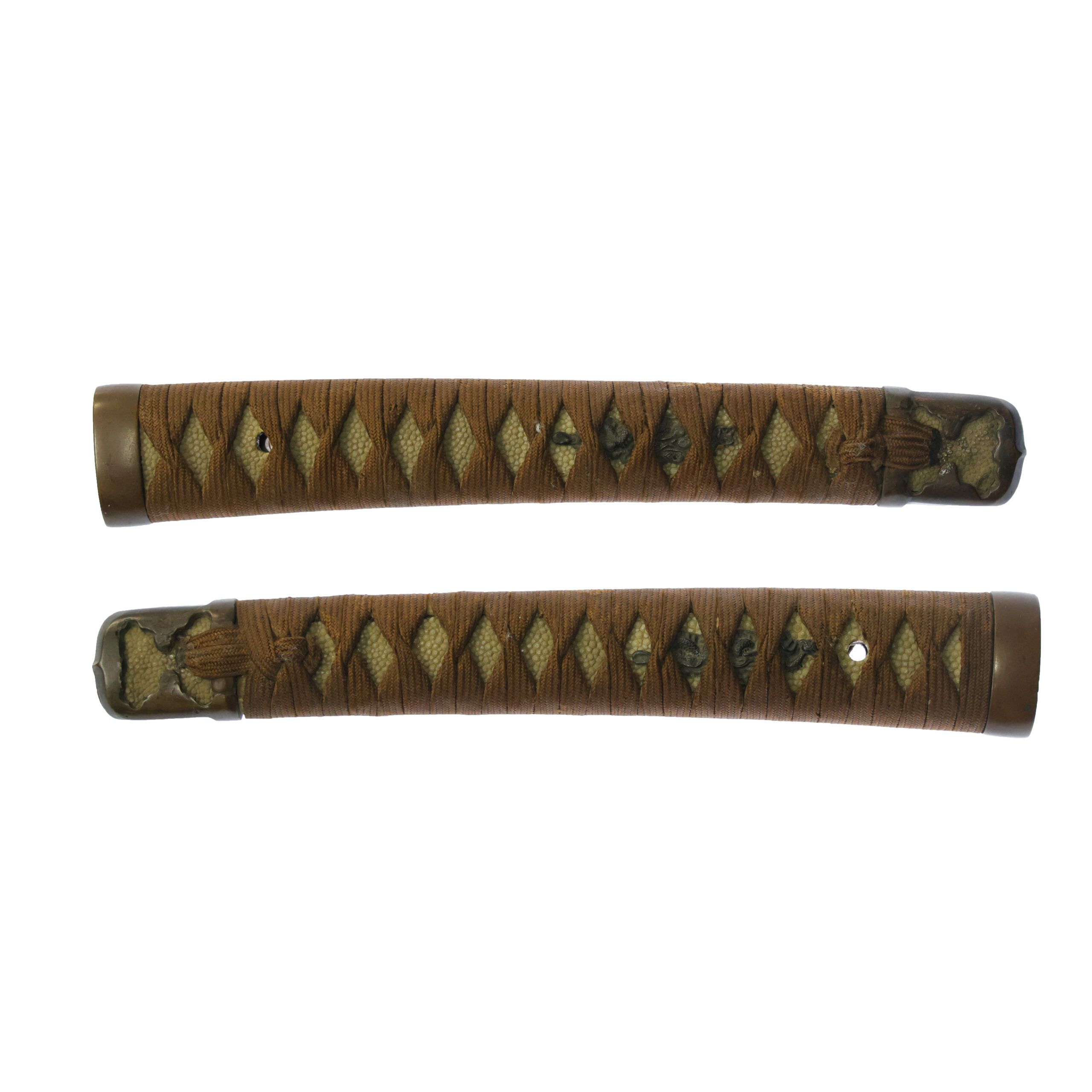
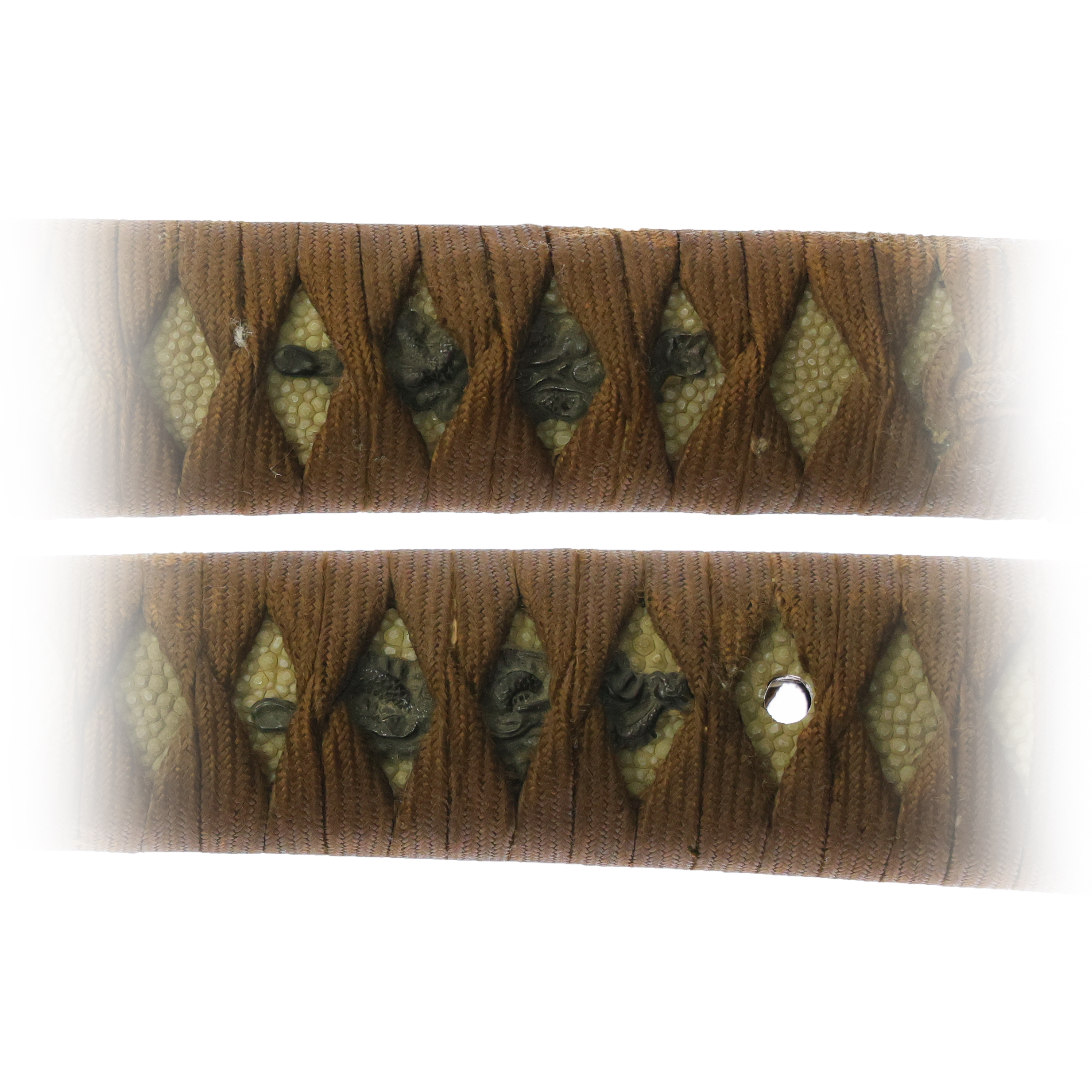
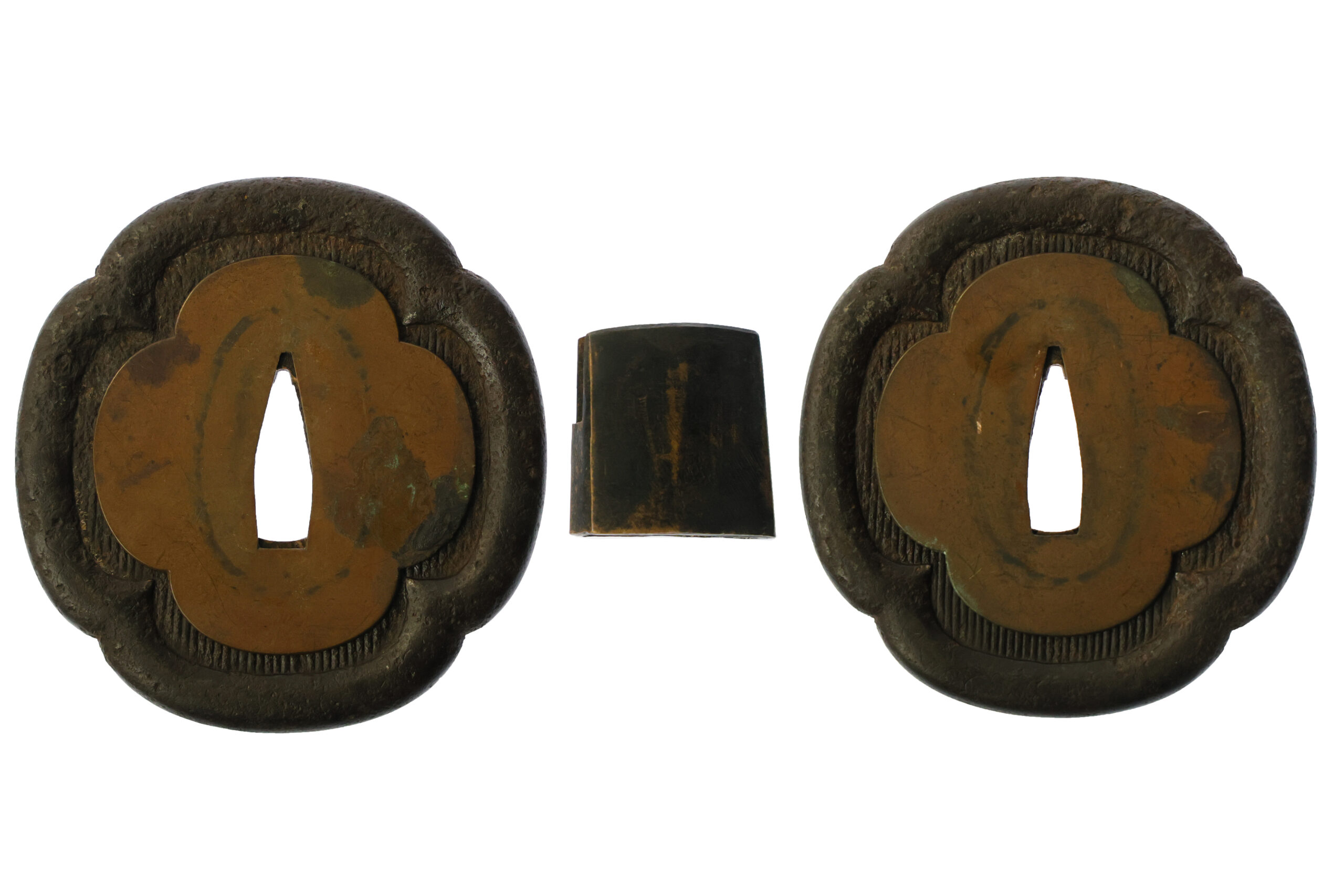
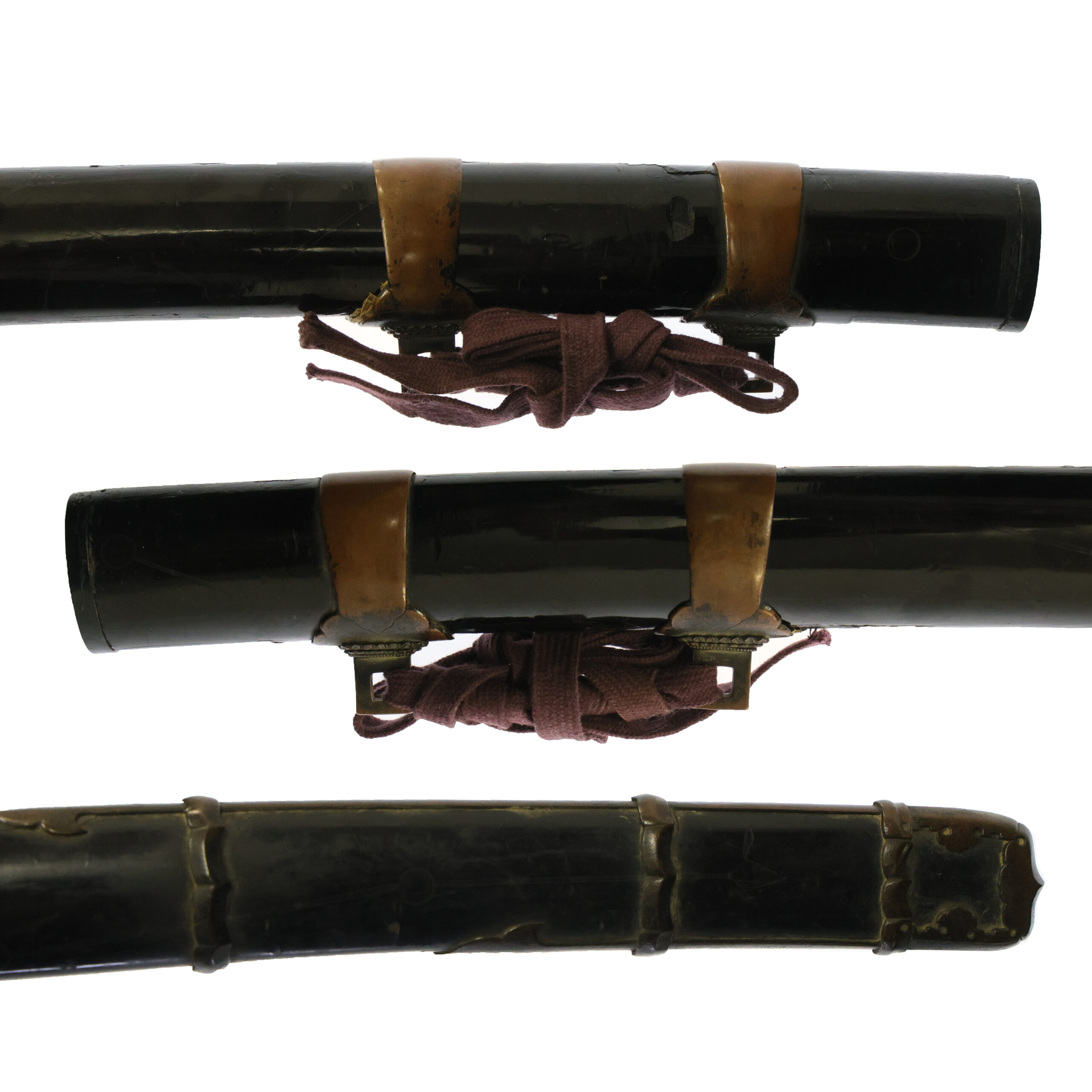
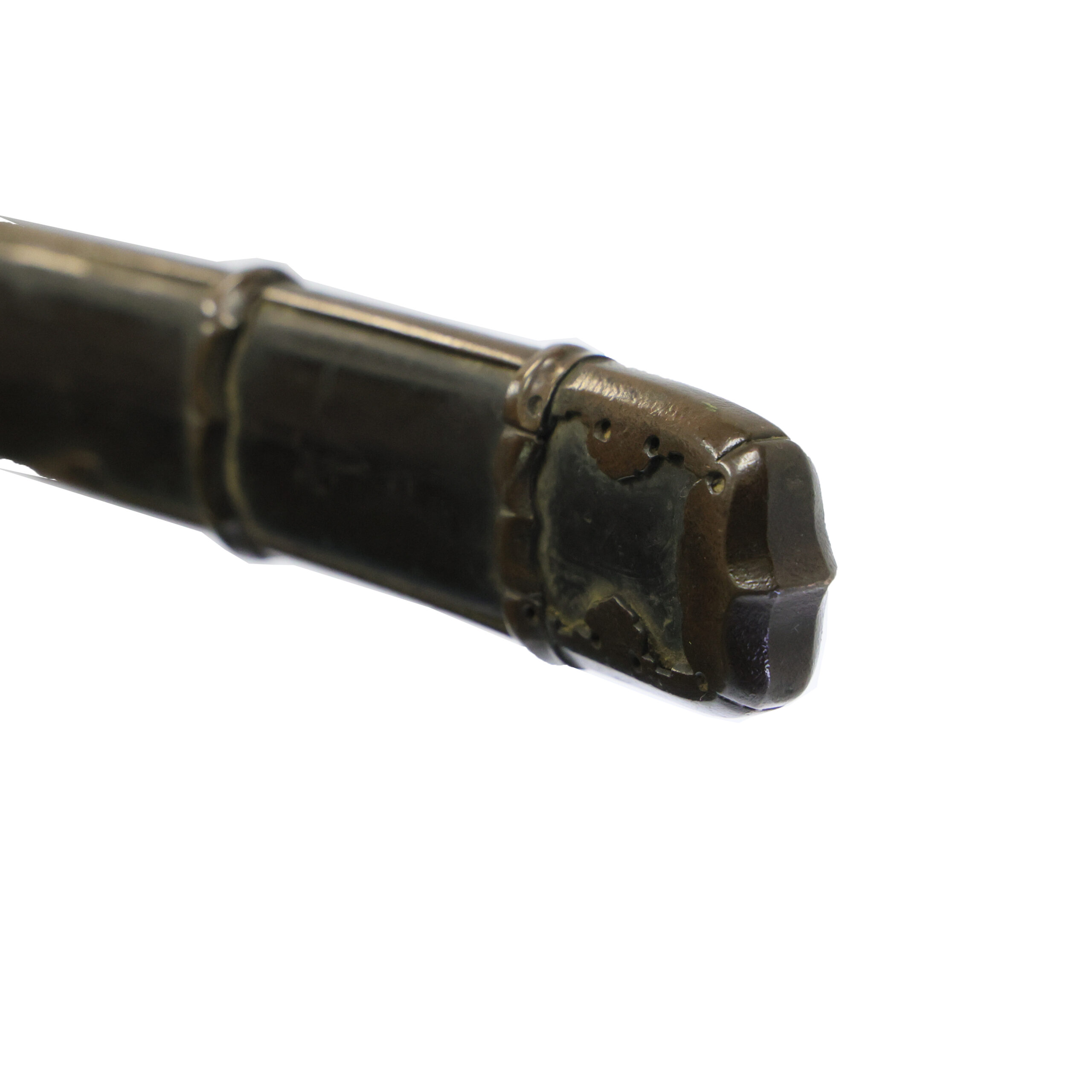
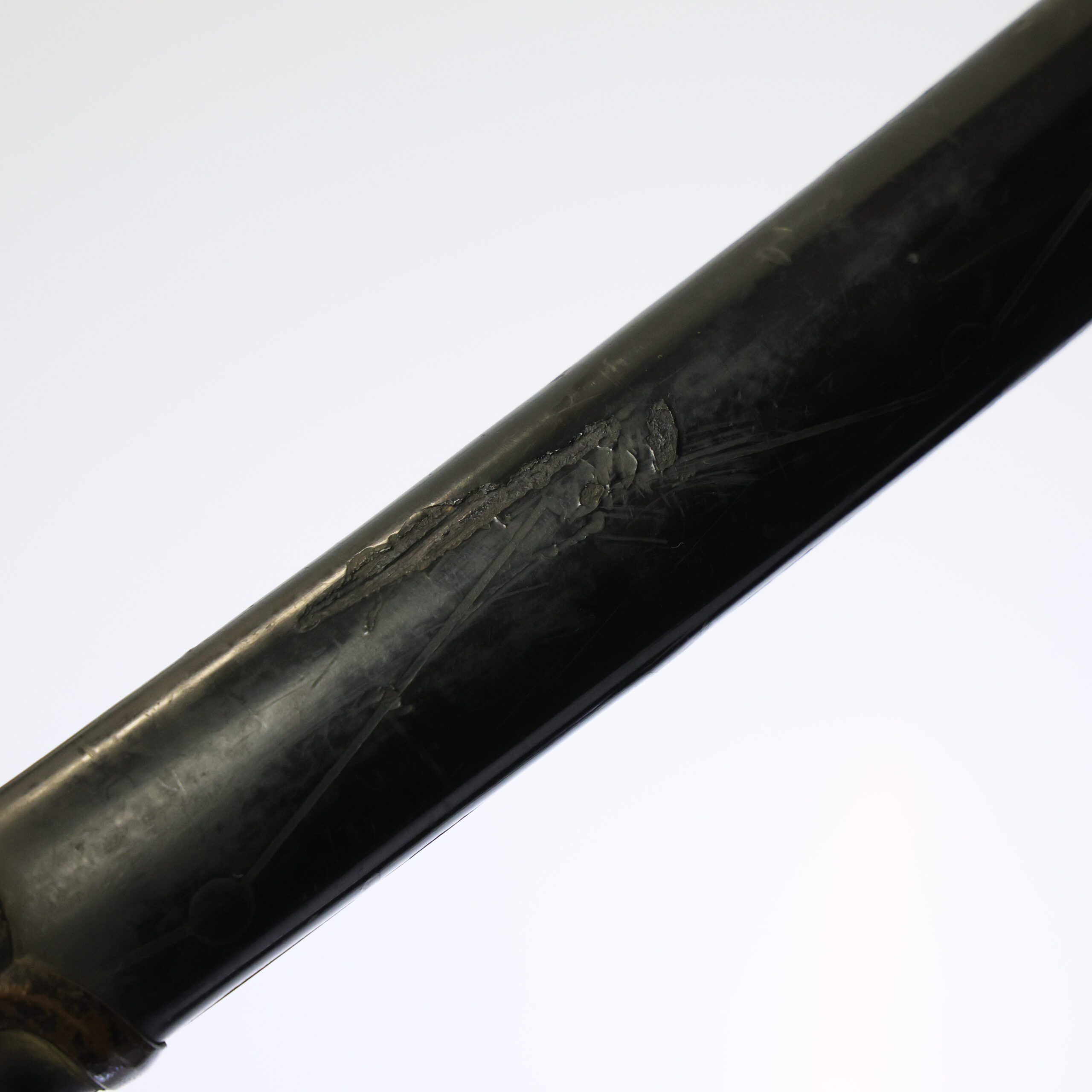
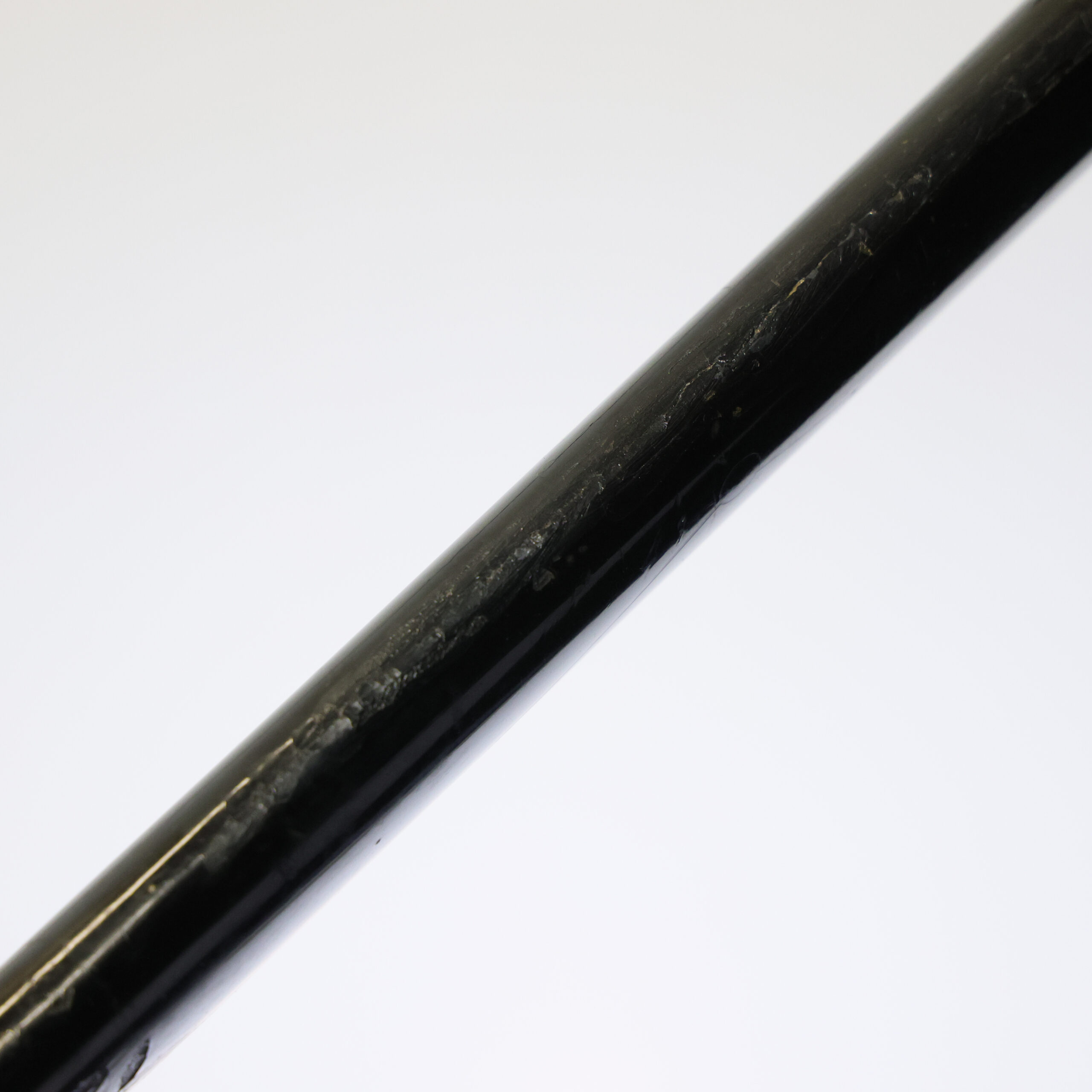
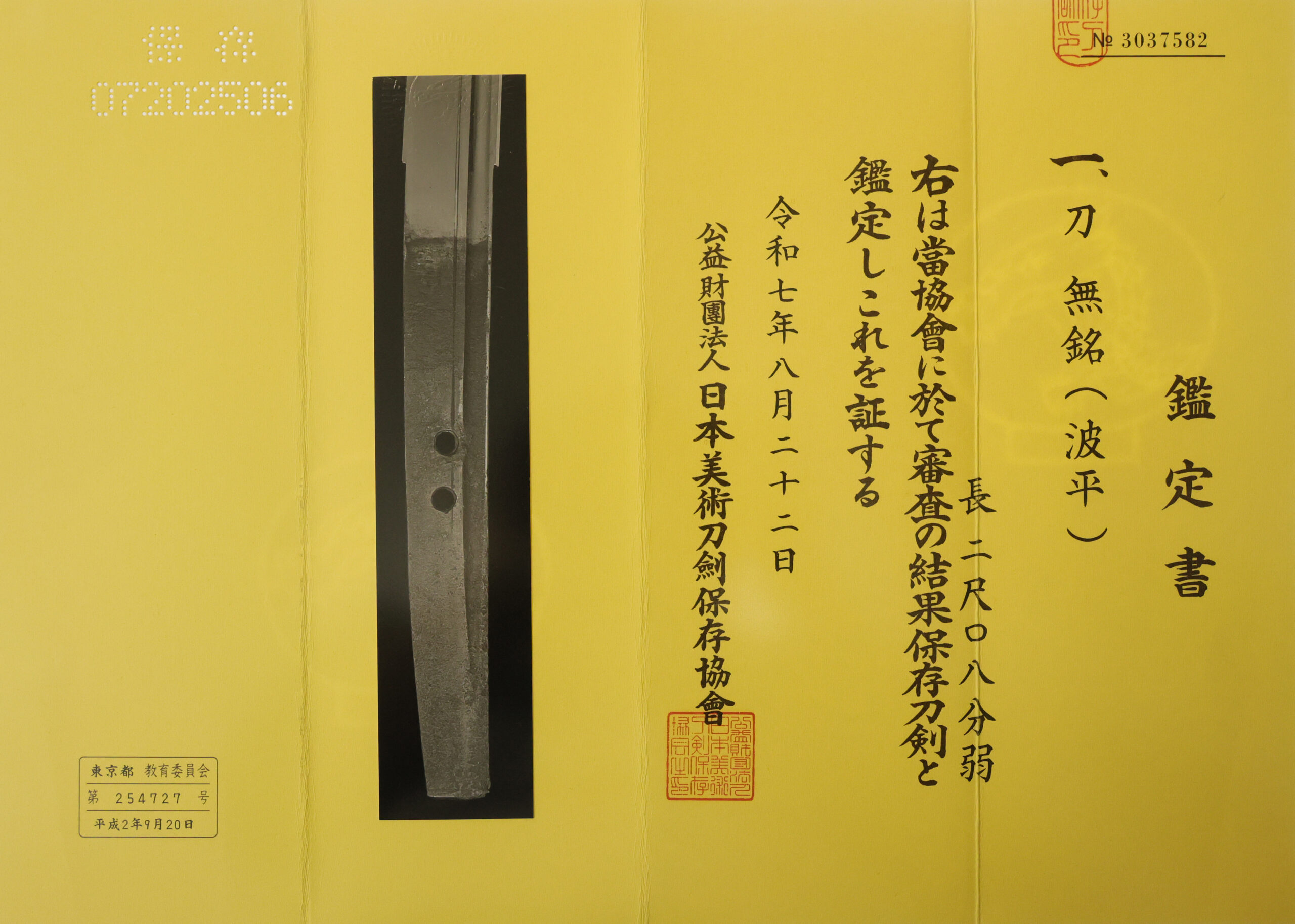
This katana is attributed to the Naminohira school during the late Nanbokucho to early Muromachi period (14th-15th century). The Naminohira school, founded by Masakuni, was influential in Satsuma province and known for smiths incorporating 'Yuki' or 'Yasu' in their names. This blade comes with an NBTHK Hozon Certificate, confirming its authenticity and artistic value.
 NihontoWatch
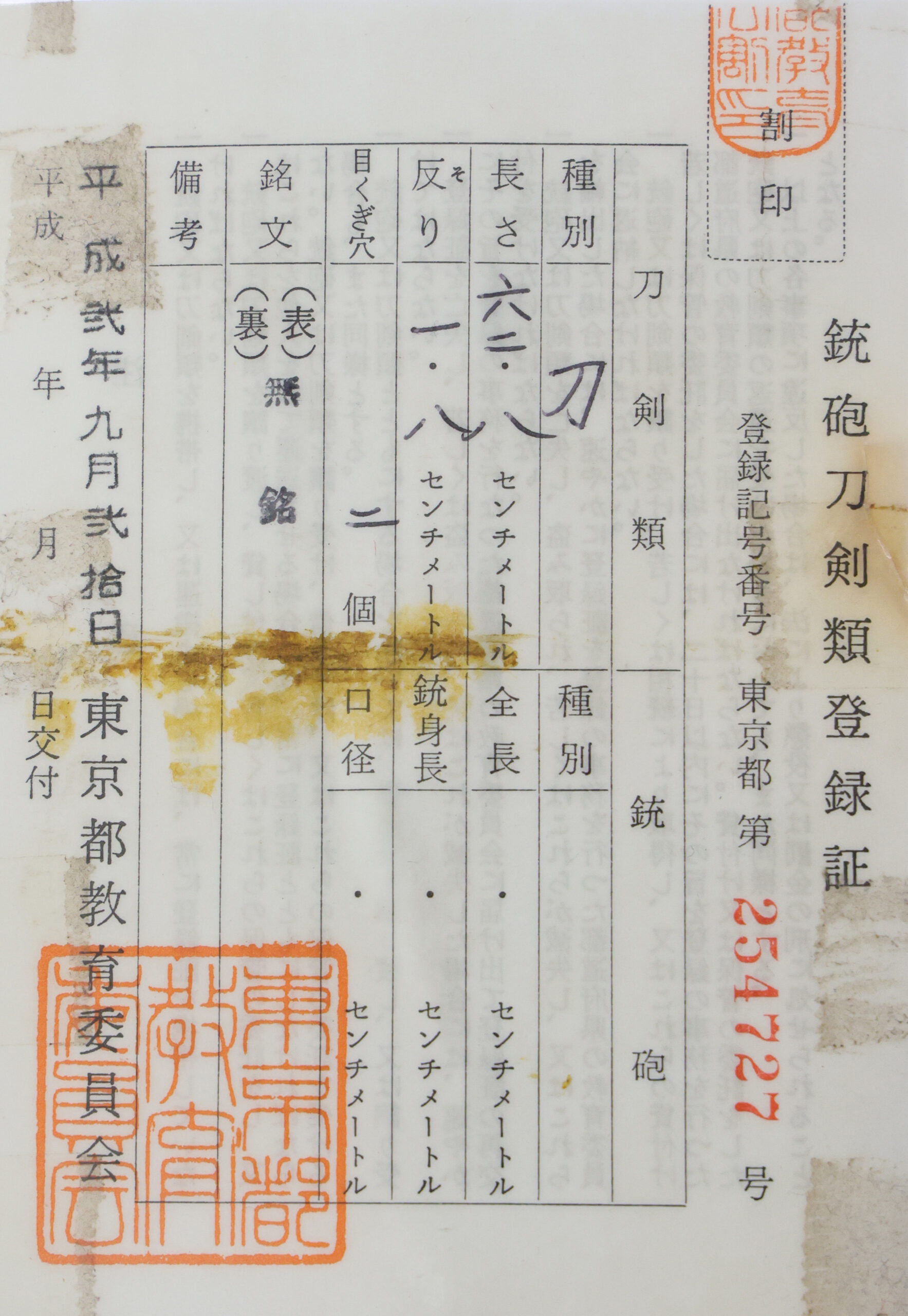
mumei · Naminohira · Koan (1278-1288) · nagasa 62.8cm · sori 1.8cm
Wakimono · Satsuma
15 pieces on the market now
The Naminohira school traces its origins to the late Heian period, when a swordsmith named Masakuni migrated from Yamato Province and established himself at Naminohira in Taniyama District, Satsuma Province. His son Yukiyasu succeeded him, and the lineage continued unbroken into the late Edo shinshintō era. The collective term Ko-Naminohira designates smiths and works dating no later than the Nanbokuchō period, distinguishing the school's formative generations from later practitioners. Learn more →
| Smith | Era | Designated |
|---|---|---|
| Yukiyasu行安 | 1308-1311 | 10 |
| Yasutsugu安次 | 1224-1225 | 0 |
| Yasutsugu安次 | 1375-1381 | 0 |
| Yasuyoshi安吉 | 1469-1487 | 0 |
| Naminohira Yoshiyasu波平義安 | 1395 | 1 |
Certifies a genuine blade worth preserving: a signature confirmed correct, or, if unsigned, an era, province, and school that the NBTHK can reliably identify.
The NBTHK (Nihon Bijutsu Tōken Hozon Kyōkai, the Society for the Preservation of Japanese Art Swords) is a public-interest incorporated foundation founded in 1948 and supervised by Japan’s Agency for Cultural Affairs (Bunkachō); it is based at the Japanese Sword Museum in Tokyo. Its expert panels physically examine each submitted work (shinsa) and issue a certificate (kanteishō) ranking it by artistic and historical merit. NBTHK papers are the most widely recognized standard of authentication for Japanese swords and fittings.
NBTHK official siteReturns/exchanges limited to defects caused by shipping (except willful misconduct or gross negligence by the company); customers must contact within 72 hours of receiving the product.
This katana is attributed to the Naminohira school during the late Nanbokucho to early Muromachi period (14th-15th century). The Naminohira school, founded by Masakuni, was influential in Satsuma province and known for smiths incorporating 'Yuki' or 'Yasu' in their names. This blade comes with an NBTHK Hozon Certificate, confirming its authenticity and artistic value.
NihontoWatchmumei · Naminohira · Koan (1278-1288) · nagasa 62.8cm · sori 1.8cm
Wakimono · Satsuma
15 pieces on the market now
The Naminohira school traces its origins to the late Heian period, when a swordsmith named Masakuni migrated from Yamato Province and established himself at Naminohira in Taniyama District, Satsuma Province. His son Yukiyasu succeeded him, and the lineage continued unbroken into the late Edo shinshintō era. The collective term Ko-Naminohira designates smiths and works dating no later than the Nanbokuchō period, distinguishing the school's formative generations from later practitioners. Learn more →
| Smith | Era | Designated |
|---|---|---|
| Yukiyasu行安 | 1308-1311 | 10 |
| Yasutsugu安次 | 1224-1225 | 0 |
| Yasutsugu安次 | 1375-1381 | 0 |
| Yasuyoshi安吉 | 1469-1487 | 0 |
| Naminohira Yoshiyasu波平義安 | 1395 | 1 |
Certifies a genuine blade worth preserving: a signature confirmed correct, or, if unsigned, an era, province, and school that the NBTHK can reliably identify.
The NBTHK (Nihon Bijutsu Tōken Hozon Kyōkai, the Society for the Preservation of Japanese Art Swords) is a public-interest incorporated foundation founded in 1948 and supervised by Japan’s Agency for Cultural Affairs (Bunkachō); it is based at the Japanese Sword Museum in Tokyo. Its expert panels physically examine each submitted work (shinsa) and issue a certificate (kanteishō) ranking it by artistic and historical merit. NBTHK papers are the most widely recognized standard of authentication for Japanese swords and fittings.
NBTHK official siteReturns/exchanges limited to defects caused by shipping (except willful misconduct or gross negligence by the company); customers must contact within 72 hours of receiving the product.