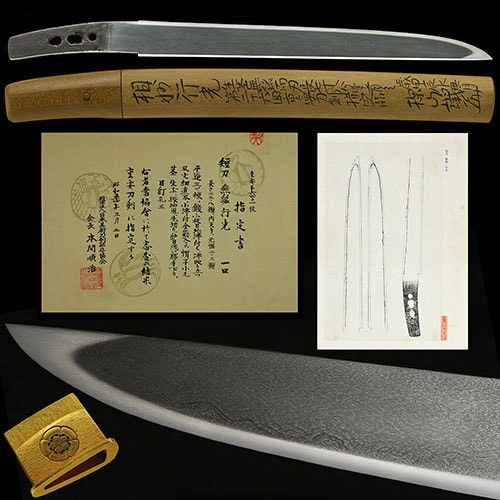
In the Sengoku era the school served a second warrior court: the Later Hōjō at Odawara, whose patronage kept the Tsunahiro line forging hitatsura for the uchigatana age until the castle fell to Hideyoshi in 1590.
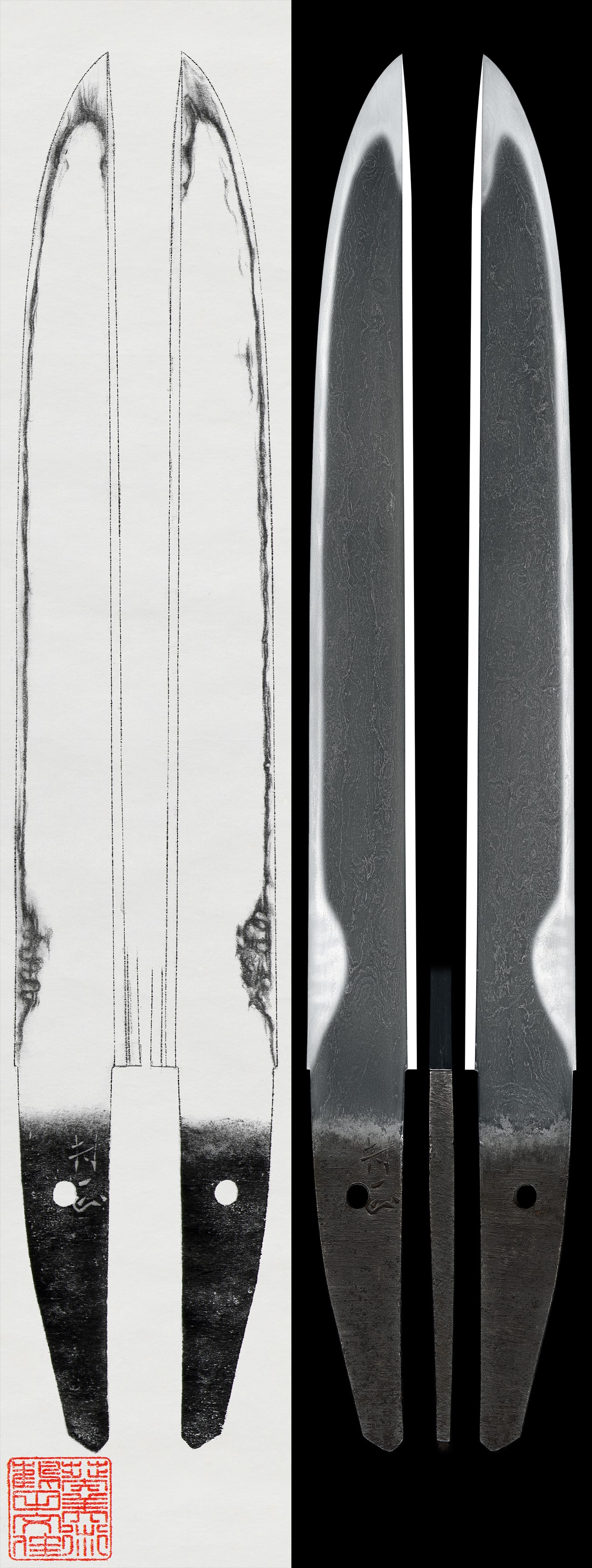
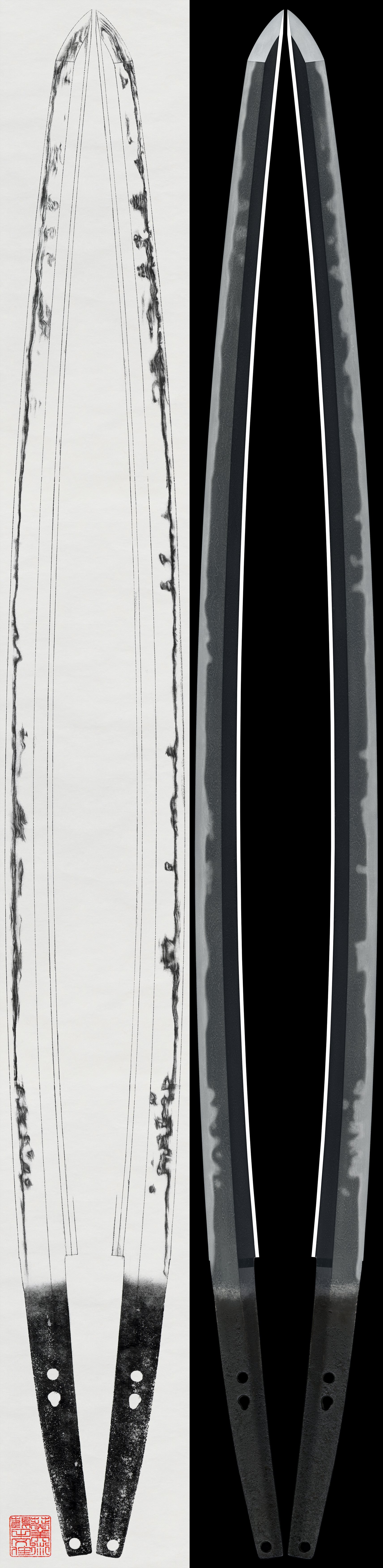
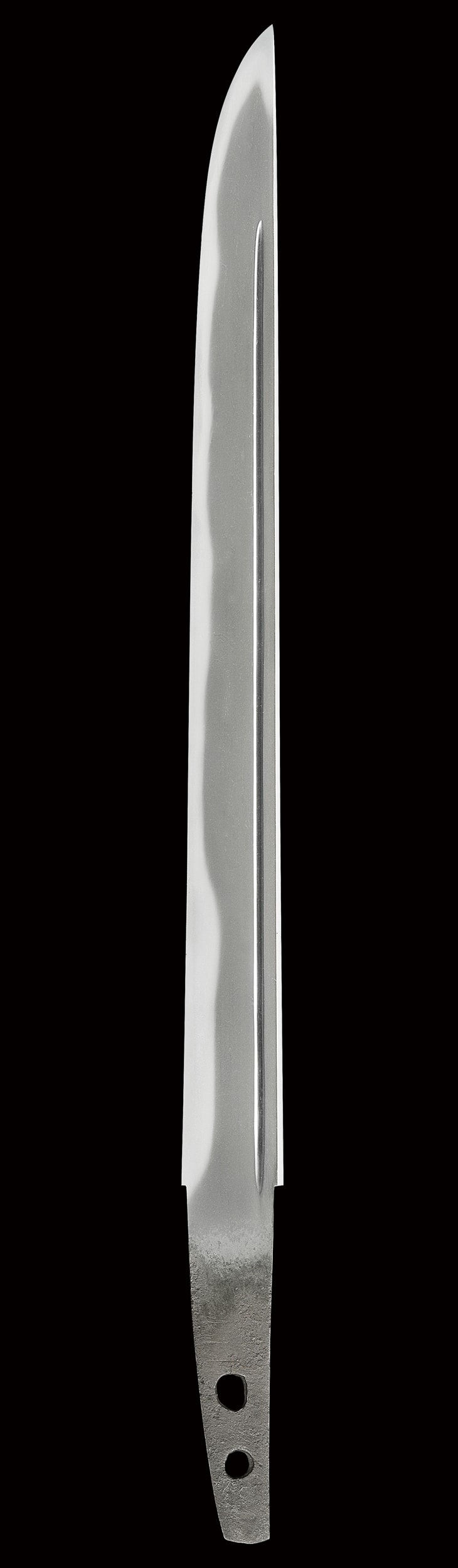
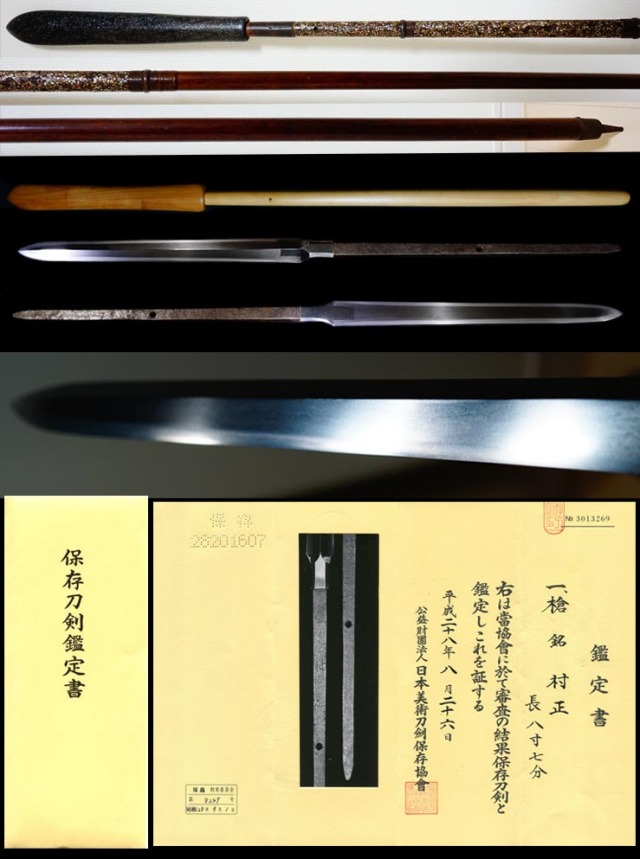
Meibun: "Muramasa" Type: Yari Nagasa: 8 sun 1 bu Sori: None Motohaba: 21 mm Motojisane: 9 mm Toshin weight: 229 grams (All measurements are approximate) With NBTHK Kanteisho (Certificate) Fukushima Prefecture Board of Education Koshirae total length: 214 cm Shirasaya total length: 97 cm Toshin total length: 49.6 cm (All measurements are approximate) Muramasa is known for the legend of haunting the Tokugawa family, famously referred to as the "Yoto" (Cursed Sword) Muramasa that brought misfortune to the Tokugawa clan. It is said that during the Battle of Sekigahara, the Eastern Army general Oda Nagataka achieved the feat of slaying Toda Katsushige. While Ieyasu was inspecting that yari, a retainer dropped it, and Ieyasu cut his finger. Upon hearing that the yari was a Muramasa, it is said that from these connections, the Tokugawa family came to detest Muramasa. These anecdotes are believed to have established the legend of Muramasa as a cursed blade that opposed the Tokugawa Shogunate. This is a very precious zaimei Muramasa yari, which served as the origin of such yoto legends. The koshirae is a grand piece decorated with raden, exceeding two meters with a total length of approximately 214 cm. Furthermore, this is a very rare zaimei Muramasa that has only recently obtained its kanteisho. While the production of yari is considered difficult, this piece has no noteworthy defects; the jitetsu and meticulous tanren possess a magnificent presence and a dignified quality that overwhelms the viewer. Please, by all means, add this to your family treasures. It is possible to house the yari in the koshirae, but because the tsuka is extremely tight, it will be very difficult to withdraw the toshin if it is inserted properly. Please note in advance that while the tsunagi is cracked at the bottom, it still functions as a tsunagi. 0 Yen (Tax included)
 NihontoWatch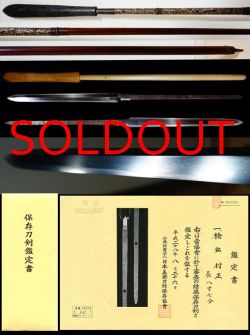
Soshu-den · Ise
6 pieces on the market now
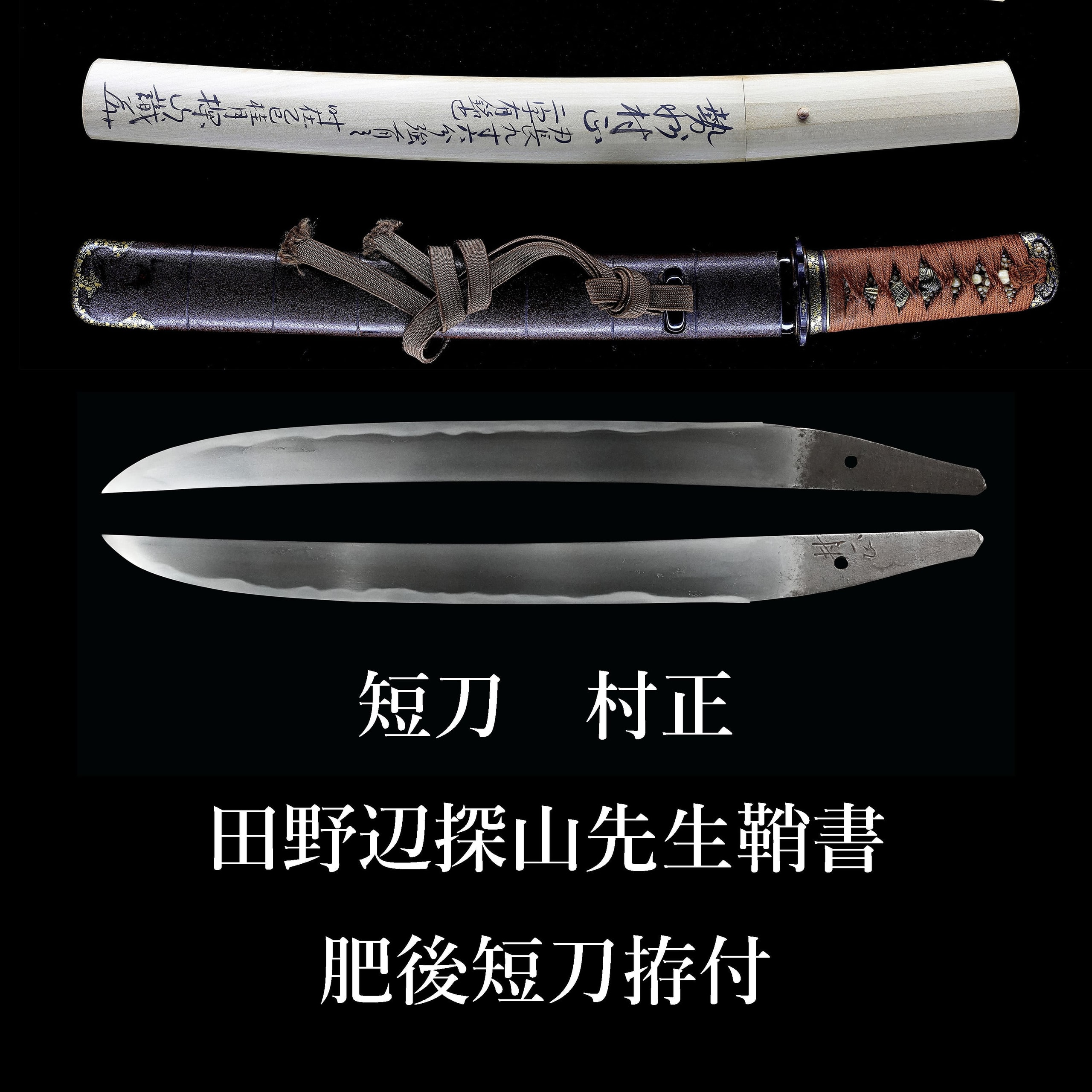
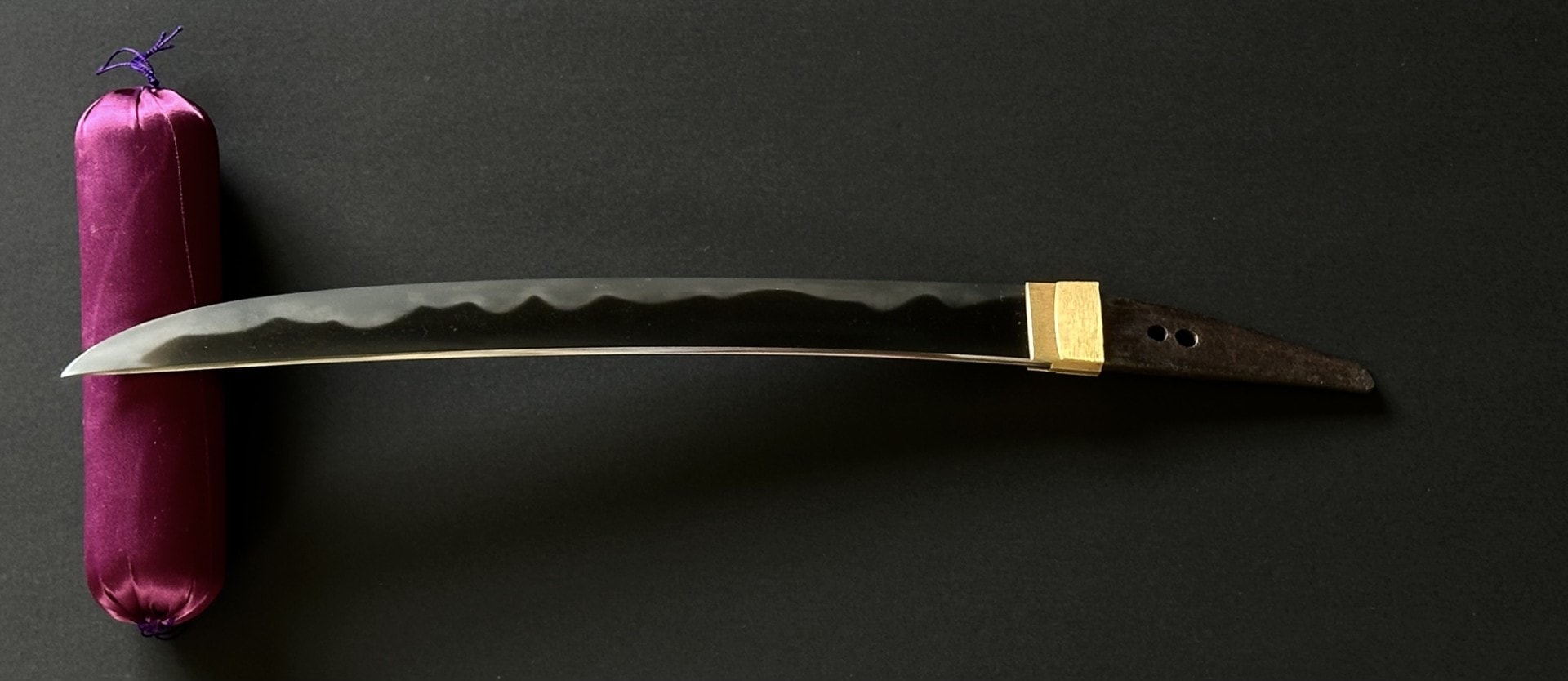
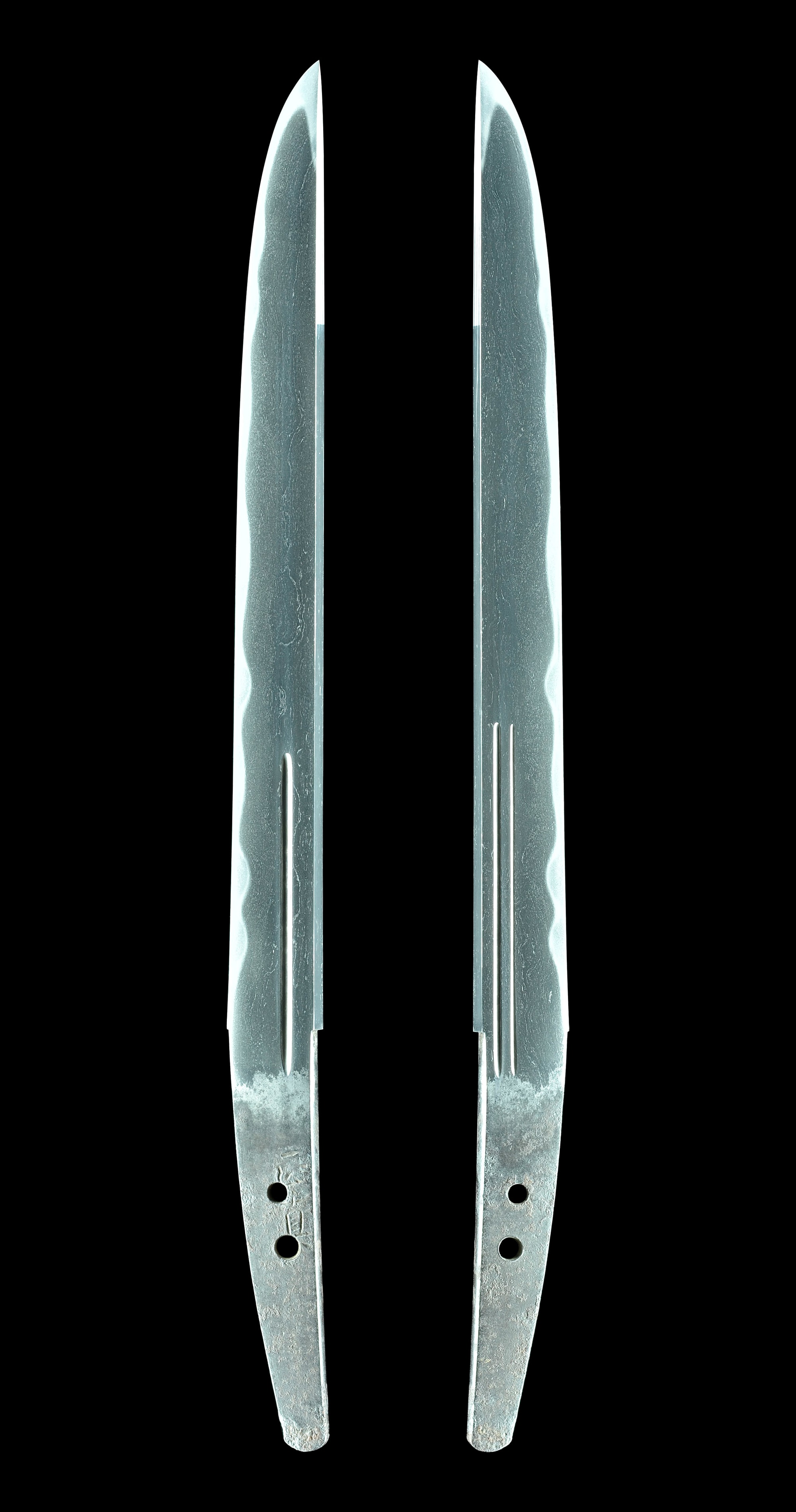
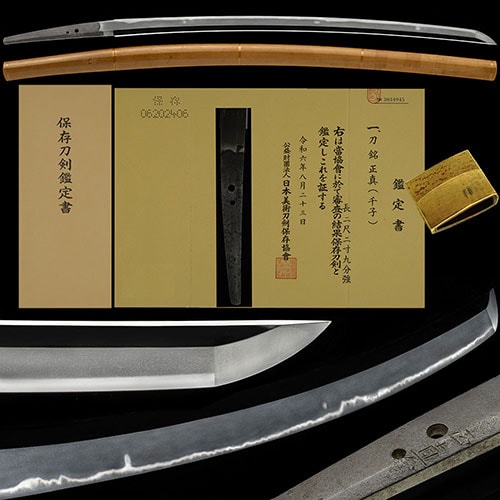
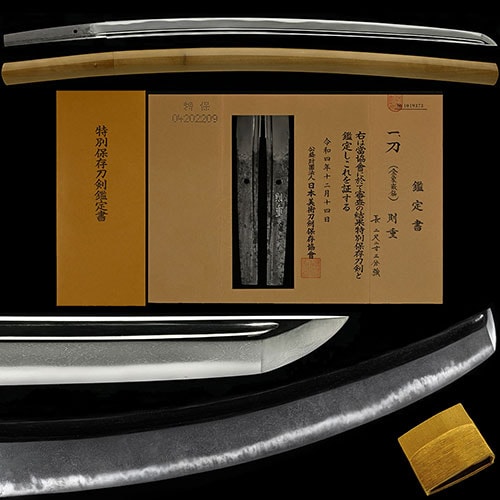
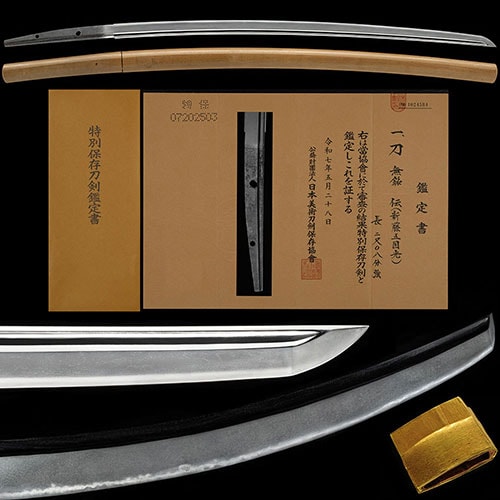
Kuwana, in Ise Province, gave the Sengo line its base, and from there the Muramasa (村正) name carried the work of late-Muromachi Ise into the Sengoku decades. The oldest extant date in the whole line is Bunki 1 (1501), carried by a katana signed "Seshu Kuwana-ju Uemon-no-jo Fujiwara Muramasa saku"[[c:1]]; from that anchor the prevailing scheme reads the Bunki pieces as the first generation, the Tenbun as the second, and the Tensho as the third, with the second master held the most skillful and most prolific of the three. The published sources set aside the popular tale that the founder studied under Masamune, calling it an unfounded tradition; the line begins instead near the close of the Muromachi period. Its hand shares common features with Mino, Shimada, and Sue-Soshu, and resembles Heianjo Nagayoshi of Kyoto so closely that the judges presume some relationship between the two, while a likeness to the Shimada smiths and to the Sue-Seki Kanesada is noted as a thing that can confuse a first reading. From the workshop issued the disciples Masashige (正重) and Masazane (正眞), filed by tradition as students of the shodai, who carried the manner forward alongside the Muramasa name itself. The feature the commentary names again and again as the school's own is the matched temper: the hamon on omote and ura align to one mirror-image pattern (omote-ura soroi), and the valleys of the midare press in toward the cutting edge. To this the masters add box-shaped elements (hako-midare), a gunome and notare base mixed with compound gunome, togariba, and yamagata figures, the nioiguchi drawn tight with patchy ko-nie in mura, and sunagashi running frequently; the boshi runs midare-komi or sugu to a ko-maru, often swept with hakikake. The forms that carry it are the wide hira-zukuri tanto and sunnobi ko-wakizashi with mitsu-mune, and the short, strongly saki-zori uchigatana; the jigane is itame tending to stand, mixed with flowing and masame-inclined grain, the steel dark at times and showing the whitish shirake cast the descriptions repeatedly note. Beneath sits the tanago-bara nakago, the fish-belly swelling that grows pronounced from the second generation, cut with a thick-chisel two-character mei.
The successors diverge by proportion rather than trick: Masashige opens the same vocabulary out, his grain standing more openly and his o-gunome and nie carried further; Masazane draws it in, holding box teeth low at the koshimoto under a calm suguha, his jihada closing tighter than his fellow pupil's. Beside the flamboyant rule each smith keeps a quiet register, tanto in suguha aimed at the Rai manner, and an occasional reach toward hitatsura with tobiyaki and muneyaki, never the rule of the work. To kantei the school, the matched faces are the first tell: the aligned omote and ura, the box figures, the valleys pressing to the edge, the tight nioiguchi with its patchy nie, and the tanago-bara nakago under the thick mei part Muramasa from the Mino, Shimada, and Heianjo hands it otherwise resembles. Within the line the nakago-mune decides: cut angular on Muramasa, it rounds out fleshily on Masashige, while Masazane is told from Masashige by his tighter steel. The Sengo reputation for cutting sharpness, with the midare valleys driven toward the ha, drew the Tokugawa legend that the blades brought calamity on the house; the sources handle it as recorded fact, noting that from the Edo period many signatures were effaced for fear of the name, so that signed katana in particular grew comparatively rare, and that one of Masazane's katana was cut "Yamashiro Province Masazane" as a deliberate screen for a daimyo recipient. Provenance runs through private and daimyo hands rather than institutional holdings: a first-generation wakizashi transmitted as a possession of Oda Nobunaga, a Masazane descended in the Mizuno and Tosa Yamauchi houses, a Lotus Sutra katana held in the Nabeshima line. The Nichiren devotion read off some blades, the title Myoho-renge-kyo cut into the steel, ties the work to its Ise region. A signed, ubu Sengo blade of secure date and matched temper comes to notice only from time to time, the legend that thinned the signatures adding to the call for those that remain. Learn more →
| Smith | Era | Designated |
|---|---|---|
| Muramasa村正 | 1521-1528 | 41 |
| Muramasa村正 | 1501-1521 | 17 |
| Masashige正重 | 1521-1528 | 12 |
| Masazane正眞 | 1501-1504 | 4 |
| Muramasa村正 | 1596-1615 | 0 |
Sōshū in the Muromachi period
In the Sengoku era the school served a second warrior court: the Later Hōjō at Odawara, whose patronage kept the Tsunahiro line forging hitatsura for the uchigatana age until the castle fell to Hideyoshi in 1590.
Certifies a genuine blade worth preserving: a signature confirmed correct, or, if unsigned, an era, province, and school that the NBTHK can reliably identify.
The NBTHK (Nihon Bijutsu Tōken Hozon Kyōkai, the Society for the Preservation of Japanese Art Swords) is a public-interest incorporated foundation founded in 1948 and supervised by Japan’s Agency for Cultural Affairs (Bunkachō); it is based at the Japanese Sword Museum in Tokyo. Its expert panels physically examine each submitted work (shinsa) and issue a certificate (kanteishō) ranking it by artistic and historical merit. NBTHK papers are the most widely recognized standard of authentication for Japanese swords and fittings.
NBTHK official sitePlease notify us of your intention to return, by email or fax, no later than the day after the item's arrival. Return shipping, insurance, and refund transfer fees are the customer's responsibility.
Meibun: "Muramasa" Type: Yari Nagasa: 8 sun 1 bu Sori: None Motohaba: 21 mm Motojisane: 9 mm Toshin weight: 229 grams (All measurements are approximate) With NBTHK Kanteisho (Certificate) Fukushima Prefecture Board of Education Koshirae total length: 214 cm Shirasaya total length: 97 cm Toshin total length: 49.6 cm (All measurements are approximate) Muramasa is known for the legend of haunting the Tokugawa family, famously referred to as the "Yoto" (Cursed Sword) Muramasa that brought misfortune to the Tokugawa clan. It is said that during the Battle of Sekigahara, the Eastern Army general Oda Nagataka achieved the feat of slaying Toda Katsushige. While Ieyasu was inspecting that yari, a retainer dropped it, and Ieyasu cut his finger. Upon hearing that the yari was a Muramasa, it is said that from these connections, the Tokugawa family came to detest Muramasa. These anecdotes are believed to have established the legend of Muramasa as a cursed blade that opposed the Tokugawa Shogunate. This is a very precious zaimei Muramasa yari, which served as the origin of such yoto legends. The koshirae is a grand piece decorated with raden, exceeding two meters with a total length of approximately 214 cm. Furthermore, this is a very rare zaimei Muramasa that has only recently obtained its kanteisho. While the production of yari is considered difficult, this piece has no noteworthy defects; the jitetsu and meticulous tanren possess a magnificent presence and a dignified quality that overwhelms the viewer. Please, by all means, add this to your family treasures. It is possible to house the yari in the koshirae, but because the tsuka is extremely tight, it will be very difficult to withdraw the toshin if it is inserted properly. Please note in advance that while the tsunagi is cracked at the bottom, it still functions as a tsunagi. 0 Yen (Tax included)
NihontoWatchSoshu-den · Ise
6 pieces on the market now
Kuwana, in Ise Province, gave the Sengo line its base, and from there the Muramasa (村正) name carried the work of late-Muromachi Ise into the Sengoku decades. The oldest extant date in the whole line is Bunki 1 (1501), carried by a katana signed "Seshu Kuwana-ju Uemon-no-jo Fujiwara Muramasa saku"[[c:1]]; from that anchor the prevailing scheme reads the Bunki pieces as the first generation, the Tenbun as the second, and the Tensho as the third, with the second master held the most skillful and most prolific of the three. The published sources set aside the popular tale that the founder studied under Masamune, calling it an unfounded tradition; the line begins instead near the close of the Muromachi period. Its hand shares common features with Mino, Shimada, and Sue-Soshu, and resembles Heianjo Nagayoshi of Kyoto so closely that the judges presume some relationship between the two, while a likeness to the Shimada smiths and to the Sue-Seki Kanesada is noted as a thing that can confuse a first reading. From the workshop issued the disciples Masashige (正重) and Masazane (正眞), filed by tradition as students of the shodai, who carried the manner forward alongside the Muramasa name itself. The feature the commentary names again and again as the school's own is the matched temper: the hamon on omote and ura align to one mirror-image pattern (omote-ura soroi), and the valleys of the midare press in toward the cutting edge. To this the masters add box-shaped elements (hako-midare), a gunome and notare base mixed with compound gunome, togariba, and yamagata figures, the nioiguchi drawn tight with patchy ko-nie in mura, and sunagashi running frequently; the boshi runs midare-komi or sugu to a ko-maru, often swept with hakikake. The forms that carry it are the wide hira-zukuri tanto and sunnobi ko-wakizashi with mitsu-mune, and the short, strongly saki-zori uchigatana; the jigane is itame tending to stand, mixed with flowing and masame-inclined grain, the steel dark at times and showing the whitish shirake cast the descriptions repeatedly note. Beneath sits the tanago-bara nakago, the fish-belly swelling that grows pronounced from the second generation, cut with a thick-chisel two-character mei.
The successors diverge by proportion rather than trick: Masashige opens the same vocabulary out, his grain standing more openly and his o-gunome and nie carried further; Masazane draws it in, holding box teeth low at the koshimoto under a calm suguha, his jihada closing tighter than his fellow pupil's. Beside the flamboyant rule each smith keeps a quiet register, tanto in suguha aimed at the Rai manner, and an occasional reach toward hitatsura with tobiyaki and muneyaki, never the rule of the work. To kantei the school, the matched faces are the first tell: the aligned omote and ura, the box figures, the valleys pressing to the edge, the tight nioiguchi with its patchy nie, and the tanago-bara nakago under the thick mei part Muramasa from the Mino, Shimada, and Heianjo hands it otherwise resembles. Within the line the nakago-mune decides: cut angular on Muramasa, it rounds out fleshily on Masashige, while Masazane is told from Masashige by his tighter steel. The Sengo reputation for cutting sharpness, with the midare valleys driven toward the ha, drew the Tokugawa legend that the blades brought calamity on the house; the sources handle it as recorded fact, noting that from the Edo period many signatures were effaced for fear of the name, so that signed katana in particular grew comparatively rare, and that one of Masazane's katana was cut "Yamashiro Province Masazane" as a deliberate screen for a daimyo recipient. Provenance runs through private and daimyo hands rather than institutional holdings: a first-generation wakizashi transmitted as a possession of Oda Nobunaga, a Masazane descended in the Mizuno and Tosa Yamauchi houses, a Lotus Sutra katana held in the Nabeshima line. The Nichiren devotion read off some blades, the title Myoho-renge-kyo cut into the steel, ties the work to its Ise region. A signed, ubu Sengo blade of secure date and matched temper comes to notice only from time to time, the legend that thinned the signatures adding to the call for those that remain. Learn more →
| Smith | Era | Designated |
|---|---|---|
| Muramasa村正 | 1521-1528 | 41 |
| Muramasa村正 | 1501-1521 | 17 |
| Masashige正重 | 1521-1528 | 12 |
| Masazane正眞 | 1501-1504 | 4 |
| Muramasa村正 | 1596-1615 | 0 |
Sōshū in the Muromachi period
In the Sengoku era the school served a second warrior court: the Later Hōjō at Odawara, whose patronage kept the Tsunahiro line forging hitatsura for the uchigatana age until the castle fell to Hideyoshi in 1590.
Certifies a genuine blade worth preserving: a signature confirmed correct, or, if unsigned, an era, province, and school that the NBTHK can reliably identify.
The NBTHK (Nihon Bijutsu Tōken Hozon Kyōkai, the Society for the Preservation of Japanese Art Swords) is a public-interest incorporated foundation founded in 1948 and supervised by Japan’s Agency for Cultural Affairs (Bunkachō); it is based at the Japanese Sword Museum in Tokyo. Its expert panels physically examine each submitted work (shinsa) and issue a certificate (kanteishō) ranking it by artistic and historical merit. NBTHK papers are the most widely recognized standard of authentication for Japanese swords and fittings.
NBTHK official sitePlease notify us of your intention to return, by email or fax, no later than the day after the item's arrival. Return shipping, insurance, and refund transfer fees are the customer's responsibility.