 NihontoWatchNihontoWatch
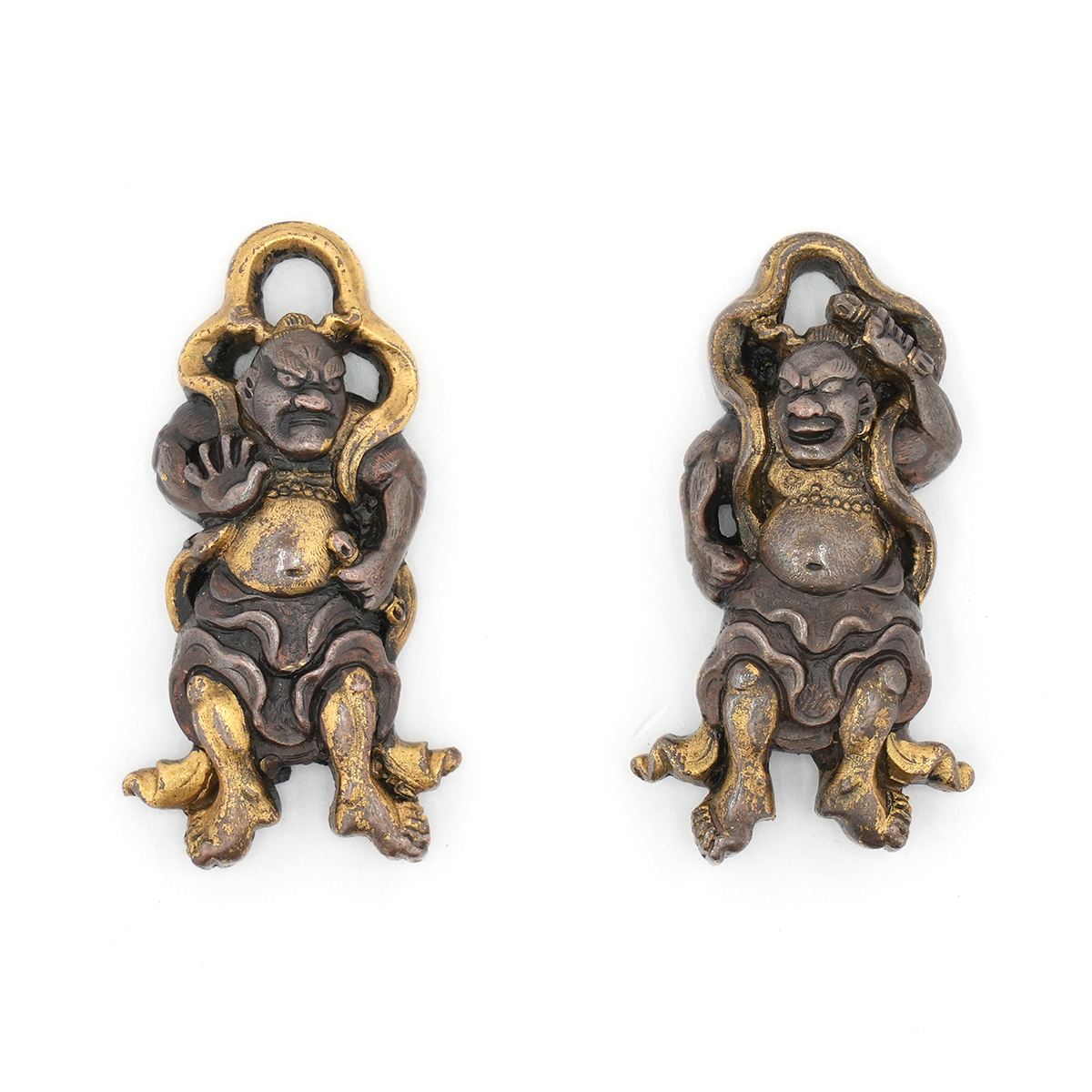
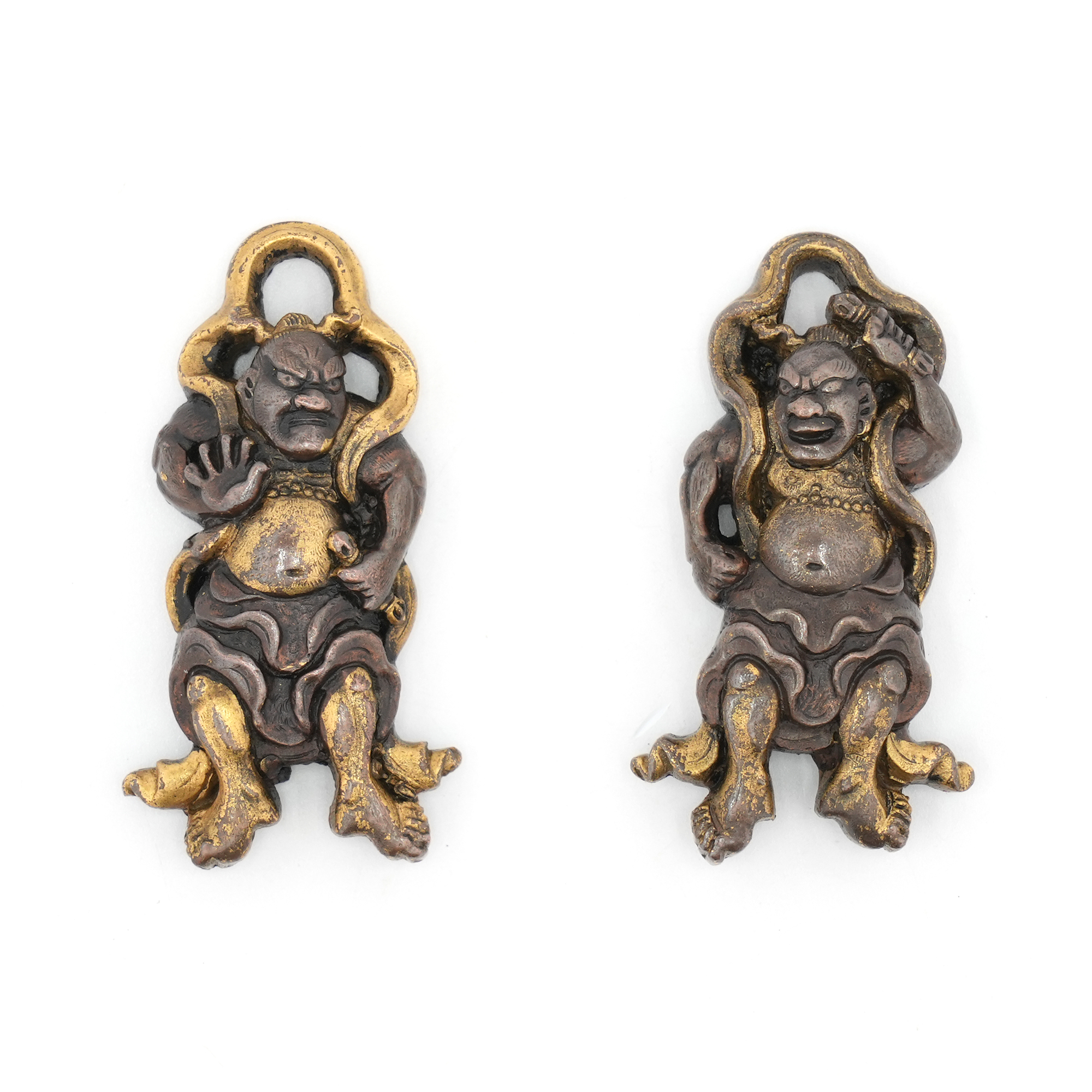
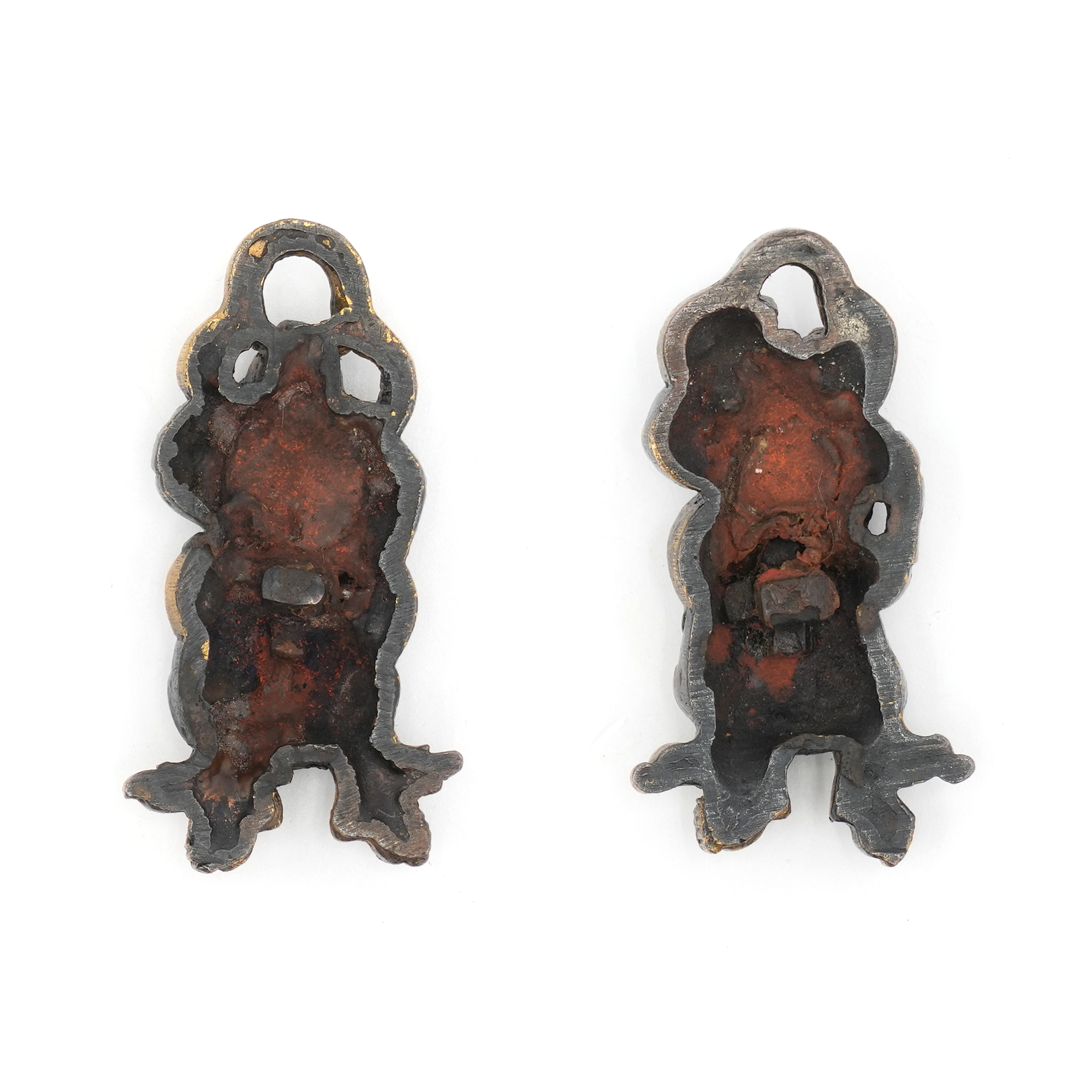
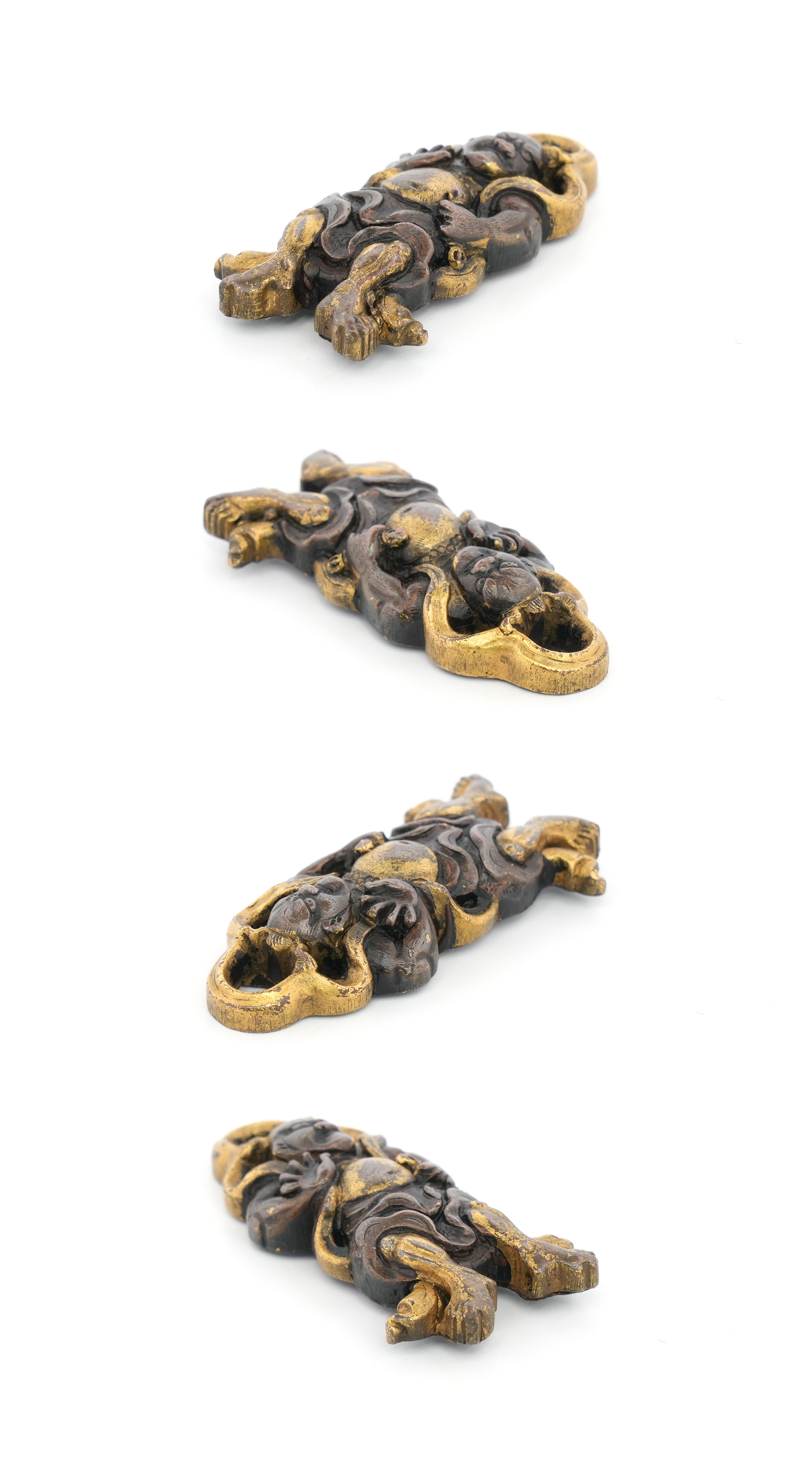
Nio are a pair of Kongo Rikishi who guard temple gates and repel evil, and as the open-mouthed Agyo and closed-mouthed Ungyo are spoken of as representing the beginning and end of heaven and earth, they are a powerful motif suitable for the sword fittings of a military family. This item features the two figures carved with a plump volume from a base metal that appears to be yamaganeji, contrasting the Ungyo, who scowls with one hand wide open, against the open-mouthed Agyo, resulting in an impressive pair that harbors a somewhat friendly charm within their stern expressions. The Ungyo has wrinkles between his brows, posing as if to restrain an opponent with a palm pushed out in front of his chest and a hand gripping a sanko held at his waist, while the Agyo is captured in the moment of letting out a cry with a wide-open mouth, his left hand gripping a sanko raised above his head. Both have their hair tied at the crown of the head, and while thick eyebrows, noses, cheeks, and even finger joints are expressed three-dimensionally, gold iroe is applied to the rounded bellies and thick legs to emphasize their sense of mass, bringing out the individual character of each figure the more one compares their expressions and gestures. The cloth that arcs from above the head around the shoulders and flows to the sides of the waist is the ten-i seen on Buddhist statues, and by placing gold iroe on its large outlines and the ends fluttering at the feet, a gorgeous composition is created where a flow of gold colour surrounds the blackish-brown bodies of the figures. They wear mo around their waists, and because the folds of the clothing are raised deeply in contrast to the smooth curves of the ten-i, the contrast between A and Un is clearly visible from the front, while from an angle, one can enjoy the thickness unique to katachibori where the knees, belly, arms, and faces overlap. On the reverse side, the interior of the katachibori and the ashi used for attachment remain, and the form of an old menuki can be seen even in the construction not visible from the front. The gold iroe catches the light along the undulations of the legs and ten-i, and while resonating with the sober tones of the aged base metal, it exerts a presence that makes it hard to believe they are small fittings, whether set into a tsuka or appreciated from a distance. These are Nio-zu menuki where the focus shifts with each area viewed, from the mouths of the Agyo and Ungyo to the contrasting hand poses, the gold iroe on the bellies and legs, and the large outlines created by the ten-i. This item is recommended not only for those who wish to incorporate a motif with the meaning of warding off evil into a koshirae, but also for those who wish to closely enjoy at hand the work of a metalsmith who instilled both dignity and charm into a pair of figures.
Offered by Toushin

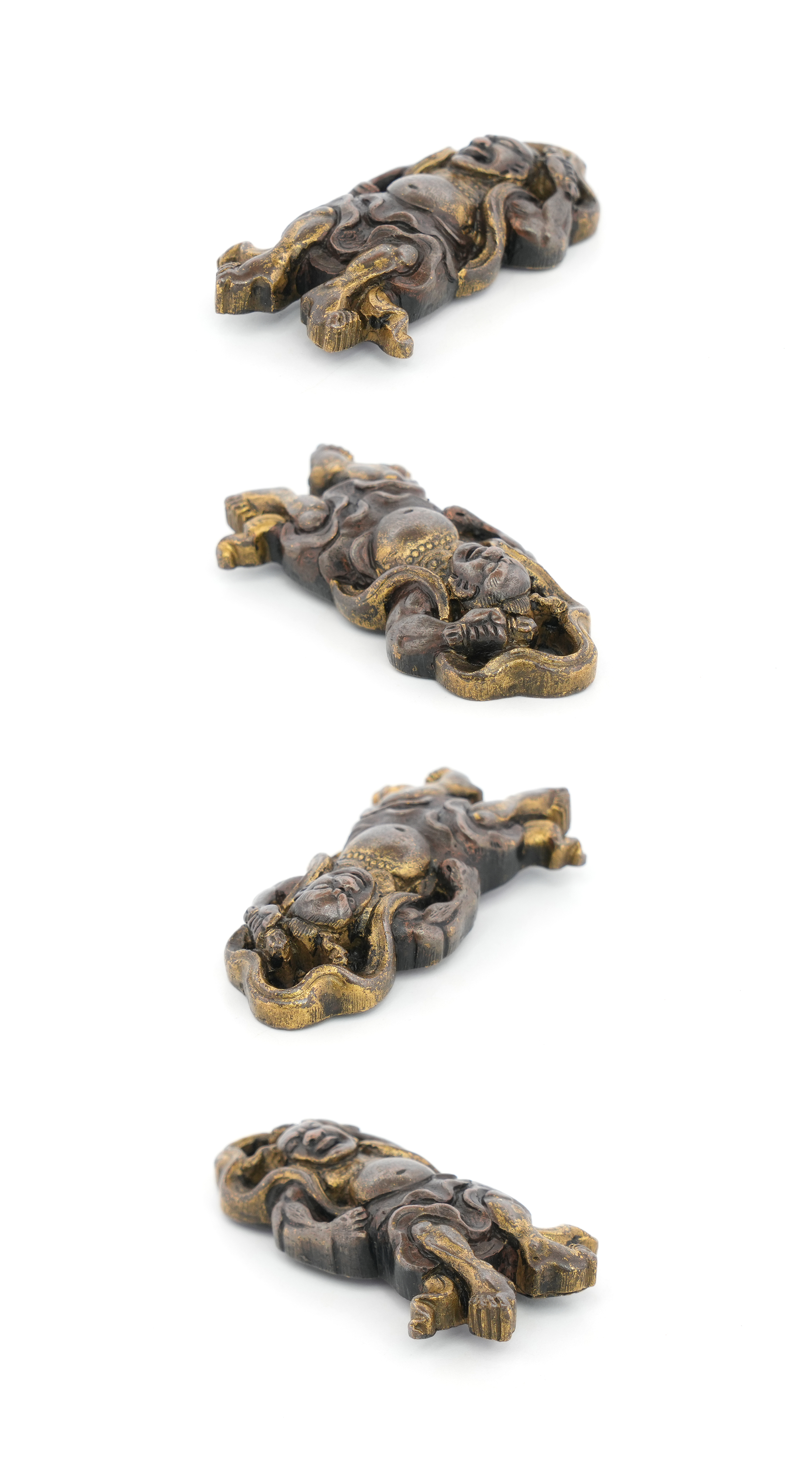
Edo
Unsigned
Machine translation of the shop's Japanese ·
Machine translation from the shop's Japanese · may contain errors ·
We could not find an authenticity certificate on the seller’s listing. Japanese swords and fittings are normally papered by the NBTHK (or the NTHK). Without one, the attribution is the seller’s own assessment and has not been independently verified — treat it with caution and ask the dealer about certification before buying.
As a rule we do not accept returns, except when we have sent a different item from the one ordered or when there is a significant discrepancy between the description and the item. If you wish to return an item, please contact us within 3 days of its arrival and then send it back.
¥90,200