 NihontoWatchNihontoWatch
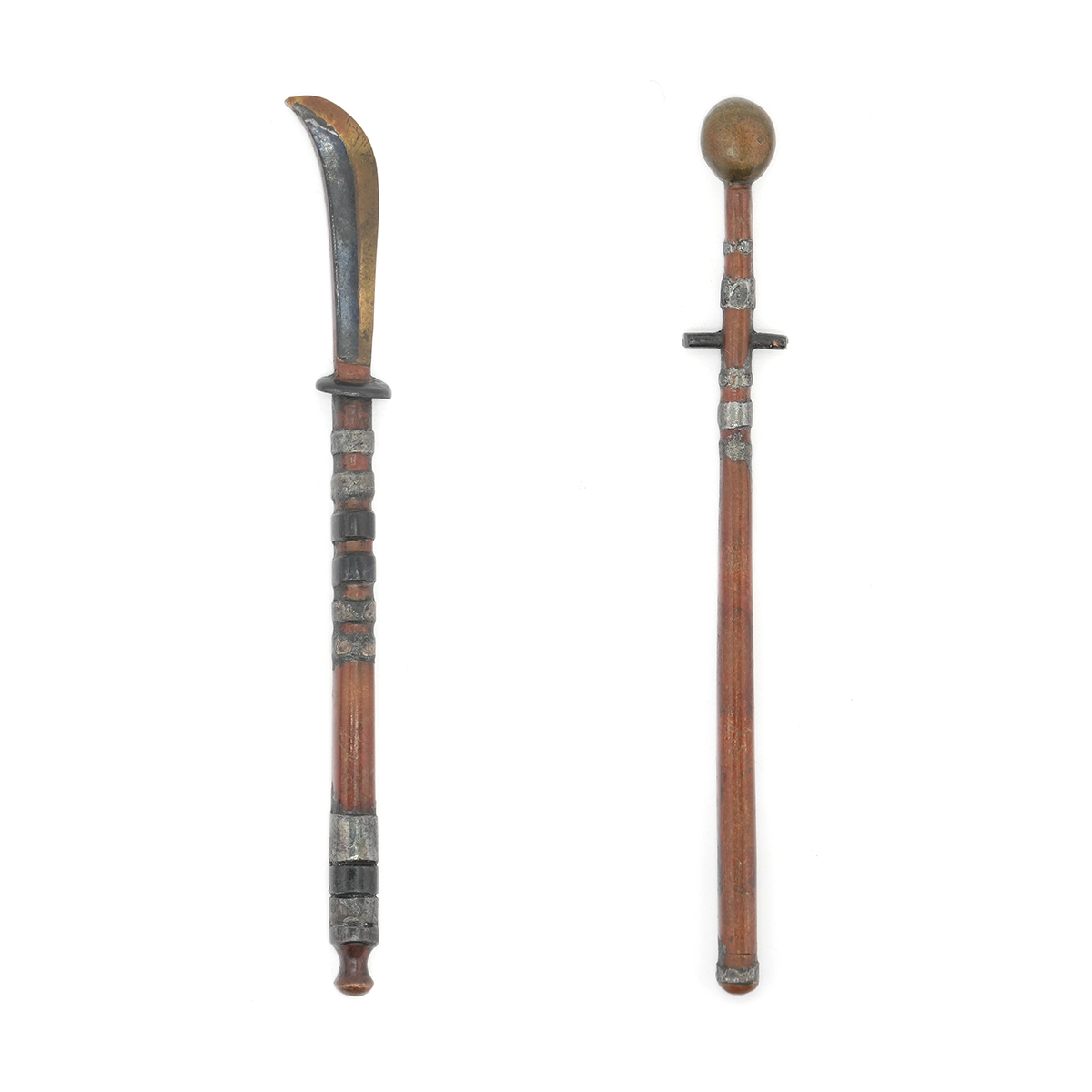
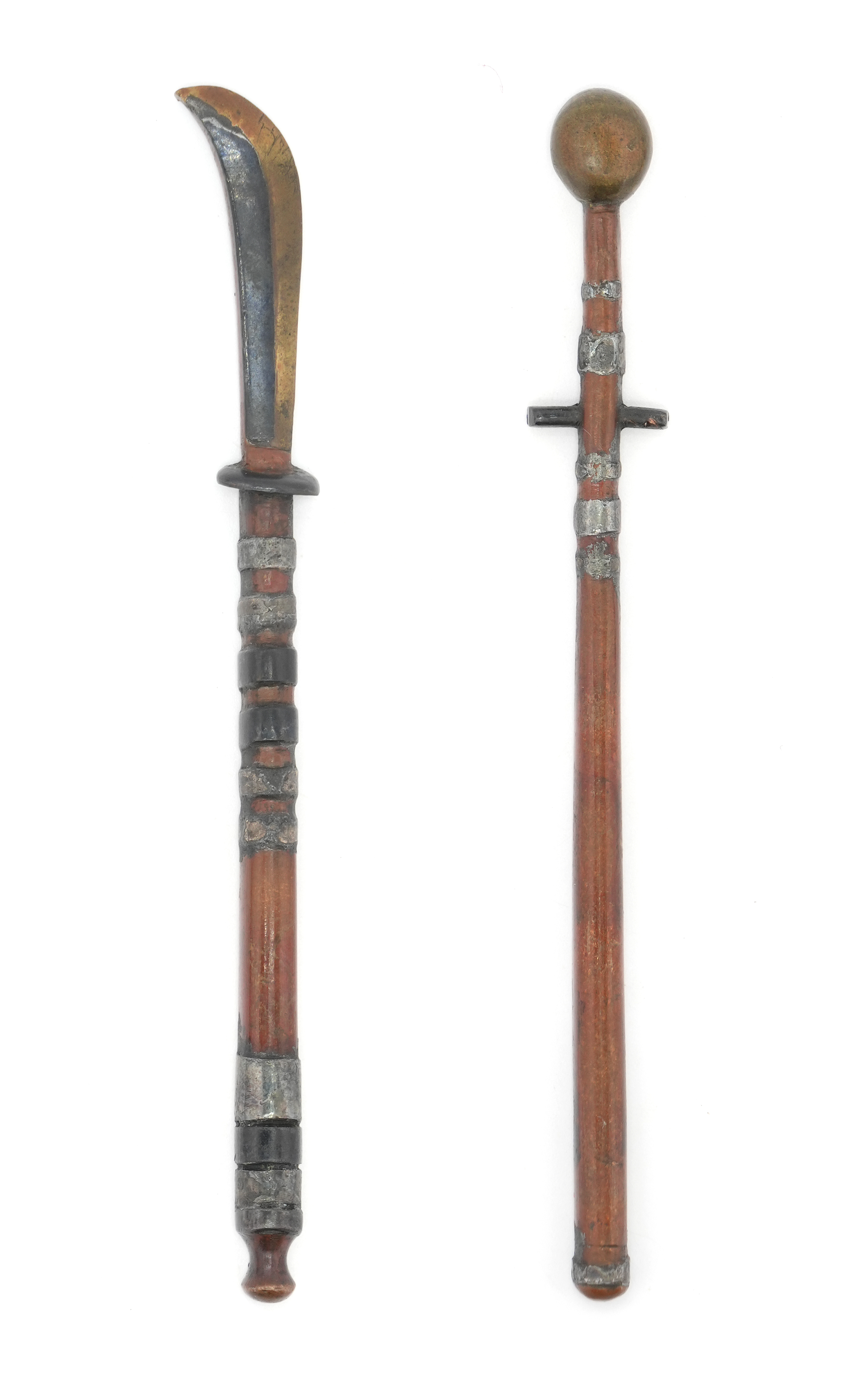
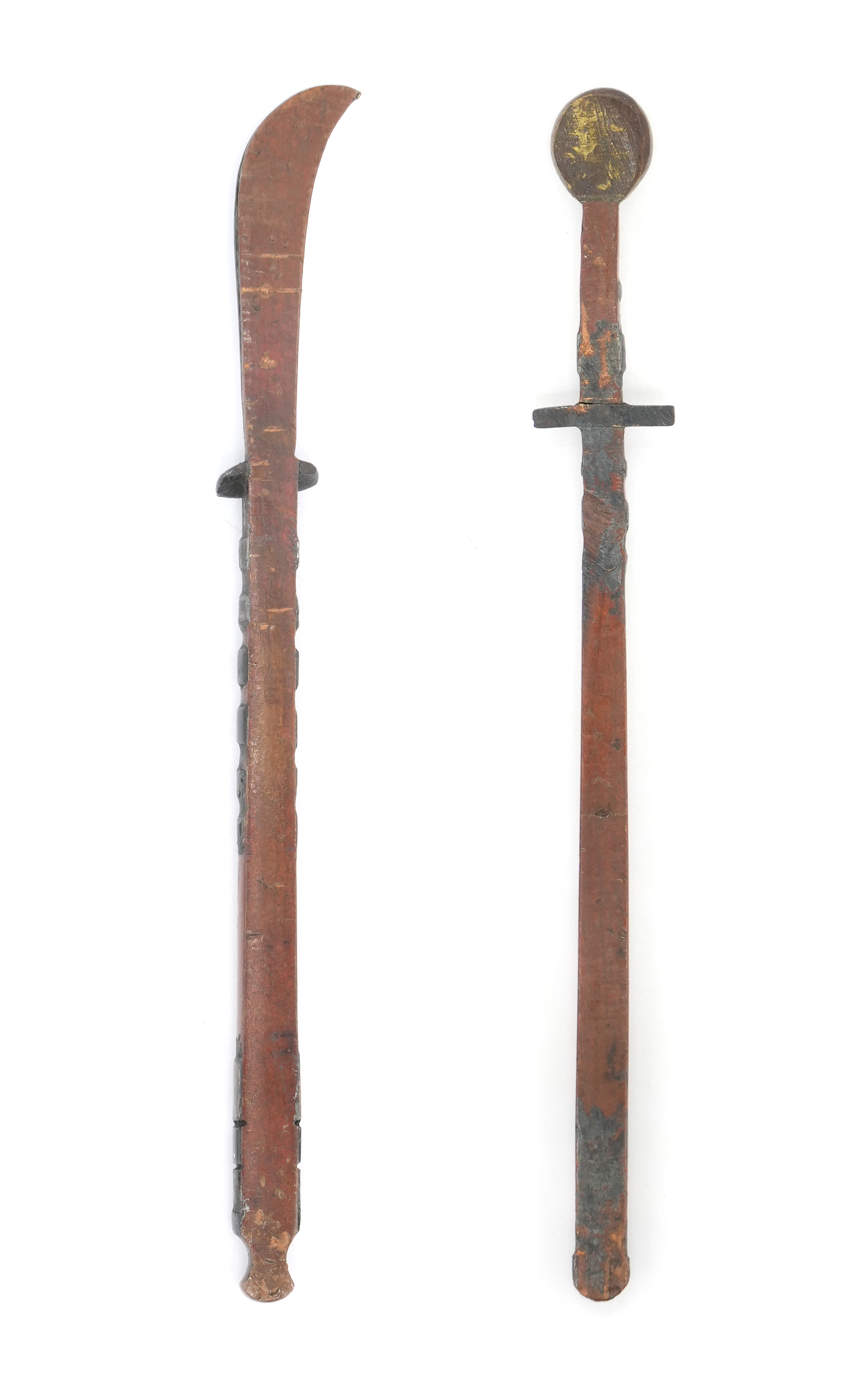
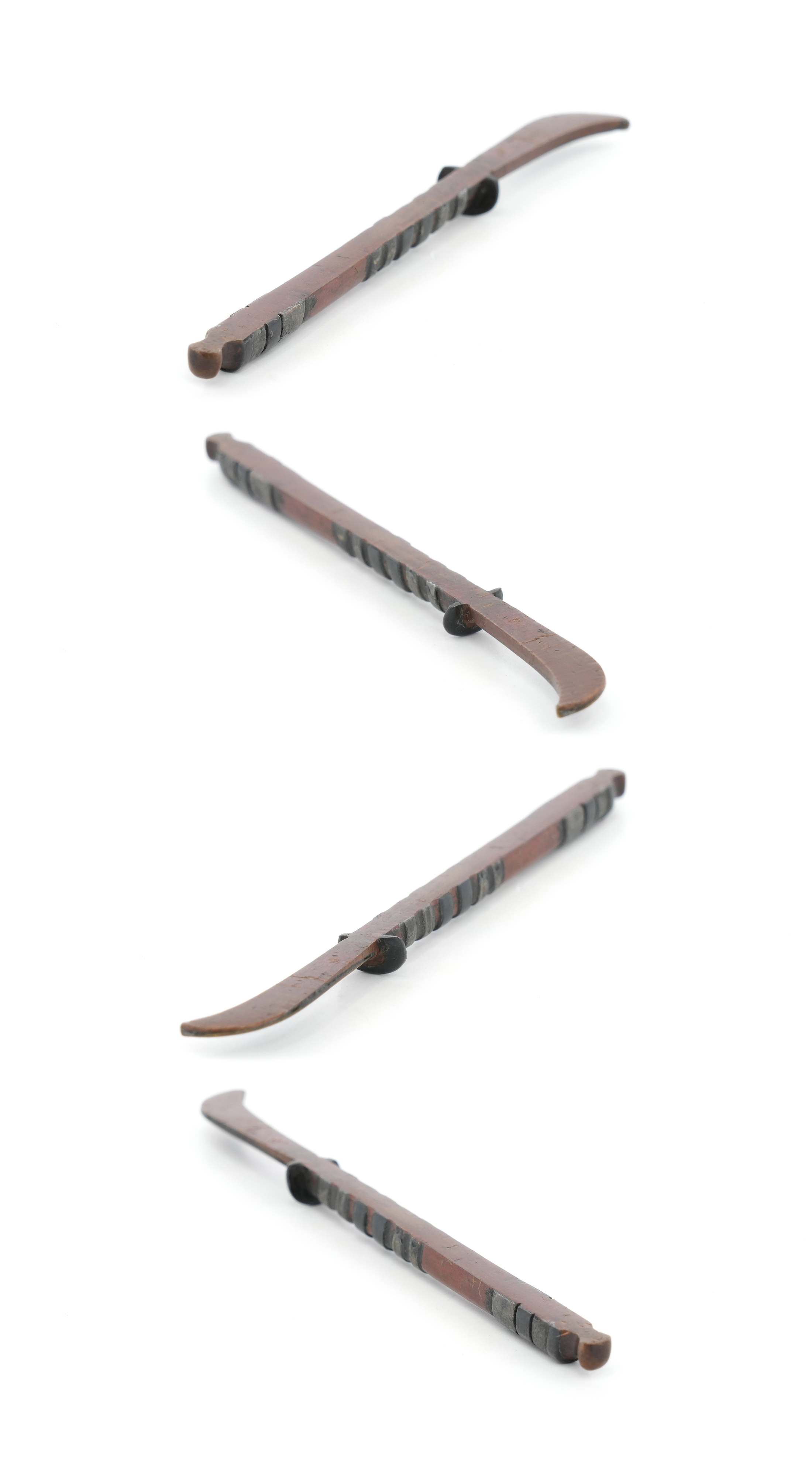
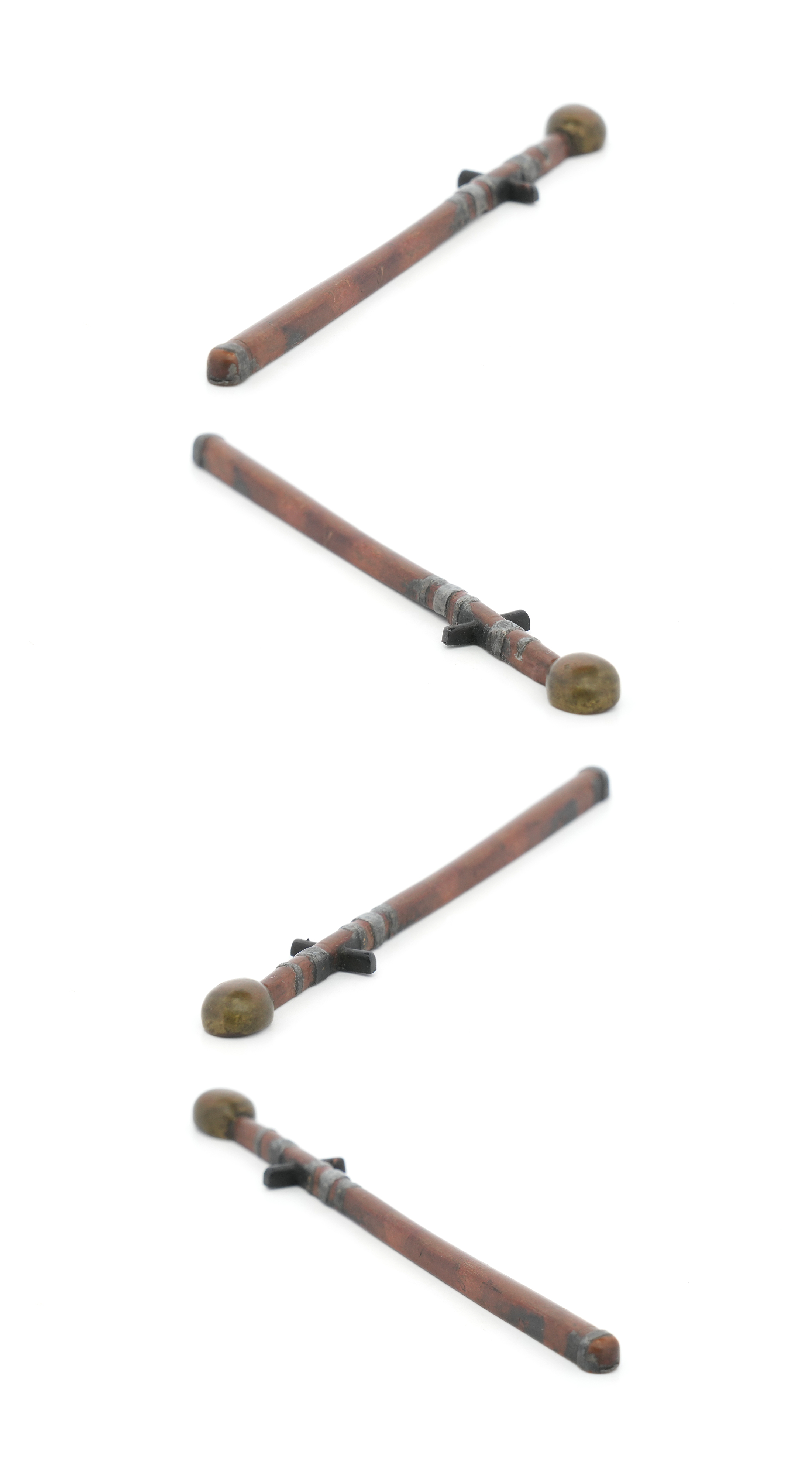
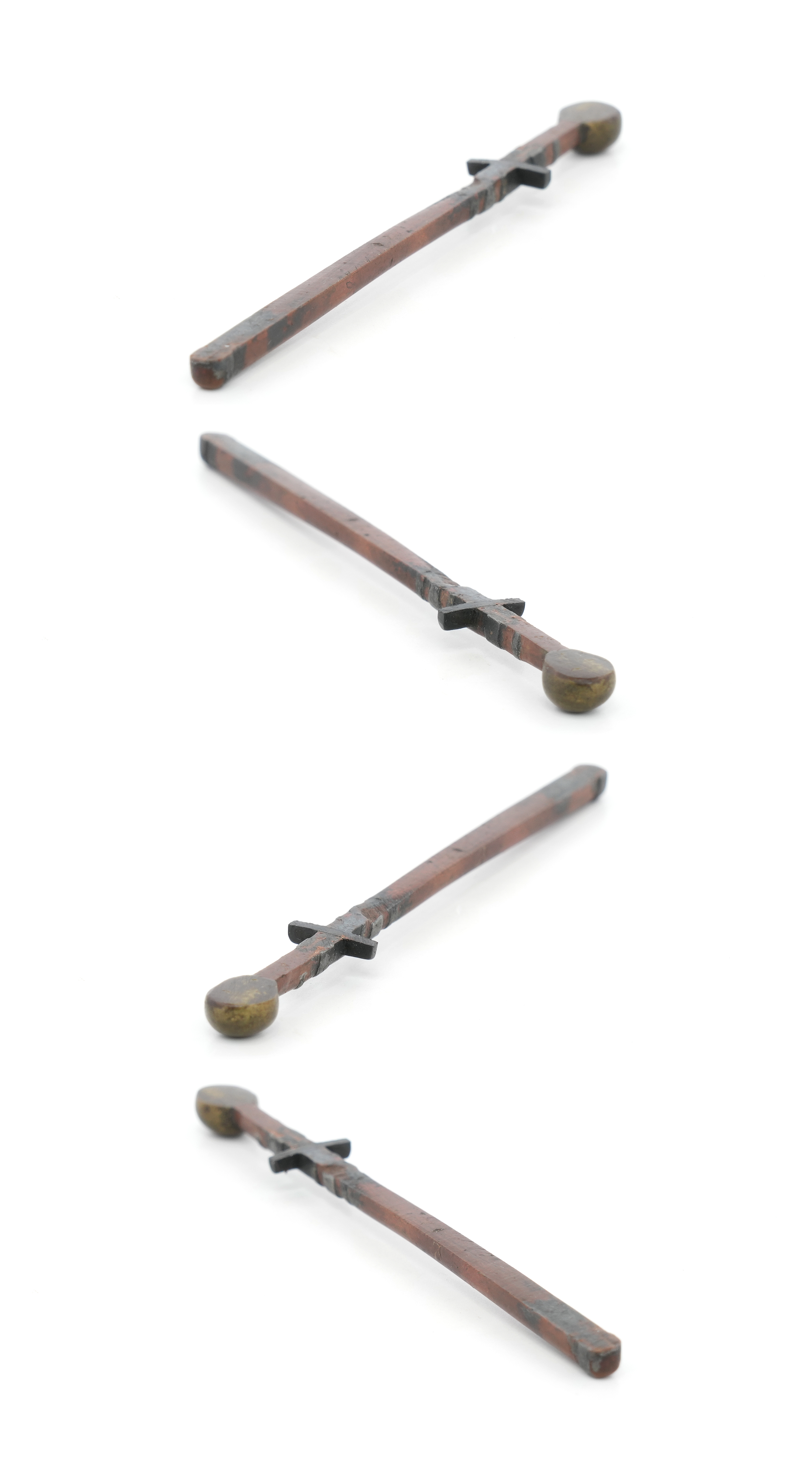
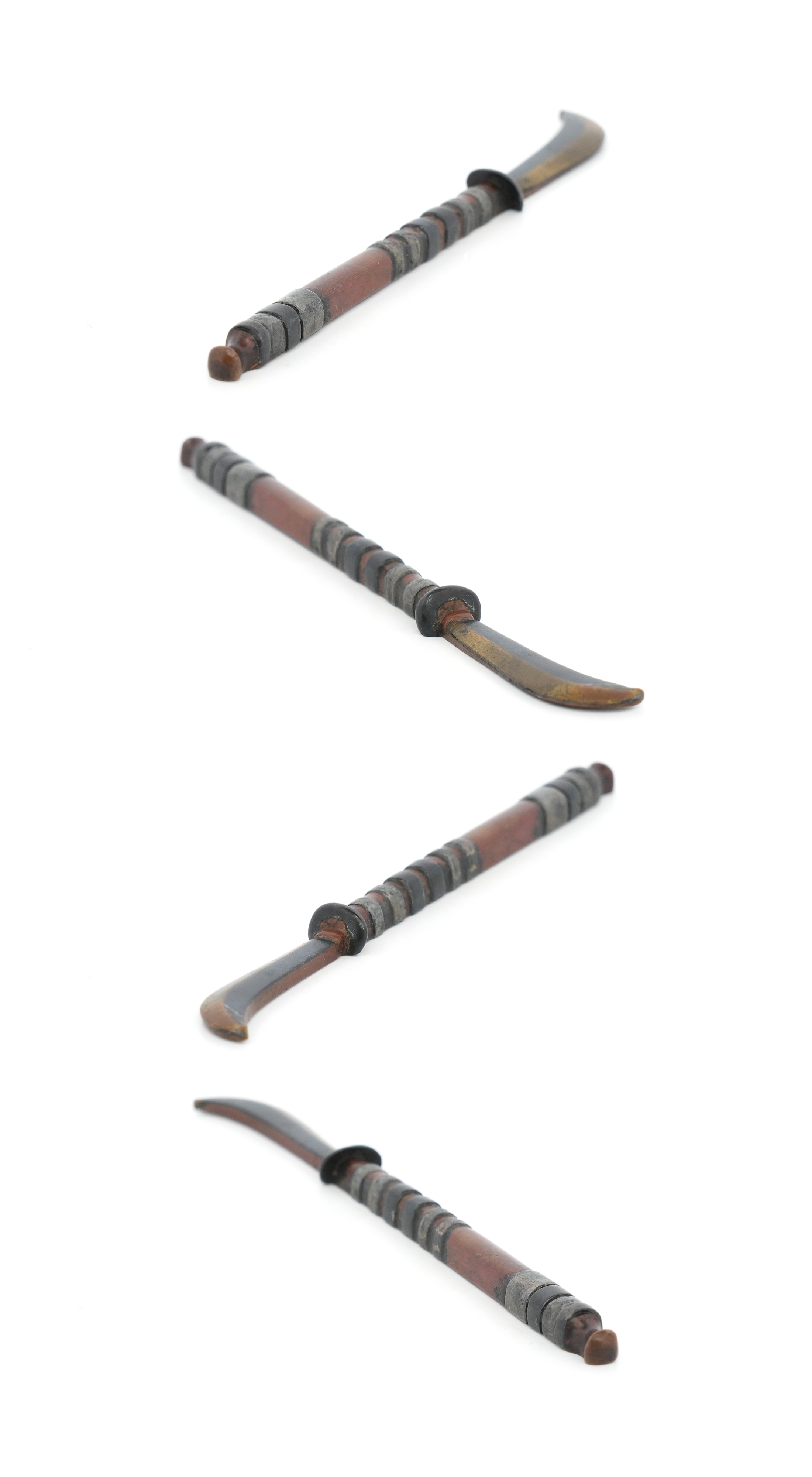
These menuki pair a naginata with a cotton-tipped jumonji-yari used for practice, showing an attention to detail that extends to the martial equipment. The naginata clearly captures the deeply curved blade and long shaft, while the yari captures the round, swelling cotton tip and the jumonji shape extending to the left and right, providing variation to the two silhouettes extending horizontally. This unusual concept, combining a weapon for actual combat with a practice tool, suggests the preferences of an owner familiar with martial arts and is a subject that will create a unique topic of conversation when mounted on a hilt. The base is suaka, which exhibits a warm reddish-brown colour, with the metal fittings such as the dogane on the shaft of the naginata depicted in silver and shakudo, and the tsuba provided at the base of the blade also represented in shakudo. Silver iroe is used for the upward-curving part of the blade, and by adding a hamon with gold iroe, the light of the blade and the changes in the yaki are expressed even on the narrow surface of the menuki; the more one looks at the form where the straight line of the long shaft transitions into the sharp curve of the blade tip, the more the work conveys a keen observation of the construction of weapons. The other piece is modeled after a jumonji-yari equipped with a cotton tip used for practice at the end. Gold iroe is applied to the plump cotton tip, the kama-bu extending to the left and right below it is represented in shakudo, and the dogane connecting to the shaft is represented in silver iroe, making use of the contrast with the base colour of the suaka. The roundness of the cotton tip, the shakudo kama-bu, and the long, thin shaft are contained within small undulations, and the interest unique to this pair lies in the soft sense of volume given, which is different from the naginata. Both pieces place different metal fittings and joints in the middle of the long shafts, creating a fine rhythm for the straight lines that tend to become monotonous. In the naginata, the hamon is shown in gold iroe, and in the jumonji-yari, the cotton tip is brightly highlighted with gold iroe, and because the tsuba of the naginata and the kama-bu of the jumonji-yari are tightened with shakudo, the focus of appreciation for each is different while being based on the same suaka ground. Although mumei, this is a set that I would recommend not only to those who like sword fittings related to martial arts and depictions of martial equipment, but also to those who wish to assemble a koshirae with a story in its design, as it possesses a graceful form and a skillful use of coloured metals.
NihontoWatchOffered by Toushin

Edo
Unsigned
Machine translation of the shop's Japanese ·
Machine translation from the shop's Japanese · may contain errors ·
We could not find an authenticity certificate on the seller’s listing. Japanese swords and fittings are normally papered by the NBTHK (or the NTHK). Without one, the attribution is the seller’s own assessment and has not been independently verified — treat it with caution and ask the dealer about certification before buying.
As a rule we do not accept returns, except when we have sent a different item from the one ordered or when there is a significant discrepancy between the description and the item. If you wish to return an item, please contact us within 3 days of its arrival and then send it back.
¥77,000