After the Ōnin War broke the Ashikaga order, a century of Sengoku warfare armed nearly every province in Japan. The era rewards a discriminating eye: routine work exists in quantity, and beside it stand custom blades of the first rank.
 NihontoWatchNihontoWatch
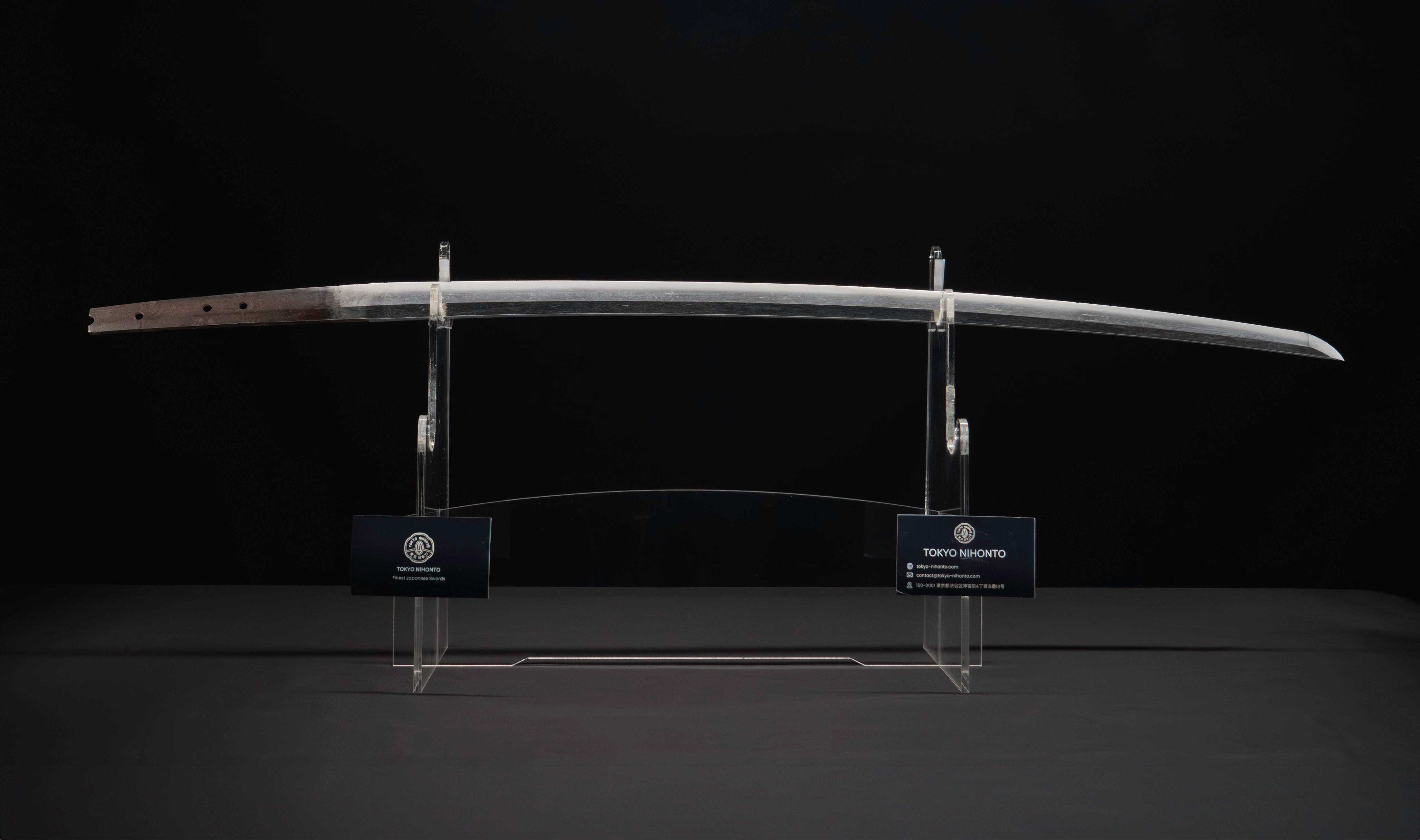
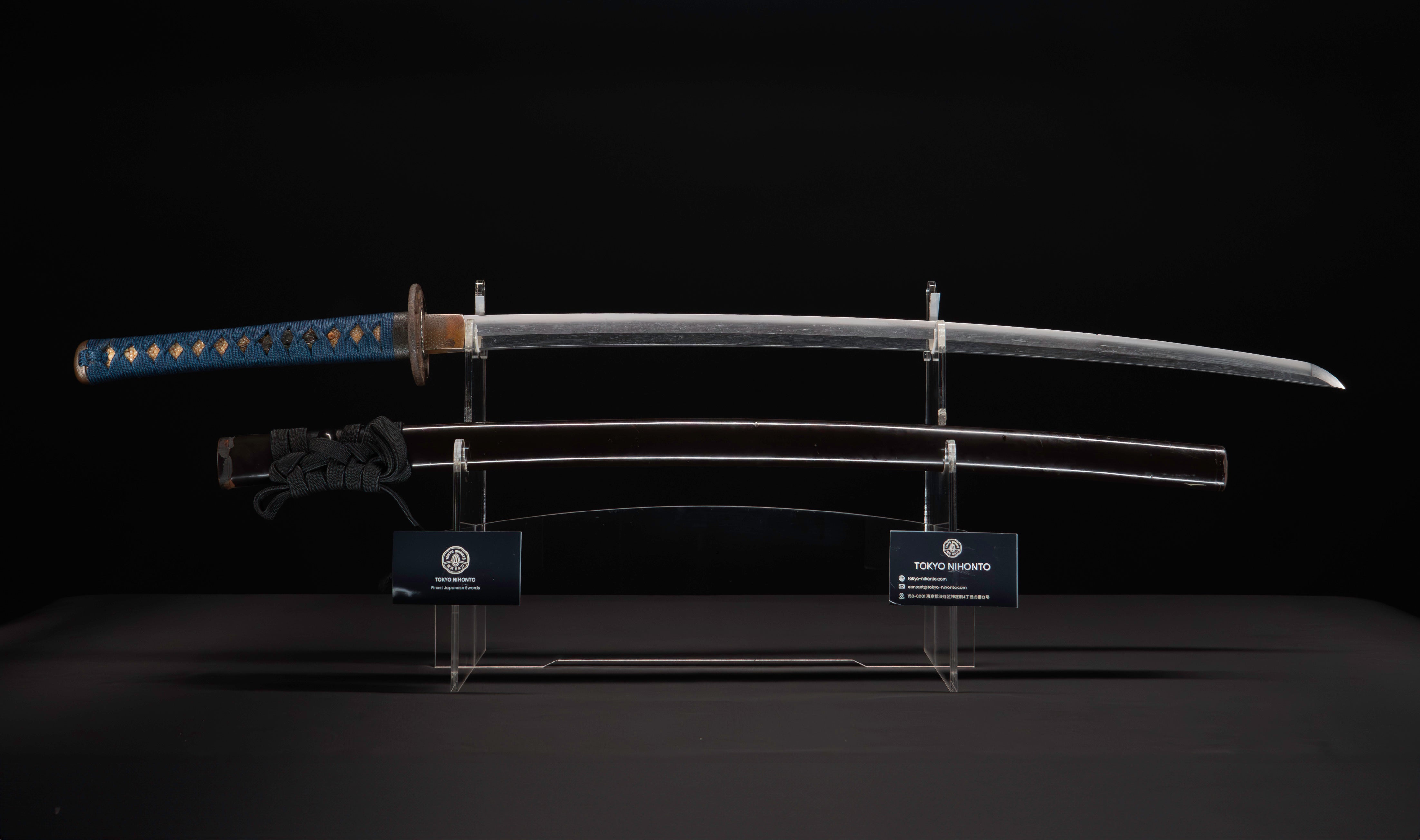
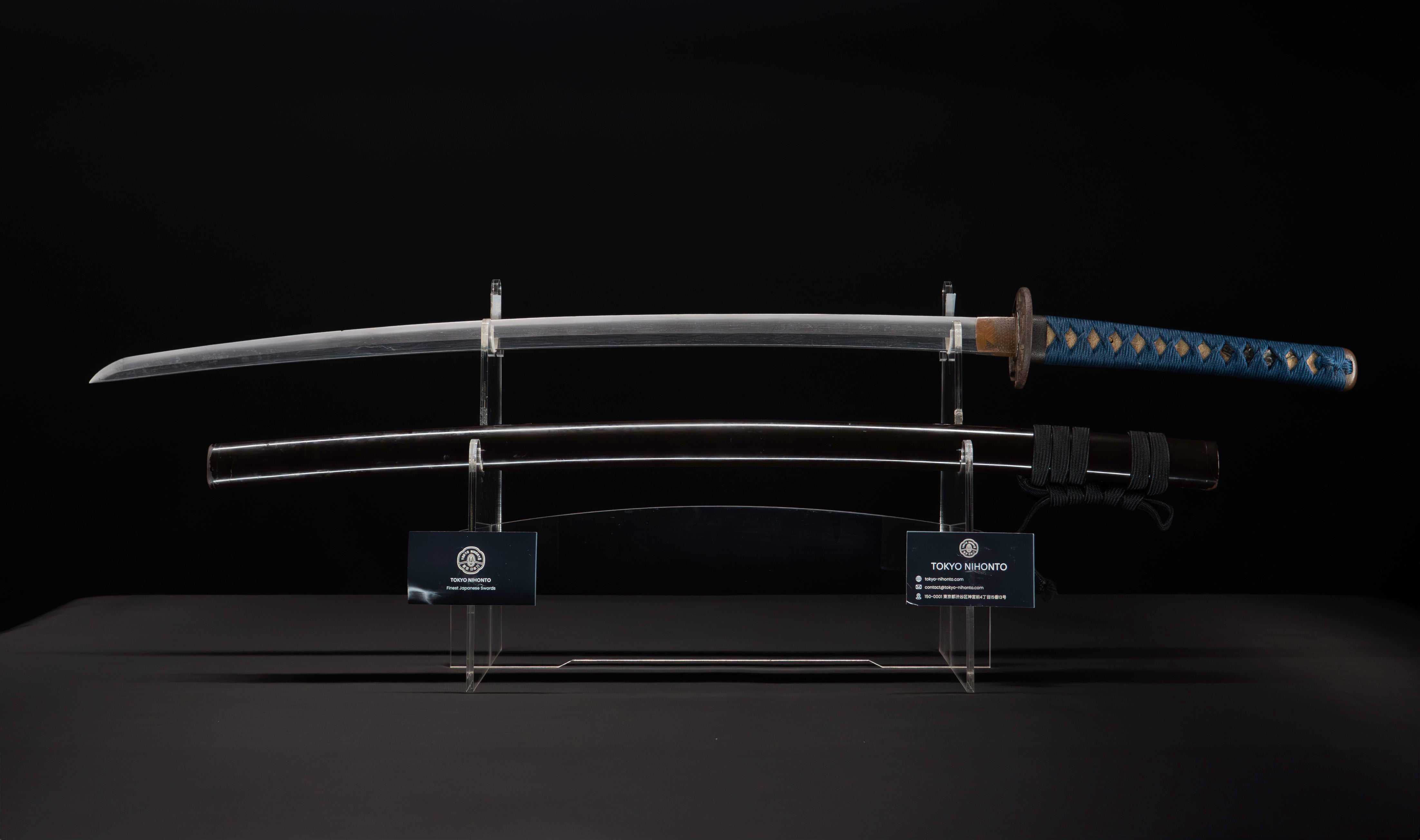
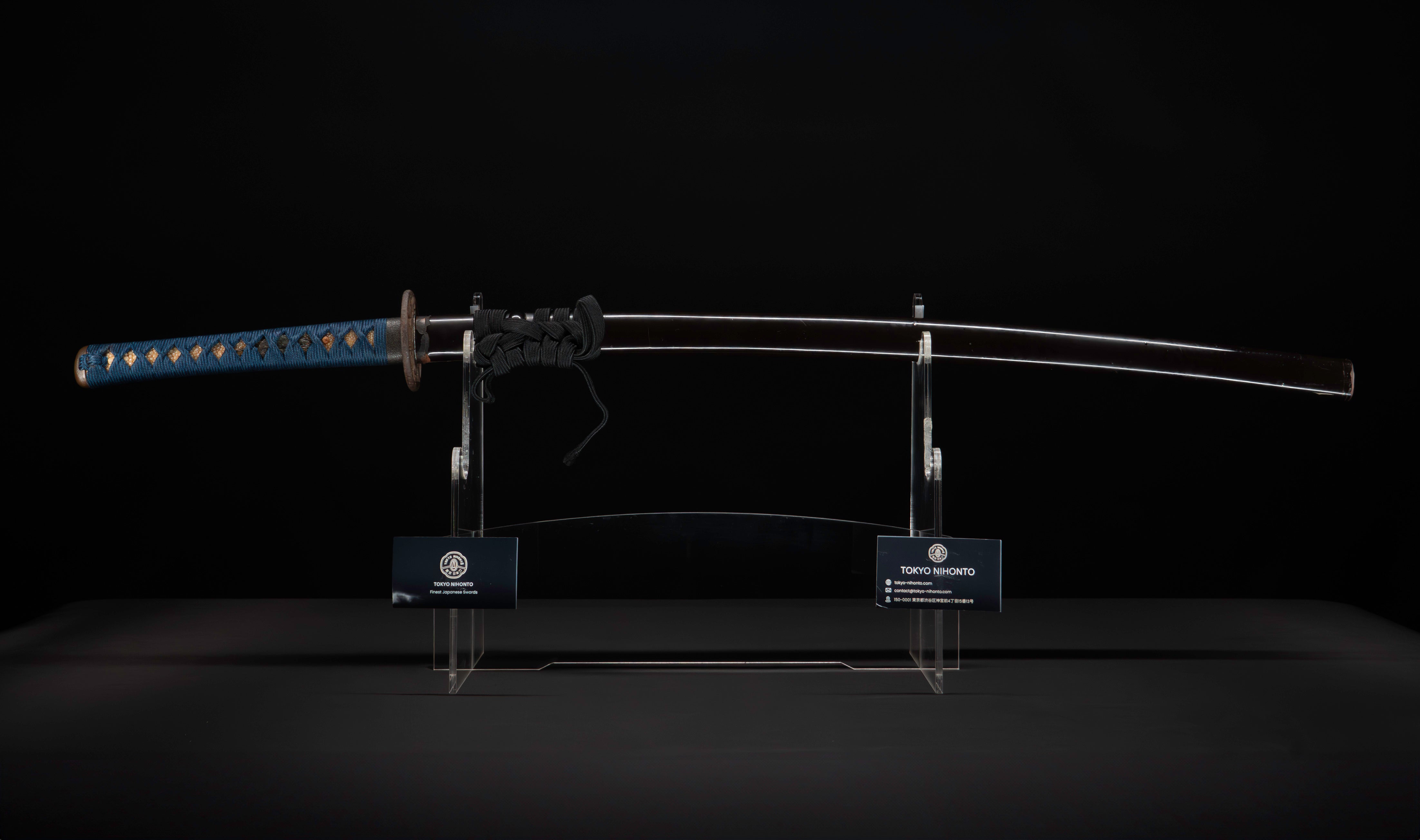
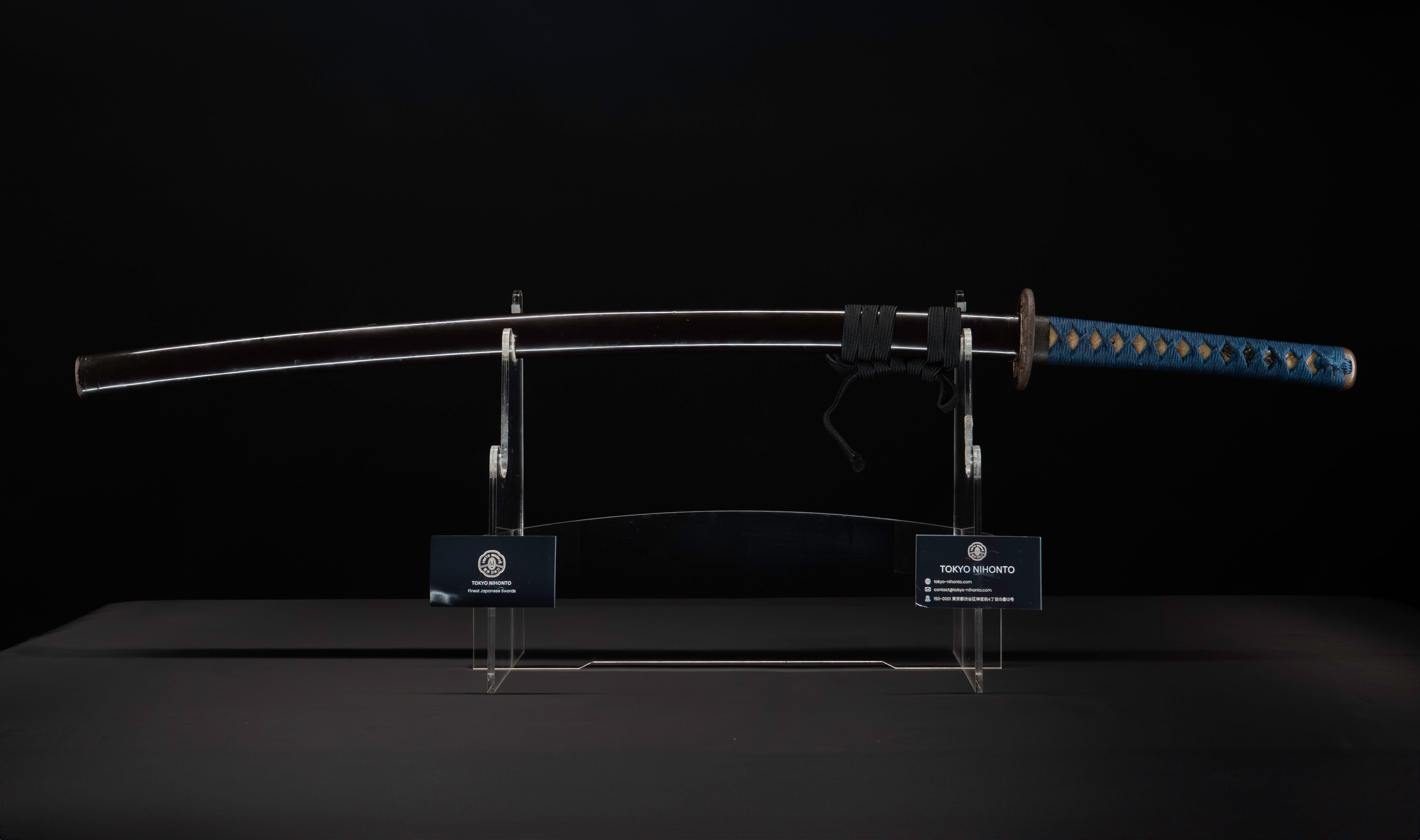
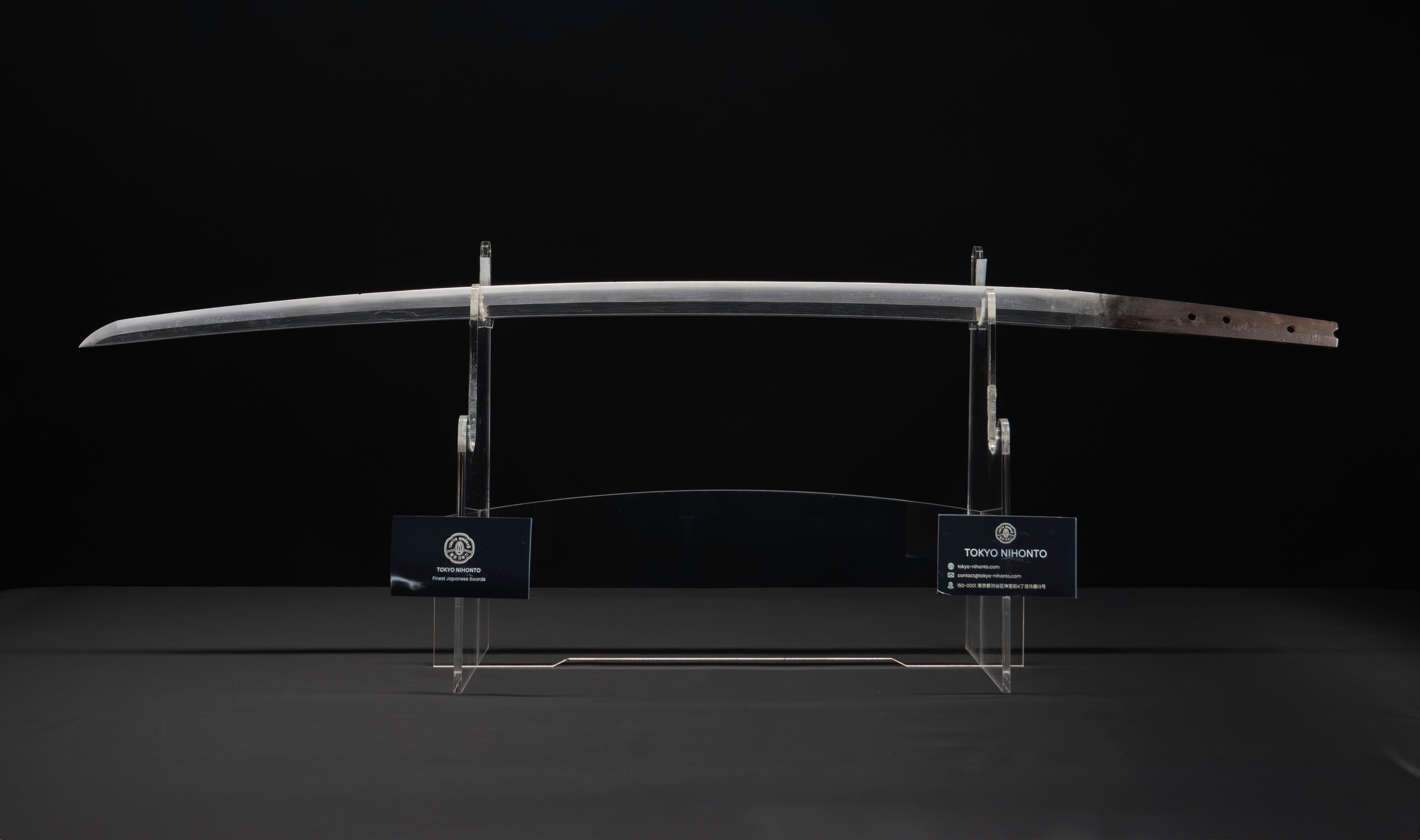
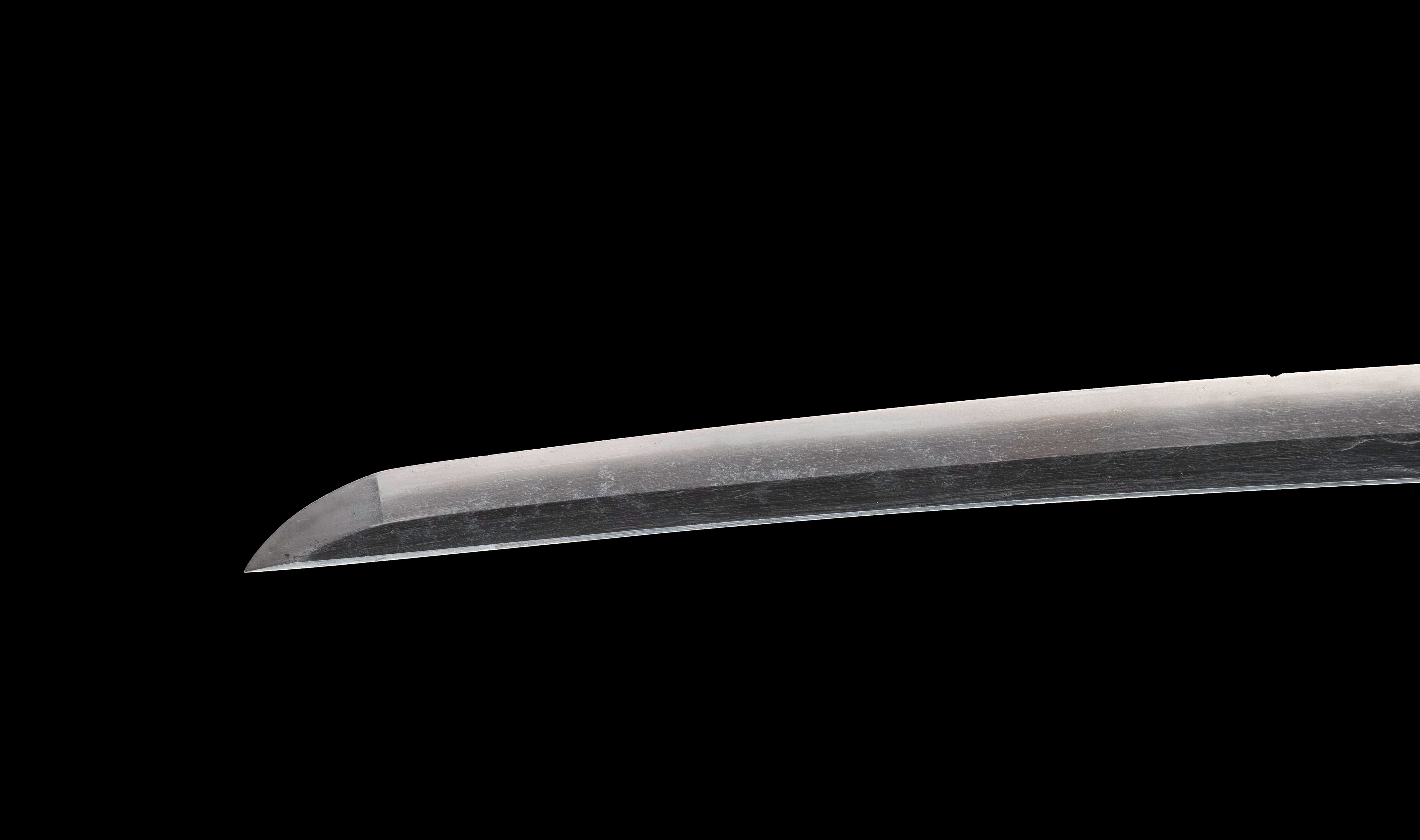
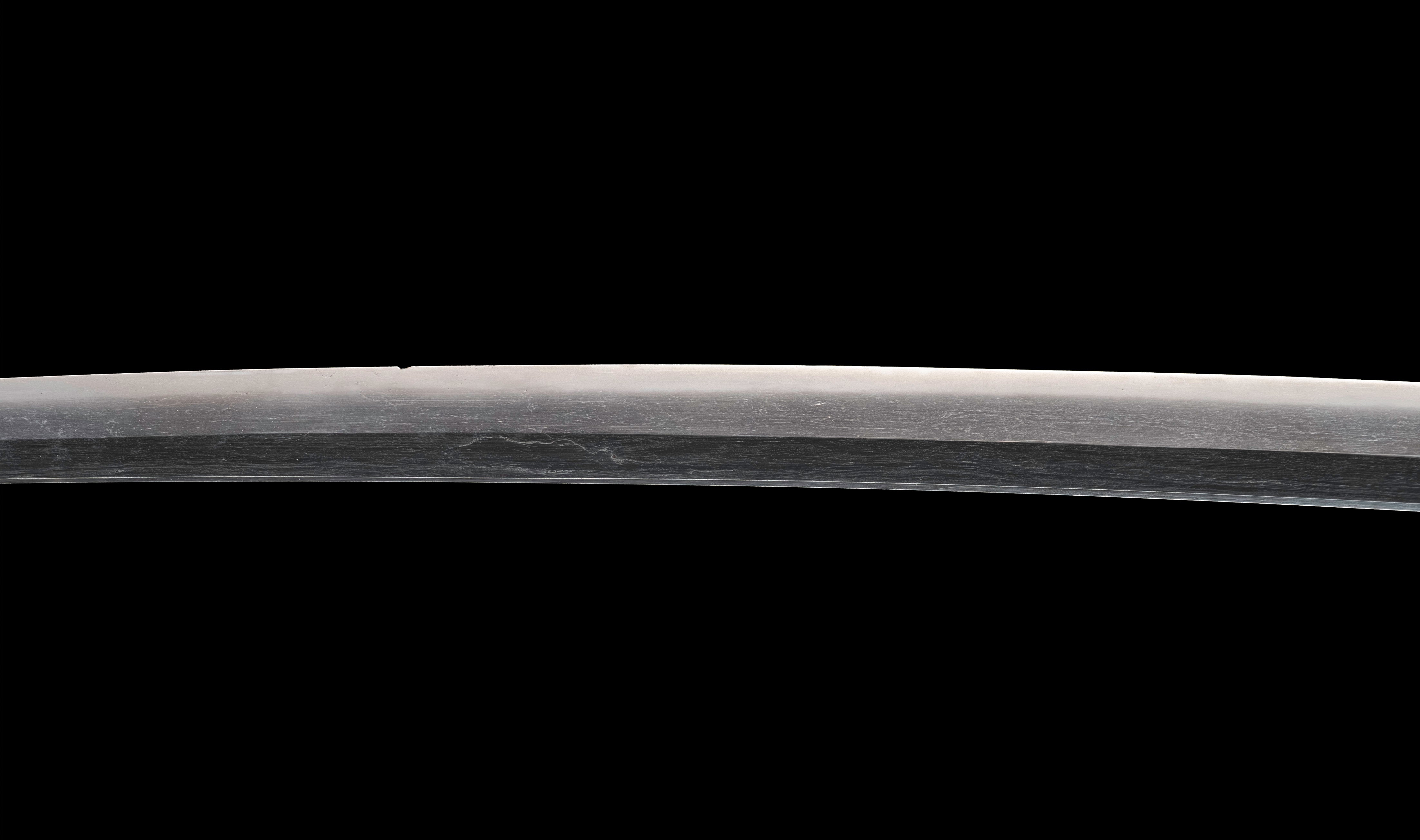
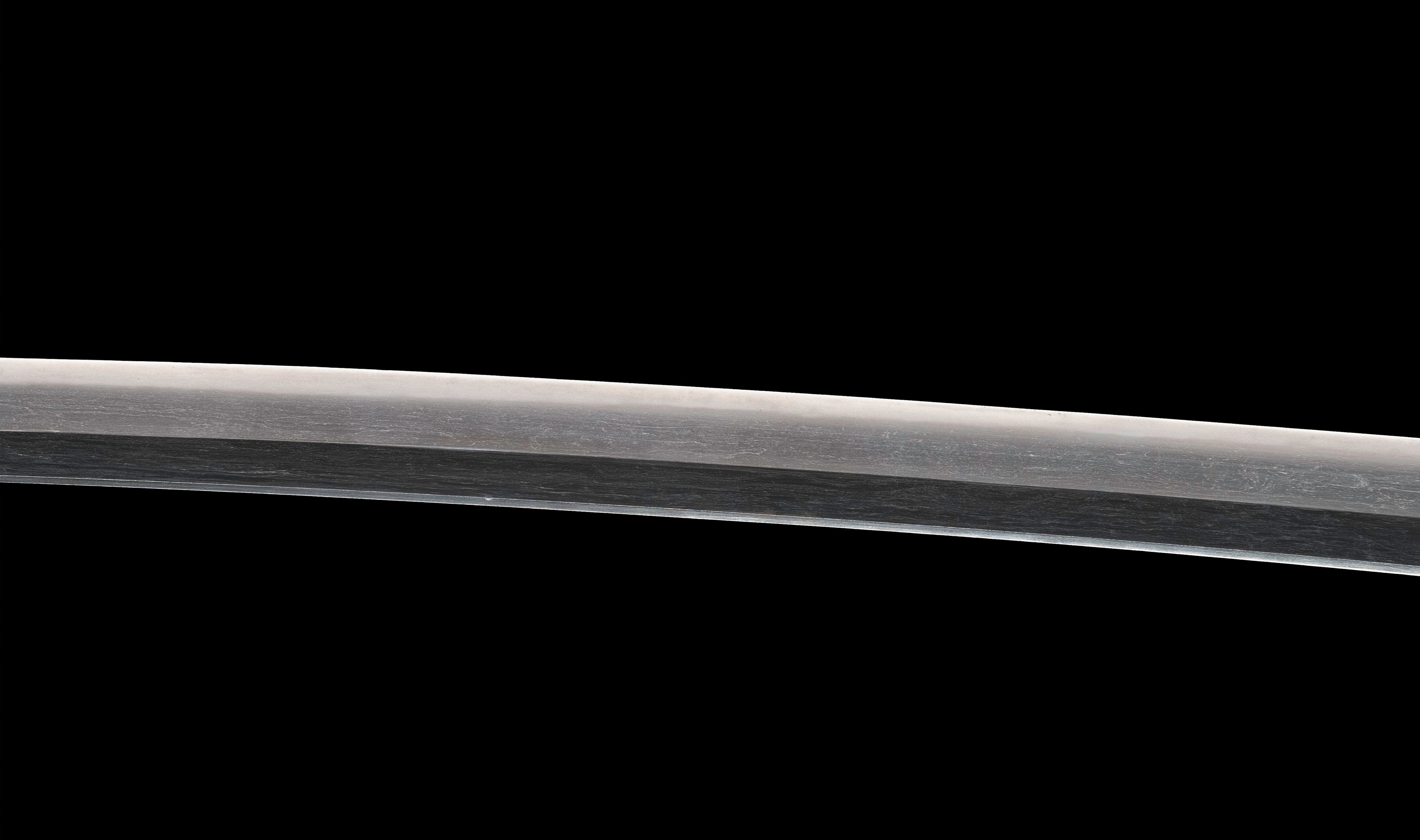
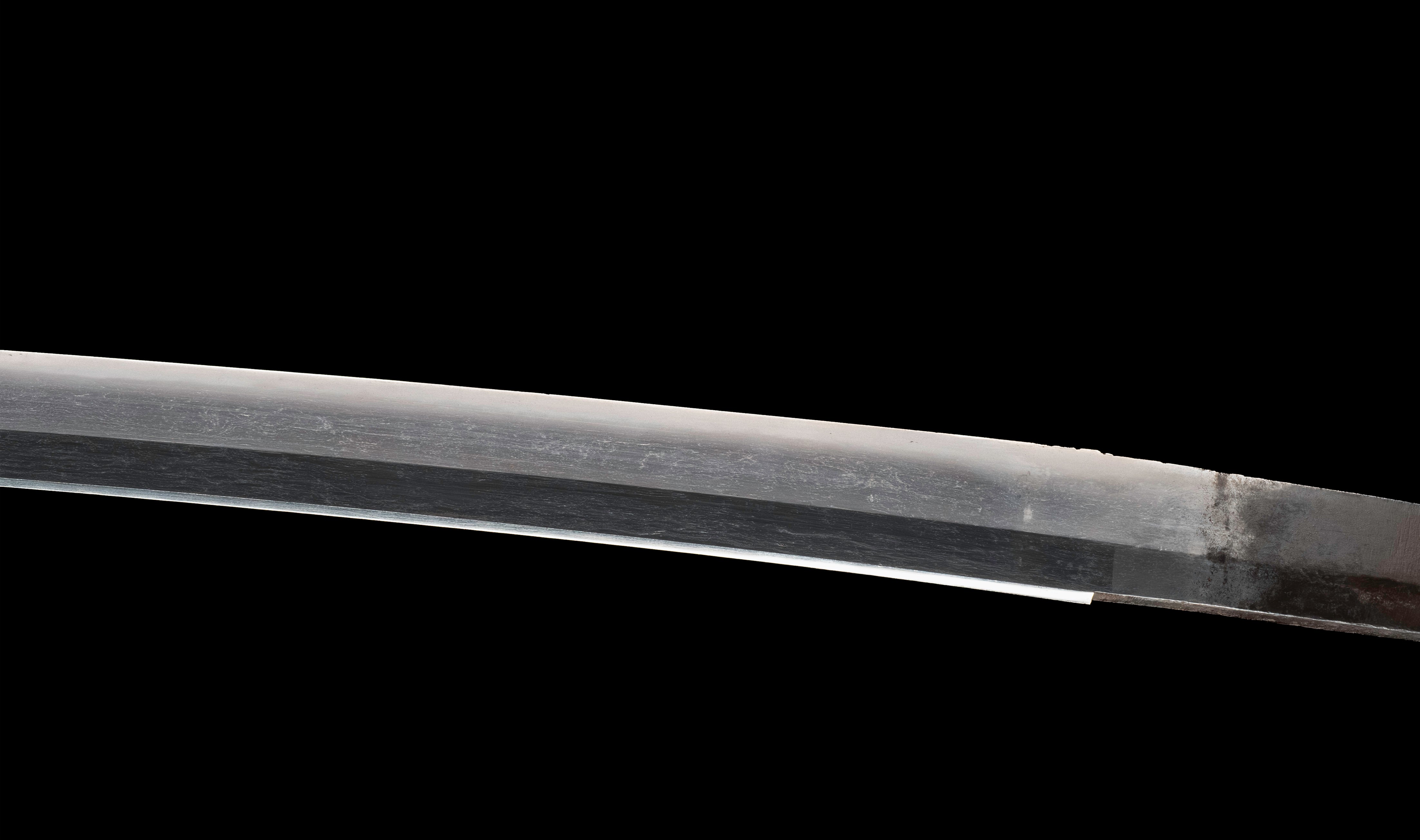
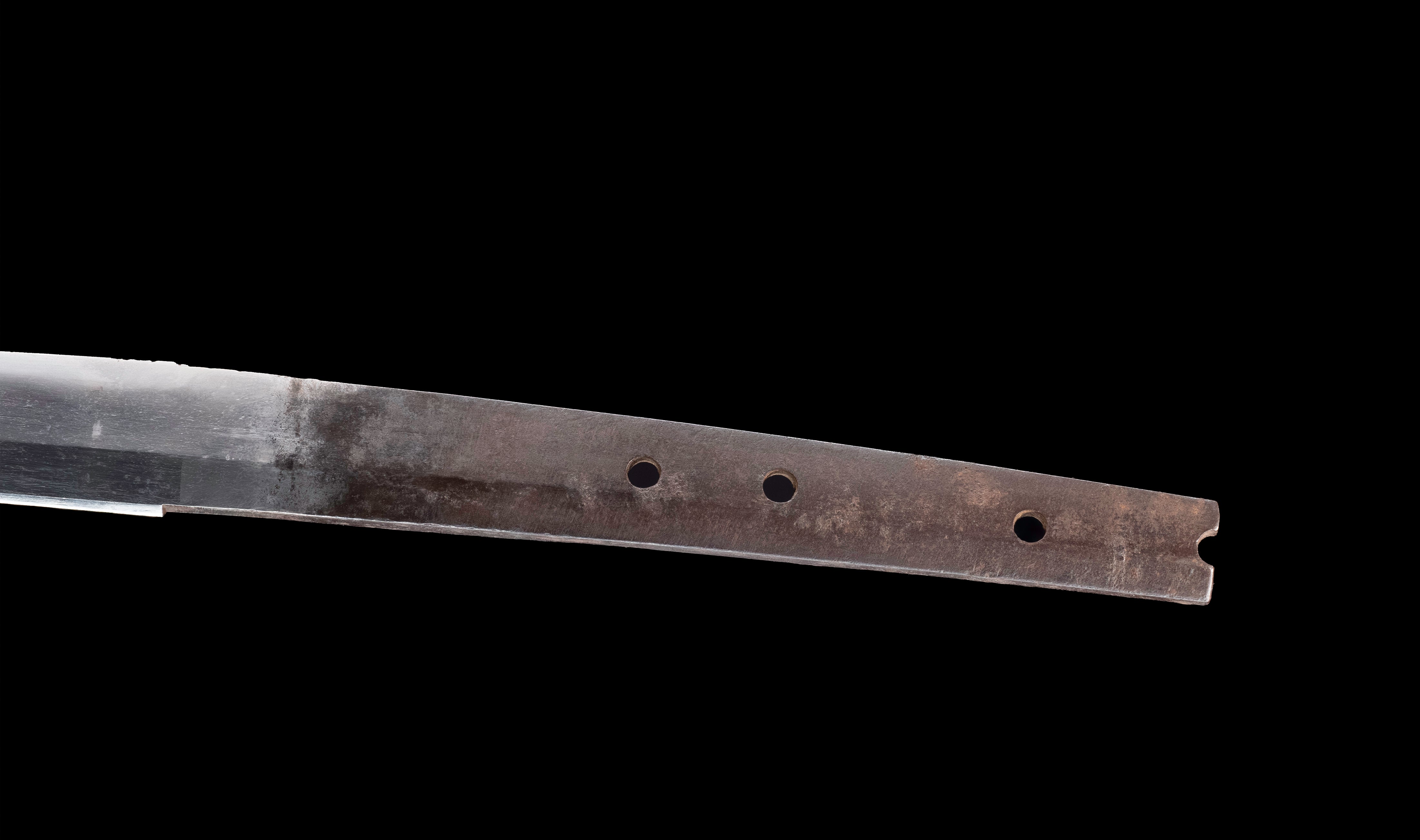
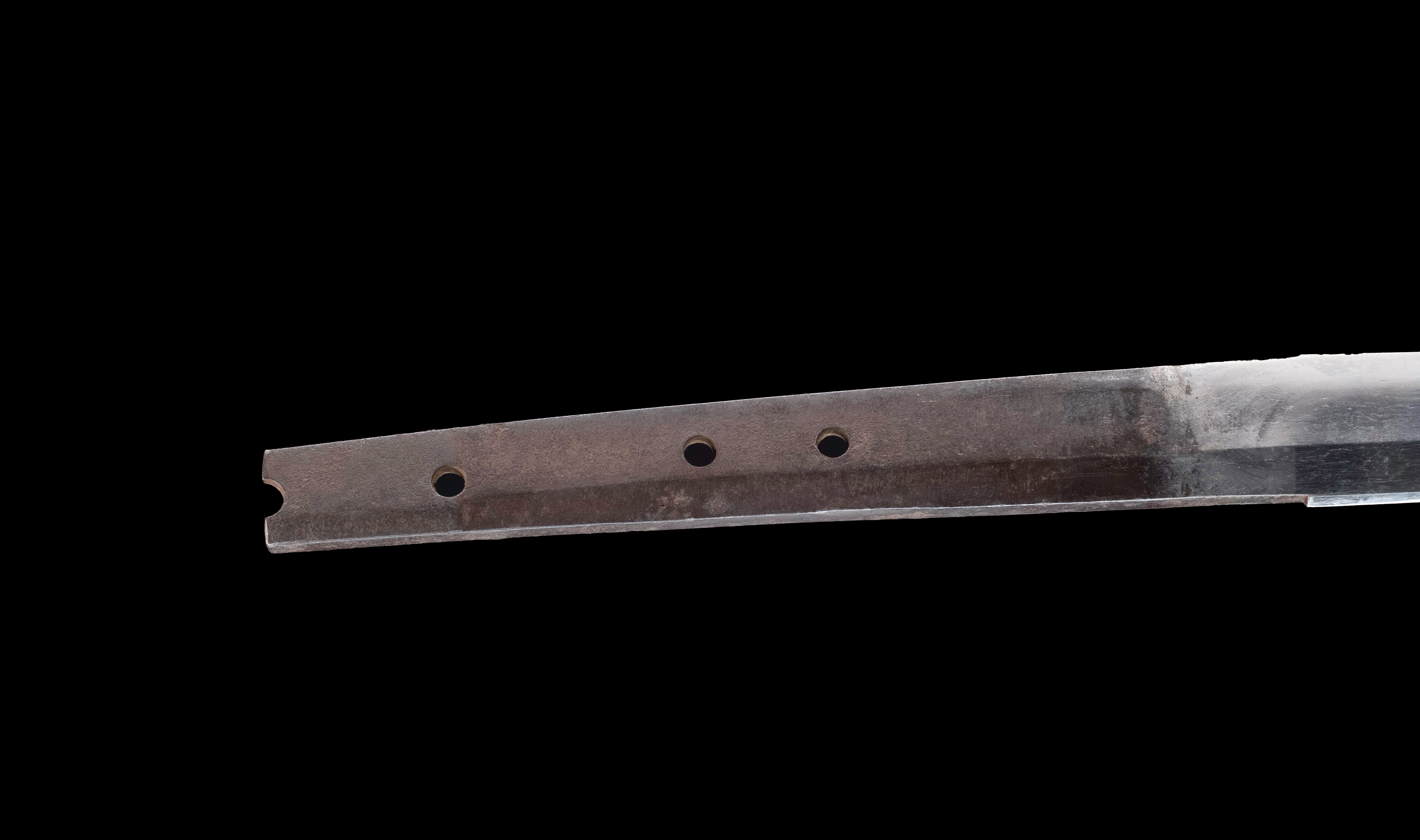
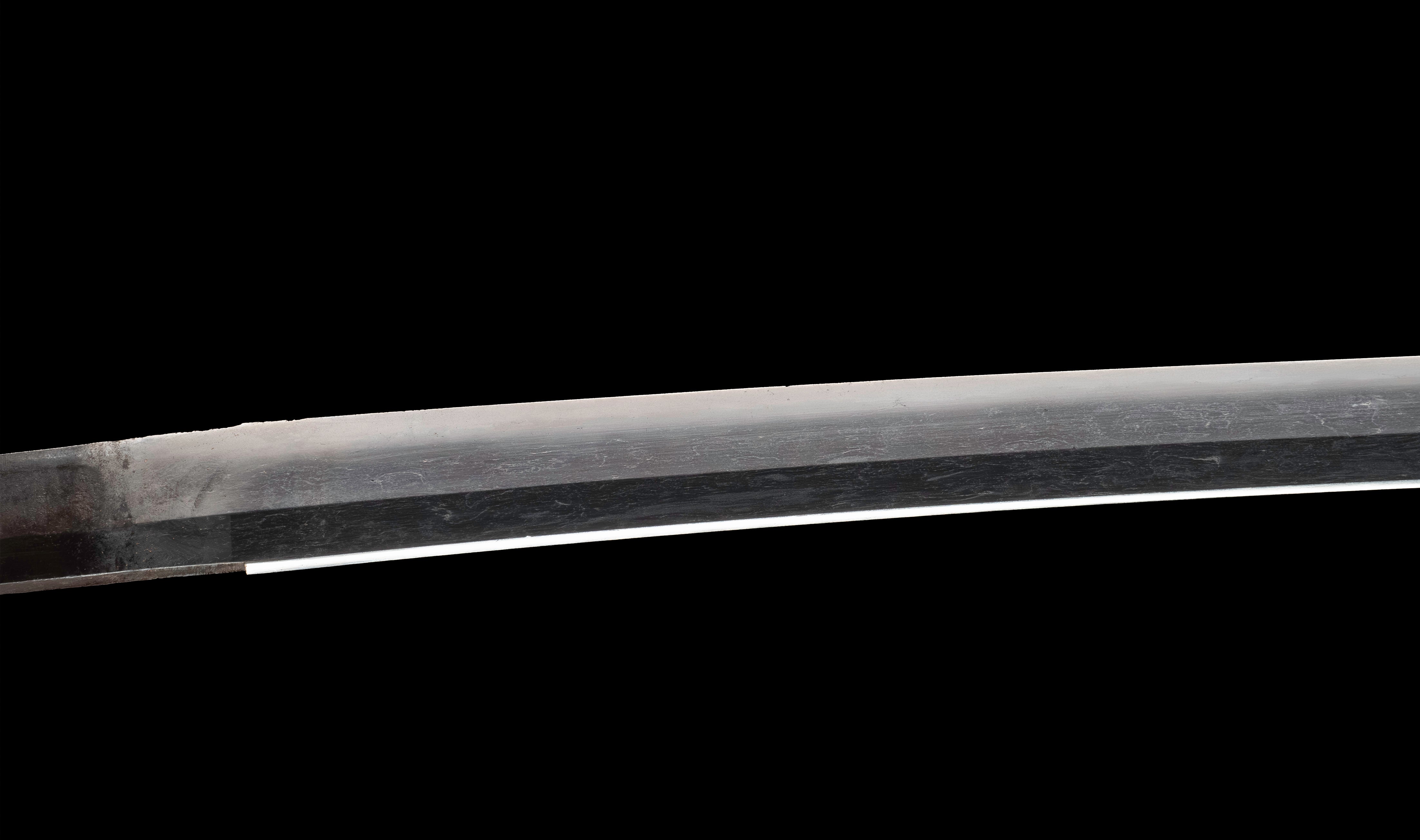
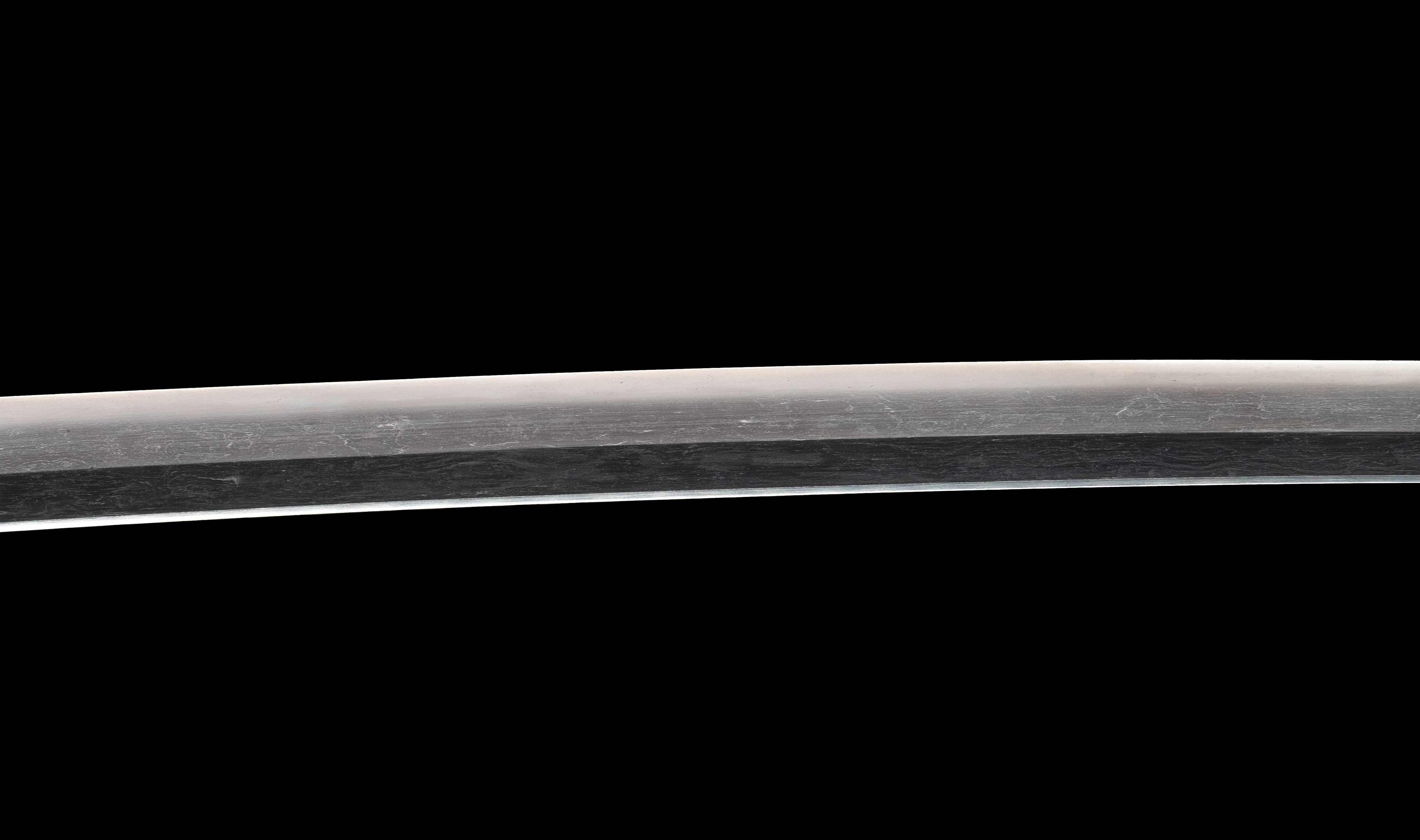
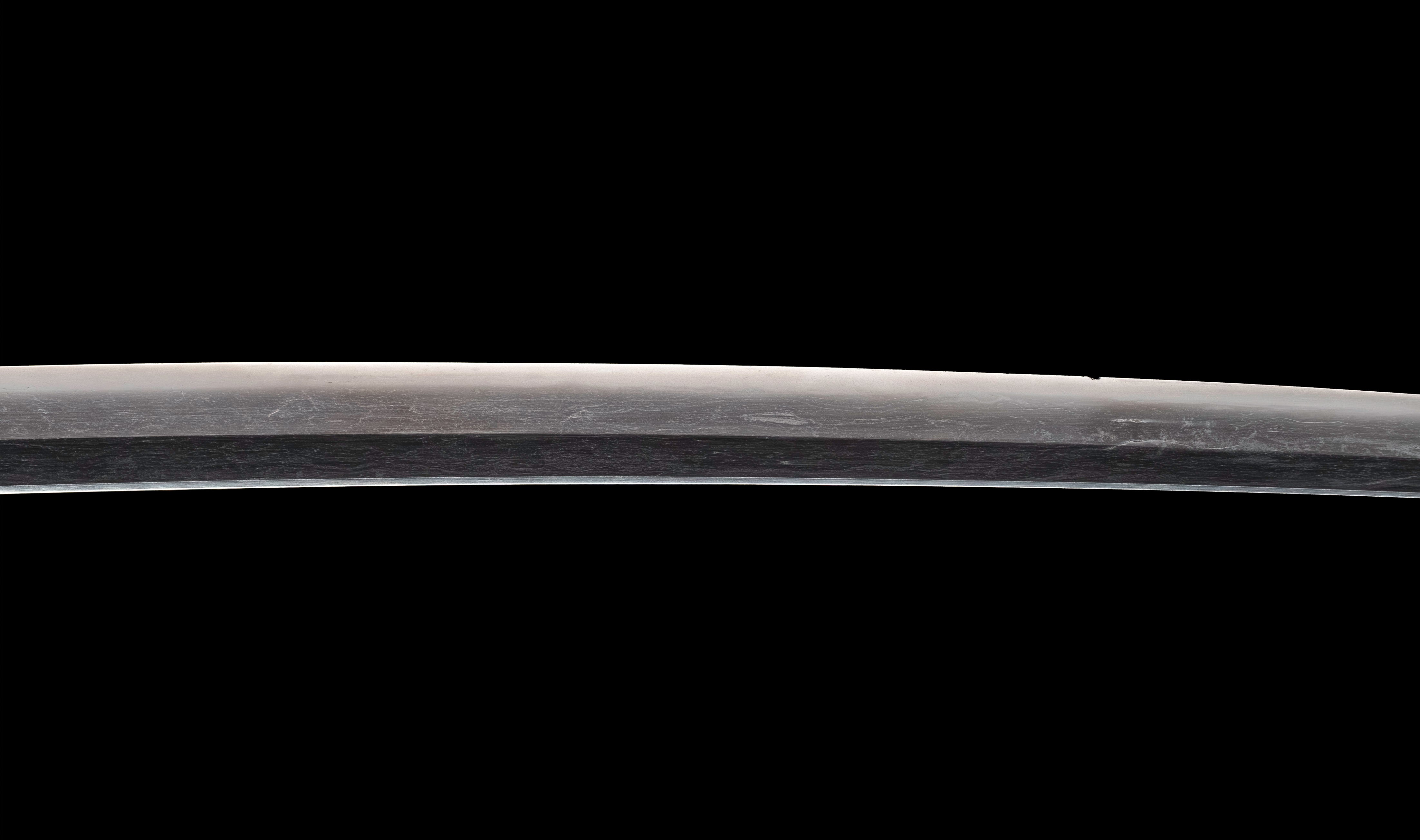
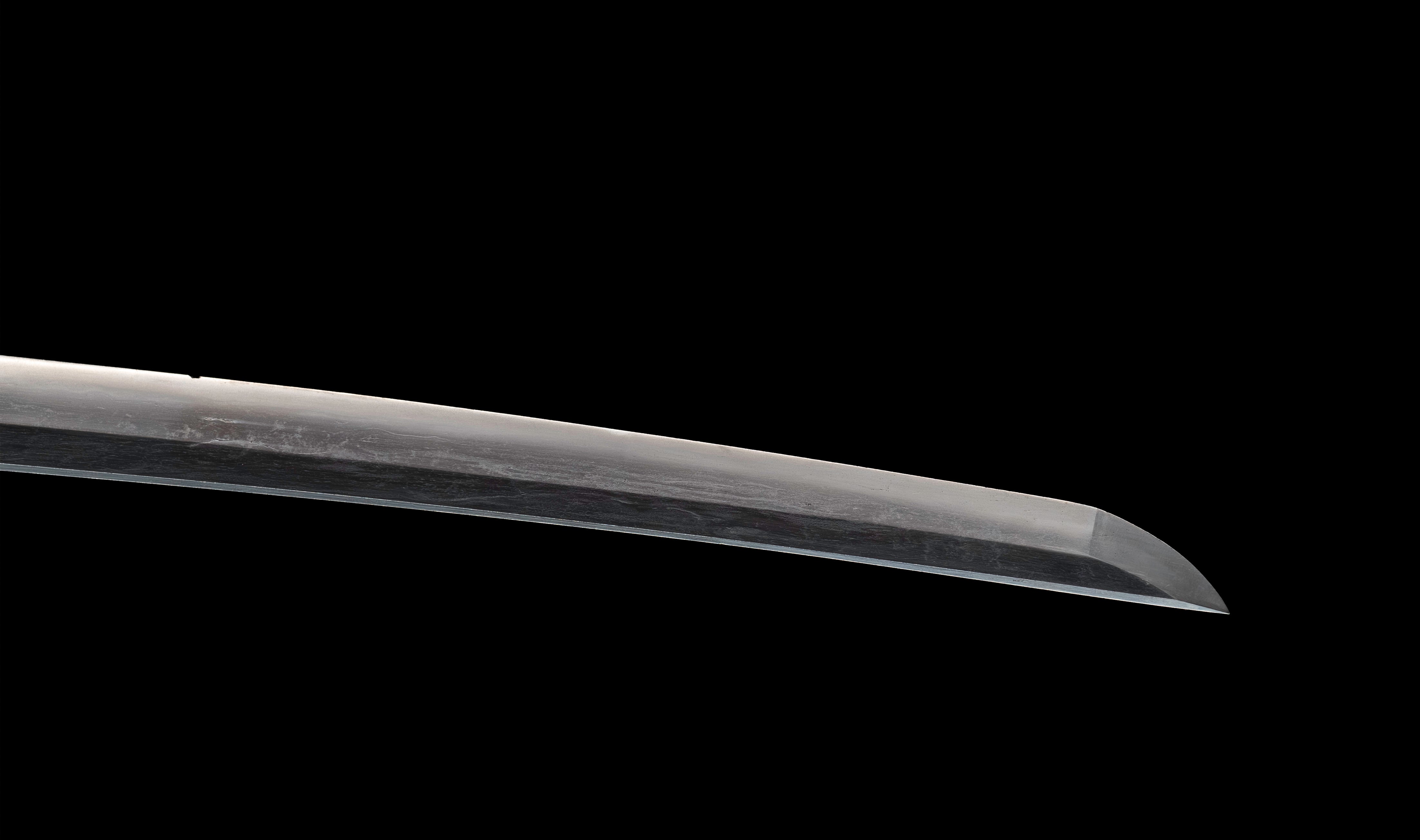
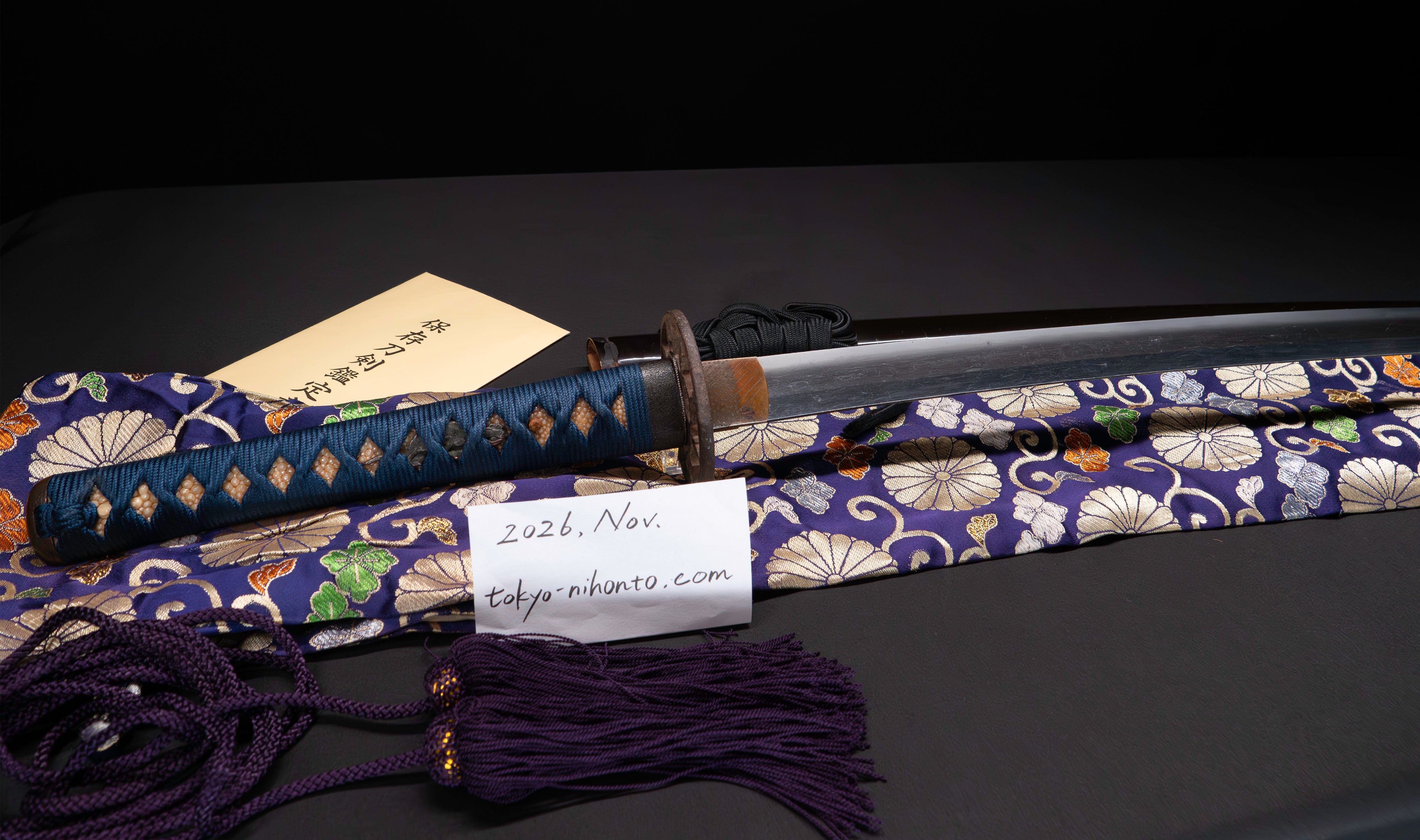
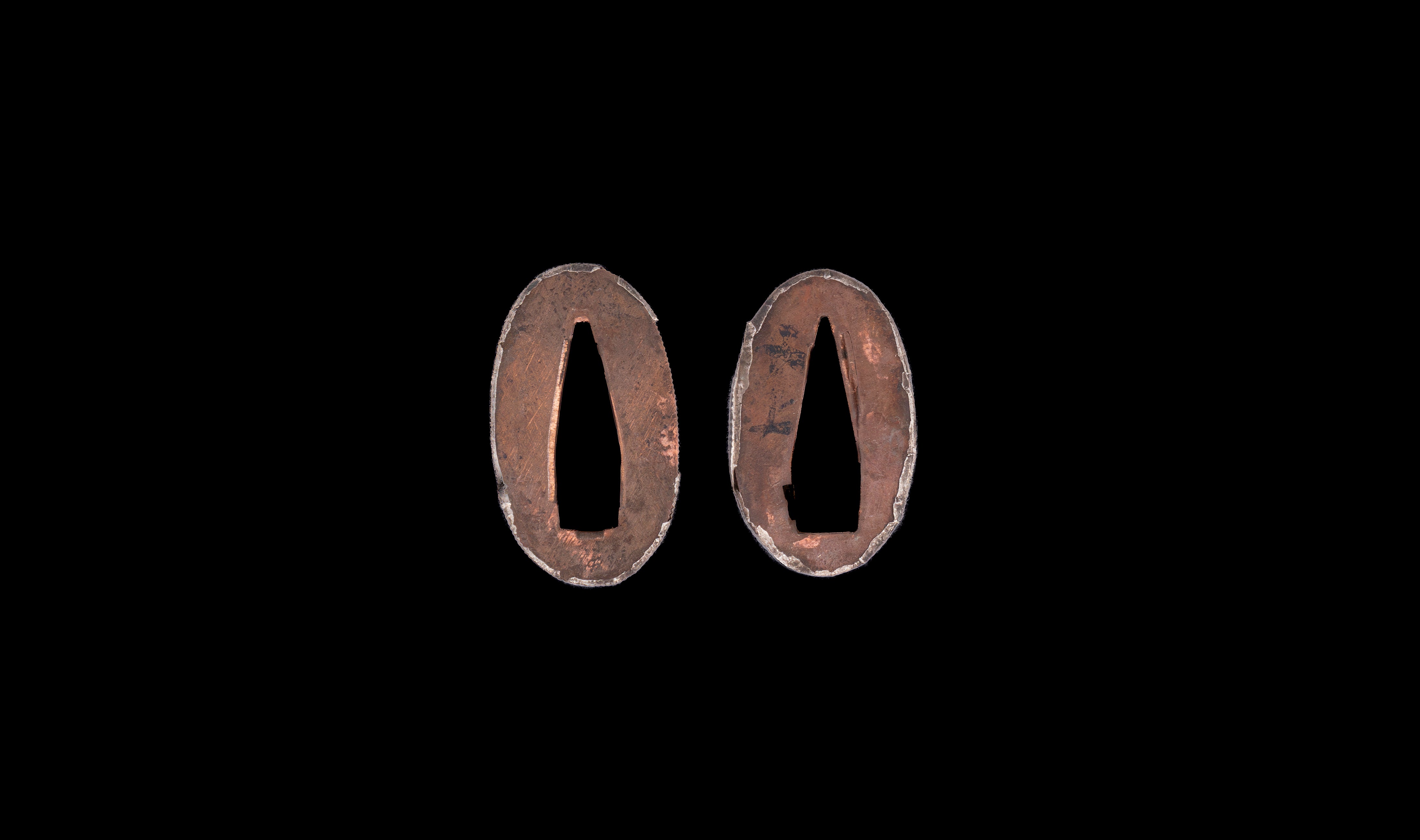
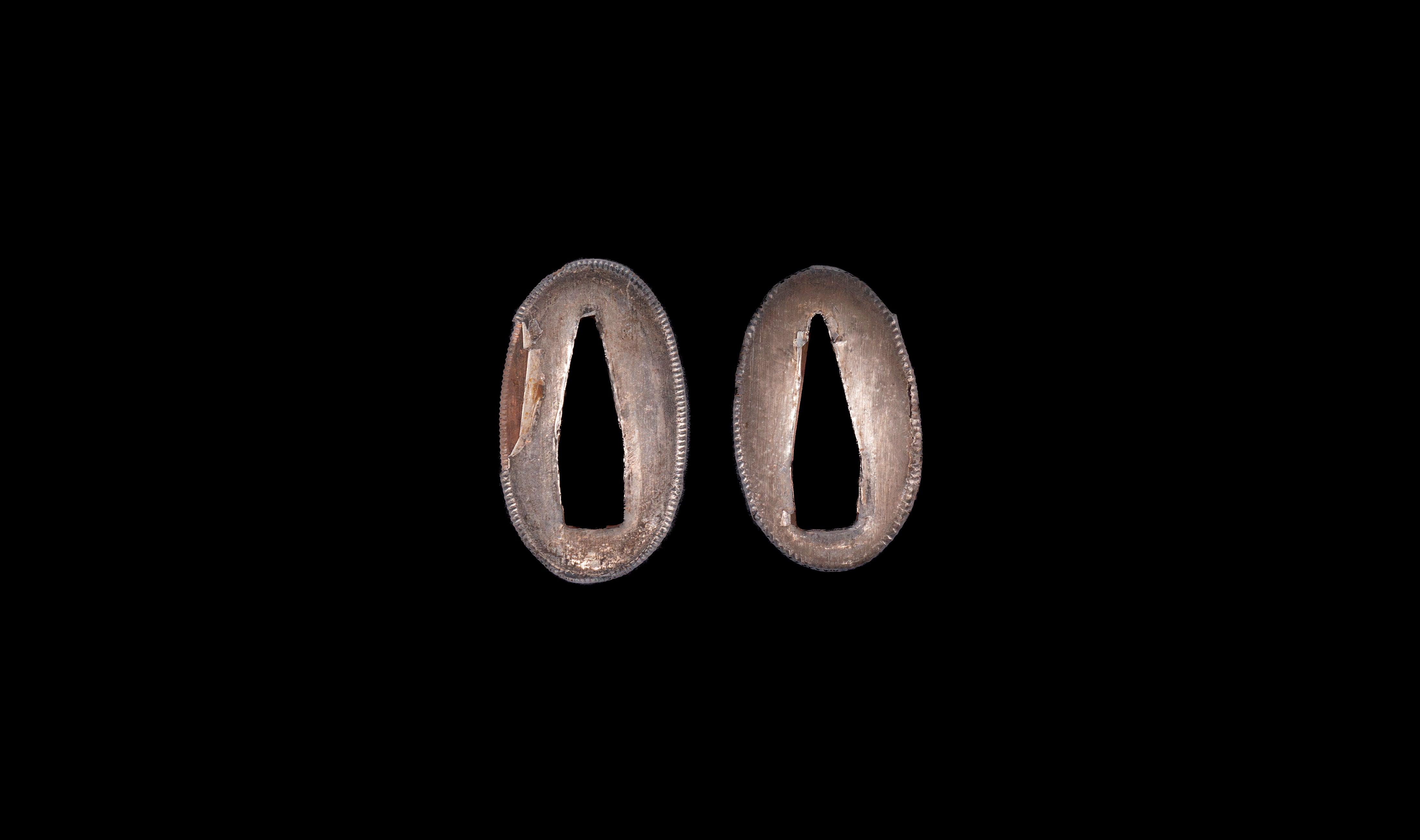
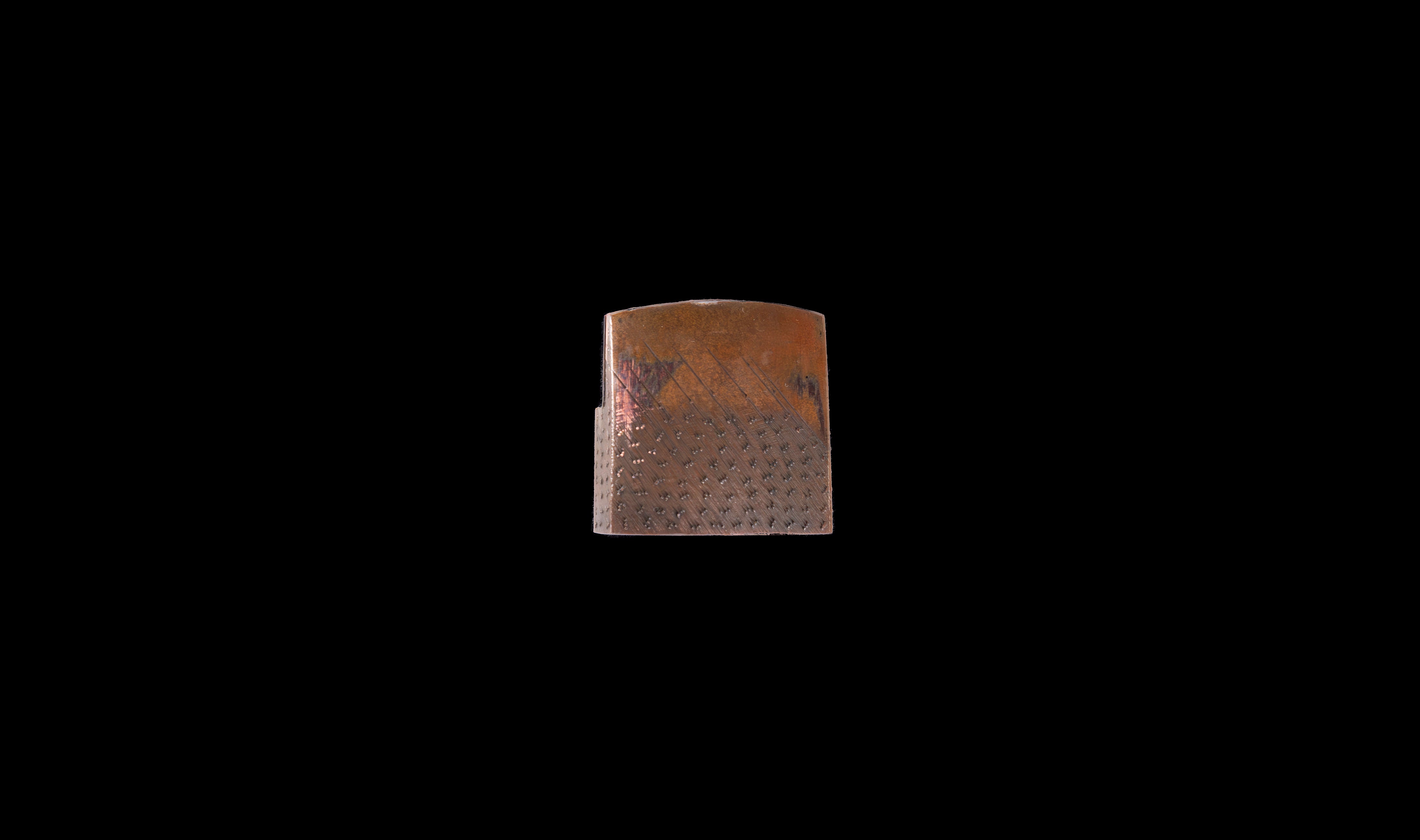
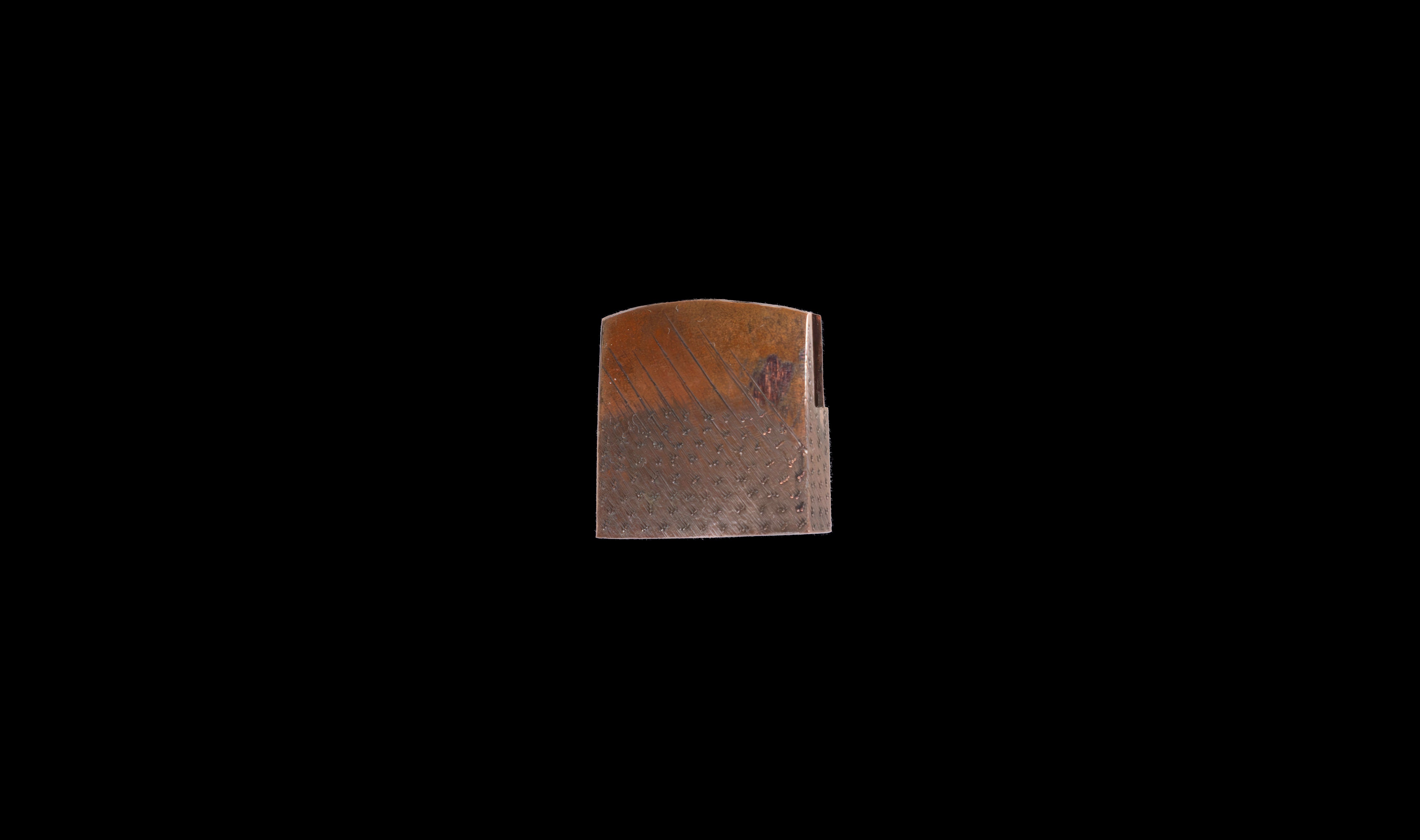
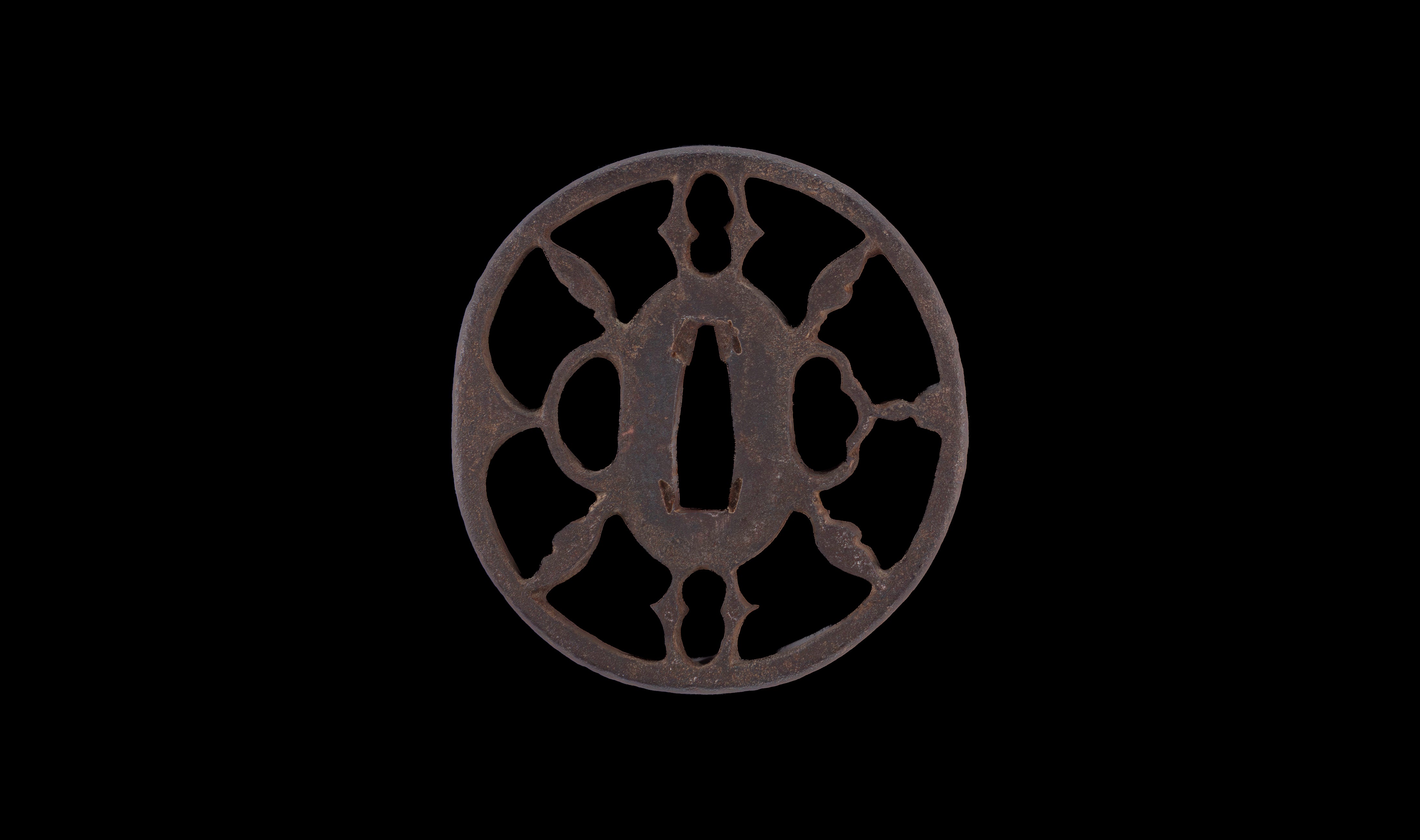
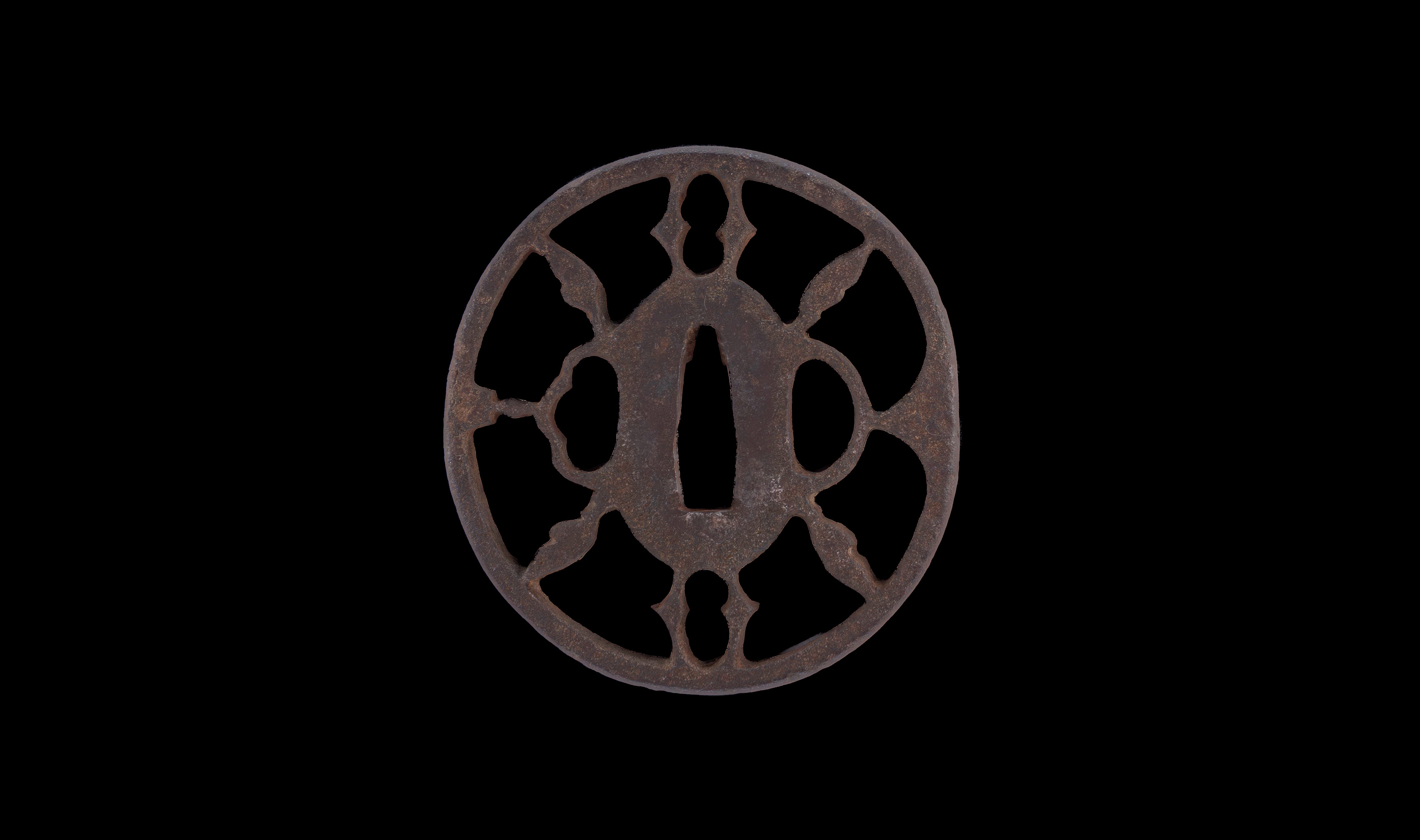
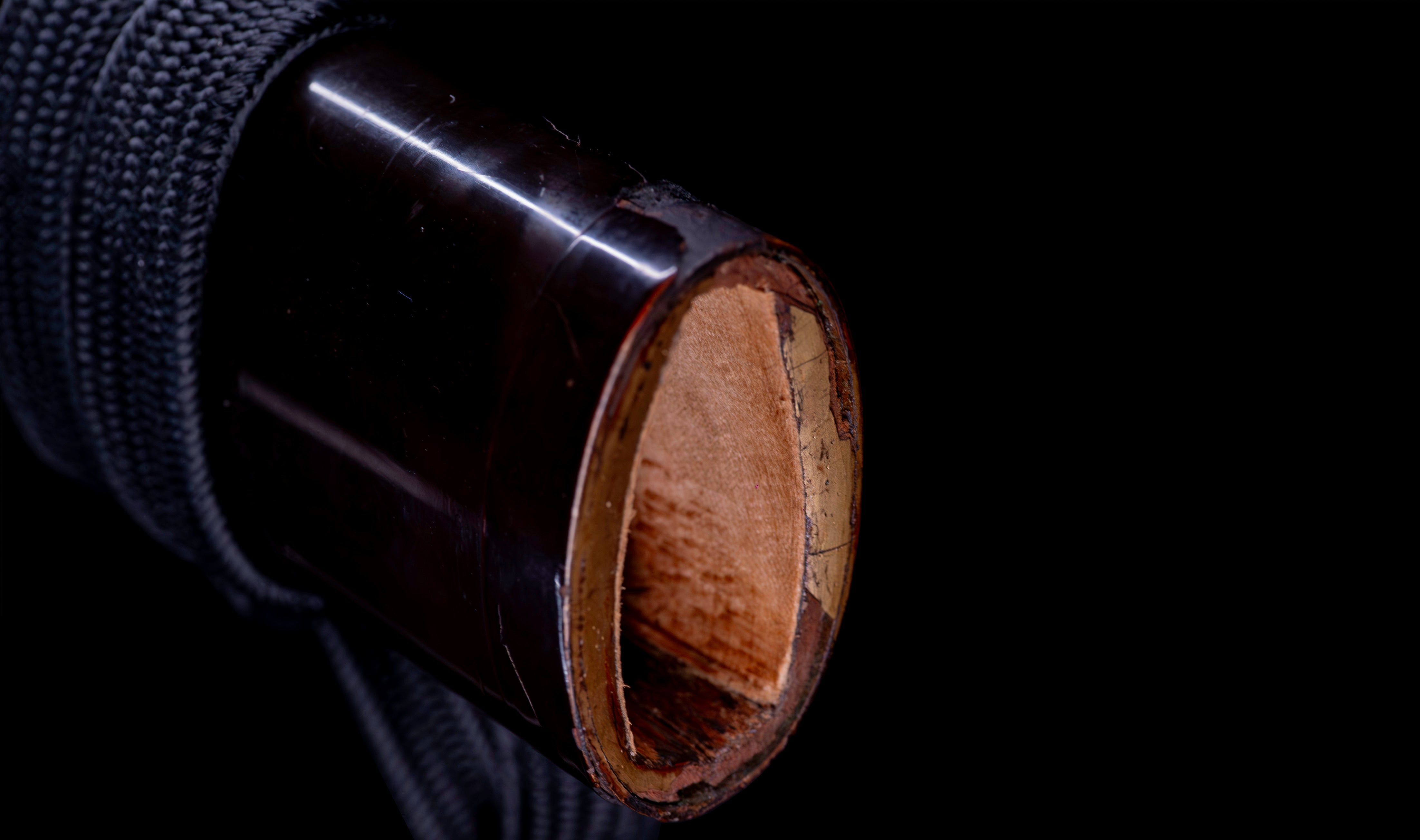
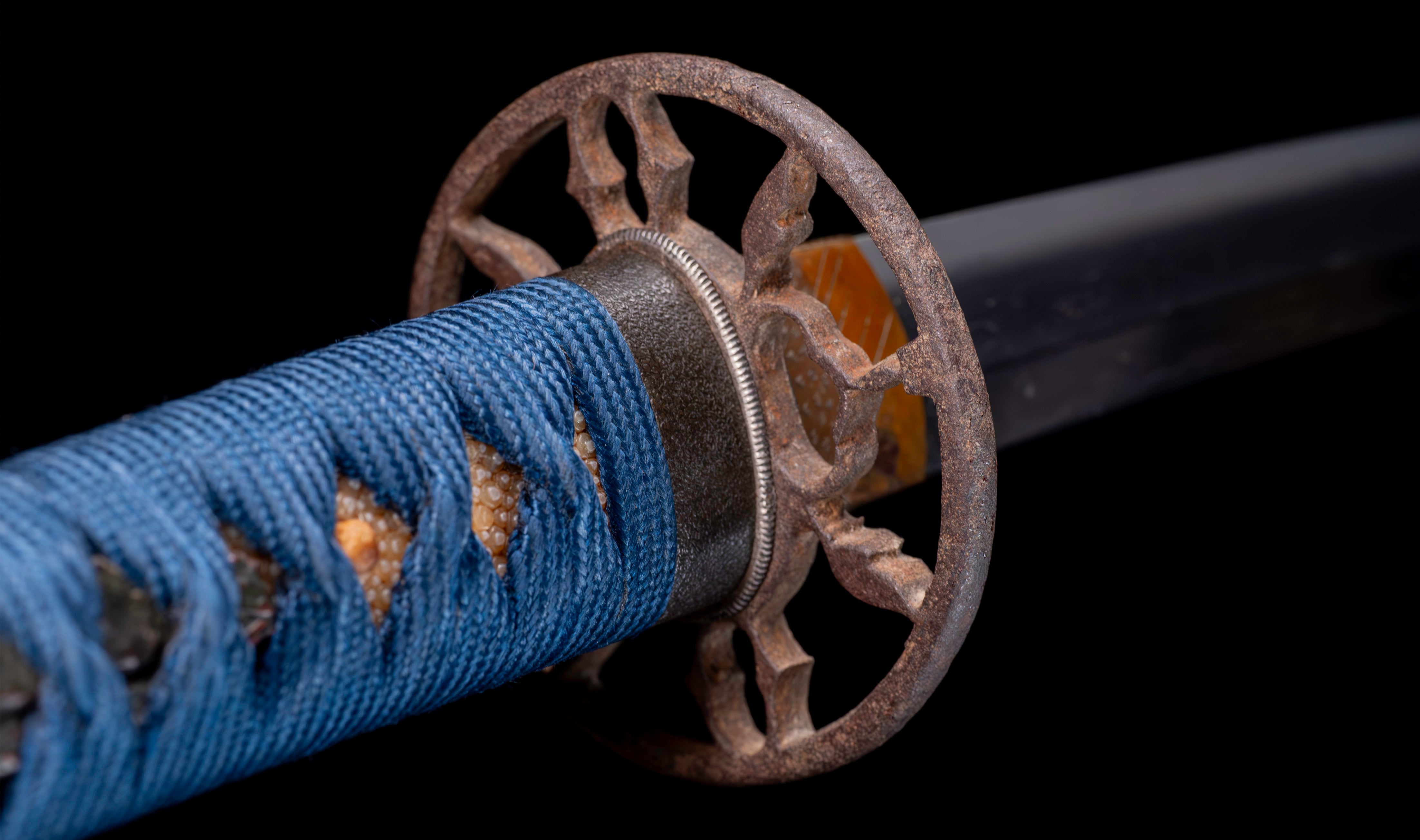
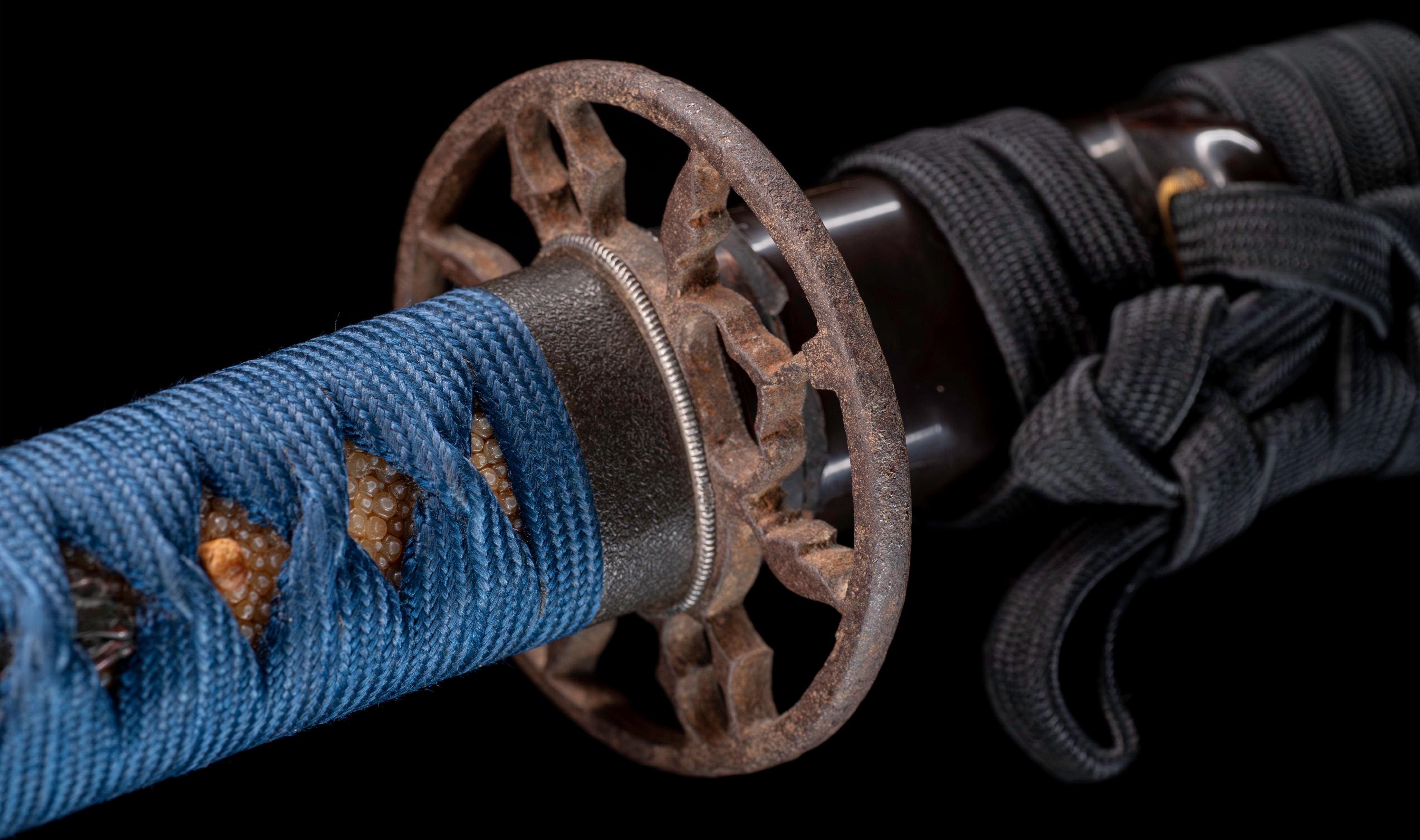
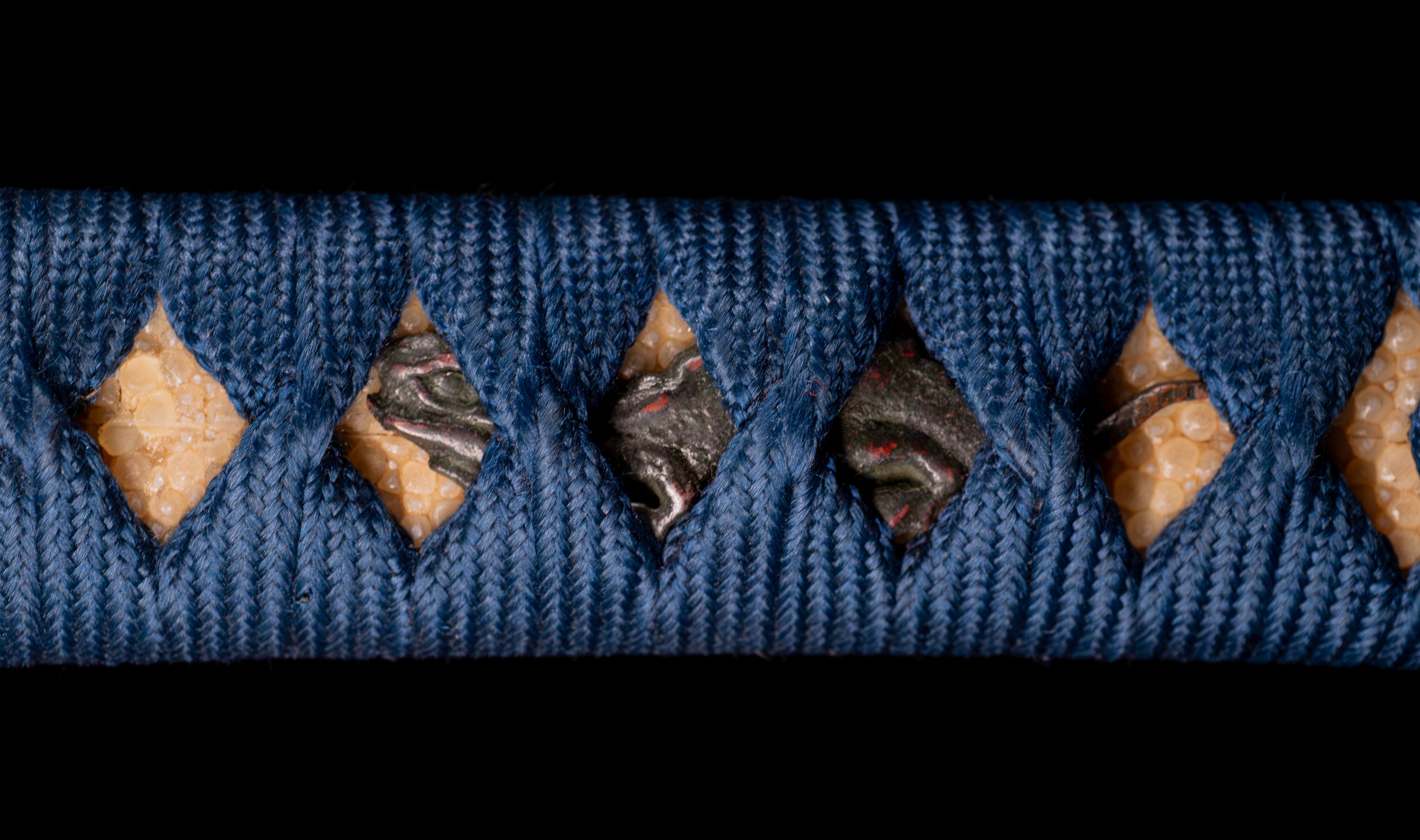
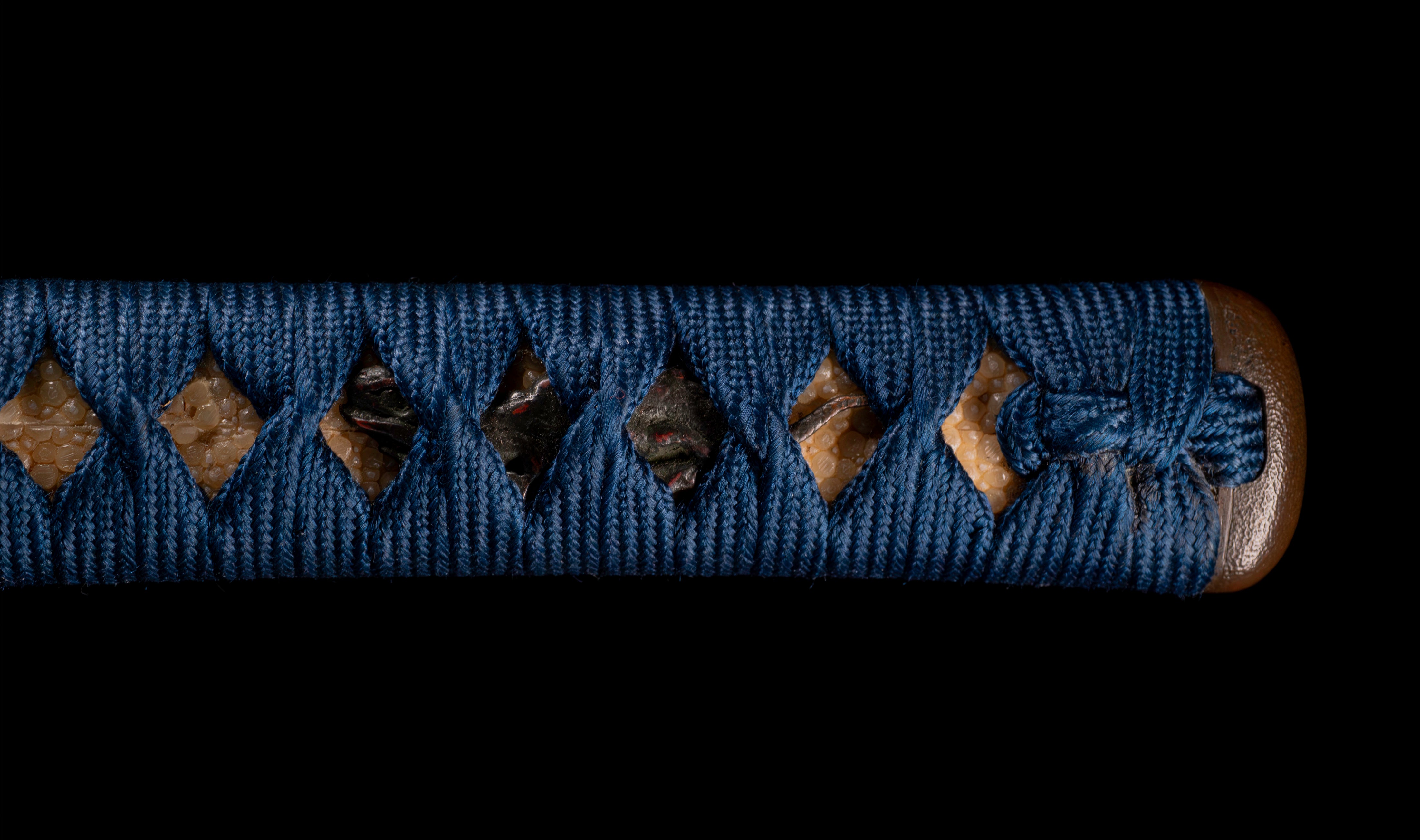
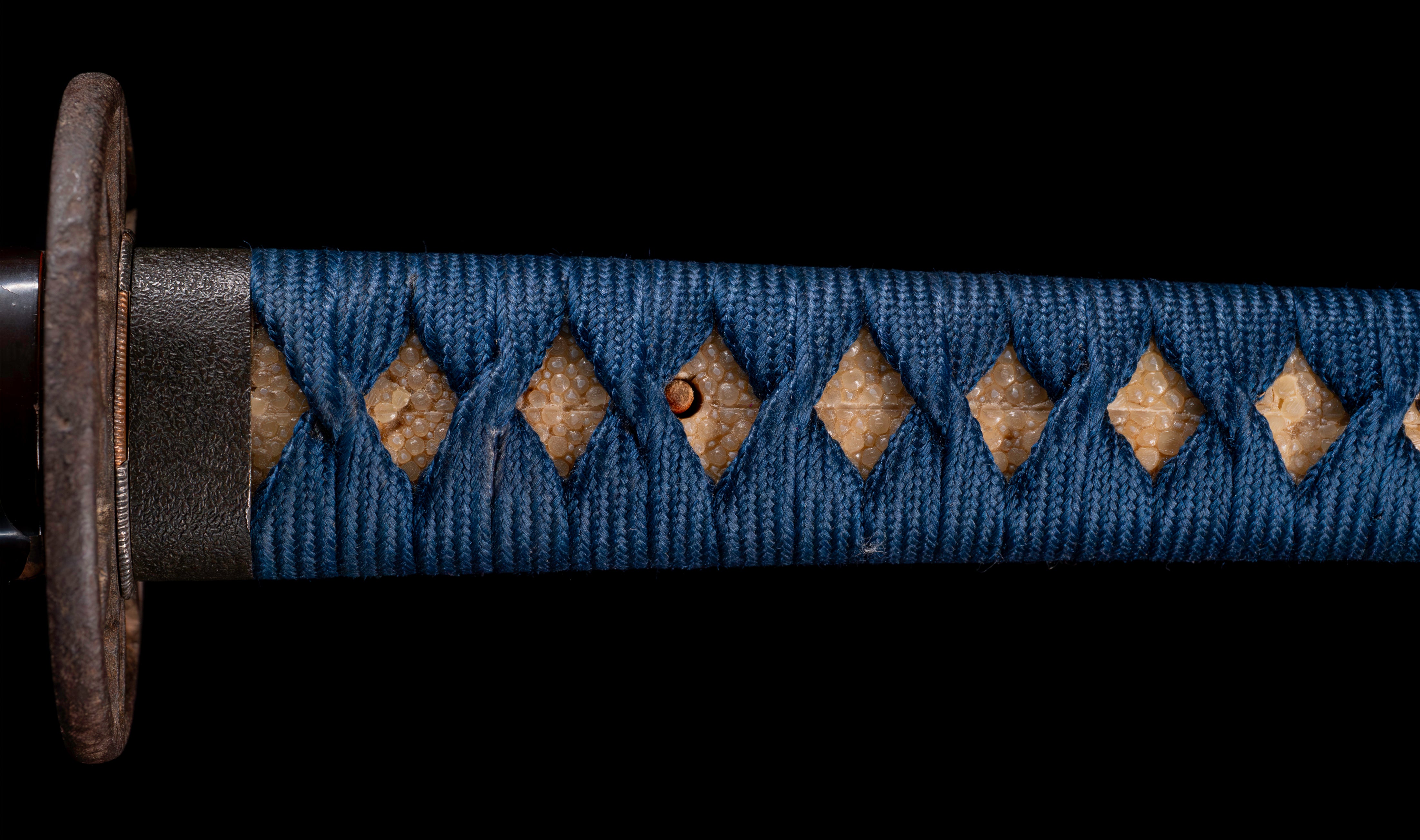
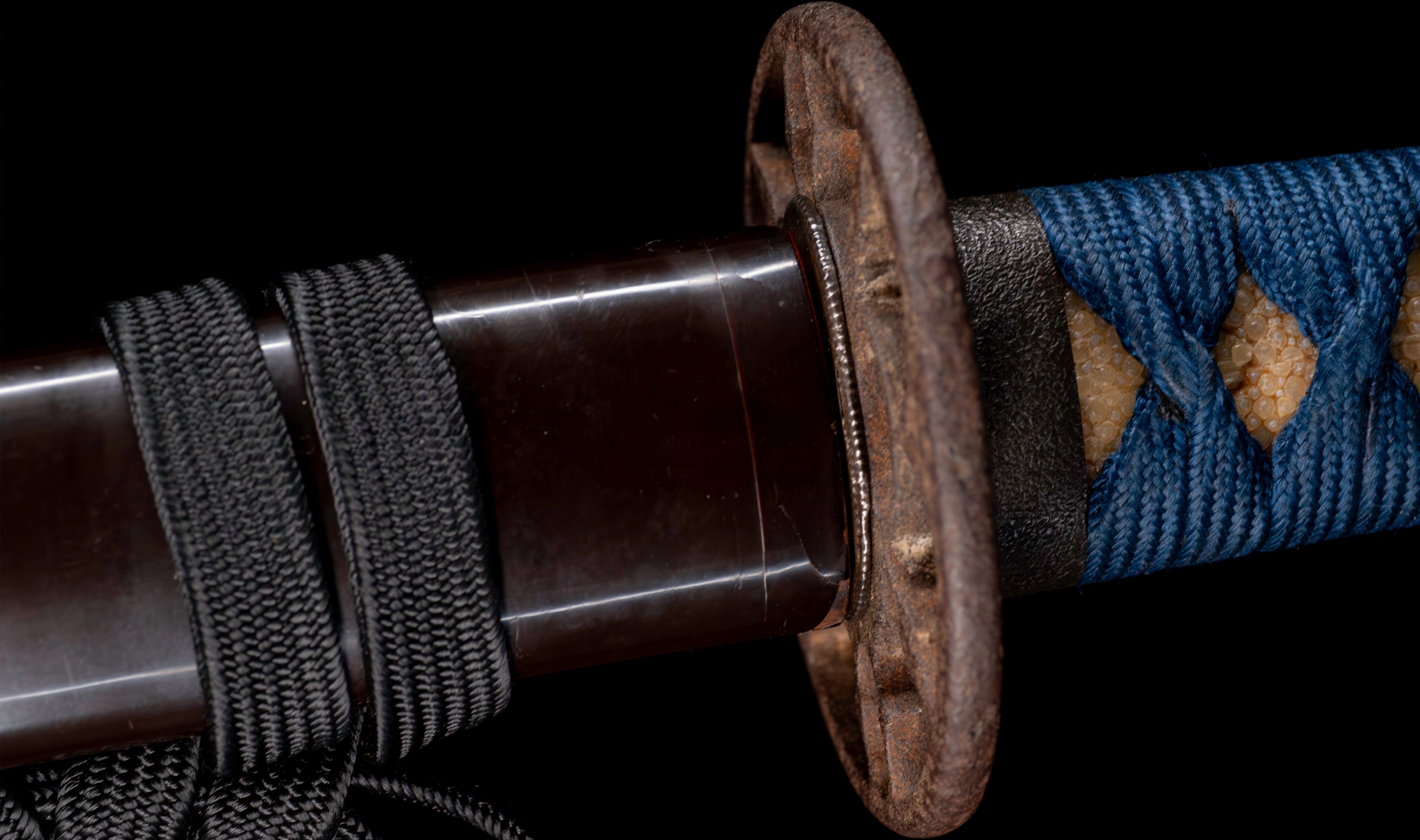
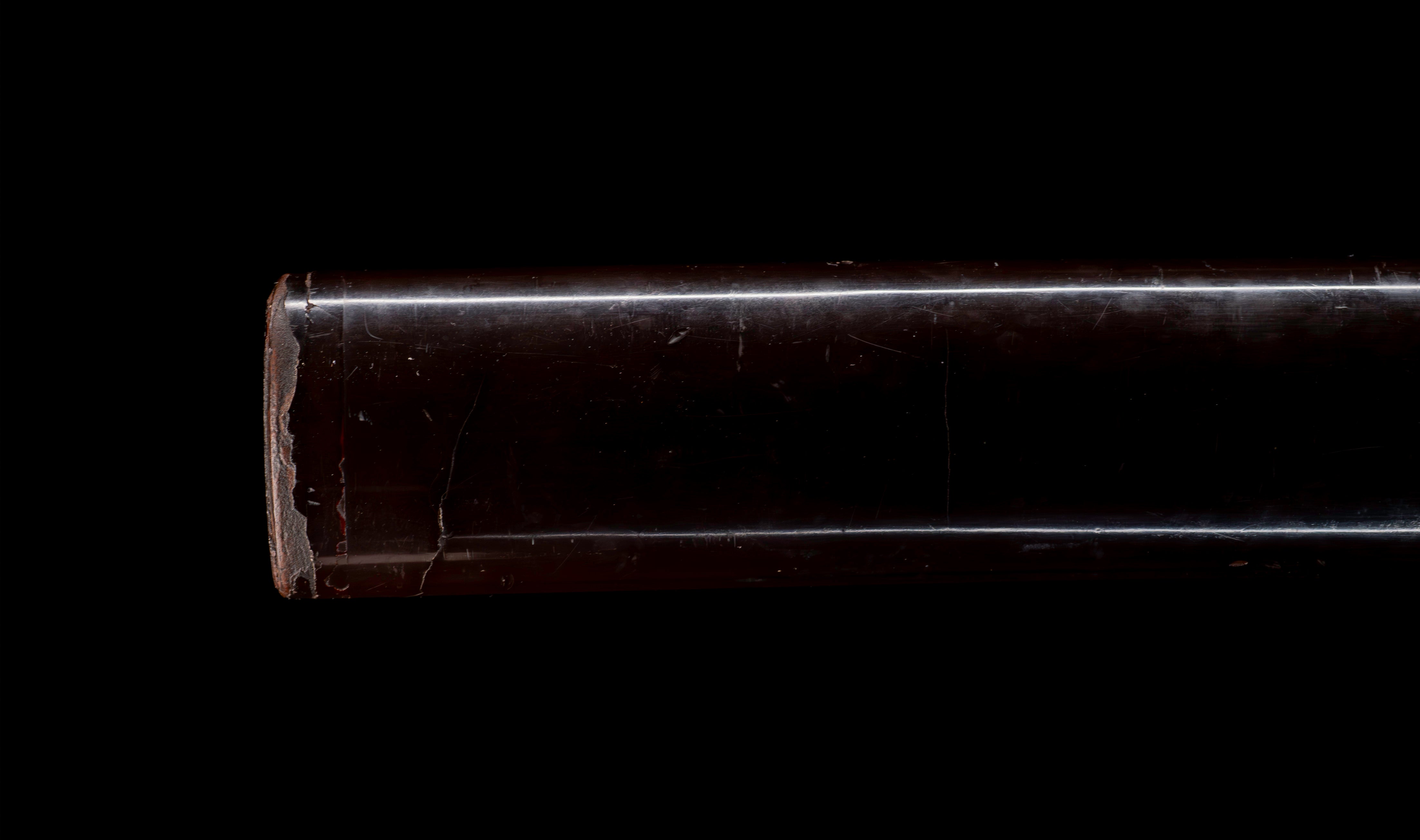
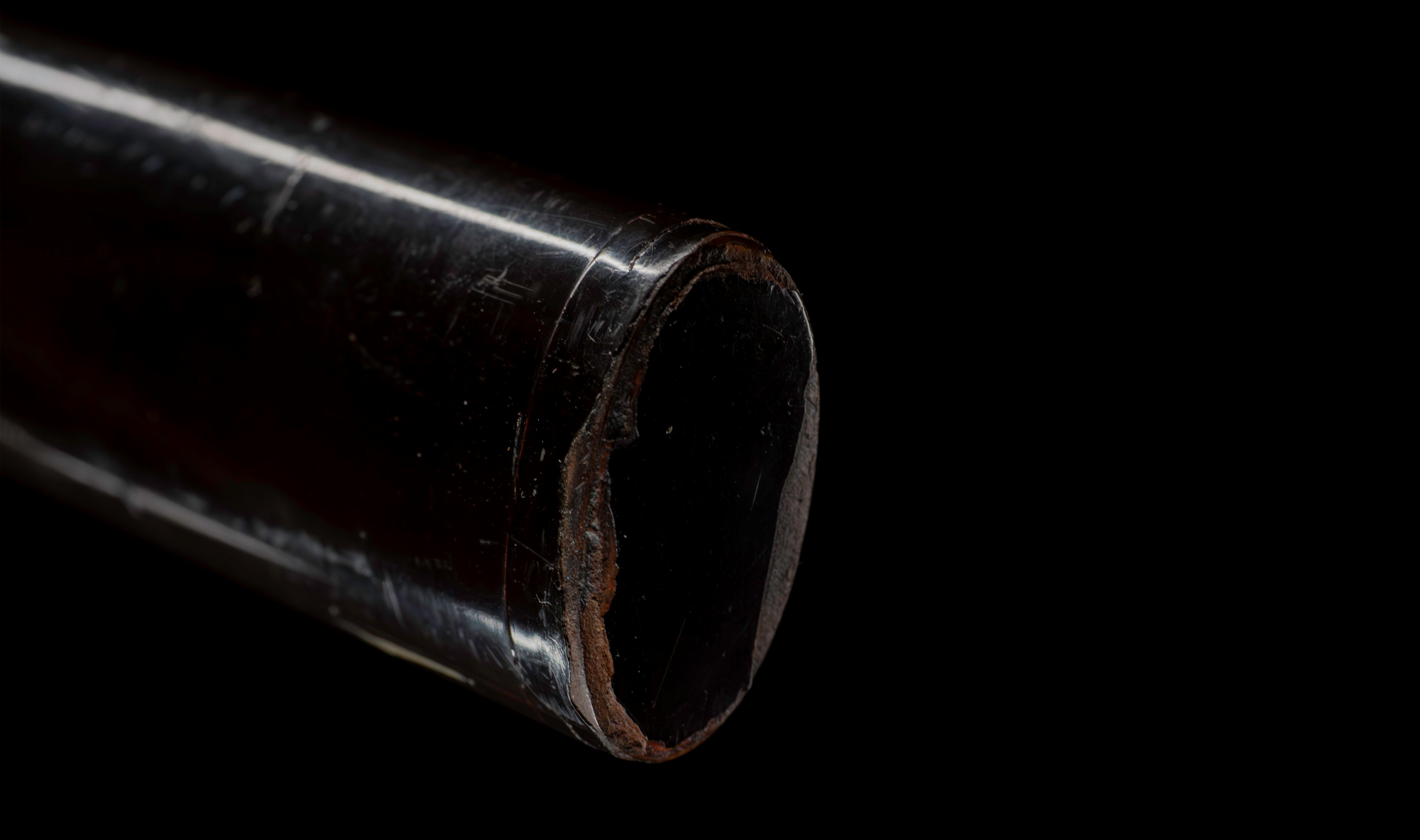
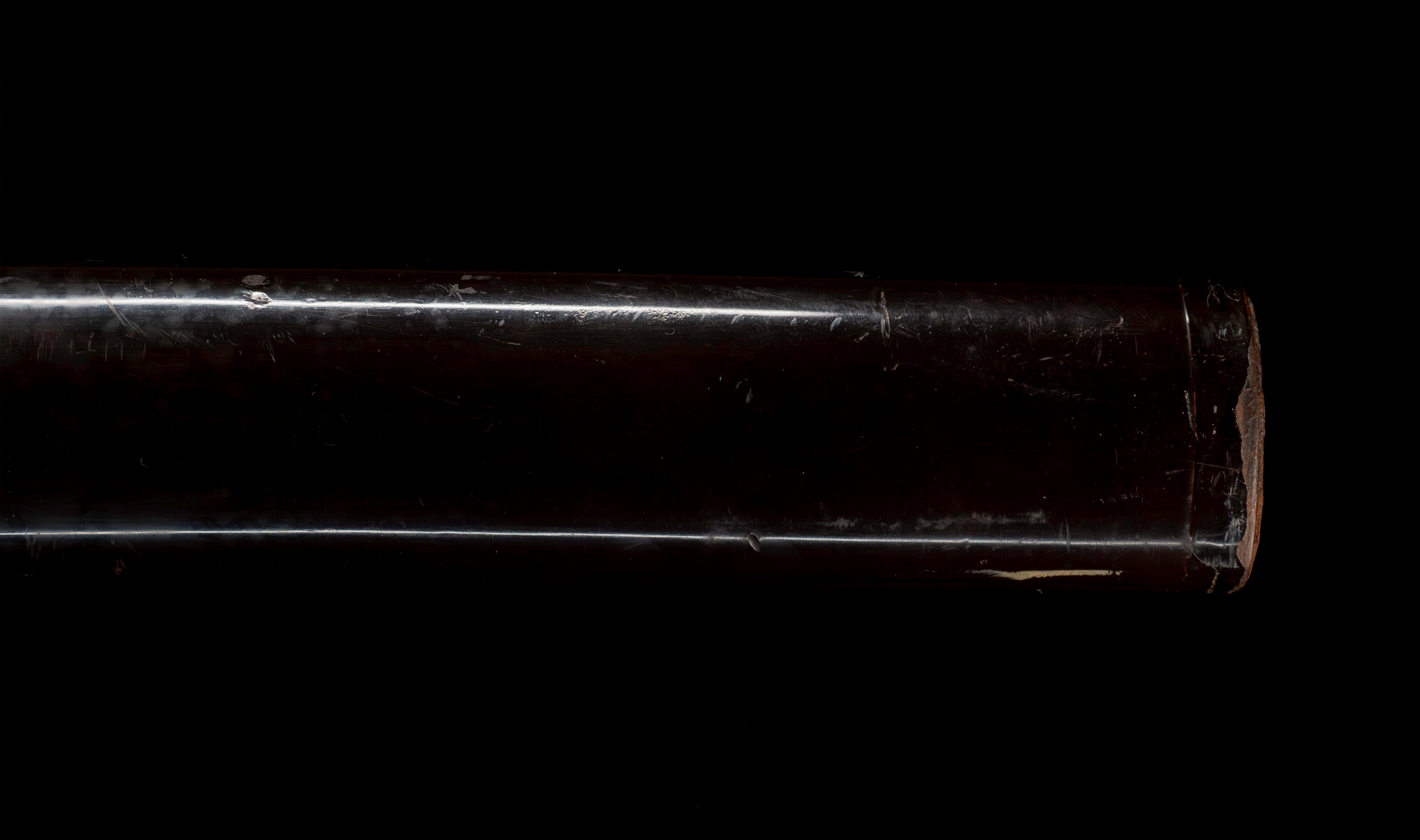
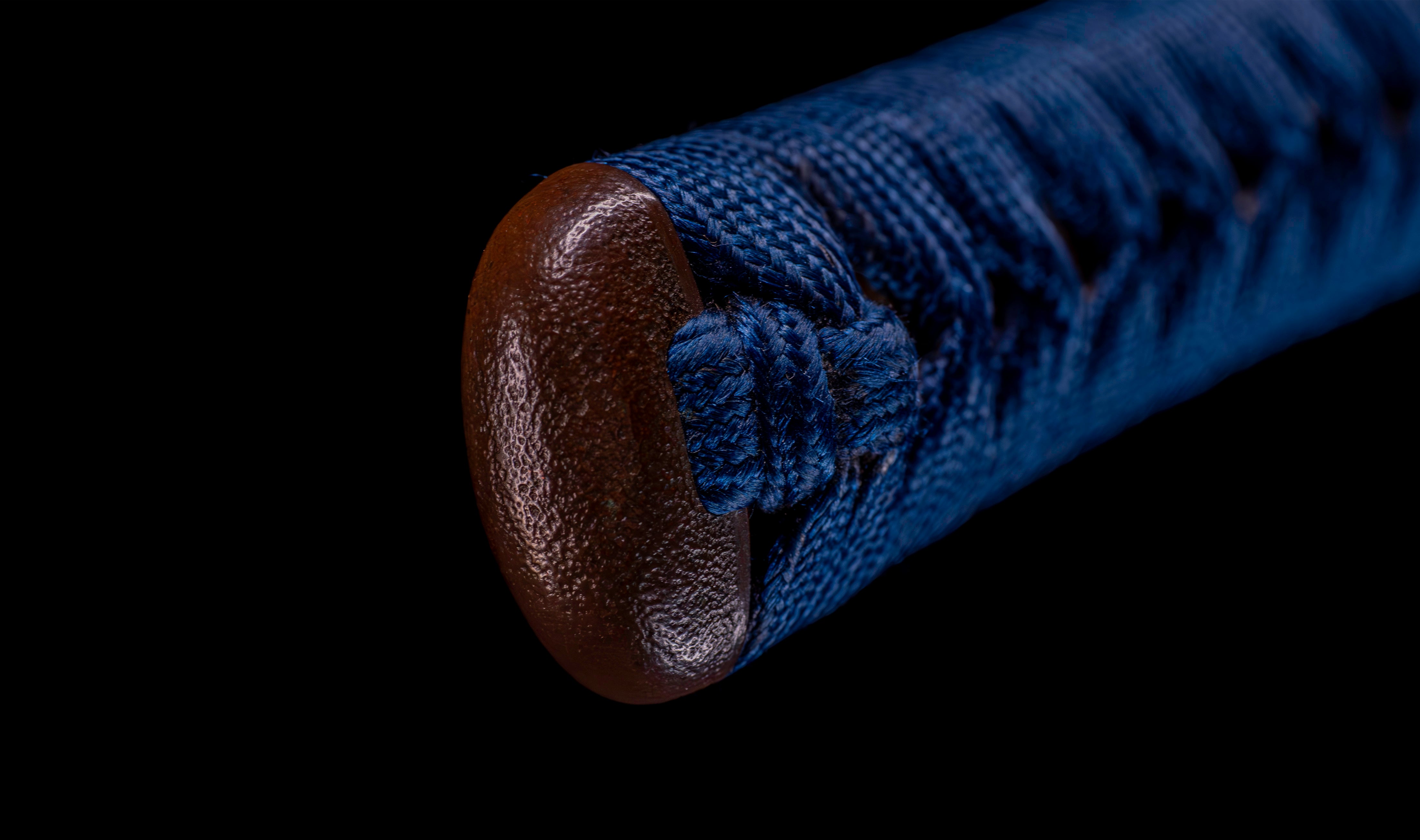
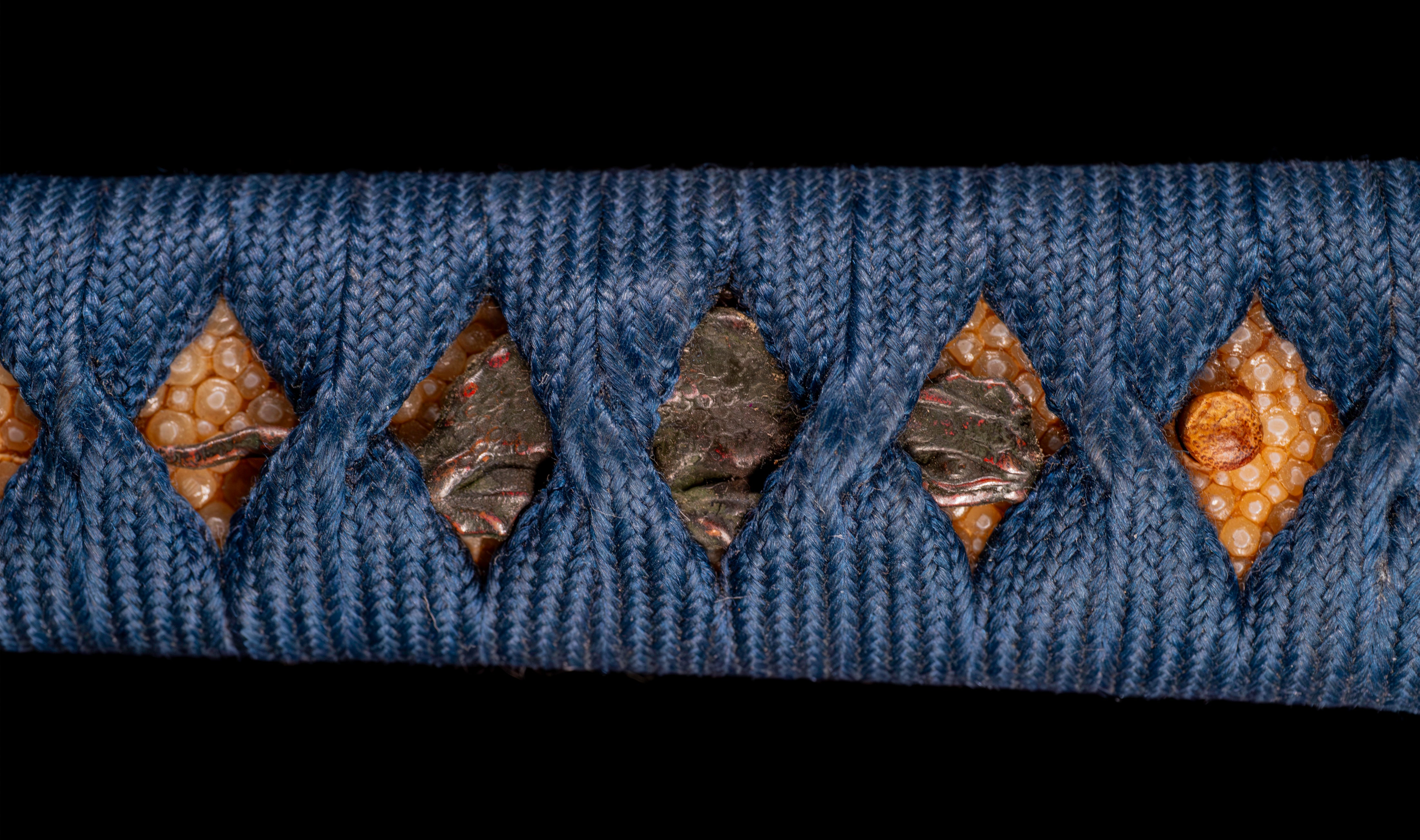
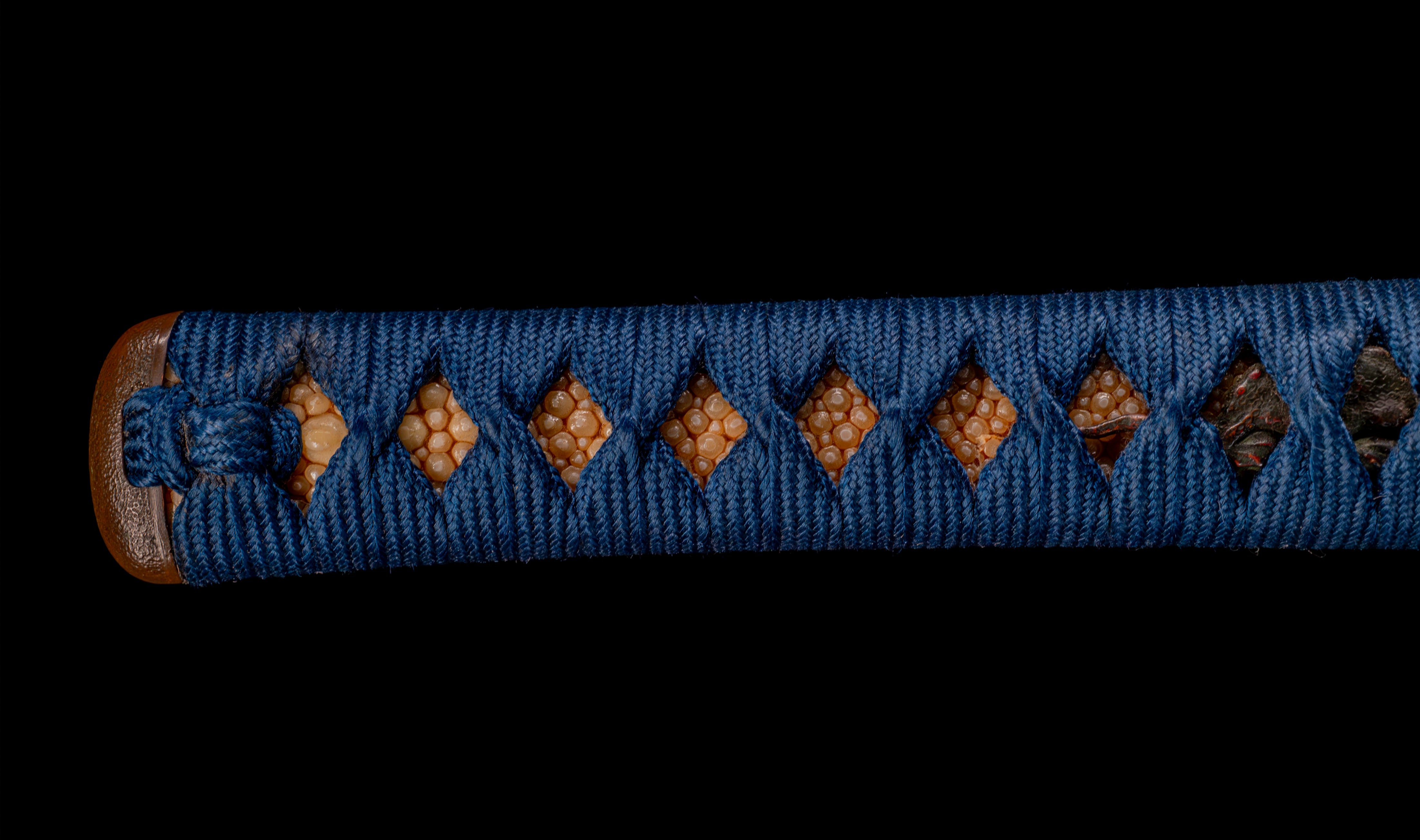
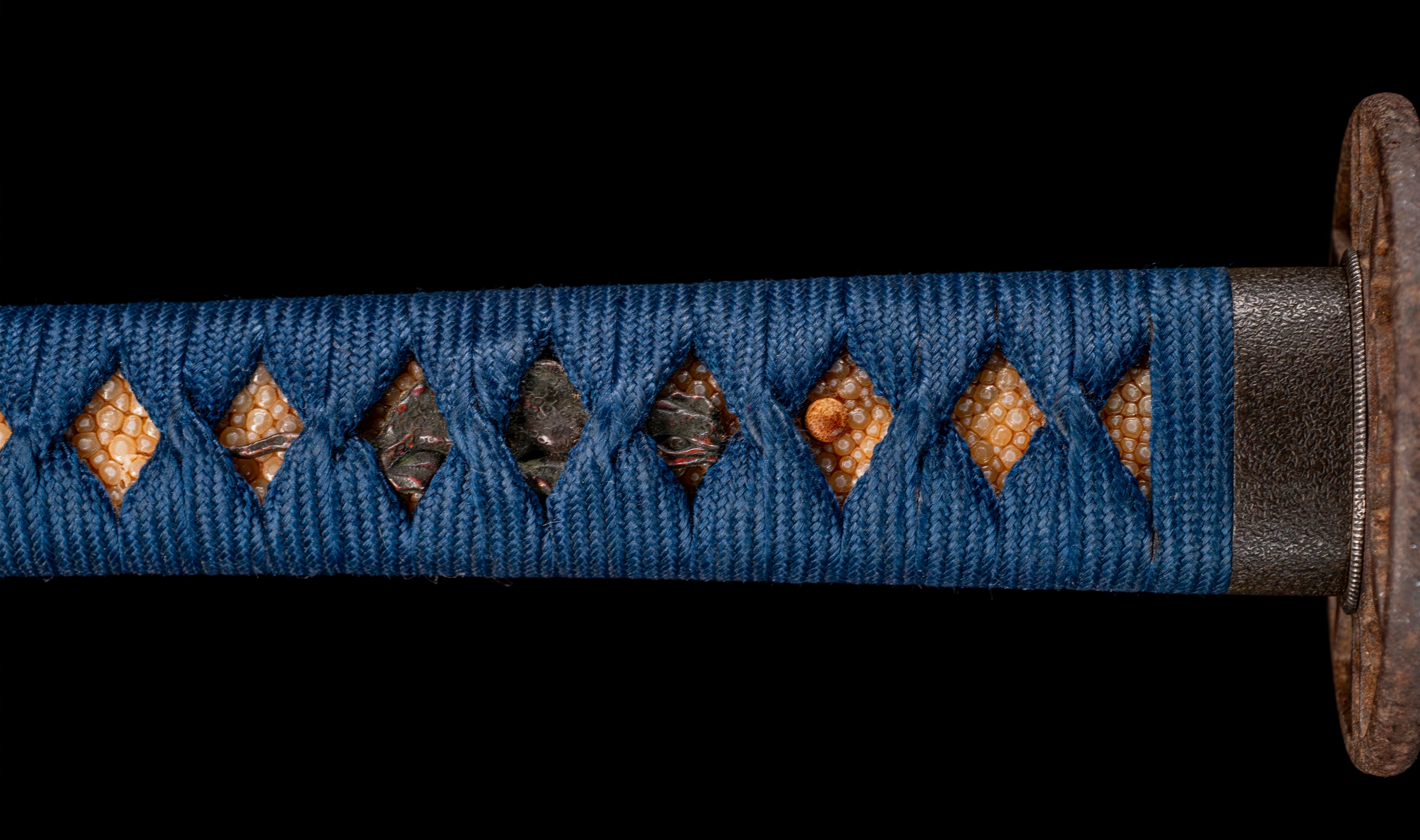
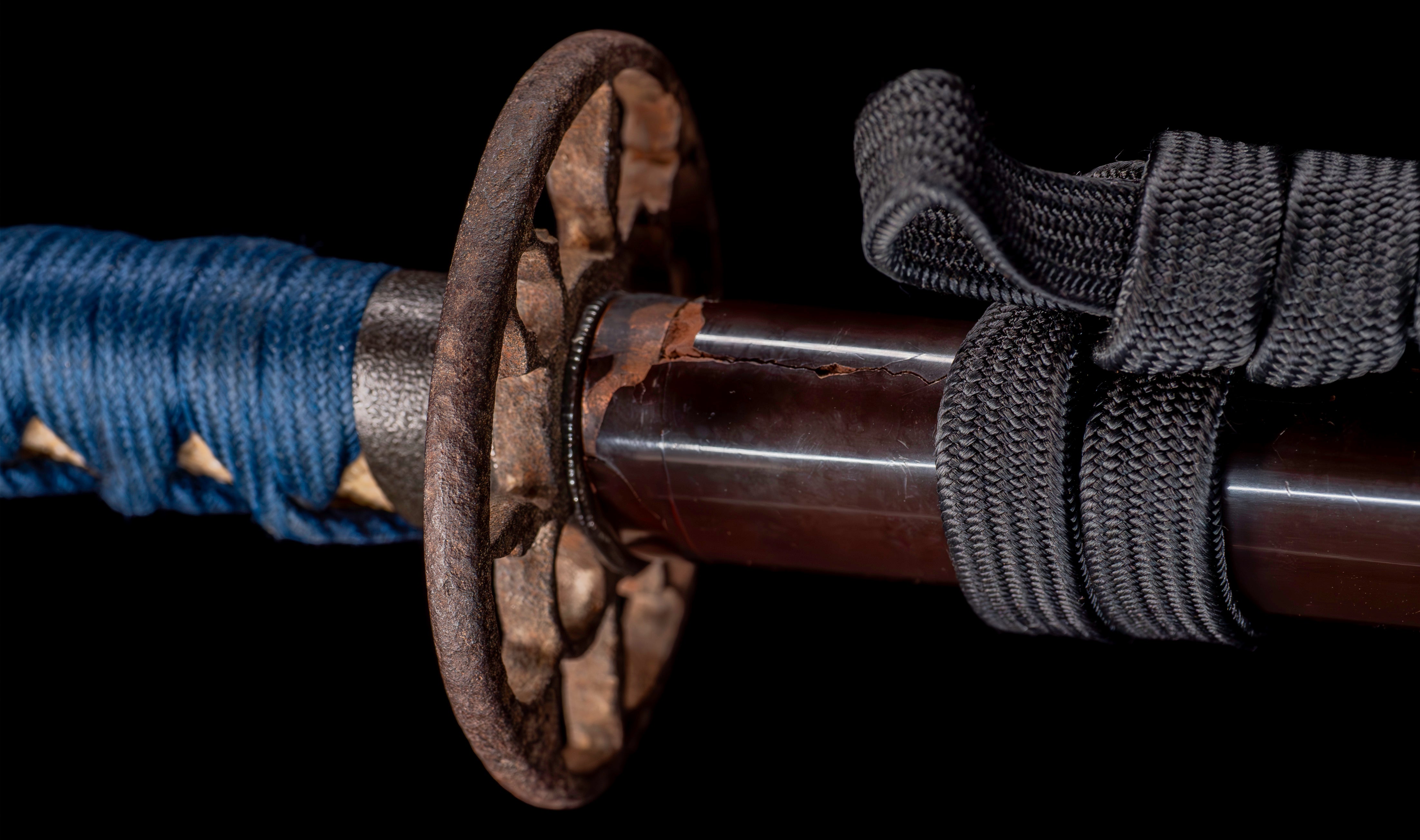
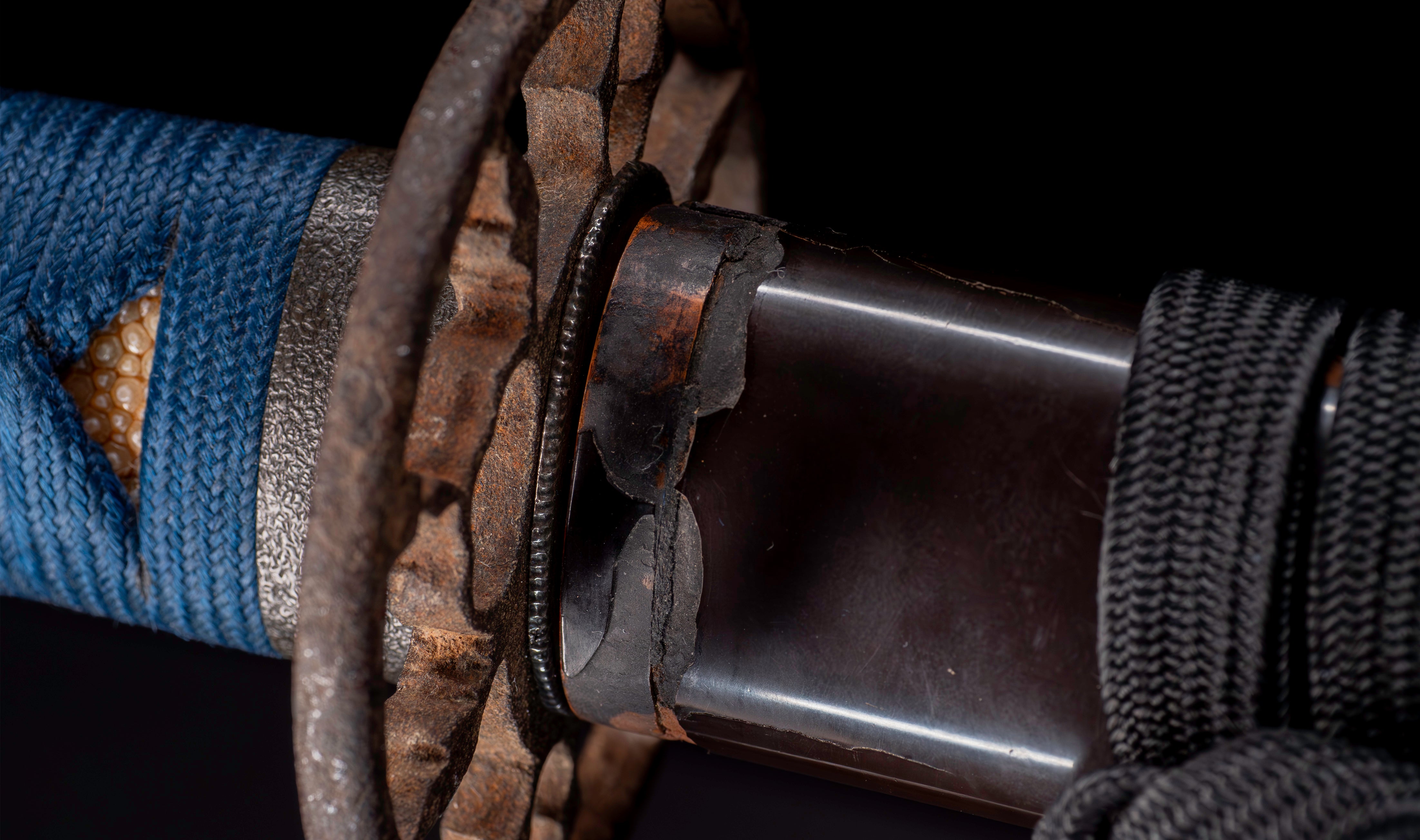
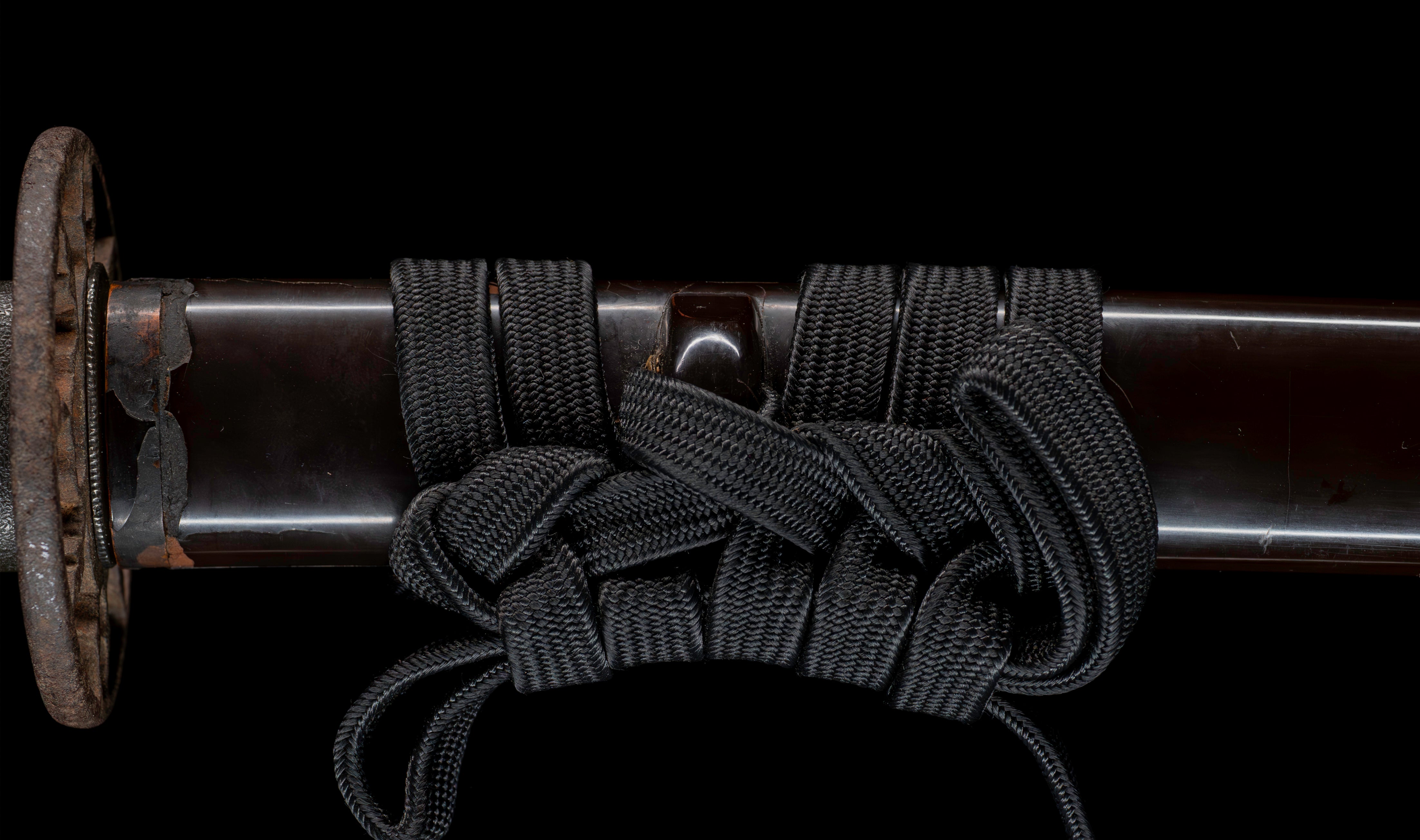
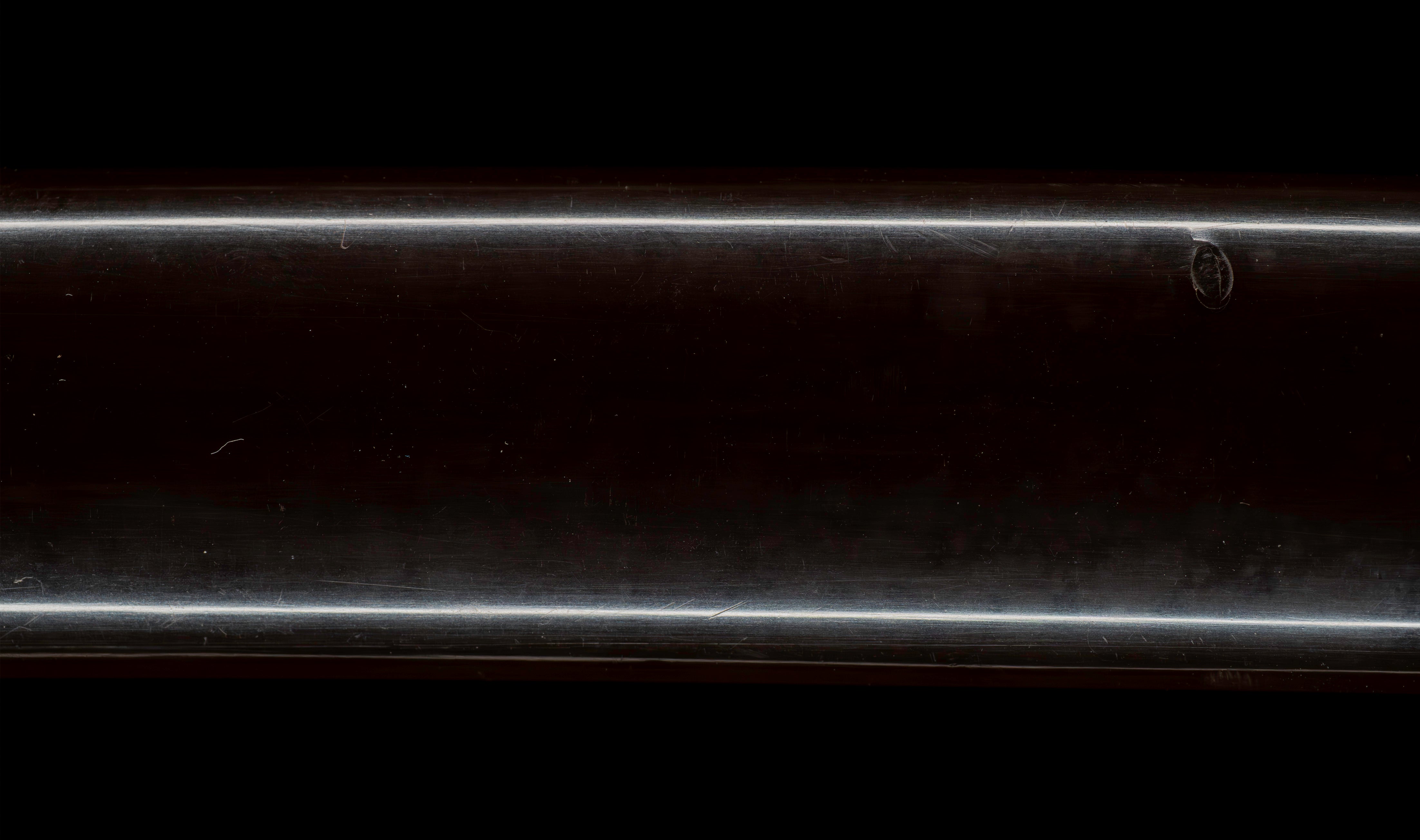
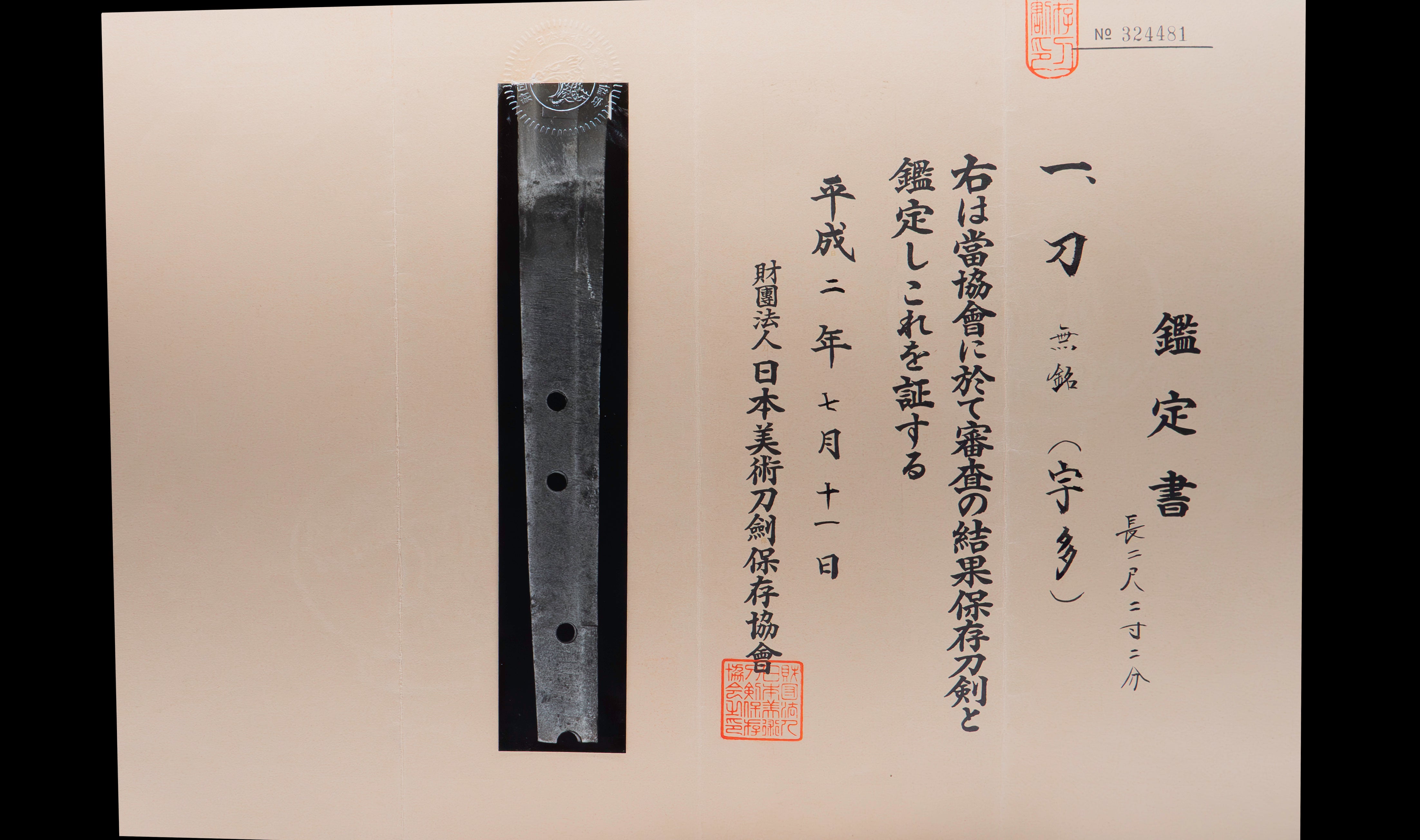
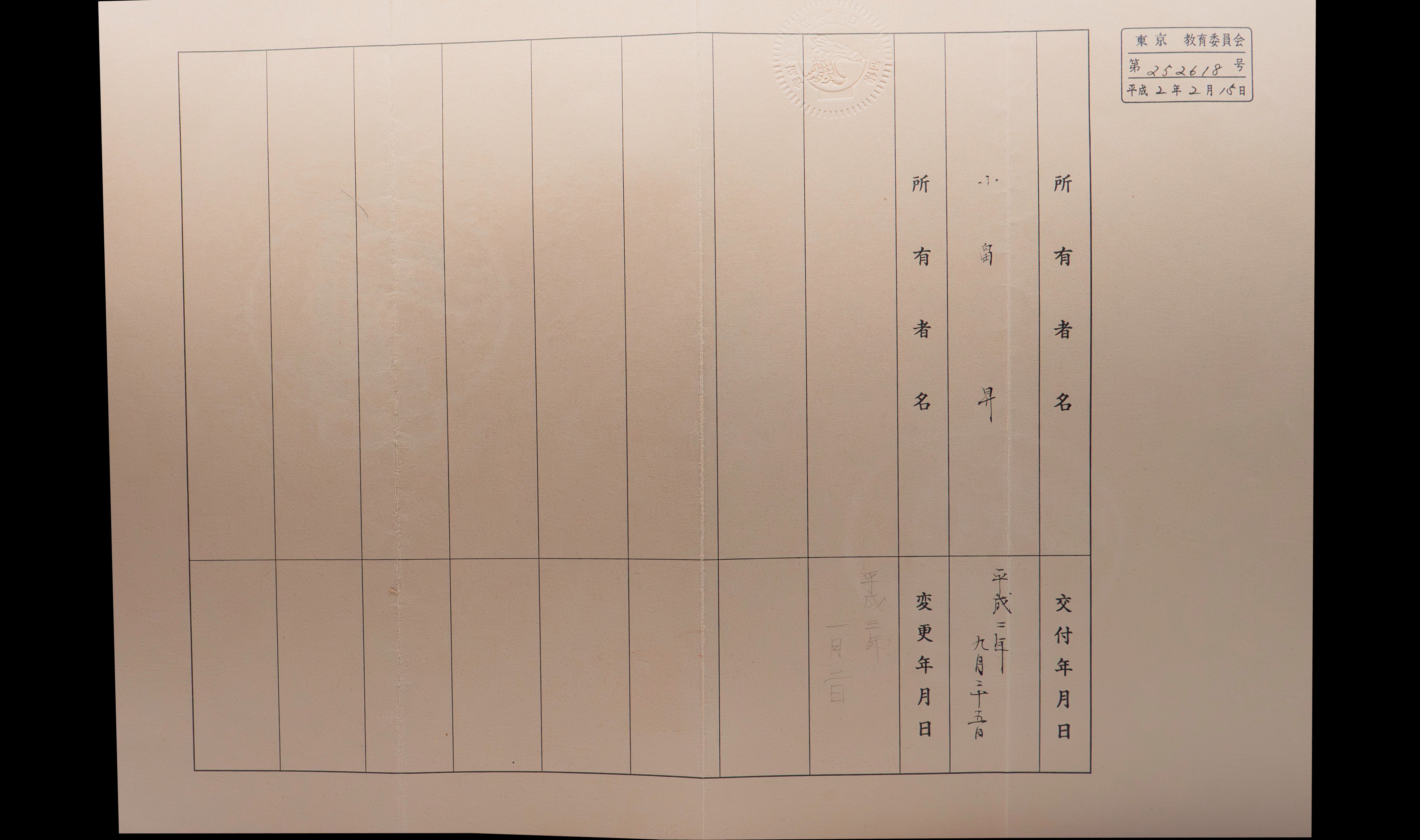
An unsigned katana of 67.3 cm, attributed by the NBTHK to the Uda school 宇多 of Etchū Province, on the Sea of Japan coast. The Hozon Tōken certificate no. 324481 was issued on 11 July 1990, a few months after the sword was registered in Tokyo. The blade comes complete in a dark lacquer koshirae with an iron openwork tsuba. The shape is a shinogi-zukuri katana with an iori-mune, a chū-kissaki and a shallow curvature of 1.4 cm. The blade has been greatly shortened (ō-suriage): the tang ends in a straight cut and carries three mekugi-ana, with a fourth hole cut in half by the new end. This is how many Muromachi swords survive: longer blades worn edge-down were cut at the tang to be worn edge-up through the belt as katana, which is why their signatures are so often gone. The steel is the part to study. The jihada is an itame mixed with mokume that flows towards masame near the shinogi, and the grain stands out clearly across the whole blade. A visible, standing grain of this kind is exactly what Japanese appraisers look for first in Uda work: the school is recognised by its steel before its temper line. The hamon is narrow and quiet, based on suguha. The polish is an older one, and in these photographs it shows the grain far more than the temper line, which reads only faintly. A fresh polish would bring the hamon back out. The tang has a dark, even patina and has never been cleaned. Koshirae Details The tsuba is a round iron plate cut in openwork (sukashi): spokes shaped like stylised spear-heads radiate from the centre to a plain round rim, with lobed openings on either side of the tang hole for the kozuka and kōgai. It is a sober, strong guard in the tradition of the iron openwork tsuba worn by samurai, and the iron has a dark, rusty brown surface. The fuchi is plain, with a silver-toned stippled surface. The kashira is a plain brown cap with a fine grained surface. The menuki are in dark patinated metal with silver highlights and traces of red. Most of each piece is hidden under the wrap, but the visible parts show a domed eye, a wide, flat mouth and a warty, punched skin: they appear to be toads. In Japanese the frog and toad, kaeru, sounds like the verb "to return", and it was worn as a charm for a safe homecoming. The tsuka is wrapped in blue cord over white same with large, even nodules, and the wrap is clean, tight and in fresh condition. The saya is lacquered in a very dark brown, almost black, with a lacquered kurikata and a black sageo. It shows its age: scratches along the body, worn lacquer at the plain rounded tip, and lacquer losses around the mouth (koiguchi). The habaki is a single-piece copper collar, filed with diagonal marks on its upper half and decorated with a punched pattern on the lower half. The seppa are copper and silver-toned. The Attribution: Uda 宇多 The blade is unsigned, and the NBTHK attributes it to the Uda school as a whole, without naming an individual smith. That is the usual form for unsigned Uda work: the school's smiths worked for more than two centuries and almost all of them used the character 国 (kuni) in their names, so a school attribution is the honest level of precision. Tradition names the founder as Kunimitsu 国光, a smith from the Uda district of Yamato Province who moved north to Etchū at the end of the Kamakura period, around the Bunpō era (1317–1319). Since almost no work by him survives, his followers Kunifusa 国房 and Kunimune 国宗 are often treated as the real founders. Kunifusa is said to have studied with Etchū Norishige 則重, one of the famous pupils of Masamune, and Norishige's influence gave the school its taste for a strong, visible grain and bright nie. Japanese appraisers call the blades made before about 1394 Ko-Uda ("old Uda"). This certificate reads simply Uda, which places the sword among the later generations of the school, in the Muromachi period. The Uda School and the Swords of the North Etchū, modern Toyama Prefecture, lies on the Sea of Japan coast, far from the great sword centres of Kyoto, Bizen and Sagami. Together with the Fujishima school of Kaga and the Chiyozuru school of Echizen, the Uda smiths form the group known as hokkoku-mono 北国物, "swords of the northern provinces". The school worked from the late Kamakura period to the end of the Muromachi period. Uda work mixes two traditions: the sober shapes and suguha temper lines of Yamato, the founder's home province, and the grain and nie of Sōshū, inherited through Norishige. Its steel is the most recognisable feature: an itame that flows and stands out, mixed with mokume and masame, sometimes with darker and lighter patches. Uda blades were made in large numbers for the warriors of the northern provinces during the wars of the Muromachi period, and they are valued as honest, well-forged fighting swords. What is offered here is an unsigned Muromachi-period katana of 67.3 cm, attributed to the Uda school of Etchū by an NBTHK Hozon certificate issued in 1990, registered in Tokyo, and complete in a dark lacquer koshirae with an iron openwork tsuba and a blue tsuka wrap.
Offered by Tokyo Nihonto

Machine translation of the shop's Japanese ·
The Muromachi period (1392 to 1573)
After the Ōnin War broke the Ashikaga order, a century of Sengoku warfare armed nearly every province in Japan. The era rewards a discriminating eye: routine work exists in quantity, and beside it stand custom blades of the first rank.
Certifies a genuine blade worth preserving: a signature confirmed correct, or, if unsigned, an era, province, and school that the NBTHK can reliably identify.
The NBTHK (Nihon Bijutsu Tōken Hozon Kyōkai, the Society for the Preservation of Japanese Art Swords) is a public-interest incorporated foundation founded in 1948 and supervised by Japan’s Agency for Cultural Affairs (Bunkachō); it is based at the Japanese Sword Museum in Tokyo. Its expert panels physically examine each submitted work (shinsa) and issue a certificate (kanteishō) ranking it by artistic and historical merit. NBTHK papers are the most widely recognized standard of authentication for Japanese swords and fittings.
NBTHK official siteReturns/exchanges only for manufactured defects or incorrect products; notify within 72 hours of delivery. Cancellation only within 2 hours of placing. Customer pays return shipping. Refund within 3 business days of package arrival.
$3,350