Modern sword Sassyu ju Minamoto Moriatsu saku with Koshirae.
Minamoto Moriatsu is a renowned contemporary Satsuma swordsmith in the tradition of Kongo-hyoe Moritaka, with numerous awards at the Shinsaku Meito exhibitions.
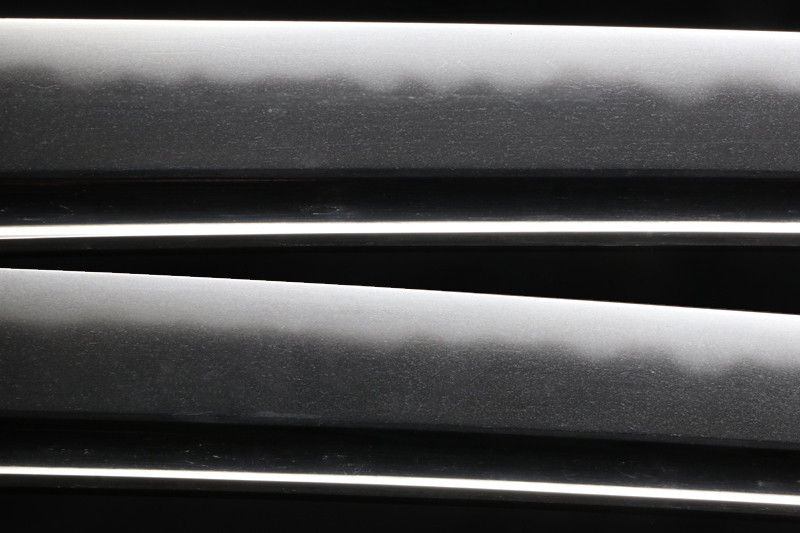
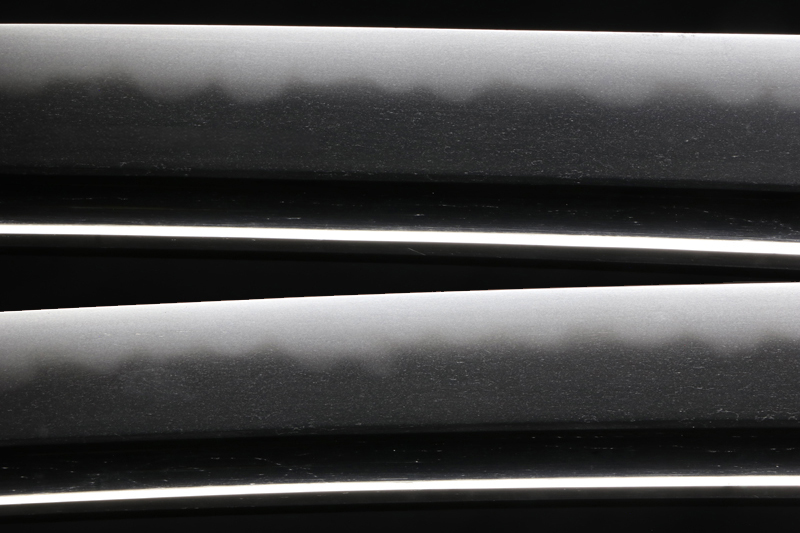
This fine sword features flowing itame-hada with a masame-like appearance and a beautiful gunome-midare hamon. Despite its older polish, the blade remains in generally good condition.
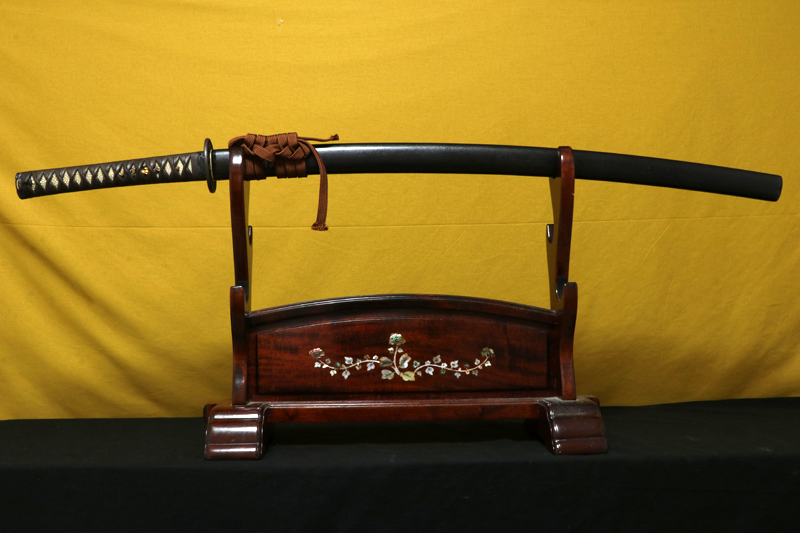
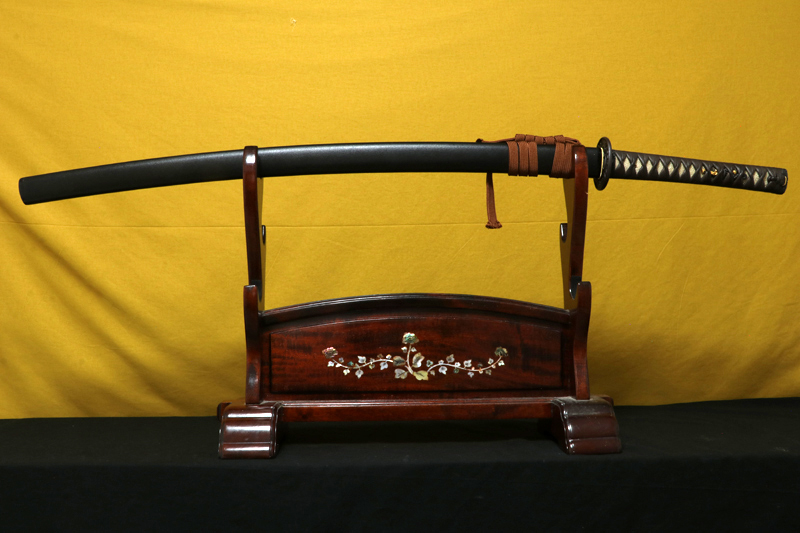
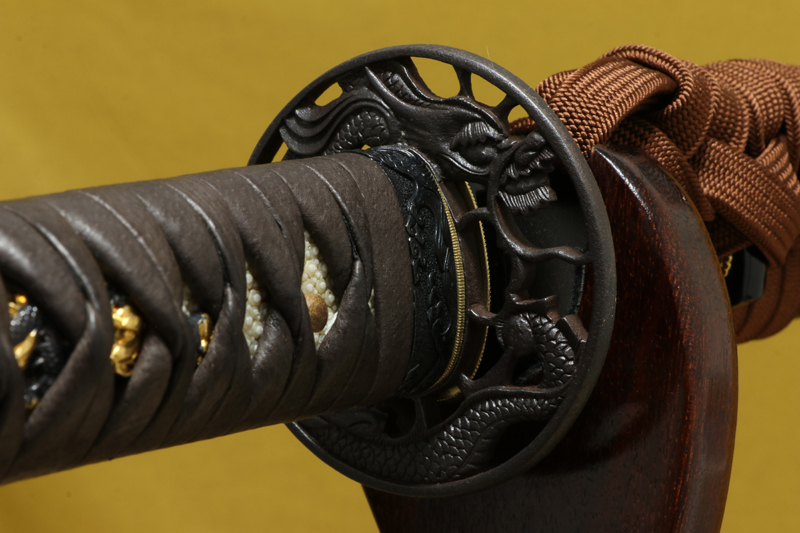
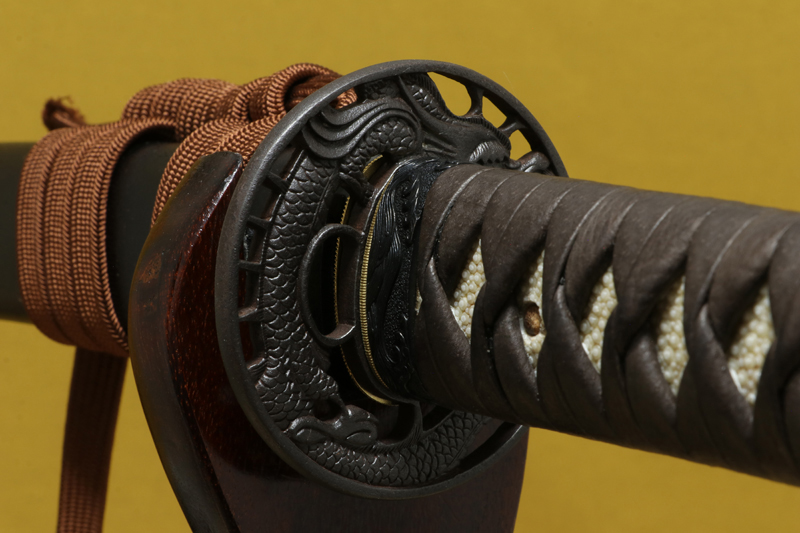
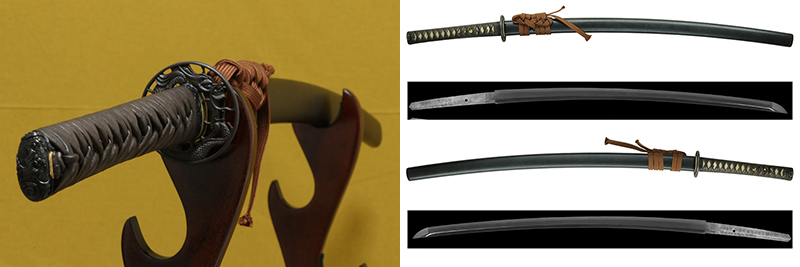
The koshirae has been refurbished, with the tsuka rewrapped in dark brown pigskin leather. Ready for immediate use in Iaido or tameshigiri.
「刀姿 sword figure」
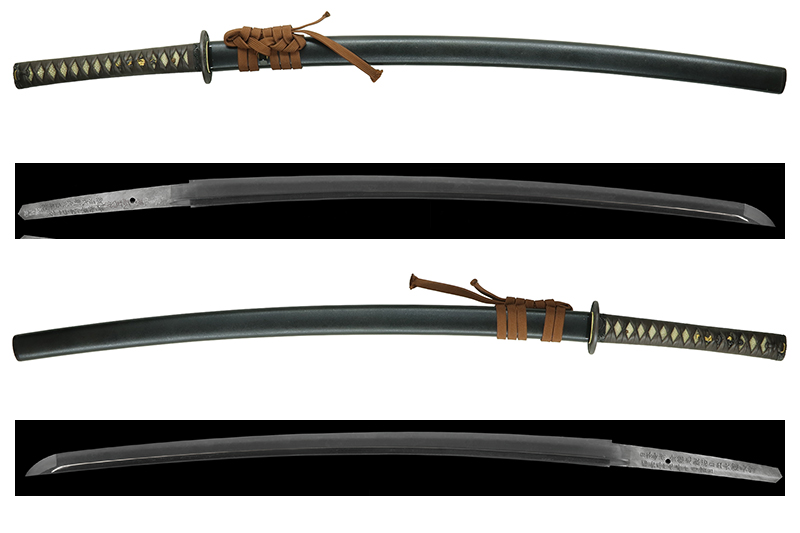
Shinogi-zukuri with an iori-mune, wide mihaba, standard kasane, torii-zori, and chu-kissaki. The nakago is ubu, with kesho-yasuri file marks and a sotoba-shaped tip.
「彫物 carving」
The horimono consists of a kata-chiri bo-hi, ending in kaki-nagashi beneath the habaki.
「地鉄 jigane」
The jihada shows flowing itame-hada tending toward masame-hada; the steel is well forged and tightly compact, with chikei appearing and ji-nie present.
「刃紋 hamon」
The hamon is in gunome-midare; the habuchi is covered with coarse nie, with sunagashi appearing, while within the temper there are yo and prominent kinsuji activities, forming a sudareba-like appearance. The bōshi continues in a midare pattern and turns back in a small rounded ko-maru form.
「特徴 detailed」
Swordsmith Minamoto Moriatsu (real name: Fujita Shinichi) was born in Showa 9. He is a swordsmith residing in Satsuma-cho, Satsuma-gun, Kagoshima Prefecture.
He is a leading contemporary Satsuma swordsmith in the tradition of Kongo-hyoe Moritaka; he studied under the first-generation Moriatsu and also received direct instruction from Kongo-hyoe Moritaka. He is a highly skilled swordsmith who has won numerous awards at the Shinsaku Meito exhibitions.
This fine sword features a flowing itame-hada with a masame-like appearance and a beautifully executed gunome-midare hamon.
The blade has some cloudiness from an older polish and minor surface scratches, but no rust. Both the jihada and hamon remain clearly visible.
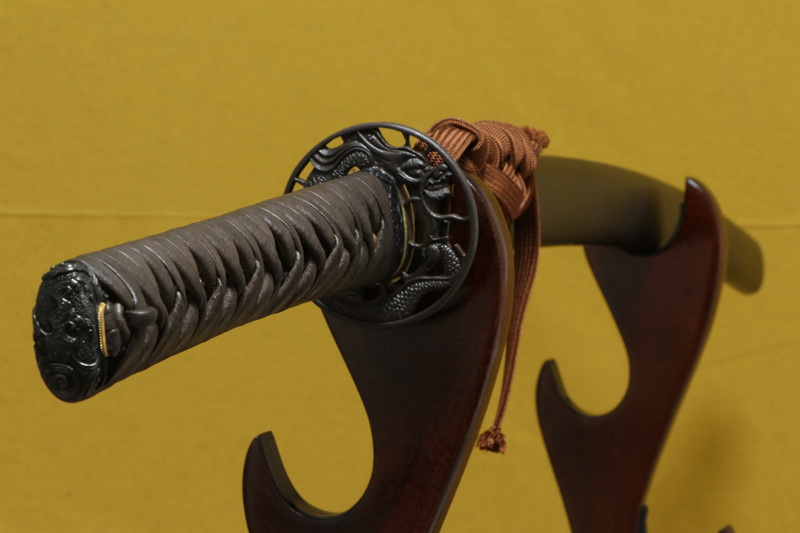
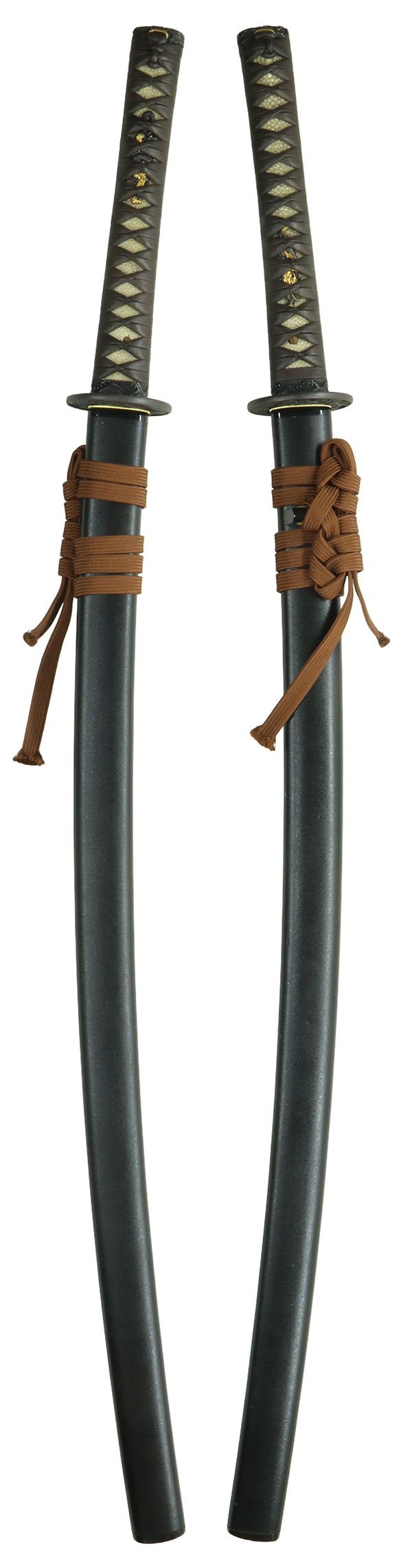
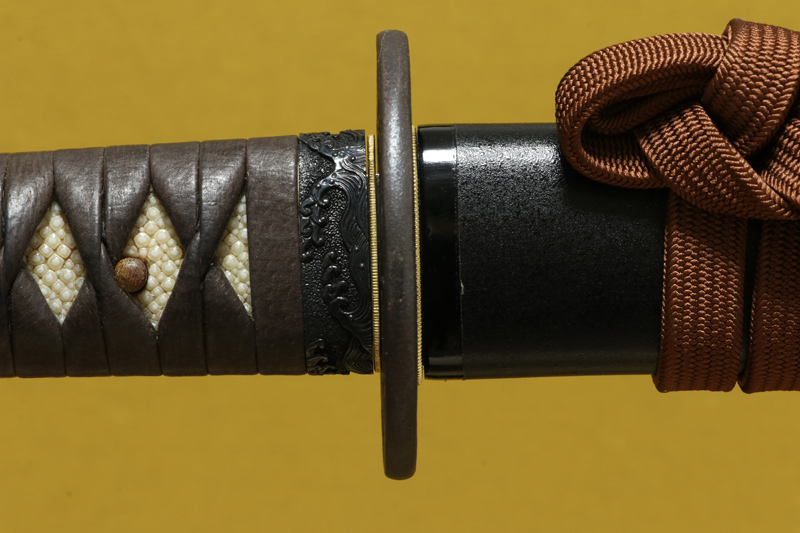
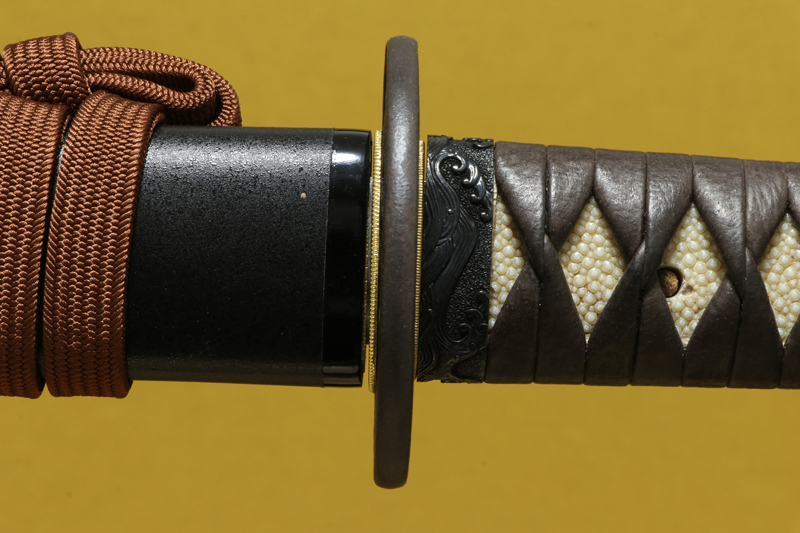
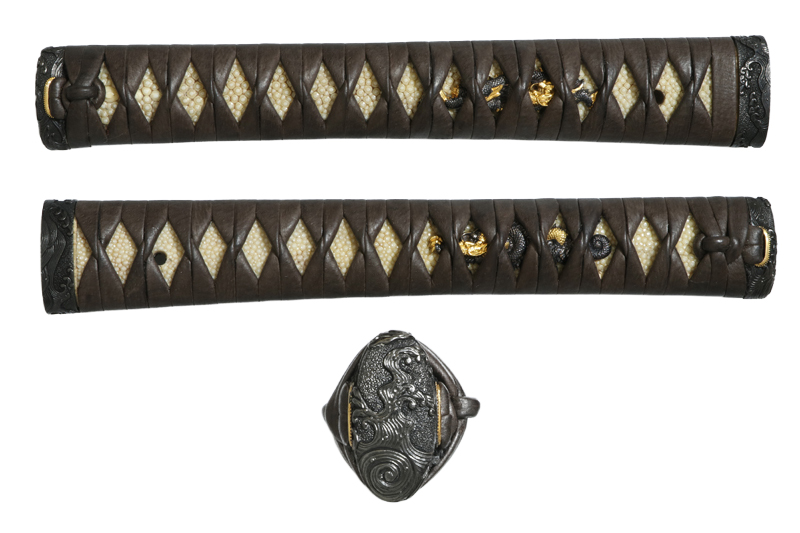
The koshirae has been refurbished with new fittings on the tsuka. The tsuka-ito is rewrapped in dark brown pigskin leather, and the tsuba has been replaced with a new one. The saya has no cracks, and the overall condition of the koshirae is good.
The tame-mei on the nakago can be removed upon request, and we can also handle the change of description on the registration certificate.
Both the blade and koshirae are in a condition suitable for practical use, ready for immediate use in Iaido or tameshigiri.
「拵 Koshirae」
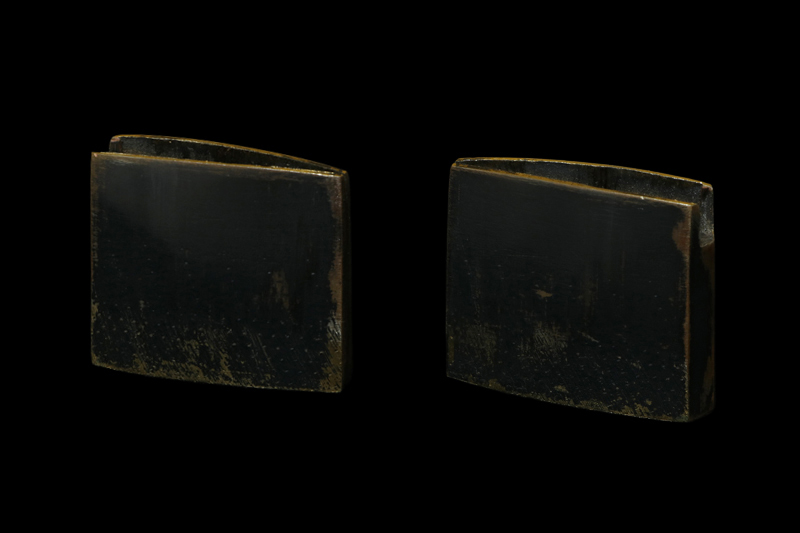
Habaki: Single-piece suaka with black finish.
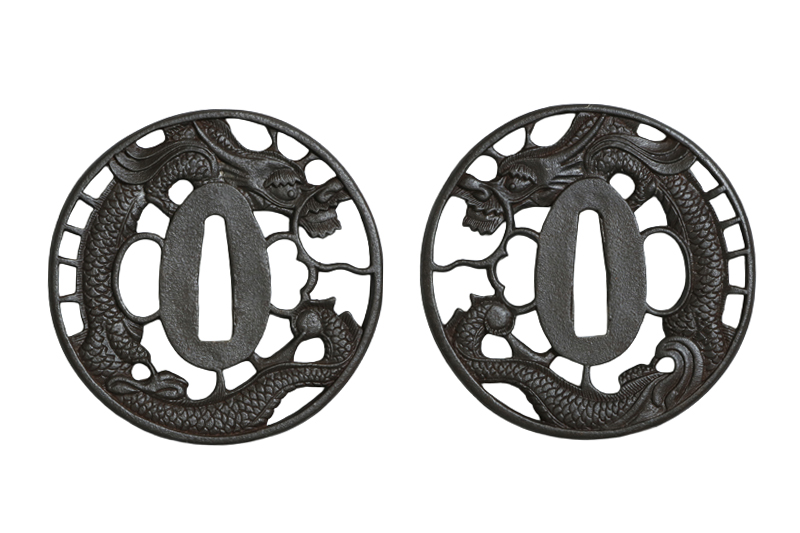
Tsuba: Iron with dragon motif.
Fuchikashira: Wave motif.
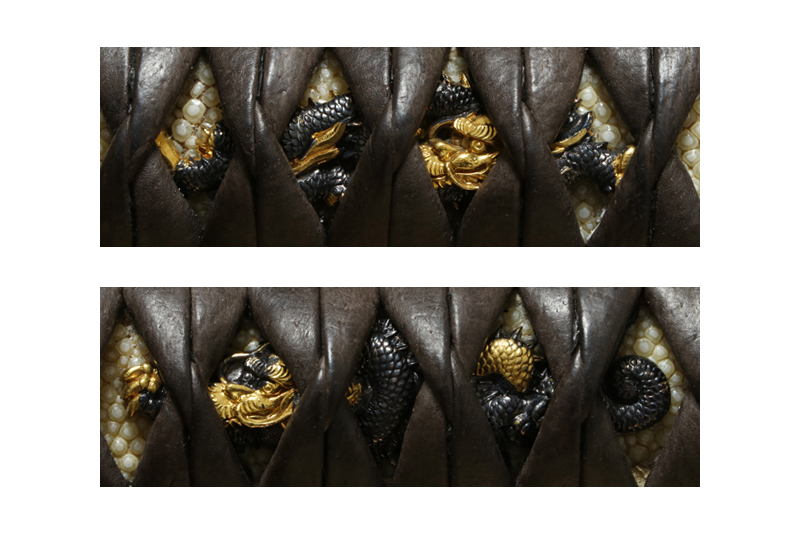
Menuki: Dragon motif.
Tsuka: Same with large nodes. The tsukamaki is moro-hineri-maki using pigskin leather.
Saya: Kuro-ishime.
「刀剣の状態 condition of blade」
Polish: The blade has some cloudiness from an older polish and minor surface scratches, but no rust. Both the jihada and hamon remain clearly visible.
Flaws: There are no flaws that would be considered defects.
Machine translation from the shop's Japanese · may contain errors ·
Modern sword Sassyu ju Minamoto Moriatsu saku with Koshirae.
Minamoto Moriatsu is a renowned contemporary Satsuma swordsmith in the tradition of Kongo-hyoe Moritaka, with numerous awards at the Shinsaku Meito exhibitions.
This fine sword features flowing itame-hada with a masame-like appearance and a beautiful gunome-midare hamon. Despite its older polish, the blade remains in generally good condition.
The koshirae has been refurbished, with the tsuka rewrapped in dark brown pigskin leather. Ready for immediate use in Iaido or tameshigiri.
「刀姿 sword figure」
Shinogi-zukuri with an iori-mune, wide mihaba, standard kasane, torii-zori, and chu-kissaki. The nakago is ubu, with kesho-yasuri file marks and a sotoba-shaped tip.
「彫物 carving」
The horimono consists of a kata-chiri bo-hi, ending in kaki-nagashi beneath the habaki.
「地鉄 jigane」
The jihada shows flowing itame-hada tending toward masame-hada; the steel is well forged and tightly compact, with chikei appearing and ji-nie present.
「刃紋 hamon」
The hamon is in gunome-midare; the habuchi is covered with coarse nie, with sunagashi appearing, while within the temper there are yo and prominent kinsuji activities, forming a sudareba-like appearance. The bōshi continues in a midare pattern and turns back in a small rounded ko-maru form.
「特徴 detailed」
Swordsmith Minamoto Moriatsu (real name: Fujita Shinichi) was born in Showa 9. He is a swordsmith residing in Satsuma-cho, Satsuma-gun, Kagoshima Prefecture.
He is a leading contemporary Satsuma swordsmith in the tradition of Kongo-hyoe Moritaka; he studied under the first-generation Moriatsu and also received direct instruction from Kongo-hyoe Moritaka. He is a highly skilled swordsmith who has won numerous awards at the Shinsaku Meito exhibitions.
This fine sword features a flowing itame-hada with a masame-like appearance and a beautifully executed gunome-midare hamon.
The blade has some cloudiness from an older polish and minor surface scratches, but no rust. Both the jihada and hamon remain clearly visible.
The koshirae has been refurbished with new fittings on the tsuka. The tsuka-ito is rewrapped in dark brown pigskin leather, and the tsuba has been replaced with a new one. The saya has no cracks, and the overall condition of the koshirae is good.
The tame-mei on the nakago can be removed upon request, and we can also handle the change of description on the registration certificate.
Both the blade and koshirae are in a condition suitable for practical use, ready for immediate use in Iaido or tameshigiri.
「拵 Koshirae」
Habaki: Single-piece suaka with black finish.
Tsuba: Iron with dragon motif.
Fuchikashira: Wave motif.
Menuki: Dragon motif.
Tsuka: Same with large nodes. The tsukamaki is moro-hineri-maki using pigskin leather.
Saya: Kuro-ishime.
「刀剣の状態 condition of blade」
Polish: The blade has some cloudiness from an older polish and minor surface scratches, but no rust. Both the jihada and hamon remain clearly visible.
Flaws: There are no flaws that would be considered defects.
The twentieth century nearly killed the craft twice: wartime distortion, then the occupation ban. The NBTHK’s founding in 1948 and licensed forging from 1953 rebuilt the sword as an art, crowned by Living National Treasures and the mukansa rank.
Within 3 days of the item's arrival, we offer a refund or an exchange. Return shipping and the bank transfer fee for the refund are at the customer's expense.


 NihontoWatch