The twentieth century nearly killed the craft twice: wartime distortion, then the occupation ban. The NBTHK’s founding in 1948 and licensed forging from 1953 rebuilt the sword as an art, crowned by Living National Treasures and the mukansa rank.
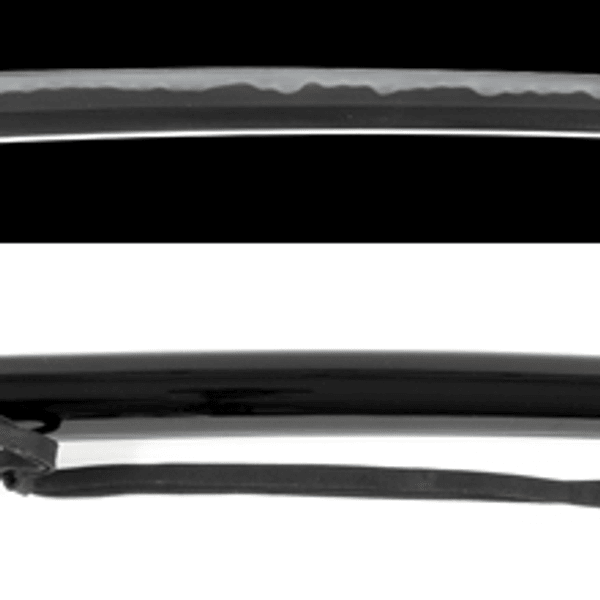
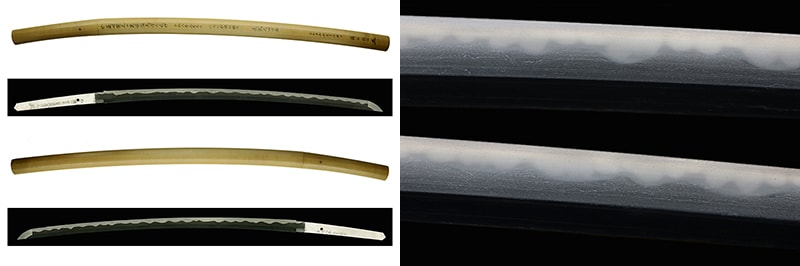
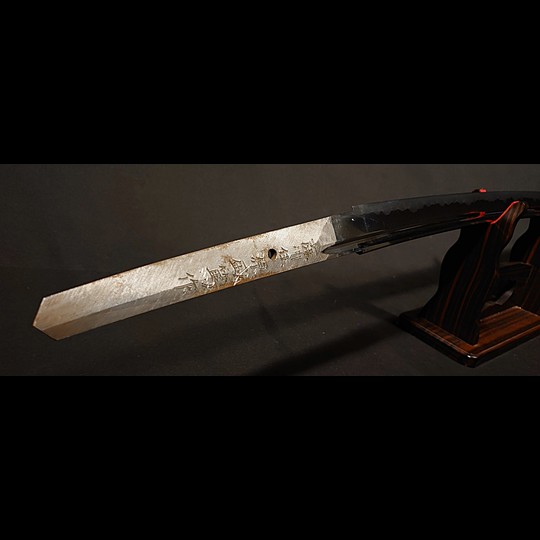
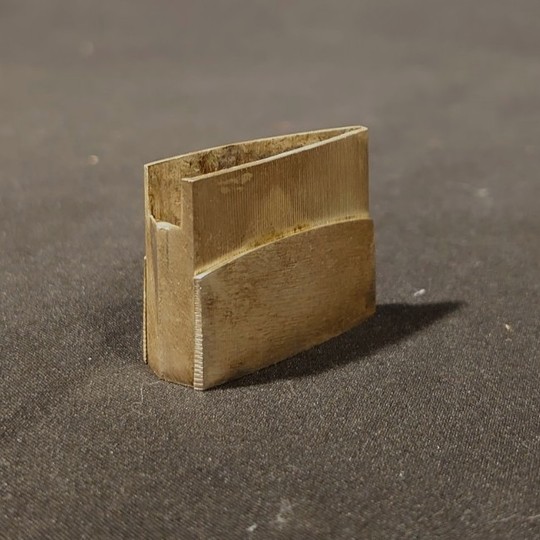
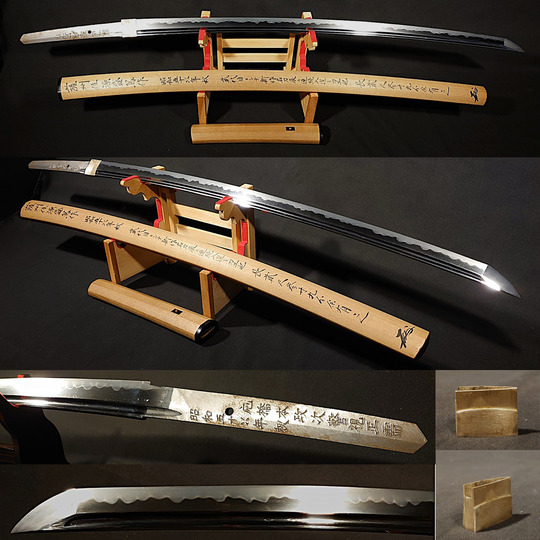
This is a commemorative katana made by Sasshu Ju Minamoto Moriatsu (Fujita Shinichi, born Showa 9), a leading modern Satsuma smith in the Kongo Hyoe tradition. Commissioned in Showa 54 (1979) as a guardian sword to celebrate the birth of a police superintendent's son, it features a beautiful sugata with a deep koshi-zori and a gunome-choji hamon. The blade is in excellent condition, suitable for both appreciation and martial arts practice, with a silver double habaki.
 NihontoWatch
mei · Kongo Hyoe · Showa · nagasa 72.6cm · sori 2.1cm
Satsuma · around 1926-1989
3 pieces on the market now
The twentieth century nearly killed the craft twice: wartime distortion, then the occupation ban. The NBTHK’s founding in 1948 and licensed forging from 1953 rebuilt the sword as an art, crowned by Living National Treasures and the mukansa rank.
We could not find an authenticity certificate on the seller’s listing. Japanese swords and fittings are normally papered by the NBTHK (or the NTHK). Without one, the attribution is the seller’s own assessment and has not been independently verified — treat it with caution and ask the dealer about certification before buying.
This is a commemorative katana made by Sasshu Ju Minamoto Moriatsu (Fujita Shinichi, born Showa 9), a leading modern Satsuma smith in the Kongo Hyoe tradition. Commissioned in Showa 54 (1979) as a guardian sword to celebrate the birth of a police superintendent's son, it features a beautiful sugata with a deep koshi-zori and a gunome-choji hamon. The blade is in excellent condition, suitable for both appreciation and martial arts practice, with a silver double habaki.
NihontoWatchmei · Kongo Hyoe · Showa · nagasa 72.6cm · sori 2.1cm
Satsuma · around 1926-1989
3 pieces on the market now
The twentieth century nearly killed the craft twice: wartime distortion, then the occupation ban. The NBTHK’s founding in 1948 and licensed forging from 1953 rebuilt the sword as an art, crowned by Living National Treasures and the mukansa rank.
We could not find an authenticity certificate on the seller’s listing. Japanese swords and fittings are normally papered by the NBTHK (or the NTHK). Without one, the attribution is the seller’s own assessment and has not been independently verified — treat it with caution and ask the dealer about certification before buying.