Modern sword Sassyu ju second generation Minamoto Moriatsu with Koshirae.
金剛兵衛盛高の流れを汲む現代薩摩鍛冶の牽引者として知られる、鹿児島の名工・二代薩州住源盛篤の作品です。
本作は、板目肌が流れて柾目肌となった地鉄に、見事な互の目乱れの刃紋を焼いた優品です。
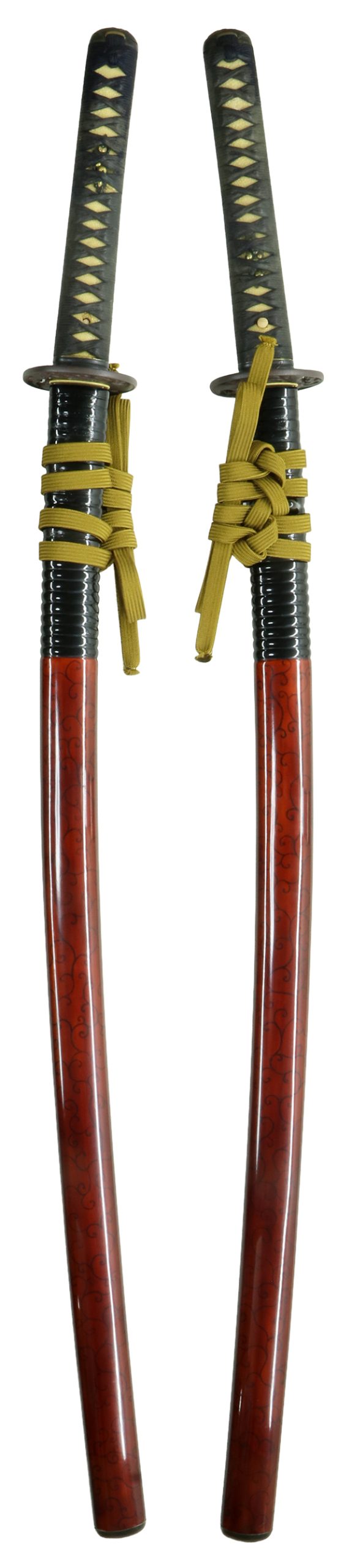
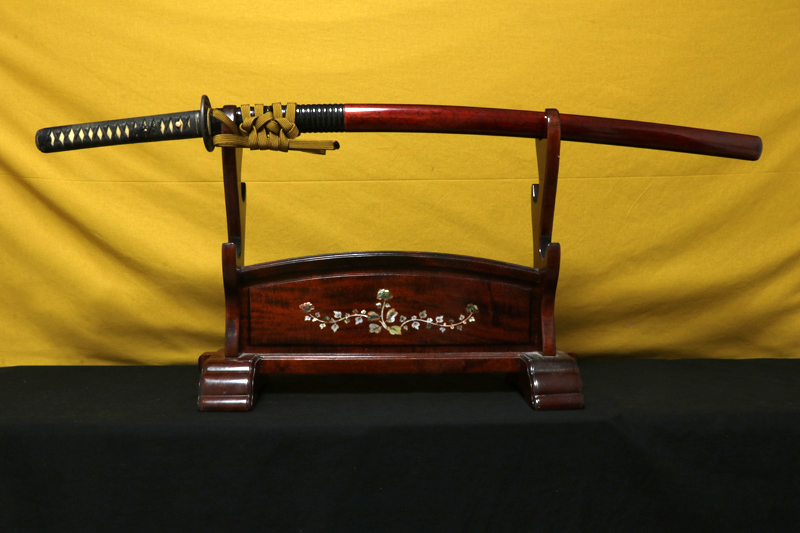
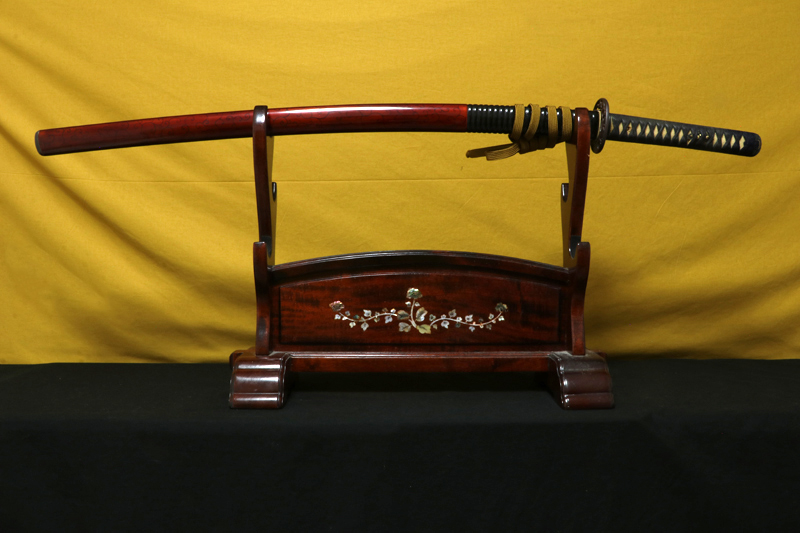
拵は、鞘の鯉口付近に千段刻みを施し、ワイン色の地に唐草模様をあしらった、非常に見栄えの良いものです。
居合用としてはもちろん、コレクションにも最適な一振りです
This is a work by Minamoto Moriatsu II, resident of Sasshū, a noted master swordsmith of Kagoshima who is recognized as a leading figure among modern Satsuma smiths in the lineage of Kongobei Moritaka.
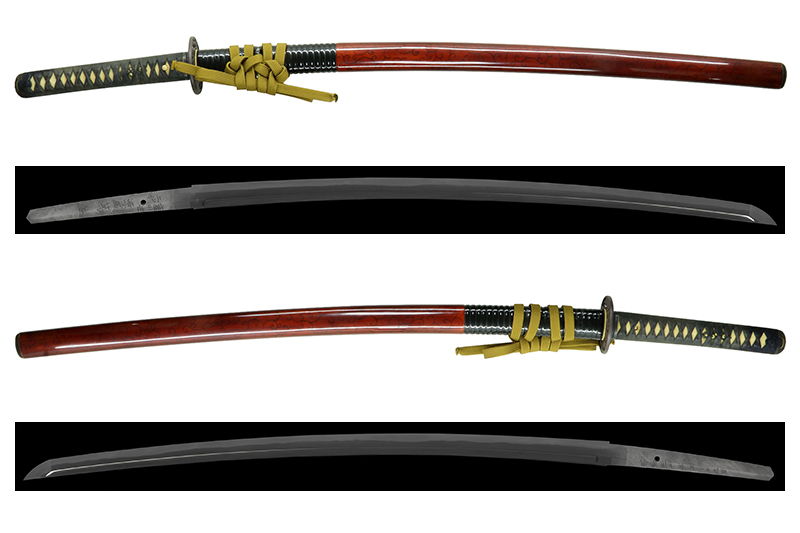
This blade is an excellent piece, featuring jihada in which flowing itame-hada develops into masame-hada, combined with a magnificent gunome-midare hamon.
The koshirae is also highly attractive, with the saya decorated with sendan-kizami texturing near the koiguchi and arabesque designs on a wine-colored ground, giving it a very striking appearance.
It is ideal not only for iaidō use, but also as a fine addition to a collection.
「刀姿 sword figure」
鎬造り庵棟、身幅重尋常、鳥居反り中鋒。茎は生で化粧鑢がかかり、茎尻は卒塔婆形。
Shinogi-zukuri construction with an iori-mune back; the blade has standard width and thickness, with torii-zori curvature and a medium-sized kissaki.
The tang is ubu (unaltered), finished with kesho-yasuri (decorative/filed marks), and the tang tip is in sotoba-gata form.
「彫物 carving」
彫物は片チリの棒樋が、鎺元で丸留となる。
The horimono consists of a bōhi with kata-chiri, ending in a rounded marudome at the habaki-moto.
「地鉄 jigane」
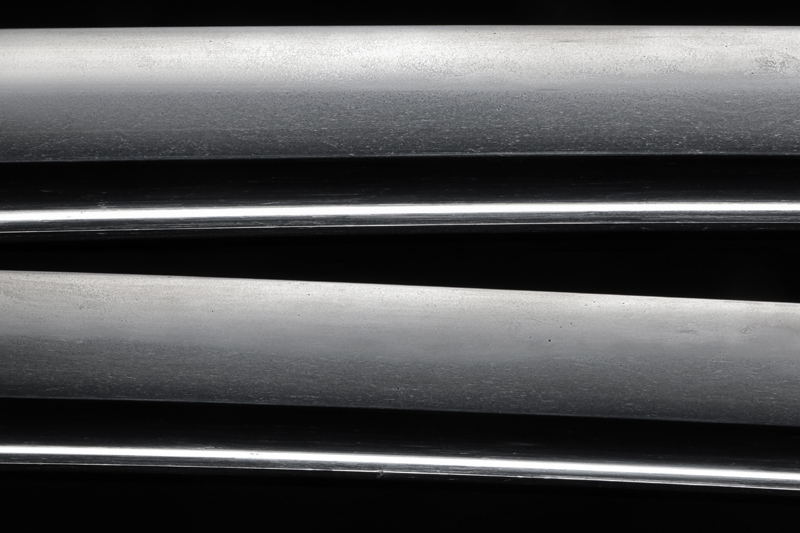
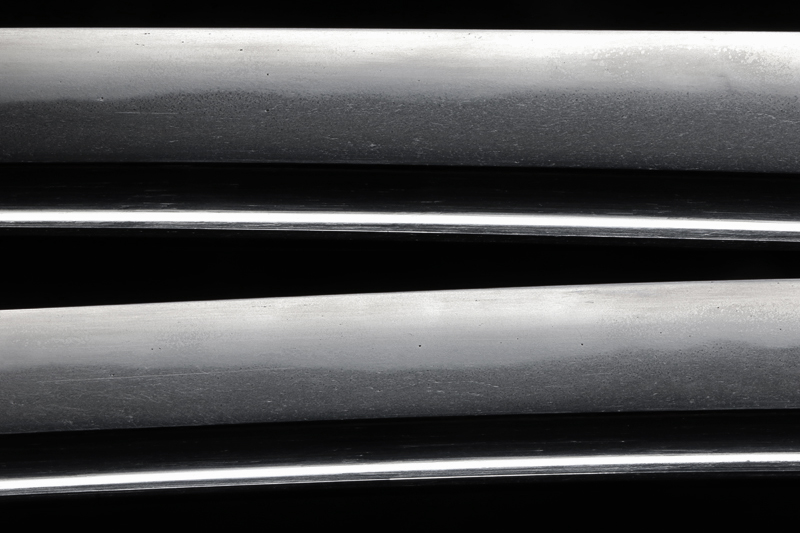
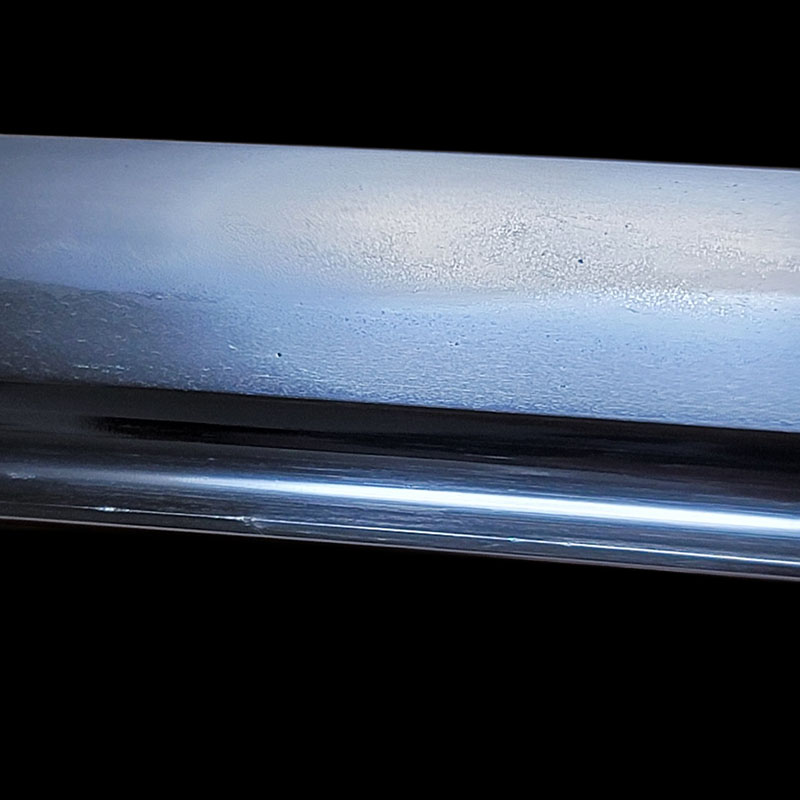
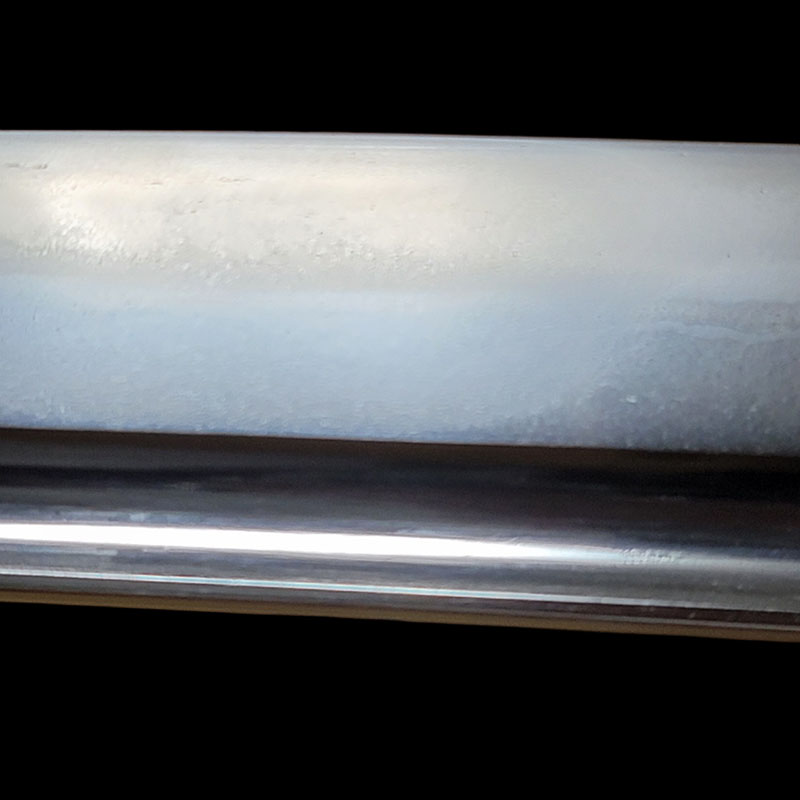
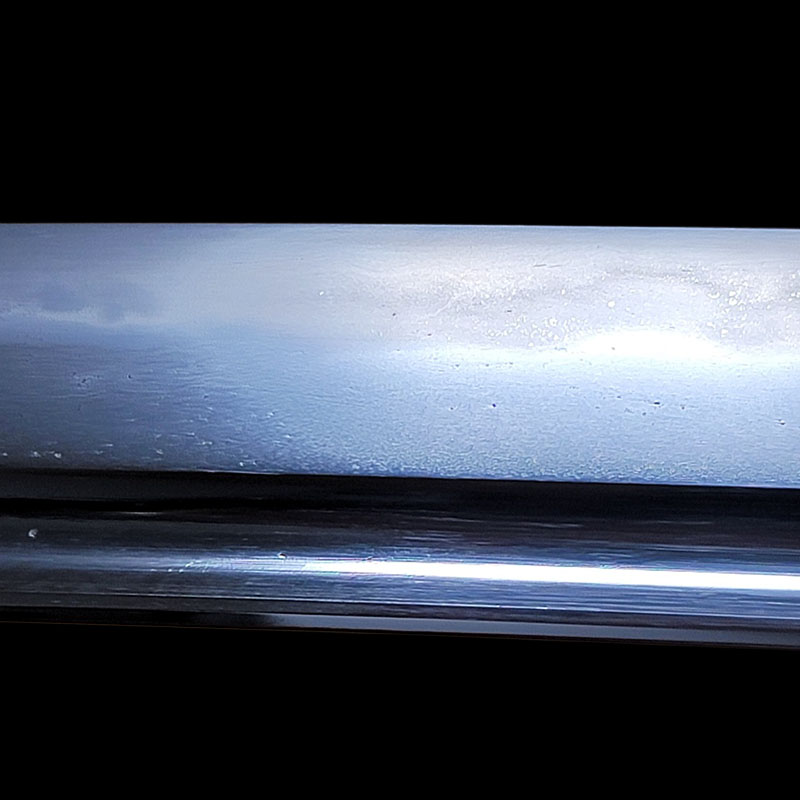
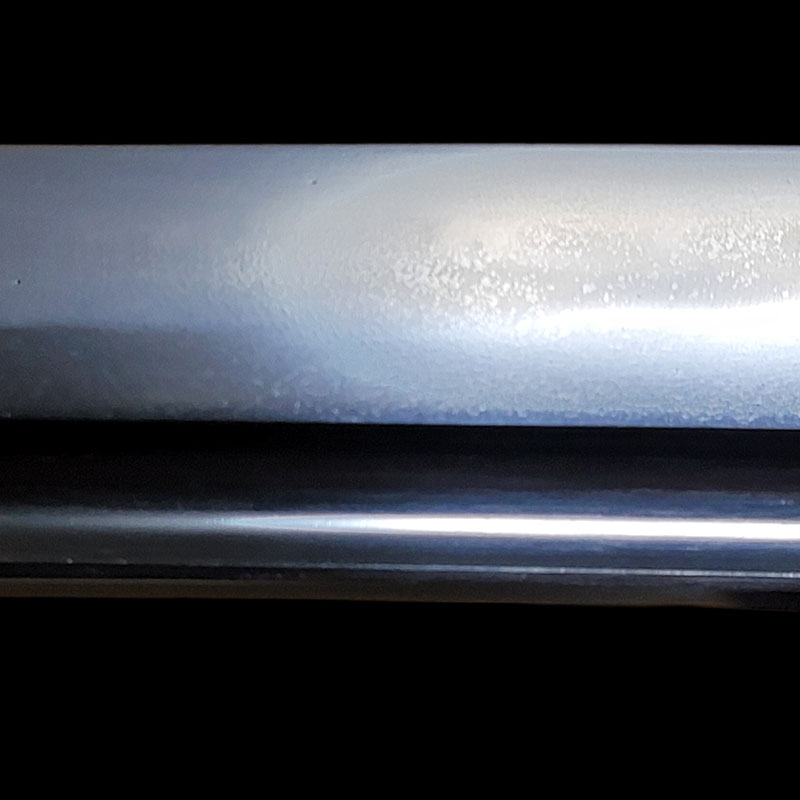
地鉄は板目肌が流れ柾目肌と成り、鍛え良く詰み地景入り、地沸付く。
The jihada shows flowing itame-hada tending toward masame-hada; the steel is well forged and tightly compact, with chikei appearing and ji-nie present.
「刃紋 hamon」
刃紋は互の目乱れ、刃緑荒沸が付き砂流しかかり、刃中は葉入り金筋が良く働き簾刃と成り。釯子は乱れ込み小丸に返る。
The hamon is in gunome-midare; the habuchi is covered with coarse nie, with sunagashi appearing, while within the temper there are yo and prominent kinsuji activities, forming a sudareba-like appearance.
The bōshi continues in a midare pattern and turns back in a small rounded ko-maru form.
「特徴 detailed」
刀匠・源盛篤(みなもと もりあつ、本名:藤田新一)氏は、1934年(昭和9年)生まれ。鹿児島県薩摩郡さつま町在住です。
金剛兵衛盛高の流れを汲む現代薩摩鍛冶の第一人者であり、初代盛篤に師事し、さらに金剛兵衛盛高からも教えを受けています。新作刀展では数多くの賞を受賞しています。
本作は、地鉄に流れた板目肌が柾目肌風となって現れ、刃紋は互の目乱れを焼いた、実に見事な一振りです。
コンディションは、居合に使用されていたと思われるものの、全体として良好です。錆はなく、ヒケもほとんど見られず、横手筋の鈍りもありません。
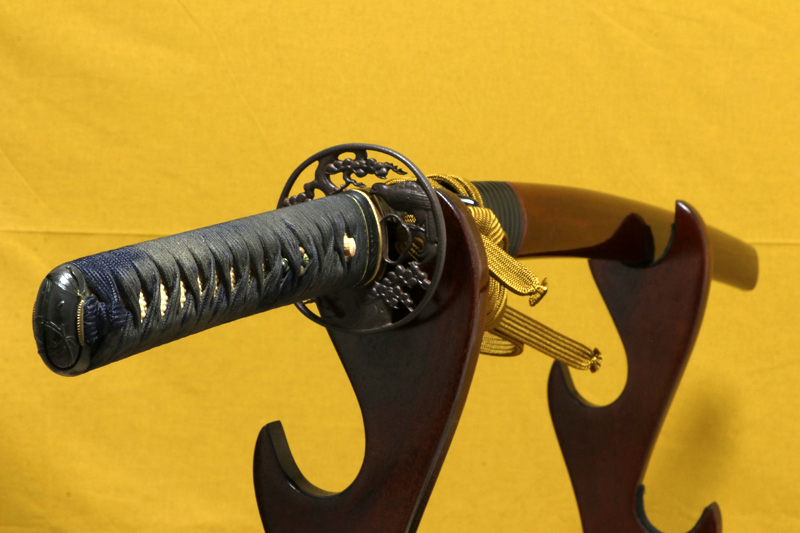
拵は柄にやや使用感がありますが、無料で新品に巻き替えいたします。
鞘は、鯉口付近が千段刻みの黒塗りで、それ以外の部分はワイン色の艶塗りに黒色の唐草模様が施され、鐺には舟形鐺が付いています。
コンディションは、千段刻み部分に補修跡が見られるものの、それ以外は良好です。
居合用としてはもちろん、コレクションにも最適な一振りです。
Swordsmith Minamoto Moriatsu (源盛篤, real name: Fujita Shinichi) was born in 1934 (Showa 9) and resides in Satsuma, Satsuma District, Kagoshima Prefecture.
He is regarded as one of the leading figures among modern Satsuma smiths in the lineage of Kongobei Moritaka. He studied under the first-generation Moriatsu and also received instruction from Kongobei Moritaka. He has won numerous awards at the Shinsakutō Exhibition.
This blade is a truly splendid work, featuring itame hada flowing into a masame-style grain in the jihada, while the hamon is forged in gunome-midare.
The condition is good overall, despite appearing to have been used for iaidō. There is no rust, almost no scratches, and no dulling of the yokote line.
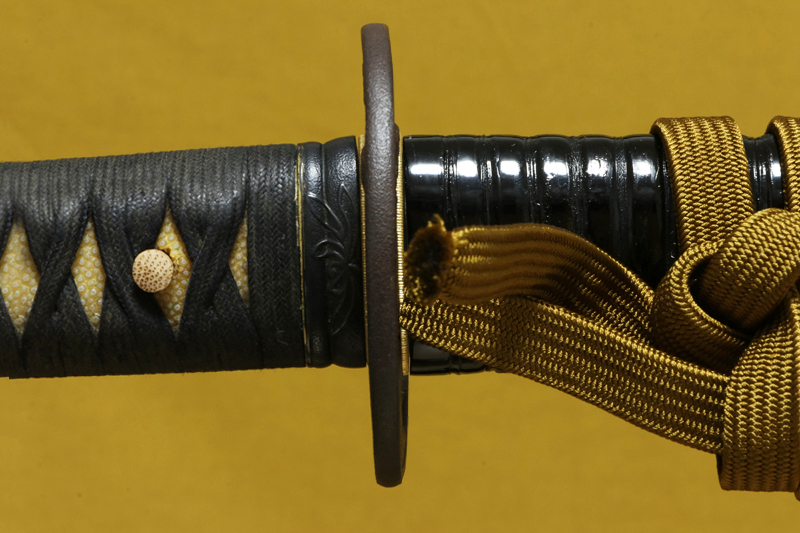
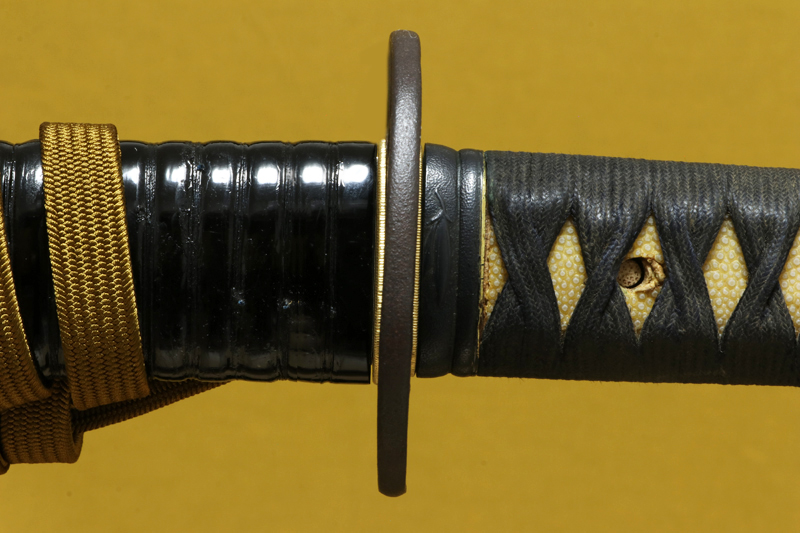
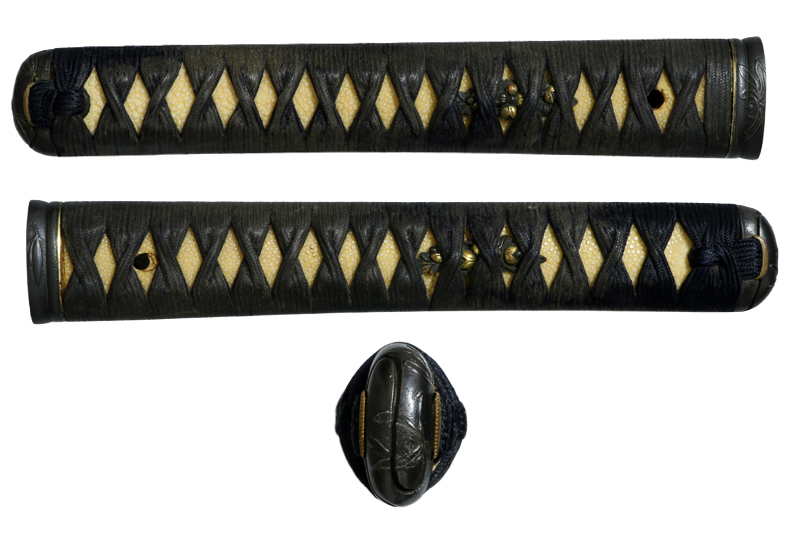
As for the mounting, the tsuka shows some signs of use, but it will be rewrapped with new tsuka-ito at no charge.
The saya is finished with black ridged texturing near the koiguchi, while the rest is coated in a glossy wine-colored finish decorated with black karakusa arabesque patterns. It is fitted with a funagata kojiri.
In terms of condition, there are signs of repair on the ridged-texture section, but aside from that, it remains in good condition.
This is an excellent piece, suitable not only for iaidō practice but also as a fine addition to a collection.
「拵 Koshirae」
拵は柄に使用感が有りますが、これは無料で新品に巻替えます。鞘は鯉口付近が千段刻みで黒塗り、それ以外はワイン色の艶に黒色の唐草模様が入り、鐺は舟形鐺が付きます。コンディションは千段刻み部分に補修した痕が有りますが、それ以外は良好です。
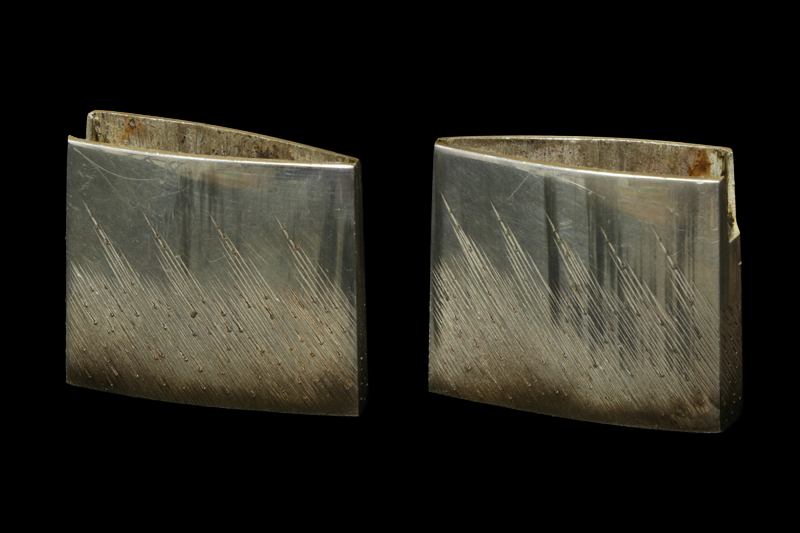
ハバキ(habaki) :銀無垢一重の腰祐乗。
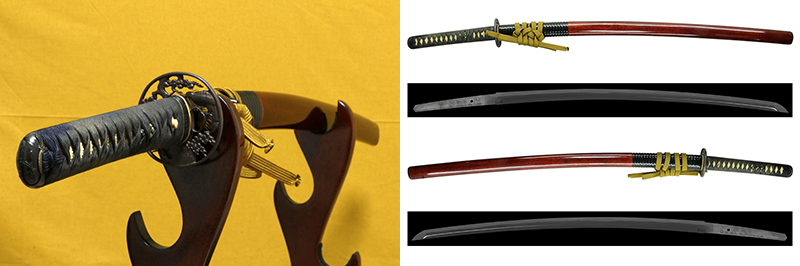
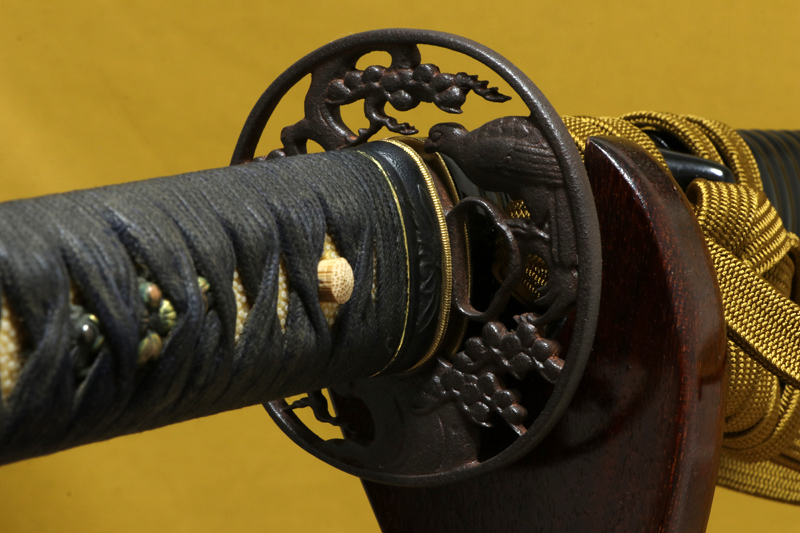
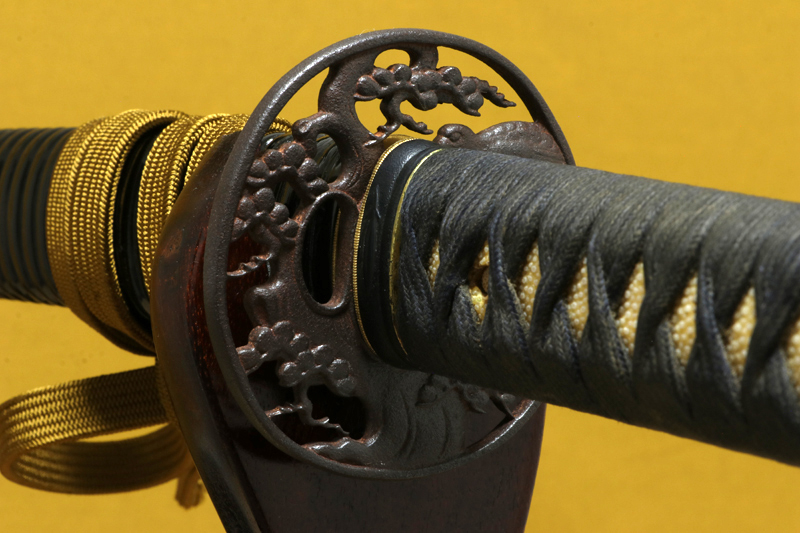
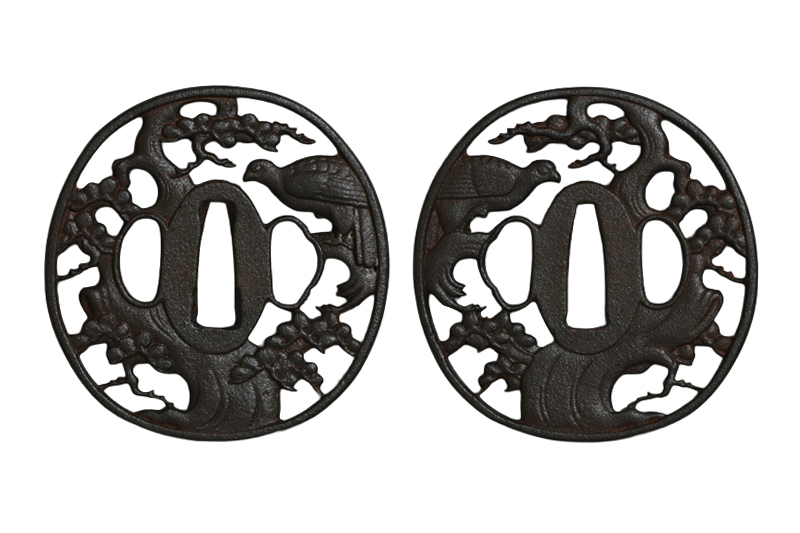
鍔(tsuba) :鉄地松に鷹の図。
縁頭(futikasira):素銅石目地山道万年青の図。
鐺(kojiri) : 素銅地舟形鐺。
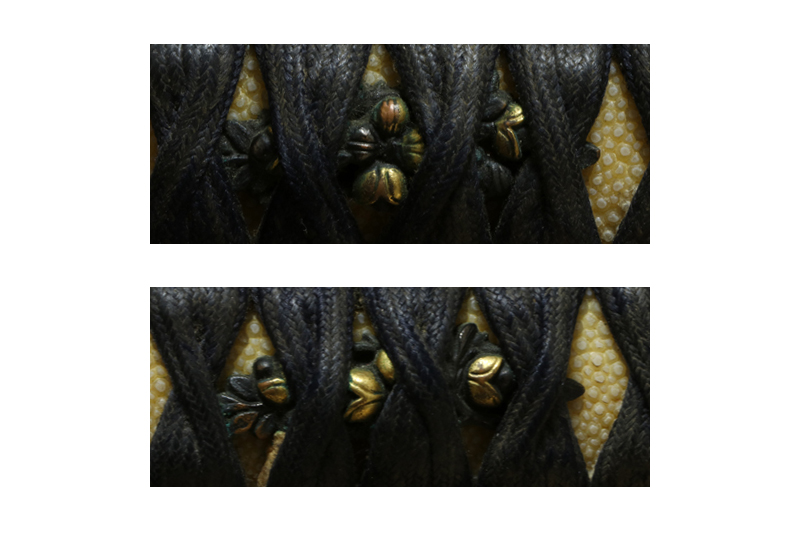
目貫(menuki) :山椒の図。
柄(tsuka) :柄は正絹黒の諸撮み巻。
鞘(saya) : 鞘は鯉口付近が千段刻みで黒塗り、それ以外はワイン色の艶に黒色の唐草模様。
「刀剣の状態 condition of blade」
研:概ね良好です。
傷:欠点に成るような傷は有りません。


 NihontoWatch