After the Ōnin War broke the Ashikaga order, a century of Sengoku warfare armed nearly every province in Japan. The era rewards a discriminating eye: routine work exists in quantity, and beside it stand custom blades of the first rank.
 NihontoWatchNihontoWatch
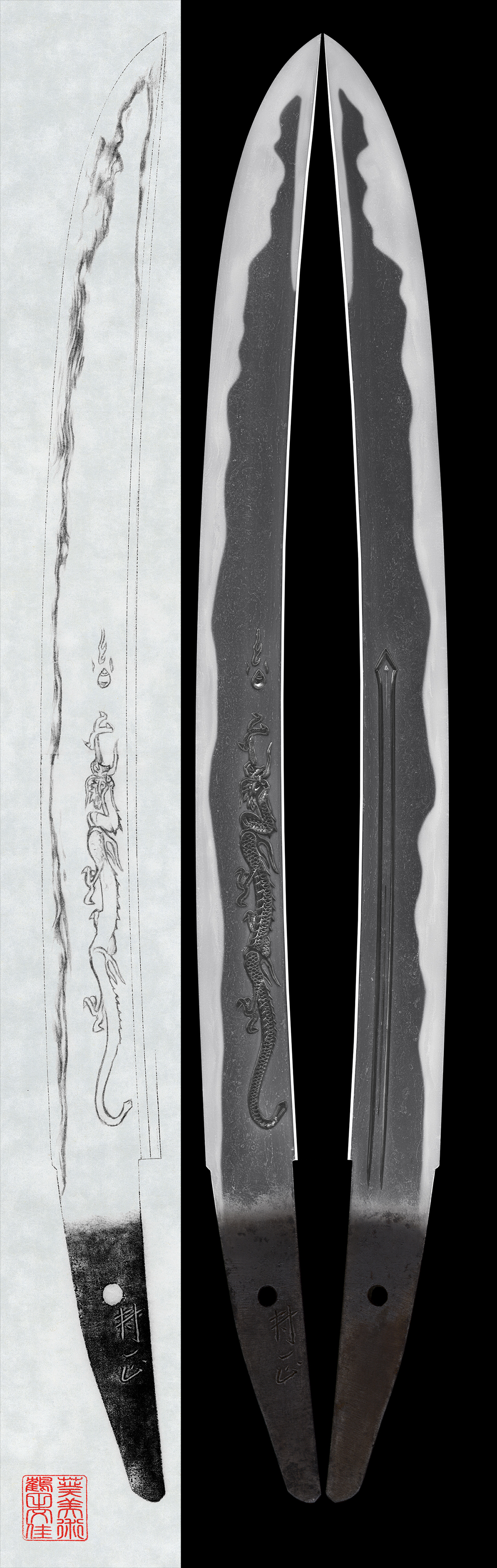
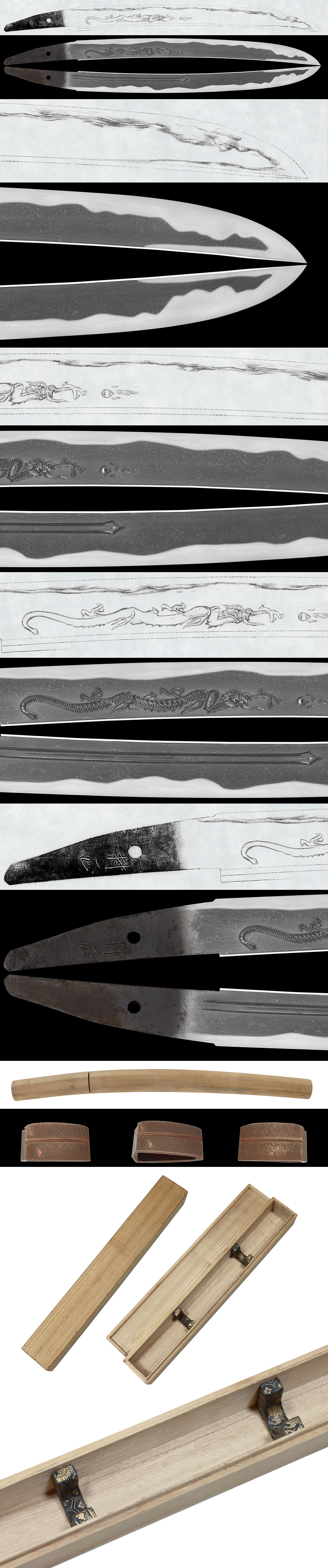
Wakizashi in Shirasaya with Box (We divide 4 sections for each sword as Saijyo Saku, Jyojyo Saku, Jyo Saku and Regular Saku). This blade is ranked as Jyo Saku among the works signed Muramasa (authenticity not guaranteed). Shape: A hira-zukuri tanto with standard mihaba and kasane. The blade features carvings of a ken (sword) and a dragon. The nakago has the distinctive tanagobara (fish-belly) shape associated with Muramasa. Jigane: Itame hada with a pronounced grain pattern and abundant ji-nie. Hamon: Nie-deki notare mixed with gunome-midare. The boshi displays a midare-komi pattern. Features: Many counterfeit swords bearing the Muramasa signature exist. Unfortunately, we must also offer this particular blade without any guarantee of authenticity. Its workmanship differs from that of genuine Muramasa blades, particularly because the hamon patterns on the front and reverse sides do not correspond. Nevertheless, the blade features decorative carvings and is an interesting piece. With Box. AoiArt estimation paper. Whole Oshigata. *Please note: The price does not include shipping fees.
NihontoWatchOffered by Aoi Art


Machine translation of the shop's Japanese ·
The Muromachi period (1392 to 1573)
After the Ōnin War broke the Ashikaga order, a century of Sengoku warfare armed nearly every province in Japan. The era rewards a discriminating eye: routine work exists in quantity, and beside it stand custom blades of the first rank.
If you wish to return an item, please notify us within 3 days of receipt. After this period we cannot accept cancellations. Please ship the return to us within 5 business days. Cancellation is conditional on the item being kept in the same condition as at the time of sale, so please handle it with care.