NihontoWatch Mon

NihontoWatch

MarketAuctions
Encyclopedia
NihontoWatch Mon

NihontoWatch

MarketAuctions
Encyclopedia

Description

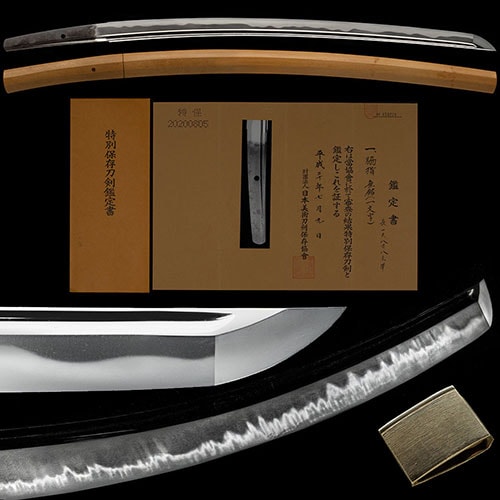
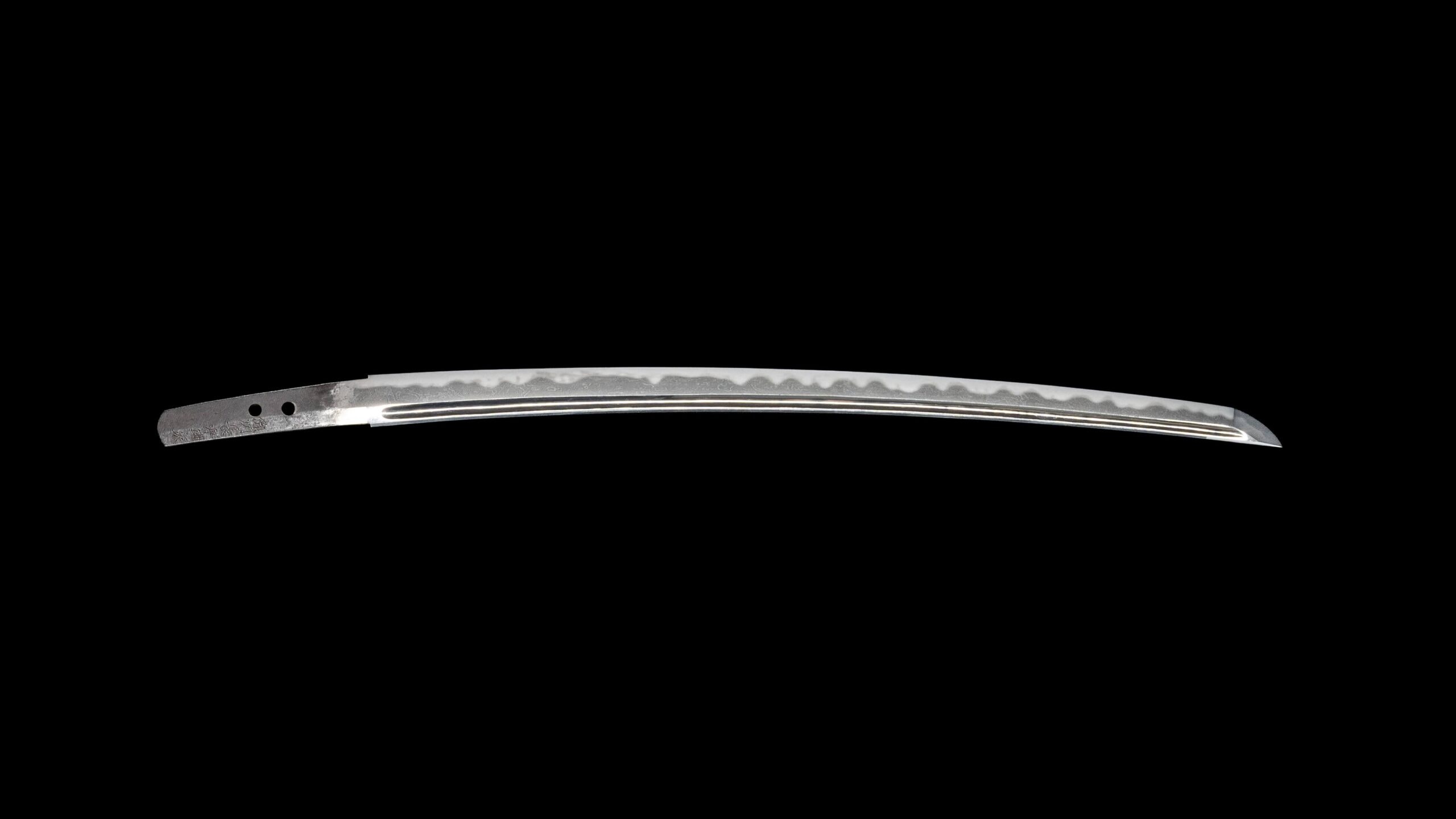
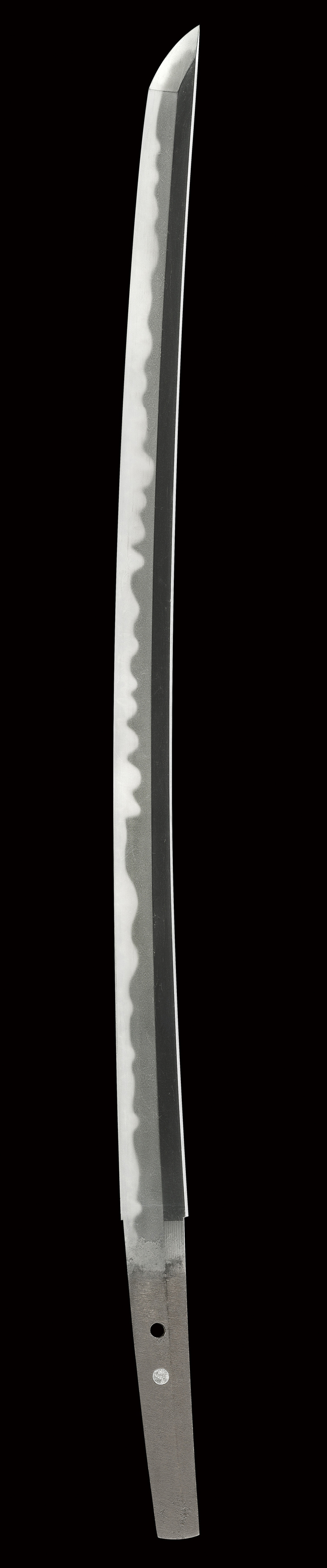
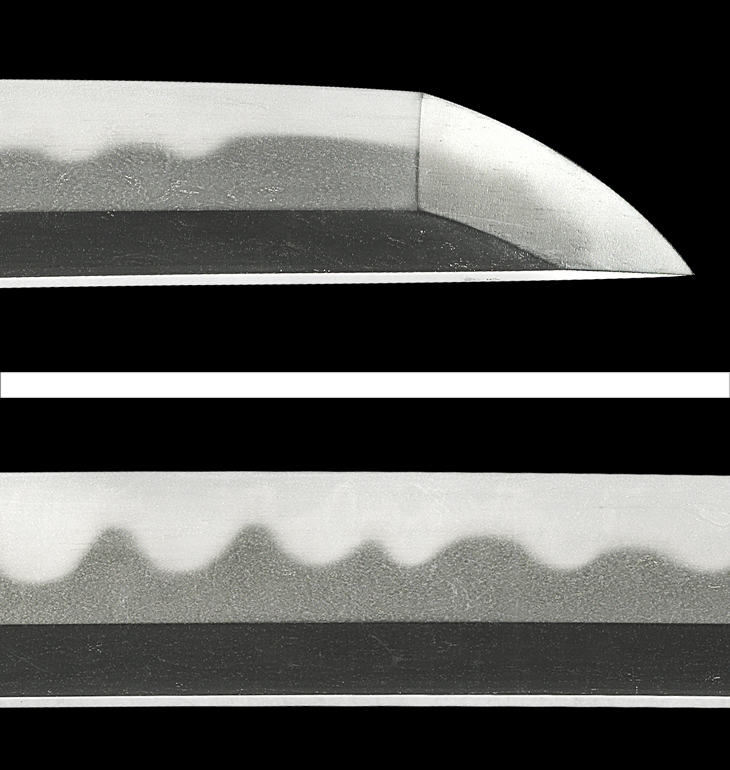
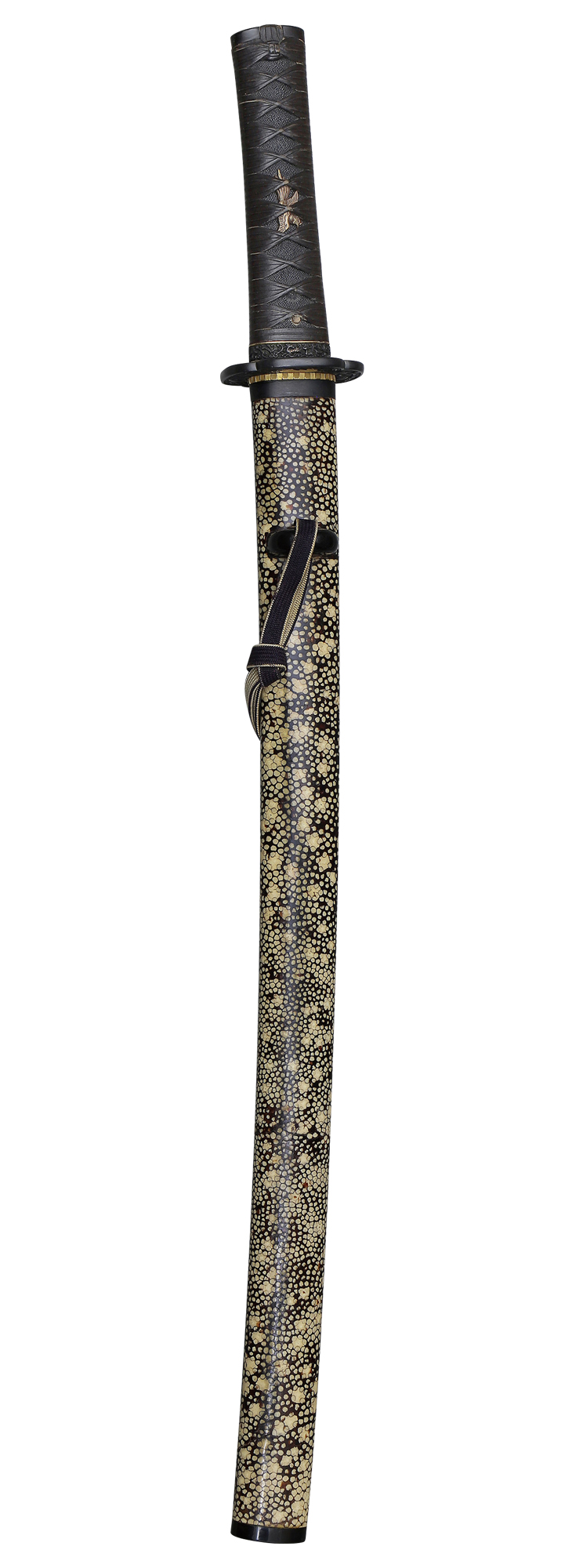
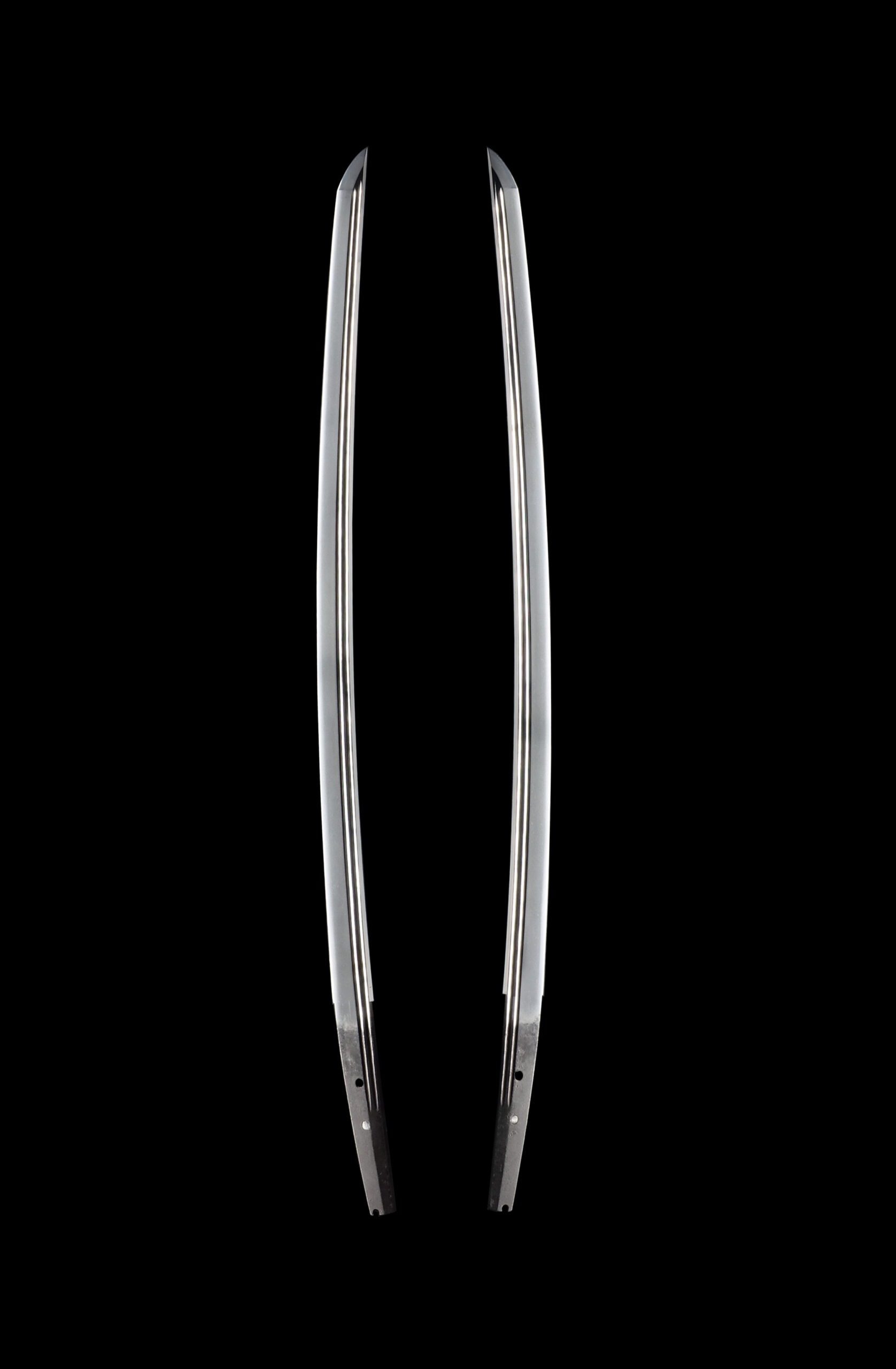
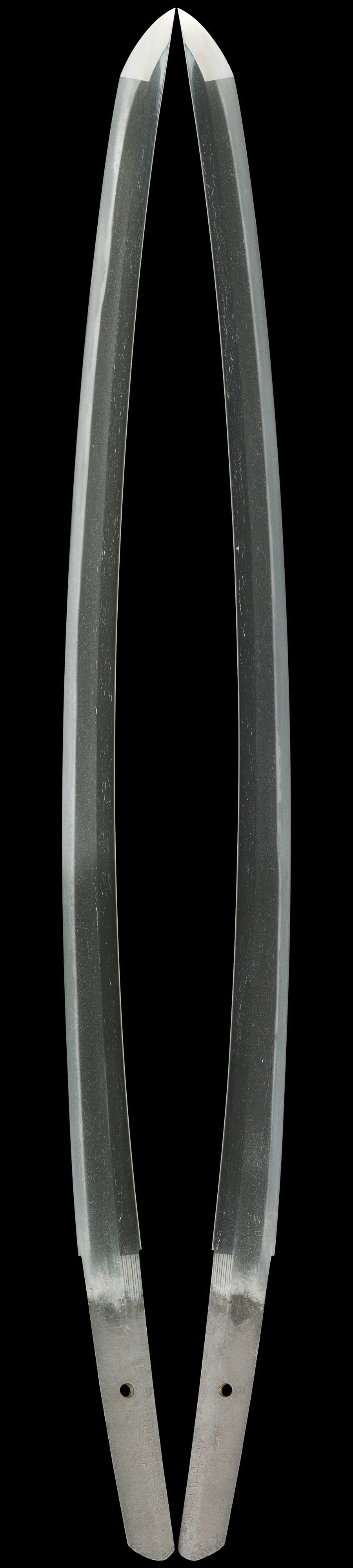
This is a wakizashi attributed to the Ichimonji school, dating to the mid-Kamakura period. It has been designated as a Juyo Token (Important Sword) and comes with a koshirae. The blade features a choji midare hamon and a well-forged ko-itame hada.

NBTHK Setsumei

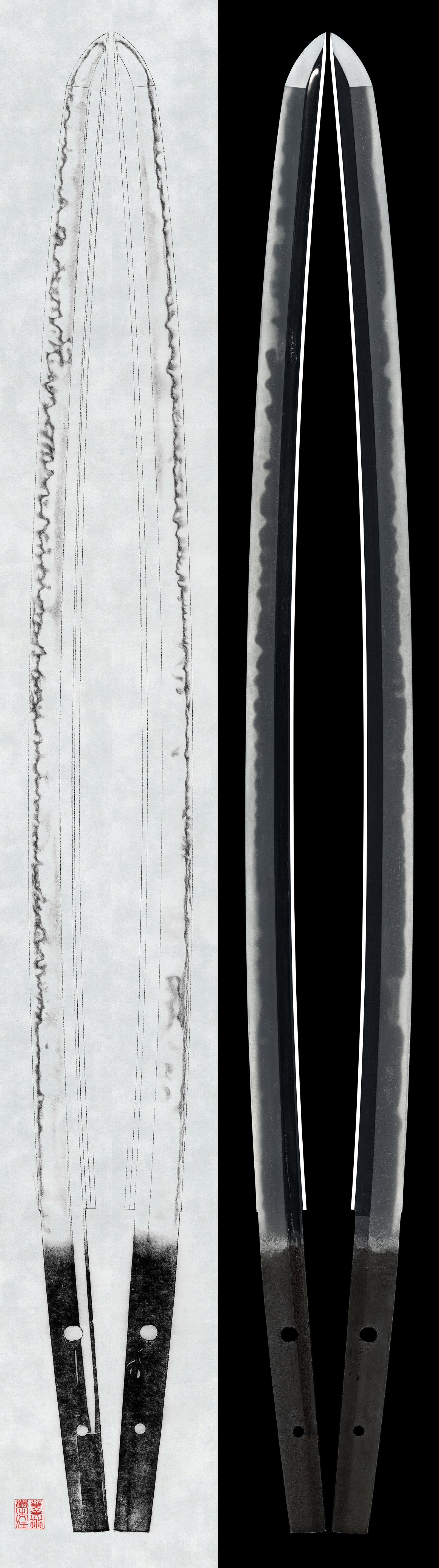
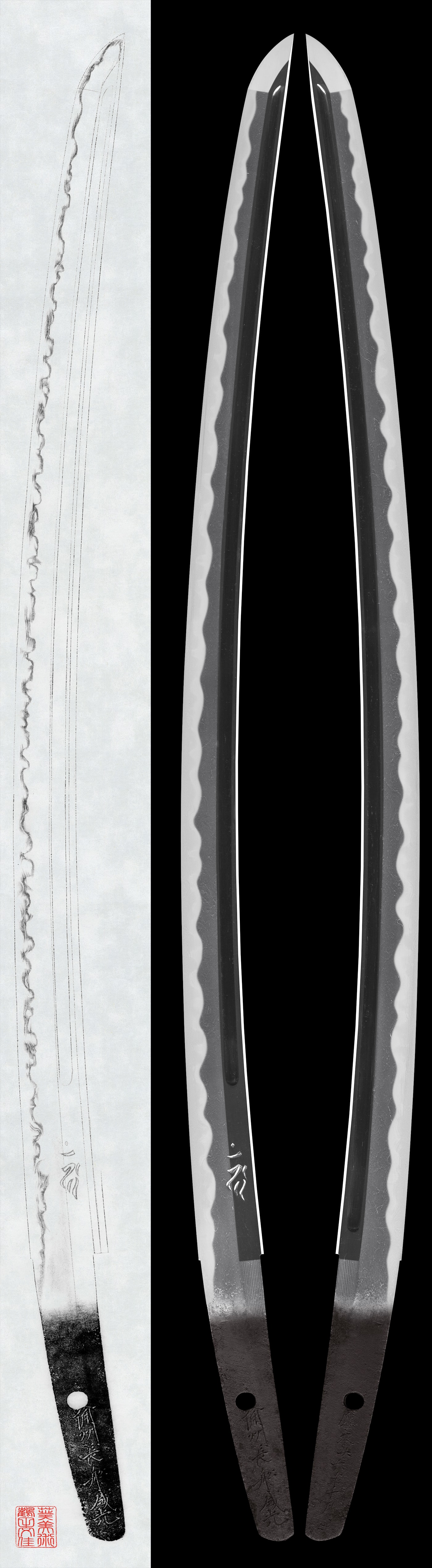
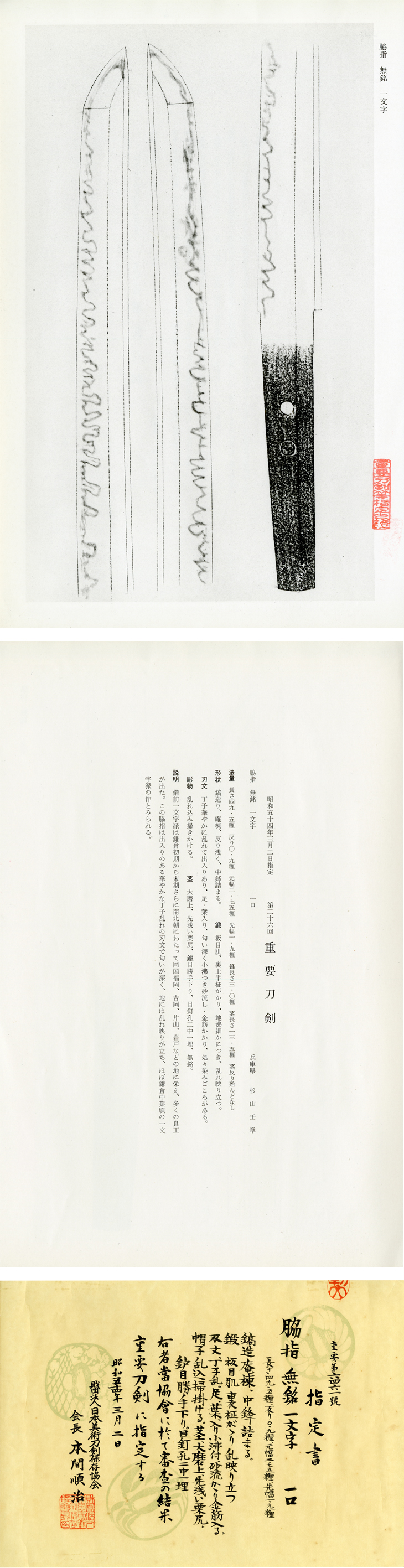
Juyo-Token, 26th Session — Designated March 2, 1979 Wakizashi, mumei: Ichimonji school (一文字) Measurements Nagasa 49.5 cm, sori 0.9 cm, motohaba 2.75 cm, sakihaba 1.9 cm, kissaki-nagasa 3.0 cm, nakago-nagasa 13.5 cm, nakago-sori almost none Description Keijo: shinogi-zukuri construction, iori-mune; shallow sori; chu-kissaki that is somewhat compact. Kitae: itame-hada; on the upper half of the ura it inclines toward masame; fine ji-nie; midare-utsuri stands out. Hamon: A flamboyant chōji in midare with undulations and alternations; with ashi and yō; deep nioi, with ko-nie; sunagashi and kinsuji appear; there are places with shimi (staining). Boshi: midare-komi with hakikake. Horimono: None. Nakago: Greatly shortened (ō-suriage); tip a shallow kurijiri; yasurime katte-sagari; two mekugi-ana (the central one plugged); mumei. Artisan Ichimonji school Era Mid-Kamakura period Explanation The Bizen Ichimonji lineage flourished across a long span—from the early through late Kamakura period, and further into the Nanbokuchō era—prospering in various locations within Bizen Province such as Fukuoka, Yoshioka, Katayama, Iwato, and others, and producing many smiths. This wakizashi displays a brilliant chōji-midare hamon with marked undulations; the nioi is deep. In the ji there is conspicuous midare-utsuri. On the basis of these characteristics, it is regarded as a work of the Ichimonji school from approximately the middle of the Kamakura period. (Designation document) Wakizashi, mumei: Ichimonji school Kitae: itame-hada; the ura inclines toward masame; fine ji-nie; midare-utsuri stands out. Hamon: chōji-midare with ashi and yō; with ko-nie; containing sunagashi and kinsuji. Nakago: Greatly shortened (ō-suriage); tip a shallow kurijiri. Yasurime: katte-sagari; two mekugi-ana. As a result of examination, the above is from the mid-Kamakura period, and is hereby designated an Important Sword (Jūyō Tōken) on March 2, 1979. The Society for the Preservation of Japanese Art Swords (NBTHK) President: Honma Junji (本間順治)

NihontoWatch MonNihontoWatch
MarketAuctionsEncyclopedia
Swords›Bizen›Wakizashi: Ichimonji (Mumei)
wakizashiJūyō
Ichimonji

Wakizashi: Ichimonji (Mumei)

mumei · Kamakura · nagasa 49.5cm · sori 0.9cm

SOLD
Ichimonji — 1 of 4
Ichimonji — 2 of 4
Ichimonji — 3 of 4
Ichimonji — 4 of 4
1 / 4
1 / 4
Ichimonji — 1 of 4Ichimonji — 2 of 4Ichimonji — 3 of 4Ichimonji — 4 of 4
Measurements & details
Smith
Ichimonji
Type
Wakizashi
Period
Kamakura
Province
Bizen
Signature
Unsigned
Measurements
Nagasa 49.5cmSori 0.9cmMotohaba 2.84cmSakihaba 1.97cmKasane 0.59cm
Description

This is a wakizashi attributed to the Ichimonji school, dating to the mid-Kamakura period. It has been designated as a Juyo Token (Important Sword) and comes with a koshirae. The blade features a choji midare hamon and a well-forged ko-itame hada.

NBTHK Zufu Commentary

Juyo #26

AI translation — may contain errors

-, 26th Session — Designated March 2, 1979

, : school (一文字)

Measurements 49.5 cm, 0.9 cm, 2.75 cm, 1.9 cm, 3.0 cm, 13.5 cm, almost none

Description Keijo: construction, ; shallow ; that is somewhat compact. : ; on the upper half of the it inclines toward ; fine ; stands out. : A flamboyant in with undulations and alternations; with and ; deep , with ; and appear; there are places with (staining). : with . : None. : Greatly shortened (); tip a shallow ; ; two (the central one plugged); .

Artisan school

Era Mid- period

Explanation The lineage flourished across a long span—from the early through late period, and further into the era—prospering in various locations within Province such as Fukuoka, Yoshioka, Katayama, Iwato, and others, and producing many smiths.

This displays a brilliant with marked undulations; the is deep. In the there is conspicuous . On the basis of these characteristics, it is regarded as a work of the school from approximately the middle of the period.

(Designation document)

, : school

: ; the inclines toward ; fine ; stands out. : with and ; with ; containing and . : Greatly shortened (); tip a shallow . : ; two .

As a result of examination, the above is from the mid- period, and is hereby designated an Important Sword ( ) on March 2, 1979.

The Society for the Preservation of Japanese Art Swords () President: Honma Junji (本間順治)
NBTHK Certificate
Jūyō Tōken重要刀剣
Important Sword
›

A blade of top-grade workmanship and condition, formally judged to rank with a nationally recognized Important Art Object (Jūyō Bijutsuhin). Awarded only at the NBTHK’s competitive annual examination.

Of Japan’s roughly 2.5 million registered swords, only 12,307 (about 1 in 203) have ever attained Jūyō.

About the NBTHK›

The NBTHK (Nihon Bijutsu Tōken Hozon Kyōkai, the Society for the Preservation of Japanese Art Swords) is a public-interest incorporated foundation founded in 1948 and supervised by Japan’s Agency for Cultural Affairs (Bunkachō); it is based at the Japanese Sword Museum in Tokyo. Its expert panels physically examine each submitted work (shinsa) and issue a certificate (kanteishō) ranking it by artistic and historical merit. NBTHK papers are the most widely recognized standard of authentication for Japanese swords and fittings.

NBTHK official site→
Seller
S
Samurai Nippon
Established 1977 · 49 yrs on the market
🇯🇵Ships from Japan
›
✓Verified dealersamurai-nippon.net
✓Ships worldwide✓English supportWire transferPayPalCredit card
Return policy

For one-of-a-kind items such as swords, sword fittings, and antiques, please contact us about a return within 3 days of the item's arrival and ship it back within 8 days. Refunds are issued the same day the returned item arrives.

View all of Samurai Nippon’s listings→View this item on the dealer’s site→

Swords

  • Katana
  • Wakizashi
  • Tantō
  • Tachi
  • Naginata
  • Yari

Fittings

  • Tsuba
  • Fuchi-Kashira
  • Kozuka
  • Menuki

By Certification

  • Tokujū
  • Jūyō
  • Tokuho
  • Hozon

Resources

  • Dealer Directory
  • Artist Directory
  • Glossary
  • Browse All
Nihontowatch© 2026
TermsPrivacyCookiesAbout

Description

This is a wakizashi attributed to the Ichimonji school, dating to the mid-Kamakura period. It has been designated as a Juyo Token (Important Sword) and comes with a koshirae. The blade features a choji midare hamon and a well-forged ko-itame hada.

NBTHK Setsumei

Juyo-Token, 26th Session — Designated March 2, 1979 Wakizashi, mumei: Ichimonji school (一文字) Measurements Nagasa 49.5 cm, sori 0.9 cm, motohaba 2.75 cm, sakihaba 1.9 cm, kissaki-nagasa 3.0 cm, nakago-nagasa 13.5 cm, nakago-sori almost none Description Keijo: shinogi-zukuri construction, iori-mune; shallow sori; chu-kissaki that is somewhat compact. Kitae: itame-hada; on the upper half of the ura it inclines toward masame; fine ji-nie; midare-utsuri stands out. Hamon: A flamboyant chōji in midare with undulations and alternations; with ashi and yō; deep nioi, with ko-nie; sunagashi and kinsuji appear; there are places with shimi (staining). Boshi: midare-komi with hakikake. Horimono: None. Nakago: Greatly shortened (ō-suriage); tip a shallow kurijiri; yasurime katte-sagari; two mekugi-ana (the central one plugged); mumei. Artisan Ichimonji school Era Mid-Kamakura period Explanation The Bizen Ichimonji lineage flourished across a long span—from the early through late Kamakura period, and further into the Nanbokuchō era—prospering in various locations within Bizen Province such as Fukuoka, Yoshioka, Katayama, Iwato, and others, and producing many smiths. This wakizashi displays a brilliant chōji-midare hamon with marked undulations; the nioi is deep. In the ji there is conspicuous midare-utsuri. On the basis of these characteristics, it is regarded as a work of the Ichimonji school from approximately the middle of the Kamakura period. (Designation document) Wakizashi, mumei: Ichimonji school Kitae: itame-hada; the ura inclines toward masame; fine ji-nie; midare-utsuri stands out. Hamon: chōji-midare with ashi and yō; with ko-nie; containing sunagashi and kinsuji. Nakago: Greatly shortened (ō-suriage); tip a shallow kurijiri. Yasurime: katte-sagari; two mekugi-ana. As a result of examination, the above is from the mid-Kamakura period, and is hereby designated an Important Sword (Jūyō Tōken) on March 2, 1979. The Society for the Preservation of Japanese Art Swords (NBTHK) President: Honma Junji (本間順治)

NihontoWatch MonNihontoWatch
MarketAuctionsEncyclopedia
Swords›Bizen›Wakizashi: Ichimonji (Mumei)
wakizashiJūyō
Ichimonji

Wakizashi: Ichimonji (Mumei)

mumei · Kamakura · nagasa 49.5cm · sori 0.9cm

SOLD
Ichimonji — 1 of 4
Ichimonji — 2 of 4
Ichimonji — 3 of 4
Ichimonji — 4 of 4
1 / 4
1 / 4
Ichimonji — 1 of 4Ichimonji — 2 of 4Ichimonji — 3 of 4Ichimonji — 4 of 4
Measurements & details
Smith
Ichimonji
Type
Wakizashi
Period
Kamakura
Province
Bizen
Signature
Unsigned
Measurements
Nagasa 49.5cmSori 0.9cmMotohaba 2.84cmSakihaba 1.97cmKasane 0.59cm
Description

This is a wakizashi attributed to the Ichimonji school, dating to the mid-Kamakura period. It has been designated as a Juyo Token (Important Sword) and comes with a koshirae. The blade features a choji midare hamon and a well-forged ko-itame hada.

NBTHK Zufu Commentary

Juyo #26

AI translation — may contain errors

-, 26th Session — Designated March 2, 1979

, : school (一文字)

Measurements 49.5 cm, 0.9 cm, 2.75 cm, 1.9 cm, 3.0 cm, 13.5 cm, almost none

Description Keijo: construction, ; shallow ; that is somewhat compact. : ; on the upper half of the it inclines toward ; fine ; stands out. : A flamboyant in with undulations and alternations; with and ; deep , with ; and appear; there are places with (staining). : with . : None. : Greatly shortened (); tip a shallow ; ; two (the central one plugged); .

Artisan school

Era Mid- period

Explanation The lineage flourished across a long span—from the early through late period, and further into the era—prospering in various locations within Province such as Fukuoka, Yoshioka, Katayama, Iwato, and others, and producing many smiths.

This displays a brilliant with marked undulations; the is deep. In the there is conspicuous . On the basis of these characteristics, it is regarded as a work of the school from approximately the middle of the period.

(Designation document)

, : school

: ; the inclines toward ; fine ; stands out. : with and ; with ; containing and . : Greatly shortened (); tip a shallow . : ; two .

As a result of examination, the above is from the mid- period, and is hereby designated an Important Sword ( ) on March 2, 1979.

The Society for the Preservation of Japanese Art Swords () President: Honma Junji (本間順治)
NBTHK Certificate
Jūyō Tōken重要刀剣
Important Sword
›

A blade of top-grade workmanship and condition, formally judged to rank with a nationally recognized Important Art Object (Jūyō Bijutsuhin). Awarded only at the NBTHK’s competitive annual examination.

Of Japan’s roughly 2.5 million registered swords, only 12,307 (about 1 in 203) have ever attained Jūyō.

About the NBTHK›

The NBTHK (Nihon Bijutsu Tōken Hozon Kyōkai, the Society for the Preservation of Japanese Art Swords) is a public-interest incorporated foundation founded in 1948 and supervised by Japan’s Agency for Cultural Affairs (Bunkachō); it is based at the Japanese Sword Museum in Tokyo. Its expert panels physically examine each submitted work (shinsa) and issue a certificate (kanteishō) ranking it by artistic and historical merit. NBTHK papers are the most widely recognized standard of authentication for Japanese swords and fittings.

NBTHK official site→
Seller
S
Samurai Nippon
Established 1977 · 49 yrs on the market
🇯🇵Ships from Japan
›
✓Verified dealersamurai-nippon.net
✓Ships worldwide✓English supportWire transferPayPalCredit card
Return policy

For one-of-a-kind items such as swords, sword fittings, and antiques, please contact us about a return within 3 days of the item's arrival and ship it back within 8 days. Refunds are issued the same day the returned item arrives.

View all of Samurai Nippon’s listings→View this item on the dealer’s site→

Swords

  • Katana
  • Wakizashi
  • Tantō
  • Tachi
  • Naginata
  • Yari

Fittings

  • Tsuba
  • Fuchi-Kashira
  • Kozuka
  • Menuki

By Certification

  • Tokujū
  • Jūyō
  • Tokuho
  • Hozon

Resources

  • Dealer Directory
  • Artist Directory
  • Glossary
  • Browse All
Nihontowatch© 2026
TermsPrivacyCookiesAbout
NihontoWatch Mon

NihontoWatch

MarketAuctions
Encyclopedia
NihontoWatch Mon

NihontoWatch

MarketAuctions
Encyclopedia