Modern sword Nosyu seki ju Kanemichi saku.
Seki ju Kanemichi (the second generation) is a highly skilled swordsmith representing modern Mino-den, having received the Excellence Award twice at the Shinsaku Meito Exhibition.
This work is a superior piece featuring a dense itame-hada with a medium suguha rich in activity. Despite its long nagasa, it is lightweight with excellent balance, making it ideal for Iai.
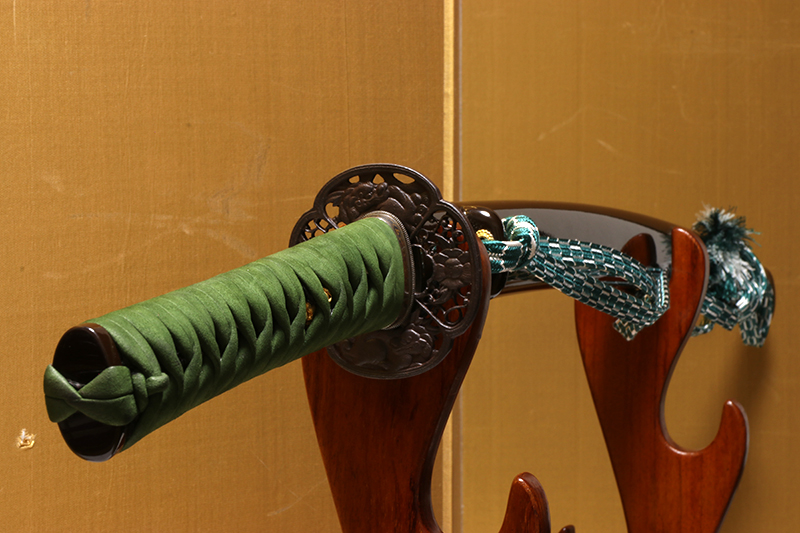
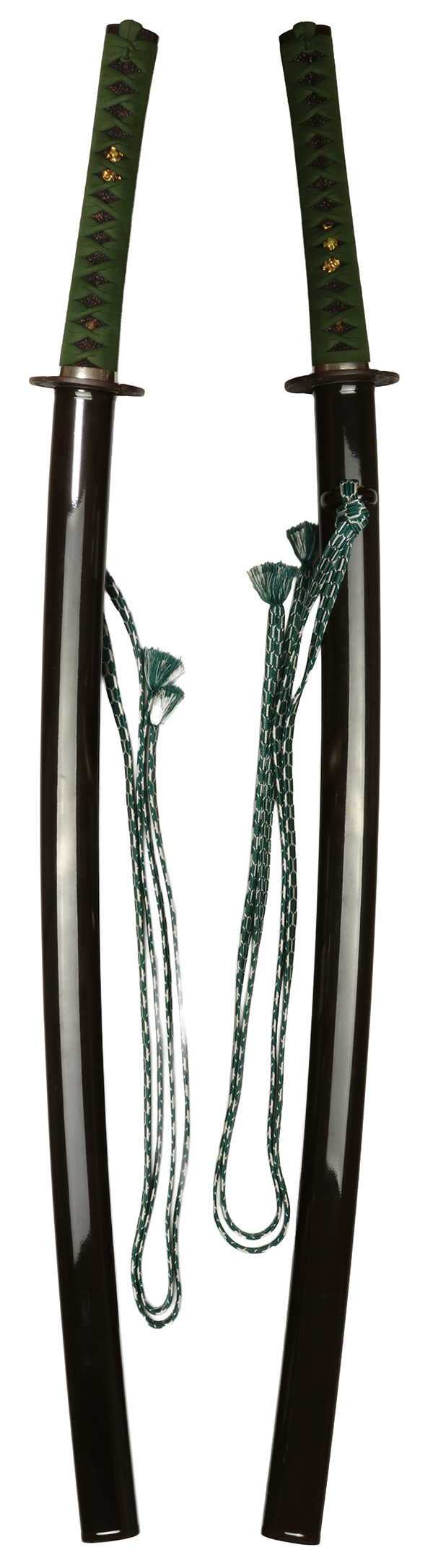
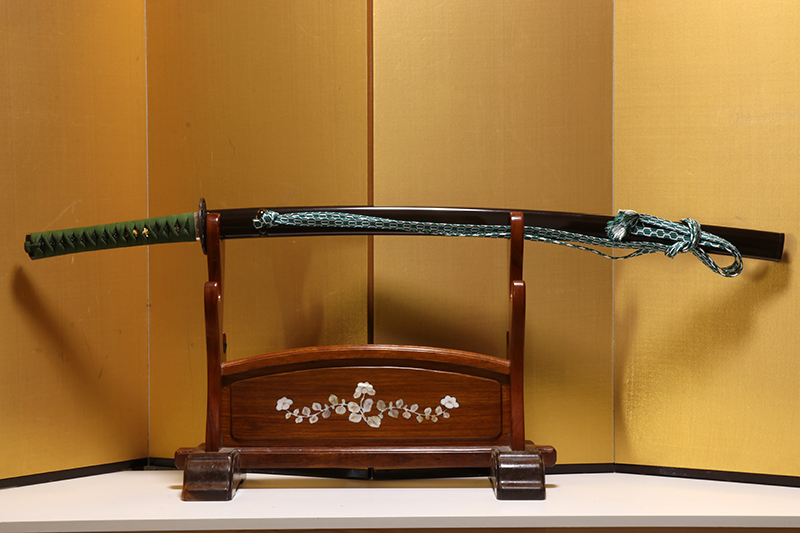
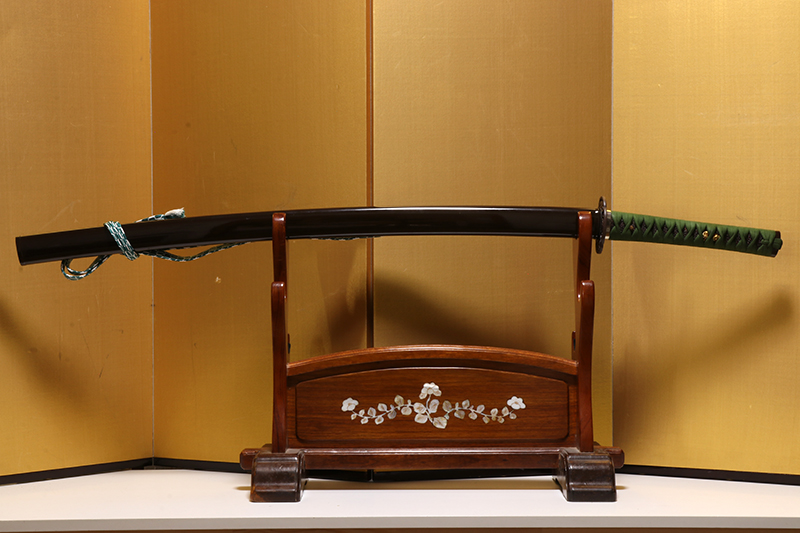
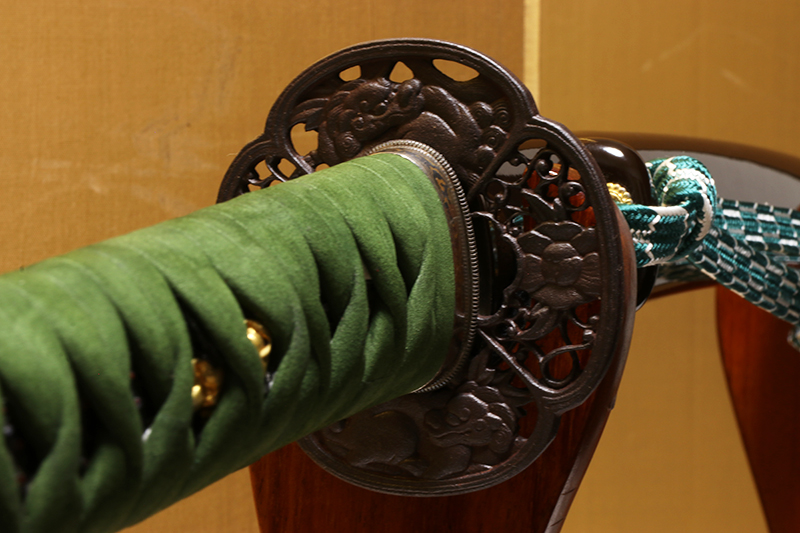
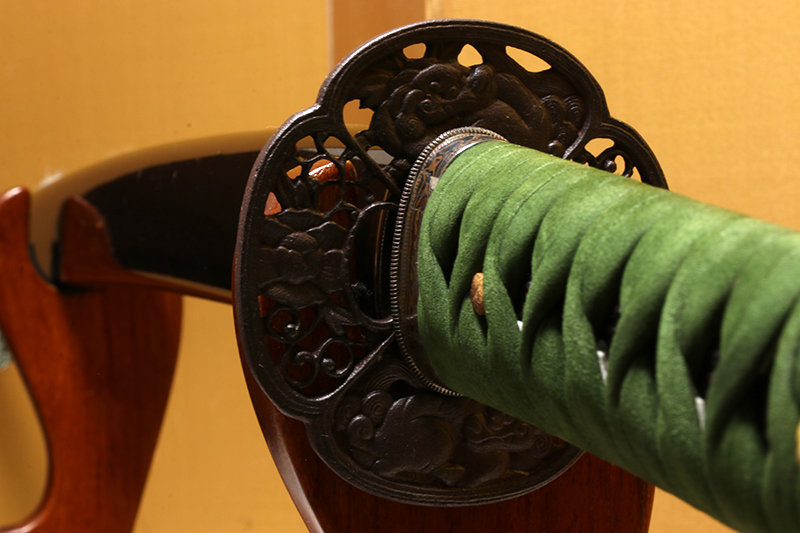
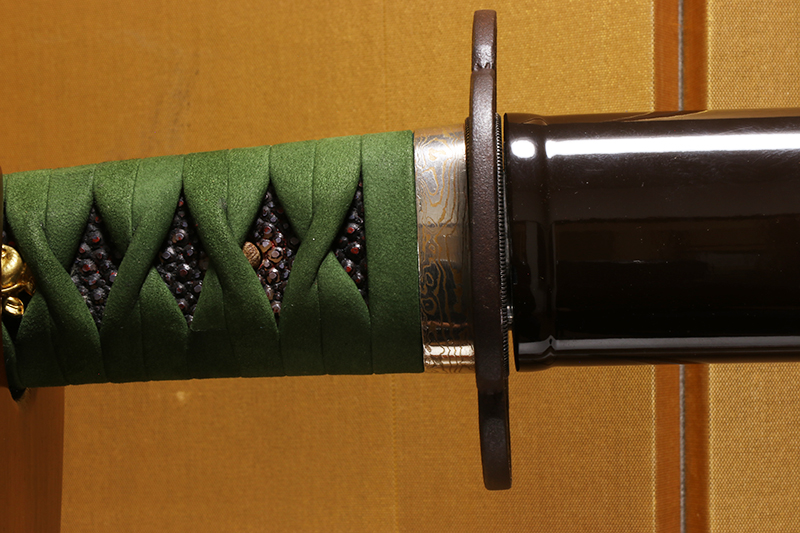
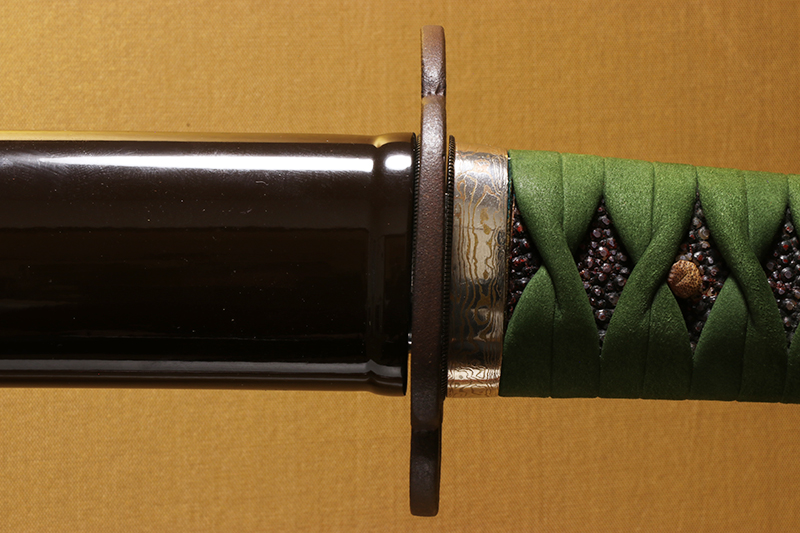
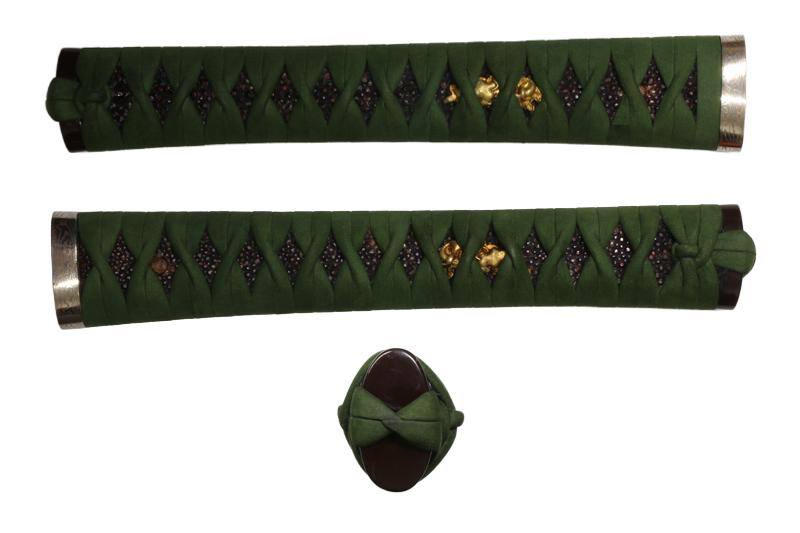
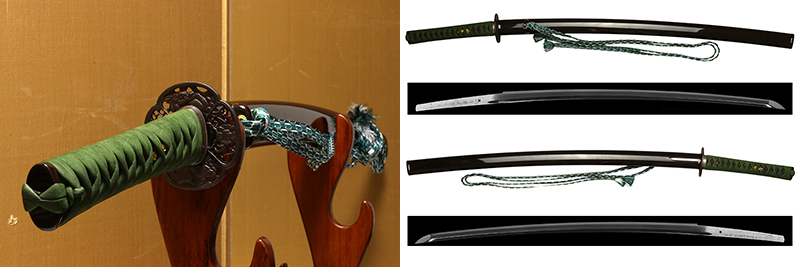
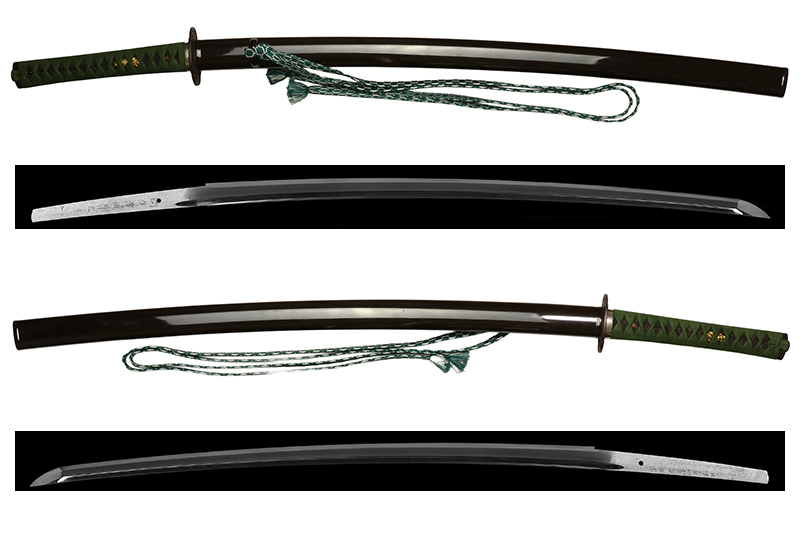
The tsuka has been rewrapped with deep green cow suede. It is a high-quality koshirae equipped with a solid silver nijuhabaki and seppa.
Both the blade and koshirae are in good condition; it is a rare shinken for Iai use that possesses the three key qualities of long nagasa, light weight, and good balance.
"Sword figure"
Shinogi-zukuri, iori-mune, standard mihaba and kasane, torii-zori, chu-kissaki. The nakago is ubu with sujikai yasurime, and the nakago-jiri is ha-agari kurijiri.
Shinogi-zukuri with an iori-mune. The blade has standard width and thickness, torii-zori curvature, and a medium-sized kissaki. The nakago is ubu with sujikai yasurime, and the nakago-jiri is a ha-agari kurijiri.
"Carving"
The carvings consist of a kata-chiri bo-hi on both sides, ending in kaki-nagashi below the habaki.
The blade features a kata-chiri bo-hi on both sides, extending beneath the habaki in kaki-nagashi style.
"Jigane"
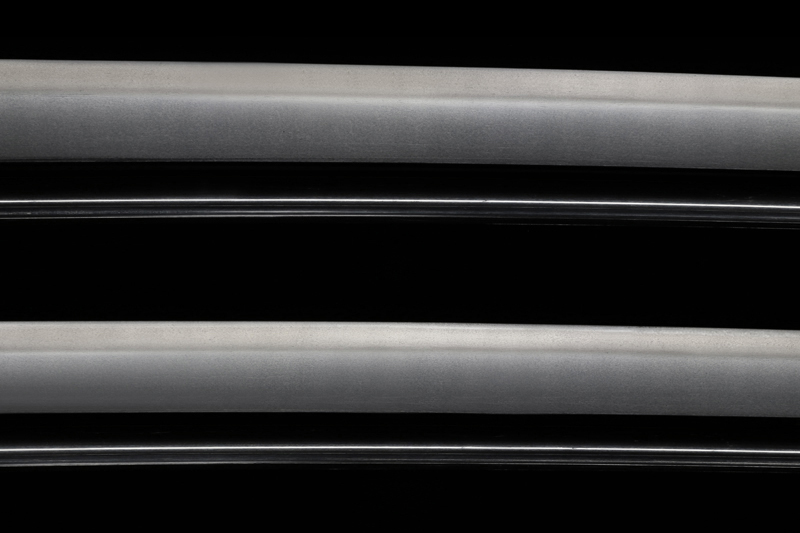
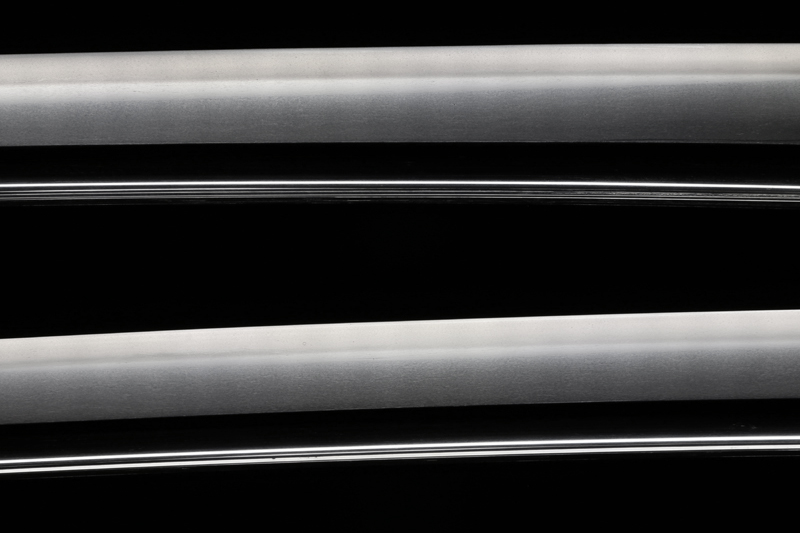
The jigane is a well-dense ko-itame, becoming masame toward the edge, with ji-nie.
The jihada is a tightly forged ko-itame, tending toward masame near the cutting edge, with ji-nie.
"Hamon"
The hamon is a medium suguha in ko-nie-deki, with sunagashi along the habuchi and ko-nie, and kinsuji active within the blade. The boshi enters sugu and returns in komaru.
The hamon is a medium-width suguha in ko-nie-deki, with sunagashi and fine nie along the habuchi, and kinsuji activity within the ha. The boshi is sugu, turning back in a small komaru.
"Detailed"
Seki ju Kanemichi (real name Kojima Ikuo) is a swordsmith residing in Seki City, Gifu Prefecture, who succeeded to the name Kanemichi the second generation after the death of his grandfather, Kanemichi the first generation. He studied under his grandfather, Kanemichi the first generation, and his father, Kanetoki. Since Showa 56 (1981), he has repeatedly been selected for the Shinsaku Meito Exhibition, receiving one Effort Award and two Excellence Awards. Furthermore, he served as the chairman of the Mino-den Sakuto Hozon Kyokai and is a highly skilled swordsmith representing modern Mino-den. His son, Kanetoki the second generation, is also active as a swordsmith.
This work is a well-made blade featuring a well-dense itame-hada and a medium suguha rich in activity. It is thought to be a sword custom-ordered for Iai use; despite its long nagasa, it is lightweight and achieves excellent balance due to the long nakago. While there are traces of use in Iai, the frequency of use seems to have been low, and the condition of the blade is good.
The koshirae has had the tsuka-ito newly rewrapped. It uses tetsu-iro (deep green) cow suede with a texture like deerskin. The habaki is a solid silver nijuhabaki, and the seppa are also a luxurious specification made of custom-ordered solid silver. There are no cracks in the saya, almost no scratches are seen, and the condition of the entire koshirae is also good.
A shinken for Iai use that is long, lightweight, excellent in balance, and in such good preserved condition is rare. Please take this opportunity to purchase it.
Kanemichi of Seki (real name: Kojima Ikuo) is a swordsmith based in Seki City, Gifu Prefecture. He succeeded his grandfather as the second-generation Kanemichi after the latter’s passing. He studied under his grandfather, the first-generation Kanemichi, and his father, Kanetoki. Since 1981, he has consistently been selected for the Shinsaku Meito Exhibition, receiving one Effort Award and two Excellence Awards. He also served as president of the Mino-den Swordmaking Preservation Association and is regarded as one of the leading contemporary swordsmiths of the Mino tradition. His son, the second-generation Kanetoki, is also an active swordsmith.
This sword is a fine example of his work, featuring a tightly forged itame-hada and a medium-width suguha hamon rich in activity. It appears to have been custom-made for Iaido. Despite its long blade, it is lightweight, and the extended nakago provides excellent balance. Although there are signs of previous use in Iaido, the sword appears to have been used only occasionally, and the blade remains in very good condition.
The tsuka has been newly rewrapped in dark green (tetsu-iro) cowhide suede, which has a texture similar to deerskin. The habaki is a solid silver, double-layered construction, and the seppa are also custom-made from solid silver, giving the fittings a luxurious finish. The saya has no cracks and almost no scratches, and the entire koshirae remains in excellent condition.
Long, lightweight, well-balanced, and well-preserved genuine Japanese swords suitable for Iaido are becoming increasingly difficult to find. Don’t miss this opportunity to acquire such an excellent sword.
"Koshirae"
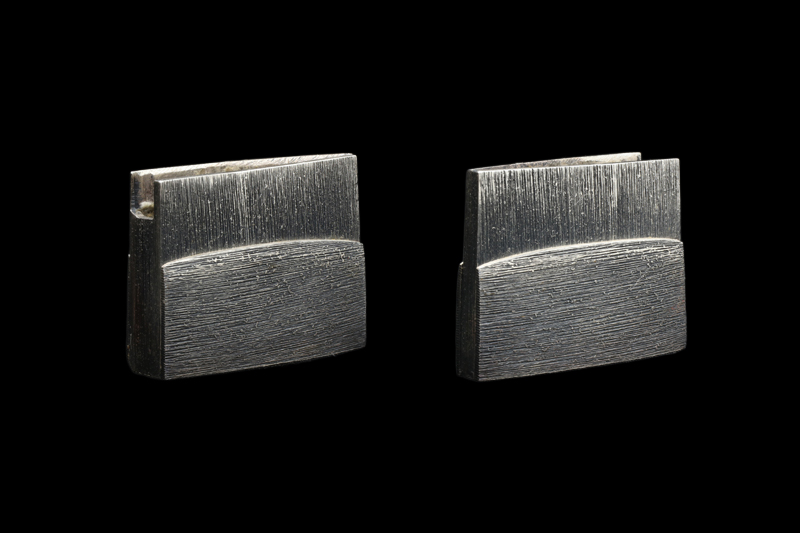
Habaki: Solid silver nijuhabaki.
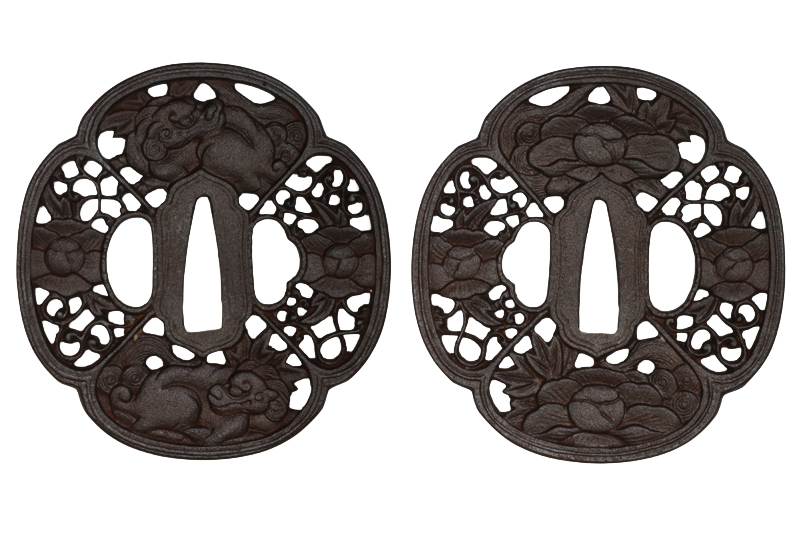
Tsuba: Iron ground, shishi and peony design, sukashi tsuba.
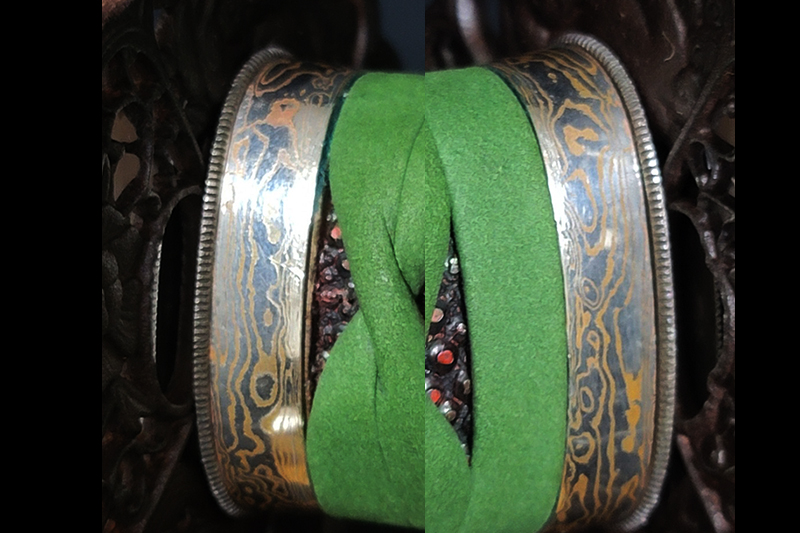
Fuchikashira: Fuchi is solid silver migaki-ji with mokumegane zogan; kashira is buffalo horn with urumi-nuri finish.
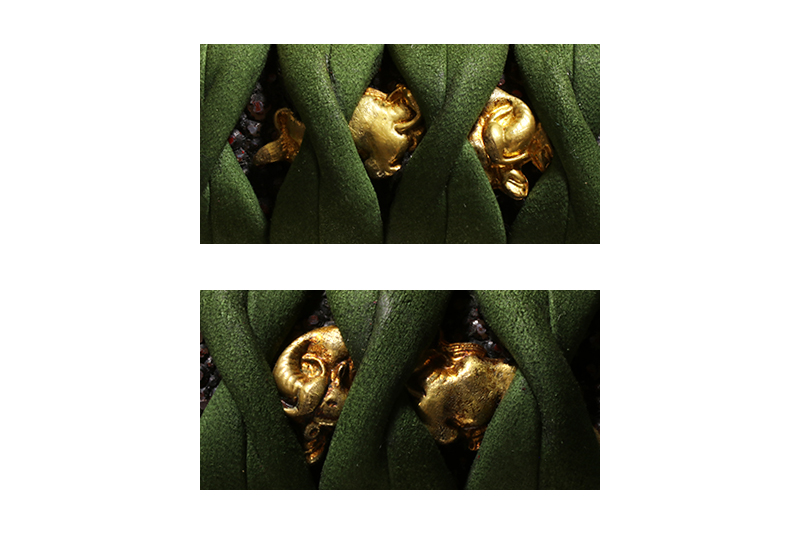
Menuki: Gold ground, design of an ox.
Tsuka: Same is makisame with oyatsubu, coated in shu-urushi and kuro-urushi. Tsuka-maki is cow suede in tetsu-iro, katatsumi katahineri-maki.
Saya: Urumi-iro.
"Condition of blade"
Polishing: Generally good.
Flaws: There are no flaws that would constitute a defect.
Machine translation from the shop's Japanese · may contain errors ·
Modern sword Nosyu seki ju Kanemichi saku.
Seki ju Kanemichi (the second generation) is a highly skilled swordsmith representing modern Mino-den, having received the Excellence Award twice at the Shinsaku Meito Exhibition.
This work is a superior piece featuring a dense itame-hada with a medium suguha rich in activity. Despite its long nagasa, it is lightweight with excellent balance, making it ideal for Iai.
The tsuka has been rewrapped with deep green cow suede. It is a high-quality koshirae equipped with a solid silver nijuhabaki and seppa.
Both the blade and koshirae are in good condition; it is a rare shinken for Iai use that possesses the three key qualities of long nagasa, light weight, and good balance.
"Sword figure"
Shinogi-zukuri, iori-mune, standard mihaba and kasane, torii-zori, chu-kissaki. The nakago is ubu with sujikai yasurime, and the nakago-jiri is ha-agari kurijiri.
Shinogi-zukuri with an iori-mune. The blade has standard width and thickness, torii-zori curvature, and a medium-sized kissaki. The nakago is ubu with sujikai yasurime, and the nakago-jiri is a ha-agari kurijiri.
"Carving"
The carvings consist of a kata-chiri bo-hi on both sides, ending in kaki-nagashi below the habaki.
The blade features a kata-chiri bo-hi on both sides, extending beneath the habaki in kaki-nagashi style.
"Jigane"
The jigane is a well-dense ko-itame, becoming masame toward the edge, with ji-nie.
The jihada is a tightly forged ko-itame, tending toward masame near the cutting edge, with ji-nie.
"Hamon"
The hamon is a medium suguha in ko-nie-deki, with sunagashi along the habuchi and ko-nie, and kinsuji active within the blade. The boshi enters sugu and returns in komaru.
The hamon is a medium-width suguha in ko-nie-deki, with sunagashi and fine nie along the habuchi, and kinsuji activity within the ha. The boshi is sugu, turning back in a small komaru.
"Detailed"
Seki ju Kanemichi (real name Kojima Ikuo) is a swordsmith residing in Seki City, Gifu Prefecture, who succeeded to the name Kanemichi the second generation after the death of his grandfather, Kanemichi the first generation. He studied under his grandfather, Kanemichi the first generation, and his father, Kanetoki. Since Showa 56 (1981), he has repeatedly been selected for the Shinsaku Meito Exhibition, receiving one Effort Award and two Excellence Awards. Furthermore, he served as the chairman of the Mino-den Sakuto Hozon Kyokai and is a highly skilled swordsmith representing modern Mino-den. His son, Kanetoki the second generation, is also active as a swordsmith.
This work is a well-made blade featuring a well-dense itame-hada and a medium suguha rich in activity. It is thought to be a sword custom-ordered for Iai use; despite its long nagasa, it is lightweight and achieves excellent balance due to the long nakago. While there are traces of use in Iai, the frequency of use seems to have been low, and the condition of the blade is good.
The koshirae has had the tsuka-ito newly rewrapped. It uses tetsu-iro (deep green) cow suede with a texture like deerskin. The habaki is a solid silver nijuhabaki, and the seppa are also a luxurious specification made of custom-ordered solid silver. There are no cracks in the saya, almost no scratches are seen, and the condition of the entire koshirae is also good.
A shinken for Iai use that is long, lightweight, excellent in balance, and in such good preserved condition is rare. Please take this opportunity to purchase it.
Kanemichi of Seki (real name: Kojima Ikuo) is a swordsmith based in Seki City, Gifu Prefecture. He succeeded his grandfather as the second-generation Kanemichi after the latter’s passing. He studied under his grandfather, the first-generation Kanemichi, and his father, Kanetoki. Since 1981, he has consistently been selected for the Shinsaku Meito Exhibition, receiving one Effort Award and two Excellence Awards. He also served as president of the Mino-den Swordmaking Preservation Association and is regarded as one of the leading contemporary swordsmiths of the Mino tradition. His son, the second-generation Kanetoki, is also an active swordsmith.
This sword is a fine example of his work, featuring a tightly forged itame-hada and a medium-width suguha hamon rich in activity. It appears to have been custom-made for Iaido. Despite its long blade, it is lightweight, and the extended nakago provides excellent balance. Although there are signs of previous use in Iaido, the sword appears to have been used only occasionally, and the blade remains in very good condition.
The tsuka has been newly rewrapped in dark green (tetsu-iro) cowhide suede, which has a texture similar to deerskin. The habaki is a solid silver, double-layered construction, and the seppa are also custom-made from solid silver, giving the fittings a luxurious finish. The saya has no cracks and almost no scratches, and the entire koshirae remains in excellent condition.
Long, lightweight, well-balanced, and well-preserved genuine Japanese swords suitable for Iaido are becoming increasingly difficult to find. Don’t miss this opportunity to acquire such an excellent sword.
"Koshirae"
Habaki: Solid silver nijuhabaki.
Tsuba: Iron ground, shishi and peony design, sukashi tsuba.
Fuchikashira: Fuchi is solid silver migaki-ji with mokumegane zogan; kashira is buffalo horn with urumi-nuri finish.
Menuki: Gold ground, design of an ox.
Tsuka: Same is makisame with oyatsubu, coated in shu-urushi and kuro-urushi. Tsuka-maki is cow suede in tetsu-iro, katatsumi katahineri-maki.
Saya: Urumi-iro.
"Condition of blade"
Polishing: Generally good.
Flaws: There are no flaws that would constitute a defect.
The twentieth century nearly killed the craft twice: wartime distortion, then the occupation ban. The NBTHK’s founding in 1948 and licensed forging from 1953 rebuilt the sword as an art, crowned by Living National Treasures and the mukansa rank.
Within 3 days of the item's arrival, we offer a refund or an exchange. Return shipping and the bank transfer fee for the refund are at the customer's expense.


 NihontoWatch