Edo was the sword’s age of connoisseurship: the Hon’ami appraisers, the shogunal register of famous blades of 1719, and a thriving literature turned the sword into an object of study even as it ceased to be drawn in war.
 NihontoWatchNihontoWatch
新刀・摂津 江戸前期 探山先生鞘書き有り 鎬造り、鎬庵棟高尋常、中切っ先僅かに延び心。 鍛え、小板目肌良く詰み、地沸厚く付き、細やかな地景良く入り、地鉄精良。 刃文、大互の目乱れ主体で小湾れ、矢筈風の刃を交えて濤瀾風となり、刃縁小沸良く付いて匂い深く明るく冴え、刃中互の目足太く長く入り、金筋、砂流し掛かり、焼きの谷間に玉を焼く。 帽子、直調で焼き深く、先僅かに掃き掛け小丸に返る。 茎生ぶ、先入山形、鑢筋違いで僅かに化粧掛かる。 銅に金着せハバキ。 時代最上研磨。 白鞘入り。 坂倉言之進照包こと越後守包貞(二代)の重要刀剣、華やかで覇気溢れる濤瀾風乱れの傑作、欠点の見当たらない新刀重要です。 二代包貞は、坂倉言之進と言い、元は美濃丹波守照門一族出身であったと伝わっており、後に大坂へ出て、初代包貞こと山田平太夫の弟子となり、後に養子となります。初代は左陸奥包保系門人の文珠鍛冶に当たります。 初代没後の寛文五年(一六六五)頃から二代包貞を襲名、延宝八年(一六八〇)頃、初代の実子である山田岩松が成人を迎えると共に包貞銘を返上、自らは本名である坂倉言之進に戻し、照包と銘じました。 作風は、基本小板目の詰んだ綺麗な大坂新刀地鉄に、津田越前守助廣に倣った濤瀾風の大互の目乱れを得意としますが、刃中矢筈風の刃や片山乱れと称される同工特有の刃形が交じる点、物打ち付近に互の目を連れて焼く点、棟の角度が急で平肉のそれ程付かない点などが同工の手癖としてまま見られます。直刃、湾れもありますが、いずれの場合も刃縁が一際明るい刃となるのが通例です。 年紀作に見る活躍期は、寛文五年から貞享元年(一六八四)まで、前述のように、照包銘は延宝八年以降ですので、その大半は包貞銘です。 銘は、『越後守包貞』、『坂倉言之進照包』、『坂倉越後守照包』などと切ります。 本作は、平成十二年(二〇〇〇)、第四十六回の重要刀剣指定品、同工の真骨頂とも言える、濤瀾風の大互の目乱れの典型作優品です。 小板目肌良く詰んだ精良な地鉄、大互の目乱れ主体の刃は、小湾れ、矢筈風の刃を交えて濤瀾風となり、刃縁小沸良く付いて匂い深く明るく冴え、刃中互の目足太く長く入り、金筋、砂流し掛かり、焼きの谷間に玉を焼いています。 図譜には、『この脇差しは、彼が最も得意とした濤瀾風の大互の目乱れで、随所にその手癖も良く示され、鍛えが精良で特に優れており、刃取りも整ってすっきりとし、刃縁が明るく冴えている点も特筆される。二代越後守包貞の本領が、遺憾なく発揮された同作中の優品である。』とあり、探山先生鞘書きにも、『本作は、細緻美麗なる地鉄に、助廣に倣いたる感の濤瀾風大互の目乱れを悠々と焼き、沸匂い深厚なりて、刃縁明るく冴え、矢筈風の刃取りを帯びる点に個性を示し、出来、保存共に出色哉。』とあります。 近年稀に見る越後守包貞、これで寸法が二尺四、五寸もあれば、特別重要刀剣候補最右翼といったところでしょうか。兎に角名品です。
NihontoWatch2nd Gen. Echizen no Kami Kanesada (Sakakura Gonnojo Terukane)
Offered by Samurai Nippon

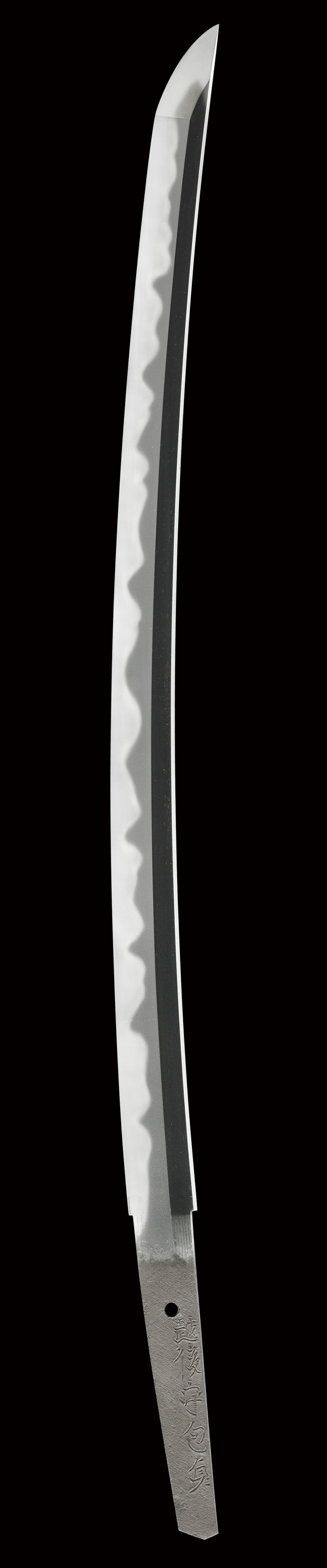
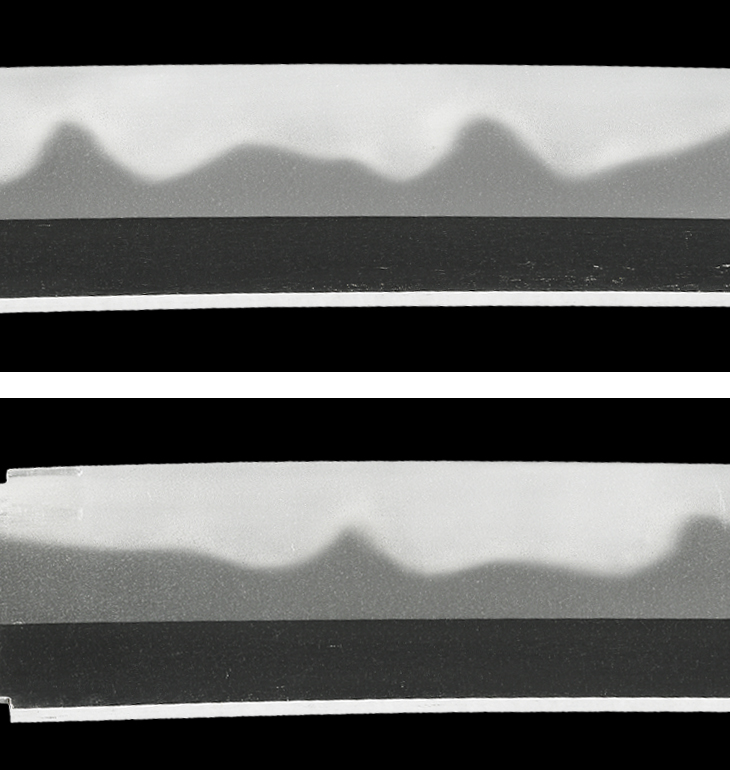
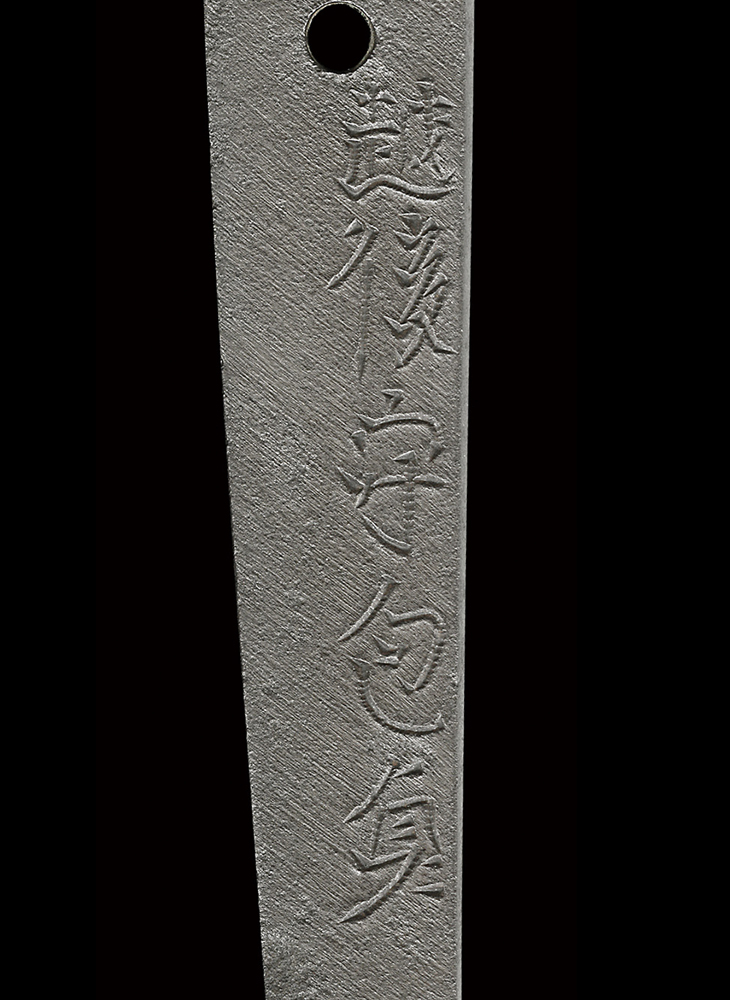
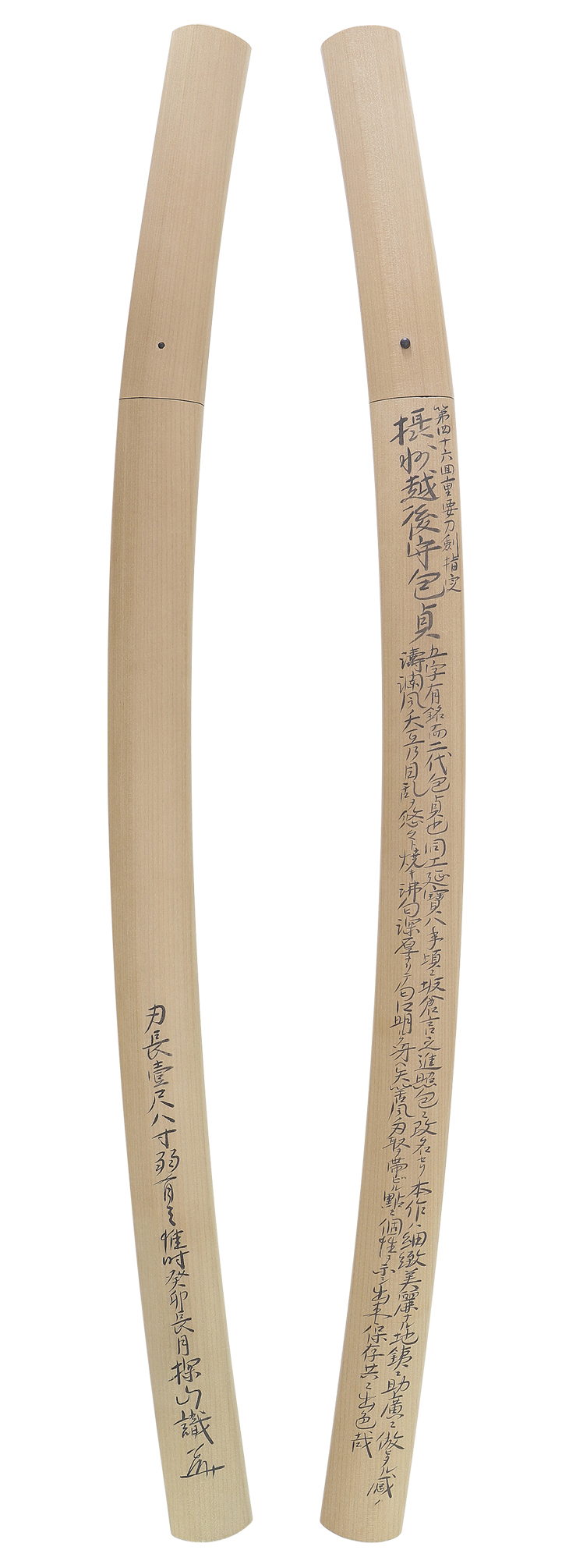
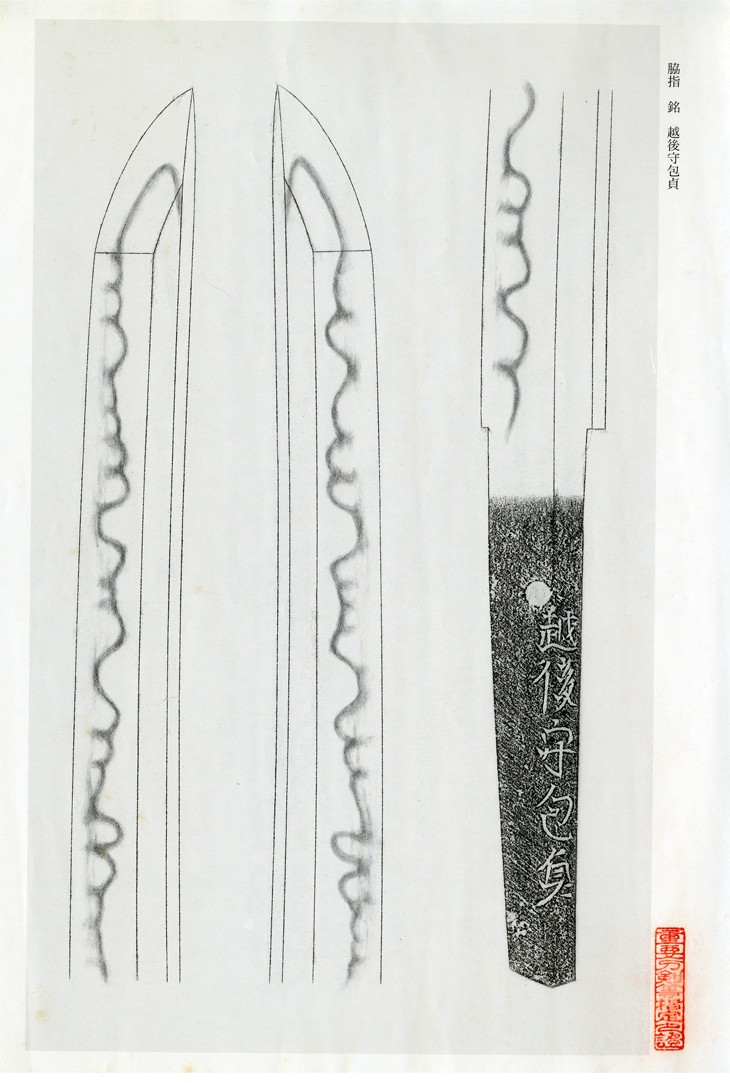
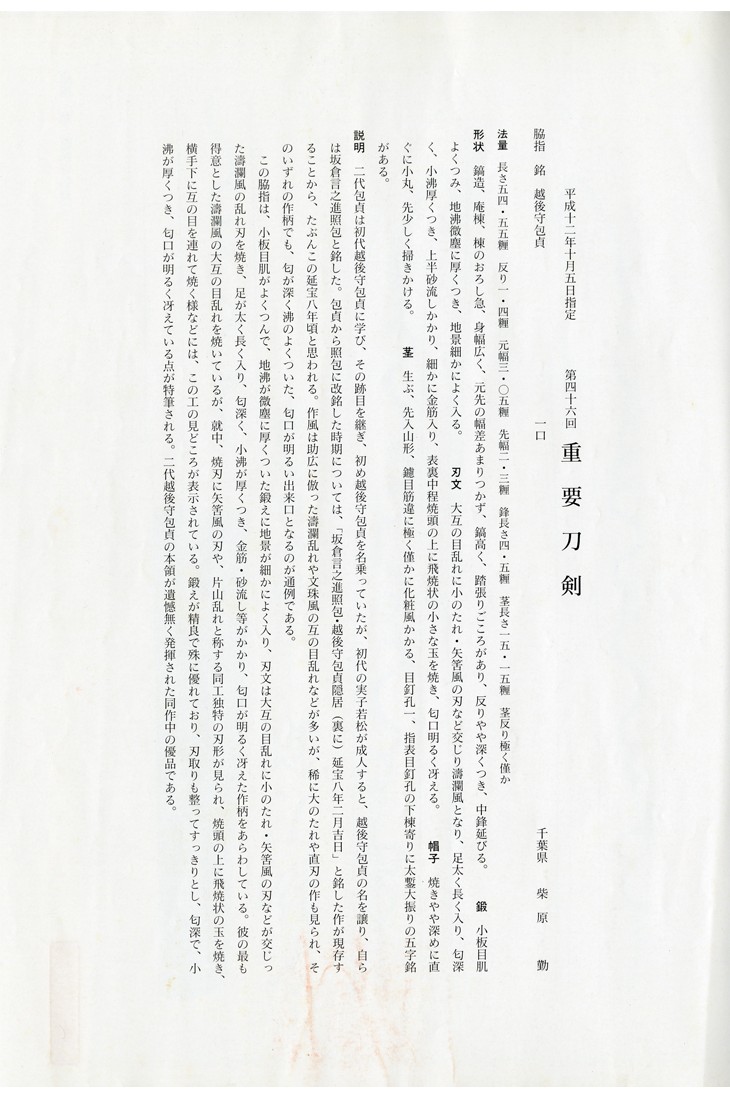
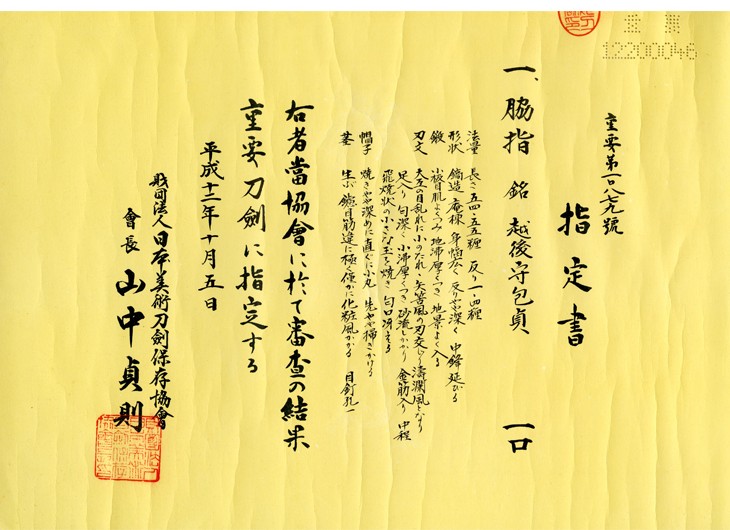
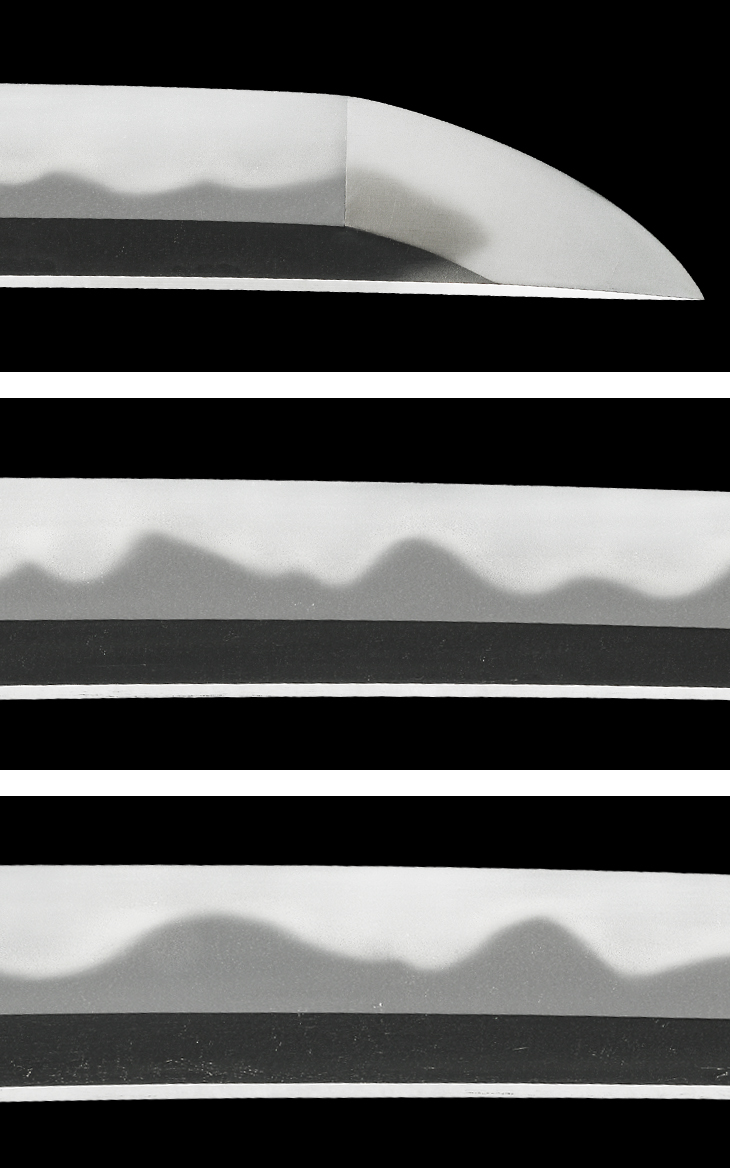
As written by the shop
(Translation unavailable)
The Edo period (1615 to 1868)
Edo was the sword’s age of connoisseurship: the Hon’ami appraisers, the shogunal register of famous blades of 1719, and a thriving literature turned the sword into an object of study even as it ceased to be drawn in war.
A blade of top-grade workmanship and condition, formally judged to rank with a nationally recognized Important Art Object (Jūyō Bijutsuhin). Awarded only at the NBTHK’s competitive annual examination.
Of Japan’s roughly 2.5 million registered swords, only 12,348 (about 1 in 202) have ever attained Jūyō.
The NBTHK (Nihon Bijutsu Tōken Hozon Kyōkai, the Society for the Preservation of Japanese Art Swords) is a public-interest incorporated foundation founded in 1948 and supervised by Japan’s Agency for Cultural Affairs (Bunkachō); it is based at the Japanese Sword Museum in Tokyo. Its expert panels physically examine each submitted work (shinsa) and issue a certificate (kanteishō) ranking it by artistic and historical merit. NBTHK papers are the most widely recognized standard of authentication for Japanese swords and fittings.
NBTHK official siteFor one-of-a-kind items such as swords, sword fittings and antiques, other customers may be waiting for the item, so please contact us about a return within 3 days of its arrival and ship it back within 8 days. Refunds are made on the day the returned item arrives.
¥4,500,000