Edo was the sword’s age of connoisseurship: the Hon’ami appraisers, the shogunal register of famous blades of 1719, and a thriving literature turned the sword into an object of study even as it ceased to be drawn in war.
 NihontoWatchNihontoWatch
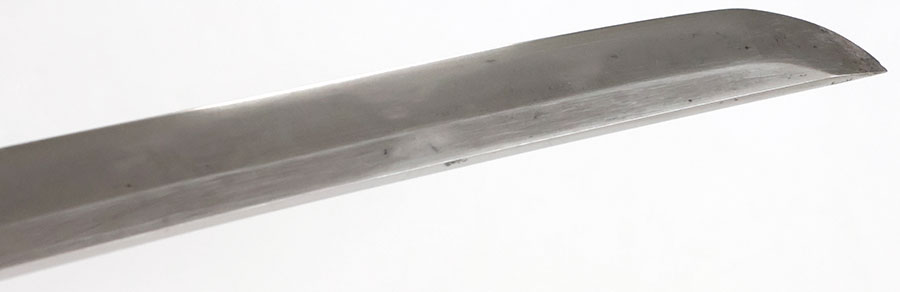
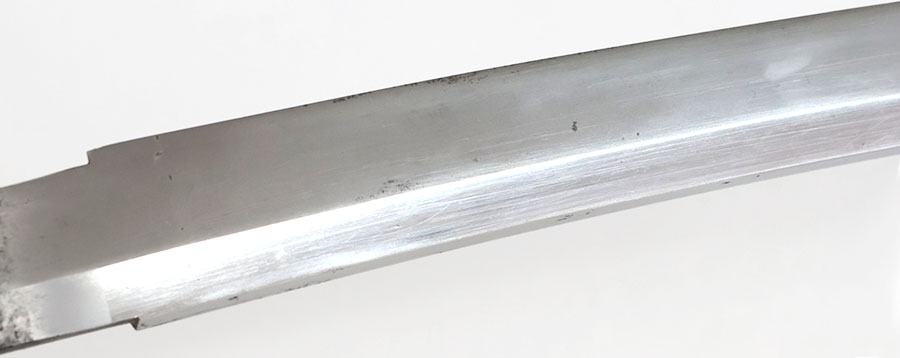
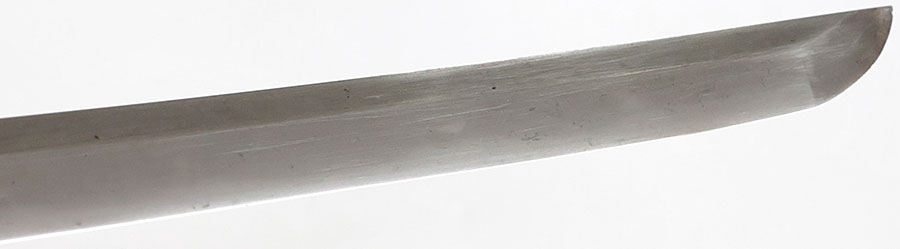
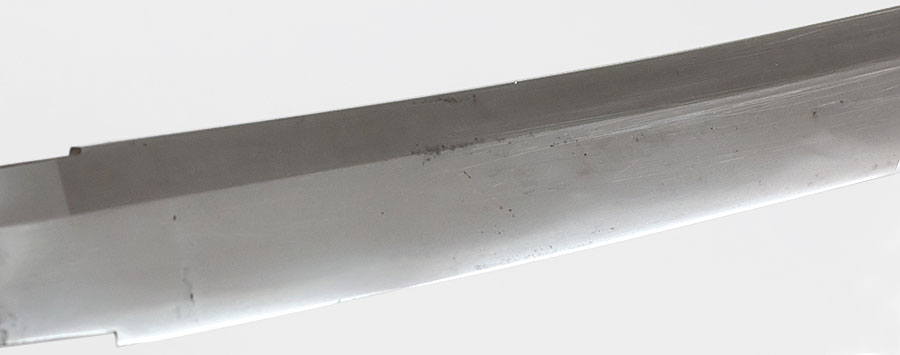
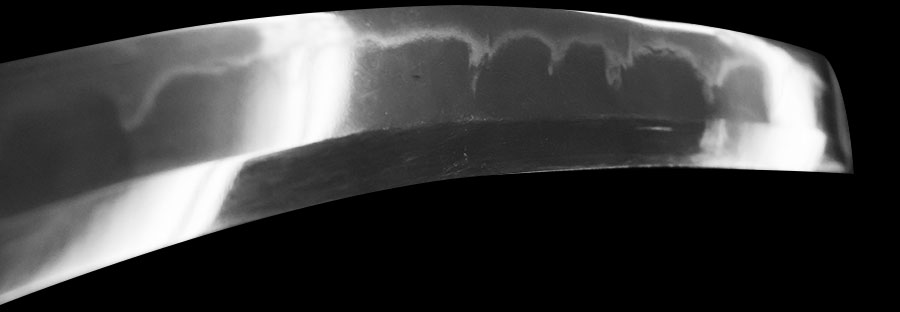
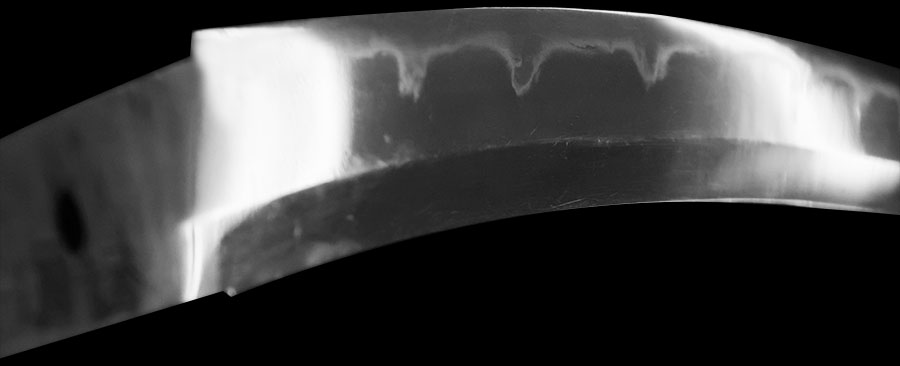
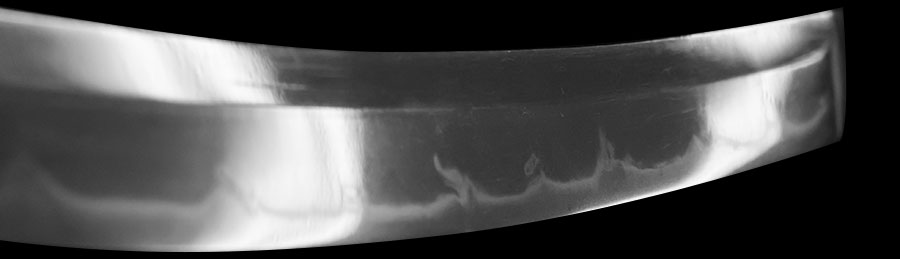
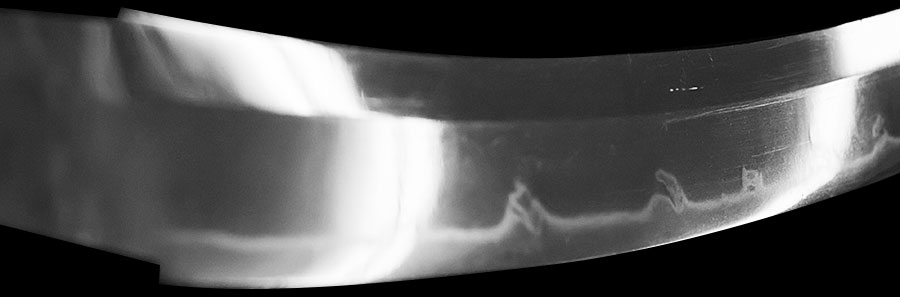
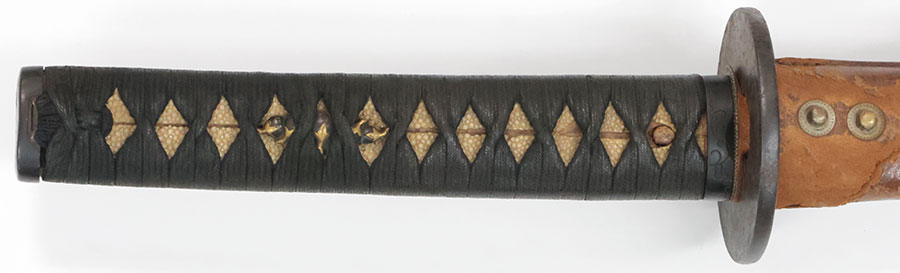
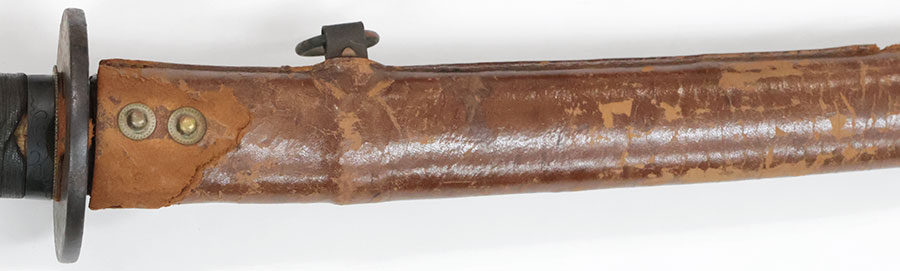
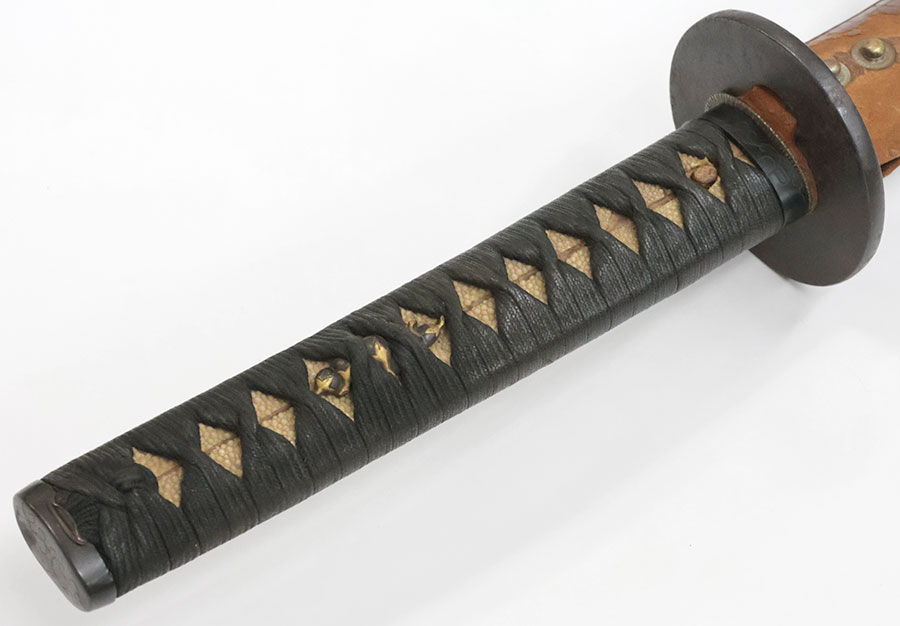
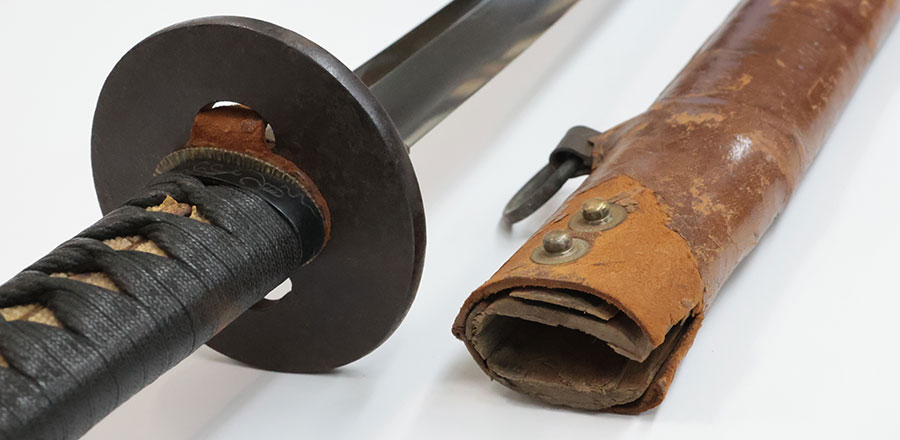
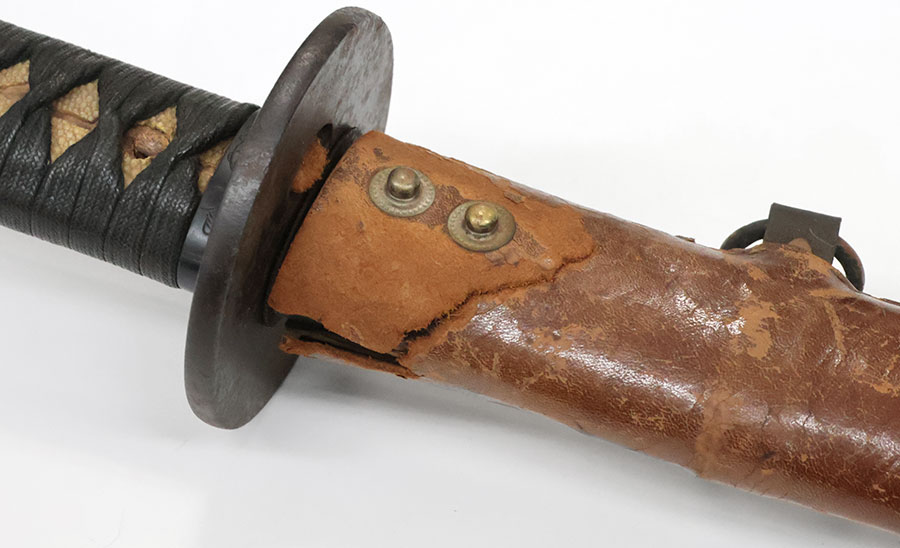
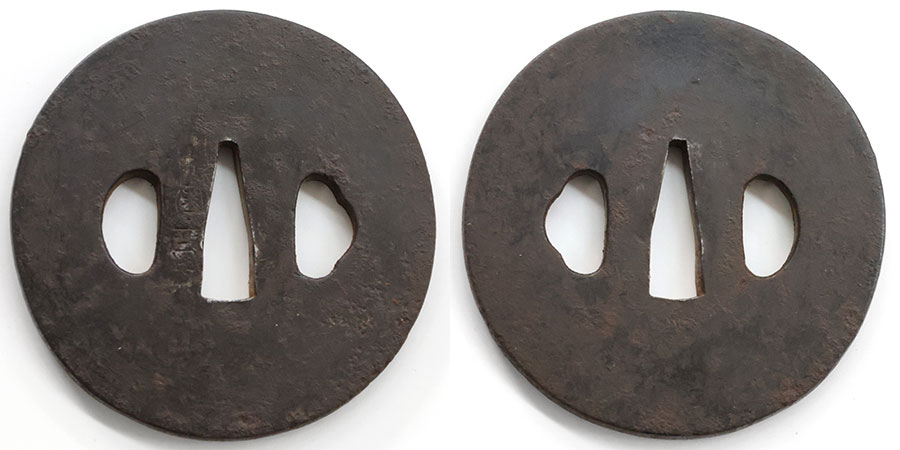
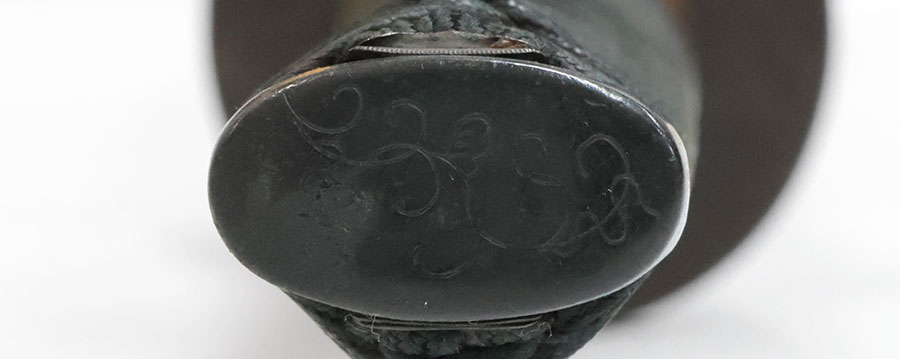
It has appeared, it has appeared; a work where a wakizashi by Bitchu no Kuni Mizuta-ju Kunishige was custom-fitted into gunjinto mountings when a grandfather went off to war has appeared. Bitchu Mizuta-ju Kunishige originated in Bitchu Ebara around the Daiei era at the end of the Muromachi period and flourished into the Shinto period, with Mizuta Kunishige smiths prospering across the entire country. Based on the mei style, this wakizashi is by Otsuki Yogoro Kunishige from around the Kanei era (1630) (396 years ago); he is a master smith said to be the most skilled among the Mizuta Kunishige group. This wakizashi displays a gokai wakizashi sugata with a wide moto-mihaba and a distinct difference from the saki-mihaba, and while the jigane has some cloudiness from changes over time, it shows a brightly forged jigane with a well-tightened ko-itame hada; as for the hamon, everyone please take note of the innovative o-gunome blade with notare, which is truly magnificent, firing an innovative blade that looks just like surging waves crashing against the shore. The koshirae, a gunjinto koshirae custom-made to protect the people of the nation of Japan and the Greater East Asia Co-Prosperity Sphere at the risk of one's own life, adds even more splendor to this wakizashi which is likely by Mizuta Otsuki Yogoro Kunishige. Having cherished this grandfather's gunjinto until now, we have received it with the request to pass it on at a low price to someone who will treasure it as they themselves have grown old, and therefore, through special kindness, we are offering it at an ultra-low price; please by all means enjoy it.
NihontoWatchOffered by Nipponto
Kunishige is a name with Jūyō-designated work, and we couldn’t find current papers for this piece. Treat the name as unproven until papers say otherwise. It is also priced far below papered work by makers of this standing. — Hoshi Ask me first
6 on the market
















As written by the shop
Machine translation from the shop's Japanese · may contain errors ·
Shinto · Bitchu · around 1624-1644
Fujishiro Jo-jo saku · Tōken Taikan top 26%
6 pieces on the market now
Kunishige worked within the Mizuta school of Bitchu Province, a lineage that flourished from the late Muromachi period into the Edo era. The most celebrated smith of this name is Otsuki Yogoro Kunishige, commonly abbreviated as "Daiyogo," who was the son of Otsuki Saburobei Kunishige and is recognized as the foremost master of the Mizuta school. The NBTHK observes that "the nationwide prosperity of this school during the Edo period was likely due to the presence of such superior craftsmen." Earlier work signed "Ko-Mizuta Kunishige" is dated to the late Muromachi period, with a katana bearing the date Tensho 20 (1592) among the few signed examples by the older lineage.
The Ko-Mizuta works display a kitae of dense ko-itame-hada with ji-nie and utsuri, and a hamon built around gunome-midare as the principal theme, incorporating small midare and ko-choji in what the NBTHK describes as an "overall somewhat busy" manner, with a tightly formed nioiguchi and attached ko-nie as the chief point of appreciation. The later Daiyogo Kunishige, by contrast, excelled particularly in the Soshu-den, producing itame-hada with prominent standing grain, well-adhering ji-nie, and chikei, tempered in bold notare-style o-midare that in the upper half becomes nearly hitatsura, with deep nioi and coarse nie. The boshi on such works enters in irregular midare-komi with hakikake, burning down long to the mune-machi. The tang tip in the Mizuta manner is characteristically ha-agari kurijiri.
Signed examples by both the Ko-Mizuta and Daiyogo lines are described as "comparatively few," lending particular significance to surviving blades. The Ko-Mizuta katana of Tensho 20 is called "not only a typical example, but also one of his representative works," while the Daiyogo Kunishige is praised as "a superior craftsman who exceeded his father's skill." This rarity of signed work is traditionally attributed to signatures being removed or blades being shortened and reworked into superior pieces -- a testament to the enduring regard in which Mizuta workmanship has been held.
Where Kunishige stands among comparable artisans: across all of nihontō, and within tradition, era, and period. The tiers (Foremost · Leading · Major · Notable) weigh official designations from the NBTHK and Japan's Agency for Cultural Affairs, together with historical honors of lasting repute such as the Sansaku and Meibutsu-chō.
Select a lens to see how it's measured.
Shinto · Bitchu
14 pieces on the market now
In Bitchū Province at the close of the Muromachi period, the Mizuta group emerged at the village of that name, and successive generations took the name Kunishige. The setsumei trace their work across Matsuyama, Toribe, Ihara, Ebara, and Niimi, with their vitality carrying into the shintō era. The smiths the records cover form a recognizable line: Ko-Mizuta Kunishige, whose dated blade reaches Tenshō 20 (1592); the Niimi Saburōzaemon no Jō Kunishige, said by signature references (meikan) to have come from Bingo into the Niimi estate and afterward to have served the Mimura family, lords of Matsuyama Castle; Kunishige of Ihara, who signed "Bitchū no kuni Ihara-jū Kunishige saku"; Kunishige styled Ōtsukiyo Goemon, recorded as forging also at Fukuyama in Bingo and at Kawanami; and Ōtsuki Yogorō Kunishige, abbreviated "Daiyogo," son of Ōtsuki Saburōbei Kunishige, who came after the old Mizuta period and worked from the Kan'ei years. So many smiths bore the name Kunishige that the setsumei call the group's reliance on it overwhelming. The shared vocabulary is consistent across the entries. The jigane is itame, sometimes flowing and sometimes standing out, with ji-nie adhering and chikei entering; utsuri is visible on the older pieces. The hamon of the shintō hand rests on a notare or ko-notare base mixed with gunome, deep in nioi, with nie forming vigorously and at times breaking into coarse ara-nie; sunagashi and kinsuji run through, and muneyaki recurs frequently. On the Daiyogo katana the temper rises until the upper half is nearly hitatsura, an ō-midare in notare style with the bōshi burning down long toward the mune-machi.
The bōshi elsewhere goes midare-komi with hakikake, taking a flame-like (kaen) cast or becoming ichimai-like. The Niimi blade adds yakidaka composition with angular and yahazu-like elements. These are the marks of the hand: a strong nie-laden Sōshū bearing on a serviceable, iori-mune shinogi-zukuri build, the signatures cut long toward the mune. For kantei the records single out the notare foundation worked with gunome and intense nie, the yahazu shapes and ichimai bōshi the setsumei name as "the highlights of the Mizuta manner," and the ha-agari kurijiri tang that rises markedly toward the edge. The shintō smiths are read by their pronounced Sōshū emphasis, the kotō-period Ko-Mizuta by a busier (kosekose) gunome-midare carrying ko-chōji and a tight nioiguchi. The setsumei describe these as cutting, utilitarian blades, and the Ihara daishō carries elaborate carving, including kurikara, "Marishiten," and the Nine Syllables. Named pieces anchor the line: the Niimi Kunishige is published in the Kōzan Oshigata and, by the record on its old scabbard, once served as the camp sword (jin-tō) of Bunjō-in, Tokugawa Ienobu, the sixth shōgun. Of Daiyogo the setsumei say few signed works survive, the loss attributed to mei being removed or blades shortened and reworked, yet they name him the leading master of the group and credit the school's spread through the Edo period to smiths of his ability. Learn more →
| Smith | Era | Designated |
|---|---|---|
| Kunishige國重 | 1592-1596 | 2 |
| Kunishige國重 | 1624-1644 | 2 |
| Kunishige國重 | 1673-1681 | 1 |
| Kunishige國重 | 1554-1573 | 1 |
| Kunisada國定 | 1688-1704 | 0 |
The Edo period (1615 to 1868)
Edo was the sword’s age of connoisseurship: the Hon’ami appraisers, the shogunal register of famous blades of 1719, and a thriving literature turned the sword into an object of study even as it ceased to be drawn in war.
We could not find an authenticity certificate on the seller’s listing. Japanese swords and fittings are normally papered by the NBTHK (or the NTHK). Without one, the attribution is the seller’s own assessment and has not been independently verified — treat it with caution and ask the dealer about certification before buying.
For returns due to customer circumstances, the cost is the customer's responsibility. For returns due to our mis-shipment or a defective item, we bear the cost.
¥230,000